Report: When Risks Become Reality: Extreme Weather In 2024 — World Weather Attribution #ActOnClimate

Click the link to access the report on the World Weather Attribution website:

December 27, 2024

When Risks Become Reality: Extreme Weather in 2024 is our annual report, published this year for the first time.


Every December, people ask us how severe the year’s extreme weather events were. To answer this question, we’ve partnered with Climate Central to produce a report that reviews some of the most significant events and highlights findings from our attribution studies. It also includes new analysis looking at the number of dangerous heat days added by climate change in 2024 and global resolutions for 2025 to work toward a safer, more sustainable world.

Key messages

  • Extreme weather reached dangerous new heights in 2024. This year’s record-breaking temperatures fueled unrelenting heatwaves, drought, wildfire, storms and floods that killed thousands of people and forced millions from their homes. This exceptional year of extreme weather shows how dangerous life has already become with 1.3°C of human-induced warming, and highlights the urgency of moving away from planet-heating fossil fuels as quickly as possible.
  • Climate change contributed to the deaths of at least 3,700 people and the displacement of millions in 26 weather events we studied in 2024. These were just a small fraction of the 219 events that met our trigger criteria, used to identify the most impactful weather events. It’s likely the total number of people killed in extreme weather events intensified by climate change this year is in the tens, or hundreds of thousands. 
  • Globally, climate change added on average 41 additional days of dangerous heat in 2024 that threatened people’s health, according to new analysis by Climate Central. The countries that experienced the highest number of dangerous heat days are overwhelmingly small island and developing states, who are highly vulnerable and considered to be on the frontlines of climate change. The analysis highlights the wide reaching impacts of extreme heat that are underreported and not well understood.  
  • Many extreme events that took place in the beginning of 2024 were influenced by El Niño. However, most of our studies found that climate change played a bigger role than El Niño in fueling these events, including the historic drought in the Amazon. This is consistent with the fact that, as the planet warms, the influence of climate change increasingly overrides other natural phenomena affecting the weather.  [ed. emphasis mine]
  • Record-breaking global temperatures in 2024 translated to record-breaking downpours. From Kathmandu, to Dubai, to Rio Grande do Sul, to the Southern Appalachians, the last 12 months have been marked by a large number of devastating floods. Of the 16 floods we studied, 15 were driven by climate change-amplified rainfall. The result reflects the basic physics of climate change — a warmer atmosphere tends to hold more moisture, leading to heavier downpours. Shortfalls in early warning and evacuation plans likely contributed to huge death tolls, while floods in Sudan and Brazil highlighted the importance of maintaining and upgrading flood defences. 
  • The Amazon rainforest and Pantanal Wetland were hit hard by climate change in 2024, with severe droughts and wildfires leading to huge biodiversity loss. The Amazon is the world’s most important land-based carbon sink, making it crucial for the stability of the global climate. Ending deforestation will protect both ecosystems from drought and wildfire, as dense vegetation is able to absorb and retain moisture. 
  • Hot seas and warmer air fueled more destructive storms, including Hurricane Helene and Typhoon Gaemi. Individual attribution studies have shown how these storms have stronger winds and are dropping more rain. Research by Climate Central found that climate change increased the intensity of most Atlantic hurricanes between 2019 and 2023 – of the 38 hurricanes analysed, 30 had wind speeds that were one category higher on the Saffir-Simpson scale than they would have been without human-caused warming, while our analysis found that the risk of multiple Category 3-5 typhoons hitting the Philippines in a given year is increasing as the climate warms. 

Figure 1: World Weather Attribution studies in 2024.

Resolutions for 2025

  • A faster shift away from fossil fuels – The burning of oil, gas and coal are the cause of warming and the primary reason extreme weather is becoming more severe. Last year at COP28, the world finally agreed to ‘transition away from fossil fuels,’ but new oil and gas fields continue to be opened around the world, despite warnings that doing so will result in a long term commitment to more than 1.5°C and therefore costs to people around the world. Extremes will continue to worsen with every fraction of a degree of fossil fuel warming. A rapid move to renewable energy will help make the world a safer, healthier, wealthier and more stable place. 
  • Improvements in early warning – Weather disasters in 2024 highlighted the importance of early warning systems, which are one of the cheapest and most effective ways to minimise fatalities. Warnings need to be targeted, given days ahead of a dangerous weather event, and outline clear instructions on what people need to do. Most extreme weather is well forecast, even in developing nations. Every country needs to implement, test and continually improve early warning systems to ensure people are not in harm’s way.
  • Real-time reporting of heat deaths – Heatwaves are the deadliest type of extreme weather. However, the dangers of high temperatures are underappreciated and underreported. In April, a hospital in Mali reported a surge in excess deaths as temperatures climbed to nearly 50°C. Reported by local media, the announcement was a rare example of health professionals raising the alarm about the dangers of extreme heat in real-time. Health systems worldwide are stretched, but informing local journalists when emergency departments are overwhelmed is a simple way to alert the public that extreme heat can be deadly.
  • Finance for developing countries – COP29 recently discussed ways to increase finance for poor countries to help them cope with the impacts of extreme weather. Developing countries are responsible for a small amount of historic carbon emissions, but as our research has highlighted this year, are being hit the hardest by extreme weather. Back-to-back disasters, like the Philippines typhoons, or devastating floods that followed a multi-year drought in East Africa, are cancelling out developmental gains and forcing governments to reach deeper and deeper into their pockets to respond and recover from extreme weather. Ensuring developing countries have the means to invest in adaptation will protect lives and livelihoods, and create a stabler and more equitable world. 

New Year #snowpack update: Bold beginning tapers off: But there’s still a lot of snow season left — Jonathan P. Thompson

October snows above Ouray, Colorado. The Red Mountain Pass SNOTEL showed the snowpack to be 103% of normal as of Jan. 2, 2025. Jonathan P. Thompson photo.

Click the link to read the article on the Land Desk website (Jonatan P. Thompson):

January 3, 2025

🥵 Aridification Watch 🐫

Happy New Year! The Land Desk had a very mellow and relaxing couple of weeks off, and I must admit that I’m struggling to get back into the old routine. And I sure as heck haven’t gotten used to writing “2025” yet. Oy.

But no matter what the calendar may say, we’re one-fourth of the way through the 2025 water year, and one-third of the way through meteorological winter. That means it’s time for a little snowpack update.

Snowpack levels in the watersheds that feed Lake Powell are just about normal for this time of year, thanks to some late-December storms across the region. But as you can see from 2023 (the purple line), there’s plenty of time left for it to be a huge snow year — or a downright crappy one if the precipitation suddenly stops. Source: NRCS.

This snow season got off to a rip-roaring start in much of the West, with some substantial high-country snowfall back in October and November. Then, as is often the case, someone turned off the big sky spigot, the clouds cleared, temperatures warmed, and the early season bounty became mid-winter middling to meager. Meanwhile, the high-mountain snow, while not necessarily melting, began “rotting.” That is, it embarked on the metamorphosis from strong, well-bonded snow, to weak, faceted, depth hoar1.

That’s a problem, because when another layer of snow falls on top of it, the weak layer is prone to failure, resulting in an avalanche. Sadly, avalanches have taken the lives of four people so far this season, all during the last couple of weeks in December. Two of the fatalities occurred in Utah and one in Nevada, all following a late December storm atop a deep, weak layer. The other one was in Idaho on Dec. 15. Two of the victims were on motorized snowbikes, one was a solo split-boarder, and another was on foot or snowshoes. Last season there were 16 avalanche-related fatalities across the West, all occurring after the first of the year.

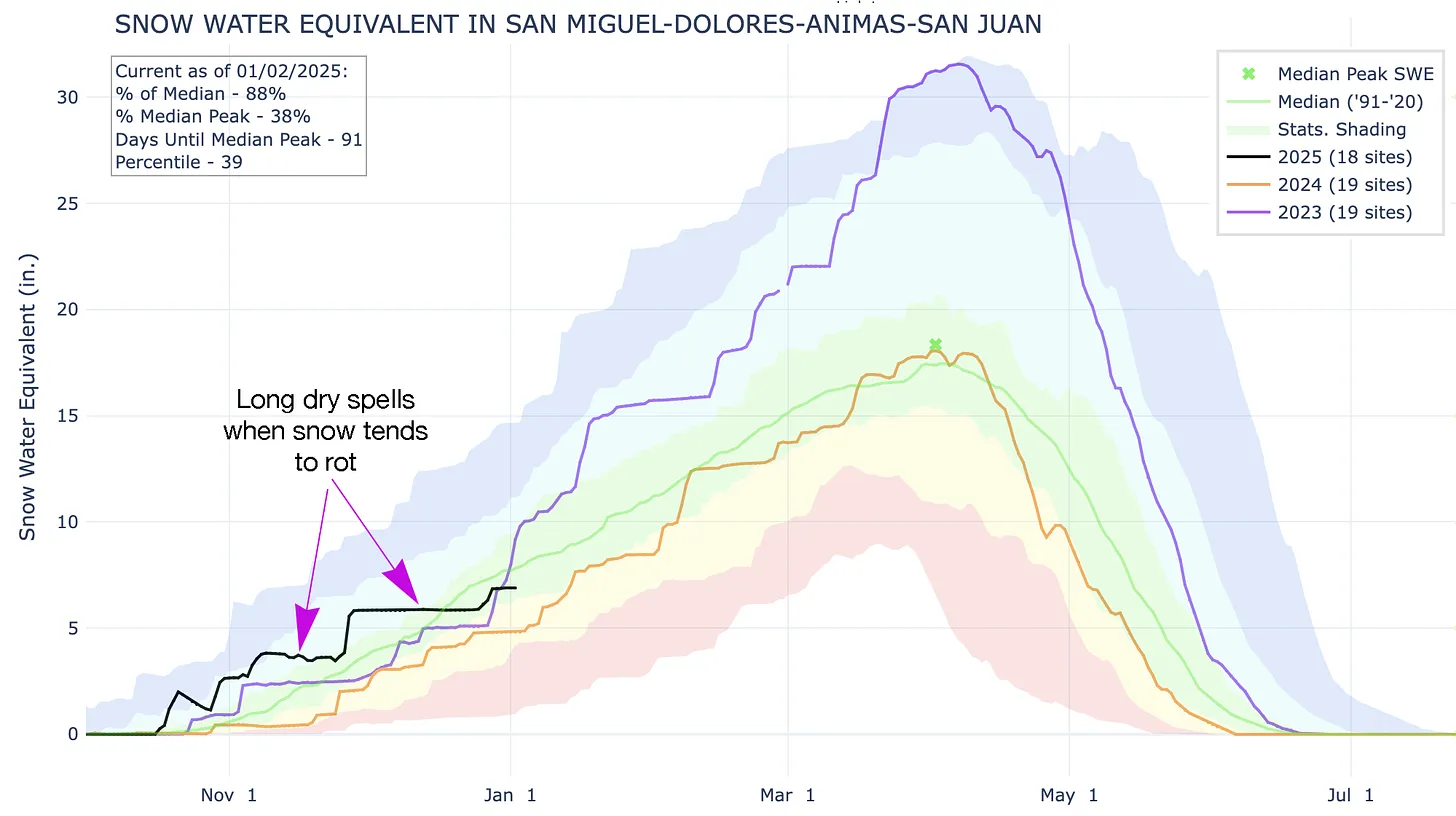
Southwestern Colorado got some good dumps in October and November, pushing the snowpack far above average and into the 90th percentile. But a dry December brought snowpack levels down below “normal” for the 1991-2020 period. Still, this year’s levels almost mirror 2023’s, when snow season didn’t get going until January. Source: NRCS.

Meanwhile, further south, the Sonoran Avalanche Center hasn’t had much action this season, at least not of the snowy kind. Most of the Southwest has been plagued by a dearth of snowfall — and precipitation in general — following a couple good storms in October and November. Temperatures have also been well above average in the southern lowlands. Phoenix set four daily high-temperature records in December, and the average for the month was a whopping seven degrees above normal; Flagstaff was also far warmer than normal and received nary a drop of rain or snow during all of December. And Las Vegas hasn’t received measurable rainfall since it got a bit damp (.08 inches) in mid-July.

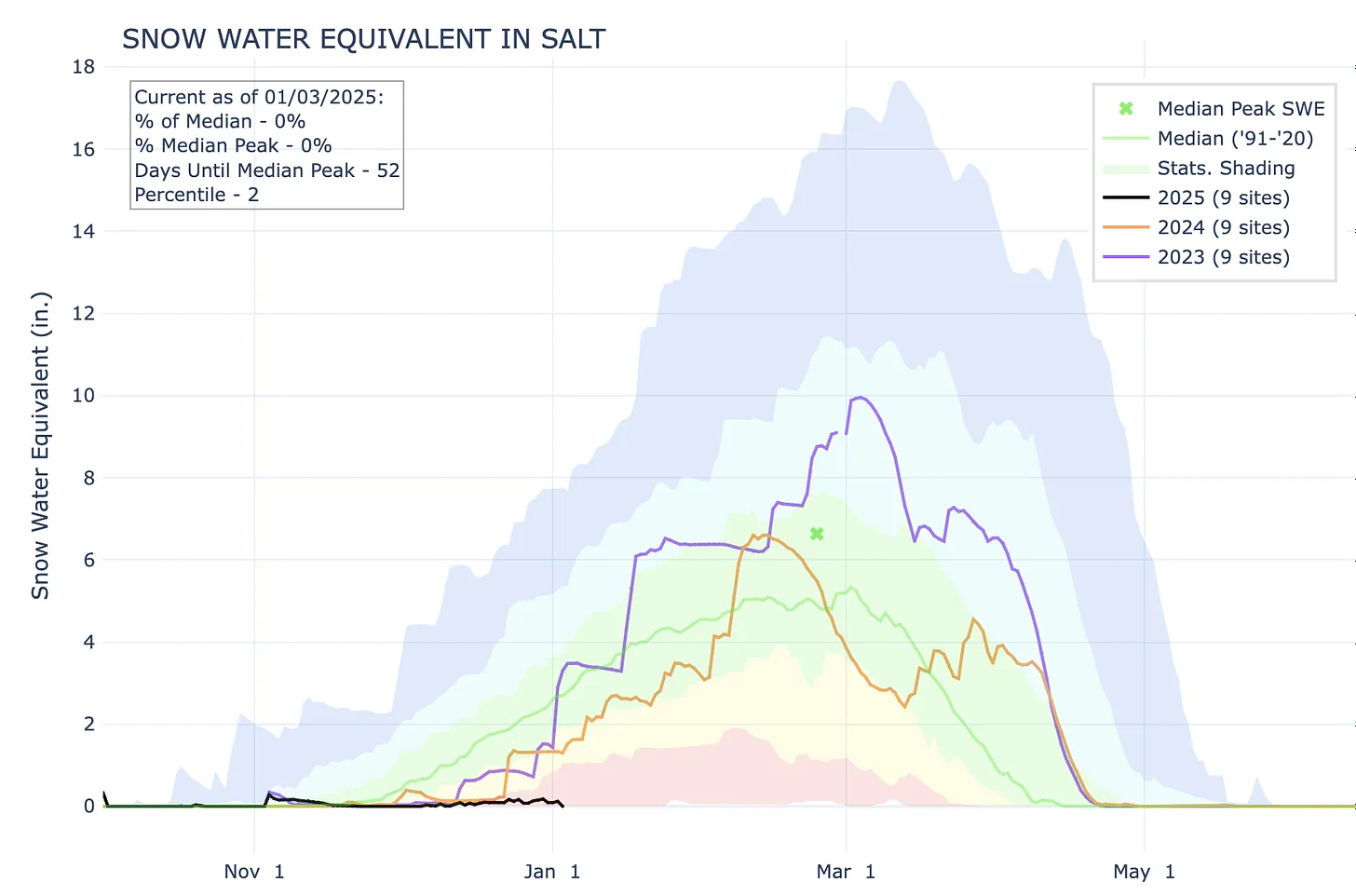
The Salt River watershed in central Arizona has received hardly any snow so far this year and continues to lag far behind the 2023 and 2024 water years. The lack of moisture and unusually high temperatures in December don’t bode well for the region’s runoff. Source: NRCS.
The Rio Grande’s headwaters also started out strong, but have dropped below normal.
Things were looking pretty grim in western Wyoming’s Upper Green River watershed until December snows pushed the snowpack almost up to normal for this time of year. The entire state was quite dry last year and it’s looking like the drought will persist there.

This does not bode well for spring streamflows, particularly in the Salt and Gila Rivers. The mountains feeding the Rio Grande also are in need of some good storms to keep that river from going dry this summer.

We can take comfort in the fact that in many places in the West, snow-season doesn’t really arrive until February or March. So this could turn out to be a whopper of a winter yet.

The drought situation a year ago (left) and now (right). While drought has subsided in New Mexico and the Four Corners area, it has intensified dramatically in Wyoming, Montana, parts of Idaho and a swath that follows the lower Colorado River and includes Las Vegas, which has only received .08” of precipitation since April of last year. Source: U.S. Drought Monitor.
For now it looks like there’s no relief in sight for the Southwest or the Northern Rockies.

🌵 Public Lands 🌲

Biden’s getting busy as he prepares to vacate the White House. The Los Angeles Times reports that he plans to designate the Chuckwalla National Monument on 644,000 acres of federal land in southern California, and the Sáttítla National Monument on 200,000 acres in the northern part of the state near the Oregon border. That’s what I’m talkin’ about, Joe! Now do the lower Dolores!

🦫 Wildlife Watch 🦅

The soon-to-be Chuckwalla National Monument lies south of and adjacent to Joshua Tree National Park, an area often targeted by utility-scale solar developers. That’s the sort of development that will now be banned there. Not only will cultural sites be protected, but also wildlife. A new study found that some of the Southwest’s best sites for solar overlap critical habitat for vulnerable species, including in most of southern California.

***

The U.S. Fish and Wildlife Service is seeking any information on the killing of a gray wolf in Grand County, Colorado, in summer of 2024. The wolf, 2309-OR, was part of the Copper Creek pack that was captured by wildlife officials in August, after members of the pack had made a meal out of local ranchers’ livestock. 2309-OR was in bad condition and perished in captivity; a subsequent investigation found that he died of a gunshot wound. It’s illegal to kill wolves in Colorado, not to mention immoral and just a horrible thing to do. The Center for Biological Diversity and other conservation organizations are offering a $65,000 reward for information leading to the arrest and conviction of the shooter.


📸 Parting Shot 🎞️

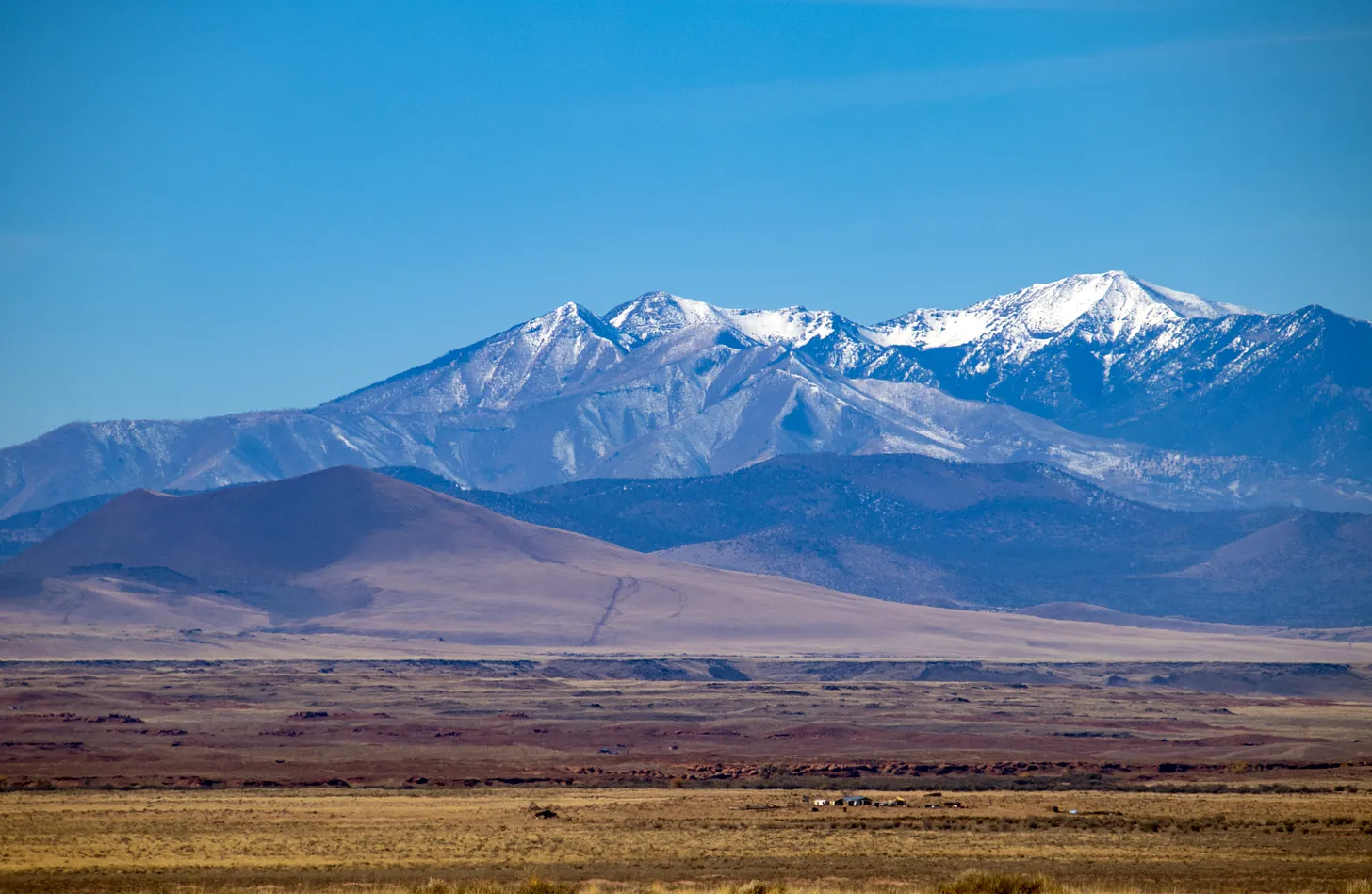
San Francisco Peaks near Flagstaff, Arizona, in mid-November. They had a bit of snow from earlier storms, but haven’t received much since. The Snowslide Canyon SNOTEL site at 9,744 feet in elevation is recording 65% of normal snow water equivalent. Jonathan P. Thompson photo.

1 Andy Gleason, snow nerd extraordinaire, explained it like this after record-high avalanche fatalities during the relatively scant 2021 snow year :

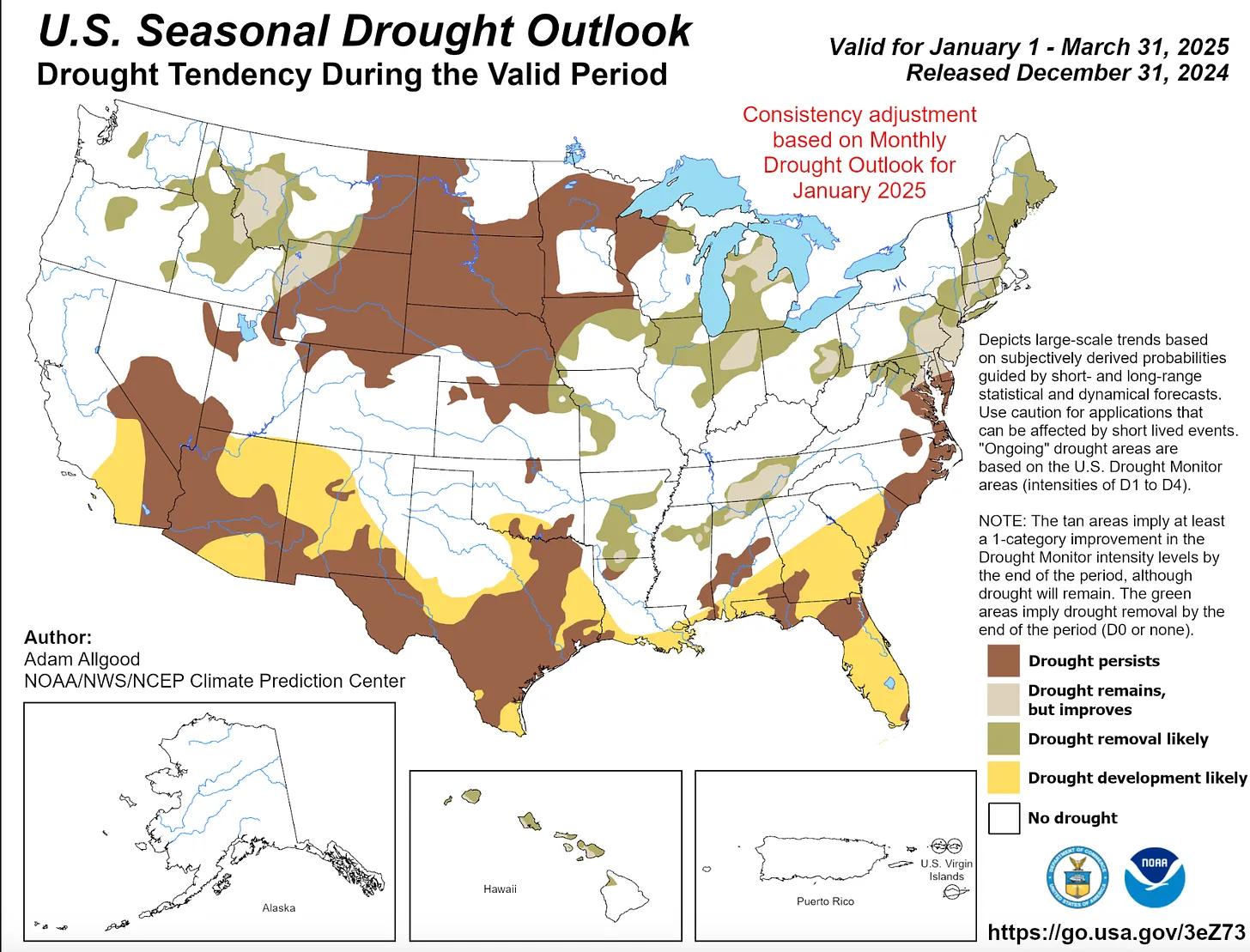
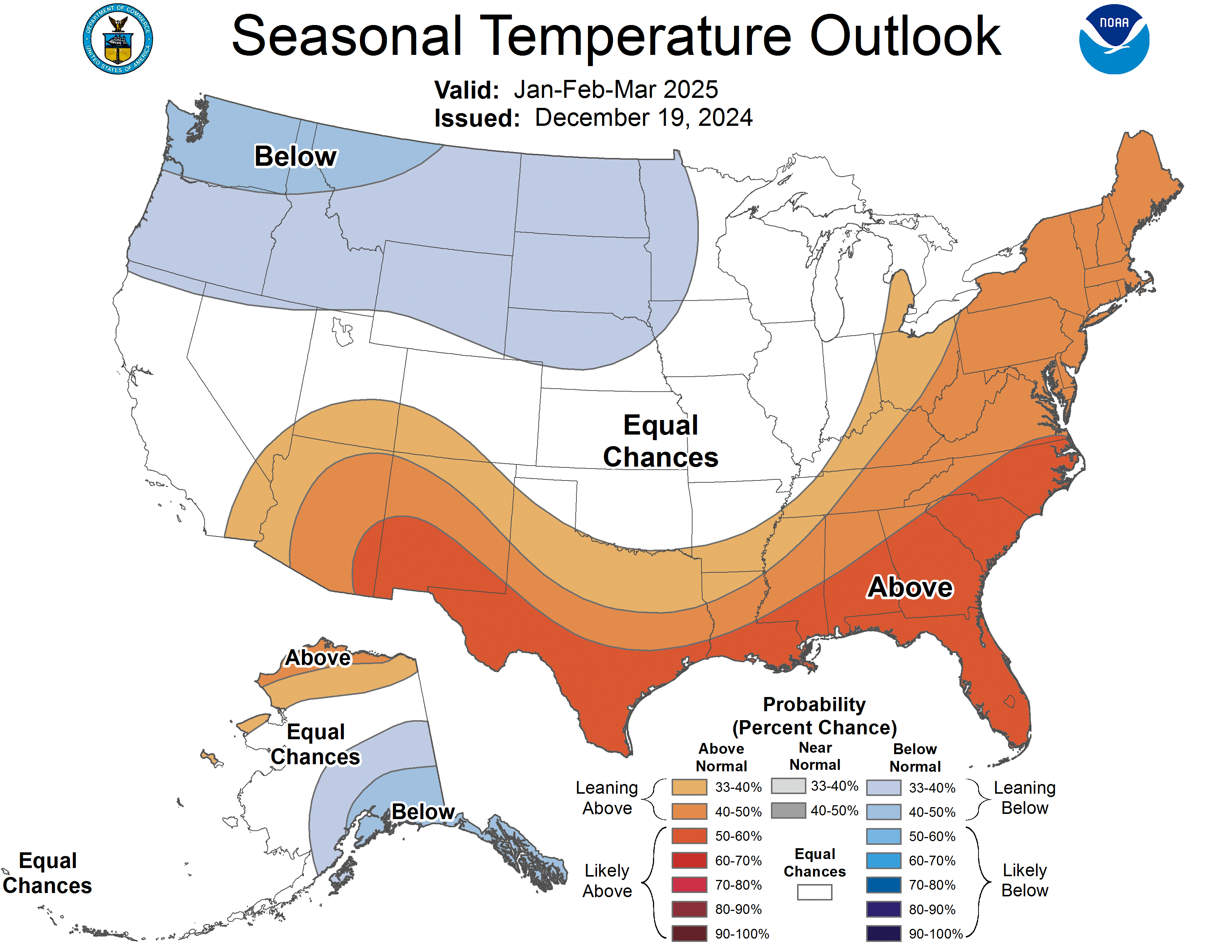
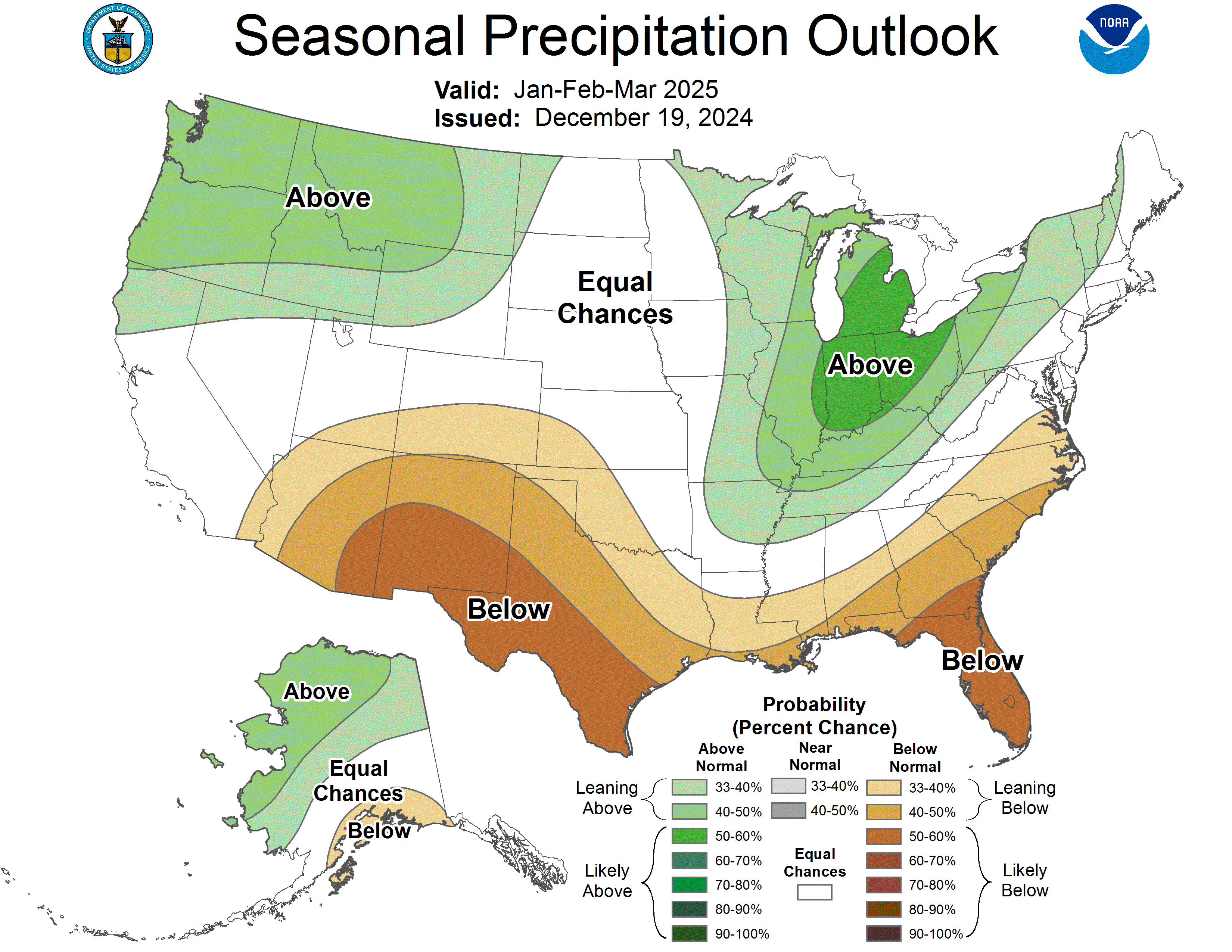
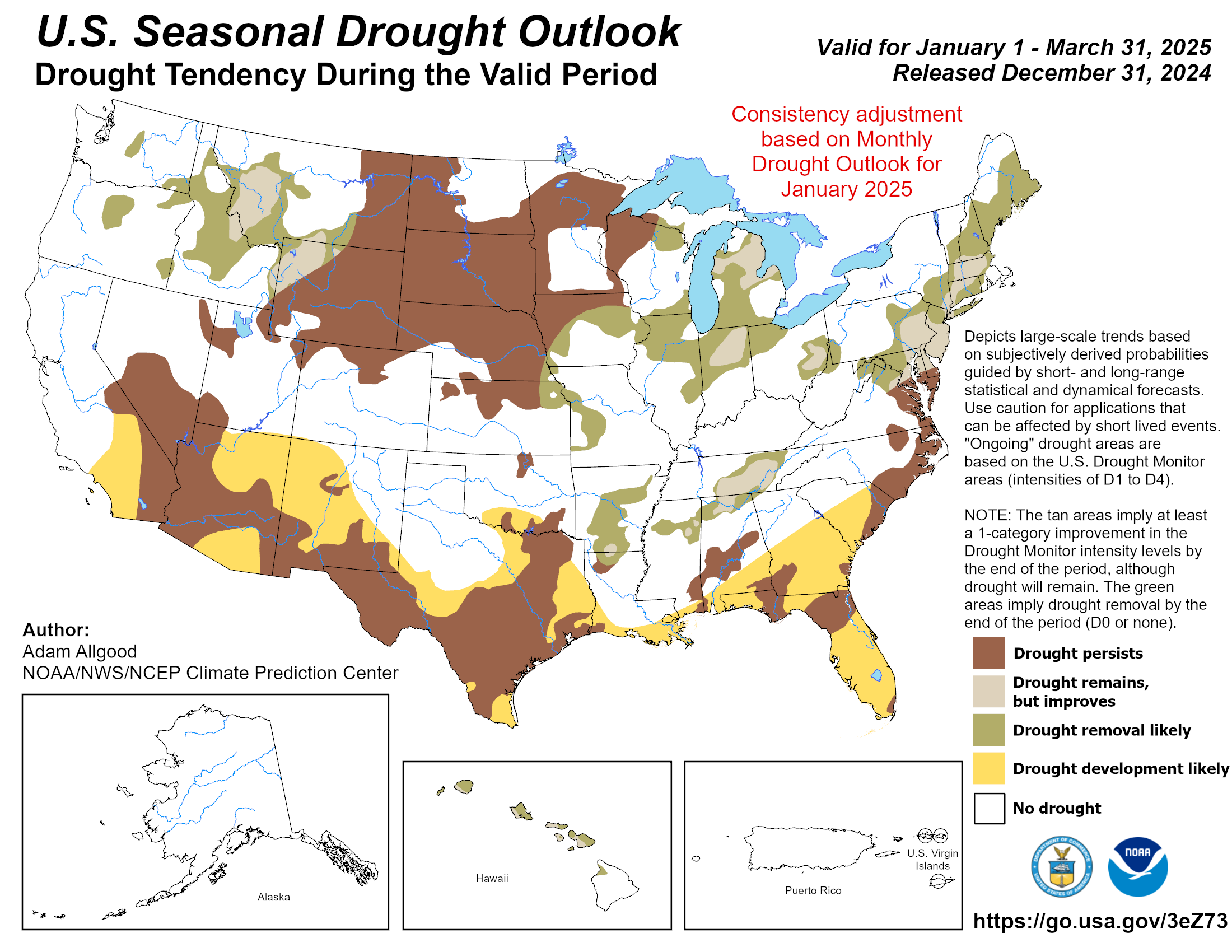
The latest seasonal outlooks through March 31, 2025 are hot off the presses from the #Climate Prediction Center