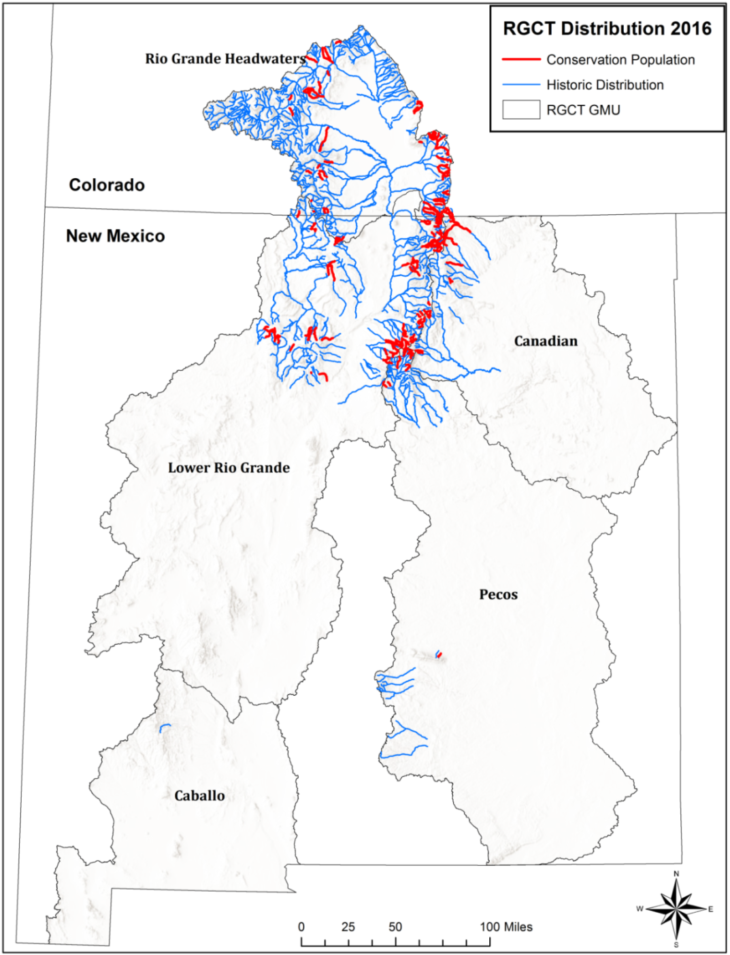
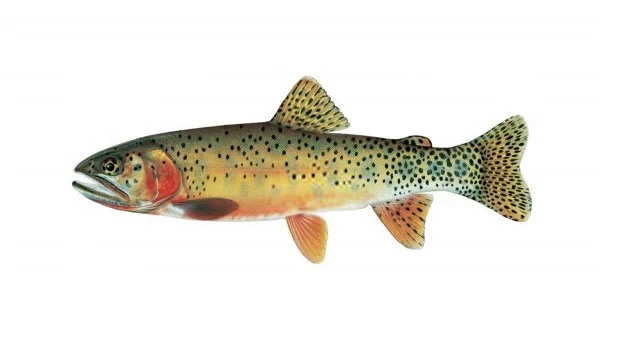
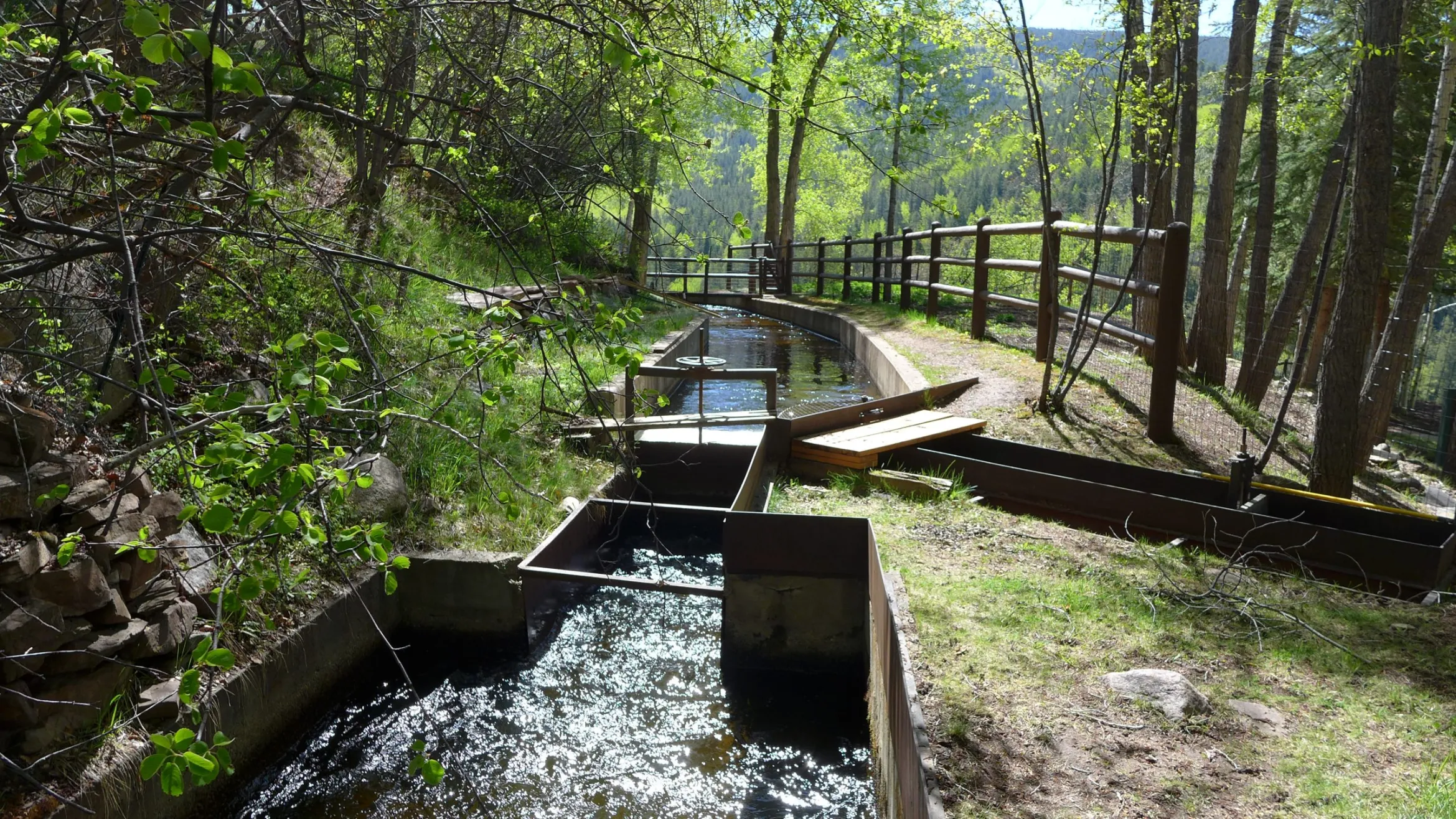
It’s a native species endangered (in the colloquial sense, not the legal sense) by both anthropogenic habitat changes (warm temperatures, less water, dams and stuff) and non-native immigrant species.
USFWS identified non-native hybridization and competition as the most significant threat, and concluded that collective action by a collaborative effort including federal, state, and tribal governments, along with NGOs, has successfully stabilized the fish’s population since discussion about possible listing first began a quarter century ago.
“The 119 populations are distributed across a wide geographic area, providing sufficient redundancy to reduce the likelihood of large-scale extirpation due to a single catastrophic event. Furthermore, the Rio Grande cutthroat trout Conservation Team has a demonstrated track record of responding to negative events to protect and even expand populations in the aftermath of large-scale changes to streams. Populations cover the breadth of the historical range, ensuring retention of adaptive capacity (i.e., representation) to promote short-term adaption to environmental change. The SSA report describes the uncertainties associated with potential threats and the subspecies’ response to these potential threats, but the best available information indicates the risk of extinction is low. Therefore, we conclude that the Rio Grande cutthroat trout is not in danger of extinction throughout all of its range and does not meet the definition of an endangered species.”
ESA questions
I’ve not followed the Rio Grande cutthroat trout saga closely. My primary interest is in its value in highlighting broader issues around the ESA that my Utton Center colleagues and I have been discussing of late.
Collective action
Collective action by a broad coalition of stakeholders before ESA listing seems to have been key in protecting what’s left of the species and avoiding listing.
Question: Is this driven by a societal environmental value (We love this fish and the ecosystems on which it depends, and want to protect them!) or a desire to avoid the messiness of ESA listing and the resulting land and water management craziness that would result therefrom?
In the new book, we note a clear distinction between these two types of cases in the history of Albuquerque’s relationship with the Rio Grande: environmental actions growing out of collective community values, and environmental actions driven by statutory (in this case ESA) mandates.
Charisma
Charismatic?
We know that charismatic species get more societal love. (Woe is our diminutive Rio Grande silvery minnow.) The Rio Grande cutthroat trout is charismatically beloved. Does this help explain the energetic collective action we’ve seen?
Loper Bright for the “foreseeable future”
Reading the USFW federal register notice in light of the Supreme Court’s Loper Bright decision, is interesting. IANAL, but my shorthand for the decision is that the courts no longer must defer to an implementing agency’s interpretation of ambiguous statutory provisions. Here’s USFWS in the cutthroat trout decision:
Maybe language like that was always included in USFW Federal register notices? I expect a lot more post-Loper Bright debates about what Congress intended.
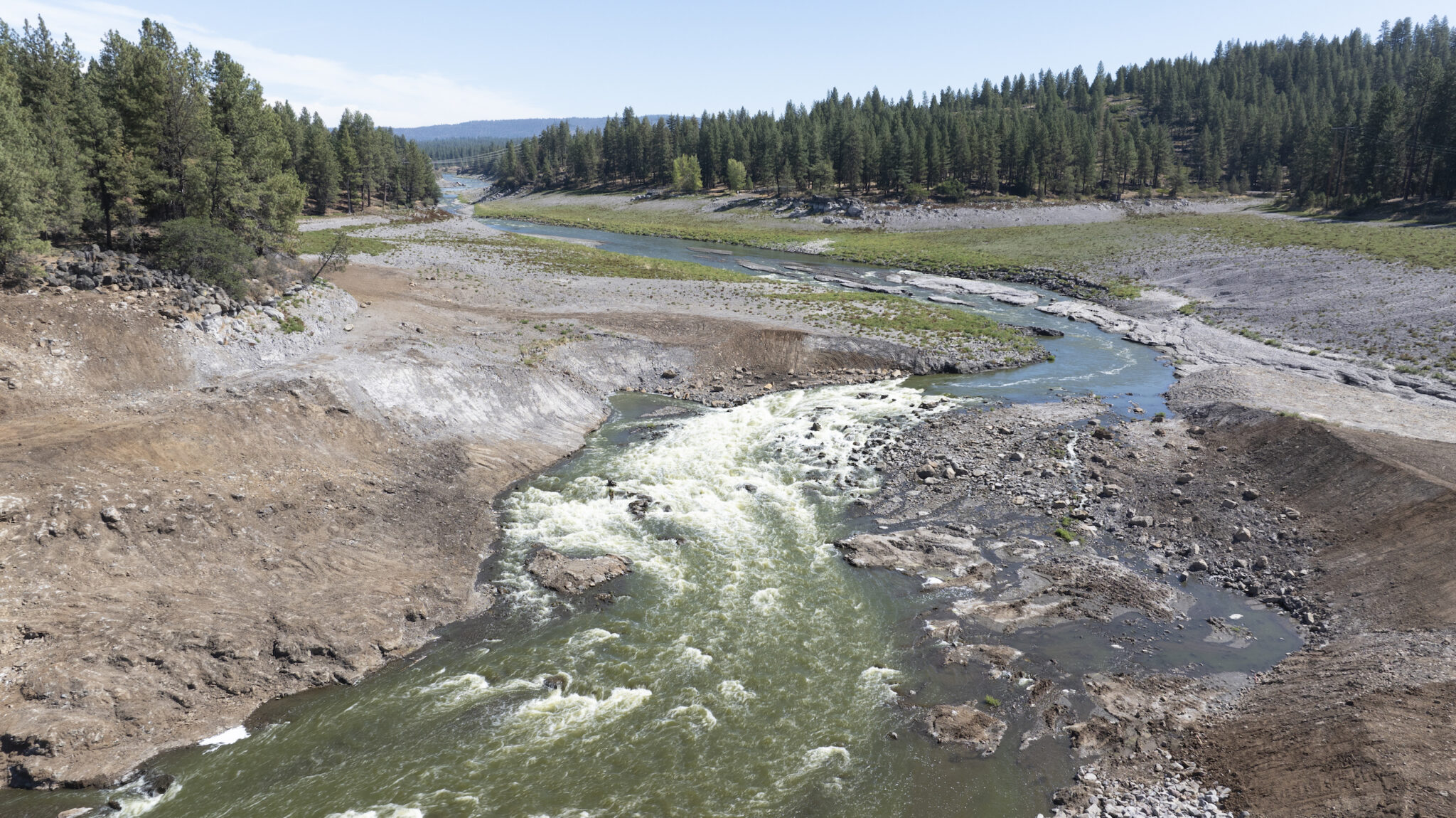
As I stood on a bridge and looked upstream along the Klamath River, I felt confused. For over 15 years, I had stood in the same stop and gazed on the earthen face of Iron Gate Dam. But on this day, I saw…space. Framing the edges of that space, I saw canyon walls, river bed, floodplains and terraces, and miles of vista.
I lost my dad last year, so I understand having the experience of noticing the absence of someone who had been monumental in my life – both physically and metaphorically. I understand the confusion that results from seeing a space where he used to be and being keenly aware of his absence. I noticed the absence of Iron Gate Dam in the same way – the loss of something that had been monumental in my life and in the lives of thousands of others. But unlike the absence of my dad, seeing the absence of Iron Gate Dam stirred feelings of wonder, joy, hope, and gratitude.
Undammed: The KLamath River Story
The history of water in the West has been shaped by conflict, greed, and scarcity, but in a remote pocket of Southern Oregon and Northern California, a different Western water story is taking shape. The largest dam removal in history is on the verge of completion on the Klamath River. This moment is the result of a historic decades-long Tribally-led campaign to free the Klamath River and restore salmon and steelhead populations, which are core to Native traditions and foodways. This is undoubtedly a huge triumph.
The first episode of this in-depth podcast dives into the past, present, and future of the world’s largest dam removal project and features Dr. Ann Willis, American Rivers’ California Regional Director.
Federal water officials are expected to provide further details in the coming weeks on four proposals for managing the dwindling Colorado River water supply. The current agreement among states expires next year…A pending analysis will detail the benefits and drawbacks of four different plans, said Carly Jerla, the senior program manager at the U.S. Bureau of Reclamation. The analysis will not include any recommendations. The states must reach an agreement on how to allocate the available water by August 2026…
The proposed alternatives include: protecting infrastructure by monitoring how much river water is delivered and using existing agreements when demand overwhelms the supply; adding delivery and storage for Lake Powell and Lake Mead, along with “federal and non-federal storage” to boost system sustainability and flexibility; and a cooperative conservation approach aimed at managing and gauging water releases from Lake Powell amid “shared contributions to sustain system integrity. The fourth proposal would add delivery and storage for lakes Powell and Mead, encourage conservation and agreements for water use among customers and “afford the tribal and non-tribal entities the same ability to use these mechanisms.”
“The preferred alternative isn’t any single one of these alternatives,” Jerla said. “They were constructed to ensure that these concepts were grouped together to allow for the possibility to mix and match.”
[…]
Whatever management path the states agree on, a team of water officials has one concern: the annual set water releases at Glen Canyon Dam. Eric Kuhn, the retired general manager of the Colorado River Water Conservation District, partnered with other water leaders to author a letter to the Bureau of Reclamation asking it to stop the practice of determining water release quantities annually for Glen Canyon Dam in northern Arizona. They agree that water releases must continue. However, they don’t want a set release amount, stressing the flexibility helps with maintaining the ecosystem around the river, specifically the ecosystem around the Grand Canyon…The management approach Kuhn’s team prefers would create two pools: a Lower Basin pool in Lake Powell, the reservoir connected to Glen Canyon Dam; and an Upper Basin pool in Lake Mead, the reservoir connected to Hoover Dam. That would allow for changes in annual releases, if necessary, and offer flexibility, he said.
Map of the Colorado River drainage basin, created using USGS data. By Shannon1 Creative Commons Attribution-Share Alike 4.0
The Upper Colorado and San Juan River Basins Endangered Fish Recovery Programs Reauthorization Act was included in the fiscal year 2025 National Defense Authorization Act. The fish legislation extends programs that protect four threatened and endangered native fish species in the Upper Colorado and San Juan river basins. The defense bill now heads to the president’s desk. The Senate version of the fish bill was sponsored by U.S. Sens. John Hickenlooper and Michael Bennet, both D-Colo., and Sen. Mitt Romney, R-Utah, among others. U.S. Rep. Lauren Boebert, R-Colo., carried a House version of the fish bill. A negotiated version of her bill and the Senate bill ended up being included in the defense bill. The Senate passed the defense bill Monday after passage by the House, despite controversy over a provision banning some gender-affirming care for transgender children of service members, according to a Reuters story.
The fish programs provide for studying, monitoring and stocking the four fish species, managing habitat and river flows, and combating invasive species through 2031. That provides certainty for Upper Basin water use and fulfills the federal government’s trust responsibility to tribes, according to a news release from Hickenlooper’s office…The fish bill language authorizes up to $92 million for the Bureau of Reclamation to contribute annual cost-shared funding for program implementation. It also adds up to $50 million to the authorization ceiling for capital projects, which will fund infrastructure improvements to benefit the fish.
Potential property owners are often not asking enough questions about water, experts say — and it can end up being a costly mistake.
When someone buys a property in Colorado, they can find themselves thrust into the complicated world of Western water. People looking in towns and cities might need to learn about providers and rate changes. Those interested in empty lots, unincorporated areas of counties or rural areas of the state might need to study up on water rights, wells and irrigation.
If they’re prepared, buyers will reach out to experts, and even attorneys, to understand the ins-and-outs of their new water supply before signing a deal. If they’re not, they could end up in the middle of a fight or with an expensive liability.
“There have been neighborly confrontations over water,” said John Wells, a broker and owner of the Wells Group in Durango. “I’ve seen people turn other people’s ditches off, locking their headgates, unlocking their headgates. It doesn’t make for a good neighborly situation.”
Western water law is frequently confusing — even for experts and real estate agents. Interested buyers coming from out of state are often used to a completely different system of managing water. Urban residents looking to move into rural Colorado might have little experience with ditches, ponds or water law.
“Most brokers don’t understand it because it’s complicated and confusing, and it doesn’t really impact their client’s ability to purchase a house,” said Aaron Everitt, a Fort Collins-based broker and developer with The Group Real Estate.
But skipping past a thorough review of water assets can leave buyers with frustrating problems. They might face water bill increases, lead pipes, or leaky sprinklers. For more rural properties, a typo or missing signature in a water or land deed can take an extra month to fix. Ponds and reservoirs on a property might actually be illegal water storage — which could take a court process or big dollars to resolve, said Bill Wombacher, an attorney with Nazarenus, Stack & Wombacher, who teaches a water law class for real estate agents.
New property owners might be surprised to see a stranger in their backyard clearing out a ditch — or, as happened in 2022 in Kittredge, dozens of people using private property to access a popular creek running through private property, which prompted a local debate about public access.
It is easier to handle any water questions that come up before a deal is signed, and buyers might want to budget extra time in the purchase process for tasks like well inspections, said Amanda Snitker, chair of the market trends committee for Denver Metro Association of Realtors.
One piece of advice: “Be sure they’re being thorough. Don’t be afraid to ask questions, even though they might seem silly,” Wells said. “There’s no silly question when it comes to water.”
So what kind of questions should a buyer ask? [We] asked the experts to break it down.
I want to buy in an urban area. Where do I start?
People interested in buying a home, apartment or townhome in a more populated area — like a town, city, special district or planned development — should start by understanding their water supply and who provides it.
Is the property already connected to a main water system?
If so, it can save money for the buyer. Tap fees, the cost of adding a new connection, can be as low as $1,500 to $8,000, said Wells, who works in small towns and rural areas in southwestern Colorado. Or, the price of tapping into the local water system could be more like $50,000 in areas of the Front Range or $200,000 in some areas of the Western Slope where water supplies are tight, Wombacher said. Some water providers can also freeze adding new connections when their water system or supply is maxed out.
Who is the property’s water provider?
Some areas come with more established networks of pipes, canals, tunnels and reservoirs operated by a water provider. These water districts and utility providers are public entities, and buyers should know how functional or dysfunctional the organization is, Everitt said.
It’s also helpful to understand if the organization is planning to build new water infrastructure or has a backlog of needed repairs, Snitker said. The cost of water and related fees can vary depending on the water provider, and it’s good to know those details up front, she said.
Graphic credit: EPA
The experts also recommended learning about wastewater systems, water quality and any water-related expenses that could come up for new owners. Here are some questions they recommended asking:
Has the property ever had any issues with galvanized pipes? Does it have any lead pipes?
What is the quality of the water, and are there any contaminants?
If there is a septic system, how old is it and where is it located?
Outside of a service area? Here’s how to begin.
Not all properties lie within an established service area for a water provider, like homes in unincorporated areas, rural counties and some new developments.
Homes, ranches and land in rural areas also might come with water rights — a complicated part of how Coloradans access water.
When a buyer tours a property, they should keep an eye out for certain features to know what to ask: Look for wells, ponds, lakes, ditches, streams, irrigation systems and other outdoor water features, experts said.
This Parshall flume on Red Mountain measures the amount of water diverted by the Red Mountain Ditch. Pitkin County commissioners approved a roughly $48,000 grant to pipe the last 3,600 feet of the ditch in the Starwood neighborhood. CREDIT: HEATHER SACKETT/ASPEN JOURNALISM
What’s up with ditches
Colorado is covered with a decades-old network of ditches that help transfer water to farmers, ranchers and communities around the state. These are often earthen, straight and clearly human-made, but they can also be easy to miss.
For Wombacher, ditch easements are the single most-frequent source of frustration among his clients, he said.
They are tied to a complicated system of water rights, which means ditch users have legal rights to receive a certain amount of water at specific times and locations during the year.
Ditch managers and users can move up and down the channel, even on private property, to do maintenance and manage water supplies.
That means property owners might see water flowing, but it’s not theirs to use. They cannot disrupt the transfer of water, use ditch water or move the ditches (unless they go to water court). If that does happen? “It’s like an immediate lawsuit every single time,” Wombacher said.
Questions to ask:
Is it actively used?
How might this impact what I can and can’t do with the property?
If I’m not able to move the ditch, do I still want the property?
Who operates the ditch?
See a pond, get the papers
If a buyer sees a pond or lake on the property, they should ask for the water court decrees attached to the stored water.
This pond in Chaffee County near Salida is one of thousands in the Arkansas River Basin that is being evaluated by the Division 2 engineer’s office as part of a new pond management program. Engineers say ponds without decreed water rights could injure senior water rights holders. Photo credit: Colorado Division of Natural Resources via Aspen Journalism
“There are quite a few unlawful uses going on out there, particularly with ponds and reservoirs,” Wombacher said.
Property owners build water storage and sometimes do not go through the water court process to get a legal right to access, store and use the water.
“Just because a seller has been able to get away with something for a long time, doesn’t mean the buyer will,” Wombacher said. “Anytime there’s a water use going on on a property, you want to make sure as a buyer that it’s a lawful use.”
Typical water well
What does it mean if there’s a well?
The state of Colorado regulates wells, and well permits come with specifications about how much water can be used and what it can be used for.
Interested buyers should start by learning about water court decrees and permits related to the well. The state has databases that can provide more information about a well using its permit number.
Adding new wells can be expensive and come with limitations based on the location and characteristics of a property, like whether it is larger or smaller than 35 acres, experts said. Buyers will also want to ask about any water quality, contamination or pressure issues in advance.
Questions to ask:
If there is not a well — and a buyer might want one — what are the options for getting a well?
Can you provide a recent inspection report?
Does the well produce the amount of water stated in the permit? If not, the property might need a cistern.
“Just like you do a home inspection, you call someone and they do a well inspection,” Snitker said.
What do I need to know about water rights?
Many properties, especially in rural areas, come with irrigation water supplies — and therefore, water rights.
Water rights can add value to a property, but they also come with restrictions related to where, when and how much water can be used. These rights are legally tied to certain beneficial purposes, like farming, drinking, snowmaking, fire prevention and more.
“I think a lot of lay people, and it’s not their fault, think they can use water anytime they want,” Wells said.
Some water rights are also more valuable than others: Under Colorado water law, more recently established “junior” rights get cut off first when water is short so older and more valuable “senior” rights get their share.
Don’t need irrigation water? A property owner has to go to water court to change details of a water right. And a new owner can’t just own a water right and plan never to use the water for its intended purpose. If that happens, the state might analyze whether a right has been “abandoned,” which could dissolve the right.
Water rights are often transferred from one owner to another using a deed or a title. New buyers should check to make sure these documents are in good order, Wells said.
“Sometimes it’s prudent to hire a water attorney to make sure that what is in the deed matches what you’ll actually be sold,” he said.
Questions to ask:
How much water can I use, when, where and for what purpose?
What year is the water right, and how senior is it compared with others on the same stream or river?
What is the supply like in periods of drought?
Does the water right match what I’d like to use the water for, or could I have to go to water court to change it?
Are the ditches, canals and other infrastructure that deliver the water well-maintained?