I’m at the Colorado Water Congress Annual Convention. The next 3 days should be a hoot!
Speaker Bios and Agenda: https://coloradowatercongress.growthzoneapp.com/ap/CloudFile/Download/pMmYw69p
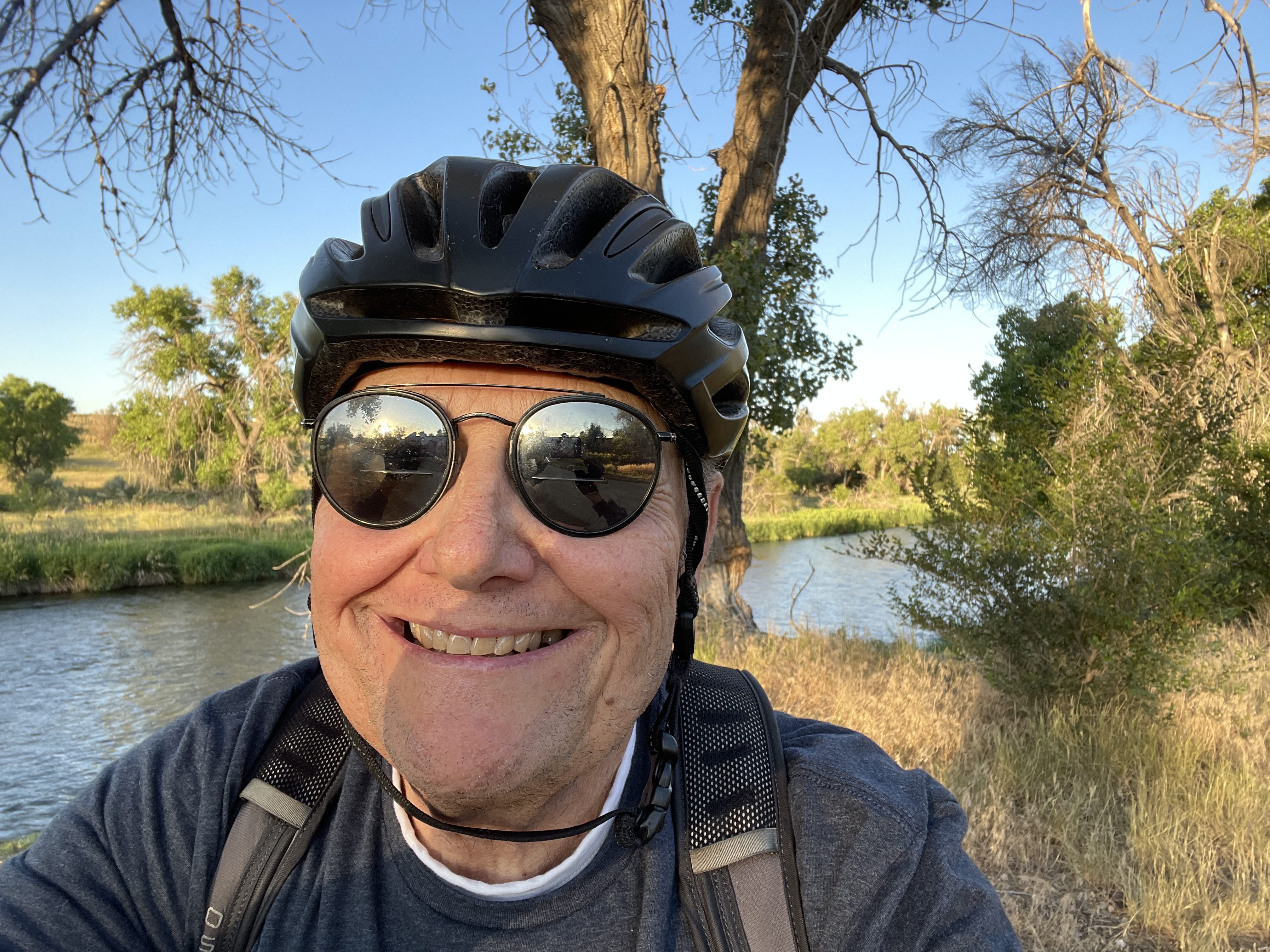

I’m at the Colorado Water Congress Annual Convention. The next 3 days should be a hoot!
Speaker Bios and Agenda: https://coloradowatercongress.growthzoneapp.com/ap/CloudFile/Download/pMmYw69p
Click the link to read the release on the Walton Family Foundation website (Mark Shields):
January 28, 2025
74% of Gen Zers say climate change threatens the clean water supply in the U.S.

WASHINGTON, D.C. — Jan. 28, 2025 — The Walton Family Foundation and Gallup released a new report today examining Gen Z’s experiences with climate change and water issues, shedding light on their concerns about climate events and the potential impact on their generation’s future. The research finds water issues top the list of Gen Z’s climate worries, with individual perspectives shaped by diverse experiences and beliefs.
Of 12 climate-related issues measured in the study, majorities of Gen Zers express “some” or “a great deal” of worry about nine, including five related to water. This is true regardless of location, with water pollution and the health of fish and oceans ranking among the top three concerns in every U.S. Census region. While a majority of Gen Zers nationwide (61%) have reported experiencing a water-related climate issue in the past two years, water-related problems are more commonly reported by those in the Central and Western U.S.
When considering how these issues may affect their future, Gen Zers report concern about the availability of clean water and the potential need to relocate. Those who have experienced climate-related events at a higher rate are more likely to worry about these impacts . T here are notable differences across demographic groups. Hispanic (36%) and Black (34%) Gen Zers are more likely than their White (27%) peers to have experienced unsafe tap water . They are also more likely to believe there will not be enough clean water for their generation to live in the future (41% of Hispanic and 34% of Black Gen Zers, compared with 24% of W hite Gen Zers). Adult Gen Zers are significantly more likely to worry about needing to move due to climate change compared with their 12- to 17-year-old counterparts (40% vs. 27%, respectively).

There is large-scale unity among young people on the importance of protecting water quality. Seventy-four percent of Gen Zers say it is “very important” to protect oceans, lakes and rivers from pollution, with another 19% saying it is “somewhat important.” Gen Z acknowledges the adverse effects of climate change on water resources: 74% of Gen Zers say climate change impacts the amount of clean water available in the U.S. “somewhat” (47%) or “a great deal” (27%). There is solid bipartisan agreement on the inadequacy of current water protection efforts: M ajorities of both Democratic (88%) and Republican (63%) Gen Z adults say the U.S. is “probably” or “definitely” not doing enough to protect water.
“Gen Z is united in their deep concern for water protection and availability, recognizing it as a critical issue that touches us all — regardless of where we live or who we are,” said Moira Mcdonald, Environment Program Director at the Walton Family Foundation. “As we look to the future, there’s a growing sense of urgency. Young people fear inheriting a world where clean water is scarce and climate change continues to worsen. We need to work on solutions to ensure clean, safe water remains accessible for generations to come.”
Looking ahead, Gen Zers are pessimistic about the trajectory of climate change — 67% believe climate change will worsen in their lifetime. And rates of pessimism are about 10 percentage points higher among those who have recently experienced a climate-related issue such as flooding, drought or unsafe tap water. Among voting-age Gen Zers, majorities of both Democrats and Republicans believe it is very or somewhat unlikely that climate change will be stopped.
Methodology
Results are based on a Gallup Panel™ web survey conducted Aug. 6-14, 2024, with a sample of 2,832 12- to 27-year-olds from across the U.S. The Gallup Panel is a probability-based panel of U.S. adults. Data were weighted to match demographic targets of age, gender, education, race, Hispanic ethnicity and Census region for 12- to 27-year-olds, using the most recent five-year population estimates from the American Community Survey.
Twelve- to 17-year-old children, as well as some 18-year-olds, were reached through adult members of the Gallup Panel who indicated they had at least one child aged 18 or younger living in their household. The remaining 18- to 27-year-old respondents are members of the Gallup Panel.
For the total sample of 2,832 respondents, the margin of sampling error is +/-2.9 percentage points at the 95% confidence level. Margins of error for subgroups are higher; selected subgroups are reported below. All margins of error reported are adjusted to account for the design effect.

Click the link to read the article on the Big Pivots website (Allen Best):
January 28, 2025
It’s part of a theme. Does Colorado need to start planning for potential Colorado River curtailments?
Snow in southwestern Colorado has been scarce this winter. Archuleta County recently had a grass fire. A store manager at Terry’s Ace Hardware in Pagosa Springs tells me half as many snowblowers have been sold this winter despite new state rebates knocking 30% off the price of electric models.
Near Durango, snowplows normally used at a subdivision located at 8,000 feet remain unused. At Chapman Hill, the in-town ski area, all snow remains artificial, and it’s not enough to cover all the slopes. A little natural snow would help, but none is in the forecast.
Snow may yet arrive. Examining data collected on Wolf Creek Pass since 1936, the Pagosa Sun’s Josh Kurz found several winters that procrastinated until February. Even when snow arrived, though, the winter-end totals were far below average.

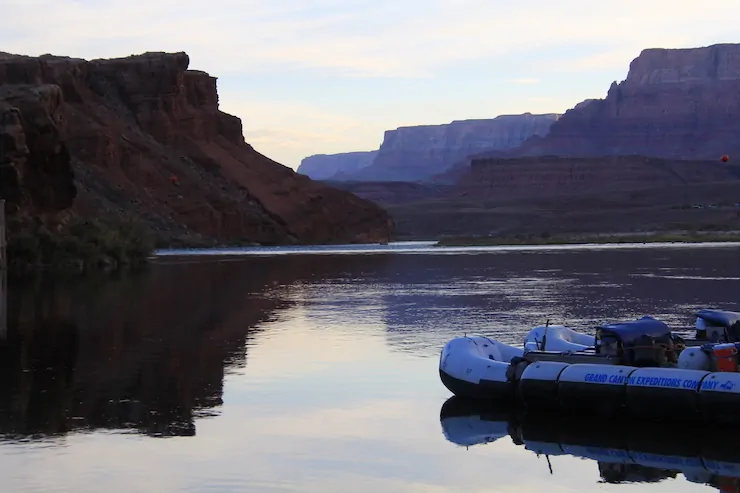
All this suggests another subpar runoff in the San Juan and Animas rivers. They contribute to Lake Powell, one of two big water bank accounts on the Colorado River. When I visited the reservoir in May 2022, water levels were dropping rapidly. The manager of Glen Canyon Dam pointed to a ledge below us that had been underwater since the mid-1960s. It had emerged only a few weeks before my visit.
That ledge at Powell was covered again after an above-average runoff in 2023. The reservoir has recovered to 35% of capacity.

Will reservoir levels stay that high? Probably not, and that is a significant problem. Delegates who wrangled the Colorado River Compact in a lodge near Santa Fe in 1922 understood drought, at least somewhat. They did not contemplate the global warming now underway.
In apportioning the river flows, they also assumed an average 17.5 million acre-feet at Lee Ferry, the dividing line between the upper and lower basins. It’s a few miles downstream from Glen Canyon Dam and upstream from the Grand Canyon. Even during the 20th century the river was rarely that generous. This century it has become stingy, with average annual flows of 12.5 million acre-feet. Some worry that continued warming during coming decades may further cause declines to 9.5 million acre-feet.

Colorado State University’s Brad Udall and other scientists contend half of declining flows should be understood as resulting from warming temperatures. A 2024 study predicts droughts with the severity that formerly occurred once in 1,000 years will by mid-century become 1-in-60 year events.
How will the seven basin states share this diminished river? Viewpoints differ so dramatically that delegates from the upper- and lower-basin states loathed sharing space during an annual meeting in Las Vegas as had been their custom. Legal saber-rattling abounds. A critical issue is an ambiguous clause in the compact about releases of water downstream to Arizona and hence Nevada and California.

Might Colorado need to curtail its diversions from the Colorado River? That would be painful. Roughly half the water for cities along the Front Range, where 88% of Coloradans live, comes from the Colorado River and its tributaries. Transmountain diversions augment agriculture water in the South Platte and Arkansas River valleys. The vast majority of those water rights were adjudicated after the compact of 1922 and hence would be vulnerable to curtailment. Many water districts on the Western Slope also have water rights junior to the compact.
In Grand Junction last September, Andy Mueller, the general manager of the Colorado River Water Conservation District, the primary water policy agency for 15 of Western Slope counties, made the case that Colorado should plan for compact curtailments — just in case. The district had earlier sent a letter to Jason Ullmann, the state water engineer, asking him to please get moving with compact curtailment rules.
Eric Kuhn, Mueller’s predecessor at the district, who is now semi-retired, made the case for compact curtailment planning in the Spring 2024 issue of Colorado Environmental Law Review. Kuhn’s piece runs 15,000 words, all of them necessary to sort through the tangled complexities. Central is the compact clause that specifies the upper basin states must not cause the flow at Lee Ferry, just below today’s Glen Canyon Dam, to be depleted below an aggregate of 75 million acre-feet on a rolling 10-years basis.
That threshold has not yet been met — yet. Kuhn describes a “recipe for disaster” if it is. He foresees those with agriculture rights on the Western Slope being called upon to surrender rights. He and Mueller argue for precautionary planning. That planning “could be contentious,” Kuhn concedes, but the “advantages of being prepared for the consequences of a compact curtailment outweigh the concern.”
Last October, after Mueller’s remarks in Grand Junction, I solicited statements from Colorado state government. The Polis administration said it would be premature to plan compact curtailment. The two largest single transmountain diverters of Colorado River Water, Denver Water and Northern Water, concurred.
Recently, I talked with Jim Lochhead. For 25 years he represented Colorado and its water users in interstate Colorado River matters. He ran the state’s Department of Natural Resources for four years in the 1990s and, ending in 2023, wrapped up 13 years as chief executive of Denver Water. Lochhead, who stressed that he spoke only for himself, similarly sees compact curtailment planning as premature.
“It just doesn’t make sense to go through that political brain damage until we really have to,” he said. “Hopefully we won’t have to, because (the upper and lower basins) will come up with a solution.”
Lochhead does believe that a negotiated solution remains possible, despite the surly words of recent years…
“We need to figure out ways to negotiate an essentially shared sacrifice for how we’re going to manage the system, so it can be sustainable into the future,” he said. This, he says, will take cooperation that so far has been absent, at least in public, and it will also take money.
Instead, we’ll have to slog along. The runoff in the Colorado River currently is predicted to be 81% of average. It fits with a theme. Unlike the children of Lake Wobegone, most runoffs in the 21st century have been below average.
