Northern Water Board Director Leads Panel Discussions at Annual #ColoradoRiver Gathering — @Northern_Water #COriver #aridification #CRWUA2024

Northern Water Board Director Jennifer Gimbel, left, leads a panel at the Colorado River Water Users Association this month in Las Vegas. L to R: Jennifer Gimbel, Gene Shawcroft, Estevan López, and Brandon Gebhart. Photo credit: Northern Water

Click the link to read the release on the Northern Water website:

December 20, 2024

A member of the Northern Water Board of Directors played a large role at the annual gathering of Colorado River water officials this month in Las Vegas.

Jennifer Gimbel, who represents Larimer County on the Northern Water Board of Directors and is a senior water policy scholar at Colorado State University, moderated a pair of panel discussions at the Colorado River Water Users Association (CRWUA) annual conference about the current state of negotiations on new guidelines for the operations of Lake Powell and Lake Mead.

Gimbel helped negotiators from the Upper Basin states of Colorado, New Mexico, Utah and Wyoming outline their concerns, and in a second panel, did the same for negotiators for the Lower Basin states of Arizona, California and Nevada.

For the 1,000-plus attendees of the conference, it was an opportunity to learn more about what will guide future discussions about use of Colorado River water throughout the Southwestern United States.

Northern Water is a member of CRWUA and engages with other Colorado River users throughout the year.

In photo from second left: Gene Shawcroft of Utah, Estevan Lopez of New Mexico, Becky Mitchell of Colorado and Brandon Gebhart of Wyoming.

The new Farm Bill extension provides some relief for #Colorado producers, but leaves much unsettled — Colorado Public Radio

Photo credit: Jones Farms Organics

Click the link to read the article on the Colorado Public Radio website (Caitlyn Kim). Here’s an excerpt:

December 24, 2024

As part of a temporary stopgap government funding measure passed last week, Congress also approved a one-year extension of the Farm Bill. While the Farm Bill is seen as-must pass legislation by all sides in Congress, Congressional leaders still struggled to reach a compromise over the last two years, leaving farmers relying on outdated provisions approved in 2018, well before the COVID pandemic, the increases in operating costs, and a number of natural disasters.

Restoration project on West Fork of #DoloresRiver benefits trout habitat, ecosystem as a whole — The #Durango Herald

Cutthroat trout historic range via Western Trout

Click the link to read the article on The Durango Herald website (Cameryn Cass). Here’s an excerpt:

December 28, 2024

An area chapter of Trout Unlimited recently partnered with a landowner to restore a portion of the West Fork of the Dolores River their property borders…Besides the West Fork’s beauty, it’s the largest tributary of the Lower Dolores. It’s also home to all four kinds of trout, including the only one native to Colorado, the cutthroat…

Over time, modern practices and a change of land use along the riverbanks – such as ranching, grazing, or simply cutting out big fields – has resulted in less and less “large woody debris” falling into the river, Rose said. That debris is not only a source of food, it also can be something of an anchor to slow down the water flow, and to offer fish and other critters a refuge.

In effect, the restoration project was in the name of something Rose called “structural complexity.”

“That’s the most important term you’ll pick up in this whole project,” Rose said. “If you don’t have complexity and have homogeneity, you don’t have the richness you need to accommodate all of the aquatic co-evolutions.”

To create this structural complexity – and put simply – the project involved strategically arranging big boulders in different ways and places along the stretch of river.

Looming questions about data centers — Allen Best (@BigPivots) #ActOnClimate

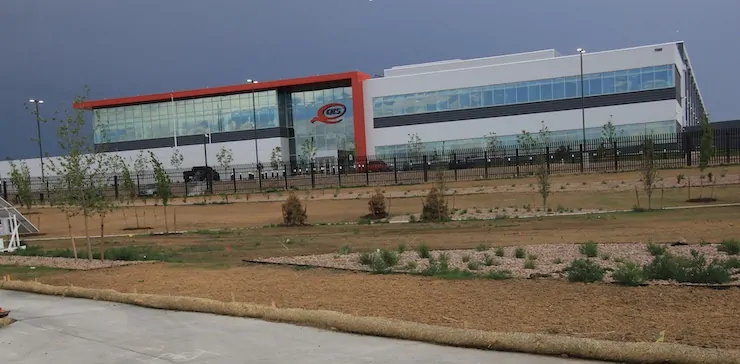
QTS Data Center Aurora June 2024. Photo credit: Allen Best/Big Pivots

Click the link to read the article on the Big Pivots website (Allen Best):

January 2, 2025

Gov. Polis and many utilities say that data centers can benefit just about everybody in Colorado. But others fear impacts to rates and potential setbacks in reduction of emissions.

Under the umbrella of the energy transition were dozens of interesting, important stories in Colorado during 2024, including:

  • Tri-State Generation and Transmission Association got the lifeline it so desperately needed to make the transition from coal in the form of $679 million in assistance from the federal government. Sen. Michael Bennet — a key partner in the Inflation Reduction Act sausage-making in D.C. in 2022 — was there to commemorate it. And United Power, itself independent of Tri-State on May 1, is getting $261.6 million.
  • Pueblo talked a lot about nuclear — and inexplicably began cleaving itself from the renewable energy that had been very nearly the sole bright spot of its economy in recent years.
  • Holy Cross Energy achieved 90% renewable generation for a month this fall.
  • United Power broke ground on a natural gas plant, and Platte River Power Authority and everybody else laid plans similar plans for natural gas.
  • Seeds were planted for geothermal to become a viable part of Colorado’s energy story in Vail, Steamboat and easily a dozen other places across Colorado.

Important stories — these and many others in this energy transition. But easily surpassing them was the story of data centers and their voracious hunger for energy. Could their looming demand  derail Colorado’s decarbonization plans? Defenders say no, but they are not convincing. And will interests of ratepayers be protected?

Figuring out the public policy to balance public interests and private gain will be a major issue in the 2025 legislative session.

Three years ago, few people outside of Virginia’s data center alley were talking about data centers. In 2019, there was a half- or less-baked idea of a cryptocurrency mill in Pueblo. Later came a crypto outfit near Montrose.

The era of hyperscale data centers — hyperscale is often defined as having “massive” power needs — arrived in early 2022 when Microsoft purchased a 260-acre parcel in Aurora, south of DIA, for $63.5 million.

In February 2023, Mile High CRE, an online news site about commercial development, described the purchase as the first in metropolitan Denver for a hyperscale data center.

“Denver has an edge over more established markets like Silicon Valley or Northern Virginia in that cost of power, cost of land, and cost of construction are lower, environmental risks are not as high, and the central location grants access to a plethora of networks,” it said. What Colorado lacked, the article added, was a competitive incentive package.

In February 2024, State Sen. Kevin Priola introduced a bill that would have extended more tax breaks to data center developers. Big Pivots did write about that in a column that got broad play across Colorado. See: “Why do data center need tax breaks in Colorado? They’re coming anyway.” A few weeks later came news that the data center subsidy bill was postponed. It never got one committee hearing.

Colorado already has one hyperscale data center. It’s in Aurora, and Mark Jaffee of the Colorado Sun broke the story about QTS in October 2023. (Big Pivots was too busy on a series about water and urban landscapes to chase it).

Two guest columnists in Big Pivots weighed in on the value of data centers. Morey Wolfson, a one-time staffer at the Colorado Energy Office and at the PUC, in September argued against subsidies. Jeff Ackermann, a former chair of the PUC as well as director of the state energy office, in October argued that data centers can have upsides. Meanwhile, the Economist, the New York Times and the Washington Post began writing frequently about data centers — including this story from last week: “Energy hungry AI firms bet on these moonshot technologies.”

Xcel Energy in October delivered the statistics that made this a compelling Colorado story. The electrical utility, responsible for more than half of electrical sales in Colorado, said it needed a staggering 12,500 to 14,000 megawatts of new generation to meet rising demand. To put that into perspective, Rush Creek, Xcel’s wind farm between Limon and Colorado Springs, has a capacity of 600 megawatts.

After average annual growth of 0.7% during the preceding five years, said Xcel, it projected 4% growth compounded annually from 2023 to 2031.

Data centers lie at the center of this projected growth, 62% for energy growth overall and 72% for peak demand, according to Xcel’s Jack Ihle. In an Oct. 15 filing with Colorado regulators, he also said the same base-case forecast saw electric vehicles producing 19% and building electrification 12% of its new demand.

Even without this new demand, Xcel has had trouble getting renewable energy across the finish line. These are projects approved through the electric resource plan from 2021. Supply chain issues have something to do with that.

How will Xcel be able to meet burgeoning demand? And does this imperil Colorado’s drive to meet its 2030 goal of 50% economy wide reduction in emissions? The state’s existing modeling already showed the state falling short, and that was without the data centers becoming a major part of the equation. Now comes speculation — and, at this point it is merely that, speculation — that Xcel may find it necessary to keep Comanche 3, its newest and largest coal-fired unit, operating beyond 2030.

That speculation is not completely out of the blue. That is indeed what has happened in Virginia.

Here, I have described Xcel Energy. But data centers could be part of the stories of Tri-State and its members as well as Platte River Power Authority, Black Hills Energy and perhaps others. Even Fort Morgan — a town of 12,000 northeast of Denver, which is supplied by electricity by the Municipal Energy Agency of Nebraska. A Wyoming company, Prometheus Energy, says it intends to create a data center there as well as in Pueblo in 2026, according to one report.

Chris Hansen, one of Colorado’s most important state legislators in the energy transition, told Big Pivots in November that one of his larger disappointments in leaving the Legislature to manage La Plata Electric was that he wouldn’t be able to advance legislation to address the data center issue and help Colorado avoid the problems of Virginia. Hansen has handed the work off to State Rep. Kyle Brown, a Democrat from Louisville. Brown has a background in health care, and he will never have the adroit voice of a Chris Hansen or a Steve Fenberg, but he has demonstrated in his two years that he is a capable, solid legislator.

Yesterday, Gov. Jared Polis was in my neighborhood, and I got in a few minutes to talk with him about passenger rail and data centers. I asked him explicitly whether the growth in demand from data centers would imperil Colorado’s goal of achieving 50% economy wide decarbonization.

No, he said. Done right, growth in data centers can be a win-win for consumers and the utilities.

“Data centers are a broad category of electricity users, but I would say in the right time, in the right place, data centers can play a very important role in improving the reliability and sustainability of the grid, just like if they’re in the wrong place at the wrong time, they can add transmission costs,” he replied. “It’s really about what, when and where, and how that factors into grid resiliency as we move towards clean energy.”

I persisted with a question about the need for legislation. He did not answer directly:

“If there’s a way to bring in more data centers working with some of the larger providers in areas that make sense, that help us reduce costs for Colorado consumers and improve grid resiliency, then we should explore those.”

I suspect Xcel would be happy with his phrasing. However, we are already seeing upward price pressures in renewables because of supply chain and other issues. If that upward migration coupled with rapid growth in demand produces sharply higher consumer costs, there could be strong pushback. That could delay Colorado’s progress toward its decarbonization goals. The debate in the PUC proceedings about Xcel’s just transition electric-resource plan in coming months should be lively. That applies, too, to the debates in the Colorado Legislature.

There’s lots of good journalism to be had here for Big Pivots going into 2025. It’s one of many good stories across Colorado deserving deeper dives.

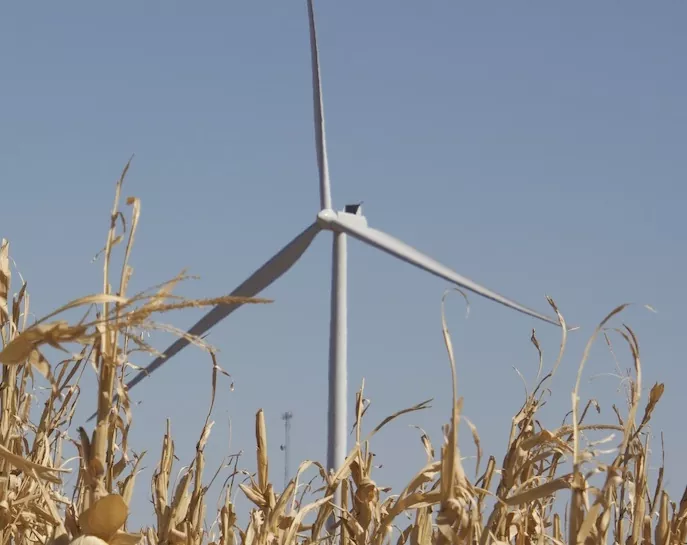
Xcel was reluctant to go forward with its first major wind farm, completed in 2004, but now has much wind — and will add far more in the next few yeas. Photo near Cheyenne Wells, Allen Best

The U.S. Army Corps of Engineers is asking for public comment on the LaPrele Dam demolition plan — #Wyoming Public Radio

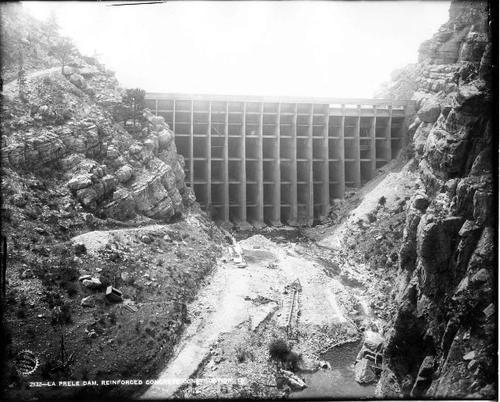
The LaPrele dam is an Ambursen style dam, which makes it unique. CREDIT J. E. STIMSON / WYOMING STATE ARCHIVES

Click the link to read the article on the Wyoming Public Radio website (Jordan Uplinger). Here’s an excerpt:

January 2, 2025

The Army Corps of Engineers and the Wyoming Department of Environmental Quality are reviewing aspects of the controlled demolition of the LaPrele Dam near Douglas. On Nov. 1, the state engineer ordered the destruction of the failing 115-year-old dam by April 1. The announcement was made following inspections that found new cracks on the front face of the structure, suggesting near-irreparable damage to the dam’s foundation. State officials, land owners and locals have been in discussion on how best to handle a situation that the state engineer referred to as an “emergency.”

Despite a search for alternatives, the LaPrele Irrigation District is proposing to mechanically breach or blast the 135-foot-tall concrete dam. Some concrete would partially remain within the dam’s footprint, some would be placed in a rubble chute in LaPrele Creek to prevent excessive erosion and some would go in optional disposal areas. The district is also proposing to use fill material within the creek and reservoir bed to build equipment access ramps to the north side of the dam, a structure to capture sediment and debris from demolition and for a southern access road. The blast is scheduled to happen before April in an effort to avoid spring runoff, but the state has considered the possibility of taking action sooner should the dam deteriorate faster than expected. Emergency permitting procedures have been approved, according to the Corps, in the event that expedited action is required.

Safe Drinking Water Act Turns 50: Landmark law encounters new problems, enduring challenges — Brett Walton (@circleofblue)

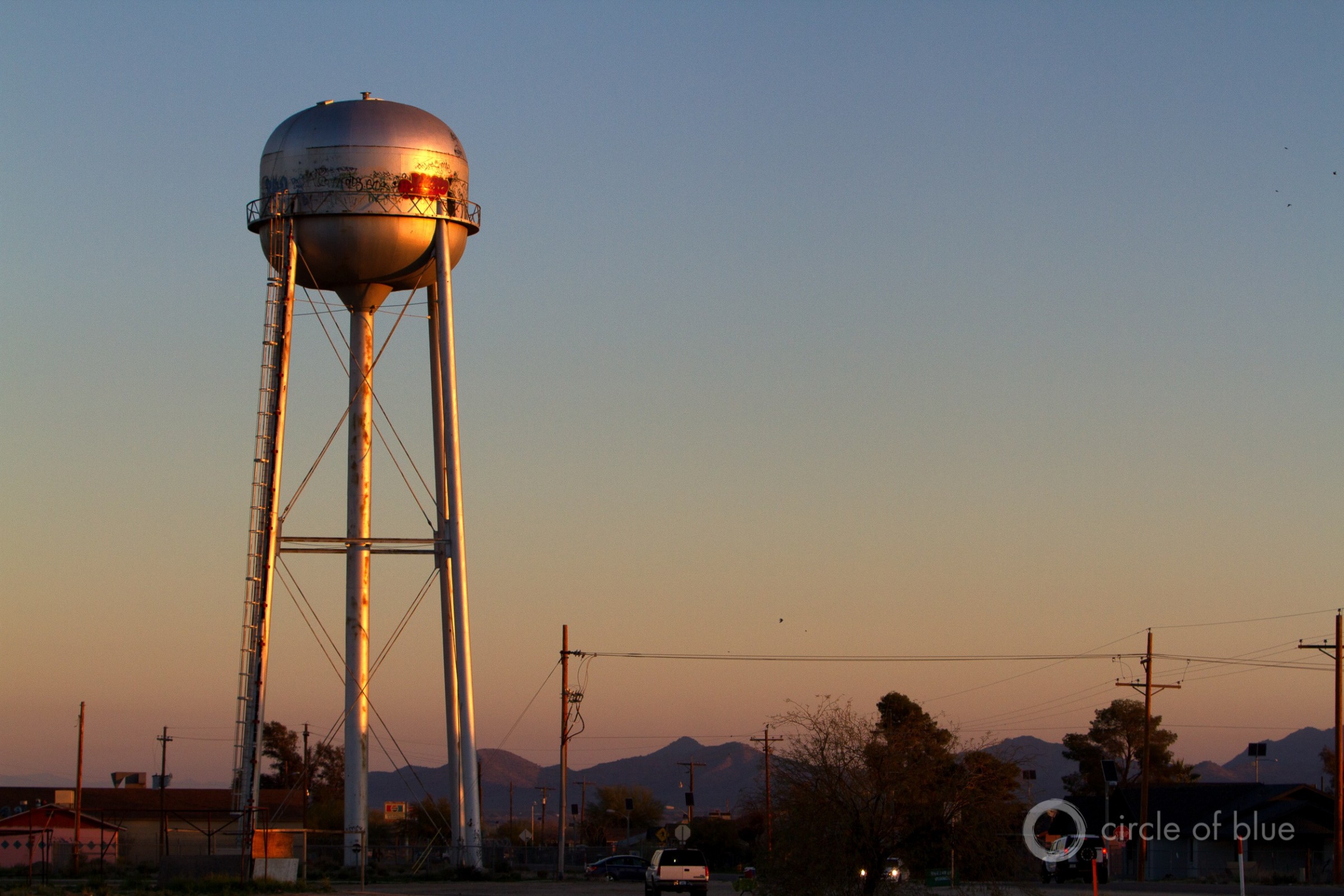
A water tower in Sacaton, the central town of the Gila River Indian Community. Photo © J. Carl Ganter / Circle of Blue

Click the link to read the article on the Circle of Blue website (Brett Walton):

December 16, 2024

The American public, newly conditioned to the health dangers of a polluted environment, was worried.

Media reports documented carcinogens in the lower Mississippi River. The federal government, empowered by recent legislation, sued Reserve Mining Company for dumping asbestos-like fibers into Lake Superior, thereby jeopardizing the water supply for Duluth, Minnesota, and at least four other communities. Congress had just approved groundbreaking laws for cleaner air and ecosystems. What about tap water?

Those were the circumstances in 1974 as a receptive Congress and a supportive-but-cost-conscious Ford administration debated first-ever national drinking water standards.

In the previous four years, lawmakers had passed the Clean Air Act and the Clean Water Act. “Nothing is more essential to the life of every single American than clean air, pure food, and safe water,” Russell Train, then-administrator of the Environmental Protection Agency, wrote to President Gerald Ford. “The time is overdue for a Safe Drinking Water Act.”

Fifty years ago, on December 16, 1974, Ford clinched a public health victory when he signed a bill that joined the pantheon of federal environmental protection laws enacted that decade.

Today, the country still reaps the benefits. Most Americans are provided high-quality water from their taps.

“At a time when the American public is skeptical of the government’s ability to take positive action and improve their lives, the Safe Drinking Water Act is an example of the essential work that our government can and must do to stand up for our well-being,” Radhika Fox, assistant administrator for water at the U.S. Environmental Protection Agency from 2021 to 2024 told a Senate committee last month. “It’s a demonstration of the most basic mission of our government: to safeguard the rights and interests of its people.”

As the Safe Drinking Water Act begins its next half century, it is clear that the law is an essential piece of the country’s project to assure every American access to safe, reliable, affordable water. But there is still much room for improvement. By one estimate, some two million people in the country do not have running water or indoor plumbing at home. Black and Hispanic communities, especially if they are poor, are more likely to have low quality drinking water. The struggles of small water systems that serve dozens or hundreds of people remain problems.

The act was weakened in 2005, following secret meetings between the oil industry and the Bush administration, that advanced oil and gas development by exempting chemical fluids used in fracking from federal oversight.

There are also elements of drinking water provision that the act does not explicitly address. Aging infrastructure, a changing climate, decaying plumbing within buildings, and limited funding for repairs are major impediments. Private well water is not regulated.

Health and environmental groups, seeing the proliferation of chemicals in commerce and their links to cancer, kidney disease, and other chronic ailments, encourage the U.S. Environmental Protection Agency (EPA) to regulate more of these contaminants.

The agency appears to be paying attention. It decided earlier this year to set national standards for six PFAS – the persistent and toxic “forever” chemicals used in non-stick, water-repellent goods and firefighting foams. They were the first additions to the roster of regulated contaminants in decades. Perchlorate, used in explosives and a concern for fetal brain development, is next on the EPA agenda, due to a court order.

A counter argument – offered most passionately by public policy experts and utility leaders – is that the EPA is focusing on the wrong risks. This line of thinking suggests that regulators are targeting new chemical contaminants when they should be more concerned about the reliability of the pipes through which water flows. Utilities and municipalities have limited funds, the argument goes, so the biggest health risks should be addressed first.

Pipe breaks – which occur by the hundreds every day in this country – can pull pathogens into water systems and do immediate harm. Plumbing systems inside buildings, which are not regulated by the Safe Drinking Water Act, can harbor Legionella bacteria, which causes Legionnaires’ disease, a respiratory illness that is the country’s deadliest waterborne disease. It kills about one in 10 people it infects. A Legionnaires’ outbreak in Grand Rapids, Minnesota, that began in 2023 sent 11 people to the hospital.

Chad Seidel, president of Corona Environmental Consulting, worries that the failure to invest in basic infrastructure will result in less reliable water systems that are prone to malfunctioning and spreading disease. Backsliding on infrastructure quality would be detrimental, he said.

“I believe the health risks of regressing are higher than the risk of unregulated contaminants,” Seidel said.

The data show that certain water providers have higher risks of failure. In 1970, the EPA’s drinking water division assessed the quality of water from 969 systems. Most failing systems were small.

So it is today. Small water systems, a half century later, are more likely to violate health standards and monitoring requirements.

The country counts about 50,000 public water systems, most of them small. Many lack the financial strength or managerial know-how to successfully operate. There is a growing consensus that small systems will need to be absorbed into larger neighbors, or form regional entities that take advantage of scale to provide better service.

Amendments to the act in 1996 established a revolving loan fund that is the federal government’s primary vehicle for financing local drinking water improvements. Despite tens of billions of dollars added to the fund in the last three decades, state and local governments still account for about 95 percent of water infrastructure spending. Utility leaders fret that Congress is starting to erode the revolving fund by extracting earmarks from its annual appropriation. In time, this will result in less money available to lend.

“You can’t talk about the future of safe drinking water without talking about how to pay for it,” said Rob Greer, who studies public administration at Texas A&M University.

Water utilities are lobbying for a federal program to assist low-income people with their water bills, as the government does for energy bills. During the pandemic, Congress approved a short-term water bill assistance program but it has expired. A federal program would allow utilities to raise rates to pay for needed repairs, while not burdening their poorest customers with large bills.

Even if adequate funding is secured, there are social and cultural headwinds buffeting utilities. An unknown but rising number of people do not drink their tap water. They do not trust it.

Mistrust is highest among Black and Hispanic communities who are also most likely to have tap water that exceeds federal standards or looks and tastes gross. Notorious tap water failures in Flint, Michigan, and Jackson, Mississippi, in the last decade highlight the ease by which trust can be lost.

Mistrust is illustrated by soaring sales of bottled water and the growing presence of commercial water kiosks, a trend documented by Samantha Zuhlke of the University of Iowa and Manny Teodoro of the University of Wisconsin-Madison. Both bottled water and kiosk water have less regulatory scrutiny than tap water.

Water is an intimate relationship between individuals and their government because water is the “only government service you ingest,” Teodoro said.

The water treatment process