Jimmy Carter’s overlooked #Colorado nexus: The late president had nuclear training but an interest in renewable energy with impact in Colorado lingering to this day — Allen Best (@BigPivots)

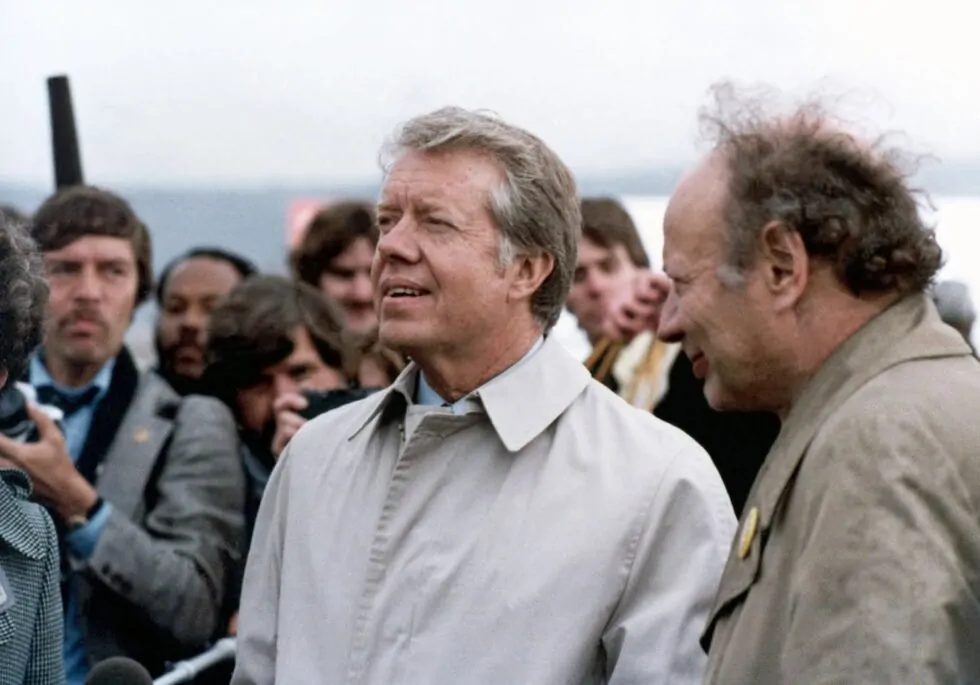
Jimmy Carter at NREL in 1978.

Click the link to read the article on the Big Pivots website (Allen Best):

January 2, 2024

Jimmy Carter had an underappreciated role in Colorado’s story. It started in May 1978 when he announced that the Solar Energy Research Institute in Golden would get $100 million in federal funding.

“Nobody can embargo sunlight,” Carter said. “No cartel controls the sun. Its energy will not run out. It will not pollute the air; it will not poison our waters. It’s free from stench and smog. The sun’s power needs only to be collected, stored and used.”

It was a rare umbrella day in Golden. Carter’s timing for his proclaimed “Sun Day” was off.  But he was on the mark about solar energy in ways that we have yet to fully appreciate.

Carter had advanced schooling in nuclear energy, but by 1975 he was thinking about renewables. He invited Ron Larson, an electrical engineering professor from Georgia Tech, to share lunch and talk about renewable energy.

“At that time there wasn’t much to photovoltaics,” says Larson. “It was over $100 a watt. Now it’s less than $1 a watt.”

Larson moved to Colorado in 1977 to work as SERI’s first principal scientist and stayed in multiple roles in helping pivot our energy use. Since then, thousands have followed.

One component of SERI’s mission to advance use of solar energy was outreach to 300 builders and architects in Colorado to help them learn how to construct houses with lessened need for fossil fuels.

John Avenson, an engineer with AT&T/Bell Labs, was among the beneficiaries. The house in Westminster that he built in 1981 faces south and has large windows coupled with effective shades.

On Facebook the day after Carter’s death, Avenson rued the widespread failure to acknowledge Carter’s early thinking. “Every house built since then should have been this good or better but the program was cancelled by (President Ronald) Reagan,” he wrote.

Avenson’s house near Standley Lake Reservoir was built with a natural gas furnace. He rarely used it, his gas bills never surpassing $180 for a full year. After tweaking and new technology, he was finally satisfied the house would do fine at 20 below without the furnace. In 2016 he had Xcel Energy stub the gas line.

When I visited him on New Year’s Eve, he was wearing a T-shirt and shorts. “I’m an Arizona kind of person,” he said. He keeps the house at 72 to 78 degrees. It will be featured on a Jan. 25 broadcast on PBS.

I asked Avenson about Carter’s death. “Oh, so sad,” he replied. “He influenced my life and didn’t know it.”

Steve Andrews was also influenced by Carter. A veteran of the Vietnam War, he had used the GI Bill of Rights to take college classes in basic engineering. That led to an internship and then a job at SERI. He wrote the guidebook for the 1981 Denver Homebuilders annual Parade of Homes featuring a dozen passive-solar homes across the Denver metro area.

Then, Andrews got laid off. As president, Reagan had no real use for renewable energy. He famously removed the 32 solar panels that Carter had placed atop the White House. He also halved SERI’s budget. Andrews, a recent hire, was among the first to go. The mission of SERI was also narrowed, pushing outreach to the back burner. The director, Denis Hayes, was fired after accusing his bosses at the U.S. Department of Energy of being “dull gray men in dull gray suits thinking dull gray thoughts.”

Later, under a former oilman, President George H.W. Bush, SERI was resurrected as the National Renewable Energy Laboratory. NREL has now expanded to a staff of 3,675 employees and broadened its influence.

Can it be mere coincidence that Colorado, in 2004, had the nation’s first voter-initiated renewable energy portfolio standard? Or that Colorado in recent years has adopted a dozen or more first-in-nation policies and regulations designed to curb greenhouse emissions? We might be guilty of parochial pride, but there can be no doubt that Colorado belongs in any national conversation about the pivot to a new energy economy, to use the title of former Gov. Bill Ritter’s center that is affiliated with Colorado State University.

Ironically, passive-house building has gotten little traction. The economics are unassailable, and the technology just isn’t that difficult. It does take basic site-planning. Andrews, in his post-SERI career, once calculated that 85% of houses in metro Denver face east or west. That results in unwanted summer heat, but little in winter, when it is wanted. Housing should face north and south.

Colorado has decades of work ahead in decarbonizing its buildings. We need to remember what Jimmy Carter understood nearly 50 years ago.

Also worth reading: “Jimmy Carter, Green Energy Visionary,” by Bill McKibben in The New Yorker.
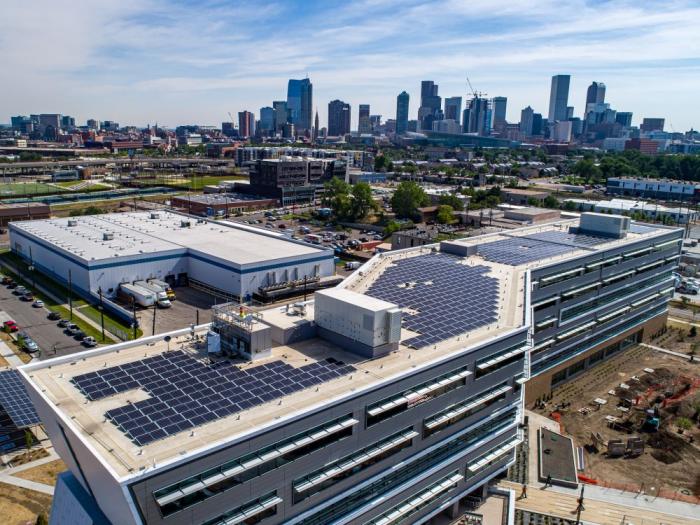
Denver Water’s administration building is powered by solar panels. Photo credit: Denver Water.

#Colorado’s environmental efforts could be in grave peril: 2024 is likely to be hottest year on record. It’s no time for science deniers to be in charge of country’s future — Pete Kolbenschlag (Colorado Newsline) #ActOnClimate

An aerial view of Assignation Ridge in the Thompson Divide area of Colorado. (Courtesy of EcoFlight)

Click the link to read the commentary on the Colorado Newsline website (Pete Kolbenschlag):

December 31, 2024

Some people say that the movement toward renewable energy cannot be stopped by a single regressive administration. But Colorado could be badly harmed if its efforts to transition to clean energy are put on hold. Millions of dollars in investments for rural co-ops, community-based solar, and grid hardening could be in jeopardy, striking a heavy blow to our more resilient future. Worse still, that’s only one piece of what could be coming under a new federal regime.

Colorado’s public lands and water supplies are also in grave peril under the incoming Congress and president. This is despite decades of hard, locally-driven work to secure protections for vital headwaters, hunting lands, forests and habitat, many from a century-long history of extraction. And it’s regardless of rapid warming, persistent drought and an imperiled Colorado River system with no good solutions in sight.

Healthy natural systems guard against ecological collapse. But now various environmental tipping points, that moment in a system where it moves into a new norm and change becomes irreversible, appear at their most precarious moments. During 2024 humans pumped out more climate-choking pollution than ever before. That’s almost 10 years after the acclaimed Paris Agreement, which our president-elect and his cabinet have vowed to abandon.

Global warming presents a clear and present danger to all our livelihoods and well-being. And the United States is already the No. 1 oil and gas producer in the world and a top polluter behind only China. 2024 is likely to be the hottest year ever recorded. Without the sufficient response we careen toward calamity. To meet this moment, the incoming administration and Congress have pledged to pollute more and care less.

That is bad news not only for our lands and water supplies, but for the economic future, too. Our ledgers will already never be free of climate risk. Which is why the debate at the global climate summits is now about who ends up with the bill for loss and damages done and coming. That matters here, too: A recent study correlates rising insurance costs with climate vulnerability and puts much of Colorado in the dark red hazard zone.

In a state where housing is increasingly unaffordable, putting science deniers in charge of our future is just a bad idea. Moving federal agency offices or installing Colorado-based cabinet-members won’t matter if the new administration is just rearranging deck chairs to ensure its patrons have the best seats to watch this escalating disaster.

In fact, fossil fuel “dominance” could make a mess of Colorado, as it does most places it asserts itself. This puts at risk our lands and communities with oil trains, backdoor schemes to subsidize legacy polluters, policies that favor extraction over conservation, and more pipelines for more fracked gas exports. The alternative to slamming head on into a worst future is to stop the harm now and to make systems more resilient to coming disruptions. That means less fossil energy and more conservation of natural places. [ed. emphasis mine]

Milkweed, sweet peas, and a plethora of other flora billow from Farmer’s Ditch in the North Fork Valley of western Colorado. Jonathan P. Thompson photo.

Standing up for Colorado’s liveable future means fighting the expansion of fossil fuel infrastructure and defending places Coloradans have fought for decades to protect – such as Thompson Divide, the Dolores River canyons, or the forests and public lands surrounding critical watersheds and farmlands in places like the North Fork Valley.

That will best limit the extent of further harm and will better secure our natural capital as a hedge against future disruption. By investing in ecological systems through resilient watersheds and healthy lands we guard against uncertainty. By defending these cherished places, we will keep intact critical sources of sustenance and enjoyment for the future and return dividends to those who live, work, and visit here today.

The Dolores River, below Slickrock, and above Bedrock. The Dolores River Canyon is included in a proposed National Conservation Area. Photo: Brent Gardner-Smith/Aspen Journalism.

#Colorado #snowpack levels could be on track for revival with continued wave of winter storms — The #GlenwoodSprings Post Independent

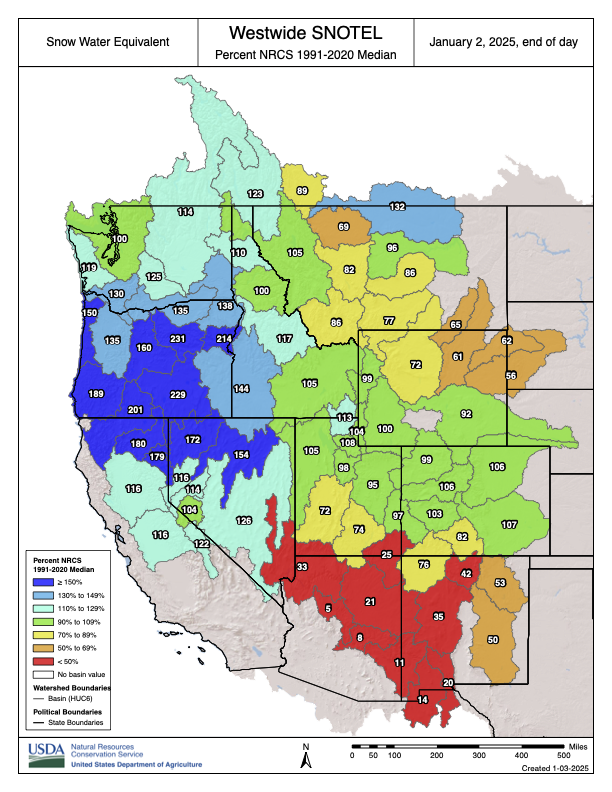
Westwide SNOTEL basin-filled map January 2, 2024 via the NRCS.

Click the link to read the article on the Glenwood Springs Post Independent website (Robert Tann).Here’s an excerpt:

December 27, 2024

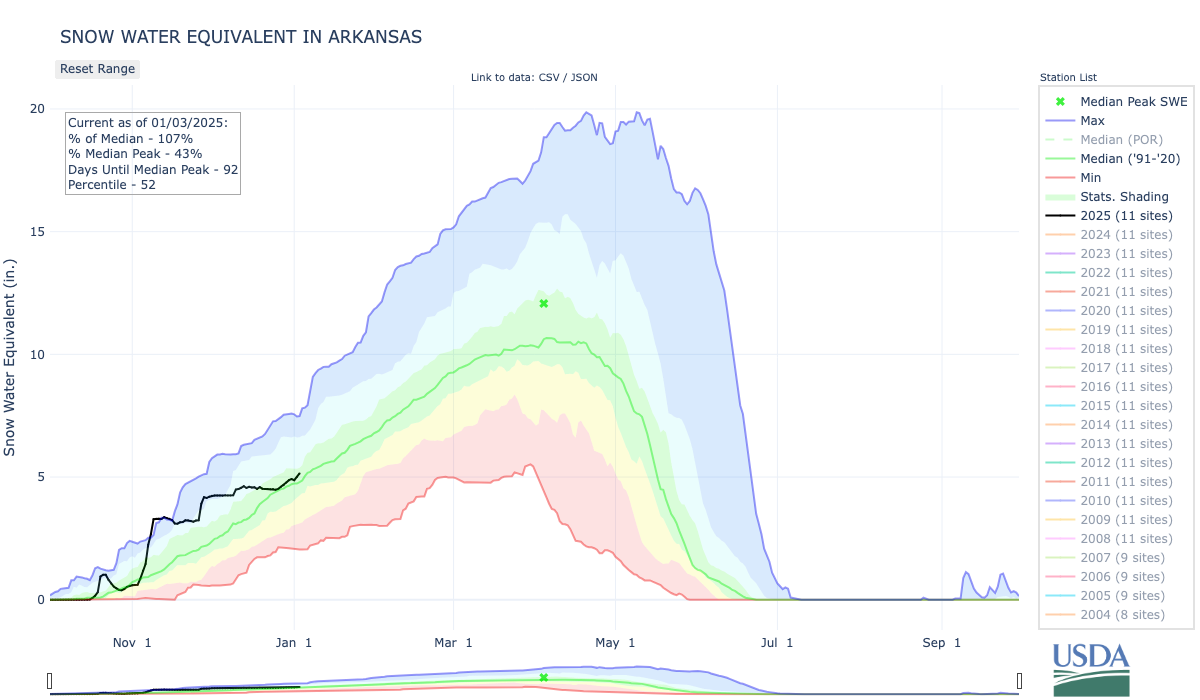
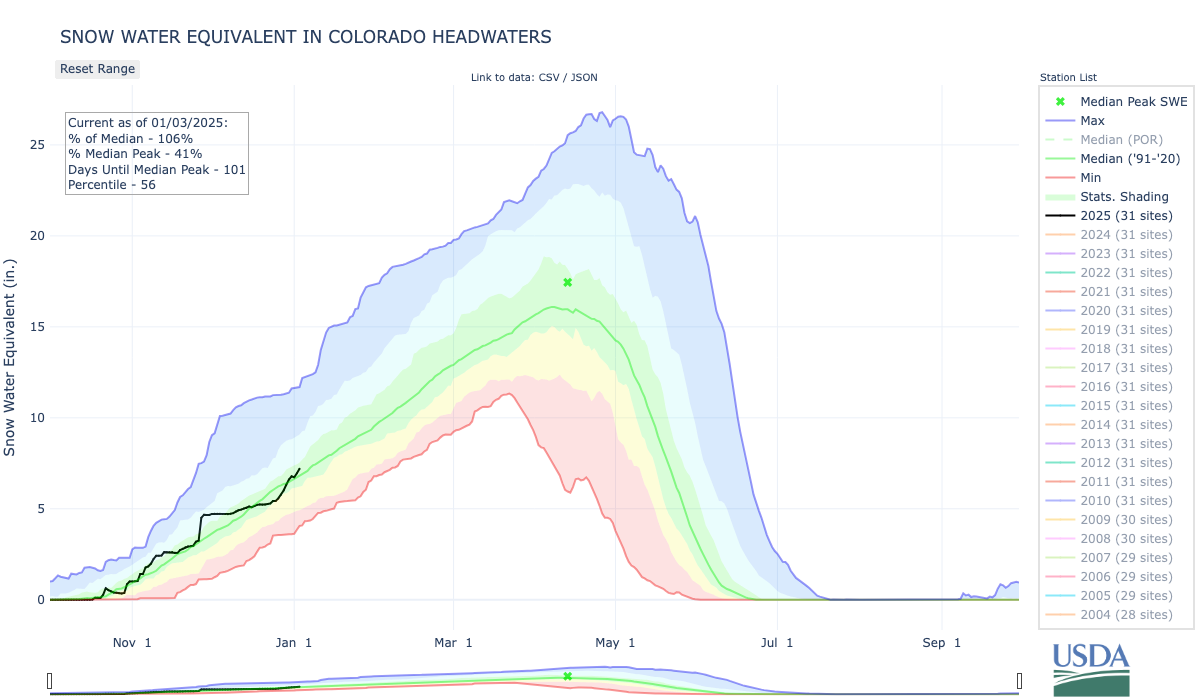
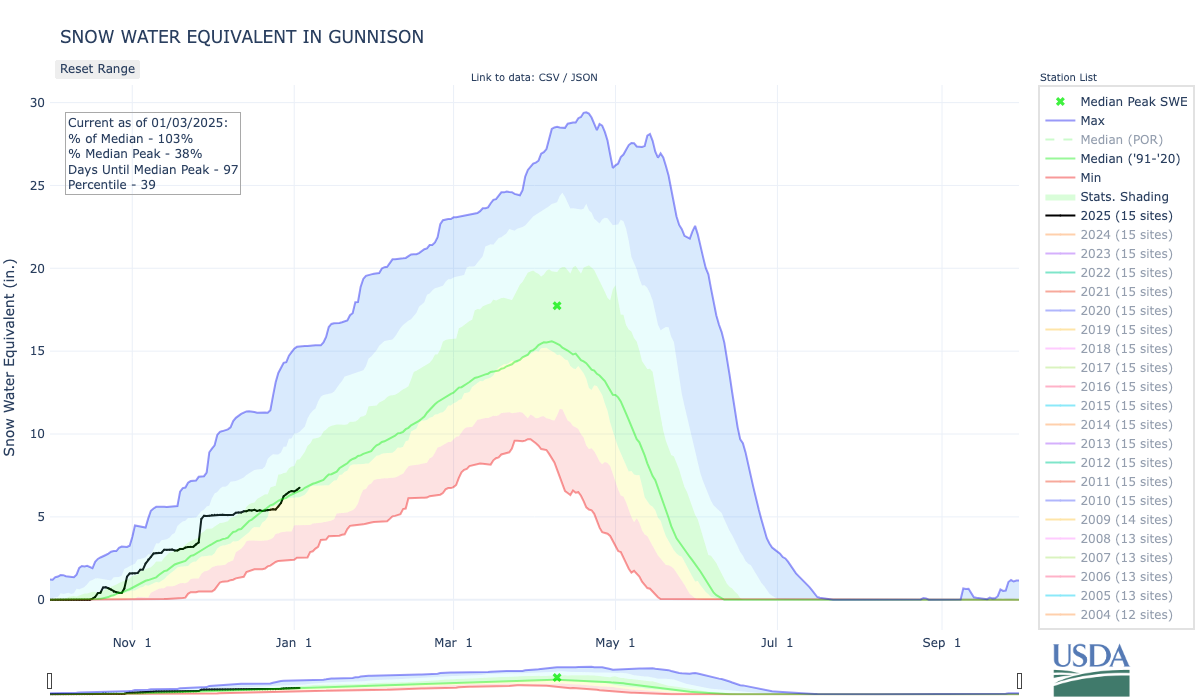
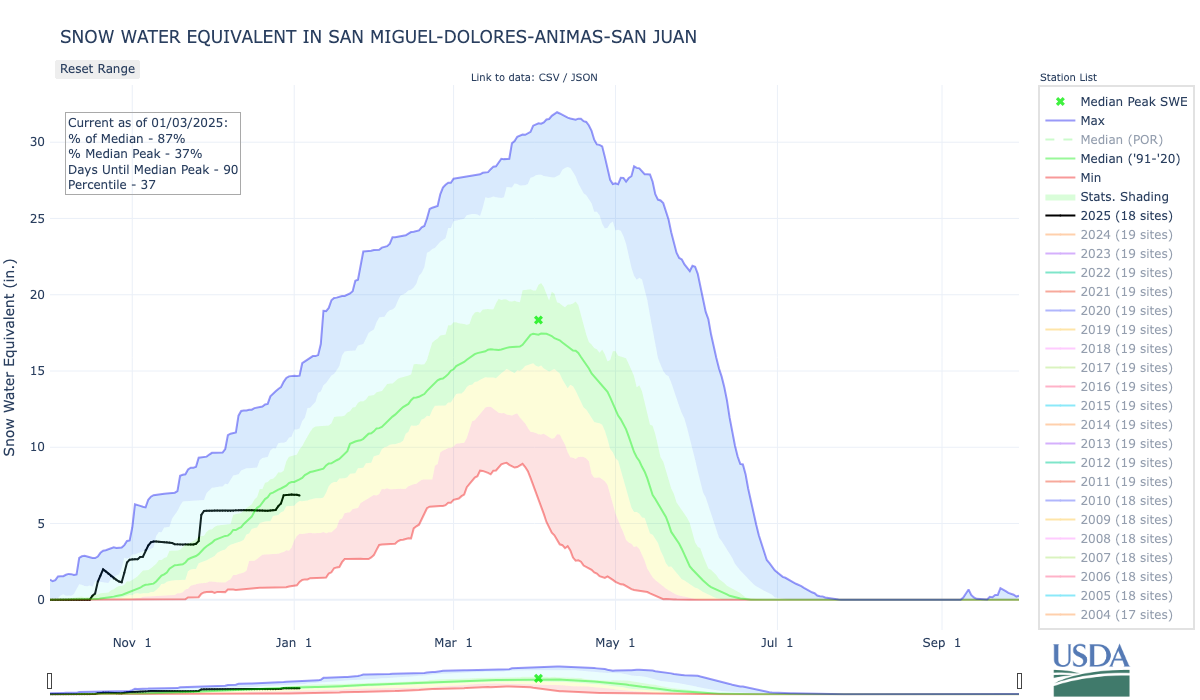
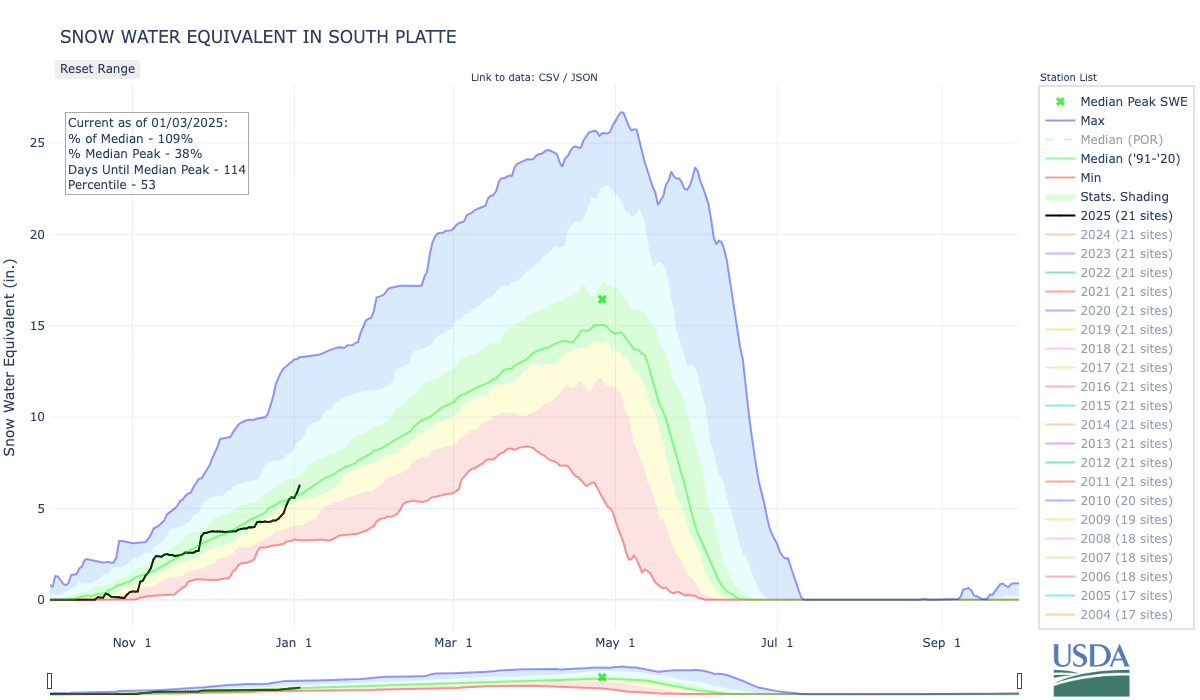
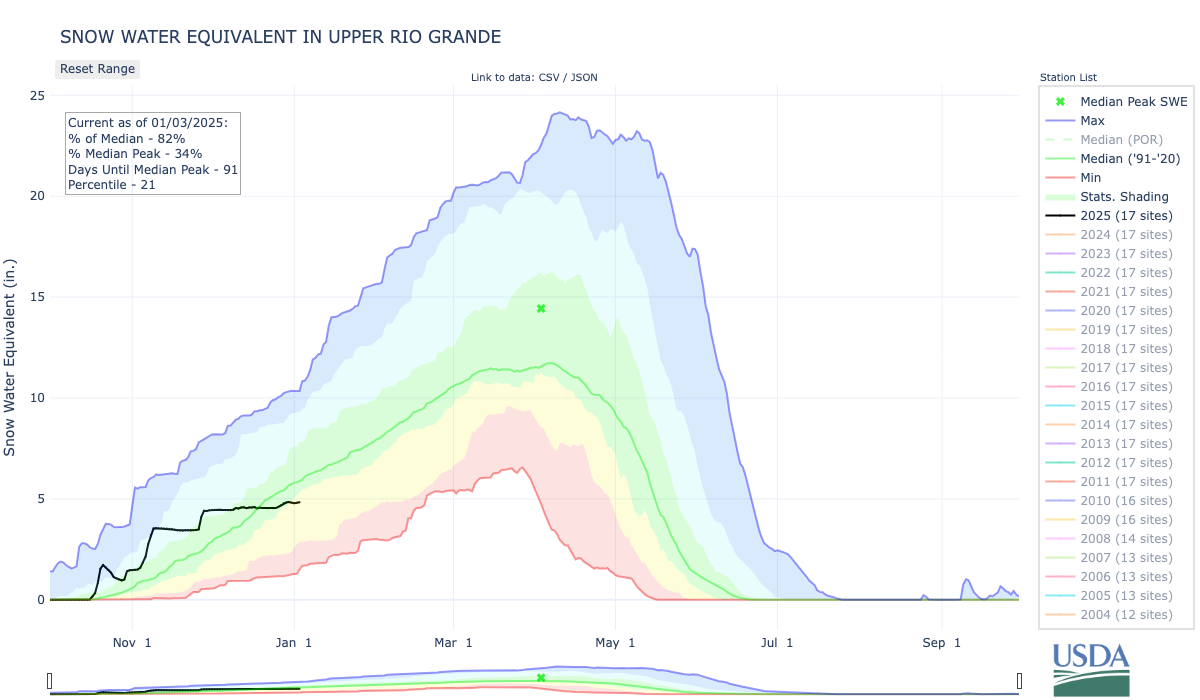
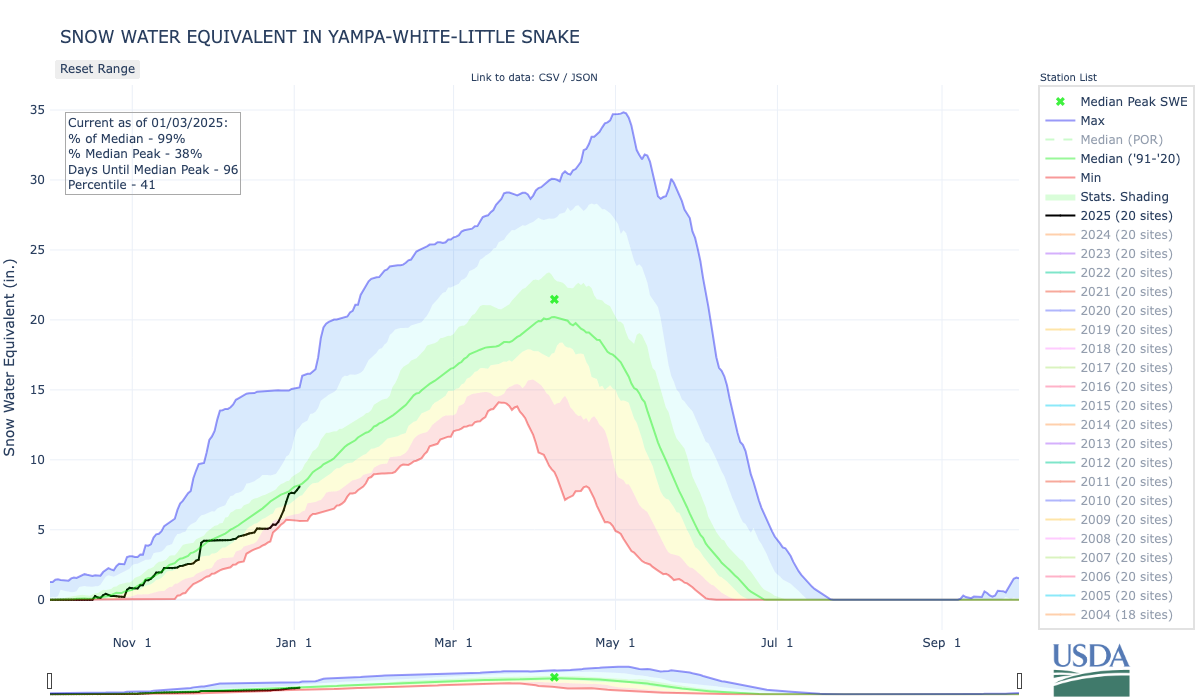
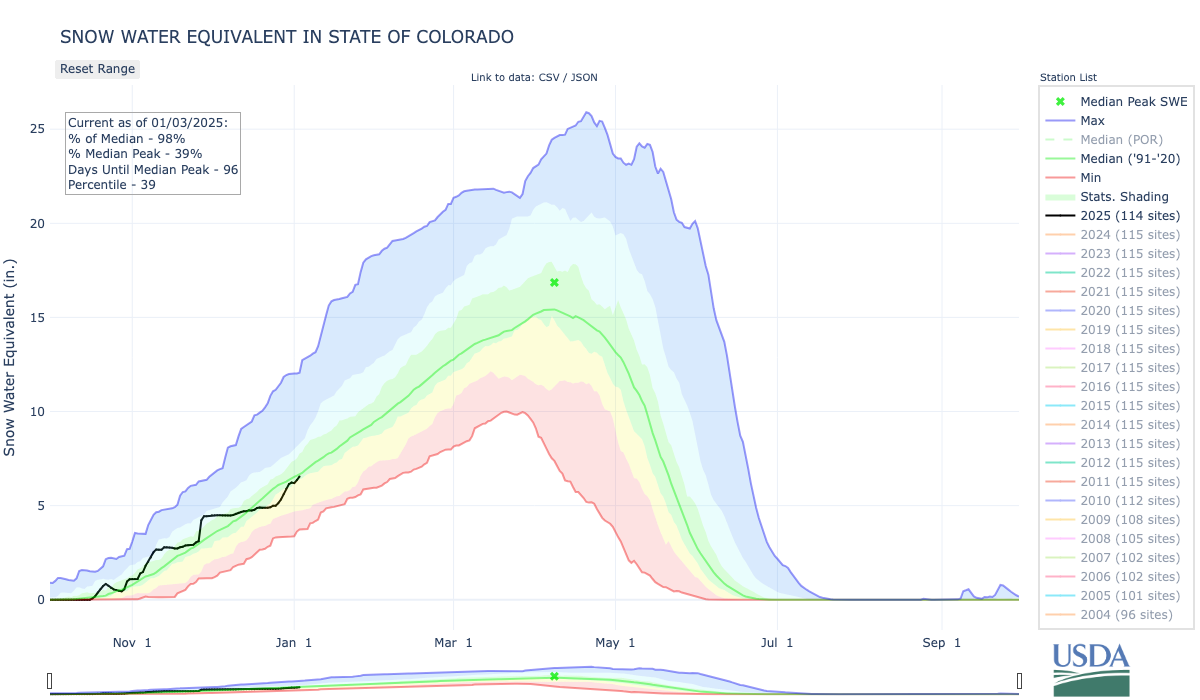
Deflated snowpack levels are beginning to rise again in Colorado after nearly a month of stagnation…A cycle of heavy snow storms in November sent snowpack levels surging well above normal, particularly in the state’s southern regions. But as conditions dried after Thanksgiving, levels flatlined…As of mid-December, statewide snowpack levels have tracked below the 30-year median and even began to approach historical lows for this time of year. But a smattering of storms in the High Country since Christmas have begun to reverse the trend…As of Friday [December 27, 2024], statewide snowpack stood at 87% of the 30-year median, according to data from the Natural Resources Conservation Service. The Arkansas River Basin, which encompasses south-central Colorado, is the only basin in the state with snowpack currently above 100%

#Utah wants to shore up its #Colorado River share with a water ‘savings account’ — KUER #COriver #aridification

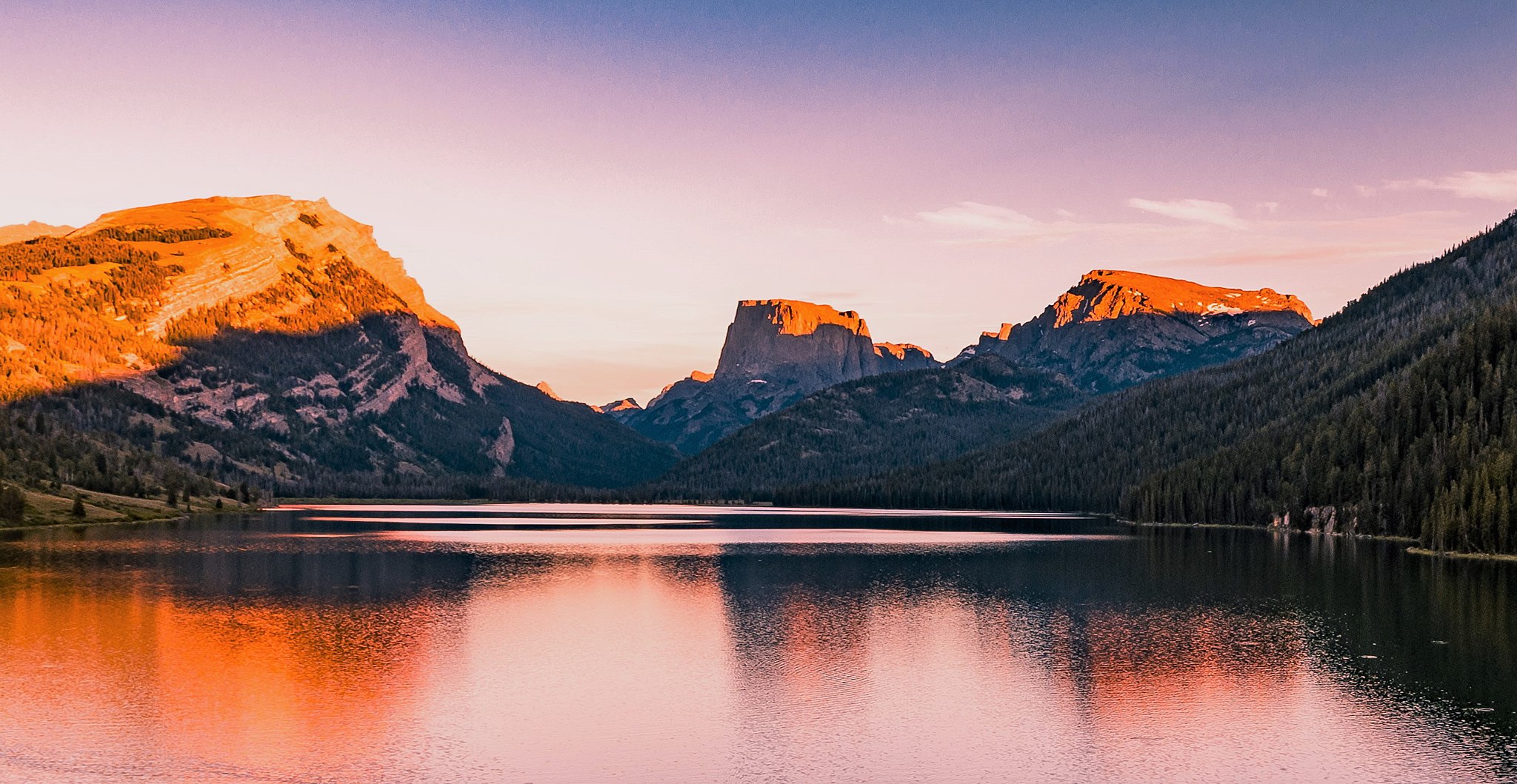
Green River Lakes and the Bridger Wilderness. Forest Service, USDA, Public domain, via Wikimedia Commons

Click the link to read the article on the KUER website (David Condos). Here’s an excerpt:

December 18, 2024

Across Utah, farmers are experimenting with ways to tighten their water use as agriculture, drought and population growth collide to put pressure on the state’s limited water resources. Some are installing more efficient irrigation technology. Others are testing unconventional crops. In Hunt’s case, he’s taking some of his farmland out of commission entirely — for a time and for a price…For the past two years, [Coby] Hunt has taken part in a federal program that pays farmers to temporarily leave their fields empty and lease the conserved water to the government. It’s something that has been going on for years across the Colorado River Basin. Now, Utah is launching its version of that effort. The new multimillion-dollar plan incentivizes conservation and aims to do a better job of tracking that saved water in hopes of getting credit for it in future Colorado River dealings. The practice of leaving a field idle for a season is called fallowing, and Hunt conceded it’s not for everyone.

“Some of the farmers don’t like it. In fact, they don’t like me for leasing my water.”

[…]

Many don’t want the feds involved in their business, he said, or worry the government might take their water permanently if they show they can get by without it. For farmers who grow other crops, like Green River’s famed melons, he said it might not make financial sense to sit out a year and lose your customer base…Hunt usually grows feed for the cattle he raises, so he’s still had plenty to do while this 30-acre field sits empty. Fallowing has just meant he needs to buy hay from elsewhere. He feels good about the amount of water it saves, too. His water right would typically allow him to use six acre-feet of water a year, he said — enough to cover Hunt and the acre he’s standing on over his head. Because his fields are some of the last ones upstream from Lake Powell, it’s easy to imagine the water he conserves making it to the reservoir. That’s why farmers like Hunt are vital to Utah’s new effort to conserve more Colorado River water, called the Demand Management Pilot Program. What’s novel about it is how it will track and document the water savings.

Green River Basin

Critical water quality permits designed to protect streams remain backlogged, but numbers are improving — Jerd Smith (Fresh Water News)

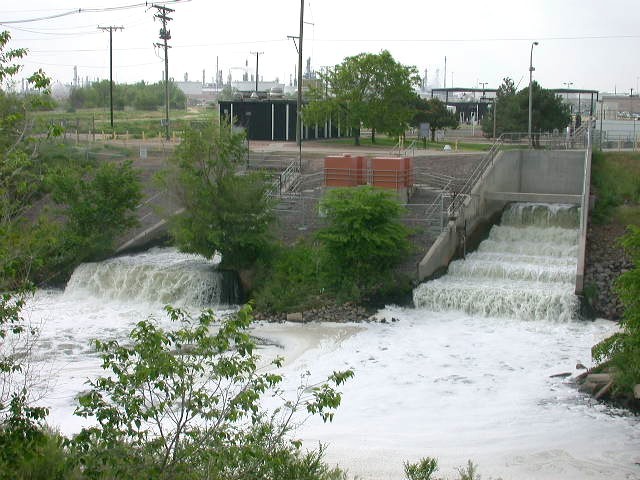
Metropolitan Wastewater Reclamation District Hite plant outfall via South Platte Coalition for Urban River Evaluation

Click the link to read the article on the Water Education Colorado website (Jerd Smith):

January 2, 2024

Colorado health officials say a massive permit backlog that has left hundreds of water systems in administrative limbo has shrunk in the past year, though more work remains.

Last year, 75% of wastewater discharge permits had expired. This year that figure has dropped to 50%, according to the Colorado Department of Public Health and Environment (CDPHE), with 1,384 permits classified as expired. The permits regulate and set standards for removing pollutants from wastewater before it is discharged to streams.

The state’s Water Quality Control Division has wrestled with the problem for several years. In the past two years the state has provided several million dollars to help eliminate the backlog. Major dischargers, such as the City of Aurora and Metro Water Recovery, are among those that have been impacted by the problem.

Under the federal Clean Water Act, entities that discharge fluids into streams, including wastewater treatment plants and factories, must get approval from water quality regulators to ensure what they’re putting into the waterways does not harm them.

Though holders of expired permits are legally allowed to continue discharging, the expiration means dischargers face major uncertainty about what future requirements may be and how much it will cost to meet them, according to the CDPHE.

Protecting streams from pollutants is a tough problem and is getting more difficult as populations grow and climate change reduces the amount of water flowing in rivers, intensifying contamination. Emerging toxins, such as PFAS, also now require treatment. PFAS make up a large class of chemicals used in everything from firefighting foam to Teflon. They are known as “forever chemicals” because they last decades in the environment and the human body. The EPA has just begun setting regulatory standards for them.

The agency has hired a consultant to help it examine new ways of managing the permitting process. It expects to have recommendations for new procedures by midyear 2025, CDPHE spokesperson John Michael said.

“We are committed to finding solutions to address more of the backlog,” he said via email.

The agency is under the gun to do so, in part, because its performance lags the standards set by the EPA, which state that 75% of all discharge permits under the National Pollutant Discharge Elimination System, or NPDES, should be current.

“Timely issuance and reissuance of NPDES permits are important because they can provide greater certainty to the business community and ensure that permits improve environmental protection by reflecting the most recent scientific information,” said Marisa Lubeck, a spokesperson for EPA’s Region 8, which includes Colorado.

“The EPA has encouraged and continues to encourage CDPHE to decrease its NPDES permit backlog, and we are aware the state has acquired additional resources to help with this effort,” Lubeck said via email.

States across the country have wrestled with monitoring and renewing the discharge permits. According to a 2024 EPA analysis, Colorado had the largest permit backlog nationwide, with 81% expired. The average nationwide is 22%. The EPA’s estimate is higher because the state’s method for classifying permits differs from the federal government’s, according to the EPA.

With the new funding, the CDPHE has hired additional staff to address the problem and to shore up long-term finances for the regulatory work by increasing fees the state can charge for the permits.

Colorado State Sen. Barbara Kirkmeyer, a Republican from Brighton and a member of the legislature’s Joint Budget Committee, said she remains concerned that the health department hasn’t fully resolved the problems.

“The bottom line is that there are still a lot of permits in that backlog,” Kirkmeyer said.

And she said cities and wastewater utilities continue to complain about the permitting process, calling it cumbersome and time-consuming.

The Colorado Wastewater Utility Council, which represents municipalities and wastewater treatment providers, did not respond to a request for comment.

More by Jerd Smith

Wastewater Treatment Process