17 #Colorado water, #drought projects in limbo after Trump halts spending from Biden-era law — Shannon Mullane (Fresh Water News)

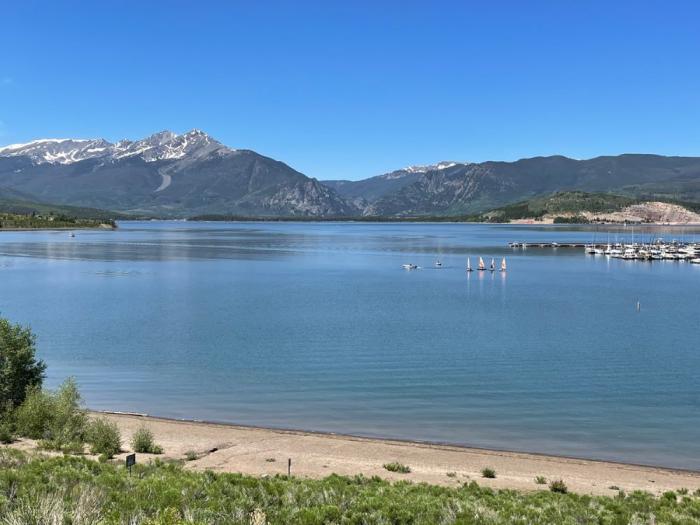
Dillon Reservoir is Denver Water’s largest reservoir. It sends water to the Front Range via the 23-mile-long Roberts Tunnel under the Continental Divide. Photo credit: Denver Water.

Click the link to read the article on the Water Education Colorado website (Shannon Mullane):

January 23, 2024

On Friday, in the last hours of the Biden administration, the U.S. Bureau of Reclamation announced it would spend $388.3 million for environmental projects in Colorado and three other Colorado River Basin states.

Now that funding is in limbo.

The money was set to come from a Biden-era law, the Inflation Reduction Act. On Monday, President Donald Trump ordered federal agencies to halt spending money under the act. Lawmakers were still trying to understand whether the freeze applied to the entire Inflation Reduction Act or portions of it as of Wednesday afternoon.
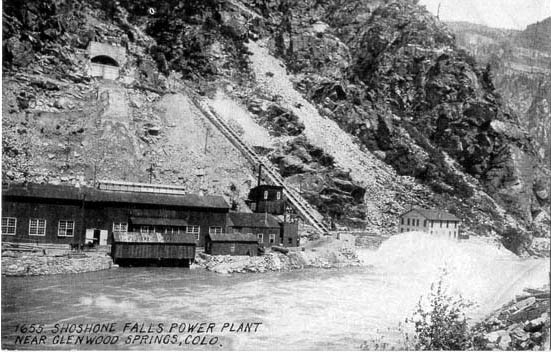
Shoshone Falls hydroelectric generation station via USGenWeb

The new executive order focused on energy spending but also raised questions about funding for environmental projects in the Colorado River Basin, including $40 million for western Colorado’s effort to buy powerful water rights tied to Shoshone Power Plant on the Colorado River and 16 other projects in Colorado.

Past regulations have been burdensome and impeded the development of the country’s energy resources, according to the executive order.

“It is thus in the national interest to unleash America’s affordable and reliable energy and natural resources,” the order said. “This will restore American prosperity — including for those men and women who have been forgotten by our economy in recent years.”

The president issued dozens of executive actions within hours of his inauguration, including rescinding 78 of former President Joe Biden’s executive actions.

Where spending is stalled, federal agencies will have 90 days to review their funding processes to make sure they align with the Trump administration’s policies.

For now, the future is unsure for 42 environmental projects in four states — Colorado, New Mexico, Utah and Wyoming.

Environmental efforts for the Colorado River

The proposed projects focus on improving habitats, ecological stability and resilience against drought in the Colorado River Basin, where prolonged drought and overuse have cast uncertainty over the future water supply for 40 million people. Reclamation also awarded $100 million for Colorado River environmental projects in Arizona, California and Nevada.

Coloradans were promised up to about $135 million from the Inflation Reduction Act as part of the Upper Basin Environmental Drought Mitigation Program. It’s one of many buckets that have distributed money from the act to Colorado.

This map shows the 15-mile reach of the Colorado River near Grand Junction, home to four species of endangered fish. Map credit: CWCB

With the funding, people around the state hope to upgrade infrastructure to help protect 15 miles of key habitat near Grand Junction for endangered species on the Colorado River. They want to improve aquatic habitats along rivers in Grand County, where low flows threaten fish and aquatic life, and restore ancient, water- and carbon-storing fens.

“It wasn’t surprising, but we still need to wait to see how it gets interpreted, and what it’s going to apply to or not apply to,” said Steve Wolff, general manager of the Southwestern Water Conservation District. The district joined with local partners to apply for funding for 17 projects in southwestern Colorado and was awarded $25.6 million.

“We would all be very disappointed if any of this money was removed,” Wolff said. “These funds are really bipartisan and are meant to get put on the ground and do good work.”
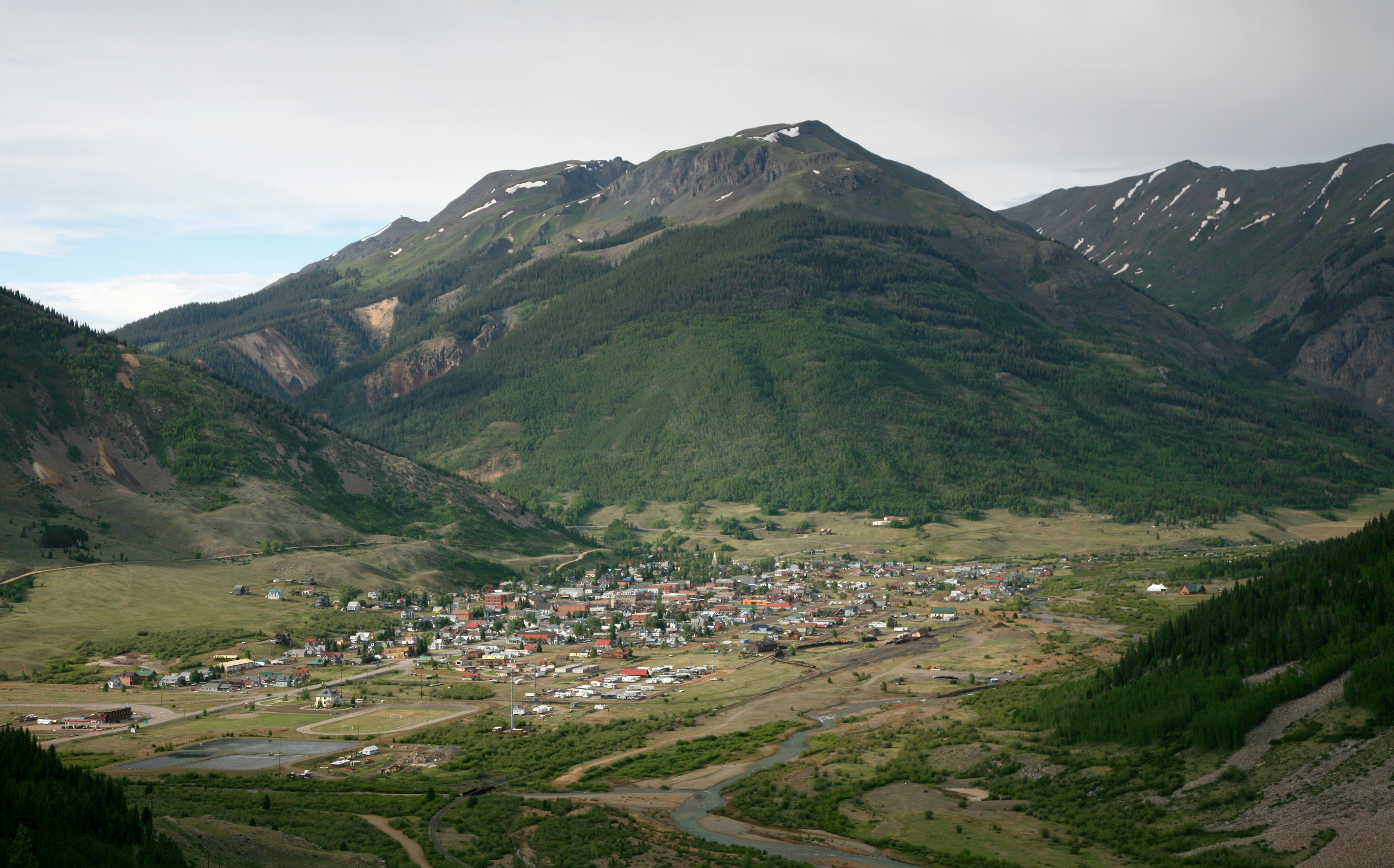
The town of Silverton, Colorado, USA as seen from U.S. Route 550. By Daniel Schwen – Own work, CC BY-SA 4.0, https://commons.wikimedia.org/w/index.php?curid=10935432

One of those projects aims to restore ancient fens along Highway 550, known as the Million Dollar Highway, between Silverton and Ouray in southwestern Colorado.

These fens, between 6,000 and 14,000 years old, naturally store carbon and slow runoff from the mountains, helping to maintain flows into the summer when water runs low and demand outpaces supply. Drought, a history of mining, and human impacts in the area have degraded the fen ecosystems over time, said Jake Kurzweil, a hydrologist with Mountain Studies Institute in southwestern Colorado.

The project managers want to hire locally to help the rural economy. And the work would help restore river ecosystems where they begin — at their headwaters — if the funding actually comes through.

“Until there’s a contract in place, we won’t be including it in our budgets,” Kurzweil said. “We’re optimistically hopeful, but not counting our chickens before they hatch.”

Of the 42 Upper Colorado River projects awarded funds from the Inflation Reduction Act, 17 projects would include work in Colorado:
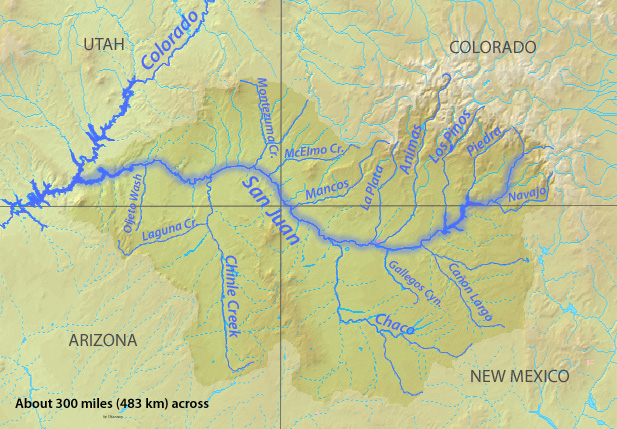
San Juan River Basin. Graphic credit Wikipedia.
  • Southern Ute Indian Tribe’s Pine River Environment Drought Mitigation Project: Up to $16.7 million: The funding would improve the health of the Pine River watershed, fish passage, deteriorating infrastructure, and water quality while addressing drought impacts.
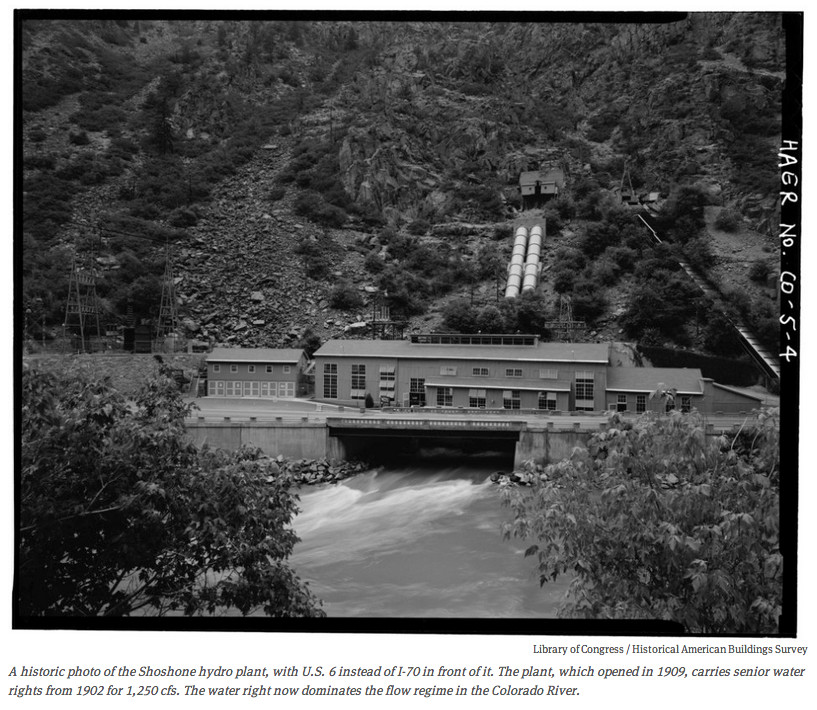
Shoshone Hydroelectric Plant back in the days before I-70 via Aspen Journalism
  • Shoshone Water Rights Preservation Project: Up to $40 million: The funding would go toward the $99 million purchase of the Shoshone Power Plant’s water rights by the Colorado River Water Conservation District. The district says it will protect future water supplies for ecosystems, farms, ranches, communities and recreational businesses.
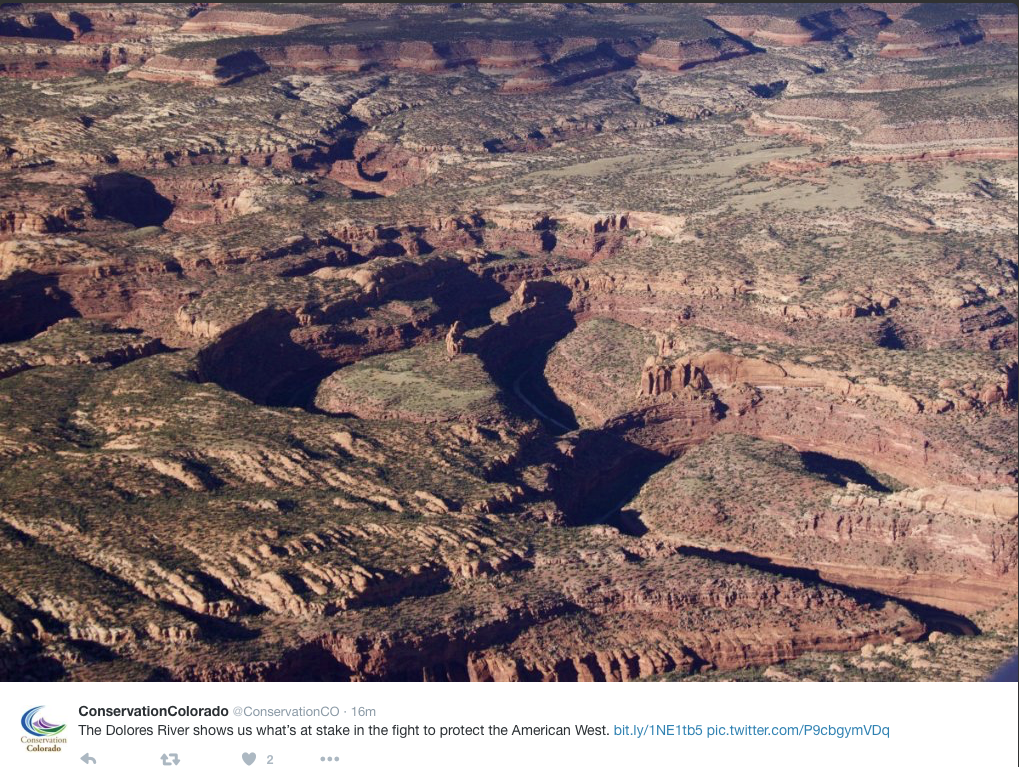
The Dolores River shows us what’s at stake in the fight to protect the American West — Conservation Colorado
  • Addressing Drought Mitigation in Southwestern Colorado: Up to $25.6 million: The funding would support 17 projects in the Dolores and San Juan river basins in southwestern Colorado. The projects aim to restore ecosystems and enhance biodiversity and water resources while supporting local communities and endangered species.
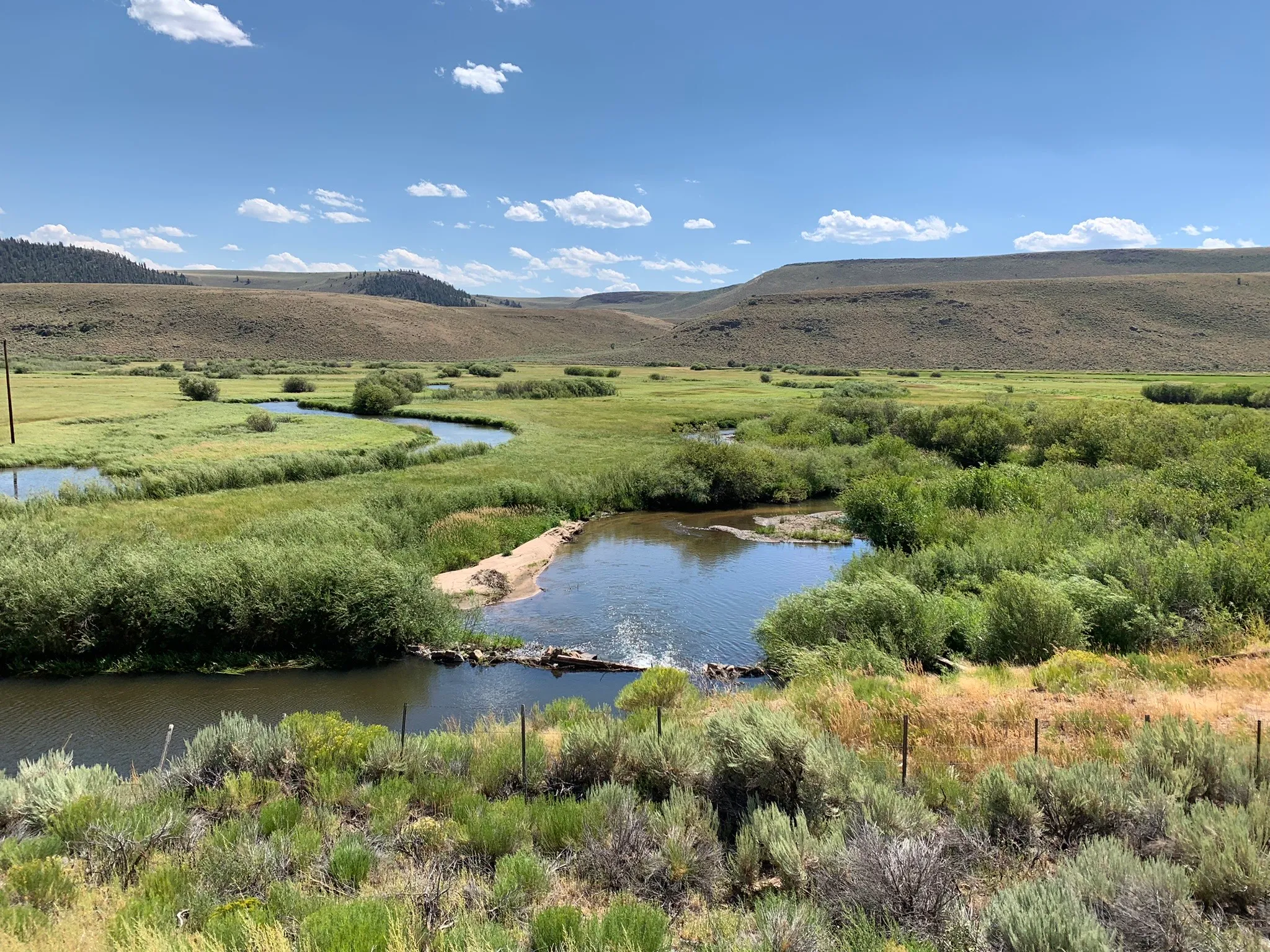
Tomichi Creek, a tributary of the Gunnison River, runs through the Peterson Ranch property. The Colorado Water Conservation Board holds an instream flow water right for 18 cfs on the creek in this stretch. CREDIT: HEATHER SACKETT/ASPEN JOURNALISM
  • Grand Mesa and Upper Gunnison Watershed Resiliency and Aquatic Connectivity Project: Up to $24.3 million: The funding would restore watersheds to combat drought impacts to water quality and habitat in western Colorado.
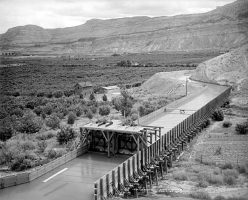
Orchard Mesa circa 1911
  • Orchard Mesa Irrigation District Conveyance Upgrades for 15-Mile Reach Flow Enhancement: Up to $10.5 million: The funding would convert open canals into pressurized pipelines, improving water delivery efficiency and reducing environmental stressors. This upgrade aims to support endangered fish species by enhancing streamflow in a critical stretch of the Colorado River.
A man fishes along Blue River. The federal government Dec. 19, 2023, announced a $1.8 million grant for a habitat restoration on a section of the Blue River. Blue River Watershed Group/Courtesy photo
  • Enhancing Aquatic Habitat in Colorado River Headwaters: Up to $7 million: The funding would restore stream habitats along the Fraser, Blue and Colorado rivers in Grand County through channel shaping and bank stabilization.
Coyote Gulch on the Yampa River Core Trail August 24, 2022.
  • Yampa River/Walton Creek Confluence Restoration Project: Up to $5 million: The funding would restore river and floodplain habitat around Steamboat Springs.
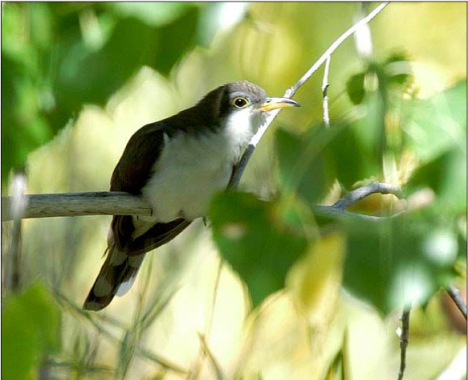
Yellow-billed cuckoos have nearly been extirpated from the western U.S. Photo courtesy Rocky Mountain Bird Observatory.
  • Drought Resiliency on Western Colorado Conserved Lands: Up to $4.6 million: The funding would help improve wetlands, floodplains, erosion control structures and habitat for at-risk species like the yellow-billed cuckoo and Gunnison sage-grouse.
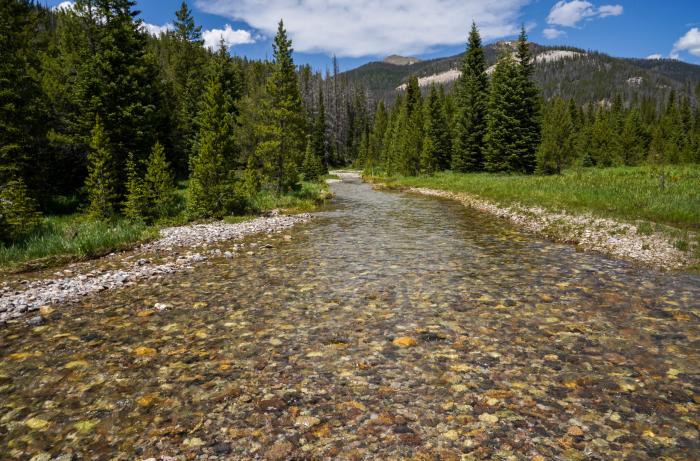
The Colorado River, which feeds into Lake Powell, begins its 1,450-mile journey in Rocky Mountain National Park near Grand Lake, Colorado. Denver Water gets half of its water from tributaries that feed into the Colorado River. Some of these tributaries include the Fraser River in Grand County and the Blue River in Summit County. Photo credit: Denver Water
  • Upper Colorado Basin Aquatic Organism Passage Program: Up to $4.2 million: The funding would restore stream habitat in Grand County to improve biodiversity, habitats, fish passage and drought resilience.
Palisade peach orchard
  • Conversion of Wastewater Lagoons into Wetlands: Up to $3 million: The funding would turn outdated sewer lagoons into wetlands to improve biodiversity and habitat for migratory waterfowl and endangered fish species in Palisade.
Fruita Reservoir #2 Dam Removal & Comprehensive Environmental Restoration. Photo credit: SGM
  • Fruita Reservoir Dam Removal: Up to $2.8 million: The funding would remove a dam on Piñon Mesa to restore wetlands, habitat and biodiversity.
Beaver dam analog. Photo: Juliet Grable
  • Monitoring and Quantifying the Effectiveness of Beaver Dam Analogs on Drought Influenced Streams in the Upper Colorado River Basin: Up to $1.9 million: The funding would restore degraded headwater meadows by implementing structures that mimic the natural functions of beaver dams.
Uncompahgre River Valley looking south
  • Uncompahgre Tailwater Rehabilitation Project: Up to $1.8 million: The funding would stabilize stream banks, restore aging infrastructure and improve the river habitat to help with ecological health and recreational opportunities.
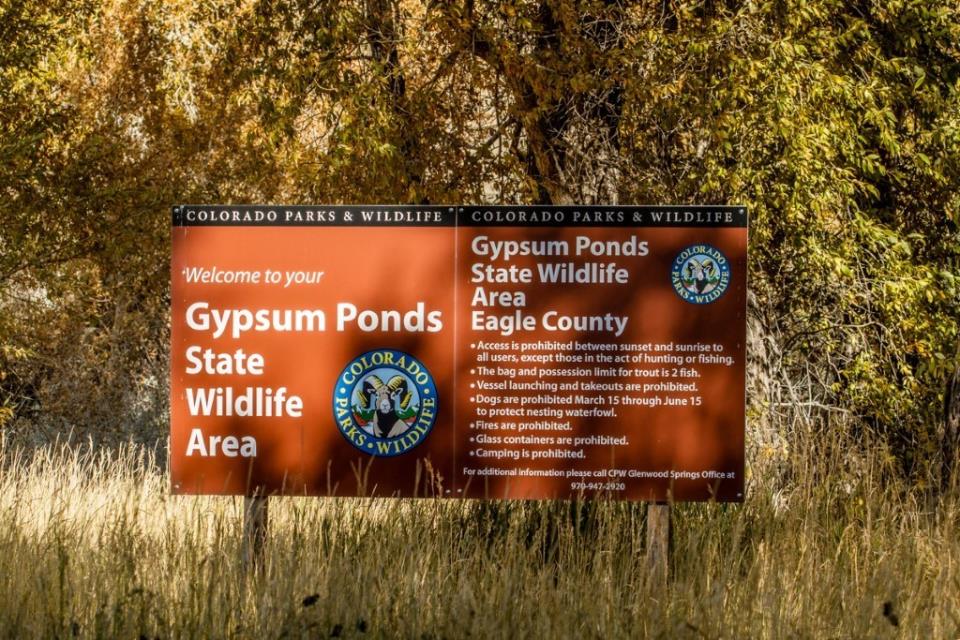
Photo credit: Town of Gypsum
  • Eagle River Habitat Improvement, Gypsum Ponds State Wildlife Area: Up to $1.5 million: The funding would improve fish habitat and water quality along the Eagle River in Eagle County.
Bicycling the Colorado National Monument, Grand Valley in the distance via Colorado.com
  • Orchard Mesa and Grand Valley Metering Efficiency Project: Up to $1.5 million: The funding would improve water management in the Grand Valley through the installation of advanced metering technology and real-time remote monitoring systems.
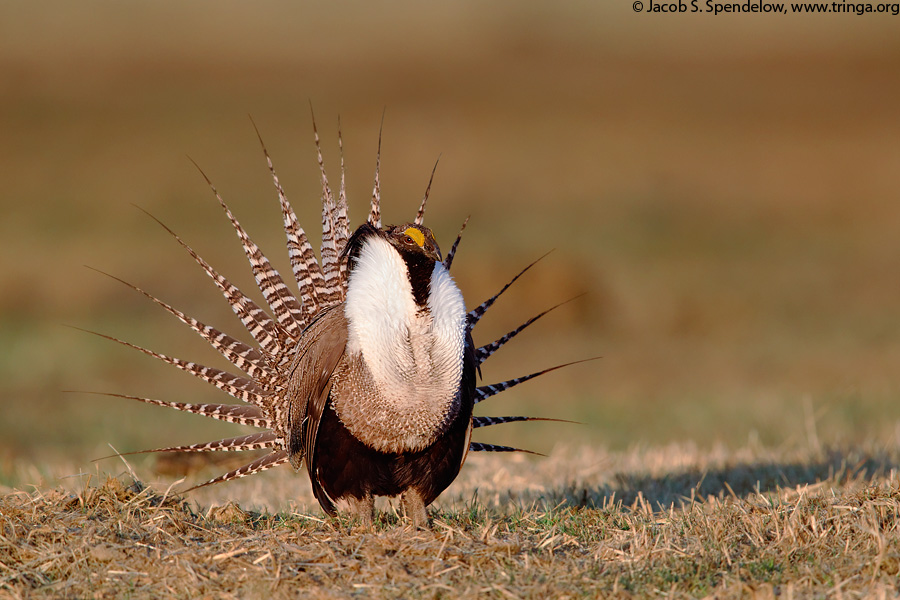
Biologists say federal target numbers are too low to ensure recovery of the Gunnison sage-grouse, which is listed as threatened under the Endangered Species Act. The bird’s largest population is in the Gunnison basin. Photo credit: Colorado Parks and Wildlife.
  • Habitat Restoration in the Gunnison Basin: Up to $750,000:  The funding would use low-tech restoration structures to restore habitat for the endangered Gunnison sage-grouse in the Gunnison River Basin.
Toxic-algae blooms appeared in Steamboat Lake summer of 2020. The lake shut down for two weeks after harmful levels of a toxin produced by the blue-green algae were found in the water. As climate change continues, toxic blooms and summer shutdowns of lakes are predicted to become more common. Photo credit: Julie Arington/Aspen Journalism
  • Cyanobacteria Monitoring and Treatment for Drought-driven Blooms in a High Elevation, Upper Colorado Reservoir to save Ecosystem Function: Up to $518,000: The funding would use real-time water quality monitoring tools and targeted treatments to combat algal blooms and restore aquatic health at Williams Fork Reservoir.
More by Shannon Mullane

The Bureau of Reclamation has scheduled an increase in the release from Navajo Dam from 350 cubic feet per second (cfs) to 400 cfs for Friday, January 24th, at 4:00 AM. #SanJuanRiver #ColoradoRiver

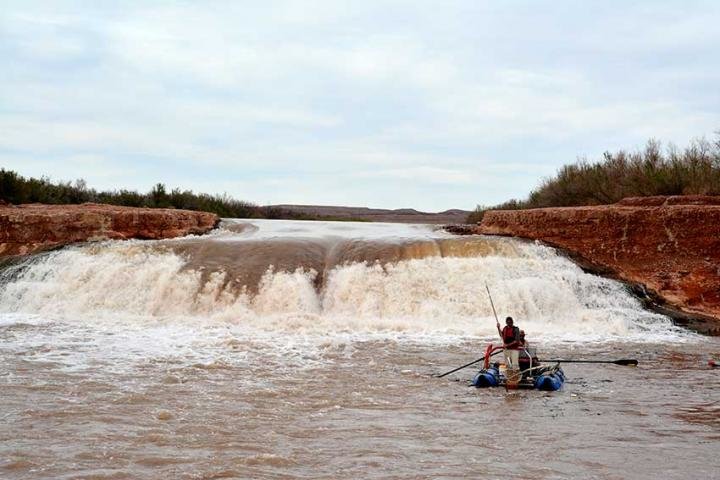
Since the late 1980’s, this waterfall formed from interactions among Lake Powell reservoir levels and sedimentation that redirected the San Juan River over a 20-foot high sandstone ledge [Dominy Formation]. Until recently, little was known about its effect on two endangered fishes. Between 2015-2017, more than 1,000 razorback sucker and dozens of Colorado pikeminnow were detected downstream of the waterfall. Credit: Bureau of Reclamation

From email from Reclamation (Western Colorado Area Office):

Releases are made for the authorized purposes of the Navajo Unit, and to attempt to maintain a target base flow through the endangered fish critical habitat reach of the San Juan River (Farmington to Lake Powell).  The San Juan River Basin Recovery Implementation Program recommends a target base flow of between 500 cfs and 1,000 cfs through the critical habitat area.  The target base flow is calculated as the weekly average of gaged flows throughout the critical habitat area from Farmington to Lake Powell. 

Harriet Crittenden LaMair to Step Down as CEO of High Line Canal Conservancy After More Than a Decade of Transformational Leadership

High Line Canal Conservancy Board Chair, Paula Herzmark, and CEO, Harriet Crittenden LaMair. Photo by Evan Semón Photography 720-620-6767

Click the link to read the release on the High Line Canal Conservancy website (Suzanna Fry Jones):

DENVER, CO – January 23, 2025 – The High Line Canal Conservancy announced today that Harriet Crittenden LaMair, the organization’s founding CEO, will step down after 11 years of visionary leadership. Harriet will remain in her role until mid-2025 to ensure a seamless transition as the Conservancy begins its next chapter.

“The preservation and protection of the High Line Canal have been my passion for the past 11 years,” said LaMair. “It has been an honor and joy to work with so many friends and partners to secure a vital future for the old Canal. Given the Canal safeguards that we have put in place, I am confident this is the right time to step away from leading the Conservancy. Together with Denver Water, local governments and private support, we have permanently protected the Canal under a conservation easement, improved community access and safety and established a strong stewardship endowment, forever ensuring improved care along all 71 miles,” said LaMair.

LaMair’s impact is significant, having spearheaded the creation of the High Line Canal Conservancy in 2014, transforming it from a startup nonprofit into a trusted regional leader. Under LaMair’s leadership, the Conservancy has achieved historic milestones: securing over $33 million in private investment matched by public funds for more than $100 million in Canal improvements, establishing a Canal Collaborative that unites 14 jurisdictions, launching impactful community programs and protecting the Canal with a conservation easement.

High Line hero in action! Harriet Crittenden LaMair rallies the team and community to protect and celebrate the 71-mile treasure during an event along the trail in Aurora. Photo by Evan Semón Photography

“Harriet has been a trusted leader and champion for the Canal over the years and has set us up for success,” said Arapahoe County Commissioner Carrie Warren-Gully. “We would not be where we are today without her tenacity, vision and commitment to the long-term protection and stewardship of the Canal. She is leaving a lasting legacy and big shoes to fill — and a collective awareness that we all have a responsibility to care for this regional treasure now and forever.”

LaMair’s contributions have garnered regional and national acclaim, including the 2017 Jane Silverman Ries Award and the 2022 Denver Regional Council of Governments Metro Vision Award.

“Harriet’s leadership has been nothing short of transformative, shaping the High Line Canal Conservancy into a trusted and respected regional leader,” said Alan Salazar, CEO of Denver Water. “Her unwavering passion for the natural world and her exceptional ability to bring people together have united communities and organizations around a shared vision for the Canal’s future. Denver Water is proud to have partnered with Harriet and the Conservancy in this remarkable journey, and her legacy will undoubtedly inspire continued stewardship and collaboration for generations to come.”

Paula Herzmark, Chair of the High Line Canal Conservancy Board, credited LaMair with being the driving force behind the Conservancy’s success: “Through her vision and determination, she not only built an organization but also inspired a regional movement that will benefit communities for generations. We owe her an incredible debt of gratitude for her leadership and passion for this remarkable resource.”

As the Conservancy moves forward, it remains steadfast in its mission to preserve and enhance the 71-mile High Line Canal. Over the next three years, the organization will implement more than 30 improvement projects, expand community programs and advance natural resource management initiatives. Herzmark reiterated the Board’s commitment to building on LaMair’s legacy, stating, “As Harriet transitions from her role, we remain committed to carrying forward the legacy she created.”

The Conservancy’s Board is actively preparing for this leadership transition and is committed to identifying a new CEO who will continue advancing the Conservancy’s mission and vision. More information about the job posting will be shared in the coming weeks. In the meantime, interested parties can contact employment@highlinecanal.org for inquiries.

About the High Line Canal Conservancy
The High Line Canal Conservancy is a nonprofit dedicated to preserving, protecting and enhancing the 71-mile High Line Canal. Since its founding in 2014, the Conservancy has led a regional effort to ensure the Canal remains a vibrant and enduring resource. Learn more at HighLineCanal.org.

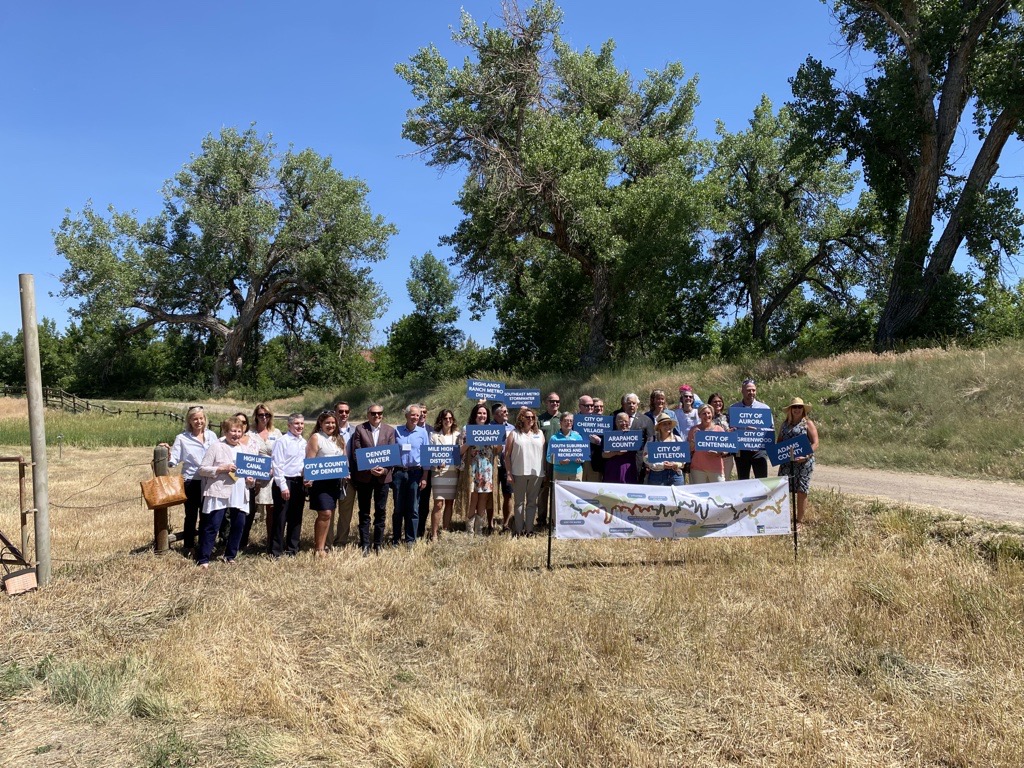
The High Line Canal Collaborative celebrates a historic moment, marking the land transfer of a portion of the Canal from Denver Water to Arapahoe County. Left to Right: Harriet Crittenden LaMair (High Line Canal Conservancy), Paula Herzmark (High Line Canal Conservancy Board of Directors), Dessa Bokides (High Line Canal Conservancy Board of Directors), Amy Heidema (Denver Water), Mark Bernstein (Denver Parks and Recreation), Diana Romero Campbell (Denver City Council), Tom Roode (Denver Water), Alan Salazar (Denver Water), Jim Lochhead (High Line Canal Conservancy Board of Directors), Steve Coffin (High Line Canal Conservancy Board of Directors), Laura Kroeger (Mile High Flood District), Lora Thomas (Douglas County Commission), Evan Ela (High Line Canal Conservancy Board of Directors), Melissa Reese-Thacker (South Suburban Parks and Recreation), Dan Olsen (Southeast Metro Stormwater Authority), Pam Eller (South Suburban Parks and Recreation Board of Directors), Earl Hoellen (Cherry Hills Village City Council), Jeff Baker (Arapahoe County Commission), Leslie Summey (Arapahoe County Commission), Shannon Carter (Retired – Arapahoe County Open Spaces), Bill Holen (Arapahoe County Commission), Carrie Warren-Gully (Arapahoe County Commission), Gretchen Rydin (Littleton City Council), Gini Pingenot (Arapahoe County Open Spaces), Amy Wiedeman (City of Centennial), Suzanne Moore (City of Greenwood Village), Brian Green (Aurora Parks, Recreation and Open Space), Nicole Ankeney (Aurora Parks, Recreation and Open Space). Photo by Evan Semón Photography

Article: The 2024 state of the #climate report: Perilous times on planet Earth, “This is a global emergency beyond any doubt” — BioScience

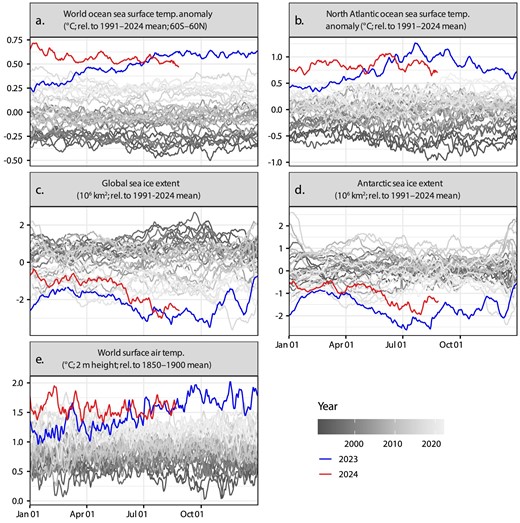
Unusual climate anomalies in 2023 and 2024. Ocean temperatures (a, b) are presently far outside their historical ranges. These anomalies reflect the combined effect of long-term climate change and short-term variability. Sources and additional details about each variable are provided in supplemental file S1. Each line corresponds to a different year, with darker gray representing later years. All of the variables shown are daily estimates. Credit: BioScience

Click the link to access the article on the BioScience website (William J Ripple, Christopher Wolf, Jillian W Gregg, Johan Rockström, Michael E Mann, Naomi Oreskes, Timothy M Lenton, Stefan Rahmstorf, Thomas M Newsome, Chi Xu, Jens-Christian Svenning, Cássio Cardoso Pereira, Beverly E Law, Thomas W Crowther). Here’s the opening few paragraphs:

We are on the brink of an irreversible climate disaster. This is a global emergency beyond any doubt. Much of the very fabric of life on Earth is imperiled. We are stepping into a critical and unpredictable new phase of the climate crisis. For many years, scientists, including a group of more than 15,000, have sounded the alarm about the impending dangers of climate change driven by increasing greenhouse gas emissions and ecosystem change (Ripple et al. 2020). For half a century, global warming has been correctly predicted even before it was observed—and not only by independent academic scientists but also by fossil fuel companies (Supran et al. 2023). Despite these warnings, we are still moving in the wrong direction; fossil fuel emissions have increased to an all-time high, the 3 hottest days ever occurred in July of 2024 (Guterres 2024), and current policies have us on track for approximately 2.7 degrees Celsius (°C) peak warming by 2100 (UNEP 2023). Tragically, we are failing to avoid serious impacts, and we can now only hope to limit the extent of the damage. We are witnessing the grim reality of the forecasts as climate impacts escalate, bringing forth scenes of unprecedented disasters around the world and human and nonhuman suffering. We find ourselves amid an abrupt climate upheaval, a dire situation never before encountered in the annals of human existence. We have now brought the planet into climatic conditions never witnessed by us or our prehistoric relatives within our genus, Homo (supplemental figure S1; CenCO2PIP Consortium et al. 2023).

Last year, we witnessed record-breaking sea surface temperatures (Cheng et al. 2024), the hottest Northern Hemisphere extratropical summer in 2000 years (Esper et al. 2024), and the breaking of many other climate records (Ripple et al. 2023a). Moreover, we will see much more extreme weather in the coming years (Masson-Delmotte et al. 2021). Human-caused carbon dioxide emissions and other greenhouse gases are the primary drivers of climate change. As of 2022, global fossil fuel combustion and industrial processes account for approximately 90% of these emissions, whereas land-use change, primarily deforestation, accounts for approximately 10% (supplemental figure S2).

Our aim in the present article is to communicate directly to researchers, policymakers, and the public. As scientists and academics, we feel it is our moral duty and that of our institutions to alert humanity to the growing threats that we face as clearly as possible and to show leadership in addressing them. In this report, we analyze the latest trends in a wide array of planetary vital signs. We also review notable recent climate-related disasters, spotlight important climate-related topics, and discuss needed policy interventions. This report is part of our series of concise annual updates on the state of the climate.

Screenshot from “The 2024 state of the climate report: Perilous times
on planet Earth”