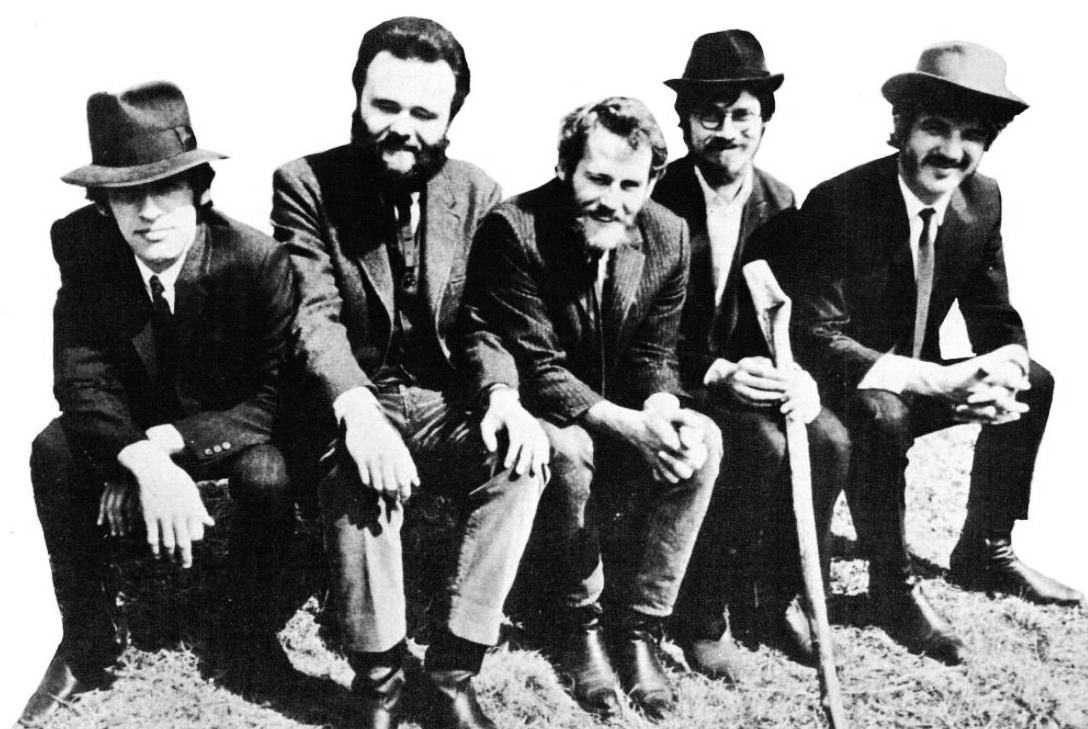
Garth Hudson, whose intricate swirls of Lowrey organ helped elevate the Band from rollicking juke-joint refugees into one of the most resonant and influential rock groups of the 1960s and ’70s, died on Tuesday in Woodstock, N.Y. He was 87 and the last surviving original member of the group…Mr. Hudson, Canadian-born, did far more than play the organ. A musical polymath whose work room at home included arcana like sheet music for century-old standards and hymns, he played almost anything — saxophone, accordion, synthesizers, trumpet, French horn, violin — in endless styles that could at various times be at home in a conservatory, a church, a carnival or a roadhouse.
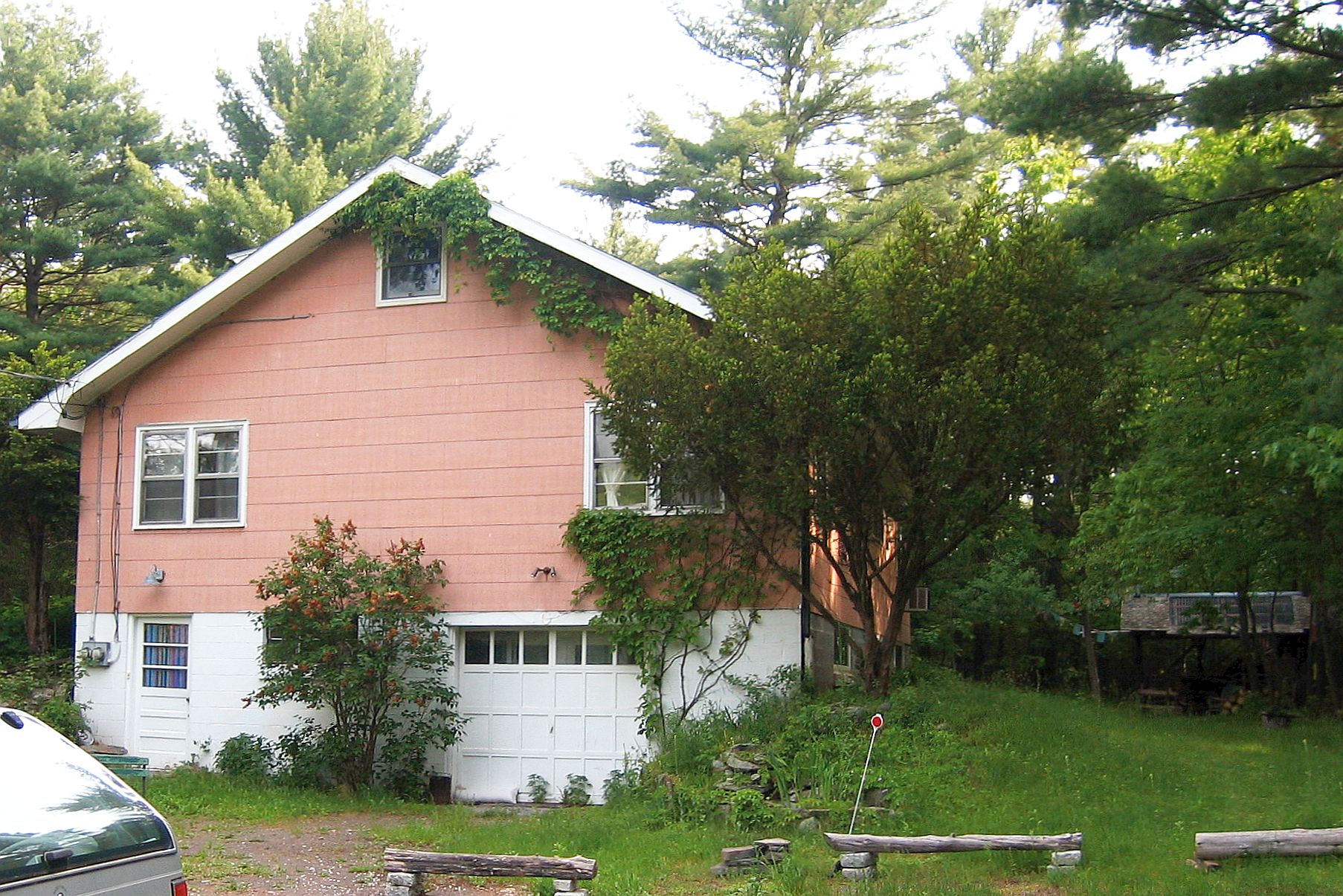
“Big Pink”, home of The Band in late 60s, located at West Saugerties (near Woodstock), USA. It was to this house that Bob Dylan would eventually retreat to write songs and play them and try others, in its large basement.By johndan – Big Pink, CC BY 2.0, https://commons.wikimedia.org/w/index.php?curid=10575575
He was the one who set up, installed and maintained the recording equipment in the pink ranch house in Saugerties, N.Y., where Bob Dylan and the Band recorded more than 100 songs that came to be known as the basement tapes…When the Band became a force on its own, he arranged the music on the group’s albums and painstakingly tweaked and honed its recordings. He added brass, woodwinds and eclectic flourishes that accentuated the group’s homespun authenticity, a quality that set it apart from the psychedelia and youthful posturing of the rock of its era.
Mr. Robertson, quoted in Barney Hoskyns’s 1993 book, “The Band: Across the Great Divide,” called him “far and away the most advanced musician in rock ’n’ roll.”
“He could just as easily have played with John Coltrane or the New York Symphony Orchestra as with us,” Mr. Robertson said.
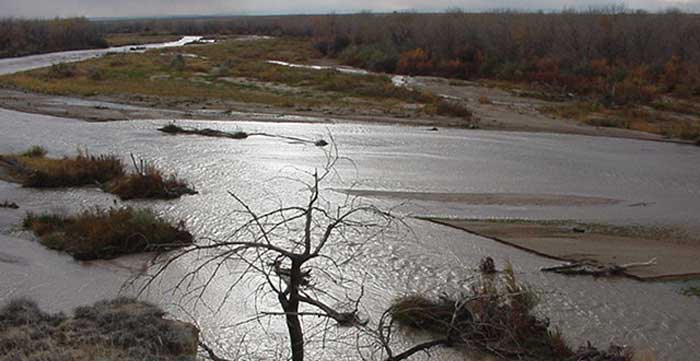
Fountain Creek photo via the Fountain Creek Watershed Flood Control and Greenway District
Click the link to read the article on the Colorado Politics website (Savannah Eller). Here’s an excerpt:
January 22, 2025
The El Paso County Board of County Commissioners will soon have an option on the table to formalize a forever chemicals testing agreement with the Air Force over wells at Fountain Creek Regional Park. Todd Marts, El Paso County director of community services, said in an informal meeting with commissioners on Tuesday that the U.S. Air Force has been regularly testing wells for two forever chemical types in “surrounding areas” including the park. The agreement would formalize continued access for the military…
Widefield aquifer via the Colorado Water Institute.
Residents in and around Fountain and Security-Widefield were previously exposed to elevated levels of forever chemicals from firefighting foams used on Peterson Space Force Base. The communities have since put in systems to treat groundwater…The county did not have immediate plans to mitigate forever chemicals in park water, with Melvin pointing out that the chemicals lived up to their name. El Paso County’s parks department is considering the addition of a third well to serve the Fountain Creek Nature Center, will would also be subject to testing under the access agreement with the Air Force. The contract will allow military access for testing for one year, with the option to renew for nine years. The El Paso County commissioners will vote on the agreement as an item at an upcoming public meeting.
At the confluence of Canyon Creek and the Colorado River. Photo credit: Friends of Canyon Creek
Click the link to read the article on The Denver Post website (Elise Schmelzer). Here’s an excerpt:
The pilot program has paid water users — mostly farmers and ranchers — in the four states in the Colorado River’s Upper Basin to voluntarily use less river water than their water rights allow. Farmers from Wyoming, Colorado, New Mexico and Utah could choose not to irrigate some of their land or to grow a crop that uses less water. Over the last two years, the Upper Colorado River Commission has spent $44.6 million to conserve 101,441 acre-feet of water, enough water to supply more than 200,000 households with a year’s worth of water. But federal lawmakers late last year failed to pass a bill that would reauthorize the System Conservation Pilot Program, or SCPP. That lapse has forced the program’s managers to cancel plans to begin accepting applications early this month for 2025 projects and has jeopardized the effort’s near-term future. Congressional leaders from Colorado and other states in the drought-stricken river basin on Tuesday filed legislation that would restart the System Conservation Pilot Program. The bill — the Colorado River Basin System Conservation Extension Act — is sponsored by lawmakers from both political parties who represent Colorado, Wyoming and Utah…
President Donald Trump, on the first day of his new administration, issued an executive order freezing spending from the Inflation Reduction Act. That law was part of billions of dollars of investments by former President Joe Biden’s administration into clean energy and climate change-related projects, including $125 million for the SCPP. While more than $80 million remains allocated for the SCPP, the program cannot continue until Congress reauthorizes it and the administration allows Inflation Reduction Act spending again.
Click the link to read the article on the Land Desk website (Jonathan P. Thompson):
Januray 24, 2025
Trump Ticker
After last year’s presidential election, I — and many others — predicted that a second Trump term would be even more destructive than the first because this time the administration would be better prepared, and would not be plagued by the same incompetence, legal shoddiness, or misdirection as last time.
I was wrong. During his first few days in office, Trump issued dozens of executive orders, resolutions, pardons, and other “presidential actions.” Some were mere bluster. Others blatantly unconstitutional. Almost none displayed any evidence of forethought or, well, thought. It’s more like a hastily sketched, grievance-laden wish list penned on the back of a faux-silk napkin by lobbyists, ideologues, and oligarchs at one of Trump’s Mar-a-Lago soirees. The list, so far, is the product of greed, spite, right-wing ideology, and power-hunger. Rather than approaching policy — if you can call it that — with more competence and intelligence than before, it appears that Trump and friends are relying on the sheer volume of action to overwhelm any legal challenges.
I’m not going to even try to list them all here. Rather, I’ll take a look at a small sampling that fit under the Land Desk’s usual beat.
Declaring a National Energy Emergency: It takes a few paragraphs to even figure out what is meant by “energy” or, for that matter, “emergency” here. The preamble makes it sound as if the nation’s collective gasoline pumps could run dry at any moment. But that can’t be it, because the U.S. is pumping more crude oil than ever before from the Permian Basin and other fields, it is the largest petroleum producer in the world, and it is a net exporter of petroleum products. There is no danger of any sort of fossil fuel shortage. Surely they know that, right?
Then at paragraph six, we finally get a hint:
Okay, then, they’re talking about electricity. Yeah, that actually makes some sense. No, there’s not an electricity shortage. But the growing number of power-sucking AI and cryptocurrency-mining data centers, electric vehicles, and electrified buildings are significantly increasing demand for power, which threatens to strain the grid and raise electricity prices for everyone else.
That’s why, for better or worse, the Biden administration encouraged utility-scale solar and wind facilities on federal lands, subsidized enhanced geothermal research and development, and subsidized and fast-tracked huge transmission projects — despite hefty opposition and environmental and cultural impacts — such as SunZia. And it’s why both the Biden and California’s Newsom administrations poured billions of dollars into keeping Diablo Canyon nuclear plant running.
In the West, utilities and grid operators are trying to address these issues by creating a regional transmission organization and day-ahead and real-time power markets. These will help get power from where it’s generated to where it’s needed.
Trump’s order, on the other hand, does nothing tangible to address growing electricity demand, strain on the grid, or aging infrastructure. One of the only specific actions is to order the Secretary of Energy to consider allowing the year-round sale of E15 gasoline to meet nationwide fuel shortages. Huh? Did these guys just dust off some order from the 1970s energy crises and add new dates, or what?
Anyway, the good thing about this one is that it will probably have minimal on-the-ground effects, though it may give agencies some cover to ignore rules and regulations. As one energy analyst told RTO Insider, “They are press releases on fancier paper … directions to the agencies, but they’re not specific legal actions.”
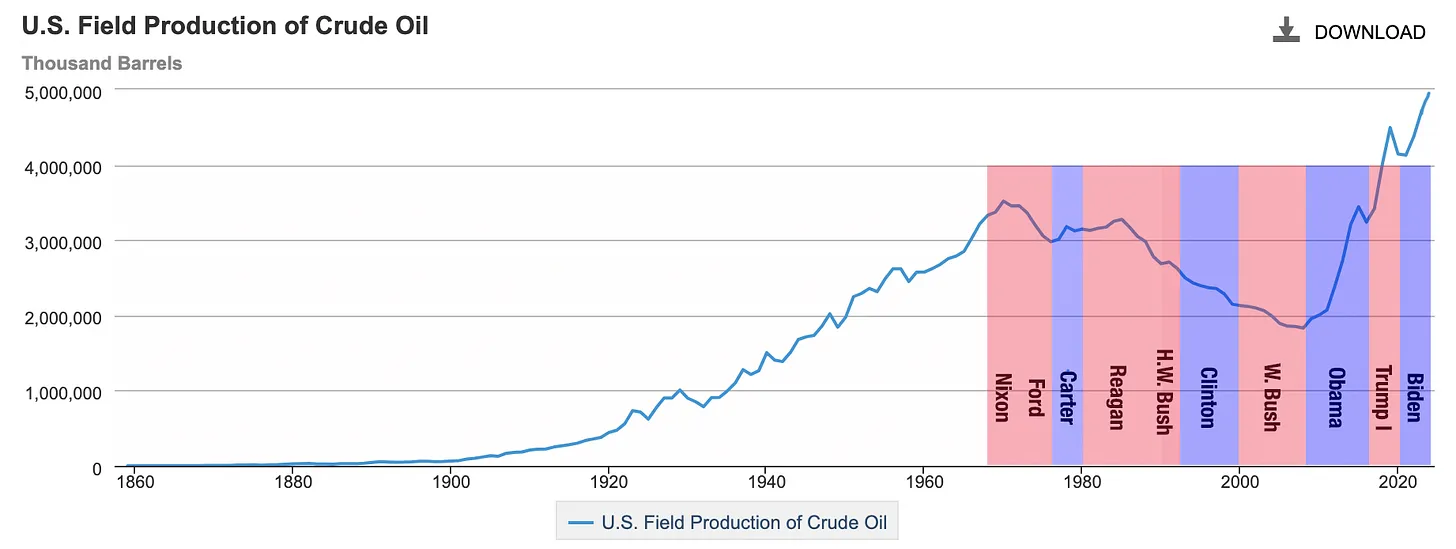
Conventional wisdom — and political donations — would indicate that Republicans are friendlier than Democrats to the oil and gas industry. And, in fact, that’s probably true: Democrats are more likely to pass regulations on drilling; Republicans are more likely to give oil corporations massive tax cuts. But in spite of all of that, Over the last fifty years, Republican presidents have been more likely to oversee crude oil production declines, while production has generally increased under Democrats, with the exception of the Clinton administration. In fact, the current surge in production began during Obama’s first year, and has continued through Biden’s entire term. This doesn’t mean that Democrats spur production. What it means is that more regulations don’t hamper production, and rescinding those regulations — and corporate tax cuts — don’t spur production. There are many forces in play, and the occupant of the White House is merely one of them, and a relatively insignificant one at that. Source: EIA, Land Desk.
Unleashing American Energy: Anyone who has been paying attention knows that if American energy is on a “leash,” it’s a very long and flimsy one. I really hate having to repeat this, but a lot of folks seem to be immune to facts: America is producing more oil and natural gas than ever before. Period. Eliminating environmental protections will not increase production, nor will it decrease prices. It will only increase profits for the petroleum corporation. This is not rocket science.
Among the “action” items in this order:
“… eliminate the electric vehicle mandate.” That one’s pretty easy, since there is no federal electric vehicle mandate and there never was one. The administration will consider axing federal EV incentives, and looks to revoke California’s waiver allowing it to phase out gasoline-powered vehicle sales.
“Safeguarding the American people’s freedom to choose from a variety of goods and appliances.” Again, Trump’s tiny hands are swatting at straw men. Go into any Home Depot and you will find a virtually unlimited variety of washers, driers, lightbulbs, shower heads, ranges, and toilets. You may or may not be able to find efficient ones, but you can certainly find wasteful ones.
Immediate review of all agency actions that potentially burden the development of domestic energy resources. This one’s funny because in another first-day order, Trump halts all offshore wind leasing and blocks the approval of the Lava Ridge wind facility in Idaho. Isn’t that burdening energy resources?
Terminates the American Climate Corps.
“Unleashing Energy Dominance through Efficient Permitting” and “to expedite and simplify the permitting process.”
Gets rid of analyzing the social cost of carbon and other greenhouse gases.
Terminates the “Green New Deal” (there is no such thing, by the way) and “immediately pauses the disbursement of funds appropriated through the Inflation Reduction Act and Infrastructure Investment and Jobs Act.” Again, Trump’s orders contradict one another, demonstrating their shoddiness: Billions upon billions of dollars in these acts were aimed at building up energy infrastructure and addressing grid and power shortfalls. And nearly $1 billion of it was just loaned to the Rhyolite Ridge lithium mine in Nevada, which would advance Trump’s quest to increase domestic critical mineral production. This throws all of that into doubt.
Restarts reviews of proposed LNG export projects. Again, the U.S. is currently exporting more LNG than ever before and if the volume continues to increase it will lead to higher natural gas prices in the U.S. That, in turn, will lead to higher electricity prices. Just saying.
“Restoring America’s Mineral Dominance” by removing “undue burdens” on domestic mining. Are you kidding me?
Orders the Interior and Agriculture secretaries to review any mineral withdrawals, which would include the Thompson Divide in Colorado and around Chaco Culture National Historical Park in New Mexico.
Unleashing Alaska’s Extraordinary Resource Potential: Trump wants to “maximize the development and production of the natural resources” within Alaska by expediting oil and gas leasing and revoking restrictions on drilling in the Arctic National Wildlife Refuge and National Petroleum Reserve and to rescind protections on subsistence resource values. And he wants to reopen the Tongass National Forest’s roadless areas to logging. Basically, Trump wants Alaska to be corporations’ natural resource colony.
While this might conjure horrifying images of a battalion of drill rigs pummeling the Arctic tundra, it’s probably not worth worrying too much yet. The oil and gas industry hasn’t shown all that much interest in drilling in ANWR — a lease sale earlier this month drew zero bids — and petroleum company officials say they would prefer to focus on more accessible hot spots like the Permian Basin, which Biden basically offered up as a sacrifice zone.
The state’s elected officials mostly are bubbling with joy over the orders, but they aren’t all on board with Trump’s renaming of Denali, the nation’s highest peak. Trump has switched its title back to Mount McKinley, after the 25th U.S. president known for … well, not much, aside from implementing tariffs — one of Trump’s pet policies and a sure way to increase U.S. consumer prices.
Sens. Lisa Murkowski and Dan Sullivan, both Republicans, are against the name change.
It’s not an executive order, yet, but Trump and some Republicans in Congress have threatened to withhold federal aid for victims of the Los Angeles fires unless California changes its water policies. And no, they’re not talking about the Imperial Valley alfalfa farmers guzzling up a monster’s share of the Colorado River. Truth is, they don’t really know what they’re talking about.
Basically, Trump has bought into his own lie that diverting water from the northern part of the state to SoCal would have enabled firefighters to easily extinguish the flames. And that Newsom’s environmental policies are to blame. This is patently false. And even if it were true, it’s inexcusable and morally wrong for a president to withhold aid based on a state’s political leanings. In his Los Angeles TimesBoiling Point column, journalist Sammy Roth hits the nail on the head:
Heartless and cruel, indeed.
On that note, I’d urge all of you who have not yet done so to watch the Right Rev. Mariann Edgar Budde’s sermon at the Washington National Cathedral as part of the inauguration ceremonies.
As one might expect a reverend to do, she calls for unity and asks the Trump administration to have mercy on those less fortunate than them. Basically, she’s asking the president to practice compassion and empathy, sort of like Jesus — or any other civil and decent human being — might do.
At no point did Budde condemn Trump, or call him a fascist, or burn him in effigy, or make fun of his orange makeup or small hands. She just asked him to show a bit of mercy. And yet, the reaction from Trump and his supporters has been rather ugly and angry. Trump demanded that she apologize to him, while others condemned Budde for uttering, well, Christian teachings. Silly me: I thought that was her job.
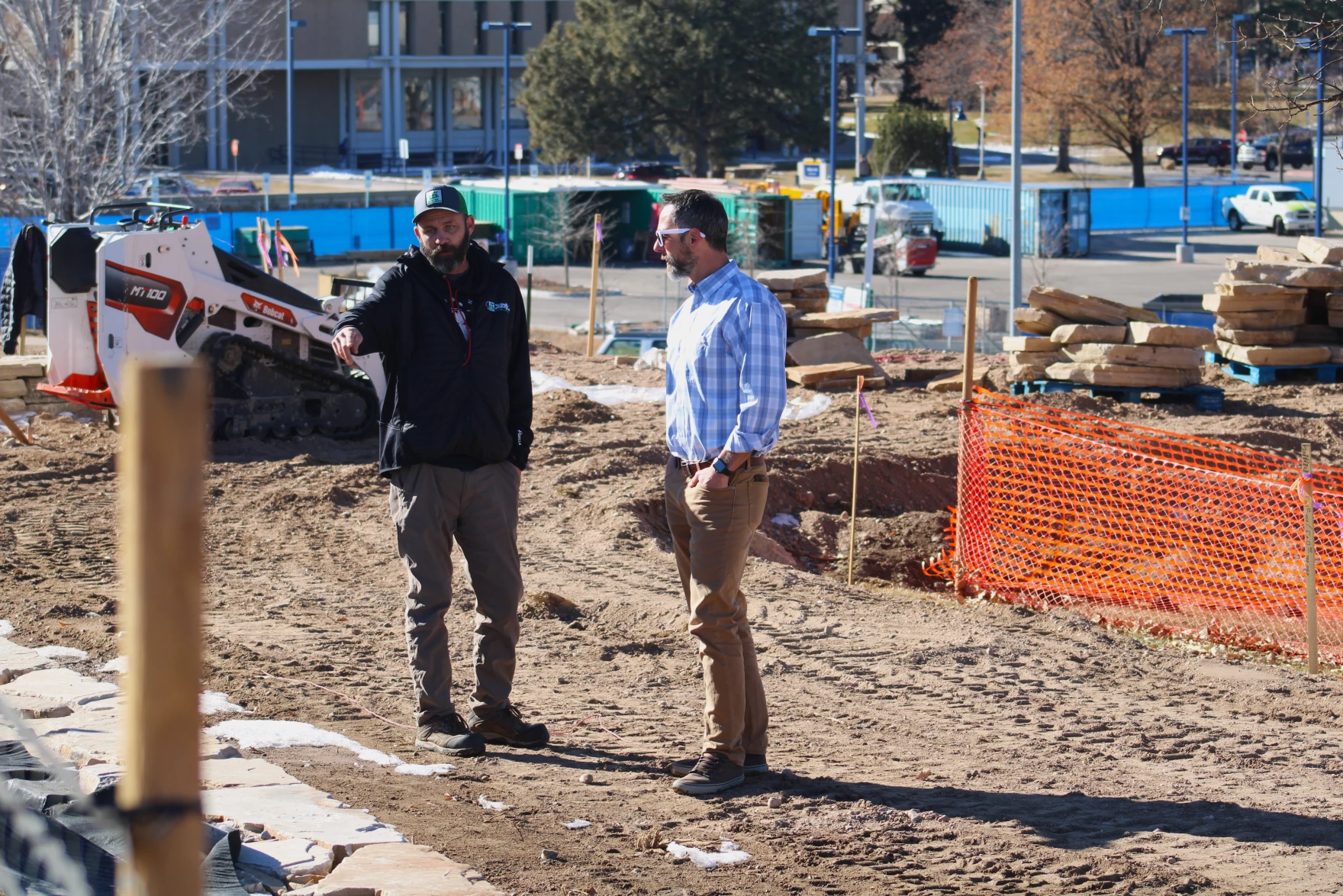
Chris Bowers (right) surveys a site where nonfunctional turf is being replaced on the University of Northern Colorado campus on January 15, 2025. The landscaping change will bring water use on that patch of campus down from about 3 million gallons each year to 1 million. Photo credit: Alex Hager/KUNC
Click the link to read the article on the KUNC website (Alex Hager):
January 23, 2025
This story is part of ongoing coverage of water in the West, produced by KUNC in Colorado and supported by the Walton Family Foundation. KUNC is solely responsible for its editorial coverage.
Way before spring, when the trees are leafless skeletons and the grass is dry and beige, the people in charge of helping plants blossom at the University of Northern Colorado were hard at work. Chris Bowers, the school’s energy and sustainability manager walked through the churned-up dirt of a construction site near the campus commons building. Sparse and brown on a chilly January day, he laid out a vision for the space’s future in warmer months.
“There will be people hanging out and studying and eating lunch and using a space that was not used at all before,” Bowers said.
This site is an experiment in reshaping the unused grassy expanses that sprawl across campus. For decades, the area was a patch of green grass that fell into the category of “nonfunctional turf” – a term water experts use to describe grass that serves no purpose besides aesthetics.
Now, as part of a statewide effort to save water, Colorado’s government is trying to convince people and institutions to rip out their thirsty grass lawns and replace them with native plants and more functional space. It comes amid an urgent need to cut down on water use, but there are limits to the amount of water that can be saved.
With the help of a state grant and money from the nonprofit Western Resource Advocates, UNC’s patch of grass — which long served no purpose besides looking pretty — will be replaced with a patio, spots for hammocks and native prairie grasses.
“This is the first step in what we hope is a push forward in this becoming more of a standard across campus,” Bowers said.
While UNC is only replacing grass in a relatively small area for now, the water savings are fairly substantial. That area will see its water use go down from about three million gallons each year to about one million. UNC officials said the native plants in that area may actually demand more water than is currently used during their first three years of growth but will need less in the long term. Some years, they said, those plants might require no irrigation water and grow using only water that falls from the sky.
The project is part of a program from the Colorado Water Conservation Board, the state’s top water management agency. It gave grants to fifty different water-saving projects, the majority of which are on the Front Range.
A car drives by a turf replacement project at the University of Northern Colorado on January 15, 2025. Proponents of the work hope its location near a busy road, will help raise awareness about water-saving landscaping. Photo credit: Alex Hager/KUNC
As Colorado – and more broadly, the arid Southwest – struggles with drought and long-term drying due to climate change, policymakers are under pressure to cut back on water use. Colorado’s turf replacement program is borne out of that reality, but it may only be able to make a minuscule dent in the state’s overall water use.
The overwhelming majority of the state’s water — between 80-90% — is used for agriculture. Only 7% of the state’s water is used by cities and towns, and only 2.7% of the state’s water is used outdoors in cities and towns. So any efforts to cut down on lawn watering will only be working within that tiny slice of the state’s overall water portfolio.
A 2024 report from the CWCB estimated how much water could reasonably be saved through turf replacement programs. After taking out water used for trees and shrubs, and functional turf like sports fields or city parks — which experts say are worth watering — state officials think they can save .004% of the state’s total water use.
The CWCB requested $1.4 million in its 2025 budget to run a more complete analysis of land cover across Colorado and get a more accurate appraisal of how much nonfunctional turf there is across the state.
Jenna Battson, the agency’s outdoor water conservation coordinator, said programs to replace nonfunctional turf are still worthwhile, especially as a way to give people a visible reminder of ways to cut back on water use.
“They think, ‘Oh, I can do this and save water,’ and then it might cascade and allow them to start thinking about other ways that they can reduce their water use,” she said. “Which I think will have a broader impact than just the water savings on its face.”
Battson said a turf replacement project like UNC’s, on a college campus near a busy road, might have an added impact because of what she called “the neighbor effect.”
“If you’re doing more really public spaces that are highly visible,” Battson said.” That impact can also spread because people are seeing it.”
Larger projects like the one on UNC’s campus will certainly deliver water savings, but what actually happens to that saved water is another question entirely. In cities across the arid West, conserving municipal water rarely means more water is left in the rivers that supply them.
Around Colorado and the Southwest, some cities have instituted conservation measures to help facilitate further growth. In Colorado Springs, for example, a regime of grass replacement and lawn watering restrictions has allowed the city to grow by about 40% while bringing average per capita water use down by nearly 40%, and total water deliveries down by about 25%.
Those kinds of savings are especially important in Greeley, where population growth has exploded in recent years. Between 2022 and 2023, Greeley grew by 3.1%, far and away the largest rate of growth among Colorado’s 15 largest cities.
Lindsay Rogers, policy manager for municipal conservation at Western Resource Advocates, says those water savings are still valuable.
“It’s very possible that the savings from the UNC project are not going to end up back in the Poudre River,” she said. “But there’s still a huge benefit to using those savings to support new growth, as opposed to relying on new supplies.”
Western Resource Advocates helped pay for the UNC project. The group also receives funding from the Walton Family Foundation, which supports KUNC’s Colorado River coverage.
Clinton Meagher nails artificial turf into the ground at a Henderson, Nevada home on June 15, 2021. Aggressive water conservation measures have helped the Las Vegas area bring its water use down while adding population. Photo credit: Luke Runyon/KUNC
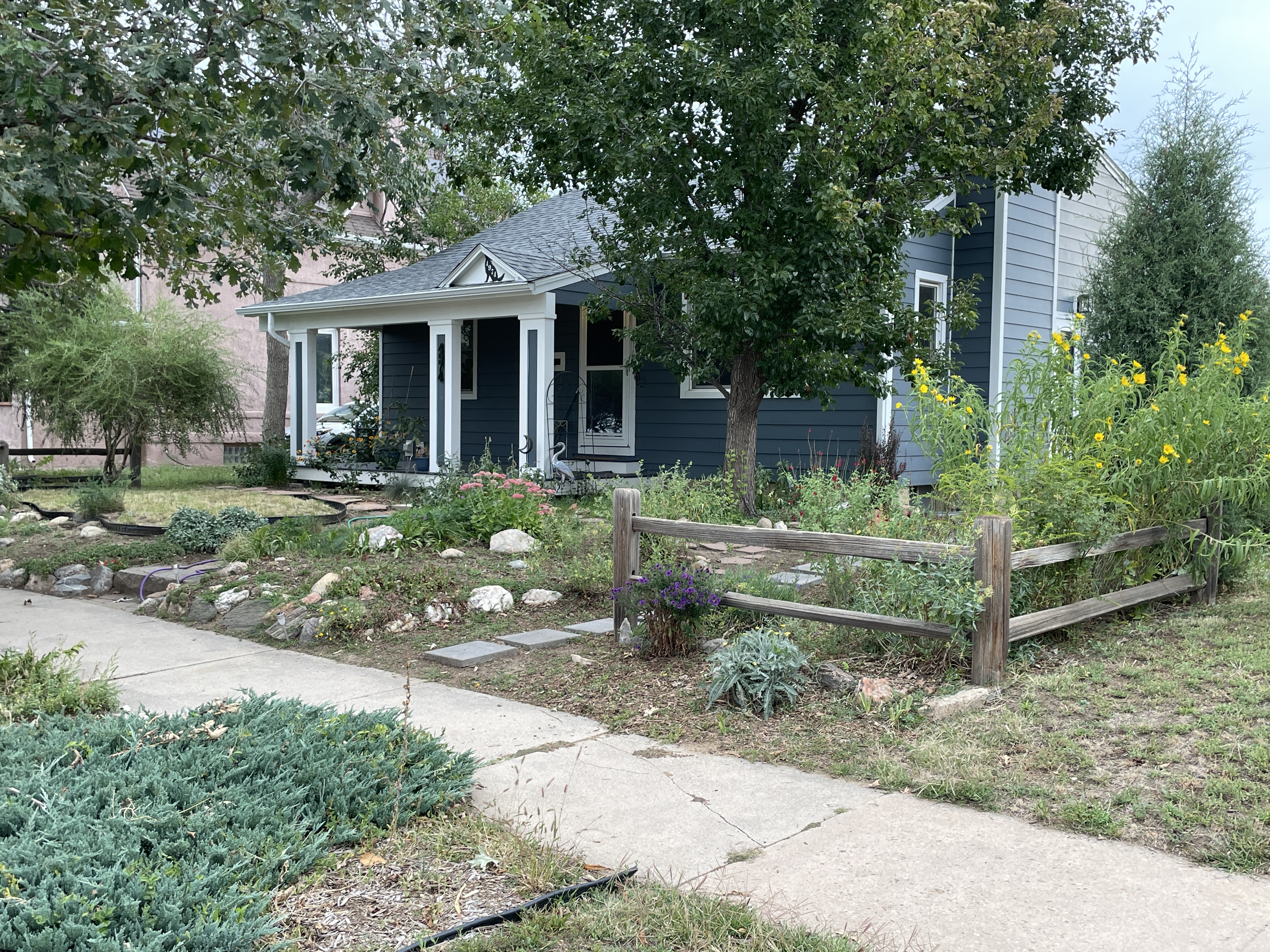
Turf replacement programs have been switched into hyperspeed in the cities that need it most. While the practice is still gaining traction in Colorado, fast-growing cities elsewhere in the Colorado River basin have leaned hard into it.
In Las Vegas, which has a relatively small allocation of water from the Colorado River, the city has grown by about 750,000 people since 2002 and managed to bring down its use of Colorado River water by 26%. Those kinds of savings are partially thanks to a turf removal program going back more than two decades, but also a uniquely aggressive enforcement strategy in which a team of investigators drives around issuing fines for water waste.
While similar efforts are unlikely in Colorado anytime soon, policymakers are pushing ahead to cut back on nonfunctional grass to save more water in cities.
The Colorado Water Conservation Board is still taking proposals for more water conservation projects like the one at UNC. It recently picked seven projects that are close to getting approved. Battson said there’s already high demand for the next round of funding, which is about $470,000.
Starting January 1, 2026, a new statewide law will go into effect prohibiting local governments from allowing new nonfunctional turf to be planted.
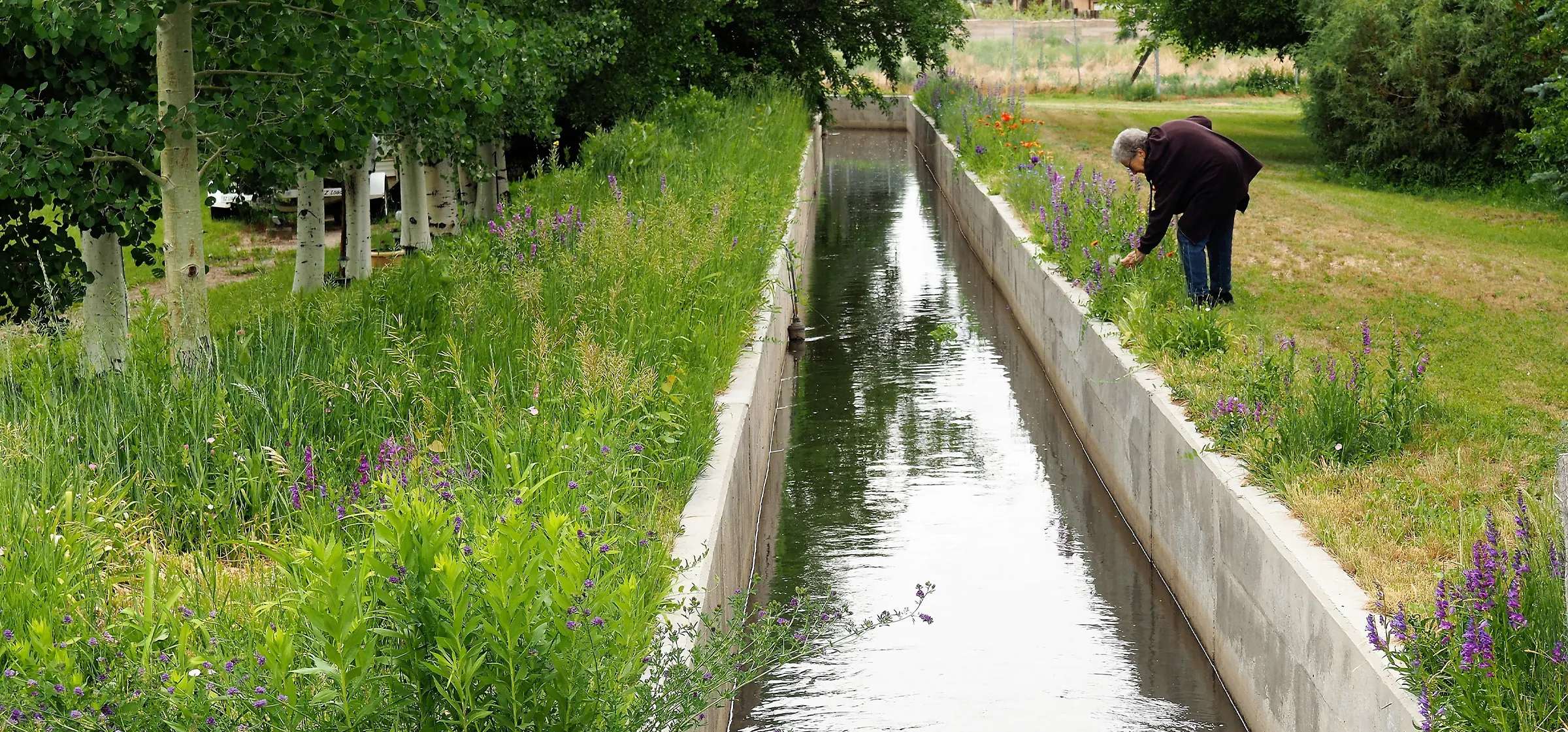
Erosion and years of freezing and thawing after more than six decades of use have left the San Luis Peoples’ Ditch with large cracks in multiple places along the channel. Credit: Mark Obmaskic
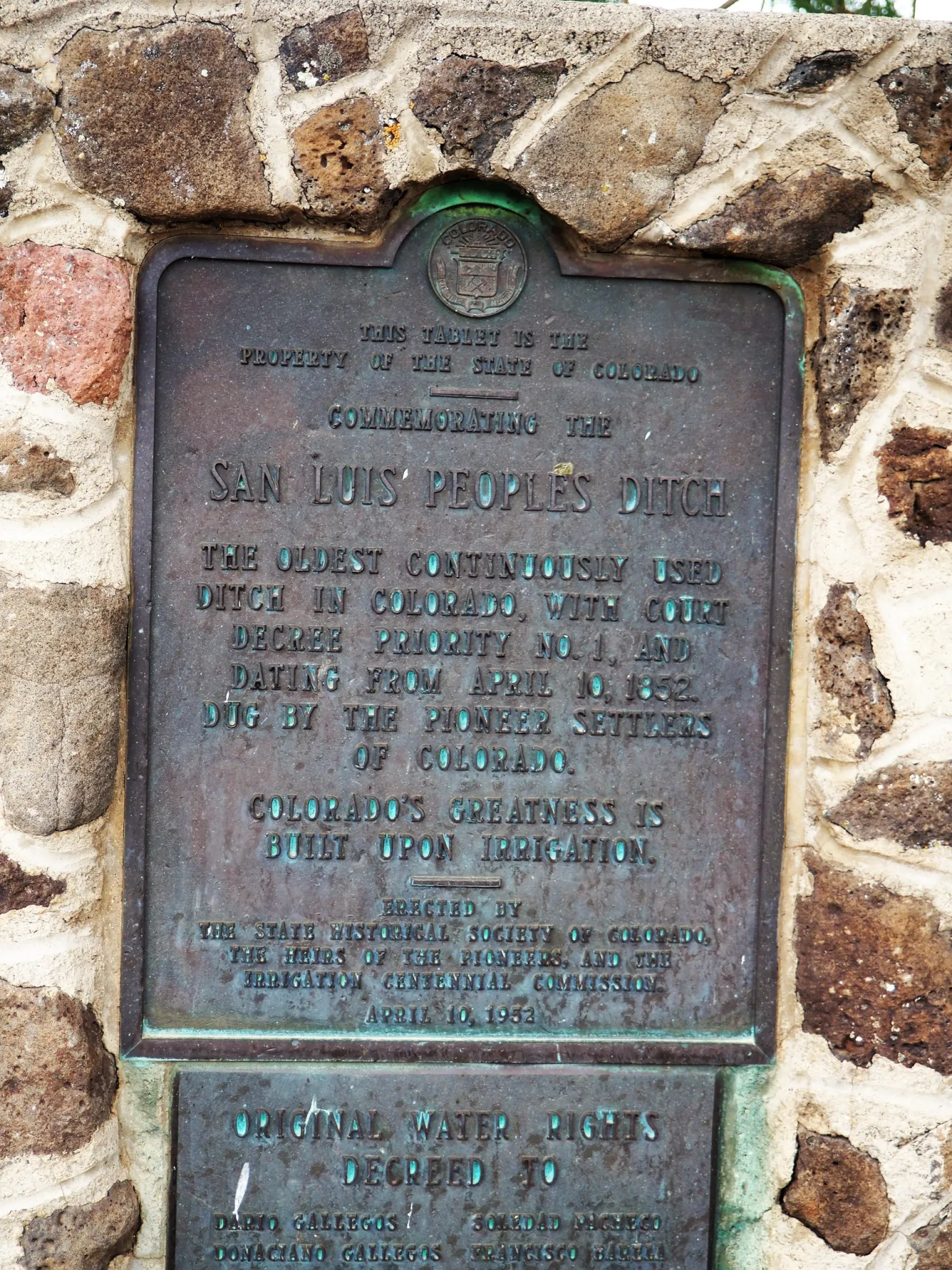
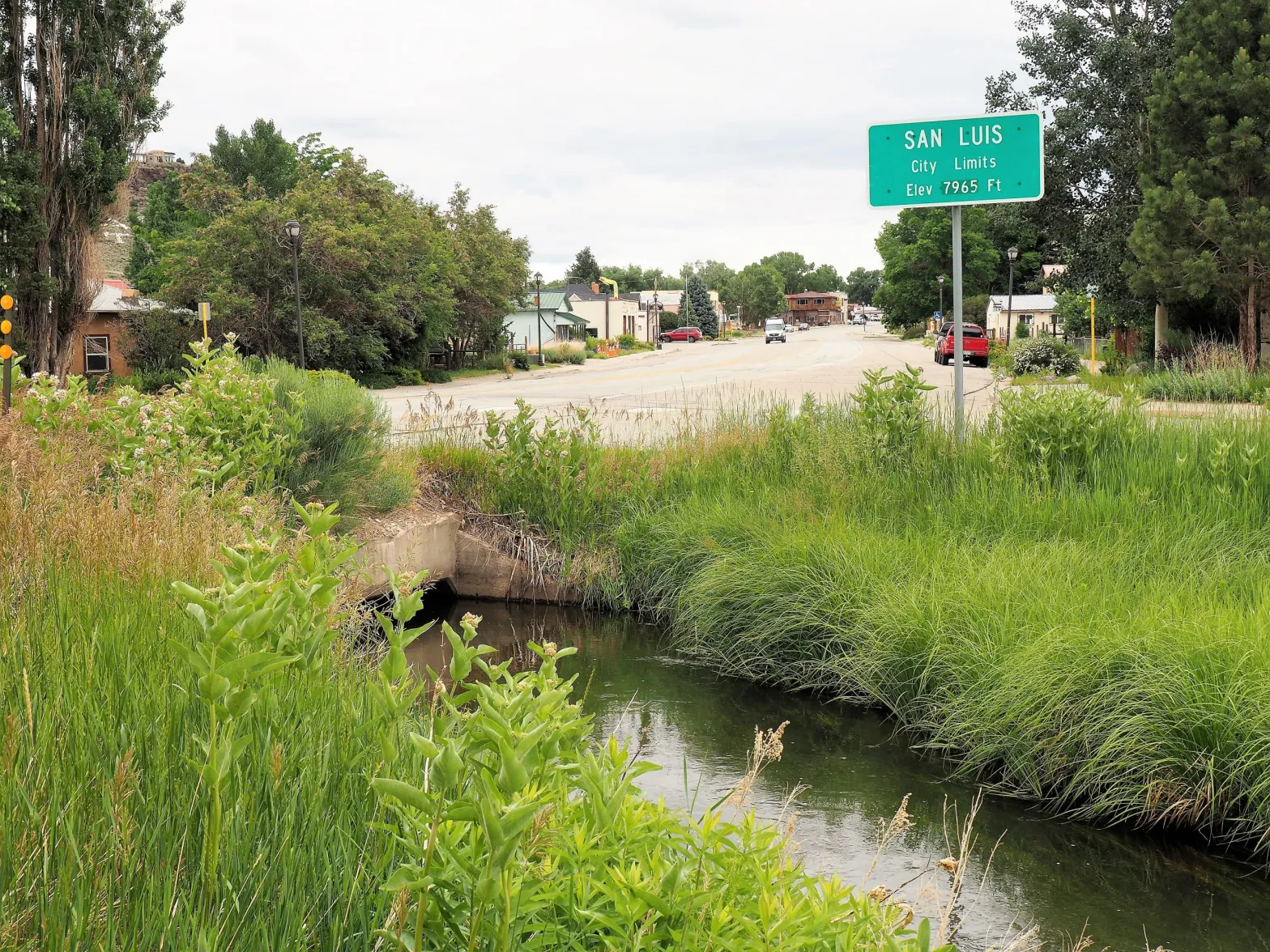
The San Luis Peoples’ Ditch, an acequia that holds the first adjudicated water rights in the region, granted in 1852, is the oldest continuously used community irrigation ditch in Colorado. The ditch has significant ties to local cultural heritage and a storied past connected to traditional water management practices. It’s also in desperate need of repairs.
Years of wear and tear on the channel have resulted in a cracked concrete infrastructure that reduces the efficiency of water transport and harms irrigators. The San Luis Peoples’ Ditch Rehabilitation Project is working to solve this problem.
At last week’s Rio Grande Basin Roundtable meeting, funding for Phase I of the project was approved. Now, sponsors will work to get final approval from the Colorado Water Conservation Board and figure out contracts. If everything goes to plan, all three tasks in Phase I, expected to cost a combined $45,000, will begin in the fall of 2025.
A marker commemorating The San Luis Peoples’ Ditch as the oldest continuously used community irrigation ditch in Colorado. Credit: Mark Obmaskic
Originally a shallow hand-dug acequia, the San Luis Peoples’ Ditch was lined with concrete in the early 1960s to maximize water delivery to the area. It was incorporated in 1967, and currently serves 16 parciantes, affiliated water-users, irrigating more than 2,000 acres of crops like hay and alfalfa.
Having already lasted more than 60 years, this concrete addition has long outlived the usual expected lifespan of 25 years. Now, erosion from more than six decades of use has left it in urgent need of attention. Years of freezing and thawing has caused large cracks in multiple places along the channel, significantly reducing the amount of water delivered to irrigators.
Acequias – gravity-fed, community-managed irrigation systems – distribute water and snowmelt through hand-dug channels to agricultural fields for both crops and livestock. The acequia system was brought to the southwest United States by farmers emigrating to the San Luis Valley from Mexico. Used in arid landscapes around the world, the practice originated in North Africa to distribute water from rivers to desert valleys. It was brought to Spain by the Moors, and brought to Mexico by the Spaniards during the colonial period.
Traditionally, acequias function on the idea of communal maintenance and equal water sharing during times of abundance and shortage, overseen by a mayordomo or ditch manager. This structure instills important cultural values centered around collective responsibility and respect for community and the environment.
The unique, longstanding cultural practices as well as the physical structures of the nearly 1,000 acequias that exist in Colorado and New Mexico today are facing a multitude of threats, including modernization, socio-economic, political, and environmental pressures.
While just one of many factors impacting acequias and agricultural communities in the San Luis Valley, drought and environmental changes that impact water availability are a serious concern. Demand for water already exceeds supply in the region, and drought conditions like increased temperatures continue to intensify such processes as evapotranspiration that decrease accessible irrigation water. The drought that the southwest has experienced in the last two decades is severe, with 2002 being the worst drought on record. Identified by climate scientists and the USDA Climate Hub as a potentially emerging megadrought, it’s been the driest 22-year period in over a thousand years.
Changing precipitation patterns, even with potential increases in the form of intense rainstorms, put acequia systems at risk due to a lack of major water storage capabilities. Adapting to these changes could mean shifting growing seasons and irrigation schedules. Ultimately, compounding impacts of climate change make maximizing available water even more crucial for irrigators and farmers in the Valley.
“Every drop counts as we face these dry times,” said Amber Pacheco, deputy general manager of the Rio Grande Water Conservation District, emphasizing the importance of improving aging infrastructure to lessen water loss.
Credit: Mark Obmaskic
Phase I of the Rehabilitation Project will get these improvements started. With three main tasks, this phase is focused on surveying and assessing the current conditions of the ditch infrastructure in order to recommend repairs and improvements.
The first task will encompass a GPS and aerial drone survey, and a component survey of the 3.5 mile ditch. The surveys will check structures, turnouts, piped road crossings, and more, taking note of sections that need to be repaired or upgraded.
The second task will involve an engineer analyzing the structural integrity of the concrete infrastructure, identifying weak spots and areas most at risk of failure. An evaluation of the hydraulic efficiency will also take place, modeling how the water is moving through the channel to find obstructions or specific structures that are problematic.
The third task is a comprehensive final report detailing all of the findings, recommending locations for repairs and improvements, and estimating costs for the next phase of the project. It will be used to determine an actionable plan and request funding for the actual concrete replacement.
The existence of the Peoples’ Ditch acts as the physical legacy of those who built it hundreds of years ago. Many current users of the ditch are descendants of the original builders, marking generations of connection and rich heritage embedded in the land and acequia system. The San Luis Peoples’ Ditch Rehabilitation Project aims to enhance the performance and longevity of the ditch while preserving the existing infrastructure and its deep-rooted cultural significance.
Evan Arvizu is an intern with the Rural Journalism Institute of the San Luis Valley. She’s a senior at Colorado College majoring in Environmental Anthropology and minoring in Journalism. More by Evan Arvizu
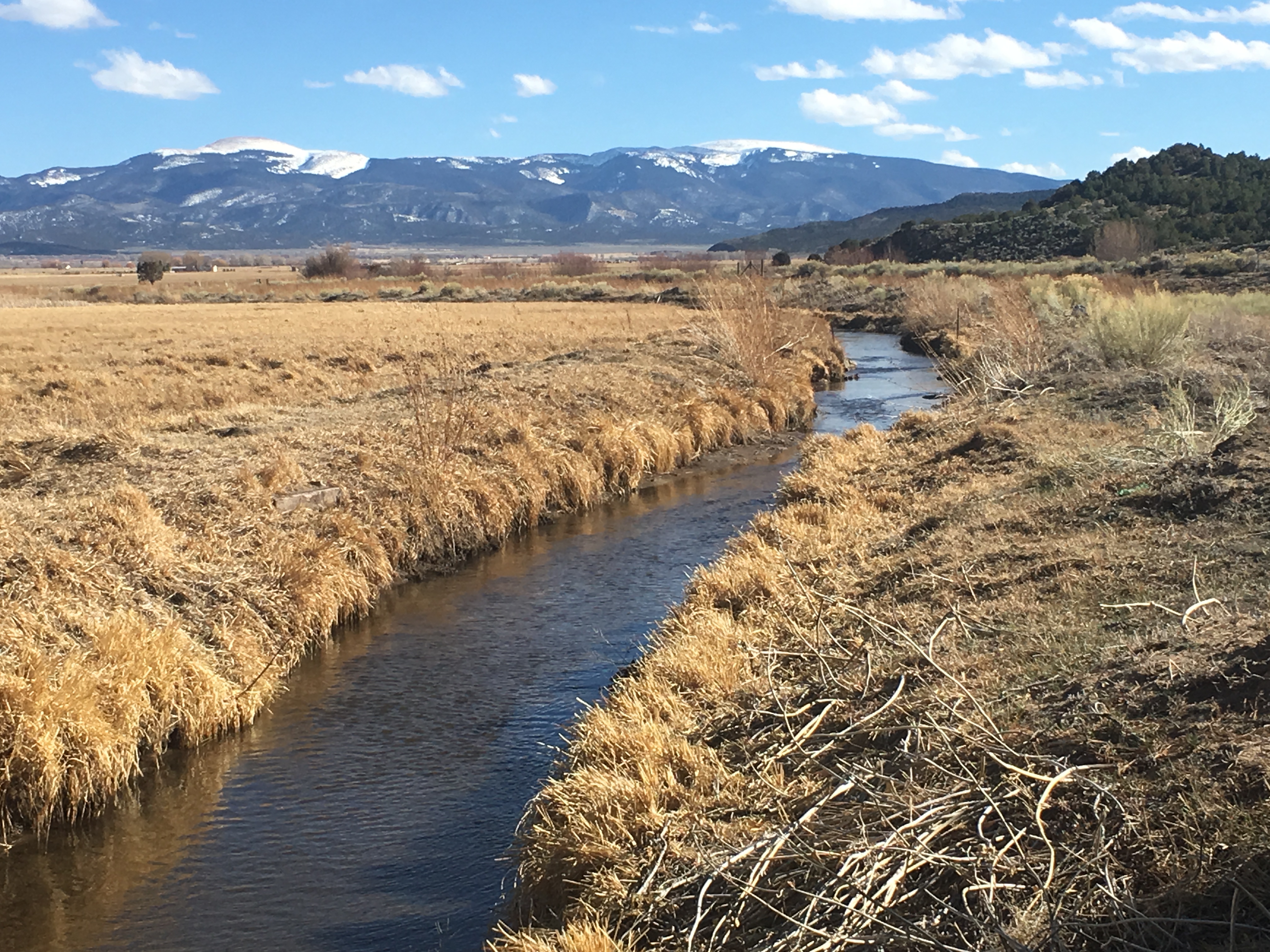
San Luis People’s Ditch March 17, 2018. Photo credit: Greg Hobbs