Click the link to view my posts on Bluesky (Click the “Latest” tab).

Click the link to view my posts on Bluesky (Click the “Latest” tab).
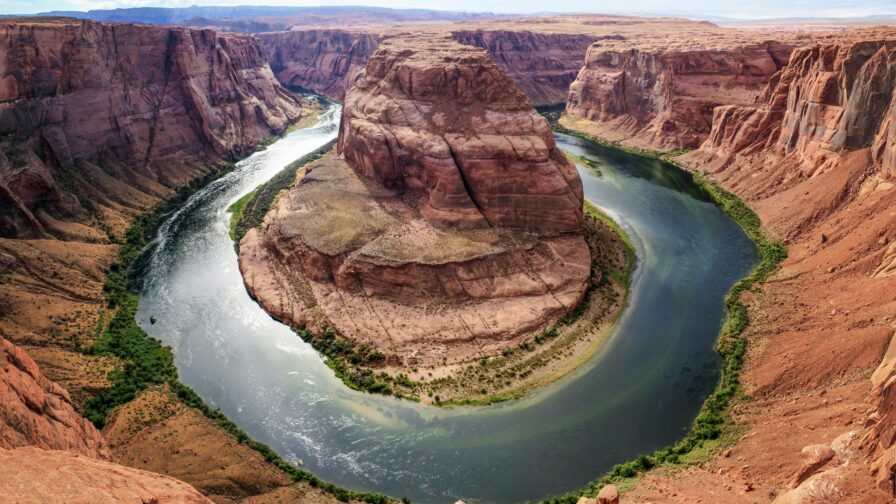
Click the link to read the article on the Newsweek website (Tom Howarth). Here’s an excerpt:
January 29, 2025
A bill advanced Tuesday by the Arizona House Committee on Natural Resources, Energy and Water aims to allocate $1 million to defend the Grand Canyon State’s water rights as part of the ongoing battle over the Colorado River. The bill, known as House Bill 2103, seeks to set aside the funds to support litigation in the event that negotiations among the seven states dependent on the river break down. Arizona is preparing for the possibility of legal action if the ongoing discussions fail to resolve water allocation disputes. The bill passed with unanimous support from the committee, though Democrats indicated they will propose an amendment to increase the allocation to $3 million, in line with Governor Katie Hobbs‘ proposed budget…
At the center of the debate are two factions: the Upper Basin states—Colorado, New Mexico, Utah and Wyoming—and the Lower Basin states, which include Arizona, California and Nevada…But as the clock ticks down toward 2026, when potential cuts could be enforced by the federal government, tensions are mounting over the distribution of the river’s limited water supply…Arizona’s position is clear: it wants to be able to fight its corner if necessary and needs funds to do it. The request for funds to potentially fight a legal battle was first proposed in September 2024 by Tom Buschatzke, the director of the Arizona Department of Water Resources.

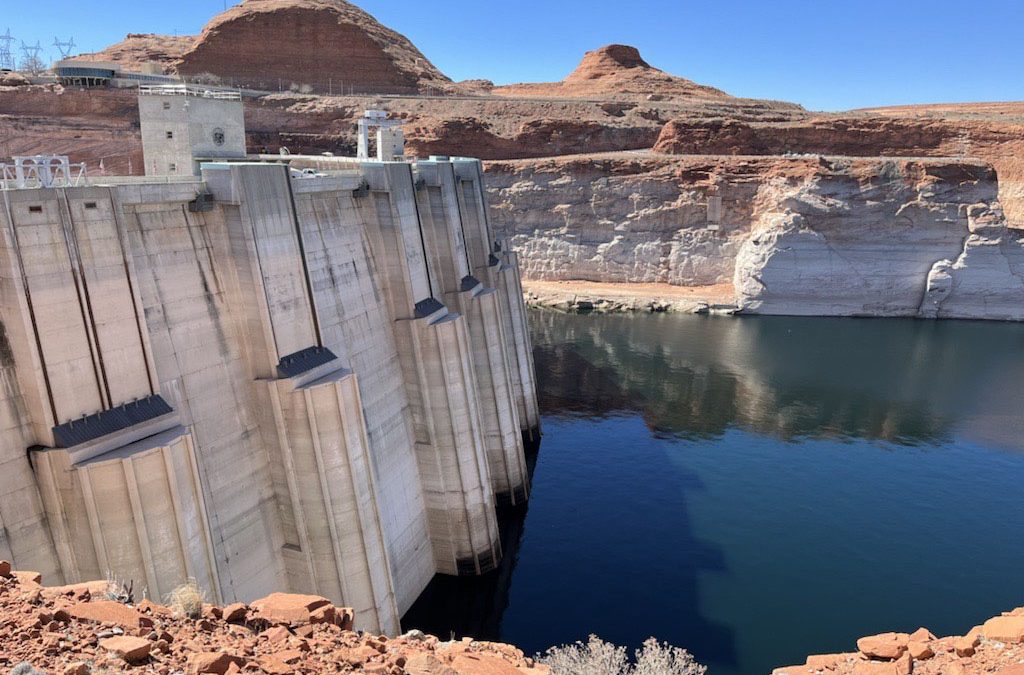
Click the link to read the article on the Water Education Colorado website (Shannon Mullane):
January 28, 2025
It’s time for an agreement in the Colorado River Basin, Colorado water and climate experts say.
Colorado River officials are at odds over how to store and release water in the basin’s reservoirs when the current rules lapse in 2026. Publicly, state negotiators stick close to their original, competing proposals, released early in 2024. Colorado experts watching the process understand the difficulty — it’s painful to talk about cutting water use — but time is of the essence.

“I have no idea what’s going to get them to agreement,” said Jennifer Pitt, the Colorado River program director for the National Audubon Society. “To me, the biggest pressure seems like time is running out.”
But there seems to be a lack of trust between the state negotiators, said Jennifer Gimbel, senior water policy scholar at the Colorado Water Center at Colorado State University.
“Not only is there this lack of trust, but there almost seems to be this effort to promote your own proposals by denigrating other proposals,” Gimbel said. “That frustrated me to no end. It’s like they have these political rallies.” [ed. emphasis mine]
If states are going to propose a united plan, then they need to do it by the end of 2025, preferably sooner, experts said.
Two new reports offer glimpses into how officials envision the river’s future: a revised proposal from four states, including Colorado, submitted Dec. 30, and a new, in-depth report on the Bureau of Reclamation’s strategies, released Jan. 17.
“We continue to stand firmly behind the Upper Division States’ Alternative, which performs best according to Reclamation’s own modeling and directly meets the purpose and need of this federal action,” Colorado’s negotiating team said in a prepared statement Tuesday.
The basin is also about to see new leadership at the federal level. Colorado water experts are waiting to know who President Donald Trump will appoint to key positions, like the commissioner of Reclamation and the assistant secretary for water and science.
“They’re in a really tough spot. I would understand that,” said John Berggren with the environmental group Western Resource Advocates. “I hope they’re continuing to negotiate and have productive conversations, and I hope they’re open to some more creative options.”
Planning for the extremes
So what options are they considering? In the absence of a seven-state agreement on how to manage the basin’s water supply, the Bureau of Reclamation outlined five possible plans in November:
- No action: Included as a formality and shows the risk of doing nothing
- Federal authorities: Includes maximum Lower Basin cuts of 3.5 million acre-feet in extremely dry years
- Federal authorities hybrid: Includes maximum cuts of 3.5 million acre-feet in the Lower Basin and conserving up to 200,000 acre-feet in the Upper Basin
- Cooperative conservation: Includes maximum cuts of 4 million acre-feet in the Lower Basin and conserving up to 200,000 acre-feet in the Upper Basin
- Basin hybrid: Includes maximum cuts of 2.1 million acre-feet in the Lower Basin and conserving up to 100,000 acre-feet in the Upper Basin
Colorado experts want to make sure the federal planning process is broad enough to include the worst possible conditions.

The Colorado River Basin’s flows are about 20% lower now than in the 20th century, said Brad Udall, senior water and climate research scientist at the Colorado Water Center at Colorado State University. That’s a drop from about 15.2 million acre-feet per year to about 12.4 million acre-feet, he said.
That’s not enough for the 15 million acre-feet allotted to the seven U.S. states, much less the additional water owed to Mexico and tribal nations.
Udall wants to make sure officials are planning for scenarios in which the river’s flow drops by an additional 10%, or down to 11 million acre-feet.
“The question is … who takes the pain? Is it all Lower Basin? Is Upper Basin sharing that?” he said.
Main takeaways and lingering questions
The Bureau of Reclamation’s options include more than just how to cut back on water use, as explained in detail in the new alternatives report, released Jan. 17.
One new detail for the Colorado experts who reviewed the report was the duration of the next management plan: Reclamation wants it to last for at least 20 years after 2026. It is unlikely to be a short-term, interim plan to give negotiators more time to reach a unified agreement.
The revised proposal submitted by the Upper Basin states — Colorado, New Mexico, Utah and Wyoming — also highlighted conserving up to 200,000 acre-feet of water (depending on river conditions), which seemed to move the states closer to alignment with Reclamation, experts said…
The Upper Basin’s revised proposal, and the federal options, include different “pools” in Lake Powell on the Utah-Arizona border, which would function like savings accounts and could store water conserved by Upper Basin states. Colorado water experts are keeping a close eye on how these accounts might work.
“Putting water in Powell is a good thing, but nobody in the Upper Basin wants to send water to protect Powell that ultimately just runs downstream,” said Steve Wolff, general manager of the Southwestern Water Conservation District based in Durango.
The experts wanted to know more about how conservation pools would function; how federal authorities in the basin might expand; which reservoirs will be included in the plan; what the impacts to the Grand Canyon would be under the different plans; and ultimately, what plan will stabilize the system.
They’ll have to wait to find out: The bureau is expected to release a deeper analysis of how each alternative could impact water management in different conditions later this year.
The Bureau of Reclamation’s final selection will likely mix and match elements of the different alternatives, said Carly Jerla, senior water resource program manager with the Bureau of Reclamation in a December presentation in Las Vegas.
“It’s a shame we don’t have a combined Upper Basin and Lower Basin plan right now,” Udall said. “Once Reclamation does its modeling, we’ll learn a lot. But we need a combined plan.”


Click the link to read the release on the ADWR website (Doug MacEachern):
January 30, 2025
A breakdown of water-related investments included in the recently released Executive Budget proposal from Arizona Governor Katie Hobbs:
$14.6M Deposit to WIFA Water Conservation Grant Fund
Governor Hobbs has now allocated $14.6 million to the Water Conservation Grant Fund to enable the Water Infrastructure Finance Authority (WIFA) to continue investing in generational water conservation projects.
Thanks to $200 million awarded by the State in federal funds allocated through the American Rescue Plan Act, WIFA has been able to fund conservation-focused projects across Arizona. To date, WIFA has funded over 150 water conservation projects. The Governor’s 2025 Executive Budget proposal includes investments in current and future water solutions, including WIFA’s funding for rural water supply development and long-term augmentation.
These critical resources will help ensure that rural areas can invest in the infrastructure they need to be water resilient, statewide efforts continue their investment in the infrastructure Arizona needs to find sustainable, renewable water supplies for the future. These investments speak directly to the mission of WIFA, which has been to augment and expand Arizona’s water supplies.
$12M Grant for City of Buckeye Renewable Water Infrastructure
By enrolling in the new Alternative Designation of 100-year Assured Water Supply (ADAWS) Program, the City of Buckeye has committed to increasing the sustainability of its water resource portfolio, a major step forward toward creating sustainable growth. This allocation of $12 million will help Buckeye build infrastructure to reuse its effluent supplies and recover them from a hydrologically connected area; facilitating sustainable growth and increased use of renewable water supplies.
- $7M Statewide Groundwater Monitoring and Data Collection
These allocations will provide ADWR with much needed additional tools to ensure that Arizona’s groundwater resources are properly managed and protected. Governor Hobbs has invested $7 million to ADWR to install groundwater monitoring index wells throughout rural Arizona to observe declining groundwater levels and inform ongoing groundwater protection efforts. Without these index wells, ADWR hydrologists are less able to accurately assess the health of groundwater supplies in rural areas.
- $5.5M For ADWR Hydrogeologic Studies in Priority Groundwater Basins
To help rural communities understand and protect their groundwater supplies, ADWR hydrologists create groundwater models that help water managers and community leaders understand the conditions of their aquifers. This $5.5 million investment will allow ADWR hydrogeologists to collect key hydrogeologic information to build these critical models in groundwater basins experiencing severe water declines.
- $3.45M ADWR Leading Edge Satellite Water Monitoring Systems & Equipment
This investment with ADWR funds the acquisition and use of cutting-edge technologies including absolute gravity survey equipment to monitor aquifer conditions, funding for the Arizona Continuously Operating Reference Stations (AZCORS) Network that provides critical GPS data for scientists, engineers, and surveyors throughout Arizona. It provides funds for satellite monitoring of statewide water demand, and funding for ADWR contractual partnerships with the US Geological Survey (USGS) to collect key water use data.