
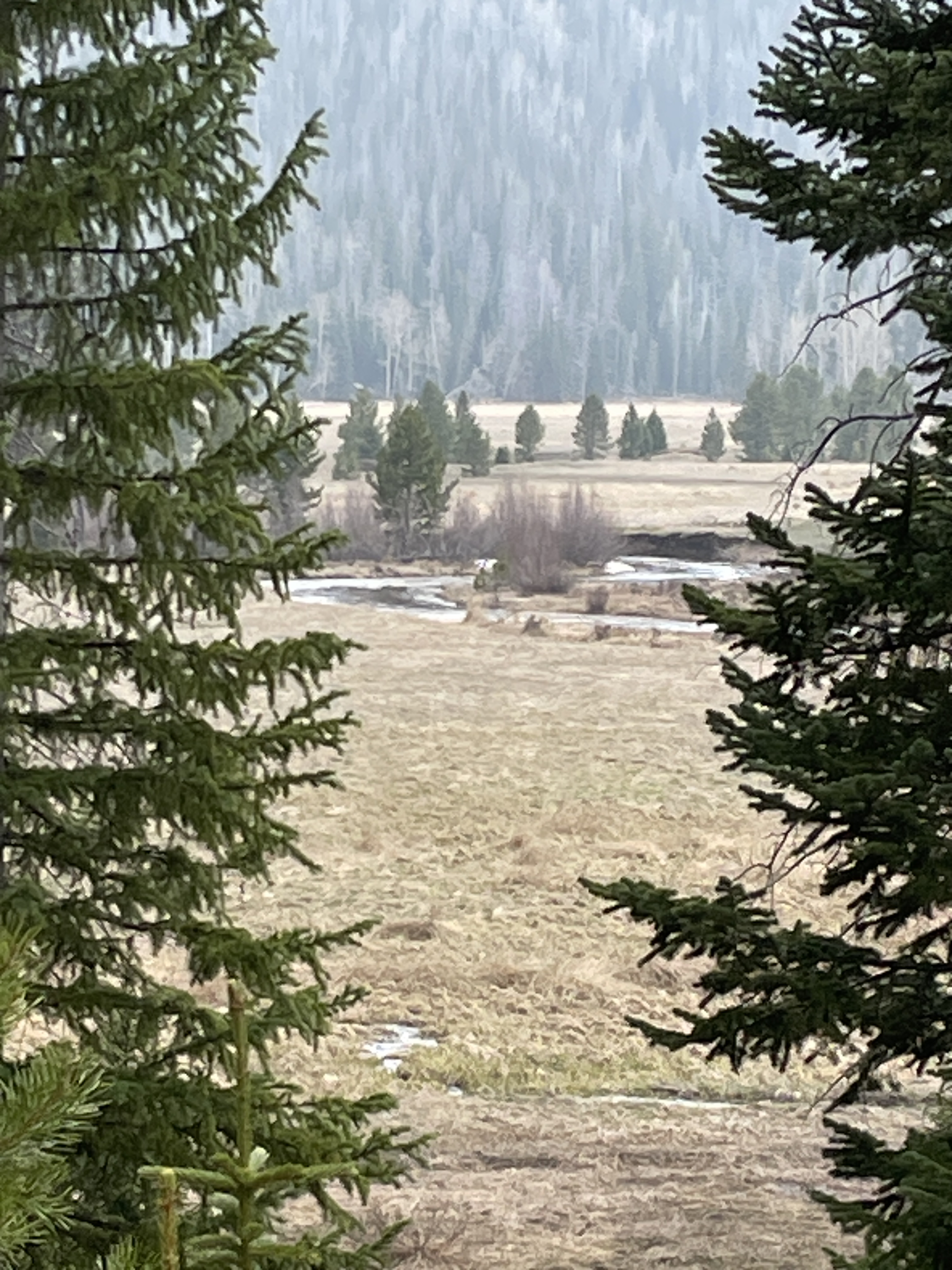
Click the link to read the article on the Vail Daily website (Ali Longwell). Here’s an excerpt:
June 19, 2026
“This valley was once a really significant wetland in Colorado … it was just this really thriving beaver-willow-wetland complex, and very biologically diverse,” said Kimberly Tekavec, the senior source water protection specialist for Northern Water. “And over the last 100 years or so — and really significantly in the last few decades — this valley has been severely disrupted, and we’re essentially witnessing, and have witnessed this ecosystem collapse.”
The Kawuneeche Valley exists just downstream from the Colorado River headwaters in the Never Summer Mountain Range, following the river through Rocky Mountain National Park to Shadow Mountain Reservoir near Grand Lake. As Tekavec described, the valley was once home to dense stands of tall willows, hundreds of beavers and wetlands that stretched 8 miles long and half a mile wide…In an attempt to restore this landscape — and create a habitat beavers can, and will, return to — Northern Water, Rocky Mountain National Park, Colorado State University, Grand County, Rocky Mountain Conservancy, the town of Grand Lake and the Arapaho-Roosevelt National Forest and the Nature Conservancy came together and formed the Kawuneeche Valley Restoration Collaborative in 2020. To date, the collaborative has raised over $4 million to not only construct its first project, but plan for three additional sites in the national park…On June 2, representatives from Rocky Mountain National Park, Colorado State University and Northern Water gave state water experts and elected officials a tour of the collaborative’s first project site at Beaver Creek to share how they’re learning from nature and beavers to build resiliency amid the state’s critical drought conditions.
“Here, with all these structures and resistating these processes that are beaver-dominated systems (the goal) is to slow the water down, let it linger on the landscape longer and rehydrate these wetlands and just create healthy habitats and functional wetlands that provide clean, reliable water sources to downstream users,” Shaw said…
The first thing you notice at the Beaver Creek project site is a tall fence extending around a 35-acre perimeter. It’s meant to prevent overgrazing by the park’s ungulate populations, particularly moose — which Chris Clatterbuck, the natural resources program manager at Rocky Mountain National Park, called “a perfectly designed willow-eating machine.”
“During the summer, they’ll eat over 90% of their diet in willow,” Clatterbuck said. “As a result, one moose is about the equivalent of 15 elk in terms of willow impact. They convert over 50 pounds of willow every day.”
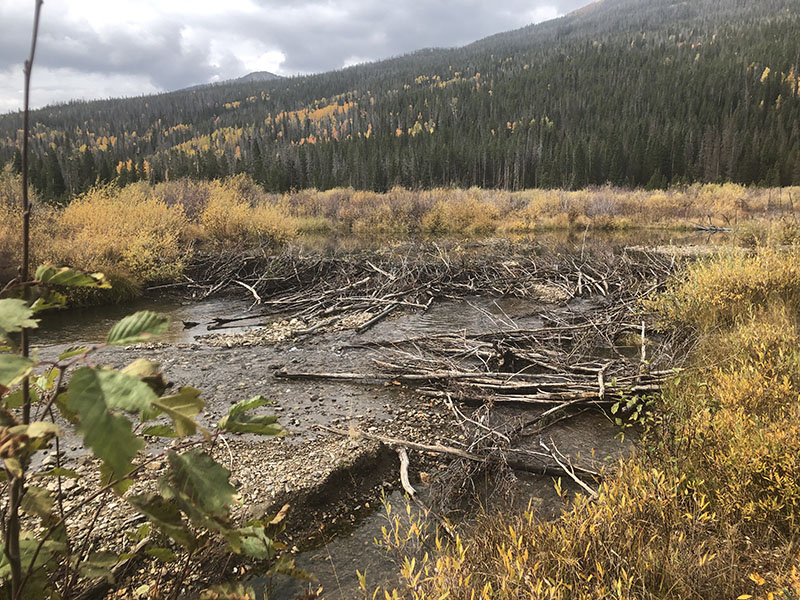
One of the reasons that the tall willows transformed into “zombie willows” — ancient, heavily browsed willow structures that are surviving on long-held sugar stores — was overgrazing following Colorado’s reintroduction of moose starting in the late 1970s. Before 1978, there were no breeding populations of moose, and when they arrived without any natural predators — wolves or grizzlies — into a national park where hunting is banned, populations flourished and the willows declined, Clatterbuck said. Elk herds have also flourished and impacted the natural flora. Without tall willows, beavers lost the large wood they needed to build dams and lodges, and they lost their winter food supply, Shaw said. “So they left.” Within the fence, the collaborative has done a lot of work to reinvigorate the landscape near the stream. This includes the creation of almost 30 structures that mimic beavers. Before the collaborative’s work, Beaver Creek was a single tributary where one molecule of water would speed quickly to the Colorado River, Shaw said…It also spreads the water across the surface, rehydrating the wetlands and increasing groundwater storage, decreasing sediment flows downstream in the reservoir — all of which has numerous benefits, not only for drought mitigation, but wildfire risk as well…The Beaver Creek site is the first of four planned within the national park. The collaborative is set to begin work this fall on the second project down valley called Onahu Creek. Beyond that, Shaw said the goal is to look for similar projects outside of the park with private landowners in the valley.
