
A lack of available groundwater is threatening the future of domestic lithium extraction. Lithium is a mineral that’s currently an essential component for the storage of clean energy. 1
By Robert Marcos, photojournalist
A study conducted by Jennifer Dunn – a professor of chemical and biological engineering at the Center for Engineering Sustainability and Resilience at Northwestern University in Illinois, said that the future of water availability may constrain whether new lithium mines will have sufficient water to operate.2
Three lithium operations in the American West that could be negatively affected by water restrictions –
Silver Peak, Nevada
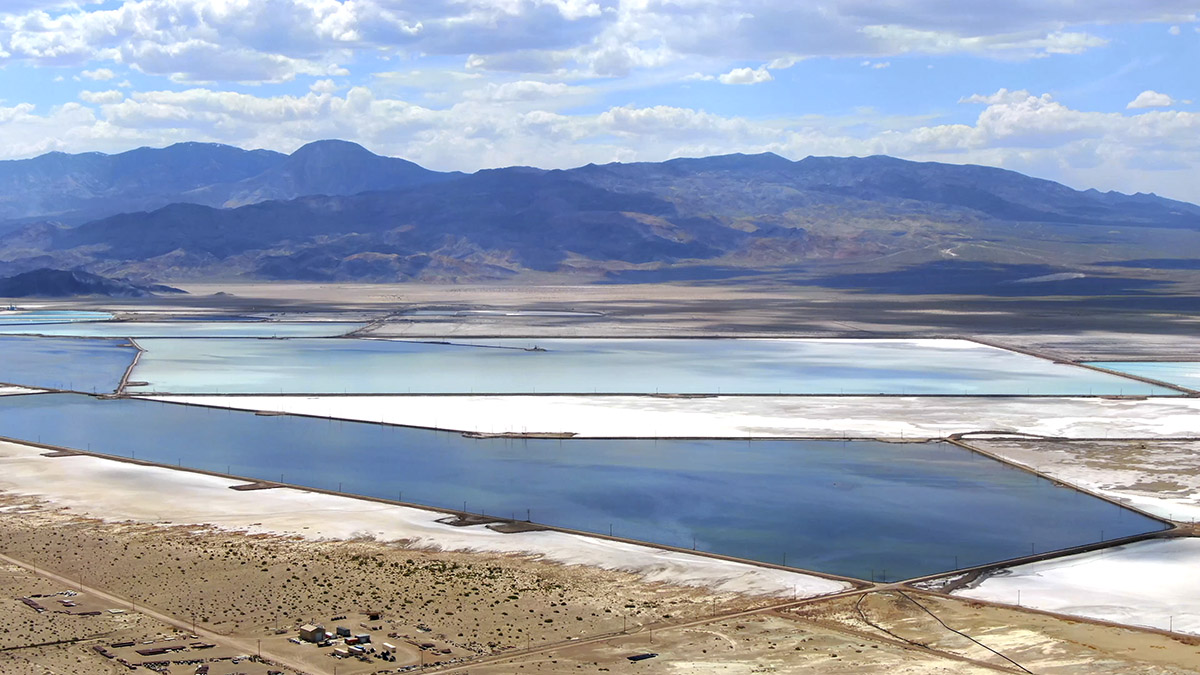
Silver Peak – which is operated by Albemarle Corporation, is the only active producing lithium mine in the United States. Silver Peak uses evaporative technology that pumps lithium-rich geothermal brine from underground aquifers into a massive network of shallow, open-air surface ponds, where natural solar energy slowly evaporates the water which concentrates the dissolved lithium, which is later processed. The site has been in operation since the 1960s. Albemarle, which acquired the mine in 2015, has begun an expansion which will drastically increase their domestic production capabilities.3 Because Silver Peak’s extraction process relies on pumping billions of gallons of underground brine into solar evaporation ponds, a reduced amount of groundwater directly affects production capacity. The ongoing depletion has dried up local monitoring wells, sparking intense pushback from environmental groups, county officials, and competing mining projects.4
Salton Sea, California
Controlled Thermal Resources is developing the Hell’s Kitchen project at California’s Salton Sea, an innovative facility designed to utilize direct lithium extraction to recover battery-grade lithium from superheated geothermal brines while simultaneously generating clean, baseload electricity.5 Unfortunately this high-technology process still requires a lot of fresh water. It requires billions of gallons of freshwater primarily for evaporative cooling to manage the extreme temperatures of the geothermal fluids, and for purification and chemical washing to scrub impurities like iron and manganese from the extracted lithium. Additionally, massive amounts of freshwater are consumed during steam generation and the final chemical transformation needed to synthesize the lithium into a highly pure, battery-grade lithium hydroxide product.6
Thacker Pass, Nevada
The Thacker Pass mining operation is located in Humboldt County, Nevada. It’s owned by a joint venture between Lithium Americas (62%) and General Motors (38%).7 The facility will extract lithium via open-pit “hard rock” mining and will then process the claystone ore using a sulfuric acid leaching method, in order to produce battery-grade lithium carbonate.8 Fresh water is required at multiple opertional stages, though the Lithium Americas project has plans to recycle over 85% of the water that’s required, which includes: 9
Ore Processing & Leaching: Water acts as a carrier for claystone ore and is consumed during sulfuric acid production, leaching, and downstream neutralization to isolate lithium carbonate. 10
Evaporative Cooling: Significant quantities of water evaporate during the cooling phases of chemical processing and on-site power generation. 11
Dust Mitigation: Water is continuously sprayed on open-pit mining roads, ore stockpiles, and waste piles to suppress hazardous dust. 12
Tailings Management: While filter presses squeeze out water for reuse, a portion of water remains permanently trapped as moisture within the dry-stack tailings pile. 13
The Thacker Pass operation’s difficulty in securing fresh water stems from a series of high-stakes legal and logistical disputes regarding regional groundwater depletion. The mine’s plans to extract up to 5,200 acre-feet of water annually draw from the heavily over-allocated Quinn River Valley aquifer, prompting multi-year legal challenges from environmentalists, Indigenous groups, and local senior water rights holders like rancher Edward Bartell, (who documented declining natural spring levels) and successfully triggered a state-issued cease-and-desist order that temporarily halted unauthorized pumping in mid-2025. While Lithium Americas ultimately bypassed immediate pumping blocks by purchasing Bartell’s water rights in an August 2025 court-approved settlement and securing a favorable Nevada Supreme Court ruling in 2026, state regulatory restrictions still forbid them from drawing water close to the mine site. Consequently, the company has faced soaring infrastructural challenges, forcing them to construct a costly, 8-mile-long uphill pipeline to transport their newly relocated water supply from the valley basin up to the active construction site. 14