50th anniversary celebration of the Fryingpan-Arkansas Project Saturday at Lake Pueblo

johnfkennedypuebloaugust171962chieftain.jpg

The project got its start with a visit to Pueblo from President Kennedy back in 1962. Here’s the first installment from Chris Woodka writing for The Pueblo Chieftain. Click through and read the whole article, Woodka is a terrific writer. Here’s an excerpt:

But on that day [August 17, 1962], work began to address the problem. Kennedy came to Pueblo to celebrate the signing of the Fryingpan-Arkansas Act the previous day. Local water leaders will celebrate the 50th anniversary of the Fry-Ark Project Saturday at Lake Pueblo…

The Twin Lakes Tunnel was constructed by the Colorado Canal Co. during the Great Depression, while the old Carlton railroad tunnel was used by the High Line Canal Co. to bring in water. In addition, Colorado Springs and Aurora were already building the Homestake Project, which would be intertwined with the Fry-Ark Project as both were built.

But the government project, a scaled-down version of an earlier, larger plan to bring water from the Gunnison River basin, represented a larger cooperative effort between farmers and municipal leaders in nine counties.

Since the first water was brought over in 1972, about 2.1 million acre-feet of water has been brought into the Arkansas River basin for irrigation and municipal use. The project also generates electric power at the Mount Elbert Power Plant.

fryingpanarkansasprojectdistrictboundariesmapsecwd.jpg

Woodka details some of the early water history along the Arkansas River mainstem in this report running in today’s Chieftain. Here’s an excerpt:

The Water Development Association of Southeastern Colorado was incorporated in 1946. Pueblo business leaders worked with valley water interests to investigate a Gunnison-Arkansas Project. By 1953, the project was scaled back to the Fryingpan-Arkansas Project, and the first hearings began in Congress.

During the congressional hearings in subsequent years, the project evolved from one primarily serving agriculture to one that included municipal, hydroelectric power, flood control and recreation as well.

The Southeastern Colorado Water Conservancy District formed in 1958.

The U.S. House passed the Fry-Ark Act on June 13, 1962; the U.S. Senate, Aug. 6, 1962. President John F. Kennedy signed it into law on Aug. 16, 1962.

Here’s a short look at Jay Winner, current general manager of the Lower Arkansas Water Conservancy District, from Chris Woodka Writing for The Pueblo Chieftain. From the article:

Back in the 1960s, his father Ralph Winner was the construction superintendent for Ruedi Reservoir, the first part of the Fry-Ark Project to be constructed and his family lived on the job site. His father came back in the late 1970s to supervise construction of one of the last parts of the collection system to be built, the Carter-Norman siphon. The siphon draws water across a steep canyon.

For three summers, Winner, then a college student, worked on the latter project. “It was the most fun I ever had,” he laughed. “I got to play with dynamite.”

From The Pueblo Chieftain (Chris Woodka):

A retired outfitter, [Reed Dils] is now a Southeastern Colorado Water Conservancy District board member and a former representative from the Arkansas River basin on the Colorado Water Conservation Board. “Initially, the flows got worse,” Dils said. “They (the Southeastern district and the Bureau of Reclamation) had chosen to run water in the winter…

“It became apparent to everyone there was another way to run the river,” Dils said. “Why the Fry-Ark act was passed, recreation mainly meant flatwater recreation. Over time, they learned there are other types of recreation.”

Here’s the release from Reclamation (Kara Lamb):

Reclamation and the Southeastern Colorado Water Conservancy District invite the public to celebrate the Fryingpan-Arkansas Project’s 50th Anniversary at Lake Pueblo State Park on Sat., Aug. 18. The event is located at Lake Pueblo State Park Visitor’s Center from 9 a.m.to 2 p.m.

Reclamation, the District and Colorado State Parks and Wildlife are offering free pontoon boat tours around Pueblo Reservoir and free tours of the fish hatchery located below Pueblo Dam. There will also be historical displays and several guest speakers.

Signed into law by President John F. Kennedy in 1962, the Fryingpan-Arkansas Project is a multipurpose trans-basin water diversion and delivery project serving southeastern Colorado.

The Fryingpan-Arkansas Project provides:

– Water for more than 720,000 people
– Irrigation for 265,000 acres
– The largest hydro-electric power plant in the state
– World renowned recreation opportunities from the Fryingpan River to the Arkansas River.

For more information the 50th Anniversary Celebration – and to see a teaser of the upcoming film! – visit our website at www.usbr.gov/gp/ecao.

More Fryingpan-Arkansas Project coverage here and here.

alanhamelcsu.jpg

Meanwhile, Alan Hamel is retiring from the Pueblo Board of Water Works this month:

From The Pueblo Chieftain (Chris Woodka):

“Little did I know how important the Fryingpan-Arkansas Project would be as I was watching the president’s car traveling down Abriendo Avenue that day,” Hamel said. “Look at all that it has done for our basin and what it will do in the future.”

Hamel became executive director of the water board in 1982, and was president of the Southeastern Colorado Water Conservancy District, the local agency that oversees the Fry-Ark Project, from 2002-04. He is currently serving on the Colorado Water Conservation Board.

More Pueblo Board of Water Works coverage here.

Western Slope interests are, ‘better off at the table than on the menu’ — Bill Trampe

Here’s a profile of Rancher and water wonk, Bill Trampe, written by Jennifer Bock running in the Grand Junction Free Press. From the article:

Although water is probably more essential to his livelihood than many of us in the Gunnison Basin, Trampe admits that his philosophy on keeping water in the Gunnison Basin has changed over the years.

When Arapahoe County proposed the Union Park project, Trampe recalls that the local sentiment was “not one drop” and no one dared stray from that strict line in the sand.

Today, Trampe thinks that Western Slope interests are “better off at the table than on the menu” when it comes to talking to the Front Range and others about West Slope water. Trampe’s philosophy is tied to real life experience: He has spent the last seven years negotiating with the Front Range to develop the Colorado River Water Cooperative Agreement.

Perhaps characteristic of a rancher’s outlook, Trampe is both hopeful and frustrated when it comes to resolving Colorado’s water disputes.

He believes, as many do, that big, transmountain water projects simply won’t be able to provide enough firm yield to satisfy Front Range interests. In statewide water planning discussions, Trampe has been a proponent of addressing this problem through risk management — the idea that the state must have a comprehensive way to evaluate and guard against the potential consequences of failing to meet water delivery obligations to downstream states as it considers new diversions out of the Colorado River Basin.

More Gunnison River Basin coverage here and here.

Aurora City Council approves $9.5 million water lease for oil and gas production and exploration

niobrarashale.jpg

From The Aurora Sentinel (Sara Castellanos):

The deal, which some Aurora residents heavily criticized at the meeting, was approved on a vote of 8 to 3 with council members Debi Hunter Holen, Renie Peterson and Molly Markert opposed.

About 35 residents from Aurora and surrounding cities attended the meeting to condemn Aurora council members for selling water to the company, and many of them spoke at the meeting. Four people spoke in support of the deal.

Several people who disapproved of the agreement between the city and Anadarko have also spoken against hydraulic fracturing within city limits. Before council members voted, they said they were concerned about the environmental impacts of hydraulic fracturing, and thought the city’s water should be kept for its residents in times of need.

More oil and gas coverage here and here.

Aurora: Potential water lease to Anadarko could target utility debt load

anadarkohydraulicfracturingapril2011.jpg

From The Aurora Sentinel (Sara Castellanos):

Houston-based Anadarko Petroleum Corp. is expected to purchase $9.5 million worth of “used” water from Aurora for its oil and gas drilling operations across the state, pending Aurora City Council approval July 9.

Members of council’s Management and Finance committee said the revenues should be used to partially pay off debt from the construction of Prairie Waters, a $650 million project that was completed in 2010 to ensure the city’s residents had enough water during droughts. The city borrowed more than $540 million and raised water rates to pay for the project.

A second option would have been to use the revenue to reimburse taxpayers for helping to foot the bill to construct the project. But committee members decided that reimbursement wouldn’t amount to much anyway. According to Jason Batchelor, the city’s finance director, the credit to the average residential rate payer would be about 95 cents a month.

Councilman Bob LeGare said it makes better financial sense to put the money toward the Prairie Waters project. “Everyone understands paying down your (debt) early,” he said.

More Aurora coverage here and here.

Aurora plans to sell 1,500 acre-feet worth $9.5 million for oil and gas exploration and production

prairiewaterstreatment.jpg

The former town of Fletcher is in the news again — this time for a deal with Anadarko Petroleum Corporation. Here’s a report from Sara Castellanos writing for the Aurora Sentinel. From the article:

Anadarko Petroleum Corp. will purchase $9.5 million worth of “used” water from Aurora for its oil and gas drilling operations across the state, pending Aurora City Council approval July 9. The Houston-based company would pay Aurora Water over five years to use 1,500 acre feet of “effluent” water per year, according to city officials…

Members of the city council’s Management and Finance Committee will meet Wednesday to decide how the city should use the $9.5 million generated from the sale of the water. One idea, according to city documents ahead of the meeting, is to use revenue to partially pay off debt from Prairie Waters, a $650 million project that was completed in 2010 to ensure the city’s residents had enough water during droughts. The city borrowed more than $540 million and raised water rates to pay for the project.

It’s no surprise that The Pueblo Chieftain and water reporter Chris Woodka are assessing the potential effects of the deal, given Aurora’s popularity in the Arkansas River basin. Here’s an excerpt:

Aurora Water wants council to approve a five-year lease of 1,500 acre-feet for $1.8 million annually to Anadarko Petroleum Corp. in an effort to reduce utility rates. Water would be sewer return flows into the South Platte River…

The water is surplus to return flows Aurora is now able to reuse through its Prairie Waters Project, said spokesman Greg Baker.

More Aurora coverage here and here.

‘Oil shale development would involve intensive use of water’ — Alan Hamel

oilshaledepositscowyutblmostseis.jpg

From The Pueblo Chieftain (Chris Woodka):

“We have to protect the water we have, as well as provide water for endangered species,” said Alan Hamel, executive director of the Pueblo Board of Water Works and a member of the Colorado Water Conservation Board. “Oil shale development would involve intensive use of water, particularly for use in power generation.” Last month, the Pueblo water board and other members of the Front Range Water Council weighed in on the Bureau of Reclamation’s environmental impact statement for oil shale and tar sands…

The Front Range Water Council includes the major organizations that import water from the Colorado River: Denver Water, the Northern and Southeastern Colorado water conservancy districts, Aurora Water, Colorado Springs Utilities, Twin Lakes Reservoir and Canal Co. and the Pueblo water board. Collectively, they provide water to 4 million people, 82 percent of the population in Colorado.

More Front Range Water Council coverage here and here.

Denver, Aurora along with Colorado Parks and Wildlife are cooperating to maintain a rainbow trout spawning reach below Eleven Mile Reservoir

elevenmilereservoir.jpg

From the Aurora Sentinel (Brandon Johannson):

…because of an agreement between the two water departments, state wildlife officials say the future of the rainbow trout population in that stretch of the South Platte — one of only two natural rainbow fisheries on the river — is much brighter than it was a few years ago.

Under the agreement between Parks and Wildlife, Aurora Water and Denver Water, the three agencies are working together to make sure stream flows in the Platte remain constant during the critical spring spawning season.
Regulating the flows in the canyon required Aurora’s and Denver’s help because flows there are largely determined by the water departments’ decisions upstream. Denver Water owns Eleven Mile Reservoir, which flows into the Platte, and Aurora owns Spinney Mountain Reservoir, which feeds Eleven Mile. Because it is a designated “drought reservoir,” the output from Eleven Mile into the Platte is based on what Aurora dumps from Spinney. If Aurora dumps too much, the Platte moves too fast and the young trout are rushed downstream just as they emerge from the egg. If the water level drops too quickly, fertilized eggs could be exposed and dry up on the banks…

With a pile of numbers in hand, Spohn approached Aurora and Denver and asked them to maintain a steady flow during some crucial times. If the river could stay at about 75 cubic feet per second, it would be ideal for spawning, he said. But job No. 1 for Aurora Water and Denver Water is making sure when someone turns on their tap or their sprinkler, a steady stream comes pouring out — regardless of what that means for trout in the canyon. Sometimes that means more than 75 CFS, often as much as 200 CFS. “We can’t operate to the detriment of the citizens of Aurora,” said Brian Fitzpatrick, water resources manager for Aurora Water…

And while Spohn’s focus is on improving the trout fishery in Eleven Mile Canyon, he knows that’s not Aurora’s chief concern. “Wildlife understands that Aurora’s job is to provide water to their customers in the city,” he said. That’s where Denver Water comes in. When Aurora slows the flow from Spinney — often to levels well below what the city needs — Denver Water steps in and loans Aurora some water from Strontia Springs Reservoir. As soon as flows can be bumped up again, Aurora pays back Denver with water from other storage.

More South Platte River basin coverage here and here.

Aurora: Peter D. Binney water treatment plant receives national award

uvpretreatmentbinneyplant11172010

From the Aurora Sentinel:

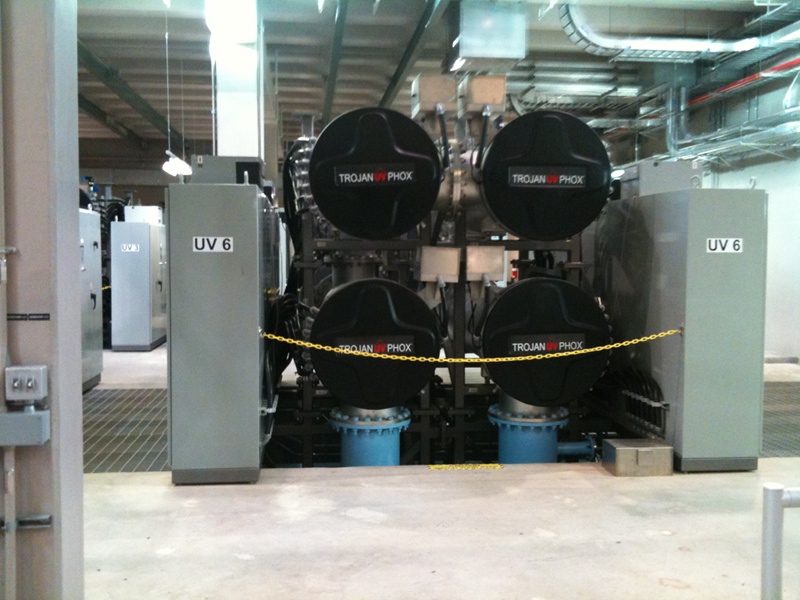
Aurora’s Peter Binney Water Purification Facility received the Marvin B. Black Excellence in Partnering Award last month for representing exemplary partnership and collaboration in construction projects like the Prairie Waters Project. The national honor was awarded by The Associated General Contractors of America.

More Prairie Waters coverage here and here.

Aaron Million: ‘This project would divert less than 5 percent annually out of the massive Flaming Gorge Reservoir’

Conceptual route for the Flaming Gorge Pipeline — Graphic via Earth Justice

Here’s a guest column about the Flaming Gorge pipeline written by Aaron Million running in the Northern Colorado Business Report. Here’s an excerpt:

The argument that no further Upper Basin water projects be developed, which is a position some have taken, by default and in the simplest terms means California, Nevada and Arizona all benefit to the detriment of this region. Colorado faces a massive water supply shortfall, projected to be between 500,000 to 700,000 acre-feet over the next 20 years. New water and new storage, one of Gov. Hickenlooper’s keystone policy objectives and a long-standing objective for Colorado, can basically be accomplished with a pipe connection. This project would divert less than 5 percent annually out of the massive Flaming Gorge Reservoir, which is 25 times larger than Horsetooth Reservoir…

…the Flaming Gorge Project has several advantages for a new water supply. The Green River system itself, starting just south of Jackson Hole, has a different snowpack regime, which mitigates risk compared to relying on water from a single source or watershed. Also, global warming models predict the Green’s more northerly region to be wetter than average, while the Colorado River main-stem drainage, the historical focus of Front Range water needs, is predicted to be dryer than average. And the Green River is as large as the Colorado River main-stem, with comparatively little consumptive use and very few diversions.

Without question, the river has major environmental and recreational benefits that require protection…

So why does that matter for this region? It matters because an overall systems analysis on the Green River following implementation of the ROD indicates substantial surplus flows after meeting all the environmental needs of the river. Those surpluses, estimated at several hundred-thousand acre feet in a river system that flows over 1.5 million acre-feet annually, could be used to bring in a new water supply for the South Platte and Arkansas basins, generate new alternative energy, produce hundreds of millions of dollars in economic benefits, and provide re-use of waters for agriculture to keep the region strong and vibrant.

So the real question is this: If a large river system can be fully protected, and at the same time some of the potential surpluses from that same system alleviate major supply issues elsewhere, isn’t that an environmentally sound and reasonable water supply approach? The question remains unanswered until a rigorous and thorough environmental impact evaluation is completed…

I believe this we need to take this project through its paces. If it is environmentally sound, it should be permitted and built. If not, then stick a fork in it. The truth of a full scientific and environmental evaluation may be hard for some in the environmental community to swallow, but the consequences of not allowing that evaluation to occur remain: A continued bulls-eye on the Poudre, reverse-osmosis plants on the South Platte because of poor water quality, more future dry-up of the agricultural base in this state, and continued pressure on the western high country of our nearby mountain peaks.

The Flaming Gorge pipeline will be the topic of discussion March 14 at the Collegiate Peaks Anglers Chapter of Trout Unlimited. Here’s the release via The Chaffee County Times:

More Flaming Gorge pipeline coverage here and here.

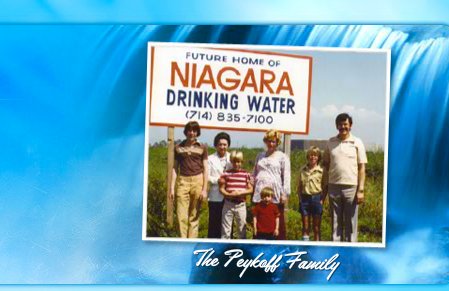
Aurora offers $502,500 in incentives to Niagara Bottling in move to help create jobs

futurehomeofniagaradrinkingwater.jpg

Aurora is a friend to the bottled water industry. Readers may remember the city leasing augmentation water to Nestlé Waters North America up in Chaffee County. The city has offered incentives to California-based Niagara Water to locate a bottling plant in the city anticipating the creation of 36 jobs. Here’s a report from Sara Castellanos writing for the Aurora Sentinel. From the article:

Aurora City Council members at their council meeting Monday approved the incentive package on a vote of 9 to 1 with Councilwoman Renie Peterson opposing the deal. The proposed 10-year agreement would provide California-based Niagara Bottling with waivers and rebates of city taxes up to $502,500. The agreement also contains a provision for the company to repay a portion of the incentive if the number of jobs is not maintained throughout the agreement, according to the documents. The company is set to construct a 177,000 square foot facility at Prologis Park 70 near E-470 and I-70 and create 36 full-time jobs while investing about $10 million for land and building improvements and $20 million in capital equipment.

Peterson said before the formal vote that all of Aurora’s water should be kept for its residents, not sold to a private company. “I would not be for having a water bottling company come into Aurora even if it was not incentivized,” she said. “To allow it to come with an incentive is really against what my people that I represent would expect of me.” She also reprimanded her fellow council members for their unwillingness to share information about the incentive deal with the public or the media until it came to council for a formal vote…

Niagara is set to use about 300,000 gallons of Aurora’s water per day, six days per week, which totals to about 290 acre-feet of water per year, according to Aurora Water spokesman Greg Baker. Aurora produces about 77,000 acre-feet of water on average annually, he said. That means the company will use less than one percent of Aurora’s total water production. Councilman Bob Roth said it’s important to be cognizant of that fact. “It sounds like a lot, but I want to keep in mind that it’s three-tenths of one percent of our average normal yield,” he said.

Niagara would pay market rate for the water, said Mayor Steve Hogan. “Aurora cannot continue to have residential customers bear the full weight of paying water bills,” Hogan said in an email. “We must have a balanced package of residential users, tap fees payers, industrial users, and other users. If we don’t, residential users will be totally abused by rate increases. This company will fall nicely into the category of industrial users.”

More coverage from Melanie Asmar writing for Westword. From the article:

Aurora’s city council has agreed to offer waivers and rebates of city taxes up to $502,500 to the California-based Niagara Bottling, according to the Aurora Sentinel. The company hopes to construct a plant at ProLogis Park that would create up to 36 jobs, the Sentinel reports. Niagara would use about 300,000 gallons of water a day, which city officials say is less than one percent of Aurora’s total water production.

More Aurora coverage here and here.

Colorado Springs Utilities’ Steve Berry: ‘In looking at the numbers in this executive summary, it does not appear that many of our comments were considered’

transmountaindiversionscoloradostateengineer2011

Last week, the day before the Statewide Roundtable Summit, Western Resource Advocates, et. al., released a report titled, “Meeting Future Water Needs in the Arkansas Basin.” Colorado Springs and Pueblo are taking a hard look at the report, according to this article from Chris Woodka writing for The Pueblo Chieftain. Here’s an excerpt:

There may be a question whether water providers accept the figures used in the reports. “Colorado Springs Utilities was asked to peer review the draft version, and made extensive and substantial comments on it. In looking at the numbers in this executive summary, it does not appear that many of our comments were considered, and many of our suggested changes or corrections were not made,” said Steve Berry, spokesman for Utilities. The largest amounts of water, and presumably the largest conservation and reuse savings, come from Colorado Springs.

The Pueblo Board of Water Works is also reviewing the final report for accuracy, said Alan Ward, water resources manager…

The environmental groups say a combination of projects already on the books — conservation, reuse and temporary ag-urban transfers — could provide as much as 140,000 acre-feet, more than enough to meet the needs. Those numbers are being examined by urban water planners, who say the savings might not be attainable. “In general, we were unable to verify or recreate most of the numbers cited in their report, and their estimates for conservation and reuse are significantly greater than what our water conservation experts have calculated as realistic,” Berry said…

When asked how conservation savings would be applied to new supplies, a practice cities find risky, Jorge Figueroa, water policy analyst for Western Resource Advocates, said they could be put into “savings accounts” for future use. When asked where the water would be stored, he cited the T-Cross reservoir site on Williams Creek in El Paso County that is part of the Southern Delivery System plan…

Drew Peternell, director of Trout Unlimited’s Colorado Water Project, said the group supports [the Southern Delivery System]. Because the project already is under way, the groups look at SDS as a key way to fill the gap. The report also supports programs like Super Ditch as ways to temporarily transfer agricultural water to cities without permanently drying up farmland.

Meanwhile, here’s a look at a report from the Northwest Council of Governments, “Water and Its Relationship to the Economies of the Headwaters Counties,” from Bob Berwyn writing for the Summit County Citizens Voice. From the article:

The report, released in January at a Denver water conference, takes a fresh look at the critical importance to the economy of water in West Slope rivers, and why Colorado leaders may want to take careful thought before making future transmountain diversion policy decisions. Visit the NWCCOG website for the full 95-page report.

“This report makes an important contribution to the on-going dialogue about adverse economic impacts associated with losing water by focusing attention on Eagle, Grand, Gunnison, Pitkin, Routt and Summit counties,” said Jean Coley Townsend, the author of the report. “This has never been done before. The report provides an important counterbalance to earlier studies that show economic impacts of losing water from the Eastern Plains.”

Balancing the supply and demand of water could be the State’s most pressing issue. The report does not take issue with Front Range municipal or Eastern Plains agricultural water users — all parties have important and worthy concerns and points of view — but is meant as a thorough review of water as an economic driver of headwaters economic development.

The report provides a balance to the existing solid body of work that measures the potential economic effects of less water on the Front Range and the Eastern Plains and the loss of agriculture in those parts of the state.

“If we … are going to solve our Statewide water supply shortage challenges there must first be statewide mutual respect and true understanding of each other’s water supply challenges,” said Zach Margolis, Town of Silverthorne Utility Manager. “The report is a remarkable compilation of the West Slope’s water obligations and limitations as well as the statewide economic value of water in the headwater counties of Colorado.”

More transmountain/transbasin diversions coverage here.

Aurora informally approves draft oil and gas ordinance

anadarkohydraulicfracturingapril2011

From the Aurora Sentinel (Sara Castellanos):

Council members at the meeting informally approved a draft ordinance regulating oil and gas development amidst growing tensions from the community about the environmental impacts of fracking. City staff members in the coming weeks are slated to meet with major oil and gas developers to discuss the proposed draft, and council members will have to formally vote on the draft at a later date. The draft ordinance puts stricter regulations on oil and gas developers than the city’s current ordinance, but concerned residents still say council should have done more…

Aurora’s proposed regulations include requiring oil and gas companies to obtain a conditional use permit if they are considering drilling within 1,000 feet from a residential subdivision. Aurora’s current ordinance allows drilling in all zone districts. “This is a recognition that as you get closer to residential (areas) there may be impacts,” said Jim Sayre, manager of zoning and development review for the city. “There may be light, glare, traffic, vibration, noise and things we do look at with industrial activity.”[…]

The city’s draft also requires the use of best industry practices for water quality monitoring, “green” fracturing fluids and closed-loop systems. Another tenet of the draft requires traffic impact studies and haul routes…

The draft regulations would also require an emergency response plan to deal with any hazardous spills, which current ordinances do not require.

Meanwhile, Commerce City has delayed their ordinance again. Here’s a report from Bruce Finley writing for The Denver Post. From the article:

The City Council on Monday temporarily shelved a six-month moratorium on all oil and gas drilling in the city — including the controversial practice of hydraulic fracturing, or “fracking” — to allow for more talks with oil and gas interests. The council unanimously voted Monday night to hold off on a moratorium for at least 60 days while city officials continued work on an agreement that could lead to fracking regulation. Council members say the negotiations could reap broader and more effective standards than a simple ban.

More oil and gas coverage here and here.

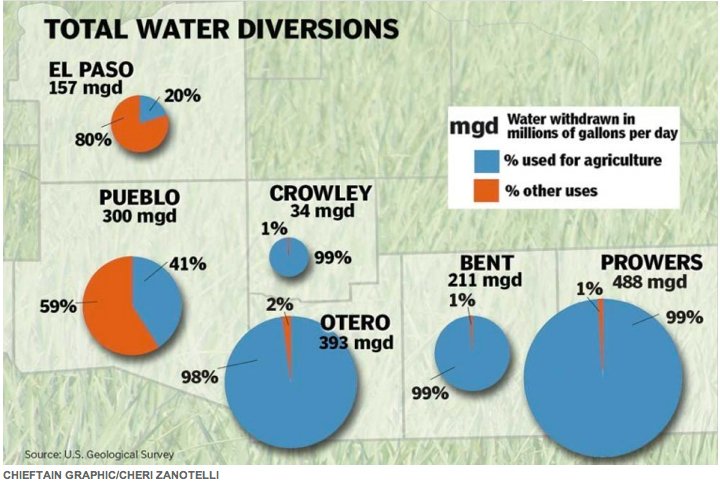
The Arkansas Valley Super Ditch engineering report forecasts the need for an additional 50,000 acre-feet in the valley by 2050

arkansasvalleywateruse2011

From The Pueblo Chieftain (Chris Woodka):

The conclusion is reached in an engineering report by Heath Kuntz prepared as part of the Super Ditch exchange case filed by the Lower Arkansas Valley Water Conservancy District in 2010.

The exchanges involve up to 58,000 acre-feet of water, 30,000 acres of ground, 82 exchange sites and seven ditch companies. So far, there has been no filing for a change of use of the water. Without a water leasing program like Super Ditch in place, there is the potential to permanently sell more farm water and take away flexibility to use the best farmland to grow crops, said Jay Winner, general manager of the Lower Ark district.

“Without the Super Ditch, I can see the day when the Ark Valley turns the clock back to the 1950s and we’re reduced to furrow irrigation,” Winner said. “In fact, I think the demand for water might be even higher than this report indicates.”

With the advent of surface-irrigation improvement rules in 2009, more replacement water will be needed as more systems in the valley are converted…

Well plans administered by three major groups now use about 24,500 acre-feet of leased water, and the engineering report projects that would increase to 30,500 acre-feet of water by 2050. In addition, the Arkansas Valley Conduit is expected to be constructed in the next decade, and its water demands will include 3,100 acre-feet from new sources to serve about 40 communities east of Pueblo. “The total projected demands associated with these operations are approximately 53,300 acre-feet per year in 2050,” Kuntz said in the report…

At its January meeting, the Lower Ark board heard from well associations that its lease of water from the Pueblo Board of Water Works, to help surface irrigators fill replacement needs, is raising the price others have to pay for augmentation water. The Pueblo water board typically sells water to bidders each year when the water is available. The price has been creeping up, as witnessed by the Fort Lyon Canal’s bid of $40 per acre-foot — twice its typical offer — in 2011. But the well groups argue that the $200 per acre-foot in the Lower Ark’s five-year contract takes water out of the pool available to them.

More Arkansas River basin coverage here.

The Southeastern Colorado Water Conservancy District board approves a $17.2 million budget for 2012

arkansasvalleywateruse2011

From The Pueblo Chieftain (Chris Woodka):

The major portion of the budget, $11.8 million, goes to repay federal costs of constructing the Fry-Ark Project, which includes the Fountain pipeline. Another $270,000 is revenue from state and federal grants.

The operating budget for the district is $5.1 million, with about 60 percent in the general fund, and 40 percent in the enterprise fund.

Of the $3 million district fund, $1.36 million goes toward personnel.

The budget also includes a capital expenditure of $850,000 as the district’s share for purchase of the Red Top Ranch near Lake Granby. That cost will total $1.7 million over two years. The ranch purchase is part of a plan by Front Range water users, including Aurora, Colorado Springs, Denver, Pueblo and the Northern Colorado Water Conservancy District, to provide flows for endangered fish species in the Colorado River. Participation in the program is a condition for importing Fry-Ark water each year.

The major project in the $2.1 million enterprise fund will be the Arkansas Valley Conduit. The U.S. Bureau of Reclamation is preparing an environmental impact statement for the conduit.

More Southeastern Colorado Water Conservancy District coverage here.
Mark Pifher (Aurora water): ‘We don’t plan to buy or lease any more water in Arkansas basin in the near future’

arkansasriverbasin.jpg

From The Pueblo Chieftain (Chris Woodka):

Aurora’s water rights include nearly all of the Rocky Ford Ditch in Otero County, about one-third of the Colorado Canal in Crowley County and water from 1,750 acres of ranches in Lake County. Those rights provide an average yield of 22,800 acre-feet per year — the equivalent of 80 percent of the potable water used by Pueblo each year.

– Aurora also uses the Homestake Project, Twin Lakes, Busk-Ivanhoe diversion and the Columbine Ditch to bring water from the Western Slope through the Arkansas River basin and into the South Platte basin. The average yield of those water rights is about 21,500 acre-feet annually.

– The city can reuse its Arkansas and Colorado basin water imports, and has built the $650 million Prairie Waters Project to directly recapture flows, rather than exchange them.

– Aurora’s South Platte water rights include wells, ranches, ditches and direct flow from the South Platte. They total about 46,000 acre-feet annually.

– Aurora has an agreement to trade 5,000 acre-feet of water a year with Pueblo West from Lake Pueblo to Twin Lakes beginning next year. It will replace a similar agreement with the Pueblo Board of Water Works that expires this year.

– The Pueblo water board sells Aurora 5,000 acre-feet of water each year.

– Aurora has a contract with the Bureau of Reclamation to store 10,000 acre-feet of water in Lake Pueblo and to move the same amount to Twin Lakes by paper trade.

– The water is moved from Twin Lakes to Spinney Mountain Reservoir through the Homestake pipeline system…

“We don’t have any current plans beyond what we’re already doing,” said Mark Pifher, director of Aurora water. “We don’t plan to buy or lease any more water in Arkansas basin in the near future.”

Instead, the city will continue developing Prairie Waters, a reuse project that pumps sewer return flows through a filtration and purification system, only at about 20 percent capacity so far. Aurora calculates that its average yield from its Arkansas River basin water rights is about 22,800 acre-feet annually. That’s roughly one-fourth of its total yield from its entire system, which includes South Platte and Colorado River basin rights. From a practical standpoint, Aurora does not move all of its water out of the Arkansas River basin each year.

More Aurora coverage here and here.

Sand Creek: Aurora comments on the spill and water quality — no effects

oilwatermap11292011suncorsandcreekwesternresourceadvocates.jpg

From the Aurora Sentinel (Sara Castellanos):

Environmental Protection Agency spokesman Matthew Allen said Monday a 240-foot trench completed over the weekend is preventing a gasoline-like substance from seeping from the Suncor Energy refinery into Sand Creek and the South Platte River.

The city’s Prairie Waters Project pumps groundwater from the South Platte downstream of the spill back to Aurora for treatment and use in the city’s water system…

Aurora’s water supply is derived primarily from snowmelt runoff in the Colorado, Arkansas and South Platte river basins far upstream of the and unrelated to the toxic spill. Aurora Water officials received notice from the Colorado Department of Public Health and Environment about an unknown substance potentially in a tributary of the South Platte River on Nov. 28, said Greg Baker, spokesman for Aurora Water…

“While a small percentage (of Aurora’s water) comes from the South Platte downstream of the impacted site, we are not currently taking water from the river because of our typical, seasonal, low water demands,” [Greg Baker, spokesman for Aurora Water] said. “If contamination were to occur at a time when we were using our South Platte River supply, we have numerous protocols in place to ensure that any impact on the river will not affect our drinking water supply.”

More coverage from TheDenverChannel.com (Ryan Budnick). From the article:

Matthew Allen, spokesman with the EPA, said work crews have pulled 3,500 gallons of gas-like material during the site cleanup…

The plume of highly-toxic liquid was noticed spilling into nearby Sand Creek in the end of November from a Suncor Energy refinery. Since it was identified, the EPA, Suncor Energy and the State of Colorado have been working around the clock to contain the pollution and clean up its remains.

More Sand Creek spill coverage here. More oil and gas coverage here and here.
The Preferred Options Storage Plan surfaces again after dismissal of lawsuit over Aurora’s excess capacity contract with Reclamation

puebloreservoir.jpg

In the late 20th century the Southeastern Colorado Water Conservancy Board floated the idea of expanding Pueblo Reseroir since new mainstem reservoirs are nearly impossible to permit nowadays and more storage is identified as one of Colorado’s big needs going forward. Aurora’s insistence on being part of the authorization legislation stalled the project. They are out now so expansion of storage in Lake Pueblo is back on the table. Here’s report from Chris Woodka writing for The Pueblo Chieftain. From the article:

“This allows us in the basin to concentrate on storage and move the PSOP process ahead,” said Alan Hamel, executive director of the Pueblo Board of Water Works.

PSOP stands for the Preferred Storage Option Plan, developed by the Southeastern Colorado Water Conservancy district in the late 1990s, when Hamel was president of the Southeastern board.

Aurora remained at the table during PSOP discussions through 2007, when talks organized by U.S. Sen. Ken Salazar broke off when the Lower Ark district sued the Bureau of Reclamation over an Aurora storage contract. In the newest agreement, reached as part of the conditions of a motion to dismiss a federal lawsuit, Aurora has dropped its claim to be included in PSOP legislation, while agreeing to support the 2001 PSOP implementation report.

Here’s a look at the settlement that led to the dismissal, from Chris Woodka writing for The Pueblo Chieftain. From the article:

A joint motion filed by all parties in the case asks federal District Judge Philip Brimmer to dismiss the case with prejudice, meaning it cannot be reopened. Stipulations attached to the case require Aurora to abide by an intergovernmental agreement reached with the Lower Arkansas Valley Water Conservancy District in 2009.

“It means the lawsuit is completely over,” said Jay Winner, general manager of the Lower Ark district. “I think this puts the final part of the fence around Aurora. Our agreement restricts them from putting any more infrastructure into the valley to move more water out of here.”

The agreement also reinforces past agreements Aurora has made to limit the amount of water it can move from the valley and defines the service area in which water from the Arkansas River basin can be used. Aurora also has agreed to withdraw its claims from any future legislation to study the enlargement of Lake Pueblo.

Aurora, a city of 300,000 east of Denver, owns water rights in Otero, Crowley and Lake counties and pumps it from Twin Lakes into the South Platte River basin through the Homestake Project, which is operated jointly with Colorado Springs…

One year ago, the case was administratively closed by Brimmer, but Aurora and the Lower Ark initially continued to work for federal legislation to study the enlargement of Lake Pueblo, a condition of the 2009 IGA…

As part of the final IGA, Aurora agreed to withdraw its insistence for a clause allowing it to use the Fry-Ark Project in any legislation to enlarge Lake Pueblo. That has been a sticking point for 10 years, and was one reason for the 2003 agreement. Aurora will unconditionally support a federal study of the enlargement of Lake Pueblo. Aurora also has agreed to fully support projects backed by the Lower Ark District, including Fountain Creek improvements, the Arkansas Valley Super Ditch and the Arkansas Valley Conduit. The city will contribute $2 million over 10 years to such projects. It will also continue funding and support of water quality projects in the Arkansas River basin. The agreement also strengthens Aurora’s commitment to continue revegetation of farmland it dried up with the purchase of water from Crowley County.

More Preferred Options Storage Plan coverage here and here. More Aurora coverage here and here

Prairie Waters Project Receives Project Management Institute’s Prestigious 2011 PMI Project of the Year Award

fountaincreekwatershed.jpg

Here’s the release from the Project Management Institute via Market Watch:

Aurora, Colorado, USA has been challenged by decades of rapid population growth combined with limited opportunities to expand its water supply in an arid environment. This already significant challenge was exacerbated in 2002 by severe, multi-year drought, requiring the city and its water managers to quickly design and implement a long-term solution in response to future water shortage conditions. The Prairie Waters Project, led by CH2M HILL, marked one of the largest water-related public works projects in Colorado in more than 35 years. Its exemplary innovation and completion, two months ahead of schedule and US$100 million under budget, has made it the 2011 recipient of the Project Management Institute’s prestigious PMI(R) Project of the Year Award.

“An urgent water need pushed the city to take an innovative look at ways to achieve not only meeting the community’s water needs quickly, but to preserve the city’s high standards for water quality,” said Larry Catalano, manager of capital projects for the City of Aurora. “The significant complexities of the project included stringent cost constraints, stakeholder involvement, environmental restrictions, and the pressure to execute a project on an exceptionally fast schedule. The project team consistently went above and beyond the call of duty and delivered ahead of schedule and under budget. We are honored that PMI recognized the hard work, collaboration and dedication of the entire team that worked to create the Prairie Waters Project.”

The Prairie Waters Project succeeded in spite of extreme environmental challenges. With only a nine-month supply of water available for a population of approximately 300,000 at that time, city leaders and CH2M HILL were tasked with identifying a sustainable, long-term water supply to protect against future droughts. After reviewing over 50 possible scenarios, the city identified the Prairie Waters Project as the fastest, most cost-efficient and most sustainable way to deliver more than 10,000 acre feet of new water to the city by the end of 2010.

The success of the project, originally projected to cost $854 million, resulted in a newly constructed pipeline, pump stations and a treatment plant that will ultimately deliver up to 50,000 acre feet, meeting Aurora’s needs through 2030. Eight significant stakeholder agreements, 145 land parcels and 44 permits were acquired for approval and completion of the project, which took six years to complete and spanned nearly 40 miles in length. Through the use of skilled project personnel, the rigorous application of project management standards, processes and techniques, and the use of earned value management (EVM) techniques, the PWP was able to cut $100 million from the budget in the design phase without compromising quality and safety, bringing the construction budget to $754 million. Value engineering techniques enabled the team to fast-track the project two months ahead of schedule and an additional $100 million below this amended budget. The project was delivered in October 2010 at just under $653 million.

“The City of Aurora’s Prairie Waters Project clearly illustrates how project management standards and practices, properly applied, can help deliver a solution that is transformative to a community,” said Mark A. Langley, President and CEO of PMI. “This project demonstrates best practice solutions that show agility and effective stakeholder engagement. PMI commends Aurora Water and the entire project team for these outstanding results.”

Aurora Water was presented with the 2011 PMI Project of the Year Award on Saturday, 22 October 2011 during the PMI Awards Ceremony at the PMI(R) Global Congress 2011–North America in Dallas, Texas.

More Prairie Waters coverage here and here.

The Castle Pines Metropolitan District nixes participation in the WISE project

denveraquifer.jpg

From the Aurora Sentinel (Sara Castellanos):

In a letter sent Oct. 12 from Paul Dannels, district manager of the Castle Pines Metropolitan District, to Rod Kuharich, executive director of the [South Metro Water Supply Augthority], Dannels said the board of directors decided not to proceed with the project. “Simply stated, the high cost of the Project and the uncertainty of water delivery do not make sense for the District at this time,” Dannels wrote in the letter. “We wish you great success with the Project which appears more feasible for larger users. They can deal better with both the uncertainty of water availability and the high Project costs than smaller users such as the District.”[…]

Greg Baker, spokesman for Aurora Water said the project, dubbed the Water Infrastructure and Supply Efficiency partnership, doesn’t require that all 15 entities of the SMWSA take deliveries for the project to be successful. Roxborough and the East Cherry Creek Valley Water and Sanitation District have already indicated that they had other resources they could develop and wouldn’t take water from the WISE partnership, Baker said. “Each member of the SMWSA must assess the value of participation in relation to their individual systems and needs,” Baker said. “SMWSA has indicated that the commitments from many of the other members have already met or exceeded the initial 10,000 acre-feet provided for by the proposed delivery agreement.”

More Water Infrastructure and Supply Efficiency partnership coverage here.
Aurora: Prairie Waters adds 10,000 acre-feet of supply to treated water supply system over the last year or so

prairiewaterstreatment.jpg

From the Aurora Sentinel (Sara Castellanos):

“The process from day one has cranked out excellent water,” said Kevin Linder, Binney’s plant supervisor. The facility, with its massive pumps and state-of-the-art machinery, has processed and treated “downstream” water from the South Platte River and Aurora Reservoir as part of the drought-hardening Prairie Waters project. The water is collected from river-bank wells a few miles below the point where treated sewage water is poured back into the Platte. The project broke ground in July 2007 and came online in October 2010 with the goal of collecting water from the South Platte River in Brighton and delivering it to the city through a 34-mile-long, uphill pipeline. Prairie Waters has increased Aurora’s water supply by about 20 percent and delivered 10,000 acre-feet of water over the past year…

The project came to fruition because city officials realized they had reusable return rights in the South Platte River that they weren’t taking advantage of. Reusable return rights allow the city to reclaim water that has been used already. The city has owned those reusable return rights for decades, but until now, there was no mechanism in place to return the water directly from the South Platte River to the city.

More Prairie Waters coverage here and here.

The Castle Rock town council hears the pitch from the WISE partners touting the project as a long-term source to replace non-renewable groundwater

castlerock.jpg

From the Parker Chronicle (Rhonda Moore):

Aurora Mayor Ed Tauer made the opening remarks to introduce the team that presented the Water Infrastructure and Supply Efficiency proposal, the last of four bids submitted to the town of Castle Rock. The WISE proposal is a partnership between the Denver and Aurora water departments and the South Metro Water Supply Authority, a co-op of 15 Douglas and Arapahoe county metro districts and municipalities. The authority, which includes the towns of Castle Rock and Parker, has been working since 2008 with Denver and Aurora to draft the WISE proposal, touted as a financial boon for Aurora Water and a first-of-its kind regional water partnership for the Front Range…

The presentation was made before a joint meeting between the town’s utilities commission and Castle Rock town council, which will eventually make the decision on which provider reaps the benefits of an investment worth millions in the town’s long-term water future…

If Castle Rock opts to go with WISE, it will be a permanent agreement and water will be delivered to a master meter. The authority’s cooperating agencies will be responsible for delivery of water from the master meter to their respective customers. The estimated cost to Castle Rock residents to complete that cycle is expected to be upwards of $200 million, said Ron Redd, Castle Rock utilities director and executive director of the South Metro Water Supply Authority. The final estimate will be assessed when the town’s utilities department compares the bids on the table for council recommendation, he said, and it is possible the town could ask voters for a tax increase to finance the long-term water plan. The cost of water purchased in the WISE plan will vary from year to year, depending on rates determined by Denver and Aurora. Water rates will be based on a calculation that compares to that used to calculate cost to the providers’ existing customers, said Mark Pifher, director of Aurora Water…

“Both Denver and Aurora are longtime commitments. We’ll be here a long time,” Pifher said. “You’ll know where to find us 50 years from now if you have a problem under the contract. When you look at WISE, it’s the quintessential conservation project, it maximizes the efficient use of resources we already have.”[…]

Town councilmembers asked the utilities department to arrange public hearings to gauge input from the community before making its decision. Town staff plans to meet in the coming weeks to decide on the next steps and timelines for bringing the water provider information to residents, said Kim Mutchler, Castle Rock spokeswoman.

More coverage of the WISE project from Sara Castellanos writing for the Aurora Sentinel. From the article:

Aurora struck a tenative deal Oct. 4 that will grant water to 15 water providers in Douglas and Arapahoe counties in times when Aurora has excess, and that will likely be most of the time. Aurora Water Spokesman Greg Baker said the proposal is momentous. “What makes it historic is the fact that you had all these entities and they came to a consensus on how to solve an issue of this scale,” Baker said.

Aurora Water, Denver Water and the South Metro Water Supply Authority — which represents 15 water providers in Douglas and Arapahoe counties — formed a partnership that will provide the southern metro water authority with at least 5,000 acre-feet of water per year by June 2013 and at least 10,000 acre-feet per year by 2020. The amount of water delivered annually could eventually equal up to 60,000 acre-feet per year. Denver Water will also be able to access its unused water supplies in the South Platte River to make it available to water entities in the water authority or use the same infrastructure to use the water in Denver for emergency use. Denver Water can also provide 3,000 acre-feet of water currently allocated to DIA. The partnership is dubbed WISE, Water Infrastructure and Supply Efficiency.

The partnership is crucial for the authority, which has historically been mostly reliant on groundwater and deepwater nonrenewable aquifers. The aquifers, and wells, are hundreds of feet deep into the ground and extract water as old as the glacial period, Baker said. It takes decades and sometimes even centuries for the water to replenish, Baker said…

Aurora will receive a substantial revenue stream from the deal — equal to a net revenue of about $10 million per year after 2020. The water authority is paying for a $20-million expansion to Prairie Waters slated for completion by 2020, and they are leasing the water at a rate of $5.38 per thousand gallons, which is more than the $5.27 that Aurora residents pay for water rates. The deal will benefit Aurora residents in that their water rates will remain stable, Baker said.

More WISE project coverage here.

Aurora, Denver and the South Metro Water Supply Authority embark on the WISE project to share facilities and reuse wastewater treatment plant effluent

prairiewaterstreatment.jpg

Here’s the release from the partners.

More South Platte River basin coverage here.

Denver, Aurora and the South Metro Water Supply Authority make the WISE project official

denveraquifer.jpg

From The Pueblo Chieftain (Chris Woodka):

The Water Infrastructure and Supply Efficiency partnership between Denver, Aurora and the South Metro Water Supply Authority was announced Tuesday. The partnership could reduce pressure on agriculture in the South Platte and Arkansas river basins and the need for diversions from the Colorado River.

“I think it’s a step in the right direction,” [John Stulp, water adviser to Gov. John Hickenlooper and chair of the Interbasin Compact Committee] said. “I think it’s a unique way to share water and infrastructure. From what I understand, there is built-in drought protection. There are efficiencies and redundancies that can take pressure off ag communities.”[…]

The WISE partnership will improve South Metro water supplies while maximizing the water resources and infrastructure of Denver and Aurora. The agreement is in a 60-day review period and must be approved by all of the parties. South Metro represents 15 municipal water suppliers in Douglas and Arapahoe counties…

The backbone of the partnership is Aurora’s $659 million Prairie Waters project that allows return flows from treated wastewater in the South Platte River to be recaptured and treated. In Colorado, water from transbasin diversions and some water obtain through water rights transfers can be used to extinction. Aurora has built the first phase of Prairie Waters to treat up to 10,000 acre-feet of water per year, but it can expand to 50,000 acre-feet per year…

There would, however, always be seasonal capacity in the Prairie Waters project to provide additional water for users in the metro area, because the project is scaled to meet peak demands, [Mark Pifher, director of Aurora Water] said. The proposed agreement will sell treated water to South Metro for $5.38 per 1,000 gallons, with minimum guaranteed deliveries of 5,000 acre-feet per year beginning in June 2013. That works out to about $8.76 million annually. After 2020, the amount would increase to 10,000 acre-feet per year. Eventually, systemwide improvements could provide as much as 60,000 acre-feet to South Metro, Pifher said. Denver also would gain a new water supply through recycling its flows through Prairie Waters. In addition, South Metro water users would agree to fund improvements to Denver Water and Aurora infrastructure with $15.4 million over eight years, which is the equivalent to a tap fee. The money would go for interconnections between the Denver, Aurora and other systems. The agreement also includes a $412,000 connection between East Cherry Creek Village and Aurora.

More coverage from Bruce Finley writing for The Denver Post. From the article:

The deal, which would pay Denver and Aurora water utilities $17.4 million a year, is one of the first of its kind in the nation. It lets water agencies that often compete for resources share without merging, and sustain more people without diverting more water from over-subscribed Western Slope rivers. Environmentalists and state leaders swiftly praised the emerging arrangement.

“This type of water-sharing agreement is a critical step toward bolstering water supplies in the southern metro area while better utilizing water resources in Aurora and Denver,” Gov. John Hickenlooper said…

Denver and Aurora would funnel as much as 1.6 billion gallons of purified water a year to suburbs by 2013, increasing to as much as 3.2 billion gallons by 2020. Engineers say necessary new pipelines and hook-ups eventually could send as much as much as 19.5 billion gallons — 60,000 acre-feet a year — to the suburbs. Denver Water, Aurora Water and 13 participating suburbs would have to replumb before the first water could be delivered — which could bloat water bills for residents of Castle Rock, Parker and other communities. Those communities already need more than the maximum amount of water deliverable under the current 22-page contract, said Charles Krogh, past president of the South Metro Water Supply Authority, who represented suburbs through lengthy negotiations. “Our demands now are about 70,000 acre-feet annually,” Krogh said. “This proposal allows us to get in the game for renewable water supplies.”[…]

The replumbing would include a $412,000 hookup between Aurora pipes and an East Cherry Creek Valley pipeline and storage of water in Parker’s new Rueter-Hess Reservoir. To receive water, south metro suburbs would have to install additional pipelines “to connect ourselves all up,” at an estimated cost of $80 million, Krogh said…

South suburbs, if they approve the contract, would be obligated not to divert water from Colorado’s Western Slope.

More coverage from Sara Castellanos writing for The Aurora Sentinel. From the article:

Aurora Water, Denver Water and the South Metro Water Supply Authority have developed a water delivery agreement that, if approved, would provide SMWSA with up to 5,000 acre-feet of water per year by June 2013, increasing to 10,000 acre-feet per year by 2020 as additional pipeline and other infrastructure are built. SMWSA represents 15 water providers in Douglas and Arapahoe counties. The amount of water delivered annually could eventually expand to up to 60,000 acre-feet per year…

The new supply of fully treated water from Aurora’s state-of-the-art Binney Water Purification Facility will provide much welcomed relief to SMWSA and its members, who have been looking for ways to reduce their reliance on non-renewable underground aquifers, Baker said in a release. It also will reduce the need for the SMWSA members to pursue agricultural water rights in the South Platte River basin in the near term.

More WISE coverage here.

The Metropolitan Wastewater Reclamation District is raising rates 8%, Aurora is expected to pass through some of the costs to their rate-payers

wastewatertreatmentprocess.jpg

From the Aurora Sentinel (Sara Castellanos):

Aurora’s sewer water is treated by the Metro Wastewater Reclamation District, so when their rates go up, Aurora’s residents feel the effects as well.

New Environmental Protection Agency rules require the reclamation district to remove nitrogen and phosphorous in wastewater before they put the water back into the South Platte river, said Greg Baker, Aurora Water department’s spokesman.

The cost to remove the chemicals is more than $500 million, so the district is charging Aurora Water 8 percent more to treat the wastewater, he said.

Aurora Water is absorbing some of the costs, so residents could see their sewer water bills increase 4.1 percent through 2016. But Aurora City Council members have to make the final approval on the increase in October. The changes would take effect Jan. 1, 2012.

More wastewater coverage here.

Homestake Reservoir is closed until October 2013

homestakereservoir2010aurorawater.jpg

From The Pueblo Chieftain (Chris Woodka):

The closure means that no water will be brought over through the Homestake pipeline into Turquoise Lake next year, as work is conducted on the gate. The gate is located in the middle of the reservoir. That should not have a significant effect on the operations of either Aurora and Colorado Springs in the Arkansas River basin. Both utilities have high water storage levels. Homestake accounts for about 15 percent of Aurora’s storage and 10 percent of Colorado Springs’ storage.

“We were 90 percent full as of last week, and we’ll be bringing more water over to keep Spinney, Aurora and Quincy reservoirs more full than usual,” [Greg Baker, spokesman for Aurora Water] said.

Aurora has a 2-3 year supply of water in storage and will rely on its newly completed Prairie Waters Project to fully reuse as much water as possible. Aurora also will be managing its Arkansas Valley water — from rights purchased when farms were dried up in Otero, Crowley and Lake counties — more closely, Baker said…

For Colorado Springs, the situation is different. It relies heavily on the Colorado River basin for the majority of its water, but has sources other than Homestake, including Twin Lakes, the Fryingpan-Arkansas Project and the Blue River diversion. Homestake provides about 14 percent of the annual supply. “We’ll try to bring over water from Homestake when we are able, but, yes, we expect it to be drawn down for a year,” [Gary Bostrom, chief of water services for Colorado Springs Utilities] said.

More Homestake Reservoir coverage here.

Aurora water comes out on top (again) in a regional taste test this week at annual conference of the Rocky Mountain Section of the American Water Works Association

waterfromtap.jpg

From The Denver Post:

It was the second time in three years Aurora Water has come away with the top spot. “We employ state-of-the-art treatment technology and have a staff dedicated to providing some of the highest quality water around,” Mark Pifher, director of Aurora Water, said in a statement. “It’s a testament to the hard work of our employees when our water comes out on top in a comparative taste-test.”

More water treatment coverage here and here.

Castle Rock: Wednesday the Town Council and the Town Utilities Commission will hear from water providers who want to supply the long-term needs for the town

denveraquifer.jpg

From the Town of Castle Rock via the Castle Rock News Press:

Members of the public, along with Town Council and the Town Utilities Commission, will hear from the groups that wish to provide the Town with long-term water at a special meeting Sept. 14.

The meeting will begin at 6 p.m. in Council Chambers at Town Hall, 100 N. Wilcox St.

Three of the four groups that have been short-listed in the search for the Town’s long-term water provider – Renew Strategies, Stillwater Resources and United Water – will each make a half-hour presentation, followed by questions from Town officials and the public.

The fourth proposal – the WISE agreement between South Metro Water Supply Authority, Aurora Water and Denver Water – is being reviewed by the Aurora City Council prior to being released to the public.

All four proposals will be evaluated against the same criteria, which include the opportunity to succeed, cost, local partnership opportunities, existing infrastructure, experience and water rights.

Seven proposals in all were received in response to the Town’s June request for water supply proposals. All of those proposals were reviewed against the same criteria in placing the four remaining proposals on the short list. At [this] week’s special meeting, the three groups will introduce their projects and provide information on their concept, water supply characteristics and costs.

This effort to secure a long-term water source is just one component of the Town’s Legacy Water Projects – the goal of which is to transition the Town to 75 percent renewable water by the time it is built out. (All of the Town’s water currently comes from nonrenewable wells.)
There are two other major components to Legacy Waters:

• The purchase of water storage space in Rueter-Hess Reservoir, which will open next year near Parker
• The construction of a water purification facility in Castle Rock, which will provide for 35 percent of the Town’s renewable water needs by 2013

Additional funding will be needed to secure the water that is needed for the Town’s future. The Town may hold a property tax election in 2012 or 2013 in order to fund the Legacy Water Projects.

More Denver Basin aquifer system coverage here.

A June agreement between the Lower Arkansas Valley Water Conservancy District and Aurora may pave the way for the expansion of Pueblo Reservoir

puebloreservoir.jpg

From The Pueblo Chieftain (Chris Woodka):

“I think this [June agreement] has opened the door for success in the Arkansas basin,” Jay Winner, general manager of the Lower Arkansas Valley Water Conservancy District, told the Southeastern Colorado Water Conservancy District board on Thursday. Aurora would not be included in any federal legislation to enlarge Lake Pueblo under its agreement with the Lower Ark in June meant to settle the Lower Ark’s 2007 federal lawsuit against the Bureau of Reclamation over a 40-year contract that allows Aurora to store and ex- change water in the Fryingpan-Arkansas Project…

Now that Aurora has removed its demand to be included in the federal legislation, the district could move ahead in seeking the legislation. No new PSOP bill has been introduced. While there are 27 intergovernmental agreements that “put a fence” on Aurora’s future activities in the Arkansas Valley, the new Lower Ark agreement does other things to prevent Aurora from taking even more water from the Arkansas River basin, Winner said. One of those is stopping Aurora’s ability to build new infrastructure to move water out of the valley. “It’s cheaper to build infrastructure in 2011 than 40 years from now,” Winner said. “This stops Aurora.”[…]

“I think this agreement can open the door for more storage in Pueblo Reservoir, which this basin needs,” Winner said. “It is very protective of the Arkansas basin.”

More Arkansas River basin coverage here.

The Front Range Water Council plans to spend $600,000 to study Colorado River basin supplies

coloradoriverbasincgs.jpg

From The Pueblo Chieftain (Chris Woodka):

The Front Range Water Council is planning to hire Grand River Consulting Corp. for $600,000 over two years to work on Colorado River issues that affect the state’s largest water providers. The Pueblo water board’s share will be $36,000 each year, or $72,000 total. The board approved the contract at its Tuesday meeting.

The council represents Denver, Aurora, Colorado Springs, Pueblo, Twin Lakes Reservoir & Canal Co., the Northern Water Conservancy District and Southeastern Colorado Water Conservancy District. Denver and Northern — the largest water providers — would pay 20 percent of the costs of the contract, while the others each have a 12 percent share. Combined, the groups provide municipal and industrial water to 80 percent of the state’s population, using about 6 percent of the total water supply. Agriculture still uses most of the water in Colorado…

Up until now, the council members have been relying on their own staff to provide input to state planning on Colorado River issues, but the tasks have grown so much that full-time staff is needed to work on the issues, said Alan Hamel, executive director of the Pueblo water board…

Among the projects of the group are:

Day-to-day management of a technical work group among the members of the council.

A water bank study to look at how to prevent curtailment of municipal diversions in the event of a Colorado River call.

Input into nonconsumptive needs studies of the Colorado River, which are primarily driven by the state roundtable process.

Working with the Bureau of Reclamation on its Colorado River basin supply and demand study. The study is looking at water availability in all seven states.

A strategic plan for the Front Range Water Council.

Coordinating work with the CWCB, including the state’s ongoing Colorado River water availability study and compact compliance study.

More Colorado River basin coverage here.

Federal funding may become available for the south Metro suburbs, Aurora and Denver to use for the WISE project

prairiewaterstreatment.jpg

From The Denver Post (Bruce Finley):

Suburban water authorities said the project [Water Infrastructure Supply Efficiency or WISE], designed to reduce reliance on dwindling underground water, will cost about $558 million.

U.S. Bureau of Reclamation officials said “rural water supply” funds may be available for the project, if it survives a detailed feasibility review. Congress would need to authorize the federal funding, which could decrease the bill passed on to water customers. “What we’re looking at: Is this project capable of being completed? Is the cost-benefit going to work out? Is it going to be beneficial?” Bureau of Reclamation spokesman Peter Soeth said.

Meanwhile, a crucial wastewater purchase deal with Denver and Aurora has yet to be done. How much wastewater could be diverted, and how often, remains under negotiation. The suburbs told federal officials the WISE project would deliver 5,000 to 11,000 acre-feet a year for the first five years, then as much as 37,000 acre-feet a year…

The federal rural water-supply funds could be used because suburbs with populations under 50,000 are deemed “rural,” said Mark Shively, executive director of the Douglas County Water Resource Authority. “We have very aggressively pursued this opportunity,” Shively said. “We’re now about 20 percent into the feasibility study.”[…]

Beyond pipeline construction, the proposed project involves new storage of treated wastewater in surface reservoirs and by injecting it into depleted aquifers. “We have a couple reservoirs we’re looking at,” Shively said. “Between the Chatfield and Rueter Hess (reservoirs) we have a good amount of storage.”

Here’s the report from Reclamation.

More WISE project coverage here.

Fryingpan-Arkansas Project update: Potential customers voice concerns over storage pricing at Reclamation ‘listening session’

puebloreservoir.jpg

From The Pueblo Chieftain (Chris Woodka):

“Are you trying to maximize return to the Bureau of Reclamation, or maximize benefits to the area?” asked Terry Book, deputy executive director for the Pueblo Board of Water Works. The water board has the lowest rate for storage at Lake Pueblo under a 25-year contract signed in 2000. “At the end of 25 years, if the price is too high, will we have to seek alternatives elsewhere? If the price we passed on were too high, would that keep others out and defeat the whole purpose?”

Reclamation plans to develop a pilot program in the Arkansas River basin that would determine how market pricing for storage contracts could be used throughout the western United States, explained Mike Collins, area manager for Reclamation. “We have no draft documents or analysis,” Collins said, adding that the listening session was to gain input from Arkansas River water users on how to determine market prices.

Collins offered no concrete responses about how the criteria for market pricing are being developed, and said a document would be available further into the process. “We’re gathering perspectives to get this process started,” Collins said.

Ed Harvey, an economist who represented the SDS group and Aurora, told Reclamation that it would be difficult to apply market rates in the Arkansas River basin across the western United States. Water markets are few in number and subject to local conditions. “It’s a difficult, but laudable goal that is fraught with difficulties,” Harvey said. He suggested developing a market simulation, looking at comparable situations in the Arkansas River basin. Harvey did that sort of analysis in 2006 for the Aurora contract hearings, and found storage rates varied from $3-$68 per acre-foot, depending on variables like location and the relationship between buyer and seller. Reclamation basically ignored Harvey’s work during those hearings. Reclamation’s current contracts at Lake Pueblo range from $17.25-$51.32 per acre-foot.

Meanwhile there are problems getting consensus on where to apply Fry-Ark revenues. Here’s a report from Chris Woodka writing for The Pueblo Chieftain. From the article:

The Southeastern Colorado Water Conservancy District last October proposed paying off the South Outlet Works first, the Fountain Valley Conduit second and Ruedi last until the Arkansas Valley Conduit is built. The [2009 law that uses excess-capacity revenues to fund parts of the Fryingpan-Arkansas Project] itself does not indicate priorities among the projects prior to completion of the new conduit. Reclamation suggests other alternatives, including paying the majority of the funds from Ruedi, paying equal shares to all three or adjusting payments to the total amount currently owned. It has not chosen an alternative.

“Our expectations are that the East Slope facilities and obligations will be paid off first, with consideration for Ruedi in the future,” Alan Hamel, executive director of the Pueblo Board of Water Works, told Reclamation officials at a meeting to discuss the law Wednesday. “It starts to appear that there will be additional mitigation for the West Slope.”[…]

Reclamation charges fees to store water in Lake Pueblo, primarily, under either long-term or short-term contracts. Previously, the revenues from that went to the general fund of the federal government. Under the new law, they are to be put toward Fry-Ark debt. This year, $2.2 million is available from short- and long-term excess-capacity contracts — enough to cover the South Outlet Works debt. In the next six years, the revenues drop to about half of that because of the structure of the Southern Delivery System contracts. By 2018, revenues are expected to resume at $2.4 million and begin climbing again. Revenues would be sufficient to pay off the Fountain Valley Conduit by 2020, under the Southeastern District plan, but the Ruedi debt would climb to more than $50 million.

More Fryingpan-Arkansas Project coverage here.

Restoration: Aurora and the U.S. Forest Service are partnering on forest restoration near the Hayman burn

haymanburnarea.jpg

From the Associated Press via The Columbus Republic:

Aurora is joining efforts by the National Forest Foundation, Vail Resorts Inc. and the U.S. Forest Service to restore some of the 215 square miles burned by the 2002 Hayman fire. The Forest Service said Thursday that Aurora Water’s investment would help leverage other funds from private partners, including a $200,000 challenge grant from The Gates Family Foundation.

More coverage from Bob Berwyn writing for the Summit County Citizens Voice. From the article:

The Aurora City Council in late July approved agreements with the National Forest Foundation and the U.S. Forest Service that will invigorate an existing partnership including Vail Resorts and other partners. The investment from Aurora Water will help leverage funds from eight other private partners including a $200,000 challenge grant from The Gates Family Foundation.

U.S. Department of Agriculture Undersecretary Harris Sherman helped announce the partnership today, calling it a key to protecting watersheds essential to Aurora’s water supply and emphasizing the importance of partnerships between the Forest Service and other entities. “When we turn on our faucets, we tap water from our forests,” Sherman said. “The National Forests provide more than 70 percent of public water systems that serve millions of Colorado citizens. Improving the health and resiliency of the Pike and San Isabel National Forests in areas critical for delivering water to the City of Aurora benefits the land, the water and the tens of thousands of Aurora Water customers,” he added.

“The quality and reliability of our water supply is dependent upon forest health,” said Aurora Water director Mark Pifher. “A healthy forest is how nature keeps sediment from entering the watershed. Aurora and Denver Water are currently spending millions of dollars to dredge Strontia Spring Reservoir as a result of past fires. Failure to take action now would result in more costly measures in the future.”

More coverage from Sarah Castellanos writing for the Aurora Sentinel. From the article:

The investment, which came from the coffers of Aurora Water, will help plant more than 200,000 trees, revegetate more than 13 miles of riverbank with natural foliage, rehabilitate the landscape and improve the habitat for fish and the endangered Montane Skipper Butterfly. The area is part of the South Platte River Basin, from which Aurora residents receive most of their water. Because of Aurora’s donation, the Gates Family Foundation is also donating $200,000 toward the restoration project.

More coverage from Carlos Illescas writing for The Denver Post. From the article:

Aurora has pledged to help restore 45,000 acres from the Hayman fire. It also plans to seek $200,000 from the private sector, including a grant from The Gates Family Foundation. In all, the project to restore the burn area is estimated at $4.6 million. More than 200,000 ponderosa pine, Douglas fir and other varieties of trees will be planted. Also, 13 miles of riverbank will be revegetated with native foliage.

More restoration coverage here.

Colorado Public Radio series — ‘Thirsty Cities, Dry Farms’

smithsditchwashingtonparkdenver.jpg

Here’s the link to the transcript Part 1: Buy and Dry of Megan Verlee’s series. Here’s an excerpt:

REPORTER: [Orville] Tomky still mourns the changes to his county. But John Stulp, the governor’s water advisor, and a farmer himself, says it would be a mistake to see the farmers as victims in this story; for many, being able to sell their water rights is a godsend.

JOHN STULP: “If you do not have sons or daughters who are willing to come back to the farming operation, oftentimes a farmer’s irrigated water rights become their 401K, their retirement fund.”

REPORTER: We’re talking about some big money here. Rights to the most desirable agricultural water can go for more than $10,000 dollars an acre-foot, and farmers often own hundreds of those. Cities are always looking to buy. It’s hard to pin down exactly how much of the state has gone back to grass, or is on its way. because of urban water buys. But best guesses put the number at hundreds of square miles. State Supreme Court Justice Gregory Hobbs is an expert in Colorado water law. He says what happened in places like Crowley county made Colorado officials more cautious about water deals between cities and farmers.

HOBBS: “People realized that the tax base was being affected by these transfers. So the legislature basically adopted what I’m going to call mitigation.”

REPORTER: Now the cities can’t just buy the water and walk away, they’ve got a lot to do before they ever see a drop of it.

HOBBS: “The legislature has provided there must be re-vegetation when water is permanently removed. There are in leiu taxes that must be paid to support the local library and fire district and town, for thirty years.”

Here’s the link to Part 2: Super Ditch of Megan Verlee’s series. Here’s an excerpt:

[John] SCHWEIZER: “I always got tickled at my mother. She didn’t think you should ever gamble. But she and my father farmed all their married life, and if that’s not a gamble, I don’t know what is.”

REPORTER: It’s not farming’s perpetual gamble but its potential one-time payout that has Schweizer worried these days. Over the past few decades, a lot of his neighbors have cashed in their water rights, selling to cities and retiring, along with their farms. We’re not on the road long before we see the effects of that transfer. The land changes from green to brown, weedy fields crisscrossed with the remains of old irrigation systems.

SCHWEIZER: “See, there’s an irrigation canal right there, that indentation.”

REPORTER: Schweizer doesn’t want to see any more farmland dry up around here, so he and other farmers here are working on a different way to meet cities’ water needs. He’s president of what’s called the Arkansas Valley Super Ditch.

SCHWEIZER: “The Superditch is a not a ditch at all. It’s just a combination of the ditches in the valley. I just like the idea of it: leasing part of your water and continuing to own it.”

REPORTER: So instead of individual farmers selling off water rights, irrigators in the valley band together to lease up to a quarter of their total water to cities. The farmers take turns leaving some of their fields bare for a few years, but they all get to stay in business. Schweizer says it might even make it easier for people like his son to continue the family farm.

SCHWEIZER: “If the water’s sold, it’s impossible to ever pursue and fulfil that dream. And with the Superditch concept, and if it becomes a reality, then most of the water stays on the land and they continue to do what they’ve dreamed about doing for generations to come.”

More Arkansas Valley Super Ditch coverage here.

Lower Arkansas Valley: Aurora leases nearly 5,000 acre-feet of water to the Holbrook and Highline canals along with allocating 713 acre-feet to the Colorado Canal for revegetation efforts in Crowley County

arkbasinditchsystem.jpg

From the La Junta Tribune-Democrat:

Since March, Aurora has been providing what will amount to almost 5,000 acre- feet (af) to both Holbrook and Highline Canals, systems with which the city has payment agreements. The exchange of water for normal cash payments from Aurora resulted in an extremely favorable exchange rate for the farmers of $15 per af. The city also provided the Colorado Canal with 713 af at no cost to help with continuing revegetation efforts in Crowley County.

Bob Barnhart, Superintendant of the Holbrook Mutual Ditch Company, as well as a farmer on the Holbrook ditch, welcomed this opportunity. “This water comes at a time when we were in great need for supplemental water for irrigation,” Barnhart stated. “With the drought the way that it is in southeastern Colorado this has been a great help to us to keep our corn and alfalfa growing and healthy. This water will keep our yields high and increase our net profit for this year. Before we got Aurora water this year we were hurting and scrambling trying to find some source of water to keep our crops alive.”

More Aurora coverage here and here.

Aurora hopes to settle lawsuit over the Lake Pueblo excess capacity contract with the Bureau of Reclamation

puebloreservoir.jpg

From The Pueblo Chieftain (Chris Woodka):

That’s why it has negotiated an agreement with the Lower Arkansas Valley Water Conservancy District, Aurora Water Director Mark Pifher said Friday. The Lower Ark board approved the agreement this week and Aurora City Council is expected to follow suit. “Our motivation was to close out the litigation that is still pending before the federal court,” Pifher said. “You never know what the court might decide to do, and we certainly didn’t want the lawsuit started again.”

The Lower Ark sued Reclamation in 2007 after the bureau issued a 40-year contract to store and exchange water at Lake Pueblo that allows Aurora to use the Fryingpan-Arkansas Project to remove water from the Arkansas River basin. Aurora entered the case on Reclamation’s side…

Aurora had the potential to spill this year when Lake Pueblo reached high levels in spring and a heavy runoff was looming. No spill occurred because runoff was late, agricultural accounts were drawn down earlier than usual and the Army Corps of Engineers waived flood control storage provisions. Still, since March, Aurora has provided 5,000 acre-feet of water at low rates to Lower Arkansas Valley irrigators on the High Line and Holbrook ditches. “This water comes at a time when we were in great need for supplemental water for irrigation,” said Bob Barnhart, superintendent of the Holbrook Canal. “With the drought the way that it is in Southeastern Colorado this has been a great help to us to keep our corn and alfalfa growing and healthy.” It has also allowed increased recreational use on Holbrook Reservoir in Otero County, he said.

The water has also helped the High Line Canal during the drought, said Dan Henrichs, superintendent, who noted in a presentation to the Colorado Water Workshop that farmers were able to buy water from Aurora for about 3 percent of the price they sold it to Aurora under a 2004-05 lease.

More Aurora coverage here and here.

Lower Arkansas Valley Water Conservancy District board meeting recap: The board approves dropping challenges to Aurora’s 2007 deal for excess capacity storage in Lake Pueblo

puebloreservoir.jpg

From The Pueblo Chieftain (Chris Woodka):

A new agreement that removes Aurora’s connection with federal legislation that would look at enlarging Lake Pueblo was approved Wednesday by the Lower Arkansas Valley Water Conservancy District. The Aurora City Council would have to approve the agreement to put it into place. The agreement would end any further attempts by the Lower Ark district to challenge Aurora’s 2007 contract with the Bureau of Reclamation. the district sued Reclamation in federal court shortly after the contract was awarded…

Under the new agreement with the Lower Ark district, Aurora would support federal legislation to enlarge Turquoise Lake and Lake Pueblo without its previous insistence on including provisions that allow Aurora to use Fry-Ark facilities. The new agreement also would require Aurora to support using its payments on the contract to help fund the Arkansas Valley Conduit.

More Lower Arkansas Valley Water Conservancy District coverage here.

Aurora: Homestake Reservoir will be closed to the public and drained this fall for three year maintenance project

A picture named homestakereservoir2010aurorawater.jpg

Here’s the release from Aurora Water (Greg Baker):

The Homestake Dam and Reservoir in Eagle and Pitkin Counties, Colorado, will be undergoing scheduled maintenance in 2012 and 2013 that will impact recreational users of the facilities. The work involves regular, but necessary maintenance to help safeguard a valuable resource and ensure its viability for years to come. Homestake Reservoir, completed in 1968, is operated jointly by Colorado Springs Utilities and Aurora Water under the Homestake Water Project. To ensure the public’s safety during construction activity, access to the reservoir and the dam will be restricted during this maintenance period.

“We understand that this area is a popular recreational amenity, and we ask for your patience and understanding as we work as expeditiously as possible,” stated Greg Baker, spokesperson for the Homestake Project. “The construction season in the mountains is short, so we will make every attempt to be efficient with our time.”

Starting in September 2011, admittance to Homestake Reservoir will be closed below the East Fork Trailhead, just prior to the dam access road on Homestake Road. The top five feet of the dam crest will be removed to accommodate the large equipment needed for this project. Upon completion of the maintenance work in late 2013, the dam crest will be restored to its original height.

The bridge on Homestake Road immediately beyond the turnoff from Highway 24 will be replaced between October and December 2011. A temporary bridge will be in place to accommodate local traffic. Traffic will be directed to this detour, so it is recommended that visitors watch for traffic signs and be alert.

In 2012, the reservoir will be drained to accommodate repairs to the gate and intake structure for the Homestake Tunnel, which carries the water from Homestake to Turquoise Lake in Lake County. Natural flows to Homestake Creek will be maintained during this time. The U.S. Forest Service, in cooperation with a variety of partner groups, will be performing restoration and enhancement work, including fish habitat improvement, hazard tree removal, and campsite rehabilitation along Homestake Creek downstream from the reservoir.

From 2012 to 2013, milling and paving will occur on the dam’s asphalt face. Asphalt faced dams, while common in Europe, are unique in the U.S. Since the facing was first installed in 1968, it is almost 45 years of age and is due for a replacement.

Water collection in the reservoir will begin again in April 2013, though how long it will take to refill Homestake will depend on snowpack and runoff conditions. Restoration work around the dam should be completed in 2014, with full public access being restored by spring of that year.

Both Colorado Springs Utilities and Aurora Water will carefully monitor their other water sources to ensure that adequate supplies are available to meet customer demand. Aurora Water will maximize its storage in the Arkansas and South Platte basins, as well as utilize its recently completed Prairie Waters system. Colorado Springs Utilities does not anticipate impacts to its ability to deliver water to customers during the construction phase. During construction, and as needed, Colorado Springs Utilities will bring its share of Homestake Reservoir storage through the Homestake Tunnel to East Slope storage facilities.

Updates and notices on the Homestake Dam and Reservoir maintenance and repair project will be posted on websites of both Aurora Water (https://www.auroragov.org/Homestake) or Colorado Springs Utilities (CSU.org).

More coverage from the Aurora Sentinel (Sara Castellanos):

The reservoir will be drained for repairs to the gate and intake structure for the Homestake Tunnel, which carries the water from the reservoir to Turquoise Lake in Lake County. Contractors will replace the asphalt facing on the dam, which is 45 years old. “Homestake has an asphalt faced dam which is unusual here but very common in Europe,” Baker said. “It makes it a little more difficult to find qualified contractors for.” While this work is done, the U.S. Forest Service will work on fish habitat improvements, removal of hazardous trees and campsite rehabilitation in the area…

The total cost of construction of the renovations is $35.5 million, with Aurora paying $17.5 million over four years and Colorado Springs paying the second half. Money to fund the project will come out of Aurora Water’s operating budget…

While Homestake is offline, the city will continue collecting water from Prairie Waters, the drought-hardening project that came online last year. “Now that we have Prairie Waters online, it’s about the equivalent of what we take out of Homestake,” Baker said.

More Homestake Reservoir coverage here and here.

Aurora: Storage in good shape, Prairie Waters to run all year

A picture named prairiewaterstreatment.jpg

From the Aurora Sentinel (Sara Castellanos):

“Aurora’s water supply is in excellent shape this year,” said Greg Baker, spokesman for Aurora Water. “The heavy snows have helped us quite a bit, and we’ll have sufficient water supply throughout 2011.”

Baker says he doesn’t anticipate any changes in water restrictions this year. Aurora’s water supply across its 12 reservoirs is about 88 percent of capacity this summer, compared with 95 percent during summer 2010. Homestake Reservoir, at more than 10,000 feet, is still generating water run-off from the snowpack levels. The Prairie Waters Project will also be online all year, Baker said.
“We’re running that all year long to test it for warranty purposes,” he said. “We’re going to run it this year as though it were a drought scenario so we can test all the components and make sure we get our money’s worth.”

More infrastructure coverage here.

Arkansas River basin: The Pueblo West Metropolitan District Board and Aurora Water reach agreement for a 5,000 acre-foot water swap

A picture named twinlakesdiversionsystem.jpg

From The Pueblo Chieftain (Jeff Tucker):

The resolution, approved unanimously by the board, will allow the district to trade up to 5,000 acre-feet of water owned by the district in Twin Lakes Reservoir to Aurora for up to 5,000 acre-feet it owns and stores in Lake Pueblo…

Prior to the vote, board member Chuck Green noted that such an agreement isn’t anything new. The Pueblo Board of Water Works had a similar agreement with Aurora dating back to 1992. The metro board’s new agreement will actually replace the water works’ agreement, which expires in 2012. Pueblo West attorney Tom Mullans also noted that Aurora will pay an assessment for the number of shares of Twin Lakes water that gets traded to the metro district. Normally, Pueblo West would pay that money, which would have left the district on the hook for up to $100,000 annually, said District Manager Jack Johnston…

The metro board took a number of other water-related actions Tuesday, unanimously approving a $206,466 contract with CH2M Hill Engineers, Inc., to design a pump station to connect the Southern Delivery System to the metro district’s water treatment and distribution systems. The board also unanimously approved a resolution to participate with the Southeastern Colorado Water Conservancy District’s environmental analysis for its proposed excess-capacity master contract. The district’s share of the cost would be about $172,000 during the course of the study.

More Arkansas River basin coverage here.

Aurora: Watering restrictions in effect starting yesterday

A picture named watersprinkler.jpg

From The Denver Post:

Residents can pick any three days to water but no more than that. Also, watering is not permitted from 10 a.m. to 6 p.m. because that is the part of day when water tends to evaporate more.

Aurora Water officials are encouraging people to get out their hoses and sprinklers, as more trees and lawns are dying this year because of the lack of moisture this winter.

More Aurora coverage here.

Fryingpan-Arkansas Project: Lake Pueblo master storage contract update

A picture named puebloreservoir.jpg

Here’s an in-depth look at what it’s going to take to get a contract in place, including an environmental impact statement, from Chris Woodka writing for The Pueblo Chieftain. Click through and read the whole thing. Here’s an excerpt:

The EIS will study the cumulative impacts of storing non-project water in Fry-Ark reservoirs, which could total close to 100,000 acre-feet in the next 50 years. A 2006 Reclamation study determined there is about 130,000 acre-feet of storage space available annually. Current contracts account for about 50,000 acre-feet of storage annually, and Southern Delivery System contracts now under final review would amount to 40,000 acre-feet. Security, Fountain and Pueblo West are in both the SDS and Arkansas Valley Conduit contract processes. Many other current users who rely on one-year contracts are in the Southeastern’s master contract proposal.

Thursday’s meeting was primarily about the cost of the EIS to each participant, and there was some wrangling about how some participants had reduced the amount requested, thus increasing bills for smaller districts…

Joe Kelley, La Junta water superintendent, asked if communities could expect to see as much or more of the water they signed up for in determining their share of the EIS cost. [Southeastern Colorado Water Conservancy District general manager Jim Broderick] and [Southeastern attorney Lee Miller] said the numbers used for the EIS are most likely a minimum that communities can expect to receive if they participate in the later phases of building and operating the conduit. Some communities may drop out, and the final decision will be made by future Southeastern boards. “We have spent four to five years in this process to determine use,” said Bill Long, president of the Southeastern board. “It’s not likely that the board would make changes.”

More Lake Pueblo coverage from Chris Woodka writing for The Pueblo Chieftain. From the article:

Under operating guidelines, an estimated 12,800 acre-feet of water would have to be released from the dam beginning April 15 to maintain flood storage capacity in the reservoir. But the Corps has agreed to allow 25,000 acre-feet of the flood control pool to be used to store water until May 1, and 12,500 acre-feet until May 15, said Roy Vaughan, U.S. Bureau of Reclamation manager of the Fryingpan-Arkansas Project. “Unless something unusual happens, we shouldn’t have to release anyone’s water,” Vaughan told the Southeastern Colorado Water Conservancy District board Thursday.

Here’s a look at the Arkansas Valley’s winter water program from Chris Woodka writing for The Pueblo Chieftain. From the article:

The winter water program was first envisioned in the 1930s, and began after completion of Pueblo Dam in 1975. It was formalized in a Water Court decree in 1987. It allows irrigators to store water from Nov. 15 to March 15. “One of the multiple purposes of the Fryingpan-Arkansas Project was to store . . . irrigation water for summer use,” attorney Alix Joseph told the Southeastern Colorado Water Conservancy District board Thursday. The southeastern district oversees the operation of the program, which benefits most of the major ditches between Pueblo and John Martin Reservoir, as well as the Amity Canal. The glaring exception is the Rocky Ford Ditch, which is now almost largely owned and controlled by Aurora. Rocky Ford always had the opportunity to join the winter water program, but Aurora’s decrees have changed how it uses the water.

The use of winter water, or Fry-Ark water, is frequently referenced in Water Court applications, which is always a red flag for southeastern district lawyers. When water changes from agricultural to urban uses, the accounting becomes complicated. “Any decree that uses winter water for purposes other than agriculture cannot store in Pueblo Reservoir,” Joseph said. That provision relates to the repayment of the Fry-Ark Project.

More Fryingpan-Arkansas Project coverage here.

Arapahoe County Water and Wastewater Authority deals are the subject of a Denver Post investigation

A picture named acwwaeccvdeal.jpg

From The Denver Post (Karen Crummy):

Arapahoe County Water and Wastewater Authority, known as ACWWA, proposes delivering its excess water to Castle Rock, even though the water isn’t yet approved for residential use. Castle Rock officials are wary. “We’re comparing projects. We’re not rushing into anything,” said Ron Redd, the town’s utilities director. “We need to make sure we partner up in a secure, long-term water deal. We can’t afford to make a mistake.”[…]

“Given ACWWA’s current surplus of treated and untreated water capacity and Castle Rock’s future water demands, a joint solution involving Castle Rock, ACWWA and United could be advantageous for all parties,” wrote Jim Dyer, ACWWA’s government-relations director, in a Feb. 11 letter to Redd…

Ten days ago, Redd gave the Town Council a memo that outlined the proposed project: South Platte River Basin water would be treated near Barr Lake and conveyed south through a pipeline to a delivery point near E-470 and Smoky Hill Road. Castle Rock would then have to build infrastructure to get the water to the Rueter-Hess Reservoir in Parker and then to the town service area. Redd’s memo points out his initial concerns, which include the town’s reliance on water that must be changed from agricultural use to municipal use…

Redd and his staff are analyzing the ACWWA/United proposal and another one from WISE — Water, Infrastructure and Supply Efficiency. WISE is a joint collaboration among Denver Water, Aurora Water and the South Metro Water Supply Authority (of which Castle Rock is a member and Redd is board president).

More South Platte River basin coverage here.

South Metro Water Authority supply strategies

A picture named southmetrowaterauthority.jpg

From the Highlands Ranch Herald (Chris Michlewicz):

Water providers that would once compete for water rights have joined sides to ensure the future vitality of the south metro area, said Ron Redd, utilities director for the Town of Castle Rock, who was recently appointed to lead the board of the South Metro Water Supply Authority. Its members — managers of water districts large and small — use their expertise and vision to strategically calculate what needs to be done today and in the future. They know that water pulled from underground aquifers is a finite resource. That’s why the group is hoping to finalize an agreement this summer that will enable it to purchase hundreds of thousands of acre-feet of treated water from Denver and Aurora. The SMWSA is also trying to secure permission from the U.S. Army Corps of Engineers to store the water in Rueter-Hess Reservoir, a 72,000-acre-foot reservoir southwest of Parker…

“It does not solve the long term water supply issue because it’s interruptible and depends on the hydrologic cycle, but it helps go a long way toward meeting our needs,” Redd said. Wise, which stands for Water, Infrastructure and Supply Efficiency, would in its first phase bring between 5,000 and 11,000 acre-feet of reclaimed water per year to the supply authority during the first five years. It would increase to 10,000 acre-feet per year on average during the second phase. The entities are still negotiating the terms of the contract…

The project is only a small part of the group’s overall goals. SMWSA leaders developed, phased and priced out a master plan that serves as a guide to future water procurement. The public can view the plan at www.southmetrowater.org.

More South Platte River basin coverage here.

Arkansas Valley Super Ditch update

A picture named arkbasinditchsystem.jpg

From The Pueblo Chieftain (Chris Woodka):

Water rights holders representing 67 percent of the land and 70-75 percent of the water under seven ditches proposed for inclusion in Super Ditch returned cards indicating they might be interested in selling water through a lease program, said Peter Nichols, water attorney for the district. If those who sign up accept contracts — they’re under no obligation to do so — there would be more than ample water to fill the current demand, Nichols said.

The Super Ditch has letters of agreement to supply water up to 8,000 acre-feet annually to El Paso County water users for 40 years and up to 140,000 acre-feet over the next 37 years to Aurora…

The Lower Ark district mailed cards to all shareholders on the Bessemer, Catlin, Fort Lyon, Holbrook, High Line, Otero and Oxford ditches last fall in order to identify the potential source of water under its application in Water Court. The deadline for returning the cards is Feb. 15. While some in the Super Ditch asked the Lower Ark district to directly contact water rights owners who have not signed on, the district has resisted. “If people don’t participate, we’re not going to twist their arms,” said Jay Winner, general manager. “It’s an individual choice.”[…]

Meanwhile, the district is moving ahead on several fronts to support the Super Ditch. It is requesting a $225,000 grant from the Colorado Water Conservation Board for engineering that would determine how to move water to Lake Pueblo, and a separate $28,000 grant to develop an online tool that would help farmers decide whether a lease program makes sense.

More Arkansas Valley Super Ditch coverage here and here.

Aurora: No 2011 water rate hike

A picture named uvpretreatmentbinneyplant11172010

From The Denver Post:

The last time the utility provider didn’t raise its rates was 2001, said Greg Baker, spokesman for Aurora Water. The decision to keep rates the same was made, in part, by cost savings on the massive Prairie Waters treatment facility, which finished ahead of schedule and more than $100 million under budget, he said.

More infrastructure coverage here.

Roaring Fork River basin: ‘Front Range Water Supply Planning Update’ authors seek to inform on transmountain diversions

A picture named roaringfork.jpg

Here’s a look at the report prepared for the Ruedi Water and Power Authority, from Scott Condon writing for the Glenwood Springs Post Independent. From the article:

The study was commissioned by the Ruedi Water and Power Authority, which represents local governments on watershed issues. The study was conducted by G. Moss Driscoll, a Colorado attorney with experience in water law, environmental law and natural resource management. Mark Fuller, director of the Ruedi Water and Power Authority, said the study was designed to educate Roaring Fork Valley government officials and residents about how water issues could affect them in the future. It wasn’t intended to drive a wedge deeper in the relationship between the valley and Front Range water rights owners. To the contrary, he said, the study, “opened lines of communication.” “There are people in Colorado Springs who know what’s on our minds. That wasn’t the case a year ago,” Fuller said.

The study provides a thorough inventory of who owns what when it comes to the Roaring Fork watershed’s liquid gold and it describes the infrastructure associated with each of the three major diversion projects. For example, the Independence Pass Transmountain Diversion system diverts water from numerous creeks east of Aspen into Grizzly Reservoir, then sends the water east via two tunnels. The major shareholders and recipients of the water in that system are Colorado Springs, Pueblo, Pueblo West and Aurora. The system yields an annual average of 40,589 acre feet, the study said. Fuller said he learned from the study that the Front Range cities that own the system have conditional water rights that could be converted into regular rights, meaning more water gets diverted. One example would be getting court approval to extend their diversion season. “They basically don’t have to ask our permission” to exercise those conditional rights, Fuller said.

In other cases, greater diversions would be difficult, in practical terms, Fuller said. The Fryingpan-Arkansas Project is approved for additional diversion structures, but constructing them would require local government approvals. The Front Range cities understand the political and public relations challenges they face from adding diversions or developing new water resources, Fuller said. He is of the opinion that water supply and demand issues will be negotiated on a broad scale in an amicable way but he acknowledged that other observers believe the historically contentious issue of West Slope water supply and Front Range use will lead to a sort of “World War III” before settled.

He hopes that the Front Range Water Supply Planning Update will be used by officials in governments and entities in the Roaring Fork Valley to inform themselves on the big issues coming in the future. The more officials know, the better they can represent the valley and protect water resources, he said.

From the executive summary:

Three major transmountain diversions currently operate in the Roaring Fork Watershed – the Fryingpan-Arkansas Project (“Fry-Ark Project” or “Fry-Ark”), the Busk-Ivanhoe System, and the Independence Pass Transmountain Diversion System (“Twin Lakes System”) (see inset). At present, these three systems collectively divert over forty percent of the flow in the headwaters of the Roaring Fork and Fryingpan rivers for use in the Arkansas and South Platte basins. Although these diversions have been in operation for decades, each of the projects are still incomplete, with undeveloped conditional water rights, excess diversion capacity, and even major structural components that could yet be built.

According to the Colorado Water Conservation Board’s most recent estimates, the Arkansas and South Platte basins are facing a combined shortfall in water supply of at least 130,000 acre- feet of water (and potentially as great as 470,000 acre-feet) by 2050, due to the influx of another 3.2 to 4.5 million new residents by that time.3 To meet this projected gap, Front Range water providers are scrambling to secure additional sources of water. For many of them, the options for new water supplies are limited: most of the rivers on the East Slope are already over-appropriated; groundwater supplies are declining in some areas due to excessive well pumping; and in recent decades, the costs and uncertainty surrounding new transmountain diversions have prevented many such projects from being built.

For many Front Range water providers, firming up existing transmountain water rights and maximizing the diversion capacity of existing infrastructure is likely to represent one of the most cost-effective, publicly acceptable means of developing additional water supplies. Local interests in the Roaring Fork Watershed should therefore expect Front Range water providers to eventually attempt to firm up undeveloped water rights and excess diversion capacity associated with the Fry-Ark Project, Busk-Ivanhoe System, and Twin Lakes System. In fact, such efforts may already be underway on the East Slope.

More Roaring Fork River watershed coverage here and here.

Lower Arkansas Valley Water Conservancy District lawsuit against the Bureau of Reclamation over Aurora long-term storage contract ‘administratively closed’

A picture named puebloreservoir.jpg

From The Pueblo Chieftain (Chris Woodka):

U.S. District Court Phillip Brimmer on Wednesday “administratively closed” a lawsuit by the Lower Arkansas Valley Water Conservancy District against the Bureau of Reclamation for issuing Aurora a 40-year contract in 2007 to store and exchange water at Lake Pueblo…

“What this means is that the case can be opened for cause if Aurora is not abiding by its agreement with the Lower Ark,” said Jay Winner, general manager. “I think we have tied their hands.”

“I think the agreement is in place, the judge’s action doesn’t change the obligations of Aurora to follow the agreement,” said Mark Pifher, director of Aurora Water. Pifher said Aurora is committed to living up to all of the provisions of its agreement with the Lower Ark district. The agreement, reached in 2009, asked the judge to stay the case for two years while Lower Ark and Aurora, among other things, worked for federal legislation to allow Aurora to use the Fry-Ark Project…

In the most recent report to the court, lawyers for the two sides indicated Sen. Mark Udall, D-Colo., agreed to look at legislation. Since then, Udall has made it clear he would not support any legislation unless there is agreement from all members of the Colorado congressional delegation and all parties involved. That could involve as many as 11 separate entities and the Bureau of Reclamation, which were engaged in talks prior to the lawsuit.

“The decision takes the pressure off getting the federal legislation done,” Winner said. “It also gives us the opportunity to educate people that what we are doing is about keeping other people out of the valley.” The agreement with Aurora enlists the city’s support of Lower Ark programs in the Arkansas Valley that keeps other cities in the Northern part of the state from using Fry-Ark facilities to move water out of the Arkansas Valley.

More Fryingpan-Arkansas Project coverage here and here.

Prairie Waters tour

A picture named uvpretreatmentbinneyplant11172010

Last week I was the guest of Aurora Water for a tour of the Prairie Waters facilities.

The project’s official rollout was October 8. It consists of an alluvial well system across the South Platte River from Brighton, a 34 mile pipeline to the Peter D. Binney Water Purification Facility at Aurora Reservoir along with future augmentation storage and a planned aquifer recharge and recovery facility.

Here’s a video tour of the project from Aurora Water via YouTube.

The UV pre-treatment caught my eye.

Another cool part of the plant is that it treats both mountain water from the upper part of Aurora’s system along with the more problematic water from down the South Platte. The plant has two separate trains that enable different treatment processes for the two supplies. Finished water is blended just prior to entering the regular distribution system.

More Prairie Waters coverage here and here.

Fryingpan-Arkansas Project: Senator Udall is seeking consensus from Colorado’s congressional delegation for Aurora’s use of project facilities to move water out of basin

A picture named puebloreservoir.jpg

From The Pueblo Chieftain (Chris Woodka):

“It’s not fair to suggest that I’ve put my thumb on the scales toward Aurora or the Arkansas Valley,” Udall said. “The role I was playing was in assuring the court that if the parties would agree, then I would be a mediator in the process.” Udall also said there would have to be consensus from the entire congressional delegation, including newly elected Republicans Scott Tipton and Cory Gardner, who will be in the U.S. House.

The Lower Arkansas Valley Water Conservancy District is suing the Bureau of Reclamation in the Denver federal court over a 40-year contract awarded to Aurora by Reclamation in 2007. The Lower Ark contended the contract violated the 1962 legislation authorizing the Fryingpan-Arkansas Project, but signed a 2009 agreement with Aurora to stay the case for two years. Part of the agreement was to seek federal legislation that legitimizes use of the Fry-Ark Project by Aurora.

Udall looks at the possibility of such legislation as “one last attempt” to avoid costly court battles over the issue in the future. “If the parties reach agreement, then I would help them vet it,” Udall said. “If there’s not an agreement, then I’m not going to introduce legislation.”[…]

“I’m relying on the parties who come to the table to keep the valley whole, if those parties can come to an agreement,” Udall said. “If the parties don’t agree, I’m doing nothing.”

More Fryingpan-Arkansas coverage here and here.

Senator Udall intends to sponsor legislation next year authorizing Aurora to use Fryingpan-Arkansas facilities to move water out of the Arkansas Basin

From The Pueblo Chieftain (Chris Woodka):

The information was included in a report by attorneys for Aurora and the Lower Arkansas Valley Water Conservancy District filed late Friday in the Denver U.S. District Court. The report says Udall has agreed to circulate draft legislation along the lines of past attempts to change federal law to allow Aurora to use Fry-Ark storage and exchange contracts to move water from farms dried up in Lake, Crowley and Otero counties into its South Platte collection system. “Senator Udall indicated that he intends to circulate draft legislation in the next Congress so that the congressional delegation can reach consensus on language that will implement the settlement agreement,” wrote attorneys Stuart Somach, for Aurora, and Peter Nichols, for the Lower Ark, in the joint filing.

The legislation is expected to be much the same as language included in earlier versions of the Preferred Storage Options Plan, a provision of a 2003 agreement with the Southeastern Colorado Water Conservancy District, and in the 2004 intergovernmental agreement among Pueblo, the Pueblo water board, Colorado Springs, Fountain, the Southeastern district and Aurora…

The report indicates that if Congress has not enacted legislation by May 13, 2011 — the two-year anniversary of the settlement agreement [In 2009, the Lower Ark and Aurora reached a settlement that included additional concessions by Aurora and placed a stay on the case for two years. Among the provisions was new federal legislation that cleared Aurora to use the Fry-Ark project.] — Aurora and the Lower Ark will provide an amended settlement agreement recommending administrative closure of the case that preserves the right to reopen the case. Periodic status reports also would be included.

More Fryingpan-Arkansas Project coverage here and here.