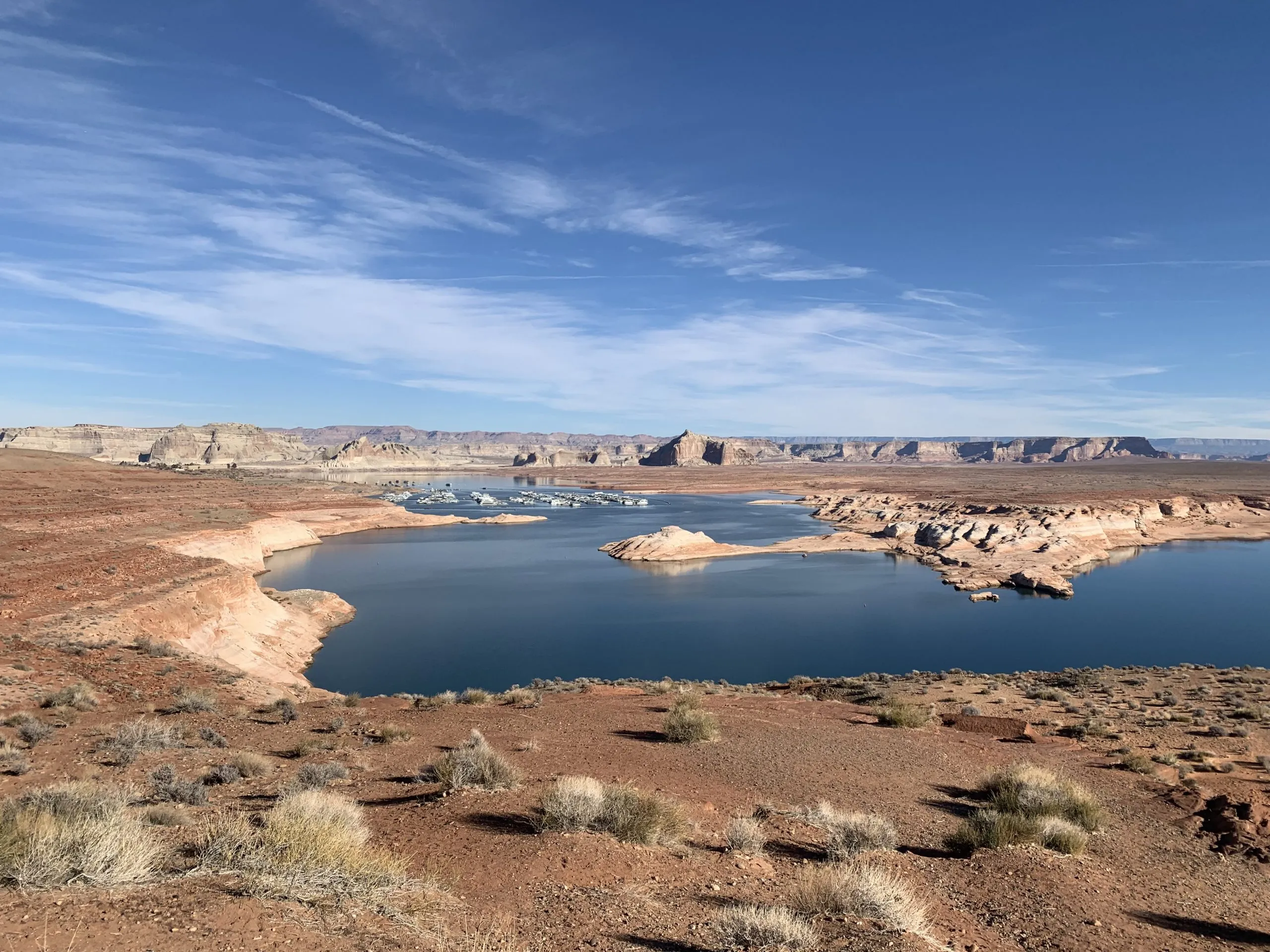
Governor Polis Appoints Three New Members to #Colorado Water Conservation Board

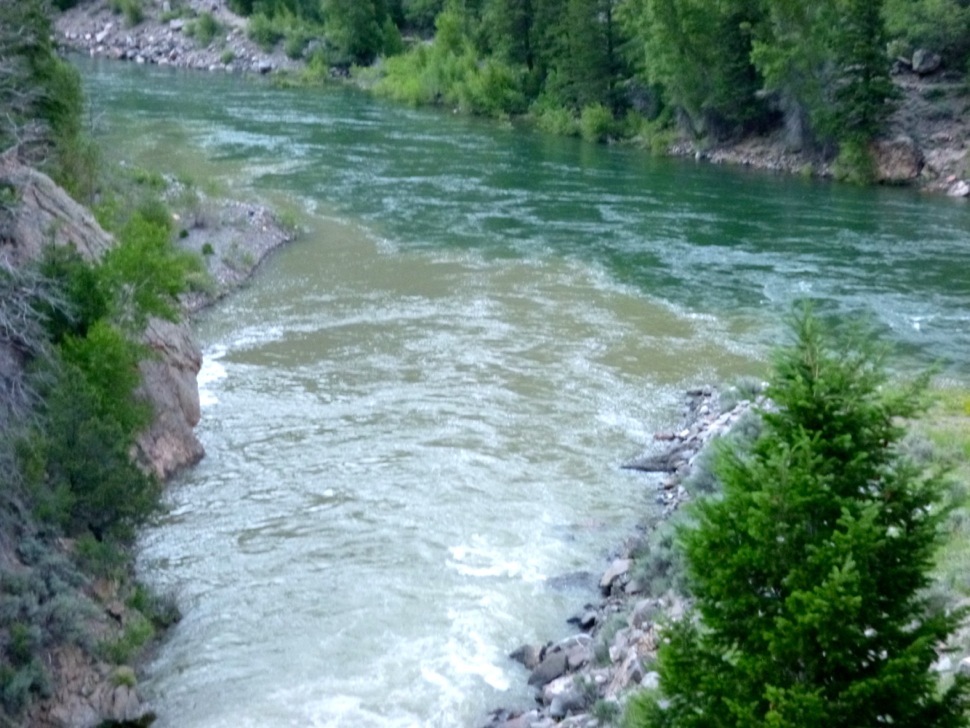
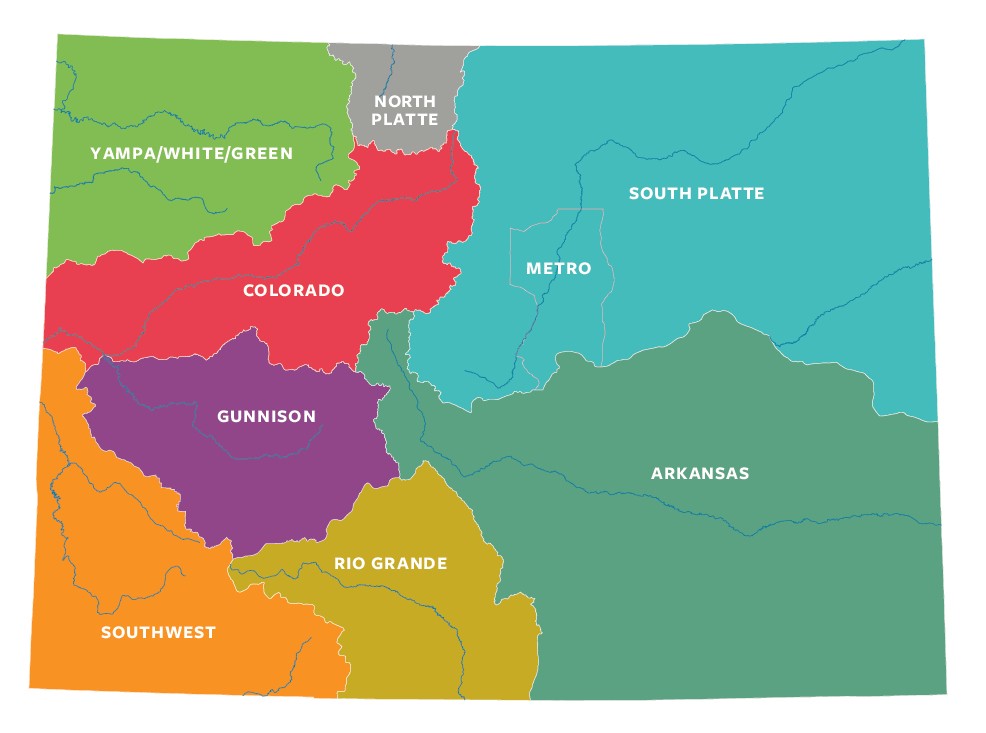
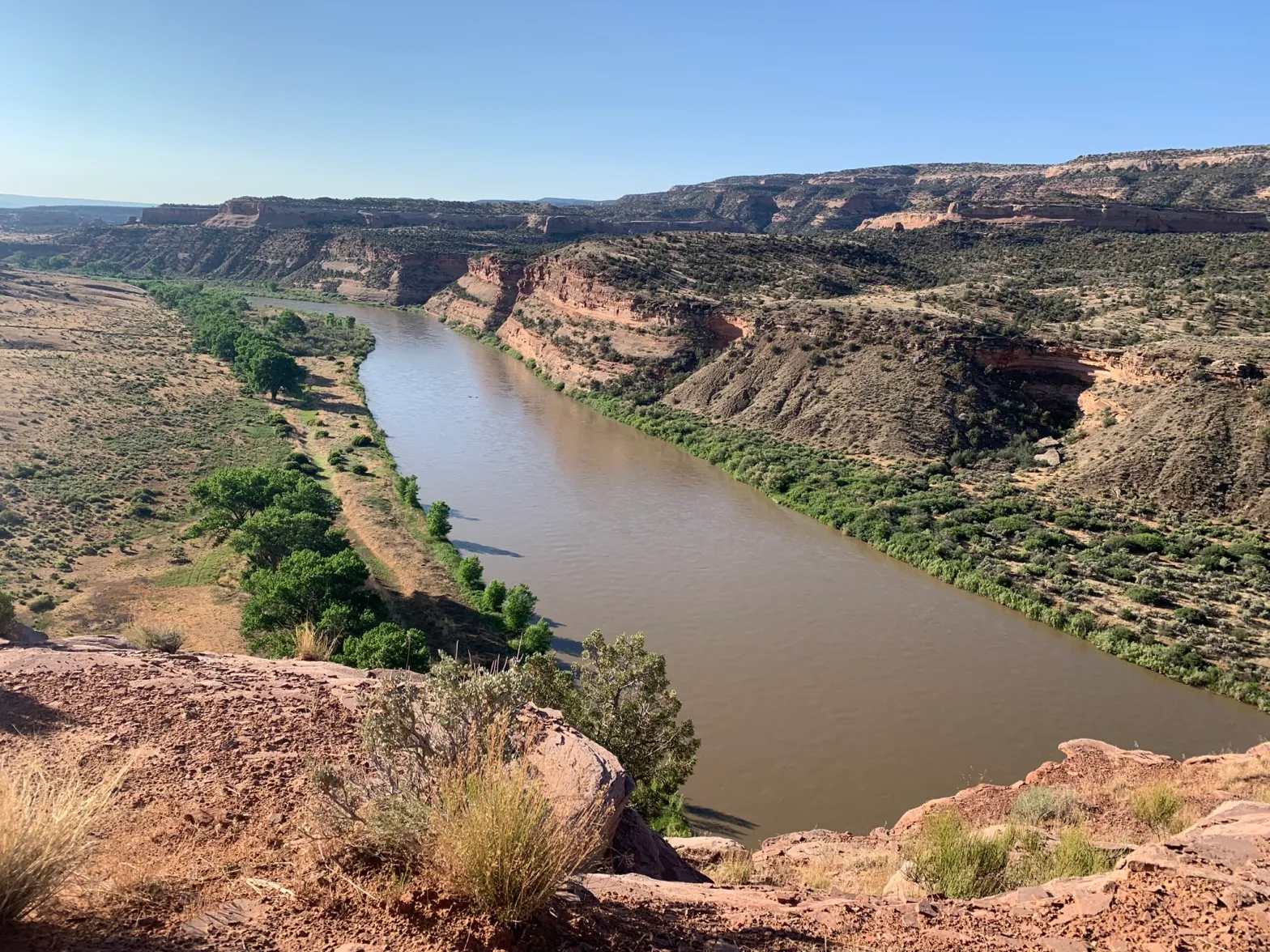
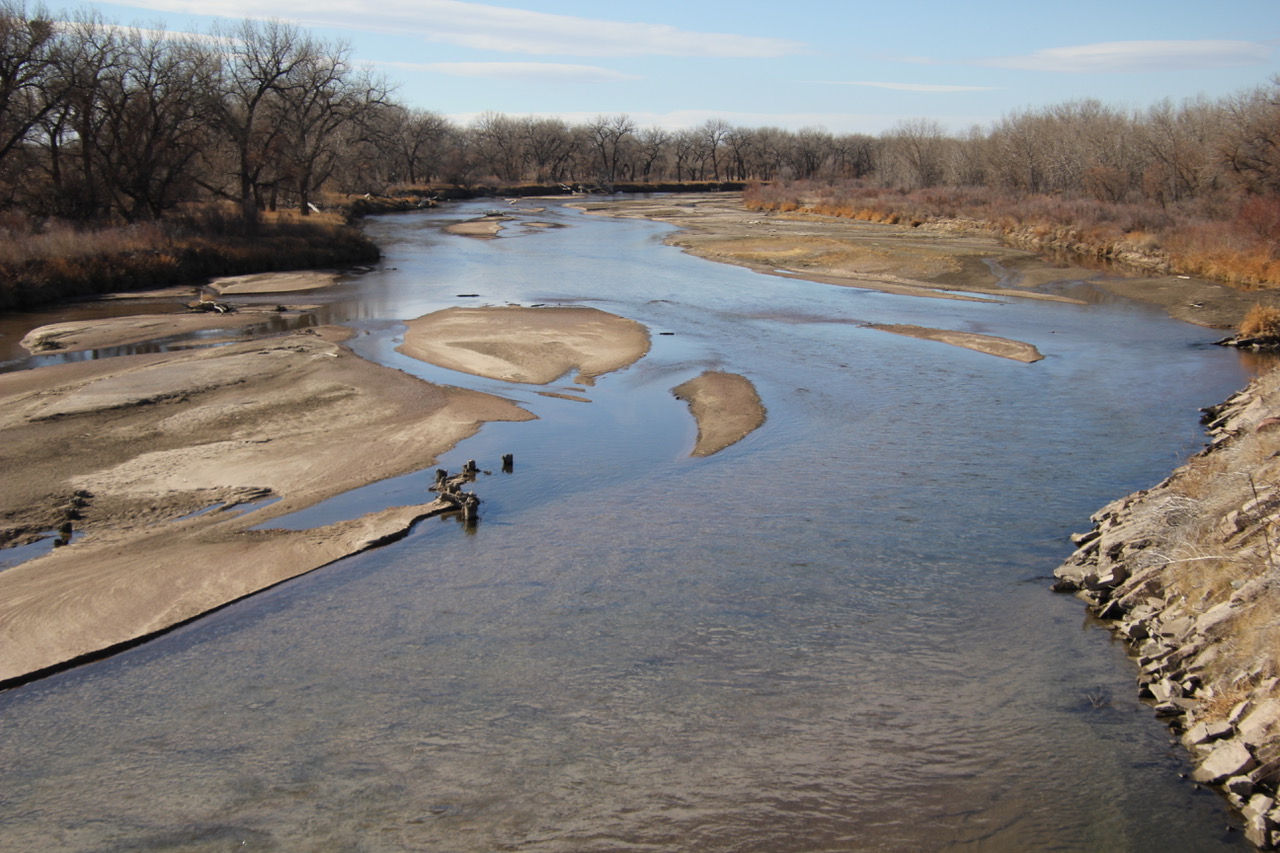
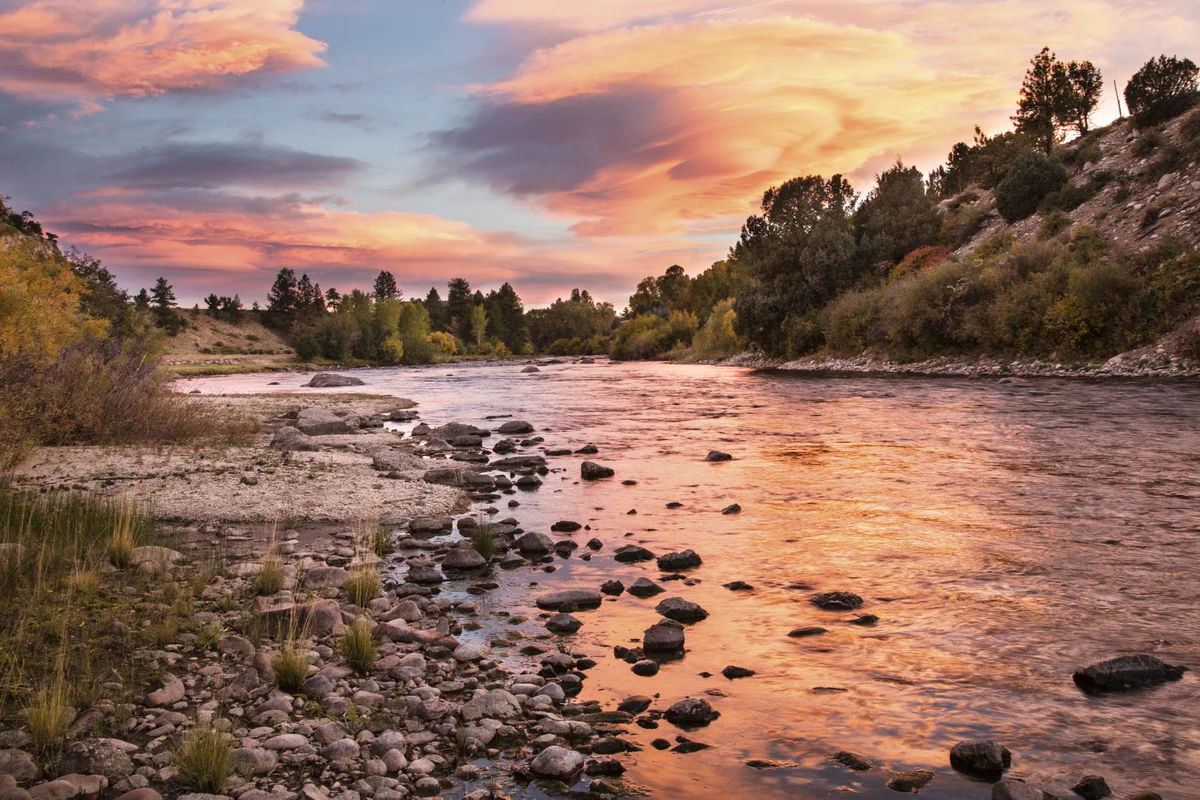
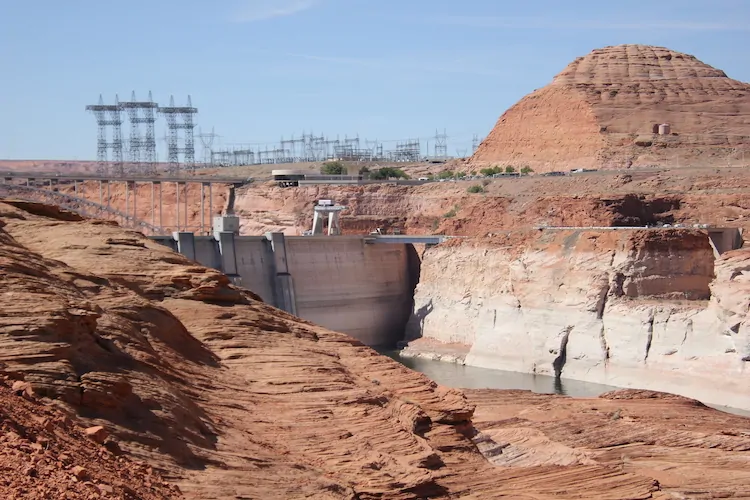
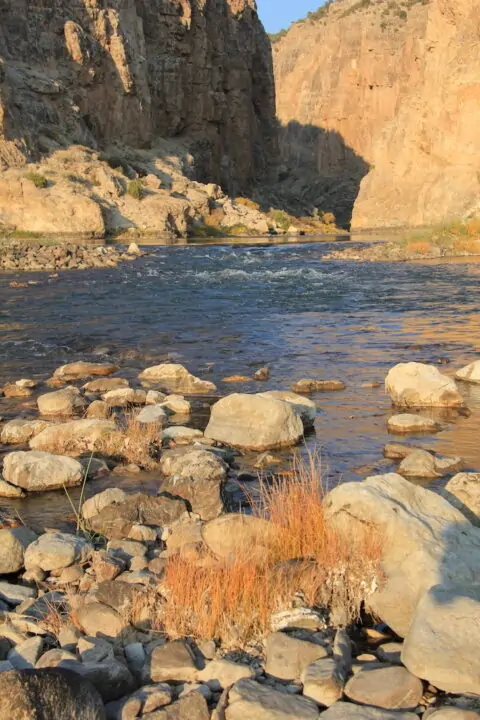
Colorado Rivers. Credit: Geology.com

Click the link to read the release on the Colorado Water Conservation Board website (Katie Weeman):

March 18, 2025

Colorado Governor Jared Polis announced this week three new representatives will be joining the Colorado Water Conservation Board (CWCB): Taylor Hawes, Greg Johnson and Mike Camblin.

The 15-member Board includes nine representatives from each major Colorado river basin as well as the Denver metro area who are appointed by the Governor and then must be confirmed by the Colorado State Senate. The Board also includes six state officials including Colorado Water Conservation Director Lauren Ris, Colorado Department of Natural Resources Executive Director Dan Gibbs, Colorado Commissioner of Agriculture Kate Greenberg, State Engineer and Director Colorado Division of Water Resources Jason Ullmann, Director Colorado Parks and Wildlife Jeff Davis and Colorado Attorney General Phil Weiser. Board members have experience and expertise in water resource management, water project financing, engineering, water law, farming, ranching and more.

โ€œWe are thrilled to welcome these new members to our Board. Each of them brings invaluable expertiseโ€”from collaborative water management to policy and planning to on-the-ground perspective in agriculture,โ€ said Lauren Ris, CWCB Director. โ€œTheir diverse backgrounds will strengthen our work to create a sustainable water future for Colorado, and I look forward to the insight and leadership they will bring.โ€ 

New Colorado Water Conservation Board Members include: 

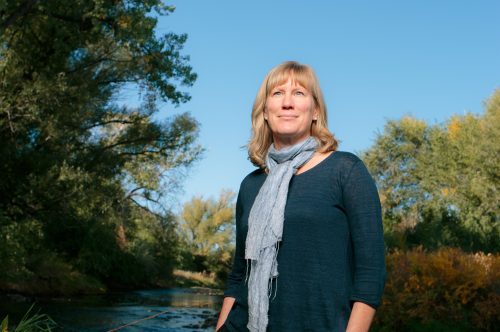
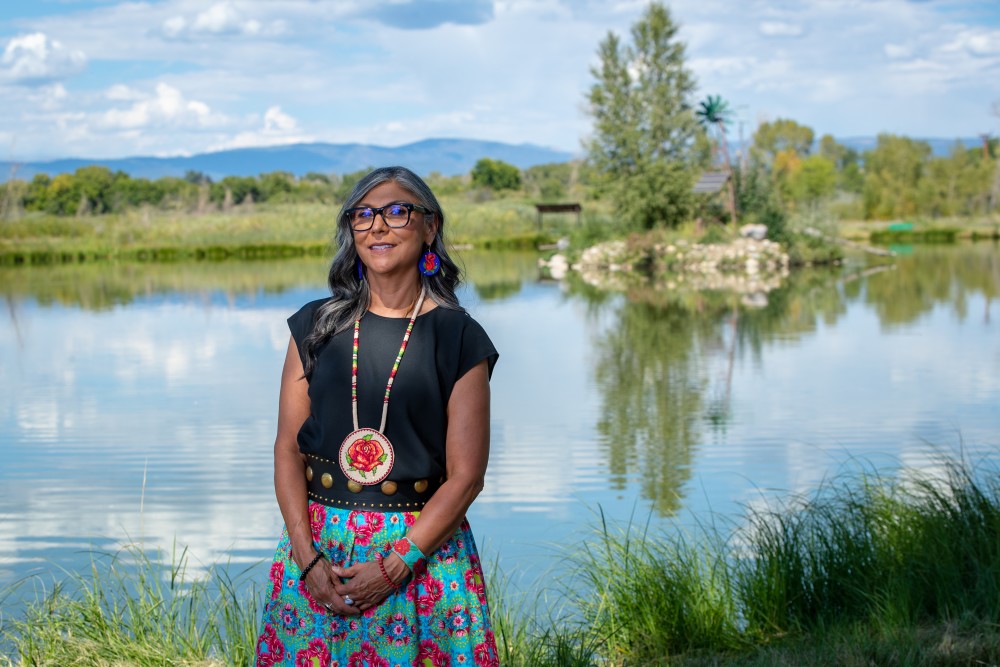
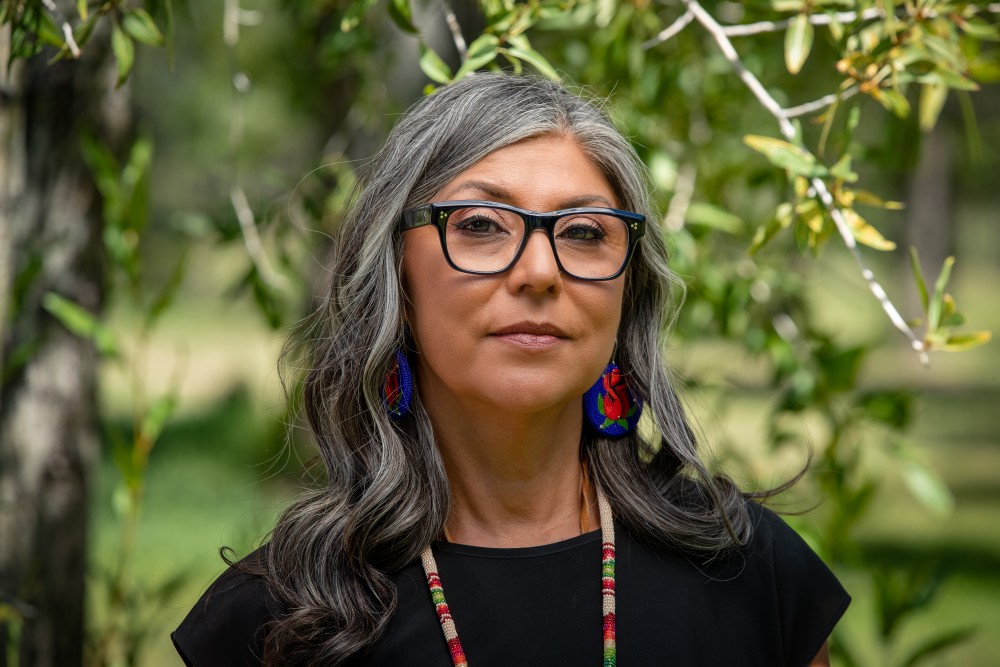
Taylor Hawes, Colorado River Program director for the Nature Conservancy.

Taylor Hawes of Silverthorne, Colorado, who joins the Board as a representative of the Colorado Basin. Hawes serves as the Colorado River Program Director for The Nature Conservancy, leading efforts to balance the needs of people and nature. With nearly three decades of experience in water law, policy and planning, she has worked extensively with diverse stakeholders, including state and federal agencies, conservation groups and major water users. She previously served as Associate Counsel for the Colorado River Water Conservation District, held board appointments with the Colorado River District and Water Education Colorado, as well as leadership roles on the Colorado Interbasin Compact Committee, the Colorado River Basin Water Supply and Demand Study and other collaborative initiatives.

Greg Johnson via his LinkedIn page.

Greg Johnson of Denver, Colorado, who joins the Board as a representative of the City and County of Denver. Johnson is the Manager of Water Resource Planning at Denver Water, overseeing various planning and policy efforts, including climate resilience and reuse programs. He previously served as Chief of the Interstate, Federal, and Water Information Section at the CWCB, where he managed Coloradoโ€™s interests in interstate water compacts, endangered species programs and agricultural policy. With experience in both public and private sectors, including CWCBโ€™s Water Supply Planning Section and consulting roles, Johnson brings expertise in statewide water planning, negotiations and policy implementation.

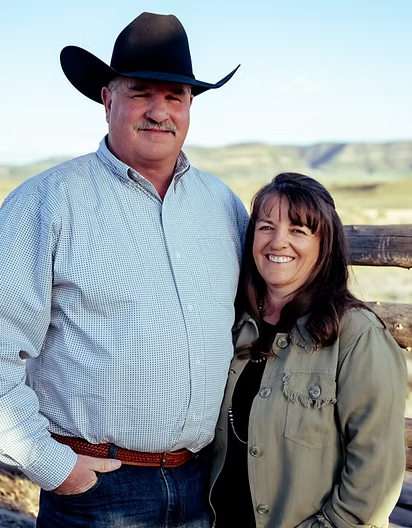
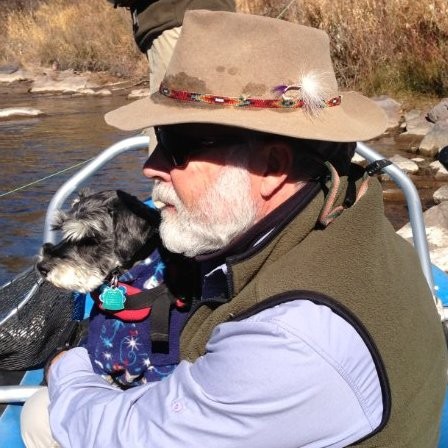
Mike and Donna Camblin. Photo credit: CamblinLivestock.com

Mike Camblin of Maybell, Colorado, who joins the Board as a representative of the Yampa-White Basin. A lifelong rancher and business owner, Camblin operates Camblin Livestock, where he focuses on sustainable grazing and conservation practices. He has served in leadership roles with the Yampa-White-Green Basin Roundtable, Moffat County Land Use Board, Colorado Cattlemenโ€™s Association and multiple conservation and agricultural boards. Recognized for his commitment to land and water stewardship, Camblin has received awards from the Colorado State Land Board, The Nature Conservancy and the Colorado Department of Agriculture.

Hawes, Johnson, and Camblin join the CWCB following the completion of terms for Paul Bruchez (Colorado River), Jessica Brody (Denver) and Jackie Brown (Yampa/White). The CWCB thanks these outgoing members for their dedicated service.

โ€œWe are honored to welcome these new Board members to the Colorado Water Conservation Board,โ€ said Dan Gibbs, Executive Director, Department of Natural Resources. โ€œAs Colorado faces growing water demands, climate pressures, and the need for innovative solutions, their expertise will be critical in shaping policies that protect our water resources and secure a sustainable future for all Coloradans.โ€

#Colorado lawmakers eye new task force to boost water funding — Jerd Smith (Fresh Water News)

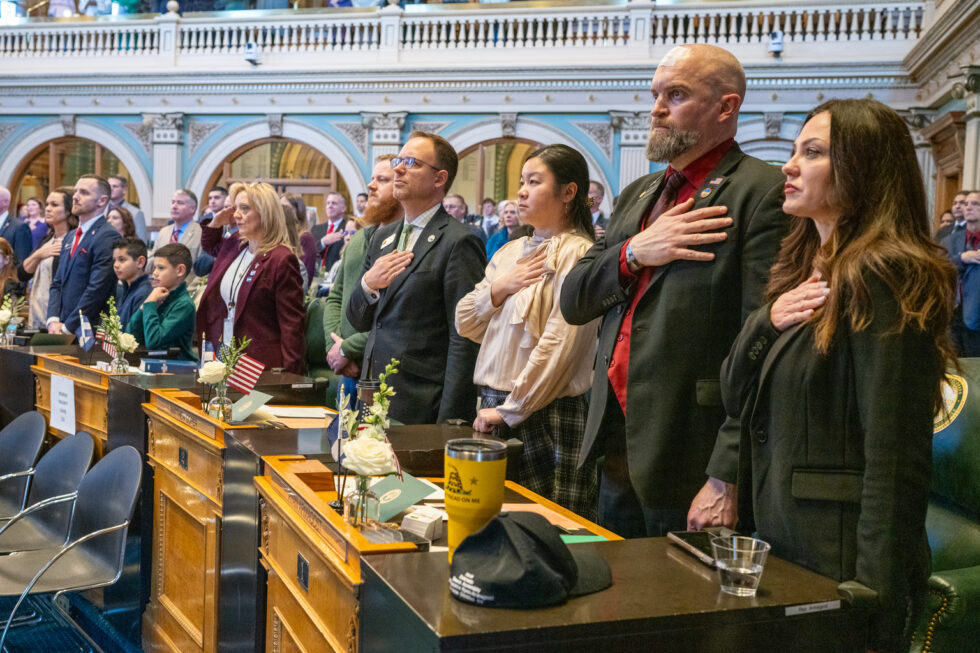
Republican House members recite the Pledge of Allegiance as Colorado lawmakers returned to the Capitol January 8, 23025, for opening day at the General Assembly. Photo credit: Fresh Water News

Click the link to read the article on the Fresh Water News website (Jerd Smith):

March 13, 2025

Colorado lawmakers, worried that a key source of money for water projects is too easily tapped for other programs, want to create a special task force to examine ways to stabilize and boost funding for things like new water pipelines and conservation programs.

Under Senate Bill 40, a nine-member panel would examine new options to replace severance tax money that is collected on nonrenewable resources, such as oil and gas and some minerals, and is highly variable. A portion of the revenue is used to help Colorado address looming water shortages.

According to state forecasts, by 2050 those shortages could be as high as 740,000 acre-feet of water, under a worst-case planning scenario, or much lower if growth slows and climate change impacts are less than expected. One acre-foot of water equals nearly 326,000 gallons, enough water to serve at least two urban homes for one year.

Like other Western states, Colorado is racing to shore up aging water systems and make existing supplies stretch further as drought and rising temperatures shrink water supplies.

The bill comes as lawmakers wrestle with how to cut $1.2 billion from a state purse hurt by slowing growth and revenue caps. 

The measure, sponsored by Sen. Dylan Roberts, D-Frisco, Sen. Cleave Simpson, R-Alamosa, Rep. Karen McCormick, D-Longmont, and Rep. Matthew Martinez, D-Monte Vista, is stalled in the Senate appropriations committee until the legislature completes its budget work, Roberts said.

Roberts said the current budget crisis and previous fiscal storms have resulted in severance tax revenue being tapped to help resolve budget shortfalls in nonwater programs, a situation that hits hard at the stateโ€™s ongoing efforts to ensure there is enough water to go around.

โ€œThe joint budget committee has swept severance taxes in the past. Not too often, but I worry that it will become a common practice. I and my cosponsors want to get the best minds together on how we better plan for the future,โ€ he said.

Lawmakers plan a new tax force to find ways to replace the stateโ€™s reliance on severance taxes. Credit: Colorado Legislative Council

The Colorado Water Conservation Board is the stateโ€™s primary water planning agency, and helps fund an array of water projects and planning initiatives. Its revenues come from interest on loans, money from the stateโ€™s general operating fund, sports betting tax revenues, and severance tax revenues, among other sources.

Late last year, Gov. Jared Polis proposed a budget that largely shielded water programs from major cuts, but it is lawmakers who will make the final decision on how the stateโ€™s budget will be balanced this year.

The severance tax has generated $412 million for the CWCB over the past 10 years, according to Kirk Russell, the CWCBโ€™s finance section chief. Most of that goes into a revolving loan fund that helps finance such things as irrigation ditch repairs and pipelines. It isnโ€™t typically used to finance the water agencyโ€™s operating budget.

But he said the severance tax fund experiences โ€œa great deal of variabilityโ€ from year to year.

A bright spot in the funding picture, according to Roberts, is the growth in revenue collected from gambling on sports. According to the Colorado Division of Gaming, sports betting has generated $98 million in revenue since May 2020, when sports betting became legal in Colorado. The majority of that money is now used to help fund the Colorado Water Plan.

Roberts said lawmakers are open to considering a range of options to stabilize water funding, and he said there may be potential to expand the revenue generated by sports betting. In January, the program hit a new high, generating $4.4 million. The previous high occurred in January 2024, when $4.1 million was generated, according to the Division of Gaming.

If the bipartisan task force measure is approved, members would be selected this summer and a final report would be due back to lawmakers by July 15, 2026.

Colorado Secures $177 Million in Federal Funding for Water Projects — #Colorado Water Conservation Board

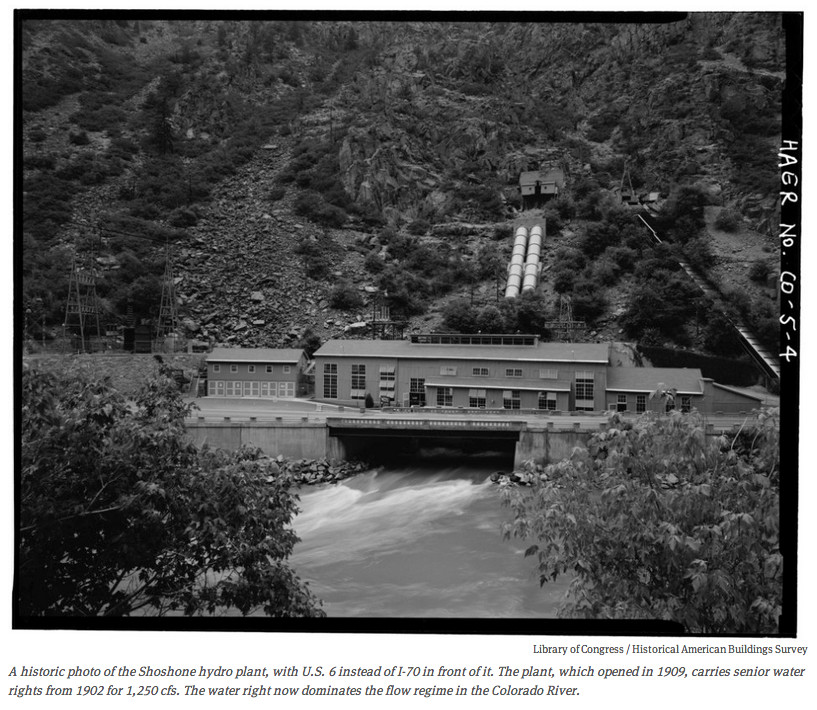
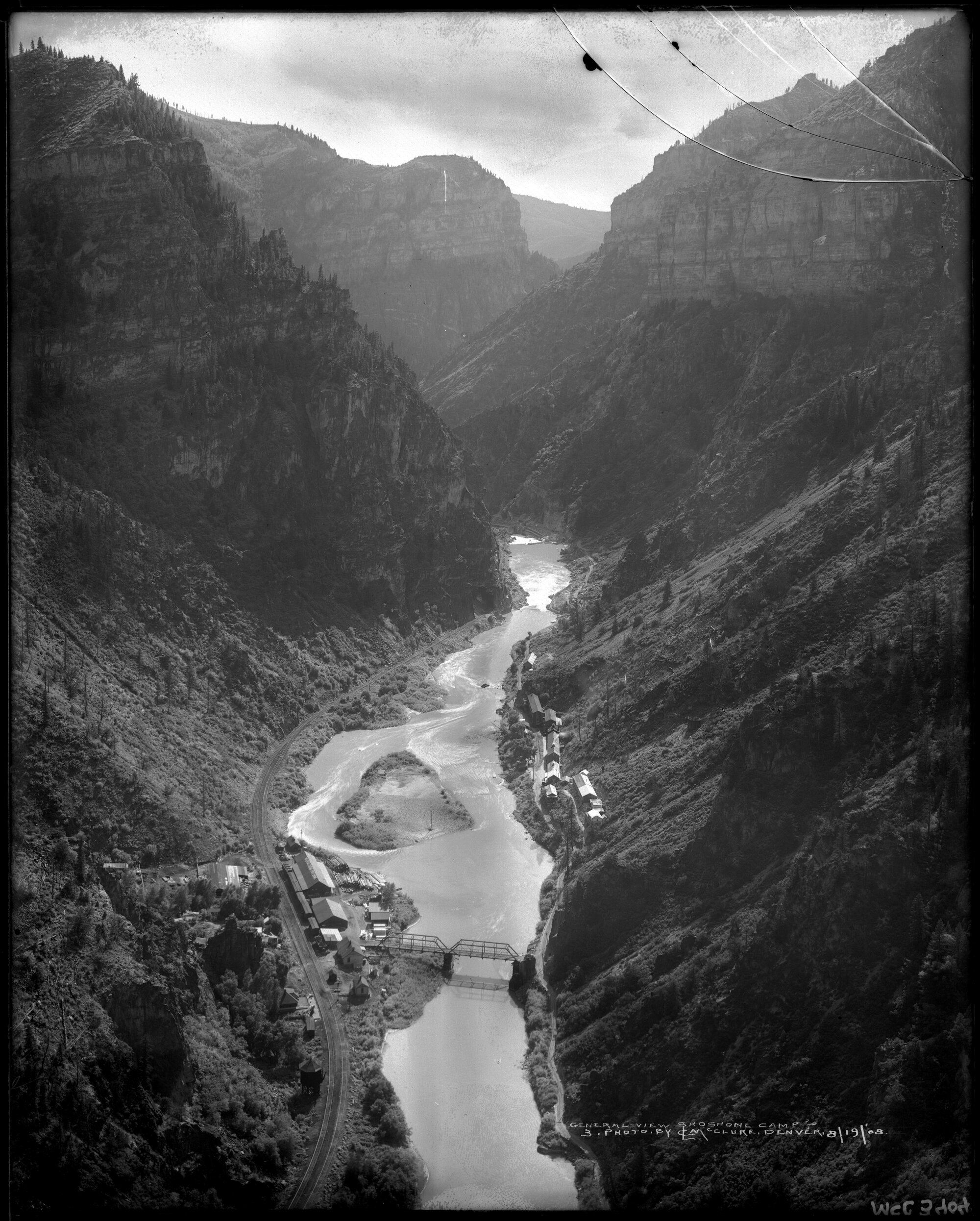
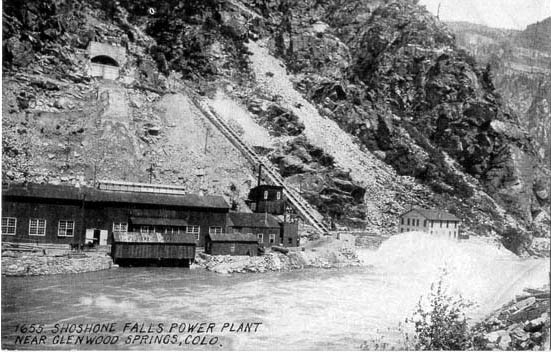
View of Shoshone Hydroelectric Plant construction in Glenwood Canyon (Garfield County) Colorado; shows the Colorado River, the dam, sheds, a footbridge, and the workmen’s camp. Creator: McClure, Louis Charles, 1867-1957. Credit: Denver Public Library Digital Collections

Click the link to read the release on the Colorado Water Conservation Board website:

January 17, 2025โ€”The Bureau of Reclamation announced this week nearly $177 million in funding for water projects in the Upper Rio Grande and Upper Colorado River basins in Colorado. These fundsโ€”awarded from Bucket 2 Environmental Drought Mitigation (B2E) and Inflation Reduction Act programsโ€”will help Colorado better address the impacts to our water supplies and aquatic ecosystems from a hotter, drier future. The Colorado Water Conservation Board (CWCB) shares the excitement of all the organizations receiving fundingโ€”the awards are a testament to their hard work. The CWCB is proud to have supported several of the awardees with matching funds and technical assistance while developing their applications.

โ€œWe are thrilled to see this funding go towards these critical projects in Colorado. We are particularly proud to have played a role in assisting these projects in securing funding through CWCBโ€™s grant programs including our Federal Technical Assistance Grant Program, Projects Bill Grants Program and Wildfire Ready Watershed Grants Program,โ€ said Lauren Ris, CWCB Director. โ€œBy building upon the capacity of our local partners, we provide resources and guidance to navigate complex federal funding processes.โ€

The funded projects span a diverse range of initiatives that deliver impactful outcomes for Colorado communities. CWCB funding supported applications for:

  • Upper Rio Grande Basin Drought Resiliency Activities: CWCB provided a $195,000 Local Capacity Grant to the Rio Grande Headwaters Restoration Foundation, which helped secure aย $24.9 million IRA award through the Bureau of Reclamationโ€™s โ€œOther Basinsโ€ Program. These projects are essential to addressing the long-term drought and water security in the basin.ย 
  • Addressing Drought Mitigation in Southwest Colorado: CWCB provided a $156,706 Local Capacity Grant to the San Juan Resource Conservation and Development Council (in partnership with Southwestern Water Conservation District) which helped secure up to $25.6 million in B2E funding to enhance drought resilience and habitat restoration efforts in southwest Colorado.
  • Orchard Mesa Irrigation District Conveyance Upgrades for 15-Mile Reach Flow Enhancement:ย CWCB provided a $73,250 Local Capacity Grant to Farmers Conservation Alliance (in partnership with Orchard Mesa Irrigation District) which helped secure up to $10.5 million in B2E funding to modernize irrigation systems and improve water efficiency.
  • Shoshone Water Rights Preservation Project:ย CWCB provided a $20 million Projects Bill Grant to the Colorado River Water Conservation District which helped secure up toย $40 million in B2E funding to acquire the Shoshone water right.ย 
  • Drought Resiliency on Western Colorado Conserved Lands:ย CWCB provided a $434,130 Local Capacity Grant to the Colorado River Water Conservation District (in partnership with Shavano Conservation District) which helped secure up to $4.6 million in B2E funding to address drought challenges in western Colorado.
  • Forest Resiliency in the Headwaters of the Colorado: CWCB provided a $93,850 Wildfire Ready Watersheds Grant to Grand County which supported the development of the โ€œGrand County Wildfire Ready Action Plan,โ€ which helped secure up to $32.6 million in multistate B2E funding for wildfire mitigation efforts.

CWCB is committed to continuing to be a partner of communities statewide so that they are best positioned to secure federal funding and implement lasting solutions for Colorado water challenges. The 2024 Federal Technical Assistance Grant cycle is completed, and more information about 2025 applications will be announced this Spring. 

#Colorado to Receive $7 Million for Water Measurement Devices in the #ColoradoRiver Basin — Colorado Water Conservation Board #COriver #aridification

Above image shows a Parshall flume measurement structure, with additional telemetry to collect and transmit data, off the Bear River in South Routt County. Photo credit: CWCB

From email from the CWCB:

November 15, 2024

The Colorado Water Conservation Board and the Colorado Division of Water Resources are excited to announce $7 million in funding for Colorado water users within the Upper Colorado River Basin in need of a device to measure their water diversions. 

The Upper Colorado River Commission approved the $7 million for Colorado on October 28. The funding comes from the Commissionโ€™s federal Bipartisan Infrastructure Law (BIL) Spend Plan. In total, the BIL provides $8.3 billion to the Bureau of Reclamation for western water infrastructure.

The funding comes at a time when the Colorado Division of Water Resources is working on implementing new water measurement rules in the Colorado River, including Divisions 4, 5, 6 and 7. Rules for Division 6, which includes the Yampa, White, and Green River basins, were signed on January 16, 2024. DWR is currently in the rulemaking process for Division 7, which includes the San Juan and upper Dolores River Basins. Division 4 covers the Gunnison River basin, San Miguel River basin, lower Dolores River basin, and the Little Dolores River basin. Division 5 covers the mainstem of the Colorado River.

The new rules provide clarity on what an acceptable water measurement device is and where they are needed. While Colorado statute gives the State and Division Engineers authority to require water users to install measuring devices, it does not include specifics on what are considered acceptable measuring methods. 

โ€œAccurate measurement of diversions is critical to protect Coloradoโ€™s entitlement to water, including under the Colorado River Compact, and to ensure we are maximizing the beneficial use of the publicโ€™s water resource,โ€ said Jason Ullmann, State Engineer. โ€œWe appreciate this funding from the UCRC to help Colorado water users with the costs of installing a measurement device.โ€

The Colorado Water Conservation Board will manage the $7 million program and will hire an engineering consultant to assist with the administration. Details about program eligibility and applications will be announced in 2025.

โ€œThis new program is a testament to CWCBโ€™s mission to conserve, develop, protect, and manage Coloradoโ€™s water resources for both present and future generations,โ€said Lauren Ris, CWCB Director. โ€œColorado is a longstanding leader in water measurement and administration, and we aim to extend these benefits to as many West Slope users as possible, ensuring sustainable water management for years to come.”

CWCB expects to roll out a competitive application process that will allow water users in the Upper Colorado River Basin who are in need of measurement devices, such as flumes and weirs, to apply for funding over the next several years.

Ralph Parshall squats next to the flume he designed at the Bellevue Hydrology Lab using water from the Cache la Poudre River. 1946. Photo Credit: Water Resource Archive, Colorado State University, via Legacy Water News.

โ€œWhen We Pray, We Always Pray About Waterโ€ — Walton Family Foundation #ColoradoRiver #COriver #aridification

Lorelei Cloud is Vice Chairman of the Southern Ute Indian Tribe in Colorado. Photo Credit: Hans Hollenbeck

Click the link to read the article on the Walton Family Foundation website (Jared Romero):

October 23, 2024

As a young girl growing up on the Southern Ute Indian Reservation, Lorelei Cloud learned the value of water in life lessons every week outside her uncleโ€™s home.

โ€œI lived with my grandparents in an old adobe home they had remodeled. We didn’t have any running water and so we always hauled water to our house,โ€ says Cloud, Vice Chairman of the Southern Ute Indian Tribe in southwest Colorado.

โ€œEvery Sunday, my uncle would come and pick up my sister and me. We would fill up our water jugs from the garden hose outside his house and take it back to our house. That was our water for the week.โ€

On the occasions when her familyโ€™s supply didnโ€™t last, Cloudโ€™s grandmother would collect water from a nearby ditch and boil it for safe use โ€“ tiding them over until the next trip to her uncleโ€™s.

Those early memories โ€“ of water scarcity, not abundance โ€“ have helped shape Cloudโ€™s work today as a state leader in water conservation, and as a champion for Tribal voices in water decision-making in Colorado.

Native America in the Colorado River Basin. Credit: USBR

Native American Tribes hold some of the most senior water rights in the Colorado River Basin and have thousands of years of knowledge about water management.

But they have been historically excluded from decisions around allocations and management of the river and water resources. And on many Reservations, including the Southern Ute, access to clean, safe drinking water is still far from universal.

โ€œWhen we pray, we always pray about water,โ€ Cloud says of her Tribeโ€™s traditions. โ€œWe pray itโ€™s always going to be there to take care of our people.โ€

Lorelei Cloud grew up without running water in her home. Every week, she and her sister would fill up water jugs from her uncle’s home for the family and haul them back to her family’s house. Photo Credit: Hans Hollenbeck

For Cloud, action follows prayer. In 2023, she was named to the Colorado Water Conservation Board, becoming its first Indigenous member. She also chairs the Indigenous Womenโ€™s Leadership Network, which aims to create a bigger platform for Indigenous women working on water and natural resource issues.

And she has served as chair of the Ten Tribes Partnership, a coalition of Tribes in the Upper and Lower Colorado River Basin seeking a greater voice for Indigenous communities in management of the river.

โ€œTraditionally, as a people, we value water. We know that water is sacred. We also know that water is alive. It has a spirit just like all living things have a spirit,โ€ Cloud says.

“As a people, we value water,” says Lorelei Cloud. “We know that water is sacred. We also know that water is alive. It has a spirit.” Photo Credit: Hans Hollenbeck

โ€œWe’ve never taken more than what we could use. What we couldn’t use, we always gave back. That belief in respecting nature is always at the center of my thought process and my decision-making.โ€

Bringing more voices to the table when making water management decisions leads to better solutions, Cloud says. Thatโ€™s critically important in the Colorado River Basin, which provides water to 40 million people in seven states, even as climate change and drought are ushering in an uncertain water future.

In 2023, Lorelei Cloud became the first Indigenous person named to the Colorado Water Conservation Board. Photo Credit: Hans Hollenbeck

โ€œBeing that first Indigenous person on the water conservation board, it really helped open my eyes on how other people make the decisions about water use within the state of Colorado,โ€ Cloud says.

โ€œI have a greater understanding and respect for all of the water users in Colorado because they are very conscious about how water is being used and how water is being allocated.โ€

In turn, Cloud says she hopes non-Tribal water users in Colorado are gaining a better understanding of the unique water challenges facing Indigenous people.

The Southern Ute Indian Tribe has its own water treatment facility. But dozens of families in more remote areas lack universal access to clean water. Water hauling services can cost hundreds of dollars.

โ€œTribal residents have to make the decisions if they can flush their toilets, if they have the water to wash their dishes, if they can take showers, on a daily basis,โ€ she says. โ€œOther people in the basin don’t have to make those decisions. They don’t consciously think about paying for the water before they use it.โ€

Cloud understands the significance of her status as the first Indigenous member of Coloradoโ€™s water board. Every meeting, every conversation she joins helps normalize Tribal involvement in water decision making.

โ€œBridging those gaps, highlighting inequities that exist โ€“ itโ€™s all part of changing how the world views Tribes and Tribal water rights,โ€ she says. โ€œHaving Tribes in all of those conversations is really, really important. We are the senior water right holders. We are the first inhabitants of this continent. We are the first conservationists.โ€

She believes Indigenous women bring a particularly unique, important โ€“ and overlooked โ€“ perspective to discussions in the future of water in the Colorado River Basin.

โ€œIndigenous women are naturally in leadership roles in conservation, because we tap into the generational knowledge and intuition and experience that can help solve complex environmental challenges,โ€ she says.

โ€œWomen have always been the caretakers. When they go out and gather water for their home, they need to know how much water is available. They need to know the quality of the water thatโ€™s available. So they understand the connection between water demand and water supply.โ€

Cloud cites her grandmother โ€“ Sunshine Cloud Smith โ€“ as the most influential and inspiring person in her own life. Cloud calls her grandmother โ€œa rebel for her timeโ€ who lied about her age to leave the reservation to go to school at 16. She also joined the Army and later became a member of the Southern Ute Tribal Council and led Head Start programs to benefit Tribal children.

Cloud remembers her grandmother taking her to a bridge crossing the Pine River, on the Reservation, for water ceremonies.

โ€œMy grandmother was the glue in my family,โ€ she says. โ€œShe would pray and make offerings to the spirit so that we would have rain for the season and have water. Since then, the Pine River has always been a place where I can go and pray and leave offerings for the spirits.โ€

Today, Cloud sees it as her โ€œpersonal dutyโ€ to help elevate Indigenous women to leadership roles on water issues.

โ€œI’m not a gatekeeper in my knowledge. I always want to share my knowledge with other women.โ€

Part III: #ColoradoRiver Compact curtailment — Allen Best (@BigPivots) #COriver #aridfication

Lake Powell has been about a quarter-full. The snowpack looks strong now, but itโ€™s anybodyโ€™s guess whether there will be enough runoff come April and May to substantially augment the reservoir. May 2022 photo/Allen Best

Click the link to read the article on the Big Pivots website (Allen Best):

October 24, 2024

Colorado River Basin states have scaled back their demands on the river. But agreement about solutions proportionate to the challenge remains distant as the 2025 deadline nears.

The story so far: Andy Mueller, the manager of the Colorado River District, the lead water policy body for 15 counties on the Western Slope of Colorado, used his organizationโ€™s annual seminar this year to call for the state to begin planning for potential curtailments of diversions. The river has delivered far less water in the 21st century than was assumed by delegates of the seven basin states when they drew up the Colorado River Compact in 1922. Might higher flows resume? Very unlikely, given what we know about climate change. See Part I of the series and Part II.

In 2009, I wrote a story for a magazine  about the possible need for curtailment of water diversions in Colorado because of the Colorado River Compact. It may have been the first such story in the popular press, but even in 1951 a legal advisor delivered a memo to state officials on this topic. For a sorting through of the legal issues published in 2012, see: โ€œDoes the Upper Basin have a Delivery Obligation or an Obligation Not to Deplete the Flow of the Colorado River at Lee Ferry?โ€

โ€œHaving a state plan for compact curtailment has been on the table for what seems like forever, likely 2005 to 2007,โ€ said Ken Neubecker. Now semi-retired, he has been carefully watching Colorado River affairs for several decades and has represented several organizations at different times.

Why hasnโ€™t Colorado moved forward with this planning? When I called him to glean his insights, Neubecker shared that he believes itโ€™s because such planning encounters a legal and political minefield.

โ€œItโ€™s not as simple as pre-1922 rights are protected and post-1922 rights are going to be subject to curtailment based on the existing prior appropriation system.โ€

Denver Water’s Moffat Tunnel diversion from the Fraser River to Boulder Creek. Most of water diverted to Coloradoโ€™s Front Range cities from Western Slope rivers and creeks have legal rights junior to the Colorado River compact. Photo/Allen Best

Front Range municipal water providers and many of Coloradoโ€™s agriculture diversions are post-1922 compact. And so are some agricultural rights on the Western Slope.

โ€œI think everybody thinks that well, weโ€™re on the slow-moving train and the cliff is getting closer but itโ€™s not close enough โ€“ and there are other things that we can do to slow the train down.โ€

Taylor Hawes, Colorado River Program director for the Nature Conservancy via Water Education Colorado.

Taylor Hawes, who has been monitoring Colorado River affairs for 27 years, now on behalf of The Nature Conservancy, suspects that Colorado doesnโ€™t want to show its legal hand or even admit the potential need to curtail water use in Colorado. She contends that planning will ultimately provide far more value.

โ€œThe first rule you learn in working with water is that users want certainty. Planning is something we do in every aspect of our lives, and planning is typically considered smart. It need not be scary,โ€ she told Big Pivots. โ€œWe have all learned to plan for the worst and hope for the best.โ€

Colorado can start by creating a task force or some other extension of the state engineerโ€™s office to begin exploring the mechanisms and pathways that will deliver the certainty.

โ€œWe donโ€™t have to have all the answers now,โ€ Hawes said. โ€œAnd just because you start the process for exploring the mechanism to administer compact compliance rules doesnโ€™t mean you implement them. It will give people an understanding of what to expect, how the state is thinking about it.โ€

Rio Grande near Monte Vista. Meeting Coloradoโ€™s commitments that are specified in the compact governing the Rio Grande requires constant juggling of diversions. Photo/Allen Best

Compacts have forced Colorado to curtail diversions in three other river basins: the Arkansas, Republican and Rio Grande. The Rio Grande offers a graphic example of curtailment of water use as necessary to meet compact obligations on a week-by-week basis.

The Republican River case is a more drawn-out process with a longer timeline and a 2030 deadline. In both places, farmers are being paid to remove their land from irrigation. The Colorado General Assembly this year awarded $30 million each to the two basins to bolster funding for compensation.

A study commissioned by the Nature Conservancy that involved interviews with water managers and others in those river basins had this takeaway message: โ€œthe longer (that) actions are delayed to address compact compliance, the less ability local water users have to tailor compliance-related measures to local conditions and needs and reduce their adverse impacts.โ€

In the Arkansas Basin, Colorado had to pay $30 million and water available to irrigators was reduced by one third.

โ€œThatโ€™s the first lesson in how not to do compact compliance: do not wait to be sued because (then you lose) the flexibility to do stuff the right way,โ€ said one unidentified water manager along the Arkansas River.

Neubecker points to another basin, the South Platte. Even in 1967, Colorado legislation recognized a connection between water drawn from wells along the river and flows within the river. The 2002 drought forced the issue, causing Hal Simpson, then the state engineer, to curtail well pumping, creating much anguish.

Ken Neubecker via LinkedIn

Creating a curtailment plan wonโ€™t be easy, Neubecker warns. โ€œIt could easily take 10 years. โ€™Look how long it took to create the Colorado Water Plan. It took a couple years and then we had an update five years later. And that was easy compared to this.โ€

All available evidence suggests the Colorado River Basin states are nowhere near agreement.

In August, Tom Wilmoth provided a perspective from Arizona in a guest opinion published by The Hill under the title of โ€œTime is running out to solve the Colorado River crisis.โ€ As an attorney he has worked for both the Arizona water agency and the Bureau of Reclamation before helping form a law firm in 2008.

โ€œIt has taken 24 years for the problem to crystalize, but less than 24 months remain to develop a solution,โ€ he wrote. โ€œYet there appears to be little urgency in todayโ€™s discussion among the Colorado River Basinโ€™s key players.โ€

Wilmoth said โ€Deferring hard conversations today increases the risk of litigation later.โ€ He, like all others, sees a reasonable chance it would end up before the Supreme Court โ€“ with the risk of the justices appointing a special master to adjudicate the conflict. โ€œIts recent tendency has been to appoint individuals lacking in subject matter expertise, a troubling prospect given the complex issues at play.โ€

The area around Yuma, Ariz., and Californiaโ€™s Imperial Valley provide roughly 95% of the vegetables available at grocery stores in the United States during winter months. February 2017 photo/Allen Best

Monitoring the conversations from Southwest Colorado, Rod Proffitt sees Mueller trying to prepare people in the River District for the challenges ahead.

โ€œI think he has tried to scare people. He is trying to get them prepared to make some sacrifices, and limiting growth is a sacrifice.โ€

Proffitt is a director of the Pagosa Springs-based San Juan Water Conservancy District.

A semi-retired water attorney, Proffitt is also a director of Big Pivots, a 501-c-3 non-profit.

Make no mistake, says Proffitt, more cuts in use must be made โ€“ and they need to be shared, both in the lower basin and in the upper basin. What those cuts need to be, he isnโ€™t sure. Nor do they necessarily need to be the same.

For example, he can imagine cuts that are triggered by lowering reservoir levels. At a certain point, lower basins must reduce their use by X amount and upper basin states by Y amount.

The federal government has mostly offered carrots to the states to reduce consumption, a recognition of the riverโ€™s average 12.4 million acre-feet flows, far short of the flows assumed by the compact. It also has sticks, particularly regarding lower-basin use, but has mostly avoided using its authority. Instead, the lower-basin has reduced use voluntarily, if aided by the federal subsidies.

The Inflation Reduction Act and the Bipartisan Infrastructure Act, have yielded a river of money for projects in the West that broadly seek to improve resiliency in the face of drought and climate change. The seeds have been planted in many places. For example, a recent round of funding produced up to $233 million for the Gila River Indian Community in Arizona for water conservation efforts.

The federal government has also offered incentives to reduce consumption in the upper basin. The System Conservation Pilot Program ran from 2015 to 2018. The 2024 program was funded with $30 million through the Inflation Reduction Act and had hopes for conserving about 66,400 acre-feet.

The federal government, through the Bureau of Reclamation, has clear authority to declared water shortages in the lower basin. It has warned that three million acre-feet less water must be used. The lower-basin argues that the upper basin should share in some of this burden.

Grand Junction has a maze of irrigation canals but the municipal water utility gets water from a creek that flows from the Grand Mesa. Some diversions in Colordo are pre-compact, but many others occurred after 1922. This is a scene from Grand Junction.ย Photo/Allen Best

Should the federal government get out the stick?

โ€œNobody wants to apply vinegar this close to the November election,โ€ said James Eklund when we talked in late September about the stalemate on the river.

Eklund has had a long association with the Colorado River. His own family homesteaded on the Western Slope near Colbran in the 1880s and the ranch is still in the family. He lives in Denver, though, and was an assistant attorney in the state attorney generalโ€™s office in 2009, when I wrote my first story. He later directed the Colorado Water Conservation Board, the lead agency for state policy.

For the last few years Eklund has been on his own, more or less, a water attorney now working for Sherman and Howard, a leading Denver firm, while trying to represent clients with diverse agriculture water rights.

โ€œLitigation is a failure,โ€ he said when I asked him about Muellerโ€™s remarks in Grand Junction. He contends the upper basin must come to the table with more ideas about how to solve the structural imbalance between supplies and demands than it has so far. And this, he said, will involves some pain.

Creating compact curtailment will involve rule-making, though, and that will take time and effort. Echoing Denver Waterโ€™s position, he says it will divert Colorado from the more important and immediate work of helping negotiate solutions.

Eklund suspects an ulterior motive of the River District: to get the state to play its cards on what curtailment could look like so that it can begin jockeying for position.

On the other hand, he believes cutbacks should be premised on two bedrock principles: voluntary and compensated. But Eklund also says that if the situation becomes desperate enough, water will continue to find its way to cities. โ€œThe Front Range is not going to bend its knee to alfalfa plants. Itโ€™s not going to do it.โ€

And then, Coloradoโ€™s Constitution allows municipalities to take water. It requires compensation.

The Bureau of Reclamation has said the same thing in the lower basin. Las Vegas and other cities will not be allowed to dry up.

The Bureau of Reclamation has said that Las Vegas and other cities will not be cut off from water in the Colordo River. . Photo/Allen Best

But what if compact curtailment means making the hard decision about who doesnโ€™t get water and does not get compensated โ€“ people like the farmers near Fort Morgan who, in 2002, had to cease pumping water?

Neubecker characterizes the position of Colorado as one of conflict avoidance. Look at where it got Neville Chamberlain, the British prime minster, in his negotiations with Hitler.

What Colorado must do is prepare for the worst-case scenario. โ€œItโ€™s a doomsday plan,โ€ Neubecker says of compact curtailment. โ€œMake the plan, involve all the people who are going to be effected by the plan, and put it on the shelf โ€“ but not too far back on the shelf, just in case you need itโ€

For now, water levels in the two big reservoirs are holding more or less steady.

Another winter like 2002 could trigger renewed clanging of alarm bells.

John Fleck at Morelos Dam, at start of pulse flow, used 4/4/14 as my new twitter avatar

In New Mexico, Fleck, the author, who also monitors Colorado River matters at his Inkstain blog, rejects the metaphor of the Titanic or the idea that conflict is inevitable. In 2002, California was still using 5.1 million acre-feet from the Colorado River, both for agriculture and to supply the metropolitan areas of Southern California. This was well above the stateโ€™s apportionment of 4.4 million acre-feet. โ€œThe rhetoric was that it will be a disaster to Californiaโ€™s economyโ€ to return to the allocated flows.

California eventually did cut back and it has done just fine. โ€œEverybody would prefer not to do the adaptation, but they have done it just fine. We see that over and over again in community responses to drought in the Western United States,โ€ he said.

Lake Powell currently has filled to 40% of capacity, a marked improvement from February 2023, when the reservoir had fallen to 22% of capacity. Mead is at 36% of capacity. The situation is not as tense as it was two years ago. That could change in the blink of another hot, dry runoff like that in 2002.

Figure 2. Graph showing reservoir storage between 1 January 2023 and 15 October 2024, highlighting the amount of reservoir recovery during each snowmelt season and the amount of reservoir drawdown during intervening periods. Credit: Jack Schmidt/Center for Colorado River Studies

Myth: Cutting agricultural water use in #Colorado could prevent looming water shortages. But is it worth the cost? — Jerd Smith (Fresh Water News)

A powerful sprinkler capable of pumping more than 2,500 gallons of water per minute irrigates a farm field in the San Luis Valley June 6, 2019. Credit: Jerd Smith via Water Education Colorado

Click the link to read the article on the Water Education Colorado website (Jerd Smith):

October 3, 2024

Youโ€™ve heard the news: Farmers and ranchers use roughly 80% of the water in Colorado and much of the American West.

So doesnโ€™t it make sense that if growers and producers could just cut a bit of that, say 10%, we could wipe out all our water shortages? We probably couldnโ€™t water our lawns with wild abandon, but still, wouldnโ€™t that simple move let everyone relax on these high-stress water issues?

Not exactly. To do so would require drying up thousands of acres of productive irrigated lands, causing major disruptions to rural farm economies and the agriculture industry, while wiping out vast swaths of open space and habitat that rely on the industryโ€™s sprawling, intricate irrigation ditches, experts said.

This story is the second offering in a five-part series on myths and misconceptions about Colorado water. It is part of a collaboration between Fresh Water News, the Colorado Sun, Aspen Journalism, KUNC, and the CU Water Desk. Other stories in the series include a look at whether cities are using too much water; how real is the fear around the โ€œuse it or lose threatโ€ in Colorado Water lawCanโ€™t we just pipe water in from the East; and still to come, whether Colorado needs a desalination plan.

Take a look at the numbers in Colorado. The state produces more than 13.5 million acre-feet of water every year, but only about 40% of that stays here, according to the Colorado Water Plan. The rest flows downhill to satisfy the needs of other states across the country.

Of the 5.34 million acre-feet that is used here at home, 4.84 million is used by ranchers and farmers to grow cows, lamb, pigs, corn, peaches, onions, alfalfa and a rich list of other items that produce the food we eat here in Colorado, the U.S. and internationally.

All told, the agriculture industry is one of the largest in the state, and includes 36,000 farms employing 195,000 people, according to the Colorado Department of Agriculture, and generates $47 billion annually in economic activity.

But here is the hard part. Thanks to crumbling infrastructurechronic drought and climate-driven reductions in streamflows, the industry is already facing annual water shortages of hundreds of thousands of acre-feet. That number could soar as stream flows continue to shrink and populations continue to grow, according to the water plan.

An acre-foot equals enough water to serve two to four urban households, or a half acre of corn.

โ€œAlready, statewide there are irrigated crop producers who donโ€™t receive water in some years,โ€ said Daniel Mooney, a Colorado State University agricultural economist.

โ€œIf we had to cut another 10%, those people who are already at the margins would be impacted. I would say we canโ€™t afford to do that.โ€

Out in the fields, just as cities are trying to cut water use inside and out, ranchers and growers are trying to cut back as well because they donโ€™t have as much as they once did.

That too is challenging, according to Greg Peterson, executive director of the Colorado Agricultural Water Alliance.

Peterson spends most of his days working with farmers and ranchers, helping them findย money to experiment with new cropsย and new tilling techniques thatย help keep water in the soil.

These hay bales stand ready to be collected on a ranch outside of Carbondale. Upper Colorado River Basin officials are working on a memorandum of understanding with the U.S. Bureau of Reclamation so water saved as part of conservation programs can be tracked and stored in Lake Powell. Credit: Heather Sackett/Aspen Journalism

Despite years of work, the transition from farming and ranching in water-rich Colorado, to water-short Colorado is still evolving.

Peterson cites one crop experiment, where a new type of grass, or forage, was grown to replace alfalfa, a water guzzler.

Twenty farmers in the pilot program switched crops, saving an acre-foot of water per acre of land. Initially, they got $200 a ton for the new grass crop. Today, that same crop is selling for $90 a ton.

โ€œWe flooded the market,โ€ Peterson said. โ€œSo now we need to look at hiring a marketer to find new markets. Changing what they grow might be the easiest thing to do.โ€

Finding funding to create new lines of production and new markets is also needed, Peterson said.

In the quest to help farmers stretch existing water supplies, the state and the federal government have spent millions of dollars helping pay for lining irrigation ditches and piping water underground, among other things. But that doesnโ€™t create new water.

Delta County farmer Paul Kehmeier stands atop a diversion structure that was built as part of a project to improve irrigation infrastructure completed between 2014 and 2019. Kehmeier served as manager for the ditch-improvement project, which was 90% funded by the Bureau of Reclamation and serves 10 Delta County farms with water diverted from Surface Creek, a tributary of the Gunnison River. Lining and piping ditches, the primary methods used to prevent salt and selenium from leaching into the water supply, are critical to the protection of endangered fish in the Gunnison and Colorado river basins. Photo credit: Natalie Keltner-McNeil/Aspen Journalism

The only way to do that, really, agriculture experts say, is to dry up farm and ranch lands, a practice that has caused deep pain and economic suffering in rural communities across the state, particularly on the Front Range where cities continue to buy up large parcels of irrigated land in order to take the water for their own uses.

Colorado has lost roughly 32% of irrigated lands since 1997, according to the National Agricultural Statistics Service. New state policies designed to make it easier and more lucrative to share water between agricultural producers and cities through long-term, temporary leases, rather than having the water permanently removed, have done little to slow the loss of irrigated agriculture, according to Jim Yahn, manager of the North Sterling Irrigation Company in the northeastern corner of the state.

Such deals often require a trip to Coloradoโ€™s special water courts, where the legal right to use the water must be changed from agricultural to industrial or municipal use.

โ€œWe can recoup money from leasing,โ€ Yahn said. โ€œBut itโ€™s whether you want to take the step. Itโ€™s scary because when you go into water court, you never know how a judge might rule.โ€

Yahn was referring to the amount of water associated with water rights. If growers havenโ€™t tracked their water use annually and lack adequate records, a judge could determine that there is less water associated with that water right than originally believed.

Perry Cabot, a Grand Junction-based agricultural research scientist, has been studying farm water use for decades, testing new ways to help growers stretch water supplies and examining leasing programs that pay growers well and slake the thirst of city dwellers and industry.

Leasing water almost always means drying up land, even if only on a temporary basis. Alfalfa, Cabot said, is one of the few crops that tolerates fallowing well, but it has to be done carefully.

โ€œIt is not unrealistic to expect a 10% reduction in use (in a growing season). But that means less hay,โ€ he said.

Milkweed, sweet peas, and a plethora of other flora billow from Farmerโ€™s Ditch in the North Fork Valley of western Colorado. Jonathan P. Thompson photo.

But then what do cows eat in the winter, Cabot asked. โ€œThey are not going to go to Florida. So then do you sell them and buy them back next year (when you have the water to grow hay again). No.โ€

Agriculture experts say the simplest and most destructive way to cut agricultural water use enough to make up for looming shortages would be to continue drying up large swaths of farm and ranch lands that are already struggling.

โ€œIs it possible? Yes.โ€ irrigator Jim Yahn said. โ€œBut is that more important than growing food and supporting local economies? And itโ€™s not just food. What about the open spaces and habitat that our irrigation systems create?โ€

Sept. 20, at a Grand Junction water conference sponsored by the Colorado River District, Bob Sakata was handing out T-shirts that say โ€œWithout the farmer you would be hungry, naked and sober.โ€ Sakata is agricultural water policy adviser to the Colorado Department of Agriculture. 

Heโ€™s been thinking about ways to keep farmers whole even as water supplies shrink, including paying farmers for the benefits their open spaces and lush habitats provide all Coloradans.

And he warned against taking the cost of agricultural water cuts lightly. โ€œWeโ€™ve lost 1 million irrigated acres in this state,โ€ he said. โ€œThat is scary.โ€ 

More by Jerd Smith. Jerd Smith is editor of Fresh Water News. She can be reached at 720-398-6474, via email at jerd@wateredco.org or @jerd_smith.

Upper Basin states propose MOU with U.S. Bureau of Reclamation: โ€˜Provisional accountingโ€™ to understand how much water would be conserved — Heather Sackett (@AspenJournalism) #ColoradoRiver #COriver #aridification

These hay bales stand ready to be collected on a ranch outside of Carbondale. Upper Colorado River Basin officials are working on a memorandum of understanding with the U.S. Bureau of Reclamation so water saved as part of conservation programs can be tracked and stored in Lake Powell. Credit: Heather Sackett/Aspen Journalism

Click the link to read the article on the Aspen Journalism website (Heather Sackett):

August 13, 2024

Colorado River water managers are moving forward with a plan to track and get credit for conserved water.

The Upper Colorado River Commission on Monday voted unanimously to move ahead with the creation of a memorandum of understanding with the U.S. Bureau of Reclamation that would provide accounting and credit to the Upper Basin states (Colorado, New Mexico, Utah and Wyoming) for water saved through conservation programs. It would also identify qualifying criteria for water conservation projects. A draft of the MOU is expected by the end of September.

The states and the bureau would conduct this provisional accounting of water saved in Lake Powell and other Upper Basin reservoirs through 2026.

โ€œThe provisional accounting is exactly that,โ€ said UCRC Executive Director Chuck Cullom. โ€œIt is not an operational guide for Reclamation; it is a means for folks to understand how much water would be available in that account upon the implementation of a formal agreement or credit program.โ€

Credit for the stored water could be formalized in one of two ways: as part of the post-2026 guidelines for reservoir operations, which the seven Colorado River basin states are in the midst of negotiating, or by implementing the demand management storage agreement, which was part of the 2019 Drought Contingency Plan.

For the past two years, some Upper Basin water users have been participating in a federally funded program known as the System Conservation Pilot Program, where they are paid to voluntarily use less water. The program is projected to save about 101,000 acre-feet of water at a cost of $45 million.

Despite one of the stated intentions of SCPP being to protect critical reservoir levels, the program does not track the conserved water to see how much of it ultimately ended up in Lake Powell. This lack of accounting has been one of the criticisms of the program, with some water users saying water conserved in the Upper Basin was simply being sent downstream to enable what they say is overuse by the Lower Basin states (Arizona, California and Nevada). The MOU would be a step toward remedying that.

โ€œIf weโ€™re reducing demand and using taxpayer money to do it, then we have to make sure that itโ€™s meaningful,โ€ said Anne Castle, UCRC chair and the bodyโ€™s federal representative. โ€œIt needs to provide benefit to the states that created that conserved water. Thatโ€™s particularly important right now when the basin states are in difficult discussions about how to allocate the reductions in use that we all know are needed in the future.โ€

Upper Basin states are interested in โ€œgetting creditโ€ for stored water because it could protect them in the event of a compact call. As the effects of demand, drought and climate change push the Upper Basin closer to not being able to deliver the required amount of water to the Lower Basin under the terms of the 1922 Colorado River Compact, water managers have been grappling with the idea of an insurance pool in Lake Powell. From 2019 to 2022, the state of Colorado explored the contentious concept of demand management, which would pay water users to temporarily cut back and store the conserved water in Lake Powell. Water could be released from this pool instead of shutting off cities and irrigators.

There is urgency to figure out how the Upper Basin states can track, measure and get credit for conserved water because there will soon be more opportunities for water conservation programs. This fall, the Bureau of Reclamation plans to announce funding for what officials are calling โ€œBucket 2 Water Conservationโ€ projects. These are projects that would achieve verifiable, multiyear reductions in use or demand for water supplies.

The Colorado River near the state line in western Colorado. Representatives from the seven basin states that use the river are negotiating how future cuts will be shared in dry years. Credit: Heather Sackett/Aspen Journalism

Seven-state negotiations

Commissioners also gave an update on those difficult discussions with the seven basin states on how the river will be managed after 2026. Representatives from the UCRC, as well as from California, Nevada and Arizona, are in the midst of figuring out how the nationโ€™s two largest reservoirs will be operated after 2026 and which water users will be cut by how much in dry years.

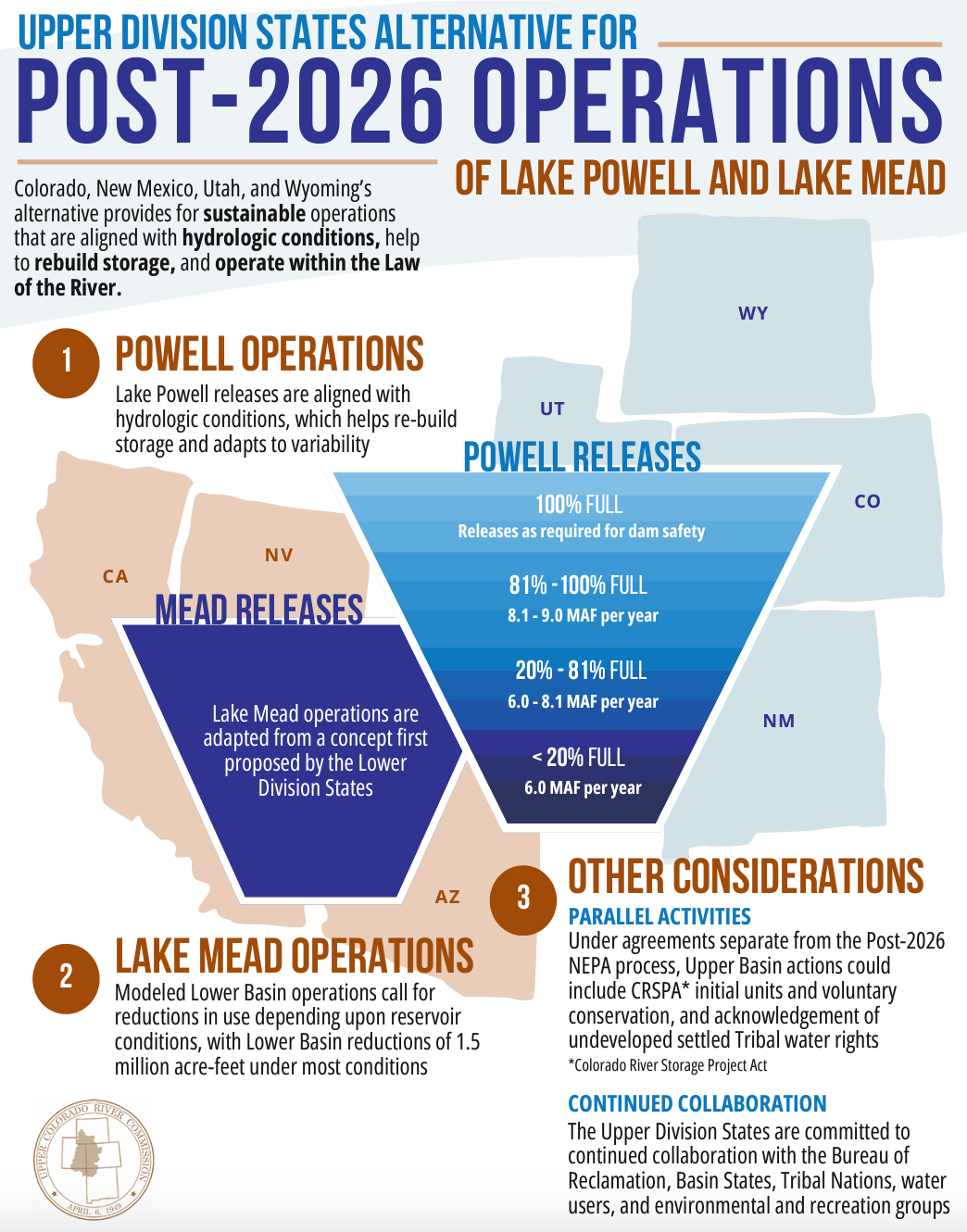
In their proposal to the Bureau of Reclamation, the Lower Basin states demanded that the Upper Basin share in future cuts when reservoir levels dip. But Upper Basin commissioners stood by the counterproposal they offered in March, called the Upper Basin Alternative, which does not include mandatory cuts for Upper Basin water users.

โ€œThe upper division states continue to stand behind the alternative that we submitted and know that it provides a reasonable alternative for sustainable operations of Lake Powell and Lake Mead,โ€ said Colorado Commissioner Becky Mitchell.

Although the Upper Basinโ€™s proposal does not commit to sharing in cuts when reservoir levels fall, it does offer โ€œparallel activities,โ€ which would include voluntary, temporary and compensated reductions in use (as the SCPP does), which are separate from the post-2026 guidelines process.

โ€œWeโ€™re moving forward with our parallel actions like we have committed to do,โ€ said Utah Commissioner Gene Shawcroft. โ€œI think thatโ€™s significant.โ€

Although the Upper Basin and Lower Basin states have competing proposals, Upper Basin commissioners said Monday they are still committed to finding a consensus with their Lower Basin counterparts.

This story ran in the Aug. 15 edition of theย Grand Junction Daily Sentinel.

Map credit: AGU

#Colorado Water Trust restoring water to the Upper #YampaRiver during low flows

Yampa River downtown with low flows. Photo credit: Colorado Water Trust

From email from the Colorado Water Trust (Blake Mamich, Katie Weeman and Holly Kirkpatrick):

(August 2, 2024) โ€“ On July 29, Colorado Water Trust (the Water Trust) began boosting flows in the Upper Yampa River with the initial order of 1,000 acre-feet of water (326 million gallons) at a rate of up 10 cfs for instream flow use by the Colorado Water Conservation Board (CWCB). This weekend the flow rate of the releases will increase to up to 45 cfs. The Water Trust is able to release this water out of Stagecoach Reservoir thanks to a ten-year, Temporary Lease for Instream Flow Use Water Delivery Agreement (ISF Lease) with the CWCB and has the contractual opportunity to purchase up to 5,000 acre-feet of water in 2024 if and when the Upper Yampa River needs additional flow. This project, in partnership with the Upper Yampa Water Conservancy District (UYWCD), the CWCB, and the City of Steamboat Springs (City) aims to support a healthy Yampa River, the fish and wildlife that depend on it, as well as the municipal, industrial, agricultural, and recreational uses on the river.

Why this project is needed: Nearly every year, no matter the snowpack and monsoon conditions, the Upper Yampa Riverโ€™s flows start to dip below healthy levels in the summer and/or fall. These low flows and high temperature conditions on the river create unhealthy environments for fish species and can force the City to institute recreational closures on the Upper Yampa which closes the river to all human interaction and harms local businesses conducting tubing and fly-fishing activities.

How the partnerships work: This is a truly collaborative cross-industry effort between local, state, and federal agencies. Since 2012, Colorado Water Trust has led the effort to contract for water out of Stagecoach Reservoir to purchase and lease water to restore the Upper Yampa if and when the river experienced low flows. Because stored water must be released for a beneficial use, the mechanisms for releasing water to protect the health of the river are complex. Throughout the years, this project has become increasingly collaborative, resulting in a flexible ten-year contract with UYWCD and culminating in the second execution and operation of a ten-year ISF Lease with the CWCB. In the summer and fall, Colorado Water Trust coordinates and leads weekly meetings to report on implementation, discuss input and observations, and address questions from the community. Attendees include representatives from the CWCB, the City, Colorado River Water Conservation District, Friends of the Yampa, Yampa River Fund, the Upper Colorado Endangered Fish Recovery Program, Routt County, UYWCD, and Tri-State Generation and Transmission and local business representatives. During the coordination meetings, attendees provide real-time and on-the-ground observations, critical standards and thresholds are discussed, and pivotal questions are raised and deliberated. Once it is determined that the Upper Yampa needs boosted flows, Colorado Water Trust goes to work in executing our existing ten-year water supply contract with UYWCD and fundraising for the cost of the water.

How the funding works: It is a different compilation every year, but in 2024 we have major support from the CWCBโ€™s Instream Flow program, as well as support from the Yampa River Fund, an anonymous donor in Steamboat Springs, and the Colorado River Water Conservation District.

Whatโ€™s the impact: Since 2012, Colorado Water Trust has restored nearly 21,000 acre-feet of water to the Upper Yampa (5.88 billion gallons). We anticipate 2024 may be our biggest year yet. We aim to purchase and release up to 5,000 (1.6 billion gallons) of water from Stagecoach Reservoir to the Upper Yampa when it needs boosted flows. This can lower temperatures and protect fish and can hold off recreational closures for the benefit of the local economies and people tied to the river.

Yampa River downtown. Photo credit: Colorado Water Trust

According to a report titled Evaluating the Economic Contribution of Boatable Opportunities on the Yampa River written by Hattie Johnson with American Whitewater and Rachel Bash with Lynker Technologies, โ€œIn the example shown here, the extra 30 days of flows over 85 cfs in Steamboat Springs provide the region with about $500,000 of economic contribution.โ€ This is a conservative estimate for Colorado Water Trustโ€™s 2022 purchases and releases on the Yampa River. It is based on reports from rafting and fishing participants and was intended to be a tool that could easily be updated when more data is collected.

How the Upper Yampa is fairing this year: After a relatively cool spring, hot temperatures and dry conditions are taking their toll. Stream temperatures are rising and flows are dropping quickly. This was not unexpected as mid to late July is often when the river starts to need added flows.

QUOTE FROM COLORADO WATER TRUST

โ€Itโ€™s becoming apparent that in almost any year, wet, dry or average, the Upper Yampa River can benefit from additional flow in the late summer and fall months. Thatโ€™s why it was an easy decision to make this year an operational year for the Instream Flow Lease with the CWCB. This lease was signed in 2022 and the legislation hat allowed it was adopted in 2020, so itโ€™s exciting to use this contemporary tool for streamflow restoration for the first time.โ€ Blake Mamich, Colorado Water Trust.

QUOTE FROM UYWCD

โ€œRecent years have proven that our river system is changing in response to new climate realities,โ€ said Andy Rossi, General Manager for the Upper Yampa Water Conservancy District. โ€œOur partnership with the Colorado Water Trust and the use of CWCBโ€™s Instream Flow Lease will be critical to protecting our river ecosystems and the communities that depend on them for years to come.โ€

QUOTE FROM CWCB

โ€œThe Colorado Water Conservation Board is proud to support continued partnership with the Colorado Water Trust,โ€ said Lauren Ris, CWCB Director. โ€œThis important Instream Flow agreement on the Upper Yampa means we are not only addressing immediate ecological needs but also investing in the long-term health and resilience of the river for future generations.โ€

Stagecoarch Reservoir outflow June 23, 2019. Photo credit: Scott Hummer

Group to focus on water for the environment: State officials want more flow targets in stream management plans — @AspenJournalism #EagleRiver

The Eagle River, left, flows into the Colorado River near Dotsero. The Eagle River Coalition recently completed its community water plan, which outlines environmental flow deficits, but does not make recommendations on how to get more water into rivers. CREDIT: BETHANY BLITZ/ASPEN JOURNALISM

Click the link to read the article on the Aspen Journalism website (Bethany Blitz):

June 13, 2024

In an effort to elevate the needs of the environment in water management, the state of Colorado is convening a new committee that is scheduled to begin meeting this summer. 

The Colorado Water Conservation Board and Boulder-based nonprofit River Network are creating a pilot program known as the Environmental Flows Cohort, which will assess how much water is needed to maintain healthy streams and how to meet these flow recommendations. The cohort will include not just environmental advocates, but agricultural and municipal water users, who may initially feel threatened by environmental flow recommendations. 

The goal of the program is to address the barriers that lead to these recommendations being excluded from local stream management plans. The cohort was one of the recommendations in a January 2023 analysis of SMPs by the River Network.

โ€œThe idea is how can the environmental and recreation side of things better partner with the agricultural users on trying to find win-win projects for keeping more water in the stream,โ€ said Brian Murphy, director of the healthy rivers program at the River Network. โ€œAn emphasis on making sure stream management plans identify and prioritize projects that include environmental flows, thatโ€™s been kind of a shortfall.โ€

An objective of Coloradoโ€™s 2015 Water Plan was to create SMPs for most of the stateโ€™s important streams by 2030. SMPs are meant to focus on water for the environment and recreation, which are โ€œnonconsumptiveโ€ needs where โ€œusingโ€ the water means that it stays in streams. The idea is that these flow targets could then result in projects designed to get that agreed-upon amount of water in streams.

SMPs were originally intended as a tool to legitimize and enhance the role of environmental and recreation groups in water management, but a 2022 report by the River Network found that focusing on water to maintain a healthy environment was inconsistent, problematic and unpopular among the stakeholders who were creating the SMPs. Just 6% of project recommendations at the time focused on environmental flow targets and only 1% focused on recreation flow targets, even though SMPs were supposed to have been a tool specifically for the benefit of nonconsumptive water uses. 

In some cases, the SMPs broadened in scope and morphed into Integrated Water Management Plans that included an agricultural water needs assessment and ditch inventories.

โ€œOne of the big challenges, it was found, was just a lot of perceived negativity regarding flow recommendations,โ€ said Andrea Harbin Monahan, a watershed scientist with CWCB. โ€œThereโ€™s a perceived animosity between the recreation community versus agriculture, for example. Figuring out a way to get all those people into one room and start those conversations early and build trust early in the process are hopefully the outcomes of this environmental cohort.โ€

Under the bedrock principle of Colorado water law, the oldest water rights, which belong to agriculture and cities, get first use of rivers and other user groups have historically had trouble making inroads. The actions of the biggest irrigators often have an influence on how much water is left flowing in the stream, and there are few ways to guarantee there is enough for ecosystems and wildlife. The CWCB holds instream flow water rights intended to โ€œpreserve the natural environment to a reasonable degree.โ€ But the oldest of these date to the 1970s โ€” about a century younger than the most powerful agricultural water rights, which limits their effectiveness. 

As climate change squeezes water supply and creates shortages for all users, it also ratchets up the tension between groups that take water out of the river and groups that want to leave it in. 

Homestake Creek is a tributary of the Eagle River. The Eagle River Coalition recently completed its community water plan, which outlines environmental flow deficits, but does not make recommendations on how to get more water into rivers. CREDIT: BRENT GARDNER-SMITH/ASPEN JOURNALISM

Eagle River Community Water Plan

The Eagle River Coalition is an organization dedicated to advocating for the health of the Eagle River. After five years of community meetings and technical work, the group recently released the Eagle River Community Water Plan. The plan provides an assessment of current conditions on the Eagle and its tributaries, and what conditions may look like with future risks such as climate change, more municipal water demands and new reservoir projects that take more water to the Front Range. 

โ€œThe main takeaway to me is that weโ€™re going to see low flows and less water in the river, so we as a community have to figure out how are we going to prioritize keeping our river flowing,โ€ said James Dilzell, executive director of the Eagle River Coalition. โ€œFiguring out how to have more water in the river is going to be absolutely critical.โ€

The plan is meant, in part, to provide an understanding of environmental and recreational needs gaps and how they are affected by high and low flows and increasing demands for water in Eagle County and on the Front Range. 

But although the plan includes a section about environmental flow deficits, which is the amount of water that would be needed to meet the CWCBโ€™s instream flow water right during a typical year, it โ€” like most SMPs โ€” does not set a target amount for flows.ย 

This map in the Eagle River Community Water Plan shows the environmental flow deficits on the Eagle River and its tributaries. The EDFs reflect the amount of water that would be needed to meet the Colorado Water Conservation Board Instream Flow water right in a typical year. CREDIT: EAGLE RIVER COMMUNITY WATER PLAN

Seth Mason, a hydrologist with Carbondale-based Lotic Hydrological, helped author the Eagle River plan and will be participating in the cohort. He said putting a number on exactly how much water the river needs at different times of year under different future climate and development scenarios is complicated. For example, it might be the case that the only way for a section of river to meet a certain flow target is to build a reservoir to control releases, but a new reservoir project could be at odds with what the community wants. 

โ€œWhat we didnโ€™t do was develop a prescriptive flow regime,โ€ Mason said. โ€œAnd that, I think, is what a lot of people end up looking for. โ€ฆ I think providing the nuance necessary for people to do critical thinking about trade-offs is more valuable than drawing the perfect stream flow regime, which there is no such thing.โ€

Dilzell said he is interested in learning more about flow recommendations on the Eagle River and its tributaries, and the completion of the community water plan is just the first step in local watershed management.

Still, river flows can be a proxy for ecosystem health, and some say target recommendations are essential. Bart Miller, healthy rivers director with environmental group Western Resource Advocates, said stream flow recommendations are the bedrock for protecting the environment. WRA is helping to facilitate the cohort.

โ€œFlow has an impact on water quality, temperature, habitat โ€” everything from spawning cues for fish to just keeping them alive when flows are getting low at the end of the summer,โ€ Miller said. โ€œThereโ€™s a wide range of benefits from having a clear picture of what stream needs are and articulating recommendations on how to improve or protect what the flows look like.โ€

Although they are not required in order to get state funding for SMPs, CWCB officials would still like the groups that develop SMPs to come up with flow recommendations. Harbin Monahan said the cohort will be a way to work through barriers, understand the contentious nature of the topic and build trust among stakeholders so that more SMPS can have flow recommendations in the future. 

โ€œThe entire idea behind stream management plans was to help support the environment and recreation community and help them meet the flow needs for specific uses,โ€ she said. โ€œItโ€™s OK if stream management plans donโ€™t come out with a flow recommendation. Itโ€™s not typically required, but it is a desired outcome.โ€

The River Network and CWCB are taking applications for the Environmental Flows Cohort and plan to choose 15 to 20 participants to begin meeting in July. The cohort plans to meet five times between July and next spring and will develop a training program for local watershed groups to follow when they create SMPs. 

This story ran in the June 17 edition of The Aspen Times and the Glenwood Springs Post-Independent, the Craig Daily Press, the Steamboat Springs Pilot & Today and the Grand Junction Daily Sentinel.

Map of the Eagle River drainage basin in Colorado, USA. Made using USGS data. By Shannon1 – Own work, CC BY-SA 4.0, https://commons.wikimedia.org/w/index.php?curid=69310517

How much water remains in southeast #Coloradoโ€™s aquifers?: Colorado legislative committee approves many millions for water projects in Colorado โ€” including $250,000 for a study crucial for Baca County — Allen Best (@BigPivots) #OgallalaAquifer #RepublicanRiver #RioGrande

Corn in Baca County. Photo credit: Allen Best/Big Pivots

Click the link to read the article on the Big Pivots website (Allen Best):

Unanimous votes in the Colorado Legislature are rare, but they do happen. Consider HB24-1435, the funding for the Colorado Water Conservation Board projects.

The big duffle bag of funding for various projects was approved 13-0 by the Senate Water and Agriculture Resources Committee. It had bipartisan sponsors, including Rep. Marc Catlin, a former water district official from Montrose.

โ€œColorado has been a leader in water for a long, long time, and this is bill is an opportunity for us to stay in that leadership position,โ€ said Catlin, a Republican and a co-sponsor.

โ€œThis is one of my favorite bills,โ€ said Rep. Karen McCormick, a Democrat from Longmont and former veterinarian. She is also a co-sponsor.

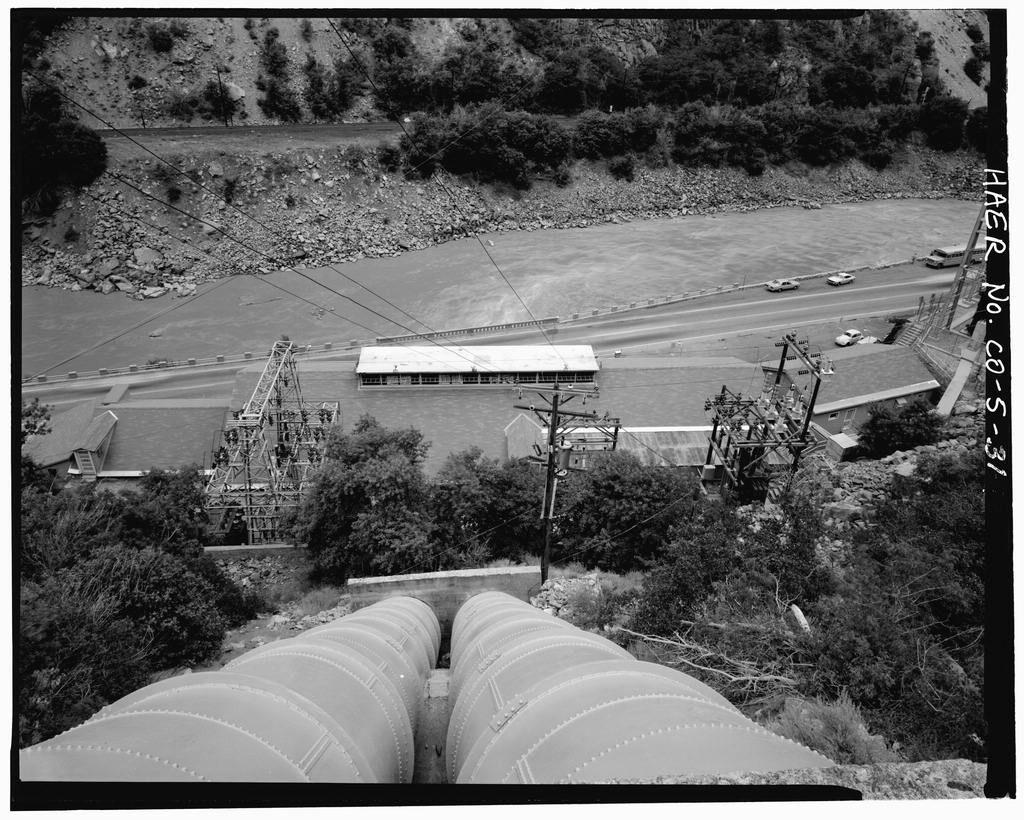
This historical photo shows the penstocks of the Shoshone power plant above the Colorado River. A coalition led by the Colorado River District is seeking to purchase the water rights associated with the plant. Credit: Library of Congress photo

The bill has some very big-ticket items, including $20 million for the Shoshone power plant agreement between Western Slope interests and Public Service Co. of Colorado, better known by its parent company, Xcel Energy. Andy Mueller, the general manager of the Glenwood Springs-based Colorado River District, called the effort to keep the water in the river โ€œincredibly importantโ€ to those who make a living in the Colorado River Basin.

This map shows the 15-mile reach of the Colorado River near Grand Junction, home to four species of endangered fish. Map credit: CWCB

Mueller also pointed out that keeping water in the river will benefit of four endangered species of fish that inhabit what is called the 15-mile stretch of the Colorado River near Grand Junction.

Another $2 million was appropriated for the turf-replacement program in cities, a program first funded in 2022. Another mid-range item is telemetry for Snotel sites, to keep track of snow depths, the better to predict runoff. It is to get $1.8 million.

Among the smallest items in the budget is a big one for Baca County, in Coloradoโ€™s southeast corner. The bill, if adopted, would provide the Colorado Water Conservation Board with $250,000 to be used to evaluate the remaining water in aquifers underlying southeastern Colorado. There, near the communities of Springfield and Walsh, some wells long ago exhausted the Ogallala aquifer and have gone deeper into lower aquifers, in a few cases exhausting those, too. Farmers in other areas continue to pump with only modest declines.

What exactly is the status of the underground water there? How many more decades can the agricultural economy dependent upon water from the aquifers continue? The area is well aside from the Arkansas River or other sources of snowmelt.

A study by the McLaughlin Group in 2002 delivered numbers that are sobering. Wes McKinley, a former state legislator from Walsh, at a meeting in February covered by the Plainsman Herald of Springfield, said the McLaughlin study numbers show that 84% of the water has been extracted. That study suggested 50-some years of water remaining. If correct, that leaves 34 years of water today.

Tim Hume, the areaโ€™s representation on the Colorado Groundwater Commission, has emphasized that he believes this new study will be needed to accurately determine how water should be managed.

How soon will this study proceed? asked Rep. Ty Winter, a Republican from Trinidad who represents southeastern Colorado. Tracy Kosloff, the deputy director of the Colorado Division of Water Resources, answered that the technical analysis should begin sometime after July. โ€œI would think it is reasonable to finish it up by the end of 2025, but that is just an educated guess.โ€

She said the state would work with the Baca County community to come up with a common goal and direction โ€œabout how they want to manage their resources.โ€

Ogallala Aquifer groundwater withdrawal rates (fresh water, all sources) by county in 2000. Source: National Atlas. By Kbh3rd – Own work, CC BY-SA 3.0, https://commons.wikimedia.org/w/index.php?curid=6079001

Unlike the Republican River area of northeastern Colorado, where farmers also have been plunging wells into the Ogallala and other aquifers, this area of southeastern Colorado has no native river. In the Republican Basin, Colorado is trying to remove 25,000 acres from irrigation by the end of 2029 in order to leave more water to move into the Republican River.ย See story. A similar proposition is underway in the San Luis Valley, where farmers have also extensively tapped the underground aquifers that are tributary to the Rio Grande.ย See story.

San Luis Valley Groundwater

The closest to critical questioning of the bill came from Rep. Richard Holtorf, a Republican who represents many of the farming counties of northeastern Colorado. He questioned the $2 million allocated to the Office of the Attorney General.

He was told that $1 million of that constantly replenishing fund is allocated to the Colorado River, $110,000 for the Republican River, $459,000 for the Rio Grande, $35,000 for the Arkansas and $200,000 for the South Platte.

Then thereโ€™s the litigation with Nebraska about the proposed ditch that would begin in Colorado near Julesburg but deliver water to Nebraskaโ€™s Perkins County. Colorado hotly disputes that plan.

Lauren Ris, the director of the Colorado Water Conservation Board, said Colorado is โ€œvery confident in our legal strategy.โ€

Holtorf also noted that the severance tax provides 25% of the funding for the water operations. The severance tax comes from fossil fuel development. As Colorado moves to renewable energy, โ€œwhat happens to this Colorado water if we kill the goose that lays the golden egg?โ€

Ris replied said future declines in the severance tax is a conversation underway among many agencies in Colorado state government.

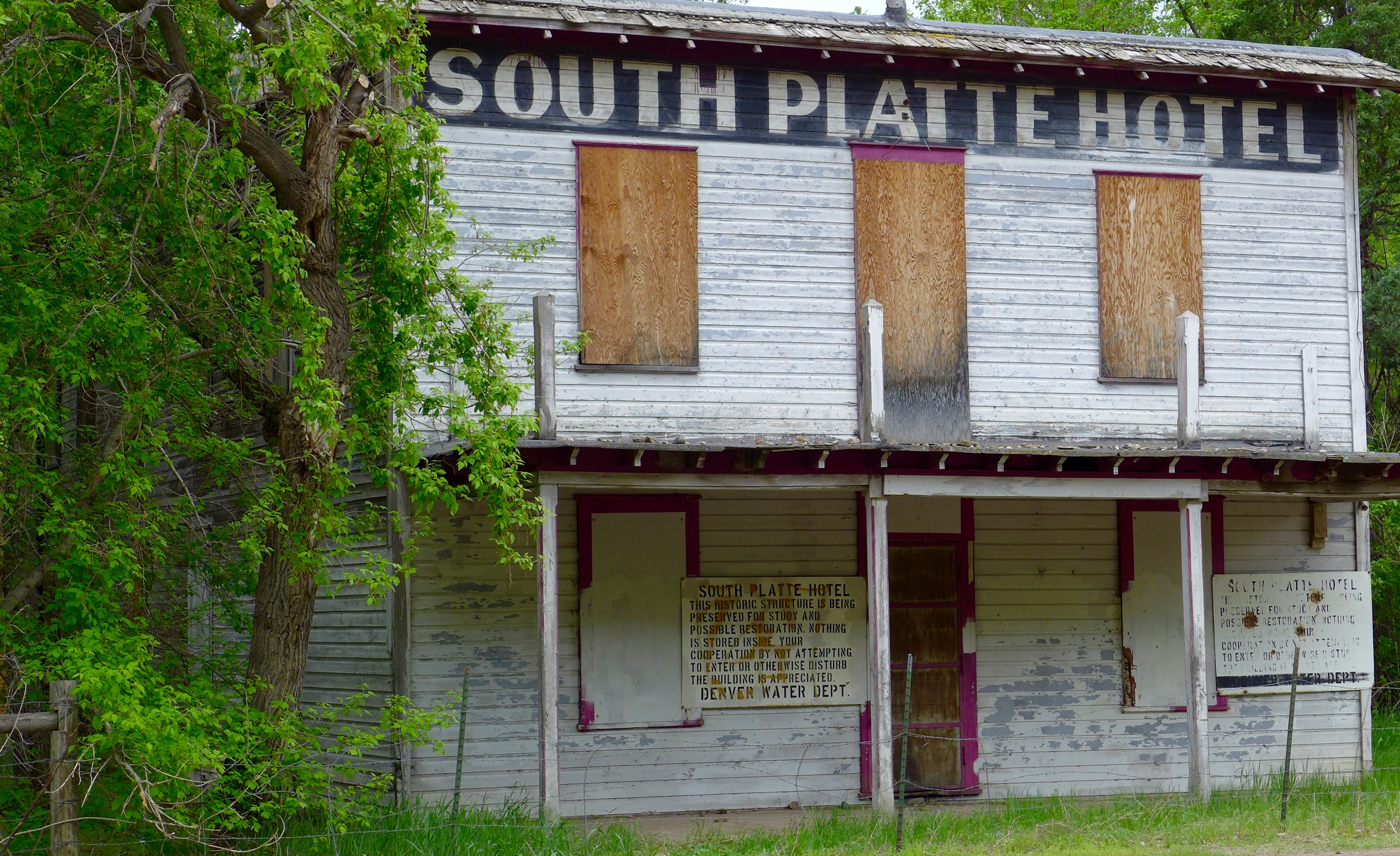
The South Platte Hotel building that sits at the Two Forks site, where the North and South forks of the South Platte River come together. Photo: Brent Gardner-Smith/Aspen Journalism

Proposed ballot measure directs more money to water projects — The #GrandJunction Daily Sentinel

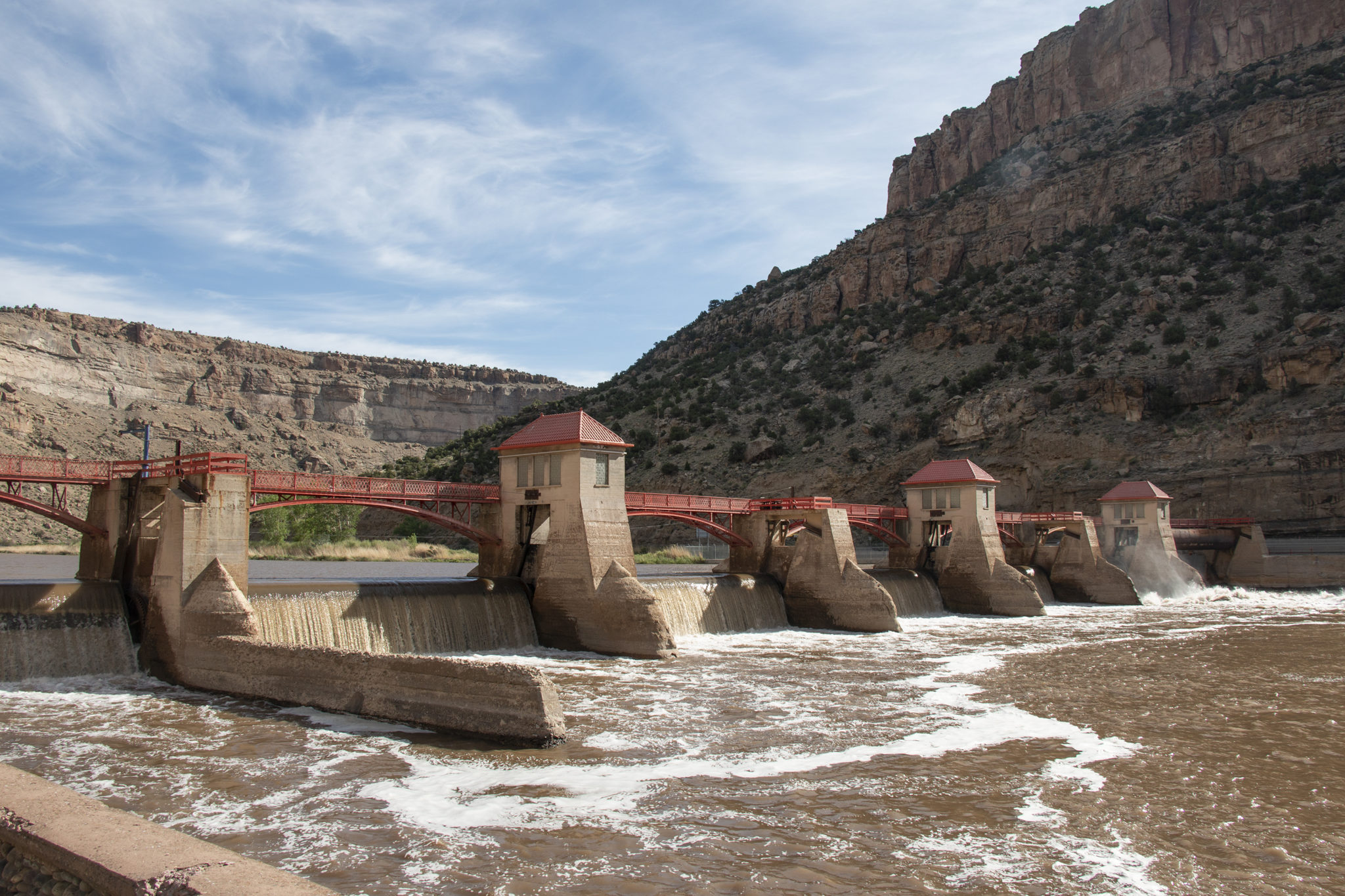
The Grand River Diversion Dam, also known as the โ€œRoller Damโ€, was built in 1913 to divert water from the Colorado River to the Government Highline Canal, which farmers use to irrigate their lands in the Grand Valley. Photo credit: Bethany Blitz/Aspen Journalism

Click the link to read the article on The Grand Junction Daily Sentinel website (Charles Ashby). Here’s an excerpt:

April 13, 2024

HB24-1436, introduced by a bipartisan group of four Western Slope lawmakers, would increase the $29 million cap that voters approved when they legalized sports betting in the state, money to be used entirely for water projects. That happened in 2019 when voters narrowly approved Proposition DD, which legalized sports betting in Colorado and imposed a 10% tax on proceeds. Under the bill, which was introduced by House Speaker Julie McCluskie, D-Dillon, and Rep. Marc Catlin, R-Montrose, the state would be able to retain an additional $15.2 million over the next three years…

Tax money from sports betting goes into the Colorado Water Plan Implementation Fund, which is administered by the Colorado Water Conservation Board. That panel doles out the money in the form of grants for projects already identified under the Colorado Water Plan. That plan, implemented in 2015, identified about $20 billion worth of water projects that would be needed to offset dwindling supplies and a handle a growing population.

Consultant selected to conduct assessment of the Grand Valley #ColoradoRiver corridor — The #GrandJunction Daily Sentinel #COriver #aridfication

Bicycling the Colorado National Monument, Grand Valley in the distance via Colorado.com

Click the link to read the article on The Grand Junction Daily Sentinel website (Dan West). Here’s an excerpt:

March 27, 2024

The river ecosystem will be getting a health check up this year as part of the Grand Valley River Initiative, a planning effort for the river corridor being coordinated by One Riverfront, RiversEdge West and the Hutchins Water Center at Colorado Mesa University. RiversEdge West Executive Director Rusty Lloyd said Lotic Hydrological was recently selected to perform a riparian and floodplain assessment this year, which will help establish a baseline of the river ecosystem.

โ€œThis would really identify areas of restoration and conservation that would support native riparian vegetation, versus maybe areas where recreation or development might happen,โ€ Lloyd said. โ€œThat riparian and floodplain assessment is really supposed to get at where are our good quality ecosystem values and habitat along our river in the valley. That assessment will feed into the decision making processes, hopefully.โ€

Lloyd said the state of the river has been changing in recent years with more recreation and development along the river. He said the initiative is intended to help local planners and policy makers as they make decisions about the future of the river corridor. OV Consulting has also been selected to coordinate communications with local municipalities and stakeholders about how to plan for the future of the river, Lloyd said. He said what that looks like could vary from a framework local governments could use to a signed agreement on planning around the river between local governments.

The #Colorado Water Conservation Board Launches 2024 Program to Transform Coloradoโ€™s Turf Landscape

Mrs. Gulch’s landscape September 14, 2023.

Click the link to read the article on Governor Polis’ website:

March 26, 2024

Today, Governor Polis and the Colorado Water Conservation Board (CWCB) announced the launch of the second year of Transformative Landscape Change (TLC) Challenge program, which challenges local communities to reimagine their public spaces and embrace waterwise landscaping. The effort, a partnership with the nonprofit Resource Central, is designed to convert water-intensive landscapes into climate-appropriate, low-water-use, and attractive spaces.

โ€œProtecting our precious water resources is critical to ensuring a strong future for Colorado and our economic industries like agriculture and outdoor recreation. This challenge will help innovate, conserve water in our communities, and promote stewardship around the state,โ€said Governor Jared Polis.

โ€œWater conservation continues to be an important and comparatively cost-effective tool for increasing state and local water security and resilience,โ€ says Russ Sands, CWCB Water Supply Planning Section Chief. โ€œThe TLC Challenge will help communities replace up to 2,500 square feet of nonfunctional turf with the types of low-water landscape plants that better serve our communities in hopes that it can inspire larger turf replacement efforts.โ€

The CWCB and Resource Central worked on an earlier TLC Challenge with three communities across Colorado in 2023 to transform public spaces and inspire communities to install low-water plants instead of high-water-use turf. This round will expand the TLC Challenge and increase the number of projects accepted to increase the impact. Eligible entities include local governments and municipal water providers. The funding is not available to residential or commercial property owners.

The effort complements CWCBโ€™s 2023 Turf Replacement Program efforts, which provided funding to 50 eligible entities in Colorado to reduce nonfunctional turf and increase sustainable landscapes.

Eyes across the state are on sustainable landscape development efforts like this. Governor Polis signed Senate Bill 24-005 on Friday, March 15, which limits the installation of nonfunctional turf on commercial, industrial, and institutional properties, state facilities, and spaces, including medians and parking lots.

โ€œBut the hard work of removing nonfunctional turf where itโ€™s already been installed also needs to continue,โ€ says Sands.

โ€œReplacing turf with waterwise landscapes helps cities conserve water supplies, meet the vision of the Colorado Water Plan, and maximize the ecosystem benefits of our landscapes,โ€ said Lauren Ris, CWCB Director.

The Colorado Water Plan projects up to 740,000 acre-feet of future municipal water needs per year.

โ€œTo reduce our water demands, Colorado needs a suite of conservation tools, including water conservation programs and water pricing structures that help shape what our cities look like and how we develop,โ€ says CWCB expert Jenna Battson. โ€œHaving land use codes and ordinances that align with these efforts is critical because the last thing we want is for codes to reinforce installing the same types of high-water vegetation that we are paying to remove.โ€

Converting water-intensive landscapes to waterwise spaces allows everyone to be part of the solution. CWCB and Resource Central are working together through the TLC Challenge to help inspire responsible landscape development and increase engagement with water-saving practices.

Interested in applying for the TLC Challenge?

  • The competitive application window is open now and will close on June 1, 2024. Awardees will be evaluated based on the merits of their application. After selected recipients are notified, they will work with Resource Central to implement projects in the late summer of 2024 or early spring of 2025.
  • Eligible entities include local governments and municipal water providers. The funding is not available to residential or commercial property owners. Resource Central will work with the selected applicants to design the new space, remove and compost the turf, and provide customized Garden In A Box plants as well as irrigation and maintenance planning for the new landscape.
  • Applications that demonstrate potential water savings, public benefits that include equity, and educational components will be more competitive. By prioritizing project proposals that demonstrate strong community engagement strategies, well-defined goals, and measurable outcomes, CWCB and Resource Central can ensure the biggest impact with the funding. Communities without an existing turf replacement program will be prioritized to help increase local examples of landscape transformations; however, all eligible applicants are encouraged to apply. 

As the #ColoradoRiver shrinks, states continue to tussle over cuts — Jonathan P. Thompson (@Land_Desk) #COriver #aridification

Enigmatic artwork with Glen Canyon Dam in the background. Jonathan P. Thompson photo.

Click the link to read the article on The Land Desk website (Jonathan P. Thompson):

The two groups of Colorado River watershed states โ€” the Upper Basin and the Lower Basin โ€” have each come up with a respective preliminary plan for how to deal with a shrinking supply of water in the river and its tributaries. And, surprise surprise, they donโ€™t agree: They both want the other team to take a bigger hit. 

Way back in early 1900s, the question facing these seven states was how to divide up the waters of the Colorado River, first between the two basins, then between the states within each basin. The 1922 Colorado River Compact answered that question. Sort of. The Compact isย flawed in many ways, including that the folks who signed onto it thought there was a bunch more water than actually flowed in the river โ€” even back then.ย 

I like to run this one again from time to time, just to remind folks how much the population of the West has grown over the last century. This is what the signers of the Colorado River Compact were dealing with as far as water users go โ€” compared to some 40 million users now. Source: USGS.

Now thereโ€™s even less water and higher consumption. If the river users donโ€™t make some major cuts and soon, the reservoirs will dry up and leave the Southwestโ€™s cities, towns, and farms to fight over the diminishing scraps. 

โ€œWe can no longer accept the status quo of the Colorado River operations,โ€ said Becky Mitchell, Coloradoโ€™s representative on the Upper Colorado River Commission, in a press release. โ€œIf we want to protect the system and ensure certainty for the 40 million people who rely on this water source, then we need to address the existing imbalance between supply and demand.โ€ย 

Map of the Colorado River drainage basin, created using USGS data. By Shannon1 Creative Commons Attribution-Share Alike 4.0

So now the question facing the states is similar to the one they asked 102 years ago, but with a twist: How should those deep cuts be divided up now that global heating is depleting the riverโ€™s flow? 

Itโ€™s a tough question with no easy answers. And itโ€™s all made more difficult by a lack of clarity regarding the definition of terms in the original Compact such as โ€œbeneficial consumptive useโ€ and โ€œsurplus,โ€ and how to measure those things. Where does use of tributaries that run into the Colorado below Lee Ferry, such as the Gila River, the Little Colorado, and the Virgin River fit into all of this?

The โ€œnatural flowโ€ is the estimated amount of water that would flow past Lee Ferry (below Glen Canyon Dam) if there were no upstream dams, diversions, or withdrawals. The Colorado River Compact was based on the assumption that about 16 million acre-feet flowed past Lee Ferry per year (which is not unreasonable given the abnormally high flows between 1906 and the late 1920s). In fact, the 1906-1923 median is about 14.5 MAF (with an average of about 14.7 MAF). And the 1991-2023 average is 13.2 MAF. Yikes! Source: Bureau of Reclamation.

Until those definitions are agreed upon, we wonโ€™t really know whether the Lower Basin is using the amount of water allocated to it in the Compact (8.5 million acre-feet), or significantly more than that (10.1 million acre-feet). Until we know what โ€œsurplusโ€ means, we wonโ€™t know who is responsible for ensuring Mexico gets its allocated share. So far there is no agreement on those definitions. (For a detailed and intelligent take on this, please see Eric Kuhnโ€™s and John Fleckโ€™s piece on Fleckโ€™s Inkstain blog). 

The good news is that the current proposals arenโ€™t final; there is still time for the basins to negotiate. And the two basinsโ€™ representatives are inching closer to accord, finding harmony where it previously eluded them. The two alternatives agree:

  • That consumption cuts should be triggered not by forecasted water levels in Lake Mead, but by current hydrologic conditions throughout the entire system.ย However, they differ on how to measure those conditions.ย 
  • And that the Lower Basin should include evaporation and seepage โ€” totaling an estimated 1.3 million acre-feet per year โ€” in its consumptive use, as the Upper Basin has always done. They plan to offset this loss by cutting consumption by 1.5 million acre-feet per year.ย 
Total losses (evaporation and riparian ET) from Reach 1 through Reach 5. Credit: USBR

The main sticking point comes when reservoirs shrink to critically low levels:

  • Under theย Upper Basinโ€™s plan, as storage levels drop, they would release progressively less water from Lake Powell. So if water storage is 81% to 100% full, then theyโ€™d release 8.1 to 9 MAF from Glen Canyon Dam, giving the Lower Basin their full allocation. But if storage is less than 20% full, it would release just 6 MAF per year, giving the Lower Basin 2.5 MAF less than their allocation that year โ€” presumably forcing them to cut that same amount of consumption. Whether and how much consumption the Upper Basin would have to cut under this scenario would depend on how much water is actually in the river. Itโ€™s important to note that the Upper Basin does not and has never used its full allocation of 7.5 MAF per year.
  • Under theย Lower Basinโ€™s plan, when the system is between 38% and 70% full, the Lower Basin would cut its consumption by 1.5 MAF per year. When system water levels drop below that, then the Lower Basin would continue its 1.5 MAF per year cuts, and the two basins would share any cuts above that up to a maximum of 3.9 MAF per year. So under the maximum cuts, the Lower Basin would reduce usage by 2.7 MAF while the Upper Basin would cut use by 1.2 MAF.ย 
The Upper Basinโ€™s alternative, summed up. Source: Upper Colorado River Commission.
The Lower Basinโ€™s proposed framework for reductions. The Lower Basin would make all of the cuts (1.5 MAF per year) down to 38%, after which the two basins would evenly split any reductions beyond 1.5 MAF. Source: Lower Basin states.

Both basinsโ€™ alternatives mention and acknowledge that many tribal nationsโ€™ water rights remain unfulfilled, and yet say little about how the situation might be rectified. And each Basin says its respective plan is the most sustainable, is most likely to keep Hoover and Glen Canyon dams from being compromised, and complies with the Law of the River โ€” or the set of treaties, compacts, and court cases that govern how the river is used. 

Yet the sustainability or health of the Colorado River as an entity โ€” a breathing, flowing, living being โ€” is barely mentioned. Little thought is given to the ecosystems, cultures, and creatures the river sustains. I realize thatโ€™s not the point of this exercise. And yet, ultimately, it will be the River itself that lays down the law, not century-old compacts or legal precedents or antiquated water rights. Perhaps we ought to pay it a little more respect. 

FURTHER READING: 

  • Ya gotta check out theย Colorado River Science wiki. All kinds of good resources there.ย 
  • Ditto forย On the Colorado, a clearinghouse for all kinds of information on the River.
  • Aspen Journalismโ€™s Heather Sackett did aย thorough writeupย of the two proposed alternatives.ย 
  • You want the wonky, nitty-gritty details on Western water? Then go to John Fleckโ€™sย Inkstain blogย and spend some time.ย 
  • And finally, a Land Desk primer on the Colorado Compact. For paid subscribers only, Iโ€™m afraid:

The Colorado River Compact 

JONATHAN P. THOMPSON March 8, 2024

Colorado River, Black Canyon back in the day, site of Hoover Dam

Editor’s Note: This essay first appeared in the High Country News November 11, 2022.

Read full story

Record Demand for #Colorado Water Conservation Board Water Plan Grant Funding — @CWCB_DNR

South Platte River at Goodrich, Colorado, Sunday, November 15, 2020. Photo credit: Allen Best

From email from the Colorado Water Conservation Board (Katie Weeman):

March 13, 2024 (Denver, CO)ย – The Colorado Water Conservation Board (CWCB) approved 52 Water Plan Grant applications today, which will distribute $17.4 million to fund critical projects to manage and conserve water, improve agriculture, spark collaborative partnerships, and much more. This funding cycle, CWCB received a record 70 applications requesting $25.6 millionโ€”$8.2 million more than is currently available.ย 

โ€œWater is on the top of many Coloradansโ€™ minds. And the projects this program funds are critical to meet and mitigate our stateโ€™s most critical water challenges,โ€ย said Lauren Ris, CWCB Director.ย โ€œWe received significantly more applications than we had funding for this cycle of Water Plan Grants, showing just how much demand there is for this important funding, and how critical it is that we continue to fuel this effort.โ€

Every year, theย Water Plan Grant Programย provides millions of dollars of funding for projects in five key categories: Water Storage & Supply, Conservation & Land Use, Engagement & Innovation, Agricultural Projects, and Watershed Health & Recreation. Water Plan Grants support the Colorado Water Plan, and funded projects are wide-ranging and impactful to the state, focusing on enhancing water infrastructure, restoring ecosystems, supporting education and community collaboration, boosting water conservation and efficiency, guiding resilient land use planning, and more.

During this fiscal year, the CWCB awarded 83 grants totaling $25.2 million. CWCBโ€™s Water Plan Grants run on two application cycles: the December application deadline receives final Board approval during the March Board Meeting, and the July deadline receives votes in September. On March 13, 2024, the Board voted to approve Decemberโ€™sย 34-project cohort.

This cycleโ€™s project applications are diverse in scope and location. A few examples include:ย 

  • South Platte River Basin Salinity Studyย (Agricultural, $464,361): Colorado State University will conduct a comprehensive study on salinization across seven regions in the South Platte River Basin, to understand the severity and variability of salinity in water and land resources.
  • Denver One Water Plan Implementation Phase 2ย (Conservation & Land Use, $200,000): Mile High Flood District will continue Phase 2 of Denverโ€™s One Water Plan, which promotes coordination and collaboration among various city departments, organizations, and agencies in charge of managing all aspects of the urban water cycle.
  • Watershed PenPal Programย (Engagement & Innovation, $136,947): Roaring Fork Conservancy will connect communities across the Roaring Fork Valley and Front Range, fostering understanding of water challenges through discussion, letter writing, and shared experiences.
  • Park Creek Reservoir Expansionย (Water Storage & Supply, $1,750,000): The North Poudre Irrigation Company will expand the Park Creek Reservoir, increasing water storage capacity by 3,010 acre-feet to benefit agricultural use and water management.
  • South Boulder Creek Watershed Restoration Phase 3ย (Watershed Health & Recreation, $1,000,000): Colorado Trout Unlimited will build upon previous phases of this project to support final design and permitting for multiple in-stream diversion structures in South Boulder Creek in Boulder, Colorado.

Looking forward, the CWCB hopes to continue and advance the Water Plan Grant program for decades to come. Projects funded and supported through this program address water-related challenges by harnessing the latest research, tapping into community engagement, and developing innovative solutions that allow water partners, agencies, and Coloradans to work together.

Lower basin calls for upper basin cuts; upper basin says โ€˜no wayโ€™: #ColoradoRiver basin states submit competing proposals for reservoir operations post-2026 — @AspenJournalism

Glen Canyon Dam impounds the Colorado River to create Lake Powell. In a proposal to the U.S. Bureau of Reclamation about reservoir operations, upper basin water managers say releases from Lake Powell should be based on how full the reservoir is on Oct. 1 each year. CREDIT: ALEXANDER HEILNER/THE WATER DESK, WITH AERIAL SUPPORT BY LIGHTHAWK

Click the link to read the article on the Aspen Journalism website (Heather Sackett):

March 6, 2024

In two separate proposals for how the nationโ€™s two largest reservoirs should be managed, the upper and lower Colorado River basin states agree on a couple things, but canโ€™t find common ground on whether the upper basin should take cuts when reservoir levels fall.

Proposals submitted to the U.S. Bureau of Reclamation by the upper basin states (Colorado, Utah, Wyoming and New Mexico) and the lower basin states (California, Arizona and Nevada) each say that the current guidelinesโ€™ method of basing operations on 24-month forecasts and setting shortages based on critical elevations of Lake Powell and Lake Mead should be tossed out in favor of using real-time water storage levels to determine releases and who takes how much in cuts. Both proposals say that the lower basin must cut its use by 1.5 million acre-feet in most years.

But the similarities stop there. Lower basin water managers say all seven states that use the Colorado River must share cuts broadly under the most critical system conditions, while upper basin officials maintain they do not have to cut their water use because they have never used the entire 7.5 million acre-foot apportionment given to them under the Colorado River Compact.

The separate proposals came after the seven basin state representatives could not reach a consensus after months of negotiations on how to operate the reservoirs after 2026. In recent months, water managers have focused on figuring out a new plan for reservoir management because the current guidelines from 2007 were only intended to last 20 years. In the context of a historic drought and climate change, the 2007 guidelines, along with the emergency Band-Aid that was 2019โ€™s Drought Contingency Plan, have not been enough to keep reservoir levels from plummeting and bringing the system to the brink of collapse.

Total losses (evaporation and riparian ET) from Reach 1 through Reach 5. Credit: USBR

In its proposal, the lower basin has committed to doing something that the upper basin has long called for: owning the amount of water lost to evaporation and transit. A recent Reclamation study put evaporation and transit losses in the lower basin โ€” which are currently unaccounted for on any balance sheets of supply and demand โ€” at about 1.3 million acre-feet per year.

The lower basinโ€™s proposal says it willย cut its useย by 1.5 million acre-feet when total system storage is between 38% and 69%. But if reservoir levels dip lower than 38% full, the lower basin wants additional cuts to be split evenly between the upper and lower basins, up to 3.9 million acre-feet. As of Tuesday, Lake Powell was nearly 34% full and Lake Mead was about 37% full.

โ€œThe Lower Basin Alternative creates resiliency and proposes climate change is a shared responsibility of all those that depend on the Colorado River,โ€ JB Hamby, the Colorado River commissioner representing California, said in a prepared statement. โ€œEach basin, state and sector must contribute to solving the challenges ahead. No one who benefits from the river can opt out of saving it.โ€

Upper basin water managers disagree, saying their water users are already being squeezed by climate change and are forced to take shortages in dry years because the water simply isnโ€™t there. Upper basin officials have long maintained that most of the blame for the system crashing should be placed on lower basin overuse.

โ€œI want to be very clear that the upper division states have always been in full compliance with the 1922 Colorado River Compact and, again, are currently using 3 [million] to 4 million acre-feet less than our compact apportionment,โ€ Amy Ostdiek, Colorado Water Conservation Board section chief for interstate, federal and water information, said at a press conference explaining the upper division alternative. โ€œThereโ€™s no mechanism to make mandatory water cuts in the upper basin beyond those that already occur each year.โ€ [ed. emphasis mine]

From left, Colorado River negotiator for California JB Hamby, Arizonaโ€™s Tom Buschatzke and Coloradoโ€™s Becky Mitchell. A proposal from the lower basin states about reservoir operations says the upper basin should also take cuts to its water use if reservoir levels fall below 38% full.ย CREDIT:ย TOM YULSMAN/THE WATER DESK

Conservation promises

The upper basinโ€™s proposal, however, says the four states will pursue โ€œparallel activitiesโ€that include voluntary, temporary and compensated reductions in use, although the upper basin states do not offer a specific amount of water that they will conserve. This would be separate from the post-2026 guidelines process.

The upper basin has dabbled in recent years with two such conservation programs: demand management and system conservation. In 2019, the state of Colorado embarked on a multiyear feasibility study of a voluntary and temporary program โ€” known as demand management โ€” that would pay water users to cut back and bank the conserved water in Lake Powell. That program is currently shelved without having been implemented.

In 2023, the Upper Colorado River Commission restarted the System Conservation Program, which pays water users โ€” nearly all of them in agriculture โ€” to cut back. With this program, there is no guarantee the conserved water makes it to Lake Powell. The program saved about 38,000 acre-feet in 2023, at a cost of nearly $16 million. System Conservation will take place again this year.

The upper basin proposal, which officials say mitigates the risk of either reservoir reaching dead pool, bases both cuts to lower basin use and releases from Lake Powell on how full the reservoirs are on Oct. 1 of each year.

โ€œWeโ€™re also looking to operate Lake Powell and Lake Mead based on observed conditions instead of unreliable forecasts,โ€ Ostdiek said.

Under the upper basinโ€™s proposal, if the two reservoirs combined are more than 90% full, no lower basin reductions will occur; if they are 70% to 90% full, lower basin cuts increase up to 1.5 million acre-feet; at 20% to 70% full, lower basin cuts remain static; and if the reservoirs are less than 20% full, lower basin cuts increase up to 2.4 million acre-feet a year, on top of the initial 1.5 million-acre-foot cuts. Under the upper basin proposal, those four states do not take any cuts, even as reservoir levels fall. 

That is in contrast with the lower basinโ€™s proposal which would require cuts beyond 1.5 million acre-feet to be split evenly between the upper and lower basins.

If Lake Powell is 81% to 100% full on Oct. 1, then releases would be between 8.1 million and 9 million acre-feet; at 20% to 80% full, releases would be between 6 million and 8.1 million acre-feet; and if the reservoir is less than 20% full, just 6 million acre-feet would be released.

The lower basin proposal for releases from Lake Powell is based on the total amount of water in the upper basin Colorado River Storage Project Act reservoirs: Flaming Gorge, Blue Mesa, Navajo and Lake Powell. If these upper basin reservoirs are more than 80% full, releases from Lake Powell would be between 8.5 and 11 million acre-feet; if reservoirs are between 30% and 80% full, releases would be between 7 and 8.5 million acre-feet; if reservoirs are between 20% and 30% full, releases would be between 6 and 7 million acre-feet and if storage is less than 20% full, 6 million acre-feet would be released.

Current reservoir operations are based on Reclamationโ€™s โ€œ24-month Study,โ€ a monthly forecast that predicts a range of probabilities for reservoir storage levels and โ€œbalancing tiers,โ€ which lay out who takes what shortages if reservoirs fall below certain elevations.

The two proposals will be reviewed by Reclamation, the federal agency that manages many of the Westโ€™s dams and reservoirs, as part of the National Environmental Policy Act process for creating the new post-2026 guidelines for reservoir operations.

Although the upper and lower basins did not reach consensus before the March 11 deadline and instead submitted two different proposals, both sides say they are still open to continuing negotiations.

โ€œAlthough our proposal can stand on its own, it was also designed to promote the development of a seven-state consensus alternative, which is a goal we all still seek to achieve,โ€ Wyoming Commissioner Brandon Gebhart said in a prepared statement.

This story ran in the March 8 edition ofย The Aspen Times, theย Vail Daily.

Map credit: AGU

Upper Division #ColoradoRiver States Propose Alternative for Sustainable Operations of Post-2026 Operations of #LakePowell and #LakeMead #COriver #aridification

Credit: Upper Colorado River Commisstion

Click the link to read the release on the Upper Colorado River Commission website:

This week, the Upper Division States of Colorado, New Mexico, Utah, and Wyoming submitted to the Bureau of Reclamation an Alternative for Post-2026 Operations of Lake Powell and Lake Mead. The UDS Alternative proposes operations for Lake Powel and Lake Mead designed to help provide water supply certainty and sustainability in the face of a drying and uncertain future.

The purpose of the Upper Division States Alternative is to provide a set of modeling assumptions and operating parameters to the Bureau of Reclamation for Post-2026 Operations of Lake Powell and Lake Mead as part of the review process required under the National Environmental Policy Act (NEPA).

Separate from this NEPA process, the Upper Division States (UDS) will also pursue Parallel Activities. Parallel Activities are other activities the Upper Division States might take under certain conditions. Examples include potential releases and recovery at the Colorado River Storage Project Act (CRSPA) Initial Units and voluntary water conservation programs that would help to protect the ability of Lake Powell to make releases.

The Upper Division States Alternative provides:

Management of the reservoirs to address the existing imbalance between water supply and demands in the Lower Basin;

โ— Operations based on actual conditionsโ€”instead of unreliable forecastsโ€”to ensure that Lake Powell and Lake Mead are operated sustainably;

โ— Efforts to rebuild storage at Lake Powell to protect the reservoirโ€™s ability to provide water to Lake Mead;

โ— Reliance on the best available science and information, including impacts caused by climate change;

โ— Consistency with the Law of the River;

โ— Accounting of Upper Basinโ€™s hydrologic shortages, which average an estimated 1.2 million acre-feet each year; and

โ— Acknowledgement of the settled but undeveloped Tribal water rights in the Upper Basin.

โ€œWe can no longer accept the status quo of Colorado River operations,โ€ said Becky Mitchell, Coloradoโ€™s Commissioner to the Upper Colorado River Commission. โ€œIf we want to protect the system and ensure certainty for the 40 million people who rely on this water source, then we need to address the existing imbalance between supply and demand. That means using the best available science to work within reality and the actual conditions of Lake Powell and Lake Mead. We must plan for the river we have – not the river we dream for.โ€

Estevan Lopez, New Mexicoโ€™s Commissioner, said, โ€œThe Colorado River Basin is at a critical juncture. The UDS Alternative seeks to acknowledge the Upper Basinโ€™s realities, including hydrologic shortages, protect Upper Basin interests, and contribute towards future sustainability of the entire basin. We look forward to working with our sister Lower Basin States to resolve differences in approach and create a 7-state consensus alternative.โ€

โ€œThis is a pivotal moment for Utah and the entire Upper Basin,โ€ said Gene Shawcroft, Utahโ€™s Upper Colorado River Commissioner. โ€œOur proposal represents a balanced approach, combining immediate action with long-term planning to ensure the sustainability of both Lake Powell and Lake Mead. Itโ€™s about adapting to the realities we face today and securing a water-resilient future for our region.โ€

The Upper Division States are committed to working with partners in developing a preferred alternative. The UDS Alternative is available in detail on the Upper Colorado River Commissionโ€™s website, along with an infographic.

Colorado River “Beginnings”. Photo: Brent Gardner-Smith/Aspen Journalism

$350,000 more donated to Shoshone water rights purchase — The #GrandJunction Daily Sentinel #ColoradoRiver #COriver #aridification

The Shoshone hydro plant in Glenwood Canyon, captured here in June 2018, uses water diverted from the Colorado River to make power, and it controls a key water right on the Western Slope and that right is in the process of being acquired by the Colorado River Water Conservation District. Photo credit: Brent Gardner-Smith/Aspen Journalism

Click the link to read the article on The Grand Junction Daily Sentinel website (Dennis Webb). Here’s an excerpt:

February 28, 2024

In their board meetings this month, the Clifton Water District and Grand Valley Water Users Association kicked in $250,000 and $100,000, respectively, toward the Colorado River Districtโ€™s proposed purchase of the rights. The Orchard Mesa Irrigation District and Grand Valley Irrigation Co. have also informally agreed to financially support the effort and are awaiting final action in upcoming board meetings, according to a new release from the river district…

Clifton Water serves nearly 13,000 domestic taps. On the Western Slope De Beque, Silt, Parachute, Battlement Mesa and Rifle also rely on the river as their primary supply of drinking water. Grand Valley Water Users Association delivers irrigation water to more than 22,000 acres within its boundaries and more than 42,000 acres in the Grand Valley…

The river district also hopes to secure about half of the money for the purchase from the U.S. Bureau of Reclamation in the form of Inflation Reduction Act funds. Sealing the deal also is contingent on negotiating an instream flow agreement between the Xcel, the river district and the Colorado Water Conservation Board, and Xcel receiving approval from the state Public Utilities Commission for the dispersal of profits from the sale.

Ignoring an Inconvenient #ColoradoRiver Basin Risk — John Fleck (InkStain.net) #COriver #aridification

Sometimes all we can do is sit and watch and wonder. Credit: John Fleck/InkStain

Click the link to read the article on the InkStain website (John Fleck):

It is agonizing to watch this, but here we are.

With efforts by the Colorado River Basin states to craft an agreement to share the riverโ€™s water skidding, brakes screeching, toward a cliff, we appear on the brink of repeating the disastrous mistake the authors of the Colorado River Compact made a century ago: ignoring inconvenient truths about the risks we face, washing away genuine uncertainties with convenient talking points.

As Eric Kuhn carefully documented in a post here [February 22, 2024], there is once again a genuine risk that we will ignore inconvenient truths about a huge uncertainty in our understanding of how much water the river can offer us, and for whom. We are pretending that an uncertainty literally at the scale of millions of acre feet in how we measure and manage water does not exist.

Resource: A freight train of thoughts about the Colorado River — Allen Best (Big Pivots)

Becky Mitchell. Photo credit: Allen Best/Big Pivots

A masterful Upper Colorado River Basin public relations blitz, led by the Colorado Water Conservation Board, would have us believe one set of numbers about the riverโ€™s future, a set of numbers that has given Upper Basin water users comfort that they can sit tight and blame others for the riverโ€™s woes.

But as Ericโ€™s analysis showed, there are hidden assumptions behind the Upper Basinโ€™s numbers โ€“ assumptions that hide a genuine and irreducible uncertainty. The uncertainty is irreducible because more than a century after the adoption of the Colorado River Compact, there is still no agreed upon definition of how to measure the use of water. As Eric wrote, these are questions โ€œwith enormous potential impacts on the allocation and distribution of the shrinking Colorado River โ€“ questions we have avoided dealing with by draining the Basinโ€™s reservoirs. We no longer have that option.โ€

ARITHMETIC AND LAW

Eric is a master of the arcane and wonky details of the interface between Colorado River law and hydrology, and I commend you to his analysis โ€“ it rewards a careful read. But Eric once described my role in our collaboration as โ€œdewonkifyingโ€, so let me try to put this in simpler terms.

The 1922 Colorado River Compact based its allocations on โ€œbeneficial consumptive useโ€. But the phrase was never defined, and the definitions ended up bitterly contested in the decades that followed. It remains undefined to this day. Or rather, there are two competing definitions that yield very different results.

Each definition makes intuitive sense, and at first glance they look puzzlingly similar. But at the scale of the Colorado River Basin they yield very different results that have become a critical piece of the current basin management debate.

Method A is based on the collective amount of water communities take from the river, minus the amount they return โ€“ โ€œdiversions less return flows.โ€

Method B is based on the ultimate impact of that use on the Colorado River downstream of the use โ€“ for the Upper Basin, for example, at Lee Ferry, or for Arizona at the confluence of the Gila and the Colorado near Yuma. This is the โ€œstream depletion theoryโ€.

Those might sound so similar that the differences are trivial. And at localized scales they are. But, as Eric explained in yesterdayโ€™s post, with a classically Eric Kuhn working out of the mathematical details (I love collaborating with this guy โ€“ he shows his work!) at the scale of the Lower Colorado River Basin the differences amount to nearly 2 million acre feet of water.

Under Method A, Lower Basin use is more than 10.1 million acre feet per year, well above its Colorado River Compact allocation of 8.5 million acre feet. This is the methodology the Colorado Water Conservation Board staff used in its now-famous PowerPoint slide purporting to demonstrate that the  Lower Basin is using more than its legally allotted share of the Colorado.

But under Method B, Lower Basin use is some 8.3 million acre feet โ€“ less than its Compact allocation. Importantly, Method B is the method adopted by the Upper Basin Compact, and therefore the method used in the Upper Basinโ€™s management of its share of the river.

LETโ€™S BE HONEST ABOUT THE UNCERTAINTIES

To be clear, Eric and I are not arguing in favor of or B. We are arguing, as we did in our book Science be Dammed(we spent chunks of three chapters on this question), that the lack of an agreement over the definition of โ€œbeneficial consumptive useโ€ remains a genuine and important unresolved uncertainty in the Law of the River, and our discussions of the future management of the Colorado River need to acknowledge that uncertainty, not pretend that it does not exist.

This is what I, as a stakeholder whose community depends on the Colorado River, expect of those leading the interstate effort โ€“ public honesty about the genuine risks and uncertainties we face.

“New plot using the nClimGrid data, which is a better source than PRISM for long-term trends. Of course, the combined reservoir contents increase from last year, but the increase is less than 2011 and looks puny compared to the โ€˜holeโ€™ in the reservoirs. The blue Loess lines subtly change. Last year those lines ended pointing downwards. This year they end flat-ish. 2023 temps were still above the 20th century average, although close. Another interesting aspect is that the 20C Mean and 21C Mean lines on the individual plots really donโ€™t change much. Finally, the 2023 Natural Flows are almost exactly equal to 2019. (17.678 maf vs 17.672 maf). For all the hoopla about how this was record-setting year, the fact is that this year was significantly less than 2011 (20.159 maf) and no different than 2019” — Brad Udall

In $100 million #ColoradoRiver deal, water and power collide — KUNC #COriver #aridification

Shoshone Falls hydroelectric generation station via USGenWeb

Click the link to read the article on the KUNC website (Alex Hager). here’s an excerpt:

February 9, 2024

The purchase [of the Shoshone Power Plant non-consumptive use hydropower rights] represents the culmination of a decades-long effort to keep Shoshoneโ€™s water on the west side of Coloradoโ€™s mountains, settling the regionโ€™s long-held anxieties over competition with the water needs of the Front Range, where fast-growing cities and suburbs around Denver need more water to keep pace with development. Even though the Shoshone water rights carry an eight-figure price tag, the new owners will leave the river virtually unchanged. The river district will buy access to Shoshoneโ€™s water from the plant operator, Xcel Energy, and lease it back as long as Xcel wants to keep producing hydropower. The water right is considered โ€œnon-consumptive,โ€ meaning every drop that enters the power plant is returned to the river. The river district wants to keep it that way as long as they can and ensure the water that flows into the hydroelectric plant also flows downstream to farmers, fish and homes.

The river district is rallying the $98.5 million sum from local, state and federal agencies. The district has secured $40 million already, with deals in the works for the remainder. Itโ€™s rare for a big-money water deal to find this kind of broad approval from a diverse group of water users. But the acquisition is seen as pivotal for a wide swath of Colorado, and has been co-signed by farmers, environmental groups and local governments…Shoshoneโ€™s water right is one of the oldest and biggest in the state, giving it preemptive power over many other rights in Colorado. Even in dry times, when cities and farms in other parts of the state feel the sting of water shortages, the Shoshone Hydroelectric Plant can send water through its turbines. And when that water exits the turbines and re-enters the Colorado River, it keeps flowing for myriad users downstream…

The hydro plant itself produces relatively little energy. Its 15 megawatt capacity is only a small fraction of Xcel Energyโ€™s total Colorado output of 13,100 megawatts. Shoshoneโ€™s capacity is enough to serve about 15,000 customers, which is less than a quarter of the population of Garfield County, where the plant is located. But the power plant has held legal access to water from the Colorado River since 1902, and can claim seniority over the vast majority of other water owners in the state. That kind of seniority means power and certainty for whoever owns it. And that has raised the hackles of Western Colorado water users, who worry that water users in other parts of Colorado might be interested in buying Shoshoneโ€™s water right…The Colorado River Districtโ€™s plans to buy Shoshoneโ€™s water have rallied widespread support, largely because of the transferโ€™s widespread benefits. Perhaps no constituency will benefit from the move as much as the one that lives in the river itself…Standing on the banks of the Colorado River in Grand Junction, [Dale] Ryden looked out over a murky, meandering stretch of water. Itโ€™s part of the โ€œ15 mile reach,โ€ a critical section of the river about 80 miles west of the Shoshone plant. The reach is filled partly by water exiting Shoshoneโ€™s turbines. Ryden explained that this section of river is home to a variety of species, some of which are endangered, and some which are found nowhere else on earth besides the upper portions of the Colorado River. Those species โ€“ with funky names like the flannelmouth sucker and the humpback chub โ€“ rely on this stretch of river for virtually every aspect of life.

This map shows the 15-mile reach of the Colorado River near Grand Junction, home to four species of endangered fish. Map credit: CWCB

#Colorado Water Conservation Board Approves Funding for Continued Shoshone Preservation Efforts #ColoradoRiver #COriver #aridification

This historical photo shows the penstocks of the Shoshone power plant above the Colorado River. A coalition led by the Colorado River District is seeking to purchase the water rights associated with the plant. Credit: Library of Congress photo

Click the link to read the release on the Colorado Water Conservation Board website:

January 29, 2024โ€”The Colorado Water Conservation Board (CWCB) has voted to recommend $20 million in funding to the Colorado River District as part of the annual Water Projects Bill contributing to a larger funding effort to secure Shoshone permanence and foster water security on the Colorado River. 

โ€œThe CWCB Board considered this funding application very carefully. This is a significant step towards maintaining historic flows on the Colorado River,โ€ said Lauren Ris, CWCB Director. โ€œAs an agency, we will continue to do our due diligence in this process, with the hope that these efforts can benefit the environment and give West Slope water users more certainty.โ€

The decision follows a special workshop held on January 25, and a final vote during CWCBโ€™s January Board Meeting. On December 19, 2023, the Colorado River Water Conservation District and Public Service Company signed an agreement that would allow the River District to purchase the water rights associated with the Shoshone power plant. The River District is also planning to seek funds from the Bureau of Reclamation and others.

In the coming months to years, CWCB will work with the River District to negotiate an instream flow agreement. If approved, the two entities would then seek a change in water right decree through Colorado Water Court. The CWCBโ€™s Instream Flow Program secures instream flow water rights to protect streamflow to preserve the natural environment of streams and lakes where fish and other species live. The integrity of this long-standing program depends on a thorough review, so itโ€™s critical CWCB staff follow public processes. 

โ€œWe also greatly appreciate the hard work and dedication of CWCB staff in this effort and their positive recommendation of funding to the Board,โ€ said Andy Mueller, Colorado River District General Manager. โ€œWe consider the state an integral partner in protecting Shoshoneโ€™s flows in perpetuity, and the $20 million funding milestone brings this generational investment in Colorado water security one step closer to the finish line.โ€

โ€œIf completed, Shoshone water right preservation would help maintain flows on the Colorado River, and support the system as a whole,โ€ said Dan Gibbs, Executive Director of the Colorado Department of Natural Resources. โ€œSecuring this water right and negotiating an instream flow use agreement could mean supporting healthy agriculture, providing clean drinking water, fostering healthy environments, and more. We look forward to working with the Colorado River District and Xcel Energy as this process enters the next phases of evaluation and approval.โ€

#Climate report projects continued warming and declining streamflows for #Colorado: Warming could lead to decreased water supplies and more shortages — @AspenJournalism #ActOnClimate #ColoradoRiver #COriver #aridification

Under skies made hazy by wildfire smoke, flows in the Crystal River near Carbondale dipped to around 8 cfs in 2018. A new report on climate change in Colorado projects more frequent and intense wildfires and reduced streamflows in the future.ย CREDIT:ย HEATHER SACKETT/ASPEN JOURNALISM

Clic the link to read the article on the Aspen Journalism website (Heather Sackett):

January 8, 2024

Scientists predict with high confidence that Coloradoโ€™s future spring runoff will come earlier; soil moisture will be lower; heat waves, droughts and wildfires will be more frequent and intense; and a thirstier atmosphere will continue to rob rivers of their flows โ€” changes that are all driven by higher temperatures caused by humans burning fossil fuels. 

These findings are according to the third Climate Change in Colorado Assessment report, produced by scientists at the Colorado Climate Center at Colorado State University and released Monday. Commissioned by the Colorado Water Conservation Board, the reportโ€™s findings have implications for the stateโ€™s water managers. Borrowing a phrase from climate scientist Brad Udall, climate change is water change โ€” which has become a common maxim for those water managers.

The report focuses on 2050 as a planning horizon and projects what conditions will be like at that time. According to the report, by 2050, the statewide annualย temperatures are projected to warmย by 2.5 to 5.5 degrees Fahrenheit compared with a late-20th-century baseline and 1 to 4 degrees compared with today. Colorado temperatures have already risen by 2.3 degrees since 1980. By 2050, the average year is likely to be as warm as the hottest years on record through 2022.ย 

This warming, which scientists are very confident will come to pass, will drive the other water system changes that Colorado can expect to see. As temperatures rise and streamflows decline, water supply will decrease. 

According to the report, by 2050 there will be an annual reduction of 5-30% in streamflow volume; a 5-30% reduction of April 1 snow-water equivalent (a measure of how much water is in the snowpack) and an 8-17% increase in evaporative demand (a measure of how โ€œthirstyโ€ the  atmosphere is). A hotter, drier atmosphere can fuel dry soils and wildfire risk. Peak snowpack, which usually occurs in April, is also predicted to shift earlier by a few days to several weeks.

โ€œStreamflows are primarily driven by snowpack that melts in the spring,โ€ said Becky Bolinger, CSU research scientist, assistant state climatologist and lead author of the report. โ€œWhen you are warming your temperatures, you are first changing the timing of when that snowpack will melt. And because weโ€™re losing more to the atmosphere, that means we have less to run off in our rivers and be available for us later.โ€

Scientists are less certain about whether precipitation will increase or decrease in the future. Dry conditions have persisted across the state over the past two decades, with four of the five driest years occurring since 2000. Most climate models project an increase in winter precipitation, but they suggest the potential for large decreases in summer precipitation. But even if precipitation stays the same, streamflows will dwindle because of increased temperatures.

This graph shows the projected monthly streamflows for the Colorado River at Dotsero for 2050. A report on climate change in Colorado projects a 5-30% reduction in annual streamflow volume by 2050.

Planning for less water 

CWCB officials hope water managers across the state will use the report to help plan for a future with less water. Many entities have already shifted to developing programs that support climate adaptation and resilience.

โ€œI think we can say with confidence that it is more likely that we will have water shortages in the future,โ€ said Emily Adid, CWCB senior climate adaptation specialist. โ€œI think this report is evidence of that and can help local planners and people on the ground plan for those reductions in streamflow.โ€ 

Denver Water is one of those water providers that will use the reportโ€™s findings in its planning. The utility, which is the oldest and largest in the state, provides water to 1.5 million people and helped to fund the report. Denver Water has been preparing for a future with a less-reliable water supply through conservation and efficiency measures, reservoir expansion projects and wildfire mitigation.ย 

โ€œProjected future streamflows is a huge challenge for the water resources industry,โ€ said Taylor Winchell, Denver Waterโ€™s senior planner and climate adaptation specialist. โ€œThe same amount of precipitation in the future means less steamflow because temperatures will continue to warm. โ€ฆ All this leads to this concept of uncertainty. We really need to plan for a variety of ways the future can happen essentially.โ€

Another finding of the report is that temperatures have warmed more in the fall than other seasons, with a 3.1 degrees Fahrenheit increase statewide since 1980, a trend that is expected to continue. Although itโ€™s hard to pinpoint the exact cause of fall warming, Bolinger said it may have to do with the summer monsoons pattern, which can bring moisture with near-daily thunderstorms, but which have been weaker in recent years. That precipitation is critical, she said.

โ€œFirst, youโ€™re keeping the temperatures from getting too hot because youโ€™re clouding over and getting storms,โ€ Bolinger said. โ€œAnd generally, with higher humidity, youโ€™re going to have less evaporative loss from the soil. What weโ€™ve been seeing in recent years is that weโ€™re not getting that moisture in the late summer and into the fall.โ€

Less moisture and higher temperatures in the fall also leads to lower soil moisture and kicks off a vicious cycle of decreased water supplies. The dry soil gets locked in under the winterโ€™s snowpack, and when spring melting begins, the water must first replenish the soils before feeding rivers and streams. This is what occurred in the upper Colorado River basin in 2021 when a near-normal snowpack translated to just 31% of normal runoff and the second-worst inflow ever into Lake Powell.

Some water-use sectors already experience shortages, especially those with junior water rights. Initiatives set up to support the environment and recreation are also at risk with shortages. And those shortages are likely to get worse in the future. In addition to grant programs, one of the ways CWCB aims to help these water users adapt is with a future avoided cost explorer (FACE) tool, which is outlined in the 2023 Water Plan. This modeling tool can help water managers figure out the costs of addressing โ€” or failing to address โ€” hazards such as wildfires, droughts and floods. 

According to the report, extreme climate-driven events such as heat waves, droughts and wildfires are expected to be more frequent and intense.

โ€œThat gives you a little bit of perspective to say, โ€˜Well, what if I invest to mitigate this now, how can I lessen the potential impact in the future?,โ€™โ€ said Russ Sands, chief of CWCBโ€™s water supply planning section. โ€œIโ€™m not trying to scare people; what weโ€™re trying to do is motivate change and help them invest early.โ€

Despite the near-certainty of continued warming and resulting changes to the water system, Bolinger said there is a bright spot. Since the last time that a Climate Change in Colorado report was issued, in 2014, the world has begun to take action on reducing fossil fuel use and has shifted away from the worst-case scenario. Earlier projections were based on a โ€œbusiness as usualโ€ assumption, with no climate mitigation. 

โ€œWe do have things that have been put into place internationally like the Paris Accord,โ€ Bolinger said. โ€œWe are more along the lines of a middle-case scenario. As long as we continue to take the actions that have been planned out, we are going to follow that middle scenario, which does show warming, but itโ€™s not as bad.โ€

Theย 2023 Annual Meetingย of the #ArkansasRiver Compact Administration (ARCA) will be held onย Thursday, December 7, 2023

Map of the Arkansas River drainage basin. Created using USGS National Map and NASA SRTM data. By Shannon1 – Own work, CC BY-SA 4.0, https://commons.wikimedia.org/w/index.php?curid=79039596

From email from the Arkansas River Compact Administration (Kevin Salter):

Click the links for the final notice and agenda for the upcoming Arkansas River Compact Administration Annual and Committee Meetings to be held on December 6thand 7th.ย  Please note that the meeting dates and location were changed at the ARCA Annual Meeting held in December 2023.ย  Also attached are the draft agendas for the ARCA committee and Annual meetings.

The ARCA Committee and Annual meetings will be held at the Jim Rizzuto Banquet Room, Otero College Student Center, 2001 San Juan Ave, La Junta, Colorado.

  • The 2023 Annual Meeting of the Arkansas River Compact Administration (ARCA) will be held on Thursday, December 7, 2023, commencing at 8:30 a.m. MST (9:30 a.m. CST).  If necessary, the annual meeting may be recessed for lunch and reconvened for the completion of business in the afternoon.  The public is invited to attend the Annual Meeting.
  • The Engineering, Operations, and Administrative/Legal Committees of ARCA will meet on Wednesday, December 6, 2023, starting at 2:00 p.m. MST (3:00 p.m. CST) and continuing to completion.  The public is invited to attend the Committee meetings.

Meetings of ARCA are operated in compliance with the federal Americans with Disabilities Act.  If you need a special accommodation as a result of a disability, please contact Stephanie Gonzales at (719) 688-0799 at least three days before the meeting.

The meeting announcement and draft agendas can be found on ARCAโ€™s website:

There will be aย presentation on the 75thย anniversaries for the signing of the Compact and the completion of John Martin Reservoirย ahead of the committee meetingsย onย Wednesday, December 6, 2023, starting at 1:00 p.m. MST (2:00 p.m. CST).ย  The public is invited to attend this presentation.

If you have any questions please feel free to contact Andrew or myself.

Kevin Salter, Division of Water Resources, Kansas Department of Agriculture, 4532 W Jones Ave Suite B Garden City,ย  KSย  67846, Kevin.Salter@ks.gov, (620) 276 – 2901.

Andrew Rickert, Program Manager, Interstate, Federal, and Water Information Section, Colorado Water Conservation Board, Pย 303-866-3441ย x 3249ย ย | ย M 720-651-1918, 1313 Sherman St., Room 718, Denver, CO 80203, andrew.rickert@state.co.us.

This view is from the top of John Martin Dam facing west over the body of the reservoir. The content of the reservoir in this picture was approximately 45,000 acre-feet (March 2014). By Jaywm – Own work, CC BY-SA 4.0, https://commons.wikimedia.org/w/index.php?curid=37682336

Disaster averted on #ColoradoRiver โ€” for now โ€” thanks to wet winter and statesโ€™ plan to conserve water, feds say — The #Denver Post

New plot using the nClimGrid data, which is a better source than PRISM for long-term trends. Of course, the combined reservoir contents increase from last year, but the increase is less than 2011 and looks puny compared to the โ€˜holeโ€™ in the reservoirs. The blue Loess lines subtly change. Last year those lines ended pointing downwards. This year they end flat-ish. 2023 temps were still above the 20th century average, although close. Another interesting aspect is that the 20C Mean and 21C Mean lines on the individual plots really donโ€™t change much. Finally, the 2023 Natural Flows are almost exactly equal to 2019. (17.678 maf vs 17.672 maf). For all the hoopla about how this was record-setting year, the fact is that this year was significantly less than 2011 (20.159 maf) and no different than 2019.

Click the link to read the article on The Denver Post website (Elise Schmelzer). Here’s an excerpt:

The chances that water levels will fall below critical elevations before 2027 are now 8% at Lake Powell and 4% at Lake Mead,ย according to the new analysis. Previous estimates, based on September 2022 data and an assumption that nothing would change in the management of the reservoirs, had found a 57% chance of critically low elevations at Lake Powell and 52% at Lake Mead. With the improved forecasts, the federal government appears poised to move forward withย a plan by the seven states in the Colorado River Basinย to reduce use for the next three years. Earlier this year, federal officialsย proposed forcibly cuttingย the amount of water sent downstream to the Lower Basin if the states could not find a compromise on reducing use. On Wednesday, the officials said they had ruled out those forced cuts…

The Bureau of Reclamation now will undertake a more thorough analysis of the statesโ€™ plan. The plan, created by the three Lower Basin states โ€” California, Arizona and Nevada โ€” would reduce water use by those states by 3 million acre-feet over the next three years. Most of that reduced use would be achieved through projects paid for by federal money from the Inflation Reduction Act, including conservation projects in Tucson and Phoenix. The four Upper Basin states โ€” Colorado, New Mexico, Wyoming and Utah โ€” signed onto the plan this spring.

Coloradoโ€™s top negotiator for the river said in a news release Wednesday that she and her team were reviewing the revised federal analysis and considering whether the analysis can โ€œprovide meaningful and enforceable reductions in use to address near-term challenges facing the Colorado River System.โ€

โ€œIf thereโ€™s a lesson to be learned from the last few years, it is that we must live within the means of the river if we hope to sustain it,โ€ said Becky Mitchell, the stateโ€™s Colorado River commissioner.

Colorado River “Beginnings”. Photo: Brent Gardner-Smith/Aspen Journalism

New head of state water board (Lauren Ris) talks #conservation programs with River District — @AspenJournalism #ColoradoRiver #COriver #aridification

This hayfield near Rifle is irrigated with water from a tributary of the Colorado River. West Slope water managers say they are being left out of the process to review and approve applications of a water conservation program. CREDIT: HEATHER SACKETT/ASPEN JOURNALISM

Click the link to read the article on the Aspen Journalism website (Heather Sackett):

The newly appointed director of the state water board visited the Colorado River Water Conservation District in Glenwood Springs [October 18, 2023], and their conversation focused on a topic that has long been a concern for the district: temporary, voluntary and compensated water conservation programs.

Lauren Ris, who took over as director of the Colorado Water Conservation Board in August, replaces former CWCB director Becky Mitchell, who is turning her full attention to her position as the Colorado representative to the Upper Colorado River Commission and negotiating on behalf of the state on how to operate the Colorado River system. Ris, a water policy expert, had been deputy director of CWCB since 2017.

At the River Districtโ€™s quarterly meeting, held Wednesday, Ris talked with board members about two water conservation programs, both of which have long been contentious and critical issues for the district. In 2018, the CWCB adopted a policy statement about demand management that said it would aim to avoid disproportionate negative economic or environmental impacts to any single sub-basin or region in Colorado. Ris assured the River District that was still the case.

โ€œI donโ€™t think anything has changed about our boardโ€™s position on that,โ€ Ris said. โ€œThat has been our mantra all along.โ€

At the heart of a demand-management program would be paying Western Slope irrigators on a temporary and voluntary basis to use less water in an effort to boost Lake Powellโ€™s levels, which have fallen to historic lows as a result of overuse, drought and climate change. The participation of Western Slope agriculture is key to creating a workable program, but the River District has said propping up the Colorado River system cannot come solely at the expense of its constituents; impacts must be spread equitably across the state.

The mission of the River District, which is based in Glenwood Springs and spans 15 counties in western Colorado, is to lead in the protection, conservation, use and development of Western Slope water. Paying water users to irrigate less has long been controversial on the Western Slope, with fears that these temporary and voluntary programs could lead to a permanent โ€œbuy and dryโ€ situation that would negatively impact rural farming and ranching communities. With roughly 86% of the stateโ€™s water use in agriculture, irrigators often say they โ€œhave a target on their backโ€ when it comes to finding places to cut water use.

In 2019, the state of Colorado undertook a two-year investigation into the feasibility of a demand-management program, convening nine workgroups, but the investigation has been tabled, and so far, the state has not created a program. The River District also conducted its own parallel study of demand management.

โ€œI think itโ€™s still a question out there whether it makes sense for the state at this time with what we have available to us right now and the information we have, given everything thatโ€™s going on at the federal level, if it makes sense to pursue that,โ€ Ris said.

New director of the Colorado Water Conservation Board Lauren Ris and board president Greg Felt spoke to the Colorado River Water Conservation District board at its quarterly meeting in Glenwood Springs on Oct. 18. Board members had questions and concerns about two water conservation programs that could impact the West Slope. CREDIT: HEATHER SACKETT/ASPEN JOURNALISM

System conservation

Although a state demand-management program may not be on the immediate horizon, another upper basin water conservation program โ€” which is conceptually similar โ€” will take place for a second year, in 2024: system conservation. Administered by the Upper Colorado River Commission and funded by the federal Inflation Reduction Act, system conservation pays water users in Colorado, Wyoming, Utah and New Mexico to cut their water use, typically by drying up fields, for one season.

The River District had sought to have a say in the project approval process, going so far as developing its own criteria for projects within its boundaries. But in March, water managers said that the UCRC had sole authority over the program and that the River Districtย could not be involvedย in approving 2023 projects after all.

A recent studyย makes the case for River District involvement and points out what many already know: Water users in the Colorado River basin have a preference for local approaches to water conservation and do not trust formal programs run by state or federal officials โ€” such as the UCRC. But despite this evidence, there probably wonโ€™t be an oversight role for the River District in system conservation again in 2024.

โ€œIs there a role for the conservation districts to help them in that process of looking at applications?,โ€ River District board president and Eagle County representative Kathy Chandler-Henry asked Ris. โ€œWe feel like weโ€™re one level closer to the users on the ground and able to support that process.โ€

Ris replied that system conservation is being run by UCRC and that even the CWCBโ€™s role is fairly limited.

Greg Felt, CWCB chair and representative from the Arkansas River basin, accompanied Ris at the River District meeting. The CWCB will consider whether to approve system conservation again for 2024 at its November meeting. He said he does not like the idea of paying people not to farm, but the 2024 program will have a narrower scope that explores demand-management concepts and supports innovation and local drought resiliency on a longer-term basis.

โ€œWhat we were presented with was an additional layer, which was to prioritize projects that either helped enhance drought resiliency or conservation,โ€ Felt said. โ€œAll of a sudden, I saw a value there that I hadnโ€™t seen before. โ€ฆ I can get behind this because I think it will really help agriculture.โ€

Ris said that, going forward, the process would have more transparency, echoing a promise made by Mitchell.

For the 2023 program, the UCRC released few details about the individual projects. Payment amounts, the exact location of projects, names of participating ditches and information about water rights, including priority dates and decreed amounts of water, were redacted in the publicly available contracts between irrigators and the UCRC.

โ€œWeโ€™re committed to making some changes based on the feedback that we heard,โ€ Ris said. โ€œWe are planning on making as much information as possible available to interested parties. โ€ฆ We will still redact personal identifying information but are going to try and go light on the black pen.โ€

River District General Manager Andy Mueller said transparency for SCP 2024 was imperative, but he also pushed for a process to protect the districtโ€™s water users.

โ€œI know (demand management and system conservation) are two different programs, but they may potentially have the same effect inside of our state, and that is reducing consumptive use and potential injury,โ€ Mueller said. โ€œWeโ€™d love to work with you to continue to improve both protections on injury and how we address proportionality. We think those are really important to our water users. This board has voiced great concern.โ€

Ris said the CWCB shares that concern and that the two agencies should continue to talk about it as they go forward.

This story ran in the Oct. 22 edition ofย The Aspen Times.

A map showing the boundaries of the Colorado River District, and its 15 member counties

Colorado Water Conservation Board recent #Salida gathering focuses attention on the #ArkansasRiver — The Ark Valley Voice

Browns Canyon National Monument protects a stunning section of Coloradoโ€™s upper Arkansas River Valley. The area is a beacon to white water rafters and anglers looking to test their skills at catching brown and rainbow trout. Photo by Bob Wick / @BLMNational

Click the link to read the article on the Ark Valley Voice website (Jan Wondra). Here’s an excerpt:

By way of overview, the CWCB is involved in an amazing number of activities. It oversees the interstate compact compliance on water usage. It works on watershed protection, flood planning, and mitigation. It oversees stream and lake protection, as well as conservation and drought planning. The CWCB oversees water project loans and grants, water use modeling, and water supply planning focused on appropriate stewardship of the stateโ€™s water resources; which contrary to the publicโ€™s perceptions, is not an infinite resource.

The agendas for these every-other-month sessions are extensive. After moving through the directorโ€™s reports, it dived into 18 water plan grants. They ranged from a Colorado Cattlemenโ€™s Association grant to scale up agriculture water education and funding outreach, to a San Luis Valley Rye Resurgence project, to the Blue River Watershed groups habitat restoration project to the Bernhardt Reservoir Water Storage Project for the Central Colorado Water Conservancy District.

Moving from water grants to water project loans, a big topic was a water supply reserve fund application from the Colorado Ag Water Alliance covering nine river basins: Arkansas, Colorado, Gunnison, Metro, North Platte, Rio Grande, South Platte, Southwest, and the Yampa/White/Green basin. Its purpose is to improve agricultural drought resilience and support innovative water conservation.

Near the end of the two-day meeting, the group moved into an executive session to dive into the critical  post-2026 Colorado River negotiations.  As a Colorado River Upper Basin state, the long-term division of this critical western water resource is becoming contentious, as Upper Basin states remind California, Nevada, and Arizona that they have been using far more than their share.

East Mesa Ditch seeking funding for repairs: Pitkin County Healthy Rivers sees chance to help environment by helping Ag — @AspenJournalism

This alfalfa field is irrigated with water from the Crystal River via the East Mesa Ditch. Sinkholes have caused the ditch to collapse, cutting water to about one-third of the acres irrigated with ditch water. CREDIT: HEATHER SACKETT/ASPEN JOURNALISM

Click the link to read the article on the Aspen Journalism website (Heather Sackett):

A Carbondale ditch company is looking for sources of funding after 30-foot-deep sinkholes caused the ditch to collapse in early September, cutting off water to downstream irrigators.

The East Mesa Ditch pulls water from the Crystal River mostly to irrigate about 740 acres of hay and alfalfa south of Carbondale. The ditch operator, East Mesa Water Co., received approval Sept. 20 for an emergency loan up to $418,140 from the Colorado Water Conservation Board to pipe the ditch and relocate it away from the area prone to sinkholes. The piped section will include a siphon and be about 1,500 feet long.

According to theย CWCB memo, about 34% of the acres irrigated by the East Mesa Ditch are currently without water. The ditch is able to pull 41.8 cubic feet per second from the Crystal River using two water rights, the oldest of which dates to 1902.ย 

East Mesa Water Co.โ€™s secretary and treasurer, Richard McIntyre, said at the Pitkin County Healthy Rivers board meeting in September that the company would like to repair the ditch as soon as possible โ€” definitely before next irrigation season โ€” but first, they have to do a geophysical investigation so that they can avoid more sinkhole issues in the future. The ditch company, which has 12 shareholders, also plans to ask for grant money from the Colorado River Water Conservation Districtโ€™s Community Funding Partnership as well as the Healthy Rivers program.

McIntyre and water company president Tim Nieslanik gave a presentation during the Healthy Rivers board meeting, held Sept. 21, but declined to speak further with Aspen Journalism. They have not yet asked Healthy Rivers for a specific amount of money.

โ€œThat is really going to depend on what the geophysicist discovers in this mesa and where the stable ground is,โ€ McIntyre said. โ€œYou guys know water is kind of the lifeline for the ranchers here. Without it, weโ€™re washed up, so to speak.โ€

Map of the Roaring Fork River drainage basin in western Colorado, USA. Made using USGS data. By Shannon1 – Own work, CC BY-SA 4.0, https://commons.wikimedia.org/w/index.php?curid=69290878

Some Pitkin County Healthy Rivers board members see the East Mesa Ditch repair project as not only an opportunity to help local agricultural producers but a chance to potentially benefit the Crystal River.ย 

โ€œWe are excited about opportunities where we can both help out the ranchers and farmers that are being hurt by this damage to the canal but also set ourselves up for a partnership in the future where we can look at opportunities for water savings that can potentially be returned to the environment or ways to manage the ditch in a way that benefits the Crystal River more so than it has in its current state,โ€ Healthy Rivers board vice chair Kirstin Neff said.

On the Western Slope, agriculture efficiency infrastructure projects โ€” such as upgrading headgates and diversion structures, lining and piping ditches, and replacing flood-irrigated meadows with sprinkler systems โ€” are often funded with grants from public entities and environmental organizations. Pitkin County Healthy Rivers also helped to fund repairs to the East Mesa Ditch in 2016.

The idea is that when irrigators have more-efficient systems, they donโ€™t need to take as much water from the river, leaving more for the benefit of the environment and recreation. But whether these agricultural efficiency projects actually result in more water in the river is unclear. Some say itโ€™s likely that if irrigators can more easily access their full water right, they will use more โ€” unless they are paid not to do so.ย 

At the Sept. 21 meeting, Neff asked how the project would support Healthy Riversโ€™ mission, which is to improve the water quality and quantity in the Roaring Fork River watershed. 

Nieslanik responded that the East Mesa Water Company is interested in leasing some of their water for the benefit of the environment. An example of this is a program that allows irrigators to temporarily loan water to the stateโ€™s instream flow program. Colorado water law was tweaked in 2020 to make it more attractive to water-rights holders and effective as a conservation tool, and ranchers in the Gunnison River basin are leasing their water through this program.

โ€œWeโ€™d actually like to lease water to help pay back these loans,โ€ Nieslanik said. โ€œWe have water at certain periods of time in the year after second cutting. โ€ฆ We would like to consider the ways that our additional water could be a monetary source for us, as well as maybe a safety net for municipalities.โ€

Representatives of the East Mesa Water Co. have said in the past they would be open to leaving water in the river. Also, they have let other water users borrow some of the ditchโ€™s flow in the past. During an August 2018 first-ever call on the Crystal River, the East Mesa Ditch loaned 1 cfs to the town of Carbondale under an emergency substitute water supply plan. 

โ€œWe bailed them out. They kindly sent us a check six months later for $10,000,โ€ Nieslanik said. โ€œWe would love to do something the same way with you guys if you can help us fund this somehow.โ€

Nieslanik added that the company would like to get more irrigators to use sprinkler systems, which are more efficient than flood irrigation.

Finding creative arrangements with irrigators to boost streamflows on the Crystal during dry periods has long been a desire of some Healthy Rivers board members. So far, there has been just one such nondiversion agreement between rancher Bill Fales and the Colorado Water Trust that aims to leave more water in the Crystal River that he would usually divert using the Helms Ditch late in the irrigation season of dry years.

At the Sept. 21 meeting, Pitkin County Attorney John Ely voiced his approval for the countyโ€™s funding the East Mesa Ditch piping project. With agricultural water users laying claim to 86% of the water used in Colorado, many water managers who are focused on the environment agree that working with them instead of against them is the best way forward.

โ€œThe question is: How can we stay true to our charter of maintaining streamflow while helping somebody divert water from the river?,โ€ Ely said. โ€œYou simply canโ€™t preserve water in the river at all without someone you can work with and someone who holds a relatively senior water right. โ€ฆ You canโ€™t solve the riddle of how to protect streamflow without working with agriculture.โ€

This story ran in the Oct. 1 edition of The Aspen Times and the Oct. 3 edition of the Grand Junction Sentinel.

#ColoradoRiver officials to expand troubled water #conservation program in 2024 — Colorado Newsline #COriver #aridification

Confluence of the Little Colorado River and the Colorado River. Climate change is affecting western streams by diminishing snowpack and accelerating evaporation. The Colorado Riverโ€™s flows and reservoirs are being impacted by climate change, and environmental groups are concerned about the status of the native fish in the river. Photo credit: DMY at Hebrew Wikipedia [Public domain]

Click the link to read the article on the Colorado Newsline website (Robert Davis):

Colorado River officials plan to expand a conservation program next year that pays farmers and ranchers to use less water. But questions remain about some of the proposed ideas and the programโ€™s overall efficacy.

The state initially launched the System Conservation Pilot Program in 2015 as a part of a multistate effort to conserve water from the Colorado River, which provides water for millions of residents throughout seven states as well as Mexico. The effort was designed to see if conservation efforts could stabilize the water levels in critical reservoirs along the river, like Lake Powell. 

While there have been some challenges, the project is set to expand in 2024, Colorado Water Conservation Board Director Lauren Ris said during the National Community Reinvestment Coalitionโ€™s Just Economy conference in Denver on Sept. 27.ย 

Some of the changes the CWCB is planning to implement include making it easier for farmers and ranchers to apply for the federally-funded program, creating a transparent pricing mechanism, and encouraging participants to recommend new technology solutions.

These new efforts could help preserve water resources for about 40 million people across multiple states in the Southwest as they face population increases and the need to build more housing. And Colorado is in a unique position to drive that change because of its status as a headwater state, Ris said. 

โ€œWe really rely on water from mother nature. We donโ€™t have the ability to draw water from somewhere else,โ€ she added.

An unparalleled challenge

When the conservation pilot program began in 2015, concerns about the Colorado Riverโ€™s declining water levels, largely due to human-causedย climate change, were already well established. More than a decade of declining snowfall in the Rocky Mountains created record low water levels in Lake Powell and Lake Mead, which are two of the nationโ€™s largest reservoirs. They also provide water and hydroelectric power to millions of Americans.ย 

To address the issue, Colorado spent about $8.5 million to conserve 47,200 acre-feet of water between 2015 and 2018, according to data shared about the pilot program during the CWCBโ€™s board meeting on Sept. 21. Thatโ€™s roughly $180 per acre-foot. One acre-foot can support up to two households for a year. 

But then the program went dark until 2022 when water levels in the Colorado River reached historic lows. The federal government initially asked several Western states including Colorado toย reduce their water consumptionย by up to 4 million acre-feet per year before deciding to allow the states to work out their own agreement.ย 

From left, New Mexico Community Capitalโ€™s Jeff Atencio, Central Arizona Water Conservation Boardโ€™s Ylenia Aguilar, Colorado Water Conservation Boardโ€™s Lauren Ris, and CPRโ€™s Michael Sakas prepare for a panel on the Colorado River at the National Community Reinvestment Coalitionโ€™s Just Economy conference in Denver on Sept. 27, 2023. (Robert Davis for Colorado Newsline)

By June 2022, the four … Upper Basin states โ€” Colorado, New Mexico, Utah and Wyomingโ€”had put together aย five-point water conservation plan. The first point of the plan was to restart the SCPP.ย 

In December, the federal government reauthorized the program and allocated up to $125 million from the Inflation Reduction Act for the Upper Basin states to spend on water conservation efforts between 2023 and 2026. 

As of this month, the SCPP has supported 64 projects across the Upper Basin states and conserved about 38,000 acre-feet of water, Amy Ostidek, the water conservation boardโ€™s interstate, federal, and water section chief, said during the Sept. 21 meeting. Twenty-two of those projects were in Colorado and they conserved a total of roughly 2,500 acre-feet of water.

Conserving the future

But the programโ€™s re-launch wasnโ€™t as smooth as many had hoped, Ostidek lamented. 

โ€œGetting things kicked-off in December just wasnโ€™t tenable for water users trying to make decisions about their operations,โ€ Ostidek said. โ€œAnd, frankly, that put all of us in a crunch to do things very quickly, and maybe not as well as they could have been done if we had more time.โ€

To address these issues, the SCPP will open applications for the 2024 program starting in October. Ris said this will help provide some โ€œoperational certaintyโ€ for water users.

Another aspect that will be revised is the pricing mechanism. This yearโ€™s SCPP is paying ranchers and farmers about $150 per acre-foot of water saved, which was based on the median payments allocated under the pilot program, The Colorado Sun reported. However, ranchers and farmers have been getting paid nearly $394 per acre-foot on average. 

The program is also looking to incorporate more technology to address data and efficiency gaps in the system. Some target areas include creating drought-resilience tools and implementing conservation strategies that address the needs of rural communities along the lower Colorado River Basin, like in northern Arizona. 

โ€œAt the end of the day, the people who are most impacted by these decisions are often the most vulnerable members of our communities and the most underserved,โ€ Central Arizona Water Conservation Board member Ylenia Aguilar said.ย 

Map credit: AGU

Western states vote to narrow focus of #ColoradoRiver program: #Colorado’s commissioner, Becky Mitchell, supports ‘#drought #resilency tools’ — The #Telluride Daily Planet #COriver #aridification

The Colorado River is a source of irrigation, hydropower and drinking water for 40 million people in seven Western states. Source: The Water Desk via the Water Education Foundation

Click the link to read the article on The Telluride Daily Planet website (Ashley Burton). Here’s an excerpt:

Water commissioners from Colorado, Utah, New Mexico, Wyoming are focusing on water demand management in the future of a conservation pilot program.ย The Upper Colorado River Commission met for a special meeting on Sept. 21 and heard an update regarding the System Conservation Pilot Program (SCPP)…Ultimately, the water commissioners unanimously voted to support narrowing the program in 2024 to focus on water demand management and tools for innovation and local drought resiliency. There was also emphasis during the meeting on improving upon what was learned in 2023…

Collum reviewed three options the commission had on the table for 2024. The first option was to have no program in 2024, but no commissioners spoke in favor of that option. The second option was to maximize water conservation.

Option three, unanimously favored by the commissioners, was presented during the meeting as: โ€œNarrow the 2024 SCPP to explore Demand Management (DM) Studies and Support Innovation & Local Resiliency โ€“ implement recommended SCPP improvements AND narrow project criteria towards remaining DM questions and supporting innovation & local resiliency resulting in water conservation.โ€

[…]

Updated Colorado River 4-Panel plot thru Water Year 2022 showing reservoirs, flows, temperatures and precipitation. All trends are in the wrong direction. Since original 2017 plot, conditions have deteriorated significantly. Brad Udall via Twitter: https://twitter.com/bradudall/status/1593316262041436160

โ€œ…I think when we specifically look at the change in hydrology (and) the definite need for the cuts to happen where the cuts are needed in the lower basin,โ€ Mitchell said. โ€œI really want to think about resiliency on the home front and the thing that we do being focused on building security for our own states and our own water users. And so I think when we look at the implementation with the recommended improvements and the narrow project criteria that are focused on supporting innovation and local resiliency that results in water conservation.โ€ — Becky Mitchell

Map credit: AGU

Water managers vote to continue #conservation program (SCPP), with tweaks, in 2024: Water users in upper basin can again get paid to conserve — @AspenJournalism #ColoradoRiver #COriver #aridification

These sprinkler guns irrigate fields outside of Carbondale. The Upper Colorado River Commission voted on Thursday to continue a federally funded program in 2024 that pays water users to cut back. CREDIT: HEATHER SACKETT/ASPEN JOURNALISM

Click the link to read the article on the Aspen Journalism webiste (Heather Sackett):

Colorado River managers on Thursday [September 21, 2023] decided to continue a water conservation program designed to protect critical elevations in the nationโ€™s two largest reservoirs.

The Upper Colorado River Commission decided unanimously to continue the federally funded System Conservation Program in 2024 โ€” but with a narrower scope that explores demand management concepts and supports innovation and local drought resiliency on a longer-term basis. This was the third of three options that commissioners had regarding SCP and whether they would continue it next year. The other options, which commissioners rejected, were to not do a program in 2024 or to maximize the program, with a focus on increasing the amount of water conserved.

Becky Mitchell, Coloradoโ€™s commissioner to the UCRC, said she could support doing system conservation again since it will now be focused on water security and innovative conservation for upper basin water users.

โ€œWe have an opportunity to do better this time around and learn from last yearโ€™s experience and do it in a way thatโ€™s responsive to the input that we heard across the upper basin,โ€ Mitchell said. โ€œOption 3 has modified the program in a way that with that prioritization of projects that support innovation of water conservation and development of drought-resiliency tools, itโ€™s something that I can support.โ€

The System Conservation Program is paying water users in the four upper basin states โ€” Colorado, New Mexico, Wyoming and Utah โ€” to voluntarily cut back with $125 million from the Inflation Reduction Act. According to UCRC officials, nearly $16.1 million was spent on system conservation in 2023. Nearly $1 million of that went to 22 project participants in Colorado, resulting in a water savings of about 2,517 acre-feet. (An acre-foot is the amount of water needed to cover an acre of land to a depth of 1 foot and can supply one or two families a year).

Project participants in Colorado are being paid an average of about $394 for every acre-foot of water they conserve in 2023. Officials say the average price per acre-foot across the upper basin is $422. Although water users from all sectors can participate, all of the projects in Colorado this year involved agricultural water users on the Western Slope. 

System conservation was first tried in the upper basin from 2015 to 2018 and saved an estimated 47,000 acre-feet, at a cost of about $8.6 million. Last year, the UCRC announced it would restart a system conservation program as part of its 5-Point Plan, aimed at protecting critical elevations in Lake Powell and Lake Mead, which have fallen to record-low levels in recent years because of overuse, drought and climate change.

Updated Colorado River 4-Panel plot thru Water Year 2022 showing reservoirs, flows, temperatures and precipitation. All trends are in the wrong direction. Since original 2017 plot, conditions have deteriorated significantly. Brad Udall via Twitter: https://twitter.com/bradudall/status/1593316262041436160

The program for 2024 is being rolled out sooner than the one for 2023 was, giving irrigators more time to plan for next season, which could lead to more interest and enrollment. UCRC Executive Director Chuck Cullom gave commissioners a timeline proposal: an announcement of the 2024 program Oct. 2; request for proposals issued Oct. 10; project applications due Dec. 11, followed by a nearly two-month review period of applications by the U.S. Bureau of Reclamation, the upper basin states and UCRCโ€™s consultant. Contracts are slated to be executed by March 15.

โ€œWe believe that this draft timeline would significantly address the shortcomings that we had identified in the lessons learned report and provide the improvements in the application and review process for a more successful program in 2024,โ€ Cullom said. 

The 2024 programโ€™s focus on studying demand management addresses an often-heard criticism of SCP: Any water conserved in a system conservation program is not guaranteed to make it to Lake Powell and could just be picked up by the next downstream user. Conceptually, system conservation and demand management are the same: paying irrigators on a temporary and voluntary basis to conserve water.ย 

But thereโ€™s an important legal difference. If water conservation is done under the umbrella of an official demand management program, that water can be โ€œshepherdedโ€ to a special 500,000-acre-foot pool in Lake Powell. 

The 2019 Drought Contingency Plan created the possibility of this demand management pool for the upper basin states to protect against a compact call. Although Colorado studied the issue extensively from 2019 to 2021, including with nine workgroups, the upper basin states have so far not implemented a demand management program to take advantage of this pool in Lake Powell. 

Cullom said the third option will also implement recommendations for improvements that came from interviews with program participants, nongovernmental organizations, tribes and water managers across the upper basin. These include a more transparent and upfront pricing process; more education and outreach to water users; and more information about project applications in Colorado and opportunity to provide comment.

Missouri Heights resident Cassie Cerise pets her dog Dinah on her ranch outside of Carbondale. Cerise enrolled the field behind her in the Upper Colorado River Commissionโ€™s System Conservation Program in 2023, getting paid to not irrigate it. CREDIT: HEATHER SACKETT/ASPEN JOURNALISM

Local concerns

During the 2023 project approval process, the Glenwood Springs-based Colorado River Water Conservation District โ€” whose mission is to lead in the protection, conservation, use and development of water on the Western Slope โ€” and the Durango-based Southwestern Water Conservation District voiced concerns about a lack of transparency. 

Mitchell had also promised the districts that they could participate in the review and approval process for applications, thereby securing a measure of local control. But she later walked back that commitment, saying the UCRC had sole authority in the approval process.

Information about project specifics is still scant, with much of the information about the exact location of projects, how much participants are being paid, names of participating ditches, and information about water rights such as priority dates and decreed amounts of water in the contracts blacked out.ย 

Mitchell has publicly stated that this second round of the SCP reboot would be more transparent, at least in Colorado, but has not said exactly how.

Paying water users to irrigate less continues to be controversial on the Western Slope, with fears that these temporary and voluntary programs could lead to a permanent โ€œbuy and dryโ€ situation that would negatively impact rural farming and ranching communities. Water managers have repeatedly said that large amounts of water cannot be saved through system conservation in the upper basin and that cuts are needed from the lower basin โ€” California, Nevada and Arizona โ€” to bring the Colorado River system back into balance. 

At an August meeting of the Water Resources and Agriculture Review Committee of the Colorado legislature, Sen. Dylan Roberts, a Democrat whose District 8 spans several Western Slope counties, including Routt, Garfield, Eagle and Summit, asked Mitchell and Cullom if Colorado would engage in system conservation prior to the lower basin implementing substantial and permanent reductions in water use.ย 

Mitchell replied that system conservation is done with the goal of learning what lessons can be gleaned about Coloradoโ€™s water resilience and to offer flexible tools for irrigators, not to enable continued overuse in the lower basin. 

โ€œWe need to ask ourselves: Is it good for Colorado?โ€ she said. โ€œWe realized that there was only so much we could do. People wanted to do something, but they wanted it for Colorado.โ€

Map credit: AGU

Implementation of System Conservation Pilot Program (SCPP) for Water Year 2024 — #Colorado Water Conservation Board #ColoradoRiver #COriver #aridification

Raymond Langstaff irrigates his fields outside of Rifle in May 2022. A water conservation program that pays irrigators to use less water from the Colorado River (SCPP) will be offered by the upper basin states starting in October 2023. CREDIT: HEATHER SACKETT/ASPEN JOURNALISM

From email from the Colorado Water Conservation Board (Katie Weeman):

September 21, 2023 (Denver, CO) – the Upper Colorado River Commissioners voted to implement the System Conservation Pilot Program (SCPP) for the 2024 Water Year. SCPP provides Upper Basin water users with the opportunity to participate in temporary, voluntary, and compensated water conservation. SCPP simultaneously allows the Upper Colorado River Commission (UCRC) and Upper Division States to learn from the piloted conservation efforts, expanding knowledge on aspects like monitoring, measurement, and local benefits or impacts. For water users, it provides opportunities to develop tools to build resilience and adapt to long-term drought.

The revamped SCPP integrates input from Upper Basin water users. Changes include:

  • An earlier application window, beginning in October 2023, to provide operational certainty for applicants.   
  • A transparent pricing mechanism to provide clarity to applicants.  
  • Increased education and outreach to ensure water users are fully informed.
  • Expanded information about project applications in Colorado with the opportunity to provide comment.  
  • Prioritization of projects that support innovative water conservation and development of drought resiliency tools.

โ€œWe learned a lot about SCPP last year, so this yearโ€™s revamp integrates a lot of input from Colorado water users,โ€ said Becky Mitchell, Colorado River Commissioner for the State of Colorado. โ€œSCPP shouldโ€”and canโ€”work in a way that makes sense for Colorado. The pilot program can provide flexibility for Coloradans who want or need to explore innovative conservation projects. As we continue to learn together and do what we can to be part of the solution, I continue to push for reductions where it matters most: in the Lower Division States.โ€  

 โ€œThere is no silver bullet for drought resiliency in Colorado,โ€ said Lauren Ris, Director of the Colorado Water Conservation Board. โ€œSCPP is one tool in the Stateโ€™s toolkit that we can all learn from. It can fund innovation, letting water users try something new, because they have that financial certainty. And, because itโ€™s totally voluntary, temporary, and compensated, SCPP lets Coloradans choose for themselves.โ€

At the September 21 UCRC meeting, Commissioner Mitchell strongly advocated for SCPP reforms that would be responsive to Colorado water usersโ€™ input. More information on the revamped SCPP process will be available in the coming weeks. The Congressional reauthorization for SCPP expires in Fall 2024.

Map credit: AGU

Lauren Ris Named New Director of the #Colorado Water Conservation Board @L_Ris @CWCB_DNR

From email from the Colorado Water Conservation Board:

August 22, 2023 (Denver, CO) – The Colorado Department of Natural Resources and the Colorado Water Conservation Board announced that Lauren Ris has been selected as the next Director of the Colorado Water Conservation Board. 

Lauren Ris, who has held the position of Deputy Director of the Colorado Water Conservation Board (CWCB) since 2017. She is a water policy expert who is passionate about solution-focused water resilience in the state. 

โ€We are excited to welcome Lauren Ris at this important time as we continue to take bold and innovative action to preserve and protect Colorado’s precious water resources. We know that here in Colorado, water is the lifeblood of our state and we will all benefit from Ris’s leadership and expertise on this issue,โ€ said Gov. Polis. 

โ€œWhatโ€™s most inspiring to me about working in the water sphere, is the high degree of collaboration thatโ€™s required. Itโ€™s not a political issue, itโ€™s a geographical issueโ€”and water is a resource that every sector in Colorado canโ€™t do without. It requires us to work together and find win-win solutions for hard problems,โ€ said Lauren Ris, Director, Colorado Water Conservation Board. โ€œHaving grown up in Colorado, itโ€™s important for me to see that we have a continued pathway for economic growth, agricultural viability and environmental resiliency in our state.โ€

Ris holds a Bachelors in English and Environmental Science from Willamette University and a Masters in Natural Resource Policy and Conservation Biology from the University of Michigan. She previously worked as a Committee and Policy Staff Fiscal Analyst for the Colorado Legislative Council, a Legislative Liaison for the Colorado Department of Natural Resources (DNR), Assistant Director for Water in the DNR, and most recently, the Deputy Director of the CWCB. 

A major priority, Ris says, is continuing the momentum of the Colorado Water Plan. โ€œWe are positioned well with the recent release of the updated 2023 Water Plan, and itโ€™s absolutely critical that now we check off the boxes and make real tangible progress.โ€

โ€œI would like to see us find creative solutions that allow us to maximize every drop of water in Colorado,โ€ said Ris. โ€œThat includes doubling down on municipal conservation efforts like urban landscape transformation. Iโ€™d also like us to take a hard look at some of the barriers that are impeding water sharing agreementsโ€“the creative, collaborative agreements that allow municipalities to lease water from agricultural operations during times when they arenโ€™t irrigating while continuing to have viable agriculture.โ€

Ris also plans to ensure CWCB continues to support former CWCB Director Rebecca Mitchell in her new role of the State of Coloradoโ€™s Commissioner to the Upper Colorado River Commissionโ€”by providing the best policy and technical expertise to the state on the challenges facing the Colorado River Basin.

โ€œI am extremely excited about Lauren Risโ€™ elevation to Director of the Colorado Water Conservation Board. Her leadership, insight, strong relationships, collaborative nature, and  deep knowledge of Colorado water issues will enable her to seamlessly step into the Director role,โ€ said Dan Gibbs, Executive Director, Colorado Department of Natural Resources. โ€œColorado faces many future water challenges, but Lauren has the experience and skills to help our state build on the great work of CWCB while ensuring the future sustainability of our critical water resources.โ€

โ€œRis has played a pivotal role in the agency for years and has provided seamless support as Interim Director,โ€ said Greg Felt, Board Chair of the Colorado Water Conservation Board. โ€œThe agency, and Colorado’s water future, will be in good hands under Lauren’s leadership.โ€ย 

Lauren Ris, Director of the Colorado Water Conservation Board

2020 #COleg: #Gunnison ranch to loan #water for the environment — @AspenJournalism #Tomichi #GunnisonRiver

Kathleen Curry, owner of Peterson Ranch in Gunnison County, stands by a fence on her ranch on a breezy summer day. Peterson Ranch has an agreement to temporarily loan its agricultural water to the stateโ€™s instream flow program for the benefit of Tomichi Creek. CREDIT: HEATHER SACKETT/ASPEN JOURNALISM

Click the link to read the article on the Aspen Journalism website (Heather Sackett):

A Gunnison County family ranch plans to use a relatively new tool to help keep water flowing in a chronically dry section of creek while still irrigating their hay crop.

In dry years, the Peterson Ranch will temporarily loan some of the water it diverts from Tomichi Creek to the stateโ€™s instream flow program, which is aimed at keeping water in rivers for the benefit of the environment. The agreement was approved by the Colorado Water Conservation Board this year under legislation passed in 2020 designed to make the water loans more attractive to water-rights owners and effective as a conservation tool.

โ€œWe donโ€™t like to see the fish suffer, so we thought this was one way to allow us to continue with our operation and do something for the creek,โ€ said ranch owner, former legislator and Colorado River Water Conservation District board member Kathleen Curry. โ€œFor us, it was a way to make a contribution.โ€ 

Historically, Curry and her husband, Greg Peterson, have flood irrigated their 220 acres of river bottom ranchland, about 15 miles east of Gunnison, beginning in the spring until the end of July. The end of spring runoff, combined with irrigation season, can cause river flows to plummet during the hottest time of year, which is bad news for fish.

โ€œHistorically, Tomichi Creek dries up in several locations,โ€ said Tony LaGreca, a project manager for the Colorado Water Trust. โ€œA dry-up is the complete worst thing to happen for an aquatic ecosystem because everything that needs water to live does not live.โ€

In late July, Curry and Peterson normally stop irrigating to allow their fields to dry out for a few weeks so that they can get their one annual hay cutting in August, during which time โ€” with the help of monsoon rains โ€” creek flows tend to rebound. They resume irrigating in the fall to regrow some pasture grass and to replenish the groundwater for the next season, which leads to another dip in river flows.

But with the lease agreement enacted, Curry and Peterson would turn off their four ditch headgates at the end of June andย keep them off for 37 daysย โ€” usually the hottest, driest time of year and when Tomichi Creek could most use a boost. By turning water off a month early, they expect to lose about 20% to 25% of their yield, for which theyย will be compensatedย nearly $25,000 by the nonprofit Colorado Water Trust.ย 

A second part of the agreement would let them irrigate in August and leave the water in the creek in September, when streamflows are lower. Peterson Ranch could get $2,500 if it enacts the lease in the second operational window. If they do both windows, they could get $30,000.

Over seven miles of Tomichi Creek would benefit from the loan of water. Depending on the location in the stream and time of year, the project could add between 2 and 18 cubic feet per second back to the stream for a total of 116 acre-feet of water conserved.

โ€œItโ€™s a win-win,โ€ Curry said. โ€œWe can go with a little bit less yield and they are compensating us very fairly.โ€

Tomichi Creek, a tributary of the Gunnison River, runs through the Peterson Ranch property. The Colorado Water Conservation Board holds an instream flow water right for 18 cfs on the creek in this stretch. CREDIT: HEATHER SACKETT/ASPEN JOURNALISM

Legal pathway 

The statute that allows irrigators to temporarily loan their water to the stateโ€™s instream flow program was originally crafted in 2005 with the help of Curry when she was a state representative. (Curry this week told Colorado Politics that she intends to run in 2024 to represent House District 58.)

The instream flow program allows the Colorado Water Conservation Board to appropriate water rights to โ€œpreserve the natural environment to a reasonable degree.โ€ Since it was created in 1973, the CWCB has appropriated water rights on nearly 1,700 stream segments, covering more than 9,700 miles of streams, according to its website. But because these rights are so junior compared with most other water users, their effectiveness as a tool for keeping water in rivers is limited. 

Under the prior appropriation system โ€” the cornerstone of Colorado water law โ€” the holders of the oldest water rights, which usually belong to agriculture, get first use of the river. That means in many locations across the state, the much younger instream flow water rights โ€” 18 cfs in the case of Tomichi Creek, with an adjudication date of 1980 โ€” are not met. Temporary leasing of agricultural water to the instream flow is one way to remedy the problem.ย 

Still, the tool is not widely used, despite tweaks to the legislation in 2020 with House Bill 1157 that allowed projects to expand to being used five of every 10 years from three of every 10 years. The Peterson Ranch lease is one of just three projects using the five-in-10 lease program, according to CWCB staff. There are six other similar projects across the state that came about under the previous three-in-10 legislation.

โ€œIt doesnโ€™t appear at the rate itโ€™s being utilized, itโ€™s going to solve environmental problems all across the state just like that,โ€ said Kate Ryan, executive director of the Colorado Water Trust. โ€œBut on the streams and rivers where itโ€™s used, itโ€™s transformative. It makes a huge difference.โ€

The graph shows how, even in a wet year, a โ€œJuly holeโ€ sends Tomichi Creek flows below the targeted instream flow of 18 cfs. Credit: Colorado Water Trust

State Sen. Dylan Roberts, D-Avon, who represents District 8, was one of the sponsors of HB 1157. The bill also made it possible to renew loans for two additional 10-year periods, meaning that holders of agricultural water rights can theoretically loan their water for the benefit of the environment for 15 of every 30 years. Roberts said he has heard positive feedback about the expanded loan program.

โ€œWeโ€™ve cut down some of the barriers and made it easier to participate but the whole time weโ€™ve kept it voluntary,โ€ Roberts said. โ€œI think the tool is only going to become more important as we head further into drought and dry summers.โ€

Curry said she got involved with the original bill that created a legal pathway to loan water to ensure that it was workable for livestock producers. 

โ€œThe state is changing, and we have to face that there are other values for water,โ€ she said. โ€œWe just need to make sure if we go down this path, these types of projects need conditions: They wouldnโ€™t hurt ag, they wouldnโ€™t hurt your neighbor, itโ€™s voluntary โ€” things like that.โ€

State engineers at the Division of Water Resources still need to give their final sign-off for the Peterson Ranch project to move forward. In the spring, Peterson Ranch will decide whether to enact the lease for 2024โ€™s irrigation season. Ideal conditions for the agreement would be a below-average runoff year but not in the bottom 10%.ย 

Despite the lease programโ€™s limited use so far, Ryan said she has seen more interest lately in partnerships among water-user groups. 

โ€œWe donโ€™t have to choose between ag and the environment,โ€ she said. โ€œI think water users are seeing there is a natural partnership between ag and the environment. But itโ€™s still complicated and takes a lot of work.โ€

Map of the Gunnison River drainage basin in Colorado, USA. Made using public domain USGS data. By Shannon1 – Own work, CC BY-SA 4.0, https://commons.wikimedia.org/w/index.php?curid=69257550

#ColoradoRiver restrictions eased thanks to โ€œluckyโ€ rain and snow but negotiators race toward long-term fix: Colorado Riverโ€™s biggest reservoirs at 36% capacity despite wet year — The #Denver Post #COriver #LakePowell #LakeMead #aridification

The current water level of Lake Mead behind the Hoover Dam July 2023. Photo credit: Reclamation

Click the link to read the article on The Denver Post website (Elise Schmelzer). Here’s an excerpt:

Federal officials on Tuesday temporarily eased Colorado River water use restrictions due to a โ€œluckyโ€ year of increased precipitation, but drought and overuse remain a crisis as officials begin negotiations for the future of the river on which 40 million people in the West rely for drinking, agriculture and water. Coloradoโ€™s top water officials on Tuesdayย submitted the stateโ€™s first formal commentsย on negotiations that will govern the use of the river after current guidelines expire in 2026. They urged change in how Lake Mead and Lake Powell โ€” the two major water storage reservoirs on the river โ€” are operated as the West becomes hotter and drier…

Negotiations for a new plan to replace a 2007 agreement began in June between federal officials, tribal leaders and the seven basin states โ€” Colorado, Wyoming, Utah, Nevada, Arizona, New Mexico and California. The groups must come to an agreement by 2027, when the current guidelines established in 2007 end. New operating guidelines must account for climate change as well as โ€œrecognize that Lower Basin overuse is unsustainable and puts the entire system at risk,โ€ according to the letter to the U.S. Bureau of Reclamation from Mitchell and Lauren Ris, acting director of the Colorado Water Conservation Board…

Water levels at Lake Mead and Lake Powell rose this spring due to increased snow and rain in the region. The wet winter and spring mean for the next year Lake Mead will operate in a Level 1 Storage Condition, a โ€œsignificant improvementโ€ from the Level 2 Shortage Condition implemented in 2022, the Bureau of Reclamation announced Tuesday…That means two Lower Basin states that rely on releases from the reservoirs for water โ€” Nevada and Arizonaย  โ€” will have a little more water to work with this year. Cuts donโ€™t affect allocations to the Upper Basin states โ€” Colorado, Utah, New Mexico or Wyoming โ€” because they are upstream of the reservoirs…

Heavy snowfall and increased rains helped boost flows in the Colorado River Basin this winter and spring, raising the water levels of reservoirs across the system.  Lake Mead rose more than 10 feet and Lake Powell rose more than 50 feet.

โ€œWe were on the verge of a crash,โ€ said Matt Rice, director of the Colorado Basin Program at American Rivers. โ€œThereโ€™s no doubt we got lucky.โ€

Updated Colorado River 4-Panel plot thru Water Year 2022 showing reservoirs, flows, temperatures and precipitation. All trends are in the wrong direction. Since original 2017 plot, conditions have deteriorated significantly. Brad Udall via Twitter: https://twitter.com/bradudall/status/1593316262041436160

Interview: Lorelei Cloud makes history in a critical time as first tribal council member on the #Colorado #Water Conservation Board — Colorado Public Radio

Lorelei Cloud. Photo credit: Allen Best/Big Pivots

Click the link to read the article on the Colorado Public Radio website (Tom Hesse). Here’s an excerpt:

Lorelei Cloud joined the Colorado Water Conservation Board in March as the first tribal council member to serve in the position.ย Cloud, the vice chair of the Southern Ute Tribal Council, was appointed to the position by Gov. Jared Polis. She joins the board atย a critical time for water not just in Colorado, but across the American West.ย As the representative for the San Miguel-Dolores-San Juan drainage basin, she represents land that covers not just the Southern Ute and Ute Mountain Ute reservations, but also 10 counties in southwestern Colorado.ย She spoke to Colorado Matters about including Indigenous voices in water discussions and the challenges ahead for the Colorado River…

Historically, tribes have been left out of the process of negotiating these Colorado River issues. Do you feel that’s going to be different this time around?

I’m hopeful that we are going to be included in those conversations. There has been a lot of effort going forward historically in making sure that tribes are included in those broader conversations. There currently is still no formal written document or no formal process for tribes to be included in those conversations. The Colorado River Compact was created in 1922. It wasn’t until 1924 that Native Americans became citizens of this country. And so with that and our tribal history, I think that plays a big part in why we were not part of those conversations at the very beginning. And so now, being included in those conversations is going to be critical. And, because we know that we are sovereigns โ€” and for the federal government and the Bureau of Reclamation and the Upper Colorado River Commission to recognize tribes as sovereigns โ€” and having those government-to-government discussions when it comes to water, I think is critical.

Last fall, we learned that Colorado, Utah, New Mexico and Wyoming for the first time began formal negotiations with tribal governments over water. How is this going to affect the broader water conversation now that tribes are formally being brought into discussions that they’ve so long been left out of?

I think it’s going to have a positive impact. You know, when we talk about these state officials finally having conversations with tribes, again, it’s been historical. We’ve been meeting with the Upper Colorado River Commission. They’re the commissioners from each one of those states and the six tribes in the upper basin. We’ve had some really good conversations, but we’ve had to get through a lot of tough conversations to get to that point. And I think that since these state officials were still willing to take that on, we’re going to make a really big impact for the Colorado River Basin, not just for the upper basin because it shows that there are four states that are willing and able to work with tribes in their respective areas.

And I’m hoping that creates leeway for other tribes, other states, particularly in the lower basin, to find ways to work together and have positive outcomes. Again, I think it’s going to be a positive outcome when you stand together as a group, as a collective, even though you may not see eye to eye or agree with decisions or the understanding of where somebody is coming from. If you can put that aside and create the trust that’s very much needed, we can do just about anything. And I think we all have the same mind frame of protecting the river and making sure that all of the water users have the water that they need.

2023 #COleg: New #ColoradoRiver task force buckles down to work this week [July 31, 2023] on problems no one is calling easy — Fresh #Water News (@WaterEdCO) #COriver #aridification

Rancher Bryan Bernal irrigates a field that depends on Colorado River water near Loma, Colo. Credit: William Woody

Click the link to read the article on the Water Education Colorado website (Jerd Smith):

A new state Colorado River Drought Task Force will meet nine times between now and early December, and hold two public hearings to develop recommendations on how the parched riverโ€™s supplies will be managed inside state lines as its flows continue to decline.

At its first meeting Monday [July 31, 2023], 100 people joined the virtual session as the 17-member task force began planning the work it must conclude by Dec. 15.

โ€œWe are at a truly historic moment in Colorado River history,โ€ said Kathy Chandler-Henry, an Eagle County Commissioner who is non-voting chair of the group.

โ€œWe are tasked with providing recommendations for programs addressing drought in the Colorado River Basin. โ€ฆ Itโ€™s a tall order but I am confident we can deliver. โ€ฆ My hope is that we can reach a broad consensus. My concern is the time crunch โ€ฆ 4.5 months in water time is a blink of an eye.โ€

Lawmakers created the Colorado River Drought Task Force in May when they approvedย Senate Bill 23-295. The 17-member task force includes representatives of environmental groups, urban and agricultural water users, and the Southern Ute and Ute Mountain Ute tribes, among others. Its task: to recommend state legislation that would create new tools and programs to address drought and declining flows on the Colorado River.

The seven-state Colorado River Basin is divided into two regions, with Colorado, New Mexico, Utah and Wyoming comprising the Upper Basin, and Arizona, Nevada and California making up the Lower Basin.

But it is in the Upper Basin and in Colorado, specifically, where roughly two-thirds of its flows originate.

Colorado is home to eight major rivers, four of which are major tributaries to the Colorado River on the West Slope. They are the Yampa/White/Green, the Gunnison, the San Juan/San Miguel/Dolores, and the Colorado River itself.

Four river basins, the Colorado, Yampa/White, Gunnison and Southwest would participate in a demand management program that eventually will include the entire state. Source: Colorado River District

This year, negotiations among the states and the federal government are beginning on how to manage and protect the river now and beyond 2026, when many of the existing Colorado River management agreements expire.

Overuse in the Lower Basin is considered to be the largest issue to resolve, but Upper Basin states may be called on to reduce their agricultural water use as well. One proposal, known as demand management, is to create a new drought pool in Lake Powell by having farmers and ranchers fallow their fields in return for cash payments. And the stateโ€™s urban water users may also be called on to cut back.

Colorado water users on the West Slope and Front Range are concerned that changes to the riverโ€™s seven-state management system could harm their water rights.

Scott Hummer, water commissioner for District 58 in the Yampa River basin, checks out a recently installed Parshall flume on an irrigation ditch in this August 2020 photo. Compliance with measuring device requirements has been moving more slowly than state engineers would like. CREDIT: HEATHER SACKETT/ASPEN JOURNALISM

Mike Camblin, a task force member representing agricultural water users, said it would be critical to find ways to ensure farmersโ€™ and ranchersโ€™ lands remain healthy and their operations profitable. Agriculture uses 80% of the Colorado Riverโ€™s supplies across the basin and the agricultural industry is deeply worried that it will take the hit if and when reductions are required.

โ€œI hope we can come up with a plan. I would hate to see our ancestors cuss us down the road,โ€ Camblin said.

Melissa Youssef, a task force member who is also mayor of Durango, said her city is already seeing its water supplies reduced. She said she was glad to have a seat on the task force and to have a say in how her community should be protected.

โ€œMy hope is that we can come together, making our positions abundantly clear. We have senior water rights on two rivers, but we are exposed to a reduction in water supplies through drought,โ€ Youssef said.

Alex Davis, assistant general manager of Aurora Water, is a task force member representing Front Range water users. She said urban reliance on the Colorado River is significant.

Colorado transmountain diversions via the State Engineer’s office

Roughly half of water supplies for Aurora and Denver, among others, come from the Colorado River.

โ€œMy concern is that people will bring very specific agendas from different entities that will benefit their constituents but may not be beneficial to the state as a whole,โ€ she said.

The group will meet at sites around the state, with one meeting each month slated to be in-person and the others designed to be virtual. The next meeting is Aug. 10 in Denver. It is in-person. A location has not yet been determined. All meetings are open to the public.

Jerd Smith is editor of Fresh Water News. She can be reached at 720-398-6474, via email atย jerd@wateredco.orgย or @jerd_smith.

Map credit: AGU

New state task force starts work on responding to worst-case #ColoradoRiver scenarios — #Colorado Public Radio #COriver #aridification

Colorado River “Beginnings”. Photo: Brent Gardner-Smith/Aspen Journalism

Click the link to read the article on the Colorado Public Radio website (Michael Elizabeth Sakas). Here’s an excerpt:

The Colorado state legislature created the task force last year to bring together representatives from agriculture, water managers from Front Range cities and Western Slope towns, environmentalists, Southern Ute and Ute Mountain Ute representatives and industry. The 17 members will meet 10 times until Dec. 7, when it will submit a report of recommendations to lawmakers ahead of the 2024 legislative session…Coloradoโ€™s new task force will consider how the state might be affected if the Colorado River and its reservoirs drop to critically-low levels. The federal governmentย has threatened to step inย and make water cuts necessary to prevent that. Thereโ€™s also concern that, eventually, Colorado and the other upper-basin statesโ€” Wyoming, Utah and New Mexico โ€”ย might have to respond to legal challengesย if the downstream states โ€” Arizona, Nevada and California โ€” feel they arenโ€™t getting enough water.ย 

โ€œMy greatest fear about the task force is that we know that the lower basin is going to be watching, other states in the Colorado River Basin are watching,โ€ said Lee Miller, general counsel of the Southeastern Colorado Water Conservancy District. โ€œThat we donโ€™t give them fuel to divide us more or use it against us in the negotiations for the interim guideline extension.โ€

[…]

Upper Colorado River Commissioner Rebecca Mitchell, who was recently appointed as the stateโ€™s first full-time Colorado River representative and negotiator, is a member of a subcommittee that will focus on tribal water issues. 

โ€œI think really my focus is to make sure that as I go into the negotiations, that Colorado stands united, because I think thatโ€™s going to be incredibly important,โ€ Mitchell said at the meeting.

She said the current guidelines on how managing the Colorado River and Lake Mead and Lake Powell, โ€œarenโ€™t working for us right now, and they really have not worked for the tribes ever.โ€

Native America in the Colorado River Basin. Credit: USBR

Federal, state officials promise more tribal inclusion in #ColoradoRiver negotiations: Tribes say structural inclusion is key — @AspenJournalism #COriver #aridification

Lake Nighthorse, near Durango, Colorado on May 26, 2023. Both of Colorado’s tribes, the Southern Ute Indian Tribe and the Ute Mountain Utes have water in Lake Nighthorse they haven’t been able to access. CREDIT: MITCH TOBIN/THE WATER DESK

Click the link to read the article on the Aspen Journalism website (Heather Sackett):

Federal and state officials have promised more tribal inclusion on the next round of negotiating the operating guidelines for the Colorado River, but what exactly that will look like is still unclear.

On June 16, the Bureau of Reclamation released a notice of intent (NOI), which formally advanced the process for the development of new operating guidelines for the nationโ€™s two largest reservoirs, Lake Powell and Lake Mead. In the document, Reclamation says that during the upcoming guidelines negotiations, it intends to develop an approach that facilitates and enhances tribal engagement and inclusivity. Officials say they will also prioritize regular, meaningful and robust consultation with tribal nations.

โ€œExisting forums and groups will be continued and leveraged, such as the monthly Reclamation-hosted Tribal Information Exchanges,โ€ the NOI reads. โ€œReclamation is also exploring options for increasing tribal involvement through the potential development of new groups and forums.โ€

Tribes have historically been largely excluded from policy talks and some have said they only learn about decisions made by the seven states and federal government after the fact.

U.S. Bureau of Reclamation Commissioner Camille Touton previewed the NOI the week before it was released, speaking at a law conference on natural resources at the University of Colorado Boulder.

โ€œWe are looking to stand up a forum in which we are engaging with tribal nations,โ€ she said. โ€œThere will be a specific framework how we engage with the tribes.โ€

A Reclamation spokesperson said they donโ€™t have any details to add at this time about what the framework will look like beyond Toutonโ€™s comments.

From the 2018 Tribal Water Study, this graphic shows the location of the 29 federally-recognized tribes in the Colorado River Basin. Map credit: USBR

The Colorado River basinโ€™s 30 tribes have rights to use about 25% of the water, a percentage that is slowly increasing as river flows decline overall due to drought and climate change. And most of their rights are senior to nearly all other water users in the basin.

Although they were not included in the Colorado River Compact that divided the river, giving half of the flows to the upper basin and half to the lower basin, the 1908 Winters Doctrine reserved water rights for tribes. The doctrine established tribesโ€™ water rights on the same date the federal government established their reservation, but not the amount of water to which they were entitled.

Tribes have had to quantify and settle their water rights within their states and tribal water comes out of each stateโ€™s allocation from the Colorado River. Unlike other water users, tribes donโ€™t have to put the water to beneficial use to hang onto the rights for future development. That means there are unquantified water rights out there on paper that have never been used, although some tribes say they still fully intend to develop their water.

But in an already over-allocated system, any new water project that takes more from the Colorado River could be problematic. Tribesโ€™ unused water has been propping up the system for years, and when finally put to beneficial use, it could exacerbate shortages for other water users.

โ€œWater that is undeveloped tribal water rights is sitting in Powell and being used in some way, shape or form at some point,โ€ said Becky Mitchell, commissioner to the Upper Colorado River Commission. โ€œSomebody else is benefiting from it. Who benefits from continuing the way that we have, thatโ€™s the question we need to ask ourselves.โ€

Lake Nighthorse, near Durango, Colorado on May 26, 2023. Bureau of Reclamation officials have promised more tribal inclusion in the negotiation of the post-2026 reservoir operating guidelines. Mitch Tobin/The Water Desk CREDIT: MITCH TOBIN/THE WATER DESK

Structural inclusion

The seven basin states โ€” Colorado, Wyoming, Utah, New Mexico, California, Arizona and Nevada โ€” negotiated the current interim guidelines for reservoir operations in 2007, and the guidelines are set to expire at the end of 2026. Developed in response to drought conditions in the first years of the century, the 2007 guidelines set shortage tiers based on reservoir levels and spelled out which states in the lower basin would take shortages and by how much their water deliveries would be cut in dry years.

Every component of the 2007 guidelines โ€” and then some โ€” is up for renegotiation as water managers figure out river management post-2026, said Anne Castle, a federal appointee and chair of the Upper Colorado River Commission. Castle is also on the leadership team for the Colorado River Basin Water & Tribes Initiative.

โ€œThereโ€™s also discussion about broadening the scope of what will be considered in this set of guidelines,โ€ she said. โ€œThat could include environmental benefit for the river. It could include development of undeveloped tribal rights. It could include a number of things that have not been previously part of the river operations plumbing discussion.โ€

One thing on which many agree is the need for tribesโ€™ structural inclusion, meaning their seat at the table will be formally guaranteed and wonโ€™t be dependent on the promises of individual state or federal officials who could be replaced at the whims of a new administration. Tribal inclusion was a focus of the CU conference and included a panel discussion with representatives of 14 of the 30 tribes from across the basin.

โ€œWe really want tribes to be part of the negotiations and the discussions and the development of the post-2026 operational guidelines and we want this to be institutionalized as well,โ€ Lorelei Cloud, vice chair of the Southern Ute Indian Tribe in southwestern Colorado, said as a panelist at the CU conference.

โ€œHaving a formal process is whatโ€™s needed,โ€ said Cloud, a director on the Colorado Water Conservation Board, representing the San Miguel/Dolores/Animas and San Juan river basins. โ€œIt didnโ€™t happen in 1922 or before, so we know it really needs to be in writing as we go forward.โ€

USBR Commissioner Touton giving a diplomatic speech at Getches-Wilkinson/Water and Tribes Initiative conference, outlining the ongoing federal spending and the upcoming SEIS revisions. One big upshot from her: Thereโ€™s no reason to believe this winter wasnโ€™t a โ€œone-off.โ€ Photo credit: Kyle Roerink via Twitter

How to do it

Each tribe is a sovereign government with their own unique water issues, which creates challenges when trying to include everyone.

โ€œIf you know one tribe, you know one tribe,โ€ said Daryl Vigil, co-director of the Water & Tribes Initiative, water administrator for the Jicarilla Apache Nation and panel moderator at the CU conference. โ€œTo think thereโ€™s an Indian solution really dishonors that individuality and uniqueness of those tribes.โ€

In 2020, the Water & Tribes Initiative released a report called โ€œToward a Sense of the Basin: Designing a Collaborative Process to Develop the Next Set of Guidelines for the Colorado River System.โ€ In it, the reportโ€™s writers set out potential options for tribal participation, including a Sovereign Review Team (SRT) and a Tribal Advisory Council (TAC). An SRT would consist of federal, state and tribal representatives; would treat tribes as equal players with the states and federal government; and would be an advisory group and the main forum to receive input from stakeholders and the public. A TAC would include representatives from each of the 30 tribes in the basin.

โ€œOne of the real issues is how do you choose tribal representatives that would represent more than their own tribe. Thatโ€™s very problematic,โ€ Castle said. โ€œBut at the same time, itโ€™s recognized that having representatives of seven states and 30 tribes sitting in a room is a logistical problem and difficult to have meaningful discussions with that many people. There are logistical issues that need to be talked about further and worked out.โ€

Representatives from the upper basin states (Colorado, Wyoming, Utah and New Mexico) and upper basin tribes have been meeting over the past year, usually on tribal territory, partly in an effort to strengthen relationships between water managers. Vigil said that representatives from the group of 14 tribes, known as the basin tribal coalition, have also been meeting over the past year with the seven basin states to talk about collaboration. He said his hope is that tribes will also have to be signatories, along with the seven basin states and the federal government, on governing policy documents โ€” such as the post-2026 guidelines โ€” regarding river operations.

โ€œTribes understand that this is probably one of the most important components in terms of the forward movement of water policy in the basin: to have structural inclusion in the decision-making process,โ€ he said.

Mitchell said tribal inclusion and engagement is a top priority for her going into the negotiations. Her commitment to the tribes includes communication, consultation and coordination on decision-making, she said.

โ€œI view their involvement as critical and imperative to the success of the post-2026 reservoir operations negotiations,โ€ Mitchell said. โ€œItโ€™s no secret when the compact was signed in 1922, no tribes were involved, consulted or even informed. I cannot alone correct that, but we can do better and we should do better, and we have a responsibility to do better.โ€

Colorado has two tribal nations, the Southern Ute Indian Tribe and the Ute Mountain Utes. They both settled their water rights with the state in 1986. But that doesnโ€™t mean they can put their water to beneficial use. The Southern Ute Indian Tribe has about 38,000 acre-feet of stored water for municipal and industrial use in Lake Nighthorse, part of the Bureau of Reclamationโ€™s Animas-La Plata project. But because of a lack of infrastructure and high operation and maintenance costs, they havenโ€™t been able to access it.

โ€œIn a perfect world, I want to see the federal government fulfill its obligations to the tribal nations,โ€ Mitchell said. โ€œThat includes its responsibility to consult with the tribes on a sovereign to sovereign basis and to support the tribes in accessing and utilizing their water resources.โ€


Our nonprofit, investigative newsroom is a civic benefit
If we don’t write these stories, no one will. Ours is the kind of reporting that can make aย real differenceย in our community, and this work is only possible through community support and philanthropic donations. Thanks for being a part of it.ย Will you donate today?

Native land loss 1776 to 1930. Credit: Alvin Chang/Ranjani Chakraborty

A sign of what is at stake in the #ColoradoRiver — @BigPivots #COriver #aridification

Rebecca Mitchell. Photo credit: Allen Best

Click the link to read the article on the Big Pivots website (Allen Best):

Becky Mitchell has first-ever assignment to represent Colorado full time in body of upper-basin states

In an indication of what is at stake, Colorado has made Becky Mitchell the stateโ€™s first full-time commissioner on the Upper Colorado River Commission.

In prior years, the position had been a part-time position. Mitchell has held the position for the last four years and has directed the Colorado Water Conservation Board for six years.

โ€œThe next few years are going to be incredibly intense as we shift the way that the seven basin states cooperate and operate Lakes Powell and Mead,โ€ said Mitchell. โ€œThis expanded role will allow me to fully focus on Coloradoโ€™s needs at such a critical time and actually work toward long-term sustainable solutions to managing the Colorado River.โ€

โ€œClimate change coupled with Lower Basin overuse have changed the dynamic on the Colorado River, and we have no choice but to do things differently than we have before,โ€ she said in a statement issued by the Colorado Department of Natural Resources.

Colorado legislators in their 2023-24 budget appropriated funding for an upgraded position supported by an interdisciplinary team within the Department of Natural Resources and support from the Colorado Attorney Generalโ€™s Office.

The Upper Colorado River Commission, or UCRC, was established by the 1948 Upper Colorado River Basin Compact. It is the body through which Colorado and three other Upper Basin states coordinate on Colorado River matters.

Mitchell has carved a reputation as an individual who speaks her mind vigorously. That vigor was on clear display at a conference sponsored by her agency on June 1 in Denver. โ€œWhen we talk about security and certainty, the way that water is being used in the lower basin is damaging all of our security and certainty, not just their own,โ€ she said.

See: โ€œTrustafarians on the Colorado River.โ€

A week later, at the Getches-Wilkinson Center conference about the Colorado River in Boulder, Mitchell was somewhat more restrained in her criticism of the lower-basin states, whose representatives were at the same table. But she verged on emotional in describing the bum deal that she believes that some of the 30 tribes in the Colorado River Basin have received in struggling to get their water rights recognized. She spoke for the need for a pivotal shove. โ€œI want everyone to move as quickly as I want to move, and sometimes thatโ€™s difficult,โ€ she said.

South of Hesperus August 2019 Sleeping Ute Mountain in the distance. Photo credit: Allen Best/The Mountain Town News

She mentioned the tribes again in the prepared statement: โ€œThis role will also allow me the time to get out on the ground moreโ€”to hear from folks from all areas across the state, to listen to the needs of all water partners,โ€ she said.ย โ€œThis includes tribal communities and leaders, as itโ€™s critical to include these voices in the Colorado River conversation.โ€

โ€œThe Colorado River provides water for 40 million people and 30 Tribes spread over 7 states and 2 countries, so thereโ€™s a lot at stake,โ€ Mitchell said. โ€œWe have the tools to solve this, we just need the collective resolve and determination to implement them in a thoughtful, collaborative way.โ€
Mitchell rose up through the ranks at the the CWCB, where she spent 14 years. She is generally credited with overseeing both the first draft of the Colorado Water Plan and its revision completed earlier this year.

Lauren Ris, who has been deputy director of CWCB since 2017, has been appointed acting director of the agency. The CWCB is now accepting applications for a permanent director through June 28 on its online portal.

The CWCB represents each major water basin in the state and other state agencies in a joint effort to use water wisely and protect Coloradoโ€™s water for future generations. The CWCB was created in 1937 and is governed by a 15-member board.

The agencyโ€™s responsibilities include protecting Coloradoโ€™s streams and lakes, flood mitigation, watershed protection, stream restoration, drought planning, water supply planning, and water project financing. The CWCB also works to protect the stateโ€™s water apportionments in collaboration with other western states and federal agencies.

Allen Best is a Colorado-based journalist who publishes an e-magazine called Big Pivots. Reach him atย allen.best@comcast.netย or 720.415.9308.

Map credit: AGU

#ColoradoRiver endangered fish recovery sees some success: Enough water for 15-mile reach remains a challenge — @AspenJournalism

Students from Palisade High School transfer baby razorback suckers from a tank into the Colorado River. The students raised the endangered fish in a hatchery as part of the Upper Colorado River Endangered Fish Recovery Program. CREDIT: HEATHER SACKETT/ASPEN JOURNALISM

Click the link to read the article on the Aspen Journalism website (Heather Sackett):

In May, students from Palisade High School gathered on the bank of the Colorado River to kiss goodbye to 250 juvenile, endangered razorback suckers and release them into the muddy, fast-moving spring runoff, marking the 50th anniversary of the federal Endangered Species Act (ESA).

For the past three years, PHS student scientists have been raising the fish in a hatchery, feeding and weighing them, testing the water, cleaning their tanks and inserting a transponder tag so that biologists can track their movement once released each season as part of the Upper Colorado River Endangered Fish Recovery Program.

RAZORBACK SUCKER The Maybell ditch is home to four endangered fish species [the Humpback chub (Gila cypha), Bonytail (Gila elegans), Colorado pikeminnow (Ptychocheilus lucius), and the Razorback sucker (Xyrauchen texanus)] ยฉ Linda Whitham/TNC

Razorback suckers, which can live to more than 40 years old and grow to 3 feet, are one of four prehistoric fish species that live only in the Colorado River basin and whose numbers declined with the acceleration of water development projects such as dams and diversions. In 1991, the species was listed as endangered under the ESA, and it has become something of a success story for the recovery program. The populations have recovered enough in the Colorado River that the program is pulling back on stocking and the U.S. Fish & Wildlife Service has proposed downlisting the species to threatened, a lesser category.

โ€œIn the last couple of years, weโ€™ve gotten confirmation that at least two of the fish showed up on a spawning bar, completing the life cycle,โ€ said Julie Stahli, director of the recovery program. โ€œItโ€™s a great sign.โ€

Because of rebounding populations, one of the razorback suckerโ€™s fellow endangered species, the humpback chub, was downlisted to threatened in 2021. The other two endangered fish โ€” the Colorado pikeminnow and bonytail โ€” are not recovering as well as the razorback sucker and humpback chub.

But, despite the successes and the coordinated efforts of federal and state agencies, upstream water users and environmental organizations, meeting minimum flow requirements in a chronically dry section of fish habitat remains a challenge, and stressors such as climate change, drought and nonnative predators are creating new hurdles for helping the fish recover.

Although the fish are arguably the earliest water users on the river, under Coloradoโ€™s system of water law, water for the environment typically has some of the most junior rights. Those who use water by taking it out of the river โ€” farmers, cities, industry โ€” usually have senior rights, giving them first use of the water and not always leaving enough for the fish. To remedy this, one of the main goals of the recovery program and its partners is to get more water into a chronically dry section of river in the Grand Valley where the fish live, known as the 15-mile reach.

Screen shot from the Upper Colorado River Endangered Fish Recovery Program website August 28, 2021

The recovery program works to reestablish healthy populations of four species of fish that are listed under the ESA by adding water to the river, restoring habitat, growing hatchery fish and controlling nonnative predator fish. It was created in 1988 to protect the fish while still allowing water development, two seemingly opposed goals.

โ€œShutting down water development in the West to save an endangered species was a no-go for everyone,โ€ Stahli said. โ€œThey came up with what was then a very strange plan to use the water and recover the endangered fish at the same time. There are pathways for both.โ€

Students from Palisade High School kissed good-bye to hatchery-raised juvenile razorback suckers before releasing them into the Colorado River last month (May 2023). The fish are listed as endangered under the Endangered Species Act, but populations have recovered enough that U.S. Fish and Wildlife Service has proposed to downlist them to threatened. CREDIT: HEATHER SACKETT/ASPEN JOURNALISM

15-mile reach

The 15 miles of the Colorado River between large Grand Valley agricultural diversions and where the Gunnison River adds its flow to the Colorado is critical habitat. It also tends to not have enough water to support healthy populations, especially during irrigation season in dry years. Water diversions to the Grand Valley to grow crops, including famous Palisade peaches, can combined take up to 1,950 cubic feet per second from the river โ€” collectively, the biggest agricultural diversion from the Colorado River on the Western Slope.

2022 memorandum that reviewed what is known as a Programmatic Biological Opinion, originally issued by the USFWS in 1999, found that during the irrigation season of dry years, flows did not meet the minimum monthly recommendation of 810 cfs 39% of the time. Peak spring flows of more than 12,900 cfs, which are needed for healthy habitat and fish spawning, are also not met 31% of the time in dry years, despite a voluntary program where upstream reservoir operators can send extra water down to the 15-mile reach at the same time to boost the natural peak.

The inability to hit target flow recommendations has led the recovery program to begin the process of reevaluating whether the monthly 810 cfs benchmark was a realistic goal to begin with.

โ€œThe recovery program has determined that the serviceโ€™s spring and summer base flow recommendations in dry years are unrealistic and appear to have been unrealistic through the entire period of record,โ€ย reads the review memo. โ€œThe recovery program should work closely with the service to determine if there is utility in revising the 15-mile reach flow recommendations to more closely align with what we know about Colorado River hydrology and which studies would be needed to support such revisions.โ€

This map shows the 15-mile reach of the Colorado River near Grand Junction, home to four species of endangered fish. Map credit: CWCB

This reassessment, which is scheduled to be completed by 2028, will look broadly at flow recommendations and the best ways to set them, according to Stahli. For example, a daily minimum flow recommendation may make more sense than a monthly average.

โ€œItโ€™s really an examination of how we are doing within the river basin and whether the 15-mile reach is still serving the ecological function we think it is,โ€ she said.

One of the main actions of the recovery program has been working to add water to this reach. It has been the focus for the programโ€™s environmental conservation partners such as The Nature Conservancy and Western Resource Advocates.

โ€œOur approach is we have always very heavily emphasized the flow piece of it,โ€ said Bart Miller, healthy rivers director at WRA. โ€œIn the last 23 years, there has been a lot of dry years. โ€ฆ Itโ€™s clear that in the system as a whole, thereโ€™s been less water.โ€

To combat these declining flows from drought and climate change, several entities offer up water they store in upstream reservoirs and release it for the benefit of the fish. For example, for the past few years, the Colorado Water Conservation Board has leased water owned by the Colorado River Water Conservation District, Garfield County and Ute Water Conservancy District in Ruedi Reservoir and sent it downstream to boost flows for the fish during dry periods.

Historically, 43% of the Upper Colorado and San Juan recovery programsโ€™ funding, which was $8 million and $3.46 million, respectively, in 2022, has been spent on flow management and protection, according to the programโ€™s 2023 report to Congress. Since 1998, dedicated pools in reservoirs for the fish and other sources have provided more than 1.7 million acre-feet to supplement flows in the 15-mile reach.

The recovery program helps fish in other ways, too, such as funding fish passages that help them move past dams; hatchery breeding and stocking; screens that prevent them from swimming into irrigation canals; and habitat restoration.

Nonnative predators that eat endangered fish and compete for habitat have increased since the fish were listed and are now the biggest threat to the recovery of the species, according to the PBO review memo. Smallmouth bass, northern pike and walleye are the biggest problems.

โ€œI believe if we didnโ€™t have nonnative fish, these (endangered) fish would be fine,โ€ Stahli said.

Historically, the program has spent 6% of its funding on management of nonnative species. But in fiscal years 2023-24, the programย expects to spend 20%ย of its funding on getting rid of nonnative fish. Stahli said the recovery program catches 2 million to 3 million nonnatives a year.

โ€œWhat keeps me up at night is nonnative fish,โ€ Miller said. โ€œThey have the numbers throughout the basin and have really exploded over the last decade.โ€

These baby razorback suckers were raised in a hatchery by students from Palisade High School. Students released the endangered fish to the Colorado River last month (May 2023). CREDIT: HEATHER SACKETT/ASPEN JOURNALISM

Coordinated operations

One of the advantages of such a highly engineered and manipulated river system is that it creates opportunities for water users to coordinate their operations to the advantage of the endangered fish.

Green Mountain Dam. Photo credit: USBR

The first example of this is the Historic Users Pool, a 66,000-acre-foot pool of water in Green Mountain Reservoir, which is on the Blue River in Summit County. This water is earmarked for beneficiaries on the Western Slope, including the Grand Valley irrigators. But in some years, not all the water is needed and any surplus can be made available for endangered fish.

The details of the timing and volume of water to be released are hashed out on conference calls that can include more than 40 participants.

โ€œIn most years, the HUP surplus becomes the largest single source of flow augmentation for the 15-mile reach,โ€ said Victor Lee, an engineer with the U.S. Bureau of Reclamation who coordinates the HUP conference calls.

The second example is Coordinated Reservoir Operations (CROS), where upstream reservoir operators can voluntarily send a pulse of water that arrives at the 15-mile reach at the same time and enhances the peak flow of the year. Retiming excess flows in this way creates a flushing flow that clears out excess sediment built up on fish-spawning grounds over the previous year. CROS is managed by the CWCB.

โ€œEach reservoir operator decides for themselves whether or not they will participate in CROS for that year,โ€ said Michelle Garrison, a water resources specialist with CWCB. โ€œThe fundamental idea behind CROS is to retime what you were going to bypass anyway. If the reservoir operators donโ€™t think they have excess inflow, they will not participate.โ€

CROS is more likely to occur in wetter-than-average years, but not extremely wet years, Garrison said. In 11 of the past 30 years, peak flows were supplemented with CROS releases. CROS did not happen this year because the prolonged high runoff from a big snowpack was enough of a benefit.

Despite its ongoing challenges, the recovery program proves that entities with different missions can come together for the good of four species of vulnerable wildlife. The fish, although they are the charismatic megafauna of the Colorado River ecosystem and are important in their own right, are also a proxy for river health. If humans can successfully aid in their recovery, it says something about our values, Miller said.

โ€œDo we care that the rivers still flow in the month of August? And if we do, then these fish are the canary-in-the-coal-mine example,โ€ Miller said. โ€œThey are the first species that are feeling the brunt of climate change and river management and diversions and everything humans have imposed on the river in the last century and a half. Itโ€™s a tribute to us that we can get together on a big geographic scale and put our energy behind trying to keep all the pieces of our larger Colorado River community in place.โ€

WEBINAR: The #Colorado #Water Plan in Action — Water Education Colorado #COwaterplan

Click the link for all the inside skinny on the Water Education Colorado website:

June 28, 3:00-4:30 p.m.

Join usย next Wednesday, June 28 atย 3 p.m. for a webinar onย putting the Colorado Water Plan into action!ย 

The update to the Colorado Water Plan, published earlier this year, relies on people across the state to get things done and implement it. What sort of work fits in with the plan? What support is there to get this work done? And what projects have already been successful in advancing the goals of the plan?ย 

During the webinar, we’llย hear about action areas in the plan and how those overlap with funding opportunities. Plus we’ll hear from representatives from different parts of the state and take a look at a variety of projectsย โ€” including a focus on collaborative water sharing in the Arkansas River Basin, forest health work in the Yampa River Basin, stream management planning and agricultural infrastructure improvements in the Rio Grande Basin, and water reuse, conservation and storageย in the Metro area โ€” that have already been implemented before diving into a discussion about moving forward.ย 

With speakers:
Russ Sands,ย Colorado Water Conservation Board
Julie Baxter,ย City of Steamboat Springs
Daniel Boyes,ย Rio Grande Headwaters Restoration Projects
Lisa Darling,ย South Metro Water Supply Authority
Scott Lorenz, Colorado Springs Utilities

This webinar isย FREE for WEco members!ย 
Not a member?ย Joinย to support our mission and to take advantage of this and many other benefits.

Tribal voices at the #ColoradoRiver table — @BigPivots #COriver #aridification

Lorelei Cloud. Photo credit: Allen Best/Big Pivots

Click the link to read the article on the Big Pivots website (Allen Best):

Native Americans were not invited to craft the Colorado River Compact in 1922. Now they are at the table โ€” and insist they must be part of solutions. Big Pivots

Voices of Native Americans, long shunted to the side room, if acknowledged at all, are being heard more clearly in Colorado River discussions, as reflected in two recent water conferences in Colorado.

At the first, a drought summit held in Denver, a panel that was devoted to the worsening imbalance between water supplies and demands included Lorelei Cloud, the vice chairman of the Southern Ute Indian Tribe. Her presence was an overt acknowledgement by conference organizers that the Ute tribe, if a part of Colorado, is also a sovereign. Thatโ€™s something new.

The conference was sponsored by the Colorado Water Conservation Board, the stateโ€™s preeminent water policy agency. Cloud recently became a board member, representing southwestern Colorado. Sheโ€™s the first Ute ever on the board.

Cloud lauded Colorado for being ahead of many other states in including native voices. โ€œWeโ€™re making strides,โ€ she said but added that work remains.

The next week, she was on a stage in Boulder, at the Getches-Wilkinson Centerโ€™s annual conference about the Colorado River. Thirteen of the 30 federally recognized tribes that hold water rights in the Colorado River Basin were present.

Their rights stem from a 1908 Supreme Court decision involving tribal lands in Montana. The high court agreed that when the U.S. government created reservations and expected tribes to live there, water sufficient to the presumed agrarian ways was part of the deal.

This decision, called the Winters Doctrine, has enormous implications for the shrinking Colorado River. Tribes collectively hold 25% to even 30% of the water rights in basin. Not all claims have been adjudicated. Most tribal rights predate others. The Southern Ute rights, for example, date to 1868.

The Compactโ€™s Signers. Photo via InkStain

All predate the Colorado River Compact. Tribes were not invited to Santa Fe in 1922 to apportion the riverโ€™s waters among the seven basin states, though the compact does acknowledge federal obligations.

Now, with the Colorado River delivering an average 12.5 million acre-feet, far less than the 20-plus assumed by those who crafted the compact, with flows expected to decline further, we have hard decisions to make. Tribal voices are being integrated into the discussions. Not fast enough for some, but very different than just a few years ago, when the federal government merely โ€œconsultedโ€ tribes in the 2019 drought plan. The states were fully engaged.
โ€œWe need to be at the table, not just at a side table,โ€ said one tribal representative at the Boulder conference.
Some tribes have been amenable to leasing their rights to cities and others. But will tribes with a few thousand members exert as much influence as California with its giant farms and its huge cities? California maintains that its senior rights be respected in any agreements. Still unclear is what hewing to that principle means when it comes to tribes with their even more senior rights.

From the 2018 Tribal Water Study, this graphic shows the location of the 29 federally-recognized tribes in the Colorado River Basin. Map credit: USBR

Also unclear is the practicality of fully integrating the 30 tribes, each with unique circumstances and perspectives, in discussions with the seven basin states and federal government about how to address the sharp limitations imposed by the river. What has changed is broad recognition that tribal voices must better be included. Through the Water and Tribes Initiative, the tribes themselves have insisted upon being heard.

Residual anger at being shunted aside remains. Also ample is a spirit of cooperation. Many representatives suggested their tribes offer creativity and innovations in the community of 40 million Colorado River water users that extends from the farms of northeastern Colorado to the metropolises of Southern California.

Stephen Roe Lewis, the governor of the Gila River Indian Community south of Phoenix, pointed out that his tribe has undertaken the largest integration of solar panels over water canals in North American, a practice called aquavoltaics.

The Gila River Indian Community, located south of Phoenix, has worked with Arizona collaboratively on projects. Top: Lorelei Cloud, vice chairman of the Ute Mountain Indian Tribe and a director of the Colorado Water Conservation Board, at the entrance to the Ute exhibit at History Colordo in downtown Denver. Photos/Allen Best

Others suggested they offered perspective. The Hopi have been in Arizona for more than 2,000 years. Theyโ€™ve experienced drought before, said tribal member Dale Sinquah. โ€œOur ceremonies and prayers revolve around water,โ€ he said. โ€œThat is what Hopi can contribute, along with dialogue.โ€
Native Americans often talk of water as being sacred, but that does not mean roped-off, kept in closets. The Native understanding is different than the legalistic framework most of us use. They see water as something to be used, yes, but not in the same lens as most of us, who view it more narrowly as a commodity. What that means in practice is hard to tease out.

Peter Ortego, a non-native attorney representing the Ute Mountain Ute Tribe of Colorado, said he found it odd the session had not started with a prayer. โ€œMaybe we should ask, โ€˜What should we do day to day to respect the spirituality of water?โ€™โ€

Heโ€™s got a point. Iโ€™ve never asked that question, but I am very curious about the answer.

Map credit: AGU

A heck of a time for a #drought conference — @BigPivots

Leyden street and turf. Photo credit: Allen Best/Big Pivots

Click the link to read the article on the Big Pivots website (Allen Best):

Like hard rains amid the Dust Bowl, Colorado has lots of water almost everywhere now amid long-term drought. Thatโ€™s exactly the time to talk about what do as hotter and drier inevitably return.

The Colorado Water Conservation Board chose an awkward time to conduct a drought summit, launching the two-day event on the last day of May at History Colorado in downtown Denver.

It was the fourth wettest month in Denver since 1876, before Colorado was a state, and June got off to a soggy start, too. This followed one of the snowiest winters in decades in some parts of Colorado. The only part of Colorado still in drought is in the stateโ€™s southeastern corner.

The somewhat awkward timing was noted by Anne Castle, of the Getches-Wilkinson Center for Natural Resources, Energy and Environment at the University of Colorado Law School. โ€œItโ€™s perfect time to hold a drought summit,โ€ she said with intended irony.

Like others, though, she doesnโ€™t expect this wetness to last. Most of Colorado, including cities and farms east of the Continental Divide, depends upon water from the Colorado River and its tributaries, and it should be news to exactly no one that those who depend upon the largesse of that river have a serious re-reckoning underway. Too slow in some places, according to at several speakers at the conference.

Unlike last year, though, the heat is off. That is good, said Castle. โ€œWe can make better decisions when weโ€™re not right in the midst of a crisis, as long as we recognize that one winter does not solve our long-term problems.โ€

That problem is not necessarily drought, although Colorado and Southwestern states clearly have seen less precipitation in the last 20-plus years. Droughts come and go, and this one in the Colorado River Basin is the worst in at least 1,200 years. Something more is happening here, what scientists call aridification. In aridification, it can snow just as much, but warmer temperatures draw more of the precipitation into the atmosphere. At least one study found that up to 50% of the declined flows in the Colorado River could be attributed to the warming now underway.

Aridification doesnโ€™t roll off the tongue quite so easily as drought, noted Russ Sands, section chief for water supply planning at the CWCB.

Make no mistake, though. Climate change, a subject approached gingerly 20 years ago by state water officials, has become part of the conversation. Consider Greeley.

The once-smallish city located at the  confluence of the Poudre and South Platte Rivers has grown to a population of more than 110,000 residents. That is almost certainly just the beginning.

Sean Chambers, director of water and utility services for Greeley, said the city expects to need to expand its water portfolio, currently at 35,000 acre-feet, to 80,000 acre-feet by 2080. โ€œThat does not get Greeley to build-out; itโ€™s only half-way there,โ€ he said.

The city gets about 40% of its water from the Colorado River Basin.

Chambers said Greeley is starting to integrate the impacts of climate change into its planning, among them pressures on reservoirs, different times of runoff, and more watershed disruptions.

โ€œAll of these risks and challenges on the water system driven by climate change come on top of managing for growth and uncertainties around supply,โ€ he said.

As for its planning, Greeley hopes to keep ahead of hard pressures. Last year, the city gained access to an aquifer to the north of the city that it plans to manage in conjunctive fashion. It can be drawn upon when needed but also used as a storage vessel.

โ€œItโ€™s really difficult to innovate when your back is against the wall,โ€ he said during a panel discussion under a heading of โ€œstorage, conservation and innovations.โ€

Peter Mayer, a Boulder-based consultant who has worked for 30-plus years in water demand management, said conservation has worked very well in Colorado, especially in urban sectors. โ€œThat is my specialty. We started in the late 1980s and 1990s and have seen a gradual decline in per-capita use across the state.โ€

Mayer argued that this has allowed Coloradoโ€™s population to grow in a way that has been much less expensive โ€œBecause conserved water is much, much cheaper generally than (developing) new supply.โ€

Greg Fisher, who supervises conservation efforts for Denver Water, talked about the major water reductions in its service territory since 2000, which has allowed Denver to better keep water in its reservoirs. โ€œConservation really works,โ€ he said.

But there can be tensions within water agencies between programs to reduce water use and the revenue needed to pay for the infrastructure that has been installed, as described  by representatives for both Colorado Springs and Durango.

โ€œYour leaders say (conservation) is first, but in the process of setting rates, you tend to find out itโ€™s second or third,โ€ said Jarrod Biggs, from the City of Durango.

โ€œEvery councilor wants to make sure that they are saving the last drop and doing what is right for the community and regional partners. When talk gets to dollars and cents, conservation ends up being somewhat important, but it does kind of fall down that list, particularly if you have a very noisy political constituency.โ€

Castle, from the University of Colorado, who had a law practice for much of her career, pointed out the need for getting land use right, to produce urban landscapes that are less water-intensive. โ€œItโ€™s really the initial configuration of development that is the primary factor that influences future water demand,โ€ she said. We have land-use plans, master plans, comprehensive plans, subdivision improvement agreements. That is where you can deal with and incentivize water conservation and incorporate that into any new development plans.โ€

Municipal use represents only 7% of total water consumption in Colorado, said Mayer, compared to 91% for agriculture. โ€œWhat is the agriculture sector doing?โ€ he asked. He suggested the answers can be found with better measuring.

Taylor Hawes, who directs the Colorado River program for The Nature Conservancy with 26 years of experience, talked about the need to pick up the pace.

โ€œWe have lost 20% of the Colorado River supply since 2002,โ€ she said. The pace of change must accelerate to correspond with the need. โ€œThe longer we wait, the harder it gets.โ€

Allen Best is a Colorado-based journalist who publishes an e-magazine called Big Pivots. Reach him atย allen.best@comcast.netย or 720.415.9308.

Updated Colorado River 4-Panel plot thru Water Year 2022 showing reservoirs, flows, temperatures and precipitation. All trends are in the wrong direction. Since original 2017 plot, conditions have deteriorated significantly. Brad Udall via Twitter: https://twitter.com/bradudall/status/1593316262041436160

Trustafarians on the #ColoradoRiver: In #Denver, before a friendly crowd, a scathing description of the upper basin vs. the lower basin. Guess who was compared to ski town trustafarians? — @BigPivots #COriver #aridification

L to R: Becky Mitchell, Chuck Cullom, Lorelei Cloud and Amy Ostdiek. Photo credit: Allen Best/Big Pivots

Click the link to read the article on the Big Pivots website (Allen Best):

Chuck Cullom was speaking before a friendly audience on June 1 when he shared his perspective on the messy story in the Colorado River Basin.

โ€œIs the press here?โ€ he asked early in his remarks, surely knowing that the event, the Colorado Drought Summit, was being taped for later posting on the website of the Colorado Water Conservation Board, the sponsor of the two-day meeting. โ€œIs anybody here from a ski town?โ€

Since 2021, Cullom has directed the Upper Colorado River Commission, which represents Colorado and three other upper-basin states of Utah, Wyoming, and New Mexico. This is distinct from the lower basin, which consists of Arizona, California and Nevada.

The bifurcation, primarily a legal one but a hydrologic one, too, was created by the Colorado River Compact in 1922. The division is marked by Lee Ferry, just below what is now Glen Canyon Dam and the launch point for boaters rafting the Grand Canyon. Most of the water in the Colorado River Basin comes from upstream, especially from snow and especially in Colorado.

For the 25 years prior to his current position, Cullom was in the lower basin, most immediately before at the Central Arizona Project. That giant straw, the last major one stuck into the Colorado River, delivers water to Phoenix, Tucson, and other cities as well as some agriculture users in Arizona. Itโ€™s also worth noting that there has always been friction between Arizona and California.

Now, from his base in the greater Salt Lake City area, heโ€™s just across the hill from Park City, one of the top mountain resorts.

โ€œSo we have what are referred to as the trustafarians, which is a tribe of people who live off their trust funds,โ€ he said. โ€œTrustafarians tend to drive something between a new Subaru and a Range Rover, but with the latest kit bolted atop. I donโ€™t know if they ever take it off, but they do have skis and mountains bikes and stuffโ€”and they expect their paycheck every month from daddy or whomever. And they are insufferable.โ€

โ€œYou better be going someplace with this,โ€ quipped another panelist, Becky Mitchell, the director of the Colorado Water Conservation Board, known in water circles by CWCB. She is also Coloradoโ€™s voice on Colorado River affairs.

Mitchell had just wrapped up a critique of the recently announced agreement in which the federal government is to give lower-basin states $1.2 billion to curtail about 10% of their withdrawals from the Colorado River during the next three years. During that time, at least in theory, the basin states will have figured out how to solve their bad-math problem. During the 21st century, theyโ€™ve been withdrawing more water than the river has delivered. The two basins โ€“ upper and lower โ€“ do not share equal responsibility. The lower-basin has been drafting on the water banked during wetter times.

Like ski town trustafarians, Cullom explained, the lower-basin has a sense of entitlement. Trustafarians donโ€™t have to get a job when the money runs out, and the lower-basin states for most of the last century have never had to live within the limitations of natural runoff.

Upstream of the desert empires lies Hoover Dam and, above that, Glen Canyon Dam โ€“ plus a lot of other much smaller dams and reservoirs, about 50 million acre-feet in total capacity, which provide assurances that the water will be available, no matter what is happening in the headwaters. But what has been happening most years in the 21st century has been drought and its longer-term and less reversible component, aridification.

On May 17, Rabbit Ears Pass still had plentiful snow for Muddy Creek, a tributary to the Colorado, and for the Yampa River tributaries. Photo/Allen Best

Mitchell, who was first in the batting order in the program, has never been one to mince words. She seemed particularly animated as she described being in Phoenix the previous day to present the upper-basinโ€™s perspective. The majority of the day was devoted to sharing โ€œtheir concerns over security and certainty that they felt they were entitled to,โ€ she said.

One can wonder how her message may have been delivered on the road as opposed to a home-court crowd.

โ€œWhen we talk about security and certainty, the way that water is being used in the lower basin is damaging all of our security and certainty, not just their own.โ€

As did Cullom, Mitchell described a system that has shielded the lower-basin states from the hydrologic realities.

A field of produce destined for grocery stores is irrigated near Yuma, Ariz., a few days before Christmas 2015. Photo/Allen Best – See more at: http://mountaintownnews.net/2016/02/09/drying-out-of-the-american-southwest/#sthash.7xXVYcLv.dpuf

Colorado and other upper-basin states must largely live within the natural water budget, what falls from the sky. There are many dams and reservoirs, but even the largest are almost tiny in their capacities compared to the behemoths of Powell and Mead. Having those giant reservoirs above them allows California and Arizona to be certain that the water will be there for their cities and crops, be it lettuce in winter, or alfalfa and almond groves in summer. Agriculture, particularly in the Imperial Valley of California and the Yuma area of Arizona, has the most secure water systems.

In a sense, Mead and Powell represent savings accounts. Now, as all of the nation understands, the result of new and devoted national media interest, those bank accounts have verged on functional depletion. Going into this winter, the two reservoirs were 26% and 23% full. There was legitimate worry that, given just another dry winter, hydroelectric production at Glen Canyon would cease and, with another dry winter or two, Powell might drop to levels such that it could not allow water to go downstream, a level called dead pool.

Graphic credit: Becky Mitchell/CWCB

The marvel in all this is that California, especially, and to a lesser extent Arizona, have not fundamentally changed anything in the last 20 years. According to Cullom, the lower basin states have been consuming about 10 million acre-feet. This compares to about 3.5 to 3.75 million acre-feet by the upper-basin states.

The Colorado River Compact stipulates equal apportionment between the two basins of 7.5 million acre-feet on a rolling 10-year average.

Almost everybody has heard talk about whether the Colorado River Compact needs to be renegotiated, said Mitchell. It does not, she declared. Instead, it needs to be honored.

โ€œThe foundational principle of that compact is equity. Sit with that for a little bit,โ€ she said.

โ€œWhile these quantities are distracting and we know that the river is suppling less than it did a 100 years ago, that doesnโ€™t take away from the foundation principles of this compact. With that being said, I believe that the compact is flexible enough to adapt to these conditions. We, as humans, are flexible enough to include other voices in these conversations,โ€ added Mitchell, a reference to Lorelei Cloud, a representative of the Southern Utes who was also on the Colorado River panel at the conference.

Native Americas, if almost completely ignored when the waters of the Colorado River were being apportioned, in fact have the most senior of rights as determined by the U.S. Supreme Court in a 1908 case that yielded the Winters Doctrine. Those rights in the Colorado River Basin are estimated to be 20% to 25% of the riverโ€™s total flows. Tribes in Colorado and other upper-basin states have had their allocations determined, but the work remains incomplete in the lower basin.

Mitchell and Cullom also described efforts by upper basin states, if not always successful, to begin pruning water use in anticipation of possibly hotter, drier times ahead. Lower basin states have made some adjustments, but the question is whether they are remotely close to what is needed.

โ€œWhen we saw the flags of a crisis coming, there was a choice by some to not make changes that are going to be painful,โ€ said Mitchell, alluding to the lower basin.

Upper-basin states, she went on to explain, did make choices. In her description, users in upper-basin states did suffer, pointing to the divergent numbers of the upper-basin and the lower basin. in a chart on the screen behind her. (See above).

โ€œThese numbers tell the story of how change has to happen. And so when people get tired of us sharing the numbers, weโ€™re going to share them some more.โ€

Cullom made a similar point. โ€œItโ€™s a threshold difference when you live downstream of 50-plus million acre-feet of storage. Your concerns about your year-over-year precipitation and runoff in operations are pretty marginal. Itโ€™s very, very different up here. Last summer, fully one-third of Wyomingโ€™s users on the Green (a tributary to the Colorado) were shut off, regulated off.โ€

That, he added, is not something understood in the lower basin. โ€œIt means you are out of priority.โ€

It means that you are out of priority that day, that week, that month. And the state engineer, who in Wyoming is a law-enforcement official, comes and shuts you off. That is not a thing in the lower basin. But in August and September (of 2022, fully one-third of growers in the Green were curtailed. Ninety percent of the Ute Mountain Ute water was curtailed, their agricultural productivity was reduced because of hydrology.โ€

Thereโ€™s another difference,  he went on to say: the upper basin has tens of thousands of individual water users and โ€œturnouts,โ€ places where water is diverted. In the lower basin, there are probably 30 main-stem turnouts of which fewer than 10 really matter.

The upper basin, he said, is โ€œsmall, messy and complicated. The lower basin is just a corporate machine of giant turnouts.โ€

Water levels in Lake Powell have been rising rapidly this year, but in May 2022 there was a very real risk that levels would drop too low for hydroelectric generation. Photo/Allen Best

A bit of history: The reservoirs entered the 20th century close to full. The 1990s had been good snow years and the upper basin states had not developed their full allocation of 7.5 million acre-feet. California famously had been allocated 4.4 but was using about 5.5

Then came the lean years, worst of all 2002. The river carried only 4.5 million acre-feet of water. Attorneys who framed the Colorado River Compact had assumed 20 million acre-feet of water on average. The thin โ€œbathtub ringsโ€ on the sides of the reservoirs representing high marks widened considerablyโ€”and then widened more in subsequent years.

The first response was the Interim Guidelines of 2007. Then came other very small belt-tightening measures. California, for example, cut back to its legal entitlement.

By 2015, though, it had become clear that more would be needed. A modestly good water year allowed the lower-basin states to postpone any serious talk. Then came a bad yearโ€”and finally there was action. The result was the 2019 drought contingency plan.

Updated Colorado River 4-Panel plot thru Water Year 2022 showing reservoirs, flows, temperatures and precipitation. All trends are in the wrong direction. Since original 2017 plot, conditions have deteriorated significantly. Brad Udall via Twitter: https://twitter.com/bradudall/status/1593316262041436160

At the time, Brad Udall, who has family roots in Arizona but a lifetime mostly in Colorado, told me that he believed that 2019 agreement that was broadly heralded was not close to being enough. โ€œI hope Iโ€™m wrong,โ€ he said.

He wasnโ€™t.

More lean years followed, the reservoirs shrank, and the small measures werenโ€™t near enough.

In their remarks at the Drought Summit in Denver on June 1, Mitchell and Cullom mentioned several of those efforts in the upper basin, with Mitchell describing one as โ€œclumsy.โ€ Cullom said something similar, noting the call for accelerated action as not without risk. โ€œPart of the challenge with picking up the pace is you stub your toe,โ€ he said, alluding to mistakes made in the system conservation pilot program.

The Yampa River emerging from Cross Mountain Canyon in northwest Colorado had water in October 2020, but only the second โ€œcallโ€ ever was issued on the river that year. Photo/Allen Best

Finally, in August 2021, the Colorado River story became national in a way that it had not been before. โ€œIn a First, U.S. Declares Shortage on Colorado River, Forcing Water Cuts,โ€ announced the New York Times.

That cut off some farmers in Arizona. More  reduction was needed, though.

On June 14, 2022, Camille Calimlim Touton, the commissioner of the Bureau of Reclamation, which is sort of the task-master on the Colorado River because of its role in regulating the dams, told the Senate Committee on Energy and Natural Resources that between 2 and 4 million acre-feet of additional conservation was needed just to protect reservoir levels. She gave the basin states 60 days to come up with a plan.

To compare, the entire state of Colorado uses about 2.2 million acre-feet from the river each year.

โ€œI wasnโ€™t surprised by the two-million acre-feet,โ€ recounted Mitchell last week. โ€œIt wasnโ€™t rocket science. It was addition and subtraction. Itโ€™s not even multiplication and division. It didnโ€™t  work. There was an overuse that was not sustainable.โ€

That deadline from the Bureau of Reclamation was missed, as was an extension.

Finally, in late January, something came out, if it also fell short. California wasnโ€™t on board.

โ€œCut the crap,โ€ Udall was quoted as saying in a Denver Post story in January.

Finally in late May, a new agreement was announced, getting front page attention from New York and Washington DC to Los Angeles (and, of course, in Denver).

Center-pivot sprinklers on the Ute Mountain Ute Reservation in southwestern Colorado were mostly sitting idle in May 2022 after another low-snow and warm year in the San Juan Mountains. Photo/Allen Best

โ€œWeโ€™ve received a page and a half of bullet points saying what the lower-basin intends to do. We donโ€™t know how theyโ€™ll do it. We donโ€™t know where the water will come from (among existing uses). We donโ€™t know if it will be binding and enforceable,โ€ said Mitchell.

She said Colorado and other upper basin states are waiting to see a revised draft supplement environmental impact statement.

Mitchell was unsparing. โ€œI think itโ€™s also important to recognize that we donโ€™t get paid for the conservation that happens in the upper-basin states, because itโ€™s in response to hydrology,โ€ she said.

There is yet another bone of contention, one that all but Colorado River wonks will have a hard time understanding. That is who takes responsibility for evaporation from the reservoirs as well as transmission loss.

Hydrologists estimate a million acre-feet of evaporation occurs on Lake Mead โ€“ but in the accounting of the lower-basin states, he said, it doesnโ€™t exist.

โ€œIn the lower basin,โ€ said Cullom, โ€œthey, uh, somehow , uh, thereโ€™s an atmospheric thing that prevents evaporation from being considered. Apparently physics doesnโ€™t work (the same) everywhere.โ€

By that point, Cullom had left his metaphor for ski town trustafarians alone. Do you think he uses that when he speaks in Las Vegas, Phoenix or Needles?

Allen Best is a Colorado-based journalist who publishes an e-magazine called Big Pivots. Reach him at allen.best@comcast.net or 720.415.9308.

Map credit: AGU

Ahead of new #ColoradoRiver talks, governments and tribes weigh in on the future — KUNC #COriver #aridification #ActOnClimate

USBR Commissioner Touton giving a diplomatic speech at Getches-Wilkinson/Water and Tribes Initiative conference, outlining the ongoing federal spending and the upcoming SEIS revisions. One big upshot from her: Thereโ€™s no reason to believe this winter wasnโ€™t a โ€œone-off.โ€ Photo credit: Kyle Roerink via Twitter: https://twitter.com/KyleRoerink1/status/1666853176299991061

Click the link to read the article on the KUNC website (Alex Hager). Here’s an excerpt:

Hot on the heels of a short-term agreement to cut back on Colorado River water use, states are looking ahead to talks about more permanent cuts. The Bureau of Reclamation, the federal agency which manages the Westโ€™s water, announced that those negotiations will formally begin next week with a notice in the Federal Register. The announcement came at an environmental law conference in Boulder, Colorado on Thursday [June 8, 2023], where scientists, state and federal governments, and tribes met at the University of Coloradoโ€™s law school…

It still remains unclear how exactly the states plan to arrive at permanent cutbacks that will likely be painful to some of the farms and cities that depend on the riverโ€™s water, which flows to tens of millions of people and a multi-billion dollar agriculture industry. Pressed for details, state leaders shared little beyond high-level ideas about the need for water conservation across all seven states that use the Colorado River…Becky Mitchell, director of the Colorado Water Conservation Board, emphasized that post-2026 guidelines need to โ€œacknowledge that climate change is real.โ€

[…]

Camille Calimlim Touton, commissioner of the Bureau of Reclamation, shared new details about the agencyโ€™s upcoming plans for water management. The agency has withdrawn its draft Supplemental Environmental Impact Statement while it reviews the proposal, and plans to arrive at a final plan โ€“ or โ€œRecord of Decisionโ€ โ€“ by the end of 2023. Reclamation has so far been tight-lipped with details about negotiations related to the 2026 deadline, but Touton said the agency will โ€œformally advanceโ€ the process for those multi-year talks starting the week of June 12. Starting the process next week, she said, will allow the agency to publish a new draft SEIS by the end of 2024…

A panel with representatives from 13 tribes spoke about the evolving role of tribes in water negotiations. Officials and attorneys spoke about their current struggles to maintain steady access to clean water, the historic aggression and exclusion that drove them away from water management and the need for tribesโ€™ input as talks continue.

Hopi tribal members collecting spring water at Yamโ€™taqa โ€“Place of ever-flowing water- (vaseyโ€™s paradise) in the Grand Canyon. Photo credit: From the Earth Studio

Although Indigenous people in the Southwest have been using Colorado River water longer than any other group in the region, they haveย largely been excludedย from discussions about how the river is shared. The 30 federally-recognized tribes that use the river control about a quarter of its flow, but most lack the money and infrastructure to use their full allotments. Tribal leaders said their millennia-long history in the region could offer lessons for the future of water management.

#ColoradoRiver District hosts annual State of the River meeting in #Granby — Sky-Hi News #COriver #aridification

Colorado River “Beginnings”. Photo: Brent Gardner-Smith/Aspen Journalism

Click the link to read the article on the Sky-Hi News website (Kyle McCabe). Here’s an excerpt:

The river districtโ€™s Public Relations Director Marielle Cowdin spoke about the districtโ€™s work. She highlighted the Colorado Riverโ€™s crisis, saying that the increased precipitation over the last year will not save the river…Cowdin talked about the water consumption differences between the upper and lower basin states, highlighting that upper basin states make cuts more effectively because they do not have massive reservoirs like Lake Mead or Lake Powell to rely on in drier years.ย 

โ€œBetween 2020 and 2021, the four upper basin states cut our water consumption by 1 million acre-feet โ€” just on our own because the water wasnโ€™t there,โ€ Cowdin said. โ€œInstead of about 4.5 million acre-feet of water use, in that year timeframe, we only used 3.5 (million).โ€

The lower basin statesโ€™ 2020-21 consumption went up 600,000 acre-feet from their average use, Cowdin said. The annual water usage split between the states has been about 60%, or around 8.8 million acre-feet, used by the lower basin versus 30%, or around 4.4 million acre-feet, used by the upper basin, with the remaining water going to Mexico…

The next speaker, Rebecca Mitchell, theย Colorado Water Conservation Boardย director and Coloradoโ€™s commissioner to theย Upper Colorado River Commission, was the special guest at the event. She spoke about the Bureau of Reclamationโ€™s Draftย Supplemental Environmental Impact Statementย (SEIS) and news that broke about it the day of the meeting. Mitchell explained that the bureauโ€™s SEIS came after the lower basin states did not respond to the bureauโ€™s June 2022 announcement that states needed to cut 2-4 million acre-feet. That announcement, she said, was not a surprise to those working on the Colorado River…Differences between the upper and lower basin states came up several times in Mitchellโ€™s talk. She mentioned that the six-state plan, which included all states besides California, acknowledged that the upper states have shortages annually because, unlike the lower states, they do not have huge reservoirs from which to draw…On May 22, the day of the meeting, the bureau announced a pause on the SEIS. Mitchell explained that the lower basin states had presented a plan which included temporary cuts that would amount to 3 million acre-feet from 2024-26 but provided few details on how cuts would be enforced.

โ€œโ€‹โ€‹Instead of coming up with 2-4 million on an annual basis, they were like, โ€˜Hey, thereโ€™s all this money โ€ฆ we can kick the can a little bit more, and we can use this money and make some temporary changes,โ€ Mitchell said of the lower basin states.

WaterSHED Summit 2023 June 22, 2023

Watershed Summit returns!
Thursday, June 22, at Denver Botanic Gardens
REGISTER
Thursday, June 22, 2023

1 to 5 pm โ€“ Watershed Summit
featuring panels, presentations, and discussions

5 pm โ€“ Happy hour
featuring Stem Ciders, Howdyย Beer, and plenty of food

Tickets: $60 โ€“ย Register here


Registration includes access to the Watershed Summit, happy hour, refreshments, and entrance to Denver Botanic Gardens on June 22, 2023.This year, we’re excited to offer add-on optional experiences for those looking for somethingย special before the main event:Guided tour of water-wise gardens by Denver Botanic Gardens horticulturists: $10 (75 spots available)Eat within your watershed: Locally sourced lunch prepared byย SAME Cafรฉ: $20 (25 spots available)The Watershed Summit, or โ€œShedโ€ as it is affectionately known, has become a Colorado tradition, gathering a range of stakeholders to discuss current and future water challenges and opportunities facing the state. This yearโ€™s event will convene diverse voices and creative points of view toย explore waterย efficient landscaping, how youth environmental education is bridging geographical divides, federal involvement in western water issues, and so much more!ย 

Shed โ€™23ย returns to a fully in-person event at Denver Botanic Gardens, concluding with the ever-popular happy hour event sponsored by Stem Ciders and Howdyย Beer.

This event is produced through a collaborative partnership between the One World One Water Center (a joint initiative of Metropolitan State University of Denver and Denver Botanic Gardens), Aurora Water, the Colorado Water Conservation Board, Denver Water and Resource Central.
We hope you’ll join us this summer for the return of the Watershed Summit!

The latest “The Splash” newsletter is hot off the presses from the #Colorado Water Conservation Board @CWCB_DNR

Updated Colorado River 4-Panel plot thru Water Year 2022 showing reservoirs, flows, temperatures and precipitation. All trends are in the wrong direction. Since original 2017 plot, conditions have deteriorated significantly. Brad Udall via Twitter: https://twitter.com/bradudall/status/1593316262041436160

Click the link to read the newsletter on the Colorado Water Conservation Board website. Here’s an excerpt:

On April 11, the Bureau of Reclamation released a draft Supplemental Environmental Impact Statement (SEIS). The SEIS is a mechanism to adjust the current operating guidelines for Glen Canyon (Lake Powell) and Hoover Dams (Lake Mead), providing tools for Reclamation to adapt to potentially dry years in the next few water years. Several news outlets, includingย The Colorado Sun,ย Politico,ย Colorado Politics, andย AP News, covered the release with commentary from CWCB experts. CWCB Director and Colorado Commissioner Becky Mitchell is seeking public input to inform Coloradoโ€™s response to the SEIS.ย Share your feedback.ย 

Biden-Harris Administration breaks ground on Boone Reach trunk line of Arkansas Valley Conduit #ArkansasRiver

The outflow of the Bousted Tunnel just above Turquoise Reservoir near Leadville. The tunnel moves water from tributaries of the Roaring Fork and Fryingpan rivers under the Continental Divide for use by Front Range cities, and Pitkin County officials have concerns that more water will someday be sent through it.

Click the link to read the release on the Reclamation website (Anna Perea):

Major water infrastructure project funded by the Bipartisan Infrastructure Law to provide clean, reliable drinking water to 50,000 Coloradans once completed

PUEBLO, Colo. โ€“ The Bureau of Reclamation today broke ground on the Boone Reach trunk line of the Arkansas Valley Conduit (AVC), a major infrastructure project under President Bidenโ€™s Investing in America agenda that will bring clean, reliable drinking water to 39 communities in southeastern Colorado.

Deputy Assistant Secretary for Water and Science Gary Gold and Reclamation Commissioner Camille Calimlim Touton joined local and Federal leaders at the groundbreaking ceremony where they highlighted the $60 million investment provided through President Bidenโ€™s Bipartisan Infrastructure Law for the project. When completed, the projectโ€™s 230 miles of pipeline will deliver as much as 7,500 acre-feet of water annually from Pueblo to Lamar, where water providers in Bent, Crowley, Kiowa, Otero, Prowers and Pueblo counties will serve a projected future population of 50,000.

โ€œThe results of the historic investment from the Bipartisan Infrastructure Law are evident here today as we see this project moving forward,โ€ said Deputy Assistant Secretary for Water and Science Gary Gold. โ€œThis project will bring a long-term, clean water supply to so many communities in southeastern Colorado.โ€ 

โ€œThrough the Presidentโ€™s Investing in America agenda, Reclamation is now well positioned to help advance these important water projects that have been paused for decades,โ€ said Bureau of Reclamation Commissioner Camille Calimlim Touton. โ€œOur investment in this project, dedicated by President Kennedy more than 60 years ago, will provide the path forward for safe drinking water to so many residents of this area.โ€

โ€œThis long-awaited project is a vital step forward for the Arkansas Valley and shows what can be accomplished through a strong coalition of federal, state, and local partnerships,โ€ said Jeff Rieker, Eastern Colorado Area Manager.

โ€œGenerations of people of the Lower Arkansas Valley have waited for the AVC for more than 60 years, and now with construction starting, we are seeing the realization of that dream,โ€ said Bill Long, President of the Southeastern Colorado Water Conservancy District. โ€œThis is the culmination of years of determination on the part of Reclamation, the District and the AVC participants to get this job done.โ€

โ€œThis is a truly monumental achievement and marks the culmination of decades of hard work, dedication, and collaboration by those who have devoted their lives to the business of water,โ€ said Seth Clayton, executive director of Pueblo Water. โ€œPueblo Water is proud to be an integral participant in this important time in history.โ€

The Arkansas Valley Conduit was part of the 1962 Fryingpan-Arkansas Project Act, and its construction represents the completion of the project. Once complete the project will replace current groundwater sources contaminated with radionuclides and help communities comply with Environmental Protection Act drinking water regulations. The connection point for AVC is at the east end of Pueblo Waterโ€™s system, at 36th Lane and U.S. Highway 50, and follows the Arkansas River corridor from Pueblo to Lamar, with spurs to Eads and Crowley County. Reclamation is building the trunk line, while the Southeastern District will build the spur and delivery lines. Estimated total cost is about $600 million.

The Bipartisan Infrastructure Law allocates $8.3 billion for Bureau of Reclamation water infrastructure projects over five years to advance drought resilience and expand access to clean water for families, farmers, and wildlife. The investment will repair aging water delivery systems, secure dams, and complete rural water projects, and protect aquatic ecosystems. The funding for this project is part of the $1.05 billion in Water Storage, Groundwater Storage and Conveyance Projects provided by the Law.  

Michael Bennet, Colorado Senator; Bill Long, Southeastern Colorado Water Conservancy District; Camille Calimlim Touton, Reclamation Commissioner; Rebecca Mitchell, Director Colorado Water Conservation Board stand with pipe for the construction of the Arkansas Valley Conduit. Photo credit: Reclamation

Click the link to read “Arkansas Valley Conduit project breaks ground” on The Pueblo Chieftain website (James Bartolo/USA Today). Here’s an excerpt:

Advocates of the Arkansas Valley Conduit celebrated the groundbreaking of the conduitโ€™s Boone Reach 1 trunk line, which will connect Puebloโ€™s water system to Boone, on Friday, April 28, at Martin Marietta Rich Sand & Gravel east of Pueblo. The trunk line is the first 6-mile piece of the conduitโ€™s planned 230mile project stretching from Pueblo to Lamar and Eads. Once completed, the conduit will send up to 7,500 acrefeet of Pueblo Reservoir water to about 50,000 southeastern Colorado residents. WCA Construction LLC., a Towaoc, Colorado-based company owned by the Ute Tribe, was awarded a $42.9 million contract from the U.S. Bureau of Reclamation in September 2022 to complete construction of the Boone Reach 1 trunk line.

Communities benefitting from the conduit include communities in eastern Pueblo, Crowley, Otero, Bent, Kiowa and Prowers counties. Drinking water in many of these communities currently contains contaminants like radionuclides and selenium, according to Bill Long, board president of the Southeastern Colorado Water Conservancy District…

Estimates for the total cost of the project are between $600 and $700 million, Long said. Project leaders hope to receive upward of $500 million more from the federal government. After receiving $60 million from the Bipartisan Infrastructure Package, the Arkansas Valley Conduit continues to be a competitive project in the fight for future federal funding, according to U.S. Bureau of Reclamation Commissioner Camile Touton.

Arkansas Valley Conduit map via the Southeastern Colorado Water Conservancy District (Chris Woodka) June 2021.