
Click the link to read the article on the Colorado Public Radio website (Molly Cruse). Here’s an excerpt:
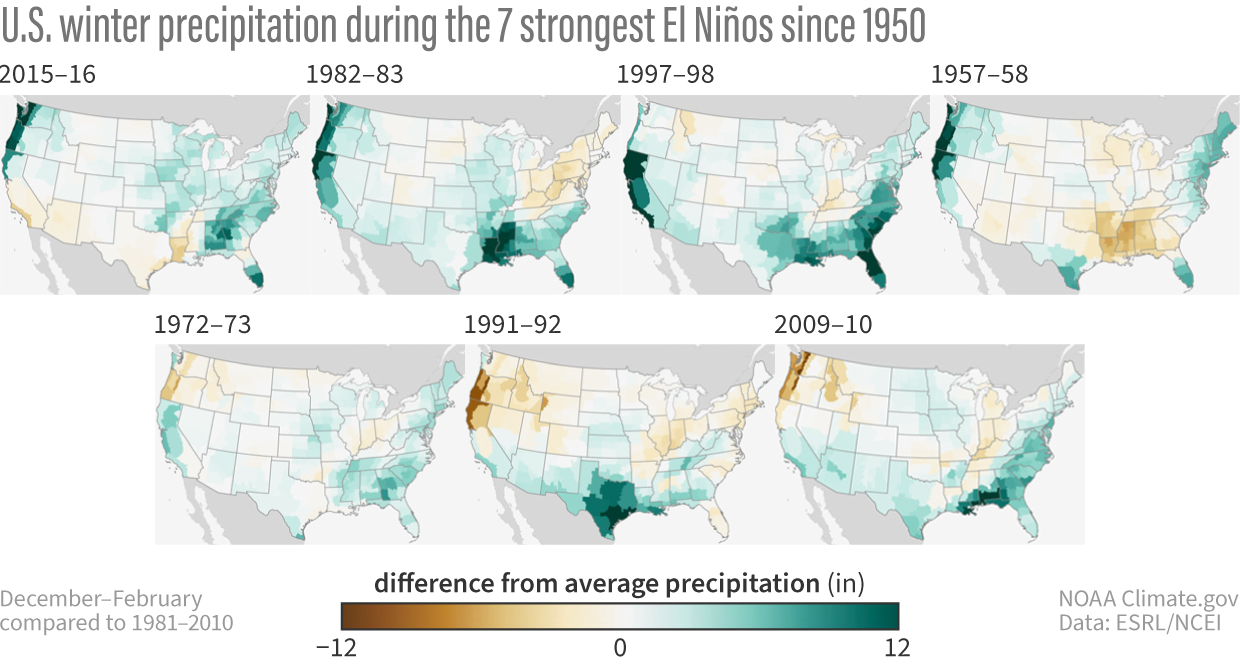
From the wettest three-month period along the Front Range to the state’s largest hailstone, 2023 was a year of climate extremes for Colorado — and the world. After three years of cool waters, the currents in the Pacific Ocean flipped to an El Niño cycle — an ocean climate pattern that can have a profound effect on landlocked, mountainous Colorado. Typically, a strong El Niño pattern increases the likelihood of increased snow across much of the state, said state climatologist Russ Schumacher. So far this winter, however, the state has received less snow than is typical for this time of year — a stark contrast to last winter, during which heavy snowfall and a wet spring refilled reservoirs and waterways, kicked off the growing season and tamped down on wildfires.
Historically, both the El Niño warming pattern and the related cooling pattern known as La Niña mean more predictable weather patterns for Colorado. With global temperatures soaring — 2023 was the world’s warmest ever recorded — Schumacher that predictability might not hold true for 2024 and beyond…While it has become increasingly more difficult to predict seasonal climate patterns, Schumacher said extreme weather events — from hailstorms and tornadoes to wildfires — are becoming the new [normal] for Colorado.