
Martin Luther King, Jr. Day 2024 #MLKDay2024

Click the link to read the article on the USFS website (Julianne Nikirk):
January 5, 2024
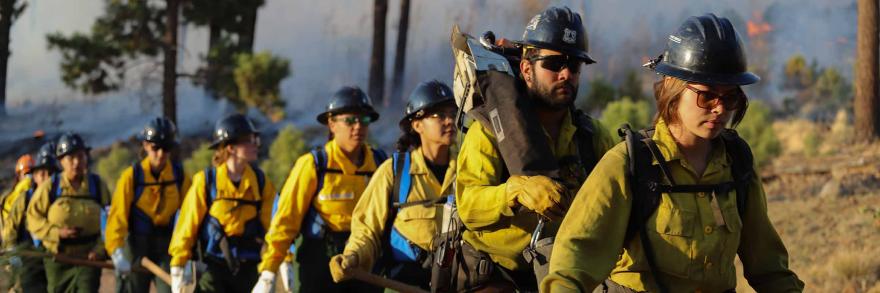
Last summer, when a wildfire started near her hometown, McClane Moody saw groups of scruffy men running around in dirty yellow shirts, green pants and muddy boots. They were wildland firefighters working to control the blaze. Moody was intrigued. She wanted to help her community when it faced emergencies, too, but wasn’t exactly sure how. It never occurred to her that women also serve as wildland firefighters.
This would all change when she came across a wildland firefighter training program specifically for women in the rolling mountains of Alpine, Arizona where she, herself, got a taste of the physical and mental challenges that come with being a wildland firefighter. And learned that she could do it.
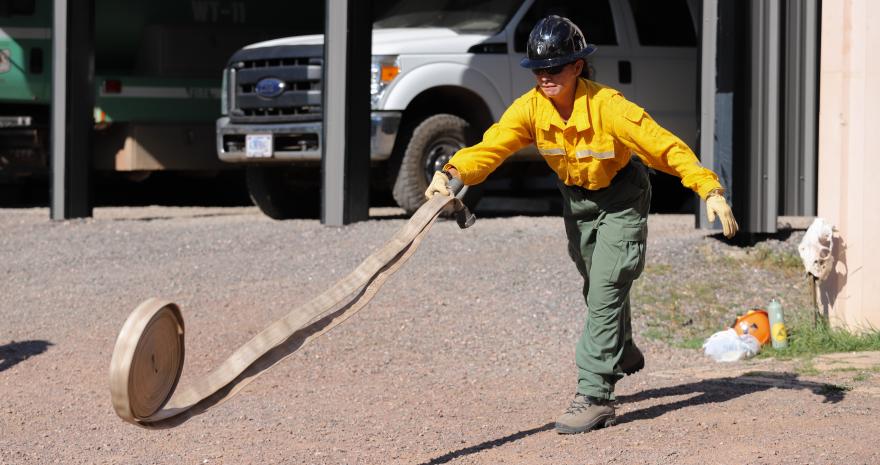
“I didn’t even know this was a career field up until this past summer. I am definitely going to apply for a job in the field,” Moody said after completing the week-long intensive program that introduces wildland firefighting to women.
With under 15% of wildland fire employees identifying as women, the Women in Wildfire Training Program aims to overcome barriers to equity that are still very much present in the industry. For participants, the intentional inclusion of women signals a “safe space” to learn and be among peers, encouraging people to explore a career in wildland fire management. In fact, many program participants, called cadets, would not have applied for the program if it was not geared specifically towards women.
“Representation matters. When you see yourself represented, you feel more welcome inherently and know you’ll learn how to overcome some of those obstacles together,” said Aubrey Hoskins, a recent program cadet.
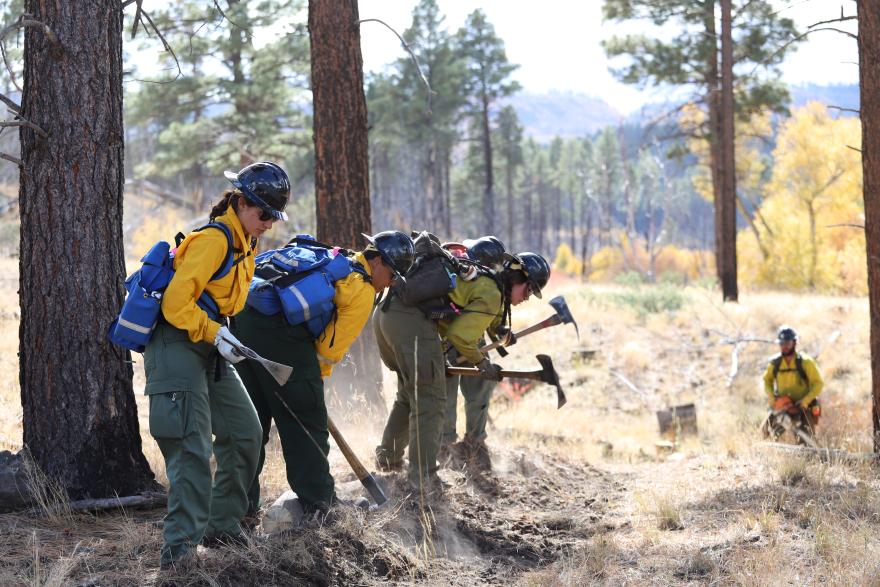
The obstacles Hoskins refers to include hours of digging handline, pushing through exhaustion while managing stress and demonstrating personal responsibility – all skills needed for the job. The program forms women into firefighting crews to give them an “authentic experience” of working on a real wildfire incident. Even in this simulated emergency environment, by design, the mental and physical fortitude required is very real.
According to the training organizers, known as the cadre, this is all part of the “type two fun,” a reference to the entry-level firefighter (type 2) qualifications the cadets are seeking. After successfully completing the program, these women leave with certifications that allow them to apply for wildland firefighter jobs. They also connect with an ever-expanding network of like-minded people and strong support structures.
“It was great to learn together and not have gender be a barrier,” recalled Cheyenne Lopez, a program cadet. “Everyone was super open to making connections and building relationships. I hope to see these people again someday.”
And she very well may. Many of the people that organize the training were once standing in the cadets’ boots. Over several years the program has hosted 65 students, half of whom gained employment in the Forest Service wildland fire program immediately upon completion. Now these same firefighters are sharpening their own leadership skills while giving back to the women following in their footsteps.
Ashlynn Buschschulte, a former cadet, now Squad Boss Trainee and member of the training cadre, shared her reflections.
“The transition from cadet to cadre has been an opportunity to find a leader in myself and that capability of being able to make sure what I’m doing is safe and effective for my crew. I have a better sense of responsibility for my crew. It’s made me more confident in my choices and the way I think about fighting fire,” she said.
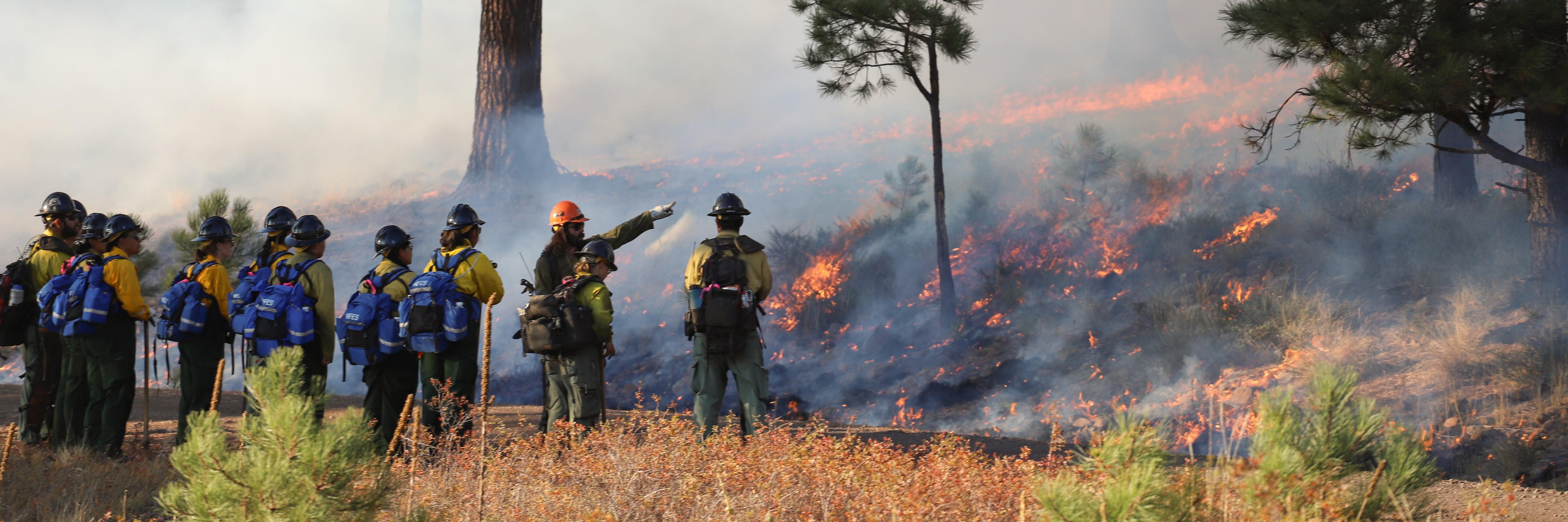
While getting accepted into the program is competitive due to the limited number of cadet spots, the Apache-Sitgreaves National Forests, which hosts the training, is working to keep up with the growing applicant pool. Placing new recruits in wildland fire jobs across the country is critical to addressing the nation’s wildfire crisis. And with the U.S. Forest Service employing more than 11,000 firefighters each year, the need is never-ending.
As Jasper Lanning, a training cadre member, explained, “To get people that are passionate and actually want to be involved in this line of work takes time to build those experiences and give them a taste of what they’re getting into.”
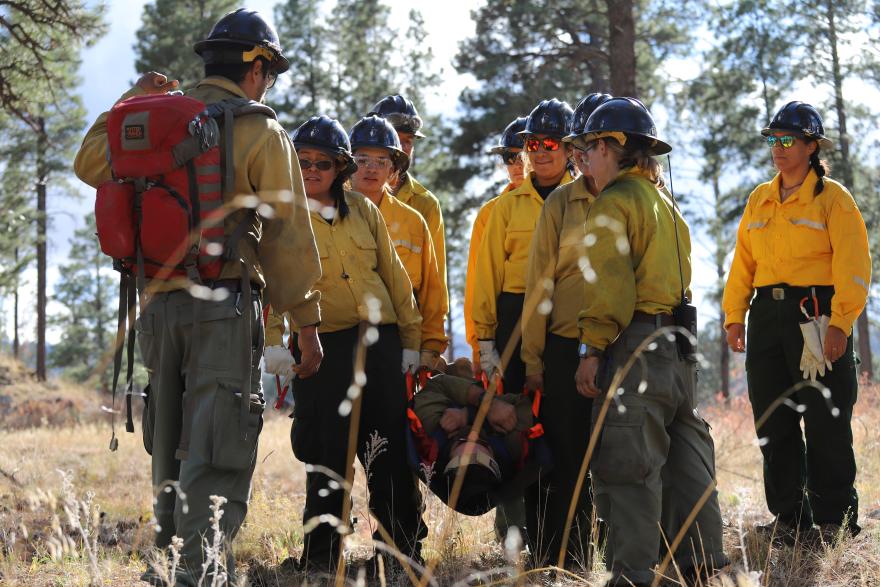
The hope is investments like this will pay off by building a more inclusive future in an industry dominated by men. For the women who seek the challenge of the Women in Wildfire program they come away ready to help their communities by doing one of the most difficult jobs – a calling that, regardless of gender, comes from deep inside. Colville National Forest, Employee Resources, Fire, Fire Prevention, Firefighters, employees, employment, women, women firefighters
Click the link to read the article on the NOAA website:
January 12, 2024
Earth had its warmest year on record; Upper-ocean heat content was record high while Antarctic sea ice was record low
Highlights:
- NOAA ranks 2023 as the warmest year in its global temperature record, which dates back to 1850.
- There is a one-in-three chance that 2024 will be warmer than 2023 and a 99% chance that 2024 will rank among the five warmest years on record.
- Upper ocean heat content—the amount of heat stored in the top 2000 meters of the ocean—was record high in 2023.
- Average annual Arctic sea ice extent was among the 10 lowest since 1979, and Antarctic sea ice extent was the lowest on record.
- There were 78 named tropical storms across the globe in 2023, which was below average, and 20 in the North Atlantic, which was well above average.
Surface Temperature
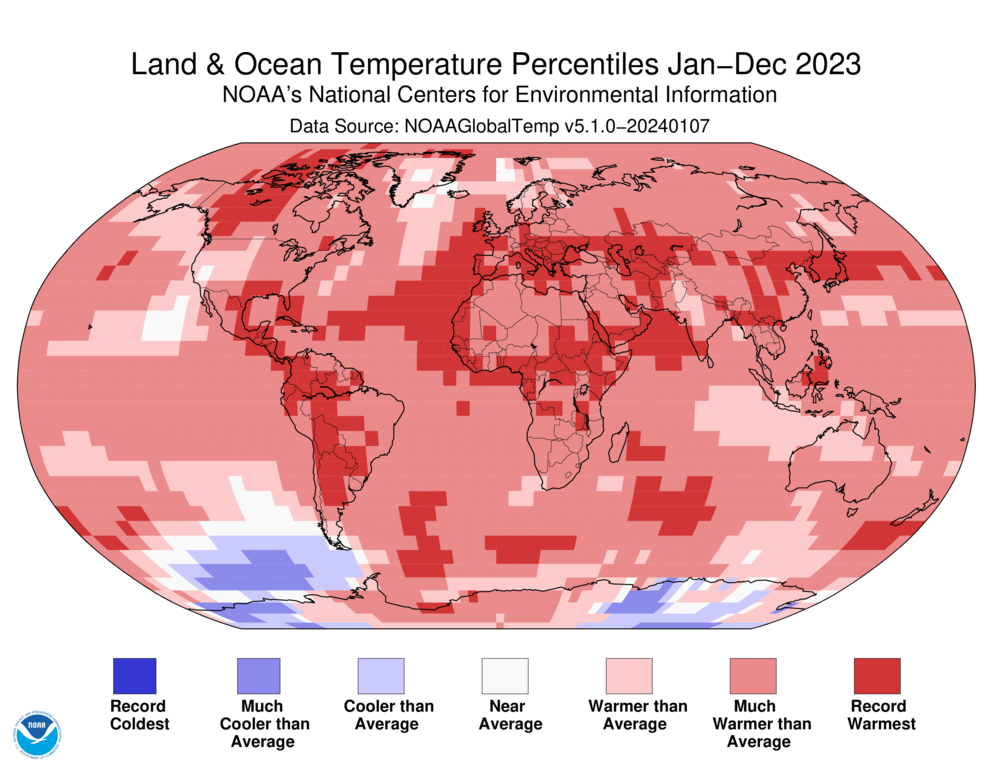
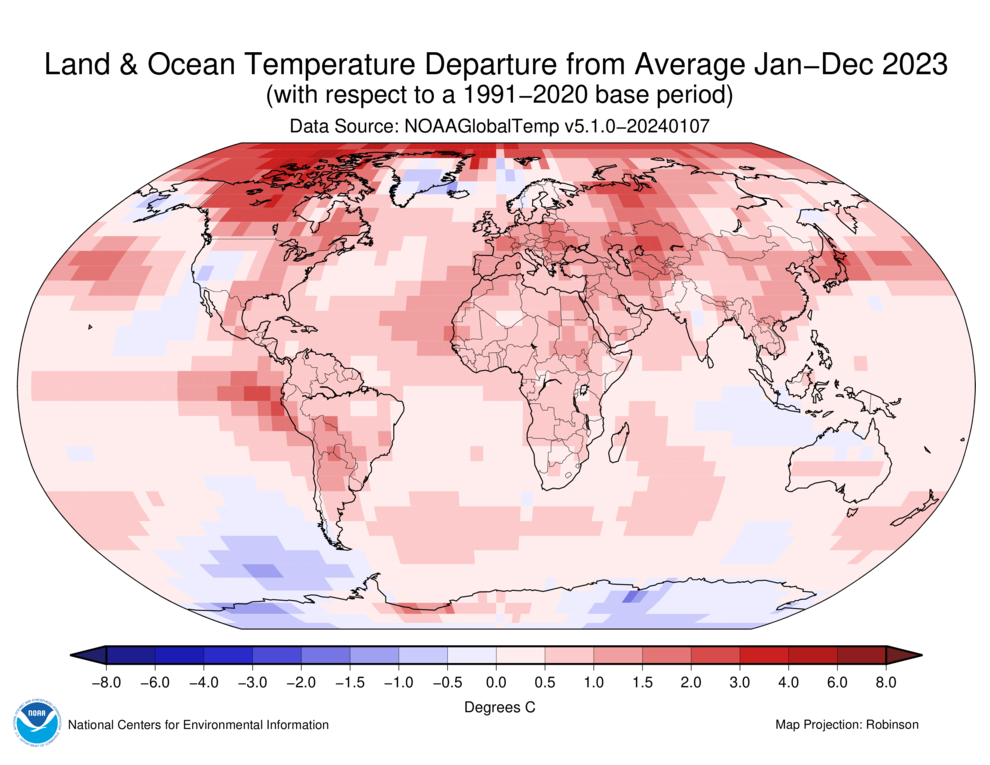
Looking ahead, there is a one-in-three chance that 2024 will be warmer than 2023 and a 99% chance that 2024 will rank among the top five warmest years.
Ocean Heat Content
Upper ocean heat content—the amount of heat stored in the top 2000 meters of the ocean—was record high in 2023. Ocean heat content is a key climate indicator because the oceans store 90% of the excess heat in the Earth system. The indicator has been tracked globally since 1958, and there has been a steady upward trend since about 1970. The five highest values have all occurred in the last five years.
Snow Cover
Northern Hemisphere snow cover extent averaged 9.4 million square miles in 2023, which was slightly below average. Monthly extent ranged from 17.8 million square miles in January to just under 1.0 million square miles in August, both of which were below average. Snow cover extent records began in 1967.
Sea Ice Extent
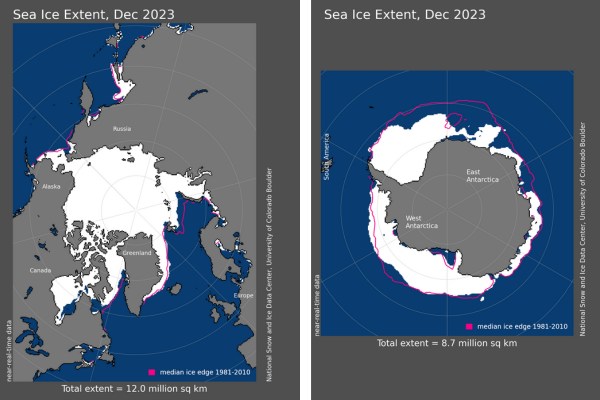
Arctic sea ice extent averaged 4.05 million square miles in 2023, ranking among the 10 lowest years on record. The maximum extent in March was 5.64 million square miles, which ranked fifth lowest, while the minimum extent in September was 1.63 million square miles, which ranked sixth lowest. Sea ice extent records begin in 1979.
Antarctic sea ice extent averaged 3.79 million square miles in 2023, the lowest on record. The maximum extent in September was 6.55 million square miles, which was the lowest by a record margin. The minimum extent in February was 690,000 square miles, which set a record low for the second consecutive year.
Tropical Cyclones
Seventy-eight named storms occurred across the globe in 2023, which was below the 1991–2020 average of 87.5. Forty-five of those reached tropical cyclone strength (≥74 mph), and 30 reached major tropical cyclone strength (≥111 mph). These also included seven storms that reached Category 5 (≥157 mph) on the Saffir-Simpson hurricane wind scale. The global accumulated cyclone energy (ACE) was about 8% above the 1991–2020 average.
The North Atlantic had 20 named storms, which was much above the 1991–2020 average of 14.4. Seven of those were hurricanes, including three major hurricanes. The ACE was about 18% above normal. Idalia was the only billion-dollar hurricane to impact the continental United States in 2023. Hurricane Lee was the strongest storm in the Atlantic in 2023 and the only Category 5 storm.
December 2023
Global surface temperature in December 2023 was 2.57°F (1.43°C) above the 20th-century average—the warmest December on record. For the ninth consecutive month, the global ocean surface was record warm. Regionally, North America and South America each had their warmest December on record.
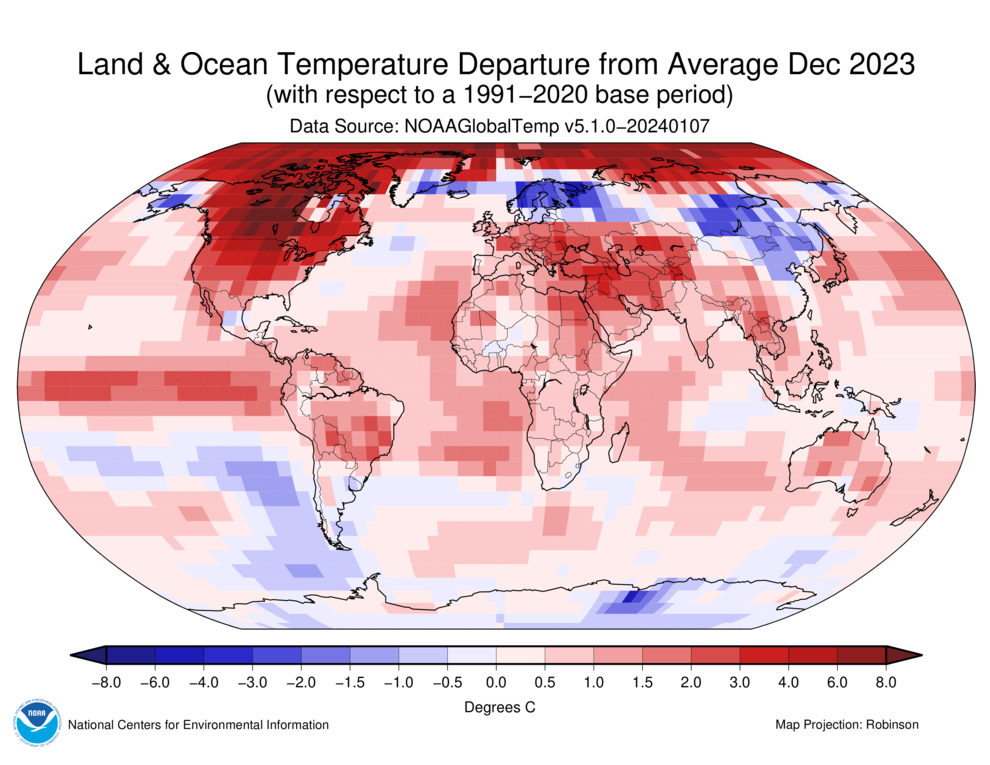
Northern Hemisphere snow cover extent in December ranked as the 11th-lowest December extent in the 58-year record. North America and Greenland’s combined extent was well below average, ranking as the third-smallest December on record. Eurasian snow cover extent for December was slightly above average.
Three named tropical storms occurred across the globe in December, which is half of the long-term average. Jasper reached major tropical cyclone strength (≥111 mph). The global accumulated cyclone energy was less than 50% of the long-term average for December.
Click the link to read the article on The Washington Pose website (John Muyskens and Niko Kommenda). Here’s an excerpt:
Last year, more than 40 percent of the Earth’s surface was at least 1.5 degrees Celsius (2.7 degrees Fahrenheit) warmer than in the late 1800s, a Washington Post analysis of temperature data released by the nonprofit Berkeley Earth found…Roughly one-fifth of the globe has already warmed by more than 2 degrees Celsius (3.6F) compared with the late 1800s, before humans started burning fossil fuels on a large scale. Around 5 percent of the planet has warmed more than 3 degrees Celsius (5.4F) — a fast-warming area around the Arctic…Swaths of Canada and the northern U.S. saw temperatures at least 2 degrees Celsius above the preindustrial average, contributing to Canada’s worst ever recorded wildfire season…Brazil, Paraguay and Bolivia all experienced unusual temperature spikes in 2023 despite warming more slowly in recent decades, according to Berkeley Earth data…2023 saw record levels of heat in the oceans too.