
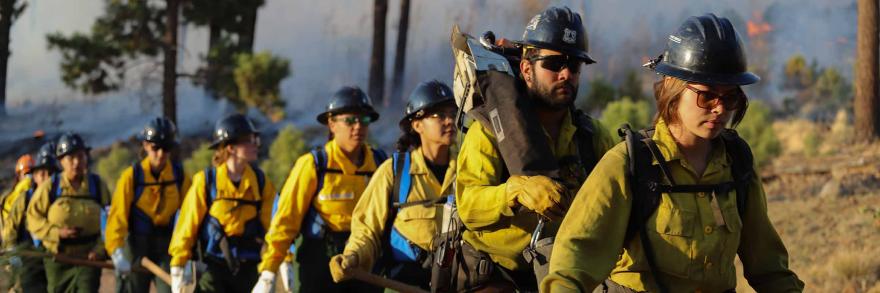
Click the link to read the article on the USFS website (Julianne Nikirk):
January 5, 2024
Last summer, when a wildfire started near her hometown, McClane Moody saw groups of scruffy men running around in dirty yellow shirts, green pants and muddy boots. They were wildland firefighters working to control the blaze. Moody was intrigued. She wanted to help her community when it faced emergencies, too, but wasn’t exactly sure how. It never occurred to her that women also serve as wildland firefighters.
This would all change when she came across a wildland firefighter training program specifically for women in the rolling mountains of Alpine, Arizona where she, herself, got a taste of the physical and mental challenges that come with being a wildland firefighter. And learned that she could do it.
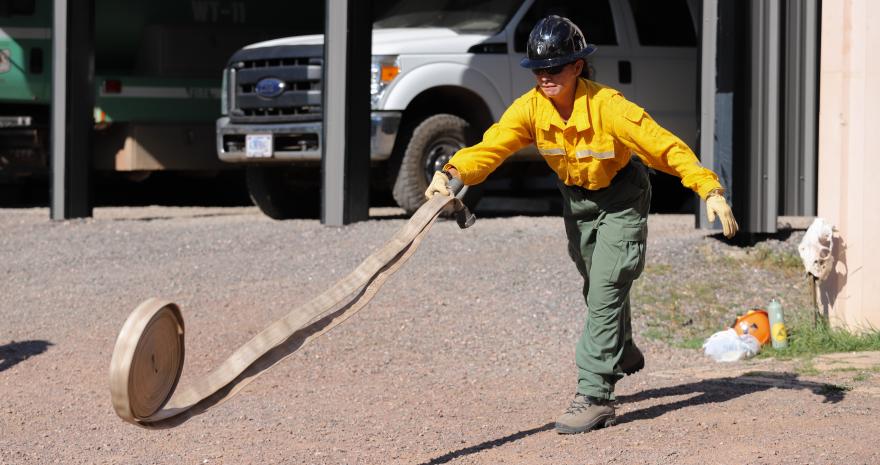
“I didn’t even know this was a career field up until this past summer. I am definitely going to apply for a job in the field,” Moody said after completing the week-long intensive program that introduces wildland firefighting to women.
With under 15% of wildland fire employees identifying as women, the Women in Wildfire Training Program aims to overcome barriers to equity that are still very much present in the industry. For participants, the intentional inclusion of women signals a “safe space” to learn and be among peers, encouraging people to explore a career in wildland fire management. In fact, many program participants, called cadets, would not have applied for the program if it was not geared specifically towards women.
“Representation matters. When you see yourself represented, you feel more welcome inherently and know you’ll learn how to overcome some of those obstacles together,” said Aubrey Hoskins, a recent program cadet.
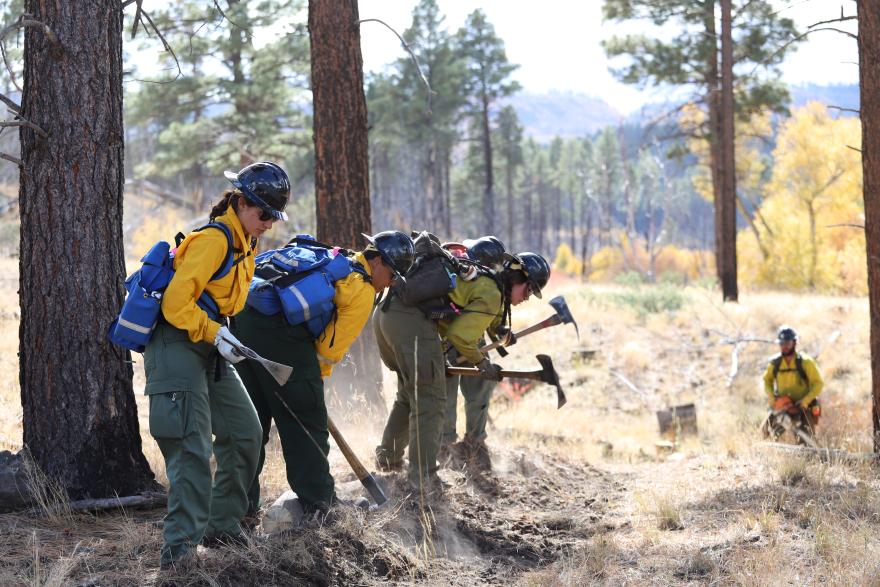
The obstacles Hoskins refers to include hours of digging handline, pushing through exhaustion while managing stress and demonstrating personal responsibility – all skills needed for the job. The program forms women into firefighting crews to give them an “authentic experience” of working on a real wildfire incident. Even in this simulated emergency environment, by design, the mental and physical fortitude required is very real.
According to the training organizers, known as the cadre, this is all part of the “type two fun,” a reference to the entry-level firefighter (type 2) qualifications the cadets are seeking. After successfully completing the program, these women leave with certifications that allow them to apply for wildland firefighter jobs. They also connect with an ever-expanding network of like-minded people and strong support structures.
“It was great to learn together and not have gender be a barrier,” recalled Cheyenne Lopez, a program cadet. “Everyone was super open to making connections and building relationships. I hope to see these people again someday.”
And she very well may. Many of the people that organize the training were once standing in the cadets’ boots. Over several years the program has hosted 65 students, half of whom gained employment in the Forest Service wildland fire program immediately upon completion. Now these same firefighters are sharpening their own leadership skills while giving back to the women following in their footsteps.
Ashlynn Buschschulte, a former cadet, now Squad Boss Trainee and member of the training cadre, shared her reflections.
“The transition from cadet to cadre has been an opportunity to find a leader in myself and that capability of being able to make sure what I’m doing is safe and effective for my crew. I have a better sense of responsibility for my crew. It’s made me more confident in my choices and the way I think about fighting fire,” she said.
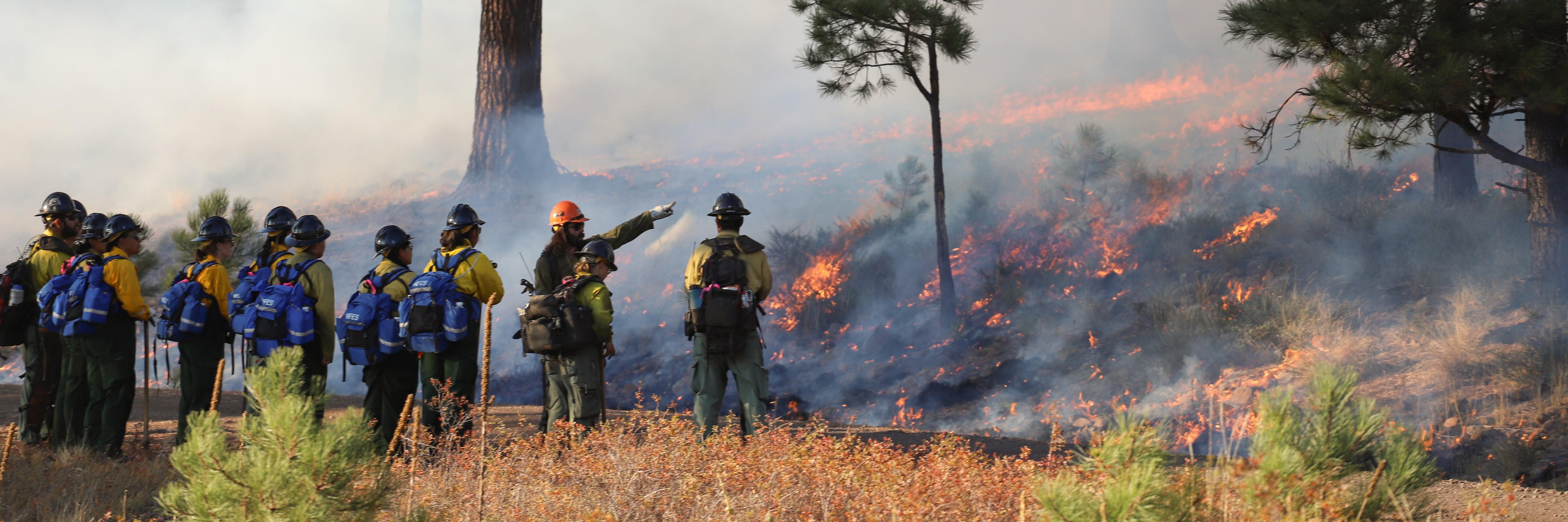
While getting accepted into the program is competitive due to the limited number of cadet spots, the Apache-Sitgreaves National Forests, which hosts the training, is working to keep up with the growing applicant pool. Placing new recruits in wildland fire jobs across the country is critical to addressing the nation’s wildfire crisis. And with the U.S. Forest Service employing more than 11,000 firefighters each year, the need is never-ending.
As Jasper Lanning, a training cadre member, explained, “To get people that are passionate and actually want to be involved in this line of work takes time to build those experiences and give them a taste of what they’re getting into.”
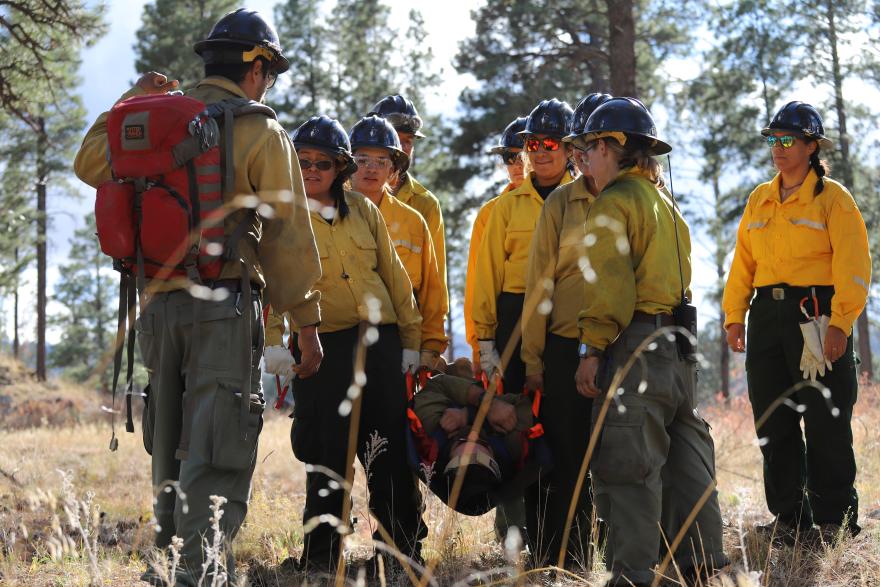
The hope is investments like this will pay off by building a more inclusive future in an industry dominated by men. For the women who seek the challenge of the Women in Wildfire program they come away ready to help their communities by doing one of the most difficult jobs – a calling that, regardless of gender, comes from deep inside. Colville National Forest, Employee Resources, Fire, Fire Prevention, Firefighters, employees, employment, women, women firefighters