

Click the link to read the article on the National Drought Mitigation Center website (Curtis Riganti):
Drought Overview
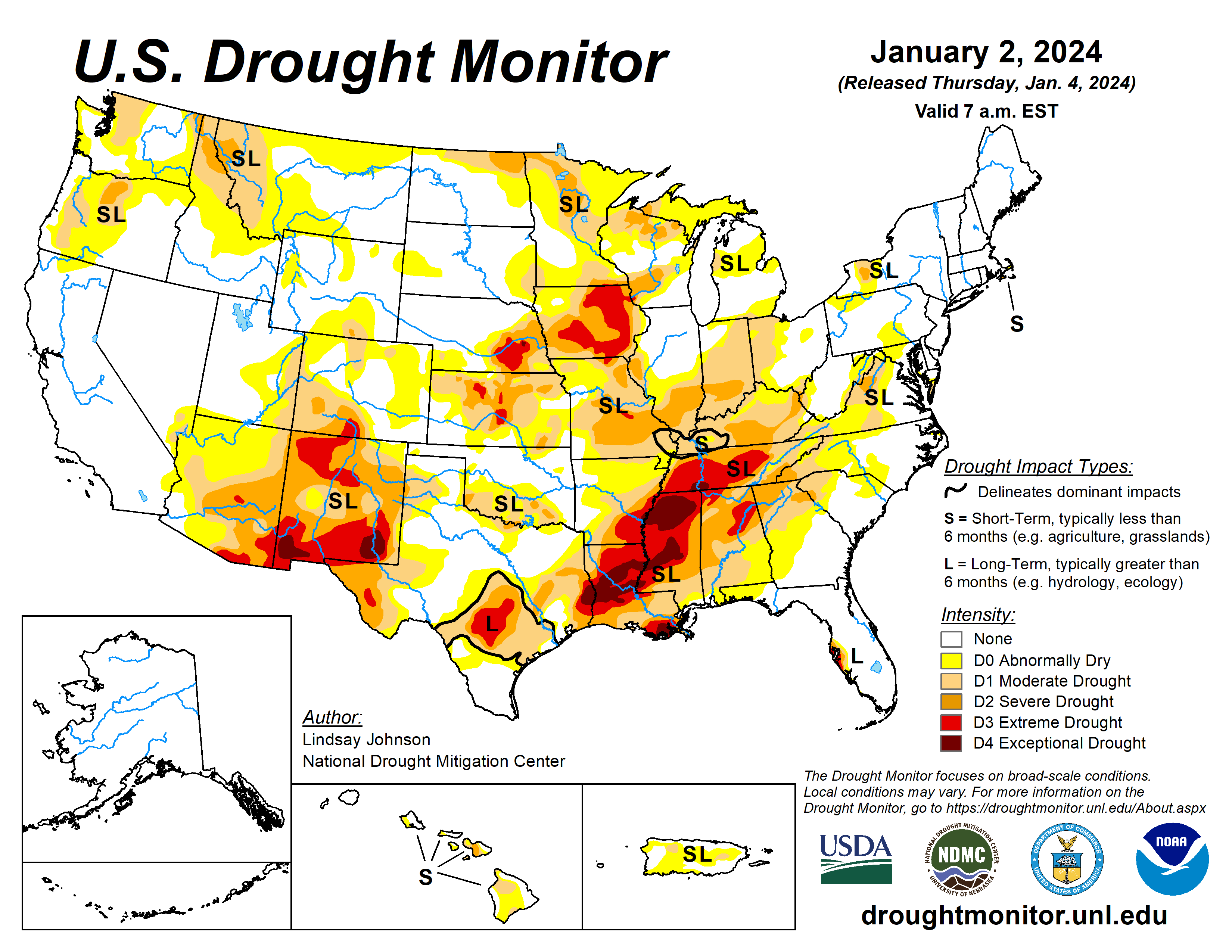
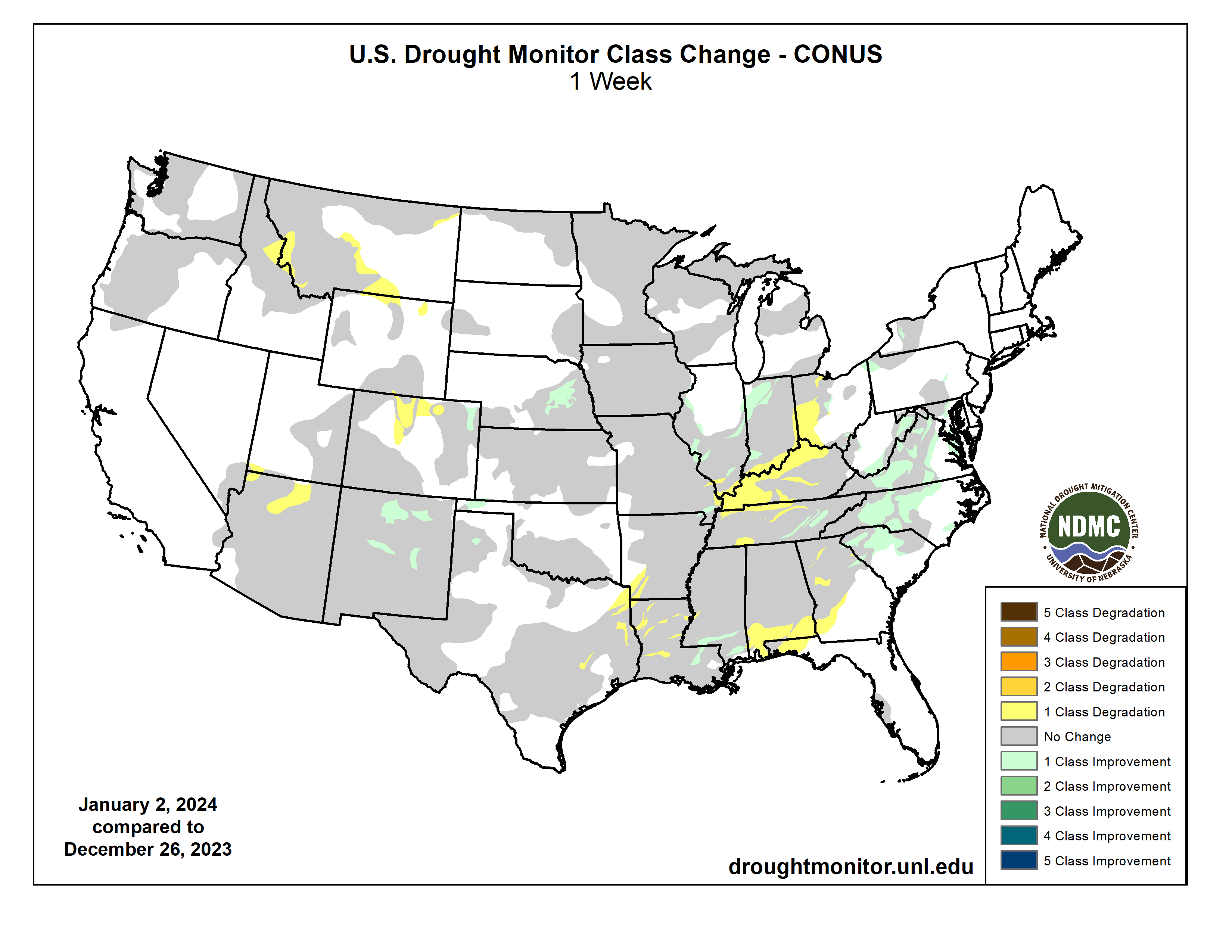
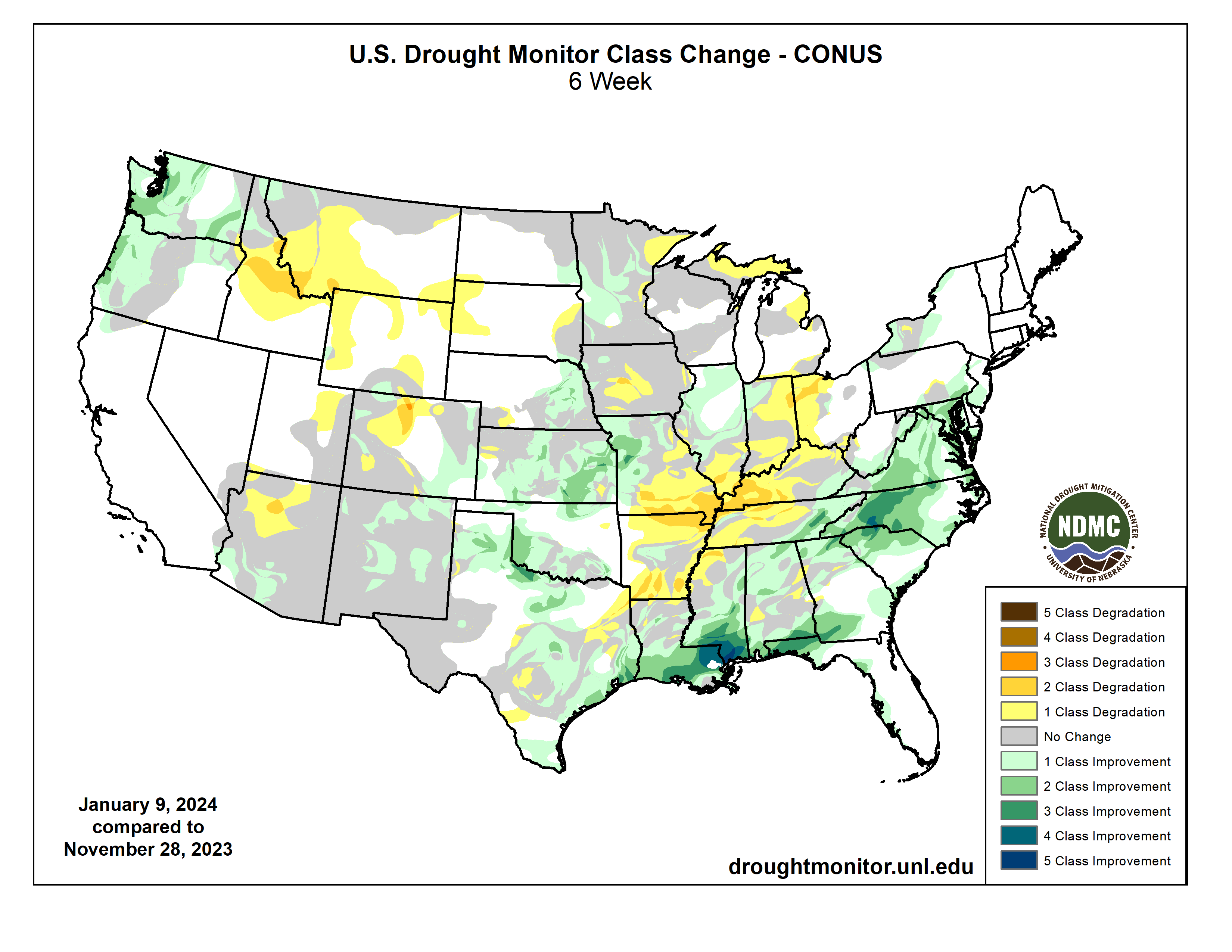
Changes to drought conditions varied widely across the U.S. during December. Improvements to ongoing drought conditions occurred in parts of the central Gulf Coast, central and southern Great Plains, Mid-Atlantic and western Carolinas, and Washington and Oregon. Degradations occurred across parts of the Ozarks, middle Mississippi and lower Ohio River valleys, northern Colorado, and southwest Montana and adjacent Idaho, among a few other areas. Outside of the contiguous U.S., some degradations to drought conditions occurred in Puerto Rico, while widespread improvements to ongoing drought occurred in Hawaii.
Nationwide, exceptional drought coverage dropped from 1.78 to 1.02%. Extreme or worse drought coverage dipped from 6.54 to 5.25%. Severe or worse drought coverage declined from 17.12 to 13.88%. Moderate or worse drought coverage decreased from 30.28 to 27.59%.
Drought Forecast
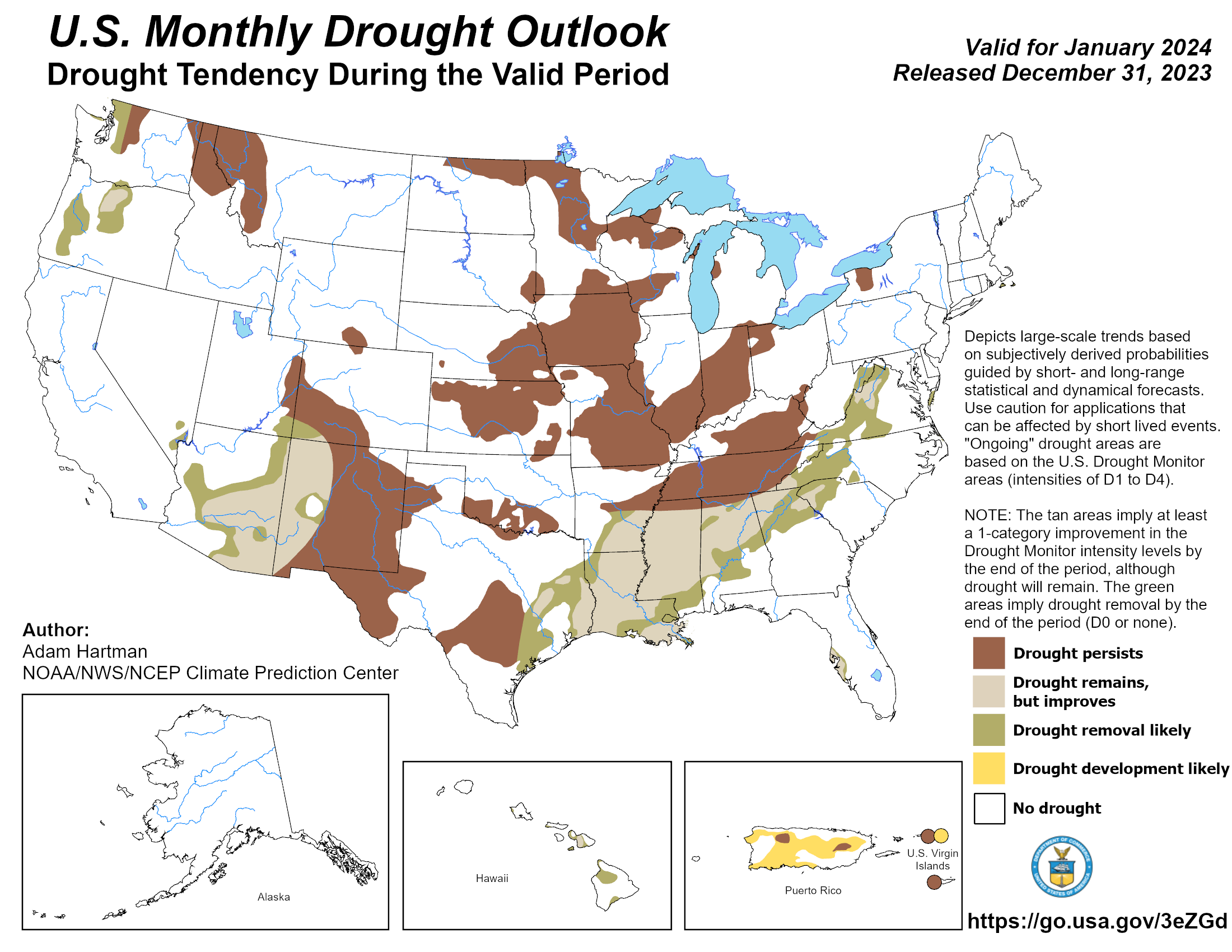
According to the January drought outlook from the National Weather Service Climate Prediction Center, drought improvement is likely in parts of the Pacific Northwest, from the Four Corners area to the U.S.-Mexico border, and from eastern Texas northeastward through the southeastern part of the Appalachian Mountains.
Within the contiguous U.S., drought is forecast to persist in areas where drought was ongoing near the end of December. Degradation is forecast across much of Puerto Rico and on the island of St. John, while improvement is likely on Maui, Kahoolawe, far western Molokai, far western Oahu and parts of the Big Island of Hawaii.
Temperature
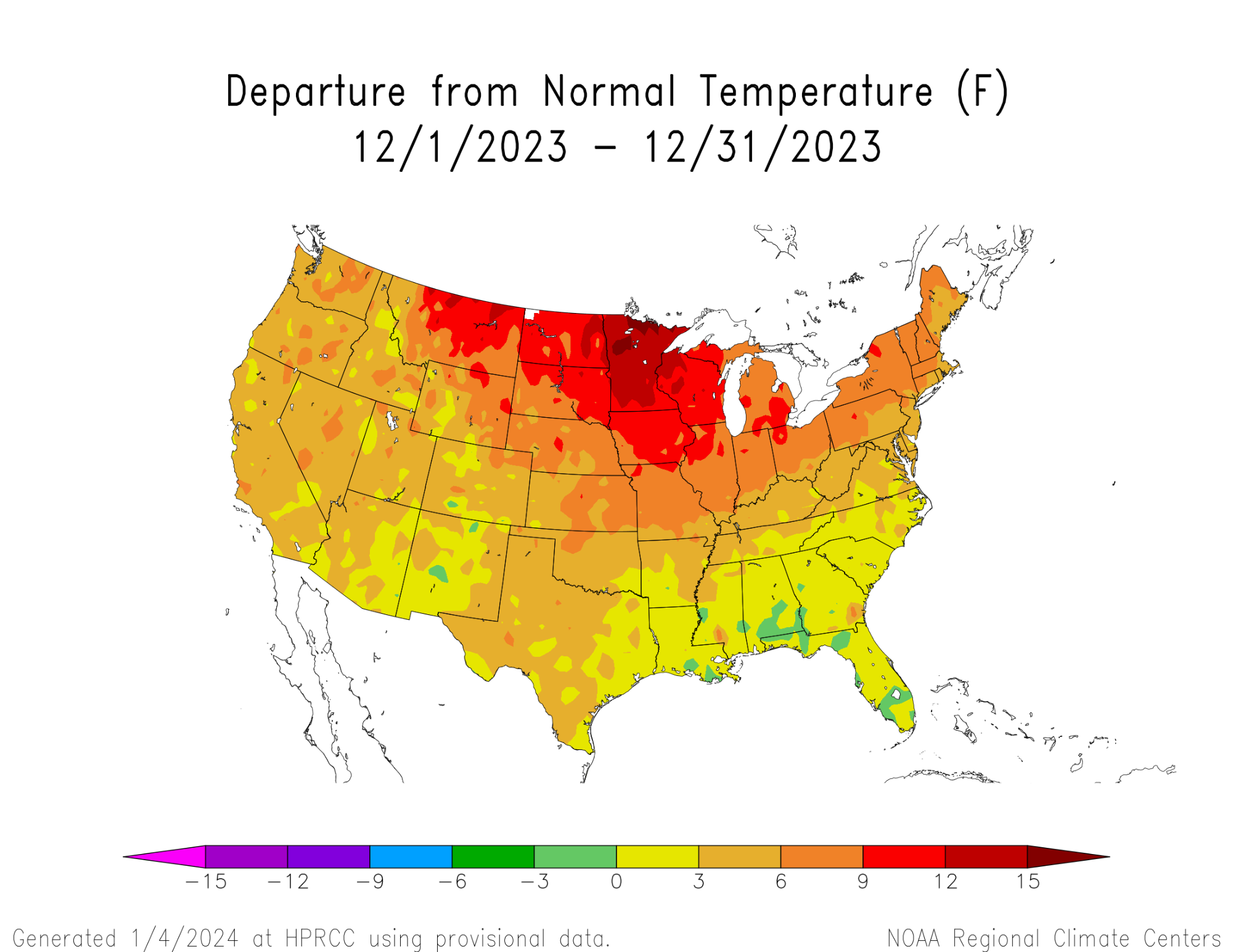
Most of the contiguous U.S. saw warmer-than-normal temperatures during December, with a few exceptions in southern parts of the Southeast region. The northern Great Plains, Upper Midwest and Great Lakes regions all had much warmer-than-normal temperatures for December, especially in Minnesota, where most sites reported temperatures at least 12 degrees above normal for the month.
Elsewhere, temperatures in the West, southern Great Plains, and Northeast were primarily 3 to 9 degrees warmer than normal, with isolated warmer values. Southeast Alaska and the North Slope regions saw temperatures range from 2 to about 8 degrees above normal, while south-central and southwest Alaska were mostly 2 to 6 degrees below normal. Temperature observations in Hawaii were within a couple degrees of normal, with the exception of an observing site in the center of the Big Island. Temperature anomalies in Puerto Rico varied from 3 degrees warmer than normal to 1 to 2 degrees cooler than normal.
Precipitation
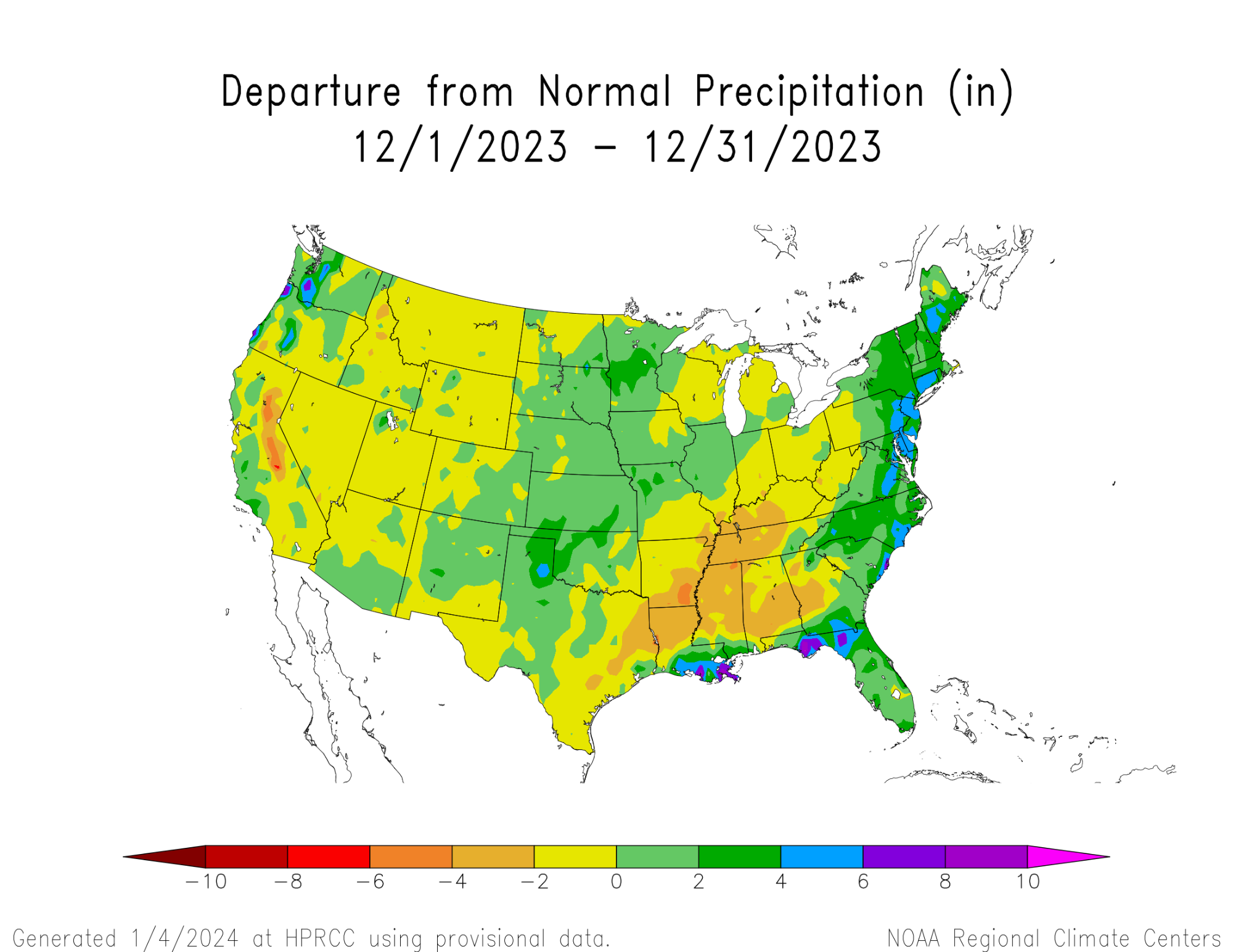
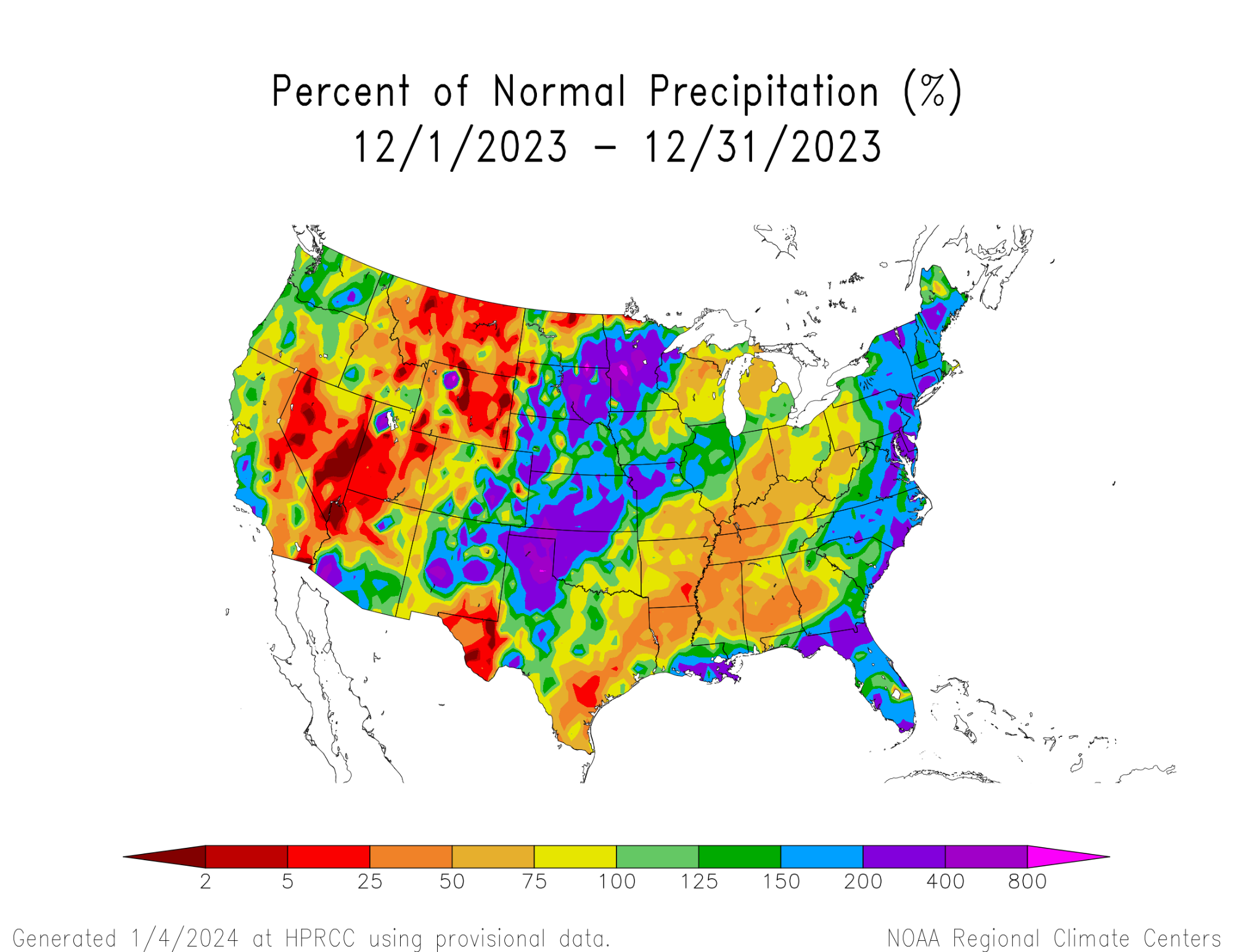
Drier-than-normal weather enveloped parts of central and western Montana, much of northern Wyoming, much of western Utah and portions of Nevada. Dry weather also occurred from northeast Texas to western Ohio, including portions of Mississippi and central Alabama.
Above-normal precipitation fell in southern Louisiana, the Florida Panhandle and along much of the Atlantic Coast. Wetter-than-normal weather also occurred in the Texas Panhandle, western Oklahoma, much of Kansas and Nebraska, and in eastern South Dakota and Minnesota.
Southeast Alaska received above-normal precipitation in December. In Hawaii, a mix of above- and below-normal rainfall occurred on Kauai and Oahu, while mostly below-normal precipitation occurred elsewhere. Well below-normal rainfall fell across northwest and parts of northeast Puerto Rico.
Regional Overviews
South
Warmer-than-normal temperatures were common across much of the South during December. Temperatures in Oklahoma, Texas, Arkansas, northern Mississippi and Tennessee ranged mostly from 2 to 6 degrees above normal. In a few locations in the northern reaches of Oklahoma and Arkansas, it was even warmer than that, with temperatures topping out from 6 to 8 degrees above normal.
Drier-than-normal weather enveloped parts of eastern Texas, central and northern Louisiana, southeast and northern Arkansas, much of Mississippi, and most of central and western Tennessee. A quarter or less of normal December precipitation fell near the Corpus Christi area, and less than half of normal precipitation fell at many places from northeast Texas through northern Louisiana, southern Arkansas, northern Mississippi, and central and western Tennessee.
Wetter-than-normal weather occurred in south-central and southeast Louisiana, the Texas and Oklahoma panhandles and northwest Oklahoma. Many locations in northwest Oklahoma and in the Oklahoma and Texas panhandles recorded at least double their normal December precipitation.
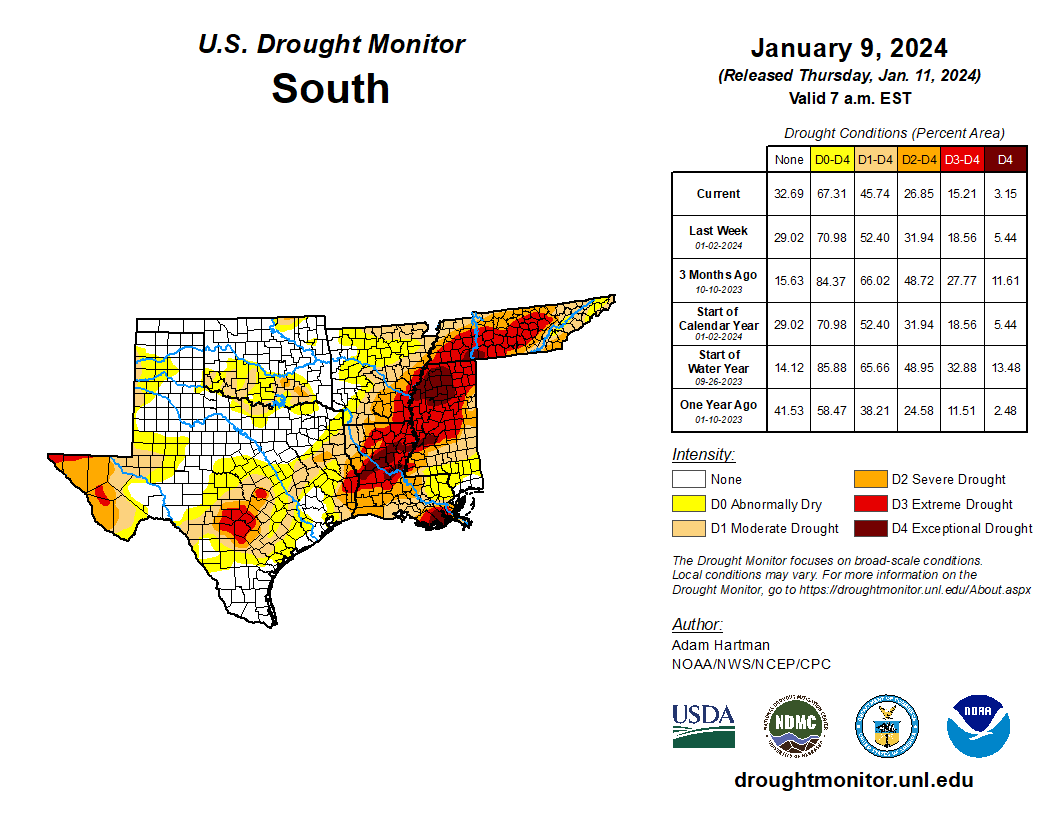
A mix of drought degradations and improvements occurred across the South in December. Widespread multiple-category improvements occurred in southern Louisiana and Mississippi where above-normal rain amounts fell, and conditions improved by multiple categories in a small area of eastern Tennessee. Scattered one- and two-category improvements occurred in central and western north Texas, the eastern Texas Panhandle and western Oklahoma, and parts of northeast Oklahoma.
Meanwhile, primarily one- or two-category degradations occurred in parts of northeast Texas, southern and northern Arkansas, northwest Mississippi, and central and western Tennessee.
Exceptional drought coverage decreased from 10.17 to 5.44%. Extreme or worse drought coverage declined from 21.85 to 18.56%. Severe or worse drought coverage dropped from 36.13 to 31.94%. Moderate or worse drought coverage dipped from 55.05 to 52.4%.
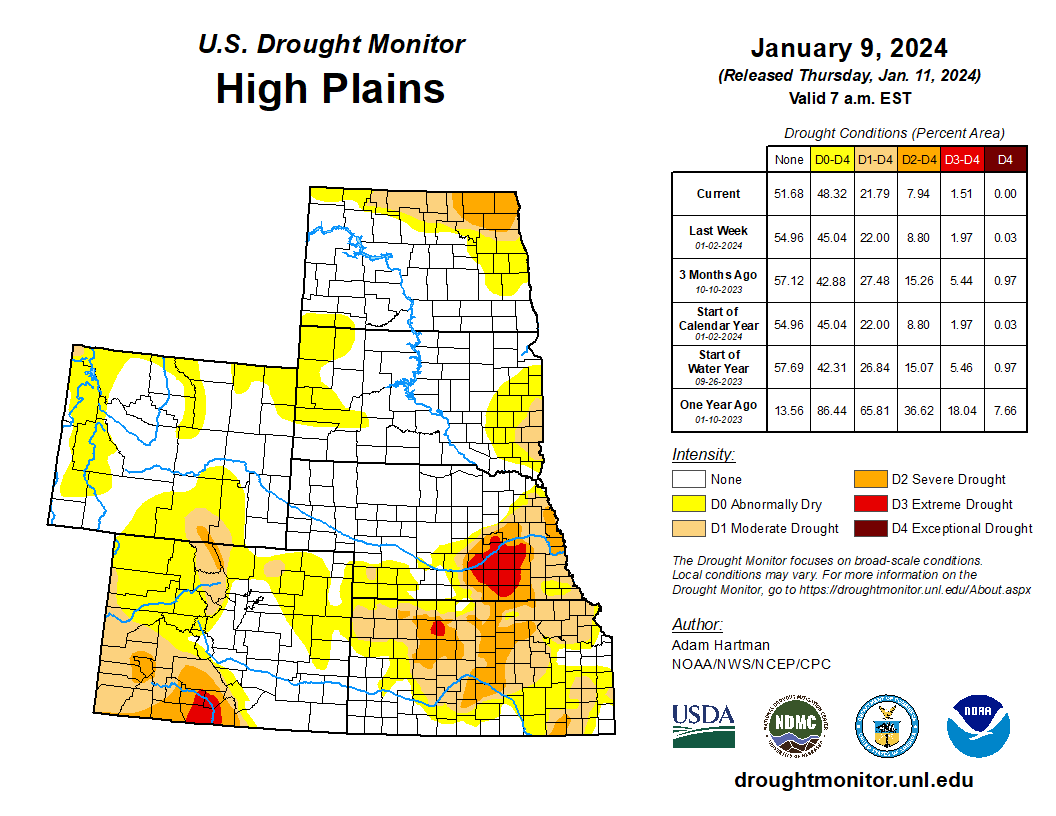
High Plains
Warm temperatures covered almost the entire High Plains region during December. The northeast half of South Dakota and most of North Dakota saw temperatures of 9–12 degrees above normal, reaching 12–15 degrees above normal in eastern North Dakota. The rest of the High Plains saw temperatures from 3 to 9 degrees warmer than normal, with a few higher readings mixed in. Above-normal precipitation fell across much of south-central and eastern Colorado, Nebraska, Kansas and the eastern Dakotas. Precipitation in Wyoming was primarily below normal, while precipitation anomalies varied in western South Dakota and western Nebraska.
Primarily drought improvements occurred in eastern Colorado, parts of Kansas, eastern Nebraska and southeast North Dakota. Degradations were common in north-central Colorado, the Black Hills, central and northern Wyoming, and eastern South Dakota. Exceptional drought coverage dipped slightly, from 0.56 to 0.03%. Extreme or worse drought coverage declined a bit, going from 3.31 to 1.97%. Severe or worse drought coverage decreased from 12.62 to 8.8%. Moderate or worse drought coverage dropped from 24.38 to 22%.
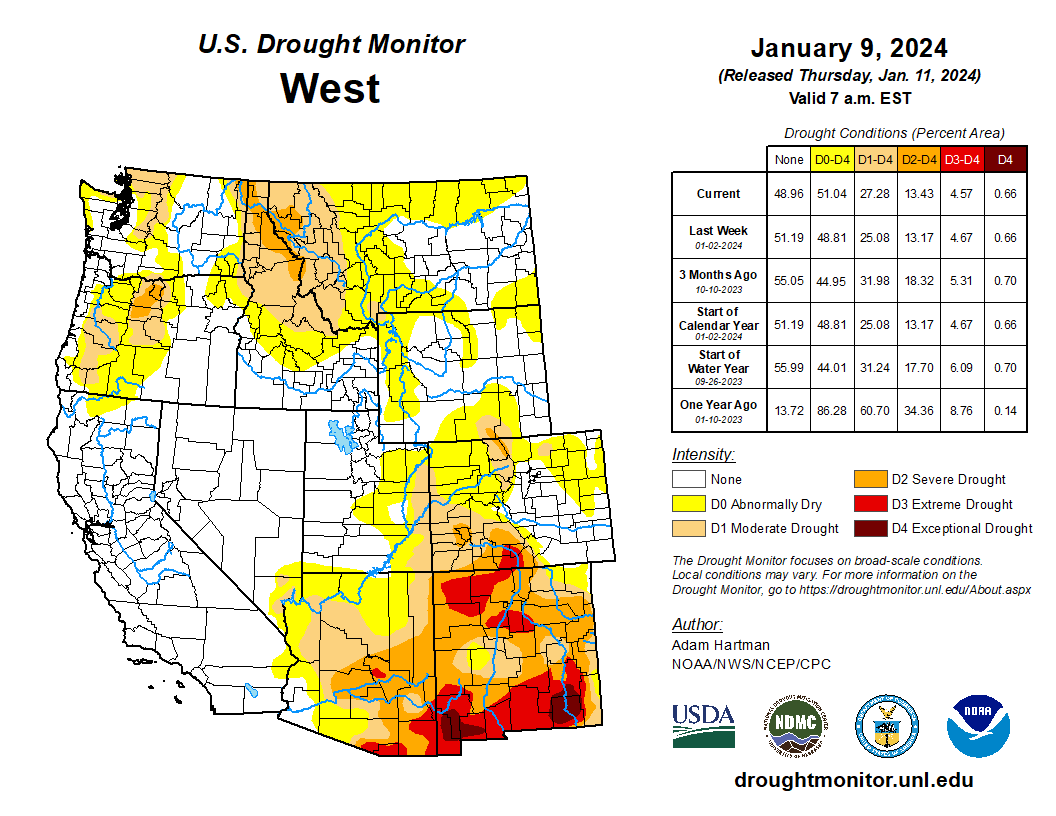
West
Warmer-than-normal temperatures covered most of the West during December. Temperatures from 3 to 9 degrees above normal were common across most locations, with central and eastern Montana reaching 9 to 15 degrees above normal. Drier-than-normal locations for December across the region included most of western Utah, much of Nevada, parts of northwest Arizona, much of Montana and parts of Idaho. Parts of eastern Washington, southern Arizona and New Mexico saw wetter-than-normal weather for December.
Improvements to drought or abnormal dryness were widespread in western Washington and Oregon, eastern Washington and northeast Oregon, the Idaho Panhandle, southwest Arizona and New Mexico. Degradations occurred in southwest Montana and adjacent parts of Idaho, as well as parts of northern Arizona and central Utah. Exceptional drought coverage was unchanged, remaining at 0.66%. Extreme or worse drought coverage declined slightly, from 5.22 to 4.67%. Severe or worse drought coverage dropped from 16.29 to 13.17%. Moderate or worse drought coverage dipped from 27.59 to 25.08%.