
by Robert Marcos & Brad Barham, PhD
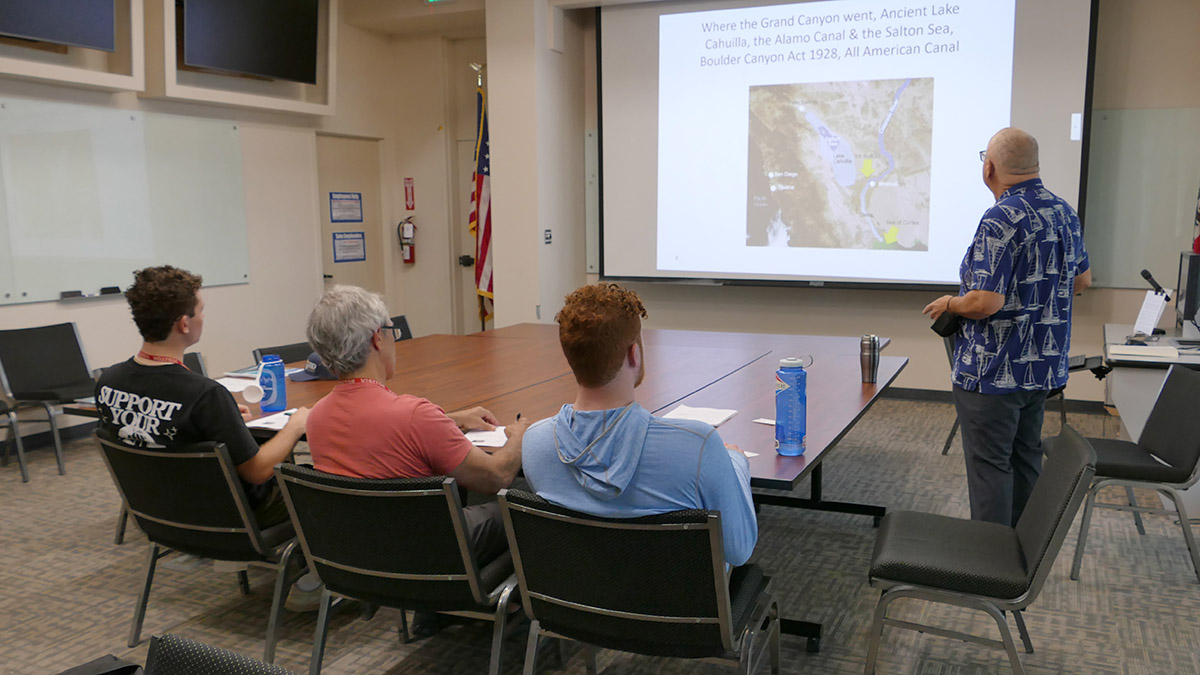
In 2022 – while conducting a study of the Colorado River crisis, Dr. Brad Barham – a Professor of Agricultural Economics at the University of Wisconsin, Madison, two of his undergrads and I watched a Powerpoint presentation given by the Imperial Irrigation District’s Watermaster, Merlon Kidwell. Kidwell retired last year after fifty years with the IID. Besides the IID’s hospitality that day, there were two fundamentally-important things we’ve never forgotten –
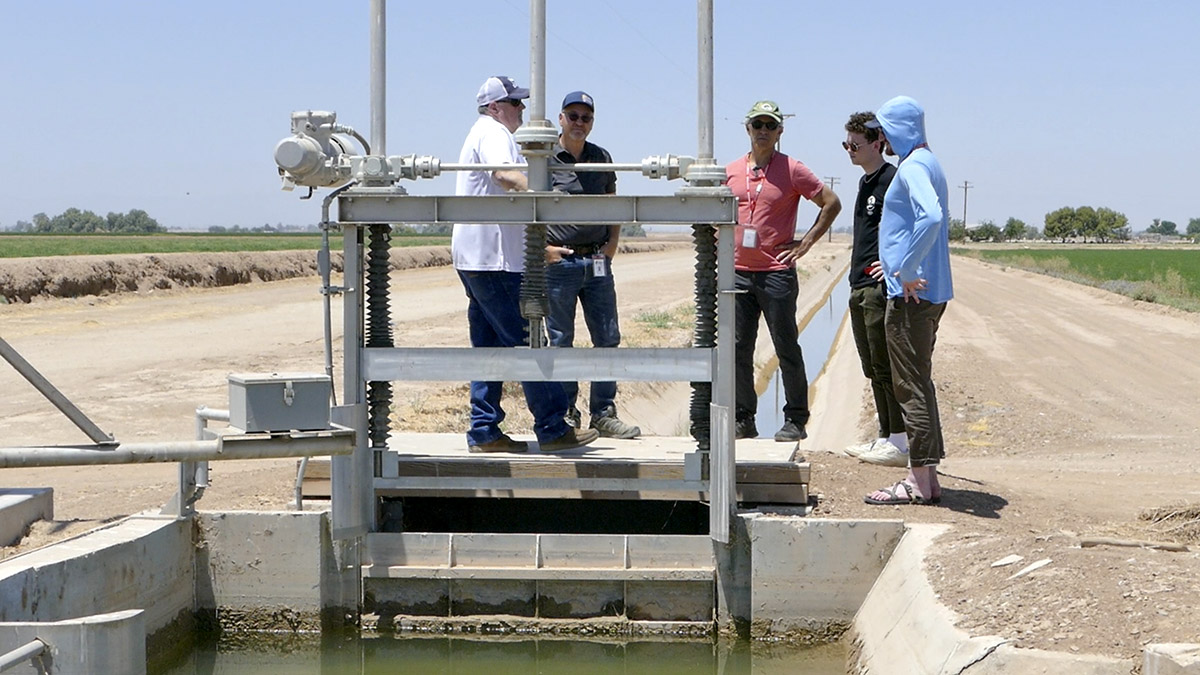
1. The IID maintains 3,000 miles of delivery canals and agricultural drains that convey 3.1 million acre feet of Colorado River water every year. This amount represents about a quarter of the Colorado River’s average annual 12.5MAF output since 2000.1 Under its historic contracts with the federal government, the IID is exempt from paying for the water it receives, it does however pay for the operation, maintenance, and repair of the 80-mile long All-American Canal, its own internal water delivery systems, and a portion of the cost of maintaining the Imperial Dam.2
2. Similarly, the IID does not charge farmers for the water itself. It charges farmers (who are connected to the IID’s water delivery system) an annual fee for that connection, plus a flat $20 per acre foot for the costs associated with the delivery of their water. 3
Meanwhile, the San Diego County Water Authority pays a wholesale price that’s between $700 and $1,200 per acre-foot for that same (untreated) Colorado River water.4 With such a disparity in water prices it seems reasonable to ask if the IID could both conserve water and lower the price paid by municipal users by raising the price paid by farmers.5
It doesn’t take an economist to understand the “law of demand” which says: “As the price of goods or services go up, people will generally use less of it”. Today with Lake Powell hovering just above the dead pool level it’ has become crucial’s more urgent than ever to understand why the price of water that’s provided to Imperial Valley farmers hasn’t gone up considering the increased scarcity of Colorado River water.
For decades now the Imperial Irrigation District has demonstrated that they prefer the carrot to the stick – in other words the IID has provided farmers with financial incentives and the technology that’s required in order to conserve water. The IID also cannot raise water prices because of laws established by California Proposition 218.
California’s Proposition 218 was passed by voters in 1996 in order to protect taxpayers by requiring voter approval for local tax increases and restricting property-related fees to the actual, proportional cost of service delivery 6. Since the IID receives Colorado River water for free, they can only charge farmers $20 per acre-foot to recover the costs associated with the water’s conveyance – but not for the water itself. Consequently, to legally increase agricultural water rates, the IID must prove higher service expenses through a formal cost-of-service study, issue a 45-day advance notice to landowners, and then begin the “majority protest” process. Because water, sewer, and refuse collection fees are legally classified as “property-related fees,” the Imperial Irrigation District board could pass the rate increase automatically unless a majority of affected stakeholders vote “no” by submitting written protests.7 In this context the “affected stakeholders” are the legal landowners of the agricultural parcels that are subject to the water fee, and the ratepayers, tenants, or farmers who are directly responsible for paying the water bill under their lease terms. 8
However the cost of these (very successful) conservation measures – especially the cost of paying farmers to fallow some of their fields, are very high: about $250 million per year (or $300-450 per acre foot depending on conservation practices used). Given how Western water laws work, and the addition of Proposition 218, that is currently the most feasible and the most immediate path to water conservation in the Colorado River system.
A lower cost, more sustainable solution would require changing the rules that guarantee specific volumes of water at only the cost of conveyance to farmers across the basin. That will be a challenging transition, and will probably require federal legislation to be achieved.