
Click the link to read the article on The Salt Lake Tribune website (Anastasia Hufham). Here’s an excerpt:
January 4, 2024
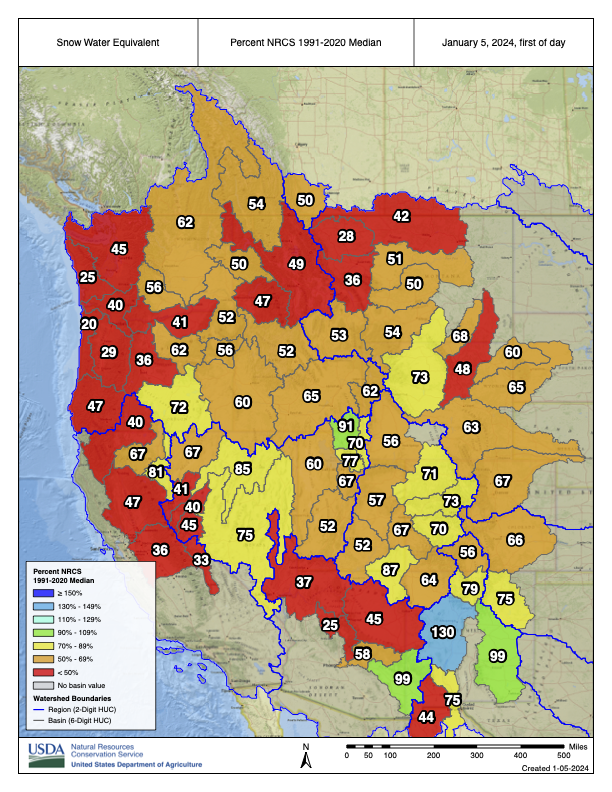
Right now, the entire American West is struggling with snow drought. Snowpack for the Upper Colorado River Basin — which includes Colorado, New Mexico, Utah and Wyoming — stands at a dismal 57.7% of average as of Jan. 3…

“Because of last year and how beneficial it was, Lake Powell made a huge jump,” he said. “But we would need four-plus years like last year in a row to fill it back up.”
This year’s is an El Nino winter. That means that warmer surface temperatures in the Pacific Ocean pull the global jet stream further south, making for wetter winters in the Southwest and drier conditions in the Pacific Northwest. Latitude-wise, Utah sits in the middle. So far, northern Utah experienced one storm cycle in early December, and southern Utah has barely seen any snow. In better news, Utah’s reservoirs stand at 80% full — usually, they’re around 56% full this time of year — and good soil moisture means that this year’s runoff will head efficiently to reservoirs without soaking into the ground…
“One good year is one good year, and we can’t get complacent,” Amy Haas, executive director of the Colorado River Authority of Utah, told The Tribune. “We can’t count on good years. We have to be prepared for anything.”
