Group to focus on water for the environment: State officials want more flow targets in stream management plans — @AspenJournalism #EagleRiver

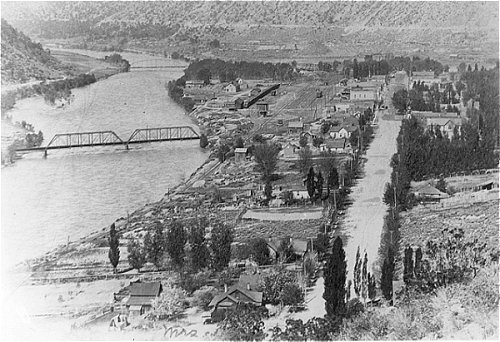
The Eagle River, left, flows into the Colorado River near Dotsero. The Eagle River Coalition recently completed its community water plan, which outlines environmental flow deficits, but does not make recommendations on how to get more water into rivers. CREDIT: BETHANY BLITZ/ASPEN JOURNALISM

Click the link to read the article on the Aspen Journalism website (Bethany Blitz):

June 13, 2024

In an effort to elevate the needs of the environment in water management, the state of Colorado is convening a new committee that is scheduled to begin meeting this summer. 

The Colorado Water Conservation Board and Boulder-based nonprofit River Network are creating a pilot program known as the Environmental Flows Cohort, which will assess how much water is needed to maintain healthy streams and how to meet these flow recommendations. The cohort will include not just environmental advocates, but agricultural and municipal water users, who may initially feel threatened by environmental flow recommendations. 

The goal of the program is to address the barriers that lead to these recommendations being excluded from local stream management plans. The cohort was one of the recommendations in a January 2023 analysis of SMPs by the River Network.

“The idea is how can the environmental and recreation side of things better partner with the agricultural users on trying to find win-win projects for keeping more water in the stream,” said Brian Murphy, director of the healthy rivers program at the River Network. “An emphasis on making sure stream management plans identify and prioritize projects that include environmental flows, that’s been kind of a shortfall.”

An objective of Colorado’s 2015 Water Plan was to create SMPs for most of the state’s important streams by 2030. SMPs are meant to focus on water for the environment and recreation, which are “nonconsumptive” needs where “using” the water means that it stays in streams. The idea is that these flow targets could then result in projects designed to get that agreed-upon amount of water in streams.

SMPs were originally intended as a tool to legitimize and enhance the role of environmental and recreation groups in water management, but a 2022 report by the River Network found that focusing on water to maintain a healthy environment was inconsistent, problematic and unpopular among the stakeholders who were creating the SMPs. Just 6% of project recommendations at the time focused on environmental flow targets and only 1% focused on recreation flow targets, even though SMPs were supposed to have been a tool specifically for the benefit of nonconsumptive water uses. 

In some cases, the SMPs broadened in scope and morphed into Integrated Water Management Plans that included an agricultural water needs assessment and ditch inventories.

“One of the big challenges, it was found, was just a lot of perceived negativity regarding flow recommendations,” said Andrea Harbin Monahan, a watershed scientist with CWCB. “There’s a perceived animosity between the recreation community versus agriculture, for example. Figuring out a way to get all those people into one room and start those conversations early and build trust early in the process are hopefully the outcomes of this environmental cohort.”

Under the bedrock principle of Colorado water law, the oldest water rights, which belong to agriculture and cities, get first use of rivers and other user groups have historically had trouble making inroads. The actions of the biggest irrigators often have an influence on how much water is left flowing in the stream, and there are few ways to guarantee there is enough for ecosystems and wildlife. The CWCB holds instream flow water rights intended to “preserve the natural environment to a reasonable degree.” But the oldest of these date to the 1970s — about a century younger than the most powerful agricultural water rights, which limits their effectiveness. 

As climate change squeezes water supply and creates shortages for all users, it also ratchets up the tension between groups that take water out of the river and groups that want to leave it in. 
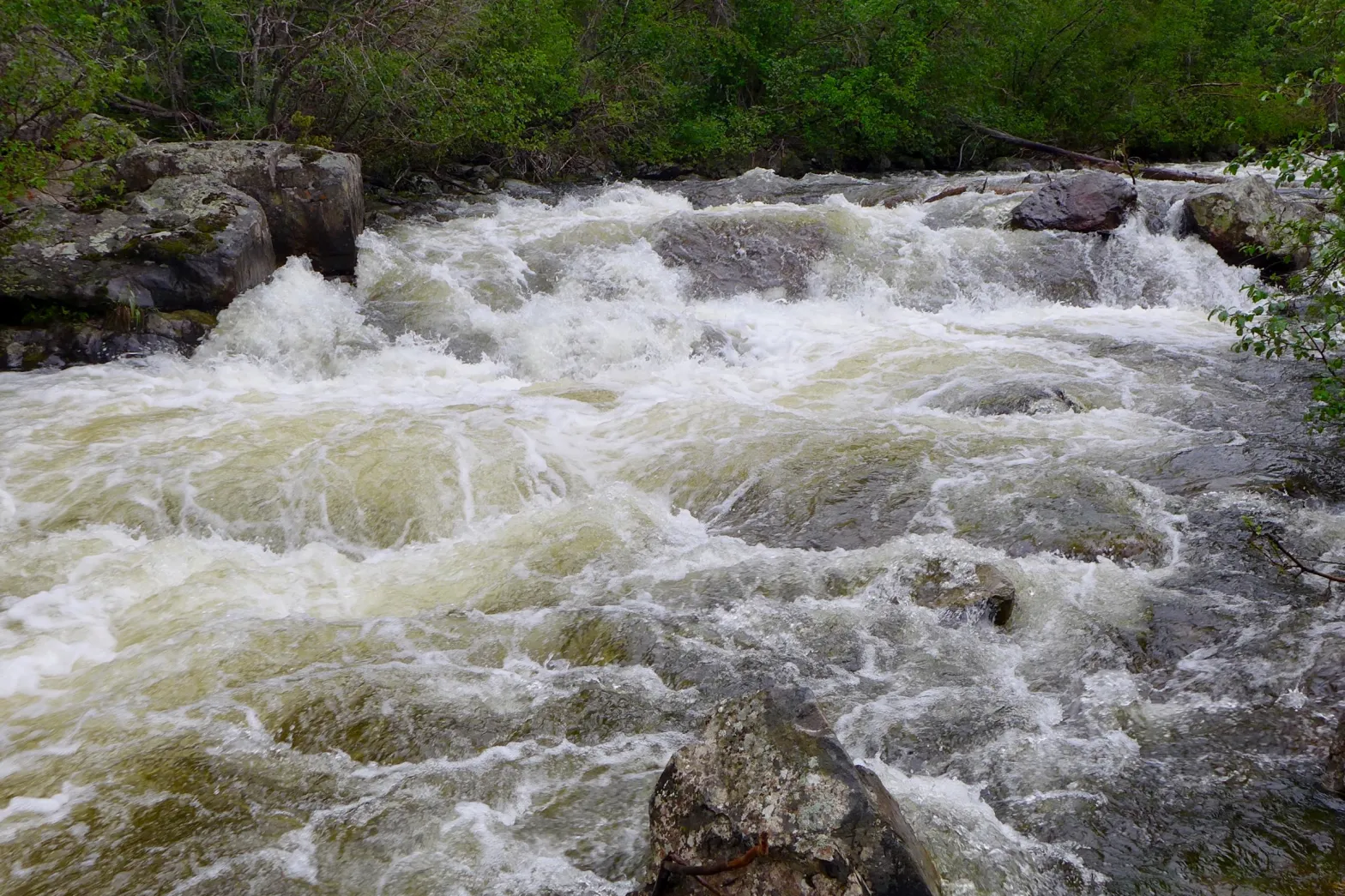
Homestake Creek is a tributary of the Eagle River. The Eagle River Coalition recently completed its community water plan, which outlines environmental flow deficits, but does not make recommendations on how to get more water into rivers. CREDIT: BRENT GARDNER-SMITH/ASPEN JOURNALISM

Eagle River Community Water Plan

The Eagle River Coalition is an organization dedicated to advocating for the health of the Eagle River. After five years of community meetings and technical work, the group recently released the Eagle River Community Water Plan. The plan provides an assessment of current conditions on the Eagle and its tributaries, and what conditions may look like with future risks such as climate change, more municipal water demands and new reservoir projects that take more water to the Front Range. 

“The main takeaway to me is that we’re going to see low flows and less water in the river, so we as a community have to figure out how are we going to prioritize keeping our river flowing,” said James Dilzell, executive director of the Eagle River Coalition. “Figuring out how to have more water in the river is going to be absolutely critical.”

The plan is meant, in part, to provide an understanding of environmental and recreational needs gaps and how they are affected by high and low flows and increasing demands for water in Eagle County and on the Front Range. 

But although the plan includes a section about environmental flow deficits, which is the amount of water that would be needed to meet the CWCB’s instream flow water right during a typical year, it — like most SMPs — does not set a target amount for flows. 

This map in the Eagle River Community Water Plan shows the environmental flow deficits on the Eagle River and its tributaries. The EDFs reflect the amount of water that would be needed to meet the Colorado Water Conservation Board Instream Flow water right in a typical year. CREDIT: EAGLE RIVER COMMUNITY WATER PLAN

Seth Mason, a hydrologist with Carbondale-based Lotic Hydrological, helped author the Eagle River plan and will be participating in the cohort. He said putting a number on exactly how much water the river needs at different times of year under different future climate and development scenarios is complicated. For example, it might be the case that the only way for a section of river to meet a certain flow target is to build a reservoir to control releases, but a new reservoir project could be at odds with what the community wants. 

“What we didn’t do was develop a prescriptive flow regime,” Mason said. “And that, I think, is what a lot of people end up looking for. … I think providing the nuance necessary for people to do critical thinking about trade-offs is more valuable than drawing the perfect stream flow regime, which there is no such thing.”

Dilzell said he is interested in learning more about flow recommendations on the Eagle River and its tributaries, and the completion of the community water plan is just the first step in local watershed management.

Still, river flows can be a proxy for ecosystem health, and some say target recommendations are essential. Bart Miller, healthy rivers director with environmental group Western Resource Advocates, said stream flow recommendations are the bedrock for protecting the environment. WRA is helping to facilitate the cohort.

“Flow has an impact on water quality, temperature, habitat — everything from spawning cues for fish to just keeping them alive when flows are getting low at the end of the summer,” Miller said. “There’s a wide range of benefits from having a clear picture of what stream needs are and articulating recommendations on how to improve or protect what the flows look like.”

Although they are not required in order to get state funding for SMPs, CWCB officials would still like the groups that develop SMPs to come up with flow recommendations. Harbin Monahan said the cohort will be a way to work through barriers, understand the contentious nature of the topic and build trust among stakeholders so that more SMPS can have flow recommendations in the future. 

“The entire idea behind stream management plans was to help support the environment and recreation community and help them meet the flow needs for specific uses,” she said. “It’s OK if stream management plans don’t come out with a flow recommendation. It’s not typically required, but it is a desired outcome.”

The River Network and CWCB are taking applications for the Environmental Flows Cohort and plan to choose 15 to 20 participants to begin meeting in July. The cohort plans to meet five times between July and next spring and will develop a training program for local watershed groups to follow when they create SMPs. 

This story ran in the June 17 edition of The Aspen Times and the Glenwood Springs Post-Independent, the Craig Daily Press, the Steamboat Springs Pilot & Today and the Grand Junction Daily Sentinel.

Map of the Eagle River drainage basin in Colorado, USA. Made using USGS data. By Shannon1 – Own work, CC BY-SA 4.0, https://commons.wikimedia.org/w/index.php?curid=69310517

In #Colorado, new scrutiny and possible fixes coming for drinking water in mobile home parks: State officials got a head start on a new testing program at one community in Western Colorado — The Water Desk

New Castle back in the day via the Red Slipper Diary

Click the link to read the article on The Water Desk website (Eleanor Bennett):

May 16, 2024

In western communities, mobile home parks provide a more affordable place to live, but residents often face problems with their drinking water. 

In Colorado, a new law gives the state authority to test water quality in these communities and force owners to fix any issues.

The state plans to start testing the water at hundreds of parks across the state this summer. Officials have already gotten a head start at one community in Western Colorado that helped spur the legislation.

Apple Tree Park sits on the banks of the Colorado River just across from the town of New Castle. 

Silvia Barragán moved to the park in 2015. Her street is lined with trees and she has a big yard with a garden. 

“Some people might look at this as just a trashy mobile park, but it’s not,” Barragán said. “It’s a nice, nice neighborhood. There’s a lot of kids in the summer running around and there’s a lot of elderly people that have lived here most of their lives.”

Barragán is originally from Michoacán, Mexico, and she raised her family in western Colorado. Her experience at Apple Tree Park over the last decade has mostly been positive. 

“Since I moved here, I felt peaceful and at home,” Barragán said. “My neighbors are great neighbors and I haven’t had any issues in Apple Tree except the water.”

For years, Barragán and her neighbors have been speaking out about the discolored water that comes out of their taps. 

“It’s kind of brownish, yellowish. It’s kind of nasty,” she said. “It’s like river water, like if I’m camping and I go get river water, that’s what it looks like.”

Barragán only wears black now because the water stains her clothes and laundry, and it ruins her appliances.

It has an unpleasant smell and taste, so she fills up water jugs at the local grocery store.

“I buy water,” Barragán said. “I buy water for cooking, I buy water for drinking, I buy water for the dogs.” 

When the state tested the water at Apple Tree Park, they found it meets federal EPA standards under the Safe Drinking Water Act, passed in 1974, but it has higher than normal levels of heavy metals such as iron and manganese. The park is supplied by groundwater wells, and is outside the limits of the nearby town of New Castle, which draws the majority of its drinking supply from a nearby creek.

Joel Minor used to manage the Colorado Department of Public Health and Environment’s environmental justice program, and said Apple Tree’s situation — of heavy metals showing up in underground well water — is pretty common. 

“Because of the taste and color and odor of the water, it can be unpleasant to drink and can cause other issues,” Minor said. “We recognize that that creates challenges for park residents and may require them to spend money on things like bottled water or repairing or replacing appliances.”

While Apple Tree’s overall water system meets federal health standards for drinking, a recent round of testing this winter found that a few samples out of the 200 taken had manganese levels that were above the EPA’s health advisory for infants. High levels of manganese can negatively impact babies’ brain development.

When the state got the test results back in February, they worked with the park owner—Utah-based company Investment Property Group (IPG)—to notify residents and local health officials about the issue. 

“What we want folks to know is to be cautious about using tap water from the park for making formula for infants under the age of six-months-old,” Minor said. “These particular locations where this occurred seem to be spots where maybe the water isn’t being flushed quite as well.”

With the passage of the Mobile Home Park Water Quality Act in 2023, the state’s been working with IPG to do more regular testing and to fix the water issues. The company didn’t respond to multiple requests for comment. 

In 2020, IPG bought the mobile home park from the local Talbott family, which had owned the park since its inception. The company has properties across 13 states, including more than 110 mobile home parks, according to the Mobile Home Park Home Owners Allegiance’s online database.

The state has been having regular meetings with IPG, Garfield County health officials, local advocacy groups and park residents to come up with a variety of ways to improve the water. 

“One key short-term solution that we’ve been working with the park on is flushing the water system more frequently, which can help remove iron and other metals that have accumulated in the system,” Minor said. “We’ve also worked with that same coalition to put on an informational webinar about how to do in-home flushing for appliances like water heaters and pipes so that residents are also able to flush their own water systems.”

Another short-term fix already underway is putting in water stations where residents can fill up jugs for cooking and drinking. 

The state is providing direct funding to the park in the form of an assistance grant to help install these stations. One has already been installed at a local school across from the mobile home park that’s also owned by IPG, and the company plans to install a second by early June in a communal area near the entrance to the park. 

“That was something we came up with based on feedback from park residents that folks are having to drive across the river and across the highway into New Castle to fill water jugs for drinking and other purposes,” Minor said. “So these are key short-term solutions, but we recognize they don’t address the root cause of the problem.”

To address the root cause, the state is proposing bigger engineering solutions like installing a filtration system, or even connecting Apple Tree to a municipal water supply. 

But Apple Tree is just one of about 750 mobile home parks in Colorado. The new legislation gives the state authority to test, but the full scope of just how bad water quality could be at those parks, and the costs to fix the various causes could easily begin to rise as testing ramps up.

There is additional funding available for park owners to make these system-wide changes, and if they don’t, the state could impose fines until the problem is fixed. 

“We are really trying to prioritize solutions that won’t increase rent for park residents by either looking at lower cost options or ways of getting outside funding that can ensure that some of those costs don’t get passed on to residents,” Minor said. “We know that passing along the cost could potentially make the equity challenges that are already at play worse if residents have to pay more for their water bills or their space rents.”

Alex Sanchez leads the Glenwood Springs-based Latine advocacy nonprofit Voces Unidas, which worked with Apple Tree residents and Democratic Colorado House Representative Elizabeth Velasco of Glenwood Springs to pass the water quality legislation. 

“We’re not opposed to getting state dollars and federal dollars to be able to support or incentivize some of these solutions,” Sanchez said. “But ultimately, we believe it’s the responsibility of those corporate owners who have been making a lot of profit off the backs of hardworking folks without having access to, you know, quality water, potentially sidewalks, infrastructure and other benefits that many of us take for granted.” 

For Sanchez and Voces Unidas, the new law is just the first step in addressing a widespread environmental justice issue — many people living in these communities have lower incomes, don’t speak English as a first language, don’t have access to resources to file complaints, and are Latines or other people of color. 

“The issue is not just contained to one or two parks. Something is happening in these mobile home park communities and because they’re not regulated, there’s not a lot of accountability,” Sanchez said. “Many of these communities across Colorado are owned by corporations that are from out of state.” 

In a recent statewide poll in Colorado, Voces Unidas found 41% of mobile home park residents surveyed did not trust or drink their water. 

Since 2020, the state’s health and environment department has received 66 formal water quality complaints from 42 parks. State officials estimate that it will take them four years to test the water at all of Colorado’s roughly 750 parks. 

For her part, Apple Tree Park resident Silvia Barragán is glad that her community is at the top of the state’s list. 

“When I bought this place, I thought I was gonna retire here,” Barragán said. “So I would be sad to think that I need to buy another place just because, you know, I haven’t seen any change.”

Barragán hopes the new legislation will speed things up, but she doesn’t know how much longer she can wait for clean water. 

This story was produced by Aspen Public Radio, in partnership with The Water Desk, an independent initiative of the University of Colorado Boulder’s Center for Environmental Journalism. 

‘Let’s get this river fixed up’: #ColoradoRiver to benefit from restoration efforts proposed as part of land exchange in Summit and Grand counties — Summit Daily #BlueRiver #COriver #aridification

Map of the Blue River drainage basin in Colorado, USA. Made using USGS data. By Shannon1 – Own work, CC BY-SA 4.0, https://commons.wikimedia.org/w/index.php?curid=69327693

Click the link to read the article on the Summit Daily website (Ryan Spencer). Here’s an excerpt:

June 8, 2024

The restoration work is proposed along a section of the Blue River near its confluence with the Colorado River in Kremmling

If a land exchange in Summit and Grand counties is completed, this ¾ mile stretch of the river could be Rosgen’s next project. The Bureau of Land Management approved the Blue Valley of Land Exchange last year. After dismissing public protests against the exchange last month, the federal bureau is now queuing up the final steps required to complete the land swap. The land exchange between the federal government and Blue Valley Ranch, which is owned by billionaire Paul Tudor Jones II, has been decades in the making. It was first proposed in some form in 2001 with the stated purpose of addressing the “checkerboard nature” of ownership in the area.

A map shows the existing public and private parcels, left, as well as how the land ownership would change if the Blue Valley Ranch land exchange goes through. `Bureau of Land Management/Courtesy illustration

As part of the deal, the federal government would convey nine parcels totaling 1,489 acres to Blue Valley Ranch, while the ranch would transfer nine parcels of private land totaling 1,830 acres to public ownership. Blue Valley Ranch has also agreed to provide Summit County with $600,000 for new open space acquisitions as well as to construct a seasonal takeout and rest stop near the Spring Creek River Bridge and another rest stop 3 miles downstream. But Rosgen said what makes the land exchange a “win-win,” in his eyes, is Blue Valley Ranch’s commitment to cover the costs of river restoration work on that ¾ mile stretch, and the creation of the Confluence Recreation Area, which would have more than 2 miles of new walking trails and offer wheel-chair accessible fishing.