Ditch “inefficiencies” give us wetlands — Writers on the Range

Since 1917, five generations have lived along the Animas Consolidated Ditch outside of Durango, CO, Patty Zink pictured, courtesy Dave Marston

Click the link to read the article on the Writers on the Range website (Richard Knight):

June 24, 2024

Imagine Westerners waking up one morning only to discover that many of their most cherished wetlands have dried up, gone. This is not fiction during these times of determining the true value of water.

Most wetlands in the arid West owe their existence to the “inefficiencies” of unlined irrigation canals and flood irrigation. But when well-intentioned urban folks insist that irrigation companies use water more efficiently by piping their ditches, the result may be more about loss than water “saved” for rivers.

One of the least-known truths in the West is that many of our wetlands are the result of irrigated agriculture. For example, an irrigation company in northern Colorado irrigates about 24,000 acres, thanks to 146 miles of ditches.

The area served by the irrigation company also has approximately 1,300 acres of wetlands, and it’s no accident that most of those wetlands lie below a leaking ditch. A study by Colorado State University discovered this connection using heavy isotopes to create hydrographs of groundwater wells, ditch levels and precipitation. This is a West-wide issue.

We all know that climate change has been causing hotter, drier weather, and that helps reduce the flow of the Colorado River that 40 million Westerners depend on. In the Laramie Basin of Wyoming, 67% of its wetlands are attributed to agriculture. In North Park, Colorado, close to 75% of all wetlands are byproducts of irrigated agriculture.

Decades ago, Aldo Leopold wrote, “There are two spiritual dangers in not owning a farm. One, you think that heat comes from the furnace and two, you think that breakfast comes from the grocery store.”

May I add a third? We don’t know much about the water we depend on.

Farmers and ranchers produce two “goods,” a private good and a public goodThey’re compensated for the private one by producing food. Their public goods, ecosystem services, are not compensated, though they include wetlands, biodiversity and plants sequestering carbon.

But knowing that rural agriculture uses 79% of the Colorado River’s water, our urban neighbors tell their rural counterparts to conserve water or, better yet, sell it to them.

Meanwhile, the environmental community would like rural agriculture to use less water so more could stay in the rivers to help fish and provide recreational opportunities.

Clearly, there are too many demands for the West’s diminishing water supply. Drinking water, ag water, river health. Where do wetlands fit in?

Wetlands cover 1% of the West’s land surface, yet half of our threatened and endangered species rely on them. Wetlands serve a similar function to our kidneys: They filter out impurities from human land uses, making our environment healthier.

Perhaps it’s time for all of us to wise up a little. Many of these wetlands are human created; that is, they were created by farmers and ranchers and are not “natural.” Many will disappear in the pursuit of water conservation. Must it be water conservation and efficiency at all costs? 

Will we prioritize water for urban uses, including urban sprawl? Or will we support more water staying in our rivers to create a healthier environment? Will water for food production be considered a necessity? Do green lawns trump healthy rivers and wetlands?
Richard Knight

With more informed conversations about our region, talks between rural and urban neighbors, perhaps we could pursue a triple bottom line: water for food production, water for urban uses, and, yes, water for our region’s rivers, streams and wetlands

Wouldn’t we all like that? Let’s figure out how to make that happen.

Rick Knight is a contributor to Writers on the Range, writersontherange.org, an independent nonprofit that seeks to spur lively conversation about the West. He works at the intersection of land use and land health in the American West.
Geothermal Collegiate Competition Winners Partner With Osage Nation To Address Energy Sovereignty — NREL #ActOnClimate

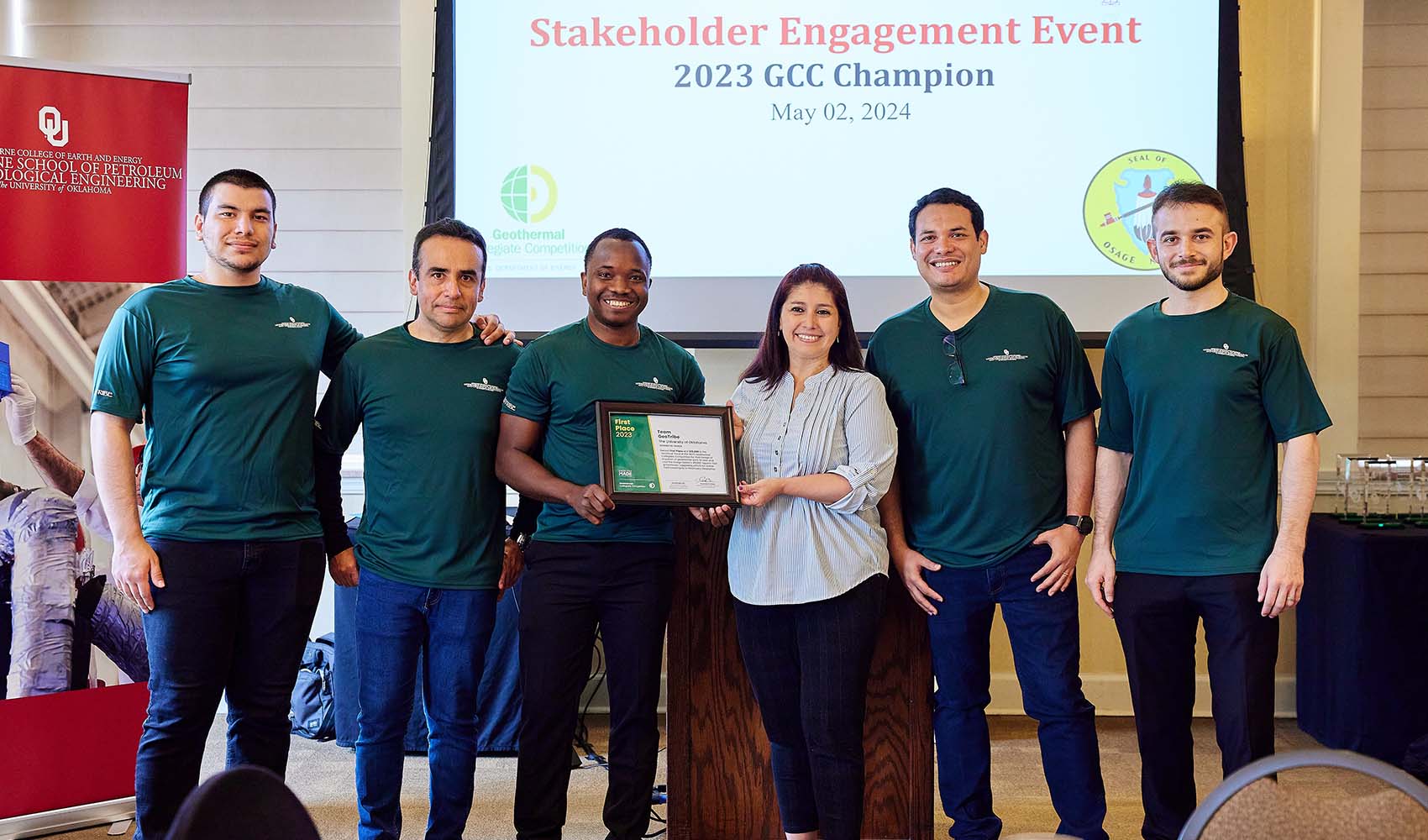
NREL researcher Diana Acero-Allard presents the University of Oklahoma Team GeoTribe with their first-place certificate for the 2023 Geothermal Collegiate Competition. Photo by University of Oklahoma

Click the link to read the release on the NREL website (Kelly MacGregor):

June 10, 2024

The University of Oklahoma Won 2023 Technical Track With Their Design for Sustainable Greenhouse Heating and Cooling Using Geothermal Energy

How can we sustainably keep greenhouses cool in the summer and warm in the winter?

On May 2, 2024, the first-place team in the Technical Track of the 2023 Geothermal Collegiate Competition held a community event to showcase its innovative geothermal system, developed in partnership with the Osage Nation, which aims to do just that.

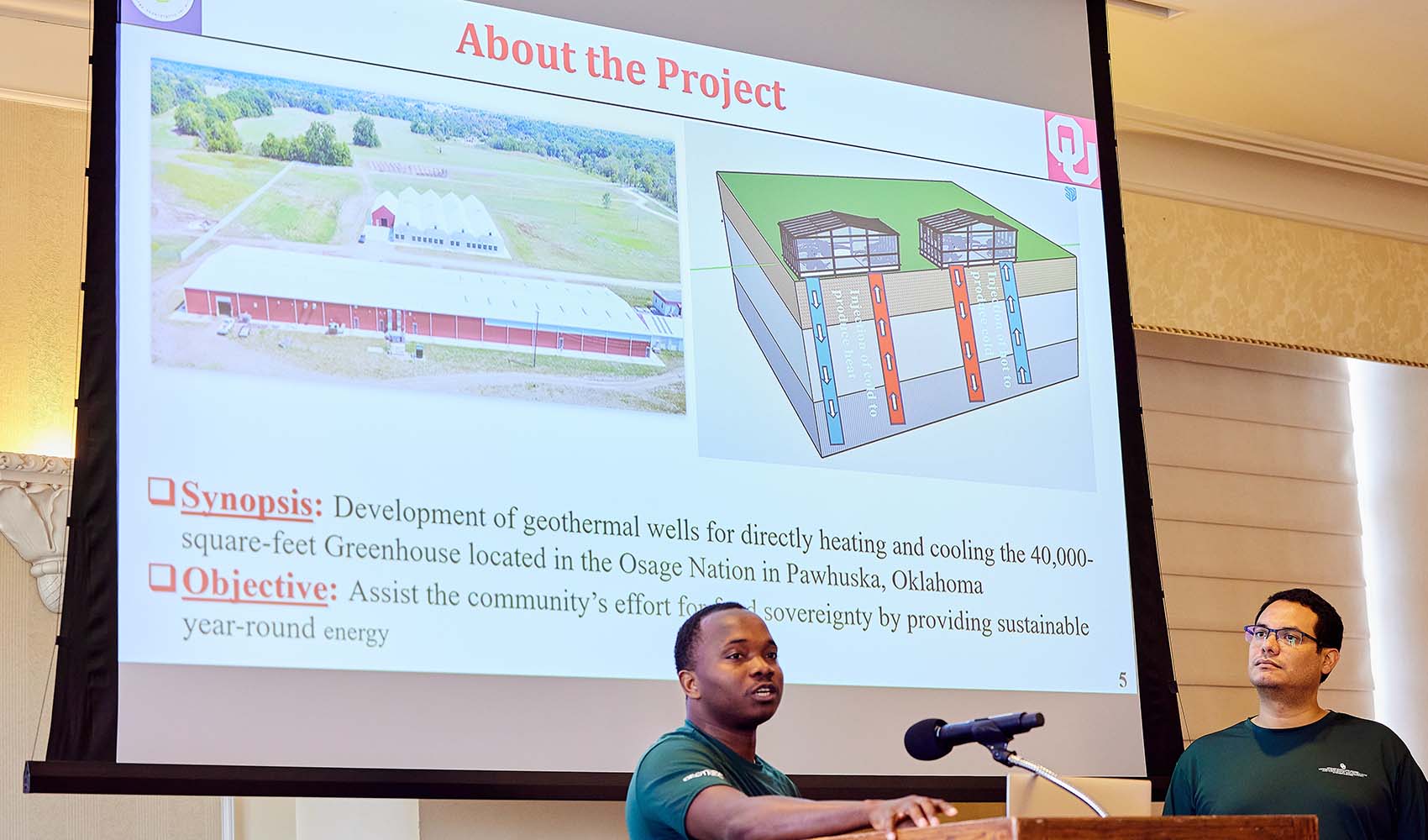
The team designed a system of geothermal wells in Pawhuska, Oklahoma, to heat and cool the Tribe’s 40,000-square-foot greenhouse, supporting efforts for native food sovereignty.

The proposed geothermal system design would help alleviate the challenge of maintaining a constant year-round growing temperature, which is critical in an area recognized as a food desert.

“The Harvestland greenhouse was created to provide the Osage Nation access to fruits and vegetables, especially during the food shortage during the pandemic,” said Jose Aramendiz, a Ph.D. candidate in petroleum engineering at The University of Oklahoma and a member of the GeoTribe team. “Helping the greenhouse be self-sufficient could lead to cut energy costs, allowing redirection of funds to increase the benefits the greenhouse provides to the community.”

Nabe Konate, Ph.D. candidate at the University of Oklahoma, explains the team’s winning project, which included partnership with the Osage Nation. Photo by University of Oklahoma

Through a geothermal resources assessment, the team found there is enough energy at about 2,000 feet below the surface to directly heat and cool the 40,000-square-foot greenhouse, as well as a nearby fish farm.

The team also investigated converting inactive oil and gas wells near the site, but they were not suitable because of their age and disrepair. But these wells could provide a great deal of information about the geological deposition and temperature of the site, helping inform the geothermal system design.

The students—Cesar Vivas, Nabe Konate, Jose Aramendiz, Gurban Hasanov, and Vagif Mammadzada—received $10,000 as a first-place prize, as well as additional funding to host the May 2 event. Their stakeholder engagement event included a networking session, presentations by the team and school leadership, and a tour of the Mewbourne School of Petroleum and Geological Engineering laboratories.

“In our experience, the stakeholders were a key part of our success,” said Konate, University of Oklahoma Ph.D. candidate and Team GeoTribe member. “Stakeholder engagement is important because it aligns people with common interest in working together to develop geothermal energy.” 

“The most important aspect was listening to the Tribal community’s past experiences, concerns, and advice,” said Aramendiz, also a Ph.D. candidate at The University of Oklahoma and a member of Team GeoTribe. “Learning from them and integrating their beliefs into our concept was key for our group to understand how we could collaborate respectfully.”

Administered by NREL and funded by the Geothermal Technologies Office at the U.S. Department of Energy, the Geothermal Collegiate Competition is an annual challenge that offers college students experience in the renewable energy industry and the chance to win cash prizes for developing real-world geothermal solutions.

The next Geothermal Collegiate Competition will open for registration in August 2024—sign up for the competition newsletter to stay up to date.

Geothermal Energy