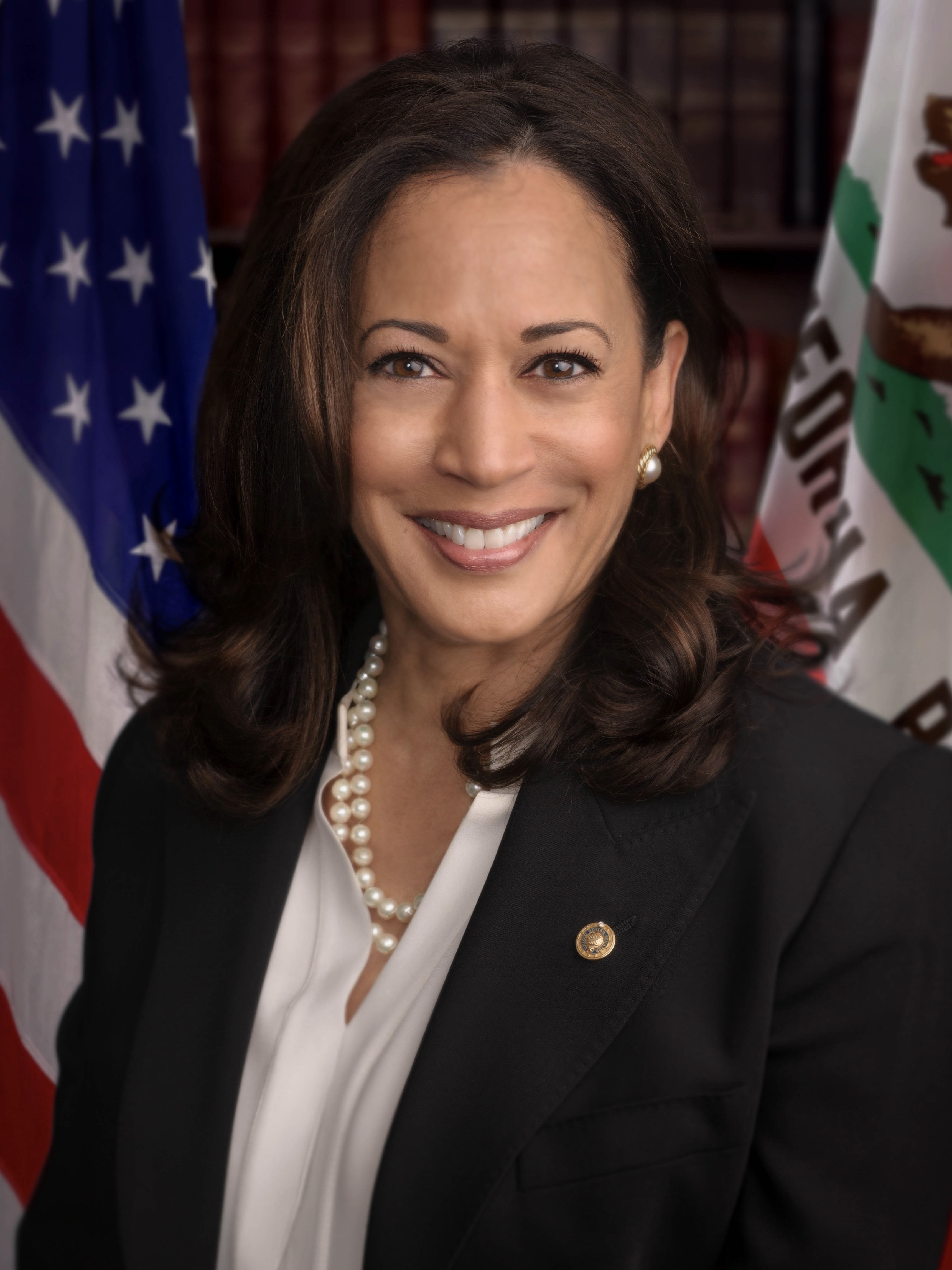
What a Kamala Harris presidency could mean for the West: Harris has prioritized protecting public lands and pursued accountability for polluters, but her track record on tribal affairs is more complex — High Country News

Kamala Harris. By United States Senate – This file has been extracted from another file: Kamala Harris official photo.jpg, Public Domain, https://commons.wikimedia.org/w/index.php?curid=64332043

Click the link to read the article on the High Country News website (Anna V. Smith and Erin X. Wong):

July 22, 2024

On July 21, President Joe Biden withdrew from the 2024 presidential race and endorsed Vice President Kamala Harris to run in his place, launching her to the forefront of potential Democratic nominees. Harris’ term as VP hasn’t produced many significant policy outcomes of her own, but her experience as a California senator and attorney general, as well as her 2020 presidential campaign, point to a consistent record of pro-climate, pro-environmental policies and an evolved understanding of tribal land issues. Should she eventually assume the Oval Office, her career to date signals a likely continuation of the West’s Biden-era gains in the protection of public lands, water and wildlife as well as support for tribal sovereignty.  

“We couldn’t be more excited,” said Athan Manuel, director of the Sierra Club’s lands-protection program. Harris worked with the organization on bills to expand California’s public lands, increase access to nature and develop community incentives for wildfire prevention. “She understood the totality of these issues, and that gives us great confidence.”

Over the past four years, the Biden administration reinstated protections for Alaska’s Tongass National Forest and conserved more than 41 million acres of public land. It passed the climate-forward Inflation Reduction Act, which was hailed as a windfall for domestic clean energy jobs and a once-in-a-generation wealth transfer to historically marginalized communities. The record bears a striking resemblance to Harris’ own platform for president, which also pursued environmental justice and sought an end to fossil fuels on public lands.

“This was the most impactful one-term presidency on public lands, climate change and environmental justice,” Manuel said. Harris, who was born in Oakland and spent much of her career in California, was also able to provide the Biden administration with insight into regional issues. “A Westerner leading on all these issues is very significant.”  [ed. emphasis mine]

Prior to joining Biden’s ticket, Harris was best known as a Golden State prosecutor. As California’s attorney general, Harris won multiple settlements against corporate polluters, including a $44 million settlement from the owners of a container ship that spilled 53,000 gallons of oil into the San Francisco Bay. She secured multimillion-dollar deals with oil companies BP, ARCO and ConocoPhillips for negligent monitoring of hazardous materials in gas station storage tanks, and she was part of the team that held Volkswagen accountable for bypassing air pollution regulations, eventually earning more than $86 billion in penalties for the state. However, her claim that she pursued polluters while working in the San Francisco DA office has come under scrutiny.
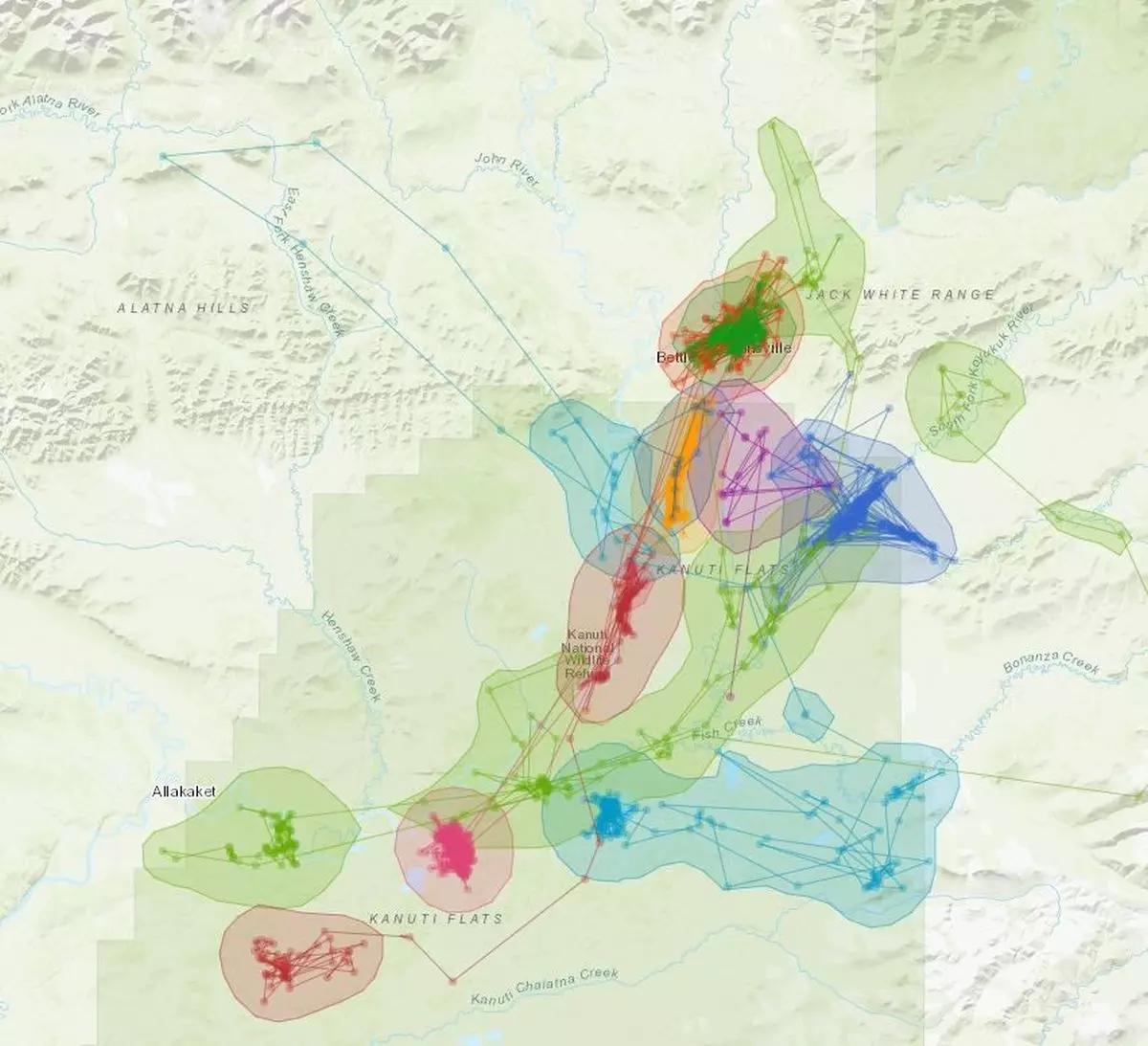
A map shows the movements of 12 radio-collared lynx in and around Kanuti National Wildlife Refuge in Alaska in spring 2018. Some lynx traveled many hundreds of miles. Credit: USFWS

In the Senate, she co-sponsored bills to develop national wildlife corridorsdivert revenue from energy development to national parks and further climate equity by calculating policy impacts on frontline communities. She voted to protect the Antiquities Act and the Great American Outdoors Act, as well as to halt drilling in the Arctic and pass a public-lands package that conserved 2 million acres of land and water. Over the course of four years, she earned multiple perfect scores from the League of Conservation Voters.

Harris’ track record with Indigenous affairs over her decades working in politics is more varied. As state attorney general, she created the first Indian Child Welfare Act Compliance Task Force to protect Native children. But she also opposed multiple tribal applications to put land into “trust” and thereby grow a tribe’s land base. During her time as attorney general, Harris’ office also pursued a legal argument that could have had negative, precedent-setting impacts for tribes that have acquired land in trust. She argued that the Big Lagoon Rancheria, a tribe that was seeking to build a casino on 11 acres of trust land, improperly received that land from the federal government. The case had the potential to open past land-to-trust transfers across Indian Country to litigation, but the 9th Circuit Court of Appeals ultimately ruled against California.

Since then, Harris has distanced herself from that position. When then-Cheyenne River Sioux Tribal Chairman Harold Frazier asked her about this publicly in 2019, Harris said that as California’s attorney general it was her duty to represent the state’s interests, which did not necessarily reflect her own. “As California’s attorney general she was perceived as being more focused on states than tribes,” wrote Mark Trahant (Shoshone-Bannock) in an analysis for ICT. “But that has largely shifted.”

During her 2020 campaign for president, for example, Harris promised to assist tribes in restoring their lands and to make it easier for them to do so in the future. Her campaign also detailed specific policies and initiatives to advance Native voting rights, increase funding for the federal agencies serving tribal communities, and protect Native women and children, building on some of the legislation that she co-sponsored during her time in the Senate. Those bills largely focused on supporting Native health care and addressing the crisis of Missing and Murdered Indigenous Peoples, along with the Native Voting Rights Act of 2019 and other legislation concerning tribal wildlife corridors and food sovereignty. 

As vice president, she’s been a part of an administration that has made considerable strides in integrating Indigenous knowledge and tribal priorities into public-lands management, as well as in providing funding for Native-led climate resilience projects and appointing multiple Indigenous people to leadership positions. She was the first sitting vice president to visit the Gila Indian River Community and do an interview with the Native news organization ICTAsked by reporter Aliyah Chavez (Kewa Pueblo) about the administration’s goals and the decision to appoint Native leaders like Interior Secretary Deb Haaland (Laguna Pueblo), Harris said, “I do believe that we are setting a new model for what the interaction and what the partnership should be [with tribes], always grounded in full appreciation and respect for tribal sovereignty.” 

The Democratic Party has less than a month to introduce any alternative candidates before the Democratic National Convention on Aug. 19. Other potential frontrunners, including California Gov. Gavin Newsom, appear to be rallying behind Harris as the primary candidate who could win the race against former President Donald Trump. 

‘We have a state plan’: RGWCD works to limit any federal study of #RioGrande: #NewMexico congresswoman renewing push for legislation — @AlamosaCitizen

Rio Grande. Photo credit: Big River Collective

Click the link to read the article on the Alamosa Citizen website:

July 19, 2024

New Mexico Congresswoman Melanie Stansbury and the Rio Grande Water Conservation District are working together on federal legislation that would call for a limited study of the Rio Grande Basin.

The involvement of the Rio Grande Water Conservation District and its attorneys comes after Stansbury attempted a similar push in 2022 when she introduced the Rio Grande Water Security Act. That effort was ultimately doomed after pushback from Colorado and the Rio Grande Water Conservation District.

Now the Rio Grande Water Conservation District is trying to steer Stansbury to focus on New Mexico’s portion of the Rio Grande only and not draw in Colorado as part of any federal study.

“She is very determined to introduce federal legislation to call for a study of the Rio Grande. I understand that her real impetus is that she does not feel that enough is being done in New Mexico to aggressively and innovatively manage the water resources within New Mexico,” attorney David Robbins said in remarks this week to board members of Rio Grande Water Conservation District.

“On behalf of the district and the Valley and the state we have been pursuing an effort to convince the congresswoman and her staff that Colorado doesn’t need federal agencies studying its water resources,” Robbins said.

David Robbins and J.C. Ulrich (Greg Hobbs) at the 2013 Colorado Water Congress Annual Convention

“Colorado has already studied its water resources. We have a state water plan, we have all of the plans you could ever want in the form of subdistrict replacement plans, plans of water management in our Valley. We have water court processes and decrees that specifically designate what federal authority exists through the water court system and over water in the Valley, and we don’t intend to compromise one thing if it would have any impact on our obligations.”

Stansbury’s office has not responded to calls and emails seeking comment.

Colorado delivers water at the Lobatos Bridge in Conejos County to send downstream into New Mexico to comply with the Rio Grande Compact. New Mexico, in turn, is obligated to deliver water from the Rio Grande to the Texas state line at El Paso.

Stansbury has been successful in securing federal funding to support New Mexico’s efforts along the middle Rio Grande. She was elected to represent New Mexico’s 1st Congressional District through a special election in 2021 to replace Deb Haaland, who was confirmed as U.S. interior secretary under President Biden.

Haaland in May announced $60 million in funding for New Mexico and West Texas to address how climate change is affecting the middle Rio Grande. The money was the first disbursement from the Inflation Reduction Act for a basin other than the Colorado River Basin, a fact not lost on conservationists working on Upper Rio Grande Basin projects in Colorado.

The Theodore Roosevelt Conservation Partnership and Colorado Open Lands have identified $400 million in total funding needed to improve water resilience and security on the Upper Rio Grande. The organizations made a funding request of $50 million to the U.S. Bureau of Reclamation through the Inflation Reduction Act but were never given a response to their request.

Alex Funk, director of water resources with the Theodore Roosevelt Conservation Partnership, said the Rio Grande needs its own dedicated federal funding source so that it’s not pitted against the better-known Colorado River Basin to address drought and less water.

“The Rio Grande, like the Colorado River Basin, has been experiencing long-term drought conditions. It’s seen huge reduction in its water availability. Everything shows that those flows will continue to get lower and lower where we have several compounding water challenges,” said Funk.

Funk and Sally Weir were recent guests on The Valley Pod and discussed the funding needs for the Rio Grande and their pitch for money to the U.S. Bureau of Reclamation. The Bureau of Reclamation had earmarked $4 billion to address drought mitigation in the Colorado River Basin and other watersheds like the Rio Grande facing comparable levels of drought.

Here’s a link to the podcast.

Robbins, the attorney for the Rio Grande Water Conservation District, said it’s important that any federal legislation introduced by Stansbury steers clear of involving Colorado and its management of the Rio Grande.

“We don’t intend to compromise one thing if it would have any impact at all on our obligations at Lobatos. That is what we are going to work by. We’re not going to change the timing (of water delivery), we’re not going to change the quantity, we are simply going to say ‘You got what you got, so you don’t need to study it.’ 

“That’s very important to me that we take that position because one of the things that the states retained (under the Rio Grande Compact) was the right, which has been recognized for more than a century, to manage the water resources within their boundaries. So I think it is foolishness to get ourselves into a situation where federal agencies are meeting and studying and making recommendations about what is actually your collective responsibility and right to manage.

“If that’s what they want to do in New Mexico, fine. We’re going to work hard to try to be sure that Congress doesn’t provide authority to a separate or new federal agency or commission or committee or whatever it is to come into Colorado and make recommendations about what you have all sweated and argued and arm wrestled over for the past 100 years.”‘We have a state plan’: RGWCD works to limit any federal study of Rio Grande.

Rio Grande and Pecos River basins. Map credit: By Kmusser – Own work, Elevation data from SRTM, drainage basin from GTOPO [1], U.S. stream from the National Atlas [2], all other features from Vector Map., CC BY-SA 3.0, https://commons.wikimedia.org/w/index.php?curid=11218868

A reminder to be careful how you think about “wasted” water — John Fleck (InkStain.net)

Little Snake River agricultural lands along the Colorado-Wyoming border. (Angus M. Thuermer, Jr./WyoFile)

Click the link to read the article on the InkStain website (John Fleck):

July 15, 2024

A team out of Wyoming, including my Colorado River Research Group colleague Kristiana Hansen, has a new paper that reminds us that we need to be careful about how we thinking about conserving water that is being “wasted.”

Their case study is an area on the New Fork in Wyoming, a tributary of the Green, which is a tributary of the Colorado, where producers use flood irrigation on timothy grass to grow livestock forage.

Flood irrigation is often seen as “wasteful.” One approach is to install “more efficient” irrigation technology. But – and this is one of my repetitive talking points with students in the graduate water policy course I teach every fall – you need to flag the word “waste” when you see it in a water policy discussion and think carefully about how you’re using it.

That water is going somewhere, and doing something. You have to include this in your analysis. Maybe it’s really being “wasted”. But you may find that the place the water is going, and the thing that it’s doing, is valuable!

That’s what the Wyoming team found. Flood irrigation recharges the shallow aquifer – reducing the spring peak in the area’s streams, and slowly releasing that water back into those same streams in late summer. Which is crucial, in this case, for economically valuable fisheries – recreational brown trout fishing, to cite their analysis.

This is at the heart Bruce Lankford’s oddly named work on the “paracommons,” which has provided an enormously helpful analytical framework for my thinking about this stuff.

Cleaning up our urban sewage for reuse is super popular right now, and can in some cases be an enormously powerful water policy response to scarcity. But we’ve got to be mindful about where that “wasted” water is going and what positive benefits it is providing. Lots of inland urban cities in the southwestern United States treat their wastewater and return it to rivers, where it feeds ecosystems and downstream users.

We always have to consider the tradeoffs.

Green River Basin