These three words from 1922 are at the heart of the latest #ColoradoRiver clash — KUNC #COriver #aridification

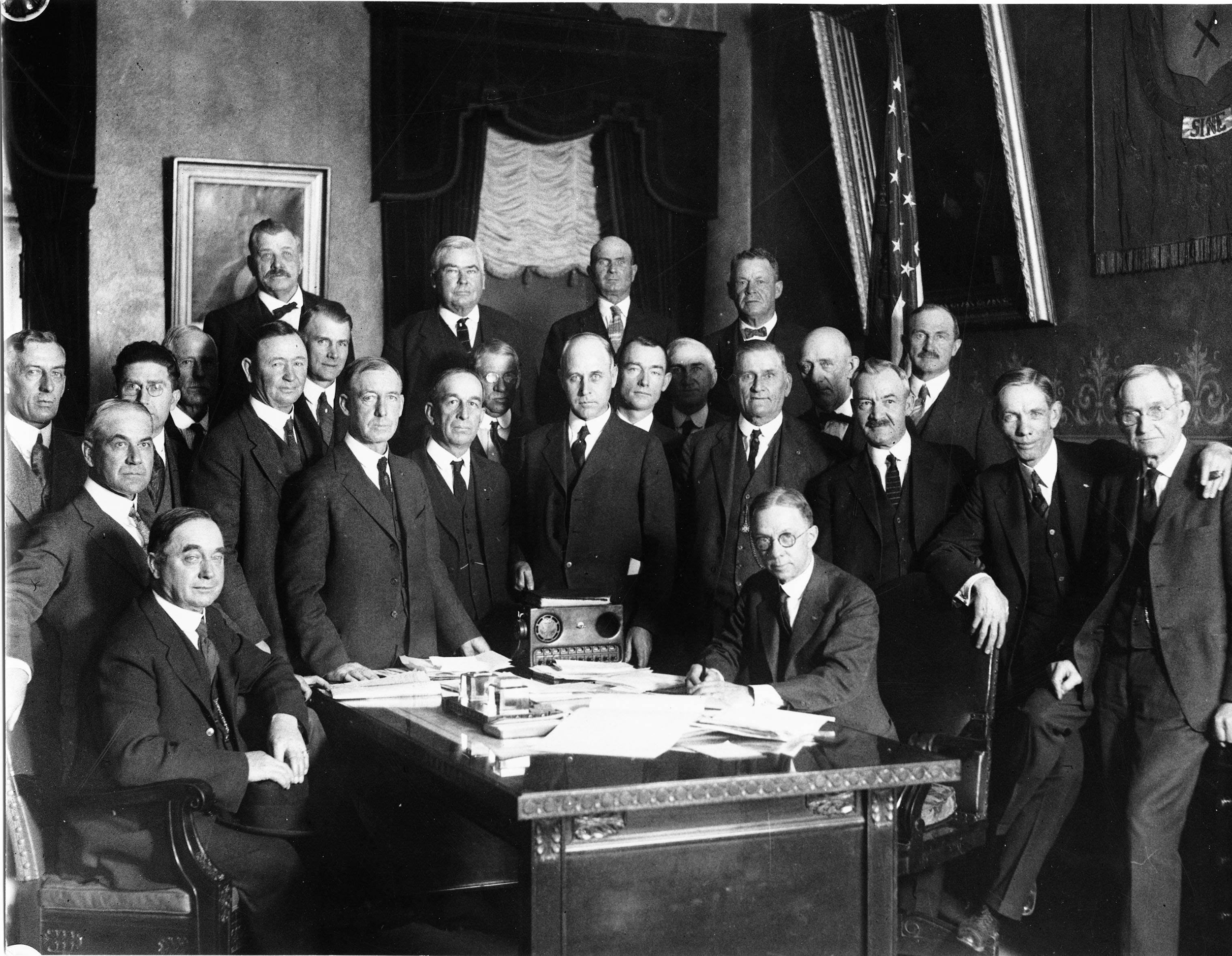
In 1922, Federal and State representatives met for the Colorado River Compact Commission in Santa Fe, New Mexico. Among the attendees were Arthur P. Davis, Director of Reclamation Service, and Herbert Hoover, who at the time, was the Secretary of Commerce. Photo taken November 24, 1922. USBR photo.

Click the link to read the article on the KUNC website (Alex Hager and Melissa Sevigny):

July 15, 2024

This story is part of ongoing coverage of the Colorado River, produced by KUNC in Colorado and KNAU in Arizona. It is supported by the Walton Family Foundation.

The future of the Colorado River hangs in the balance. The states that will decide its future are stuck at an impasse. They can’t agree on a plan to divvy up the shrinking water supply.

At the heart of that disagreement are three words written over 100 years ago.

It’s all rooted in a document called the Colorado River Compact. None of its authors are alive today, but the words they wrote in 1922 are still shaping life for millions today.

“The content of this particular document, the Colorado River Compact, is the foundation of the law that is governing the Colorado River at this point,” said Patty Rettig, who manages the water archive at Colorado State University’s library.

Her archive includes the writings of Delph Carpenter, one of the eight men who penned the original document. Sitting at a library table, Rettig carefully flips through the pages of his notes — thin, carbon-paper drafts marked up with pencil — looking for clues from history about how we arrived at the water policy fights of the 21st century.
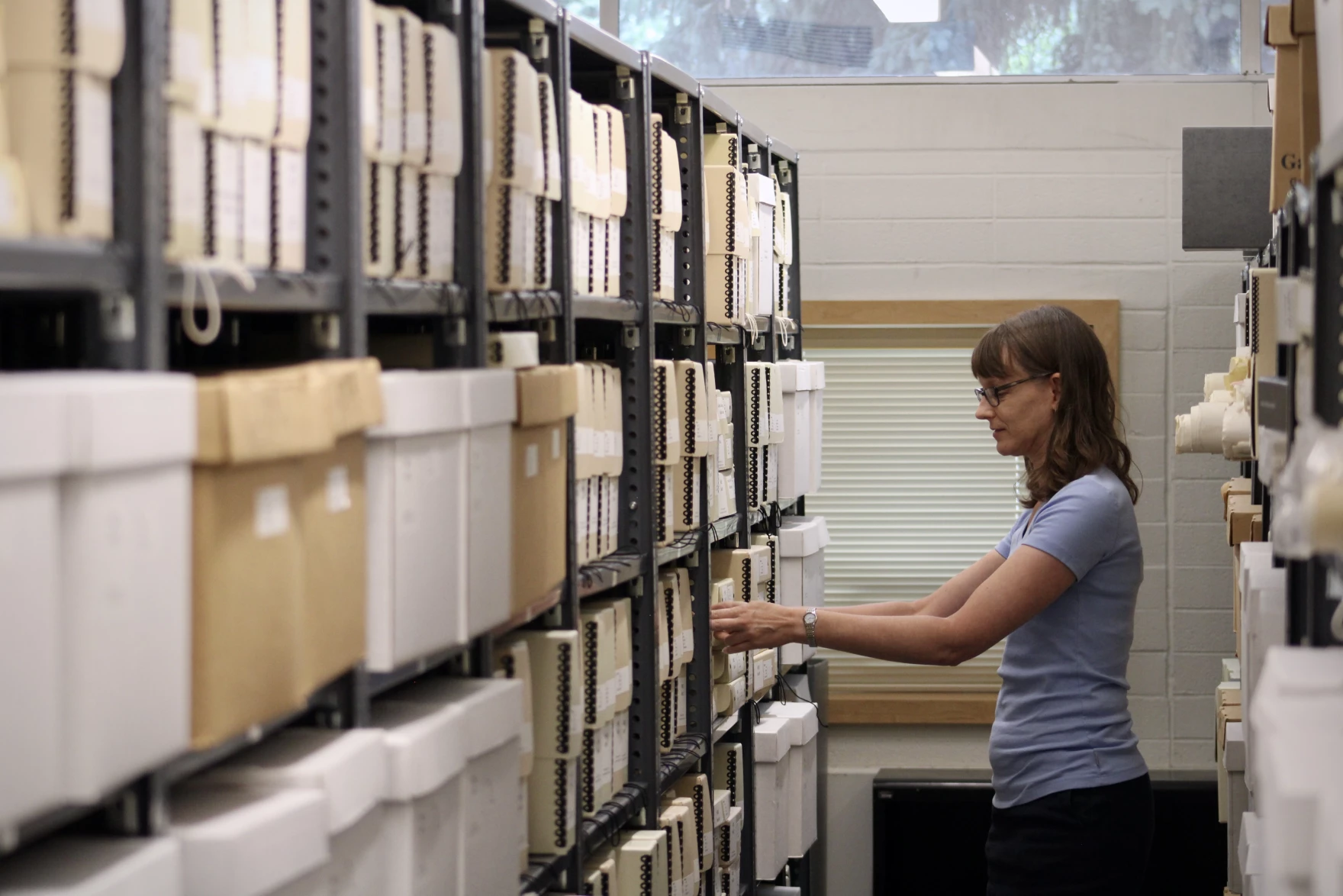
Patty Rettig retrieves a file in the Water Resources Archive at Colorado State University on June 25, 2024. Papers from the collection of Delph Carpenter, one of the Colorado River Compact’s signers, show how its architects chose their words carefully. Photo credit: Alex Hager/KUNC

“I know they were thinking about the future,” she said. “We have evidence they were thinking about the future, but I don’t think they were thinking 100 years into the future.”

Taking a closer look at those three words — why they were chosen a century ago and how they’re being interpreted today — tells us a lot about the big, complicated problems facing the Southwest’s most important water supply.

Where are we now?

The Colorado River supplies 40 million people across seven Western states and parts of Mexico. Rules about sharing water are decided by representatives of those seven states. Mostly appointed by governors, they meet, usually behind closed doors, to decide who should get how much.

Right now, the clock is ticking for them to agree on new guidelines for water sharing since the current set of rules expires in 2026. Meanwhile, more than two decades of dry conditions have only increased pressure for the entire region to cut back on demand. The Colorado River has been in the grips of a megadrought, fueled by climate change, and demand has remained mostly steady.

As a result, the region’s reservoirs have plummeted to record lows, and big changes are needed for a sustainable future.

In March, the states split into two camps and published their ideas for managing the river after 2026. Those two groups were divided along familiar lines. The Upper Basin states of Colorado, Utah, Wyoming and New Mexico found themselves pitted against the Lower Basin: California, Arizona and Nevada.

Those two camps have been at odds since the earliest days of Southwestern water management, and 2024 is no exception.
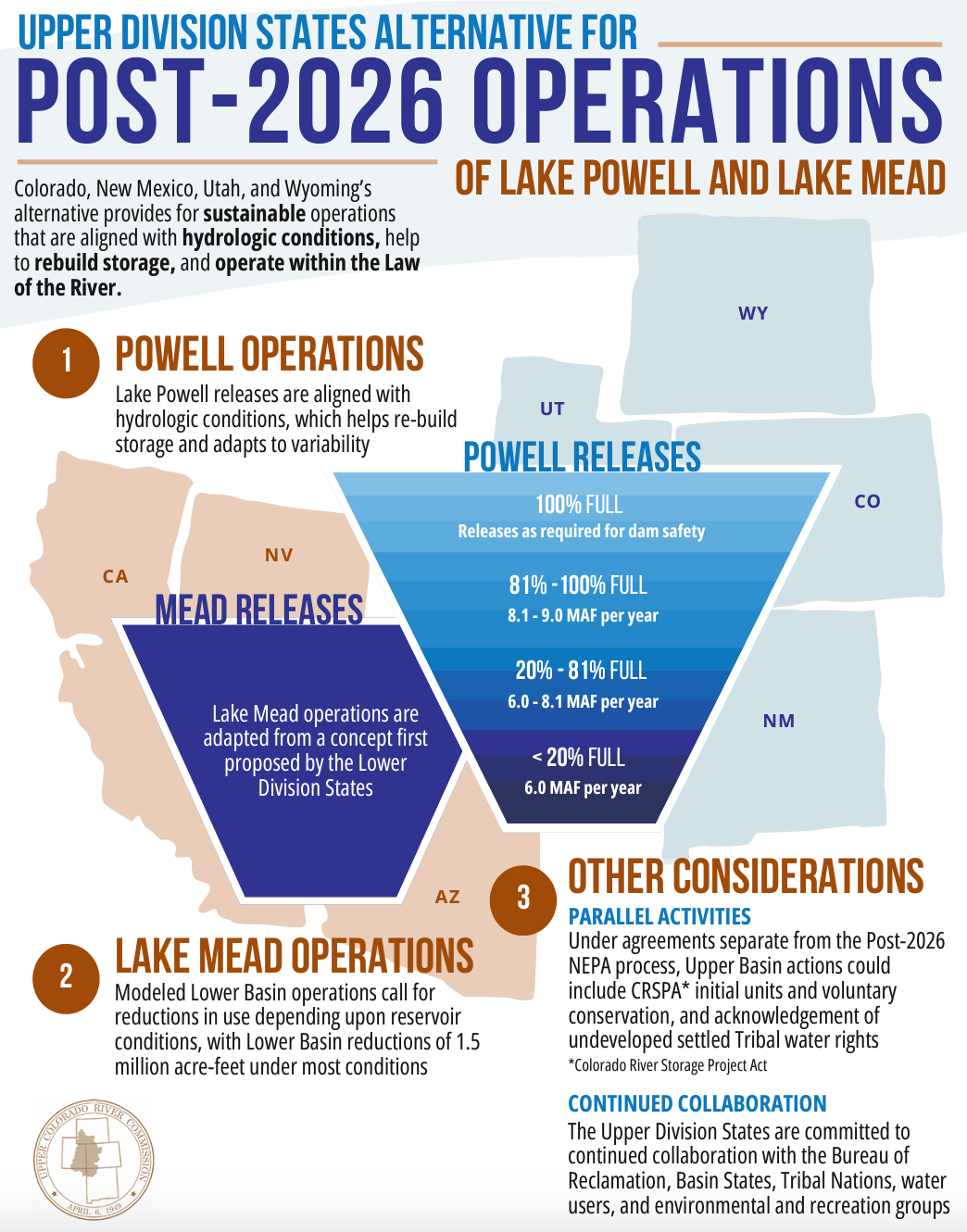
The Upper Basin’s alternative, summed up. Source: Upper Colorado River Commission.

What do they disagree about?

The two proposals for managing water lay out a major philosophical difference between the Upper and Lower basins. They disagree about who should take responsibility for the gap between supply and demand.

The Upper Basin is legally required to let a certain amount of water flow to its downstream neighbors each year. After more than 100 years of complying with that standard, Upper Basin states want the ability to allow less water to flow, and their proposal puts that idea into writing.

About 85% of the Colorado River starts as snow in the Upper Basin’s mountains. Climate change, the catalyst for the region’s water shortages, is shrinking the amount of snow that falls in those mountains each year.

Metro Denver, left, gets half its water from the Upper Colorado River Basin, with river headwaters northwest of Longs Peak and Mount Meeker in Rocky Mountain National Park. Dillon Reservoir, off Interstate 70 in Summit County, top right, is owned by Denver Water and holds water for Metro Denver; reservoir water is transported under the Continental Divide to reach the city. Blue Mesa Reservoir, near Gunnison, Colorado, bottom right, is a key water storage facility in the Colorado River Basin and has reached dramatic lows because of drought. Credit: Colorado State University

Because of that, the Upper Basin states argue, they feel the sting of climate change more sharply than the Lower Basin. Cities and farms within its four states have to adjust their water use in accordance with recent snowfall, Upper Basin leaders say, but the Lower Basin can count on predictable water deliveries from upstream.

The Upper Basin’s proposal basically outlines a legal loophole that would let them, under certain circumstances, allow less water to flow downstream without breaking their contract with California, Arizona and Nevada.

“[The proposal] protects Lake Powell storage for the benefit of both the Upper and Lower Basins, mitigates the risk of either Lake Powell or Lake Mead reaching dead pool, and is consistent with the Law of the River,” the Upper Basin states wrote in their proposal.

What are those three words?

In 1922, eight men spent 11 months going back and forth about the language of the Colorado River Compact. They were very deliberate in their choice of words.

One of the most important ideas laid out in its pages is the division of water between the Upper and Lower Basin. Half of it — 7.5 million acre-feet — stays in the mountain states where it starts as snow. Those Upper Basin states are on the hook to let the other half flow downstream.

Article III, Section D of the Compact explains it this way.

“The States of the Upper Division will not cause the flow of the river at Lee Ferry to be depleted below an aggregate of 75,000,000 acre-feet for any period of ten consecutive years reckoned in continuing progressive series beginning with the first day of October next succeeding the ratification of this compact.”
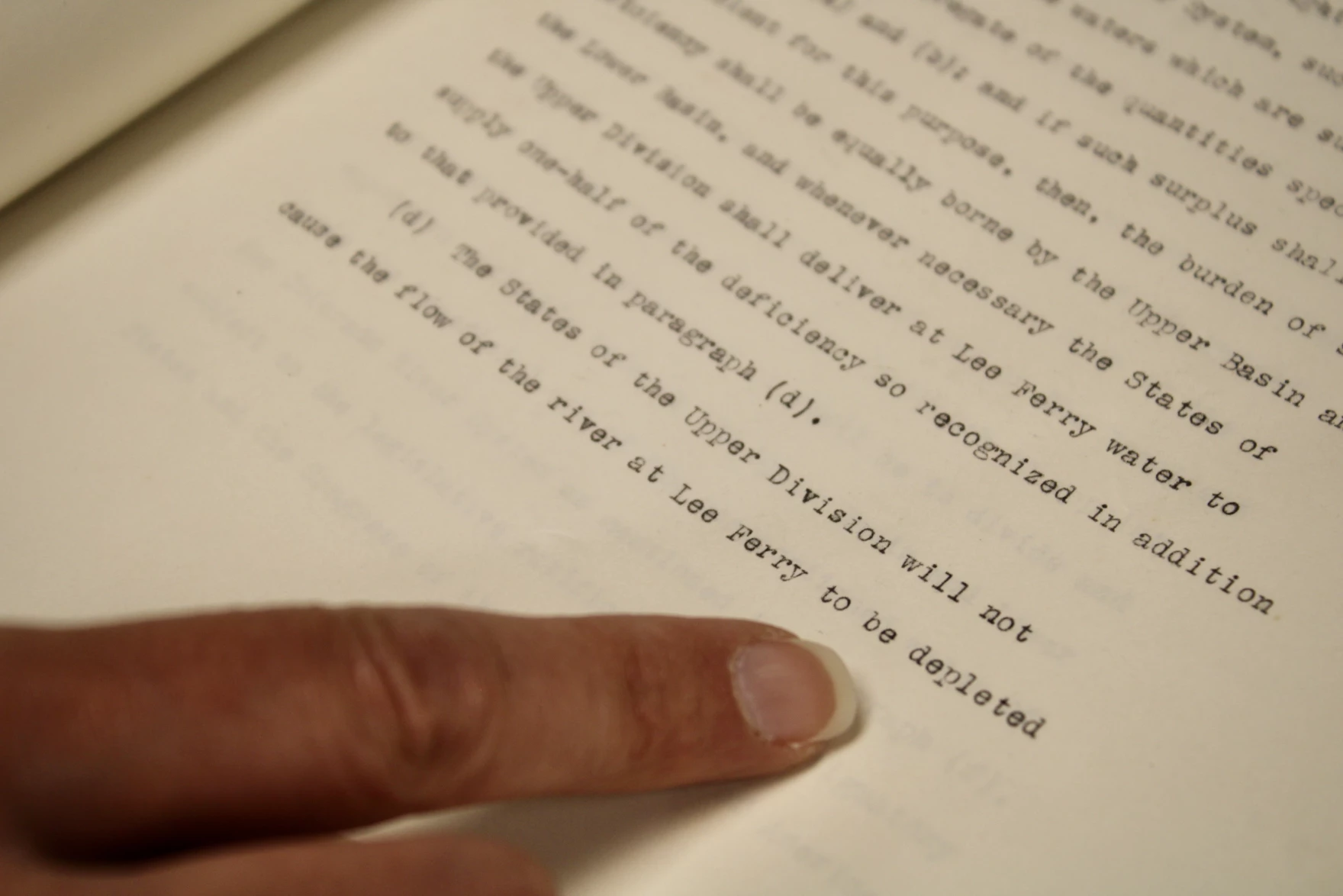
Patty Rettig points to a sentence printed in a 1922 copy of the Colorado River compact. The wording of that sentence is being used in negotiations about the river’s future in 2024. Photo credit: Alex Hager/KUNC

The water leaders of Colorado, Utah, Wyoming and New Mexico are, today, zooming in on one tiny part of that sentence.

“Will not cause.”

The Upper Basin states, in 2024, say the agreement does not require them to send a particular amount of water downstream every year. Instead, it requires them to not be the reason that amount doesn’t make it downstream.

They’re arguing that climate change, not the states themselves, is the reason that less water is making it downstream. The Upper Basin states say they have less water to begin with, and it isn’t their fault – it’s the fault of a warming climate.

And they’re saying the Colorado River Compact, written more than a century ago, gives them legal permission to allow less water to flow downstream because they aren’t the ones causing the water supply to go down.
Whose idea was this?

The Colorado River Compact has not always been interpreted in this way. The idea to blame climate change as the “cause” of depleting water supplies, by most accounts, came around in the early 2000s. The people who drew it up are still around today.

“I might have been one of them,” Eric Kuhn said with a chuckle. “I plead guilty.”

Kuhn, now retired, was the head of the Colorado River District from 1996 to 2018. The taxpayer-funded agency was founded to keep water flowing to the cities and farms of Western Colorado. He said warming temperatures, which pushed river supplies into a steady decline starting around the year 2000, was the spark for the idea.

“We have fixed obligations at Lee Ferry, and because of climate change, we’re going to see less and less water in the river,” Kuhn said. “A fixed obligation with a declining resource means our water supply is caught between the two. So, I called it the ‘Upper Basin squeeze.’”

Lee Ferry, also called Lee’s Ferry, is a place on the Colorado River in Northern Arizona. The architects of the Compact designated it as the river’s halfway point. The measuring equipment installed there is still important today.
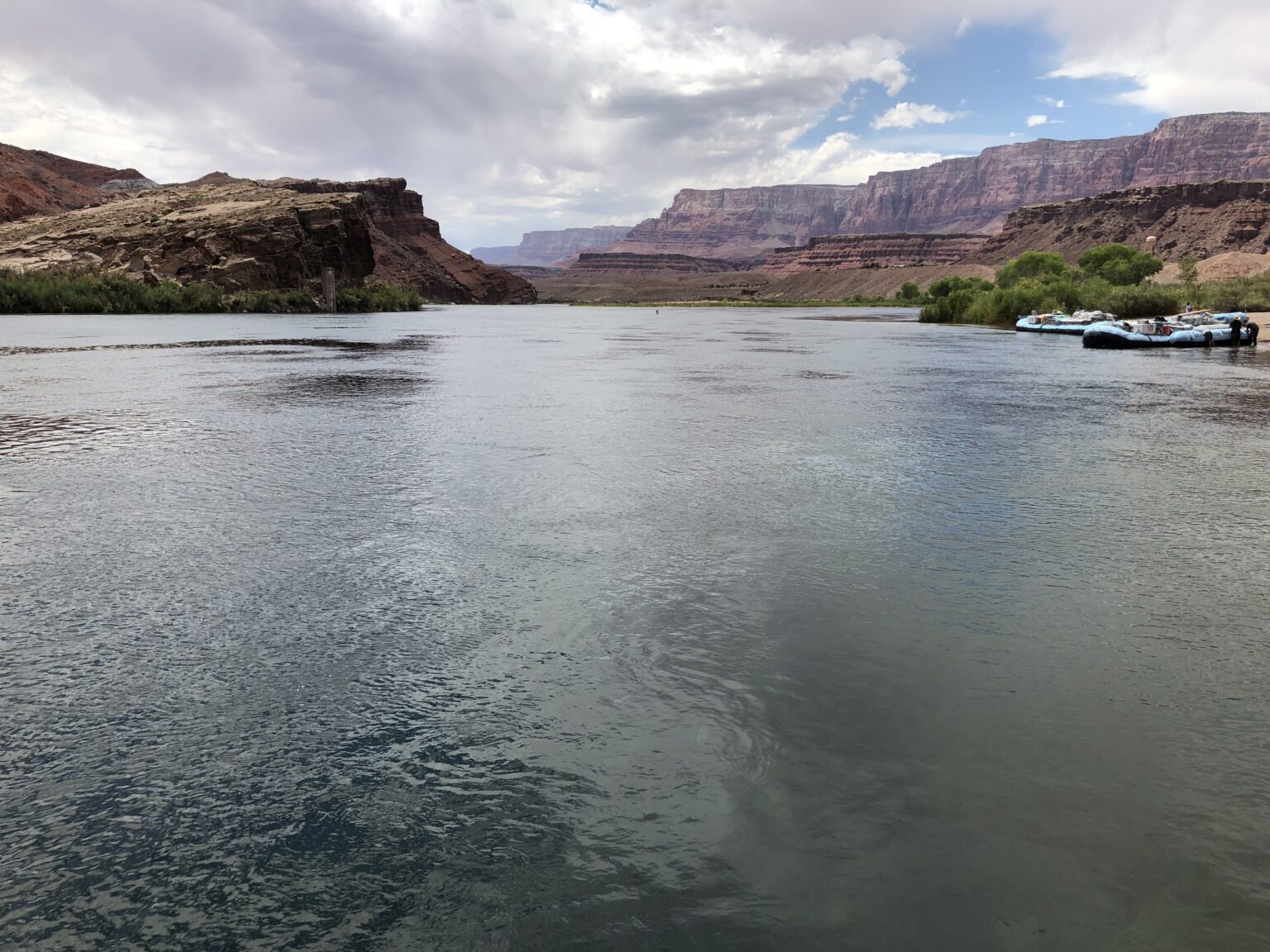
Lee’s Ferry. (Gaging station at upper left.) Photo by John Fleck

Kuhn doesn’t blame today’s water leaders for pushing the idea during negotiations about the future. He said they wouldn’t be doing their jobs if they didn’t highlight climate change. But he doesn’t see this interpretation — the idea of “not causing” drops in the water supply — as the silver bullet to the Upper Basin’s water woes

“I think it’s a negotiating stance,” Kuhn said, “And hopefully will give them some maneuvering room to come up with a different proposal than what they’re saying right now.”

What did the Compact’s authors mean?

A certain faction of powerful people are choosing to interpret the language of the Colorado River Compact in a very specific way. But was that the intention of the people who wrote it?

In short, it’s hard to tell. But people with a knowledge of water history think they probably weren’t trying to create a loophole. Patty Rettig, the archivist at Colorado State University, has read through a lot of documents that can provide some context.

The collection she manages contains extensive writings from Delph Carpenter. He was Colorado’s delegate to the 1922 meetings that resulted in the Colorado River Compact. His family turned over his papers, which includes an original copy of the Compact itself, to the CSU library. The collection also includes pages upon pages of handwritten notes and work-in-progress drafts that accrued during the months-long deliberations.
Governor Clarence J. Morley signing Colorado River compact and South Platte River compact bills, Delph Carpenter standing center. Unidentified photographer. Date 1925. Print from Denver Post. From the CSU Water Archives

Rettig has read through the meeting minutes from 1922 – a word-by-word transcription of what state negotiators talked about during their brainstorming sessions in Santa Fe. New Mexico. She does not think Delph Carpenter would have deliberately chosen wording about the Upper Basin’s delivery obligation to provide 21st century leaders a way to find some wiggle room in how they manage water.

“I think it is plausible, but I think that also might be stretching his intentions some,” she said. “I don’t have the sense that he was trying to do something underhanded or trying to get specific benefits for his state.”

The compact’s authors — a group that also included representatives from six other states and Herbert Hoover, who was the U.S. Secretary of Commerce at the time — may not have been thinking about water policy discussions in the year 2024, but they were decidedly choosy with their wording.

Flipping through a mishmash of undated drafts of the Compact, many marked with Carpenter’s own scribbles and notes, that now-important “will not cause” sentence takes a few different forms.

At one point, the authors write that the Upper Basin states will not cause the river to be “diminished” below the set amount of water. At another, they use the word “reduced.” Finally, they settled on “depleted.”

But throughout all of the drafts, or at least the ones that made it into CSU’s collection, they did not change the wording about the Upper Basin’s responsibility to not “cause” the river to drop.

What happens if this goes to court?

The Upper Basin’s idea was met with swift dismissal from downstream states. JB Hamby, California’s top water negotiator, put that dissent into words.

“Arguing legal interpretations until we’re all blue in the face doesn’t do anything to proactively respond to climate change,” Hamby said in a press conference on March 6, the day the proposal was released.

For Robert Glennon, water law expert and professor at the University of Arizona, the Upper Basin’s argument only makes sense if you laser-focus on those three words — “will not cause” — and ignore the context of the Colorado River Compact as a whole.

He said it’s a simple document, laying out a sequence of steps to split the river in half at Lee’s Ferry. The document itself is only a few pages long. It was written before Glen Canyon Dam and Hoover Dam were built or extensive canals tapped the river’s flow.

Glennon said the compact’s authors “didn’t know what the Upper Basin states might do, but they wanted to make sure there was no hanky-panky.” The phrase in question, demanding the Upper Basin send water downstream, simply reinforces the agreed-upon split.
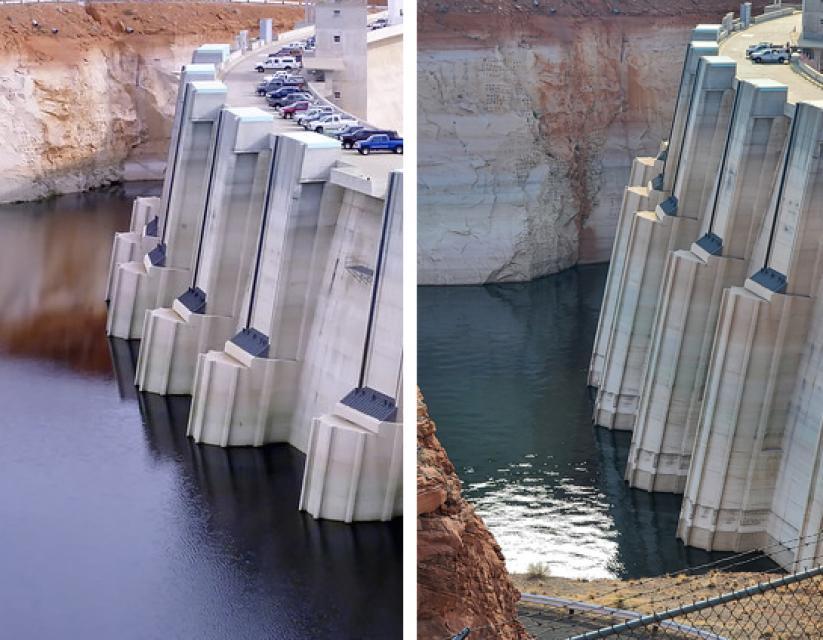
Lake Powell’s decline is seen in these photos of Glen Canyon Dam taken a decade apart. On the left, the water level in 2010; on the right, the water level in 2021. (Source: Bureau of Reclamation)

That, in Glennon’s mind, is the most “sensible interpretation” of the Compact’s language. But if the states decide to take the question to court, Glennon said, a lawsuit over the language “would be a disaster.”

“What, you’re trying to cram modern theories and the science of climate change into a 100-year-old document?” Glennon said.

He pointed out the Colorado River Compact is short — considerably shorter, he joked, than a lease for an apartment. It doesn’t contain any legal definitions for key words like “depleted” or “cause.” No one could predict what the courts would do, and court cases over Western water rights, in the past, have sometimes dragged on for years or even decades.

Glennon adds that if the Upper Basin really wanted to reopen the terms of the Colorado River Compact in a courtroom, there is a stronger argument at hand. The founders who divided up the water in 1922 judged the river’s flow by a period of extremely wet years — in fact, some of the wettest in more than a thousand years. Even setting aside long-term drought and climate change, the compact divvied up more water than the river normally holds. In legal terms, that’s called a “mutual mistake” – and it’s the kind of thing a lawyer could use to void a contract.

“I think that’s a legal argument with some heft to it,” Glennon admitted.

But he wasn’t suggesting anyone take that road. Glennon said it’s in no one’s interest to tear apart the Colorado River Compact. Instead, he expressed faith in the ongoing negotiations.

“We’re pretty close to finding ways to get through this really quite terrible period,” he said. “The people who are working on these issues at the state and federal level are smart, they’re earnest, they’re determined to get through this, and I think they will.”

What’s next for negotiations?

Glennon isn’t the only one who believes the states can hash this out at the negotiating table without leaning on controversial readings of old laws.

Jim Lochhead was Colorado’s top water negotiator in the late 90s, and among the first people to push the “will not cause” interpretation. But now, he said, isn’t the right time for lawyers to make “arcane and complex arguments.”

“Making strident arguments about those interpretations ultimately ignores the responsibility of the basin states to come together and reach agreement on managing a crisis that we all face together as a basin,” Lochhead said.

Rebecca Mitchell, John Entsminger, Estevan Lopez, Gene Shawcroft, JB Hamby, Tom Buschatzke at the Getches-Wilkinson Center/Water and Tribes Initiative Conference June 6, 2024. Photo credit: Rebecca Mitchell

His comments join a chorus of other Colorado River experts who, despite their differences about how exactly to solve the supply-demand crisis, agree on one thing: the river’s future should be decided by the Western states that use its water.

Credit: Earth Justice

“I think the fundamental lesson is that we’re much better off controlling our own destiny than putting our future in the hands of nine justices on the United States Supreme Court who don’t understand Western water law, who don’t understand life in the West,” Lochhead said.

Proposals from both basins are on the desk of the Bureau of Reclamation, the federal agency which manages Western dams and reservoirs. They’re joined by suggestions from tribal nations and a coalition of environmental nonprofits.

Reclamation officials are calling on the states to find some consensus before the November election, so federal water managers can start the paperwork to implement post-2026 river management plans before any potential disarray that could be caused by a change in presidential administrations.

In June, state water negotiators said they plan to take longer than that, hinting that they are more likely to find common ground closer to the 2026 deadline.

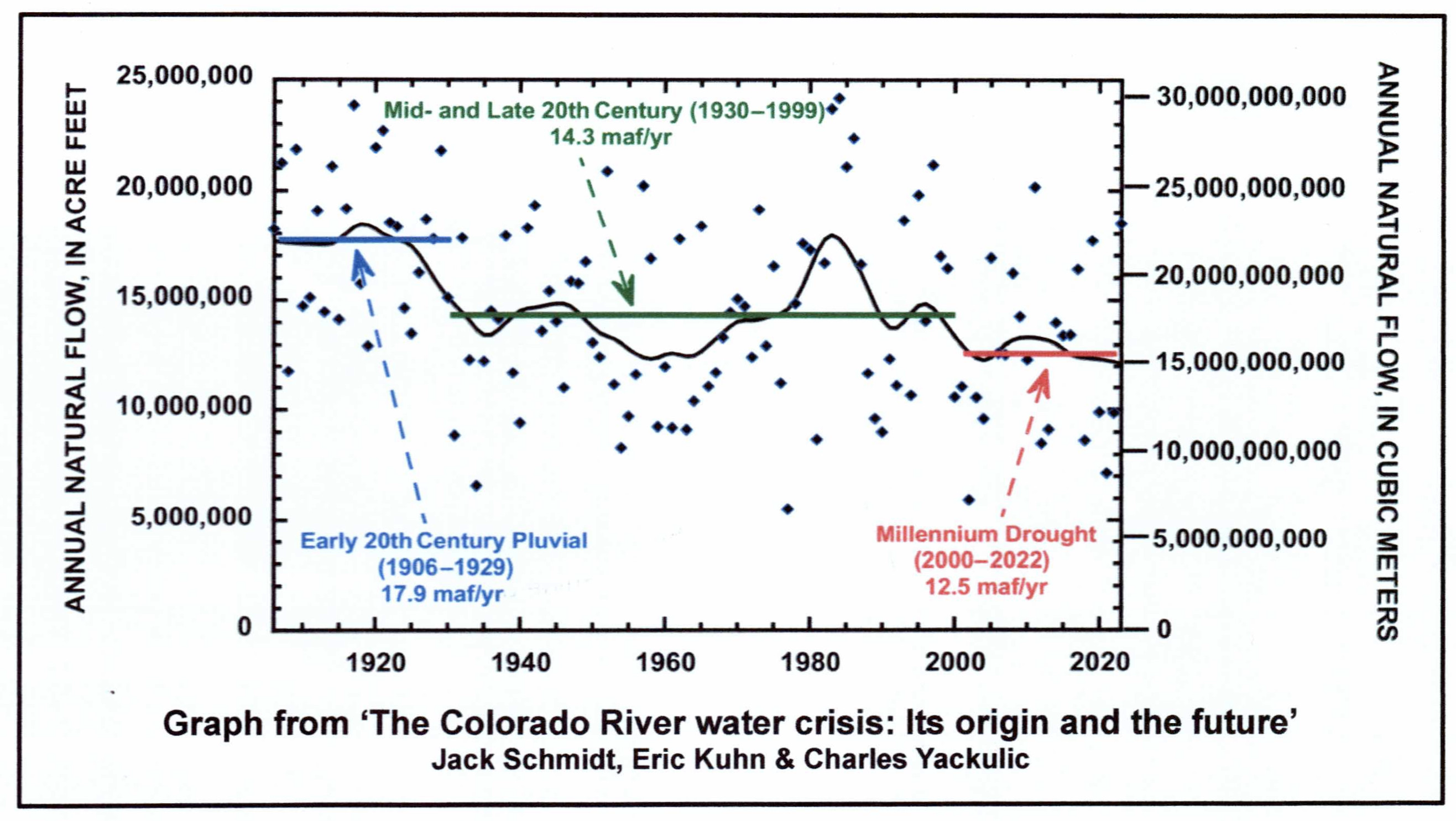
“New plot using the nClimGrid data, which is a better source than PRISM for long-term trends. Of course, the combined reservoir contents increase from last year, but the increase is less than 2011 and looks puny compared to the ‘hole’ in the reservoirs. The blue Loess lines subtly change. Last year those lines ended pointing downwards. This year they end flat-ish. 2023 temps were still above the 20th century average, although close. Another interesting aspect is that the 20C Mean and 21C Mean lines on the individual plots really don’t change much. Finally, the 2023 Natural Flows are almost exactly equal to 2019. (17.678 maf vs 17.672 maf). For all the hoopla about how this was record-setting year, the fact is that this year was significantly less than 2011 (20.159 maf) and no different than 2019” — Brad Udall

‘Devastating’ — Zebra mussels found in #ColoradoRiver, officials scramble to develop rapid response: The invasive species is capable of damaging ecosystems, clogging waterways — #Colorado Politics #COriver #aridification

In May of 2018, USGS Hydrologic Technician Dave Knauer found a batch of zebra mussels attached to the boat anchor in the St. Lawrence River in New York. (Credit: John Byrnes, USGS. Public domain.)

Click the link to read the article on the Colorado Politics website (Thelma Grimes). Here’s an excerpt:

July 18, 2024

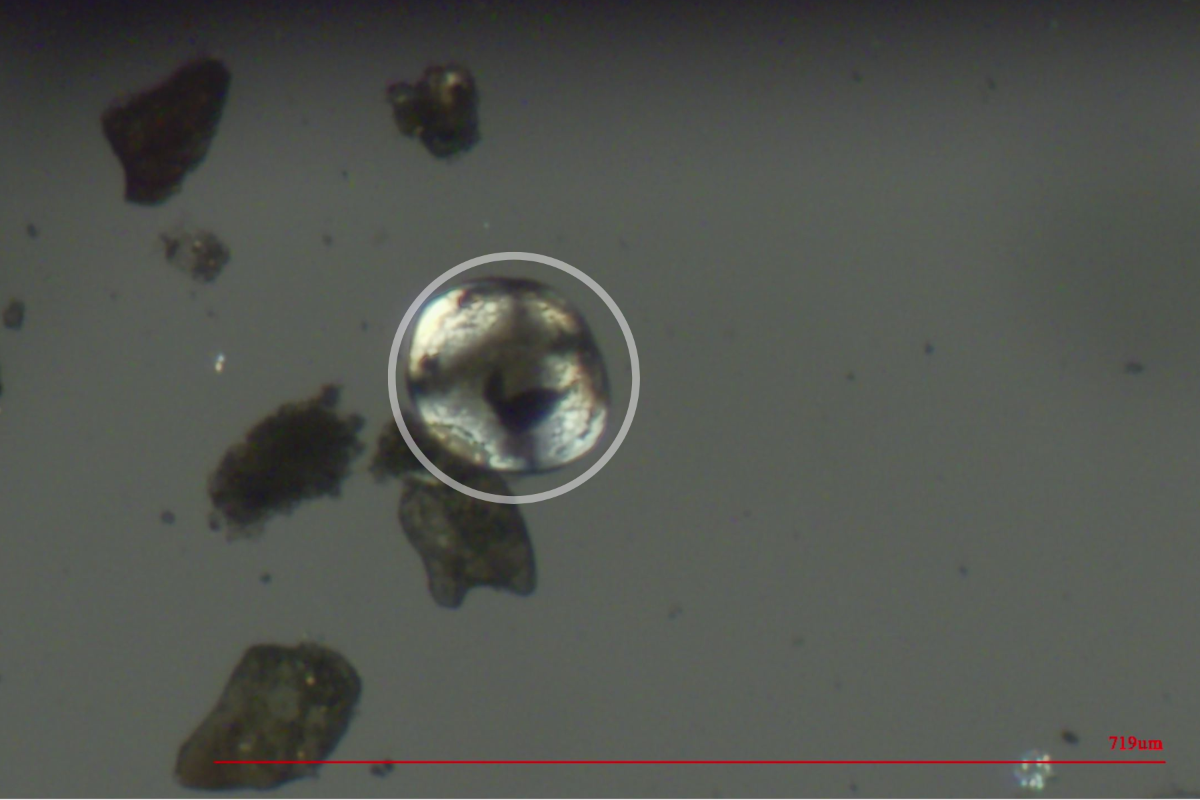
After years of taking steps to keep zebra mussels out of Colorado’s rivers and lakes, state officials said on Tuesday they are “devastated” to learn the invasive species has now made its way into the Colorado River, potentially affecting four states, and they are working on a rapid response to stop it from spreading…According to the Colorado Parks and Wildlife, the zebra mussel was found in the Colorado River and Government High Line Canal through routine testing in early July. On July 1, the state’s Aquatic Nuisance Species team collected a plankton sample from the Government Highline Canal near Clifton. The sample was evaluated at a lab in Denver, where a suspected single zebra mussel veliger was found, officials said.

Photo of a zebra mussel veliger discovered by CPW in the Colorado River near Grand Junction after routine testing in early July. A veliger is the mussel’s free-floating (planktonic) larval stage that can only be seen under a microscope. Photo Credit: CPW

A veliger is the free-floating larval stage of a mussel. At this stage in the life cycle, a zebra mussel can only be confirmed through a microscope. The mussels eat plankton, which takes away from fish that rely on it for food…After further analysis on July 9, the lab notified Invasive Species Manager Robert Walters that the sample was positive for zebra mussel DNA, officials said.  Since the positive testing, the nuisance species team had collected plankton samples from two locations in the Colorado River upstream of the Grand Valley Water Users Canal. By July 11, both samples were confirmed for zebra mussel DNA.

Justyn Liff, the Bureau of Reclamation’s public affairs specialist, told Colorado Politics that sampling will increase upstream, and more meetings will be held between state and federal agencies to develop a solution to stop the species from spreading. Colorado Parks and Wildlife officials said that, with single detections in both waters, the areas are now designated as “suspect” for the presence of zebra mussels. The response must be rapid, with the state wildlife agency rolling out the Invasive Species Rapid Response Plan, which starts with taking more samples to determine if the official classification should be changed from “suspect” to “positive.”

The Government Highline Canal flows past Highline State Park in the Grand Valley. CREDIT: BETHANY BLITZ/ASPEN JOURNALISM

Hustling to get Imperial Irrigation District water reduction tools in place — John Fleck (InkStain.net) #ColoradoRiver #COriver #aridification

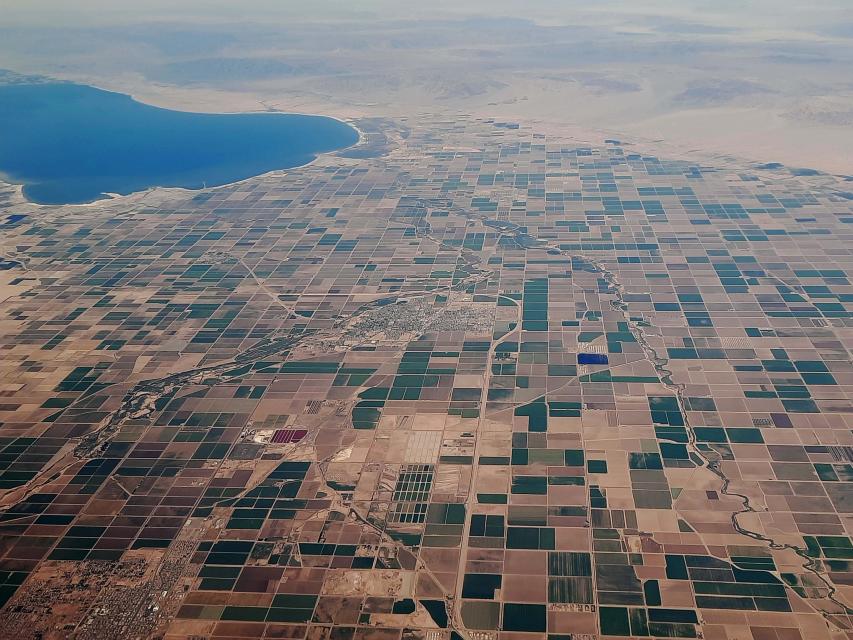
The Salton Sea (pictured above ) straddles the Imperial and Coachella valleys. (Source: Water Education Foundation)

Click the link to read the article on the InkStain website (John Fleck):

July 5, 2024

Janet Wilson had a super helpful piece this week in the Desert Sun about steps being taken (in a hurry) to get the institutional widgets in place to meet Lower Basin commitments to reduce water use under a deal hashed out in spring 2023 to head of Colorado River NEPA litigation.

I wrote (with youthful enthusiasm) in my book Water is For Fighting Over about the potential of “deficit irrigation” as a water use reduction tool in Imperial and places like it. One of the reasons we have converged on alfalfa as a crop in the arid southwestern United States is how robust it is when the water runs short. From the book:

Do that intentionally, for money, and you have an adaptation tool that avoids fallowing entire fields or “buy and dry”. This also works with Bermuda grass and klein grass, two other forage crops grown in Imperial. Taken together, the three crops accounted for 233,000 of Imperial’s 333,000 acres under active irrigation in June, according to IID’s latest irrigation acreage report. (Total Imperial “farmable” acreage is 436,000 acres, the rest is either being fallowed or between crops right now.)

Deficit irrigation is one of three water conservation tools on the table for Imperial, as discussed in a draft Environmental Assessment released last week. Also on the table are on-farm efficiency improvements and straight up fallowing.

All involve federal money to compensate farmers (and their irrigation district). [ed. emphasis mine]

Denver Water celebrates new Northwater Treatment Plant: Utility’s new treatment plant generates #hydropower, can clean up to 75 million gallons of water per day — News on Tap

Click the link to read the article on the Denver Water website (Steve Snyder):

June 21, 2024

Denver Water on Tuesday celebrated the completion of its new treatment plant, the Northwater Treatment Plant, after nearly a decade of planning, design and construction. 

Take a video tour of Denver Water’s new water treatment plant that opened in 2024. #waterindustry #watertreatmentplant #waterquality

The plant, built along Highway 93 north of Golden, can clean up to 75 million gallons of water per day and was designed to be expanded if needed. Over time, the new plant will replace the utility’s Moffat Treatment Plant, which was built in Lakewood in the 1930s.

“It was time to build a plant that could replace one of our older plants,” said Nicole Poncelet-Johnson, the head of the water quality and treatment group at Denver Water. 

“This new plant will help us better meet the needs of a changing regulatory environment, the impacts of climate change and the need to be more sustainable in our operations,” she said. 


Join the team at denverwater.org/Careers.


The Northwater Treatment Plant began operations earlier this year and was completed under budget. 

Denver Water also operates the Foothills Treatment Plant, located near Roxborough and completed in 1983. It’s Marston Treatment Plant, located in southwest Denver, started operations in 1924. Both plants have been updated over their decades of operation. 

The Northwater plant incorporates new technology and lessons learned from other treatment plants. Its design also allows for upgrades to be added as needed.

“The designers and contractors have worked on other conventional treatment plants along the Front Range, and you can see in this plant that they brought the best designs and ideas here to Northwater,” Poncelet-Johnson said. 

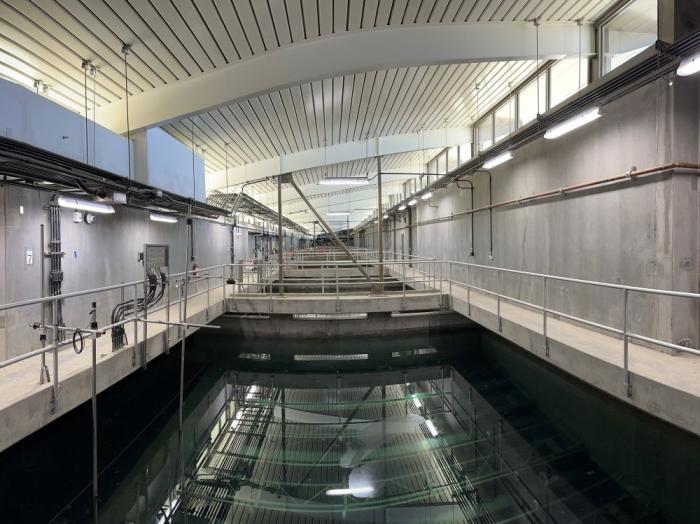
Unique elements at Northwater include deeper filter beds, which are used to filter out dirt particles in water. The deeper filters at the new plant can be operated for longer periods of time between cleanings, making them better suited for treating water affected by various aspects of climate change such as wildfires or floods.

The Northwater Treatment Plant’s filter beds remove dirt particles from the water as it flows through the treatment plant. Photo credit: Denver Water.

The plant uses ultraviolet technology to help clean the water, technology that reduces the time, space and chemicals needed to disinfect the water for delivery to customers. 

And a generator that harnesses power from the water flowing into the plant, when combined with other energy efficiency improvements, is capable of producing more energy than it needs for operations. 

“This plant helps us be ready for the next 100 years. It’s a great investment in the future for Denver Water and its customers,” Poncelet-Johnson said.

A look back at building the Northwater Treatment Plant 

With the old Moffat Treatment Plant, which started operations in the 1930s, nearing its end life, Denver Water decided to build a new treatment plant along Highway 93 north of Golden, near its Ralston Reservoir. 

The project required installing a new pipeline, more than 5 feet in diameter, to carry water more than 8 miles from the new treatment plant to the site of the old Moffat Treatment Plant in Lakewood. The new pipeline replaced one that dated from the 1930s. The Moffat plant also was modified as it will transition from cleaning water to primarily storing water following the completion of the Northwater plant. 

The new plant, pipeline and modifications to the Moffat facility are known as the North System Renewal project.

Installing the new water pipeline required tunneling under two railroad lines and three major highways, including Interstate 70:

Denver Water is building a new $90 million water pipeline in Jefferson County, Colorado. The pipeline replaces two existing pipelines and is needed for Denver Water’s new water treatment plant.

Construction on the Northwater Treatment Plant started in September 2018. 

In the spring of 2019, the new plant was the subject of a senior capstone project for graduating civil engineering students at the University of Colorado Boulder. The students, working in teams, presented their designs for the building that houses the filter systems at the plant to Denver Water’s leaders on the project. 

How did the CU Boulder students do? Watch here:

For CU Boulder engineering students, their spring 2019 capstone project revolved around Denver Water’s new state-of-the-art water treatment plant.

In 2020, as the COVID-19 pandemic roiled the nation, work at the plant continued with new protocols to ensure workers remained as safe as possible on the job. 

Learn how they did it: 

How construction of Denver Water’s newest treatment plant stayed on schedule in 2020, despite the COVID-19 pandemic.

The summer of 2021 saw the beginning of the massive effort to place the thousands of yards of concrete that would make up two giant concrete water storage tanks, each capable of holding 10 million gallons of clean water. The tanks, now partially buried, are most visible aspects of the plant seen from Highway 93.

Pouring the concrete floor of the first of two 10-million-gallon water storage tanks at the new Northwater Treatment Plant started at 2:30 a.m. on Friday, May 14, 2021, and continued through noon that day. Photo credit: Denver Water.

In fall 2021students from the Colorado School of Mines in Golden visited the site to hear from project leaders about the design and construction of the plant. 

By the end of 2021, the plant had officially passed the 50% complete milestone for construction while the people working on the project had collectively dedicated 1 million hours to the effort

The Northwater Treatment Plant received several national awards during its years of construction. Photo credit: Denver Water.

In 2022, the project received an award from the American Water Works Association, the largest organization of water supply professionals in the world. The project was the recipient of the 2022 AWWA Innovation Award, given to utilities that have inspired or implemented an innovative idea, best practice, or solution to address a challenge facing the industry. 

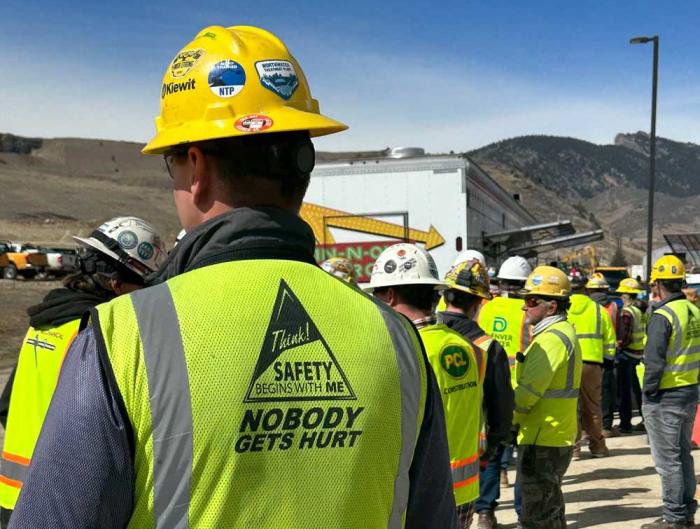
In 2023, construction of the Northwater plant received national recognition from the American Public Works Association for its commitment and accomplishments around safety, including protecting the health of hundreds of workers on the project during the COVID-19 pandemic. 

The summer of 2023 also saw the completion of the two giant concrete water storage tanks and roofs put on the buildings. 

As the project was nearing completion, it was an opportunity take a video tour of Northwater’s ultraviolet light disinfection capabilities. 

Take a tour: 

#RoaringForkRiver runs orange amid reservoir construction — #Aspen Daily News

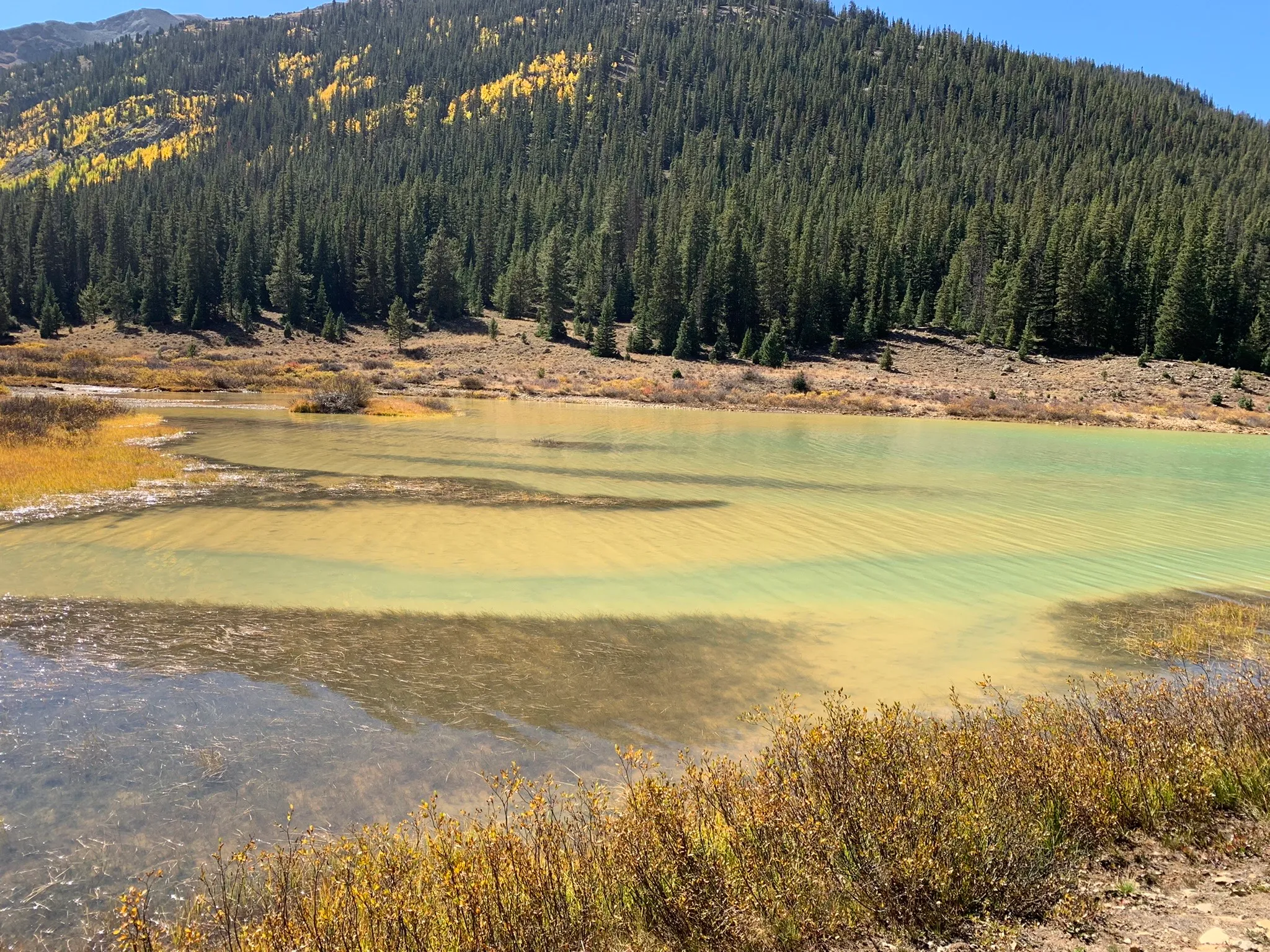
Lincoln Creek was yellow as it flowed into Grizzly Reservoir in September 2022. A report from the Environmental Protection Agency says metals contamination in the creek and reservoir is a result of natural causes, not a nearby mine. CREDIT: HEATHER SACKETT/ASPEN JOURNALISM

Click the link to read the article on the Aspen Daily News website (Austin Corona). Here’s an excerpt:

July 17, 2024

Ongoing construction at the Grizzly Reservoir turned the Roaring Fork River orange as it ran through Aspen on Tuesday. The discoloration had remained in the upper valley as of Tuesday afternoon, with some cloudiness visible as far downstream as Woody Creek. The river appeared clear at Old Snowmass.  The city of Aspen said in a Facebook post that its municipal drinking water is safe to drink. Aspen takes its drinking water from Castle and Maroon creeks, not the Roaring Fork. The only drinking water intake located directly on the Roaring Fork is in Glenwood Springs. Nonetheless, county officials have warned recreators to be cautious when playing in the river and avoid ingesting river water. The county also warned against allowing pets in the river. A county alert on Tuesday said the river could appear muddy and discolored over the next few days. Sediment from Grizzly Reservoir likely contains high loads of copper, aluminum, iron and other minerals. The reservoir is located on Lincoln Creek, where the Environmental Protection Agency discovered high metals contamination in 2023 (the contamination was found to be naturally occurring). After leaving Grizzly, the creek flows into the Roaring Fork River roughly 10 miles upstream of Aspen.

Ordway, Colorado-based Twin Lakes Reservoir and Canal Company, which maintains and operates Grizzly, is installing a liner on the reservoir dam this summer. The company is draining the reservoir as part of the project, which has apparently allowed sediment from the bottom of the reservoir to flow downstream in Lincoln Creek…Twin Lakes Reservoir and Canal began draining the reservoir in late June, sending the drainage water through a tunnel under the continental divide. Toward the end of the process, the water level dropped below the tunnel’s intake, causing project managers to send the remaining reservoir contents down Lincoln Creek.

Twin Lakes collection system