Assessing the U.S. #Climate in June 2024: Record-breaking heat waves impacted several regions and four new billion-dollar weather and climate disasters were confirmed in June — NOAA

Last night’s storm (July 30, 2021) was epic — Ranger Tiffany (@RangerTMcCauley) via her Twitter feed.

Click the link to read the article on the NOAA website:

Key Points:

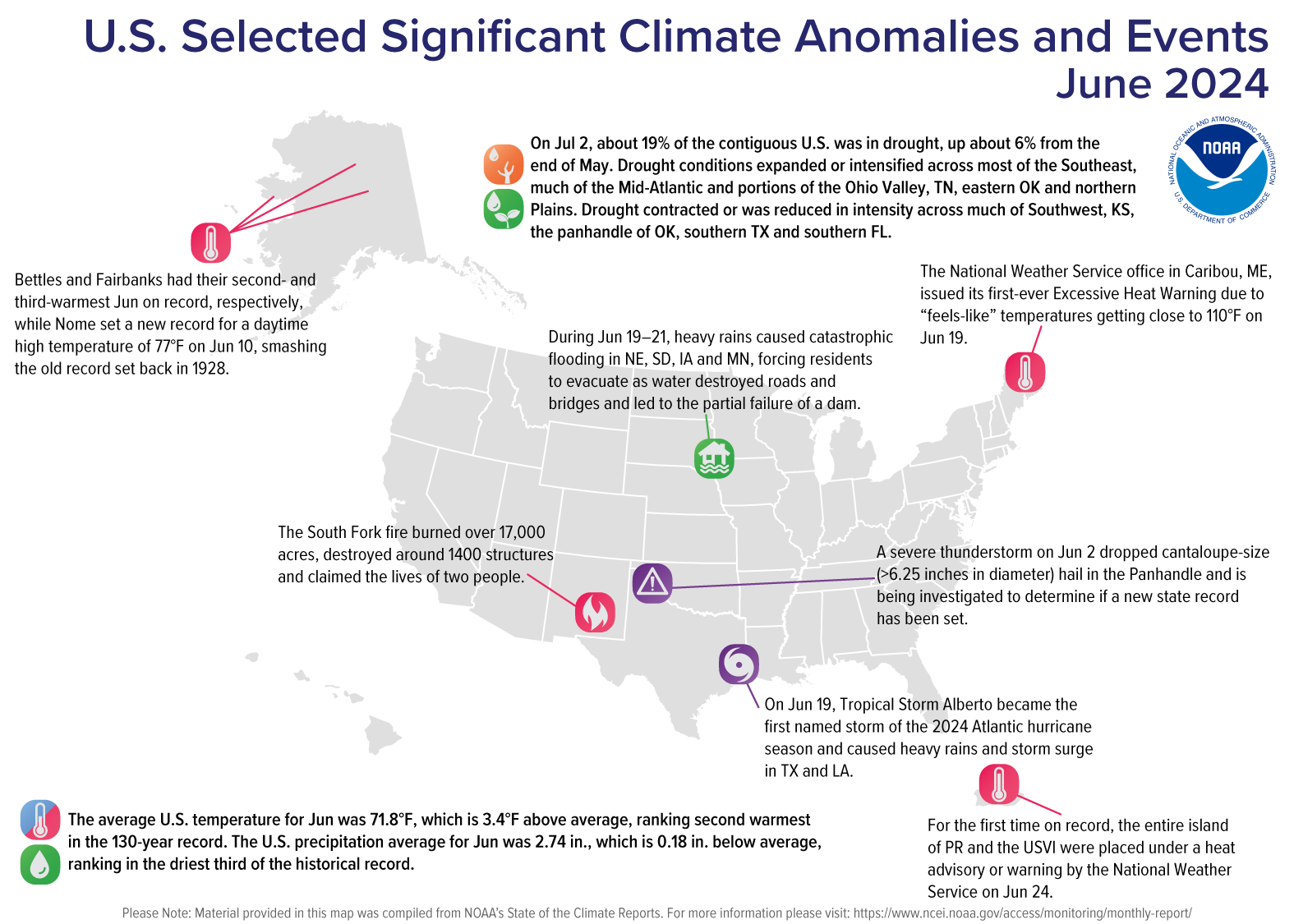
  • The average temperature of the contiguous U.S. in June was 71.8°F, 3.4°F above average, ranking second warmest in the 130-year record.
  • Approximately 24 million people across portions of the West, South and Northeast experienced their warmest June for overnight temperatures.
  • Heat waves impacted the Southwest, Great Lakes, Northeast and Puerto Rico this month, breaking temperature records and creating life-threatening conditions.
  • The South Fork fire, one of the most devastating fires in New Mexico history, burned over 17,000 acres, destroyed around 1400 structures and claimed two lives.
  • Catastrophic flooding occurred in parts of the Midwest after days of heavy rains caused rivers and streams to overflow their banks, forcing residents to evacuate as water destroyed roads and bridges and led to the partial failure of the Rapidan Dam in Minnesota. 
  • On June 30, Beryl became the earliest Category 4 hurricane and the only Category 4 on record during the month of June in the Atlantic Ocean.
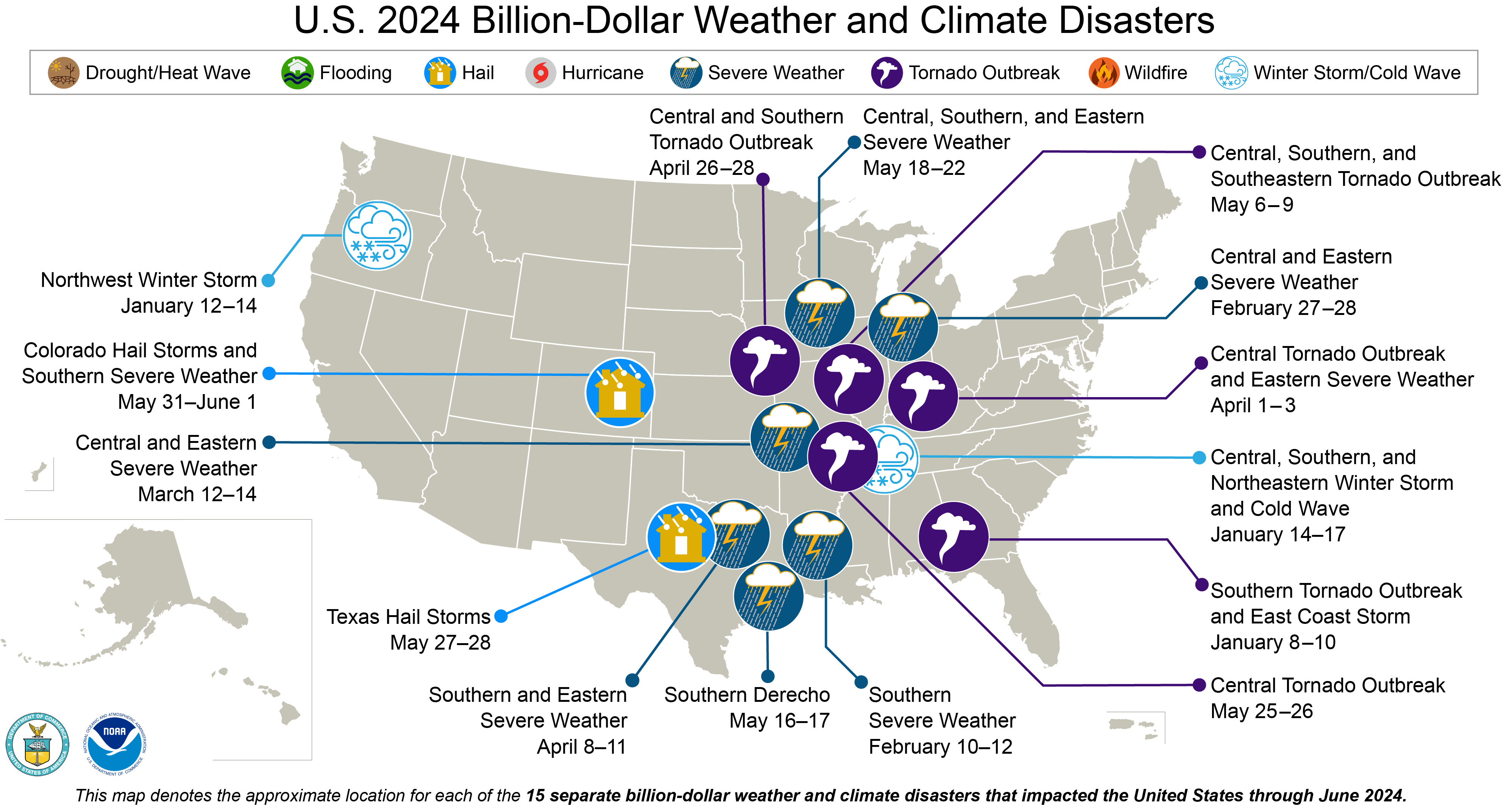
  • Four new Billion-Dollar Weather and Climate Disasters were confirmed in June. The year-to-date total currently stands at 15 disasters.

Other Highlights:

Temperature
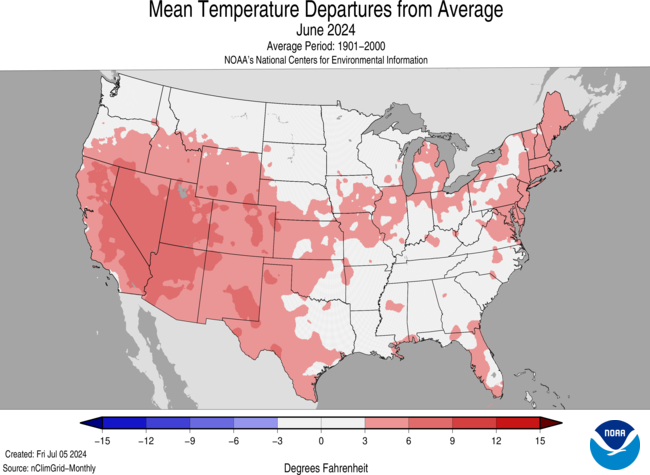
June temperatures were above average to record warm across much of the contiguous U.S. Arizona and New Mexico each had their warmest June on record with 18 additional states ranking among their top 10 warmest Junes on record.

The Alaska statewide June temperature was 52.8°F, 3.6°F above the long-term average, ranking sixth warmest in the 100-year period of record for the state. Above-average temperatures were observed throughout most of the state, with near-average temperatures observed across much of the Aleutians and South Panhandle.
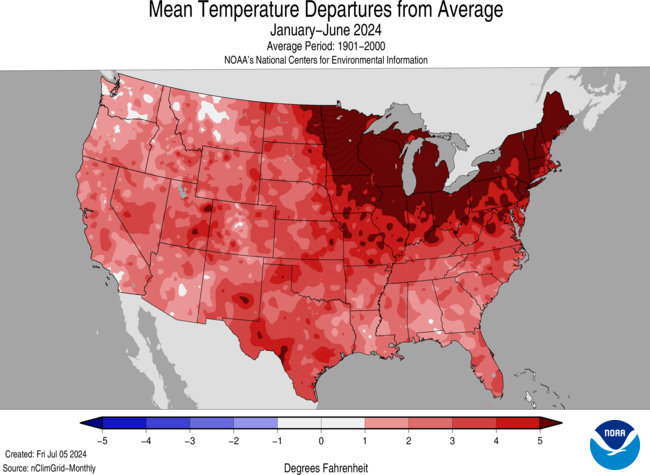
For the January–June period, the average contiguous U.S. temperature was 50.9°F, 3.4°F above average, ranking second warmest on record for this period. Temperatures were above average across nearly all of the contiguous U.S., while record-warm temperatures were observed in parts of the Northeast, Great Lakes, southern Plains and Mid-Atlantic. New Hampshire, Vermont, Pennsylvania and West Virginia each saw their warmest January–June period. An additional 24 states had a top-five warmest year-to-date period. No state experienced a top-10 coldest event during this six-month period.

The Alaska January–June temperature was 24.6°F, 3.3°F above the long-term average, ranking in the warmest third of the historical record for the state. Much of the state was warmer than average for this six-month period while temperatures were near average across parts of the Panhandle.

Precipitation

June precipitation for the contiguous U.S. was 2.74 inches, 0.18 inch below average, ranking in the driest third of the historical record. Precipitation was below average across much of the Southeast, Mid-Atlantic and Ohio Valley and across portions of the Plains and California to the Northern Rockies. Portions of the Southeast experienced dry soils, low streamflow and distressed crops in June. Virginia had its driest June on record and North Carolina had its second driest June. Conversely, precipitation was above average across much of the Upper Midwest and Southwest and in portions of the Northeast, Plains and southern Florida. Minnesota had its fourth wettest June, while Wisconsin had its sixth wettest.

Alaska’s average monthly precipitation ranked fifth driest in the historical record. Much of the state was drier than average for the month of June, while near-average precipitation was observed in the North Slope region.
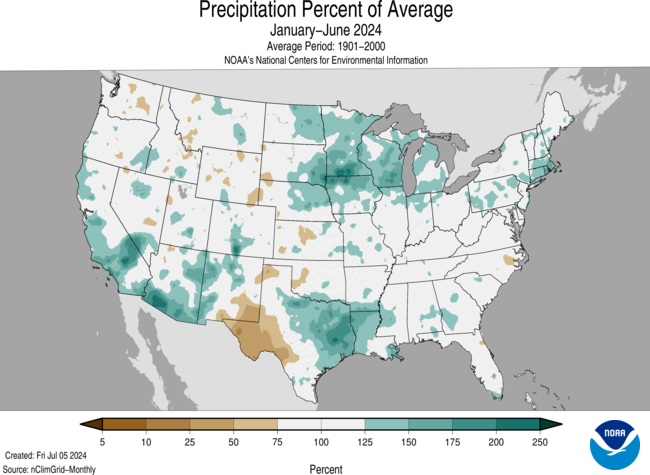
The January–June precipitation total for the contiguous U.S. was 17.36 inches, 2.06 inches above average, ranking 11th  wettest in the 130-year record. Precipitation was above average across a large portion of the Upper Midwest, Northeast and Deep South as well as in pockets across much of the contiguous U.S., with Rhode Island having its second-wettest year-to-date period on record and Minnesota and Wisconsin ranking third wettest. Conversely, precipitation was below average across parts of the Northwest, northern Plains, west Texas and eastern North Carolina during the January–June period.

The January–June precipitation for Alaska ranked in the middle third of the 100-year record, with below-average precipitation observed across parts of the Central Interior, Cook Inlet, Northeast Interior and South Panhandle regions, near-average precipitation in the Aleutians, Northwest Gulf, Northeast Gulf and North Panhandle and above-average precipitation observed across the remaining climate divisions.

Billion-Dollar Disasters

Four new billion-dollar weather and climate disasters were confirmed in June 2024, including two hail events that impacted Texas and Colorado at the end of April and end of May, respectively, one severe weather event that impacted the central, southern and eastern U.S. in mid-May and a tornado outbreak that impacted portions of the Central U.S. in mid-May.

There have been 15 confirmed weather and climate disaster events this year, each with losses exceeding $1 billion. These disasters consisted of 13 severe storm events and two winter storms. The total cost of these events exceeds $37 billion, and they have resulted in at least 106 fatalities.

The U.S. has sustained 391 separate weather and climate disasters since 1980 where overall damages/costs reached or exceeded $1 billion (including CPI adjustment to 2024). The total cost of these 391 events exceeds $2.755 trillion.
Other Notable Events

The Correll Fire, which started on June 1 in San Joaquin County, CA burned over 14,000 acres.

The Darlene 3 Fire, which started on June 25 in Deschutes County, OR burned over 3,800 acres, prompted emergency evacuations and left thousands without power.

On June 2, an extreme rotating thunderstorm dropped cantaloupe-size (>6.25 inches in diameter) hail in the Texas Panhandle—this could be the new state record for largest hail diameter.

A series of heat waves brought record-breaking temperatures to portions of the U.S. during June:

  • The National Weather Service office in Caribou, Maine, issued its first-ever Excessive Heat Warning due to “feels-like” temperatures getting close to 110 degrees on June 19.
  • For the first time on record, the entire island of Puerto Rico and the U.S. Virgin Islands were placed under a heat advisory or warning by the National Weather Service on June 24.

Alberto, the first named storm of the 2024 Atlantic hurricane season, made landfall in Mexico on June 20 as a tropical storm.

Some Texas communities saw nearly three times their June average for rainfall over 48 hours from Tropical Storm Alberto, including the Gulf Coast-area city of Rockport, Texas, which received 9.97 inches of rain from the storm; its June average is 3.66 inches. Similarly, Alice, Texas, received 6.57 inches of rain—nearly triple its June average of 2.32 inches.
Drought

According to the July 2 U.S. Drought Monitor report, about 19% of the contiguous U.S. was in drought, up about 6% from the end of May. Drought conditions expanded or intensified across most of the Southeast, much of the Mid-Atlantic and portions of the Ohio Valley, Tennessee, eastern Oklahoma and northern Plains this month. Drought contracted or was reduced in intensity across much of the Southwest, Kansas, the panhandle of Oklahoma, southern Texas and southern Florida.
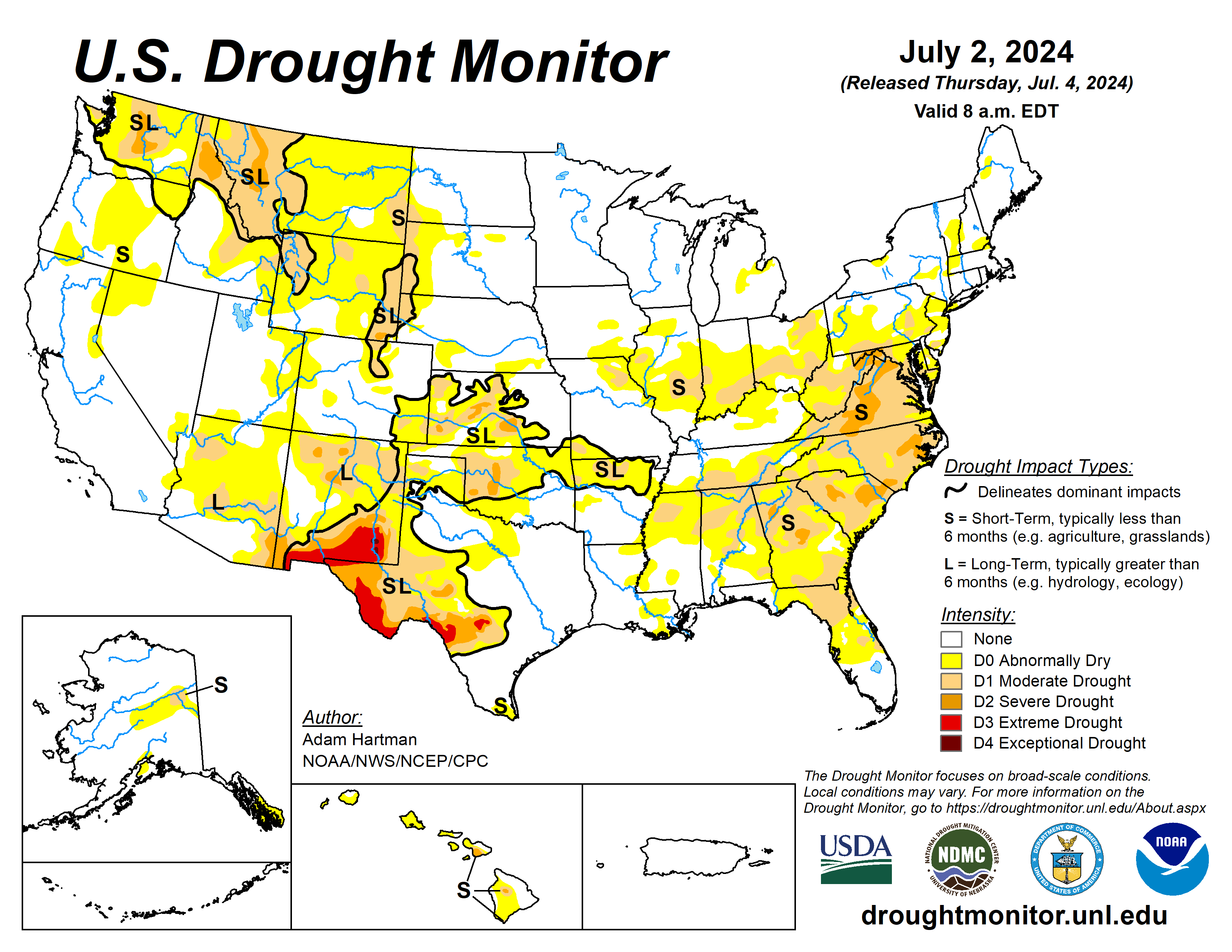
US Drought Monitor map July 2, 2024.

Monthly Outlook

Above-average temperatures are favored to impact areas across the western and southern portions of the U.S. in July, while below-average precipitation is likely to occur in the Northwest and south-central Plains. Drought is likely to persist in the Mid-Atlantic, Southwest, Northwest and Hawaii. Visit the Climate Prediction Center’s Official 30-Day Forecasts and U.S. Monthly Drought Outlook website for more details.

Significant wildland fire potential for July is above normal across portions of the Mid-Atlantic, West, Hawaii and Alaska. For additional information on wildland fire potential, visit the National Interagency Fire Center’s One-Month Wildland Fire Outlook
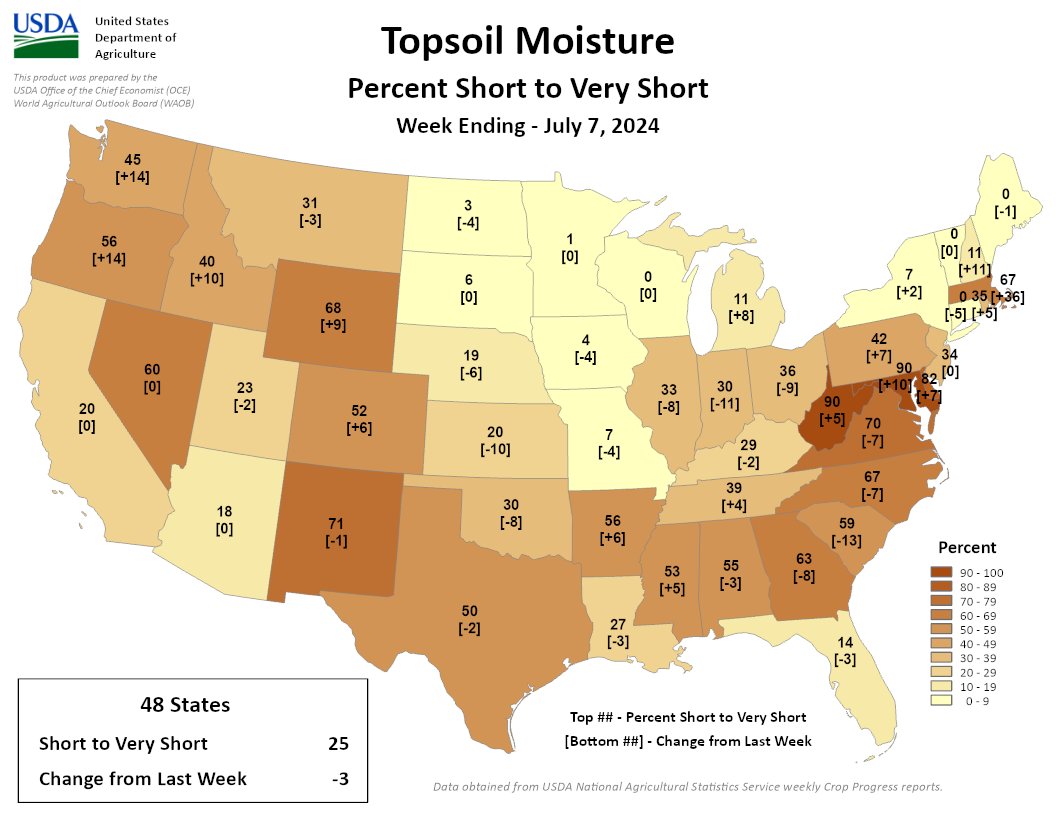
Topsoil Moisture % short/very short (s/vs): 25% of the Lower 48 is s/vs, 3% lower than last week — @NOAADrought

Most of the Plains, Midwest, and Southeast improved. Most of the Northwest, Central Rockies, Northeast, and Mid-Atlantic worsened. The 2 states at 90% s/vs: MD and WV.

Column: With its ‘Chevron’ ruling, the Supreme Court claims to be smarter than scientific experts — The Los Angeles Times

The U.S. Supreme Court Building, current home of the Supreme Court, which opened in 1935. By Senate Democrats – 7W9A9324, CC BY 2.0, https://commons.wikimedia.org/w/index.php?curid=92666722

Click the link to read the article on The Los Angeles Times website (Michael Hiltzik). Here’s an excerpt:

July 2, 2024

The case concerned a 40-year-old precedent known as “Chevron deference.” That doctrine held that when a federal law is ambiguous, the courts must defer to the interpretations offered by the agencies the law covers — as long as those interpretations are “reasonable.” On Monday, the court discarded Chevron deference. This may sound like an abstruse legalistic squabble, but it has massive implications for Americans in all walks of life. It could subject agency decisions on scientifically based issues such as clean air and water regulations and healthcare standards to endless nitpicking by a federal judiciary that already has displayed an alarming willingness to dismiss scientific expertise out of hand, in favor of partisan or religious ideologies. The ruling amounts to an apogee of arrogance on the part of the Supreme Court’s conservative majority, wrote Justice Elena Kagan in a dissent joined by Justices Sonia Sotomayor and Ketanji Brown Jackson. But it’s not a new development.

“The Court has substituted its own judgment on workplace health for that of the Occupational Safety and Health Administration,” Kagan wrote; “its own judgment on climate change for that of the Environmental Protection Agency; and its own judgment on student loans for that of the Department of Education…. In one fell swoop, the majority today gives itself exclusive power over every open issue — no matter how expertise-driven or policy-laden.”

Conservatives have had it in for the Chevron doctrine
for a long time; given their current majority on the court, the doctrine’s death has been a foregone conclusion, awaiting only the appearance of a suitable case to use as a bludgeon. Indeed, the majority was so impatient to kill the doctrine that the court’s six conservatives chose to do so by using a case that actually is moot. That case arose from a lawsuit brought by the herring industry, which objected to a government policy requiring herring boats to pay for government observers placed on board to make sure the boats were complying with their harvesting permits. The rule was imposed under the Trump administration, but it was canceled in April 2023 by Biden, who repaid the money that had been taken from the boat owners — so there’s nothing left in it for the court to rule on.

Interestingly, Chevron deference was not always seen as a bulwark protecting progressive regulatory policies from right-wing judges, as it’s viewed today. At its inception, it was seen in exactly the opposite way — as giving conservative policies protection from progressive-minded judges.

Commentary—Project 2025 to Rural America: Let Them Eat Cake (Without a Nutrition Label)

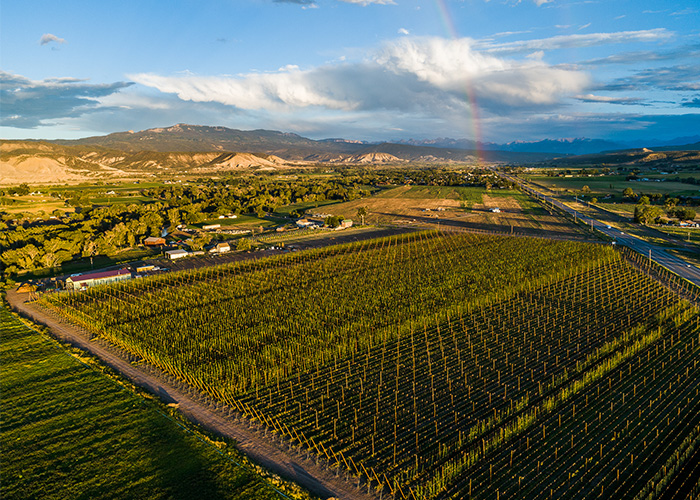
Once settled in Colorado, Audrey and Chris reached out to their local FSA office to apply for a farm ownership loan to purchase their land. Photo courtesy of Billy Goat Hop Farm LLC.

Click the link to read the article on The Daily Yonder website (Edward Strickler Jr.):

July 9, 2024

The Heritage Foundation’s policy document for a second Trump term has more to say about horses than healthcare.

Project 2025 has been so much in the news lately that former President Donald Trump had to respond to the right-wing policy proposals, which the Heritage Foundation put together in hopes of implementation under another Trump presidency.

“I know nothing about Project 2025. I have no idea who is behind it,” Trump said. “I disagree with some of the things they’re saying and some of the things they’re saying are absolutely ridiculous and abysmal. Anything they do, I wish them luck, but I have nothing to do with them.”

In a familiar rhetorical pattern, Trump says two contradictory things at the same time: Parts of Project 2025 are “absolutely ridiculous and abysmal” and “anything they do I wish them luck.”

Well, there is a third contradictory thing: “I know nothing about it.” 

But anyone reading through the nearly 1,000 pages of Project 2025 might easily be two-minded, or three-minded, about it.  It is vast and dense.

Nevertheless, there is a predominant theme threaded throughout: Federal government must be downsized, decentralized, and disempowered as much as possible, as rapidly as possible, just as soon as conservatives gain control the federal government.  And embedded within this theme is a prominent second thread: that the enemy – variously named “that institutionalized cadre of progressive political commissars,” “LGBT advocates,” “the pursuit of racial parity,” “racial and gender ideologies,” etc. — must be vanquished. 

You may see different patterns, but this is what I discerned.  Readers should look for themselves.  Find the chapter(s) that matter to you.  You may choose from sections titled “Taking the Reins of Government,” “The Common Defense,” “The General Welfare,” “The Economy,” and “Independent Regulatory Agencies,” with each major federal government agency discussed.  I spent a couple days reading through the 1,000 pages to glean what is being proposed to support healthy rural populations and thriving rural communities.  Not very much.

In fact, the entire subsection “Rural Health” (Chapter 14, Department of Health and Human Services, at p. 449) is shorter than the subsection on “Wild Horses and Burros” (Chapter 16, Department of the Interior, at p. 528). Empathy for the four-footed ungulates is conveyed by discussion of their “iconic presence” described as “not a new issue … not just a western issue- it is an American issue.”  We two-footed humans rate similar patriotic rhetoric – “seeking space for one’s family and cultivating the land are valued goals that are deeply rooted in America’s fabric” – but the paltry few policy proposals – less than one page out of nearly 1,000 – are insulting.

For example, to increase the supply of health care providers by reducing regulatory burdens on “volunteers wishing to provide temporary, charitable services across state lines,” and to encourage “less expensive alternatives to hospitals and telehealth independent of expensive air ambulances,”  Challenge me if I am wrong, but these proposals explicitly, in writing, advise that rural communities can, at best, expect “second class,” maybe just “third class,” treatment from Project 2025 Conservative elites.  But at least Project 2025 doesn’t advise “humane disposal” for sick rural folks as it does for the horses and burros.

Moving on to some other rural concerns Project 2025 advises:

Mobile technologies: “[W]idespread deployment of infrastructure for 5G adoption in rural and exurban areas, which will be a key factor in future economic competitiveness for these under-served communities” [Note: Those charitable volunteers may not come help us without that.]

Veterans: Department of Veterans Affairs should “reimagine the health care footprint in some locales, and spur a realignment of capacity through budgetary allocations,” for example “Community Based Outpatient Clinics (CBOCs) as an avenue to maintain a VA footprint in challenging medical markets without investing further in obsolete and unaffordable VA health care campuses” and “facility-sharing partnerships between the VA and strained local health care systems to reduce costs by leveraging limited talent and resources” [Note: The context of these proposals is aging facilities and declining patient numbers, particularly in rural areas, that are too expensive and inefficient to replace; but considering the weak proposals for rural health care, these proposals are not likely viable and rural veterans will be treated like other rural residents, “second” and “third” class.]  

Farms: Numerous programs that moderate risk faced by family farms are axed: “Elimination of the Conservation Reserve Program. Farmers should not be paid in such a sweeping way not to farm their land. … The USDA should work with Congress to eliminate this overbroad program.”

And “repeal the ARC (Agriculture Risk) and PLC (Price Loss) programs. … The ARC program is especially egregious because farmers are being protected from losses, which is another way of saying minor dips in expected revenue. This is hardly consistent with the concept of providing a safety net to help farmers when they fall on hard times.” [ note: there is considerable curiosity in distant elites advising farmers about “hard times” and the risks of farming]

Food security: Numerous proposals in Project 2025 intend to reduce numbers and eligibility for Supplemental Nutrition Assistance Program (known commonly as the food stamp program) and for school meals [Note: Food insecurity is rising faster in rural areas.]

Eliminating nutritional labeling and dietary guidelines: “There is no shortage of private sector dietary advice for the public, and nutrition and dietary choices are best left to individuals to address their personal needs. This includes working with their own health professionals.” [Note: Rural residents are less likely to have “their own health professionals” or reliable access to any health professional, or other specific dietary advice.]

Throughout Project 2025’s 1,000 pages are hundreds upon hundreds of proposals.   But perhaps these few gleanings advise that despite bashing progressive elites, Project 2025’s conservative elites know and care little about rural realities, problems, values, and priorities. 

June was #Colorado’s 2nd or 3rd warmest ever: Centennial State lags global rise in temperature but all but one month of the last year have exceeded long-term averages — Allen Best (@BigPivots) #ActOnClimate

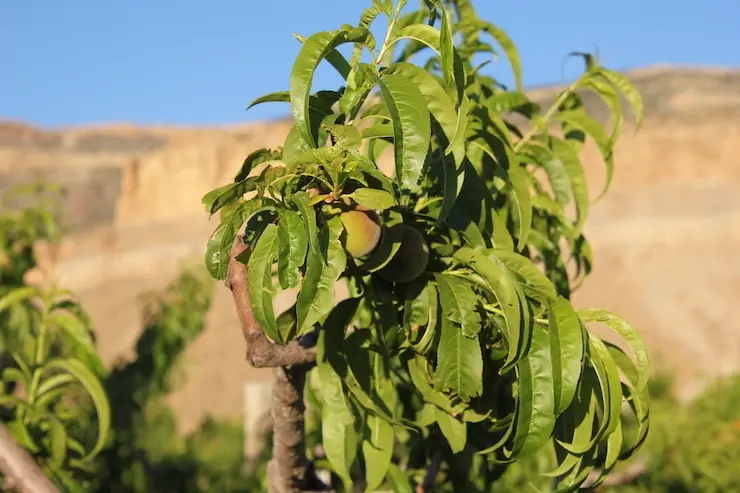
Palisade peaches ripening on the vine on June 5, 2024. Photo credit: Allen Best/Big Pivots

Click the link to read the article on the Big Pivots website (Allen Best):

July 8, 2024

June was a hot month in Colorado, among the two or three hottest Junes ever recorded.

Temperatures for the state didn’t top those of June 2012, a very notable one with attendant repercussions for river flows on the Western Slope. But on July 1, with records still being tabulated, Russ Schumacher, the state climatologist, said that June ranked either second or third among records that go back to the 1880s. He expects to have the definitive report filed soon.

The heat of June came after a comparatively cool May. It was close to the long-term average across much of Colorado, but cooler than average across northwestern Colorado.

The 10 months prior to May, however, had all been warmer than the 20th century average.

You can study the precise temperature rankings for each month in Colorado (and every other state) at this website maintained by the National Oceanic and Atmospheric Administration and the National Centers for Environmental Information.

Colorado’s coolish May and barn-burner June come even as NASA warns of a climate crisis after an unprecedented 12 months of record highs. Each of the 12 months had a global high.

The last 10 consecutive years have been the warmest 10 since record-keeping began in the late 19th century.

“We’re experiencing more hot days, more hot months, more hot years,” said Kate Calvin, NASA’s chief scientist and senior climate advisor. “We know that these increases in temperature are driven by our greenhouse gas emissions and are impacting people and ecosystems around the world.”

Schumacher, a professor at Colorado State University, said the really extreme warmth during the last year or so has been over the oceans.

“Colorado and the western US have been warmer than average over the last year or so but not breaking records like the globe as a whole,” he told Big Pivots.

NASA has put together a visualization of the rise in global temperatures that might fascinate you – or leave you unsettled. See that visualization here.

Aspinall Unit operations update July 10, 2024

Morrow Point Dam, on the Gunnison River, Aspinall Unit. Photo: Brent Gardner-Smith/Aspen Journalism

From email from Reclamation (Erik Knight):

Releases from the Aspinall Unit will be increased from 1600 cfs to 1900 cfs between Wednesday, July 10th and Thursday, July 11th.  Releases are being increased in response to declining river flows on the lower Gunnison River.

Flows in the lower Gunnison River have been dropping quickly towards the baseflow target of 1500 cfs. River flows are expected to continue to decline over the next couple weeks.

Pursuant to the Aspinall Unit Operations Record of Decision (ROD), the baseflow target in the lower Gunnison River, as measured at the Whitewater gage, is 1500 cfs for July and then drops to 1050 cfs in August.

Currently, Gunnison Tunnel diversions are 1050 cfs and flows in the Gunnison River through the Black Canyon are around 600 cfs. After this release change Gunnison Tunnel diversions will still be 1050 cfs and flows in the Gunnison River through the Black Canyon will be near 900 cfs. Current flow information is obtained from provisional data that may undergo revision subsequent to review.