Click the link to read the release on the NREL website (Kelly MacGregor):
June 10, 2024
The University of Oklahoma Won 2023 Technical Track With Their Design for Sustainable Greenhouse Heating and Cooling Using Geothermal Energy
How can we sustainably keep greenhouses cool in the summer and warm in the winter?
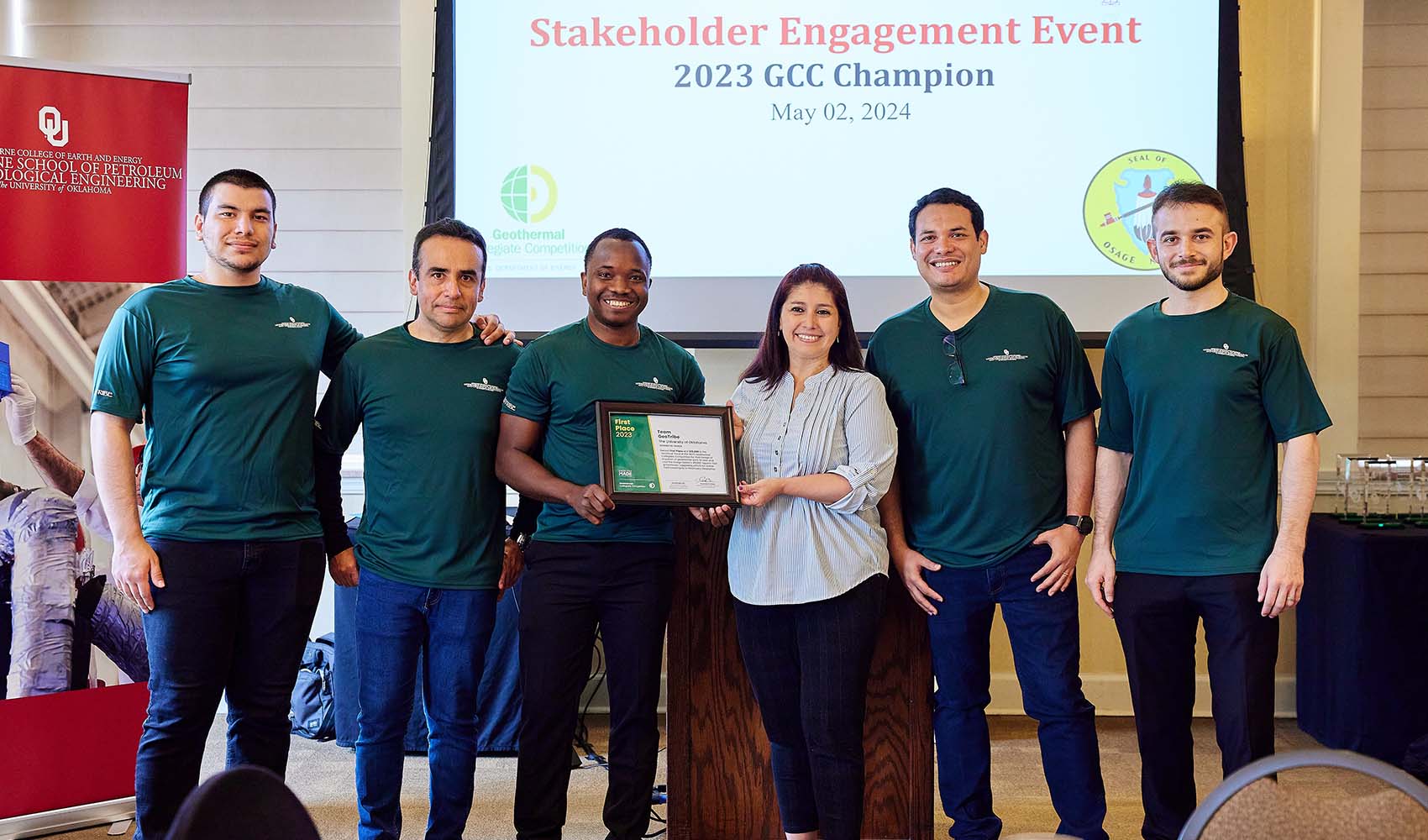
On May 2, 2024, the first-place team in the Technical Track of the 2023 Geothermal Collegiate Competition held a community event to showcase its innovative geothermal system, developed in partnership with the Osage Nation, which aims to do just that.
The team designed a system of geothermal wells in Pawhuska, Oklahoma, to heat and cool the Tribe’s 40,000-square-foot greenhouse, supporting efforts for native food sovereignty.
The proposed geothermal system design would help alleviate the challenge of maintaining a constant year-round growing temperature, which is critical in an area recognized as a food desert.
“The Harvestland greenhouse was created to provide the Osage Nation access to fruits and vegetables, especially during the food shortage during the pandemic,” said Jose Aramendiz, a Ph.D. candidate in petroleum engineering at The University of Oklahoma and a member of the GeoTribe team. “Helping the greenhouse be self-sufficient could lead to cut energy costs, allowing redirection of funds to increase the benefits the greenhouse provides to the community.”
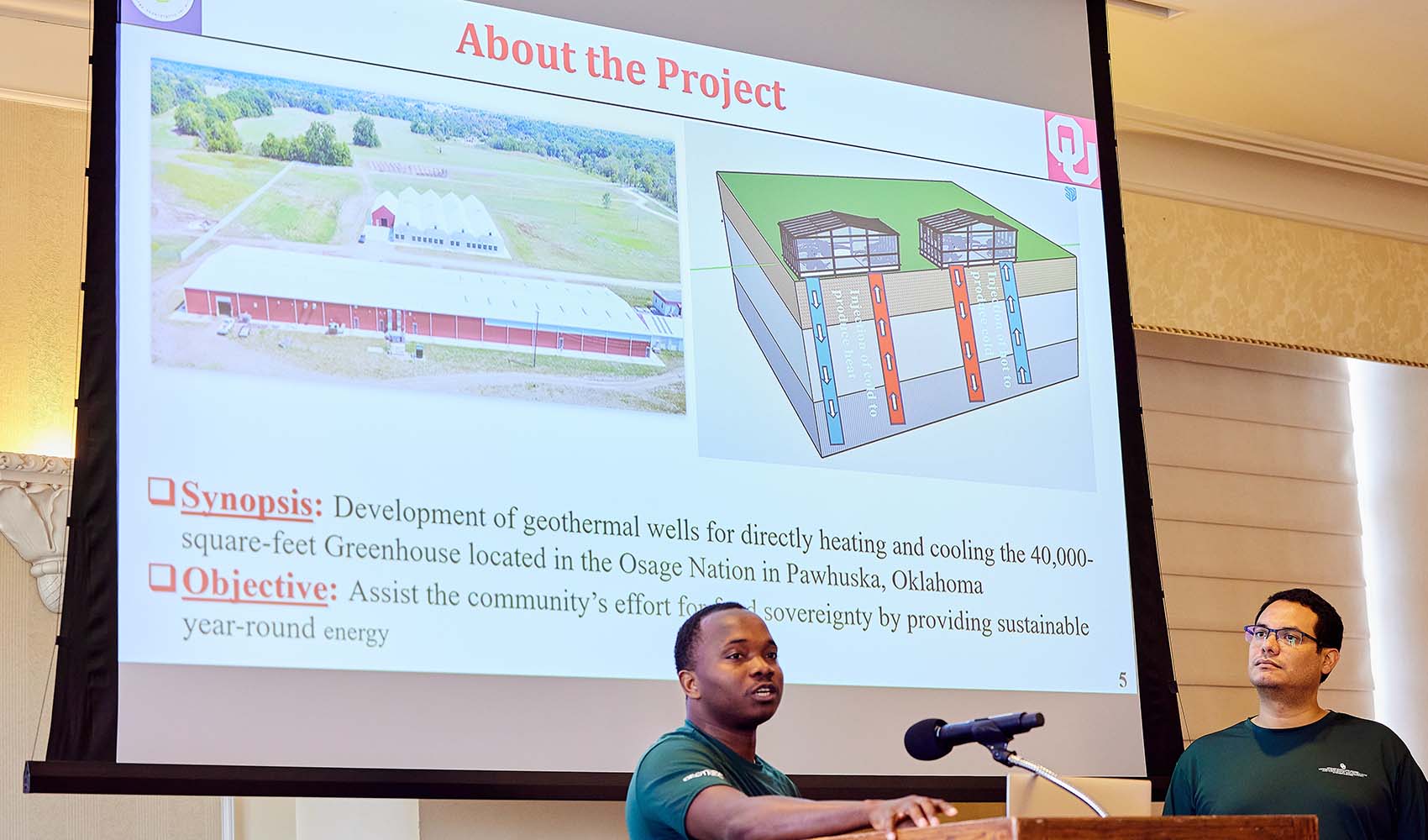
Through a geothermal resources assessment, the team found there is enough energy at about 2,000 feet below the surface to directly heat and cool the 40,000-square-foot greenhouse, as well as a nearby fish farm.
The team also investigated converting inactive oil and gas wells near the site, but they were not suitable because of their age and disrepair. But these wells could provide a great deal of information about the geological deposition and temperature of the site, helping inform the geothermal system design.
The students—Cesar Vivas, Nabe Konate, Jose Aramendiz, Gurban Hasanov, and Vagif Mammadzada—received $10,000 as a first-place prize, as well as additional funding to host the May 2 event. Their stakeholder engagement event included a networking session, presentations by the team and school leadership, and a tour of the Mewbourne School of Petroleum and Geological Engineering laboratories.
“In our experience, the stakeholders were a key part of our success,” said Konate, University of Oklahoma Ph.D. candidate and Team GeoTribe member. “Stakeholder engagement is important because it aligns people with common interest in working together to develop geothermal energy.”
“The most important aspect was listening to the Tribal community’s past experiences, concerns, and advice,” said Aramendiz, also a Ph.D. candidate at The University of Oklahoma and a member of Team GeoTribe. “Learning from them and integrating their beliefs into our concept was key for our group to understand how we could collaborate respectfully.”
Administered by NREL and funded by the Geothermal Technologies Office at the U.S. Department of Energy, the Geothermal Collegiate Competition is an annual challenge that offers college students experience in the renewable energy industry and the chance to win cash prizes for developing real-world geothermal solutions.
The next Geothermal Collegiate Competition will open for registration in August 2024—sign up for the competition newsletter to stay up to date.