
Click the link to read the article on The Summit Daily website. Here’s an excerpt:
April 30, 2026
Frisco’s town manager can now implement water conservation measures outside of the standard triggers outlined in the town’s water code after an ordinance under consideration officially passed. Frisco Town Council approved Ordinance 26-10 on first reading at its April 14 meeting and adopted it on second reading at its April 28 meeting. The ordinance amends Article V of Chapter 171 in the town code to add the ability for the town to implement levels of its water restrictions if it’s determined that “significantly below-average snowpack” or “significantly above average temperatures” or a combination of these factors, both existing or anticipated, pose a risk to the town’s ability to provide water.
Prior to the amendment, the code used certain streamflow and water well storage levels to trigger levels of the water restrictions…A town meeting recap stated that “as of March 31, the North Ten Mile Creek watershed, which provides Frisco with much of its water,” had only roughly 7.3 inches of snow-water equivalent, which is about half as much liquid water stored in the snow compared to the five-year average.
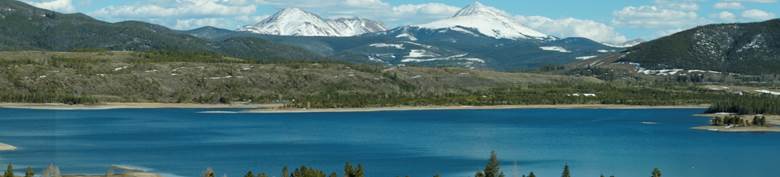
“The 2025–2026 winter season produced historically low snowfall across the Rocky Mountain region, resulting in well-below-average snowpack levels that are critical to the Town of Frisco’s municipal water supply. Above-average spring temperatures have further exacerbated these conditions by accelerating snowmelt, increasing evapotranspiration, and driving higher wildfire conditions. These combined factors are significantly reducing available water supply at a time when seasonal demand will be increasing the Town’s daily water production by over 100%. Dillon Reservoir remains below historical storage levels, underscoring the vulnerability of the Town’s water resources and providing a real time visual reminder of just how limited the local hydrologic cycle is this year.”
Due to the historically low snowfall, which has led to the most severe drought designation by the U.S. Drought Monitor, town staff recommended moving from the current Phase 1 voluntary measures to Phase 3 mandatory restrictions, which limits “non-essential outdoor irrigation to two days per week in addition to other restrictions,” according to the town recap. Staff explained it’s possible that North Ten Mile Creek may run dry due to the current conditions and forecasts, which would require the town to rely on its wells, “which have been resilient even when the reservoir has been very low.”
