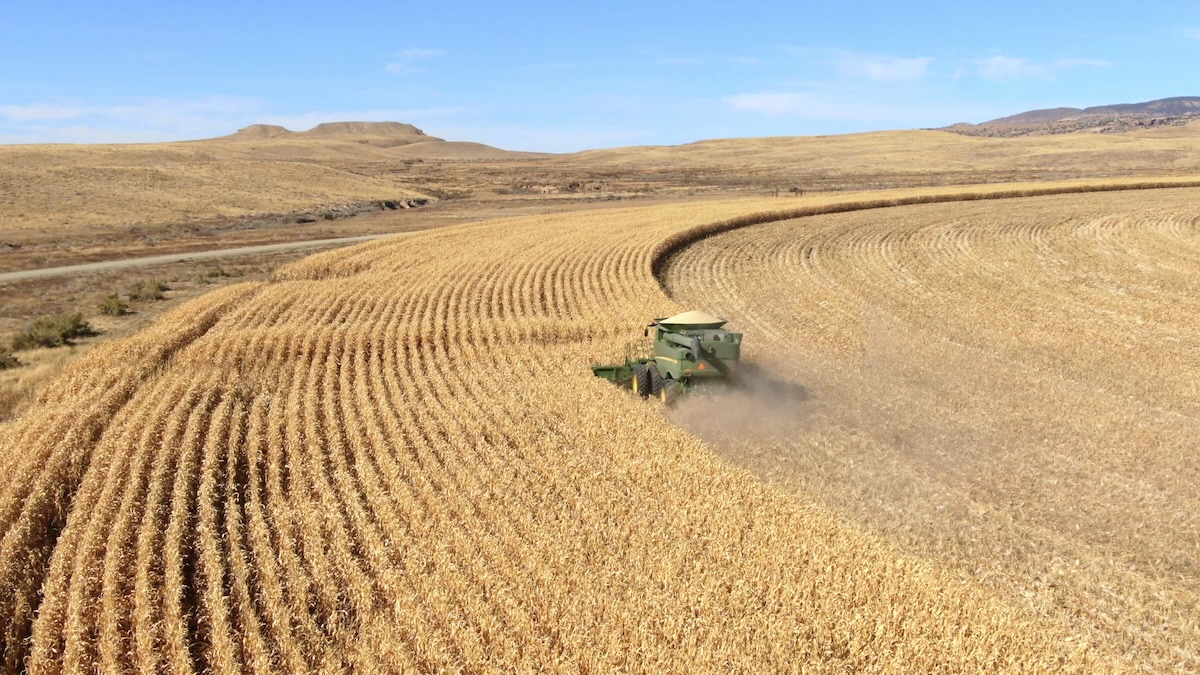
Corn being harvested on the Ute Mountain Ute Farm & Ranch Enterprise. Aerial photo by Robert Marcos
In 1949 the Bureau of reclamation installed a diversion on Colorado’s West Marcos River that began channeling water to the brand new Jackson Gulch Reservoir. The reservoir had been created to provide irrigation water to Mancos area farmers of European descent. Somehow the Bureau of Reclamation overlooked the fact that the Ute Mountain Ute Tribe owned senior rights to that water, and about a year after the diversion was created the Tribe’s farm downstream dried up and turned to dust. Out of necessity, tribal members turned to cattle ranching.
Thirty-six years later in 1986, the Ute Mountain Ute and Southern Ute Tribes gathered to celebrate the passage of the Colorado Indian Water Rights Settlement. Then in 1994 for the first time in their reservation’s history, the Ute Mountain Ute Tribe received “wet water” in the amount of 25,100 acre feet a year, of both municipal and agricultural water from the McPhee Reservoir near Dolores.
There was only one problem. During the water rights negotiation the Mountain Ute had to subordinate their senior rights to Mancos River water for junior rights to water from the McPhee Reservoir. Consequently, as severe, climate-driven droughts began to hit Southwestern Colorado, the tribe, (because of its junior rights), began to see severe cuts to their water deliveries – sometimes as little as 10% of their full allocation. These water cuts have had a devastating effect on the Tribe’s award-winning 7,700 acre Farm & Ranch Enterprise – including the involuntary fallowing of fields and massive layoffs of both tribal and non-tribal employees.
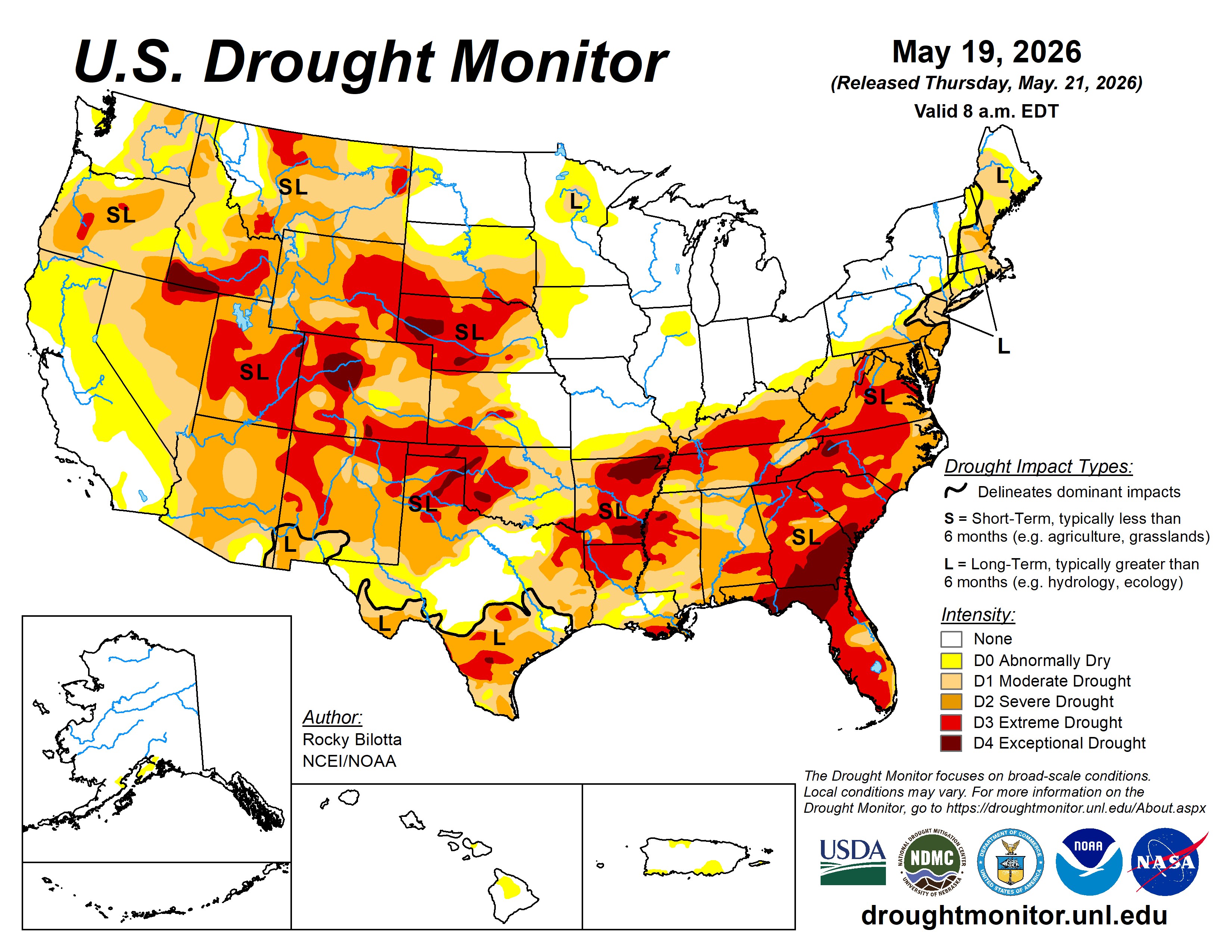
During the week, the contiguous United States exhibited significant regional temperature anomalies driven by a highly amplified synoptic pattern. Early in the period, a pronounced unseasonable cold air mass influenced the Northern Plains, Upper Midwest, and Northeast, depressing temperatures 5°F to 15°F below normal across the Dakotas, Minnesota, New York, and Pennsylvania. Conversely, the Southwest and South Texas experienced anomalous warmth, with maximum temperatures exceeding 90°F and averaging up to 15°F above normal. By the latter half of the week, this warm air mass expanded eastward into the Ohio Valley and Mid-Atlantic, initiating an early-season heatwave with observed maximum temperatures climbing into the mid-80s to low 90s.
Precipitation regimes during this period were characterized by severe convective outbreaks and pronounced moisture disparities. In the early portion of the week, persistent onshore moisture transport resulted in heavy rainfall totals of 4 to 6 inches across the central Gulf Coast, specifically affecting Louisiana, Mississippi, and Alabama. Between May 17 and 18, a powerful frontal system traversing the central United States triggered widespread severe weather across the Great Plains and Midwest. This system produced damaging winds up to 80 mph, large hail, and multiple tornadoes across South Dakota, Nebraska, Iowa, Kansas, and Missouri, alongside localized flash flooding. In contrast, extreme moisture deficits persisted west of the Rocky Mountains, where weekly precipitation totals generally remained under 0.10 inches, further elevating wildfire risk across the southern High Plains…
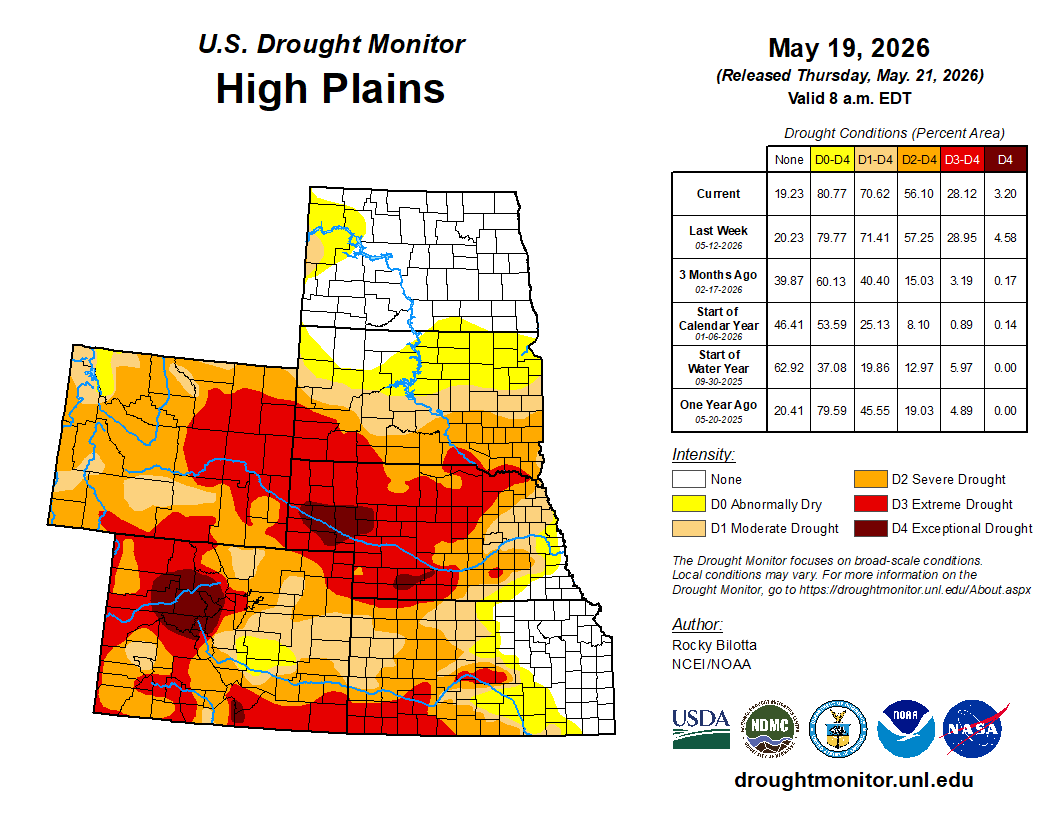
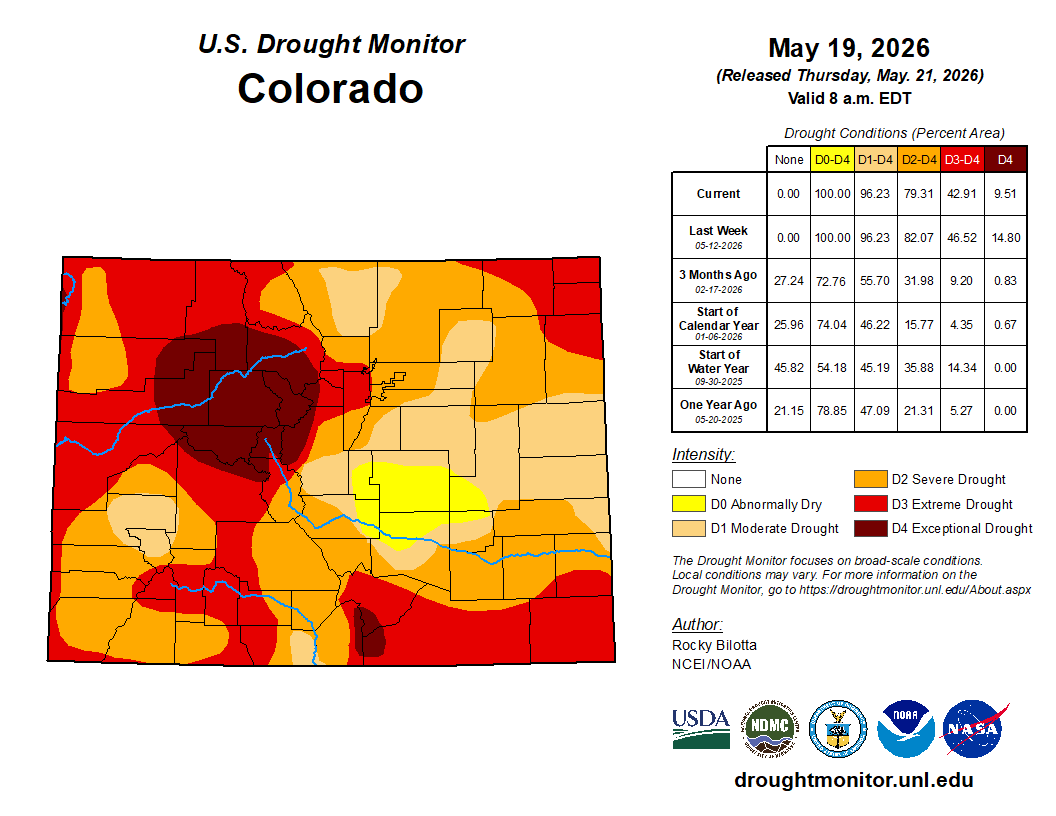
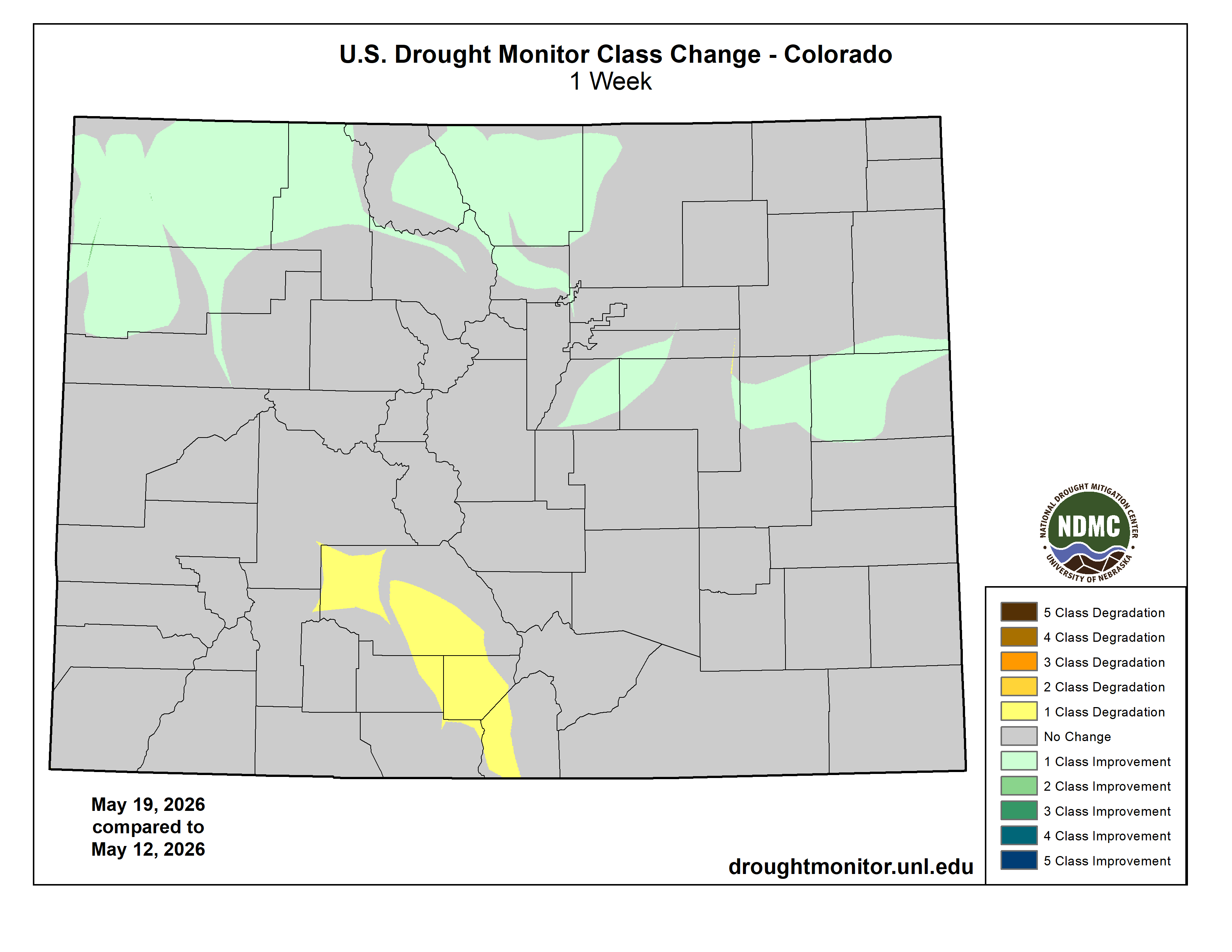
Temperatures were above normal across much of the region this week, with average readings ranging from the low 40s along the Canadian border and in the mountains to the mid-70s across southern Kansas. Highly anomalous early-season warmth gripped the southern half of the region. The core of this heat anomaly was centered over Kansas and Colorado, where weekly temperatures soared 6°F to 12°F above historical averages, with localized spots in southern Kansas peaking more than 12°F above normal. This unseasonable warmth extended moderately northward into Nebraska, yielding departures of 3°F to 6°F above average. Conversely, the northern High Plains remained under a more seasonal air mass; North Dakota, South Dakota, and northern Wyoming experienced below-normal conditions, fluctuating within 3°F to 6°F of historical baseline temperatures. Precipitation amounts varied across the region, with extreme dryness across the much of the region and a highly concentrated deluge along the southeastern boundary. Large portions of Wyoming, Colorado, and western parts of North Dakota, South Dakota, Nebraska, and Kansas, reported weekly totals below 0.50 inches, with extensive areas receiving less than 0.10 inches. This lack of moisture resulted in departures of 0.5 to 1.5 inches below average, causing conditions to deteriorate. Extreme (D3) drought expanded in southwestern Kansas and southern Colorado. Severe (D2) in parts of Colorado and northeast Wyoming, while moderate (D1) drought expanded in parts of South Dakota. In powerful contrast, intense convective activity generated a sharp corridor of heavy rainfall across eastern portions of Kansas and Nebraska. Totals in this localized zone rapidly climbed between 2.5 and 5.5 inches, with departures ranging between 1.5 to over 4.5 inches above normal, resulting in improvements to moderate (D1) to exceptional (D4) drought in Nebraska and moderate (D1) to extreme (D3) drought in Kansas. Heavy rainfall also brought improvements to severe (D2) to exceptional (D4) drought in northern Colorado and a reduction of exceptional (D4) drought in southern Wyoming this week…
Colorado Drought Monitor one week change map ending May 19, 2026.
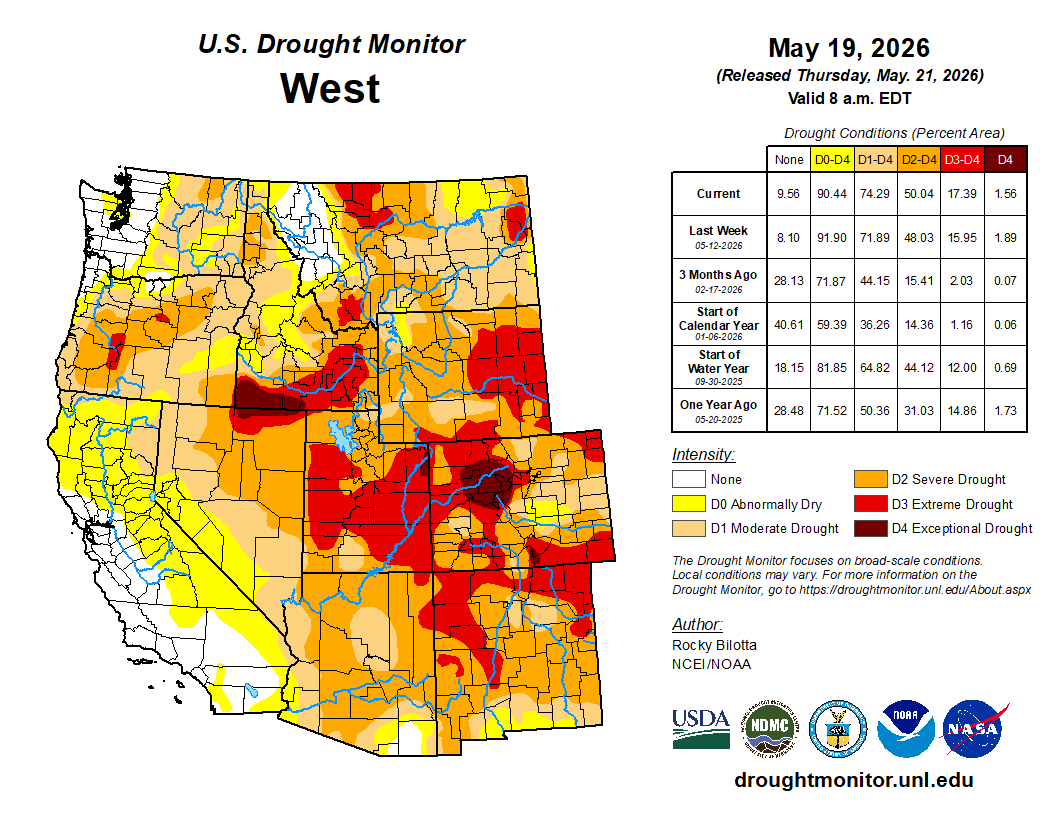
Temperatures varied across the region this week, with average readings ranging from the mid-30s and 40s across the northern tier and high elevations to the low 80s in the desert Southwest. In terms of departures from normal, unseasonably cold conditions dominated the northern half of the region, with departures ranging between 3°F and 9°F below normal. In sharp contrast, the southern tier experienced unseasonable warmth. A building ridge over the Southwest drove temperatures in southern California, Arizona, and New Mexico 3°F to 9°F above normal, with eastern New Mexico seeing the greatest extremes. Precipitation across the Western region was characterized by an extreme contrast between a highly active storm track in the Pacific Northwest and aridity across the remainder of the region. Above-normal precipitation was confined to much of Washington, and parts of Oregon and Montana, where weekly rainfall totals ranged between 1.5 to 3.5 inches, with localized totals in the Cascade Range exceeding 4.5 inches. This activity generated substantial departures of 0.75 to over 3.0 inches above normal, justifying moderate (D1) to severe (D2) drought and abnormal dryness (D0) improvements in Washington and northern Idaho, and improvements to abnormal dryness (D0) to northwestern Oregon and western Montana. Conversely, dry conditions persisted across nearly the entire remaining geographic footprint. Widespread areas across California, Nevada, Arizona, New Mexico, and parts of Idaho, Montana, Utah recorded negligible rainfall totals of less than 0.10 inches. Due to the climatological onset of the dry season in parts of the West, this lack of rainfall translated into modest negative departures ranging from near-normal to 0.75 inches below seasonal averages. Nonetheless, deteriorating conditions led to the expansion of exceptional (D4) drought in southern Idaho, and extreme (D3) drought in parts of New Mexico, Arizona, Utah, Montana, and southern Idaho. In addition, severe (D2) drought was expanded in Oregon, Montana, and Arizona, while moderate (D1) drought expanded in parts of Idaho, Montana, Nevada, and Arizona…
Below-normal precipitation dominated the South this week. The vast majority of Texas, Oklahoma, Arkansas, Louisiana, Mississippi, and Tennessee received less than 0.10 to 0.50 inches of total rainfall, leaving nearly the entire geographic footprint under exceptionally dry conditions. This lack of rainfall translated into widespread departures ranging from 0.75 to 1.50 inches below normal. Below-normal rainfall totals resulted in the introduction of exceptional (D4) drought in the Oklahoma Panhandle and D4 expansion in parts of Arkansas and Mississippi. Extreme (D3) to severe (D2) drought were expanded in parts of Oklahoma, Arkansas, Mississippi, and Tennessee.
The major exception to this dry regime was concentrated in southern portions of the region, specifically southern Texas, where localized convective storms delivered 1.0 to 3.0 inches of rainfall, resulting in the improvement of extreme (D3) drought in southern portions of Texas, Louisiana, and Mississippi. Temperatures were above normal across much of the region, ranging from the upper 50s and low 60s in Tennessee to the upper 80s in parts of Texas. Looking at departures from normal, a highly anomalous zone of intense warmth gripped the western half of the region, where temperatures averaged 6°F to 15°F above historical norms. Conversely, the eastern tier of the region bucked the western warming trend entirely; Mississippi and Tennessee experienced unseasonably cool conditions, with temperatures suppressing to 3°F to 6°F below normal…
Looking Ahead
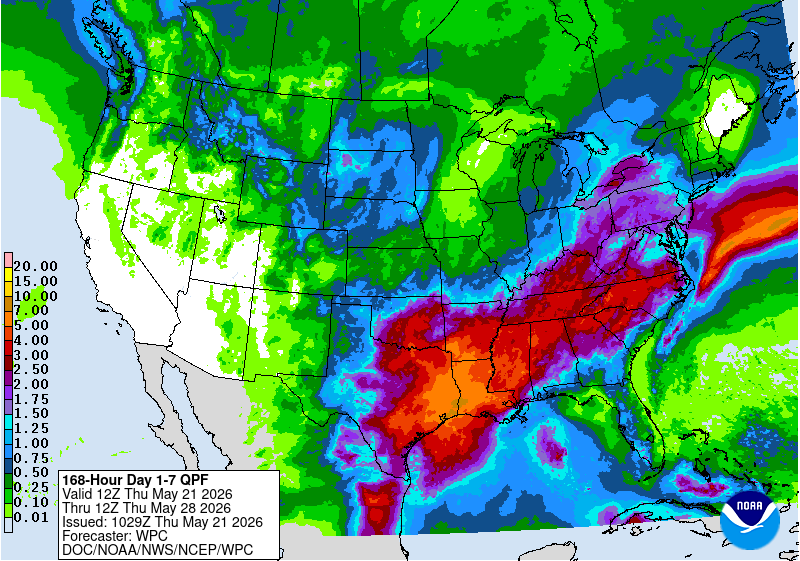
Over the next five days (May 19–23, 2026), the United States can expect a highly dynamic weather pattern characterized by contrasting temperature extremes and widespread storm activity. An early-season heatwave will make headlines across much of the eastern U.S. through midweek, with interior portions of the Mid-Atlantic and the Carolinas seeing highs climb into the lower to middle 90s—warm enough to potentially establish new daily records before a cold front brings cooler relief by Thursday. In stark contrast, the Intermountain West and Rockies will experience below-normal temperatures to start the week, alongside late-season accumulating snow in the higher elevations of Colorado and Wyoming. Meanwhile, a strong cold front tracking across the Plains and Midwest will spark widespread showers and severe thunderstorms. Multiple rounds of heavy rainfall will bring a risk of scattered flash flooding, focusing heavily on Texas, Oklahoma, and Arkansas on Tuesday before an expanded risk of heavy precipitation stretches from western Texas to the central Appalachians on Wednesday.
Further out, the Climate Prediction Center’s 6–10 day outlook (valid May 24–28, 2026) favors above-normal temperatures across most of the United States—stretching from the Rocky Mountains all the way to the East Coast, with the highest confidence for this unseasonable warmth concentrated in the Upper Midwest. Hawaii is also leaning toward warmer conditions. In contrast, temperatures are expected to be colder than average across the state of Alaska, and in a pocket of northwestern Washington state. Meanwhile, near-normal temperatures are forecast in parts of the South and along the West Coast. Probabilities for wetter-than-average conditions favor the vast majority of the country, including Hawaii and portions of Alaska. In the contiguous U.S., this wet weather pattern extends from the Southwest to the East Coast, with the greatest probability of above-normal precipitation expected to be in the south-central U.S., specifically across southern Texas. The West Coast, portions of the Pacific Northwest, the northern Rockies, northern parts of the Midwest, and northern Alaska are favored to receive near-normal precipitation during this time. No areas are favored to be drier than normal.
US Drought Monitor one week change map ending May 19, 2026.
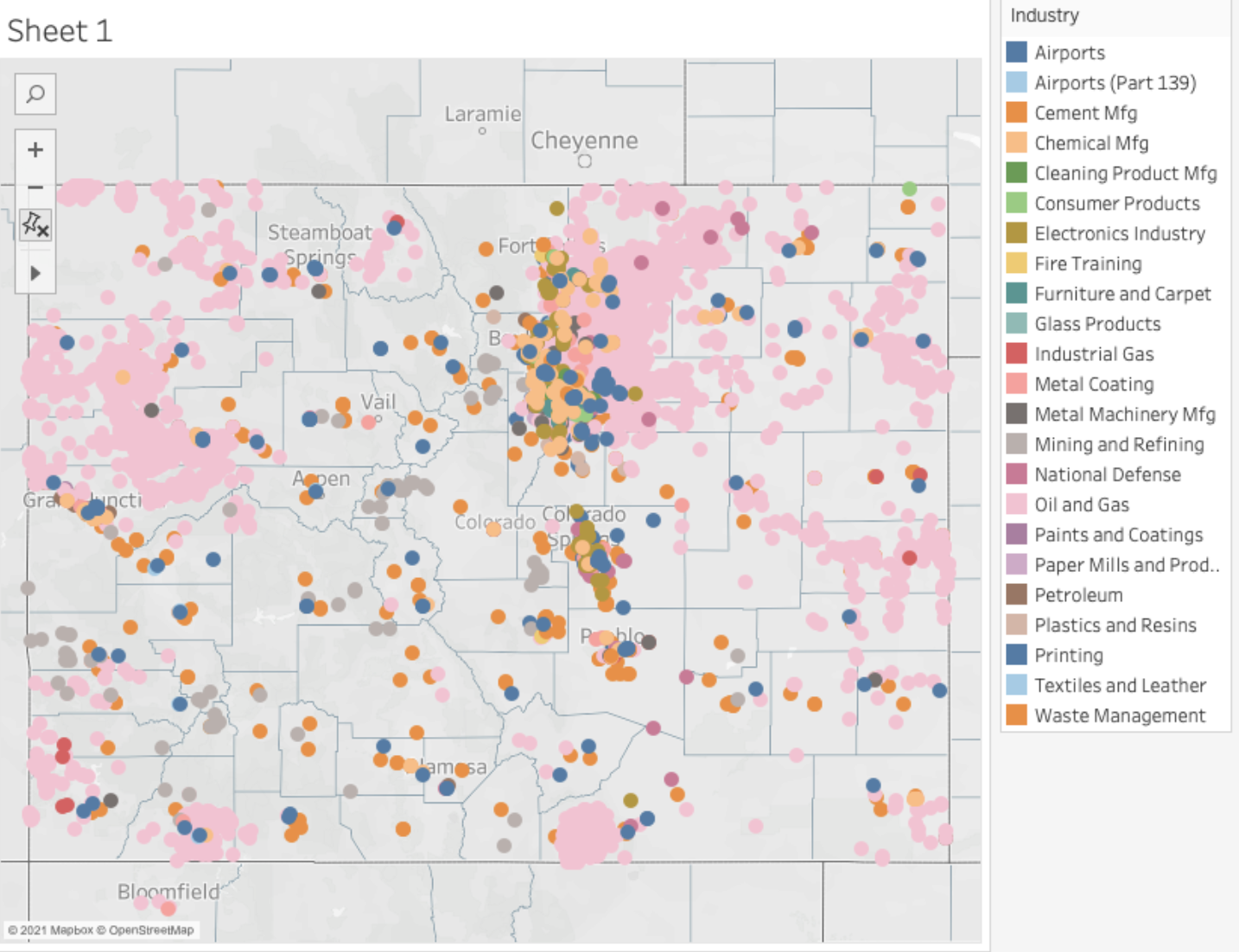
A whistleblower and watchdog advocacy group used an EPA database of locations that may have handled PFAS materials or products to map the potential impact of PFAS throughout Colorado. They found about 21,000 Colorado locations in the EPA listings, which were uncovered through a freedom of information lawsuit. Locations are listed by industry category. (Source: Public Employees for Environmental Responsibility analysis of EPA database)
The U.S. Environmental Protection Agency (EPA) announced $44.3 million in new grant funding for “Small or Disadvantaged Communities” to address polyfluoroalkyl substances (PFAS) in Colorado water. That funding comes as the agency rolls back some regulations on those chemicals…The funding for Colorado water is part of a billion dollar investment across the country. The money can be allocated to testing, planning, and infrastructure projects. According to a press release from the EPA, “small, rural, and disadvantaged water systems often have fewer resources.“ The program is ”specifically designed to ensure these communities are not left behind.” […] New rules announced Monday would rescind some Biden-era regulations on PFAS chemicals and extend the deadline for water to meet federal standards by two additional years, to 2031.
A double rainbow arches over the Painted Wall in Black Canyon at Gunnison National Park. Photo Credit: Dave Showalter
From email from Reclamation (Andrew Limbach):
May 20, 2026
The Aspinall Unit spring peak operation has been tentatively scheduled for Wednesday, May 27th. A final notification of the release schedule will be sent out that will include time of day ramped releases.
Pursuant to the Black Canyon Decree section 31.5.2.1 for peak flows during a “dry” hydrologic year the Black Canyon will have a 24-hour peak flow of 730 cfs.
The purpose of this release is to satisfy the Black Canyon Decree spring release. Due to the maintenance outage ending on May 20th and unseasonably early peak runoff of the North Fork, this spring peak release timing was chosen to coincide with equal or greater inflows to Blue Mesa Reservoir.
Contact Andrew Limbach (alimbach@usbr.gov or 970-248-0644) for more information regarding Aspinall operations or the Operation Group meeting.
Click the link to read the article on the Summit Daily website (Robert Tann). Here’s an excerpt:
May 19, 2026
Lawmakers decided against introducing a “right to float” bill this legislative session, despite a push by river advocates
Last summer, a group of Colorado legislators hopped aboard several rafts with river guides and conservationists to float a mellow section of the Colorado River south of Kremmling. The trip was organized by a coalition of outdoor recreation advocates, who’d hoped to persuade lawmakers to once again wade into the issue of stream access and what rights the public has when recreating in rivers that run through private property. But over the course of Colorado’s 120-day legislative session, no such bill was introduced. A compromise between recreationists and landowner groups, which lawmakers had been seeking, never materialized…River rafters have been pushing for legislation that would provide immunity from trespassing for floaters who touch the privately-owned riverbeds and banks to help with navigation. They hoped the proposal could provide a tailored solution and avoid the longstanding fight over whether river beds should remain private property or be publicly owned…Landowner groups remained resistant to any legislative approach, which they say would only breed conflict. They would prefer to see river access issues continue to be resolved the way they’ve long been, with agreements made between landowners and river users…
Heading into this year’s legislative session, supporters of public river access advocates were again at odds over what kind of policy they should push for. Not long after organizing lawmakers’ river trip last summer, the stream access coalition, made up of several outfitting and conservation groups, split into two camps. One was focused on the right to wade in rivers, primarily driven by anglers, while the other was concentrated on the right to float. It was the latter group, which dubbed itself the River Recreation Alliance, that ultimately pursued legislation this year…A right to wade bill would have meant taking on private property ownership of river beds. A study published last year by the free-market think tank Common Sense Institute warned that the state, should lawmakers go that route, would be at risk of violating the takings clause of the Colorado Constitution, which prohibits the government from taking or damaging private property without compensation. Johnson believes legislation focused instead on floating would minimize those risks, since it would not strip land from property owners. Her coalition’s proposal also would have allowed rafters to touch the bed and banks of rivers only for safety reasons, such as scouting, portage and to avoid obstacles, according to a one-page memo Johnson shared. Walking, wading, anchoring or wade fishing would not be protected under the proposal, which also would have provided liability for landowners when accidents or injuries occurred in the river.
A warming climate is increasing the risk to water infrastructure.
The U.S. recorded a record number of billion-dollar weather disasters in the last three years.
Weather hazards, combined with aging infrastructure and rising costs, are raising the cost of supplying water.
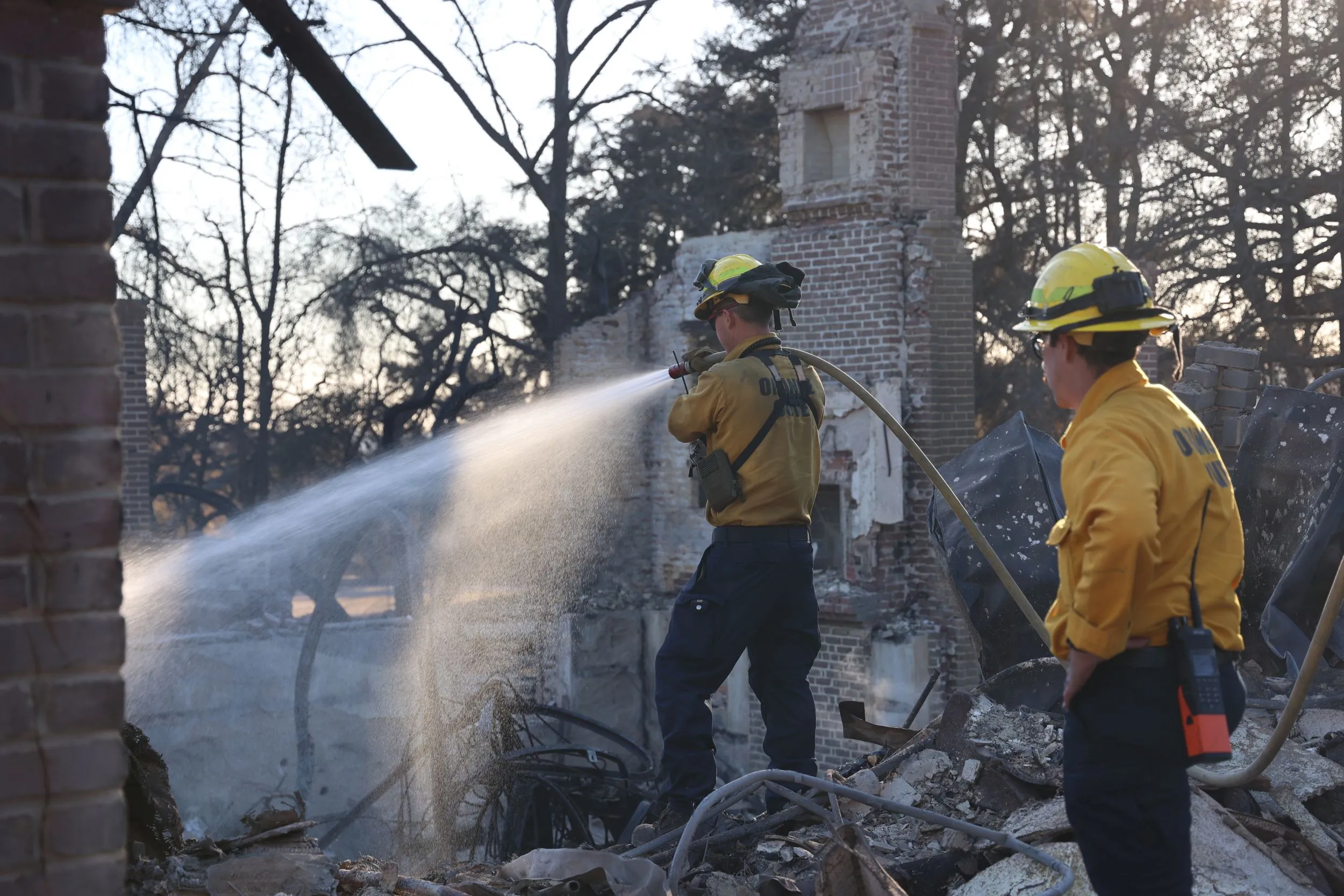
When the Eaton Fire blitzed central Los Angeles County in January 2025, the foothills community of Altadena sat in its path.
Burning more than 14,000 acres in and around the southern edge of Angeles National Forest, the fire concentrated its structural damage in an area of Altadena served by Las Flores Water Company, a small drinking water provider.
By the time the flames were extinguished, the water company sustained substantial losses that its customers will cover with expensive surcharges. The Eaton Fire destroyed the private utility’s two reservoirs and about three-quarters of its customers’ homes. More than a year later, effective April 1, the utility instituted a $3,000 surcharge per household, to be paid on the water bill in $50 increments over 60 months. Residents with savings can make a single $2,600 payment upfront.
Failure to pay means either a dramatic household or business disruption. Water service will be cut off. For Las Flores, the funds are intended to be a lifeline, keeping the utility from bankruptcy as it repairs its reservoirs while maintaining day-to-day operations until more residents return and revenue rebounds.
For residents whose lives have already been upended, the surcharge also represents an unwelcome expense.
“Such an action is not taken lightly, and we recognize that the imposition of this flat fixed fee may have economic consequences for some of you,” John Bednarski, the board president, wrote in a September 2025 letter to customers.
These consequences of a climate-related emergency in the Los Angeles foothills are emblematic of the terrible toll being exacted nationwide not just on land and property, but also on essential duties of government, like supplying water. Las Flores is just one calamity among many in recent years. The number of weather disasters causing more than $1 billion in damages in the United States is climbing. According to Climate Central, the last three years have had the highest number of billion-dollar disasters. The vicious storms, floods, freezes, and droughts have destroyed homes and killed hundreds of people. They are also endangering water supply and reliability as well as municipal and residential financial well-being.
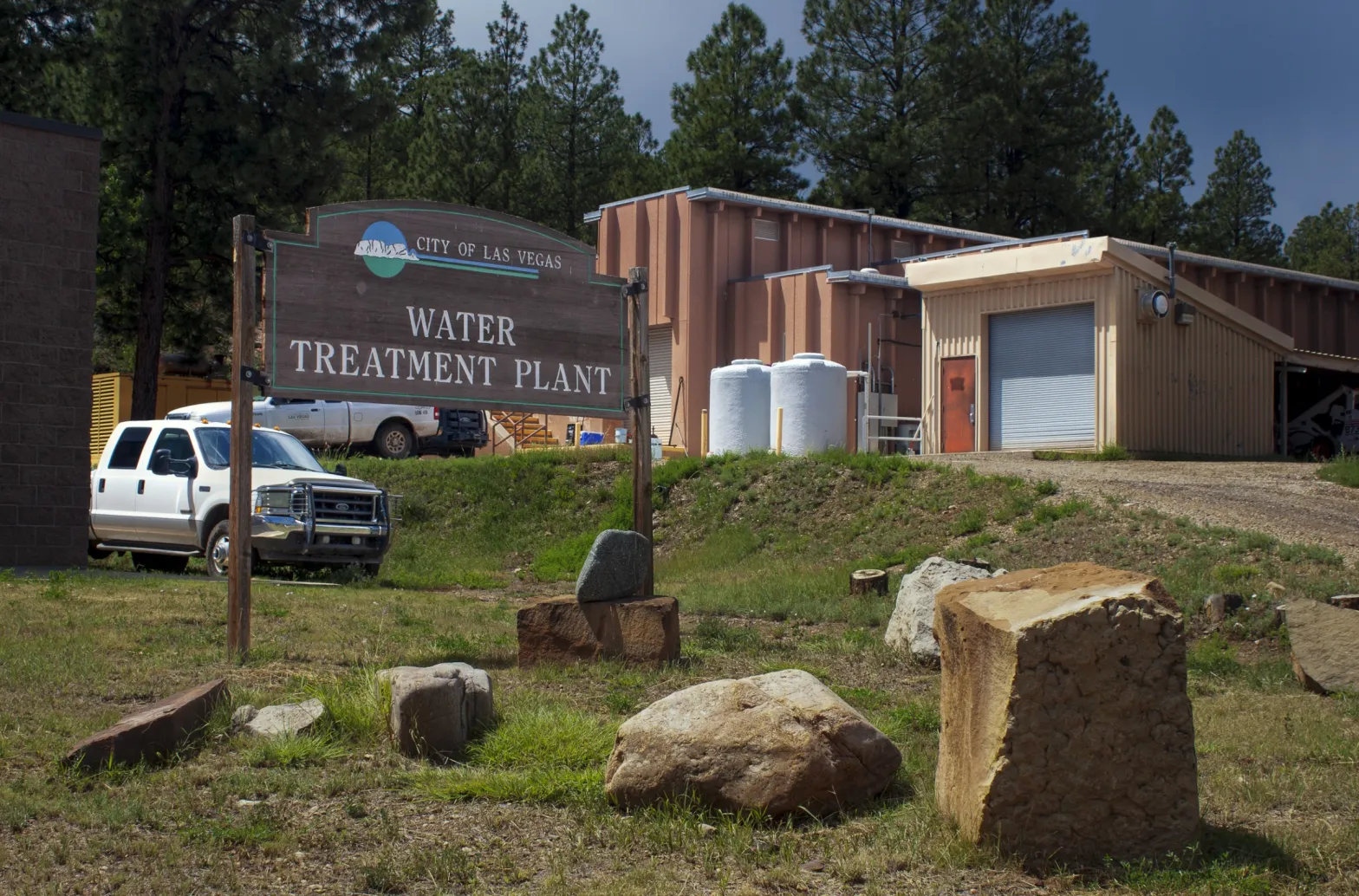
Hurricane Helene in western North Carolina, in 2024, wrecked dozens of water and wastewater systems and prompted $861 million in state and federal funds to rebuild them. The Hermit’s Peak-Calf Canyon Fire outside Las Vegas, New Mexico, in 2022, so damaged a watershed with ash and debris that the city’s water treatment plant could not function. It is being replaced thanks to a congressional appropriation. Persistent drought today threatens southern Texas, where Corpus Christi nears a water catastrophe due to depleted reservoirs.
A warming planet is magnifying these and other physical risks to water infrastructure while also increasing the cost of recovery. This environmental upheaval is set against a backdrop of increasing economic pressures for water utilities and challenging financial conditions for their customers.
Aging pipes and treatment plants need to be replaced. By one estimate the national need for drinking water, wastewater, and stormwater over the next 20 years is $3.4 trillion, or $168 billion annually in capital spending. New federal regulations for lead and PFAS are an expensive outlay. Additional costs since the pandemic came first in the form of supply chain snarls and rapid inflation, then moved higher with the Trump administration’s tariffs. Rising interest rates and more costly energy and treatment chemicals – all these factors add up. The result is that utilities have raised customer water rates, which have outpaced overall inflation for years. Water and sewer bills rose 24 percent over the last five years in 50 large cities, according to Bluefield Research.
Utility leaders have taken notice of the headwinds. Among the top challenges identified in this year’s State of the Water Industry survey from the American Water Works Association were aging infrastructure, securing financing, rising cost of treatment, and extreme weather.
“Climate variability is one of the most significant and challenging risks to water supplies and water sector infrastructure,” the report notes.
Management failures in the face of environmental pressures have financial consequences. Earlier this month, S&P Global Ratings downgraded the credit rating for Corpus Christi’s municipal utility from AA- to A. The lower rating will increase borrowing costs for the city just when it needs money to navigate a water-supply crisis. To justify the downgrade, the ratings agency cited the city’s drought risk, water restrictions, and high capital needs to acquire additional water supplies. Corpus Christi is planning at least $1 billion in water infrastructure and supply investments, which include groundwater pumping, brackish groundwater treatment, recycled water, and potentially seawater desalination. The city’s two main reservoirs are 8 percent of capacity combined as of May 15.
State and federal dollars often fill the breach after a weather disaster. But the need is far greater than the available funds. North Carolina awarded $861 million in state and federal grants to 217 drinking water and wastewater projects after Hurricane Helene. But more than $600 million in applications were not able to be fulfilled, according to Gov. Josh Stein.
“We need substantially more federal support,” Stein said on May 14 while visiting Canton, a town in western North Carolina that was flooded during Helene. With $24.5 million in state and federal funds, Canton is rebuilding its water and sewer infrastructure.
Canton is one of the lucky ones. The increasing number of weather disasters for water utilities comes at a time of federal disengagement and funding uncertainty, note Rebecca Anderson and Shannon M. McNeeley of the Pacific Institute.
The Trump administration cancelled a multibillion-dollar FEMA grant program for climate-resilient infrastructure before being ordered by a U.S. district judge to reinstate it this spring. The Infrastructure Investment and Jobs Act, the Biden-era law that provided an extra $43 billion for water infrastructure, expires this year with no replacement in sight. A federal pandemic-era program to assist low-income households with their water bills has also expired. Water utilities are urging Congress to resume the program so that they can upgrade their systems without worrying that the cost will burden their poorest customers. House Democrats introduced the Water Access and Affordability Act in April to reauthorize the program.
“Without sufficient federal disaster mitigation and recovery funding, states and communities shoulder a disproportionate share of response, recovery, and preparedness costs,” Anderson and McNeeley write. “This burden is often especially heavy for small and rural water systems with limited revenue.”
Floods, droughts, wildfires, and hurricanes have always wrought destruction and water-supply desperation. Superstorm Sandy, in 2012, knocked out wastewater plants in eight states, leading to the release of some 11 billion gallons of raw and partially treated sewage. In New York City alone, the damage to wastewater facilities totaled more than $100 million.
But with the rising number of disasters and the increasing intensity of storms and droughts, more financial demands are challenging not just individual water utilities but assumptions about who is at risk.
No utility, even those on apparently solid financial footing, should be complacent, said Greg Pierce, a California water system expert at the UCLA Luskin Center for Innovation. Just look at Las Flores Water Company and its neighbors in Altadena.
Before the Eaton Fire, “none of these systems were on anyone’s list of small or underperforming systems, even within Los Angeles County,” he said.