Click the link to read the article on The Washington Post website (Jason Samenow, Artur Galocha and Diana Leonard). Here’s an excerpt:
June 17, 2024
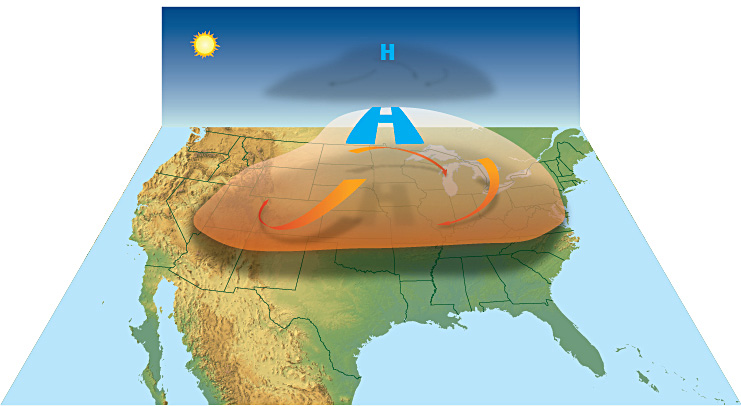
Hot air masses, born from the blazing summer sun, expand vertically into the atmosphere, creating a dome of high pressure that diverts weather systems around them. These heat domes can stall and persist over the same region for days to weeks at a time. As high-pressure systems become firmly established, subsiding air beneath them heats the atmosphere and dissipates cloud cover. The high summer sun angle combined with those cloudless skies then further heat the ground.
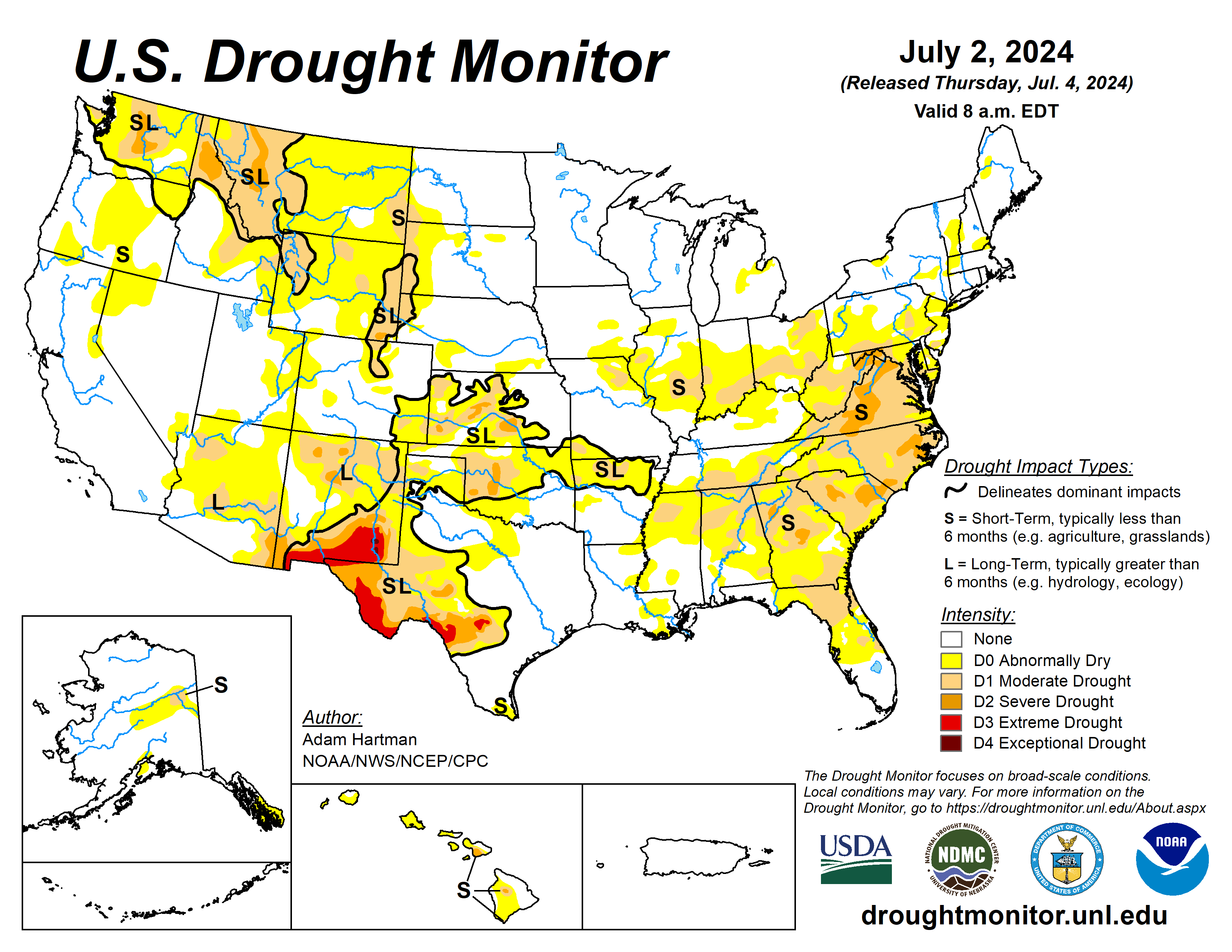
But amid drought conditions, the vicious feedback loop doesn’t end there. The combination of heat and a parched landscape can work to make a heat wave even more extreme, intensifying the risk of wildfires as well. With very little moisture in soils, heat energy that would normally be used on evaporation — a cooling process — instead directly heats the air and the ground. Jane Wilson Baldwin, a postdoctoral researcher at the Lamont-Doherty Earth Observatory at Columbia University, explains how feedbacks between the land and the atmosphere combine to make heat domes worse.
“When the land surface is drier, it can’t cool itself through evaporation, which makes the surface even hotter, which strengthens the blocking high [heat dome] further,” she said in an interview.