
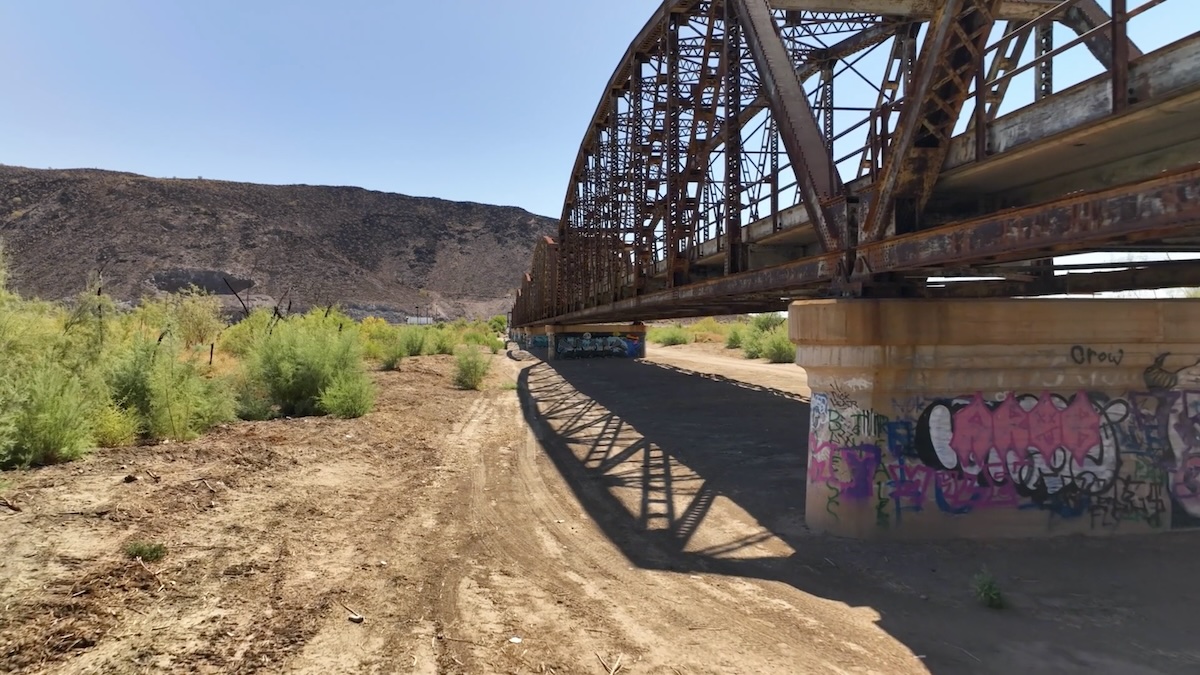
The Gila River has served as one of the most historically significant waterways in the American Southwest. In 1540 the Coronado Expedition had to construct rafts in order to cross the swollen river, which stretches 649 miles across New Mexico and Arizona. The Gila River has acted as an agricultural lifeline, a changing geopolitical border, a crucial westward migration corridor, and the birthplace of America’s wilderness conservation movement.1
Four years ago I drove to Yuma and then turned north in order to reach the confluence of the Colorado and the Gila Rivers. After launching my drone my very first impression was that the Colorado River was flowing into the Gila, not the other way around. How could I tell? The Gila River was completely dry a half-mile east of the confluence.
Because of extensive upstream dams, irrigation canals, and city diversions feeding places like Phoenix and Tucson, the lower half of the 649-mile river is dried up completely. It typically becomes a dry, sandy riverbed long before reaching its natural confluence with the Colorado River near Yuma, Arizona.2
Massive Upstream Diversions
The Gila River basin drains nearly 60,000 square miles. However, major structures like the Coolidge Dam and downstream diversion dams capture virtually all of its reliable surface water. The water is instead funneled into agricultural valleys and municipal pipes, leaving the final stretches of the riverbed barren.3
Rare Exceptions and Flooding
The Gila River only reaches the Colorado River during exceptional flood events. When massive winter snowmelt or powerful late-summer monsoons overwhelm upstream reservoirs, water must be released from the Painted Rock Dam. For example, historic wet winters have occasionally caused the Gila to violently discharge into the Colorado for brief periods, but these are anomalies rather than a steady, daily contribution.4
The “Reverse” Water Flow
Paradoxically, rather than the Gila supplying the Colorado River, the Colorado now supplies the Gila. Because Arizona over-drafted the Gila River system over the last century, the federal government built a massive 336-mile canal system. This canal actually pumps roughly 1.5 million acre-feet of water out of the Colorado River every year to supply the cities and farms sitting within the dry Gila River basin.5
Conservation Credits (Paper Water)
While the Gila River doesn’t add physical water to the Colorado, local entities actively help protect the Colorado River system through legal and conservation agreements. For instance, the Gila River Indian Community frequently signs landmark conservation deals with the U.S. government. They agree to leave large portions of their legal Colorado River water allocations untouched in Lake Mead to prop up dropping water levels in exchange for federal funding.6
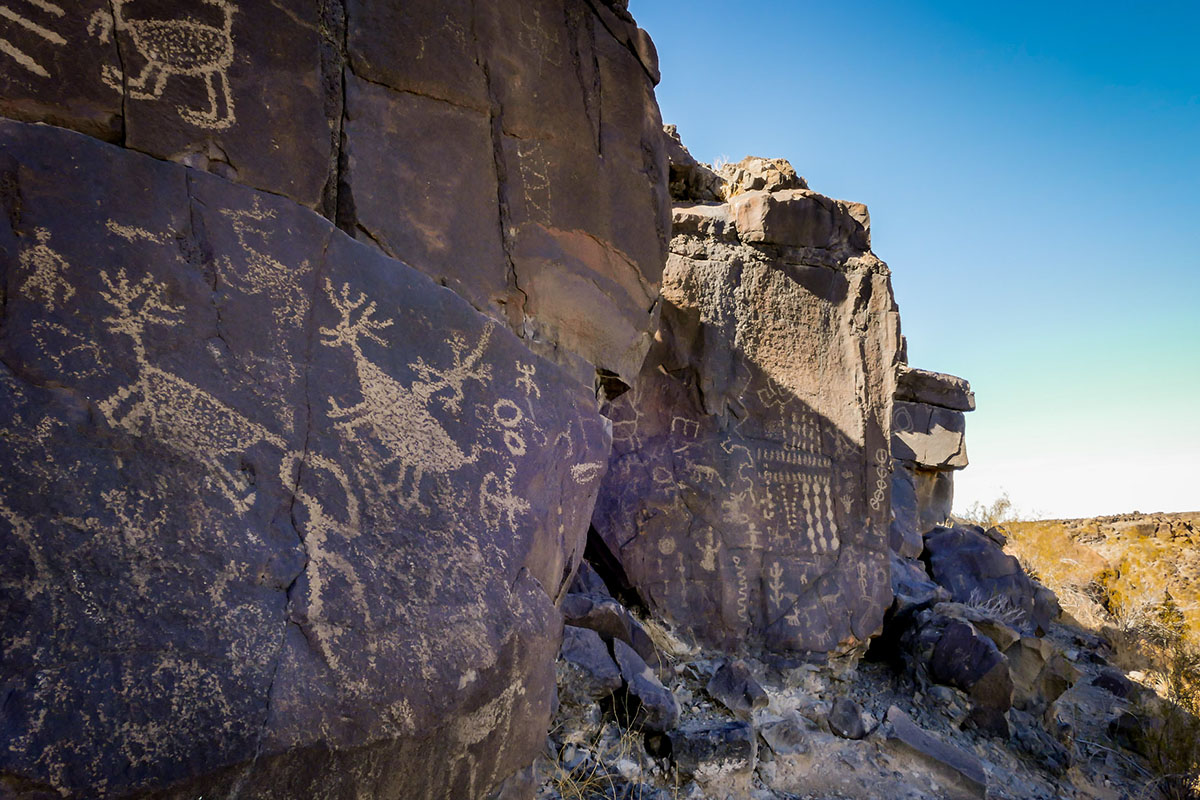
Nice article Robert! Great pic of the petroglyphs!!!
Thanks Bill. It’s an important consideration when “tributaries” are taking water instead of adding it!