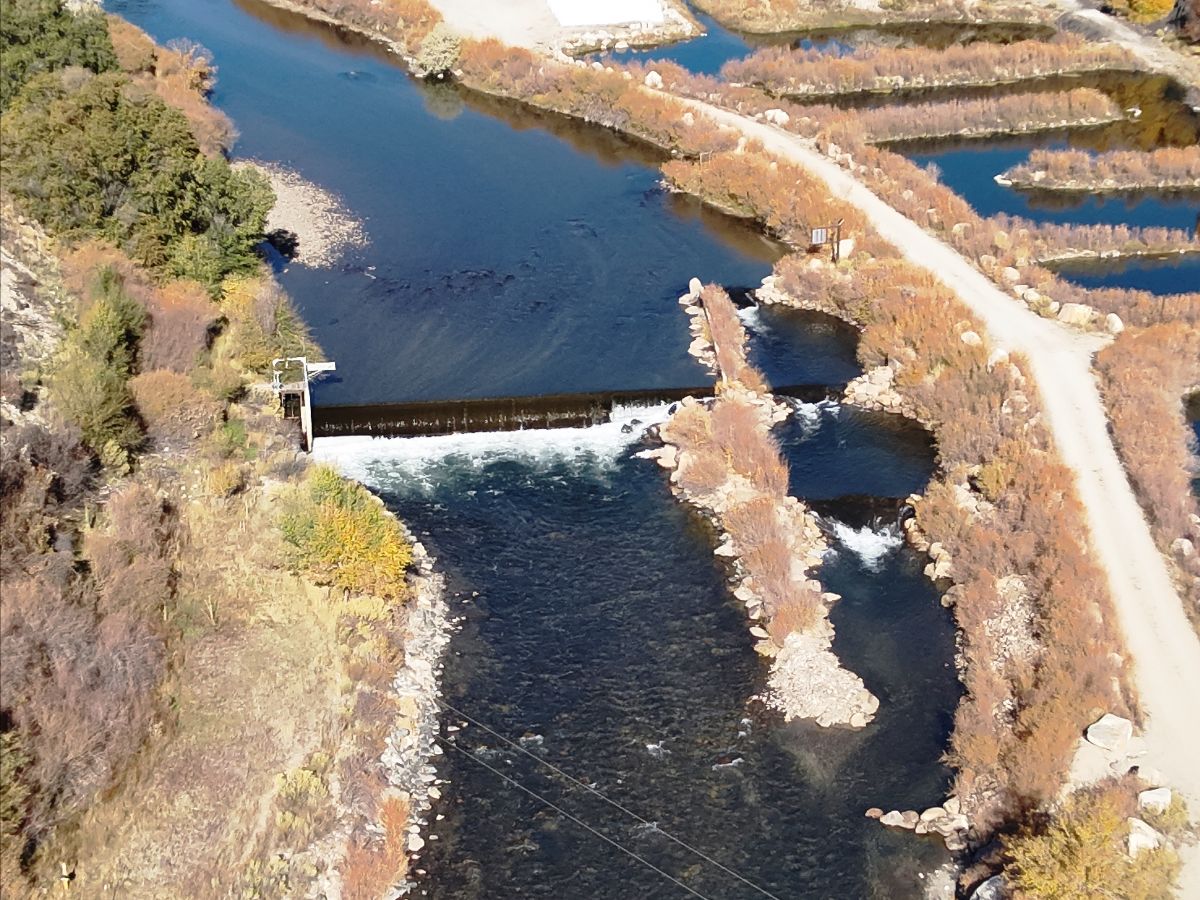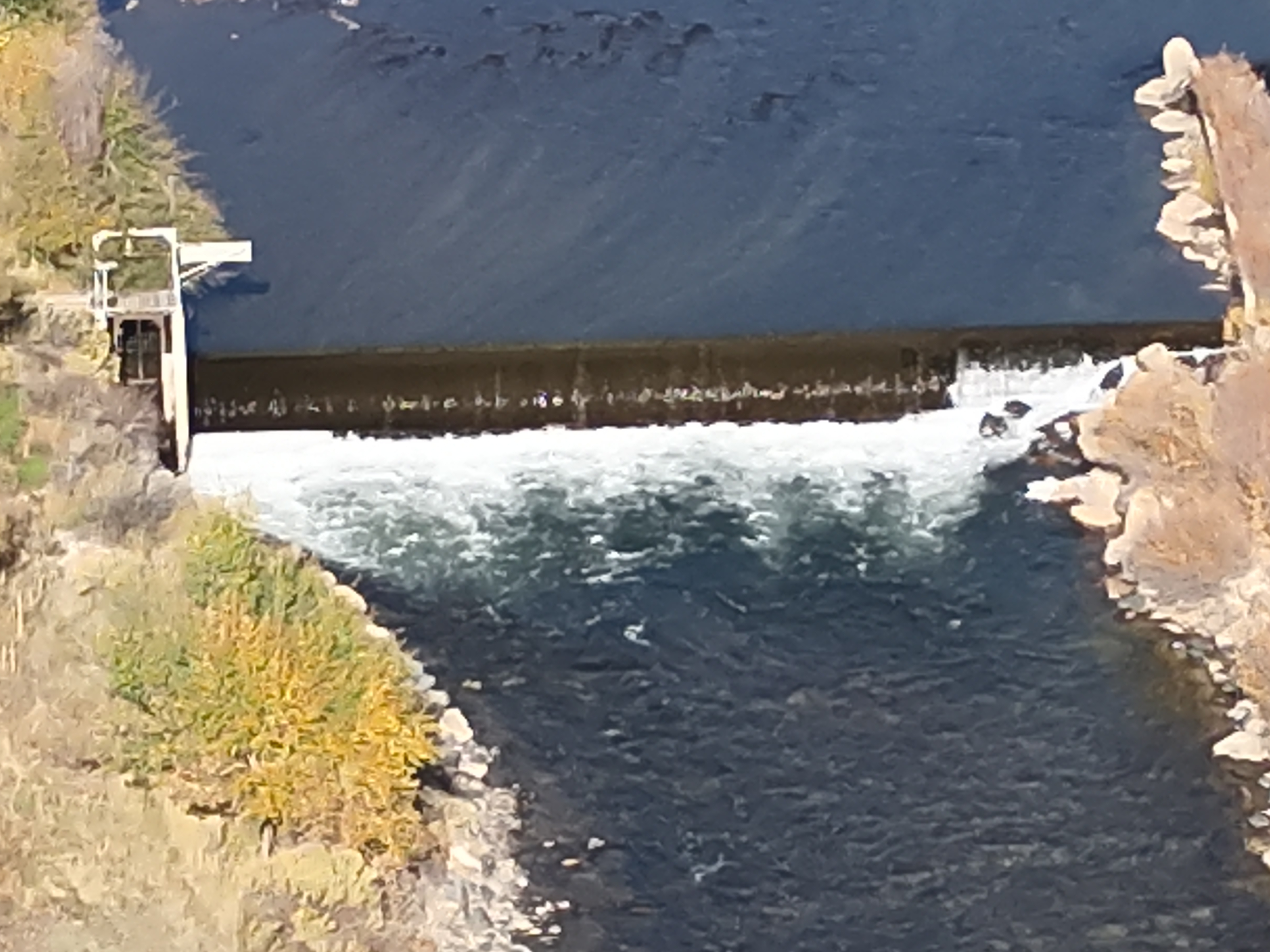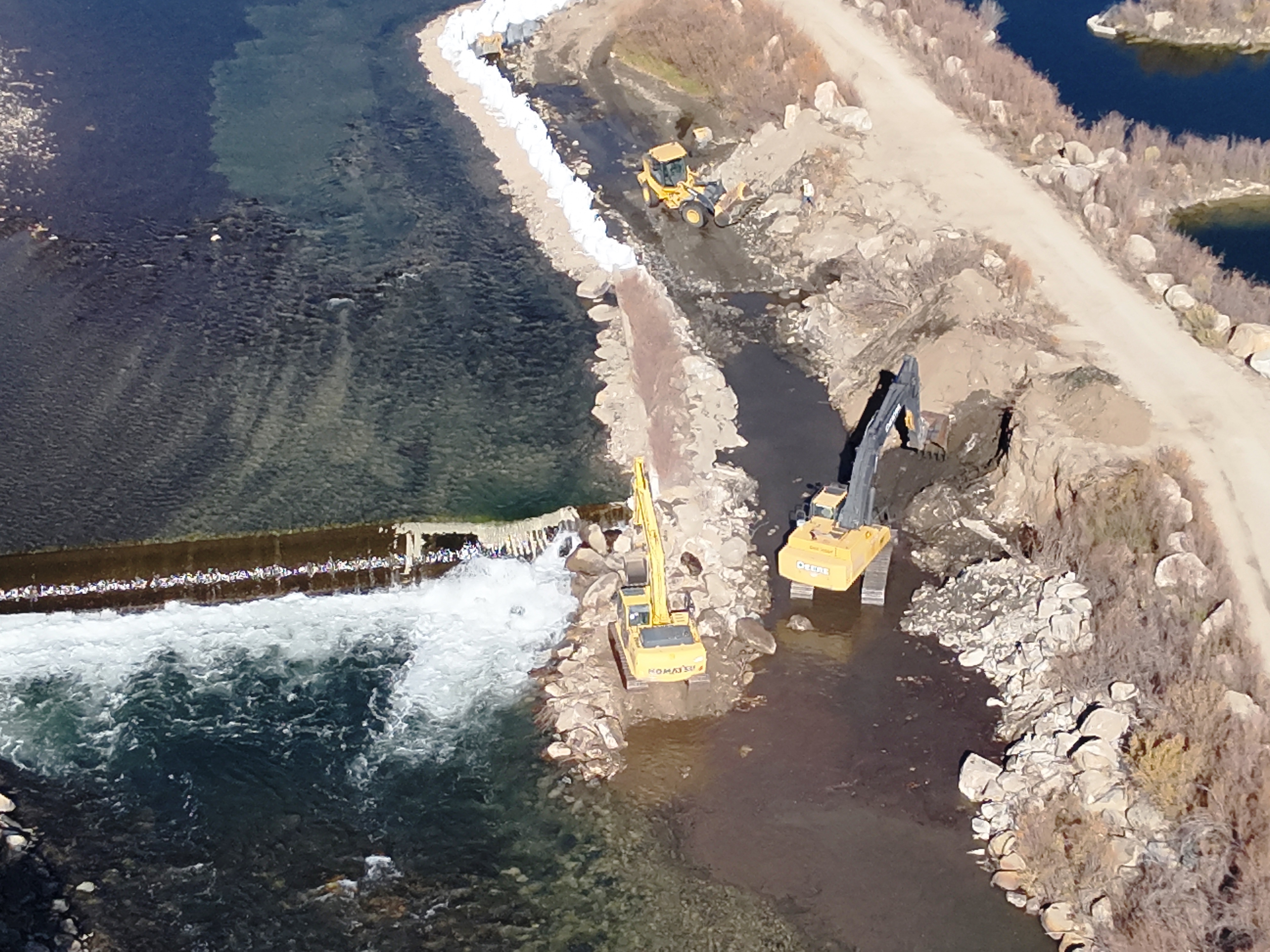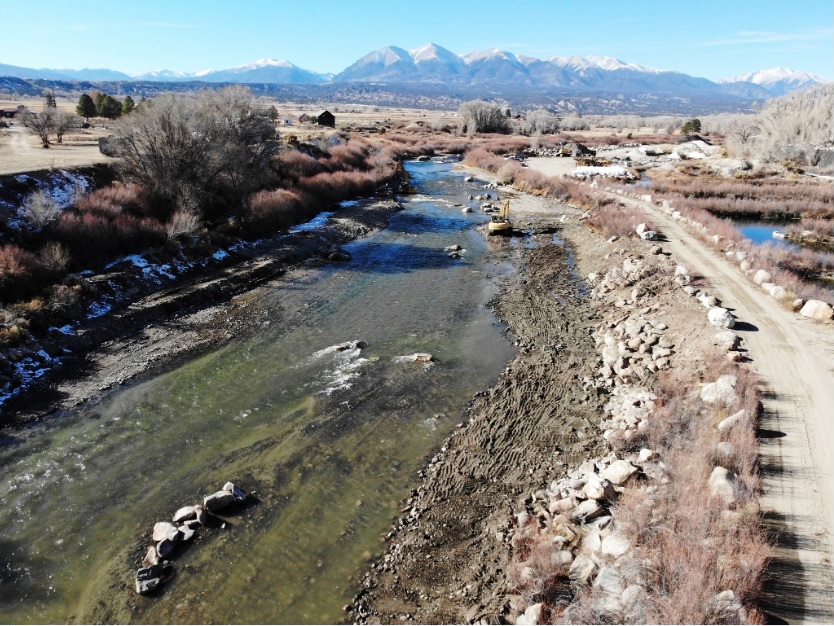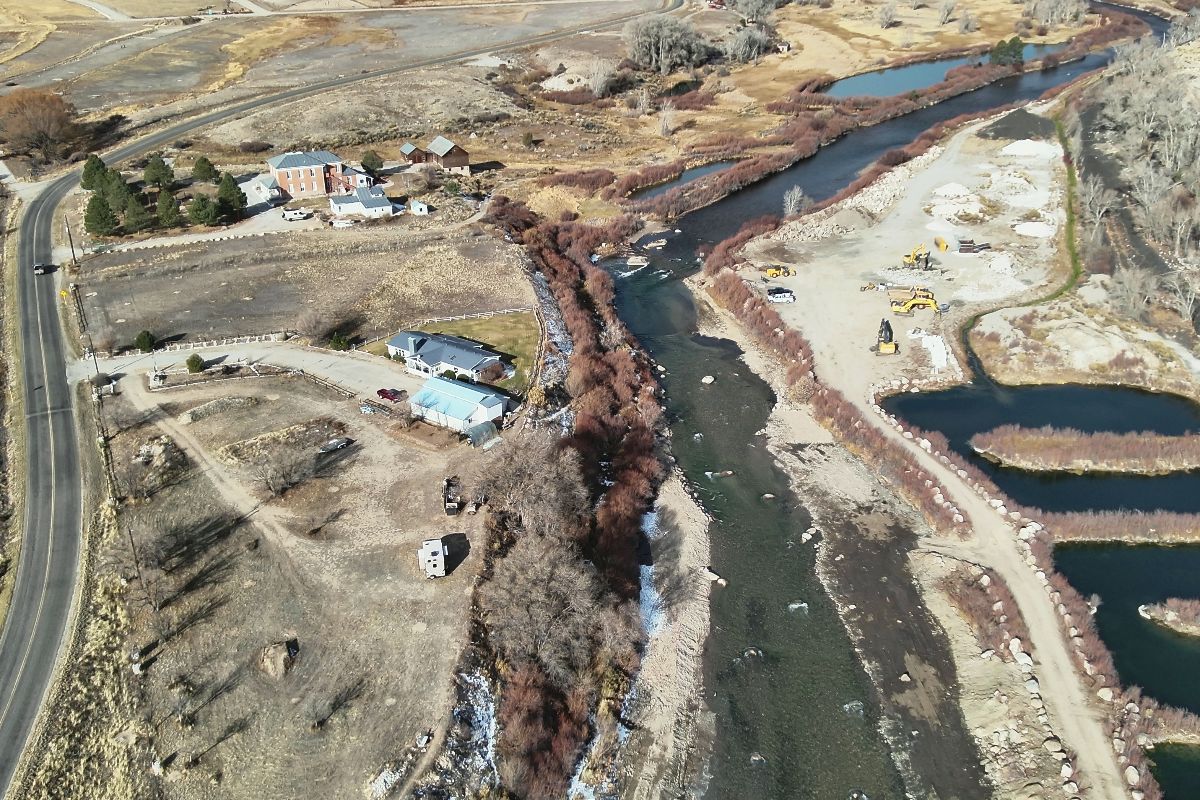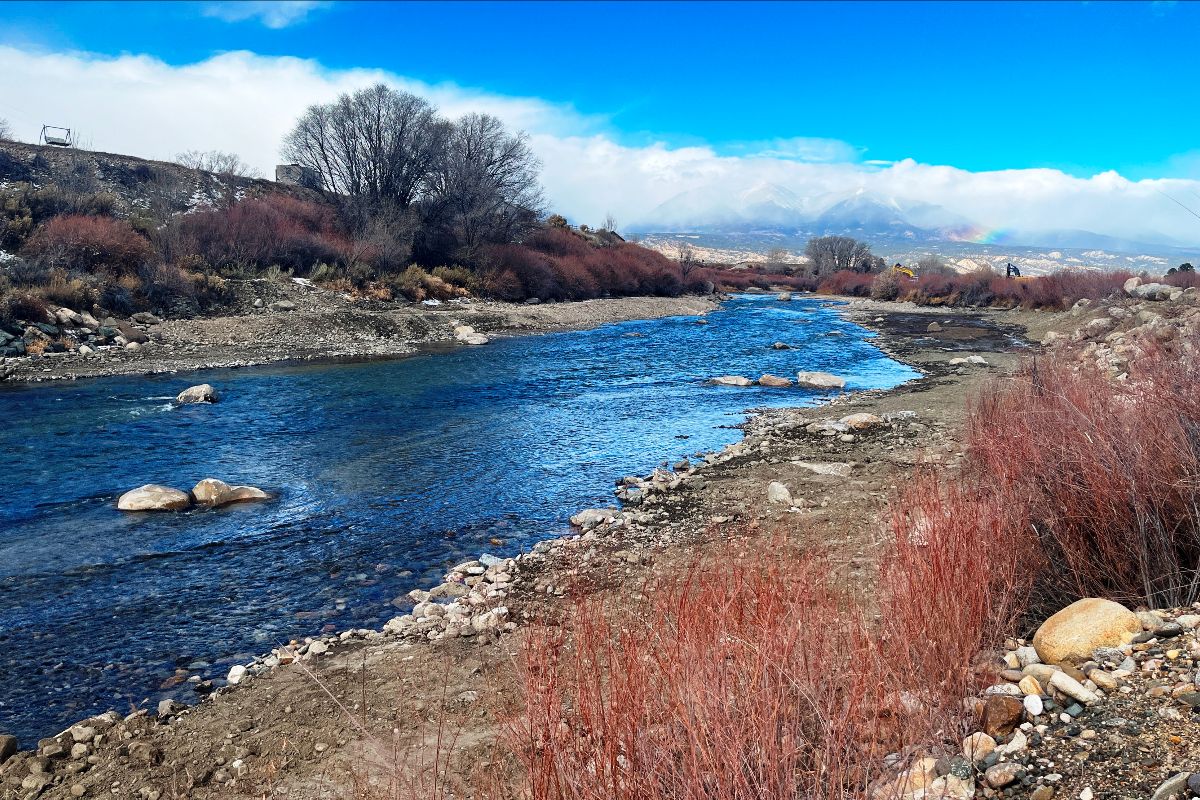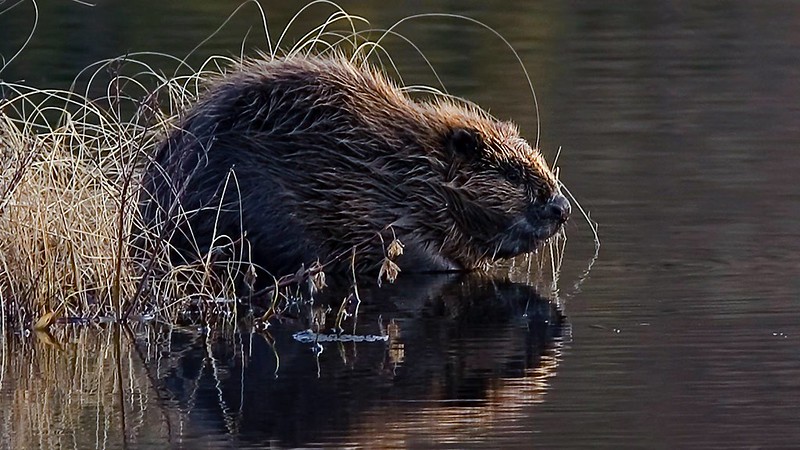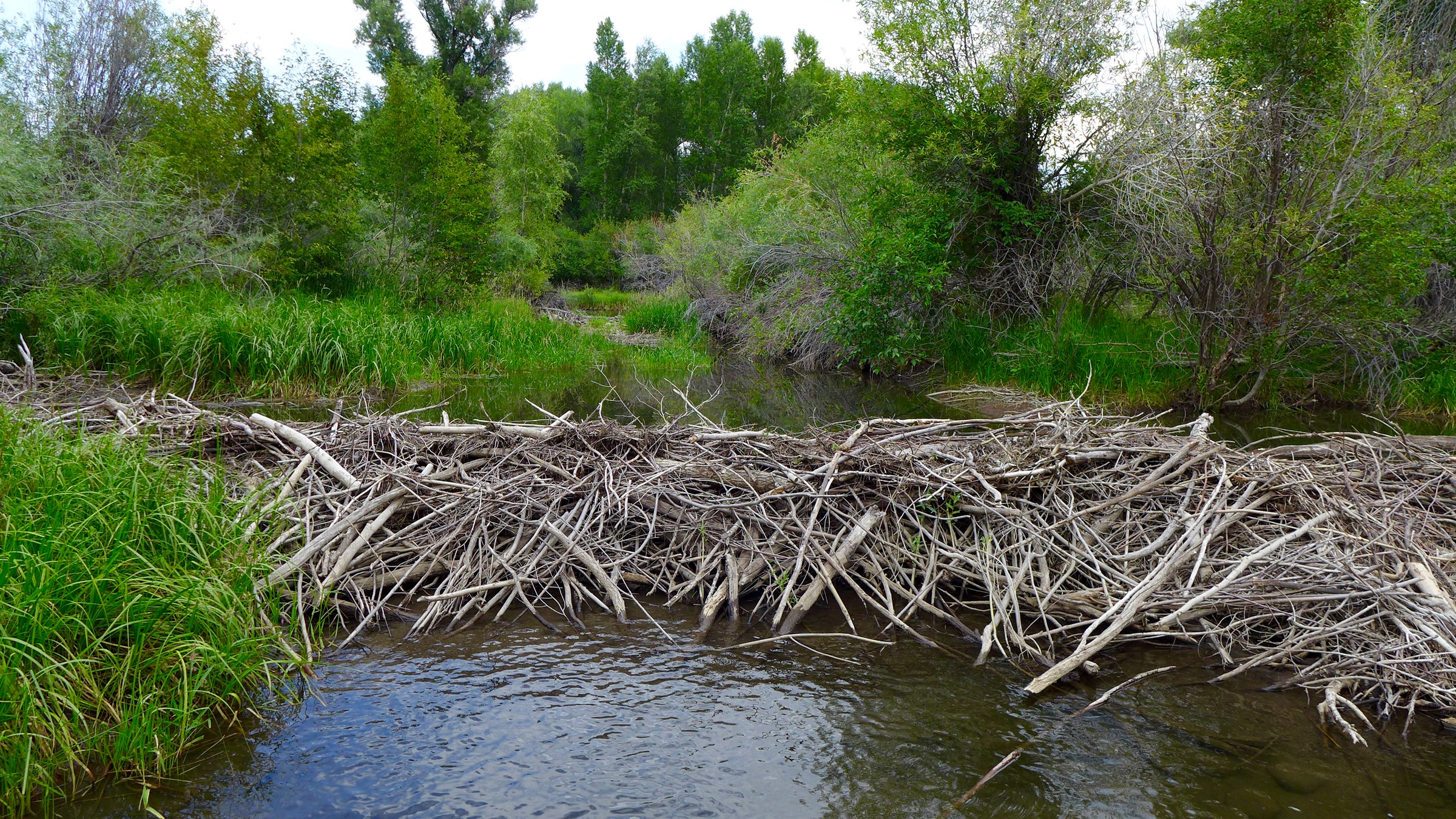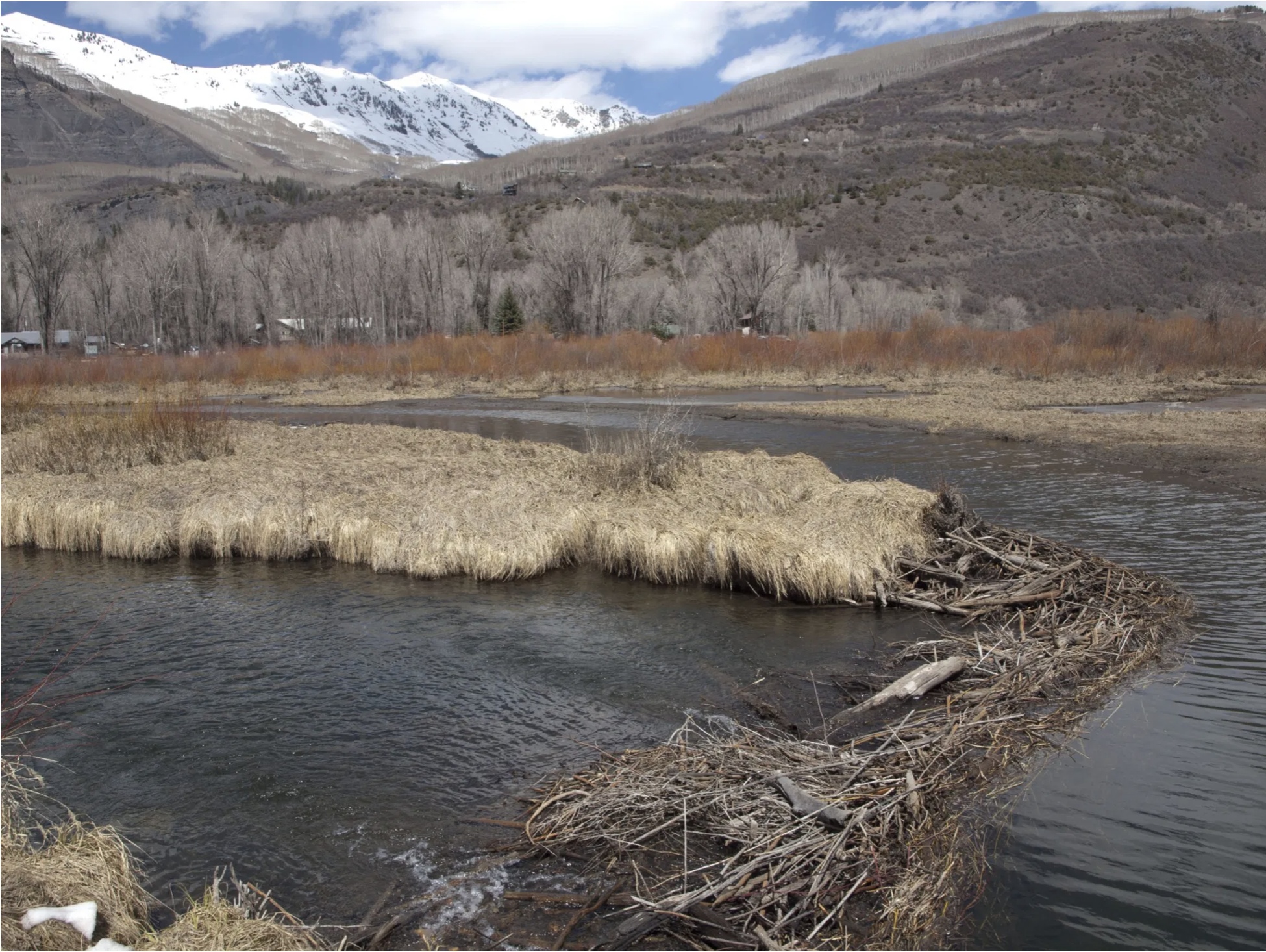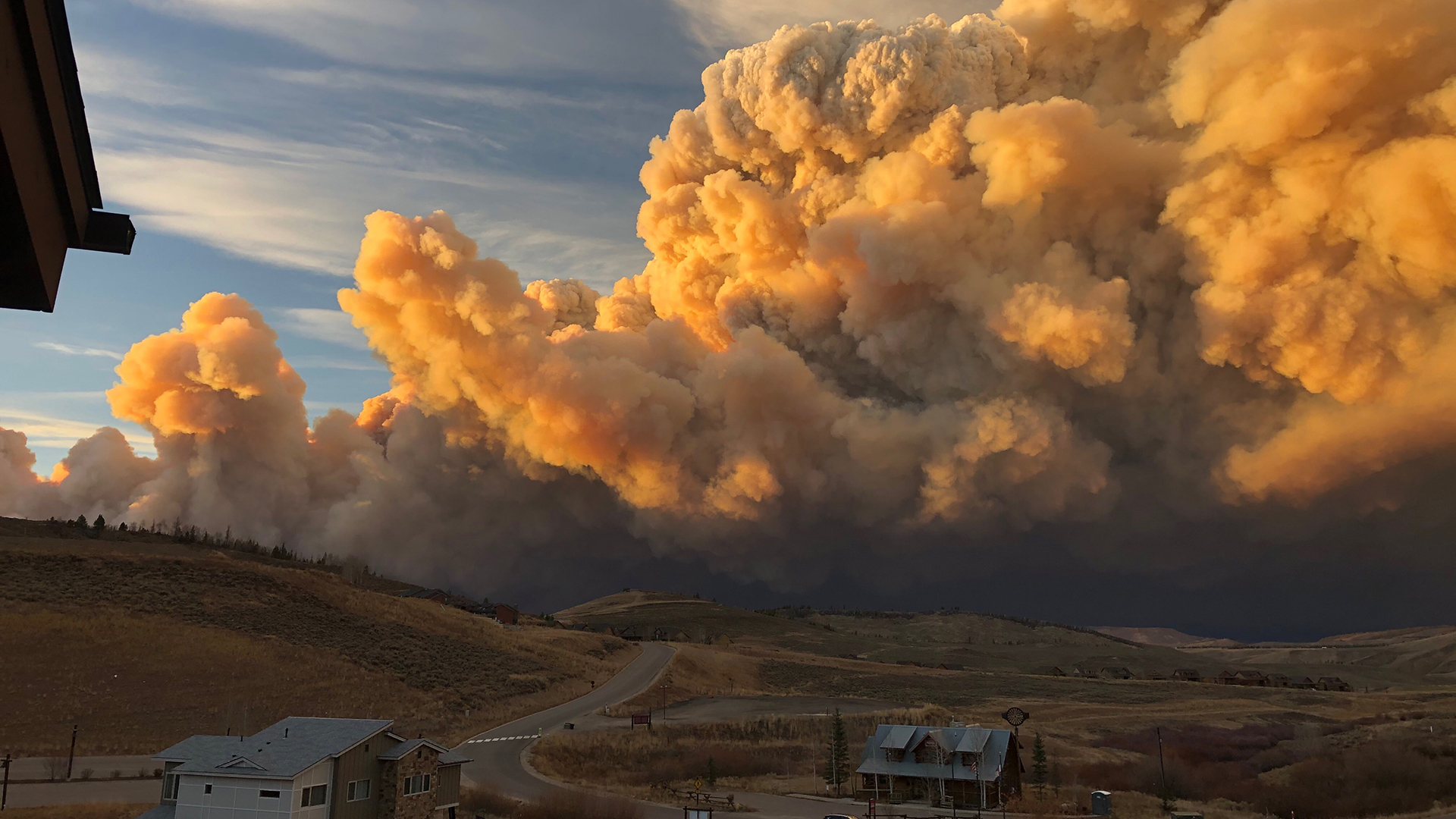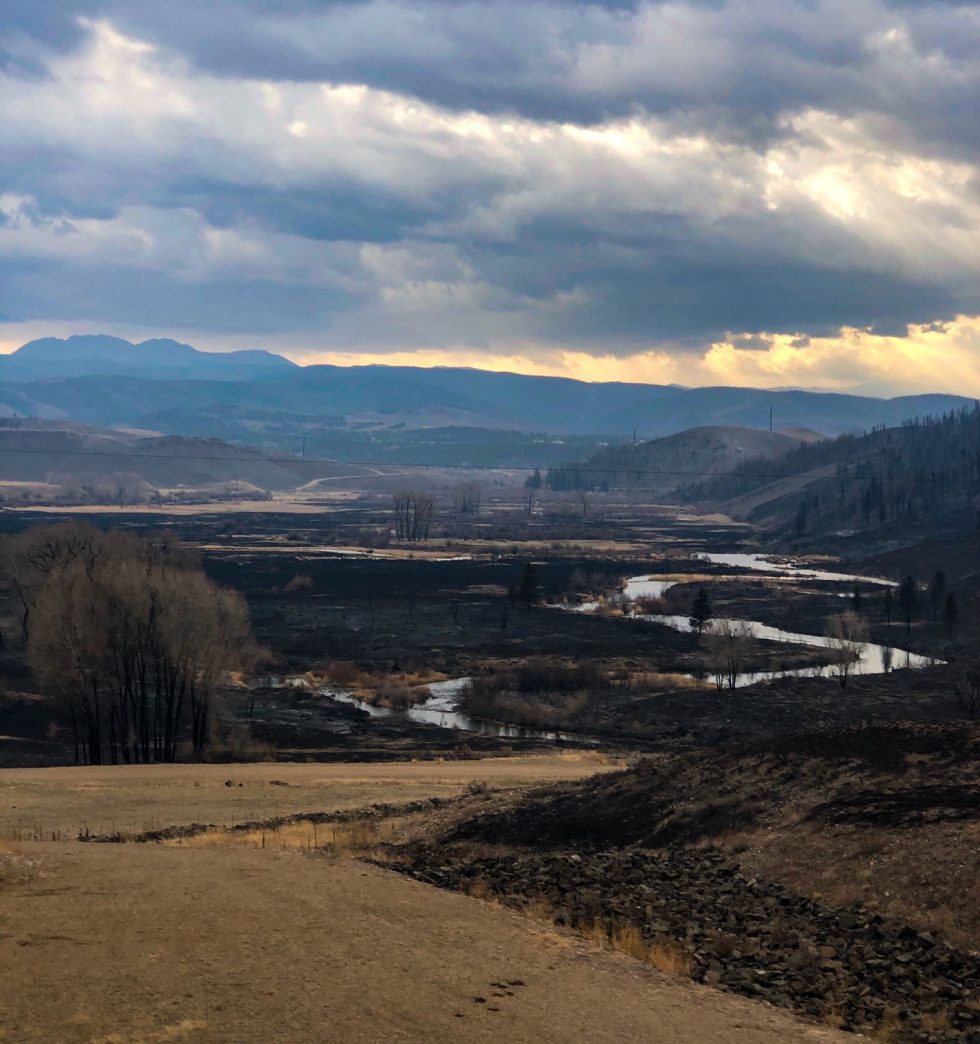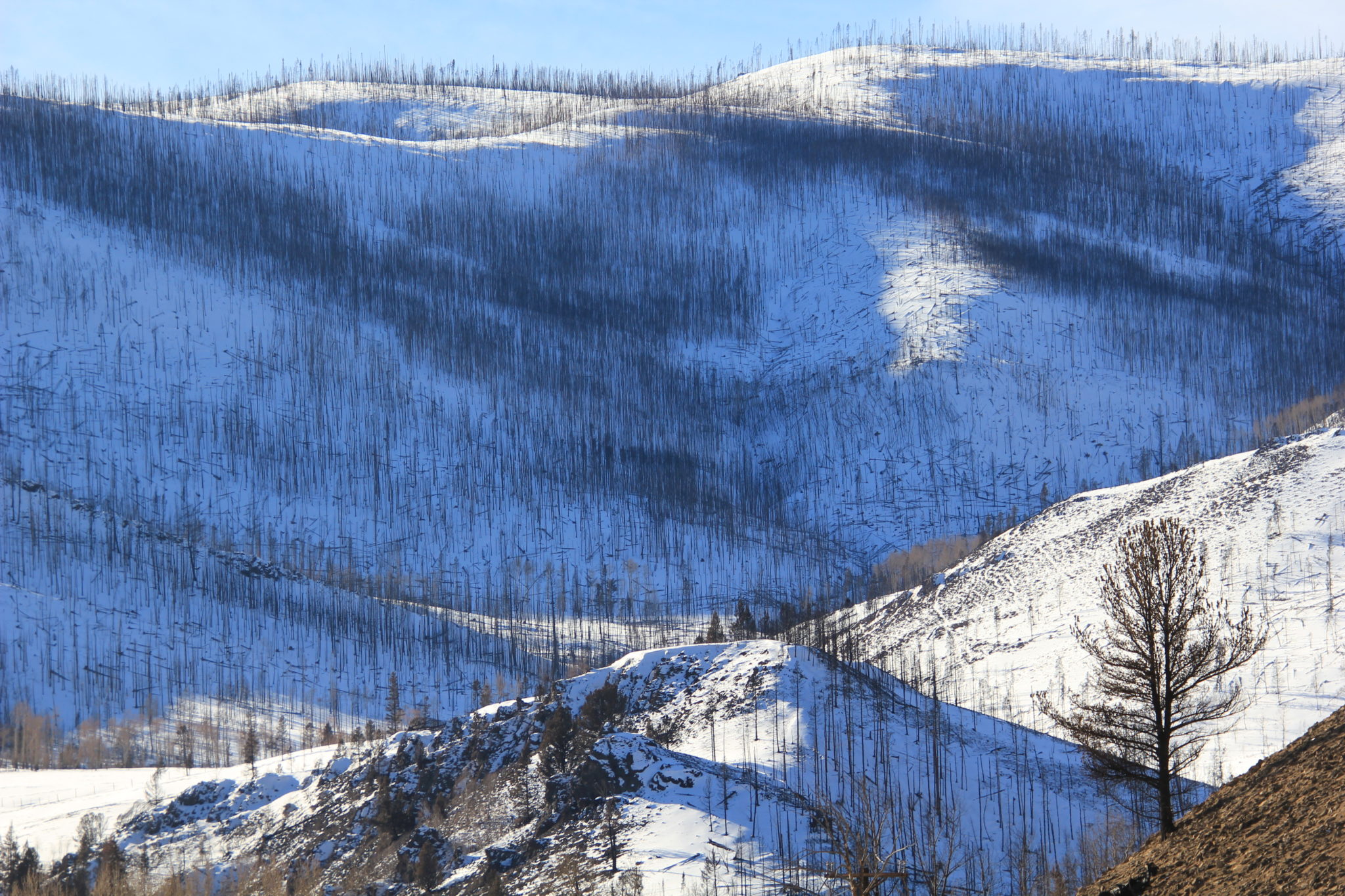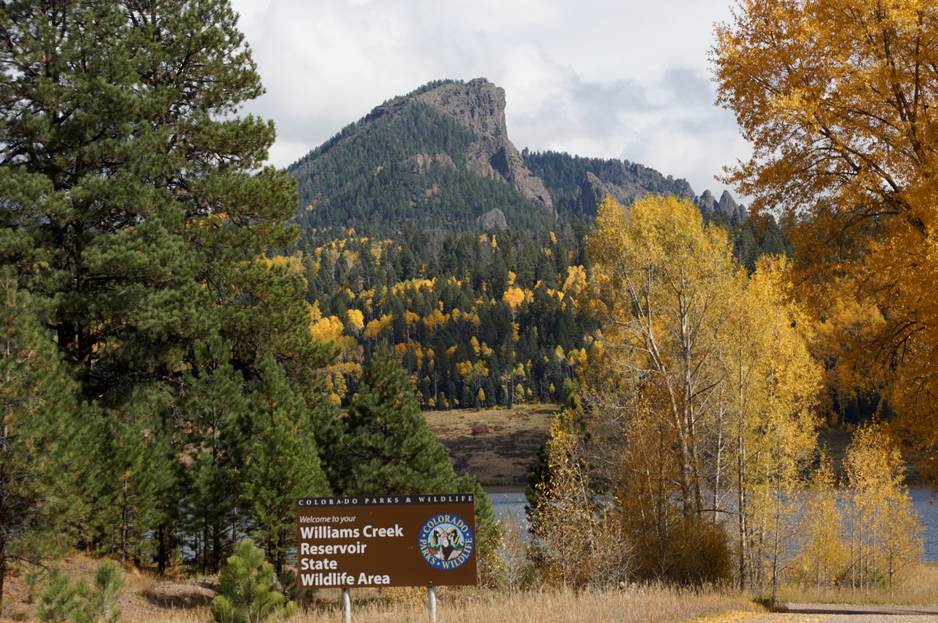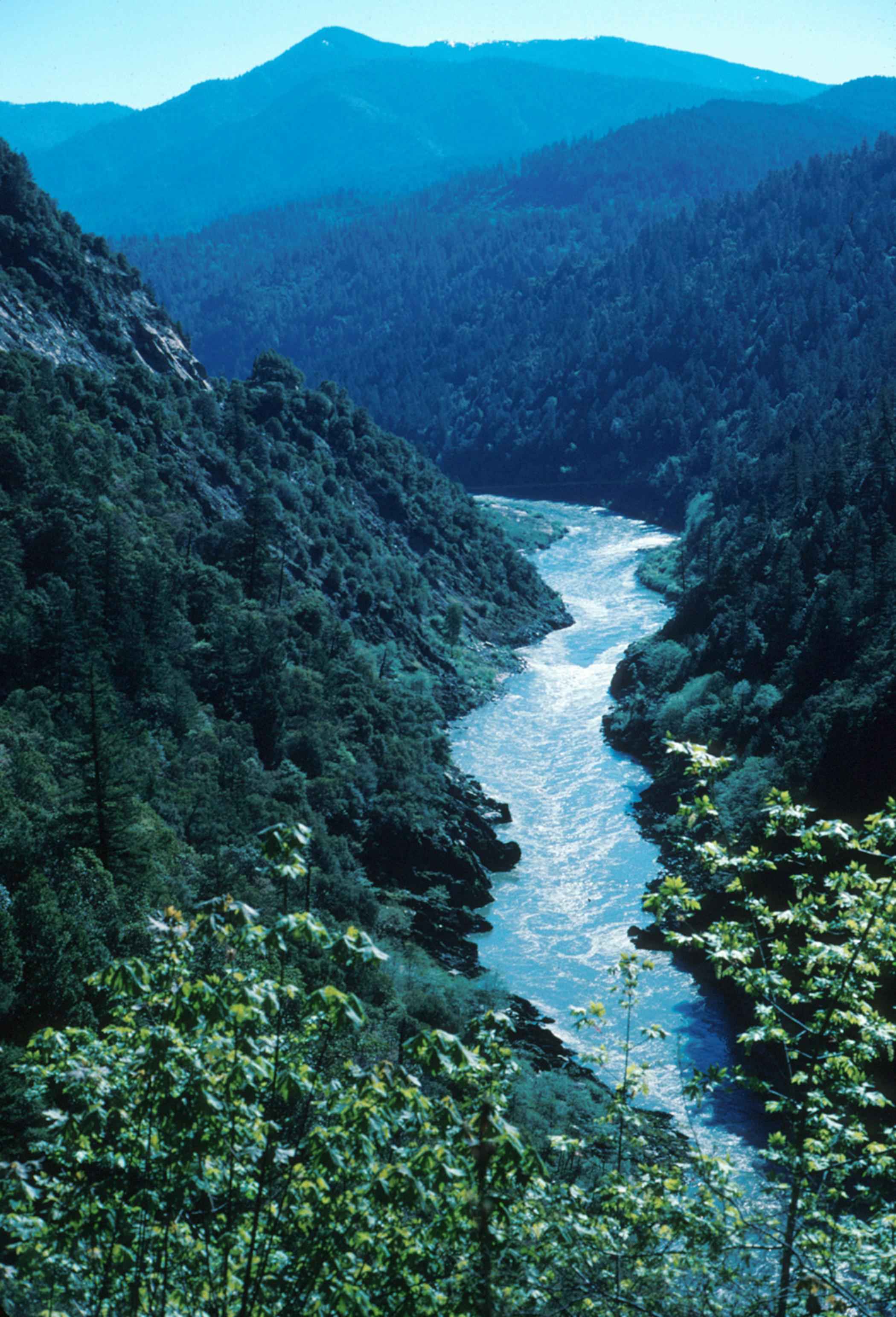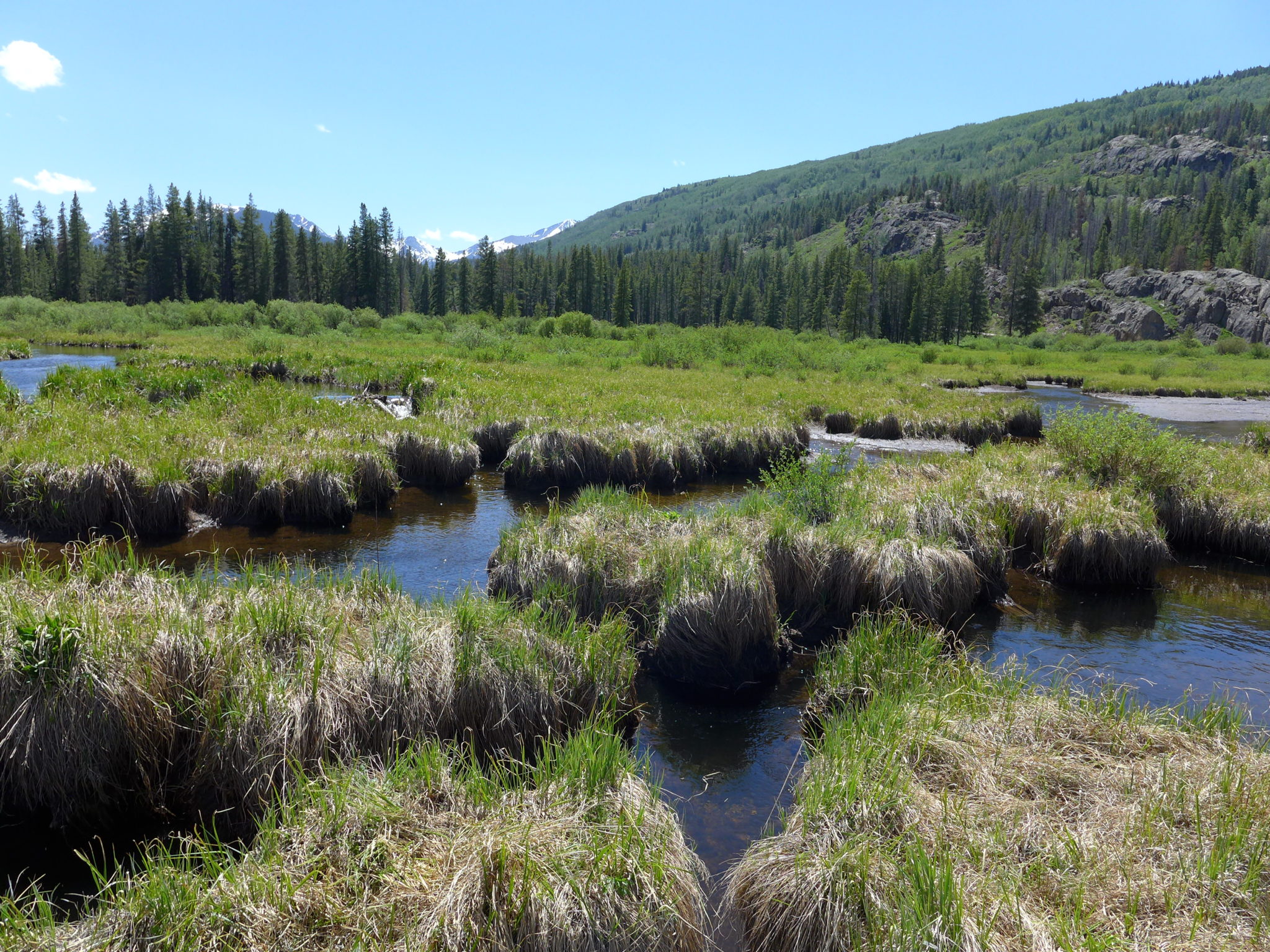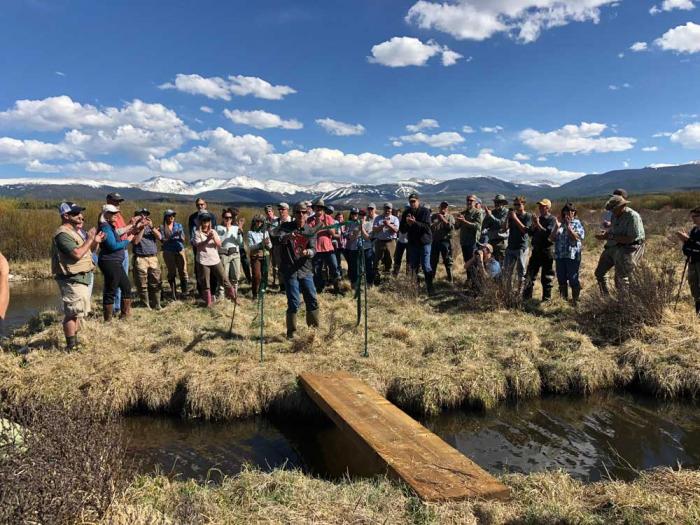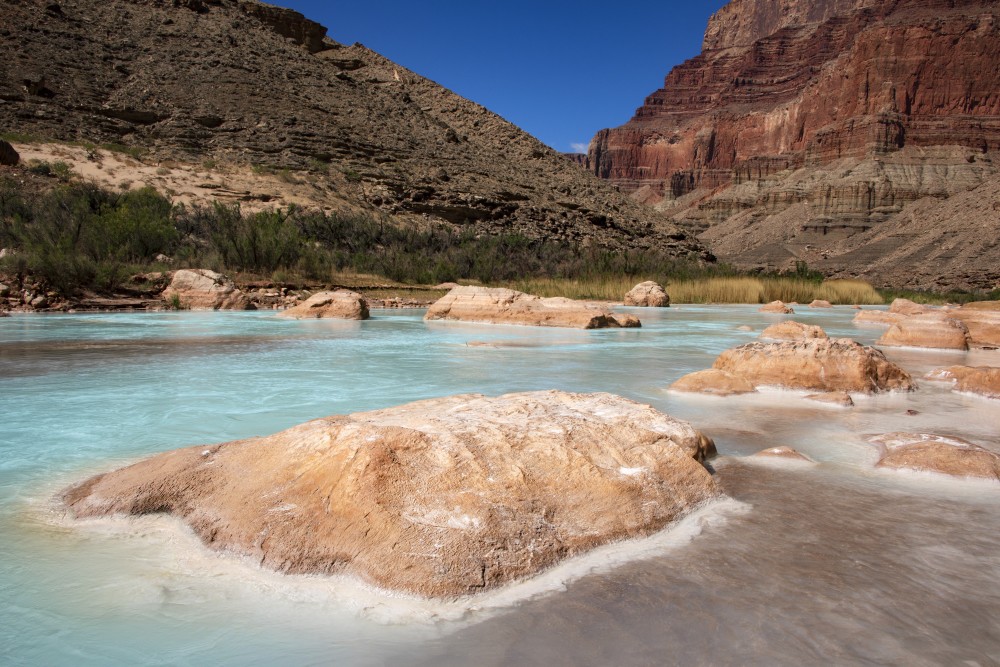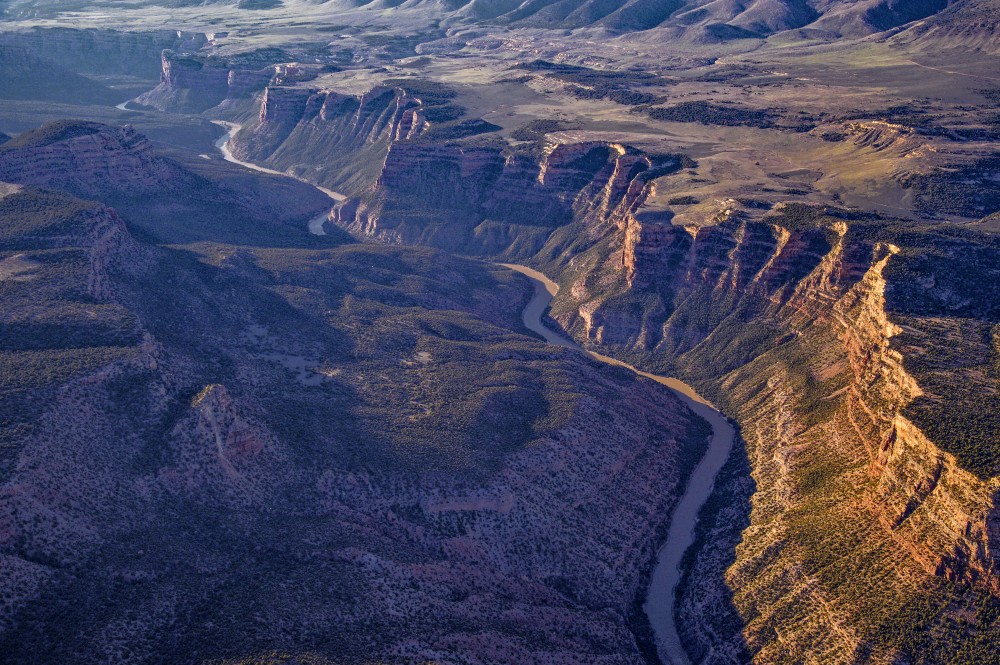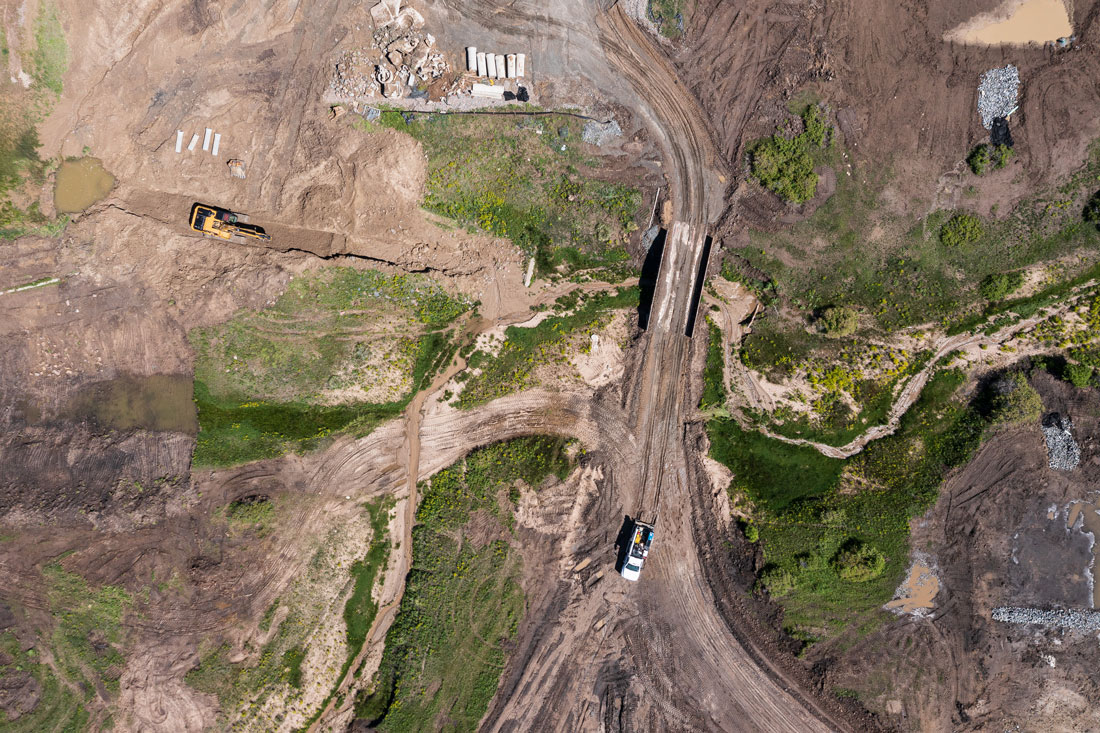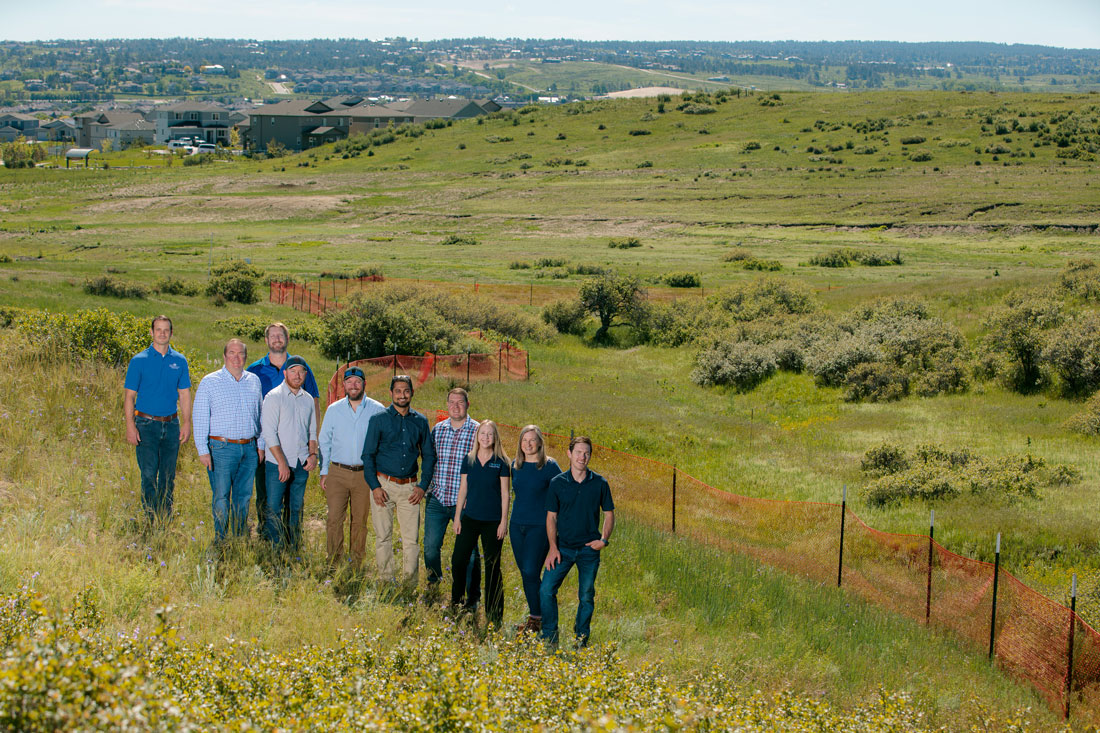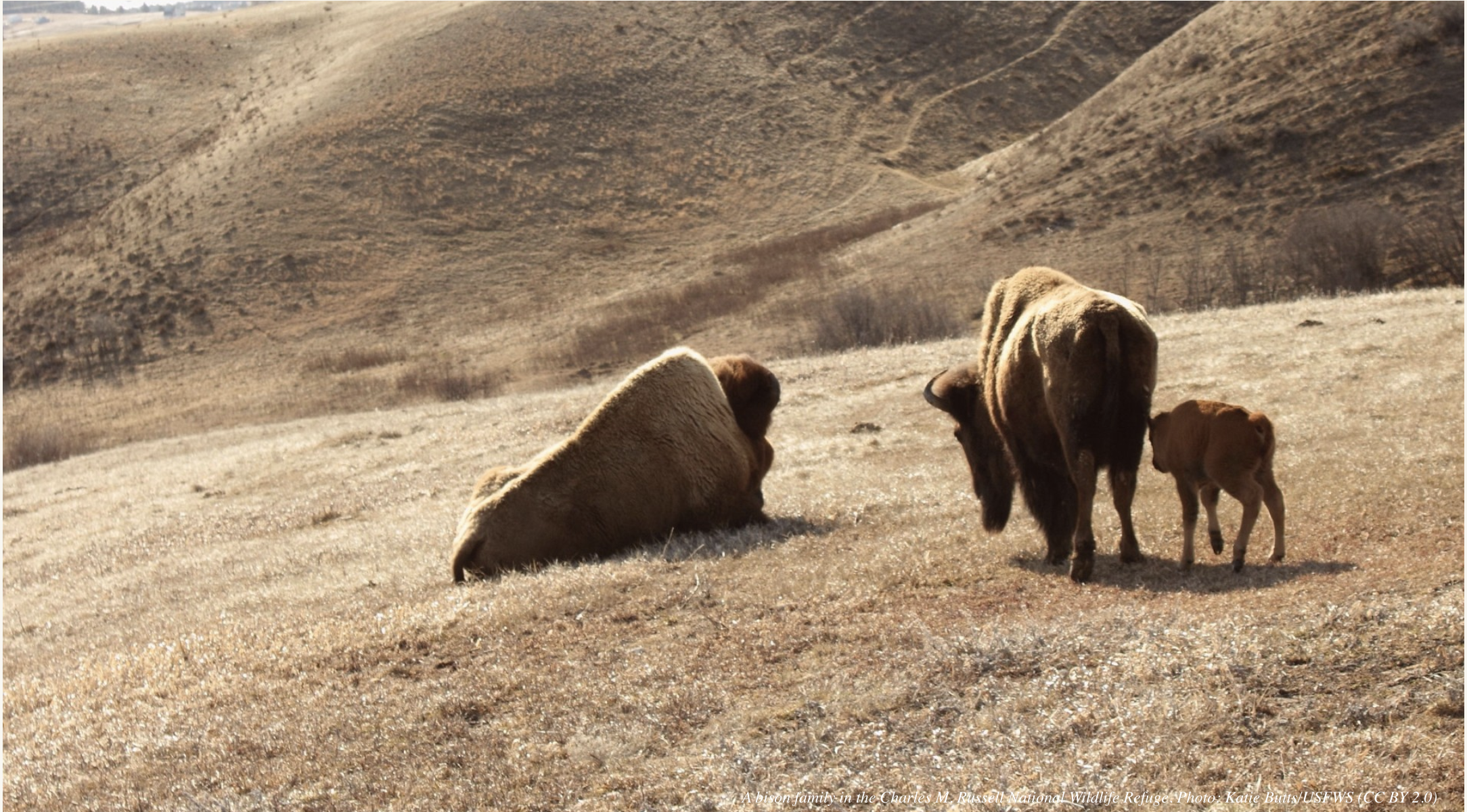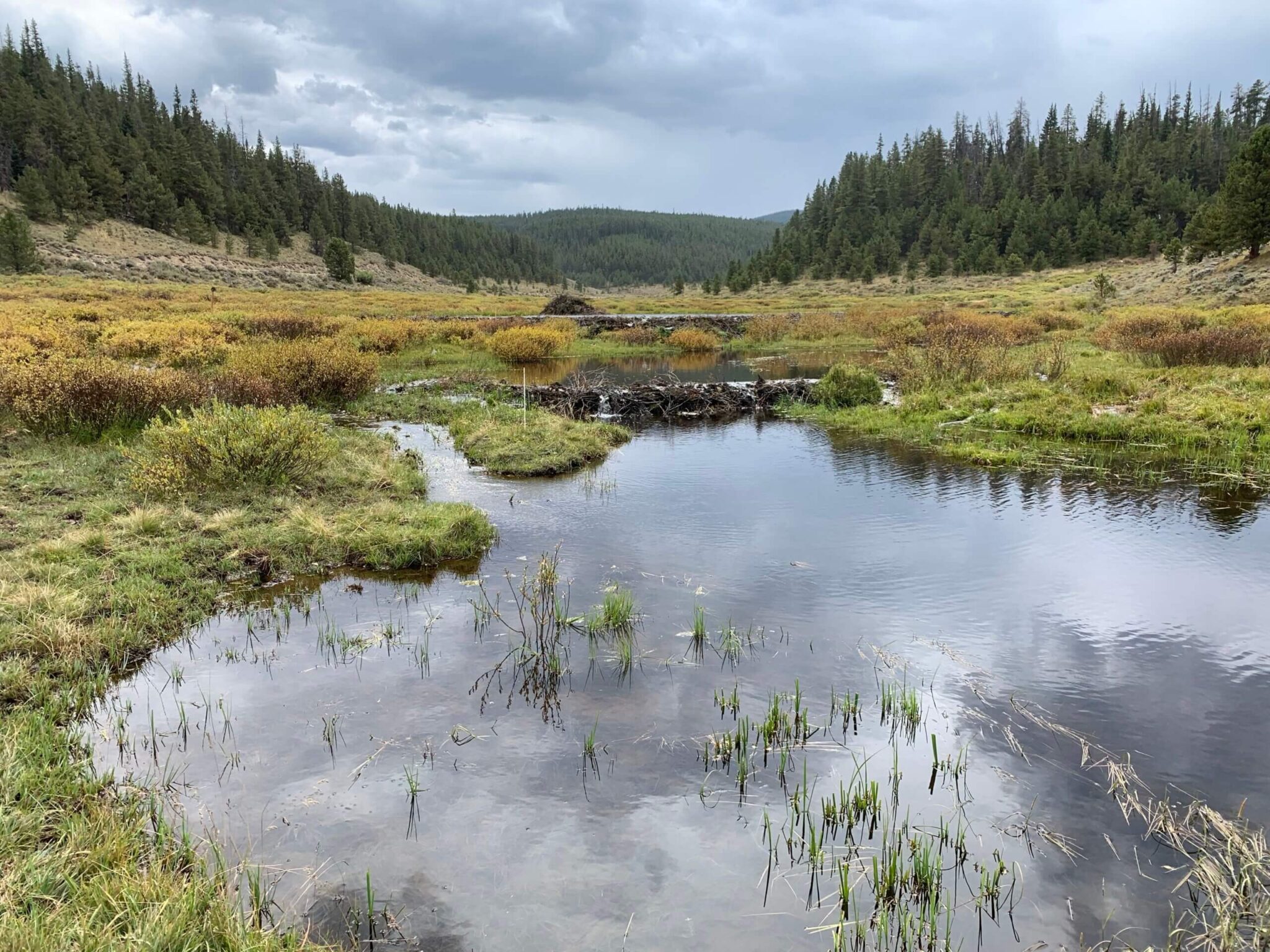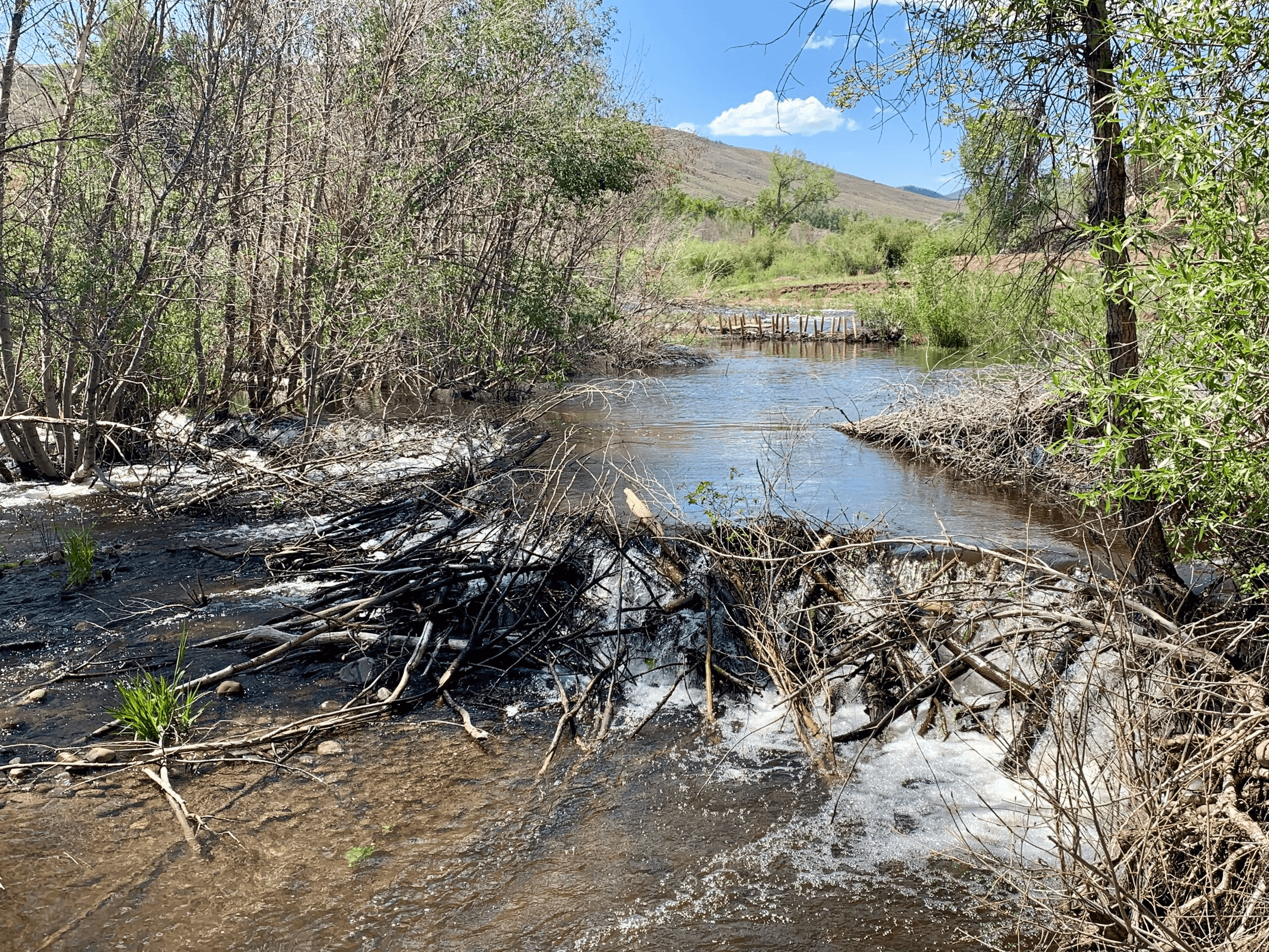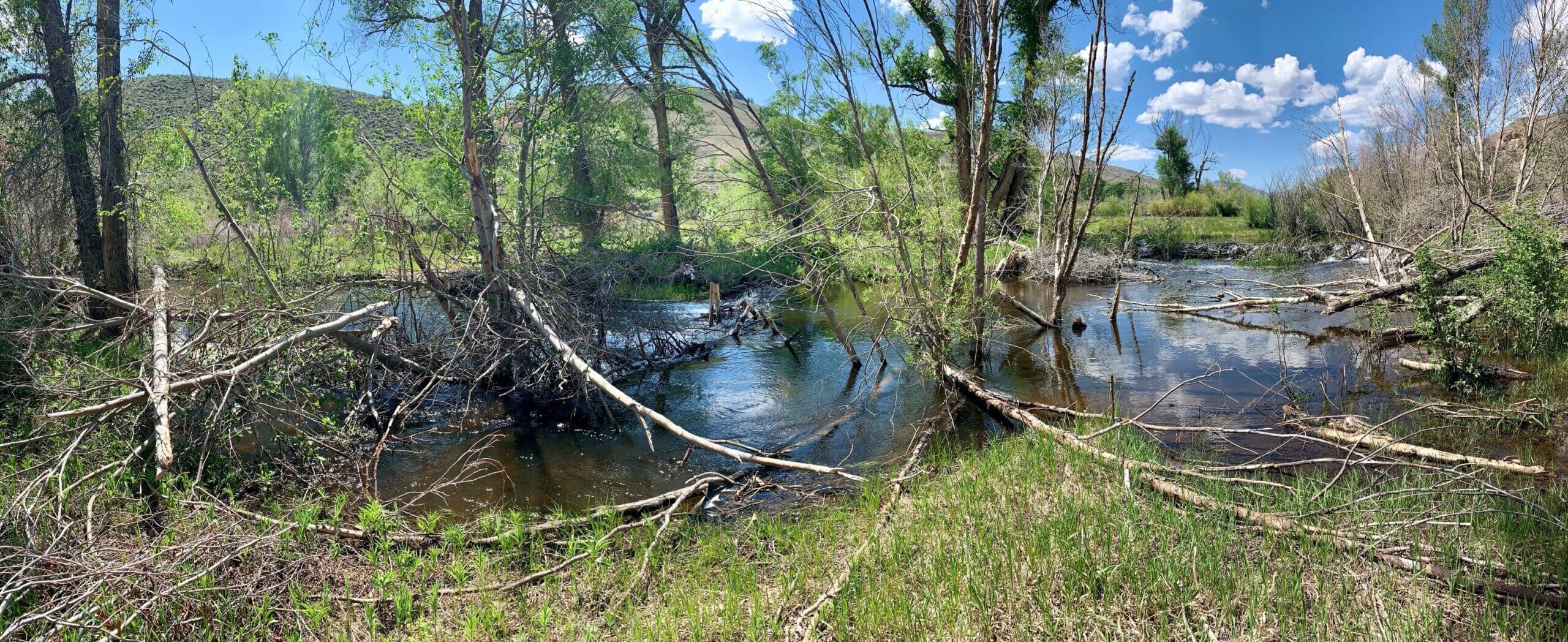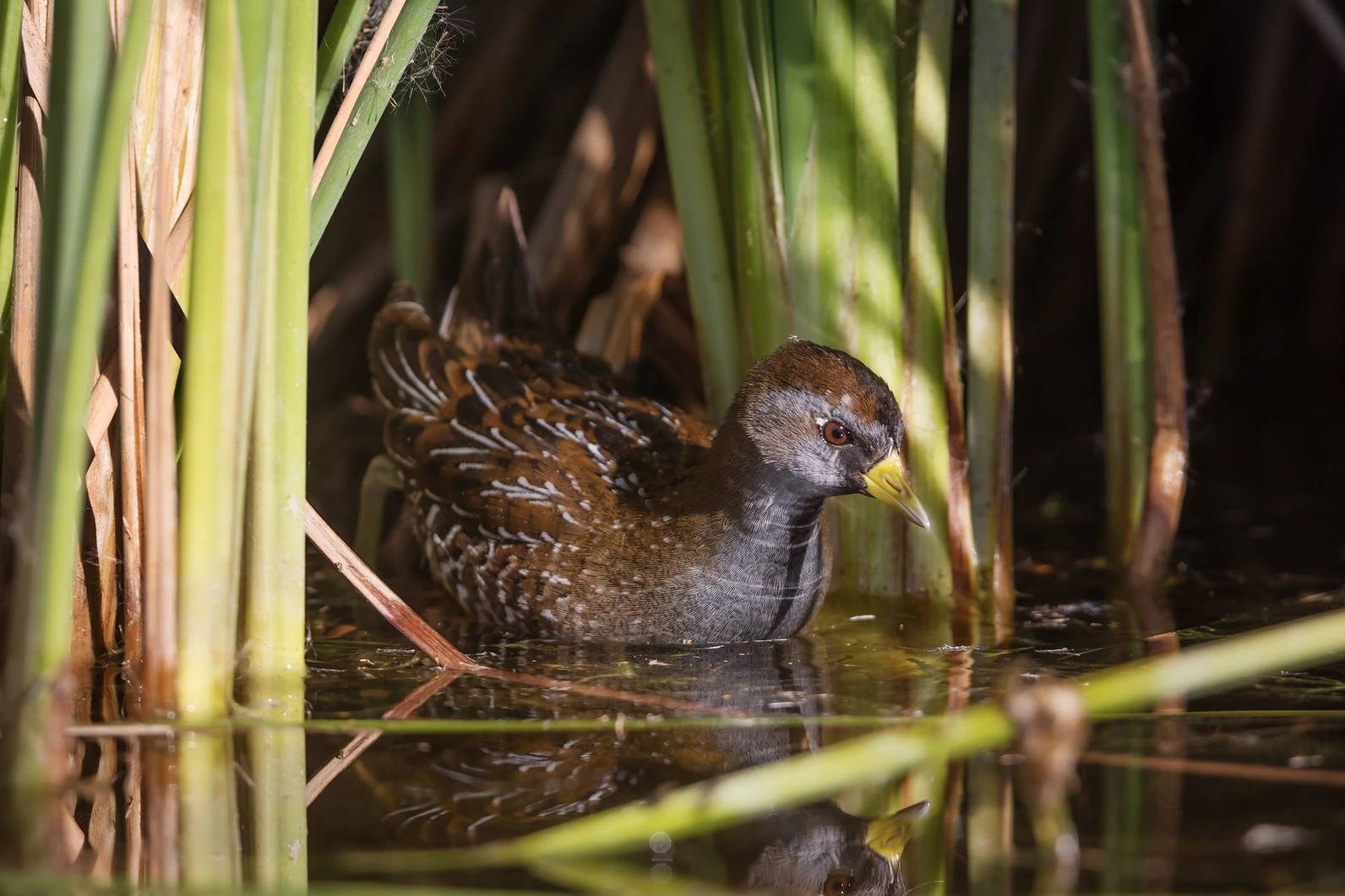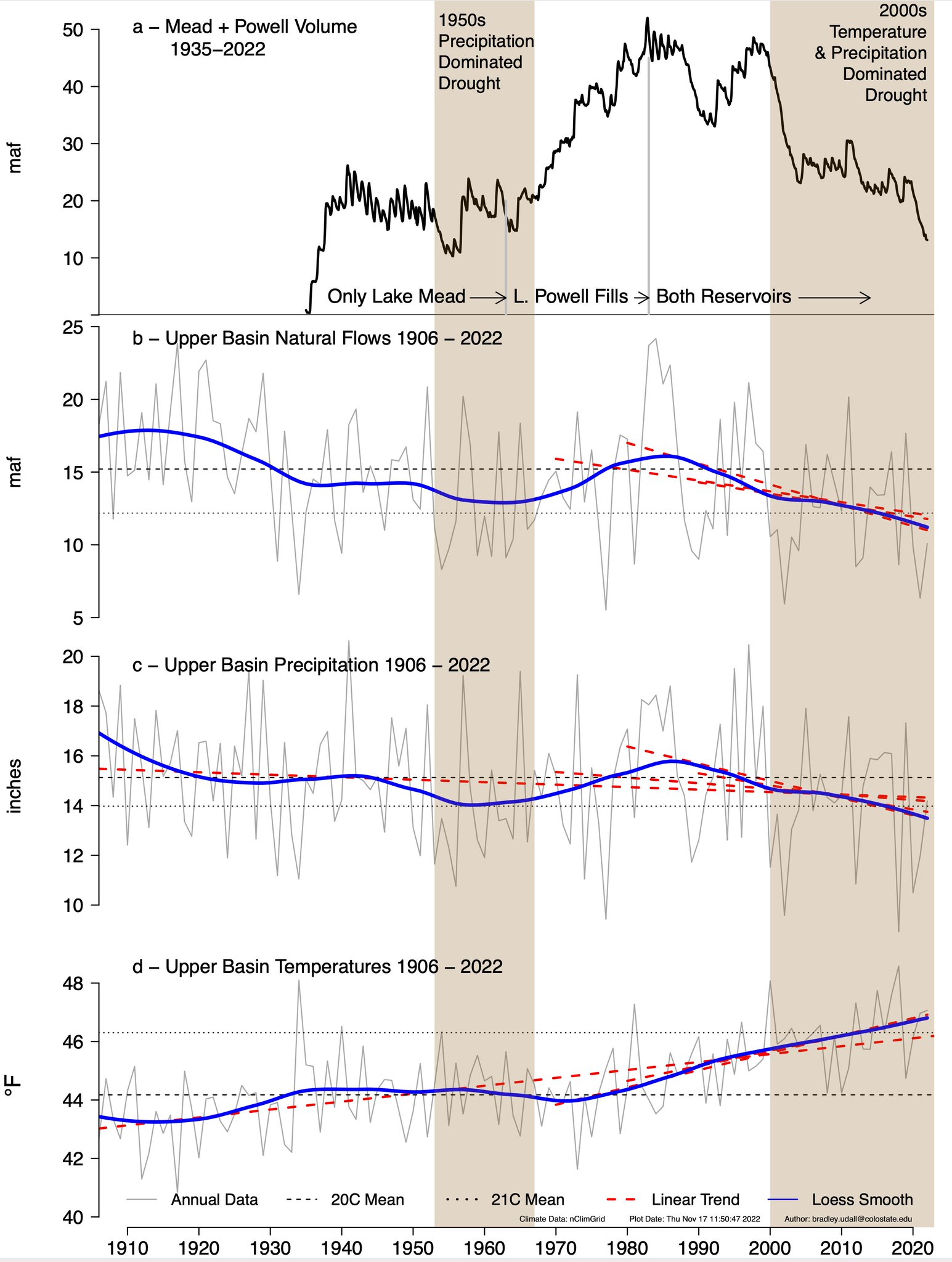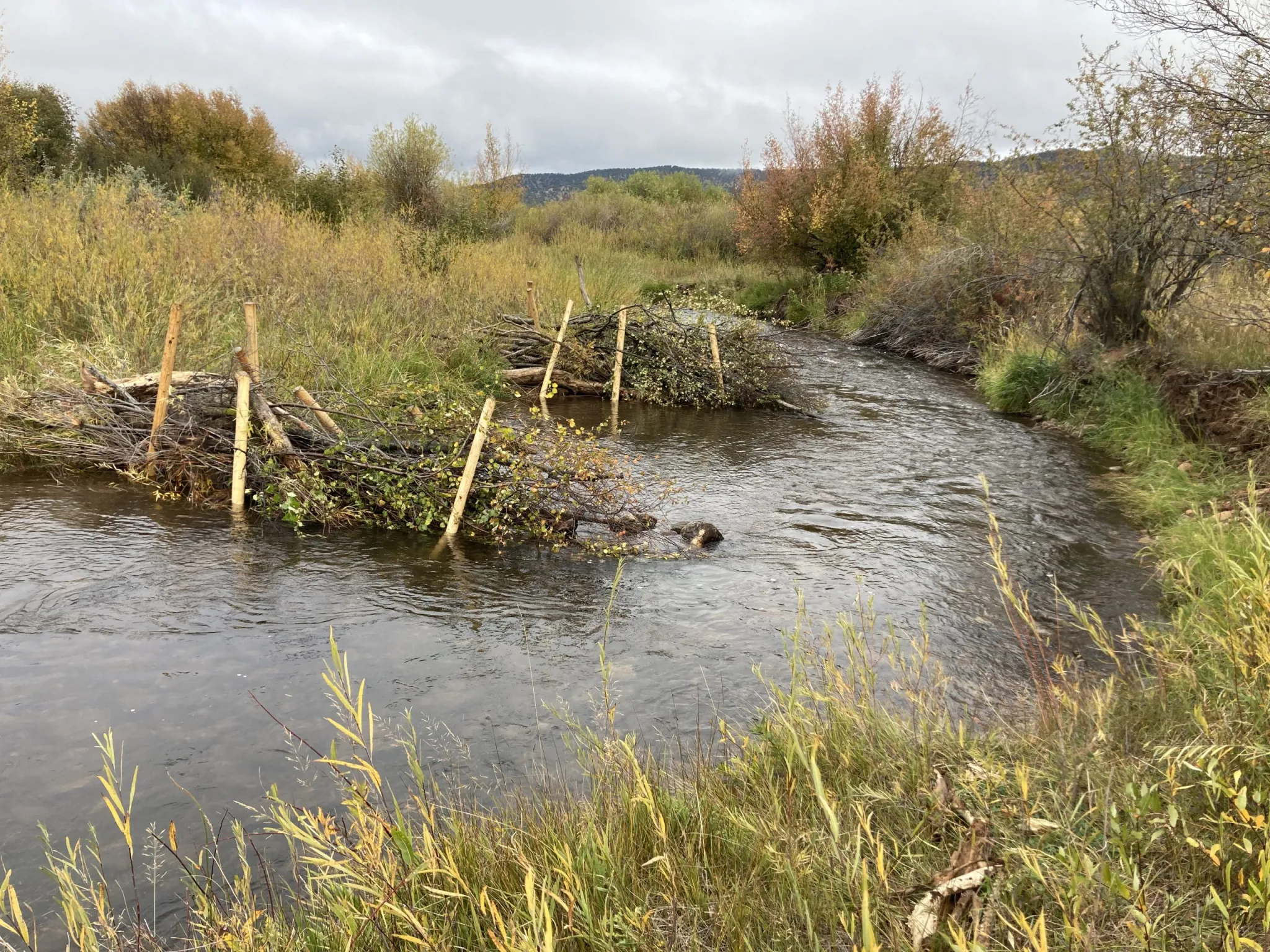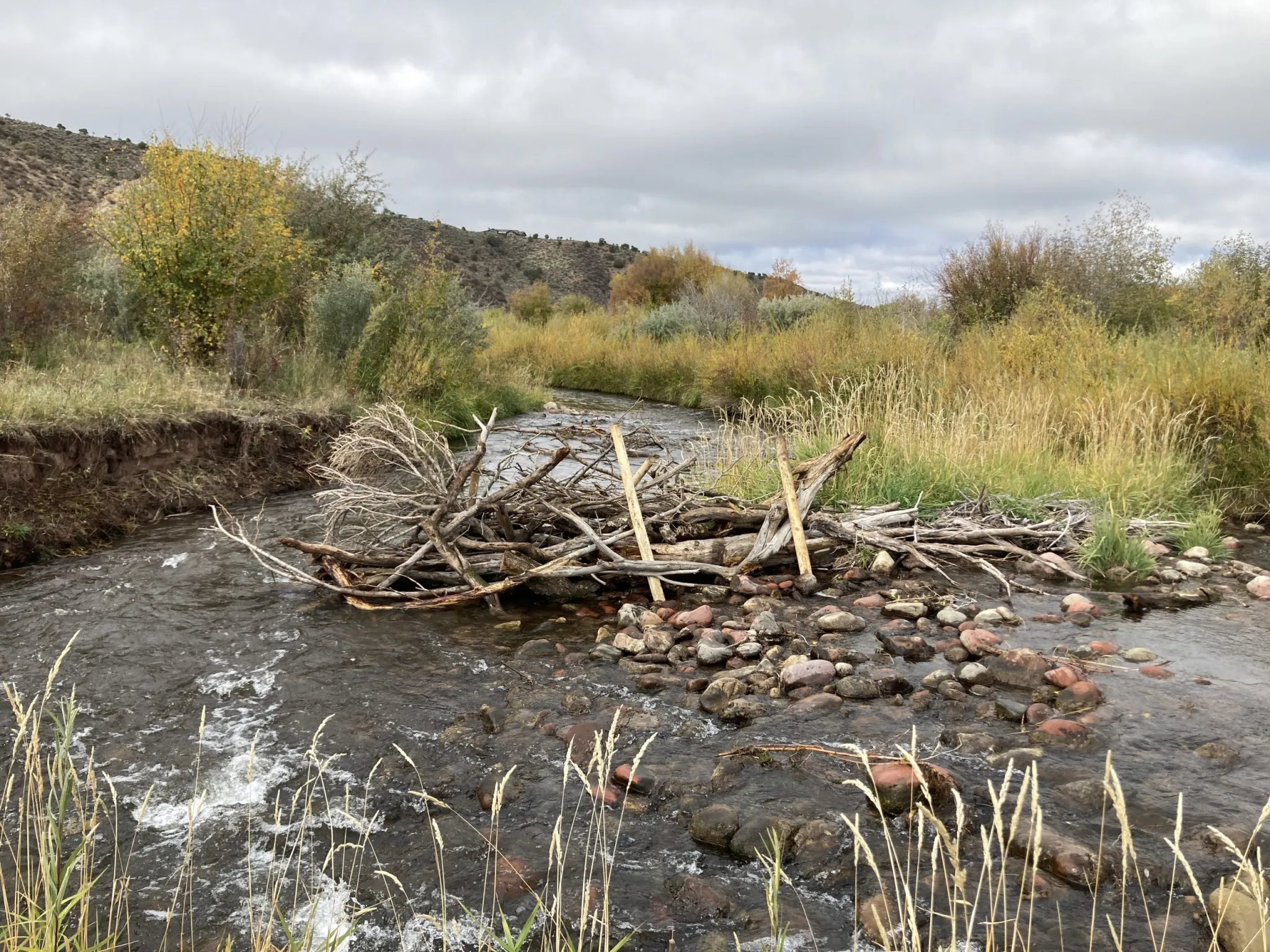
First Water Flows Through #ColoradoRiver Connectivity Channel — @Northern_Water #COriver #aridification

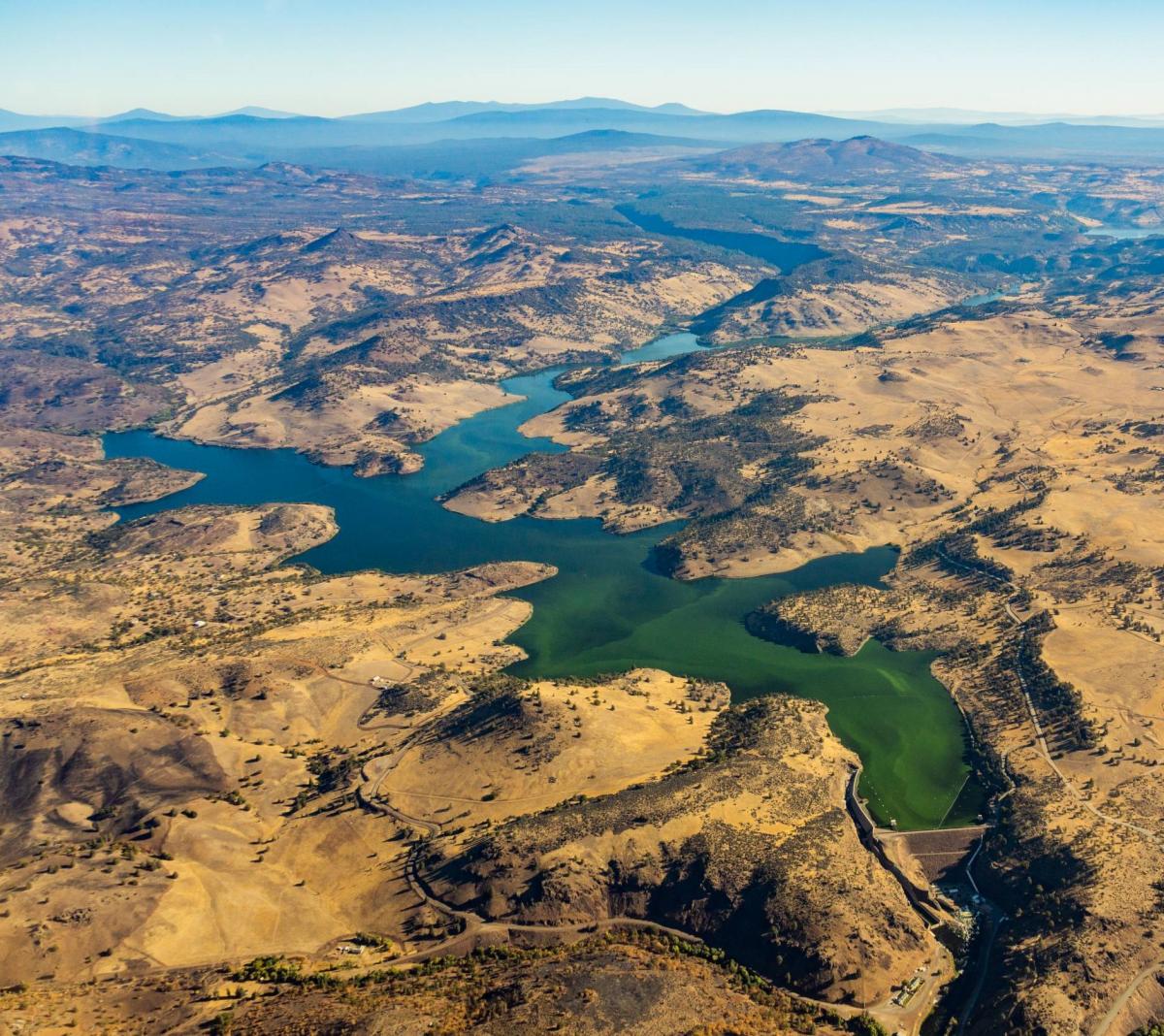
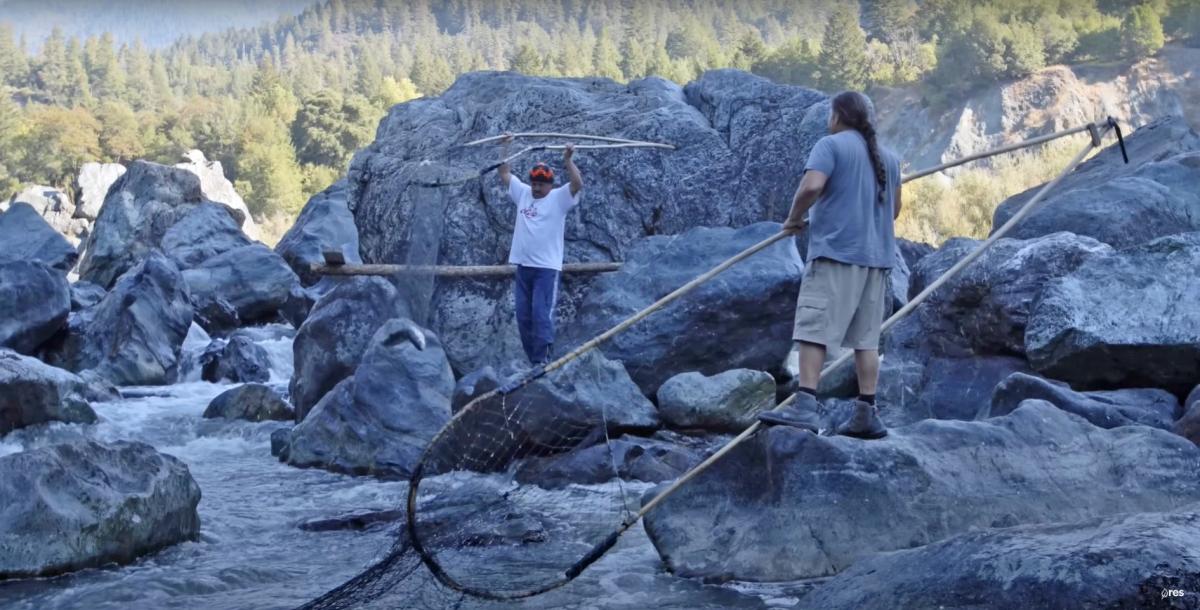
Restoring a river channel in the Upper Colorado Basin. Graphic credit: Northern Water

Click the link to read the article on the Northern Colorado Water Conservancy District website:

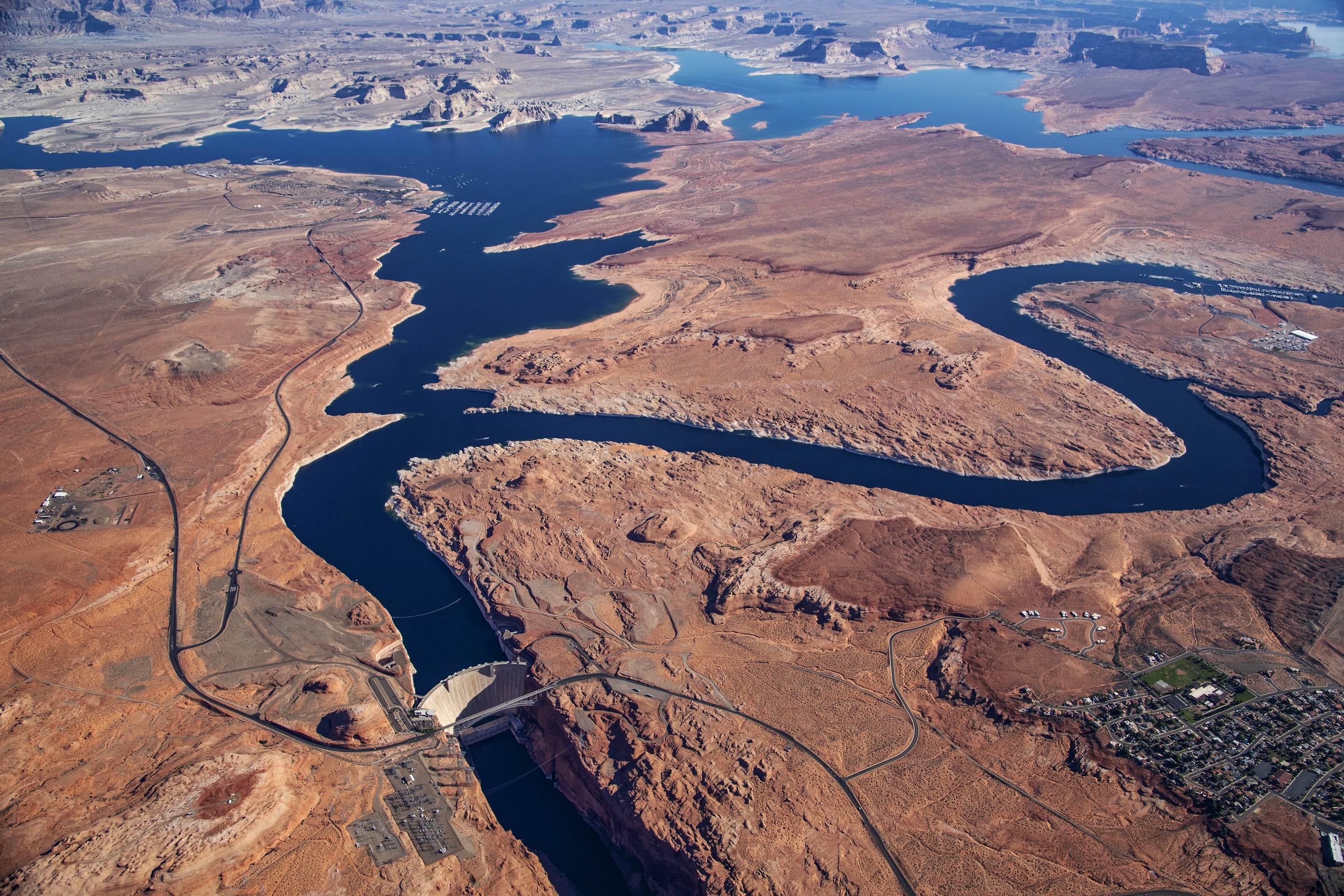
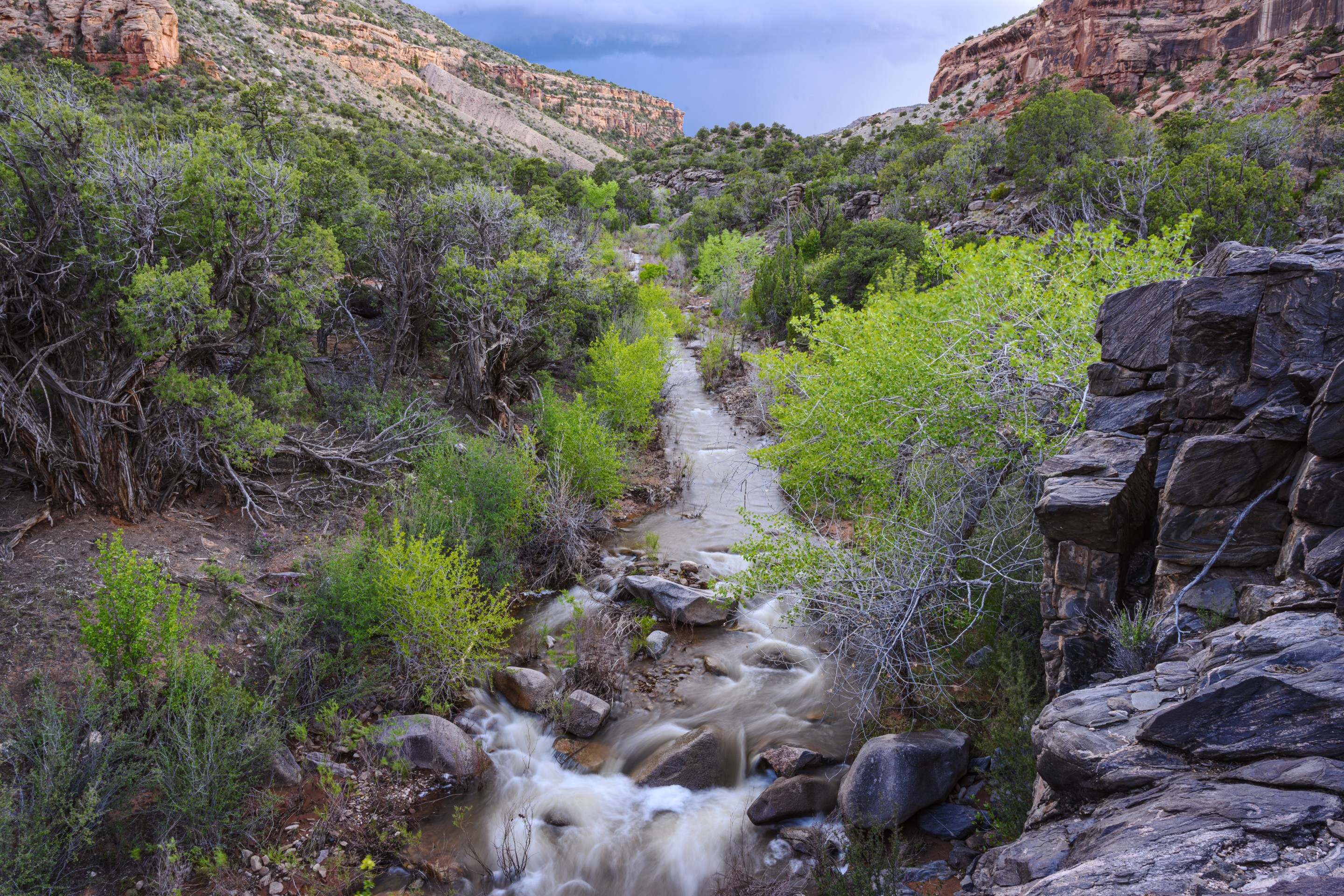
November 7, 2023: In whatโ€™s been described as โ€œthe largest aquatic habitat connectivity project ever undertaken in state history,โ€ crews successfully tested the new Colorado River Connectivity Channel (CRCC) at the end of October. The new channel around Windy Gap Reservoir hydrologically and ecologically now reconnects two segments of the Colorado River for the first time in approximately 40 years. ย 

Northern Water staff were joined by Grand County officials, Windy Gap Project Participant Representatives, Colorado Parks and Wildlife representatives and others to watch the first flows go through the long-awaited channel. This new video captures the historic day and includes comments from the project participants and stakeholders who were present to witness the occasion.    

While water is now running through the new channel, there is still construction work to be done. Crews will continue putting the finishing touches on the project’s new dam embankment, diversion structure and other elements before winter weather brings activity to a stop in the upcoming weeks. Construction is expected to resume

next spring and wrap up later in 2024. Vegetation establishment along the channel will continue into 2025 and 2026, before the area is anticipated to open for public recreation in 2027.  

The new channel will enable fish and other wildlife to move freely upstream and downstream around what is now a smaller Windy Gap Reservoir. Meanwhile, the reservoir will continue providing a diversion point on the Colorado River for the Windy Gap Project during the high flows of spring and early summer.  

The CRCC is part of a package of environmental measures, valued at $90 million, associated with construction of Chimney Hollow Reservoir, which is ultimately where Windy Gap Project water will be stored once reservoir construction is completed.   

2023 South Platte Forum #southplatte23 #SouthPlatteRiver

What a great learning experience yesterday in Greeley at the 2023 South Platte River Forum. The panels were all excellent as were the speakers (even the presentation by Brent Young about crop insurance ๐Ÿ˜Š).

Here’s the link to the forum Tweets.

Investing in resilient landscapes — USFS #ActOnClimate

Click the link to read the article on the USFS website (Randy Moore):

November 24, 2023: In January 2022, we launched ourย Wildfire Crisis Strategy.ย This strategy provided a vision for what it will take to meaningfully change how people, communities and natural resources experience risk from wildfire. Its implementation to this point has been funded by the historic down payments Congress made through the Bipartisan Infrastructure Law and the Inflation Reduction Act.

Iโ€™m pleased to report that we have made significant progress in implementing this daring and critical strategy.

We are focusing our initial efforts on the 250 highest risk firesheds in the West, which account for roughly 80% of the wildfire risk to communities. Our employees and partners have now collectively treated more than 1 million acres within the 21 Wildfire Crisis Strategy priority landscapes. This initial accomplishment is commendable, and I am incredibly proud of our agency. It has come as result of tremendous effort from thousands of employees across all parts of the agency. Our diligent work to reduce hazardous fuels and restore forest health in these landscapes directly translates to mitigating wildfire risk for 550 communities, 2,500 miles of power lines and 1,800 watersheds. In addition, we were able to exceed our national 4-million-acre fuels reduction target, including a record 1.9 million acres treated with prescribed fire. Going into this year, we know we must keep our focus and build upon this accomplishment. With more than 19 million acres still left to treat, this year we plan to exceed last yearโ€™s accomplishments as we realize the capacity we built throughout the past year.

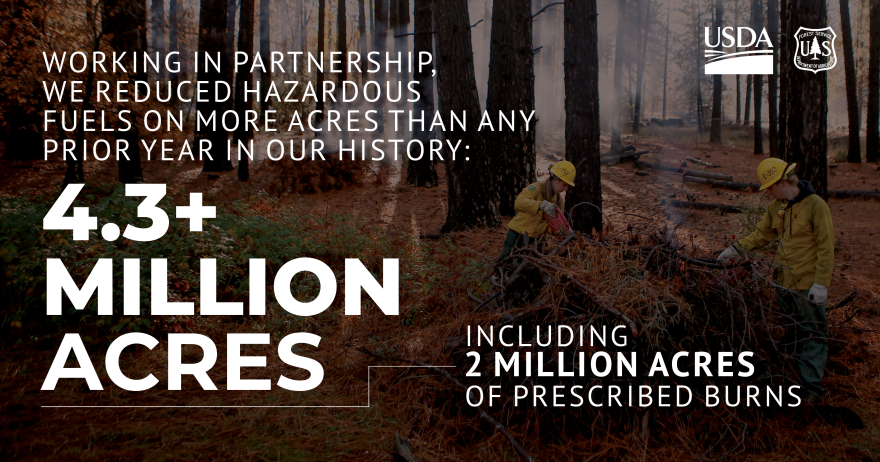
In 2023, we worked with partners to reduce hazardous fuels on more acres than any year in our history: over 4.3 million acres, including 2 million acres of prescribed burns. USDA Forest Service graphic by Caitlin Garas.

This includes efforts by 148 unique partner organizations, including tribal nations, state agencies, non-government organizations, and finance and industry partners. Programs like the Collaborative Forest Landscape Restoration Program and Joint Chiefsโ€™ Landscape Restoration Partnership helped bolster these efforts in and around high-risk firesheds.

As you know, the number of acres treated represents just one piece of the larger effort to confront the wildfire crisis. We are assisting at-risk communities with planning for and mitigating wildfire risk through the newย Community Wildfire Defense Grant Program. This year alone weโ€™ve invested $197 million of Bipartisan Infrastructure Law funding into projects spanning 22 states and seven tribes. In June, we invested more than $43 million in 123 projects nationwide through the Community Wood Grants Program and Wood Innovations Grant Program. These investments will directly support the strategy to reduce risk in the places where it poses the most immediate threats to communities.

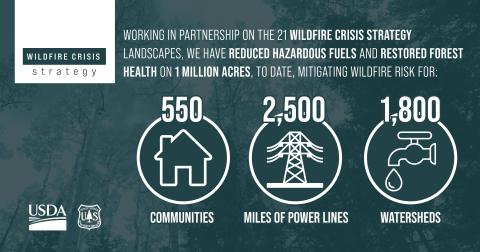
Working in partnership on the 21 wildfire crisis strategy landscapes, we have reduced hazardous fuels and restored forest health on 1 million acres, to date, mitigating wildfire risk for: 550 communities, 2,500 miles of power lines and 1,800 watersheds. USDA Forest Service graphic by Caitlin Garas.

While we strive to limit the severity of future wildfires, another agency priority is reforesting areas after our past wildfires. These two priorities go hand in handโ€”reducing risk of future wildfires and restoring areas impacted by the historic wildfires over the past years. We have identified 4 million acres of National Forest System lands in potential need of reforestation, which is key to long-term forest recovery and mitigating the effects of climate change. While this need is largely caused by wildfires, additional reforestation needs have also been created by insect infestations, diseases and drought.

To address this reforestation backlog, we released theย National Forest System Reforestation Strategyย in July 2022. This strategy outlines the goals and objectives that are necessary for successful reforestation, including robust framework to increase the pace and scale of reforestation, address existing needs, anticipate future events and meet the requirements of the Repairing Existing Public Land by Adding Necessary Trees, or REPLANT, Act of 2021.

Accomplishing this work has taken the dedication, time and energy of employees like you. It has required each of us to work in new ways. We have experienced growing pains and challenges, but we are already seeing meaningful results. I want to extend my sincere thanks and gratitude to all of you who have contributed to these efforts. You are making a difference for the American public whom we serve and the natural resources we manage.

We know that fully achieving the vision laid out by the Wildfire Crisis Strategy will require further investments and that those investments need to be sustained. In the coming years, continued funding will allow us to build upon the work we’ve already accomplished. We will continue ramping up the pace and scale of our hazardous fuel reduction and forest management treatments to confront the crisis, using every tool and authority at our disposal and growing the list of partners we work with.

Our goal is a great challenge, but one I know our agency and partners are up for.

Editor’s Note: Provide feedback about this column, submit questions or suggest topics for future columns through the FS-Employee Feedback inbox.

West Fork Fire June 20, 2013 photo the Pike Hot Shots Wildfire Today

Grand Lake will get no state help โ€” for now โ€” to restore its once-crystalline water — Fresh Water News

Grand Lake via Cornell University

Click the link to read the article on the Water Education Colorado website (Jerd Smith):

November 15, 2023: A state commission that sets water quality standards in Colorado is declining for now to wade into a debate over murky water in Grand Lake.

The Colorado Water Quality Control Commission will instead continue to monitor concerns about the popular tourist destination as federal and state authorities pursue solutions, the commission said at its regularly scheduled meeting Monday.

The lake is considered a prime jewel in Coloradoโ€™s scenic landscapes. Located on the western edge of Rocky Mountain National Park, it has been a tourist haven since the late 1800s.

But clarity deteriorated when the federal government began construction on the Colorado-Big Thompson Project, or C-BT, in the late 1930s.

The system gathers water from streams and rivers in Rocky Mountain National Park and Grand County, and stores it in Lake Granby and Shadow Mountain Reservoir.

From there it is eventually pumped up into Grand Lake and delivered under the Continental Divide via the Alva B. Adams Tunnel to Carter Lake and Horsetooth Reservoir on the Front Range to serve more than 1 million residents and hundreds of farms.

The pumping creates turbidity that clouds the lake during the resort areaโ€™s prime tourist season in the summer. Before the C-BT was built, the lake was clear to a depth of 9.2 meters, or roughly 30 feet. Now it is far less.

Years of studies and work group sessions have failed to produce a solution.

The U.S. Bureau of Reclamation plans to re-examine several options to fix the problem, including harvesting weeds and introducing aeration at Shadow Mountain, said Jeff Reiker, who manages the agencyโ€™s Eastern Colorado Area office. Reclamation owns the C-BT system, which is operated by Northern Water.

โ€œWe donโ€™t have any major structural alternatives that have been identified as viable,โ€ Rieker said. Some ideas considered previously involved things such as building a tunnel that would transport murky water from Shadow Mountain through Grand Lake, preventing the murkier water from mixing with Grand Lakeโ€™s.

โ€œHowever, we are continuing our efforts to see if any structural alternatives need to be reconsidered. We want to focus on what can be done with our existing funding and authorities.โ€

The situation is complicated because it involves federal and state agencies, and any effort to redesign the massive system would cost hundreds of millions of dollars.

Early on locals had hoped the lake would be protected from damage caused by the project. A 1937 federal law, U.S. Senate Document 80, was approved in part to protect Grand Lakeโ€™s recreational and scenic values, and a 15-year-old state standard was designed to improve water clarity, setting a goal for clarity of 3.8 meters, or about 12.5 feet.

During the pumping process, algae and sediment from Shadow Mountain are carried into Grand Lake, clouding its formerly clear waters, causing algae blooms and weed growth, and harming recreation.

In 2008, the state water quality commission moved to set a clarity standard, but it has since been replaced with a clarity goal and the aim of achieving โ€œthe highest level of clarity attainable.โ€

Northern Water and others have implemented different management techniques, including changing pumping patterns, to find ways to improve water quality. In some years, Northern has been able to improve clarity, but not to historical levels.

The utility is getting better at managing clarity, meeting the 3.8-meter standard 50% of the time in recent years, up from 27% historically, said Esther Vincent, Northern Waterโ€™s manager of environmental services.

โ€œWe have made notable progress,โ€ she said.

Grand Lake advocates did not object to the commissionโ€™s decision, but urged it to bolster efforts to improve water quality.

Despite the progress, major improvements remain elusive, said Jeff Metzger, a volunteer advocate who has been trying to solve the problem for roughly 30 years.

โ€œThere are numerous documents related to efforts to improve Grand Lake clarity,โ€ he said. โ€œAnd we have seen some improvements. But none of these agreements have moved the needle.โ€

During the next several months, Reclamation and Northern Water will continue leading efforts to find a fix and the commission could revisit the issue again after 2024.

At the same time,ย advocates hope to involve Colorado legislatorsย in their efforts to restore the lake and plan to introduce a resolution next year asking lawmakers to endorse their efforts…

Fresh Water News is an independent, nonpartisan news initiative of Water Education Colorado. WEco is funded by multiple donors. Our editorial policy and donor list can be viewed atย wateredco.org.

A firsthand look at Grand Canyon beaches — @AmericanRivers

Beach in the Grand Canyon | Photo by Sinjin Eberle

Click the link to read the article on the American Rivers website (Sinjin Eberle):

The Grand Canyon is magical in any season, but fall may take the cake for the perfect boating season on that stretch of the Colorado River. Cool mornings, warm days that are still long enough to dry out your gear after a day of getting hammered by huge waves, and starry nights that appear after the sun has dipped below the ramparts of rock in the distance. This year, canyon explorers are lucky to experience the additional gift of abundant sand from the High Flow Experiment(HFE) that was conducted in April, 2023.

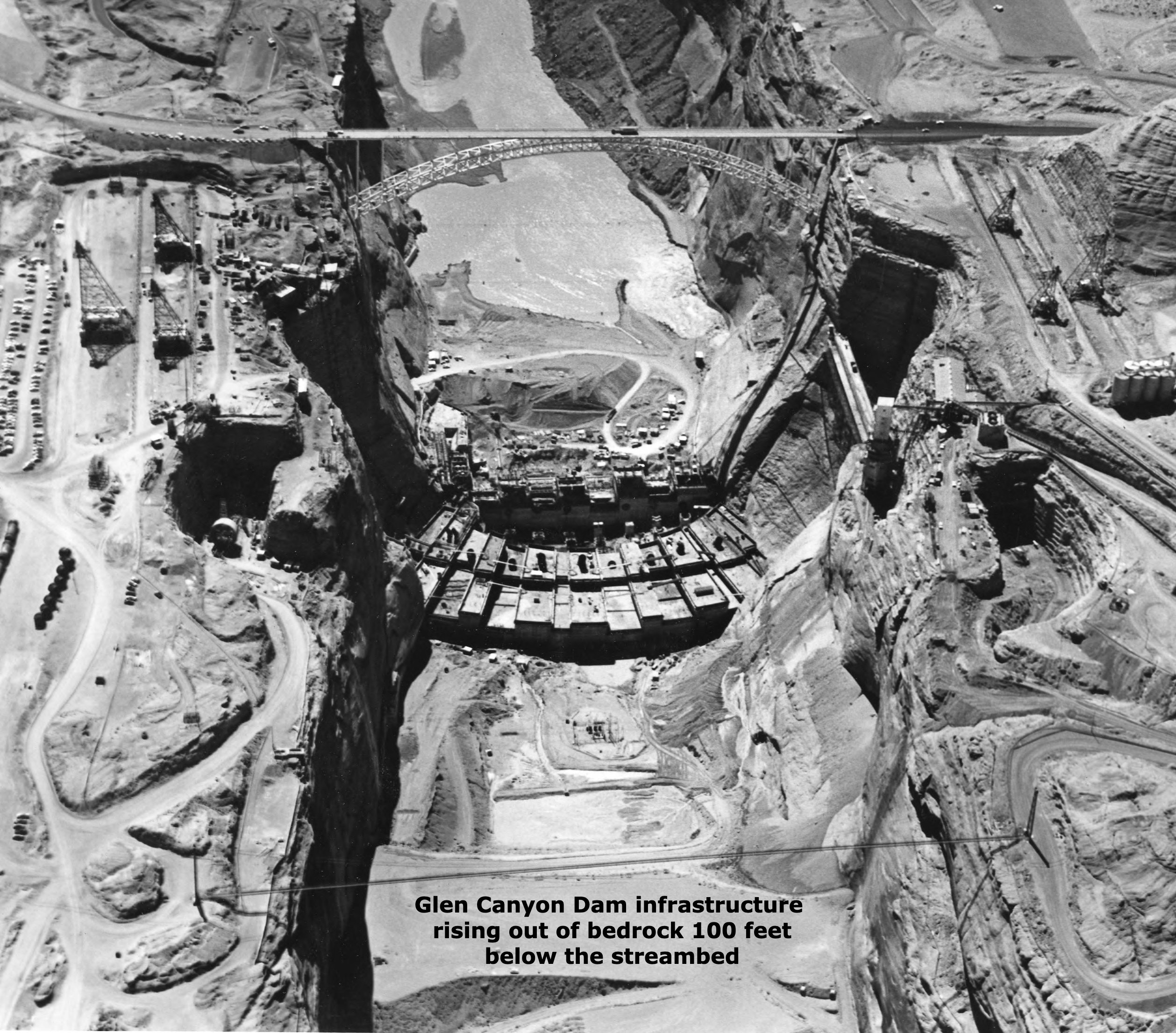
I was on the river a couple of weeks ago, conducting survey activities alongside scientists from the United States Geological Surveyโ€™s (USGS) Grand Canyon Monitoring and Research Center (GCMRC). This is part of a long-running program to quantify impacts to various resources throughout the canyon from the construction of Glen Canyon dam in the early 1960s. Since the early 1990โ€™s, scientists from GCMRC and Northern Arizona University have been using geodetic survey techniques to measure sand volume, in three dimensions, to a select group of around 40 beaches and sandbars from Leeโ€™s Ferry to Diamond Creek. The changes are compared year over year and show trends of how these beaches shrink or grow based on Colorado River flow conditions over the year. These measurements areย coupled with photographic evidence from camerasย also placed throughout the canyon to observe these changes across an entire year or multiple years.

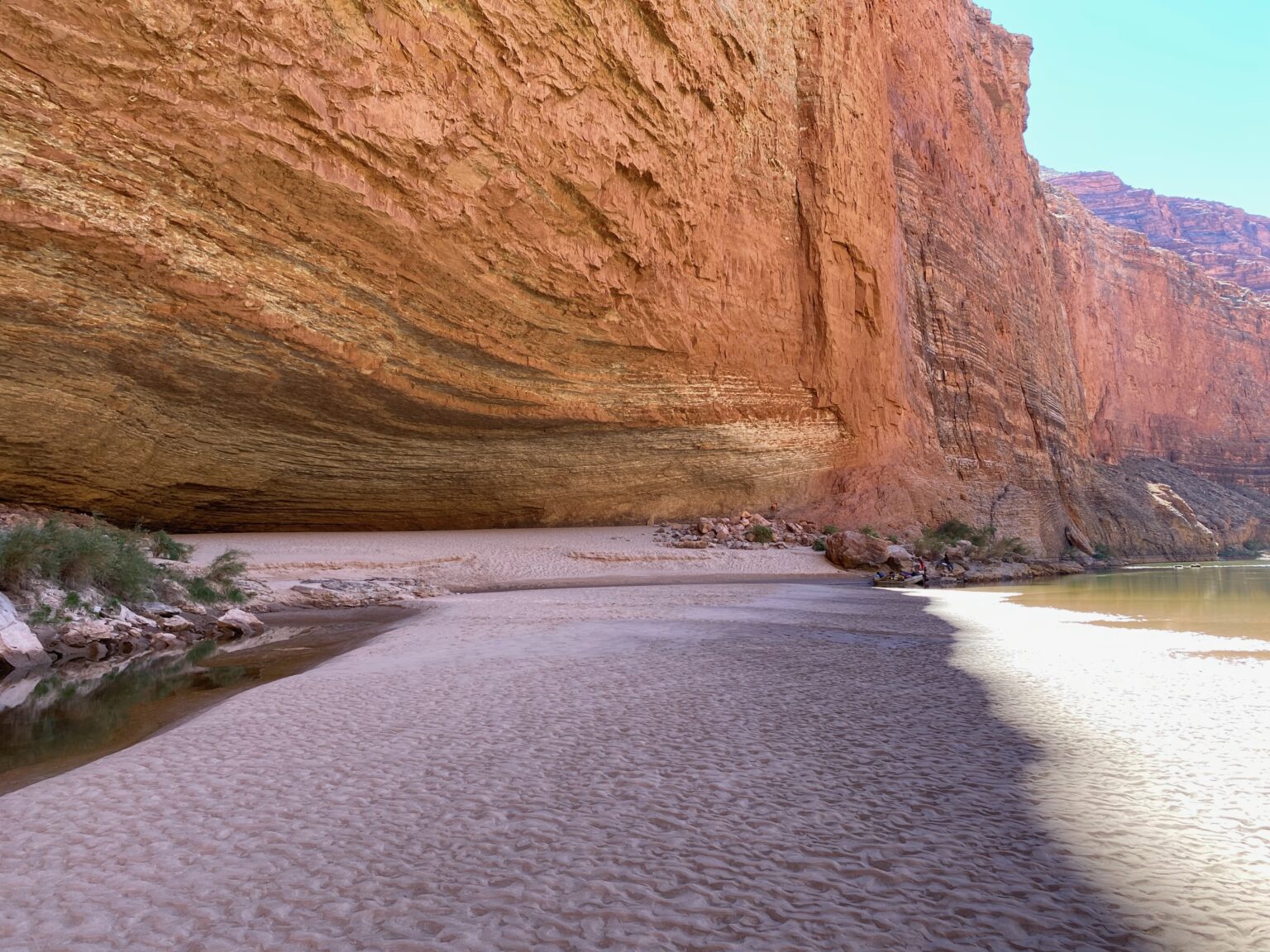
The beach below Redwall Cavern | Photo by Sinjin Eberle

My observation? There is a lot of sand down there, with huge beaches the likes of which I have not seen in many years. The last time an HFE was conducted in the canyon was 2018, and the last time aย springย high-flow was conducted was in 2008. Without these HFEs, the sediment-reduced water coming out of Glen Canyon dam actually erode beaches and sandbars, deteriorating conditions over time that impact not only beaches for recreation but allow greater encroachment of vegetation as well as the gradual uncovering of cultural resources near the river throughout the 277-mile corridor. Nearly every beach that was either surveyed, seen from a distance, or camped on was larger โ€“ much larger โ€“ than what I have seen before. And many of the beaches actually had two stages of sandbars; a lower, very large bench of flat sand, and a higher, more piled berm of sand behind it which formed a tall dune crest or back-bench of soft sand. The volumes we witnessed in places were surprising to say the least.

The beach at Buck Farm illustrates the two-bench effects from this summer. The foreground shows sand deposited up to about 19,000cfs, while the distant bench shows sand up to about the 42,000cfs elevation. Photo by Sinjin Eberle

This configuration of sand was created by the flow regime that was the HFE itself as well as the summer flows that followed. When the HFE was conducted in mid-April, about 42,000 cubic feet per second of water (a very high flow!) was released continuously for 72 hours before the flows were brought back down to normal (~10,000cfs). That mobilized more than 1.5 million tons of sand that had been deposited by the Paria River (roughly 15 miles downstream) over the past couple of years โ€“ this is the sand that rebuilt the beaches and sandbars I saw on my trip. After the HFE, though, Bureau of Reclamation moved nearly 10 million acre-feet of water from Lake Powell to Lake Mead, creating unusually high flows (topping out at about 19,000 cfs) each day all summer long. These higher daily flows actually stripped some of that new sand at the lower elevations of the channel, shooting it downstream. In September, Reclamation pulled the flows back a bit more, revealing those lower, expansive benches of sand.

Where is all this leading? Well, in early October Reclamation issued a Notice of Intent for scoping some supplemental rules related to the Long-Term Experimental Management Plan, or LTEMP. While much of what is being considered is related to a situation where invasive small mouth bass have come into the canyon from Lake Powell, threatening the humpback chub population in the canyon, it also is proposing to amend the guidelines for how HFEs are conducted. The new rules would make it so the period of time that sand is accounted for in the canyon would be longer (on an annual basis rather than two, shorter timeframes) as well as lengthening the one of the periods that HFEs could be conducted (importantly making it so HFEs could be triggered in May and June, which they cannot be under the current rules.)

Importantly, you can comment on these new rules. You can read more at the Notice of Intent link above and send your comments by email to LTEMPSEIS@usbr.gov. But you only have until November 3 to make your voice heard.

Seeing these beaches and sandbars firsthand is an extraordinary experience, but being able to speak up for the canyon and all that depend upon it is both a privilege and responsibility. I know that I for one am proud to be able to put my energy into making my voice heard for such a special place. And for even more Grand Canyon exploration, check out our award-winning storymap,ย Caught in the Middle, which we published last spring.

Sunset paints the walls towering above Basalt Camp in Grand Canyon | Photo by Sinjin Eberle

#Colorado Parks & Wildlife lifts closure on #ArkansasRiver after dam removed near #Salida, enhancing public safety

This low-head dam was built on the Arkansas River west of Salida in 1956 to provide water to hatcheries. It was rebuilt in 1988 with a boat chute, seen on the right, to provide a safe passage for watercraft. Still, the dam was a deadly hazard. Colorado Parks and Wildlife removed the dam with help from its partners the Chaffee County Board of County Commissioners. Photo courtesy of Colorado Parks and Wildlife.

Click the link to read the release on the Colorado Parks & Wildlife website (Bill Vogrin):

Nov. 16, 2023 SALIDA, Colo. โ€“ Colorado Parks and Wildlife on Thursday lifted a closure of the Arkansas River above Salida that was imposed last month to allow removal of a low-head dam located 1.5 miles upstream from CPW’s Mount Shavano State Fish Hatchery.

The river was reopened as crews completed removal of the dam and an adjacent boat chute, said Tom Waters, CPWโ€™s park manager for the Arkansas Headwaters Recreation Area, which encompasses 152 miles of the Arkansas River from Leadville to Pueblo.

โ€œWe are happy to announce the river is open again, weeks sooner than expected, to instream recreation,โ€ Waters said. โ€œThe closure and mandatory portage signs have been removed and the buoy line barrier across the river has been taken down.โ€

Waters said final clean-up work along the banks should be done by Nov. 23.

CPW had closed the stretch of river from the Chaffee County Road 166 Bridge to the Salida Boat Ramp to allow heavy equipment to break up and remove the dam, which was first built around 1956 to collect water for the hatchery downstream. The dam was rebuilt in 1987 with an adjacent boat chute.

โ€œBy removing the dam, we have eliminated a deadly threat to the thousands who boat on this popular stretch of the Arkansas River each year,โ€ Waters said. River water, spilling over the dam, churned at the bottom of the dam structure, creating a powerful hydraulic that capsized and trapped boaters and swimmers. Since 2010, three people have died at the dam.

Removing the dam also enhances movements of fish โ€“ brown trout, rainbow trout and native white suckers โ€“ by easing migration access to about 85 miles of the Gold Medal river upstream. Barriers like the dam limit genetic diversity by essentially isolating segments of the riverโ€™s fish population. 

The ability of fish to move freely in a river also helps to prevent overpopulation by balancing the amount of habitat and forage with the number of fish it can support.

โ€œThis project is a great example of how CPW works with its local partners to accomplish important projects for the public,โ€ said April Estep, deputy regional manager of CPWโ€™s Southeast Region. She specifically praised CPWโ€™s partners, including the Chaffee County Board of County Commissioners, who provided $100,000 toward the $1.1 million removal effort.

The dam has not been used as a hatchery water supply since 2000 after whirling disease was detected in the river. Whirling disease is caused by a parasite that infects rainbow trout, leaving them deformed and swimming in circles before it quickly kills the youngest fish. CPW spent $1.5 million at the hatchery to convert it to clean spring water to raise its fish.

Research article: Low-intensity fires mitigate the risk of high-intensity wildfires in #Californiaโ€™s forests — Science Advances #ActOnClimate

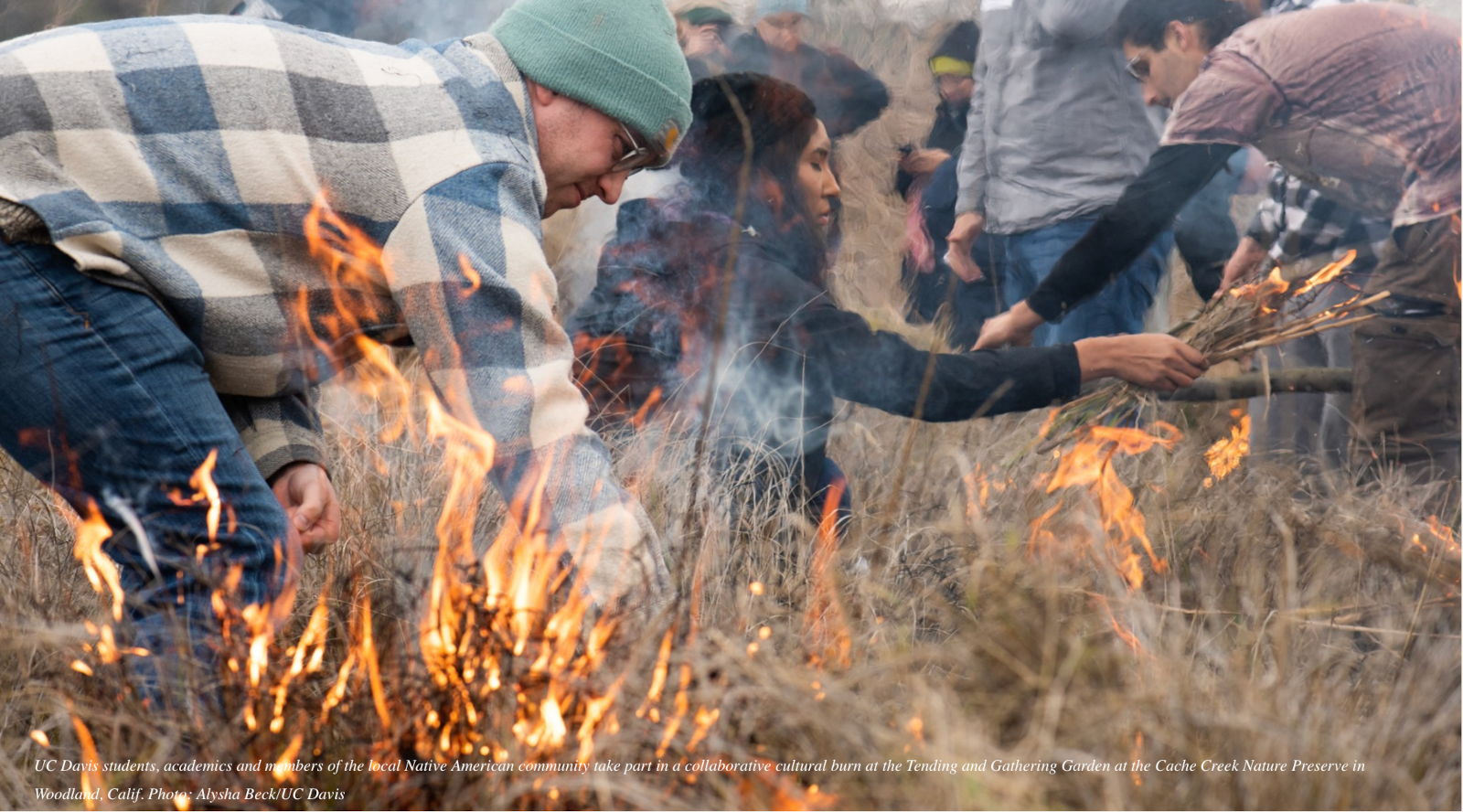
UC Davis students, academics and members of the local Native American community take part in a collaborative cultural burn at the Tending and Gathering Garden at the Cache Creek Nature Preserve in Woodland, Calif. Photo: Alysha Beck/UC Davis

Click the link to access the article on the Science Advance website (Wu, Et al.) Here’s the abstract:

Abstract

The increasing frequency of severe wildfires demands a shift in landscape management to mitigate their consequences. The role of managed, low-intensity fire as a driver of beneficial fuel treatment in fire-adapted ecosystems has drawn interest in both scientific and policy venues. Using a synthetic control approach to analyze 20 years of satellite-based fire activity data across 124,186 square kilometers of forests in California, we provide evidence that low-intensity fires substantially reduce the risk of future high-intensity fires. In conifer forests, the risk of high-intensity fire is reduced by 64.0% [95% confidence interval (CI): 41.2 to 77.9%] in areas recently burned at low intensity relative to comparable unburned areas, and protective effects last for at least 6 years (lower bound of one-sided 95% CI: 6 years). These findings support a policy transition from fire suppression to restoration, through increased use of prescribed fire, cultural burning, and managed wildfire, of a presuppression and precolonial fire regime in California.

Finding Solutions for Land Use Issues Facing Agriculture — #Colorado Water Trust

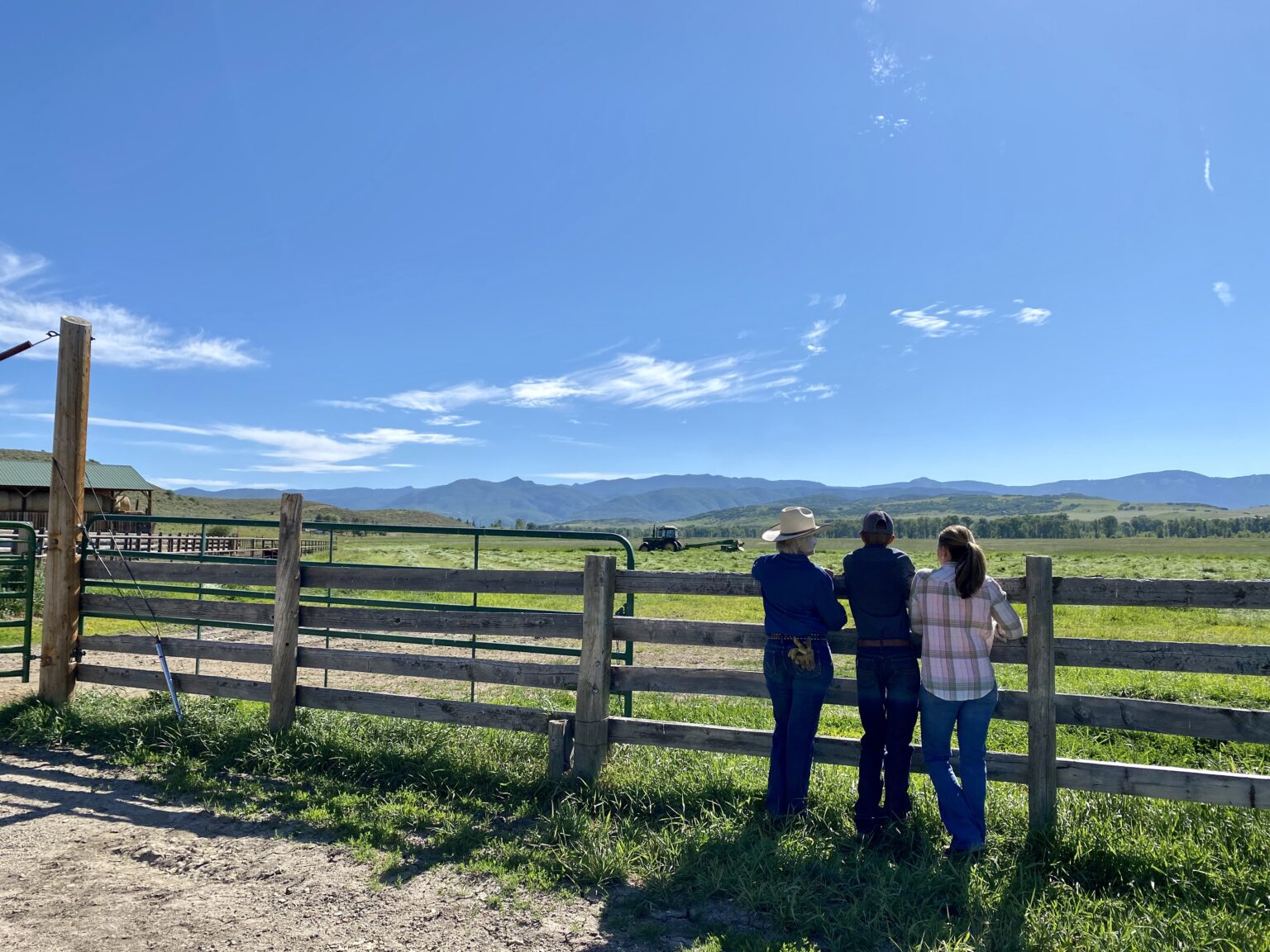
Three generations looking out over their farm. Photo credit: Colorado Water Trust

Click the link to read the article on the Colorado Water Trust website (Marsha Daughenbaugh):

Heroes are sometimes hard to find. However, in the world of protecting Coloradoโ€™s environment, culture and water resources, Colorado Water Trust is a hero.

I have served on the Board of Directors with Colorado Water Trust (CWT) for five years and am continually amazed with the projects, work ethics and involvement of the staff and fellow board members. The positive, โ€œcan-doโ€ attitude is proving to be a model of what can be done to protect and improve our stateโ€™s river flows.

I became aware of Colorado Water Trust before joining the Board because of their efforts to maintain sustainable water levels in the Yampa River. As a non-legal, non-engineering individual in the water world, it was amazing to me that a non-profit had the interest and resources to purchase water for a struggling river system. My first thought was โ€œthey really care about agricultureโ€ because this extra water meant ranchers along the Yampa River would be able to irrigate hay fields and pastures that were threatened with severe drought conditions. A search of CWTโ€™s website opened my eyes to their mission, and I became intrigued with other projects.

Years later, through a strange set of events, I was asked to become part of their Board. They were looking to expand their representation throughout the state with people involved in day-to-day agricultural water and land use. I became a candidate, was accepted, and was thrilled with the opportunity to become involved.

CWT is striving to find solutions for many of the land use challenges facing agriculture: water equity, adequate water quantity, protection of natural resources, retention of properties for future generations, and respect for people who provide food and fiber to our country and world. 

Much has been accomplished and there are many successful CWT stories. We have projects in process and potential proposals are being researched. There is much to doโ€”and Colorado Water Trust is a positive leader in the efforts.

Hero is defined as a person who is admired or idealized for courage, outstanding achievements, or noble qualities. CWT is an organization  that embodies that definition, and I am proud to serve on the Board.

Marsha Daughenbaugh
Board Member, Colorado Water Trust
Rancher, Steamboat Springs

#NewMexicoโ€™s Largest Fire Wrecked This Cityโ€™s Water Source: Era of megafires endangers #water supplies in American West — Circle of Blue

Hermit’s Peak Fire scar. Photo credit: Circle of Blue

Click the link to read the article on the Circle of Blue website (Brett Walton):

October 25, 2023

LAS VEGAS, New Mexico โ€” The largest fire in New Mexico history began with a disastrous government agency blunder. Its consequences for land and a small northern New Mexico cityโ€™s water were magnified by man-made climate change. 

In the first week of April 2022, the U.S. Forest Service was setting a controlled burn in Santa Fe National Forest near the rocky promontory of Hermitโ€™s Peak. A tool to thin overgrown forests, prescribed fires are intended to reduce the risk of hundred-thousand-acre megafires that have recently incinerated the American West.

Fanned by shifting winds blowing across dry timber, the deliberately ignited flames jumped containment lines. Then a dormant fire in nearby Calf Canyon reignited and merged with the blaze beneath Hermitโ€™s Peak. Combined, the fire grew into an uncontrolled juggernaut that burned 341,735 acres of public and private land over four months.

But the collision between government error and climate change that produced a colossal fire disaster in the forests of northern New Mexico didnโ€™t end once the flames were extinguished. The fire was a prelude to a water supply emergency that the city of Las Vegas still reckons with.

New Mexico Lakes, Rivers and Water Resources via Geology.com.

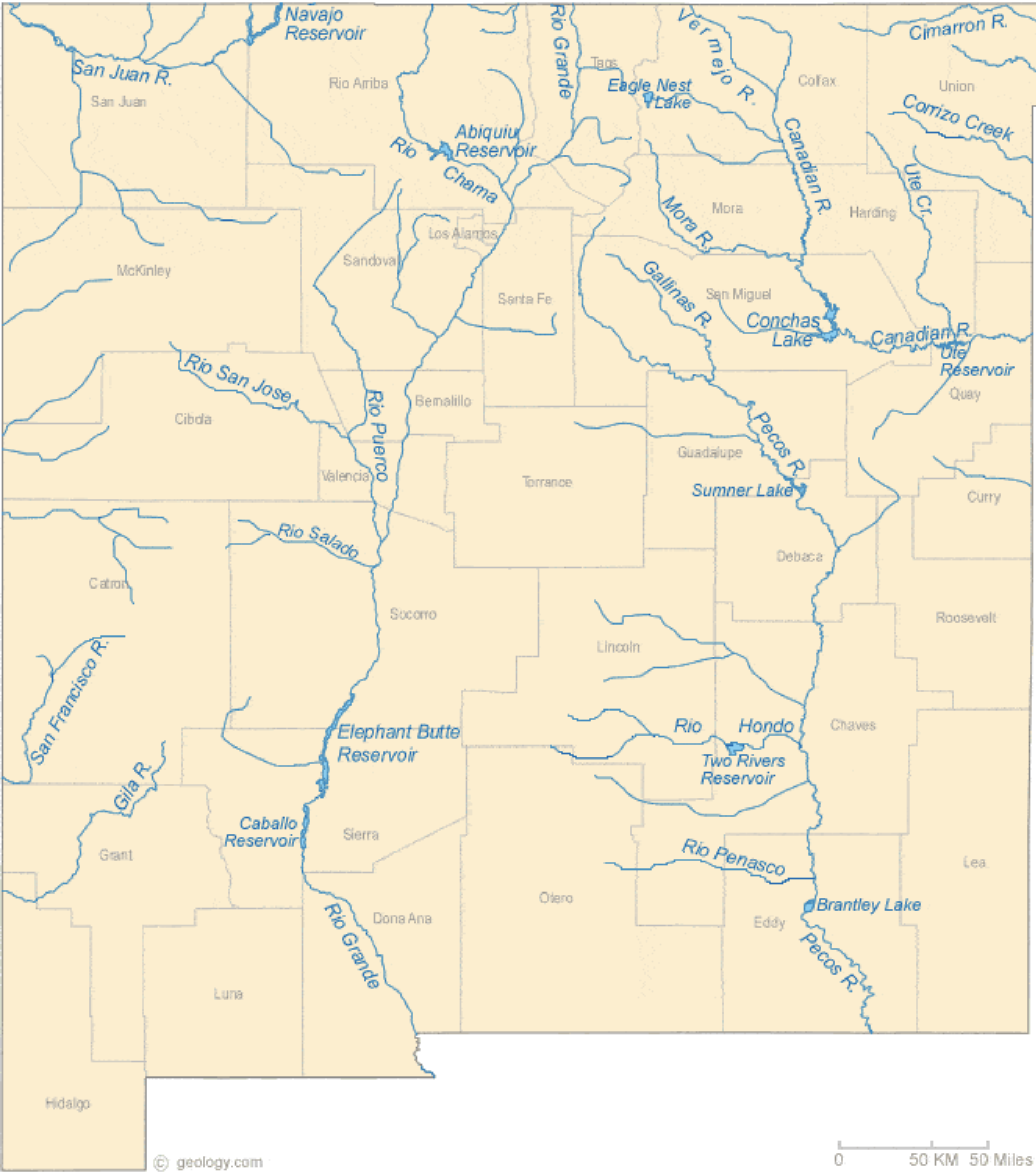
The fire burned the upper reaches of the Gallinas River watershed, the drinking water source for more than 17,000 people in and around Las Vegas. The fire had plenty of fuel โ€” the watershed hadnโ€™t had a major burn in more than a century. Ash and sediment flushed into the river from the bald slopes of the burn scar are undeniable threats to the cityโ€™s water treatment system.

By the end of August 2022, amid heavy monsoon rains, Las Vegas had a full-blown menace: a deteriorating river and just 21 days of water remaining in storage.

The trials of Las Vegas in the last year and a half are a sharp illustration of climate vulnerability in the American West, the domino effect of climate disasters, and the cost to taxpayers of repairing the damage. Similar cautionary tales dot the regionโ€™s map. Fires in recent years have destroyed water systems in Superior, Colorado; Detroit, Oregon; Malden, Washington; and in the California locales of Paradise, Santa Rosa, and the San Lorenzo Valley. 

The risk of high-severity fire is growing due to decades of fire suppression combined with a warming planet. A fuels buildup is being conditioned to burn. As the number of burned acres trends upwards, the U.S. Forest Service expects one-third of western U.S. watersheds to experience a doubling of post-fire sediment flows in rivers by mid-century. Towns downstream of flammable terrain are a lightning strike or undoused campfire away from being unable to provide reliable water service.

The seat of San Miguel County, Las Vegas is one of the poorest municipalities in one of the countryโ€™s poorest states. The cityโ€™s poverty rate is more than 30 percent. The Hermitโ€™s Peak/Calf Canyon fire so damaged the Gallinas watershed โ€“ charring the soil and increasing the sediment load in streams โ€“ that the drinking water treatment system cannot keep up. It must be replaced. 

Unable to afford such a large expense on its own, Las Vegas turned to Congress. Lawmakers were willing to open the public purse due to the federal governmentโ€™s role in causing the disaster. The Hermitโ€™s Peak/Calf Canyon Fire Assistance Act was included in a short-term budget extension that President Biden signed on September 30, 2022. It offered $2.5 billion to compensate property owners for fire damage. The final 2023 budget bill added $1.45 billion to the pot, bringing the total federal assistance for injuries and property losses to $3.95 billion. That includes $140 million to replace water treatment facilities damaged by the fire.

Las Vegas intends a complete overhaul: a new water treatment plant, equipment to remove sediment from river water before it enters the treatment facility, and a system to purify wastewater to reuse as drinking water. Full build-out might take seven years, but when all the pieces are in place it will be the largest capital project in the cityโ€™s history.

โ€œItโ€™s huge,โ€ Mayor Louie Trujillo told Circle of Blue about the federal assistance. โ€œWe could have never done it. We donโ€™t have the budget.โ€

The muddy Gallinas River just downstream from the water intake for Las Vegas, New Mexico. Photo ยฉ Brett Walton/Circle of Blue

A Chaotic Period

As soon as the fire started, Maria Gilvarry knew that her cityโ€™s water supply was in jeopardy.

โ€œThe watershed is our water system,โ€ Gilvarry, the Las Vegas Utilities Department director, told Circle of Blue. โ€œSo the more of the watershed that burns, the more that impacts our ability to treat and provide water.โ€

Even as the forests above Las Vegas smoldered, monsoon rains pummeled the burn scar last summer, delivering huge slugs of soil and debris into the Gallinas River. โ€œIt was just day after day of brown and black water,โ€ Gilvarry recalled. The sediment load was too thick for the 1970s-era treatment facility. Two of the cityโ€™s three reservoirs were incapacitated by the muck.

Forests are on the frontlines of climate disasters. Hotter temperatures are a hair dryer pointed at mountain slopes that bristle with dense stands of trees and understory growth.

Because forests provide a disproportionately large share of the nationโ€™s drinking water, what happens in the woods doesnโ€™t stay in the woods. Though forests are water sources in eastern ranges like the Appalachians and Catskills, the water-forest-fire relationship is especially acute in the drying American West. 

According to U.S. Forest Serviceย research, national forests in the western states account for just 19 percent of the land area. But they contribute 46 percent of the surface water supply. [ed. emphasis mine]

Amanda Hohner, an assistant professor at Montana State University, has spent a decade studying the effect of wildfire on municipal water systems. She says the places most vulnerable to wildfire contamination of drinking water sources share several characteristics. They are small systems with a single, surface water source โ€” usually a river or lake. Who fits that description? The city of Las Vegas, for one.

Las Vegas has a backup groundwater well for emergencies. But Gilvarry said that mechanical problems kept it offline last summer. When the fire started, the Gallinas River was the only option.

It was a chaotic, high-stress period. Evacuated from her property, Gilvarry was running the utility department while staying in a trailer on a co-workerโ€™s property. Her husband volunteered to fight the fire.

The utility crew shifted to round-the-clock operations at the water treatment plant, watching nervously as the fire approached โ€” but never overran โ€” the facility.

โ€œYoung staff members could look out and see flames,โ€ Gilvarry said. โ€œAnd, you know, they wanted to go home with their families at night. So part of my job was to counsel them and keep them safe, while also keeping water flowing for the community. And they did it โ€” those employees were awesome.โ€

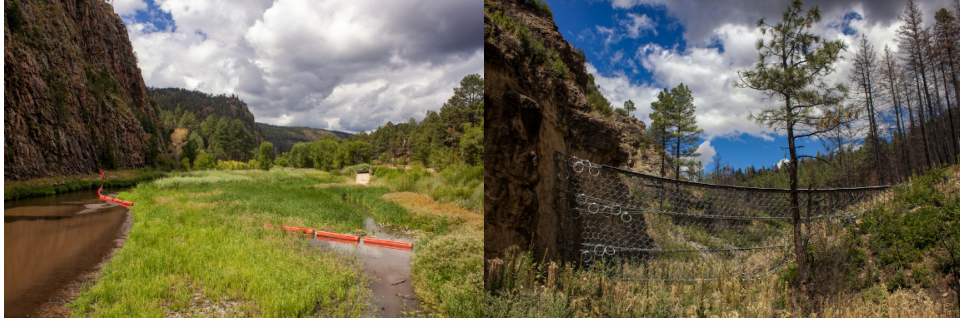
After the fire threat subsided, the task did not get easier. The Army Corps of Engineers installed 10-foot-tall steel Geobrugg netting across side canyons to catch large trees and boulders. The U.S. Geological Survey ramped up its stream monitoring. Straw-filled wattles, rock-filled gabions, berms, and barricades were deployed to prevent ash and sediment from entering the Gallinas. And yet it was not enough. Monsoon rains were severe, and sediment spiked. 

Trujillo and Gilvarry said that Las Vegas made it through the emergency period by focusing on conservation until a temporary state-funded sediment removal system could be installed at Storrie Lake, one of the storage reservoirs. Water department staff talked with restaurants and laundries. They asked car washes to voluntarily shut down. They identified pipe leaks and sealed them. Water was brought in via truck and bottle. Trujillo made frequent appearances on radio, in town hall meetings, at the senior center, at the community college.

โ€œThe citizens were ready to help us and they did,โ€ Trujillo said.

After the Hermitโ€™s Peak/Calf Canyon fire, booms and other structures were deployed in and around the Gallinas River to trap large debris and sediment. Photo ยฉ Brett Walton/Circle of Blue

โ€˜A Marathon, Not a Sprintโ€™

High-intensity fires do more than scorch trees and destroy homes. They upend the ecological function of entire watersheds. Burned forests become riddled with impairments. Shorn of trees, the land sheds more water than before. Though more water flows downstream, the costs of megafire outweigh this benefit. Without the forest buffer, floods are more destructive and more common. The land erodes easily. More nutrients are flushed downstream. 

For these reasons, the conservation groups American Rivers named the Gallinas one of the countryโ€™s most endangered rivers for 2023.

โ€œThe recovery of wildfire can be a little bit different from other natural disasters, in that the impacts can be cascading,โ€ explained Madelene McDonald, a water scientist with Denverโ€™s drinking water utility, which has also contended with the ripple effects of wildfires. โ€œTheyโ€™re not necessarily all at once, but itโ€™s those repetitive storm events that can cause the greatest impact.โ€

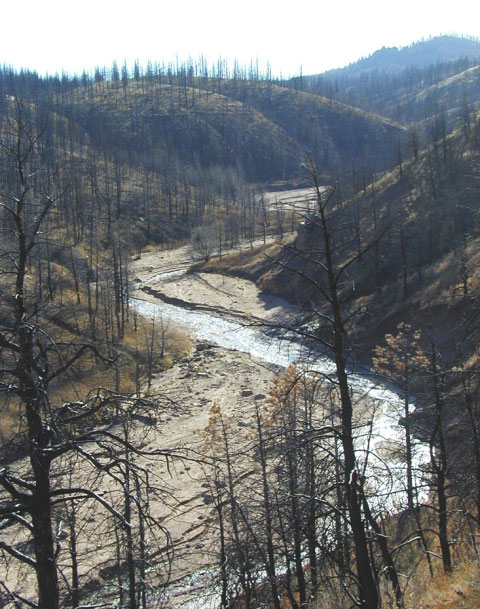
Subsequent rains following the Hayman Fire in 2002 led to erosion problems and silt buildup in the creeks surrounding the Cheesman Reservoir. Photo credit: Denver Water

It happens again and again in the western states. Nitrogen levels in Colorado streams spiked immediately after the 2002 Hayman fire and remained elevated for more than a decade. Nitrogen is a plant vitamin that feeds lake-befouling algal blooms. And thatโ€™s not the only contaminant. Carbon, organic matter, heavy metals, and sediment โ€” all accumulate in post-fire streams.

These chemical and physical changes to land and water are impairments that Gilvarry and her staff will face for years. More organic matter in the river can interfere with drinking water treatment. Disinfection chemicals like chlorine can produce toxic byproducts when too much carbon is in the source water. Sediment also clogs reservoirs and reduces water storage capacity.

The risks for Las Vegas were not unknown. The 1994 Gallinas River Watershed Plan, a joint effort with the city, U.S. Forest Service, and Tierra y Montes Soil and Water Conservation District, noted the need to reduce the fuel load in the watershed. The Viveash fire, in year 2000, burned mostly in the adjacent Cow Creek drainage. But some 820 acres of high-intensity fire did creep into the Gallinas watershed.

โ€œA fire of Viveashโ€™s magnitude occurring completely in the Gallinas Watershed would be disastrous for those who depend on Las Vegasโ€™ water quality,โ€ according to a March 2006 environmental assessment of prescribed fire that was prepared by the Santa Fe National Forest. That is exactly what happened with Hermitโ€™s Peak/Calf Canyon.

Though the summer of 2022 was a nightmare, the summer of 2023, in terms of water quality, was much better. Monsoon rains were a trickle, not a flood. Sediment levels have been manageable. All three reservoirs are functioning again.

A bright spot for Gilvarry is that Las Vegas itself did not burn. That means there are no contaminants to flush from drinking water pipes. Cities in California, Colorado, and Oregon had to deal with benzene and other volatile chemicalsย in their water distribution systemsย after fires burned within city limits.

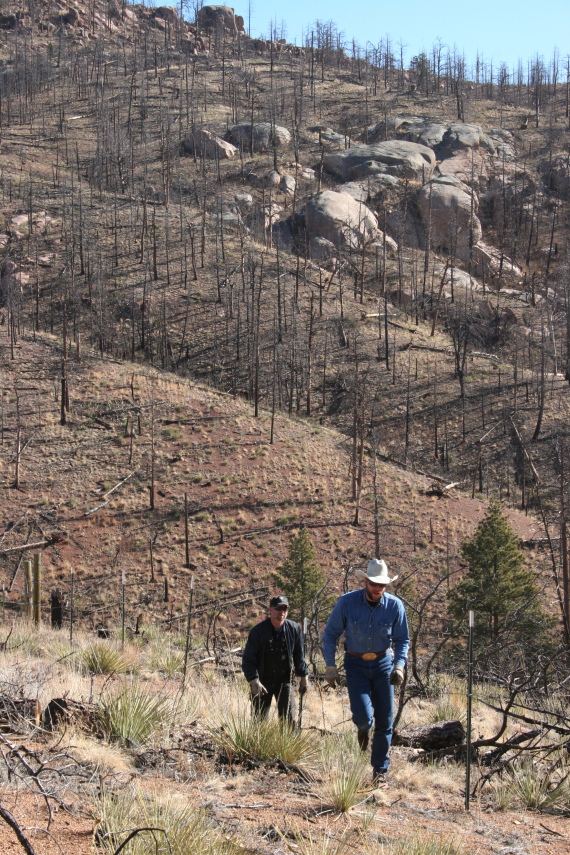
Slopes above Cheesman Reservoir after the Hayman fire photo credit Denver Water.

Denverโ€™s experience with wildfire is a template for Las Vegasโ€™s future. Both the Hayman fire and the 1996 Buffalo Creek fire burned the watersheds above Strontia Springs reservoir, a storage facility through which 80 percent of Denverโ€™s drinking water passes. Denver Water is still planting trees in the burn scar. Even today, more than two decades after the fires, McDonald sees sediment levels in the reservoir climb after heavy rain.

โ€œRecovery really is a marathon and not a sprint,โ€ McDonald said.

How can communities like Las Vegas better prepare for the race? McDonald is part of the Wildland Fire Mitigation and Management Commission, a group of more than 50 national and regional fire experts tasked by Congress to recommend policy solutions to the wildfire crisis.

In September the commission submitted its report. Among its many recommendations are five specific to drinking water. In essence, they focus on prevention and response. Before a fire, utilities need to map their vulnerabilities and reduce fire risk in their watersheds by thinning and incorporating low-intensity burns. Risk assessments could identify utilities in need of water infrastructure upgrades โ€“ those like Las Vegas that have a sole surface water source or do not have the equipment to handle higher sediment levels. Portland, Oregon, for instance, is building a $1.48 billion water filtration plant, scheduled for completion in 2027, that will filter sediment from post-wildfire erosion in its forested Bull Run watershed.

Congress also has a role, the commission argues. Lawmakers could authorize grant funding for these assessments and amend existing forest restoration programs so that they explicitly target funds to areas with critical sources of drinking water, even though those areas may be far from where people live. Lawmakers could expand the timeline for disaster-relief funding, acknowledging that fire can harm water quality for years.

Gilvarry points to funding as a major obstacle to protecting water for smaller, low-income areas. Even if they are aware of the risks, can they bear the adaptation costs? โ€œFor the community to have built a top-of-the-line system ten, twenty, thirty, forty years ago to plan for this would have been multi-million dollars, but it would have come from the residents here,โ€ Gilvarry said. โ€œAnd I donโ€™t think the residents could have afforded that.โ€

There are targeted research approaches, too. The Wildfire and Water Security project is investigating how drinking water systems can become more resilient to wildfire. Led by the U.S. Forest Serviceโ€™s Pacific Northwest Research Station along with academic partners at Montana State, Oregon State, and Washington State, the initiative is considering water treatment options, water quality after fires, and the economic implications of fire damage and risk-reduction costs.

At the state level, the Colorado Water Conservation Board assessed the vulnerability of drinking water infrastructure in the state to wildfire damage. Called Wildfire Ready Watersheds, the program is intended to enable community-level preparation before a fire.

Critical to the effort is the U.S. Forest Service. Armed with $3.5 billion from the two-year-old Infrastructure Investment and Jobs Act to prepare communities for wildfire, the land management agency has adopted a โ€œfireshedโ€ approach in responding to the wildfire crisis. Firesheds are forest and rangeland units of roughly 250,000 acres that, if wildfire erupted, could damage homes, watersheds, water supplies, utility lines, and other critical infrastructure.

The U.S. Forest Service did not make any staff available for an interview. โ€œThe agency collaborates in the development and implementation of source water protection plans,โ€ the press office wrote to Circle of Blue in an email. โ€œIn many places, we have agreements with local municipalities on how activities in the municipal watershed will be carried out to ensure the drinking water supply is protected; some of these agreements go back decades.โ€

A year after being pushed to the brink, Las Vegas residents celebrated the return of the Peopleโ€™s Faire, a community arts festival held on August 26 that had been absent for three years due to Covid and the fire.

Food and crafts vendors lined the sun-dappled lawn in front of the Monticello-inspired Carnegie Library, while children plotted their moves on a giant chess board.

Trujillo, in sunglasses and a stylish floral shirt, acted as unofficial host, greeting nearly everyone who passed by. For a moment, on a warm late-summer day, the water emergency was a memory and all was right in Las Vegas.

โ€œItโ€™s nice that we have all this,โ€ an older woman told him.ย 

Her friend, who was shopping for Christmas presents, agreed. โ€œWhen I lived in Oregon, we didnโ€™t have the parades,โ€ she said. โ€œWe didnโ€™t have all this stuff that we have here. So it is nice. This little town does a lot.โ€

This article was supported byย The Water Desk, an independent journalismย initiative based at the University of Coloradoย Boulderโ€™sย Center for Environmental Journalism.

Louie Trujillo is the mayor of Las Vegas. โ€œIt was couldnโ€™t have happened at a worst time,โ€ Trujillo said about the fire. โ€œWe were just surfacing from Covid. And then the fire broke out and then as a result of the fire, of course, it caused a water crisis in our community.โ€ Photo ยฉ Brett Walton/Circle of Blue

Sagebrush is suffering, even in #Wyoming. Saving whatโ€™s left is complicated — @WyoFile

Brome grass, treated with a herbicide, stands dead in the Kelly hayfields region of Grand Teton National Park. Next year, the land will be tilled and reseeded with a mix of native species that includes sagebrush. (Mike Koshmrl/WyoFile)

Click the link to read the article on the WyoFile website (Mike Koshmrl):

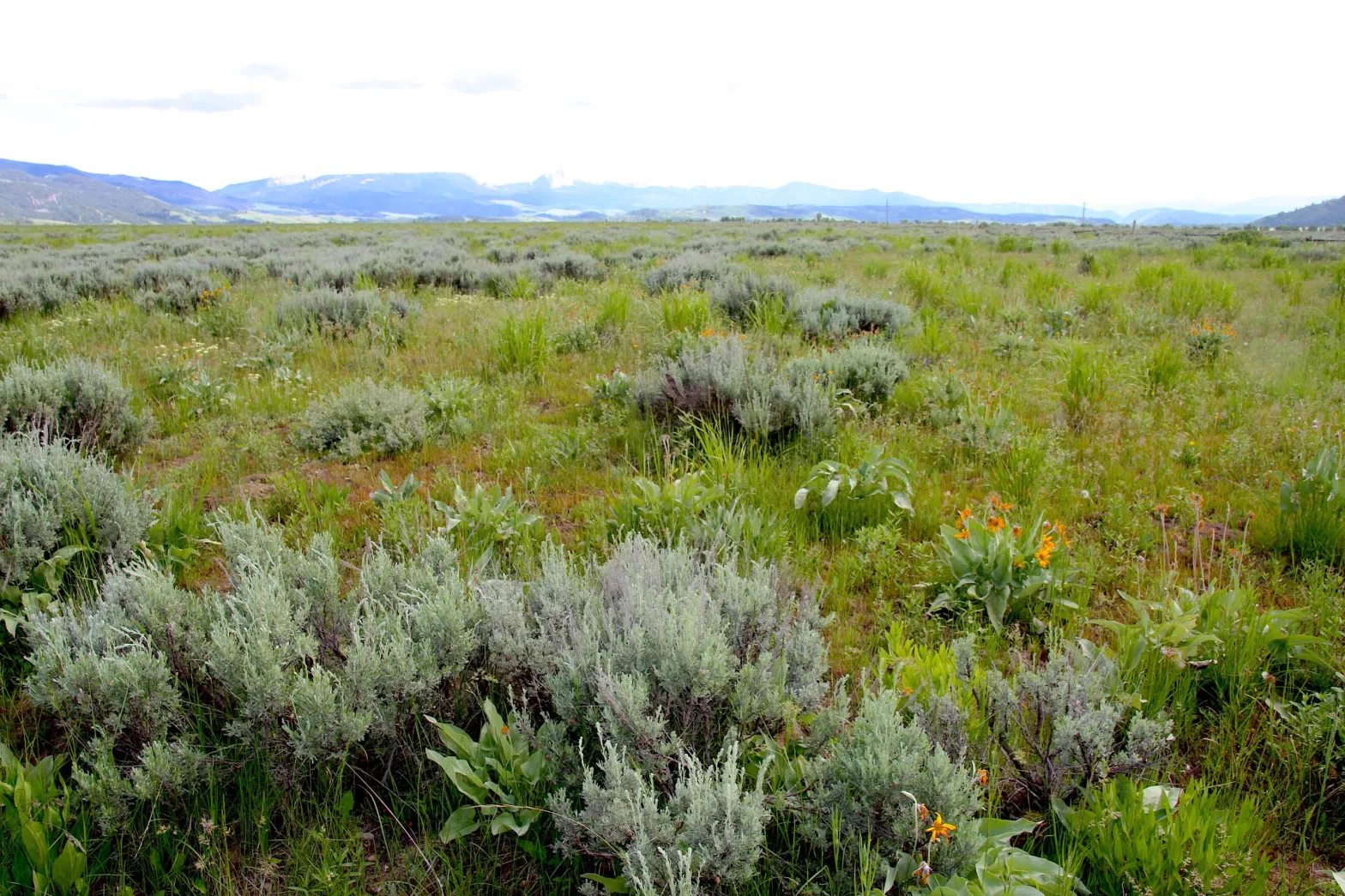
Sagebrush-steppe โ€” the ecological backbone for iconic species like pronghorn and sage grouse โ€” is in decline. How to restore it depends on where you are and who you ask.

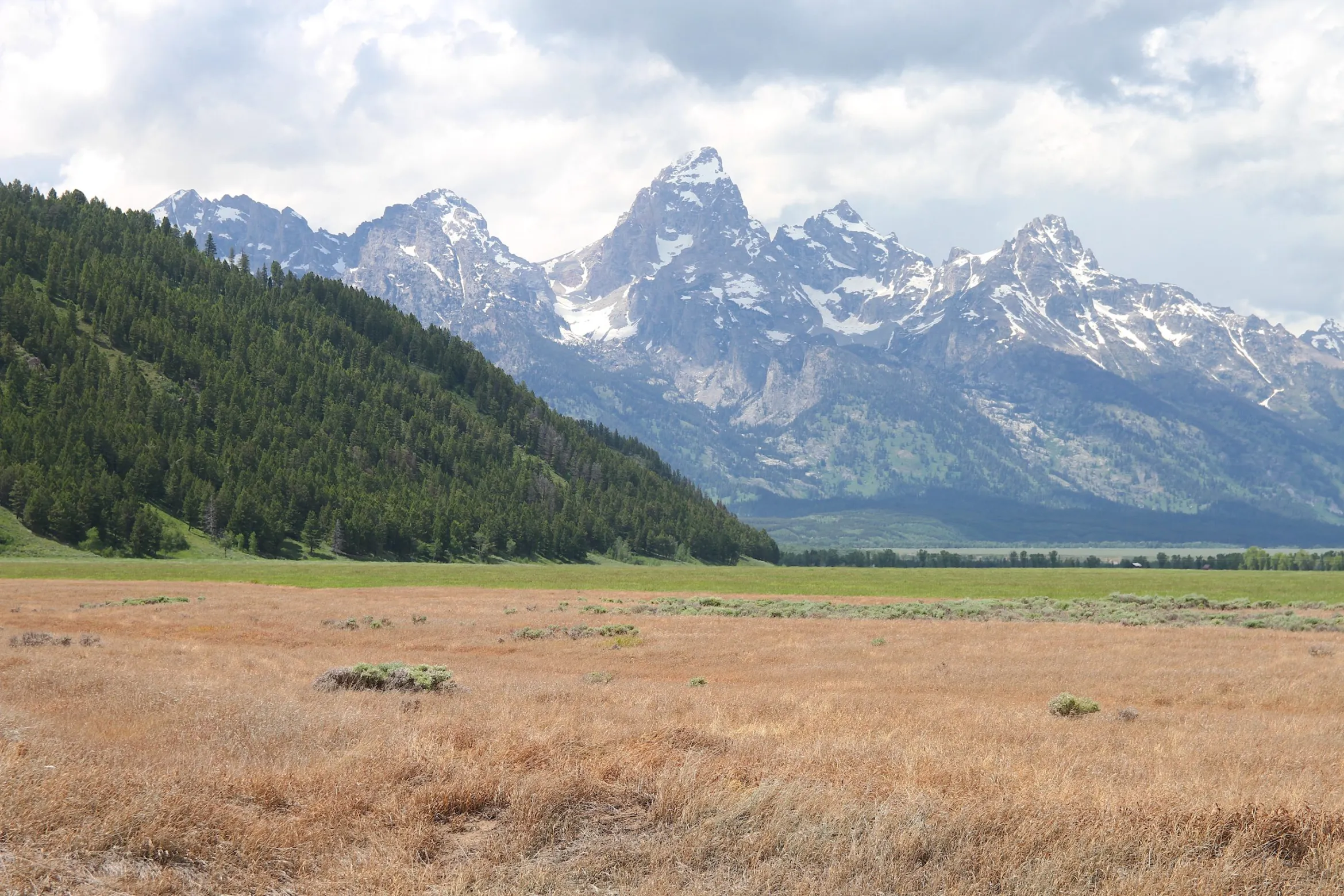
GRAND TETON NATIONAL PARKโ€”Laura Jones spoke from the grassy flats at the base of Blacktail Butte, a place where Mormon settlers made a go at homesteading the 6,600-foot-high heart of Jackson Hole nearly a century and a half ago. 

A vegetation ecologist for the National Park Service, Jones was showcasing Teton Parkโ€™s long-running effort to do away with one undesired relic of the homesteading era: non-native smooth brome grasses planted by the cattle-raising newcomers who plowed up this slice of the valley. Park managers are trying to go back to what was, reestablishing the natural sagebrush-steppe plant community that elk, bison and other native species evolved alongside over millennia.

Laura Jones, Grand Teton National Park vegetation ecologist, guides Second Gentleman Doug Emhoff through native sagebrush habitat in Grand Teton National Park in August 2023. (Angus M. Thuermer Jr./WyoFile)

Their task isnโ€™t straightforward or easy. 

โ€œThereโ€™s no blueprint,โ€ Jones told the Park Serviceโ€™s regional director, Kate Hammond, and a host of others for a Wyldlife for Tomorrow promotional field trip in late June. โ€œWhat works? We donโ€™t really know that. Some say, โ€˜Itโ€™s not rocket science โ€” itโ€™s harder.โ€™โ€ 

Weeks later, members of Wyomingโ€™s Sage Grouse Implementation Team, who met 70 miles away in Pinedale, spoke confidently about developing a โ€œwhite paper roadmapโ€ for successful sagebrush restoration. The process, team leader Bob Budd said, starts with ensuring healthy soils, reestablishing perennial flowers and grasses and then waiting patiently for sagebrush and other native shrubs to reemerge.ย 

Bob Budd, who chairs Wyomingโ€™s Sage Grouse Implementation Team, addresses a Sublette County audience during a July 2023 meeting to gather public feedback on sage grouse core area revisions. (Mike Koshmrl/WyoFile)

โ€œThat will be a game-changer for us, because now weโ€™re looking at areas of the state where we can go in and do restoration,โ€ Budd told residents who gathered for a sage grouse-focused meeting. โ€œI think [the blueprint] is going to be a big step forward for us as far as reclamation and restoration.โ€ 

Which is it? Harder than rocket science or a simple process that requires patience? WyoFile asked around and found that land managers in Wyoming have had markedly different experiences attempting to bring back sagebrush-steppe where the embattled ecosystem has been degraded or lost, whether it was from a historic cattle pasture or expansive natural gas fields. 

In the uninterrupted sagebrush sea of the Green River Basin, which remains dominated by native species, reviving tracts of sage lost to well pads and other industrial activity has come somewhat easier than it has in Teton Park, where millions of annual visitors potentially fling nonnative seeds from mud caked to their tires. Regardless, itโ€™s unlikely that sagebrush restoration is the silver bullet solution to holding the line of a biome thatโ€™s in decline,ย along with its inhabitants.

Sagebrush-steppe within 13 western states is disappearing and degrading at a rate of 1.3 million acres a year, recent research has found. Thereโ€™s no better place to preserve whatโ€™s left than Wyoming.

โ€œThe core of the biome is Wyoming,โ€ said Matt Cahill, who directs The Nature Conservancyโ€™s sagebrush sea program. โ€œIt has the largest, most intact, least disturbed expanse of productive, resilient sagebrush sea, period.โ€ย 

Sagebrush-dominated landscapes, home to 350 species of conservation concern, are declining in the West at a rate of 1.3 million acres per year. Wyoming is a stronghold for remaining sagebrush. (U.S. Fish and Wildlife Service)

Wyomingโ€™s prized, still-uncompromised sagebrush expanse could benefit from more โ€œpreventative restoration,โ€ he said. That includes measures like controlling the spread of cheatgrass. โ€œWeโ€™ve got to get comfortable with the uncomfortable story of using chemicals to protect biodiversity,โ€ Cahill said. 

But Cahill was less convinced that โ€œintensive traditional restorationโ€ โ€” putting seeds in the ground โ€” is so important today in Wyoming on the landscape level. โ€œThere isnโ€™t a huge footprint in Wyoming right now that needs those kinds of tools,โ€ he said, โ€œbecause there arenโ€™t big expanses that are fully degraded.โ€ 

Saving unsullied sweeps of sagebrush from development and forces like wildfire is the cornerstone of a widely accepted conservation strategy for the biome, dubbed โ€œDefend the core, grow the core.โ€

The Teton experience

While Wyomingโ€™s sagebrush range is impressively intact, there are places where the biome was decimated or retreated, like in Grand Teton National Park. Along the eastern edge of the park, roughly 4,500 acres โ€” about 7 square miles โ€” of sagebrush was eliminated and replaced with non-native pasture grass a century or so ago. 

Teton Park ecologists have made progress scrubbing out brome and other exotic plants from the Kelly hayfields, as that part of the park is known. But the process has proven costly, long-lasting, labor-intensive and full of ecological wrinkles. Since making hayfield restoration a goal in aย 2007 bison and elk management plan, roughly 1,400 acres have been reseeded. That means about a third of the project has been completed some 16 years into the effort, putting it on pace for a half-century completion time.

The fence line separating sagebrush and historic pastureland marks the north end of of the state of Wyomingโ€™s school trust parcel in Grand Teton National Park, a tract known as the Kelly Parcel. (Mike Koshmrl/WyoFile)

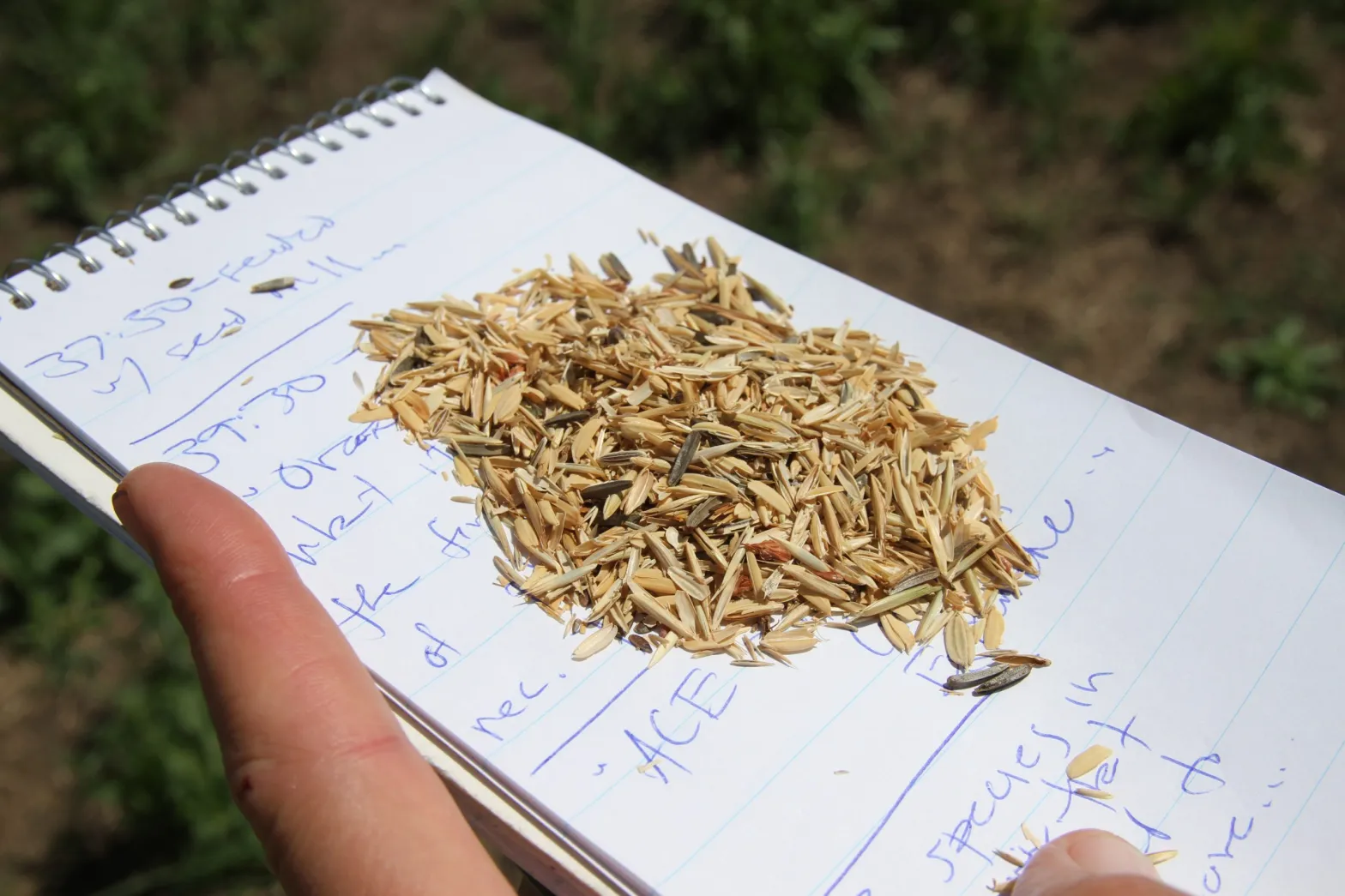
Thereโ€™s no one reason why Teton Parkโ€™s sagebrush restoration efforts have been so slow going. Typically, between 50 and 100 acres are being restored annually. But one constraining factor is the availability of native seeds. Thereโ€™s no commercial market for buying native forb, grass and shrub seeds, and even if there was, Jones isnโ€™t convinced itโ€™d be wise to bring in seedstock from outside the region.

โ€œWe take our seeds, we hand collect it, we grow it out just for us,โ€ Jones said. โ€œItโ€™s expensive.โ€

Grand Teton National Park harvests by hand the native seed mix used to replant pastureland thatโ€™s being slowly converted to native sagebrush-steppe. (Mike Koshmrl/WyoFile)

Teton Park does get outside help on the costs. The Wyldife for Tomorrow program โ€” which lets businesses chip in to support environmental causes โ€” has chipped in about $25,000, according to its website. And the Grand Teton National Park Foundation has been a steady supporter, partnering on the project since 2016 and providing  nearly $1 million to date, communications manager Maddy Johnson said.

Still, the most recent annual budget for the restoration program eclipsed $350,000, meaning itโ€™s running tens of thousands of dollars per acre to bring sagebrush back in Grand Teton Park. 

However slowly, the remnant pastureland is gaining more semblance to what would have otherwise grown there, if not for the cattle-rearing residents of the parkโ€™s ghost town, once called Grosvont.

โ€œItโ€™s really difficult to do, but at the same time these fields of brome arenโ€™t going to replace themselves,โ€ said University of Wyoming botany professor Dan Laughlin, whoโ€™s experimenting with tilling and other techniques to try to get more sagebrush established.ย 

Where Jones and Laughlin stood at the parkโ€™s โ€œSlough South 1โ€ restoration site, brome had been killed off with a herbicide, the ground tilled and the soil subsequently reseeded with the parkโ€™s native seed mix.

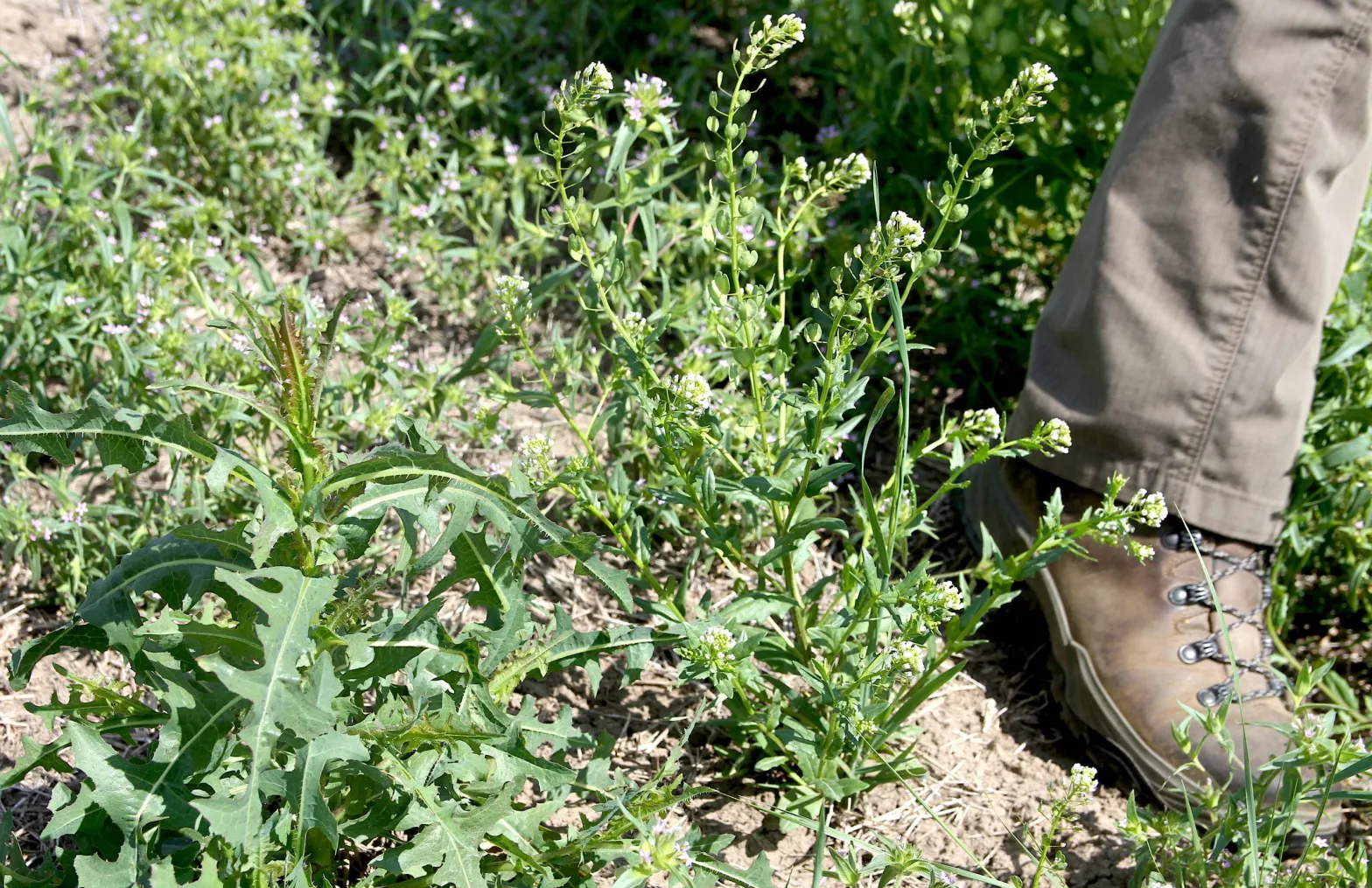
Oftentimes the first plants that emerge from treated, plowed and seeded hayfields in Grand Teton National Park arenโ€™t the desired species. Instead, non-native plants like prickly lettuce and pennycress can dominate during the early years of sagebrush restoration. (Mike Koshmrl/WyoFile)

In places the native species were indeed coming back, but mostly the bare ground was sprouting with non-native plants that werenโ€™t in the Park Serviceโ€™s seed mix, like prickly lettuce and pennycress. Those โ€œlow priorityโ€ species arenโ€™t particularly noxious, and theyโ€™re largely left to live and even dominate plots in the early years of restoration.

โ€œTheyโ€™re so interspersed that youโ€™d be hard pressed to treat them,โ€ Jones said. โ€œThat would be expected โ€” that youโ€™re going to have these โ€˜first arrivers.โ€™โ€

Meanwhile in gas country

The spread of unwanted plants that arenโ€™t in the seed mix has been less of a factor in the Green River basin, a sagebrush sea stronghold where restoration goes hand-in-hand with natural gas extraction. 

โ€œWeโ€™ve been very successful in the Sublette County gas fields at getting sagebrush reestablished,โ€ said Mike Curran, an ecologist whoโ€™s worked with Jonah Energy and other companies on restoration research. โ€œThe good thing there is we donโ€™t really have a lot of non-natives in that system to begin with.โ€

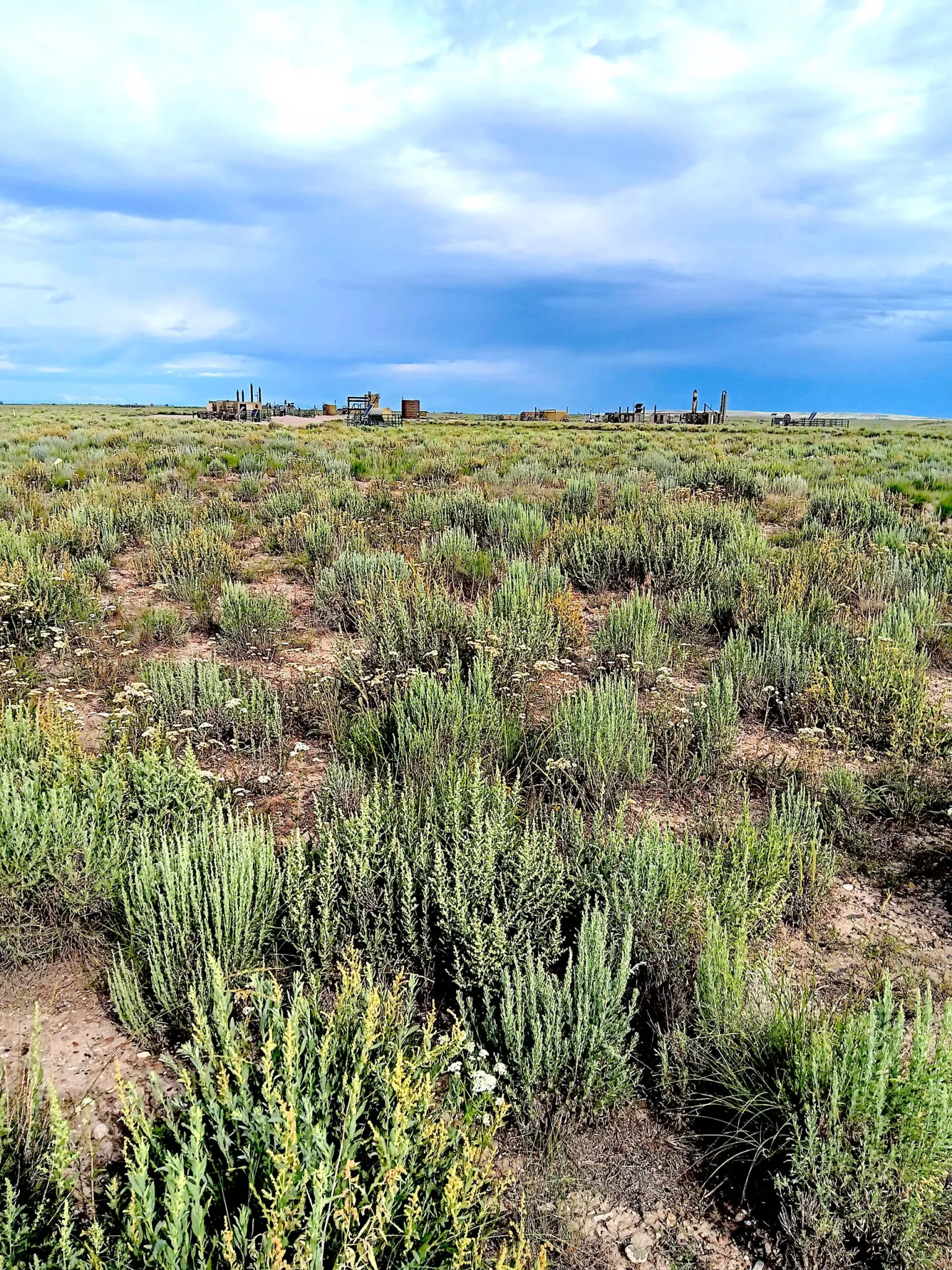
Reclamation teams have had success reestablishing sagebrush on gas pads in the Green River basin, like this site pictured. (Mike Curran)

Curran, whoโ€™s studied how insect communities have responded to reclaimed gas pads, said that industry reclamation teams have found success steering early successional plant communities, especially with one native flower called Rocky Mountain bee plant. Those flowers, which thrive in disturbed soil, fade as sagebrush sprouts and matures โ€” which has happened relatively rapidly in places like the Jonah Fieldโ€™s reclaimed pads, he said.

โ€œWeโ€™ll see sagebrush come up in year one, year two, but itโ€™s year three, four, five when you actually see it put on height and mass,โ€ Curran said. โ€œBy year seven, eight, we have pretty good stands.โ€ 

About 91% of the plant cover in reclaimed swaths of the Jonah Field is taken up by native species, Curran said. Another 8% are non-natives that arenโ€™t particularly concerning, like Russian thistle, he said, and the remaining percent or so are โ€œinvasive weeds.โ€ย 

โ€œSo thatโ€™s pretty darn good, I think,โ€ Curran said.ย 

Tracts of unbroken sagebrush in the Green River basin, pictured, are part of the core of the biome. Restoration efforts have gone relatively smoothly in areas like Sublette County where non-native species havenโ€™t gained major ground. (Mike Koshmrl/WyoFile)

Curran, whoโ€™s spearheading the in-the-works restoration white paper for the Wyoming Sage Grouse Implementation Team, is optimistic that sagebrush restoration is a tool that can be deployed widely to help hold the line of a declining ecosystem. About half of the shrubland biome has been eliminated from North America since the European settlement era, and roughly 14 million acres of what remains has been lost in the last quarter century, according to a 2022 multi-agency research report

โ€œThe Green River basin, that is one of the harshest environments in the Lower 48,โ€ Curran said. โ€œWeโ€™re getting less than 50 frost-free days a year and 4 to 7 inches of precip on average down in the Jonah [Field]. If weโ€™re able to do it there, I feel like it should be easier to do it in places like Colorado and Nevada, which are at a lower latitude and have longer growing seasons.โ€ 

Room for improvement

Wyoming has also been the setting for ongoing experiments intended to optimize sagebrush restoration. Maggie Eshleman, a restoration scientist for The Nature Conservancyโ€™s Wyoming office, has spent years working with the Wyoming Department of Environmental Quality and Bureau of Land Management on seed technologies and habitat modifications to improve sagebrush establishment. 

โ€œThereโ€™s a bunch of areas throughout Wyoming that have been reclaimed, and generally speaking grass comes back pretty well, and sagebrush hasnโ€™t,โ€ Eshleman said. โ€œAre there ways we can make grass less competitive in those areas so that we can get sagebrush to establish?โ€ย 

Sagebrush seeds are โ€œsuper small, really weak, and love to fail,โ€ said Cahill, Eshlemanโ€™s Nature Conservancy colleague. 

And what Eshleman and others are trying to do is give sagebrush seeds a leg up in the race to establish amid grasses and weeds in soils with limited water and nutrients. They are experimenting with packaging small amounts of fertilizer with small amounts of seeds, ideally so that the added nutrients benefit the sagebrush plant and its root systems without stimulating weeds. It worked in the lab, but less so in their field sites: reclaimed mine land in the Gas Hills east of Riverton.

The trouble has been getting sagebrush seeds to emerge from their fertilizer-based pellet encasement: โ€œSagebrush needs light to germinate, and when they do germinate, they donโ€™t have a lot of push-power to break out of anything,โ€ Eshleman said. 

Sagebrush seeds germinated better when seeds were bathed in a thin fertilizer film, she said, but that method couldnโ€™t really deliver enough nutrients to stimulate germination and emergence.ย 

Sagebrush has succesfully matured in one of Grand Teton National Parkโ€™s oldest reclamation sites, pictured. (Mike Koshmrl/WyoFile)

The latest method being tested uses โ€œfertilizer balls.โ€ Seeds are essentially painted onto the outside, so they donโ€™t have to break out of anything and have access to light. Results are pending: the sagebrush seed-coated balls are going into the soil this fall. 

โ€œWeโ€™ll have some results next summer when we go on our hands and knees and look at tiny sagebrush seedlings that could be there or not,โ€ Eshleman said. โ€œBut it could be that next spring and summer there is a horrible drought and then you donโ€™t have seedlings.โ€ 

Then theyโ€™ll have to try again.

Whatever Eshleman and her partners devise could someday help improve restoration outcomes in Grand Teton National Park or any number of places in Wyoming. Although Cahill is emphasizing preservation and โ€œpreventative restorationโ€ to ensure the persistence of Wyoming sagebrush โ€” the โ€œcore of the biomeโ€ โ€” he said there are places where more intensive, traditional restoration could play an important role. Sagebrush resources in the Bighorn Basin, for example, are in rough shape and under siege by cheatgrass. 

โ€œIt looks like Nevada,โ€ Cahill said. โ€œPeople arenโ€™t necessarily thinking proactively about what is the risk to the rest of the state? What is the risk to Pinedale, or the Bear River valley?ย 

Itโ€™s worthwhile, Cahill said, to think about putting seeds in the ground in the โ€œconnecting corridorsโ€ that bridge and buffer compromised areas like the Bighorn Basin from the sagebrush-steppe biomeโ€™s intact core. Potential areas to consider, he said, include the Atlantic Rim and the Owl Creek Mountains. 

โ€œYouโ€™re going to put a ton of money on a few acres,โ€ Cahill said. โ€œSo make sure that those [restoration] acres are just absolutely critical to a much bigger landscape strategy. I think Wyoming has those options in spades.โ€

Leaders sprout from a sagebrush plant on the flats east of Washakie Reservoir on the Wind River Indian Reservation. (Mike Koshmrl/WyoFile)

Coca-Cola, Upper #ColoradoRiver irrigators, water agencies join forces in Grand County — Fresh Water News #COriver #aridification

Colorado fly fishing, whitewater and other water-related recreational pursuits contribute significantly to Colorado’s $34.8 billion recreational economy. Photo courtesy of the Winter Park Convention and Visitors Bureau

Click the link to read the article on the Water Education Colorado website (Jerd Smith):

Coca-Cola, several Colorado nonprofits, as well as Denver Water, the Colorado River District, and a group of irrigators have launched a new instream flow effort to help keep the scenic headwaters of the Fraser River wetter in the fall, aiding fish and habitat in the stream near Winter Park.

The Colorado Water Trust is a nonprofit that works to match distressed streams with water right holders interested in selling, donating or leasing water that can be used to boost streamflows. It spearheaded the Fraserโ€™s 10-year instream flow agreement. Participants also include Learning By Doing, an East Slope-West Slope partnership that works on local stream restoration projects

Coca-Cola Corporation, as well as one of its bottlers and distributors, Swire Coca-Cola, have pledged $24,000 annually to pay for the water and the restoration work, according to Tony LaGreca, Colorado Water Trustโ€™s project manager for the Fraser program.

Erica Hansen, external communications manager for Swire, said the Coca-Cola companies have 35 environmental water projects across a 13-state region, including 10 in Colorado that are completed, underway or pending.

โ€œWe operate in several states that are high drought risk,โ€ Hansen said. โ€œAny drop we use weโ€™re putting back into nature. The Fraser River project is one of the ways we do that.โ€

LaGreca said the new initiative represents an important step forward in restorative water management in Grand County and Colorado.

โ€œThere was a time,โ€ he said, โ€œwhen we did not have irrigation companies coming to us to find ways to put water into the river for fish. But more and more we are having successful partnerships to increase flows as part of a larger water management strategy.โ€

Map of the Colorado-Big Thompson Project via Northern Water
Denver Water’s entire collection system. Image credit: Denver Water.

Grand County is home to the headwaters of the Colorado River and the Fraser River, one of its tributaries. Both waterways are heavily diverted to the Front Range to serve residents and farms from Denver up to Fort Collins and out to the Nebraska border.

Over the years, as droughts have become more common and climate change has sapped flows, Grand Countyโ€™s rivers have become increasingly stressed.

To help solve the problems, two of the largest transmountain diverters, Denver Water and Northern Water, among others, signed on to the Colorado River Cooperative Agreement in 2013. The agreement gives the water agencies some leeway to develop new water supplies to which they have water rights, while also funding efforts to keep rivers and wetlands in the headwaters region healthier, and to ensure mountain tourist economies have enough water to thrive.

Mike Holmes is president of the Grand County Irrigated Land Company. As part of the restorative work underway, he and his shareholders agreed to sell a portion of their water stored in a small reservoir to benefit the river. Each year the program operates, the ranchers will deliver about 50 acre-feet of water. An acre-foot equals nearly 326,000 gallons of water, the amount used by two to three average households in a year. Holmes said the growers have been working to improve the efficiency of their irrigation systems, freeing up water for the river.

โ€œThis year, with the abundant snowpack, we had the water available, and so we worked with the water trust to execute a lease and then went through a review by the Colorado River District. Itโ€™s a pretty streamlined process,โ€ Holmes said.

Though 50 acre-feet is not a lot of water, it should make a difference in the Upper Fraser, where Denver is allowed to divert even when the riverโ€™s fall flows are already shrinking, LaGreca said.

Denver Waterโ€™s role in the restoration effort is to allow the Colorado Water Trust to use the utilityโ€™s collection system to put water into distressed stream segments in the headwaters. In turn the irrigators give Denver Water access to water stored in Meadow Creek Reservoir, farther downstream, according to Nathan Elder, Denver Waterโ€™s water supply manager.

Work on the program for 2023 wrapped up earlier this month and will begin again next September.

Scott McCaulou is director of the corporate water stewardship program at Business for Water Stewardship. The Portland-based nonprofit is funded by the Bonneville Environmental Foundation and helps connects corporations to environmental water restoration initiatives.

โ€œThis first year of the agreement between the [irrigators] and the water trust is a small step but the hope is that it grows into a longer-term partnership and helps develop more flexible water management tools in the Upper Colorado,โ€ McCaulou said. โ€œWe see it as a good contribution to something that could grow if it is successful this year.โ€

Colorado River “Beginnings”. Photo: Brent Gardner-Smith/Aspen Journalism

What the extreme fire seasons of 1910 and 2020 โ€“ and 2,500 years of forest history โ€“ tell us about the future of wildfires in theย West

Rocky Mountain fires leave telltale ash layers in nearby lakes like this one. Philip Higuera

Kyra Clark-Wolf, University of Colorado Boulder and Philip Higuera, University of Montana

Strong winds blew across mountain slopes after a record-setting warm, dry summer. Small fires began to blow up into huge conflagrations. Towns in crisis scrambled to escape as fires bore down.

This could describe any number of recent events, in places as disparate as Colorado, California, Canada and Hawaii. But this fire disaster happened over 110 years ago in the Northern Rocky Mountains of Idaho and Montana.

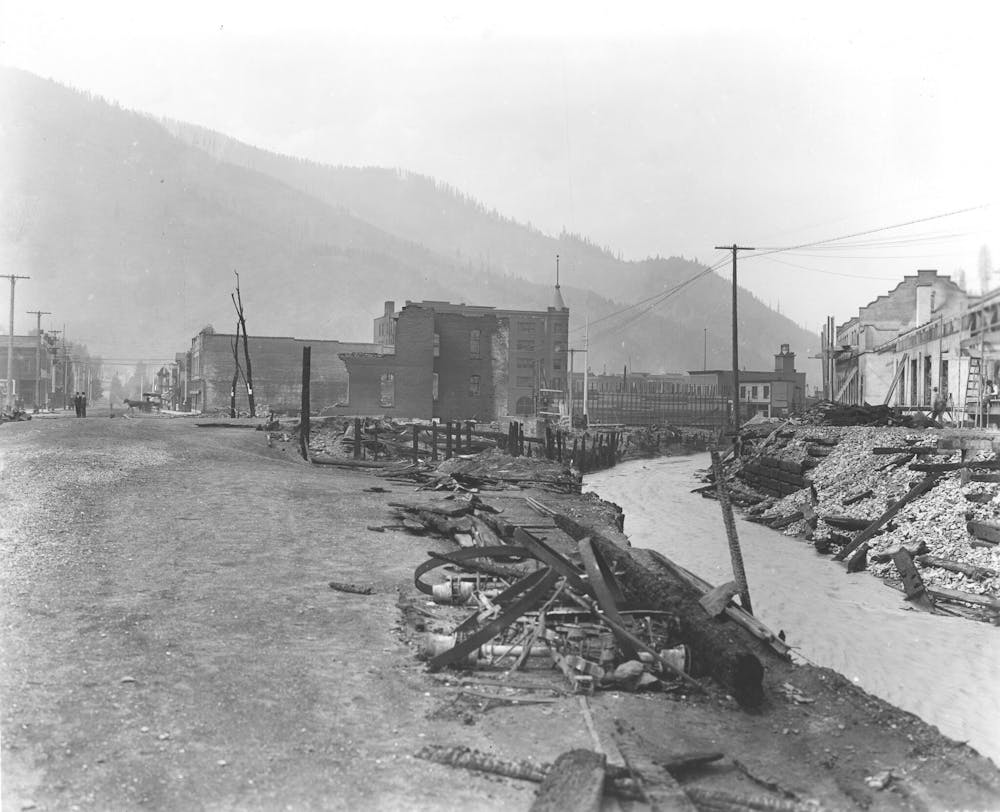
The โ€œBig Burnโ€ of 1910 still holds the record for the largest fire season in the Northern Rockies. Hundreds of fires burned over 3 million acres โ€“ roughly the size of Connecticut โ€“ most in just two days. The fires destroyed towns, killed 86 people and galvanized public policies committed to putting out every fire.

A black and white photo from 1910 shows rail lines and the burned shells of buildings
Many residents of Wallace, Idaho, fled on trains ahead of the 1910 blaze. Volunteers who stayed saved part of the town, but about a third of it burned. R.H. McKay/U.S. Forest Service archive, CC BY

Today, as the climate warms, fire seasons like in 1910 are becoming more likely. The 2020 fire season was an example. But are extreme fire seasons like these really that unusual in the context of history? And, when fire activity begins to surpass anything experienced in thousands of years โ€“ as research suggests is happening in the Southern Rockies โ€“ what will happen to the forests?

As paleoecologists, we study how and why ecosystems changed in the past. In a multiyear project, highlighted in two new publications, we tracked how often forest fires occurred in high-elevation forests in the Rocky Mountains over the past 2,500 years, how those fires varied with the climate and how they affected ecosystems. This long view provides both hopeful and concerning lessons for making sense of todayโ€™s extreme fire events and impacts on forests.

Lakes record history going back millennia

When a high-elevation forest burns, fires consume tree needles and small branches, killing most trees and lofting charcoal in the air. Some of that charcoal lands on lakes and sinks to the bottom, where it is preserved in layers as sediment accumulates.

After the fire, trees regrow and also leave evidence of their existence in the form of pollen grains that fall on the lake and sink to the bottom.

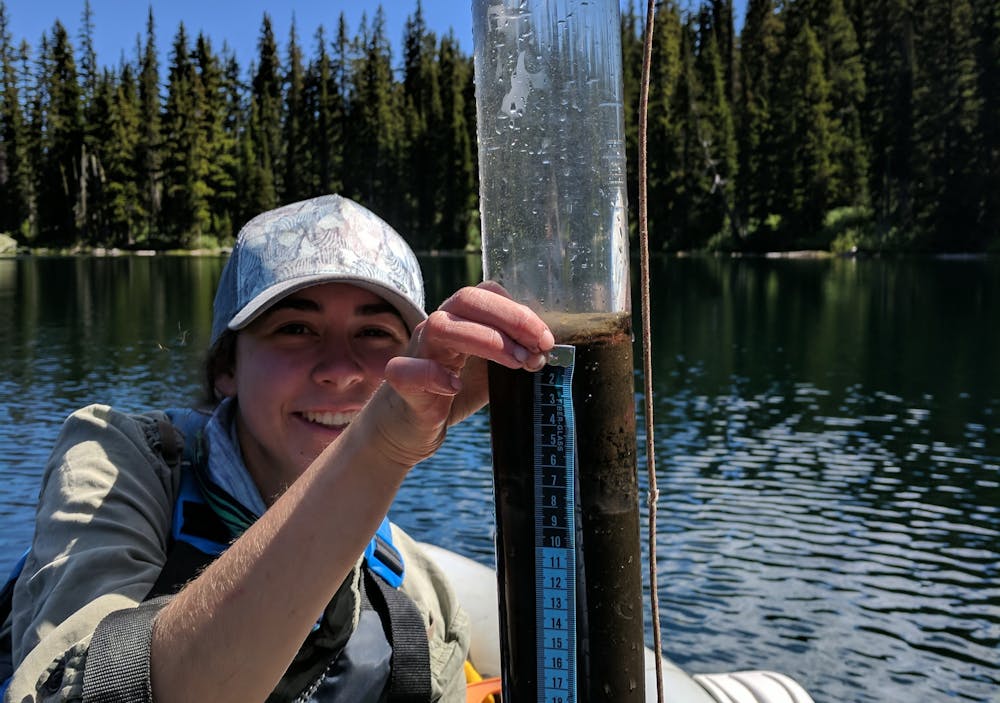
By extracting a tube of those lake sediments, like a straw pushed into a layer cake from above, we were able to measure the amounts of charcoal and pollen in each layer and reconstruct the history of fire and forest recovery around a dozen lakes across the footprint of the 1910 fires.

A woman sitting an inflatable boat, wearing a life jacket, holds a long tube filed with lake bottom sediment.
Author Kyra Clark-Wolf holds a sediment core pulled from a lake containing evidence of fires over thousands of years. Philip Higuera
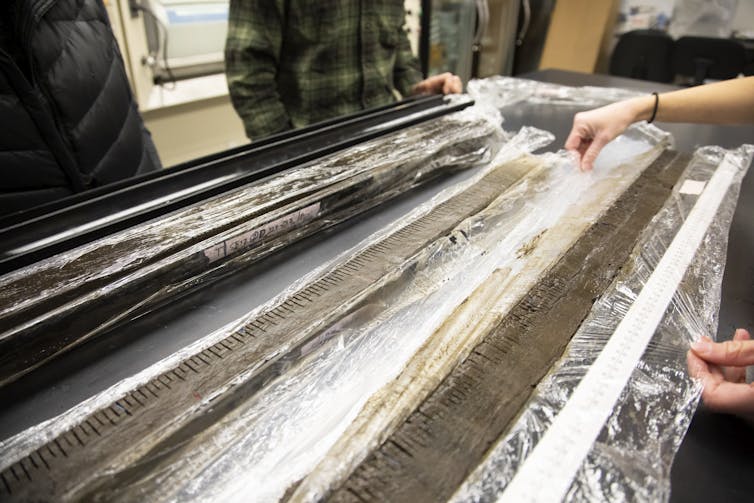
Long tubes of lake floor sediment are opened on a table.
Researchers at the University of Montana examine a sediment core from a high-elevation lake in the Rocky Mountains. Each core is sliced into half-centimeter sections, reflecting around 10 years each, and variations in charcoal within the core are used to reconstruct a timeline of past wildfires. University of Montana

Lessons from Rockiesโ€™ long history with fire

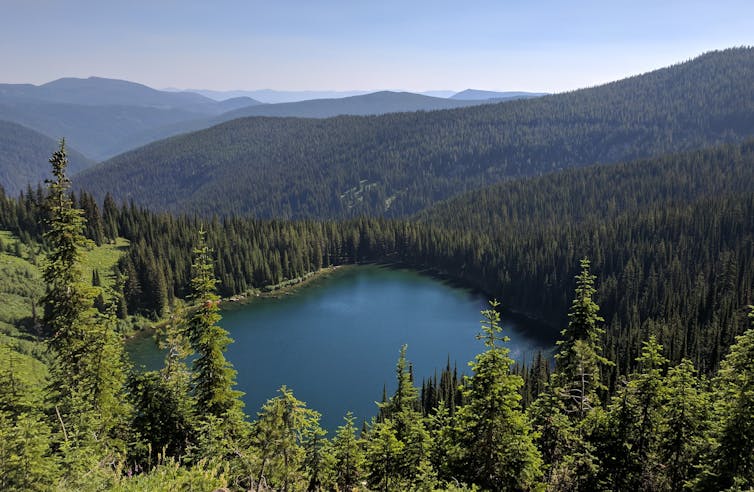
The lake sediments revealed that high-elevation, or subalpine, forests in the Northern Rockies in Montana and Idaho have consistently bounced back after fires, even during periods of drier climate and more frequent burning than we saw in the 20th century.

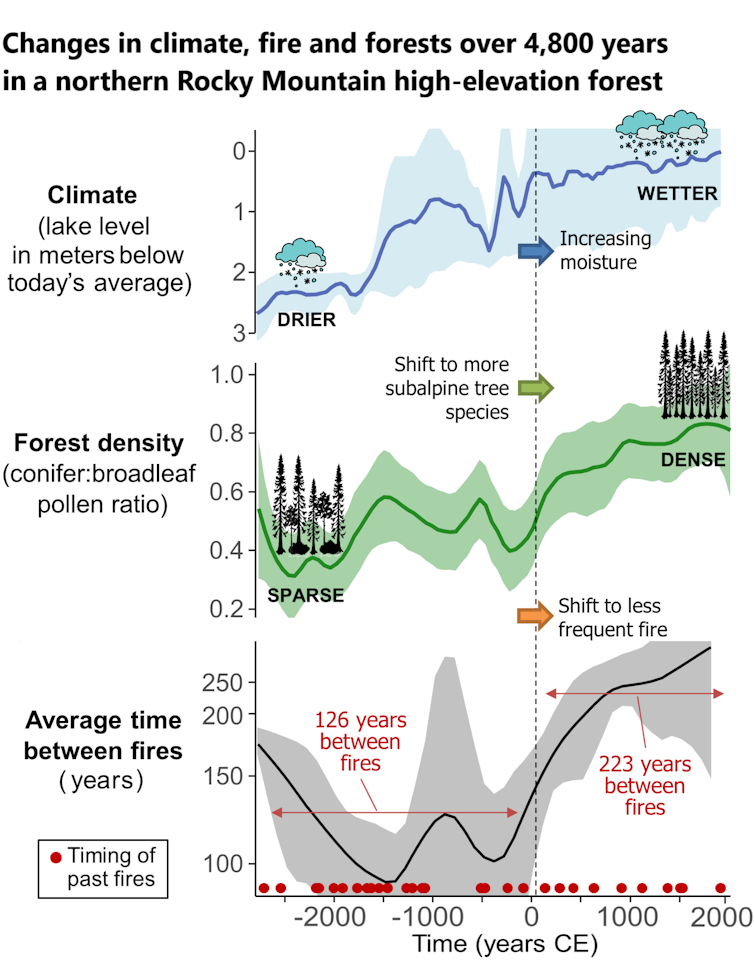
High-elevation forests only burn about once every 100 to 250 or more years on average. We found that the amount of burning in subalpine forests of the Northern Rockies over the 20th and 21st centuries remained within the bounds of what those forests experienced over the previous 2,500 years. Even today, the Northern Rockies show resilience to wildfires, including early signs of recovery after extensive fires in 2017.

Three illustrated charts show forest density increasing and time between fires falling over the past 4,800 years at one location.
Long-term changes in climate, forest density and fire frequency over the past 4,800 years in one high-elevation forest in the Northern Rockies, reconstructed from lake sediments. The red dots reflect timing of past fires. Kyra Clark-Wolf

But similar research in high-elevation forests of the Southern Rockies in Colorado and Wyoming tells a different story.

The record-setting 2020 fire season, with three of Coloradoโ€™s largest fires, helped push the rate of burning in high-elevation forests in Colorado and Wyoming into uncharted territory relative to the past 2,000 years.

Climate change is also having bigger impacts on whether and how forests recover after wildfires in warmer, drier regions of the West, including the Southern Rockies, the Southwest and California. When fires are followed by especially warm, dry summers, seedlings canโ€™t establish and forests struggle to regenerate. In some places, shrubby or grassy vegetation replace trees altogether.

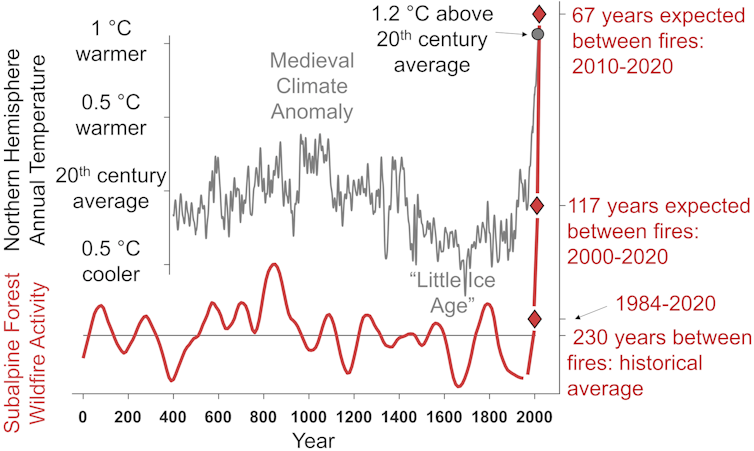
Graphs show fire activity rising with temperature over time.
Fire history reconstructions from 20 high-elevation lakes in the Southern Rockies show that historically, fires burned every 230 years on average. That has increased significantly in the 21st century. Philip Higuera, CC BY-ND

Changes happening now in the Southern Rockies could serve as an early warning for what to expect further down the road in the Northern Rockies.

Warmer climate, greater fire activity, higher risks

Looking back thousands of years, itโ€™s hard to ignore the consistent links between the climate and the prevalence of wildfires.

Warmer, drier springs and summers load the dice to make extensive fire seasons more likely. This was the case in 1910 in the Northern Rockies and in 2020 in the Southern Rockies.

When, where and how climate change will push the rate of burning in the rest of the Rockies into uncharted territory is harder to anticipate. The difference between 1910 and 2020 was that 1910 was followed by decades with low fire activity, whereas 2020 was part of an overall trend of increasing fire activity linked with global warming. Just one fire like 1910โ€™s Big Burn in the coming decades, in the context of 21st-century fire activity, would push the Northern Rockies beyond any known records.

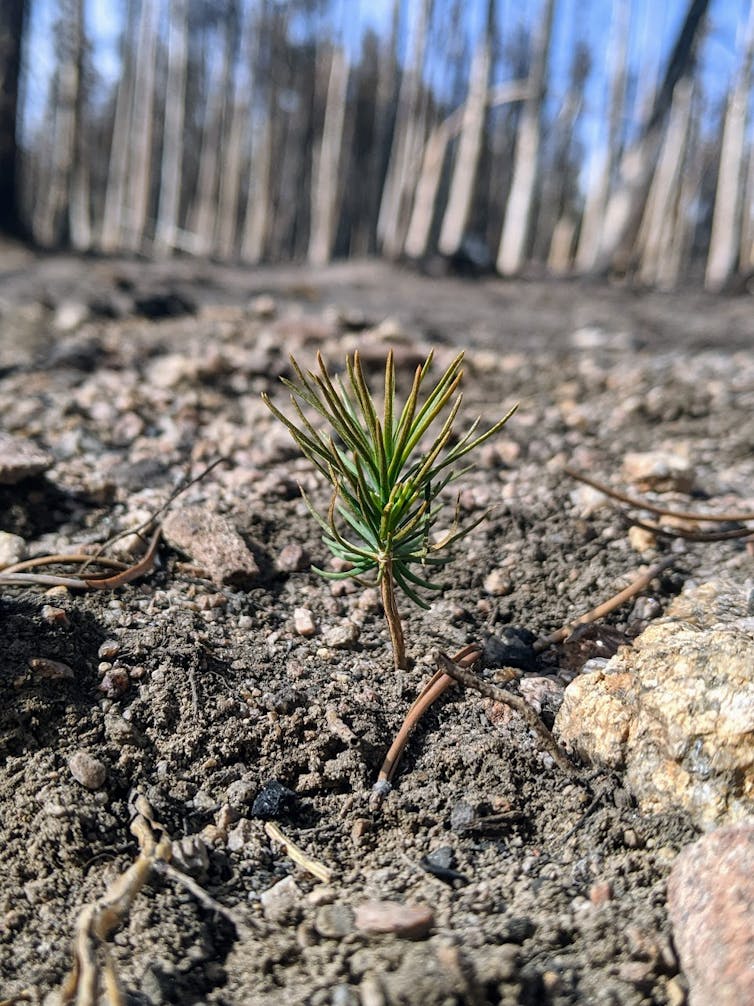
A tiny pine seedling in a vast landscape of burned trees and soil.
A lodgepole pine tree seedling begins to grow one year after the October 2020 East Troublesome Fire in Rocky Mountain National Park. Recovery in high-elevation forests takes decades. Philip Higuera

Lessons from the long view

The clock is ticking.

Extreme wildfires will become more and more likely as the climate warms, and it will be harder for forests to recover. Human activity is also raising the risk of fires starting.

The Big Burn of 1910 left a lasting impression because of the devastating impacts on lives and homes and, as in the 2020 fire season and many other recent fire disasters, because of the role humans played in igniting them.

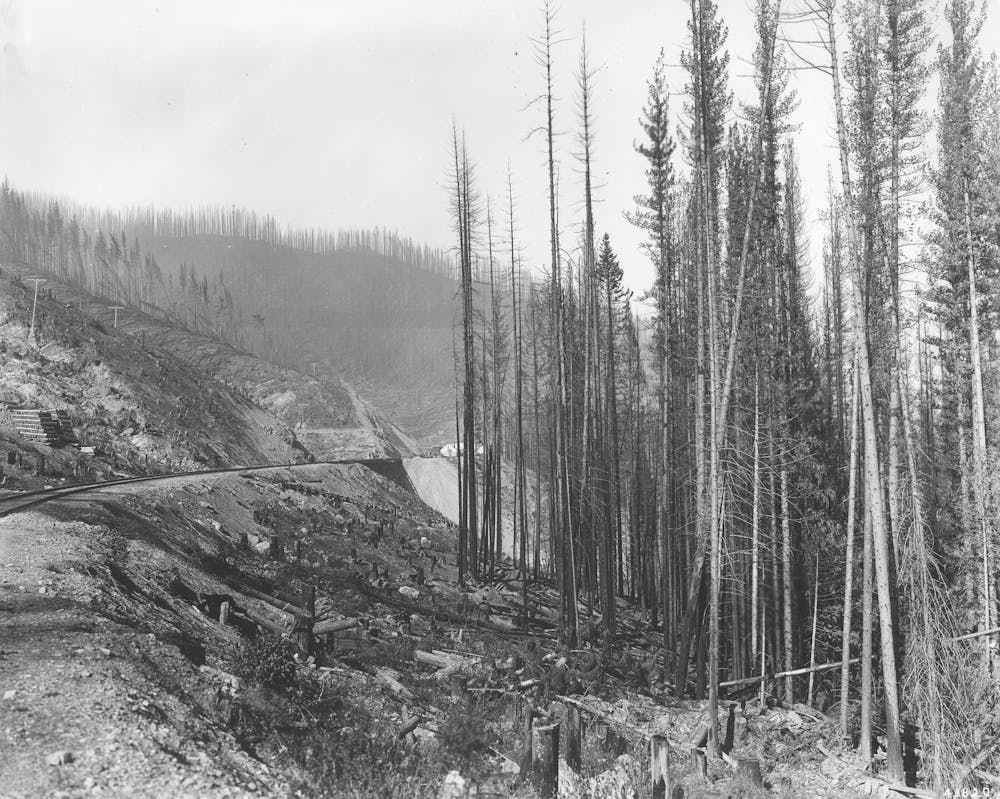
Photo shows burned trees across miles of hillsides along a railroad line
The aftermath of the 1910 fire near the North Fork of the St. Joe River in the Coeur dโ€™Alene National Forest, Idaho. R.H. McCoy/U.S. Forest Service archive, CC BY

Accidental ignitions โ€“ from downed power lines, escaped campfires, dragging chains, railroads โ€“ expand when and where fires occur, and they lead to the majority of homes lost to fires. The fire that destroyed Lahaina, Hawaii, is the most recent example.

So what can we do?

Curbing greenhouse gas emissions from vehicles, power plants and other sources can help slow warming and the impacts of climate change on wildfires, ecosystems and communities. Forest thinning and prescribed burns can alter how forests burn, protecting humans and minimizing the most severe ecological impacts.

Reframing the challenge of living with wildfire โ€“ building with fire-resistant materials, reducing accidental ignitions and increasing preparedness for extreme events โ€“ can help minimize damage while maintaining the critical role that fires have played in forests across the Rocky Mountains for millennia.

Kyra Clark-Wolf, Postdoctoral Associate in Ecology, University of Colorado Boulder and Philip Higuera, Professor of Fire Ecology, University of Montana

This article is republished from The Conversation under a Creative Commons license. Read the original article.

Natureโ€™s Supermarket: How Beavers Help Birds โ€” And Other Species

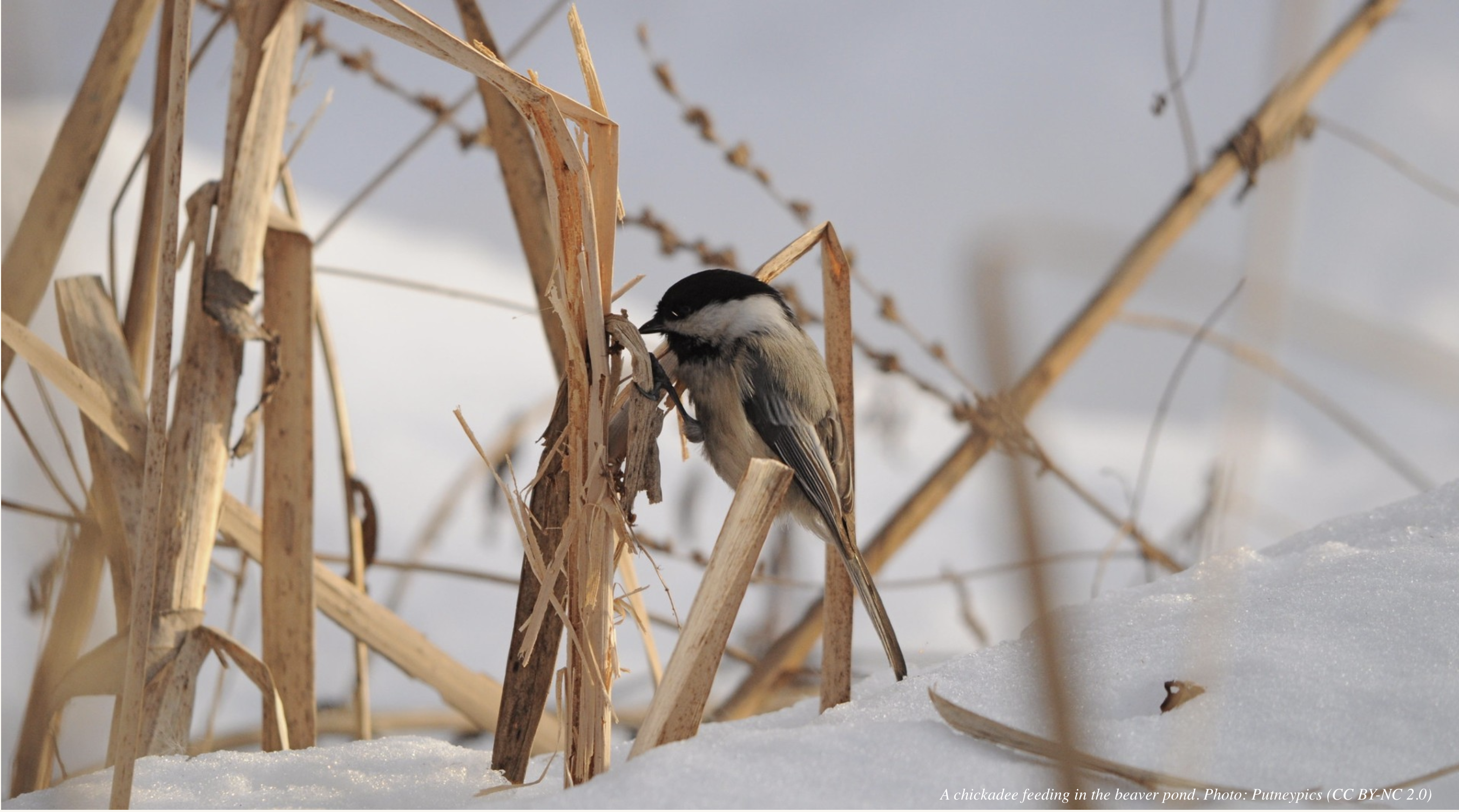
A chickadee feeding in the beaver pond. Photo: Putneypics (CC BY-NC 2.0

Click the link to read the article on The Revelator website (Tara Lohan):

New research shows that these ecosystem engineers can be an โ€œally in stopping the decline of biodiversity.โ€

Researchers in Poland have found another reason to love beavers: They benefit wintering birds.

The rodents, once maligned as destructive pests, have been getting a lot of positive press lately. And for good reason. Beavers are ecosystem engineers. As they gather trees and dam waterways, they create wetlands, increase soil moisture, and allow more light to reach the ground. That drives the growth of herbaceous and shrubby vegetation, which benefits numerous animals.

Bats, who enjoy the buffet of insects found along beaver ponds, are among the beneficiaries. So too are butterflies who come for the diversity of flowering plants in the meadows beavers create.

Some previous research has found that this helping hand also extends to birds. For example, a 2008ย studyย in the western United States showed that the vegetation that grows along beaver-influenced streams provided needed habitat for migratory songbirds, many of whom are in decline.

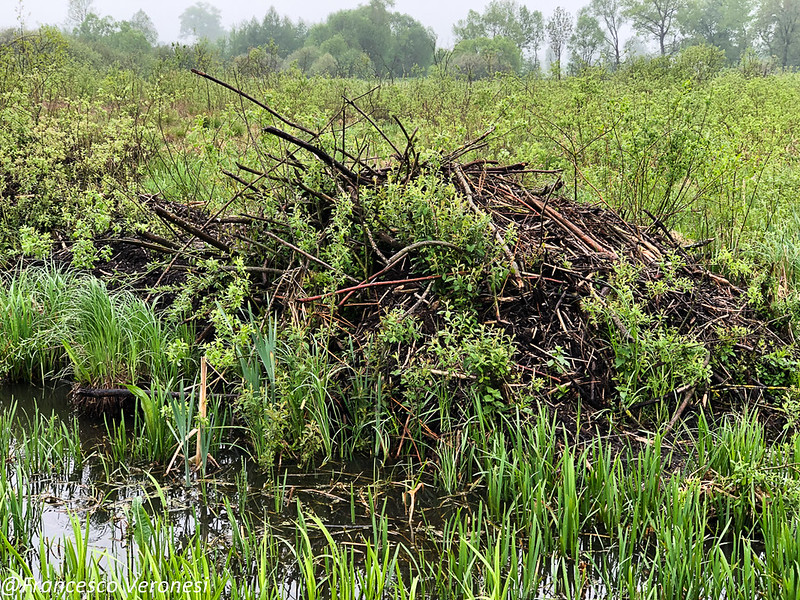
A beaver dam in Bierbza Marshes, Poland. Photo: Francesco Veronesi (CC BY-SA 2.0)

The new study published in the journal Forest Ecology and Management found further evidence by focusing on birds in winter. The researchers looked at assemblages of wintering birds on 65 beaver sites and 65 reference sites in a range of temperate forest habitat across Poland. Winter can be a challenging time for birds in that environment, as they need to reduce energy expenditures in the cold weather and find habitat that has high-quality food and roosting sites.

Wintering birds, it turns out, find those qualities near beaver habitat.

The researchers found a greater abundance of birds and more species richness near areas where beavers had modified waterways. Both were highest closest to the shores of beaver ponds.

One of the reasons that birds are attracted to these areas in winter has to do with warmth: The open tree canopy caused by flooding and tree diebacks lets in more sun, and ice-free beaver ponds can release heat, previous research has found.

The changes beavers make to the landscape also provide for different kinds of birds. Standing dead wood caused by flooding is sought after by woodpeckers, and then by secondary cavity nesters that follow. The diversity of plants that grow in beaver areas produce fruits and attract insects โ€” and therefore frugivorous and insectivorous birds.

โ€œAll beaver-induced modifications of the existing habitat may have influence on bird assemblage,โ€ says Michal Ciach, a study co-author and a professor in the department of Forest Biodiversity at the University of Agriculture in Krakow, Poland. โ€œBut different bird species may rely on different habitat traits that emerge due to beaver activity. Itโ€™s like a supermarket.โ€

Just how far into the forest do beaversโ€™ benefits extend?

While the study found that the number of bird species and the number of individuals were significantly higher in the study areas closest to beaver ponds, โ€œfor some species this tendency also held in forests growing at some distance from beaver wetlands,โ€ the researchers wrote.

The Eurasian beaver. Photo: Per Harald Olsen/NTNU (CC BY 2.0)

Those instances, though, werenโ€™t statistically significant. But Ciach says beaver effects can be far-reaching in other cases. Heโ€™s the coauthor of a study published last year that found a greater number of wintering mammal species near beaver ponds, which extended nearly 200 feet from the edges of ponds.

And itโ€™s likely that whatโ€™s good for birds may be good for many other species, too.

โ€œBirds are commonly considered a good indicator of biodiversity,โ€ he says. โ€œIf they positively respond to beaver presence, one may expect that such patterns will be followed by other groups of organisms. At this moment we are sure it works for wintering mammals. Other groups of organisms need investigation, but Iโ€™m quite sure many other organisms will do the same.โ€

The growing research about beavers suggests a greater need to protect their habitat and understand their important role in the ecosystem.

โ€œBeaver sites should be treated as small nature reserves,โ€ says Ciach. โ€œThe beaver, like no other species, is our ally in stopping the decline of biodiversity.โ€

It’s alive! Experiment to plant trees on mine waste a surprising success — The #Durango Telegraph

The Brooklyn Mine, northwest of Silverton, is among the worst polluters in the Animas River watershed. An innovative restoration project successfully planted 900 trees on a mine waste rock pile to help repair the landscape./ Courtesy of U.S. Forest Service

Click the link to read the article on The Durango Telegraph website (Jonathan Romeo). Here’s an excerpt:

In 2016, Gretchen Fitzgerald, a forester then with the San Juan National Forest, had a rather unconventional idea: What if we planted trees in a pile of mine waste? As the restoration forester for the district, Fitzgerald identified one of the many areas around Silverton impacted by legacy mining in the San Juan Mountains, a site known as the Brooklyn Mine, just northwest of town.

โ€œLooking around that site, I saw some seedlings naturally creeping around from the side,โ€ Fitzgerald said in an interview withย The Durango Telegraphย this week. โ€œSo I said, โ€˜Letโ€™s try it.โ€™โ€

[…]

Now, five years later, Fitzgerald has since moved onto the Sequoia National Park in California. Her trees, however, are doing remarkably well. This summer, in the first monitoring of the site since 2019, it was confirmed that nearly 100% of the trees survived and are thriving.

โ€œItโ€™s exciting,โ€ Fitzgerald said. โ€œThereโ€™s a lot of mines around there. We could expand this and do more work.โ€

The โ€œBonita Peak Mining Districtโ€ superfund site. Map via the Environmental Protection Agency

Archuleta County joins coalition for #RioGrande fish conservation — The #PagosaSprings Sun

Sunrise March 10, 2023 Alamosa Colorado with the Rio Grande in the foreground. Photo credit: Chris Lopez/Alamosa Citizen

Click the link to read the article on the Pagosa Springs Sun website (Josh Pike). Here’s an excerpt:

At the Board of County Commisioners work session earlier that day, County Attorney Todd Weaver explained that Archuleta County was approached by a coali- tion of counties about contributing $1,000 for the conservation of the Rio Grande trout, Rio Grande chub and Rio Grande sucker in the Rio Grande watershed. He noted that the coalition represents local interests in efforts to enhance the environment for these fish with the goal of preventing them from becoming threatened or endangered, which Weaver stated would trigger a variety of requirements and restrictions.

Open wounds: #Colorado wildfire experts worried by lack of new vegetation in burn areas — The #FortCollins Coloradoan #ActOnClimate

A burnt sign on Larimer County Road 103 near Chambers Lake. The fire started in the area near Cameron Peak, which it is named after. The fire burned over 200,000 acres during its three-month run. Photo courtesy of Kate Stahla via the University of Northern Colorado

Click the link to read the article on the Fort Collins Coloradoan (Mile Blumhardt). Here’s an excerpt:

Recent flights over Colorado’s historic Cameron Peak and East Troublesome fire burn scars revealed a troubling observation: Three years after the state’s largest wildfires scorched nearly 400,000 acres, nearly half of those acres are still so severely burned that little to no regrowth has taken place. That has caused concern among a cadre of local researchers from federal and state governmental agencies, Colorado State University, conservation groups and private industry studying the vast scar from 2020.

Sarah Beck, Arapaho and Roosevelt National Forests fire recovery coordinator, said more precise aerial mapping of the scar will be forthcoming, but for now, large areas of the burn scar are not seeing expected revegetation recovery.

“These patches of high burn severity are so large there is a real possibility of recovery taking 50 years or longer,” she said. “It’s really concerning. I donโ€™t think we have seen this in North America. I think this is a new condition in complexity.”

[…]

With the enormity and complexity of post-fire impacts still looming three years later to human safety, critical water supplies, recreational facilities and fish and wildlife, the U.S. Forest Service has begun a new approach. In August, it announced a partnership with the nonprofit conservation organization American Forests to develop a longer-term reforestation strategy for the burn scars. The planning will continue to be developed collaboratively with input from community-connected partners, research institutions and local and state agencies.

“The problem is really big, and it is not something we have the capacity to tackle alone,” Beck said.

2023 #COleg: Stream restoration evolves to include beaver imitation, gets boost from #Colorado Legislature — Fresh Water News

A beaver dam analog in Rocky Mountain National Park’s Kawuneeche Valley. Photo by Eric Brown, courtesy of Northern Water

Click the link to read the article on the Fresh Water News website (Moe Clark):

Over the course of two decades, David Cooper, a senior research scientist emeritus of wetland and riparian ecology at Colorado State University, returned to Rocky Mountain National Parkโ€™s Kawuneeche Valley to map a visual timeline of the ecological collapse occurring before his eyes.

Bypass structure Grand River Ditch July 2016. Photo credit: Greg Hobbs

Cooperโ€™s research team found that the 86-year-old Grand Ditchโ€”a 15-mile water diversion that siphons 20,000 acre-feet of water per year from the Colorado River and transports it to the arid Eastern Plainsโ€”had dried out the valley floor, making it difficult for riparian trees and shrubs to grow. Swelling elk and moose populations were overgrazing the remaining vegetation, leaving an already dwindling beaver population with few building materials for their dams. The areaโ€™s beaver population was critical to keeping the ecosystem healthy. Without beaversโ€™ careful stewardship, their ponds drained, decreasing the amount of surface water in the area by 95% and dramatically altering the hydrology of the valley, according to Cooper.

Itโ€™s a reality that plays out across Colorado and the West. Riparian areasโ€”the lands along the edges of rivers and streamsโ€”and wetlands, have been degrading for decades due to mining pollution; overgrazing; flow alterations from dams, diversions and roads; and historical and present-day farming and timber management practices. Approximately 61% of smaller streams and 97% of major rivers in Colorado have experienced floodplain alterations, rendering them partially or wholly nonfunctional, according to aย 2017 analysis for the Center for American Progress.

David Cooper talks with members of the Kawuneeche Valley Ecosystem Restoration Collaborative during a tour of the valley in July 2022. Photo by Eric Brown, courtesy of Northern Water

Cooperโ€™s decades-long research helped inform the creation of the Kawuneeche Valley Ecosystem Restoration Collaborative, which is working to restore four riparian areas within the valley by protecting vegetation and mimicking beaver activity in hopes of luring natureโ€™s master river engineers back to their historical homes. The project, which is primarily using low-tech, process-based restoration methods, is one of dozens of such projects occurring across the stateโ€”bolstered by a recent influx of state and federal funding.

Process-based restoration, of which low-tech, process-based restoration is a subset, targets the root causes of ecosystem change with a goal of restoring a riverโ€™s natural processes.

Research shows that connected floodplains and healthy riparian areas provide valuable ecosystem services such as capturing sediment as it heads downstream; filtering out pollutants; storing more water on the landscape to increase vegetative growth and biodiversity; and moderating soil moisture, streamflows and temperatures throughout the year. All of this combines to make the watershed more resilient to floods, wildfire and drought.

But research surrounding low-tech, process-based restoration is fairly limited, especially as it relates to how projects might impact downstream water availability and the timing of flows.

Because of this, in part, the process for getting restoration projects approved in Colorado has been somewhat opaque and challenging for practitioners to navigate, prompting state lawmakers to draft a bill last session that sought to clarify the process in order to scale up efforts across the state. The final bill was amended by those who were concerned with how the projects might impact priority water rights, so work continues to determine whether more restoration projects can be better facilitated with policy that makes them easier to permit while still protecting water rights.

Scientists and restoration experts are pushing forward with projects, given the scope of riparian degradation and the strain climate change and population growth continue to have on water resources and the ecosystems that support them.

Beaver mimicry as restoration

Jackie Corday, a land and water conservation attorney based in Montrose, has been an enthusiastic proponent of low-tech, process-based restoration since 2018, when she first saw the impact that these low-tech projects could have. โ€œI could see the difference. It just made sense,โ€ Corday says.

While working at Colorado Parks and Wildlife as a water resource manager, she began to research the benefitsโ€”and potential legal barriersโ€”for scaling up those types of restoration projects.

Through her research, which culminated in the 2022 report for American Rivers, โ€œRestoring Western Headwater Streams with Low-Tech Process-Based Methods: A Review of the Science and Case Study Results, Challenges, and Opportunities,โ€ Corday found dozens of promising projects in California and across the western U.S. that successfully โ€œturned back the clockโ€ on the damage done to riparian areas, streams and wetlands in a more cost-effective way.

โ€œYou can do it the fast way and come in with a big excavator and try to reset the elevation to what it would have been,โ€ Corday says. โ€œBut thatโ€™s very expensive. Itโ€™s like $600,000 to $1 million a mile, and there are thousands of miles. Itโ€™s not even a possible approach [on its own].โ€ By comparison, low-tech, process-based approaches can be cheaper and faster, at $50,000 to $100,000 per mile.

โ€œAlso, the science was showing that [a high-tech approach] wasnโ€™t necessarily always bringing back the [ecosystem] that you were hoping for,โ€ she adds.

โ€œWhat these researchers were showing was that, well, thereโ€™s actually a better way to do this. You mimic beaver.โ€

A beaver dam on the Gunnison River. Photo: Brent Gardner-Smith/Aspen Journalism

Beaver dams have been shown to retain sediment and nutrients, as well as heavy metals, which can improve water quality.

Construction of Beaver Dam analogue Photo courtesy of the Rio Grande Headwaters Restoration Project.

An example of a low-tech, process-based method would be to install posts vertically into a creek bed to catch wood and debris floating downstream, mimicking natural log jams. This can jumpstart a beaverโ€™s home. In other cases, structures that mimic a beaver dam, called a beaver dam analog, are installed in the stream to slow the flow of water to allow it to pool and rehydrate the soil.

While low-tech, process-based restoration is seemingly growing in popularity, itโ€™s not always the right tool. Sometimes, higher-tech engineering is needed, such as after major flooding events, below dams that alter flows, or when a riverโ€™s natural processes have been strained to the breaking point, rendering them unable to self heal, according to a design manual created by Joe Wheaton, an assistant professor of fluvial geomorphology at Utah State University.

The Beaver Restoration Assessment Tool was designed by Wheaton and his colleagues to help land and water managers identify the historical capacity of streams to support beavers and locate where they might feasibly be able to return. Since 2021, the Colorado Natural Heritage Program at Colorado State University has hosted a state-adapted version of the beaver assessment tool for the perennial stream network in Colorado.

Low-tech, process-based restoration also may not be appropriate near housing developments or busy roads, where there is the potential for flooding and infrastructure damage, according to Corday.

โ€œSo we have to look farther up the watershed in the public lands and the private lands, the big ranches where there is space for the river to be natural again and to reconnect with its floodplain,โ€ Corday says.

Legislation to pave the way for minor stream restoration projects 

In 2019, Corday helped create Coloradoโ€™s Healthy Headwaters group, which included conservationists, academics, NGOs, state and federal agencies, and water stakeholders, to come up with policies and strategies to scale up riparian restoration projects throughout the state. The group influenced legislation that was introduced by state lawmakers in April 2023 as SB 23-270. But amendments reduced the bill to include only โ€œminorโ€ restoration projectsโ€”and removed language related to low-tech, process-based restoration projects.

โ€œThose [low-tech, process-based] projects were the least understood and raised the most concerns for water users,โ€ says Kelly Romero-Heaney, the stateโ€™s assistant director for water policy with the Colorado Department of Natural Resources. โ€œAnd so thatโ€™s why we ended up having to amend coverage for those projects.โ€

The bill, which was signed into law on June 5, clarifies that minor stream alterations such as bank stabilization or restructuring a channel after itโ€™s been damaged by wildfire or flood are presumed to not impact water rights users.

โ€œThe key [in the final bill] is there can only be an incidental amount of flooding or pooling with those structures and they canโ€™t exceed the ordinary high water mark, so they canโ€™t push water outside of the natural channel,โ€ says Romero-Heaney.

For minor restoration projects defined in the bill, a person or group does not need to go to water court, obtain water rights or get a plan of augmentation, according to Romero-Heaney. Projects established before August 2023 are also โ€œgrandfathered inโ€ meaning they are presumed to not impact water rights and can move forward.

Those who sought to amend or defeat the bill included various agricultural groups, cities, water districts, and some environmental groups.

โ€œTheir concerns are that their water rights may be injured by a stream restoration project that changes the timing in flow or increases evapotranspiration associated with the growth of trees and shrubs along the river corridor,โ€ says Romero-Heaney, who also sits on Gov. Jared Polisโ€™ policy team as a special advisor on water policy. โ€œWhat we hear a lot is it might be โ€˜death by 1,000 cuts.โ€™โ€

Tyler Garrett, the director of government relations for Rocky Mountain Farmers Unionโ€”a group that represents 17,000 farmers and ranchers across Colorado, New Mexico and Wyomingโ€”told state lawmakers that his main concerns with the original bill were related to what recourse a person could seek if their water rights were impacted by a restoration project, and the amount of time they had to file a complaint or lawsuit.

โ€œThe geomorphic changes may not even be completed during this two-year window and injury may not be realized,โ€ he said during the bill committee hearing this spring. โ€œWe also need to ensure the water right holders have time to collect the proper data and build a proper suit when they are injured.โ€

Romero-Heaney says it will take time for the Department of Natural Resources to interpret the new law in order to provide guidance to existing project managers and other entities interested in restoration

In the meantime, Corday says the Colorado Healthy Headwaters group is continuing to have conversations on how to streamline the process for restoration projects in the hopes of potentially introducing another bill next legislative session to expand the existing lawโ€™s scope.

Romero-Heaney is excited to participate and help coordinate field trips for members of the water community to see process-based projects in action.

She hopes the conversations help bridge the divide between the ecological community and the water attorneys who work on protecting water rights portfolios.

Colorado River Kawuneeche Valley May 19, 2023.

Progress in the Kawuneeche Valley

Back at Rocky Mountain National Park, the Kawuneeche Valley Ecosystem Restoration Collaborativeโ€”which includes the National Park Service, Northern Water, the U.S. Forest Service, the Colorado River District, The Nature Conservancy, Grand County, and the Town of Grand Lakeโ€”is installing beaver-like structures within Beaver Creek to slow streamflows, catch sediment, and promote vegetative growth farther from the banks.

Members of the Kawuneeche Valley Ecosystem Restoration Collaborative walk along an abandoned irrigation ditch during a tour of the valley in July 2022. Photo by Eric Brown, courtesy of Northern Water

โ€œWeโ€™re really looking to improve the habitat, kind of the Field of Dreams approach, where if we improve the habitat in the area, then hopefully beavers will come back on their own,โ€ says Kimberly Mihelich, a water protection specialist with Northern Water, a water conservancy district that serves eight counties in Northeastern Colorado.

The groupโ€”funded by the Rocky Mountain Conservancy, The Nature Conservancy, Northern Water, and the Colorado Water Conservation Boardโ€”isnโ€™t looking to re-introduce beavers into the ecosystem since the environment wouldnโ€™t be able to support them given the lack of vegetation available for them to build dams. But beavers have started to show interest.

In summer 2021, the group stumbled upon something they hadnโ€™t seen in nearly two decadesโ€”an active beaver dam. The beaver home was nestled within a 35-acre, fenced-in restoration area in the valley that had been installed a decade ago to keep moose and elk from overbrowsing the willow trees. The fences have gaps in the bottom so small animals such as beavers can slip through.

โ€œWe were like, โ€˜Oh my gosh, these fences work!โ€™โ€ Mihelich says. โ€œThere was so, so much excitement.โ€

โ€œ[The beaver dam] did get washed away in some of the spring runoff,โ€ she quickly adds. โ€œBut it was really exciting to show that if the habitat is there, beavers in the area might make it home.โ€ This isnโ€™t unusual: Beaver dams are often damaged during large floods, but the beaver are able to rebuild if the environment can support them.

This summer, the team installed more fence enclosures to keep moose and elk from overgrazing the restoration areas and continued using herbicides to kill off invasive plants.

Mihelich says Northern Water is involved in restoring the riparian areas because itโ€™s a way to improve drinking water quality. The Colorado River, which winds through the Kawuneeche Valley, is part of a storage system that includes Grand Lake, Shadow Mountain Reservoir and Granby Reservoir on the Western Slope. The system has struggled with poor water quality due to increases in fine sediment loading, debris and nutrients, all of which impair water quality and can clog up water infrastructure. The system has also been impacted by recent wildfires, which are increasing in frequency and intensity due to climate change.

But restoring the riparian zones and changing the hydrology of the valley will take time, says Koren Nydick, the resource stewardship manager for Rocky Mountain National Park, especially since the damage has spanned decades.

And efforts to replace natural processes arenโ€™t always as effective as the real thing, she adds. โ€œWe arenโ€™t beavers. We canโ€™t do it all,โ€ she says. โ€œThe hope is that they come in and do it better than we could ever do it.โ€

Fresh Water News is an independent, nonpartisan news initiative of Water Education Colorado. WEco is funded by multiple donors. Our editorial policy and donor list can be viewed atย wateredco.org.

An earlier version of this article first appeared in Headwaters magazineโ€™s summer 2023 issue.

More by Moe ClarkMoe K. Clark is an independent journalist based in Denver. She covers topics related to the criminal justice system, environmental issues and housing/homelessness.

American beaver, he was happily sitting back and munching on something. and munching, and munching. By Steve from washington, dc, usa – American Beaver, CC BY-SA 2.0, https://commons.wikimedia.org/w/index.php?curid=3963858

We can help shape this #Utah monument — Writers on the Range #BearsEars

Click the link to read the article on the Writers on the Range website (Jonathan P. Thompson):

When President Joe Biden restored the original boundaries of both Grand Staircase-Escalante and Bears Ears national monuments in 2021, public-land lovers felt they had achieved a lasting victory.

Bidenโ€™s action reversed the Trump administrationโ€™s shrinkage of these protected areas in southern Utah, and once again put those spectacular canyons off-limits to mining and energy development. The victory was confirmed in August, when a federal court dismissed Utahโ€™s lawsuit attempting to overturn Bidenโ€™s action.

Bears Ears National Monument in Utah. By Bob Wick – By the Bureau of Land Management published on Flickr under a CC licence., CC BY-SA 4.0, https://en.wikipedia.org/w/index.php?curid=52982968

But in some ways, the crucial work of preserving these places has just begun. The proclamations establishing and restoring the two national monuments are lofty documents that make the case for wielding the Antiquities Act to protect the landscapes in question. But the real test is always what happens on the ground.

We have a clearer picture of that now, because this August, the BLM released its draft resource management plan and environmental impact statement for Grand Staircase-Escalante National Monument. The public has until Nov. 9 to make its wishes known.

The local environmental community sees the agencyโ€™s โ€œpreferredโ€ alternative, which โ€œemphasizes the protection and maintenance of intact and resilient landscapes โ€ฆโ€ as a vast improvement over the status quo. Though itโ€™s less restrictive than one of the other four alternatives, this approach would significantly limit grazing, motorized vehicle use, and target shooting across the monument.

State and local politicians who subscribe to the Sagebrush Rebel ideology have been attempting to dismantle the national monument ever since then-President Bill Clinton established it in 1996. Neither Congress nor even the George W. Bush administration would accede to their demands, but over the years the monument has been starved of funds, lost valuable staff and its management has been influenced by the local culture, which is generally hostile to federal land management.

Then two decades after Grand Staircase-Escalante was established, Republican Utah Sen. Orrin Hatch convinced President Donald Trump to drastically shrink it. The legality of the move was questionable at best: The Antiquities Act gives the president the power to establish national monuments, but not to rescind or dismantle them. The Trump administrationโ€™s management plan also gutted protections for what remained โ€” especially relating to grazing.

The livestock industry has long claimed that the national monumentโ€™s grazing rules would destroy local ranching. Yet Clintonโ€™s proclamation clearly stated that grazing would continue under the existing BLM rules. In fact, the national monument helped a handful of ranchers who were ready to get out of the marginal business of running cows in inhospitable โ€” yet beautiful and sensitive โ€” terrain. The ranchers struck a deal to retire their grazing permits along the Escalante River and some of its tributaries in exchange for a generous cash payout from the nonprofit Grand Canyon Trust.

Even after the buyout, more than 95% of the monument remained open to livestock, and the number of cattle โ€” or animal unit months โ€” permitted on the monument is about the same now as it was in 1996. Today, though, fewer cattle run on nearly every permitted grazing allotment. It is clear that the livestock operators themselves are the ones limiting the number of cattle.

But hereโ€™s the problem: Bidenโ€™s restoration of the monument did not repeal the Trump-era plan that opened up retired grazing allotments. Now the public has an opportunity to do that.

The agencyโ€™s โ€œpreferredโ€ alternative โ€” which the document is quick to point out is merely a starting point for discussions โ€” would divide the monument into four management areas, with different levels of development and access in each. Grazing allotments not currently under permit would be permanently closed to livestock. New range improvements would be limited or prohibited. And off-road vehicles would be banned from the Primitive Area and selected other areas and limited to designated routes in the rest of the monument. 

Jonathan Thompson

Itโ€™s a lot less than most conservationists were looking for. It would leave 85% of the monument open to tens of thousands of grazing cattle trampling fragile cryptobiotic soils. But Scott Berry, board president of the Grand Staircase Escalante Partners, a nonprofit founded to protect and preserve the monument, urges the environmental community to get behind the plan.

โ€œPolitical forces in Utah are going to do everything in their power to prevent the new plan from being adopted,โ€ he said, โ€œwhich would leave the Trump (plan) the controlling authority.โ€

To comment, visit the Bureau of Land Managementโ€™s planning site by Nov. 9:ย https://eplanning.blm.gov/eplanning-ui/project/2020343/510ย 

Jonathan Thompson is a contributor to writersontherange.org, an independent nonprofit dedicated to spurring lively conversation about the West. His newsletter The Land Desk covers the region.

Big brown trout are declining in one of #Coloradoโ€™s iconic reservoirs. New fishing rules may be coming — The #Denver Post

Dillon Reservoir stores water from the Blue River Basin in Summit County for Denver Water customers on the Front Range. Photo credit: Denver Water.

Click the link to read the article on The Denver Post website (Elise Schmelzer). Here’s an excerpt:

For decades, Dillon Reservoir has been a place where anglers could hook the fish of a lifetime โ€” a 10-pound, 30-inch wild brown trout. But the brown trout population in one of Coloradoโ€™s most visible and accessible mountain reservoirs has declined in recent years, promptingย state wildlife officialsย to consider stricter fishing regulations on the reservoir and seasonal closures on nearby waters. Itโ€™s unclear exactly what is causing the decline, said Jon Ewert, an aquatic biologist at Colorado Parks and Wildlife. But increased fishing during the pandemic, and after, may be a factor…

Other potential causes include a change in water quality, development along the rivers and streams where the trout spawn, and stress from higher water temperatures caused by drought, Ewert said…

The number of brown trout measuring more than 14 inches long has declined for four consecutive testing years, according to population surveys conducted by Colorado Parks and Wildlife. The agency conducts surveys every two years. In 2014, trout larger than that size made up 62% of all brown trout caught in the survey nets. By 2022, they made up only 33%…The brown trout in the Blue River upstream from the reservoir also have experienced an โ€œobvious and significant decline,โ€ according to a 2019 CPW report…

The proposed rules would require anglers to immediately release brown trout that are longer than 14 inches, with the rule applying to the reservoir, to sections of the Blue River south of the reservoir and to Tenmile Creek. Fishing would be banned entirely from Sept. 1 to Dec. 1 in two places where the trout spawn in the fall: the Blue River between the reservoir and three miles north of Breckenridge, and West Tenmile Creek from Copper Mountain to the reservoir.

Map of the Blue River drainage basin in Colorado, USA. Made using USGS data. By Shannon1 – Own work, CC BY-SA 4.0, https://commons.wikimedia.org/w/index.php?curid=69327693

Book of the Dead: The Species Declared Extinct in 2022 — The Revelator

Dugong photo by Mark Goodchild (CC BY 2.0)

Click the link to read the article on The Revelator website (John R. Platt):

This year we bid farewell to two lost frogs, the Chinese paddlefish, a plant from New Hampshire, and many others.

Last July scientists in Texas announced some surprising news: They had rediscovered an oak tree species previously believed to be extinct. Until then the last known Quercus tardifolia tree was believed to have died more than a decade earlier. But lo and behold, one more tree was discovered in Big Bend National Park, meaning the species wasnโ€™t extinct after all.

The rest of the news wasnโ€™t as good: That lone tree isnโ€™t doing so well. Itโ€™s been burned by fire and shows signs of a fungal infection. Scientists say itโ€™s in need of โ€œimmediate conservation.โ€

This situation isnโ€™t that atypical in the world of wildlife conservation, where species that have avoided extinction in the Anthropocene still need dramatic support. A recent study found that more than half of all known endangered species require targeted recovery efforts if theyโ€™re to avert โ€œhuman-induced extinction.โ€

If that doesnโ€™t happen, weโ€™re going to lose more species โ€” a lot of them. Despite rediscoveries like the oak tree in Texas, the world is still losing biodiversity at dangerously high rates. In 2022, scientists announced that they had given up efforts to find dozens of long-lost species, including two frogs, one of the worldโ€™s biggest fish, an orchid from Florida, a grass from New Hampshire and many others.

And those are just the ones we know about. Another 2022 study warned about the threat of โ€œdark extinction,โ€ the loss of species science has never even identified as having existed in the first place. By conservative estimates, millions of species are yet to be discovered, identified and named, and most are at risk of disappearing before that ever happens as humanity continues its relentless expansion. And if we donโ€™t know they exist, we canโ€™t do anything to save them.

So letโ€™s take a moment to talk about the ones we do know that weโ€™ve lost, to remember their names, to add them to the Book of the Dead, and to use their lessons to prevent others from suffering the same fate. Weโ€™ve compiled dozens of stories of extinction from the past year, including species that have been declared lost after many decades of looking, other species that have vanished from key ranges of their habitat, and others that are now extinct in the wild and exist only in captivity.

But before we get to those names, letโ€™s take a lesson from the Endangered Species Act here in the United States โ€” a law that turns 50 this year. Virtually every species that has been protected under the Act has had its extinction prevented. Some were added to the list too late, and they died out as a result. Many are still hanging on by a thread, but active conservation efforts are preventing them from disappearing any further. Many have recovered โ€” most recentlyย two plants from the Channel Islandsย โ€” and more are likely to do so in the future. That is the ultimate lesson of the extinction crisis: Itโ€™s preventable if we work hard enough.


Chinese paddlefish (Psephurus gladius) โ€” The declared extinction of this iconic fish shouldnโ€™t come as a surprise to anyone. Last seen in 2003, these massive beasts โ€” who reportedly reached up to 23 feet in length โ€” were already on the decline due to overfishing and habitat degradation before the Gezhouba Dam was built in 1981. That dam cut off their migration route in the Yangtze River and doomed the species. People have been looking for them ever since but, given their gigantic stature and the fact that no one has spotted any in that time, the species was declared extinct this past year. As the only member of its genus, the Chinese paddlefishโ€™s extinction represents the loss of an entire evolutionary line.

Yangtze sturgeon (Acipenser dabryanus)ย โ€” An extinction in the making, or recovery on the cusp? Either of those could be the fate of the Yangtze sturgeon. No mature fish have been seen in the wild in years, and the species was declared extinct in the wild this year by the IUCN. Ongoing captive-propagation efforts have produced tens of thousands of young sturgeon, who are released annually into the Yangtze River, but so far that hasnโ€™t paid off in terms of wild reproduction. The species initially declined due to a long list of threats, including overfishing, shipping, dams, pollution and other habitat degradations, and few of those dangers have faded. Those same threats affect all other sturgeon species:ย Two-thirds are now critically endangered.

Florida govenia (Govenia floridana) โ€” This large orchid, native to Everglades National Park in Florida, was mistakenly identified as another species when it was first discovered in 1957. That delay in recognition probably doomed it. At the time of discovery, only 25 plants existed. Poaching probably quickly wiped them out before they could be protected. The IUCN declared the species extinct in 2022, decades after its last verified sighting in 1964.

Sharp-snouted day frog (Taudactylus acutirostris) โ€” Gone in the blink of an eye. It took just five years for this once-common Australian amphibian species to decline and ultimately disappear, probably due to the deadly chytrid fungus, which is causing frog extinctions all around the world. Last seen in 1997, the day frog was declared extinct this past year following two decades of extensive searches.

Mountain mist frog (Litoria nyakalensis)ย โ€” Another Australian frog, another probable victim of the chytrid fungus. This one was last seen in 1990, and extensive searches have failed to prove it still exists.

Rare orchid. Photo: Denise Molmou via Kew Gardens

Saxicolella deniseae โ€” Known from a single waterfall in the Republic of Guinea, this herb appears to have gone extinct after its only habitat was flooded during construction of a hydroelectric dam.

Raiatean ground partula snailย (Partula navigatoria)ย andย Garrettโ€™s tree snail (P. garrettii)ย โ€” These species from French Polynesia were nearly eaten into extinction by the notorious, carnivorous rosy wolf snail, an invasive species around the planet. The last live animals were found and brought into a captive-breeding program in the early 1990s. A reintroduction program began in 2016 at a site that (unfortunately) was later found to contain another predatory invasive species, the New Guinea flatworm. Pending the success of future reintroductions, these species have been assessed as extinct in the wild, joining other snails from French Polynesia in that purgatory-like category.

A jaguarini photographed in Belize in June 2022. Photo: ยฉ giana521 via iNaturalist (CC BY-NC)

Jaguarundi (Herpailurus yagouaroundi) in the United States โ€” One of the major regional extinctions on this yearโ€™s list. The jaguarundi, a small feline, was last officially seen in the United States โ€” the northernmost part of its range โ€” in 1986. In 2022 a major 18-year study reported no evidence the species still exists in the country and declared it ripe for reintroduction efforts.

Beilschmiedia ningmingensis โ€” This tree was last seen in China in 1935, in an area that has long since been converted to agriculture and plantations. China already considered it extinct; the IUCN added it to the list of extinct species this year after extensive recent surveys.

Cooteโ€™s tree snail (Partula cootei)ย โ€” Last seen in French Polynesia in 1934, this snail probably disappeared slowly as it hybridized with another introduced species. Researchers assessed it as extinct in 2017, but the information wasnโ€™t published or added to the IUCN Red List until this past year.

White-handed gibbon. Photo: Bernard Dupont (CC BY-SA 2.0)

White-handed gibbon (Hylobates lar) and northern white-cheeked gibbon (Nomascus leucogenys) โ€” China formally declared both these primates extinct in the wild within their borders this past September, at least a decade after they were last seen in the country. Researchers blamed โ€œhuman activitiesโ€ (including hunting, deforestation and the pet trade) for their disappearance. Each species still exists in other countries in Southeast Asia, although the white-handed gibbon is endangered, and the northern white-cheeked gibbon is critically endangered.

Dugong (Dugong dugon) in China โ€” These gentle manatee relatives, who are considered โ€œvulnerable to extinctionโ€ through most of their range, have all but disappeared from China, another major extirpation for the country this year. A paper published in July declared dugongs โ€œfunctionally extinctโ€ in Chinese waters, meaning some of them still exist there but not enough to form a healthy population. This, according to researchers, represents โ€œthe first reported functional extinction of a large vertebrate in Chinese marine watersโ€ and serves as a โ€œsobering reminderโ€ of the threats faced by other species.

Poecilobothrus majesticusย โ€” What little we know about this long-legged fly from the United Kingdom stems from a single male specimen collected on the Essex coast in 1907. Scientists didnโ€™t taxonomically name it until 1976, and a 2018 report on UK flies of the Dolichopodidae family concluded that it was probably extinct, as โ€œone would have expected them to have been encountered by now.โ€ The IUCN added it to the Red List as extinct this past year.

Luciobarbus nasus โ€” This fish was known from just a single river system in western Morocco, where it hasnโ€™t been seen since 1874. Pollution from a nearby city may have done it in, but that remains unclear. Hereโ€™s the good news though: After years of scientific debate, this species has now been reclassified into four species, with three of them remaining in existence (and one of those endangered).

Chott el Djerid barbel (Luciobarbus antinorii) โ€” When you use too much water, donโ€™t expect fish to stay alive much longer. Thatโ€™s what happened in Tunisia, where this rare fish disappeared sometime around the 1990s or 2000s. It was listed under the IUCN Red list as a data deficient for many years but was declared extinct in 2022.

Syzygium humblotii โ€” This tree, a member of the myrtle family, hasnโ€™t been seen in about 130 years. It grew in Mayotte, an overseas department of France located in the Indian Ocean between Madagascar and Mozambique, in an area that has since been degraded by farms, livestock and other nonnative species. Searches over the past three decades have failed to turn up signs of its existence, so this year the IUCN declared it extinct.

Kalanchoe fadeniorumย โ€” Relatives of this long-lost Kenyan plant are grown as houseplants around the world. This species isnโ€™t as lucky. Known from just one site, it hasnโ€™t been seen since 1977. The areas surrounding where it grew arenโ€™t very well surveyed, so scientists are hedging their bets and calling it โ€œextinct in the wild.โ€

Heenanโ€™s cycad (Encephalartos heenanii) โ€” Every member of this plant genus (commonly referred to as bread trees or bread palms) is endangered due to overcollection, sometimes for food, sometimes for traditional medicine, sometimes just to own them. Previously listed as critically endangered, Heenanโ€™s cyad was reassessed as extinct in the wild in 2022 due to โ€œpersistent pressure from plant collectors.โ€

Giant Atlas barbel (Labeobarbus reinii)ย โ€” Although this Moroccan fish was last seen in 2001, it was listed on the IUCN Red List as โ€œvulnerable to extinctionโ€ for several years. Well, that prediction has come true: This year the IUCN declared it extinct. It was known from just one small stretch of river that suffered from pollution and runoff from a nearby city, as well as a dam that separated populations. These factors undoubtedly affected the fish, but the exact reason for its extinction remain unknown.

Abrolhos painted button quail. By Grahame Bowland, CC BY 3.0, Link

Abrolhos painted button-quail (Turnix varius scintillans) โ€” This Australian bird subspecies is known from just three islands. Now itโ€™s down to two. The population on North Island in the Houtman Abrolhos Archipelago has been โ€œeaten out of house and homeโ€ by introduced invasive species, which degraded the habitat. Researchers spent nearly 13,000 nights camera trapping the island between 2018 and 2021 and concluded in a 2022 paper that the bird no longer exists there. The quail is considered one of the five Australian species most likely to face extinction in the coming years, so this extirpation represents a major blow for its conservation.

Cystophora โ€” Not one extinction, but many? A 2022 paper declares several species of this algae genus โ€œfunctionally extinctโ€ along the coast of southern Australia. At least seven species are reportedly now absent from the warmest edges of their historical range. The causes of their decline and disappearance are not known, but the paper cites slightly likely impacts from โ€œgradual warming, marine heatwaves and rapid urbanization.โ€

Smooth slender crabgrass (Digitaria filiformis var. laeviglumis)ย โ€” Known from a single park in Manchester, New Hampshire, this rare plant was last seen in 1931. The New Hampshire Natural Heritage Bureauย declared it extinctย this past June. Other varieties of the crabgrass species still exist in neighboring New England states, but this version was unique and is now considered lost.

Mollinedia myrianthaย โ€” This Brazilian tree has a sad history. It was discovered in [1892], then lost for 123 years. A sole individual tree was rediscovered in 2015, but fieldwork conducted in the following years found that the lonely tree had died. Researchers officially declared it โ€œcritically endangered, possibly extinctโ€ this past year. The same paper warns that the genus faces a wide range of threats and many species remain unassessed, meaning they too could soon face extinction.

Irrawaddy dolphin. Dan Koehl, CC BY 3.0, via Wikimedia Commons

Irrawaddy dolphin (Orcaella brevirostris) in Laos โ€” The last individual of this species in Laos was found dead on Feb. 15. It had been injured by being caught in fishing gear โ€” it escaped, but only after receiving injuries that left it unable to hunt. Irrawaddy dolphins remain in other countries, but the species is endangered, and its loss in Laos represents a major population gone.

And 562 more? โ€” Proving an extinction is never easy โ€” itโ€™s easier to see something than it is to not see something. But many species have gone unseen for decades, and while scientists still look for them every year, hope begins to dwindle after a time.

Is it time to give up hope for 562 lost species? Thatโ€™s the question raised by a paper published this May, which examines long-unseen species listed on the IUCN Red List. It identifies 137 amphibians, 257 reptiles, 38 birds and 130 mammals that have not been seen for at least 50 years and asks if that half-century of no sightings means theyโ€™re extinct. Maybe, maybe not. We need to be prepared for that possibility, but the paper suggests this analysis actually provides something positive: a way to prioritize geographic โ€œhotspotsโ€ where scientists can target their searches for long-lost species.

In other words, letโ€™s find these lost species while thereโ€™s still time.

Building soil health important for #drought, #wildfire resiliency, experts say: Landowners learn steps to long-temr soil improvements — Steamboat Pilot & Today

This field is irrigated with water from the Roaring Fork River, under a senior water right. CREDIT: BRENT GARDNER-SMITH/ASPEN JOURNALISM

Click the link to read the article on the Steamboat Pilot & Today website (Suzie Romig). Here’s an excerpt:

The consultant withย UnderstandAGย โ€” which uses the tagline restoring soil, profits, farms and futures โ€” conducted a water infiltration test in the field that after 10 minutes showed very little water soaking into the hard soil. That is because, for one reason, the field had no armor, or a soil cover of plant residue on the surface. Soil cover is one of the six key elements for building healthy soil that the landowners and ranchers learned about during the all-day Soil Health Field Day on Aug. 15.

โ€œHay producers might be better off in the long term if they left a 3 or 4-inch stubble of hay, which would help generate a more healthy soil system and by maintaining a continuous living root or ground cover,โ€ said Lyn Halliday, board president of the Routt County Conservation District, which organized the free workshop.

Halliday explained that healthy soils act like a sponge helping to absorb and contain moisture. Low soil moisture can cause plants to stop growing or dry out and may provide fuels for wildfires. On the other hand, when soil moisture content is high, fires have more difficulty in igniting, burning and spreading rapidly.

In the next demonstration area on the property, Fuchs showed with an infrared thermometer the 30-40 degree difference in temperatures of healthy soil versus compacted, poor soil. When Fuchs took a reading of 143 degrees on bare soil, he stopped to take a photo of the startling results because, he said, at 140 degrees, good soil bacteria die. He pointed out a soil temperature study that showed at 130 degrees, 100% of moisture is lost through evaporation and transpiration. At 100 degrees, 15% of moisture is used for plant growth and 85% is lost…

The conservation district recently released a โ€œRoutt County Landowner Toolkit for Building Drought, Wildfire and Soil Health Resiliency,โ€ that is online atย RouttCountyCD.com. The toolkit includes links to helpful resources with the goal of inspiring county landowners and ranchers to adapt to changing conditions that affect the land and daily practices of farming and ranching. The toolkit points out the best management practices for agriculture include reducing or eliminating tillage, nurturing the living organic components of soils, promoting diversification of soil flora and fauna below ground and plants above ground, creating pollinator habitat, diversifying rotations including grazing, and reducing wind erosion by establishing wind breaks.

Forests to Faucets (and Headgates!) — John Fleck (InkStain) #SanJuanRiver #RioGrande

Informal collaborative governance in action. Photo credit: John Fleck/InkStain

Click the link to read the article on the InkStain website (John Fleck):

I spent a couple of days last week out of Pagosa Springs in southern Colorado, touring forest restoration work in the headwaters of the San Juan-Chama Project, which produces critical water supplies for central New Mexico. In others words, water for my neighhbors and me.

Weโ€™ve learned over and over in the last couple of decades the risk to city water from wildfire in our headwaters, and the benefits of forest restoration. But the institutional path to restoration is challenging โ€“ because of cost, because of the complicated mix of land ownership, and because of the distance (both physically and also conceptually) between the mountain watersheds and the people who depend on the water they supply.

I came away optimistic about the creative problem solving I saw. This stuffโ€™s hard, especially to do at the scale needed, but the efforts are impressive.

FOREST TO FAUCETS (AND HEADGATES)

A few years back, my University of New Mexico collaborator Bob Berrens helped guide a research project intended to flesh out the relationship between Albuquerque and the distant headwaters (a ~200 mile drive away) that provideย a critical piece of our water supply.

Thatโ€™s from the resulting paper, Adhikari, Dadhi, et al. โ€œLinking forest to faucets in a distant municipal area: Public support for forest restoration and water security in Albuquerque, New Mexico.โ€ Water Economics and Policy 3.01 (2017): 1650019. Using a contingent valuation survey (a technique Bobโ€™s used for many years to help us get our heads around non-market values of stuff related to water resources, see for exampleย here on the endangered Rio Grande Silvery minnow), the research group found:

  • a mean willingness to pay of $64 per household, which equates to $7 million a year flowing out of Albuquerque to help support forest restoration in the watershed on which we depend, and
  • even households far away from watersheds support shelling out cash to pay for the work โ€“ not just communities like Santa Fe that can look up from their back porch to see their watershed (more on this later โ€“ in addition to its back porch watershed, Santa Fe also gets water from the San Juan-Chama headwaters)

COLLABORATIONS AT THE WATERSHED SCALE

While in Pagosa Springs and the surrounding watersheds, we got to see and learn about an amazing set of collaborations involving theย Forest Stewards Guild, theย Chama Peak Land Alliance, and The Nature Conservancyโ€™sย Rio Grande Water Fund, which provides a crucial conduit for the โ€œpayment for ecosystemsโ€ model Bobโ€™s work talks about.

Bobcatยฎ Compact Track Loader with Masticating Attachment. Photo credit: Wilderness Forestry, Inc.

One of the keys to making this work is a business model โ€“ the money supports folks in communities like Pagosa Springs who actually drive the masticators (big machines that grind up overgrown forest stuff). Itโ€™s part of the rural-urban social contract Bob and I talk about in the UNM Water Resources Program class weโ€™re teaching this fall.

COLLABORATIONS AT THE REGIONAL WATER MANAGEMENT SCALE

Bobโ€™s called this stuff โ€œforests to faucetsโ€, but what weโ€™re seeing this year on the Rio Grande through central New Mexico is a reminder that the Middle Rio Grande Conservancy District, and the river channel itself, also depend on the importation of San Juan-Chama Project water across the continental divide. Absent the SJC water over the last couple of months, the MRGCDโ€™s ditches would have gone dry sooner, as would the river channel. (Both ditches and river channel are starting to go dry as we speak, after MRGCDโ€™s San Juan-Chama water ran out, but thatโ€™s a topic for another blog post.)

The organizer of last weekโ€™s tours was the San Juan-Chama Contractorโ€™s Association, a group formed several years ago to try to create a framework for collective action among the New Mexico water agencies that use this imported water. Other states have umbrella agencies to organize big parts of their Colorado River water management โ€“ the Central Arizona Water Conservation District (โ€œCAPโ€) in Arizona, the Metropolitan Water District of Southern California, and the Southern Nevada Water Agency (Las Vegas NV). In New Mexico, we have a bunch of separate San Juan-Chama Project water users, each with their own contract with the Bureau of Reclamation. The SJC Contractors Association has created a framework for thinking about collective action on things like physical infrastructure costs and maintenance โ€“ and forest restoration!

Key Rio Grande Valley players in attendance were leadership from Albuquerque, Santa Fe (which in addition to San Juan-Chama water, gets supplies from its own local Sangre de Cristo watersheds, which have forest health challenges too) and the Middle Rio Grande Conservancy District.

SOCIAL CAPITAL

In addition to spending time in drop-dead gorgeous mountain watersheds, last weekโ€™s tours and meetings also created a great framework for sitting out on the back patio at Motel SOCO in Pagosa Springs eating delicious bar food and drinking our choice of beverages and building social capital. Bonus points for the tours organizers for getting the forest nerds and the water nerds talking.

Great fun was had by me.

Near Pagosa Springs. Photo credit: Greg Hobbs

#Colorado Water Congress Summer Conference emphasizes collaboration, cooperation, urgent need to address Colorado #water issues — Steamboat Pilot & Today

Click the link to read the article on the Steamboat Pilot & Today website (Suzie Romig). Here’s an excerpt:

Rep. Joe Neguse, who represents the second congressional district including Routt County, Rep. Lauren Boebert as well as Senators John Hickenlooper and Michael Bennet discussed the importance of Colorado River water as a national-level concern…

Neguse, who once served on then Gov. Hickenlooperโ€™s cabinet, said, โ€œThe governor would remind us that there was no margin in making enemies and that collaboration was ultimately the key ingredient to solving any problem or challenge facing our state.โ€

[…]

Neguse, Hickenlooper and Bennet used the word โ€œweโ€ repeatedly in their short remarks focusing on the importance of cooperation in complicated water issues. The four elected officials listed Colorado water projects that garnered millions of dollars in federal funds. Hickenlooper said the bipartisan Infrastructure Law in November 2021 included $300 million for Colorado River Basin drought contingency plans, and the Inflation Reduction Act from August 2022 included $8 billion for water infrastructure funding…

After the senators and representatives spoke and answered several questions from panel moderator Christine Arbogast, vice president of the Colorado Water Congress, Gov. Jared Polis addressed the ballroom full of hundreds of attendees for about seven minutes…Polis listed various active water-saving measures ranging from leak detection programs to โ€œColorado-scapingโ€ education to swap turf for water efficient and climate-appropriate landscaping including tax credits for turf replacement. The governor encouraged people in the water community to speak up about the need to integrate water usage and planning, noting integration โ€œhad been done on a haphazard basis before but is at the level that we have to do this thoughtfully as a state.โ€ The governor called housing a very important example of how to โ€œachieve solutions that make senseโ€ such as constructing more water efficient housing options such as duplexes, quad-plexes and multi-family housing…

The governor said the Colorado Department of Agriculture is hiring for the first time an agriculture water advisor.

Map credit: AGU

Guardians of the River — @AmericanRivers #KlamathRiver

In this film by American Rivers and Swiftwater Films, Indigenous leaders share why removing four dams to restore a healthy Klamath River is critical for clean water, food sovereignty and justice. โ€œGuardians of the Riverโ€ features Frankie Joe Myers, Vice Chair of the Yurok Tribe, Sammy Gensaw, director of Ancestral Guard, Barry McCovey, fisheries biologist with the Yurok Tribe, and members of the Ancestral Guard and Klamath Justice Coalition.

Summer flooding challenges the United Statesโ€™ #ClimateChange readiness — @AmericanRivers #ActOnClimate

Photo courtesy of the National Weather Service

Click the link to read the article on the American Rivers website (Eileen Shader):

The flash flooding currently happening in Southern California and Nevada is the latest example of why we must transform the management and health of rivers and streams to strengthen communities in the face of climate change.โ€ฏ Tropical Storm Hilary was the first tropical storm to hit California since 1939 and it has dropped historic amounts of rainfall on parts of communities from southern California to Las Vegas and across the Southwest. This event follows just weeks after major floods caused widespread damage across Vermont and the Northeast.  

Climate change is fueling more frequent and intense storms, putting pressure on federal and state agencies to help communities manage the runoff and stormwater from these extreme events. This means adapting our existing infrastructureโ€“elevating roads, expanding bridges, setting back levees- and it means making smart decisions about how we are developing along rivers and throughout watersheds.  

American Rivers is calling on federal, state, and local governments to protect communities from increasingly severe flooding. Decision-makers must:โ€ฏย 

  1. Give rivers room to flood safely:โ€ฏNaturally functioning floodplains (the low-lying lands along a river) are a communityโ€™s natural defense against flooding. These areas soak up and store floodwaters and reduce downstream flooding. Keeping floodplains natural and undeveloped is the best way to avoid flood damage to begin with. Governments must prioritize protecting undeveloped floodplains and putting in place policies like the FEDERAL FLOOD RISK MANAGEMENT STANDARD that require development to be resilient to Increasingly severe floods. 

    The fact is, many communities have already developed in their floodplains and have channelized and leveed their rivers, disconnecting them from their floodplains. All of this puts people and property at risk. Wherever possible, communities must work with residents and landowners to find solutions that improve their resilience and leverage state and federal funding to restore damaged floodplains to give rivers room to flood safely.โ€ฏโ€ฏ
  1. Protect wetlands and small streams: The Supreme Courtโ€™s recent Sackett v. EPA ruling stripped federal Clean Water Act protections for small streams and 50% of the nationโ€™s wetlands. These wetlands, along with perennial and ephemeral streams, are critical to public safety because they absorb and store floodwaters. By leaving streams and wetlands vulnerable to destruction and pollution, more communities are now at risk. State and federal decision-makers must shore up protections for wetlands to safeguard public health and safety.โ€ฏ 

    This record Southwest flooding highlights the important connection between rivers and the ephemeral and intermittent headwater streams that lost protection under the Sackett case and are now at risk of unregulated development. Ephemeral and intermittent streams are dry for much of the year but fill with water during heavy rains. These headwater streams make up 81% of the arid and semi-arid Southwest and are the source of drinking water for people in the Southwest. Unchecked development on headwater streams could further increase future flood damage. 
  1. Remove unsafe, outdated dams and levees:โ€ฏMore frequent extreme rain storms mean more risk of dams, levees, and other infrastructure being overtopped or failing resulting in catastrophic loss of life and property. We cannot wait until dams fail to take action. Poorly maintained and improperly designed dams and levees need to be removed to protect downstream communities and infrastructure before they fail. States need programs that work with dam and levee owners to provide technical and financial support to remove dams and levees that they no longer want or need.โ€ฏโ€ฏ 

    In addition, many dams are outdated and unsafe. Hundreds of dams have breached or failed in recent years because of heavy rainfall and flooding, putting communities at risk. The Association of State Dam Safety Officials estimates that aging dams across the nation need more than $70 billion in repairs.โ€ฏโ€ฏโ€ฏ

Communities are not prepared for the increasingly frequent and severe flooding fueled by climate change. Our infrastructure was not built for this. We must help communities prepare, and that means protecting and restoring rivers. A healthy river is a communityโ€™s best and first line of defense against flooding and other climate impacts. When we pave over streams, disconnect floodplains, and destroy wetlands, we strip communities of these vital defenses. We must protect and restore rivers to make our communities stronger, safer, and more resilient.ย 

These wetlands, located on a 150-acre parcel in the Homestake Creek valley that Homestake Partners bought in 2018, would be inundated if Whitney Reservoir is constructed. The Forest Service received more than 500 comments, the majority in opposition to, test drilling associated with the project and the reservoir project itself. Photo credit: Heather Sackett/Aspen Journalism

Water Corner: Grand Countyโ€™s Stream Management Plan undergoing an important update, includes stakeholder outreach — Sky-Hi News

Denver Water is one of 18 partners who signed the Colorado River Cooperative Agreement in 2013, ushering in a new era of cooperation between the utility and West Slope stakeholders, all with the vested interest in protecting watersheds in the Colorado River Basin. As part of that agreement, a process called โ€œLearning by Doingโ€ was created, which has helped the utility stay better connected on river conditions in Grand County. The partnership is a collection of East and West Slope water stakeholders who help identify and find solutions to water issues in Grand County. โ€œDenver Water has been part of Grand County for over 100 years, and we understand the impact our diversions have on the rivers and streams,โ€ said Rachel Badger, environmental planning manager at Denver Water. โ€œOur goal is to manage our water resources as efficiently as possible and be good stewards of the water โ€” and Learning By Doing helps us do that.โ€

Click the link to read the article from the Colorado Basin Roundtable (Anna Drexler-Dreis) via the Sky-Hi News website:

The Grand County Stream Management Plan was created in 2010 and was the first of its kind in Colorado. Since the inception of the plan, changes have occurred throughout that warrant a necessary reexamination of the technical aspects of the stream management plan to better reflect current river conditions.

In addition, a significant amount of new data (macroinvertebrates, fish, sediment, stream temperature, stream flow and water quality) has been collected that supports a robust watershed assessment to improve characterization and prioritization of areas of concern. The plan update is focused on river health and needs, and the goal is to make general improvements to support stream health for aquatic habitat. 

The Grand County Learning By Doing Cooperative Effort is a nonprofit made up of partner organizations from both sides of the Continental Divide in Colorado, and its overarching goal is to maintain, and when reasonable, possibly restore or enhance the aquatic environment in Grand County. For more information, check out the website atย GrandCountyLearningByDoing.org

Learning By Doingโ€™s focus is the Cooperative Effort Area, which includes over 100 river miles in Fraser and Williams Fork River basins upstream of the Colorado Riverโ€™s confluence with the Blue River in Grand County. Since it was formed in 2013, it has made significant progress in establishing a long term scientific-based program to collaboratively monitor and address changes in the area.

Each year, it designs, funds and implements a plan for field data collection that achieves the goals of monitoring key aquatic metrics in Grand County streams and rivers consistent with the stream management plan. The intergovernmental agreements that founded Learning By Doing state that it is the task and responsibility of the cooperative to update the Grand County Stream Management Plan.ย 

Updating the plan includes a robust stakeholder outreach program that allows Learning By Doing to engage with a broad diversity of interest groups to inform and support the planโ€™s update. Peak Facilitation Group, a professional public outreach facilitator, is organizing the stakeholder outreach program. The stakeholder outreach process consists of three groups: a stakeholder group, which has open membership; an advisory board of representatives, a smaller subset of the stakeholder group selected by stakeholders to represent the diverse field of interests involved in the update; and Learning By Doing working with all the groups as the project manager.

The first open house meeting was held in early May. At this open house, Grand Countyโ€™s Manager Ed Moyer and Grand County Water Quality Specialist Kayli Foulk presented the history and background of the stream management plan, an overview of Learning By Doing and its role in managing the update to the plan. Then, Peak Facilitation Group presented the overall purpose and scope of the update. The meeting concluded with Northern Waterโ€™s Jen Stephenson and Trout Unlimitedโ€™s Katie Schneider presenting a high-level summary of the objectives and methods for completing a comprehensive watershed assessment of data collected within the Cooperative Effort Area. 

The second open house meeting was held on July 18 at the Granby Library and was well attended by stakeholders. This meeting included a presentation by Seth Mason from Lotic Hydrological on the background chapter of the comprehensive watershed assessment. Samuel Wallace from Peak Facilitation presented an overview of the stakeholder survey results. The meeting ended with an exercise where the stakeholders were encouraged to share their vision on stream and aquatic health within the Cooperative Effort Area. 

The next chance for public engagement will be at an open house in September. Please emailย grandcountysmpupdate@gmail.comย for general information or to be added to the email distribution list to be involved in this stakeholder process.

For additional ways to support waterways in the Colorado River Basin, consider getting involved with the programs of the Public Education, Participation and Outreach (PEPO) Committee of the Colorado Basin Roundtable (CBRT). The roundtable is a group of water managers, users and stakeholders who work to solve water-related issues within the Colorado River Basin in the state of Colorado from its headwaters in Rocky Mountain National Park to the Utah state line. Their goals are to protect, conserve and develop water supplies within the Colorado Basin and the Western Slope of Colorado for future needs. For more information visitย ColoradoBasinRoundTable.org.

The confluence of the Fraser River and the Colorado River near Granby, Colorado. By Jeffrey Beall – Own work, CC BY 4.0, https://commons.wikimedia.org/w/index.php?curid=50012193

After decades of gravel mining, stretch of #AnimasRiver eyed for restoration — The #Durango Telegraph

Animas River just north of downtown Durango. By Ahodges7 – Own work, CC BY-SA 3.0, https://commons.wikimedia.org/w/index.php?curid=26602754

Click the link to read the article on The Durango Telegraph website (Jonathan Romeo). Here’s an excerpt:

…among the most significant issues, is the impact of historic gravel mining on the 6-mile stretch from Bakers Bridge to Trimble Lane, north of Durango. Over the years, gravel mining has completely altered the function of the river and turned it into what looks like the surface of the moon…the damage left by gravel mining between Bakers Bridge and Trimble has gone largely unnoticed and unaddressed โ€“ in part, because that stretch, hemmed in by private property, is relatively unused for recreational purposes such as river running or fishing.

But that all might soon change. Recently, a number of stakeholders invested in the Animas River began the process of forming a stream management plan (SMP) for the waterway, which will likely address lasting impacts caused by historic gravel mining.

โ€œItโ€™ll be in there,โ€ Warren Rider, coordinator of the Animas Watershed Partnership, which is leading the SMP process, said. โ€œToo many people are justifiably concerned about how the river is behaving in that area and the consequences of it. It was eye-opening when I first saw what the impacts have been.โ€

San Juan River Basin. Graphic credit Wikipedia.

Pitkin County aims to bring back beavers: Healthy Rivers funding inventory, public awareness campaign — @AspenJournalism

Beavers have constructed a network of dams and lodges on this Woody Creek property. Pitkin County is betting big on beavers, funding projects that may eventually reintroduce the animals to suitable habitat on public lands. CREDIT: HEATHER SACKETT/ASPEN JOURNALISM

Click the link to read the article on the Aspen Journalism website (Heather Sackett):

During the summer of 2020, Woody Creek landowner Jennifer Craig noticed that beavers had taken up residence on her property, building a dam across the channel and creating a pool.

The network of dams, pools and lodges has continued to grow over the past few seasons, creating a lush, muddy wetland thick with willows. And despite what Craig characterized as complaints about flooded land from downstream neighbors and calls for her to clear out the beaver handiwork she says the beavers are beneficial because they keep water on the landscape.

โ€œAs an upstream landowner, the best thing I can do is nothing,โ€ she said. โ€œFlooding from a beaver dam is natural, but people donโ€™t like the chaos. Beavers provide habitat for so many other creatures, and they are keeping water in that whole corridor down there.โ€

Pitkin County is hoping that other landowners see things the way Craig does as it makes beavers a top priority, funding measures that may eventually restore North Americaโ€™s largest rodent to areas it once lived in the Roaring Fork watershed.

Prized among early trappers for their fur that made fashionable hats, beavers were also seen as a nuisance to farmers and ranchers โ€” perspectives used to justify killing them. But there has been a growing recognition over the past few years that beavers play a crucial role in the health of ecosystems. By building dams that pool water, the engineers of the forest can transform channelized streams into sprawling, soggy floodplains that recharge groundwater, create habitat for other species, improve water quality, and create areas resistant to wildfires and climate change.

The growing popularity of the animal caught the attention of Healthy Rivers board members, a group whose mission includes improving water quality and quantity. They are hoping to teach landowners how to coexist peacefully with beavers, correct beaver misconceptions and maybe even reintroduce them onto carefully chosen areas of the watershed. The Pitkin County Healthy Rivers board has spent just over $70,000 to date, with another $50,000 planned toward bringing back beavers, according to Healthy Rivers staff.

โ€œThey are so important for our environment and, in particular, our water environments,โ€ said Wendy Huber, chair of the Healthy Rivers board. โ€œHow do we shift peopleโ€™s perception of them from being destructive rodents to being our partners in protecting the environment?โ€

Woody Creek landowner Jennifer Craig points out the network of beaver dams, ponds and lodges on her property. She first noticed the animals had moved in during the summer of 2020 and the beaver dam complex has been growing each season. CREDIT: HEATHER SACKETT/ASPEN JOURNALISM

Forest Service inventory

Healthy Rivers has, so far, come up with two ways to do that.

One is a public-awareness campaign called Bring Back Beavers that features cute yet edgy beaver characters and catchphrases (โ€œItโ€™s About Dam Time,โ€ for example), with plans to put the slogans on T-shirts and stickers. A new website presents beaver facts (their teeth never stop growing) and busts beaver myths (they donโ€™t eat fish).

The other part of the strategy is to fund a program with the U.S. Forest Service for a beaver survey that aims to document more than 200 randomly selected riparian sites on public land in the headwaters over two years to find where beavers are thriving and identify locations where they could be successfully relocated in the future. Healthy Rivers has spent $50,000 on the project, which paid for two Forest Service technicians to carry out the work and has earmarked another $50,000 for next season.

Clay Ramey, a fisheries biologist with White River National Forest, is leading the effort, along with two technicians in the field, Samantha Alford and Stephanie Lewis, who are spending the summer chasing beavers. Ramey said that for a watershed-scale project such as this, it is important to analyze data collected from around the entire region, not just in places where beavers live.

โ€œBeavers come and go, so measuring known sites is not helpful,โ€ he said. โ€œWe are in the habitat business, so we want to know the big-picture questions like where do we have beavers, where do we not have beavers and what is the habitat like at the places where we do have beavers and what is the habitat like at the places where we do not have beavers.โ€

To that end, Alford and Lewis have been heading into sometimes-remote sites on streams throughout the watershed โ€” North Thompson Creek, Fryingpan River, Conundrum Creek, Hunter Creek, Snowmass Creek and others โ€” to measure the width of waterways, the slope of streams, the types of vegetation present and any signs of beaver activity, past or present, such as dams, lodges or chewed sticks.

Beavers generally like slow-moving streams that are not too steep and have plenty of nearby willows, aspens, cottonwoods and alders, which they can use for food and building materials.

โ€œWe know slope is relevant to where a beaver can prosper,โ€ Ramey said. โ€œAspen, cottonwood, alder โ€” a site that has none of those is not a place a beaver is going to do well because it doesnโ€™t have any food.โ€

Ramey hopes the information collected by the inventory project will be incorporated into revisions for the updated forest-management plan, which is in progress.

Samantha Alford, right, and Stephanie Lewis, technicians with the U.S. Forest Service, measure the slope and width of Conundrum Creek. Pitkin County has spent $50,000 on this summerโ€™s beaver habitat survey and has earmarked another $50,000 for next season. CREDIT: HEATHER SACKETT/ASPEN JOURNALISM

Beaver relocation

Tom Cardamone, executive director of the Watershed Biodiversity Initiative and former longtime director of the Aspen Center for Environmental Studies, is one of several beaver boosters who have been quietly meeting over the past few months, plotting how to communicate with the public about beaver restoration.

With permission from Colorado Parks & Wildlife, Cardamone has relocated nuisance beavers on Nicholson Creek, which is a tributary of Capitol Creek, but he realized that a more formal protocol will be needed if rehoming them becomes more frequent. An eventual outcome of Pitkin Countyโ€™s campaign may be relocating troublemaking beavers on private land to sites identified by the Forest Service survey as prime habitat on public land.

โ€œYou need to catch a whole group and move them to get them to stick,โ€ Cardamone said. โ€œIt takes a few days to catch them and you have to hold them someplace thatโ€™s protected and secure, so no predators. You have to clean them and make sure they are healthy and then move them all as a group. Thatโ€™s a bit of a lift.โ€

But there may be a looming legal question about new ponds created by relocated beavers. This year, Colorado lawmakers rejected a version of a bill that would have made it easier for environmental groups to do stream-restoration projects that mimic beaver activities because of potential unknown impacts to downstream water rights holders. Engineers from the Division of Water Resources last year told groups proposing projects on Eagle County Open Space that would have included beaver dam analogues that they must get an augmentation plan โ€” which are costly, require the work of attorneys and engineers, and involve a lengthy water court process โ€” to replace the water lost to evaporation by the creation of small ponds.

Could the same thing happen if the ponds were created by actual beavers on Forest Service land?

โ€œWe have not seen any indication that thereโ€™s a substantial legal concern,โ€ said Pitkin County Assistant Attorney Laura Makar.

Thatโ€™s good news for Huber, who has such an affection for the creatures that she once tried but failed to carry a favorite stick she found on a Montana fishing trip โ€” its ends chewed and denuded of bark by beaver incisors โ€” through airport security.

โ€œLetโ€™s bring them back,โ€ she said. โ€œThey were here first. Itโ€™s a no-brainer.โ€

Aspen Journalism is a nonprofit, investigative news organization covering water, environment, social justice and more. Visit http://aspenjournalism.org. Aspen Journalism is supported by a grant from the Pitkin County Healthy Community Fund. Jennifer Craig is the daughter of Carol Craig, a long-time Aspen Journalism supporter.

American beaver, he was happily sitting back and munching on something. and munching, and munching. By Steve from washington, dc, usa – American Beaver, CC BY-SA 2.0, https://commons.wikimedia.org/w/index.php?curid=3963858

โ€˜If you unbuild it, they will comeโ€™: Scientists chart transformation of #KlamathRiver and its salmon amid nationโ€™s largest dam removal project — Water Education Foundation

The Copco No. 1 dam on the Klamath River is slated for demolition in 2024. Photo by Stormy Staats/Klamath Salmon Media Collaborative

Click the link to read the article on the Water Education Foundation website (Nick Cahill):

The Klamath River Basin was once one of the worldโ€™s most ecologically magnificent regions, a watershed teeming with salmon, migratory birds and wildlife that thrived alongside Native American communities. The river flowed rapidly from its headwaters in southern Oregonโ€™s high deserts into Upper Klamath Lake, collected snowmelt along a narrow gorge through the Cascades, then raced downhill to the California coast in a misty, redwood-lined finish.

For the past century, though, the Klamath โ€“ a name derived from a Native American term for swiftness โ€“ hasnโ€™t been free-flowing or flush with salmon. Dams block fish from the upper watershedโ€™s spawning grounds. Reservoirs host toxic algae blooms. Parasites and pathogens that can flourish when dam-regulated flows are low have wiped out salmon by the tens of thousands.

The Klamathโ€™s ecological vitality โ€” above and below the dams โ€” has diminished along with longstanding tribal connections to the river.

Now, after decades of tireless negotiating among myriad parties, the Klamath is being given a chance to return to a more natural state. Construction crews this summer are taking out the first of four essentially defunct hydroelectric dams choking a 64-mile stretch, with the remaining three slated to come out by the end of 2024 in the largest dam removal project ever undertaken.

But several questions remain: Will the Klamathโ€™s damaged ecosystem recover? How will salmon respond, and can they find their way back above the former dam sites for the first time in more than 100 years? How will the riverโ€™s food web change? Will the algae blooms disappear with the reservoirs?

Scientists arenโ€™t exactly sure โ€” a river restoration plan of this size has never been tried โ€” but they are pouncing on the opportunity to find out.

Using techniques and lessons learned from previous dam removals, biologists are studying salmon ear bones to track migratory routes, charting water temperature and chemistry changes and mapping cold water pools salmon use to survive the summer heat.

Native Americans most affected by the dams are on the front lines of the research. Along the river, from its origin in Klamath Falls, Oregon to its mouth near Crescent City, California, basin tribes are tracking fish populations, monitoring water quality and gathering other data across a rugged, remote watershed larger than the states of Vermont and Connecticut combined.

Success on the Klamath River could serve as a blueprint for restoring other watersheds and, proponents say, energize a growing worldwide trend of removing obsolete or seismically unsafe dams.

Klamath River Basin and dams. Source: U.S. Geological Survey

โ€œWeโ€™re now in the age of dam removal, so weโ€™re going to learn a ton out of this,โ€ said Robert Lusardi, a freshwater ecologist with the University of California, Davis, who is tracking watershed changes in collaboration with the Karuk and Yurok tribes. โ€œThereโ€™s such a larger purpose here for the science and the work and understanding what dam removals mean for the ecology โ€” and also the people of the Klamath River.โ€

Removing the dams wonโ€™t fully return the Klamath to its natural state. Other major dams on the 254-mile-long river will remain and growers and communities will continue to take their legal share of its flows. Also, river temperatures are bound to grow warmer with climate change and water quality problems tied to the basinโ€™s legacy of gold mining and logging will linger.

Nevertheless, the world is paying close attention to the remote basin that straddles California and Oregon, eager to see how the dam removals will change the well-being of the river, its fish and the regionโ€™s Native Americans who see themselves as part of the Klamathโ€™s ecosystem.

โ€œA dam removal project of this scope is unprecedented,โ€ said Sarah Null, a Utah State University professor who studies the effects of dams on ecosystems and fish diversity. โ€œEveryone, I would say, is watching this.โ€

Nationโ€™s Biggest Dam Removal Takes Shape

The four dams were built between 1908 and 1962 to generate electricity for the developing agricultural region, but cost concerns and political pressure from tribes and environmental groups ultimately drove the decision to remove them.

Crews tear down the Copco No. 2 power dam on the Klamath River in July 2023. Photo by Shane Anderson/Swiftwater Films

The damsโ€™ owner, PacifiCorp, couldnโ€™t get them relicensed in the early 2000s without spending at least $450 million on fish ladders and other renovations. Besides, there was little demand for the electricity, the reservoirs werenโ€™t designed for irrigation or flood control, and they were slowly filling with sediment. The Berkshire Energy subsidiary decided to abandon the federal relicensing process.

A constellation of tribes, environmental groups and fishing interests blamed the dams for โ€œcutting the river in half,โ€ spurring algae blooms and blocking salmon from more than 400 miles of their critical spawning and rearing habitat. They used an unprecedented 2002 disease outbreak on the Klamath that killed more than 34,000 adult salmon to generate public and political support for dam removals.

The Klamathโ€™s salmon populations were sliding toward extinction and removing the dams was the quickest way to arrest the decline of the fish and the tribesโ€™ cultural ties, the groups argued. Since the first power dam was built more than a century ago, an entire run of chinook went extinct and other salmon species have declined by 90 percent.

โ€œWeโ€™ve changed the ecosystem to be unfit for a lot of species,โ€ said Alex Gonyaw, senior fish biologist for the Klamath Tribes. โ€œWe have seven species that are struggling or are extinct from here and then thereโ€™s a lot of others that are holding on but very much struggling.โ€

In 2016, dozens of parties signed the Klamath Hydroelectric Settlement Agreement, including the Department of the Interior, the states of Oregon and California, basin tribes and several local governments and irrigation districts.

Still, it took several years for PacifiCorp to clear regulatory hurdles and devise a plan that would limit its financial obligations. It ultimately handed control of the dam demolitions and habitat restoration to a newly created nonprofit, the Klamath River Renewal Corporation, which is run by a group of appointees representing Oregon and California, basin tribes and non-governmental organizations. A similar nonprofit was created a decade ago to remove two dams and build a fish bypass around a third impoundment on Maineโ€™s Penobscot River.

Last fall, after negotiations that spanned more than 20 years, the long-held aspirations of tribes and environmentalists became reality. Federal regulators approved a sweeping dam removal plan.

โ€œItโ€™s not the only dam removal but itโ€™s the biggest one so far in terms of complexity, number of dams and positive impact for rivers,โ€ said Brian Johnson, president of the renewal corporationโ€™s board of directors. โ€œWe think of it as the start of the biggest river restoration effort that anybody has ever seen.โ€

The projectโ€™s estimated $450 million cost is being covered by surcharges PacifiCorp collected over nine years from customers in Oregon and California and $250 million from Proposition 1, a sweeping water bond California voters approved in 2014.

Brian Johnson

In June, the dam removal proponentsโ€™ efforts began to pay off as heavy machinery started tearing away the gates and spillway of the smallest dam, Copco No. 2. The dam will be completely out by September and the reservoir drawdowns will begin early next year along with the demolition of the three other dams.

The combined height of the four dams is more than 400 feet and up to 15 million cubic yards of impounded sediment will wash down the river toward the ocean. Draining the reservoirs will muddy stretches of the river and may cause short-term water quality issues for fish. However, that is scheduled in the winter when salmon arenโ€™t migrating.

Experts predict the bulk of the sediment will settle in the river system or reach the estuary after two years. This sediment removal approach has been used in other high-profile dam removals without causing major changes to river channels.

Farmer and rancher groups, however, have raised concerns about who will be on the hook for potential unintended consequences the dam removals may cause. They are worried that water from Upper Klamath Lake allocated for farming will be diverted to help flush out sediment or aid habitat restoration.

โ€œIf the experts are wrong, the habitat is degraded and anadromous fish stocks donโ€™t recover, our concern is that the water needed to clean up the mess will come at the expense of agriculture,โ€ said Moss Driscoll, director of water policy for the Klamath Water Users Association.

Providing Scientific Clues

Scientists and conservationists see the Klamath dam removals as a rare opportunity to chronicle a large-scale restoration of a watershed.

For the past several years, researchers with government agencies, universities, tribes and non-governmental groups have been gathering information on the riverโ€™s current state. After the dams are gone, they will use the data to detect changes in fish migration, water quality, food webs and sediment.

Algae blooms flourish in Klamath’s Iron Gate Reservoir. Photo by EcoFlight

Salmon will be reintroduced to the formerly dam-blocked stretches of Klamath, and scientists want to make sure the river habitat has enough deep pools and vegetation to shelter juvenile fish from predators and hot temperatures. Healthy rearing habitat in the river is key to salmon survival and rebuilding the Klamathโ€™s beleaguered native fish populations. Knowing favored salmon hideouts and rearing areas can help take the guesswork out of post-dam habitat restoration work.

One group of researchers believes clues can be culled from the salmonโ€™s ear bones.

Ear bones, or otoliths, taken from salmon carcasses have markings that track a fishโ€™s rate of growth, like tree rings. Researchers have long used otoliths to measure the age of fish, but now a team led by UC Davisโ€™ Lusardi, the Yurok Tribe, U.S. Fish and Wildlife Service and the National Marine Fisheries Service are using them to map salmon movements.

About the size of a black bean, otoliths have unique patterns that correspond to levels of strontium, a silvery earth metal that seeps into waterways naturally. Researchers measure the percentages of strontium in the otoliths and compare the data with strontium water samples collected throughout the Klamath basin.

โ€œWe can understand where salmon rear, how long they rear and what time they leave for the ocean by using this strontium identifier or geolocator,โ€ said Lusardi, who also works for California Trout, a nonprofit group.

Lusardi called the method โ€œpioneeringโ€ in relation to dam removal and said the results will help guide habitat restoration work in the Klamath basin and elsewhere.

Further up the river in Californiaโ€™s Humboldt and Siskiyou counties, Karuk Tribe biologists are working with Lusardi and Alison Oโ€™Dowd, a river ecologist at Cal Poly Humboldt, to track how salmon diets change during and after the dam removals.

Researchers are using carbon and nitrogen isotopes from fish collected by the Karuk to establish baseline salmon diets. The sampling process will continue over the next several years to gauge how a more free-flowing river affects aquatic food webs.

The Karuk Tribe has witnessed firsthand the damsโ€™ devastating effects on salmon as its ancestral territory is just downstream of the lowest hydroelectric dam to be removed. Like the others, Iron Gate Dam was built in 1962 without a fish ladder so it became the final stopping point for sea-run fish.

Toz Soto, Karuk fisheries program manager, said Iron Gate Dam and other dams are largely to blame for the extinction of an entire run of spring-run chinook that once supported a bustling tribal fishery. He said the Karuk Tribe, Californiaโ€™s second largest in enrolled members, is optimistic about the possibility of resuming a salmon fishery once the dams are gone.

โ€œThe ability for Karuk tribal people to practice their ceremonies again and harvest spring-run salmonโ€ฆitโ€™s a big deal,โ€ Soto said. โ€œWeโ€™re hoping within a few generations of salmon returns weโ€™ll start to see positive impacts from the dam removals.โ€

In addition to the dams, the Karuk are trying to document other contributing factors to the salmon decline.

Soto said the tribe has a variety of research projects in addition to food webs, including chinook genotyping, water quality on the Klamath and the Scott and Shasta river tributaries and wildfire effects on fish and hydrology. He predicts the algae blooms that have become emblematic of Klamath reservoirs will happen less frequently once the dams are gone.

Robert Lusardi

The Karuk have looked to a major dam removal project in Washington state to guide their own research. The tribe has visited and held conferences with the Lower Elwha Klallam Tribe, which played a prominent role in the demolition of two salmon-blocking dams on the Elwha River more than a decade ago. Soto said the Elwha created a โ€œproof of conceptโ€ that the Karuk and other Klamath basin tribes have tried to implement.

โ€œThereโ€™s a lot of cross-pollination between the two removal efforts,โ€ he said.

Meanwhile, upstream of the dam removals, at the top of the Klamath watershed, the Klamath Tribes and the Oregon Department of Fish and Wildlife are releasing juvenile salmon into the upper basin for the first time since the hydroelectric dams were built.

The Klamath Tribes, whose members include the Klamath, Modoc and Yahooskin-Paiute, want to understand how chinook salmon will navigate stretches above the dam that have been blocked for more than 100 years. To do this, biologists implant acoustic tags in young hatchery salmon and release them strategically throughout the upper basin. The goal is to pinpoint areas the fish find hospitable for habitat restoration.

Once salmon and other native fish species like steelhead trout and Pacific lamprey can move back by themselves into the upper basin, they will face a completely altered and, in many ways, impaired ecosystem. One major hurdle is Upper Klamath Lake, the largest freshwater body west of the Rocky Mountains where the riverโ€™s headwaters drain in southern Oregon.

Early results have been encouraging. Fish have found their way from the upper tributaries to the southern end of Upper Klamath Lake. The next test is whether fish can withstand the lakeโ€™s poor water quality and warm water during the often inhospitable summer months.

โ€œThe big question is will they survive Upper Klamath Lake?โ€ said Gonyaw, a Klamath Tribes biologist. โ€œWeโ€™ve added (non-native) fish species that werenโ€™t there before, weโ€™ve likely added diseases and weโ€™ve altered the hydrology of the lake.โ€

After Upper Klamath Lake, salmon will still face a gauntlet of obstacles on their journey to the ocean, including navigating fish ladders on dams that arenโ€™t being removed and predatory fish and birds.

Prepping the Ecosystem

Repairing ecosystem damage caused by humans is important to the ultimate success of the Klamath dam removals.

Karuk fisheries workers net chinook salmon at one of the tribe’s ceremonial fishing locations. Source: Resource Environmental Solutions/ Swiftwater Films

Habitat work is underway between Iron Gate and Keno dams, a severely degraded 60-mile stretch where little research or restoration work has been done compared with other parts of the watershed.

To help fill the data gaps, researchers are using helicopters equipped with thermal infrared cameras to map cold springs where salmon can still thrive in a warming climate, said Bob Pagliuco, a marine habitat specialist with the National Oceanic and Atmospheric Administration, which is responsible for recovery of struggling salmon populations. Little is known about these cold springs because they have been covered by reservoirs over the last century or are on private land largely inaccessible to researchers.

On the ground, Pagliucoโ€™s team is investigating ways to reconnect the Klamath to its floodplains, developing relationships with private landowners and evaluating whether canals and diversions need fish screens. He said more than 25 groups have expressed interest in the 82 projects ranked in a restoration guidebook his agency prepared with Trout Unlimited and the Pacific States Marine Fisheries Commission.

โ€œThere hasnโ€™t been a lot of investment here so itโ€™s kind of fertile ground,โ€ Pagliuco said of the stretch of the river between the four dams being removed. High on the repair list are the Klamathโ€™s tributaries that were drowned by the dam. They must be cleared of the muck the reservoirs leave behind.

The Yurok Tribe is one of the groups restoring the landscape around Iron Gate Reservoir and has recruited an ecologist who headed the Elwha River revegetation in Washington. The tribe is clearing invasive grasses and will monitor changes in stream velocity and water quality. Billions of native plant seeds and thousands of trees such as oaks will be planted across 2,200 acres of previously submerged land.

Reintroducing native species to sites where they havenโ€™t been for decades will deter starthistle, meadow knapweed and other non-native invasive plants from overtaking the riverbanks.

The tribe is also planning habitat work downstream of the dams on the Trinity River, the largest Klamath tributary.

Onna Joseph, a Yurok restoration technician, gathers seeds for revegetating beds of drained reservoirs on the Klamath. Source: Restoration Environmental Solutions/Swiftwater Films

Earlier this year, the Yurok received a $4 million California state grant to remove mine tailings and bring back 32 acres of degraded floodplain. The Yurok hope the Oregon Gulch Project will provide badly needed juvenile salmon and steelhead habitat and allow the approximately one-mile-long river corridor to evolve into a more natural state.

The Yurok Tribe, Californiaโ€™s largest by enrolled members, canceled its commercial salmon fishery in 2023 for the fifth year in a row due to dwindling salmon populations.

โ€œI am confident that we can rebuild salmon stocks through dam removal, habitat restoration, and proper water management, to a level that would support tribal, ocean commercial and recreational fisheries,โ€ Barry McCovey Jr., Yurok Fisheries Department director, said in a statement.

Trish Chapman, who managed the 2015 removal of San Clemente Dam on the Carmel River for the California State Coastal Conservancy, said the restoration challenges will continue after the Klamath dams are gone and that planners must adapt to unforeseen changes.

โ€œEcological restoration, by its very nature, comes with large uncertainties. For a project to be resilient, you need to account for those uncertainties in the design,โ€ said Chapman, whose agency is helping with the removal of the Klamath dams and Matilija Dam in Ventura County.

โ€˜If You Unbuild it, They Will Comeโ€™

In late June, the nonprofit entity in charge of the demolitions released aerial photos showing excavators digging into the core of Copco No. 2. The photos garnered press coverage and were shared on social media, but more importantly they signaled the Klamath project had finally moved out of the planning phase.

Fog on the lower Klamath River near Arcata, California. Photo by Steve Gough/ U.S. Fish and Wildlife Service

The images of yellow heavy machinery tearing into the damโ€™s spillway gates prompted a cathartic release for many who have been fighting for decades to open this stretch of the Klamath.

โ€œIโ€™m still in a little bit of shock,โ€ said Soto, the Karuk biologist. โ€œThis is actually happeningโ€ฆItโ€™s kind of like the dog that finally caught the car, except weโ€™re chasing dam removal.โ€

Old dams are coming out across the nation and in Europe more frequently than ever before: Last year, 65 U.S. dams were removed in 2022 and a total of 2,025 since 1912. In Europe, at least 325 dams or weirs came down last year alone, according to American Rivers which advocates for and tracks the removals.

Recent history has shown that aquatic species can bounce back quickly once rivers are undammed.

A pair of hydroelectric dams came out on the Elwha River in 2012 and 2014, allowing federally threatened salmon, bull trout and steelhead to approach the riverโ€™s headwaters in Washingtonโ€™s Olympic Mountains for the first time in nearly a century.

Summer steelhead, chinook and coho salmon are no longer fenced out of their spawning areas and have recolonized naturally above the old dams. One species, sockeye salmon, has returned to the Elwha from as far away as Alaska.

โ€œIf you unbuild it, they will come,โ€ said Sam Brenkman, a National Park Service chief fisheries biologist whose team is monitoring fish populations in 12 major watersheds, including the Elwha.

Brenkman also attributed the recovery to a fishing moratorium on the Elwha that has been in place since 2011.

Klamath proponents are also buoyed by a similar recovery on Maineโ€™s Kennebec River, where large numbers of native sea-run species such as shad, salmon, sturgeon and blueback herring have returned nearly 25 years after the removal of Edwards Dam. The resurgence of the Kennebec fish populations has roundly surpassed biologistsโ€™ expectations and many credit the 1999 project with igniting the dam removal trend that continues today.

In California and Oregon, the Klamath project is setting a new bar: โ€œNever before have so many large dams been removed from a single river at one time in the United States,โ€ a Congressional Research Service report states. Many are interested in the project as a proof of concept for other major dam removals.โ€

You donโ€™t have to look far from the Klamath basin to find other dams that have outlived their usefulness, said Soto, the Karuk fisheries manager. He noted the Wiyot Tribe and others on the nearby Eel River are pushing for the removal of two hydroelectric dams that are close to the end of their lifespans.

โ€œWe have set a good example (on the Klamath),โ€ Soto said. โ€œI think the biggest lesson is it takes time and persistence and I think tribes have that. Theyโ€™re not going anywhere and thereโ€™s people who will fight for dam removal and when theyโ€™re gone, their kids will fight for dam removal.โ€

Reach writer Nick Cahill at ncahill@watereducation.org


Know someone who wants to stay connected to water in the West? Encourage them toย sign upย for Western Water and follow us on Facebook,ย Twitter,ย LinkedInandย Instagram.

“The River is a Life Force”: — Walton Family Foundation #ColoradoRiver #COriver #aridification

Colorado River near the headwaters. Photo credit: Dave Showalter

Click the link to read the article on the Walton Family Foundation website (Sheldon Alberts):

Photographer Dave Showalter had a great idea โ€“ to show the Colorado River’s promise through the life it supports and stories of people working to protect it.

Where thereโ€™s water, thereโ€™s life.

Thatโ€™s what author and conservation photographer Dave Showalter wants us to know about the Colorado River. Yes, climate change and drought are creating unprecedented stress on this magnificent river. Yes, the people who depend on the river are facing a future with less water.

But thatโ€™s just part of the story. In his new book, “Living River,” Showalter tells a story of optimism that he believes can spur greater action to protect the Colorado.

โ€œHope and love are more powerful emotions than despair,โ€ he writes.

The foundation supported the publication of “Living River” to help people understand the the Colorado and see it through a different lens. The river is far more than just a delivery system for water in a thirsty region.

I spoke with Showalter about his connection to the river and where he finds hope for its future.

A double rainbow arches over the Painted Wall in Black Canyon at Gunnison National Park. Photo Credit: Dave Showalter

I’ll just start by asking why did you want to do this book?

I heard an expert, who should have known better, say the Colorado River was dead. And that kind of just triggered something in me. I thought, “You know what, that’s just not my experience. My experience is where there’s water, there’s life.” We need to change the narrative about how we talk about these rivers if we want to save them.

Mature cottonwoods arch over the upper Gila River in autumn. Photo Credit: Dave Showalter

Why call the book “Living River?”

Right now, we’re focused a lot on the riverโ€™s plumbing system, and rightfully so, because of systemic water shortages exacerbated by climate change, and our commitments to agriculture and downstream communities. But the fact of the matter is the river must continue to flow to reach those big users at the bottom of the watershed. And where rivers flow, there is life. And there is ample opportunity to protect that life. So why not tell that story? Why not take people to the river? I feel strongly that nobodyโ€™s going to care unless they go to the river – physically or through story – to see whatโ€™s at stake and how incredibly diverse and beautiful and wild it can be.

An American pika jumps between rocks, carrying flowers and grasses in Rocky Mountain National Park. Photo Credit: Dave Showalter

Who do you hope to reach in telling the story of the Colorado as a โ€œliving river?โ€ What do you hope they take away from the book?

I think you’re always assessing, “Who is my audience?” For the people making decisions about water allocations, I think this story serves to remind them that we still have a river to protect. We have a watershed, and all the rivers that feed into the big river are worth protecting, too.

Lupine bloom in an alpine meadow in the San Juan mountains. Photo Credit: Dave Showalter

And for everyone who isnโ€™t in those rooms making decisions about water, I hope they come away with a better understanding of how we need to change our relationship to water in the West during the driest period in 1,200 years. How we relate to water and how we interact with rivers is critically important right now. For me, it’s visceral, it’s personal. I want people to feel that sense of what it’s like to be standing in the waters of a wild river, to feel the pulse and the energy and that deep connection. I want us to reach a point, culturally, where we see no separation between us and the rivers that flow through us.

Turquoise-blue waters sparkle at the confluence of the Little Colorado River and the Colorado River. Photo Credit: Dave Showalter

In what way do you want folks to change their relationship to the river and the water that they use?

There’s a process that happens when we ask the question, “Where does my water come from?” We realize it’s not the tap. And it’s not the reservoir. Maybe it’s a place atop the Rocky Mountains somewhere. And if we go there, either virtually or in person, and then we start asking the questions like, “How’s the water used? Where does it go?”

The Yampa River winds through towering cliffs on its journey west to meet the Green River in Dinosaur National Monument. Photo Credit: Dave Showalter

Then we feel compelled to engage. Culturally, if we do that at scale, we start to become the river and we begin talking about water in the West in a different way. It’s not a resource, but it’s a life force. I want to show what it is to be part of a larger watershed community. Maybe that helps us find solutions. Every one of us is going to share in the cuts that are coming. We are only going to be able to absorb those cuts if we feel a sense of community.

Elders of the Bears Ears Inter-Tribal Coalition gather for an overnight ceremony. Photo Credit: Dave Showalter

What do you say to people who might see the images of drought and depleted reservoirs and think itโ€™s maybe already too late for the Colorado?

The approach I took with this story is to tell it through people who are doing good work. We call them river keepers. No matter where you go in the watershed, whether it’s the top of the watershed or in the Colorado River Delta, you find people who are doing conservation in communities.

Cynthia Wilson of the Navajo Nation holds a container of Bears Ears potatoes. Photo Credit: Dave Showalter

They’re working for decades of their lives to protect a particular reach of a river. I wanted people to see these hopeful signals of what happens when we come together as a watershed community. We’re not going to save all of it, but there’s a whole lot of the watershed where there’s really strong signs of hope and great work happening. We need to draw upon that for inspiration.

You obviously made a very deliberate choice here to make this a story about people, as well as the river.

If we want to bring people to these issues and compel them to engage in some way, they need to see themselves through the good work of others. When we see these river keepers, that’s an invitation for all of us to say, “You know what? You can join in this work at any level that you want to.

Henry Wilson Sr. of the Navajo Nation fills a 325-gallon water almost daily to provide water to his family’s home in Monument Valley. Photo Credit: Dave Showalter

What’s your favorite place on the river or in its watershed?

It depends on the season and there are many favorite places. I love going into the headwaters, above timber line, roaming the alpine tundra. Itโ€™s spectacular. But it is also amazing to visit the wild Upper Gila River, go anywhere in the Grand Canyon region, see the restoration in the Colorado River Delta in Mexico, and travel to Bears Ears National Monument to be with Indigenous folks who don’t even have access to clean water and to experience their own sacred connection to the land and the water. Itโ€™s soul stirring. You get a sense of how we need to be present for each other in this moment and not let lack of water divide us, but let it bring us together.

Sheldon Alberts

Communications Officer

Sheldon is a communications officer at the Walton Family Foundation, focused on editorial and digital content creation.

Where Messy Is Best — Water Education #Colorado

Sheep Park, just south of Fairplay, Colorado, represents a near-pristine, stage-zero headwaters system. Photo by Mark Beardsley

Click the link to read the article on the Water Education Colorado website (Kelly Bastone):

Regaining functionality in Coloradoโ€™s headwaters systems by restoring natureโ€™s design

Most of Coloradoโ€™s source streams are changing rapidly and look nothing like they did a couple hundred years ago. With climate change impacting headwater areas, weโ€™re learning to appreciate what was lostโ€”and what can be regained.

Intrepid though they were, the first European explorers and settlers along the Westโ€™s various river systems did a lot of complaining. Pioneers groused about downed trees blocking their path and waterlogged ground that made footing treacherous. Mosquitoes, debris jams, underwater snags, and a confusing network of secondary streams thwarted humansโ€™ attempts at efficient travel.

Intrepid though they were, the first European explorers and settlers along the Westโ€™s various river systems did a lot of complaining. Pioneers groused about downed trees blocking their path and waterlogged ground that made footing treacherous. Mosquitoes, debris jams, underwater snags, and a confusing network of secondary streams thwarted humansโ€™ attempts at efficient travel.

โ€œIt was hard to boat, hard to hike,โ€ explains Ellen Wohl, an author and geosciences professor at Colorado State University who has researched written accounts of early explorationโ€“along with virtually every other aspect of changing stream structure and ecology. A self-professed fast-talker and a preeminent expert on how rivers interact with the land over time, she rattles off terms such as โ€œspatially heterogeneousโ€ and โ€œmorphological influencesโ€ with the casual ease of someone ordering a pizza. Yet she also translates fluvial geomorphology into blessedly common language: In their natural state, says Wohl, streams are messy. โ€œTheyโ€™ve got pools, riffles, constrictions and expansions, logjams, beaver dams, and wetlands that spread across the valley floor.โ€

Such tangles were particularly thick at headwatersโ€”the source streams feeding into the larger rivers that we know by name, such as the Colorado and South Platte rivers. Beavers typically turned these smaller waterways into a vexing labyrinth of dammed pools and wetlands choked with water-loving willows and trees.

And so, feeling antagonized by the headwatersโ€™ soggy, messy terrain, Coloradoโ€™s early European settlers devoted their energies to tidying up. They extirpated the beavers and demolished their dams; settlers also straightened and diverted the streams to irrigate crops and fill minersโ€™ rocker boxes. Human engineering replaced natureโ€™s infrastructure across most of the stateโ€™s headwater systems. Consequently, neat channels surrounded by pliant grasses replaced the jumble of wetlands that once characterized source streams from the Eastern Plains to high-alpine valleys.

Fast forward almost 200 years and Colorado communities are facing new threats. Catastrophic wildfires, enduring drought, and waterborne pollutants endanger the many cities that developed downstream of headwater systems. Experts now believe that the swampy ecosystems that once tormented early explorers may actually become allies in weathering and adapting to these new threats. Restoring natural infrastructure, such as beaver habitat and the wetlands it creates, could shield communities from damaging floods, purify water of toxins and high sediment loads, and reduce the apocalyptic effects of megafires. Such benefits become possible when people appreciate the genius of headwatersโ€™ natural stateโ€”but only if people can learn to live with their mess.

The Big Thompson River headwaters flow through Moraine Park, which doesnโ€™t appear to be degradedโ€”at least not to most observers. They see a simple ribbon of water snaking among grasses that allow for unobstructed views of the surrounding summits as well as the valleyโ€™s resident elkโ€”making this one of the best-loved areas of Rocky Mountain National Park. Even anglers flock here to cast for Big Thompson trout without worrying about tangling their lines in trees or shrubs, both of which are largely absent.

However, this kind of naked channel isnโ€™t natural, explains Mark Beardsley of EcoMetrics, a collective of scientists that analyzes and restores headwaters. The Big Thompsonโ€™s ribbon-like stream resulted from previous generationsโ€™ attempts to impose order on what was once a jumbled, waterlogged valley. Before, willows and trees slowed the waterโ€™s flow and created sanctuaries for juvenile members of many wildlife species. The slower water also would let woody debris like leaf litter, branches and roots settle out of the flow, keeping downstream rivers cleaner.

But in its current state, says Wohl, โ€œBig Thompson in Moraine Park provides less attenuation of water, solutes [such as nitrate], and sediment moving downstream, and less diverse and abundant aquatic and riparian habitat than it provided when the beavers were more active there.โ€ And across Colorado, many headwater streams now look as stripped-down as the Big Thompson. โ€œWe have simplified our headwaters into ditches,โ€ says Wohl. โ€œLike a tree thatโ€™s had all its branches cut off, but actually, all those branches are really important to the health of the tree.โ€

Ellen Wohl is a geosciences professor and researcher at Colorado State University, author and renowned leader in geomorphology and restoration. Here, she poses for a photograph along Spring Creek, a small stream that flows through Fort Collins and the surround urban area and is protected along much of its length by open space and natural areas. Photo by Matt Staver

Changes began with the fur trade in the early 1800s, when trappers all but eliminated beavers from Colorado. By some estimates, todayโ€™s beaver population represents just 10% of historical numbers. Without those dam-builders, many headwaters lost the ponds and waterlogged uplands that once filled valleys such as Moraine Park. Where wetlands persisted, settlers drained them to establish streamside homesteads and ranches.

Scientists define streams by numerical order: A first-order stream has no tributaries, and a second-order stream is created at the confluence of two first-order drainages. Headwater streams are typically first- and second-order streams. They can be found at various elevations, from mountain valleys to the plains, and their characteristic plants vary by ecosystem. Regardless of where theyโ€™re located, headwaters often take on tangled shapes that slow the waterโ€™s progress and distribute it across meandering oxbows and liquid fingers that look more like wet webs than streamlined ribbons. Though some Colorado headwaters stop flowing during dry seasons, historically theyโ€™re moist, soggy places that keep water on the landscape, like sponges.

Colorado River headwaters tributary in Rocky Mountain National Park photo via Greg Hobbs.

And headwater streams are often so small that they could be plowed over or piped underground, explains Wohl. Many were diverted to run mines and ranches. Others served as flumes conveying felled timber, and, says Wohl, as those logs rode snowmelt rushing downstream โ€œit was like taking a scouring brush to the channel.โ€

Over time, as headwater streams lost their โ€œbranchesโ€ and became a single trunk of water, they began to act like irrigation ditches that accelerate water, and everything in it, to locations downstream. With climate change intensifying both storms and droughts, the canal-like efficiency of modified headwaters is proving to be a detriment for communities across Colorado. โ€œFloods get bigger, with a higher peak flow for a shorter time,โ€ Wohl says. Researchers are only now beginning to measure the flood-intensifying impact of channelized headwaters and every site is different, but according to unpublished modeling studies conducted by Nicholas Christenden, a PhD student at CSUโ€™s Department of Civil and Environmental Engineering, one Front Range site demonstrated that restored beaver structures and associated vegetation might attenuate peak flow by 26%.

Faster, stronger floodwaters pose many long-term threats to stream and community health. They threaten bridges and riverside roads, and pollutantsโ€”including everything from sediment to agricultural chemicalsโ€”get funneled into municipal water sources.

Biodiversity also suffers from this channelization, because without complex wetlands and floodplains, streams support a less diverse population of insects, fish, amphibians, plants, birds and even bacteria.

Yet Colorado has managed to preserve a limited number (about 20% of the stateโ€™s total headwaters mileage, estimates Wohl) of โ€œstage-zeroโ€ headwater streams that still function as nature designed. On this scale developed a decade ago and commonly used by stream health practitioners, stage zero refers to these unaltered systems. As streams degrade they can go from stage zero up to stage four before they start to recover. The scale maxes out with stage-eight streams, which have recovered to near pre-disturbance levels. Stage-zero systems demonstrate remarkable resiliency during extreme weather events, and theyโ€™ve persuaded some experts that we need to up our investment in preserving and restoring headwaters, not as we made them, but as they were.

Should you hike up to the uppermost reaches of Cochetopa Creek, within La Garita Wilderness in the San Juan Mountains, you will find a waterlogged, willow-choked valley that Wohl adores. โ€œOh itโ€™s beautiful,โ€ she croons of this stage-zero gem.

With its beaver ponds and meandering secondary channels where juvenile amphibians and fish can take shelter and grow, the Cochetopa Creek headwaters is a de facto sponge that slows and retains water passing through. Floods are dispersed across its many inlets, which trap pollutants and suspend sediment and return clear water to the flow downstream, just as a water treatment plant might do, but without the multi-million-dollar price tag. Thus the chain-of-ponds system also reduces the impact of high-energy surges. That water-purifying capability also traps atmospherically deposited nitrates, phosphates and other chemicals, which would otherwise concentrate in downstream water bodies where they trigger toxic algae blooms, says Wohl, who published her findings in a 2018 paper for Biochemistry.

Healthy mountain meadows and wetlands are characteristic of healthy headwater systems and provide a variety of ecosystem services, or benefits that humans, wildlife, rivers and surrounding ecosystems rely on. The complex of wetlands and connected floodplains found in intact headwater systems can slow runoff and attenuate flood flows, creating better downstream conditions, trapping sediment to improve downstream water quality, and allowing groundwater recharge. These systems can also serve as a fire break and refuge during wildfire, can sequester carbon in the floodplain, and provide essential habitat for wildlife. Graphic by Restoration Design Group, courtesy of American Rivers
Many river stretches in Colorado have been impacted by human use. In her book โ€œVirtual Rivers,โ€ Ellen Wohl describes how rivers and headwater systems have been degraded over time. โ€œAs land-use changes have resulted in changes to the water and sediment entering stream channels, these channels may become unsightly, pose a hazard to human life and property because of excessive scouring or sediment filling, or no longer provide some desired function, such as fishing.โ€ Here we see an unhealthy system with an incised stream channel that is disconnected from its floodplain, resulting in reduced water storage, less groundwater recharge, and degraded water quality. Unlike in a wetland system, runoff and flood water flow quickly out of a degraded meadow because they cannot spread out and seep in. Increased flows cause further erosion, cutting deeper and wider channels that are less meandering and sending more sediment downstream. Graphics by Restoration Design Group, courtesy of American Rivers

โ€œCertainly we see significant benefits downstream,โ€ explains Dan Brauch, a Gunnison-area fisheries biologist with Colorado Parks and Wildlife. Cochetopaโ€™s stage-zero beaver complexes store water thatโ€™s slowly released during late summerโ€™s hot, dry periods, which improves water quality and quantity for downstream trout, Brauch says. โ€œThat water retention is also important to this areaโ€™s agricultural properties, because it means that more water is likely to reach those irrigators for a longer portion of the season,โ€ he continues. Of course not all stream systems react to beaver activity in the same way. A 2015 study looking at the impacts of beaver dams on streamflow and temperature in Utah found that beavers donโ€™t have consistent results on streamflow. During the study period, beaver development caused more variability in stream systems but, the report says, continued study is needed to better predict and understand beaversโ€™ impacts.

The complex of wetlands found in intact headwater systems, such as at Cochetopa Creek, also can serve as a fire break and refuge for the areaโ€™s animals during wildfire. โ€œEvery living thing that can get there will,โ€ attests Beardsley. After widespread fires, waterlogged headwater systems remain as a โ€œbig green patch,โ€ he continues, from which repopulation efforts take hold in the surrounding burn.

These wetlands even sequester carbon in the floodplain to counterbalance the factors fueling climate change. Wohlโ€™s study of North St. Vrain Creek concluded that while its broad, sponge-like floodplains represent just 25% of the total channel length within the river network, they store 75% of its organic carbon. โ€œHeadwaters that remain in their original condition provide a lot of ecosystem services,โ€ Wohl says.

Residents of Glenwood Springs, for example, enjoy lower water costs because several of their headwater systems retain many of their natural processes. โ€œBison Lake Basin, No Name Creek and Grizzly Creek watersheds are [considered] stage-one watersheds exhibiting high geomorphic, hydrologic, and biotic integrity,โ€ says David Boyd, public affairs officer for the White River National Forest, where these headwaters are located. Thatโ€™s advantageous to the cityโ€™s water treatment, explains Matt Langhorst, Glenwood Springsโ€™ public works director. โ€œThe water that comes out doesnโ€™t have a lot of sediment, so it costs us a little less money to put it through the treatment process, and we pass that savings along to residents of Glenwood Springs,โ€ he continues.

Whatโ€™s more, these headwater wetlands also support a boggling diversity of flora and fauna, says Sarah Marshall, a wetland ecologist with CSUโ€™s Colorado Natural Heritage Program. โ€œThe most intact systems just have more species,โ€ she explains. โ€œBirds, mammals, bugs, batsโ€”all of it,โ€ she continues. โ€œBetween the sights and also the sounds, itโ€™s a very rich sensory experience to be in a diverse wetland.โ€

Headwatersโ€™ power is their complexity, says Marshall. โ€œWhen you take water out of that system,โ€ as has happened at the Big Thompson and so many Colorado headwater streams, โ€œYou take away that complexity piece.โ€ Itโ€™s like trying to support a reef ecosystem without the coral. Headwater wetlands, like coral reefs, โ€œProvide a structure or a home for a lot of living species, and is itself a living thing, with fungi and bacteria that live in the soil,โ€ Marshall explains. Trout, for example, depend on the deep pools that beavers create to survive the cold Colorado winters, because only those pockets stay warm enough to keep fish alive, whereas most headwater streams are so shallow that they freeze solid.

Yet defining what โ€œhealthyโ€ means when describing headwater streams remains challenging, says Marshall. Health isnโ€™t based on easily definable traits and each system is unique. Still, says Wohl, there are certain markers that generally point to โ€œhealthyโ€ headwater systems. โ€œNatural systems are not static, so there should be a range of variability,โ€ she continues. Water flows will vary greatly between peaks and lows; water temperature will differ by location; speciesโ€™ numbers may also fluctuate. Healthy headwaters, says Wohl, โ€œhave the ability to sustain their natural communities.โ€ Thus native migratory birds and wild trout should be able to live, season to season, without replenishment or support from human agencies.

Beardsley, meanwhile, defines a healthy headwater system as one thatโ€™s preserved its natural processes. โ€œIn human health, weโ€™d say that the person can still perform their vital functions,โ€ he explains. Yes, scientists can measure water quality and use that to indicate something about purity, but โ€œhealth is broader than that,โ€ Beardsley explains. โ€œItโ€™s about physical and biological integrity, where plants, animals and abiotic parts all depend on one another.โ€ In other words, he concludes, health is something thatโ€™s challenging to define or measure, but โ€œdefining and measuring it is something we can and must do to restore healthy watersheds.โ€

For all their planetary and human benefits, healthy headwaters come with tradeoffs that people sometimes find hard to accept. Hikers donโ€™t like soaking their boots amidst flooded willows that stymy progress. In their natural state, headwaters are jumbled, cluttered places that frustrate our preference for efficiency.

But the biggest concern comes from downstream water users, including some water providers, municipalities, agricultural producers and others who raise concerns about the potential implications of holding water on the floodplain. These water rights holders worry that water retained upstream in headwaters areasโ€”whether in wetlands or behind beaver damsโ€”might alter or limit the amount of flows or timing of runoff, impacting the water that they legally have a right to use.

But, says Marshall, โ€œIf you want to catch fish and you want clean water to drink, you really need the mess upstream.โ€

When land and water managers or property owners seek to rehabilitate headwater streams that have suffered decades of replumbing and degradation, they can follow a surprising number of clues that indicate how the waterway once functioned.

Some glimpses remain in the written records that settlers left. โ€œThere are general land office descriptions, when people surveyed, that document what they saw,โ€ says Marshall. โ€œThey are sometimes very descriptive, especially with the acres that were difficult to cross,โ€ she jokes. In their snarled, labyrinthian state, headwaters have never facilitated easy passage for humansโ€™ preferred forms of travel.

Technological imaging can also provide sketches of headwatersโ€™ former shapes, sizes, and historical footprint. โ€œAerial photography lets us see evidence of where rivers used to be,โ€ notes Marshall. Imprints from former beaver ponds and wetlands often remain on the land and suggest the paths that water used to take through valleys that now evidence a single stream among stark grasses.

LiDAR, which stands for light detection and ranging, is yet another way that researchers discern evidence of past water patterns. LiDAR has helped water managers assess snowpack depth across various headwaters in Colorado, and the data can also guide practitioners who want to understand what a particular stream looked like before human re-engineering.

โ€œAerial imagery of the Big Thompson in Moraine Park, as in a lot of mountain parks, shows broad floodplains that used to be a mix of meadows and wet places, with meandering, multi-threaded sliver channels that historically had beavers and large wood,โ€ Marshall explains. But as elk replaced beavers in Moraine Park, the woody vegetation all but disappeared, either because it was browsed by ungulates or didnโ€™t find sufficient water, and the simplified stream dug into the floodplain, losing its connection to the surrounding ecosystem.

Sometimes, Wohl and other researchers look at data, such as streamsโ€™ hydrographs, to determine the threshold requirements for sustaining key ecological functions. โ€œFish spawning, for example, might require a certain minimum flow and distribution,โ€ Wohl explains. Managers can aim for those targets, rather than trying to restore working waterways to their pristine conditions.

Indeed, itโ€™s not always easyโ€”or desirableโ€”to try to recreate the past with todayโ€™s streams. After all, theyโ€™re living, dynamic systems, not museum artifacts, and theyโ€™re healthiest when they have the freedom to change and adapt. โ€œYou could pick a point in history to return to,โ€ says Beardsley, โ€œBut these ecosystems are always changing and evolving. So thereโ€™s no point in trying to create a static system.โ€ The idea is to restore streamsโ€™ multi-faceted functionality, so earth, water, rock, chemical and biological elements all work togetherโ€”and then let the system run itself.

In fact, headwatersโ€™ adaptability is precisely what makes them such valuable assets for human communities looking to boost their resiliency in the face of climate change. โ€œWe want systems that can react and adapt to future pressures,โ€ Beardsley continues. When torrential rains fall on mountainsides that have been denuded by wildfire, headwater systems can slow the flooding and filter the water before it arrives at municipal infrastructureโ€”but only if these streams retain some version of their original, natural processes.

Along Stroh Gulch, a headwater stream in Parker, Colorado, that feeds into Cherry Creek, developers are building the new 1,200-acre Tanterra development with the stream top of mind. The Mile High Flood District and partners have developed a plan that Tanterraโ€™s developers are implementing to revive the streamโ€™s health while allowing development to proceed. Photo by Matt Staver

Thatโ€™s why the Mile High Flood District (MHFD) recently helped a landowner in Parker to create a development plan that restored Stroh Gulch, a headwater stream that feeds Cherry Creek. Not that Stroh Gulch was pristine: Located on a cattle ranch, it includes reaches that have lost their native scrub oak and have become channelized. But as the landowner prepared to offer the property to housing developers, the MHFD collaborated on a vision for the project that would revive the headwater streamโ€™s health and meet buildersโ€™ economic needs. Three years ago, E5X Management and Muller Engineering Company accepted the project parameters, and this year, construction begins on the 1,200-acre Tanterra development.

Instead of lining Stroh Gulch with concrete and reducing it to nothing more than a ditch, developers are planting grasses, shrubs and trees that restore the streamโ€™s heterogeneity. โ€œWe look at them as infrastructure,โ€ explains Barbara Chongtua, MHFDโ€™s development services director. โ€œOne benefit to homeowners is the aesthetic component, that these become places to walk, meditate and play,โ€ she continues. โ€œBut the natural systemโ€”we refer to it as nature-based solutionsโ€”also slows the water down and prevents erosion,โ€ she explains. The water infiltrates the ground closer to its source, so it doesnโ€™t all dump into the active channel. According to simulations conducted by Muller Engineering, the interplay of rocks, shrubs, and trees โ€œreally beat down the peak and the frequency of runoff,โ€ says Chongtua.

โ€œThe Mile High Flood District is dedicated to protecting people, property, and our environment, and we used to do that with a lot of concrete and rock, to contain [flooding],โ€ Chongtua continues. โ€œBut now weโ€™re realizing that we can achieve that protection by working with nature, by working with its living systems, which are a lot more cost-effective and get stronger over time.โ€ Tanterra is just the beginning. Says Chongtua, โ€œThis gives us a pilot project that we can scale up.โ€

Improving the health of Stroh Gulch makes a positive difference, even though the stream isnโ€™t likely to achieve stage zero status. Because, experts agree, headwaters health isnโ€™t an all-or-nothing game: Degrees matter. The rehabilitation efforts that are most likely to succeed also work by degrees, so that the best candidates for restoration typically retain some of their defining characteristics, says Beardsley. For example, itโ€™s hard to relocate beavers to a zone where they have no food, habitat, or building materials.

At the Tanterra development site in Parker, Colorado, a diverse array of partners have been collaborating to ensure that as the new community is built, the stream is restored. Partners include the Mile High Flood District, Muller Engineering, HEI Civil, Naranjo Civil Constructors, Westwood Professional Services, E5X Management and Parker. Photo by Matt Staver

Itโ€™s difficult to relocate beavers, period, says Beardsley. Theyโ€™re natural forces that humans canโ€™t readily control. So at Trail Creek, located within the Taylor River headwaters between Gunnison and Crested Butte, efforts merely invited beavers onto the mile-long segment. Wanting to improve water quality above Taylor Park Reservoir, local land managers worked with funding partners that included the National Forest Foundation and the Coca-Cola Corporation to restore water-holding wetlands. Beginning in 2021, volunteers sunk wooden posts into the stream banks and wove willows between them to create artificial beaver dams that, they hoped, would attract beavers from the surrounding forests.
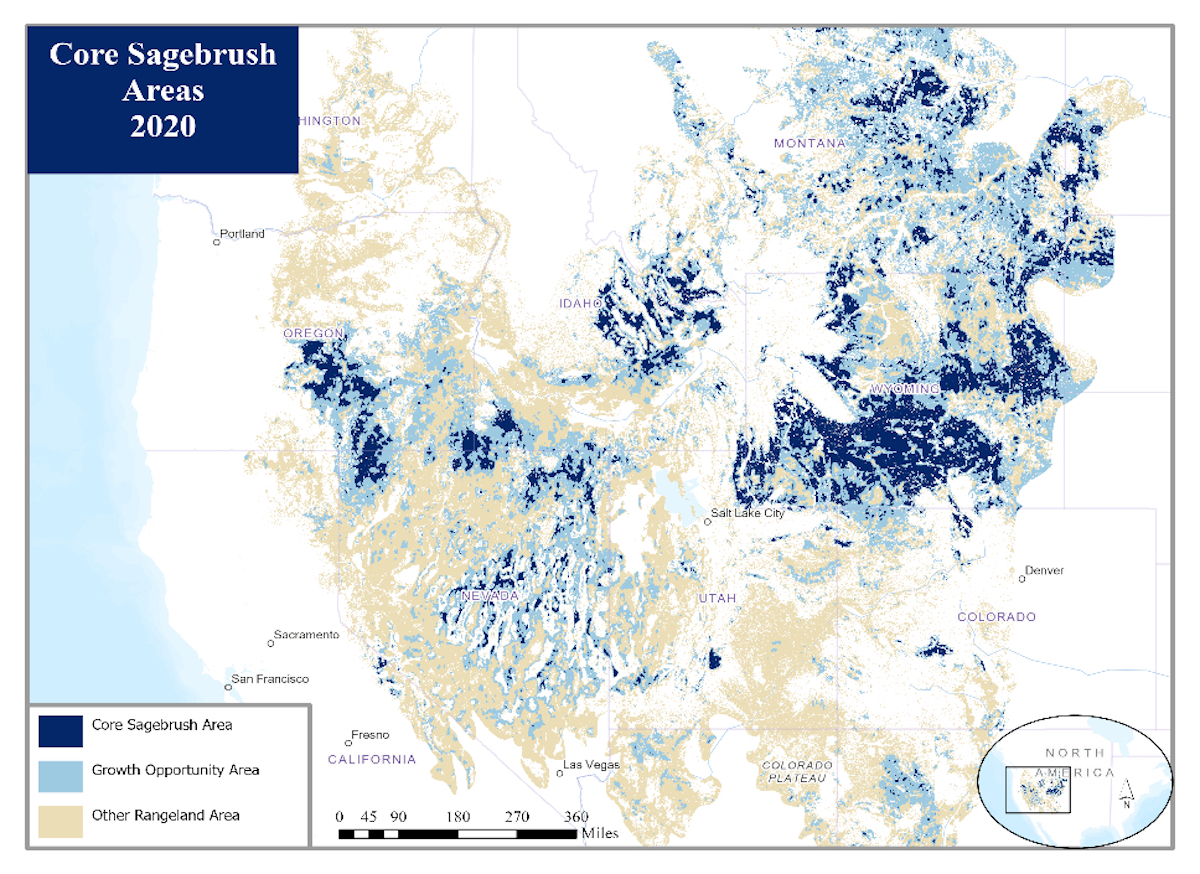
It worked: By the following summer, beavers had returned to the valley after a 20-year absence and had constructed a dam and lodge that had begun to saturate the once-parched riparian zone. Retained water nourished the 200-plus willows that teams had planted, and the revived interaction between plants, water and wildlife promises to reverse the encroachment of sagebrush that had replaced riparian plants throughout the corridor.

โ€œThe big benefit is that water remains on the landscape,โ€ says Beardsley. โ€œThat provides a big resiliency factor in times of drought.โ€

Coloradans have different needs and face a fresh set of threats that didnโ€™t bear on those European settlers 200 years ago. โ€œWeโ€™ve traded away a lot of those functions and benefits [of headwaters] by some of our past land uses,โ€ says Beardsley. โ€œBut we can trade back, which is exciting.โ€ Trail Creek and related projects indicate that headwater streams can indeed heal, when humans set them up to self-adapt.

โ€œWe donโ€™t know how they should respond to a lesser snowpack or drier conditions or wildfire,โ€ admits Beardsley. But he trusts nature to figure it out. โ€œWe ha

A freelance writer living in Steamboat Springs, Kelly Bastone covers water, conservation and the outdoors for publications including Outside, AFAR, 5280, Backpacker, Field & Stream, and others.

Colorado Rivers. Credit: Geology.com

2023 #COleg: A Conversation with Senator Dylan Roberts, #Colorado General Assembly — Water Education Colorado

State Sen. Kerry Donovan, middle, and Rep. Dylan Roberts, right, speaks at the legislative session at Colorado Water Congress in January, 2020. Donovan . Heather Sackett/Aspen Journalism

We spoke with Senator Dylan Roberts, D-Avon, for the summer 2023 issue of Headwaters magazine โ€œThe Healthy Headwaters Issueโ€ about healthy riparian systems and Senate Bill 23-270, signed into law in early June. Sen. Roberts sponsored this bill on Projects to Restore Natural Stream Systems and continues to work on next steps related to restoration. Sen. Roberts is a member of the WEco Board of Trustees and chair of the Colorado Senate Agriculture and Natural Resources Committee, he serves Coloradoโ€™s Eighth Senate District.

Can you speak to the importance of Coloradoโ€™s headwater systems, and what you hear from constituents about healthy streams and riparian areas?

So this is an issue thatโ€™s incredibly important here on the Western Slope and here in the headwaters area of the Colorado River, or any river system. Having healthy watersheds is vital for the entire river system. Iโ€™ve heard of and personally seen many great stream restoration projects across my district and across the state and have been able to see the value of them and the way they preserve our environment and protect our watersheds. So that is one of the reasons why I was very enthusiastic to sponsor the stream restoration legislation last session.

Tell us more about that. In this last session you sponsored a bill focused on Projects to Restore Natural Stream Systems, what was the impetus for that?

It was building off of some of the great work that weโ€™ve seen with stream restoration projects across the state but also hearing from local governments and nonprofit groups and organizations that wanted to do more [restoration work] but were running into legislative hurdles or cost burdens preventing those projects from happening. So the reason for that legislation was to reduce some of the barriers getting in the way of these important projects.

And it sounds like the focus of that bill was significantly narrowed before it was passed, can you talk about what happened there? Is there an impact?

So we had been working with stakeholders and [the Colorado Department of Natural Resources] (DNR) for many months prior to the introduction of that bill and then the work continued after the introduction and we heard some very valid concerns from folks in the water community that the threat in the way the bill was introduced could have unintended consequences โ€ฆ so we worked with them through amendment and committee processes and narrowed the scope of the bill. So the bill [that passed] this year was focused on minor restoration projects and weโ€™re going to continue the conversation this summer and fall and into the next [session] about tackling bigger restoration projects โ€ฆ ultimately the legislation that passed is going to be very impactful and is ultimately going to help us set up a conversation [around bigger restoration projects] moving forward.
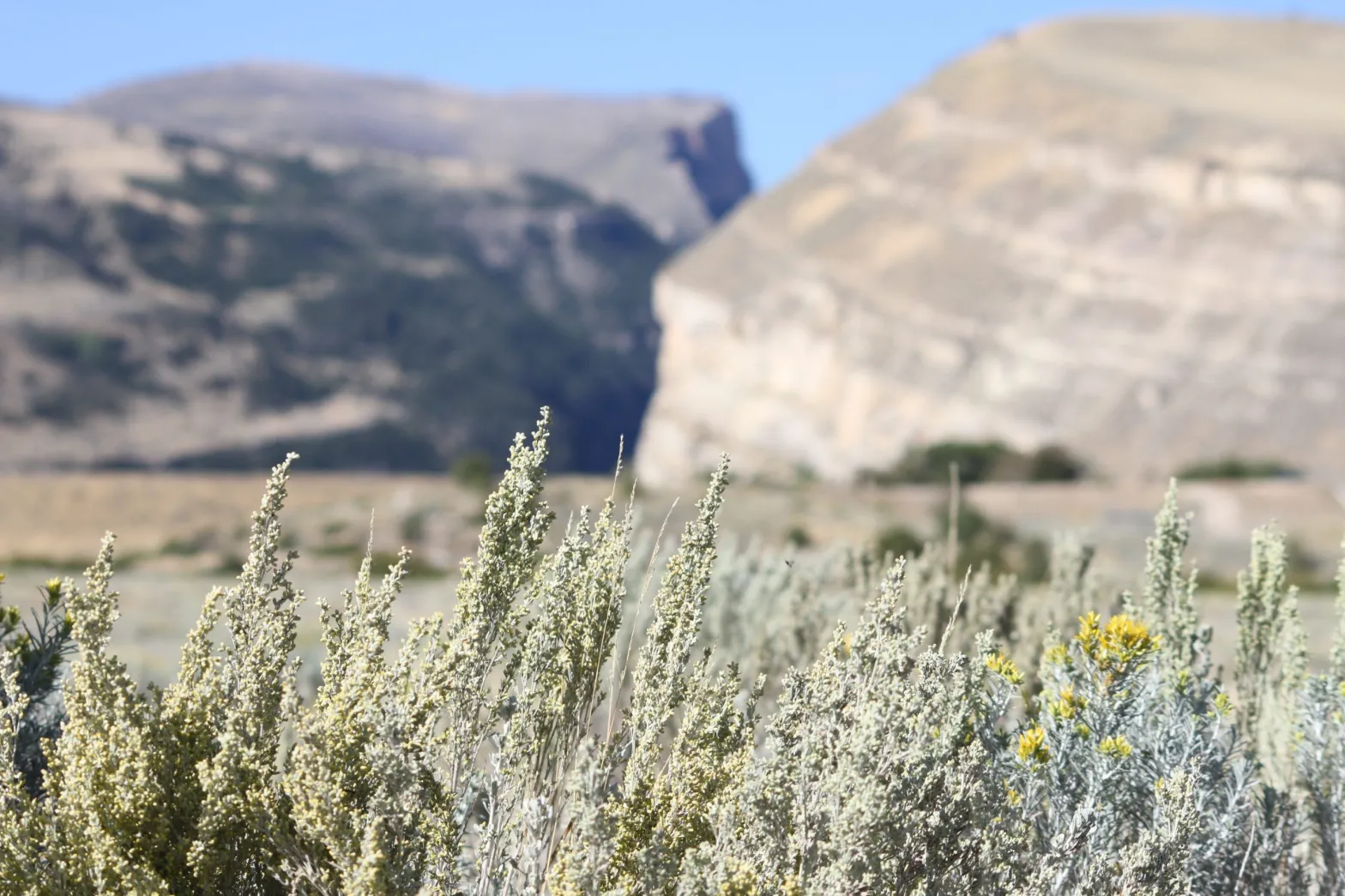
What comes next? Is there ongoing work and study to see if some of the gray areas around restoration can be cleared up through legislation in the future?

I was just speaking with DNR about this and we are currently planning a field trip for the Water Resources and Agriculture Review Committee to go down to the San Luis Valley in July to look at some stream restoration projects that have happened down there โ€ฆ Then I plan to have the stream restoration topic as part of our committee agenda during our fall meeting and hope to engage all of the relevant stakeholders if we decide to move forward [with reintroducing legislation] in the next session.

For folks on the committee and the broader water community, to make sure theyโ€™re comfortable with the bill we need to figure out the size of projects or the scope of projects that would be acceptable to move forward outside of the water court process. The big concern that we heard before the bill was amended this year was that there were projects that were too big to move forward without going through the water court process which would have put some downstream users at risk without having a forum to object to that.

We need to find what is the acceptable size of a project that we can put in statute that doesnโ€™t need to go through the water court process, and what size of project should still need to go through that [water court] process so itโ€™s finding that delineation point.

Ideas in water take a lot of time to discuss and we donโ€™t want to rush into anything and have things result in unintended consequences. So just having the stream restoration concept top of mind for folks in Colorado in a multi-year process will get everyone comfortable with the process, get everyone an opportunity to engage, and make sure weโ€™re not rushing through legislation.

Iโ€™ve heard that everyone thinks stream restoration projects are a good thing but it was a new thing for a lot of people to see legislation that would have expanded [the scope of which projects can proceed without going through water court]. But the fact that weโ€™re just keeping it at the top of everybodyโ€™s radar will help a lot to make folks more comfortable.

Is there anything else in the works or that youโ€™re thinking about related to the restoration and preservation of stream systems?

On the restoration front, one of the other reasons why we passed the bill this year and something Iโ€™m going to stay in touch with DNR on is there is a historic amount of funding available from the federal government through some of the legislation that Congress passed over the last couple of years that can be accessed through these projects. So thatโ€™s the other hurdle is having the approval and funding to [proceed with these projects and implement them]. So I want to continue following how does Colorado maximize the federal funding for these projects.

Us passing that bill and getting it signed into law is a huge step because now Colorado can say weโ€™ve cut down some barriers. We want to maximize federal funding to get as many of these projects off the ground as possible.

And as a Water Education Colorado (WEco) board member, anything to say about your time on the board or our work?

I am thrilled and honored to be on the WEco board. I just became the chair of the Senate Agriculture and Natural Resources Committee over the past year so thatโ€™s how Iโ€™m able to be on that board [one seat on the WEco board is reserved for the Senate committee chair and one seat is reserved for the House Agriculture, Livestock and Water Committee chair] but Iโ€™ve been involved with WEco during my time on the legislature, and value the things that WEco does.

I think us working on stream restoration and WEcoโ€™s work more broadly couldnโ€™t come at a more important time. We know Coloradoโ€™s water future is top of mind for many people and a lot of people are worried about our stateโ€™s water future. The work that WEco does and the work the legislature is doing could not be more important. There are a ton of opportunities and exciting things happening with WEco and the state so Iโ€™m excited about the work ahead.

Read more about watershed restoration work in Colorado and about SB 23-270 in theย summer 2023 issue of Headwaters magazine โ€œThe Healthy Headwaters Issue.โ€

#Colorado takes emergency action to oversee #wetlands, after U.S. Supreme Court removes protections — Water Education Colorado #WOTUS

Photo credit from report “A Preliminary Evaluation of Seasonal Water Levels Necessary to Sustain Mount Emmons Fen: Grand Mesa, Uncompahgre and Gunnison National Forests,” David J. Cooper, Ph.D, December 2003.

Click the link to read the article on the Water Education Colorado website (Jerd Smith):

Looking to oversee hundreds of streams and wetlands left unprotected by a recent U.S. Supreme Court ruling, Colorado water quality officials have taken emergency action to provide at least temporary protections while a more permanent program can be set up.

The move comes just weeks after a U.S. Supreme Court decision sharply reduced the number of wetlands and streams protected under the Clean Water Act.

โ€œWe will rely on this temporary policy while we work out something longer term,โ€ said Nicole Rowan, director of the Colorado Department of Public Health and Environmentโ€™s (CDPHE) Water Quality Control Division.

Under theย new policy, the CDPHE is requiring notice of discharge into state waters and it will use its new authority to guide its enforcement actions when unpermitted dredge and fill materials are discharged into state waters, according to Kaitlyn Beekman, a CDPHE spokesperson.

Members of a working group, which includes environmental and agricultural interests, as well as water utilities and mining companies, have been working with the state to explore how to create a permanent mechanism to protect Coloradoโ€™s streams and wetlands in the future.

At issue is how the U.S. EPA defines so-called Waters of the United States (WOTUS), which determines which waterways and wetlands are protected under the federal Clean Water Act. The definition has been heavily litigated in the nationโ€™s lower courts since the 1980s and has changed dramatically under different presidential administrations.

But on May 25 in Sackett v. EPA, the U.S. Supreme Court decided, among other things, that the WOTUS definition that included wetlands adjacent to streams, was too broad.

In its ruling, the court said only those wetlands with a direct surface connection to a stream or permanent body of water, for instance, should be protected.

The court decision has far-ranging implications for the environment, as well as agriculture, construction and mining, all major parts of Coloradoโ€™s economy, officials said.

The decision may also have more impact in semi-arid Western states, where streams donโ€™t run year round and wetlands often donโ€™t have a direct surface connection to a stream.

โ€œAlthough the courtโ€™s decision directly addresses only the scope of โ€˜adjacent wetlands,โ€™ its description of โ€˜waters of the United Statesโ€™ as including only relatively permanent bodies of water connected to traditional interstate navigable waters will likely result in ephemeral and intermittent waters, which constitute the majority of Coloradoโ€™s stream miles, being outside the scope of federal Clean Water Act jurisdiction,โ€ the CDPHE said in a statement on its website.

Under the Clean Water Act, the EPA and the U.S. Army Corps of Engineers are responsible for issuing permits and enforcing violations when dredge and fill activities associated with construction and road projects, among others, harm wetlands and waters considered to be waters of the United States.

Right now, though, as a result of the new Supreme Court decision, no agency has the authority to issue a permit or take enforcement action on these newly unprotected wetlands, according to Trisha Oeth, CDPHEโ€™s director of environmental health and protection programs.

โ€œThere are waters that used to be protected under federal law and you used to be able to get a permit [for dredge and fill work]. Now there is no protection and no way to get a permit,โ€ Oeth said.

Alex Funk, director of water resources and senior counsel at the Theodore Roosevelt Conservation Partnership, said he was pleased the state was moving quickly to fill in the regulatory gap.

โ€œWe were not excited about Sackett,โ€ Funk said. โ€œBut weโ€™re glad Colorado is doing something about it.โ€

Funk is hopeful that the CDPHE and lawmakers will move to introduce legislation next year that will create a wetlands law specific to Colorado that will offer broad, lasting protections. Funk said a handful of states, including Ohio and New York, have taken similar action to address the changes to the Waters of the U.S. rule.

Agricultural interests have long been worried about the WOTUS rule, because irrigators routinely work with streams and irrigation systems on their lands, where wetlands also exist.

Austin Vincent, general counsel and policy director for the Colorado Farm Bureau, said his members are comfortable with the approach the CDPHE is taking in part because there are critical exemptions for on-farm work, such as irrigating, plowing and irrigation system maintenance.

Part of the problem in the past is that the law changed so frequently, that it was difficult to know with certainty where and when permits were needed, Vincent said.

โ€œItโ€™s a big, big issue,โ€ he said. โ€œWe want to make sure that the definition the state comes up with doesnโ€™t encompass an overly broad number of waterways โ€ฆ Certainty is difficult in water. But we want as much certainty as we can get from the regulatory community.โ€

Jerd Smith is editor of Fresh Water News. She can be reached at 720-398-6474, via email atย jerd@wateredco.orgย or @jerd_smith.

Ephemeral streams are streams that do not always flow. They are above the groundwater reservoir and appear after precipitation in the area. Via Socratic.org

Research article: Archaeological sites in #GrandCanyon National Park along the #ColoradoRiver are eroding owing to six decades of #GlenCanyonDam operations — Science Direct #COriver

Click the link to access the article on the Science Direct website (Joel B.ย Sankey,ย Amyย East, Helen C. Fairley, Joshua Caster, Jennifer Dierker, Ellen Brennan, Lonnie Pilkington, Nathaniel Bransky, Alan Kasprak). Here’s the abstract and highlights:

Highlights

  • โ€ขIntegrity of 362 Colorado River archaeological sites assessed 60 years after damming.
  • โ€ขRiver-sourced aeolian sand decreased since 1973, making most sites more erosion-prone.
  • โ€ขProportion of sites eroding by gully processes has increased since 2000.
  • โ€ขErosion limits management goal to maintain or improve site integrity in situ.
  • โ€ขEnvironmental management opportunities: floods, low flows, riparian plant removal.
Abstract

The archaeological record documenting human history in deserts is commonly concentrated along rivers in terraces or other landforms built by river sediment deposits. Today that record is at risk in many river valleys owing to human resource and infrastructure development activities, including the construction and operation of dams. We assessed the effects of the operations of Glen Canyon Dam โ€“ which, since its closure in 1963, has imposed drastic changes to flow, sediment supply and distribution, and riparian vegetation โ€“ on a population of 362 archaeological sites in the Colorado River corridor through Grand Canyon National Park, Arizona, USA. We leverage 50 years of evidence from aerial photographs and more than 30 years of field observations and measurements of archaeological-site topography and wind patterns to evaluate changes in the physical integrity of archaeological sites using two geomorphology-based site classification systems. We find that most archaeological sites are eroding; moreover, most are at increased risk of continuing to erode, due to six decades of operations of Glen Canyon Dam. Results show that the wind-driven (aeolian) supply of river-sourced sand, essential for covering archaeological sites and protecting them from erosion, has decreased for most sites since 1973 owing to effects of long-term dam operations on river sediment supply and riparian vegetation expansion on sandbars. Results show that the proportion of sites affected by erosion from gullies controlled by the local base-level of the Colorado River has increased since 2000. These changes to landscape processes affecting archaeological site integrity limit the ability of the National Park Service and Grand Canyon-affiliated Native American Tribes to achieve environmental management goals to maintain or improve site integrity in situ. We identify three environmental management opportunities that could be used to a greater extent to decrease the risk of erosion and increase the potential for in-situ preservation of archaeological sites. Environmental management opportunities are: 1) sediment-rich controlled river floods to increase the aeolian supply of river-sourced sand, 2) extended periods of low river flow to increase the aeolian supply of river-sourced sand, 3) the removal of riparian vegetation barriers to the aeolian transport of river-sourced sand.

Glen Canyon Dam construction. Credit: Sibley’s Rivers

The Great Plains: Bringing Back an โ€˜American Serengetiโ€™: Conservationists are working to preserve eastern #Montanaโ€™s intact prairie and return its assemblage of native wildlife — The Revelator

A bison family in the Charles M. Russell National Wildlife Refuge. Photo: Katie Butts/USFWS (CC BY 2.0)

Click the link to read the article on The Revelator website (Tara Lohan):

Some people call the Great Plains โ€œflyover country.โ€ Outdoor enthusiasts sail above it on the way to the mountains of Acadia, Californiaโ€™s redwoods or Utahโ€™s red rock. Conservationists, too, have bypassed the region. Few big public preserves or parks exist there.

Ecologist Curtis Freese hopes that changes.

His new book, Back From the Collapse: American Prairie and the Restoration of Great Plains Wildlife, is a call to protect and restore the northern Great Plains and the biodiversity it once held in great numbers. That includes swift foxes, beavers, river otters, bison, elk, pronghorn, black-footed ferrets, grizzly bears, wolves and numerous species of grassland birds.

Some of that work is already underway. In 2002 Freese helped launch the nonprofitย American Prairie,ย which aims to establish a preserve of 3.2 million acres in northeast Montana where the mixed-grass prairie has escaped the wrath of the plow that uprooted many other areas of the Great Plains. The groupโ€™s about halfway to its goal, with nearly 600,000 acres of deeded lands or leased public lands, along with 1.1 million acres of the Charles M. Russell National Wildlife Refuge.

โ€œThe region offers our best chance to reassemble the native wildlife community within a vast reserve large enough to preserve the ecosystem to its fullest potential,โ€ he writes in the book.

The Revelator spoke with Freese about the biodiversity of the northern Great Plains, what it would take to restore native wildlife, and what obstacles remain.

Why do you think the Great Plains is often neglected when it comes to conservation?

I think thereโ€™s two main reasons. One was that compared to wetlands or forests or mountains, agriculture could simply get a quick jump on colonizing the Great Plains. You didnโ€™t have to drain the wetlands, you didnโ€™t have to clear the forest, you just opened the gates and let the cows out. It was all right there, ready to eat or plow.

Secondly, the turnover from 1870 to 1895 was dramatic. There had never been such a big change in the world so quickly โ€” from an ecosystem where there was nothing but wild ungulates, to one that virtually eliminated all the ungulates and you had nothing but livestock. Because it was eliminated so quickly, there wasnโ€™t a chance for the public to appreciate what had been โ€” to say, โ€œWe need a big Great Plains park like Yellowstone.โ€ We never had the chance.

What was the biodiversity of the region like before European colonization brought plows and cows? And how does that compare with whatโ€™s there now?

This was one wild, rambunctious system that went through a lot of ups and downs. We had glaciers covering it just 12,000 years ago. In the mixed-grass prairie itโ€™s 110 degrees Fahrenheit in the summer and sometimes itโ€™s -50 degrees in the winter, so youโ€™ve got to be tough to live there. Prairie wildlife exhibits that. Bison donโ€™t need to go to water nearly as much as cows do.

When Lewis and Clark went through eastern Montana [in 1805-1806] they saw more wildlife than any other place in their trip โ€” either to the east or to the west of the Rocky Mountains โ€” all the way to the coast. It was just a remarkable ecosystem that we once had.

Curtis Freese. Courtesy of the author.

Now most of the species are either [greatly diminished] or not there at all, such as the wolf. Wolves now are in the Rocky Mountains of Montana, but back in the 1880s and 1890s, the state put a bounty on them, and every year roughly 4,000 to 6,000 wolves were killed, mostly in the plains of eastern Montana.

Today weโ€™ve got relatively good numbers of deer because people like to hunt deer and theyโ€™re not quite so threatening to agriculture. But the elk numbers are highly suppressed because of depredation concerns about crop land, and pronghorn numbers are still down. The bison is simply a fraction of 1% of what it once was.

Whatโ€™s the potential to be able to restore some of these populations of native wildlife?

What I see in northeast Montana โ€” and whatโ€™s great about this ecosystem โ€” is its diversity of habitat. Youโ€™ve got the Missouri River running through it. Then youโ€™ve got floodplains and the rugged Badlands-like environment as you come out of the floodplain up into the rolling prairie. And then there are these isolated mountain ranges, like the Little Rocky Mountains, with pine forests. You have this wonderful cross section of habitats that support a great diversity of species. Some only live down in those floodplains. Some live in the rolling prairie, like the swift fox, and others live in the more mountainous and forested areas, like mountain lions.

The diversity of habitat is there, and much of itโ€™s intact, but thereโ€™s still a threat of prairie being plowed up and put into wheat and barley. Once you plow it up, thatโ€™s the killer threat. Nothing survives very well in a wheat field.

Charles M. Russell National Wildlife Refuge was established, in part, for pronghorn. Photo: USFWS (CC BY 2.0)

Put bison out there [instead], theyโ€™ll double the population every three or four years, no problem. Three of the Indian reservations in the region have bison. Grasslands National Park just across the border in Saskatchewan has bison. But we need to create much bigger herds of bison to mimic what they once did to that ecosystem and support the diversity of grassland habitat by their grazing. So thereโ€™s a long way to go in terms of building back the wildlife numbers.

Some, like the black-footed ferret, have a real challenge ahead of them because prairie dogs, which are their main source of food, continue to be poisoned and shot. Another threat is an introduced disease that came decades ago from Asia and is highly lethal to prairie dogs, as well as ferrets.

Others are also going to take some extraordinary effort to bring back. With wolves and grizzly bears, the problem isnโ€™t a lack of food โ€” or as we say, the โ€œecological carrying capacityโ€ of the environment. Itโ€™s the social carrying capacity โ€” peopleโ€™s tolerance for big predators. We need to have some innovative approaches to enabling these big predators.

What does recovery look like for native grassland birds, many of whom are also declining?

Ecologist Andy Boyce said that recovering birds should be the easiest. They donโ€™t threaten anybody. They move around to find the best habitat. And yet we still have declining bird populations because of three main threats.

One is the ongoing conversion of grasslands to cropland. The problem there as much as anything is the huge farm subsidies that lead to more plow-up and conversion of prairie to cropland.

The second is homogeneous grazing. In rangeland management the idea is to have the cows eat half the grass and leave half the grass everywhere. Uniform grazing. Well, to a lot of birds, thatโ€™s the worst outcome because some birds like it grazed down to the ground. Other birds like it not grazed at all. If youโ€™re a five-inch-tall bird, that difference in grass height is like the difference for us of walking through a forest versus the shrubland.

So we need bison, and sometimes fire, to go back and recreate that diversity of grassland habitat, which birds depend upon.

The third one thatโ€™s an increasing threat are the new neonicotinoid insecticides, which are shown to be highly toxic to migratory birds and pollinators like butterflies and bees.

Whatโ€™s needed to boost conservation in the region?

There are three pillars of conservation in the Great Plains. The first is no more sod busting, no more conversion of grassland to cropland.

Number two is the ranching community needs to be much more friendly to prairie wildlife. A lot of ranchers do a good job. Thereโ€™s a lot of good ranch management going on, but a lot of them donโ€™t. For example, prairie dogs are still much maligned and not tolerated, and they donโ€™t create that much of a problem for ranching. And we also still see bison as belonging behind a fence, which is nuts.

We need to have a new kind of approach to ranching that realizes wildlife like bison, big predators, and small animals like prairie dogs, all have a place. Ranching can provide corridors and safe passage between parks, refuges and reserves for wildlife to move through.

Then third, weโ€™ve got to have big protected areas of a million acres or more. Those are the cornerstone of wildlife conservation, whether youโ€™re in the Great Plains, the Amazon or the Arctic. So we need more places like American Prairie and the Charles M. Russell Refuge across the Great Plains if we want to restore and conserve everything from prairie birds to ferrets to large predators and ungulates.

A black-footed ferret in the Charles M. Russell Wildlife Refuge. Photo: USFWS, (CC BY 2.0)

Weโ€™ve got a lot of public lands in the Bureau of Land Management lands and National Grasslands, which are managed by the Forest Service. An act of Congress could convert those into more protected status.

Those places have a multiple-use mandate that includes biodiversity conservation. I think we simply have to provide greater weight to the biodiversity benefits of these public lands that belong to all the public, not just to the ranching communities that graze them. I think we need to have a shift in attitudes about what the best use of these lands is. And I think in a lot of cases, these public lands, the best use is for wildlife biodiversity conservation.

In just the Great Plains alone, weโ€™re spending $10 billion a year to subsidize farming. What if we just took 10% or 20% of that and we apply it to buying and conserving grasslands?

Private lands have got to be part of the solution too, because especially in the southern Plains, almost all the lands are private lands.

A third part of the solution is Tribes. Indian reservations are engaging in wildlife restoration as well.

American Prairie, working with the Charles M. Russell National Wildlife Refuge, can serve as a place where the American public can visit a landscape of an endless sky and wildlife with no fences, the likes of which you wonโ€™t see unless you go to the African Serengeti now. It used to be the African Serengeti in the Great Plains. Once people experience that, itโ€™s going to be a revelation of, โ€œYes, we could have this, we could restore it.โ€

Saving cutthroat trout from the brink: Rio Costilla Native Fish Restoration Project hits 120-mile mark — The Taos News

Valle Vidal. By Jeremy L Davis – Jeremy L Davis, CC BY-SA 3.0, https://commons.wikimedia.org/w/index.php?curid=21037124

Click the link to read the article on the Taos News website (Idone Rhodes). Here’s an excerpt:

More than three decades of ongoing work to restore Rio Grande sucker, Rio Grande chub and, most importantly, Rio Grande cutthroat trout โ€” New Mexicoโ€™s state fish โ€” to their native environment culminated with a celebration last weekend (July 1)ย in the Valle Vidal Unit of Carson National Forest, hosted by the New Mexico Department of Game and Fish and the U.S. Forest Service.

Cutthroat trout historic range via Western Trout

Rio Grande Cutthroat Trout are the southernmost subspecies of cutthroat trout and are native to Southern Colorado and New Mexico. Once abundant in these waters, the subspeciesโ€™ population has been severely diminished by a variety of factors, including competition or breeding with non-native species, such as brook, brown and rainbow trout, as well as habitat loss. Rio Grande cutthroat and Rainbow spawn at the same time and can interbreed to produce hybrid โ€œcutbowโ€ trout.

The project restored Rio Grande cutthroat trout to 120 miles of their historic range in the Rio Costilla watershed, as well as 16 lakes and one reservoir. Teams worked tirelessly to remove native fish from waterways before treating the waters with the piscicide rotenone to kill off non-native fish.

Since 2002, the Seven Springs Fish Hatchery in Jemez Springs has raised over 72,000 Rio Grande cutthroat trout using pure trout taken from streams and other water sources. These fish are then used to restore wild populations and provide angling opportunities. Itโ€™s an ongoing collaboration between the Forest Service, which manages the land, and Game and Fish, which manages the subspecies, explained Carson National Forest Biologist Alyssa Radcliff. Some of the restored waterways are also on private land. As waterways were restored, fish barriers were built to keep non-native species from moving back up stream. In 2016, a permanent barrier was constructed in the Valle Vidal Unit to maintain the restored area.

The initial goal of the project was much smaller, with a focus on specific segments of waterways upstream. Eventually, however,โ€œWeโ€™re like, โ€˜Why donโ€™t we just do the whole basin?โ€ Francisco Cortez, the program manager for fisheries on the Carson, said. Cortez has been working on the project since the early 1990s and watched it grow from habitat and population surveys to the large-scale restoration operation it is today.

A Rio Grande cutthroat trout is pictured in 2014. Photo courtesy of U.S. Fish & Wildlife Service

Restoring the land can feel a lot like fun — Writers on the Range #ActOnClimate

Autumn at a cattle ranch in Colorado near Ridgway โ€“ County Road 12, Craig Zerbe Photo

Click the link to read the article on the Writers on the Range website (Richard Knight):

Driving back to Colorado State University with a van full of students after a day of working to heal some beat-up land north of Fort Collins, I wondered: Could ecological restoration be a new form of outdoor recreation?

Weโ€™d spent the day building a sawbuck fence around a spring. From the spring, gravity would carry the water through a pipe to a stock tank in the middle of the pasture.

On this land protected by a conservation easement, cows would no longer drink, pee and poop while trampling the springโ€™s vegetation. The spring could recover while the cattle drank clean water elsewhere.

My students had spent the day outdoors in the company of their classmates doing challenging physical work. At the moment, though, the young people were trying not to fall asleep as we neared town.

Yet all day Iโ€™d seen the light in their eyes, and I could tell they felt pride in learning and exercising skills they hadnโ€™t had before. They also clearly liked the idea of giving something back to land that would never be developed.

This kind of volunteer work โ€” The Nature Conservancy got us involved โ€” addresses many problems today that weโ€™ve come to call crises: species extinction, climate change, soil loss, and the decline of both water quantity and quality. Fortunately, many nonprofit groups, along with some owners of private lands that are protected by conservation easements, offer people an opportunity to improve damaged lands.

In my home watershed of northern Colorado, we often work with the nonprofit Wildlands Restoration Volunteers, a statewide grassroots group established in 1999. To date, it has completed over 1,000 projects on public lands assisted by more than 40,000 volunteers, who have contributed over $10 million in time and expertise.

Wildlands Restoration Volunteers includes people from both cities and rural areas who agree with what Wendell Berry wrote: โ€œThe care of the Earth is our most ancient and most worthy, and after all, our most pleasing responsibility. To cherish what remains of it and to foster its renewal is our only hope.โ€

At the end of the 20th century, scientists from around the world got together to measure our planetโ€™s health. Shockingly, they reported that three out of every four acres of the Earthโ€™s surface were in a degraded state.

The urgent global need to restore our damaged lands and waters has also caused the United Nations to name this the Decade of Ecosystem Restoration (https://www.decadeonrestoration.org/). Itโ€™s clear that we have yet to locate the sweet spot of a sustainable relationship with our world.

For humans to have a future on Earth, we need to reverse the erosion of soils, pollution of air and water, and weakening of the natural ecosystems that support us. Ecological restoration can attack those problems while also playing a critical role in the drawdown of atmospheric carbon dioxide, sending it back into the plants and soils where it belongs.

Although restoration and recreation have much in common, there is a major difference between the two. While outdoor recreation fulfills oneself, ecological restoration gives back to the land. Not that benefiting oneself is bad; one of the reasons we recreate is for the regenerative powers of spending time in nature. 

But adding restoration into the domain of outdoor recreation could go a long way to enhance our time outdoors. Iโ€™ve found that when a group acts to restore the health of soil, land, plants and animals, the people involved always feel better about themselves.

Richard Knight

As author Robin Wall Kimmerer put it in โ€œBraiding Sweetgrass,โ€ โ€œโ€ฆas we care for the land, it can once again care for us.โ€ By restoring damaged lands and waters, we still find joy in the outdoors, but we also give back to the home planet that sustains us.

Letโ€™s seek out that work, turning it into something we do outdoors together, restoring lands and water while at the same re-creating ourselves.

Rick Knight is a contributor to Writers on the Range, writersontherange.org, an independent nonprofit dedicated to spurring lively conversation about the West. He is professor emeritus of wildlife conservation at Colorado State University.

2023 #COleg: Stream Restoration Legislation Will Benefit Birds and People in #Colorado: New law is a win and a good first step to clarifying stream restoration activities — Audubon Rockies

Governor Polis signs SB23-270 into law. Photo: Abby Burk

Click the link to read the article on the Audubon Rockies website (Abby Burke):

Our decisions about the health and functioning of our streams and rivers reflect our priorities and values and influence all areas of life for people, birds, and nature. This legislative session, SB23-270, Projects To Restore Natural Stream Systems, was passed by the Senate, then the House, and then signed into law on June 5, 2023, by Governor Polis. SB23-270 is a solid win for Coloradoโ€™s streams and a good first-step opportunity to steward our rivers back into health. The bill was led by the Department of Natural Resources staff and sponsored by Senators Dylan Roberts and Cleave Simpson, along with Representatives Karen McCormick and Marc Catlin.

Through numerous meetings, outreach events, and late-night (or early morning?) committee hearings, SB23-270 moved through substantial changes from when it was first introduced. Audubon Rockies, Colorado Healthy Headwater Working Group, and Water for Colorado partners worked with agencies, lawmakers, water conservation districts, and other partners for the best possible outcome for healthy, functioning, and resilient river systems for people and birdsโ€”the natural water systems that we all depend upon.  

Why the Need for Stream Restoration Legislation in 2023?ย 

The need for stream restoration clarity around water rights administration is mainly three-fold.

First, existing Colorado water administration creates substantial regional variability, uncertainty, and even barriers to restoring the valuable natural processes of stream corridors. Legal clarity for stream restoration can reduce barriers for these important projects to get off the ground. 

Second, the majority of our stream corridors have been degraded by more than two centuries of hydrologic modification, agricultural land use practices, roads and development, channelization, mining, and climate-driven disasters. The good news is that case studies of Colorado and other Western statesโ€™ stream restoration projects have proven successful in improving human and environmental health and reducing vulnerability to fire, flood, and drought. Thus, it was critical to provide clarity on how stream restoration could be done without needing to obtain a water right. The uncertainty around water rights was causing many projects to be put on hold.

Third, the timing of the currently available once-in-a-lifetime opportunity to receive funding from federal programs for stream and watershed restoration is critical so that we can have healthy streams and rivers for decades into the future. 

The Evolution of the Bill 

The bill moved through significant water community dialogue, education, and input throughout the arc of the legislative session.ย Significant amendmentsย during the Senate Agriculture and Natural Resources Committee hearing resulted in unanimous support and forward movement through the General Assembly for the final version that passed.ย 

The original bill draft was based on the science of utilizing the โ€œhistoric footprintโ€* for where stream restoration could take place without enforcement actions. The historical footprint is how stream restoration has operated in Colorado for more than 30 years. However, that was not a concept that many legislators and water stakeholders were familiar with, so the language evolved to things they were familiar with.

The final bill defines a set of minor stream restoration activities that are not subject to water rights administration. These include stabilizing the banks orย substrateย of a natural stream with bioengineered or natural materials, installing porous structures in ephemeral or intermittent streams to stop degradation from erosional gullies and headcuts, and installing structures in stream systems to help recover from and mitigate the tremendous impacts that occur to water supplies from wildfires and floods. The language in SB23-270 provides clarity for project proponents and the water rights community. It also provides protections for completed stream restoration projects and those that have secured permits before August 1, 2023.ย 

While this bill is an important step forward in facilitating stream restoration activities that improve the health and resilience of our streams and landscapes, Audubon and our partners will continue to work with stakeholders and regulators to clarify a path forward for stream restoration projects that do not fit within the minor stream activity categories. 

Senator Roberts remarked at the SB23-270 bill signing on June 5th, 2023, โ€œThis bill is taking away the red tape that has gotten in the way of some of these projects and costs barriers that have gotten in the way of these projects. We can do this type of work in so many parts of our state. Thatโ€™s so important right now, as we know as we try to do everything we can to conserve and protect our water. This bill started off with a very contentious idea. We made some amendments that made it a little less contentious. We know we will continue to work on this issue as it goes forward. But we are making major progress here today.โ€

Whatโ€™s Next?

In the coming months, the Colorado Department of Natural Resources will work closely with the Division of Water Resources to interpret the language signed into law. Following this, Audubon and the Healthy Headwaters Working group will facilitate outreach and training events on SB23-270 for stream restoration practitioners and interested organizations. And most importantly, we will continue to educate decision-makers on the evolving state of river restoration science and the benefits of healthy functioning floodplains and river corridors for birds and people.

Thank You!

Thank you for your interest and engagement during the 2023 Colorado legislative session on stream restoration! More than 300 people attended the live Audubon-Colorado Department of Natural Resources stream restoration webinars, part 1 and part 2. And 1,266 Audubon members sent supportive comments to legislators. Canyon Wrens, Yellow Warblers, and Belted Kingfishers depend on you to support our healthy rivers, wetlands, and watersheds for all of us. Audubon will continue working with agencies, lawmakers, and partners to prioritize water security for people, birds, and the healthy freshwater ecosystems we all depend upon.

*Historic footprint references the historic riverine footprint encompassing the stream channel, associated riparian zones, and floodplain.

Watershed Warriors: Meet the local groups working to protect the #UncompahgreRiver — The #Montrose Daily Press #GunnisonRiver

Uncompahgre River Valley looking south

Click the link to read the article on the Montrose Daily Press website (Kylea Henseler). Here’s an excerpt:

Agricultural users, who grow our very food, depend on the health of the river, soil and habitat around it, while recreational users take advantage of opportunities for activities like fishing and surfing. In this sense, the river boosts the economy and literally helps put food on the table…Multiple local and nearby groups have organized around this river and other Western Slope water resources, and yesterday, June 15, 2023, four met up at the Montrose Library to introduce themselves and explain their mission and current efforts. Most have educational opportunities available and are seeking volunteers, and all are focused on protecting watershed health for all kinds of users for years to come…

Friends of the River Uncompahgre

The mission of this Montrose-based group is โ€œrestoring, enhancing and protecting the Uncompahgre River through stewardship efficacy, partnerships and education,โ€ according to Board President โ€‹โ€‹Melanie Rees. Its biggest immediate focus is on restoration, as the group is working with Grand Junction-based RiversEdge West on a project to remove invasive species from areas of the river in the city of Montrose and revegetate them with native plants…

Shavano Conservation District

This special government district covers parts of Montrose, Delta, Gunnison, Ouray and San Miguel counties and has been around since the Dust Bowl era focusing on providing conservation resources for agricultural producers.ย ..

Uncompahgre Watershed Partnership

The Ouray County-based Uncompahgre Watershed Partnership focuses on protecting the upper Uncompahgre River Watershed, but since the water flows toward Montrose, their work impacts us all. According to Executive Director Tanya Ishikawa, the group was founded in 2007, when local residents were concerned that state officials couldnโ€™t monitor the water quality within the watershed closely enough…

Gunnison Gorge Anglers

A chapter of the national organization Trout Unlimited, Gunnison Gorge Anglers serves parts of Montrose, Delta, Hotchkiss, Paonia, and Telluride.ย  While โ€œAnglersโ€ is right in the name, President Joel Evans said: โ€œWeโ€™re talking about a lot more than fishing. Weโ€™re talking about the river and how to take care of things.โ€

Map of the Gunnison River drainage basin in Colorado, USA. Made using public domain USGS data. By Shannon1 – Own work, CC BY-SA 4.0, https://commons.wikimedia.org/w/index.php?curid=69257550

#ColoradoRiver #Drought Crisis is Fostering a More Collaborative U.S.- #Mexico Relationship — Time Magazine #COriver #aridification

Colorado River Dry Delta, terminus of the Colorado River in the Sonoran Desert of Baja California and Sonora, Mexico, ending about 5 miles north of the Sea of Cortez (Gulf of California). Date: 12 January 2009. Photographer: Pete McBride, U.S. Geological Survey

Click the link to read the article on the Time Magazine website (Anisha Koli). Here’s an excerpt:

…in recent years, the countriesโ€™ relationship, when it comes to the river at least, has entered a new era of agreement and mutual advancement, as both countries face unprecedented drought and a need to revamp water systems.

โ€œOn earlier occasions, what Iโ€™ve seen is two countries that had a bilateral water management agreement where the gains from one country would equal the losses of the other country,โ€ Carlos de la Parra, who leads Restauremos El Colorado, an environmental nonprofit, tells TIME. โ€œTheyโ€™ve migrated into a regional approach, realizing that itโ€™s the same river, itโ€™s the same basin and investments on one side of the border will benefit both sides of the border.โ€

Under a 1944 treaty established between the U.S. and Mexican governments, Mexico was allotted a guaranteed annual quantity of water. The agreement had flaws though. It didnโ€™t mention water quality, and in the 1960s when the riverโ€™s salinity rose dramatically, the water directed to Mexico wasย too saltyย for human consumption or agriculture. Following farmer protests and threats from the Mexican government to take the dispute to the International Court of Justice, the U.S. agreed to an updated treaty in 1973 that ensured equal water quality. Most recently in 2017, the two governments revisited the negotiating table to strikeย Minute 323, a nine-year deal that set standards for how water should be allocated during surpluses and reduced during droughts. It also committed both countries to pledge resources and funding for environmental restoration. John Shepard, senior advisor at the Sonoran Institute, a non-profit that advocates for Colorado River restoration, notes that a new deal could be on the horizon. โ€œIf the lower basins agreed to cuts as theyโ€™re being articulated in this agreement, then Mexico will likely agree to a proportional share of cuts.โ€

[…]

Keeping the river and its ecosystems healthy has been aย source of argumentย over the years. In the U.S. the prevailing view has been that itโ€™s Mexicoโ€™s responsibility to protect and restore the delta because itโ€™s chiefly located in Mexico, where it then flows into the Gulf of California. Mexico has argued that the U.S. should take responsibility because the countryโ€™s management and control of the river caused poor water quality and decimated habitats. Now, experts on both sides of the border are working to find a more collaborative way forward.

โ€œThereโ€™s a saying that, โ€˜a crisis is a terrible thing to waste.โ€™ In many ways, thatโ€™s how Iโ€™m approaching this,โ€ De la Parra says. โ€œMany people like myself are hard at work, thinking about how we can capitalize the crisis and move the irrigation district and other water uses into a more productive, more sustainable model.โ€

Map of the Colorado River drainage basin, created using USGS data. By Shannon1 Creative Commons Attribution-Share Alike 4.0

Grant-funded effort will remove invasive species from along the #UncompahgreRiver — The #Montrose Daily Press

Tamarisk

Click the link to read the article on the Montrose Daily Press website (Kylea Henseler). Here’s an excerpt:

RiversEdge West, a Grand Junction-based nonprofit, received $22,035 from the Colorado River Districtโ€™s Community Funding Partnership and $34,433 from the Colorado Water Conservation Board to restore two river sites owned by the city of Montrose.

According to RiversEdge West Restoration Coordinator Montana Cohn, the two sites together total around 70 acres, and the project will allow the group to remove about 8 acres worth of invasive tamarisk and Russian olive plants and replace them with native species…One site is off Mayfly Drive, and the other is near Home Depot off Ogden Road. Cohn said restoration efforts at these sites have yielded positive results before, and the new project will expand on previous work.ย  He explained invasive thorns and plants like Russian olive and tamarisk crowd out native vegetation, degrade soil quality and, since some are thorny, block access to the river for wildlife, livestock and recreationists…

The project will go down in phases, starting with volunteer efforts this summer. Then in the fall, paid crews from the Americorps program Western Colorado Conservation Corps will come in with herbicides and chainsaws and remove as many of the invasive plants as possible. Efforts, including volunteer replanting efforts of native plants, will continue into 2024.

Russian Olive

New report: State of the Science on Restoring Western Headwater Mountain Streams

Trail Creek, Gunnison County, CO | Photo by Jackie Corday

Click the link to read the article on the American Rivers website (Hannah Holm):

As western mountain snowpacks diminish and wildfires race across parched landscapes, appreciation has grown for the moist mountain meadows and wetlands that hold water up high, feeding streams throughout the summer and providing fire-resistant refuges for wildlife. Before beavers and their dams were largely eliminated by the fur trade, these natural water storage features and refuges were common across western statesโ€™ mountain landscapes.

Beavers added to a LTPBR structure installed on Beaver Creek, Gunnison County, CO

The removal of beavers and other land disturbances have led many creeks to cut deeper into their valleys and detach from their floodplains, dropping the water table and drying out the landscape. A growing field of stream restoration, known as low-tech process-based restoration (LTPBR), seeks to reverse these changes through methods that mimic beaver activity in hopes of enticing them to return.

Projects across the west have demonstrated the benefits of LTPBR on the landscape. Projects have improved water quality, provided important habitat, trapped sediment, increased riparian vegetation and forage, and bolstered resilience against drought, fire, and floods. These benefits are achieved by installing low-tech, hand-built structures, creating โ€œspeedbumbsโ€ that enable water from snowmelt and storms to spread across the riparian area, slowing peak flows and recharging groundwater. The rewetted soil โ€œspongeโ€ supports healthy riparian vegetation and reduces wildfire risks.

LTPBR project on Beaver Creek, Gunnison County, CO

As LTPBR projects have proliferated across western states, both excitement about their benefits and questions about potential impacts have grown. A new report from American Rivers reviews the published science and case study information on LTPBR to better understand the full range of benefits these projects can provide, and provides scientific evidence to address potential concerns. The report finds ample evidence for LTPBR benefiting habitat and buffering the impacts of droughts, floods, and wildfires, but concludes that more research is needed to better understand the full suite of ecosystem service benefits. It also provides insights on how to address human and social factors related to LTPBR projects, such as mitigating beaver dam impacts to infrastructure.

CLICK HERE FOR FULL REPORT

CLICK HERE FOR STATE OF SCIENCE EXECUTIVE SUMMARY

U.S. Supreme Court Decision Threatens Waterways that Birds (and People) Need: The Courtโ€™s ruling in Sackett v. Environmental Protection Agency removes crucial protections for wetlands, limiting the Clean Water Act — Audubon

Sora rail. Photo credit: Claudio Contreras Koob

Click the link to read the article on the Audubon website:

โ€œThis Supreme Court ruling weakens our federal standards for clean water, threatening our ability to protect ecosystems and landscapes needed for birds and communities across the country,โ€ said Julie Hill-Gabriel, Audubonโ€™s Vice President for Water Conservation.

โ€œFederal experts will no longer be able to require certain development permits in Americaโ€™s decimated wetlands. This decision undermines Clean Water Act protections for many types of waterways that birds and people need, all while birds are telling us that more action is needed to protect their future.โ€

In today’s [May 25, 2023] ruling, the United States Supreme Court curtailed the ability of the Environmental Protection Agency (EPA) and the United States Army Corps of Engineers to regulate โ€œwaters of the United Statesโ€. While the Clean Water Act includes regulatory definitions for most large bodies of water and rivers, smaller waterways which may be seasonal or disconnected are not as clearly defined. Todayโ€™s ruling limits the ability of the agencies to permit activities on many of these smaller waterways and means that unregulated development can occur in many of these areas.

With the loss of 3 billion birds in the past 50 yearsโ€”in part due to dwindling wetlands and significant development of natural spacesโ€”and Audubon science showing that two-thirds of North American bird species are at risk of extinction from climate change, action is needed to protect the water bodies and habitat that birds need to survive. Waters throughout the United States like seasonal streams and isolated wetlands serve as essential habitat for birds and other wildlife. These water bodies provide crucial sources of drinking water, food, and nutrition for birds. Birds also uses lakes, streams, and wetlands for breeding and nesting, as well as for rest stops during long migratory journeys.

Wetlands and seasonal streams provide more than just critical bird habitatโ€”they also provide us with natureโ€™s filters to clean our drinking water and protect us from storms, floods, and other climatic stressors. Too many low-income communities, Tribal communities, and communities of color do not have consistent access to safe, affordable drinking water and strong protections under the Clean Water Act are needed to support these communities.

โ€œMore than fifty years ago, Congress came together in a bipartisan manner to pass the Clean Water Act,โ€ said Hill-Gabriel. โ€œWe all need clean water to survive and thrive and this ruling means that there are now fewer tools in the toolbox for our federal agencies to protect vital habitats and waterways for birds and people.โ€

Audubon will continue working with state and local decision-makers to strengthen protections for waterways that birds need.

Volunteers helping survey Rabbit Valley for rare plant — The #GrandJunction Daily Sentinel

Dolores River skeleton plant (Lygodesmia doloresensis). Photo by Peggy Lyon via Colorado Natural Heritage Program

Click the link to read the article on The Grand Junction Daily Sentinel website (Dan West). Here’s an excerpt:

Tucked away in Rabbit Valley, a rare native plant called the Dolores River Skeleton Plant has been spotted. Very little is known about it, but Colorado Canyons Association and the Bureau of Land Management are hoping to learn more with the help of some local volunteers and a smartphone app. On Thursday, June 1, 2023, the Colorado Canyons Association is hosting an event for volunteers to come and gather data on the plant with the help of BLM ecologists. Plant location, population and even what bloom stage the flowers are in are some of the things the volunteers will record, CCA Volunteer and Outreach Coordinator Morgan Rossway said…

โ€œIt has such a brief window when it blooms to be able to identify it,โ€ Rossway said. โ€œWeโ€™re hoping that we can catch that window and with the help of the BLM ecologists that are going to come to the event theyโ€™ll help our volunteers (identify the plant).โ€

Volunteers will enter the data into the iNaturalist app. The app is a joint initiative of the California Academy of Sciences and the National Geographic Society, which allows users to enter observations of plants into the app and share it with other users. In this case it will be shared with BLM ecologists, rather than the general public…

The CCA is still accepting volunteers to help with the Dolores River Skeleton Plant Survey. If you are interested in taking part you need to register for the event online atย coloradocanyonsassociation.org.

RiversEdge Westย receives grant for riparian restoration on the #WhiteRiver — The Rio Blanco Herald-Times

White River Basin. By Shannon1 – Own work, CC BY-SA 4.0, https://commons.wikimedia.org/w/index.php?curid=69281367

Click the link to read the release on the Rio Blanco Herald-Times website:

RiversEdge West (REW) is pleased to accept a $48,788 grant award from the Colorado River Districtโ€™s Community Funding Partnership to continue important riverside (riparian) restoration work along the White River in Rio Blanco County.

REW leads the White River Partnership (WRP), a group committed to restoring and maintaining healthy riparian areas along the White River in northwest Colorado and northeast Utah through collaboration among public, private, and non-profit entities. REW works with WRP partners to prioritize and plan restoration sites, coordinate invasive plant removal with contractors and youth corps, and to monitor restoration sites after invasive plant removal.

Tamarisk

This project will remove invasive plant species, like tamarisk and Russian olive, from the White River corridor on public and private lands. Removing these invasive plants will enhance public access to river recreation areas and improve wildlife habitat and agricultural productivity on nearby privately-owned property. To complete this work, REW will partner with Western Colorado Conservation Corps, based in Grand Junction, which engages young adults on the Western Slope in conservation and restoration work by training them for careers in land management.

โ€œThe Community Funding Partnership is a solution-driven funding program to ensure our communities thrive in a hotter, drier future. Riparian restoration projects, such as the White River Project, are critical to West Slope rivers by protecting water quality, improving habitat, and moderating high flow events,โ€ said Amy Moyer, Director of Strategic Partnerships with the Colorado River District.

In addition to the award from the River District, this project is also supported by the Colorado Water Conservation Board and the Bureau of Land Management.

Can we engineer our way out of #drought? The Low Flow Conveyance Channel suggests the answer is “no” — The Land Desk @Land_Desk #RioGrande

The lower end of the Low Flow Conveyance Channel as it fades away miles above its intended destination of Elephant Butte Reservoir. Source: Google Earth.

Click the link to read the article on The Land Desk website (Jonathan P. Thompson):

A few months ago a reader and Western water expert clued me in on recent developments related to the Low Flow Conveyance Channel. Had she told me this in person I probably would have blushed and fumbled around for an intelligent response before finally resigning and asking: 

Say, what?! 

Because, well, I had no frigginโ€™ idea what she was talking about. 

And yet, I should have known, because the Low Flow Conveyance Channel โ€” or LFCC โ€” is a classic example of how folks in the West try to engineer their way out of the regionโ€™s aridity and, ultimately, fail. 

The LFCC might be considered the infrastructure love-child from the coupling of the Rio Grande Compact and, well, silt โ€” a lot of it. The compact, signed in 1938, divided the waters of the Rio Grande between Colorado, New Mexico, and Texas. Whereas the Colorado River Compact allocates a set amount of water to each group of states, the Rio Grande Compact uses a more complicated distribution formula based on flows at specific river gages. 

Among other things, it requires New Mexico to deliver a certain percentage of the Rio Grandeโ€™s flow to Elephant Butte Reservoir, where it is stored for Texas. This is strange, I know, because the reservoir is in New Mexico, not Texas, and not even that close to the latter state. But these water compacts can be like that. New Mexico can accrue up to 200,000 acre feet of water debt to Texas and still be in compact compliance, giving the upstreamers some breathing room during dry years. 

The Compact went into effect in 1939, a dry year on the Rio Grande; 1940 was similarly meagre, with a peak streamflow under 3,000 cfs at the Otowi Bridge gage. But the Rio flooded, big time, in 1941 and 1942, peaking above 22,000 cfs at Otowi. That kind of big water tends to pick up big silt โ€” especially from the Rio Puerco, a Rio Grande tributary โ€” and when the river started losing energy at the slackwater above Elephant Butte Reservoir, the sediment fell out of the flow, accumulating on the river bed. If youโ€™ve ever rafted the lower San Juan River, youโ€™ve experienced a similarly silty phenomenon below Slickhorn Canyon.

This shows peak streamflows on the Rio Grande way upstream of the Low Flow Conveyance Channel. But it illustrates how gargantuan the 1941-42 floods that led to the channelโ€™s construction were. USGS.

The silt filled in and plugged the existing river channel, sending the water out across a much wider, shallower plain, and forced the railroad to raise its tracks repeatedly along a section that crosses the river. During ensuing low-water years, the river was so spread out that most of it evaporated or seeped into the silt or was sucked up by encroaching tamarisk before reaching the reservoir. Before long, New Mexico was deep in water-debt to Texas, and in 1951 owed the downstream state 325,000 acre-feet, putting New Mexico out of compliance with the compact. 

This is where the engineers come in. In order to get the river to Texas they would divert it around the river bed, kind of like providing fish passage around dams for salmon. And they would do this by building a deep, narrow, 75-mile long ditch from San Acacia to the reservoir that would carry water and silt more efficiently and result in less evaporation. It would be called the Low Flow Conveyance Channel because it would convey the river during low flow. Construction began in 1951 and the LFCC went into operation in 1959. 

For the next two decades, the LFCC did what it was supposed to do: Carry up to 2,000 cfs of the riverโ€™s flow around the river, itself, and deposit it in Elephant Butte Reservoir, where it was stored for Texas. New Mexicoโ€™s substantial water debt slowly shrank, finally disappearing in 1972. Despite the channelโ€™s name, during this time it carried most of the riverโ€™s water during high flows and low, thus depriving the riparian zone of its life-giving river and altering the ecosystem. 

1983 – Color photo of Glen Canyon Dam spillway failure from cavitation, via OnTheColorado.com

The 1980s were notoriously wet years for most of the Southwest and somewhat perilous times for the infrastructure built to help states comply with water compacts. Glen Canyon Dam, constructed primarily to allow Upper Colorado River Basin states to deliver the obligated amount of water to the Lower Basin, was pushed to the brink by massive snowmelt in 1983 and, to a lesser extent, in 1984. 

The Rio Grande ran large during those years, too. Elephant Butte Reservoir filled up completely, inundating the lower reaches of the LFCC. Silt happens, it turns out. When the reservoir levels declined several years later, the last 15 miles of the channel had essentially disappeared under a thick layer of sediment. No longer able to carry water to the reservoir, the LFCC was shut down in 1985 and hasnโ€™t been used to convey the Rio Grande since. 

But the first 60 miles or so of the LFCC remains, running alongside the Rio Grande like its more linear twin, separated by an earthen levee built to keep a flooding river from inundating and wrecking the canal. Bizarrely, the river channel is about 10 feet or more above the canal, due to all of that sedimentation over the years, making flooding more likely. And that means more engineering, and maintenance dollars, are required to protect the engineered canal. In a weird Anthropocene-esque twist, the canal now serves an environmental purpose: It catches  and conveys irrigation runoff and groundwater to the Bosque del Apache National Wildlife Refuge, keeping the wetlands there wet.

The Rio Grande at the key Otowi Bridge gage is looking pretty darned healthy this year โ€ฆ so far. But the snowโ€™s melting fast.

As Rio Grande flows continue to decline and New Mexico piles up water debts to Texas, the possibility of reopening the LFCC grows. The Middle Rio Grande Conservancy District, which acquired the northern end of the channel from the feds, has talked about using it again to get more river water downstream to Texas (thereby freeing up more Rio Grande water for New Mexico irrigators). And the state engineerโ€™s office asked lawmakers to budget $30 million for the LFCC. 

But it would take far more than that to clean out, rehabilitate, and extend the lower section so it could reach the shrinking reservoir. And even then, it could only be used on a limited basis, since diverting the entire flow of the river would run up against endangered species laws and other environmental concerns. Elizabeth Miller wrote a strong piece for NM In Depth about efforts to reopen the channel and environmentalistsโ€™ concerns. Itโ€™s well worth a read. 

For now, however, the Low Flow Conveyance Channel will stand as a reminder that while engineering our way out of a short-term drought may be somewhat effective, it usually doesnโ€™t work in the long-term. To survive ongoing aridification we must dispense with dams and canals and rethink our relationship to this landscape and overhaul the way we use diminishing amounts of water. 

Elephant Butte Reservoir back in the day nearly full

A shortage of native seeds is slowing land restoration across the US, which is crucial for tackling climate change andย extinctions

Planting native plant seeds on sand dunes at Westward Beach in Malibu, Calif., to stabilize the dunes. Al Seib / Los Angeles Times via Getty Images

Julia Kuzovkina, University of Connecticut and John Campanelli, University of Connecticut

Spring is planting time for home gardeners, landscapers and public works agencies across the U.S. And thereโ€™s rising demand for native plants โ€“ species that are genetically adapted to the specific regions where they are used.

Native plants have evolved with local climates and soil conditions. As a result, they generally require less maintenance, such as watering and fertilizing, after they become established, and they are hardier than non-native species.

Many federal, state and city agencies rank native plants as a first choice for restoring areas that have been disturbed by natural disasters or human activities like mining and development. Repairing damaged landscapes is a critical strategy for slowing climate change and species loss.

But thereโ€™s one big problem: There arenโ€™t enough native seeds. This issue is so serious that it was the subject of a recent report from the National Academies of Sciences, Engineering and Medicine. The study found an urgent need to build a native seed supply.

As plant scientists who have worked on ecological restoration projects, weโ€™re familiar with this challenge. Hereโ€™s how we are working to promote the use of native plants for roadside restoration in New England, including by building up a seed supply network. https://www.youtube.com/embed/S98HAyDfOwY?wmode=transparent&start=0 Landscapers and land managers explain the benefits of planting native plants.

The need for native plants

Many stressors can damage and degrade land. They include natural disasters, such as wildfires and flooding, and human actions, such as urbanization, energy production, ranching and development.

Invasive plants often move into disturbed areas, causing further harm. They may drift there on the wind, be excreted by birds and animals that consume fruit, or be introduced by humans, unintentionally or deliberately.

Ecological restoration aims to bring back degraded landsโ€™ native biological diversity and the ecological functions that these areas provided, such as sheltering wildlife and soaking up floodwater. In 2021, the United Nations launched the U.N. Decade on Ecosystem Restoration to promote such efforts worldwide.

Native plants have many features that make them an essential part of healthy ecosystems. For example, they provide long-term defense against invasive and noxious weeds; shelter local pollinators and wildlife; and have roots that stabilize soil, which helps reduce erosion.

Restoration projects require vast quantities of native seeds โ€“ but commercial supplies fall far short of whatโ€™s needed. Developing a batch of seeds for a specific species takes skill and several years of lead time to either collect native seeds in the wild or grow plants to produce them. Suppliers say one of their biggest obstacles is unpredictable demand from large-scale customers, such as government and tribal agencies, that donโ€™t plan far enough ahead for producers to have stocks ready.

Dozens of small potted seedlings sprouting in large trays.
Wyoming Big Sage seedlings growing in a greenhouse. The U.S. Bureau of Land Management and the Shoshone-Paiute Tribe are working together to produce native seedlings to restore public lands in Idaho that have been damaged by wildfires. Bureau of Land Management Idaho/Flickr, CC BY

Restoring roadsides in New England

Most drivers give little thought to what grows next to highways, but the wrong plants in these areas can cause serious problems. Roadsides that arenโ€™t replanted using ecological restoration methods may erode and be taken over by invasive weeds. Ecological restoration provides effective erosion control and better habitat habitats for wildlife and pollinators. Itโ€™s also more attractive.

For decades, state transportation departments across the U.S. used non-native cool-season turfgrasses, such as fescue and ryegrass, to restore roadsides. The main benefits of using these species, which grow well during the cooler months of spring and fall, were that they grew fast and provided a quick cover.

Then in 2013 the New England Transportation Consortium โ€“ a research cooperative funded by state transportation agencies โ€“ commissioned our research team to help the states transition to native warm-season grasses instead. These grasses grow well in hot, dry weather and need less moisture than cool-season grasses. One of us, John Campanelli, developed the framework for selecting plant species based on conservation practices and identified methods for establishing native plant communities for the region.

We recommended using warm-season grasses that are native to the region, such as little bluestem, purple lovegrass, switchgrass and purpletop. These species required less long-term maintenance and less-frequent mowing than the cool-season species that agencies had previously used.

Dense tall switchgrass plot with some leaves turning red.
Switchgrass is native to the U.S. Northeast. It grows very upright, can tolerate dry soil and drought, and produces seeds that are a good winter food source for birds. Peganum via University of New Hampshire Extension, CC BY-SA

To ensure sound conservation practices, we wanted to use seeds produced locally. Seeds sourced from other locations would produce grasses that would interbreed with local ecotypes โ€“ grasses adapted to New England โ€“ and disrupt the local grassesโ€™ gene complexes.

At that time, however, there was no reliable seed supply for local ecotypes in New England. Only a few sources offered an incomplete selection of small quantities of local seeds, at prices that were too expensive for large-scale restoration projects. Most organizations carrying out ecological restoration projects purchased their bulk seeds mainly from large wholesale producers in the Midwest, which introduced non-local genetic material to the restoration sites.

Improving native seed supply chains

Many agencies are concerned that lack of a local seed supply could limit restoration efforts in New England. To tackle this problem, our team launched a project in 2022 with funding from the New England Transportation Consortium. Our goals are to increase native plantings and pollinator habitats with seeds from local ecotypes, and to make our previous recommendations for roadside restoration with native grasses more feasible.

As we were analyzing ways to obtain affordable native seeds for these roadside projects, we learned about work by Eve Allen, a masterโ€™s degree student in city planning at the Massachusetts Institute of Technology. For her thesis, Allen used supply chain management and social network analysis to identify the best methods to strengthen the native seed supply chain network.

Her research showed that developing native seed supplies would require cooperative partnerships that included federal, state and local government agencies and the private and nonprofit sectors. Allen reached out to many of these organizationsโ€™ stakeholders and established a broad network. This led to the launch of the regional Northeast Seed Network, which will be hosted by the Massachusetts-based Native Plant Trust, a nonprofit that works to conserve New Englandโ€™s native plants.

We expect this network will promote all aspects of native seed production in the region, from collecting seeds in the wild to cultivating plants for seed production, developing regional seed markets and carrying out related research. In the meantime, we are developing a road map for new revegetation practices in New England.

We aim to build greater coordination between these agencies and seed producers to promote expanded selections of affordable native seeds and make demand more predictable. Our ultimate goal is to help native plants, bees and butterflies thrive along roads throughout New England.

Julia Kuzovkina, Professor of Horticulture, University of Connecticut and John Campanelli, PhD Student in Plant Science and Landscape Architecture, University of Connecticut

This article is republished from The Conversation under a Creative Commons license. Read the original article.

2023 #COleg: #Colorado lawmakers OK millions in new #water funding, stream restoration rules and a #ColoradoRiver task force — Water Education Colorado #COWaterPlan #COriver #aridification

Colorado state capitol building. Photo credit: Allen Best/The Mountain Town News

Click the link to read the article on the Water Education Colorado website (Larry Morandi):

Colorado lawmakers approved seven major new water bills this year, including one that approves millions in more funding for the Colorado Water Plan, another that makes restoring streams easier, and a third that creates a high-profile Colorado River task force.

The 2023 General Assembly, which adjourned May 8, also approved four others that address water wise landscaping, water use in oil fields, โ€œdonโ€™t flushโ€ labels for the disposable wipes that plague water systems, and one giving more muscle to an interim legislative committee whose job is to evaluate water problems and propose laws to fix them.

Two of the bills, the labeling requirement, as well as the legislative committee changes, have been signed into law by Gov. Jared Polis. The five remaining bills await his signature.

 Funding Water Projects

Each year the Colorado General Assembly considers the Colorado Water Conservation Board (CWCB) โ€œprojects bill,โ€ which this yearโ€”Senate Bill 177โ€”appropriates $95 million from three sources: CWCBโ€™s construction fund, severance taxes on oil and gas production, and sports betting revenue. No general fund tax dollars are used. An important part of the funding goes to support grants for projects that help implement theย state water plan.

A major difference in this yearโ€™s bill is the amount of money coming from sports betting. Last yearโ€™s bill appropriated $8.2 million from that source, the first time since the passage of Proposition DD in 2019, which legalized sports betting and authorized the state to collect up to $29 million in taxes on gambling proceeds, with over 90% of that going for water. SB 177 triples that amount, appropriating $25.2 million to fund projects that help implement the state water plan. Sen. Dylan Roberts, D-Avon, a bill sponsor, noted that sports betting revenue provides critical funding โ€œthat never existed before for water.โ€ As he pointed out, โ€œthat number keeps growing every year which is positive for our water future.โ€

Construction of Beaver Dam analogue Photo courtesy of the Rio Grande Headwaters Restoration Project.

Stream Restoration

Senate Bill 270ย allows minor stream restoration activities to proceed without having to secure a water right. Its intent is to promote the benefits natural stream systems provideโ€”clean water, forest and watershed health, riparian and aquatic habitat protectionโ€”by mitigating damages caused by mining, erosion, flooding and wildfires. Minor stream restoration activities include stabilizing stream banks and beds, installing porous structures that slow down water flow and temporarily increase surface water area, and rechanneling streams to recover from wildfire and flood impacts.

At the billโ€™s initial hearing in the Senate Agriculture & Natural Resources Committee, Sen. Roberts, committee chair and a bill cosponsor, emphasized that stream restoration activities โ€œhelp promote recovery from natural disasters like fires and floods.โ€ He also noted the bill could โ€œhelp access federal dollars that are available in sort of a once-in-a-lifetime opportunity right now that could be used for these very valuable projects.โ€

Another bill cosponsor, Sen. Cleave Simpson, R-Alamosa, a water right holder and water conservation district manager, recognized โ€œthe value and importance of healthy rivers and streams and what it means to all water users.โ€

As introduced, SB 270 would have created a โ€œrebuttable presumptionโ€ that a stream restoration project does not cause material injury to a vested water right. It was amended in committee after testimony by several witnesses who expressed concern over the billโ€™s potential impacts on water rightsโ€”loss of water due to evaporation and infiltration into soils, and delayed timing of delivery downstream. They all expressed support for the concept of stream restoration and with the amendments adopted, pledged to work together in the future to strike a balance between stream restoration benefits and protecting water rights.

Updated Colorado River 4-Panel plot thru Water Year 2022 showing reservoirs, flows, temperatures and precipitation. All trends are in the wrong direction. Since original 2017 plot, conditions have deteriorated significantly. Brad Udall via Twitter: https://twitter.com/bradudall/status/1593316262041436160

Colorado River Drought Task Force

Faced with two decades of drought in the Colorado River Basin, Senate Bill 295 creates a task force to make legislative recommendations that will help water users most directly affected by drought and aid the state in meeting its commitments under the Colorado River Compact. The task forceโ€™s focus is on reducing water demand and on ensuring that any effort to achieve that goal by fallowing irrigated farmland must be done on a voluntary, temporary and compensated basis.

The task force is made up of 17 voting members representing agricultural, municipal, industrial, conservation, environmental and tribal stakeholders from across the state, with the state engineer serving in an advisory capacity. It includes a sub-task force to study and make recommendations on tribal matters comprised of five members, including representatives from the Southern Ute Indian Tribe and the Ute Mountain Ute Tribe. The task force and sub-task force must report any recommendations, which are to be made by majority vote, to the General Assemblyโ€™s Water Resources and Agriculture Review Committee by Dec. 15, 2023.

Testimony in the Senate Agriculture & Natural Resources Committee raised concern with the billโ€™s timing. Several Front Range municipal water providers said the stateโ€™s primary focus should be on supporting federal efforts to force lower basin statesโ€”primarily California and Arizonaโ€”to reduce their river use since they have consistently exceeded their compact allocations while the Upper Basin states have never fully utilized theirs. Sen. Roberts, the billโ€™s sponsor, acknowledged that but emphasized โ€œThere is drought happening in Colorado right now โ€ฆ The purpose of the task force isnโ€™t just to consider interstate obligations, itโ€™s also to make recommendations surrounding drought mitigation and drought security.โ€

Others worried that the bill might split the stateโ€™s West Slope and East Slope water users, but lawmakers pledged the task force would seek cooperative solutions. โ€œThis bill is going to codify a collaborative path forward on some difficult issues facing the Western Slope and the entire state,โ€ said Rep. Marc Catlin, R-Montrose.

This home is part of the City of Auroraโ€™s water-wise landscape rebate program. Aurora City Council last month passed an ordinance that prohibits turf for aesthetic purposes in all new development and redevelopment, and front yards. Photo credit: The City of Aurora

Water-Wise Landscaping

Senate Bill 178ย is designed to reduce barriers to residents in homeowner association (HOA)-governed communities (roughly half the stateโ€™s population) who want to plant landscapes that use less water than bluegrass lawns. To encourage HOAs and owners of single-family detached homes to work together in planting landscapes that conserve water, improve biodiversity, and expand the amount of food grown in private gardens, SB 178 requires HOAs to adopt three pre-planned water-wise landscape designs that homeowners can install if they want to replace non-native turf. It doesnโ€™t preclude other designs with HOA approval. Although the bill removes some aesthetic discretion, HOAs retain the authority to reject designs for safety, fire or drainage concerns.

Water Conservation in Oil and Gas Operations

House Bill 1242 seeks to reduce freshwater use in oil and gas operations and increase recycling and reuse of produced water, which is water in or injected into the ground and coproduced with oil or natural gas extraction. It is often disposed off-site but can be recycled and reused if properly treated.

The bill requires oil and gas well operators to report periodically to the Colorado Oil and Gas Conservation Commission on the volume of freshwater and recycled or reused produced water used, produced water removed for disposal, and produced water recycled or reused in another well and removed for recycling or reuse at a different location. The commission will use this data in adopting rules by July 1, 2024 to require a statewide reduction in freshwater use and a corresponding increase in recycled or reused produced water in oil and gas operations.

The bill also creates the Colorado Produced Water Consortium in the Department of Natural Resources to make recommendations to the General Assembly and state agencies by Nov. 1, 2024 on legislation or rules necessary to remove barriers to recycling and reuse of produced water. The consortium consists of 28 members that will work with state and federal agencies, research institutions, colleges and universities, non-government organizations, local governments, industries, environmental justice organizations and members of disproportionately impacted communities in conducting its work and making recommendations.

Disposable Wipes and Water Quality

Aimed at reducing sewer backups and water pollution in Colorado, Senate Bill 150 requires a manufacturer of disposable wipes sold or offered for sale in the state, and a wholesaler, supplier or retailor responsible for labeling or packaging those products to label them โ€œDo Not Flush.โ€ Disposable wipes include baby, cleaning and hand sanitizing wipes made of materials that do not break down like toilet paper when flushed. They end up clogging pipes and releasing plastics into waterways, costing water utilities a lot of money to fix.

 Water Resources and Agriculture Review Committee

Senate Bill 10 turns the interim Water Resources and Agriculture Review Committee into a year-round committee. The committee will meet at the call of the chair, conduct hearings and vet issues as they come up instead of having to wait until after each session adjourns. It will not duplicate the functions of existing standing committees, but will continue to recommend bills to the Legislative Council, which will refer them to relevant committees for action.

Larry Morandi was formerly director of State Policy Research with the National Conference of State Legislatures in Denver, and is a frequent contributor to Fresh Water News. He can be reached at larrymorandi@comcast.net.

2023 #COleg: Stream restoration bill watered down — @AspenJournalism

Workers construct a post-assisted log structure or PALS, on the Brush Creek Valley Ranch and Open Space south of the town of Eagle. These structures mimic large woody debris like a downed cottonwood and are designed to promote and restore natural stream functioning in areas that have been degraded. Photo courtesy of Eagle County Open Space

Click the link to read the article on the Aspen Journalism website (Heather Sackett):

Colorado lawmakers may pass a stream-restoration bill this session, but it wonโ€™t be the one proponents and environmental groups were hoping for.

A bill aimed at making it easier for stream-restoration projects that mimic beaver activity to take place has been gutted after stakeholders couldnโ€™t reach an agreement, underscoring how difficult it is for environmental interests to gain a toehold under Coloradoโ€™s system of water law.

An original draft of Senate Bill 270 clarified that restoration projects do not fall under the definitions of a diversion, storage or a dam; are presumed to not injure downstream water rights; and do not need to go through the lengthy and expensive water-court process to secure a water right or augmentation plan.

Project proponents would have had to file an information form with the Division of Water Resources (DWR) showing that projects would stay within the historical footprint of the floodplain before it was degraded and didnโ€™t create new wetlands. Anyone, including downstream water users who believed the project would injure their water rights, could then challenge the project plans by filing a complaint.

โ€œBeaver Dam Analoguesโ€ or โ€œTemporary Wood Grade Structures,โ€ or TWGS, (pronounced like twigs), are designed to help back up water and create a lively wetland habitat that encourages healthy biodiversity not just for the cutthroat, but the entire ecosystem. They are being employed in whatโ€™s called โ€œProcess-Based Restoration.โ€ These man-made structures are relatively easy and straightforward to make. They are built with natural resources such as wooden posts, willow branches, aspen branches, and rocks. Though they are simple to create, Remshardt said โ€œweโ€™re not as good at building themโ€ as the beavers. Photo courtesy Rio Grande Headwaters Restoration Project

The types of projects that the original bill aimed to address are known as low-tech, process-based restoration and include things such as beaver-dam analogs (BDAs). These temporary wood structures consist of posts driven into the streambed with willows and other soft materials woven across the channel between the posts.

By pooling water on small tributaries in the headwaters, these process-based restoration projects act as if rehydrating a dry sponge and restore watersheds to a more natural condition before they were degraded by human activities. These projects can improve water quality, raise the water table, and create a buffer against wildfires, drought and climate change. The idea is that by creating appealing habitat in areas that historically had beavers, the animals will recolonize and continue maintaining the health of the stream.

But theย watered-down version of the billย that made it out of committee and is up for a second reading in the House on May 3 no longer addresses these types of projects. After amendments removed language referring to these projects, the bill now only includes minor stream-restoration activities such as bank stabilization or restructuring a channel to recover from wildfire or flood impacts.

โ€œThe stuff that got taken out was the projects that would reconnect the channel and the floodplains and push water out of the channel in a way that would saturate the meadow and potentially change the hydrology,โ€ said Kelly Romero-Heaney, assistant director for water policy at the Colorado Department of Natural Resources (DNR). โ€œThose projects are very much intended to maximize the ecological uplift from a stream restoration project. They are also the projects that gave the most heartburn to the water community.โ€

DNR staff and environmental groups were theย proponents of the original legislation. If stream-restoration projects were required to secure a water right and spend money on an expensive augmentation plan, in which water is released to replace depletions that it causes, it could discourage these types of projects. Currently, proposals are evaluated by division engineers, who determine whether an augmentation plan is needed.

Two PALS on the Brush Creek Valley Ranch and Open Space south of the town of Eagle help restore natural stream functioning in areas that have been degraded by ranching and grazing. Eagle County Open Space installed 13 on a half-mile stretch of Brush Creek last fall. Photo courtesy of Eagle County Open Space

Agricultural concerns

Some agricultural water users were concerned that keeping water on the landscape for longer could potentially injure their downstream water rights by slowing the rate of runoff and creating more surface area for evaporation.

โ€œAny time youโ€™re talking about water and changing things in the water system, you run the risk of impacting water rights and the doctrine of prior appropriation, which is my guiding star when it comes to water issues,โ€ state Sen. Cleave Simpson, a Republican, said at a Senate Agriculture and Natural Resources Committee hearing April 13. Simpson, a sponsor of the bill, is a rancher who represents District 6.

Prior appropriation is the cornerstone of Colorado water law in which the oldest water rights have first use of the river.

Austin Vincent, general counsel and director of public policy for the Colorado Farm Bureau, said the original bill would have placed an unfair and expensive burden on water rights holders to file a complaint and prove they were being injured by a stream-restoration project.

โ€œIt takes money to get an attorney and an engineer to prove your water right was injured,โ€ he said. โ€œThe Farm Bureau is happy we are having this conversation, but we need to make sure this policy is done right. With the prior appropriation system being the law of the land here in Colorado, we need to make sure thatโ€™s not eroded.โ€

Pitkin County Commissioner Kelly McNicholas Kury testified at the committee hearing, expressing the countyโ€™s strong support for the original draft of the bill.

โ€œOur western rivers are the lifeblood of our state and they are in crisis,โ€ she said. โ€œWe should all be committed to restoring our rivers to a healthy and thriving state.โ€

Pitkin County has funded a summer program with the U.S. Forest Service for a beaver inventory in the headwaters of the Roaring Fork River, which could be the first step toward reintroducing the animals.

During negotiations on bill amendments, some groups had floated the idea of a cap that would place a limit on how much new surface area of water that restoration projects were allowed to create. But a too-small cap didnโ€™t appeal to environmental groups.

โ€œThe cap became the dynamite stick in the water community dialogue,โ€ said Abby Burk, western rivers region program manager for Audubon Rockies. โ€œIf we had gone forward with these caps, we would have caged stream restoration, so it was better to pause.โ€

Legislators have said they plan to revisit the issue in the interim committee and perhaps again next session with a new bill addressing process-based restoration projects.

This PALS on the Brush Creek Valley Ranch and Open Space south of the town of Eagle mimics a downed cottonwood. The Division 5 Engineerโ€™s office said these post-assisted log structures donโ€™t injure downstream water rights. Photo courtesy of Eagle County Open Space

Eagle County project

Staff from Eagle County Open Space learned firsthand the issues that can arise with stream-restoration projects, when they planned for 13 beaver-dam analogs to restore a half-mile section of Brush Creek that had seen intense ranching and grazing. The creek had been straightened and disconnected from its floodplain, and the riparian and aquatic habitat was impaired.

County staff submitted their plans to DWR, which told them they would have to get a plan for water replacement, or augmentation, to replace the water that would be evaporated from the small ponds created by the project.

โ€œIt appears the BDAs associated with this project will result in a series of impoundments in ponds/pools that will result in additional evaporation from increased surface area that will injure downstream water rights,โ€ the response from DWR reads.

Getting an engineer to model the amount of water lost, then implementing a plan to replace that water was cost-prohibitive for the county, said Peter Suneson, open-space manager for Eagle County.

โ€œModeling a leaky beaver dam is doable, but youโ€™re going to end up throwing a lot of money at it and you still have to find water to put back in the creek,โ€ he said.

Instead of the BDAs, Eagle County instead moved forward with another low-tech, process-based project that DWR did not have a problem with: post-assisted log structures (PALS). These mimic large woody debris โ€” a downed cottonwood tree, for example โ€” that is affixed to a streambank and extends into the channel but does not span the entire waterway.

According to DWR, as long as PALS do not funnel water away from a diversion structure such as an irrigation headgate and do not impound water, they will not injure downstream users.

โ€œWe got 13 PALS in last fall and we are going to do that again this fall,โ€ Suneson said.

It was exactly these types of projects that drafters of the original bill were hoping to make exempt from the water-court process, but which remain evaluated on a case-by-case basis by division engineers. But as drought and climate change have tightened their grip on Colorado, resulting in less water to go around, even restoration projects that everyone agrees are beneficial to the environment can be contentious.

โ€œThe entrenched interests like to see the status quo protected and preserved and those newer types of water uses, whether it be recreational or environmental, are at the end of the line,โ€ said Drew Peternell, director of Trout Unlimitedโ€™s Colorado Water Program. โ€œItโ€™s a tough uphill battle to pass legislation that allows water to be used for those newer values.โ€

Aspen Journalism is a nonprofit, investigative news organization that covers water, environment and social justice.

A beaver dam on the Gunnison River. Photo: Brent Gardner-Smith/Aspen Journalism

Mountain lion kill sites give vegetation a boost, new study shows: Researchers examined soil samples and plant growth at hundreds of carcass sites to find connections with landscape health — @WyoFile

A mountain lion feasting on a bull elk on the National Elk Refuge. Photo credit: Rocky Mountain Elk Foundation

Click the link to read the article on the WyoFile website (Christine Peterson):

One day about a decade ago, professional tracker and cougar researcher Michelle Peziol took a group of graduate students from Teton Science School on a walk through an aspen grove near Jackson. GPS in hand, Peziol led the class to an area where a collared mountain lion had been spending time. 

As the bright sun illuminated the early summer grass at the site, Peziol noticed an almost perfect circle of darker-green grass. She looked around. Nothing obvious would have caused the grass in that precise location to be richer and more robust. Then she remembered: A lion had killed a deer in that spot the prior year. Could the remains of that deer kill have fertilized the soil? 

Ten years later, Peziol and four other researchers published the answer: Yes, it could. 

A new paper in the journalย Springer Natureย outlines how mountain lions in the Tetons create areas with more protein-rich grasses that nourish big game when the leftovers of carcasses they kill and consume decompose. Lion researcher Mark Elbroch calls it a version of โ€œgardening to hunt,โ€ but to Wyoming Game and Fish large carnivore section supervisor, Dan Thompson, the results further illustrate just how connected every species โ€” from lions to deer to beetles to grass โ€” are to one another.ย 

โ€œAs far as mountain lion management, [this research] reinforces their role in the ecosystem,โ€ Thompson said. โ€œItโ€™s important because weโ€™re one of the few places in North America where itโ€™s still occurring like it used to.โ€ 

As hunters and outfitters fret about predators killing big game like mule deer after a particularly harsh winter, researchers say projects like this highlight how much more there is to learn from the role each species โ€” predators included โ€” play on the landscape. 

Killing, eating and stealing

Each of Wyomingโ€™s large carnivores come with a buffet of preconceived notions about how it kills, what it eats and its role on the mountains and plains of Wyoming. Some generalities prove true: Wolves tend to kill in packs while mountain lions and grizzly bears, for example, are solo hunters. But while many assume the large predators kill and eat only live, big game, science is increasingly proving otherwise. 

Groups like the Interagency Grizzly Bear Study Team show grizzly bears eat more than 260 species within four animal kingdoms, including ants, moths, elk, bison, 175 types of plants and one species of algae. Wolves, meanwhile, eat primarily elk, deer, a whole host of small animals like rabbits and beaver and sometimes even berries. Mountain lions, often viewed as the most likely to stalk and kill a deer or elk wandering through the woods, will just as readily stalk a raccoon, a goose or a skunk. And depending on the area, up to 20% of a mountain lionโ€™s diet consists of already-dead critters they happened upon, Thompson said.  

Of the meals that lions kill, they share (often not willingly) with hundreds of other species on the landscape.ย 

โ€œEverything from weird things like flying squirrels and mice to the usual suspects, like bears and eagles and turkey vultures,โ€ said Elbroch, one of the paperโ€™s co-authors and the Puma Program director for Panthera, a global wild cat conservation organization. โ€œWhat that really speaks to is how energy moves in the system and how it strengthens an ecosystem by creating all these new links and food webs.โ€

This doesnโ€™t mean cougars kill game and simply move along, Thompson said. Lions will eat as much as they can. 

โ€œThereโ€™s no evolutionary benefit of killing for fun,โ€ Thompson said. โ€œThereโ€™s no benefit in wasting food.โ€

But the research shows that even goopy bits of carcasses that seep into the earth before they are consumed can produce surprising results years later. After years of mapping GPS location data and collecting soil samples, Peziolโ€™s team began to piece together a picture of how those carcasses influence the quality of the soil itself.ย 

Connections from the ground up

Finding answers to big ecological questions requires more than a field season or two, Peziol said. It takes years of collecting information from the same locations and, in the case of this study, returning to the University of Washington with a U-Haul full of dirt. 

Once Peziol and Elbroch decided to investigate the connections between lions and vegetation, Peziol began the long process of collecting thousands of samples from the Wyoming mountains. 

The work began with lion collars, which sent location points to a satellite every one to two hours. If a lion stayed in a location for more than four hours, it could mean it was eating or napping. So Peziol started trekking to those locations to find out. If it had killed and cached an animal, Peziol took soil samples from directly underneath the carcass as well as 10 feet away in areas with the same conditions like sunlight and slope. 

She repeated the process every three months for a year, then twice a year for three years. When vegetation began to grow at the carcass site, she plucked samples of those plants and samples from the same nearby species, again growing in similar conditions. 

A U-Haul of dirt, thousands of individual samples and 13 undergraduate students analyzing soil and plant quality later, she could prove that plants growing where carcasses decomposed had higher quantities of protein.ย 

While the same benefits may arrive from species hunted by humans โ€” if the carcasses remain in the woods and arenโ€™t schlepped to a landfill โ€” the lion affected areas tended to be located in certain zones where mountain lions preferred to hunt. 

That means pockets of better-quality vegetation proliferate in select areas on the landscape, Elbroch said, potentially drawing even more big game to those areas. 

โ€œTo use trendy science language, we were able to definitively show that mountain lions were ecosystem engineers, and that they were creating habitat for other species,โ€ Elbroch said.

However, knowing if, in fact, deer and elk return to those areas because of the better vegetation would entail more research not of lions, but of deer and elk themselves. 

The study results remind Thompson of migrating salmon and how their decomposing bodies change water pH and add to soil nutrients, which then boosts vegetation growth that attracts more grazing animals that then bring more predators.ย 

โ€œItโ€™s more than lions killing deer,โ€ Thompson said. โ€œItโ€™s very easy to try to simplify the reality of whatโ€™s happening on the landscape, and by doing so we donโ€™t give credit to these very intricately woven natural occurrences happening around us.โ€Tagged:WyoFile App

Christine Peterson has covered science, the environment and outdoor recreation in Wyoming for more than a decade for various publications including the Casper Star-Tribune, National Geographic and Outdoor…ย More by Christine Peterson