Tamarisk control: Tamarisk is not the water hog it has been made out to be

A picture named tamarisk.jpg

From The Pueblo Chieftain (Chris Woodka):

“In a few cases, clearing saltcedar has resulted in temporary, measurable increases in streamflow,” a report by the U.S. Geological Survey states. “Most studies, however, have found that although evapotranspiration may be decreased by large-scale removal of saltcedar, no significant long-term changes in streamflow are detected as a result of vegetation removal.” The report is a scientific assessment ordered under the Saltcedar and Russian Olive Control Demonstration Act of 2006. It reviews past studies in order to assess the scientific information available about tamarisks and Russian olives, while providing a common background for those applying for federal grants.

In Colorado, the Arkansas River basin is the most heavily infested with tamarisk, with 69 percent of the state’s total acreage. Many of the trees were planted in the 1900s as a means of erosion control. The trees have spread over time, taking over cottonwood stands in the river beds and colonizing upland areas as well. More than 67,000 acres are affected…

Today, the [Southeastern Colorado Water Conservancy District] is coordinating efforts throughout the valley under the Arkansas River Watershed Invasive Plant Plan. In addition to water usage, the trees have been identified as crowding out beneficial native plants and restricting flood control channels. According to the project’s website, tamarisk use 76,600 acre-feet of water per year, and infilling of partially infested areas eventually could increase that amount to 198,000 acre-feet…

The report acknowledges that tamarisk stands spread areas of vegetation into upland areas as well as along the banks, but states that simply removing the trees does not increase the water supply. Instead, the natural vegetation that replaces tamarisk may use the same amount or even more water, nullifying any water gain. Evaporation could actually increase if shading by tamarisk is reduced. Water made available to groundwater is used by other plant species, and does not increase long-term streamflow, the USGS report states.

More tamarisk control coverage here and here.

Tamarisk control: Tamarisk is not the water hog it has been made out to be

A picture named goatmunchingtamarisk.jpg

From The Grand Junction Daily Sentinel (Dave Buchanan):

A recent study by the U.S. Geological Service says tamarisk, commonly known as saltcedar, consumes no more water than native plants such as cottonwoods and willows. Also, the report says tamarisk-dominated landscapes aren’t totally inhospitable to wildlife. Reptiles, amphibians and birds, including the endangered southwestern willow flycatcher, use and breed in tamarisk stands. The report was requested by Congress asking for a review of the scientific literature about tamarisk and Russian olive to assess the impacts, distribution, water consumption and control methods for the two invasive species.

Click through to if you want to download the report. Here’s the pitch from the authors:

The primary intent of this document is to provide the science assessment called for under The Saltcedar and Russian Olive Control Demonstration Act of 2006 (Public Law 109–320; the Act). A secondary purpose is to provide a common background for applicants for prospective demonstration projects, should funds be appropriated for this second phase of the Act. This document synthesizes the state-of-the-science on the following topics: the distribution and abundance (extent) of saltcedar (Tamarix spp.) and Russian olive (Elaeagnus angustifolia) in the Western United States, potential for water savings associated with controlling saltcedar and Russian olive and the associated restoration of occupied sites, considerations related to wildlife use of saltcedar and Russian olive habitat or restored habitats, methods to control saltcedar and Russian olive, possible utilization of dead biomass following removal of saltcedar and Russian olive, and approaches and challenges associated with revegetation or restoration following control efforts. A concluding chapter discusses possible long-term management strategies, needs for additional study, potentially useful field demonstration projects, and a planning process for on-the-ground projects involving removal of saltcedar and Russian olive.

More Tamarisk control coverage here.

USGS Fort Collins Science Center: Saltcedar and Russian Olive control demonstration act science assessment

A picture named cottercontamination.jpg

Click through to if you want to download the report. Here’s the pitch from the authors:

The primary intent of this document is to provide the science assessment called for under The Saltcedar and Russian Olive Control Demonstration Act of 2006 (Public Law 109–320; the Act). A secondary purpose is to provide a common background for applicants for prospective demonstration projects, should funds be appropriated for this second phase of the Act. This document synthesizes the state-of-the-science on the following topics: the distribution and abundance (extent) of saltcedar (Tamarix spp.) and Russian olive (Elaeagnus angustifolia) in the Western United States, potential for water savings associated with controlling saltcedar and Russian olive and the associated restoration of occupied sites, considerations related to wildlife use of saltcedar and Russian olive habitat or restored habitats, methods to control saltcedar and Russian olive, possible utilization of dead biomass following removal of saltcedar and Russian olive, and approaches and challenges associated with revegetation or restoration following control efforts. A concluding chapter discusses possible long-term management strategies, needs for additional study, potentially useful field demonstration projects, and a planning process for on-the-ground projects involving removal of saltcedar and Russian olive.

From the Los Angeles Times (Bettina Boxall):

Federal, state and county agencies across the West have uprooted saltcedar in the belief that erasing it from riverbanks would save water. “In the West we’re always looking for ways to stretch our water supply,” Brown said. “And sometimes it takes a while for the science to catch up with the common belief.”

“If the primary interest was in stretching water supply,” he added, “there are a number of other ways to conserve and augment water supply … that are much more reliable and predictable.”

Here’s a look at the costs involved in beating down the weed, from The Lamar Ledger. From the article:

In 2009, 1,414 acres of Tamarisk were sprayed at a cost of $116,748.60. Of that amount, $83,686.86 came from the NRCS EQIP, $7,500 came from NRCS WHIP, $7,405 from the State Land Board, $2,949.69 from the Division of Wildlife and $13,156 from the Colorado Water Conservancy Board. Per acre, tamarisk spraying cost $82.57. Five percent of EQIP dollars were reserved for maintenance on NRCS funded areas and WHIP funds will be used for maintenance on CWCB funded areas.

Areas under consideration for tamarisk removal include the Clay Creek tributary and the Arkansas River west between Holly and Granada.

Here’s the release from the USGS (Peter Soeth, Pat Shafroth, Curt Brown):

Long considered heavy water users and poor wildlife habitat, non-native saltcedar and Russian olive trees that have spread along streams and water bodies in the West may not be as detrimental to wildlife and water availability as believed.

In a U.S. Geological Survey report requested by Congress and released today, scientists conducted a review of the scientific literature to assess the existing state of the science on the distribution and spread, water consumption, and control methods for saltcedar (also called tamarisk) and Russian olive. They also assessed the considerations related to wildlife use and the challenges associated with revegetation and restoration following control efforts.

The report was a collaboration among the USGS, the Bureau of Reclamation, U.S. Forest Service, and other federal agencies and universities to assess and summarize a large number of previously published studies.
see caption below

One notable finding is that native trees such as cottonwoods and willows along western rivers typically consume as much water as non-native saltcedar and Russian olive. Generally, the report noted, removal of saltcedar from floodplain areas along rivers leads to replacement by other vegetation that consumes roughly equal amounts of water. Therefore, removal of saltcedar from these areas is unlikely to produce measurable water savings once replacement revegetation becomes established, report authors wrote.

“None of the published studies to date, which include projects removing very large areas of saltcedar, have demonstrated production of significant additional water for human use,” said Curt Brown, Director of Research for the Bureau of Reclamation. However, the authors note that saltcedar and Russian olive can also grow on river terraces that are too high and dry for cottonwoods and willows. Some scientists have suggested that, on these sites, revegetation with native dry-site species could save some water for human use. But, the effectiveness of such an approach has not been demonstrated.

Similarly, although it has long been assumed that these non-native trees harm streamside habitat and wildlife productivity, research evaluated in the report indicates this isn’t always true. Many reptiles, amphibians, and birds use habitat dominated by saltcedar and Russian olive. Even the endangered southwestern willow flycatcher frequently breeds in saltcedar stands.

However, according to the report, saltcedar-dominated landscapes do not provide suitable habitat for more specialized birds, such as woodpeckers and birds that live in cavities. Dense tracts of pure saltcedar are typically unfavorable for most wildlife, and the report notes that many birds still prefer native cottonwood or willow habitat. Other negative impacts of dense stands of these introduced species can include impeded access to riverside recreational areas, increased wildfire hazard, and clogging of irrigation ditches.

Saltcedar and Russian olives are now the third and fourth most common streamside plants in 17 western states. The species have been the focus of significant removal efforts along some western rivers, such as the Rio Grande and Pecos River.

Plant removal techniques range from use of herbicides and bulldozers to biological controls such as insects. Once the invasive plants are killed or removed, effective restoration depends on replacing them with plant species that meet the specific goals of the planned restoration, the report said.

“The vegetation that replaces salt cedar following its removal, with or without restoration actions, will influence the quality of wildlife habitat, amount of water use and other ecological conditions,” said Pat Shafroth, a USGS scientist and lead editor of the report.

Site restoration, however, can be challenging and costly, depending on the size of the area and the methods used. Restoring key river processes, such as natural patterns of high and low flows, can help re-establish native vegetation and other important ecosystem features over larger areas than is possible with site-specific restoration, he added.

The authors highlight areas where further study could advance understanding of invasive plant control and restoration, including effects on wildlife habitat and water use. “Research and monitoring could be particularly important in the context of biological control of saltcedar,” Shafroth said. “The beetle that has been released for biological control has been defoliating saltcedar and spreading rapidly in some watersheds. We really need to understand the effects of biocontrol on these ecosystems, to better inform river and riparian restoration.”

The report provides a summary of the latest science and is expected to be helpful to organizations that undertake the management of saltcedar and Russian olive.

The report, Saltcedar and Russian Olive Control Demonstration Act Science Assessment, was completed to fulfill requirements in the Salt Cedar and Russian Olive Control Demonstration Act of 2006 (Public Law 109-320).

The full report, USGS Scientific Investigations Report 2009-5247, is available online along with USGS Fact Sheet 2009-3110 that summarizes the findings.

More Tamarisk control coverage here and here.

Montrose County Commissioners support the Lower Dolores River Working Group’s proposals

A picture named doloresrivercanyon.jpg

From the Montrose Daily Press (Katharhynn Heidelberg):

Those supporting alternate plans to protect the Lower Dolores River can count Montrose County in. Montrose commissioners are supporting the Lower Dolores River Working Group’s efforts to develop protections for the river that also protect private property and water rights, the commission decided in a resolution last week. Parts of the Lower Dolores, which flows through Montrose County’s West End, are listed as “suitable” for federal Wild and Scenic River designation.

More Dolores River watershed coverage here.

Uncompahgre Watershed Partnership meeting Wednesday

A picture named uncompahgrewatershed

From the Montrose Daily Press:

The new Uncompahgre Watershed Partnership will meet from 4 to 6 p.m. Wednesday at DMEA in Montrose. The meeting is open to the public. Partners will review more than 50 years worth of water quality data on the Uncompahgre River, from its source at Lake Como to the mouth at Delta. This will provide water resource specialists, city planners, agency experts and citizen groups a scientific foundation from which to establish watershed goals…

For more information, e-mail sarah@coloradowater.org or call 303-408-1312.

More Uncompahgre River watershed coverage here and here.

Arkansas River Watershed Tamarisk Workshop recap

A picture named goatmunchingtamarisk.jpg

From The Pueblo Chieftain (Chris Woodka):

The workshop attracted 86 participants from all parts of the valley as part of the Arkansas River Invasive Plants Plan, an effort launched in 2007 by the Southeastern district and 30 partners to aid in restoring land taken over by tamarisk…

While the strategies vary in different parts of the basin, the basic lessons are the same:
Most have stopped talking about eradication and are looking at knocking back infested areas to the point where natural vegetation will have a change.
– Many partners are needed in projects, as well as the cooperation of landowners. Not all landowners want to remove tamarisk and may even value their presence as windbreaks.
– One swipe at the problem may get rid of 90 percent of the invasive trees, but follow-up efforts are needed. Complete restoration can depend on how well native vegetation takes hold.M.

“Complete eradication is pretty much impossible,” said Mike Eichenberry of the U.S. Forest Service, which has been eliminating between 500-800 acres of tamarisk each year since 2004 on the Comanche grasslands…

In North La Junta, a flood control district is using a different method for a different purpose, said Mike Taylor of the Natural Resources Conservation Service. Tamarisk and willows have constricted the channel of the Arkansas River and reduced its ability to protect North La Junta from floods. The river has filled with about 15 feet of sediment since the 1965 flood, and the goal is to widen the channel to 300 feet. That should accommodate a 25- to 50-foot flood and avoid a repeat of flooding in 1999. The district, NRCS and other partners are using a root rake — large teeth attached to the blade of a bulldozer — to dig out tamarisks to a depth of two feet. “Once you get at them deep enough, they will not regenerate,” Taylor said. The willows are tougher, and like tamarisk hold soil in banks against erosion. Taylor laughed that it was the first time in his career that he’d been involved with a project trying to encourage erosion, saying a small flood would help scour the river. And while the area at first looks like a “moonscape,” native plants come back, and local residents are enjoying the effect. “Each spring we’re seeing people picnicking and enjoying the river. They say they haven’t seen the river in years,” Taylor said…

Killing tamarisk by any means will take years, but they most likely won’t come back as strong, said Anna Sher, a revegetation expert from the University of Denver and Denver Botanical Gardens. “Managing for native species will result in less tamarisk cover,” Sher said.

More tamarisk control coverage here and here.

Cortez: Dolores River Dialogue meeting recap

A picture named snaggletoothrdoloresriver.jpg

From the Cortez Journal (Kimberly Benedict):

Representatives from every major stakeholder group in the Dolores River watershed flooded the Dolores Water Conservancy District offices Tuesday for the first full meeting of the Dolores River Dialogue since October 2008. Among the items on the agenda were a presentation on the progress of the Lower Dolores Plan Working Group and a discussion of DRD restructuring. Presentations were also given on native fish populations in the Dolores, recent findings regarding salinity, the work done by the Dolores River Restoration Partnership and information on the 319 Watershed Study…

Created to examine alternatives to a Wild and Scenic River designation for the Dolores River, the group has spent the last year identifying and brainstorming around the plethora of issues involved in river protection. In early December, the group moved into the recommendation phase of the project, mindful of a June 2010 deadline to present recommendations to the Dolores Public Lands Office. “They have come up with 15 consensus recommendations,” [Facilitator Marsha Porter-Norton] said. “The recommendations are pretty solid, but this isn’t the report of the group. I would call them the bulk, but there could be some more recommendations arising.”[…]

The initial recommendations put forward by the group include a desire to continue monitoring and documenting priority archaeology and cultural resources; wildfire management by the Dolores Public Lands Office; the denial of Bradfield Bridge as a launch site at the present time; allowing a viable put-in/take-out to remain in place in the Slickrock area, although a partnership is needed to meet various needs; management of the Big Gyp recreation site rather than decommissioning the site; a continuation of the “first come/first served” policy around usage of campsites; continued partnerships for the management of tamarisk and other invasive plants; and maintaining current management practices of the four-wheel-drive road along the river from the pump station to Slickrock. Through the recommendation process, the group concluded that primary river protection must be secured to ensure the efficacy of the other action steps. “The key thing they have decided is the need for special legislation that would set up some type of area in the Lower Dolores,” Porter-Norton said. “This was arrived at by consensus at the March meeting – something that would be alternative to the Wild and Scenic designation…

In seeking an alternative to Wild and Scenic designation, the group finds itself balancing the need for environmental protection against the desires of recreational use and private land ownership. “There are really two things,” Porter-Norton said. “One is to protect the area, and yet it would also respect the economic development and private property rights. I think the group understands that the area needs to be protected and also that there are a lot of private interests involved.”[…]

The next meeting of the Dolores River Dialogue will take place in the fall. The Lower Dolores Plan Working Group will meet next at 5:30 p.m. April 19, at the Dolores Water Conservancy District. For more information, contact Porter-Norton at 247-8306. On the web: Dolores River Dialogue, http://ocs.fortlewis.edu/drd/.

More Dolores River watershed coverage here and here.

Prowers County: Tamarisk control update

A picture named goatmunchingtamarisk.jpg

From The Lamar Ledger:

Grant funding in the amount of $24,343.65 from the Colorado Water Conservancy Board is available, but funding from the county, Natural Resources Conservation Service Environmental Quality Incentive Program (NRCS EQIP), NRCS Wildlife Habitat Incentive Program (WHIP),State Land Board and Colorado Division of Wildlife funding is yet to be defined. In 2009, 1,414 acres of Tamarisk were sprayed at a cost of $116,748.60. Of that amount, $83,686.86 came from the NRCS EQIP, $7,500 came from NRCS WHIP, $7,405 from the State Land Board, $2,949.69 from the Division of Wildlife and $13,156 from the Colorado Water Conservancy Board. Per acre, tamarisk spraying cost $82.57…

Areas under consideration for tamarisk removal include the Clay Creek tributary and the Arkansas River west between Holly and Granada.

More tamarisk control coverage here and here.
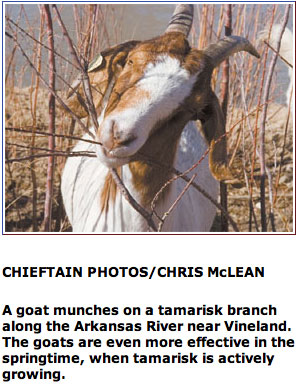
Arkansas Valley: Tamarisk control workshop March 30

A picture named tamarisk.jpg

From The Pueblo Chieftain:

The Southeastern Colorado Water Conservancy District, Colorado State Forest Service, and the Natural Resource Conservation Service are sponsoring a technical workshop on tamarisk control and restoration methodology. The workshop will be 8 a.m. to 4:30 p.m. March 30 at the Southeastern district office, 31717 United Ave…

There is no cost to attend the workshop and lunch will be provided. Contact Jean Van Pelt, jean@secwcd.com or 719-948-2023.

More tamarisk control coverage here and here.

Shelley Simmons receives Tamarisk Coalition’s First President’s Award

A picture named tamarisk.jpg

From the La Junta Tribune Democrat:

The Tamarisk Coalition’ First President’s Award is given in memory of Pete Larson, the Tamarisk Coalition’s first president to honor his dedication to restoring natural resources through the application of science, education, and volunteerism. The individual selected for this award has demonstrated the same level of commitment on their project through their volunteer efforts, incorporation of education and use of science in their work or through their project. On Jan. 13, Shelly Simmons (formerly VanLandingham) with the Colorado State Forest Service – La Junta office was nominated and received this distinguished award at the Tamarisk Symposium in Grand Junction. Attached is a photo of Shelly Simmons receiving the award from the Tamarisk Coalition President, Dr. Anna Sher.

In the award nomination form, her nominator described Simmons’ contribution, saying, “Shelly Simmons has spearheaded the tamarisk control and restoration efforts for over seven years in Southeast Colorado within the Arkansas River Basin. Shelly was an integral part of the development of the Arkansas River Watershed Invasive Plants Plan. She chaired the education (and) outreach committee, assisting with the development of the educational http://www.arkwipp.org Web site and the brochure.

More tamarisk control coverage here and here.
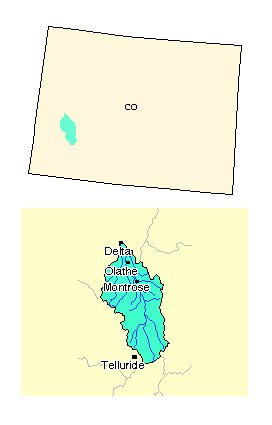
Tamarisk control: 15 camels working the tamarisk clusters near Loma

A picture named camel.jpg

From Discovery News (Alyssa Danigelis):

Rancher Maggie Repp has unleashed her 15 camels in Loma, Colorado, on tamarisk clusters and noticed that they managed to obliterate every one of the hardy shrubs, Lisa Song reports in the High Country News.

More tamarisk control coverage here and here.

Arkansas Valley: What’s happened to the releases of tamarisk leaf beetles?

A picture named tamariskleafbeetle.jpg

From The Colorado Springs Gazette (R. Scott Rappold):

…after two summers of releases here [Arkansas River Basin], the beetles have eaten little of their favorite food, and experts fear they are leaving, dying or becoming food themselves. “In most cases that I’ve seen so far, it seems like the beetles are gone and we’re trying to come up with ways to deal with that,” said Dan Bean, director of the state’s Palisade Insectary, where the beetles are bred…

In summer 2008, the National Resource Conservation Service released 27,000 beetles along Fountain Creek north of Pueblo. Last summer, after biologists found no trace of the beetles, they released another 15,000. “We did see a slight amount of defoliation, but it often takes a couple years for the beetles to take hold and establish,” said conservation service biologist Patty Knupp. She will return in spring to look for beetles.

Elsewhere in the Arkansas Basin, there have been only a few pockets with slight signs of beetles eating the tamarisk. Said Bean, “There could be some quirks in climate and weather that cause them to not make it, but I think it’s more likely it’s something biological. Something is eating them.” He suspects other insects are the culprit.

One the other hand here’s a story about a mystery population of the little buggers in Fremont County from October 2008. From the post:

On the drive back to Grand Junction after visiting Pueblo in July, Bean noticed the tamarisk at the U.S. 50 bridge over Beaver Creek were yellowing – a tell-tale sign of beetle defoliation. He stopped, and sure enough there was a thriving beetle population in the trees below the bridge. Where the beetles came from is anyone’s guess. The Bureau of Reclamation has, for years, done controlled releases of beetles on trees below Lake Pueblo, but Bean knows of no official releases of beetles upstream of Lake Pueblo. “If the conditions were just right, they could migrate upstream,” Bean said. The beetles were found in a rocky canyon, which is similar to the areas where the same type of insects have thrived in eastern Utah and Western Colorado.

More tamarisk control coverage here and here.
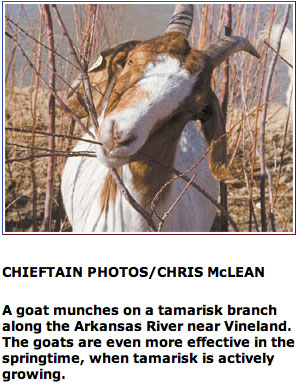
Colorado State University: 2010 Tamarisk Symposium January 12-13

A picture named goatmunchingtamarisk.jpg

Here’s the link to the webpage with all the dope on the symposium:

The 2010 Tamarisk Symposium will be held at Two Rivers Convention Center, 159 Main Street, Grand Junction, CO. The committee has finalized the agenda and the schedule is now available. If you would like to be considered, please contact Meredith B. Swett via email mswett@tamariskcoalition.org.

More tamarisk control coverage here and here.

Boulder: City Council discusses Boulder Reservoir water quality

A picture named boulderreservoir.jpg

From the Boulder Daily Camera (Erica Meltzer):

In a discussion of a new master plan for the Boulder Reservoir, council members expressed concern about maintaining water quality and preventing invasive species from entering the reservoir. Several council members asked what the city could do to pressure the managers of Six Mile Reservoir, which feeds into the Boulder Reservoir, to maintain water-quality standards similar to Boulder’s. The answer was not much, except exert regional pressure.

More water pollution coverage here.

Surface Creek sourcewater protection meeting recap

A picture named grandmesa.gif

From the Delta County Independent (Hank Lohmeyer):

The project is conceived as an effort on the part of local water providers, including the U.S. Forest Service which administers lands where water supplies originate, to identify threats to source water quality and cooperate on a plan to protect those sources from contamination threats. The water providers involved in the initiative are the Towns of Orchard City and Cedaredge, Coalby Domestic Water Company, and Upper Surface Creek Domestic Water Association.

According to Colleen Williams of the Colorado Rural Water Association, a government-funded 501(c)3 that is leading the planning effort, the communities of Collbran, Rangely, and Paonia are all at various stages of developing their own source water protection plans. Williams is the “facilitator” of the effort to develop a localized plan which hopefully in the initial stages will attract grant money for things like fencing and signage to help protect local water sheds.

The committee is at the stage of developing management strategies for dealing with a range of source water quality issues including the following ones: Oil and gas development, roads and dust, livestock grazing, wildland fires and forest health decline, noxious weeds, septic systems, and a half-dozen or more other factors.

More Surface Creek watershed coverage here.

Uncompahgre River: ‘Examining Abandoned Mine Lands in the Uncompahgre Watershed’ December 11

A picture named big5tunnel.jpg

From The Telluride Watch (Gus Jarvis):

The Uncompahgre Watershed Planning Partnership will be hosting a daylong workshop titled “Examining Abandoned Mine Lands in the Uncompahgre Watershed” on Friday, Dec. 11 from 9:30 a.m. to 3:30 p.m. at the Ouray Community Center. Various representatives from state and local organizations will be attending the workshop, which will focus on reclamation activities and abandoned mine lands in the upper Uncompahgre watershed. The workshop’s organizer, Andrew Madison, who is an AmeriCorps VISTA (Volunteers in Service to America) volunteer working in Ridgway to develop a mine reclamation strategy for abandoned mine lands in the watershed, said that while there has already been a lot of mine reclamation work completed in the area, the work has just begun…

The Uncompahgre Watershed Planning Partnership is a volunteer group seeking to involve citizens and organizations in the Uncompahgre watershed. Its mission is to protect and restore water quality in the Uncompahgre River through coordinated community and agency efforts. “I am really looking forward to the workshop,” Madison said. “I have had a great response so far and I am looking forward to getting people to talk to each other on these issues.” For more information about “Examining Abandoned Mine Lands in the Uncompahgre Watershed” contact Madison at 413/297-7232 or at ridgway.vista@gmail.com.

More Uncompahgre River watershed coverage here and here.

Colorado River District grant program

A picture named coloradoriverbasincgs.jpg

From email from the Colorado River District (Martha Moore):

Beginning December 1, 2009, the Colorado River District will be accepting grant applications for projects that protect, enhance or develop water resources in their 15-county area within the Colorado River Basin; this includes all tributary watershed areas in Colorado, except the San Juan River basin.

Water resource projects eligible for grant funding should meet one or more of the following objectives:

Development of a new water supply;
Improvement of an existing system;
Improvement of instream water quality;
Increased water use efficiency;
Sediment reduction;
Implementation of watershed management actions; and/or
Tamarisk control

Past successful projects have included the construction of new storage, the enlargement of existing facilities, the rehabilitation of non-functioning or restricted structures, both small and large-scale water efficiency measures, tamarisk removal and other watershed actions. In addition, proposals that enable water to be supplied to areas previously short are eligible and encouraged. Projects that utilize pre-1922 water rights will be given ranking priority.

Eligible applicants can receive up to a maximum of $150,000 (or 25% of the total project cost whichever is less) for their water supply projects. The total grant pool for 2010 is $250,000. The application deadline is Jan. 29, 2010.

More Colorado River Basin coverage here.

Arkansas Valley: Tamarisk control update

A picture named tamarisk.jpg

From The Pueblo Chieftain (Chris Woodka):

The Arkansas Valley has taken aim at the invasive trees and gotten rid of 9,000 acres of the pests in the last four years. It’s estimated that 67,000 acres along the Arkansas River and its tributaries are infested with tamarisk. “Since 2006, we’ve spent more than $1 million in controlling invasive species,” said Mary Miller, of the Natural Resources Conservation Service, the federal agency that has coordinated programs. “The majority of the money has been spent on the ground for the treatment of tamarisk.” Last year, the NRCS, more than two dozen government agencies and 40 landowners spent a combined $248,000 to treat 2,400 acres in Fremont, Pueblo, El Paso, Huerfano, Las Animas, Otero, Bent and Prowers counties.

The programs mostly involved destroying tamarisk, with some areas being restored as well. Mechanical, chemical and biological methods were used, Miller said. The largest areas were controlled with aerial spraying. Mechanical means, either by hand or with machines, are more time-consuming and costly, but more effective in some areas. Biological control usually means releasing beetles that eat tamarisk, and only tamarisk.

More tamarisk coverage here and here.

Glenwood Springs: Tamarisk cleanup this weekend

A picture named goatmunchingtamarisk.jpg

From the Glenwood Springs Post Independent (Hannah Goulding):

Roaring Fork Outdoor Volunteers is seeking volunteers for an all-day tamarisk-removal project Saturday. In addition to removing the trees, the nonprofit group will revegetate trees and shrubs indigenous to the banks. Volunteers will start at Two Rivers Park, focusing on both banks of the Colorado River between West Glenwood and the Hot Springs. The event is scheduled from 8:30 a.m. to 5 p.m.

More tamarisk control coverage here and here.

Arkansas Valley tamarisk control update

A picture named greenmountainreservoir.jpg

From the Ag Journal (Susan Pieper):

Several partners including NRCS (Natural Resources Conservation Service), Colorado Division of Wildlife (CDOW), Colorado Legends and Legacies and Mile High Youth Corps, Colorado State Conservation Board, Colorado State Forest Service, Colorado State University, Colorado Water Conservation Board (CWCB), Fremont County Weed Manager J.R. Phillips and his department, Fremont County Weed Control Department (FCWD); Rocky Mountain Bird Observatory (RMBO), Sangre de Cristo and Southeast Colorado Resource Conservation and Development Councils, U.S. Fish and Wildlife Service Partners for Wildlife Program, Upper Arkansas Cooperative Weed Management Area (UACWM), several conservation districts including Fremont, Turkey Creek, South Pueblo County, El Paso, Central Colorado, Northeast Prowers, Bent County, West Otero Timpas, Custer County-Divide, Upper Huerfano and Spanish Peaks Purgatoire River Conservation Districts plus several individual landowners have undertaken a massive effort to remove tamarisk along the Arkansas River and its tributaries and have provided financial and in-kind support for all the projects being undertaken in the various counties and individual conservation districts.

Also providing the same type of support for the projects are the county commissioners in each of the counties along this stretch of the Arkansas River, Colorado State Land Board, Southeast Colorado Water Conservancy District, Holly Flood District and Tri-State Generation and Transmission.

Generally, water issues can divide communities, but the eradication of this scourge has united producers and governmental agencies across property lines, county lines and even the state line.

Although the Arkansas River banks are the primary target for tamarisk removal, the plan can not be successful within only those boundaries. The Arkansas River, just like any large body of running water, is fed by tributaries and with plants that can produce up to 50,000 seeds annually, controlling the spread of tamarisk on the creeks and arroyos upstream will support the efforts along the river.

In Colorado, approximately 1,414 acres along the Arkansas River in Prowers County have been targeted for eradication with the boards of directors of several conservation districts accepting bids and choosing the applicator to assist them with controlling and eventually ridding the river of this alien species. The same is true for areas up the river where approximately 850 acres were treated, also.

<p.In the lower regions of the Arkansas River, such as in Prowers County and across the state line into Kansas, herbicide application of the plants from the air was chosen.

In Fremont and Custer counties, the targeted areas were tributary streams.

More Arkansas River Basin coverage here.

Dolores River: Tamarisk grants available

A picture named snaggletoothrdoloresriver.jpg

From the Targeted News Service:

The U.S. Interior Department’s Bureau of Land Management has modified its announcement of a cooperative agreement opportunity to conduct habitat restoration by removing invasive weeds in Colorado’s Dolores River Watershed. The funding announcement was modified Sept. 14 to reflect a change in the category of funding activity, expected number of awards and the contact details. This funding is available under the American Recovery and Investment Act of 2009…

The funding opportunity number is RECOVERY-ACT-BLM-CO-RFA09-1471. It was posted Sept. 14 with an application closing date of Sept. 15.

More Dolores River coverage here and here.

Prowers County tamarisk efforts

A picture named tamarisk.jpg

Prowers County is taking to the air to fight tamarisk, according to a report in The Lamar Ledger (Aaron Burnett). From the article:

[Prowers County Commissioner Henry Schnabel] said the county has concentrated its efforts in the area from Holly to the state line in hopes of clearing out the river channel and lessening the possibility that high water levels could result in flooding in and around Holly. “With the different entities coming together in a cooperative effort, it just shows what can be done when you have that cooperation among all the people to really get out there and get something done,” said Schnabel.

The area being sprayed through the project include sections along the Arkansas River as well as upland tributaries and runoffs. “We feel that if can control those tamarisk in those upland situations and get them killed, they shouldn’t be coming back,” said Michael Daskam, NRCS agent in the Holly office. Daskam said the water saved by removing tamarack and revegetating with native plant species is approximately 70,000 acre feet a year in the river. “That’s like John Martin (Reservoir) in a good year, and that’s the net savings each year.” Daskam said there are several benefits to removing tamarisk from the area. “There’s these water conservation benefits that we talked about, there’s flood hazard mitigation benefits, there’s wildlife benefits as well because tamarack don’t provide much of any kind of habitat for our native species. If we can get the native species to come back, then we’ll have a lot more valuable wildlife habitat.”

Following the completion of aerial spraying, ground spraying will be conducted in areas too tight for aerial spraying. It takes three years from the time of the chemical application for the tamarisk to be completely killed, at which point it can then be manually removed.

More tamarisk control coverage here and here.

Tamarisk control in Montezuma County

A picture named tamariskleafbeetle.jpg

Here’s an update about Tamarisk control in Montezuma County, from Kristen Plank writing for the Cortez Journal. From the article:

For the past two weeks, the tamarisk leaf beetle has been chowing down on the area’s tamarisk, cropping up in sporadic locations from McElmo Canyon clear across the county…

Killing off an entire tamarisk typically takes a few seasons of defoliation, and beetles often will leave some of the leaves intact on each plant. “We really don’t know how long it will take for all of a tamarisk to be gone, but it’s not realistic to think that beetles are going to get it all,” Kolegas said. “Beetles only eat as much as they can. They want to sustain their population.” Which is why other efforts to rid the area of the water-loving weed, like native revegetation, will still occur. But most of the local tamarisk eradication efforts will be drastically reduced, Downs said. “We’re putting tamarisk removal on hold for now,” she said. “We’re going to finish the projects we’ve already started, and we’re going to continue heavily with revegetation efforts. “We want to get willows and cottonwoods and box elders in the area before the tamarisk is completely dead.”

How the bugs came into the county is unknown, but tamarisk beetles were released in Moab, Utah, and other parts of Colorado, Downs said. Reasons for not releasing the insect prior to now was due mostly to federal concerns for the southwest willow flycatcher, an endangered bird. The flycatcher, which used to nest in willows along riverbanks, now nests in tamarisk.

For residents interested in learning more about the tamarisk leaf beetle’s progress, the district will hold a public information meeting in conjunction with the Tamarisk Coalition at 6 p.m. Oct. 12 in Empire Electric’s Calvin Denton room, 801 N. Broadway, Cortez. The leaf beetle will go dormant in early October, but residents wishing to report a known population or to ask questions can call D-TAG and the Dolores Soil Conservation District at 565-9045.

More Tamarisk coverage here.

Tamarisk: Delta County tamarisk leaf beetle release update

A picture named tamariskleafbeetle.jpg

From Painted Sky Resource Conservation & Development via the Delta County Independent:

This summer Painted Sky Resource Conservation & Development staff has released tamarisk beetles at five sites in the North Fork Valley and Delta area to battle tamarisk, an invasive shrub from Eurasia. The beetle populations appear healthy and are reproducing well, according to monitoring observations conducted in mid-August.

The release sites, all on private property, range from Bell Creek and Back River Road between Paonia and Hotchkiss on the east to G Road and the Gunnison River northwest of Delta. Properties at the end of Horn Road near Austin and the Gunnison River and Highway 65 and the Gunnison River also received beetles. The fifth site, Confluence Park in Delta, is on public land. The average number of beetles released at each site is about 6,000.

Beetles are the last stage of the life cycle. After hatching from eggs, larvae go through three stages from tiny worms to larger worms or larvae. You can easily identify the third and final stage larvae by a “green racing stripe” on each side of its body. Beetles released earlier this summer have produced the next generation, which are in the third larval stage now. It’s the larvae, not the adult beetles that do the most damage to the plant. Like teenagers with insatiable appetites, they eat 24 hours per day, seven days per week.

The beetles may cause browning of tamarisk by next summer, but it will take up to five years for them to kill the tamarisk.

As the beetle populations grow and exhaust their food supply at the release sites, they’ll fly up and down the river drainage in search of fresh tamarisk to eat. Eventually, they’ll distribute themselves throughout the area. Flying from tamarisk to tamarisk shrub, beetles have moved up the Dolores River from near Moab, Utah, to just south of Gateway without ever hitching a ride with humans.

Painted Sky plans more releases in the area in 2010, including the Surface Creek area, Smith’s Fork and along the Uncompahgre River in Delta. Landowners with tamarisk can ask to be put on a waiting list to receive beetles. Tamarisk or salt cedar has spread too successfully in the West over the past century. It out-competes native plants and trees, such as cottonwoods, creating a monoculture. A landscape dominated by only one plant hurts wildlife diversity.

More tamarisk coverage here and here.

Prowers County is taking the fight to tamarisk

A picture named tamarisk.jpg

From The Pueblo Chieftain (Chris Woodka):

Bids for aerial spraying of 1,500 acres of tamarisk between Holly and the Kansas border came in at half the cost that was expected. “It gives us great encouragement that something can be done,” County Commissioner Henry Schnabel said. “It’s left us scrambling to find more acres.” Schnabel was addressing the Lower Arkansas Valley Water Conservancy Board, which earlier had contributed $10,000 to the project. The county, working with several other agencies that have put about $260,000 toward the project, was expecting to pay $160 per acre for the spraying. Instead, the bids were opened Monday and Tri-Rotor Helicopter Spraying of Ulysses, Kan., bid just $85.49 an acre for the service. The company guaranteed an 85-percent kill rate and can tailor the spraying to avoid cottonwoods along the river, Schnabel said. “The spraying is critical on that reach, because the tamarisk is so tall that Holly would flood if there were another 1965-type flood,” Schnabel said.

Across the state line, Kansas also is killing tamarisks as part of the effort.

More tamarisk control coverage here and here.
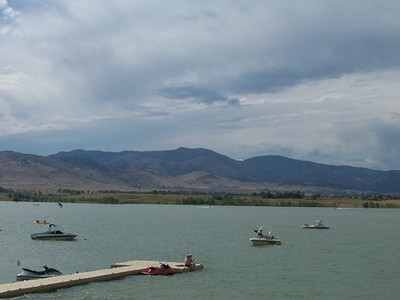
Arkansas Valley: Officials plan to unleash an additional 100,000 or so tamarisk leaf beetles

A picture named tamariskleafbeetle.jpg

From The Denver Post (Bruce Finley):

Colorado agriculture officials are widening their battle against the West’s most voracious invasive weed, tamarisk, by deploying a controversial leaf-eating Chinese beetle east of the Continental Divide. State teams have planted 100,000 of the yellow- striped Diorhabda beetles along banks of the Arkansas River. They plan to release another 100,000 along the river this week, placing them on tamarisk, a water-sucking weed that chokes off native life such as cottonwoods and willows. “We want them to feed like crazy,” said Dan Bean, director of biological pest control for the Colorado Department of Agriculture…

But there are concerns. The Diorhabdas may threaten an endangered bird, the southwestern willow flycatcher, which uses tamarisk in New Mexico and Arizona for nesting. The federal government recently was forced by a lawsuit to suspend its releases of Diorhabda beetles in eight Western states — where tamarisk has gobbled more than 1.5 million riparian acres. Yet Colorado biologists contend the beetle is relatively benign and are pressing ahead — determined to suppress tamarisk with fight-the-enemy-with-its-enemy tactics that so far have proved successful…

“We very much recognize that biological controls are an important aspect” of suppressing invasives, said Chris Diogini, acting executive director of the National Invasive Species Council. Co-chaired by Interior Secretary Ken Salazar, the council is charged with coordinating federal, state and local responses to biological invaders — and refereeing disputes. Federal researchers now track some 50,000 exotic species, which unlike chemical pollutants that can be banned and eventually break down, can cause ever- growing problems. But one major challenge “is making sure you don’t get rid of one invasive species only to see it replaced by another,” Diogini said…

This was the first year the state had enough beetles to attack tamarisk along the Arkansas River, Bean said. The first 400 beetles, delivered from northwestern China, have multiplied to more than 50 million, he said. Most live wild along rivers and have the ability to move up to 20 miles a day on their own — into neighboring states. Should this beetle work on tamarisk, others could be tried on such invasive species as Russian knapweed, Oriental fruit moths and alfalfa weevils.

More tamarisk control coverage here and here.

Lower Dolores Plan Working Group: Issue fact sheets

A picture named mcpheespillway.jpg

Here’s the link to the Dolores River Dialogue’s Lower Dolores Plan Working Group set of issue fact sheets. Here’s a report from the Cortez Journal. From the article:

The goal is to gather information, identify values worthy of protection in the planning area, formulate ideas for protection of the values, and make recommendations to the Dolores Public Lands Office – the U.S. Forest Service and U.S. Bureau of Land Management. Once the Lower Dolores Management Plan Working Group makes its recommendations, the public lands office will initiate a formal environmental assessment process, conduct public involvement, and issue a decision notice.

More Coyote Gulch Dolores River coverage here.

Arkansas Valley: Tamarisk control

A picture named tamariskleafbeetle.jpg

Officials are getting ready to release tamarisk leaf beetles in several areas in the Arkansas River Valley next week with hope that the critters will establish well and control tamarisk. Here’s a report from Chris Woodka writing for The Pueblo Chieftain. From the article:

The beetle Ñ technically, diorhabda carinulata Ñ was released in Utah several years ago and migrated into Colorado. It is thriving in every river basin on the Western Slope, but has been slow to take hold in the Arkansas Valley, which is the most heavily infected region of the state when it comes to the invasive trees. This week, thousands of beetles were harvested along the Dolores River in the Southwest corner of the state for release next week on Fountain Creek and other tributaries, and at Boone, Fowler, Rocky Ford, Two Buttes, Granada and Holly.

Bean and his staff will also be checking up on beetles that have established themselves on Beaver Creek in Fremont County. There is also a small population established below Pueblo Dam as the result of another strain of beetles from western China tested by the Bureau of Reclamation several years ago. “There are already major efforts to remove tamarisk in the Arkansas Valley, and the beetles are a supplement to those other efforts,” Bean said. Some theories speculated that the beetles, from Kazakhstan, would have trouble thriving at lower latitudes. Kazakhstan lies entirely above the 40th parallel, while Colorado is further south, resulting in fewer hours of daylight during the summer months. Still, in the Dolores basin, there are millions of beetles that have knocked back thousands of acres of tamarisk. The beetles have also decimated tamarisk in the Colorado, Green and Yampa basins, Bean said…

One of the reasons for next week’s releases will be to track how well the beetles can establish themselves in the Arkansas River basin…

The beetles will eat the leaves – and more importantly the flowers which contain seeds – of the older tamarisk as well. This makes them an effective biocontrol for the trees, but not a way to eliminate tamarisk altogether, Bean said. “In the long run, if they’re established in the basin, we’ll have a background population that will keep tamarisk under control,” Bean said.

More coverage from the Ag Journal (David Vickers):

[Dr. Dan Bean, the state’s top expert in using insects to control invasive plant species like tamarisk] manages the Colorado State Department of Agriculture’s Plant Industry Division Insectary at Palisade. He spent three days, July 7-9, working along the Apishipa and Purgatoire rivers in Las Animas County to release beetles that will devour tamarisk, also known as salt cedar. Patty Knupp, a private land and wildlife biologist, said 1,000 beetles were released July 7 in two locations along Chacuco Creek, a tributary of the Purgatoire River. On July 8, four more releases of beetles were conducted along the Purgatoire River and two releases were made on the Apishipa River. Then, on July 9, the tamarisk eating beetles were released on the main stem of the Arkansas River near Fowler…

Ants and Asian ladybugs are natural predators of tamarisk beetles and can be particularly tough on a population.
“We’ve found that the beetles don’t do especially well below the 38th parallel,” she noted. “The number of daylight hours have an impact on whether they flourish.” But there have been some fairly significant success stories, especially with aerial application of herbicide. Since 2005, more than 2,000 acres along the Apishipa River drainage have been sprayed.

More Coyote Gulch coverage here and here.

Corps of Engineers looking to spend $5 million on tamarisk removal along the Colorado River

A picture named coloradorivergjwik.jpg

The Tamarisk Coalition is in the process of determining how best to utilize $5 million grant proposed by the U.S. Army Corps of Engineers for tamarisk eradication along 56 miles of the Colorado River between Palisade and the Utah border. Here’s a report from the Grand Junction Daily Sentinel (Le Roy Standish):

In order to get the grant, the Tamarisk Coalition is asking its partners in the Grand Valley for $10,000 to study how best to eradicate the nonnative species and determine how much each member of the coalition should spend on the program. In addition the coalition needs to appoint a lead agency — such as Mesa County, Grand Junction, a new nonprofit or an existing nonprofit such as the Mesa Land Trust — to coordinate efforts…

To assess the options, the Tamarisk Coalition is asking for money from each of its partners: $4,000 apiece from Mesa County and Grand Junction; $800 from Palisade; and $400 each from Fruita and Clifton Water. The possibility of a $5 million grant from the Corps is good news for the coalition, but it comes with financial concerns. The big catch in the Corps’ Aquatic Ecosystem Restoration grant is that whatever entity becomes the lead agency will be responsible for keeping land cleared of tamarisk forever. “In order to meet the terms of the grant, you can’t let (tamarisk) come back,” said Tom Fisher, Mesa County’s director of regional services. That would require an unknown commitment of resources on top of the initial $10,000 in seed money. The money would pay for a study to compare alternatives and costs of the program.

“What takes effort is to establish what the proposed long-term budgets would be or the physical requirements would be for each of the entities,” Carlson said. “Until that is all laid out, it is difficult for anybody to say this is what we are getting involved in.”

More Coyote Gulch coverage here and here.

Tamarisk control: Monitoring leaf beetles and unintended consequences

A picture named tamariskleafbeetle.jpg

Keeping a watchful eye on the use of tamarisk leaf beetles to control tamarisk across the west is the subject of this article from Mike Stark writing for the Denver Post via the Associated Press. From the article:

The beetle appears to be doing its job—diligently munching leaves as a way to eventually kill the nonnative trees—but there’s no comprehensive program to keep an eye on the bug’s spread and make sure it’s not unleashing unintended, large-scale environmental consequences, according to University of Utah researchers. The scientists say they think satellite technology can be harnessed for that job, especially for tracking progress in many of the West’s remote waterways where tamarisk, or salt cedar, has taken hold. “It’s a cheap way to do it over large areas,” said Philip Dennison, an assistant professor of geography and a lead author of a study looking at ways to track the battle between the beetles and the tamarisk…

Beetles were released in Grand County, Utah, in the state’s southeast corner in 2004 where tamarisk has taken root along the Colorado, Green and other waterways. Already, many trees have been stripped of their leaves and some appear ready to finally keel over. “I think were going to start seeing some good success,” said Tim Higgs, the county’s weed supervisor. It can take several years for the beetles to weaken trees before they die. When the beetles run out of food, they fly somewhere else or, more likely, drop dead. They don’t have a taste for anything but tamarisk…

But Dennison and others on the study say the experiment needs to be watched more closely on a large scale to make sure it doesn’t backfire. “We don’t have any idea of the long-term impacts of using the beetles,” he said. “Their release may have unexpected repercussions.” That includes the possibility of degrading wildlife habitat, having the beetle switch to an unexpected food source and opening the door for other invasive species to move in. In parts of southwestern Utah and northwestern Arizona, the beetle is threatening tamarisk nesting areas of the endangered southwestern willow flycatcher, according to the Center for Biological Diversity, an environmental group. The group said in December it plans to sue the U.S. Department of Agriculture…

Dennison and others on the study say they’d be able to track widespread changes in tamarisk defoliation by using satellite images from red or infrared light that reflects plant pigments. They tried the technique along parts of the Colorado River. The results are scheduled to be published later this month in the scientific journal Remote Sensing of Environment.

They also found that, by analyzing data collected on the ground and with satellite images, tamarisk may have an undeserved reputation as a water hog. Rather than guzzling 200 gallons of water day, a typical tamarisk is probably drinking about 20 gallons a day, Dennison said.

More Coyote Gulch coverage here and here.