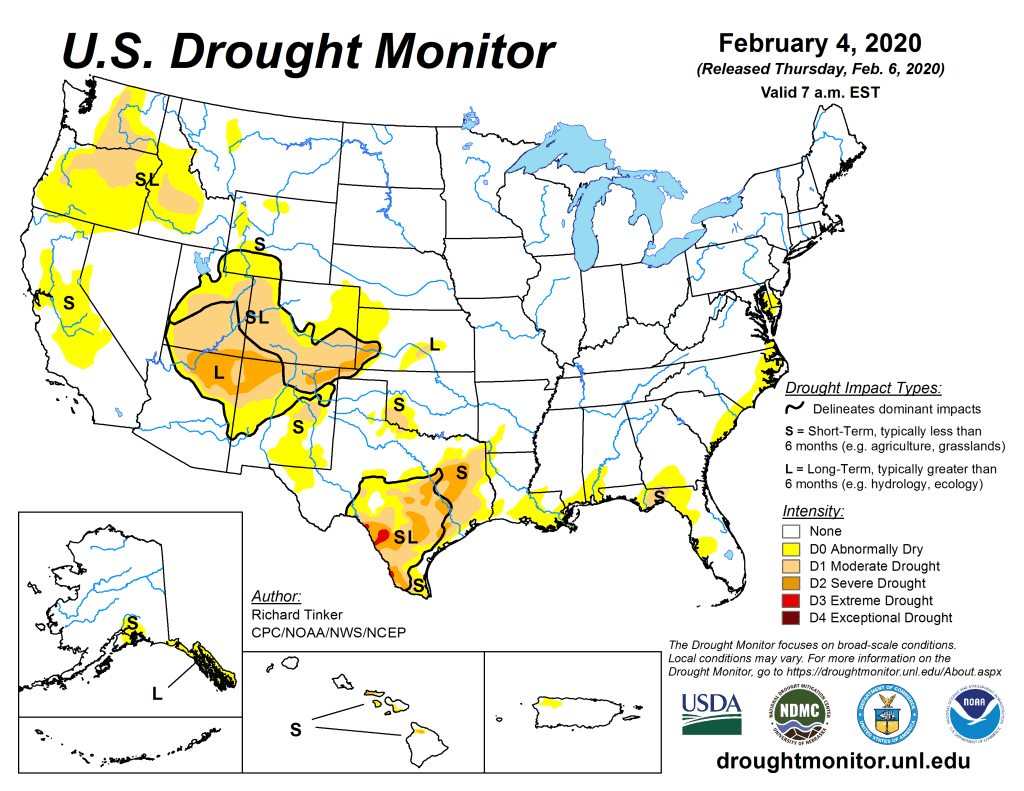
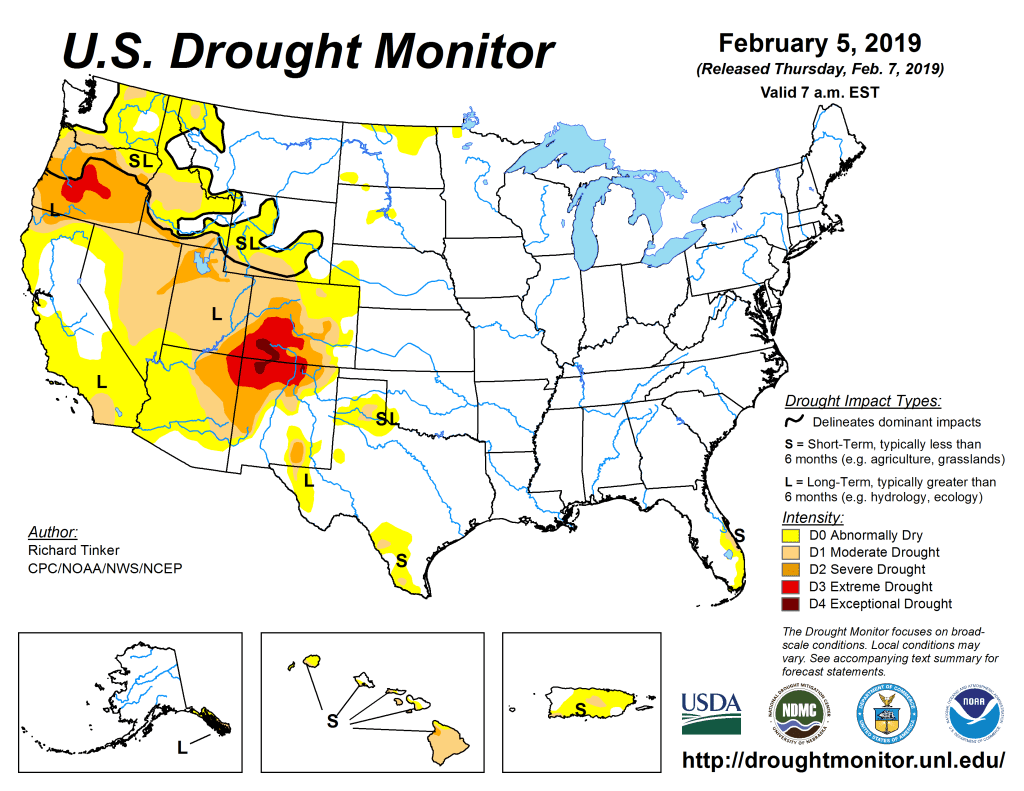
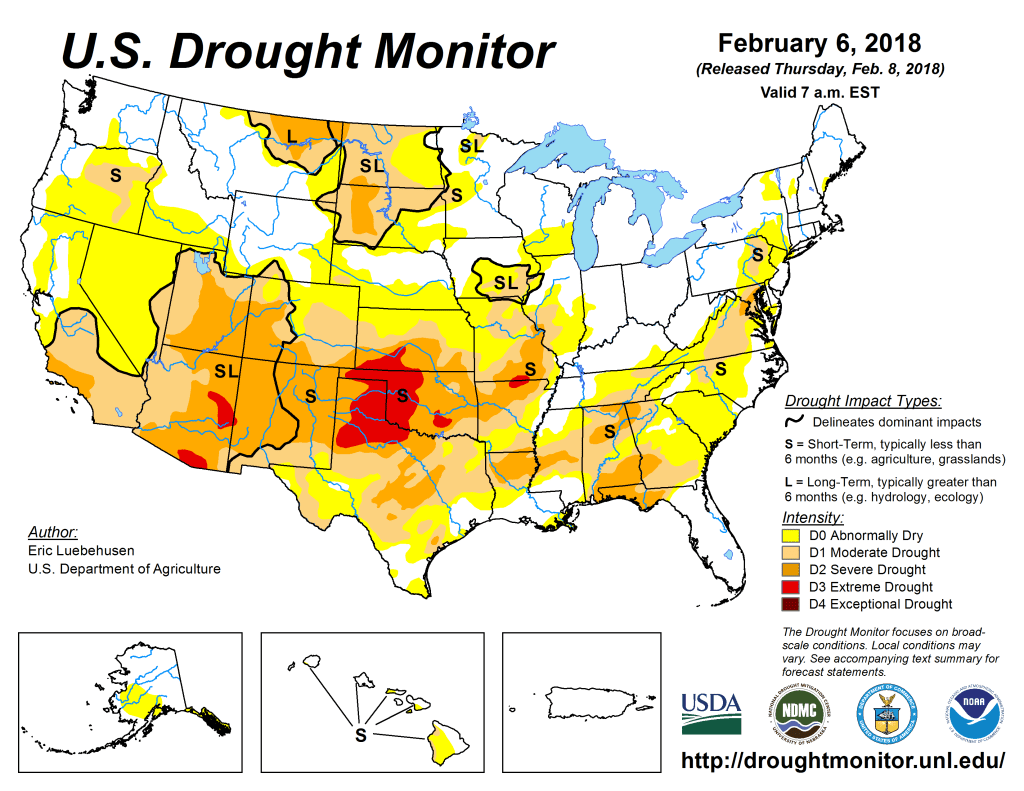
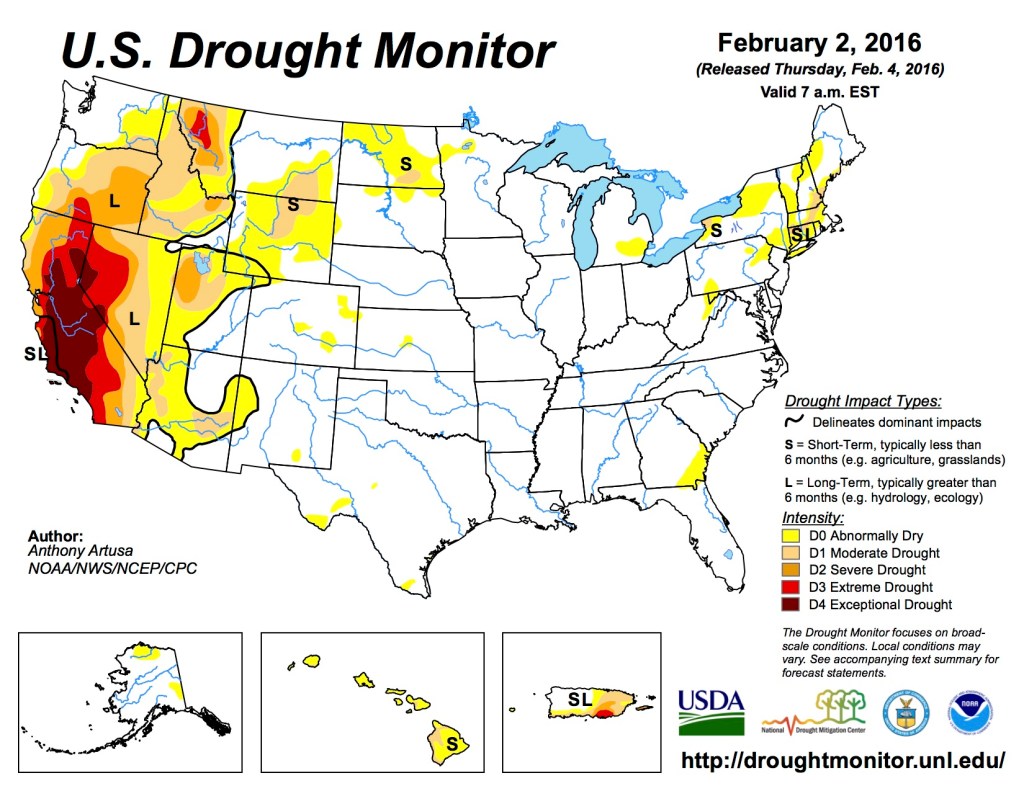
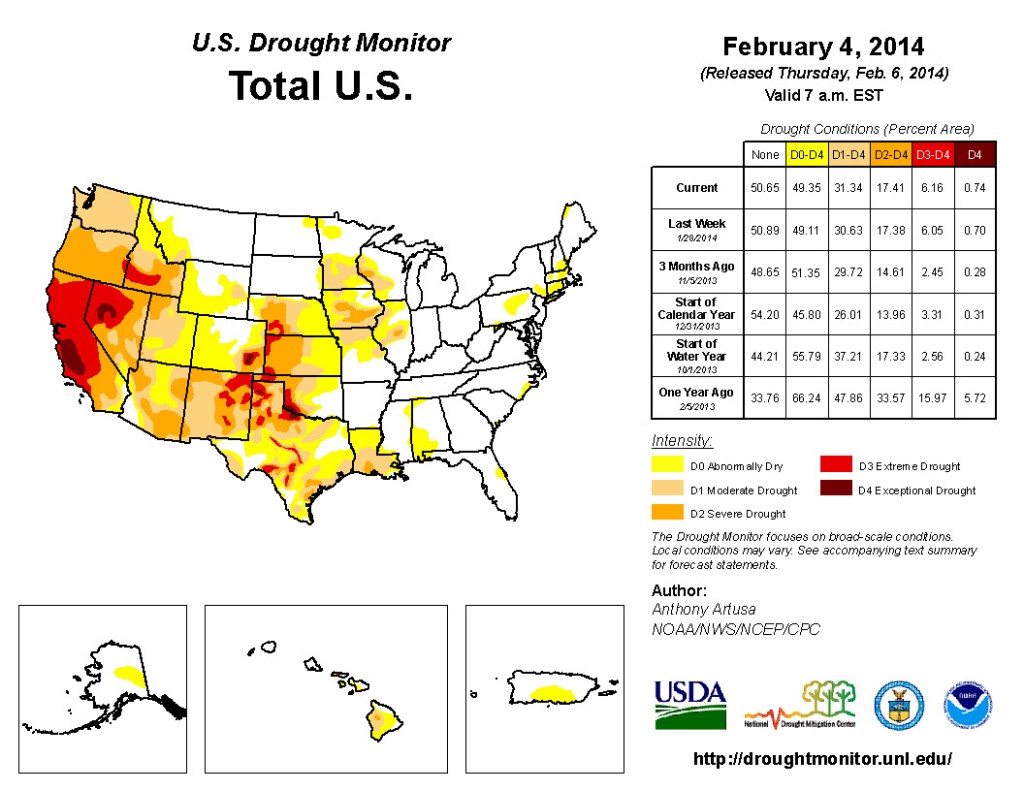
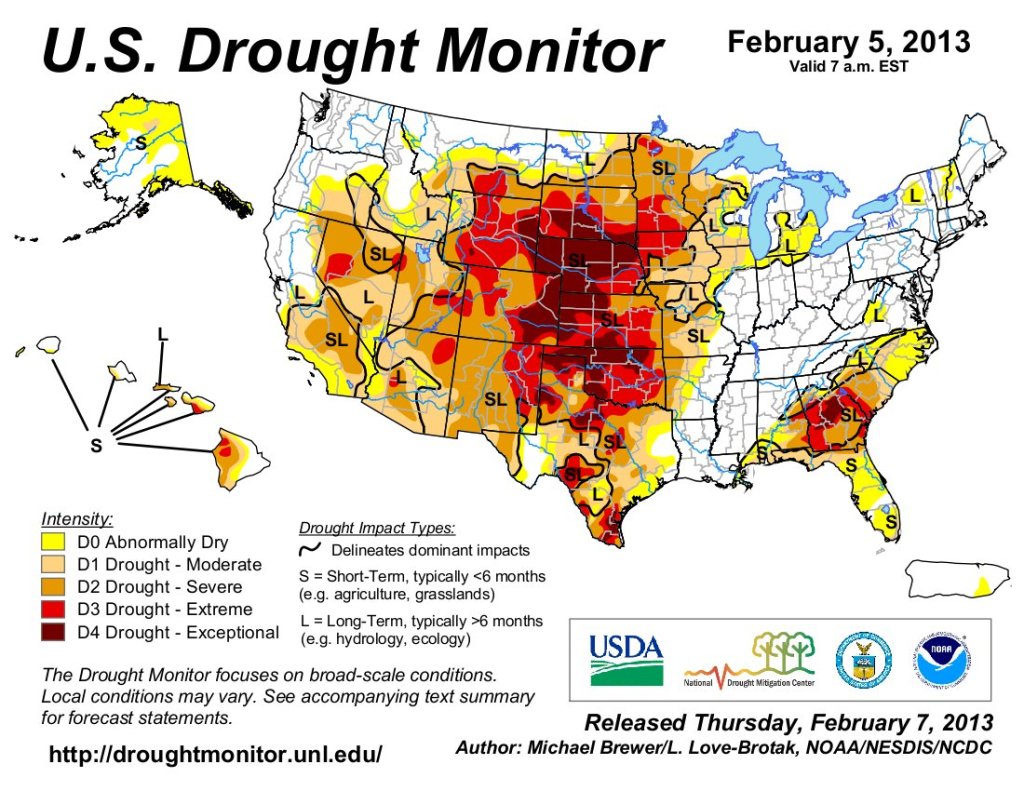
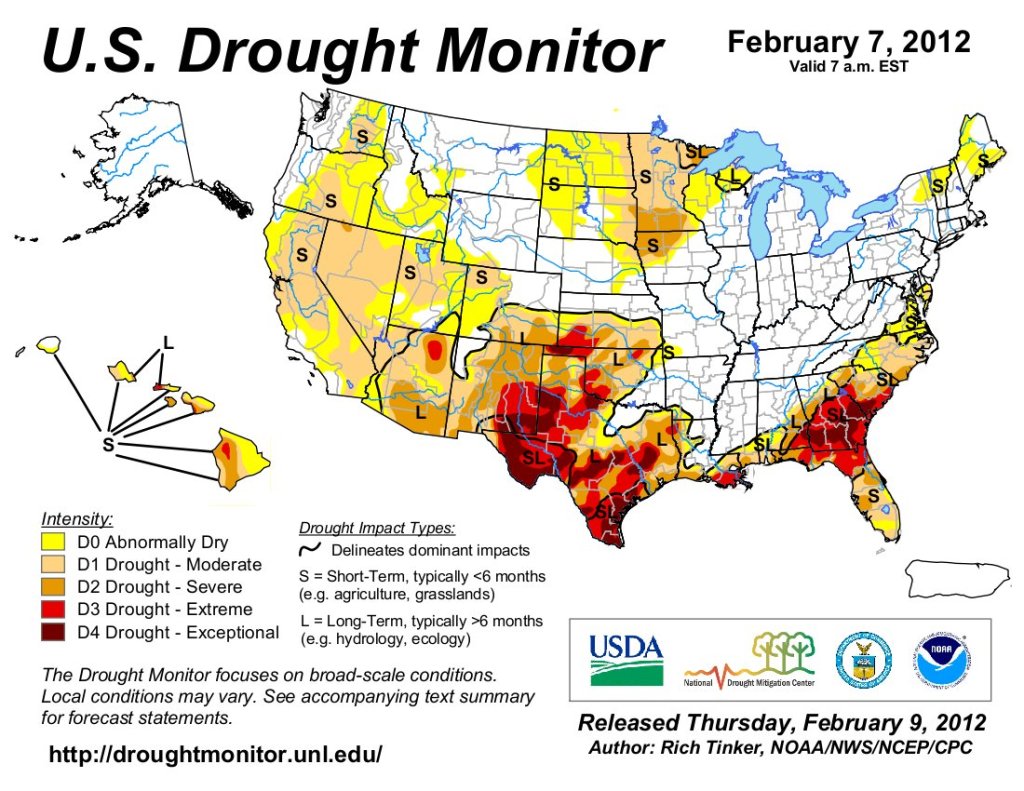
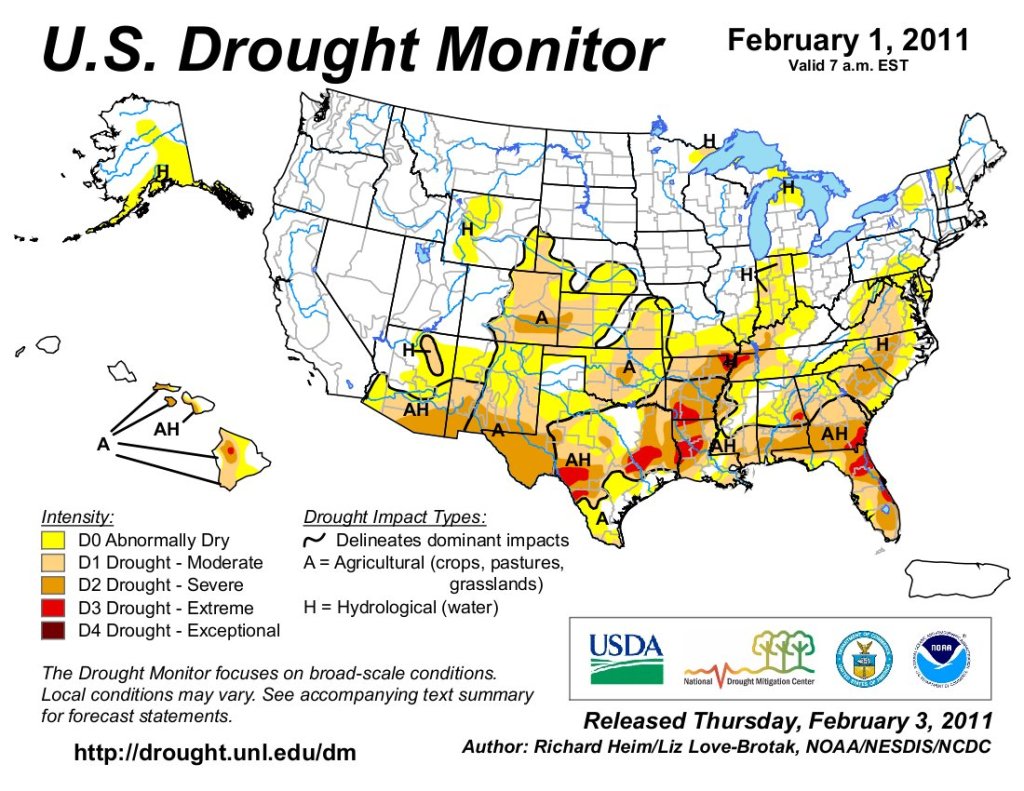
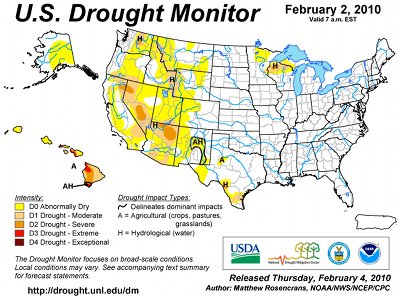
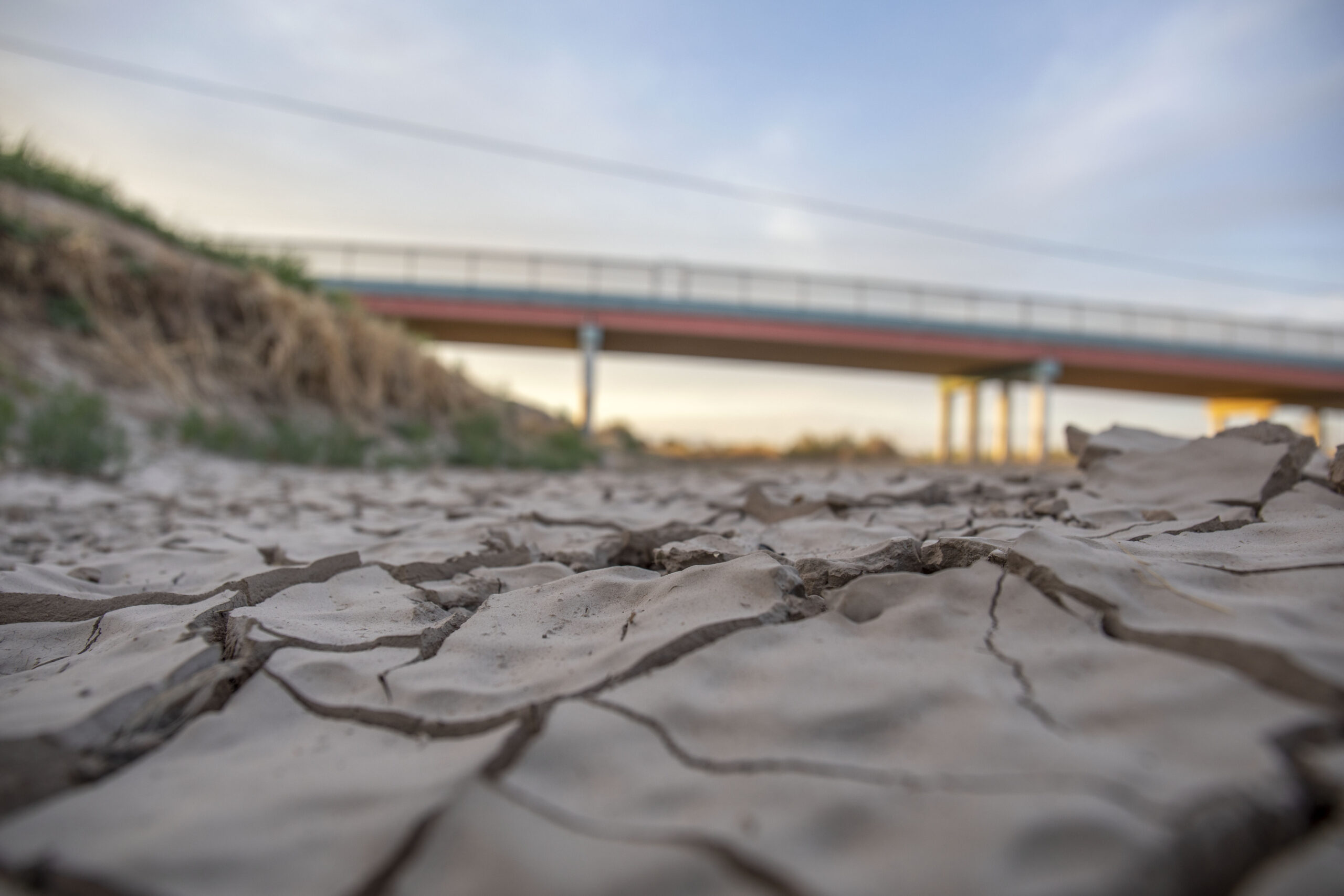
Poll: Why more than half of Utahns are less concerned about #drought — The Deseret News #snowpack

Click the link to read the article on The Deseret News website (Amy Joi O’Donoghue). Here’s an excerpt:

Poll probes attitudes on drought, weather in Utah

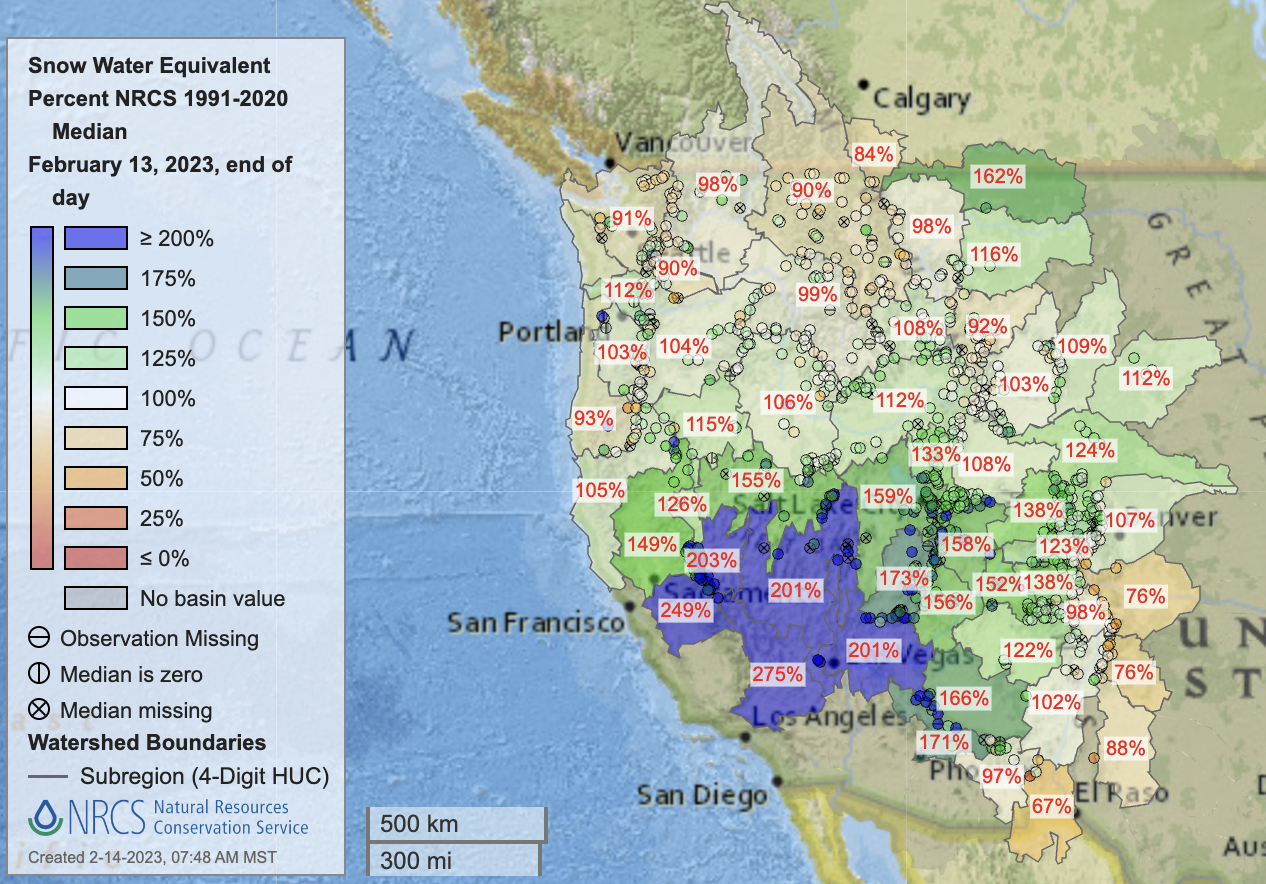
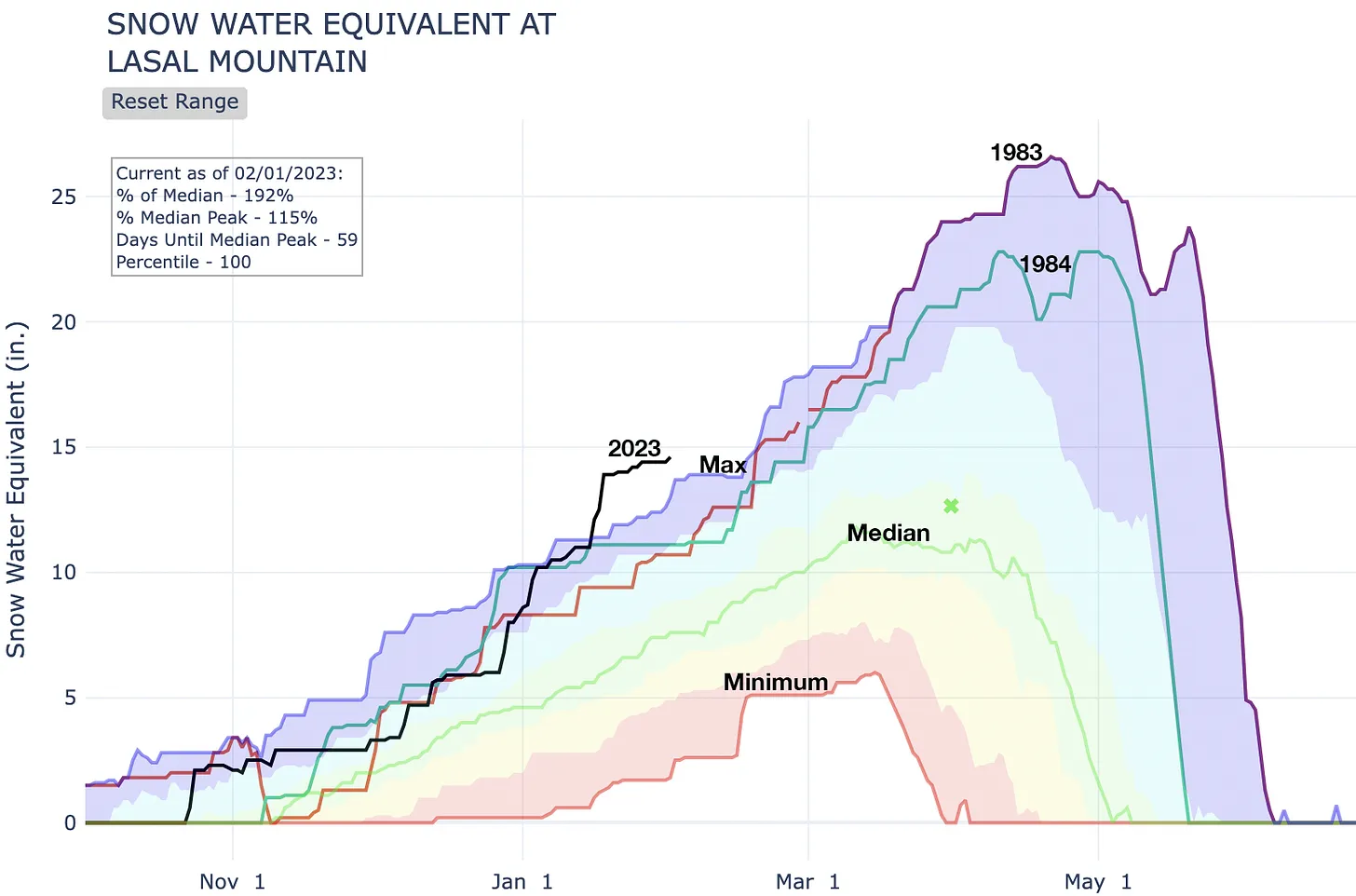
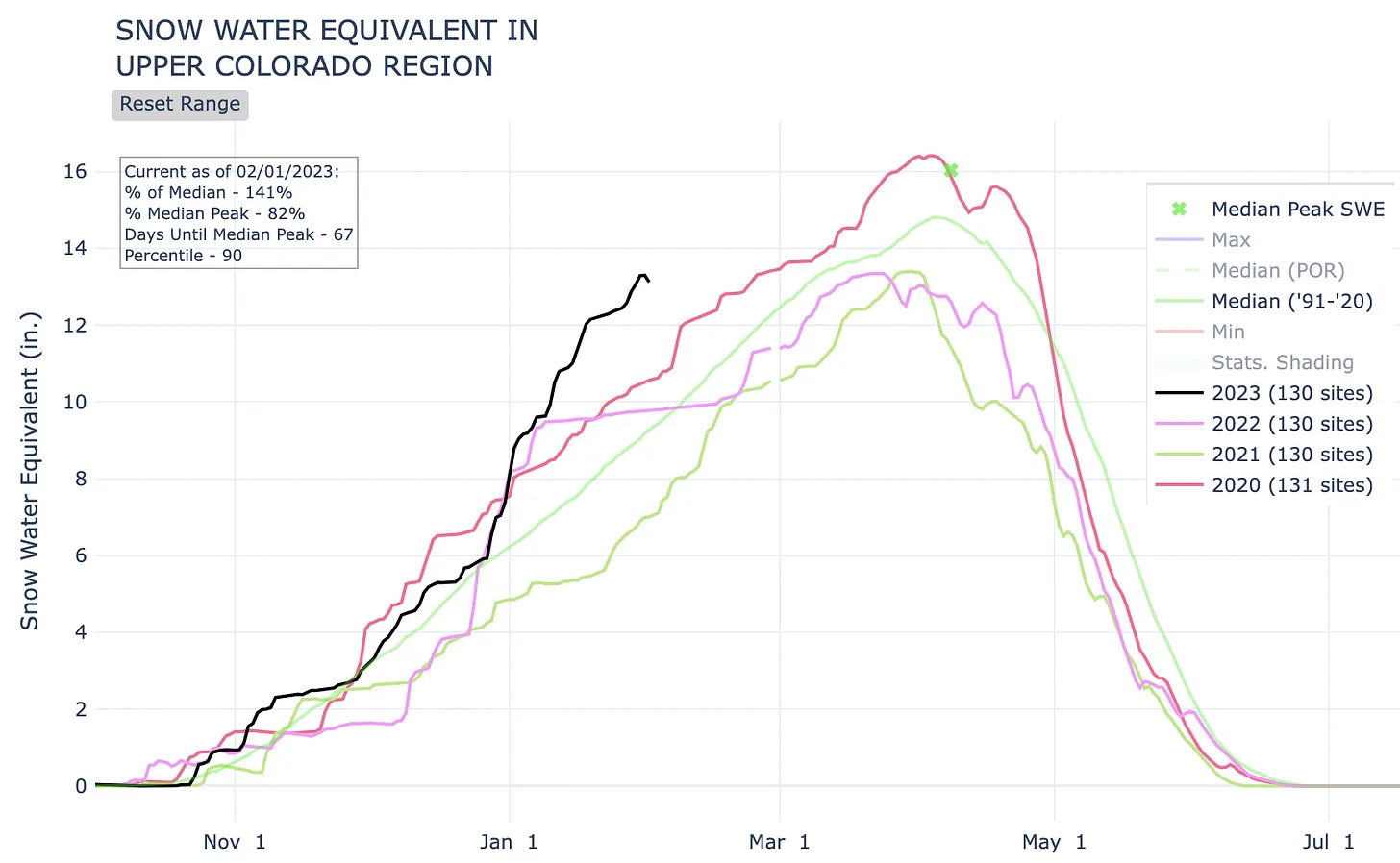
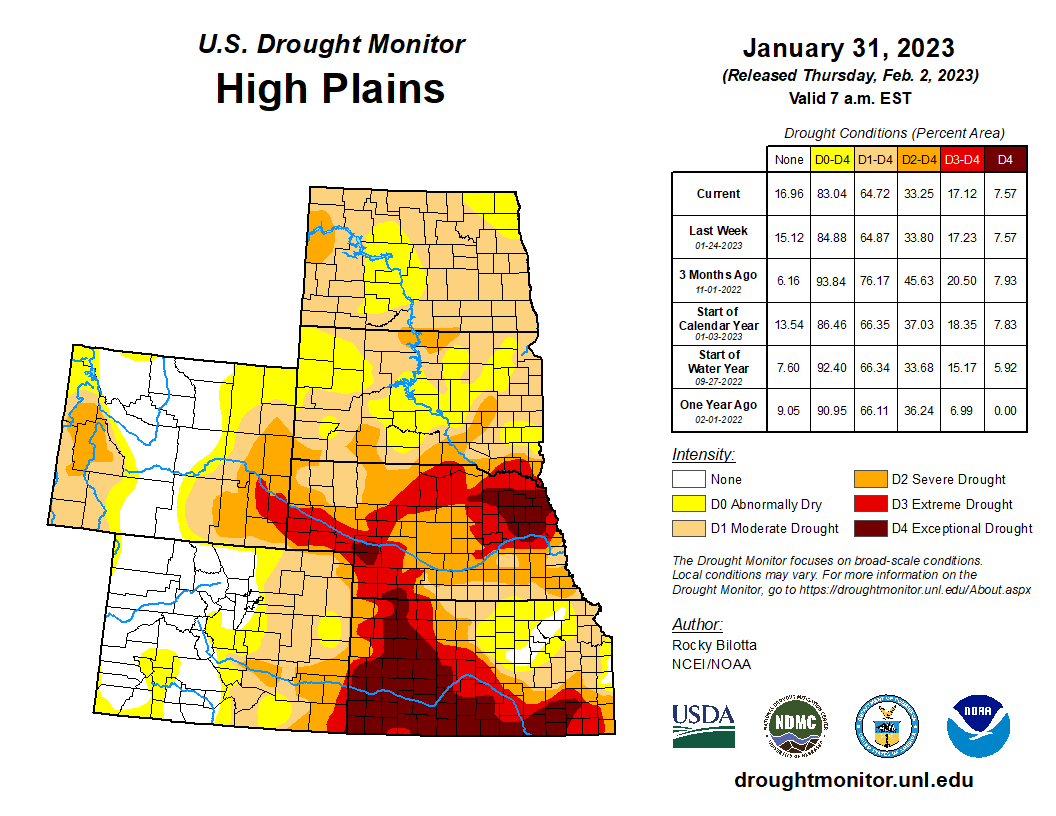
A new poll shows that while more than 8 in 10 Utah residents remain concerned over the drought impacting the state, the series of storms this winter leaving a bountiful mountain snowpack have more than half of them less concerned than last year…When it came to views people have regarding Utahโ€™s drought in general, 85% of survey participants said they were concerned, 14% said they were not concerned, while another 1% said they did not know…But with winter storms pounding the state, delivering snow levels well above average and in some areas like southern Utah nearly twice what is average, the poll shows some residentsโ€™ concern over drought is starting to wane. More than half of those polled, over 52%, said they are less concerned about drought than last year, 14% remain more concerned, 34% have about the same attitude and 1% donโ€™t know…

โ€œWhen people are seeing the above normal precipitation and snowpack, theyโ€™re talking about meteorological drought, which itโ€™s something that we welcome and we are seeing improvements, of course, in that area,โ€ Clayton said. โ€œThe one thatโ€™s going to take a much longer time to get out of is the hydrological drought, which is essentially our storage systems, our reservoirs โ€” all of our surface water storage.โ€

Six states release consensus framework for #ColoradoRiver cuts โ€”ย with #California absent — The #Nevada Independent

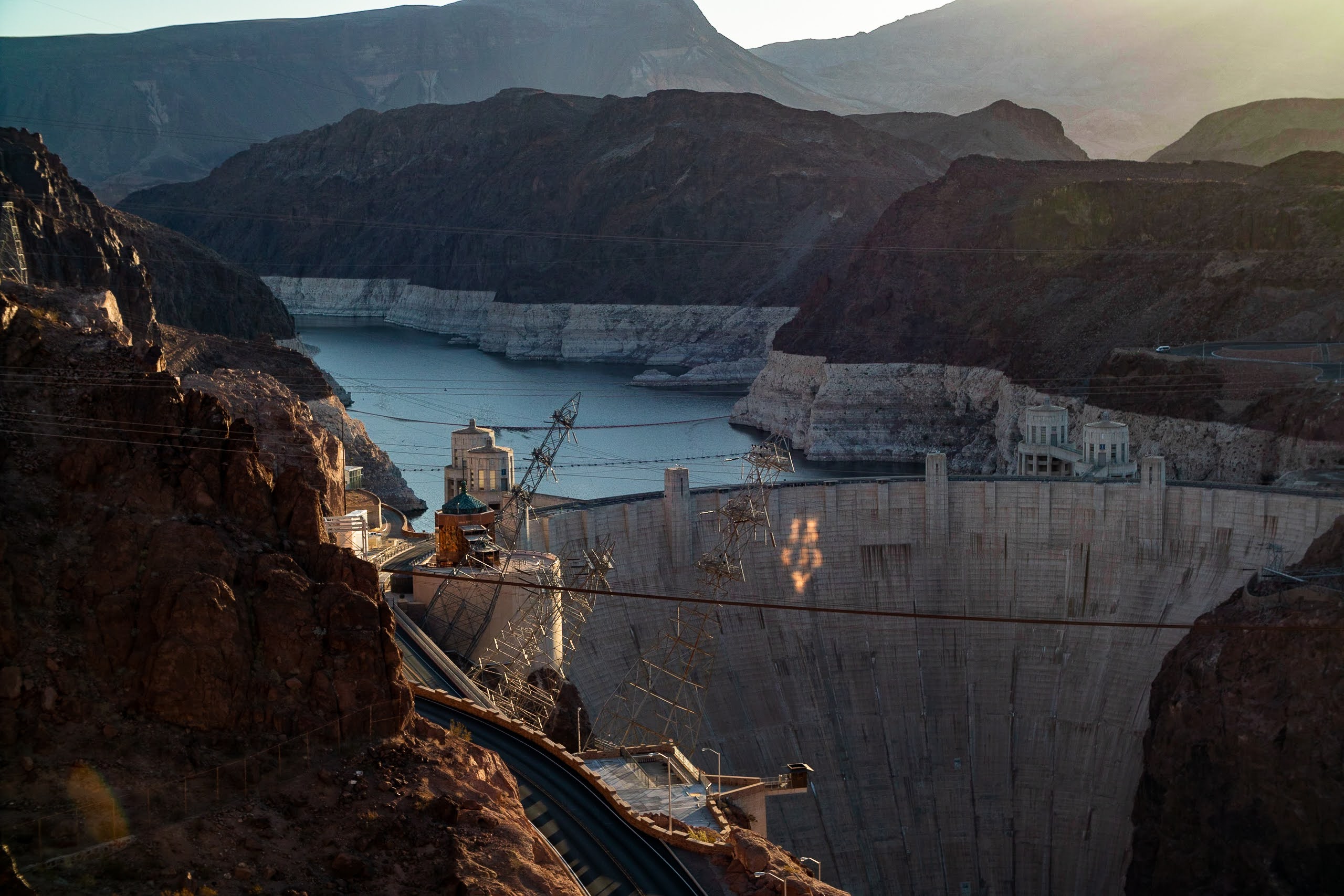
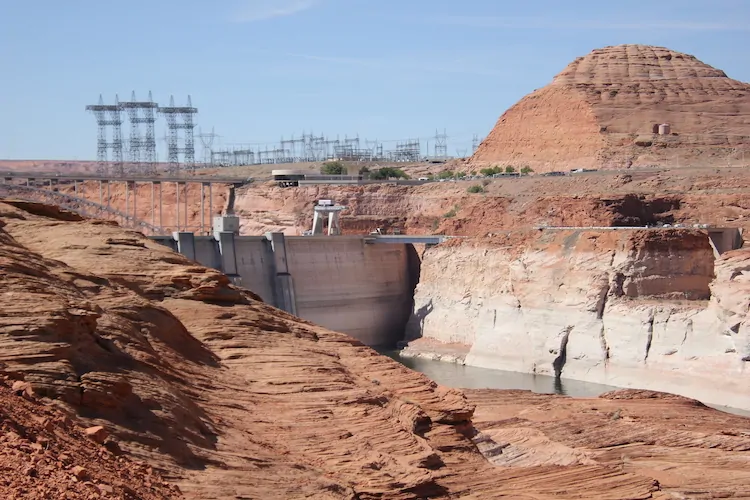
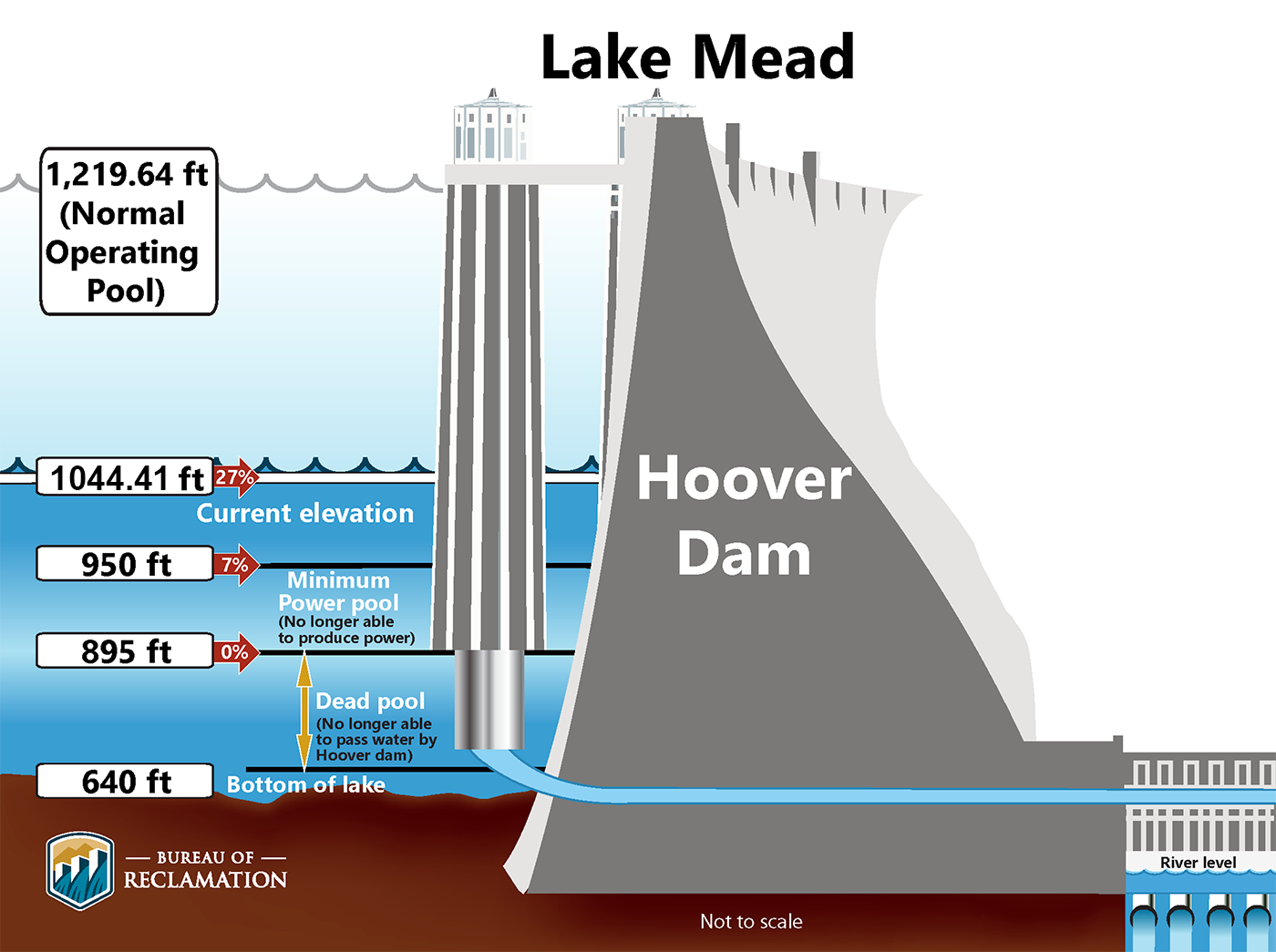
Lake Mead and the Hoover Dam on the border between Nevada and Arizona on the morning of Friday, April 8, 2022. (Tim Lenard/The Nevada Independent)

Click the link to read the article on Nevada’s only non-profit newsroom The Nevada Independent website (Daniel Rothberg):

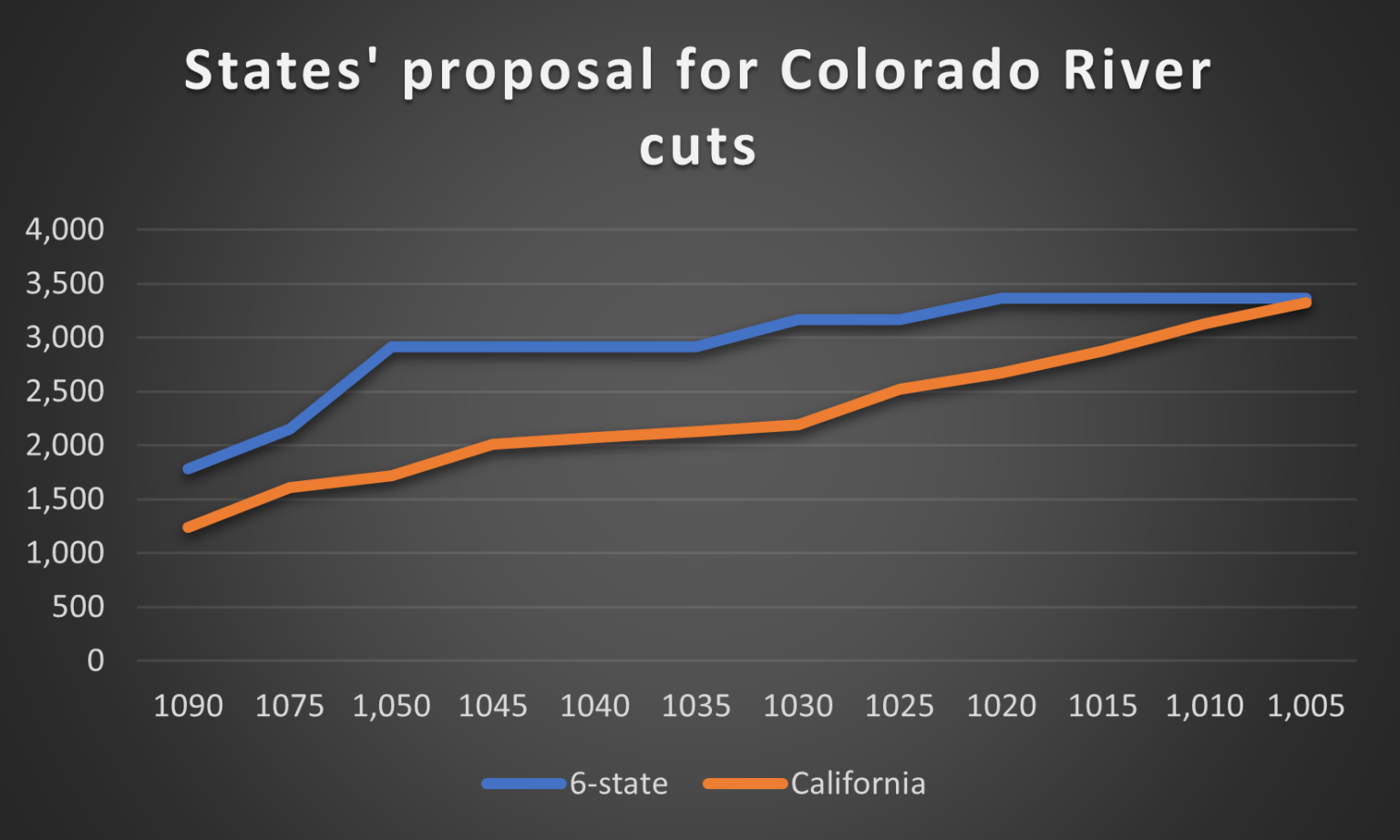
Six of the seven U.S. states that rely on the Colorado River released a framework Monday that outlines a potential strategy for federal water regulators tasked with making unprecedented cuts on an overused watershed that serves about 40 million people across the Southwest. 

The states released the plan, outlined in a letter sent to the U.S. Department of Interior, one day before a federal deadline to negotiate a consensus-based framework for cutting back. Years of drought, amplified by climate change, have exposed structural imbalances in how the Colorado River is used, as there are often more legal rights to use water than there is water to go around. 

What happens next is an open question. The plan shows a unified front among six states about how some of the cuts should be divided, but it is also a reflection of the unresolved tensions that have characterized seven-state negotiations over short-term cuts, which began last summer. 

Notably, the plan failed to gain the support of California, seen as critical to making meaningful cutbacks, as the state with the largest apportionment of the river and priority legal entitlements to use water. And itโ€™s unclear how federal officials will regard a plan that leaves out a key state.

John Entsminger, who leads the Southern Nevada Water Authority, said in a statement Monday that while the goal remains a seven-state deal, the six-state plan was a โ€œpositive step forward.โ€ย 

Gov. Joe Lombardo also released a statement calling the six-state plan a โ€œmajor step forward.โ€

The plan builds upon a framework Nevada outlined this year. The consensus-based approach would require states to account for water lost to evaporation and leaky infrastructure, resulting in significant cuts to overall use. Together, annual water losses make up about half of the water federal officials are looking to cut as a short-term measure to stabilize the riverโ€™s major reservoirs โ€” Lake Mead and Lake Powell โ€” until a longer-term deal can be negotiated. 

California negotiators said any plan to make major cuts should adhere to a foundational tenet of Western water law โ€” that those who developed their water rights first have a priority to water in times of shortages. They have argued that any cuts should be dealt with under this system, a move that would require junior users, particularly in Arizona, to take potentially steeper cuts.

The proposal to cut back by dividing evaporation losses in proportion to water use, California has argued, would be an unfair way to shift the burden of cuts to some of the stateโ€™s oldest Colorado River users, including the Imperial Irrigation District, the largest single river user.  

โ€œWhen you have a junior right, thatโ€™s what you do,โ€ Tina Shields, an official with the farming district, recentlyย told theย Associated Press. โ€œYou try to share the problem with other users.โ€

In the coming weeks, federal water officials will review the plan and could incorporate parts of it in anย environmental review processย to evaluate the short-term cuts to annual water use. The federal government will likely announce a regulatory action later this year.

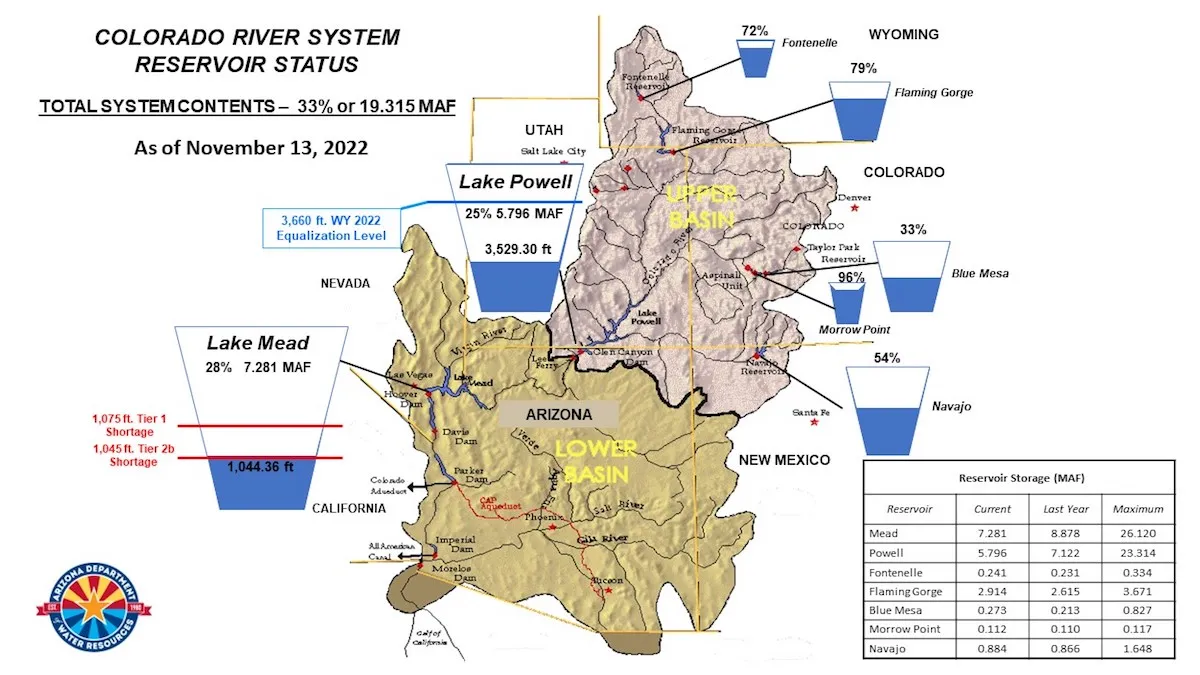
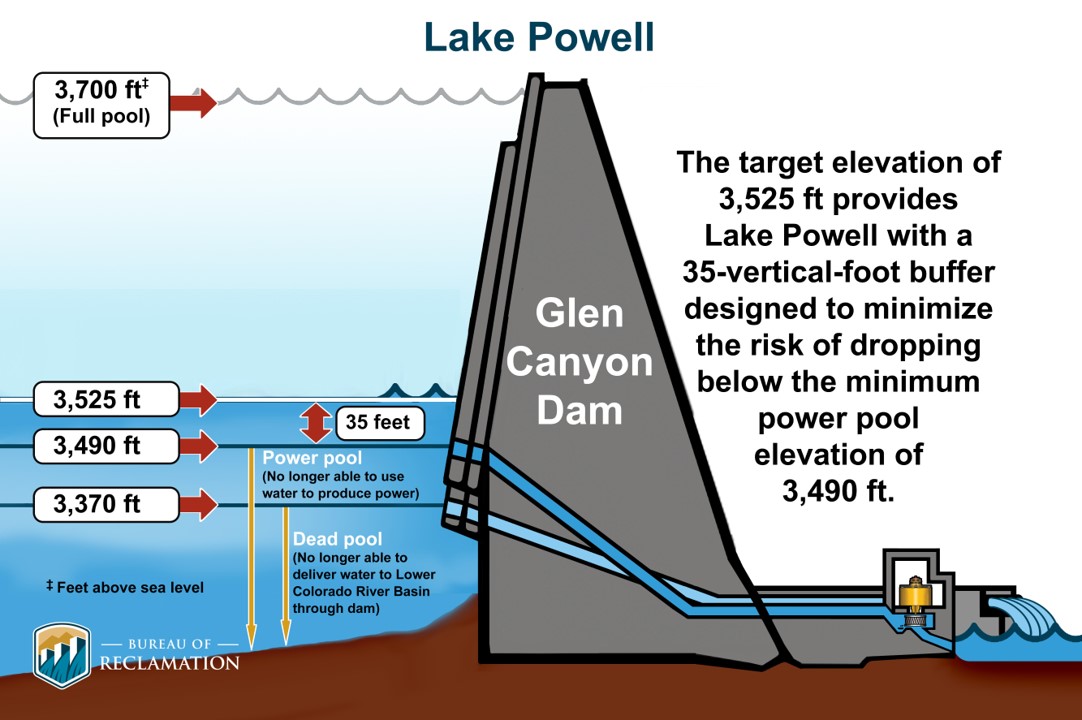
This graphic indicates Colorado River reservoir levels as of November 2022. (Arizona Department of Water Resources)

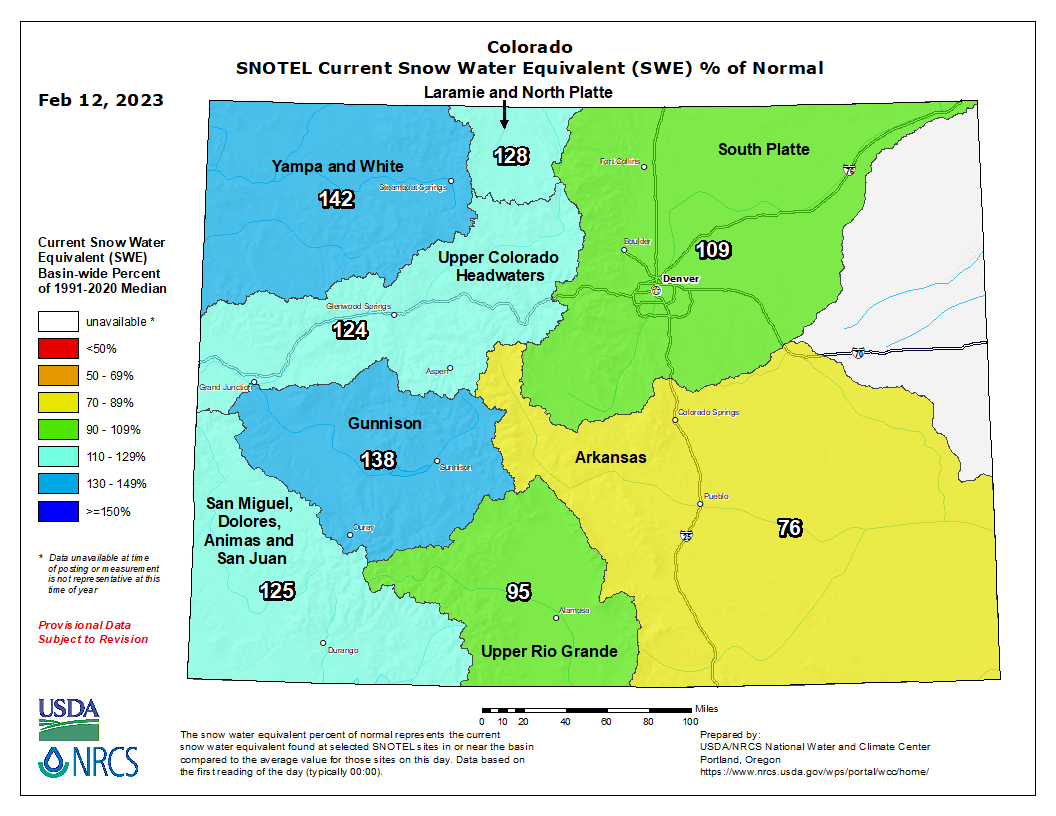
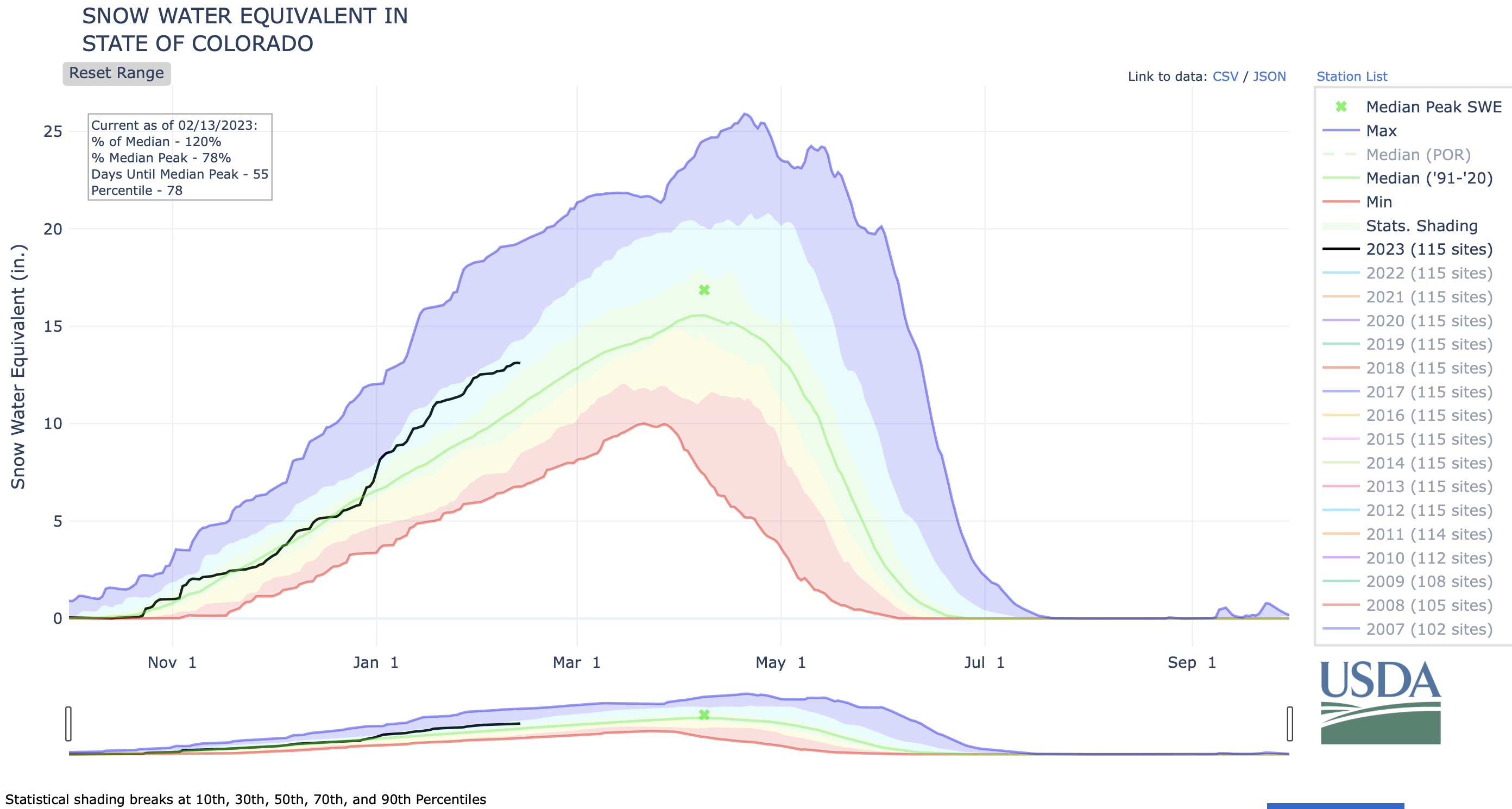
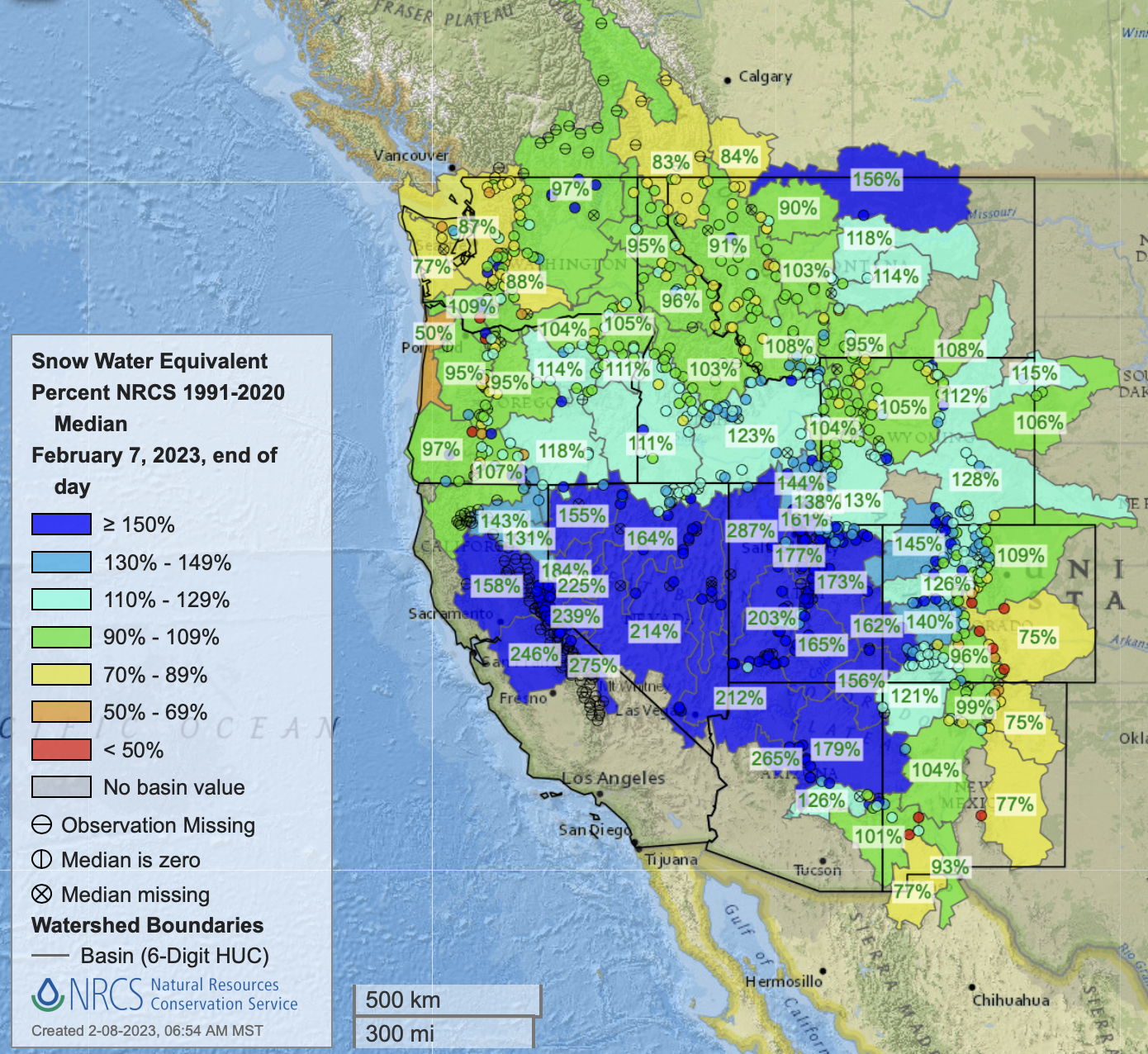
#Snowpack news February 13, 2023

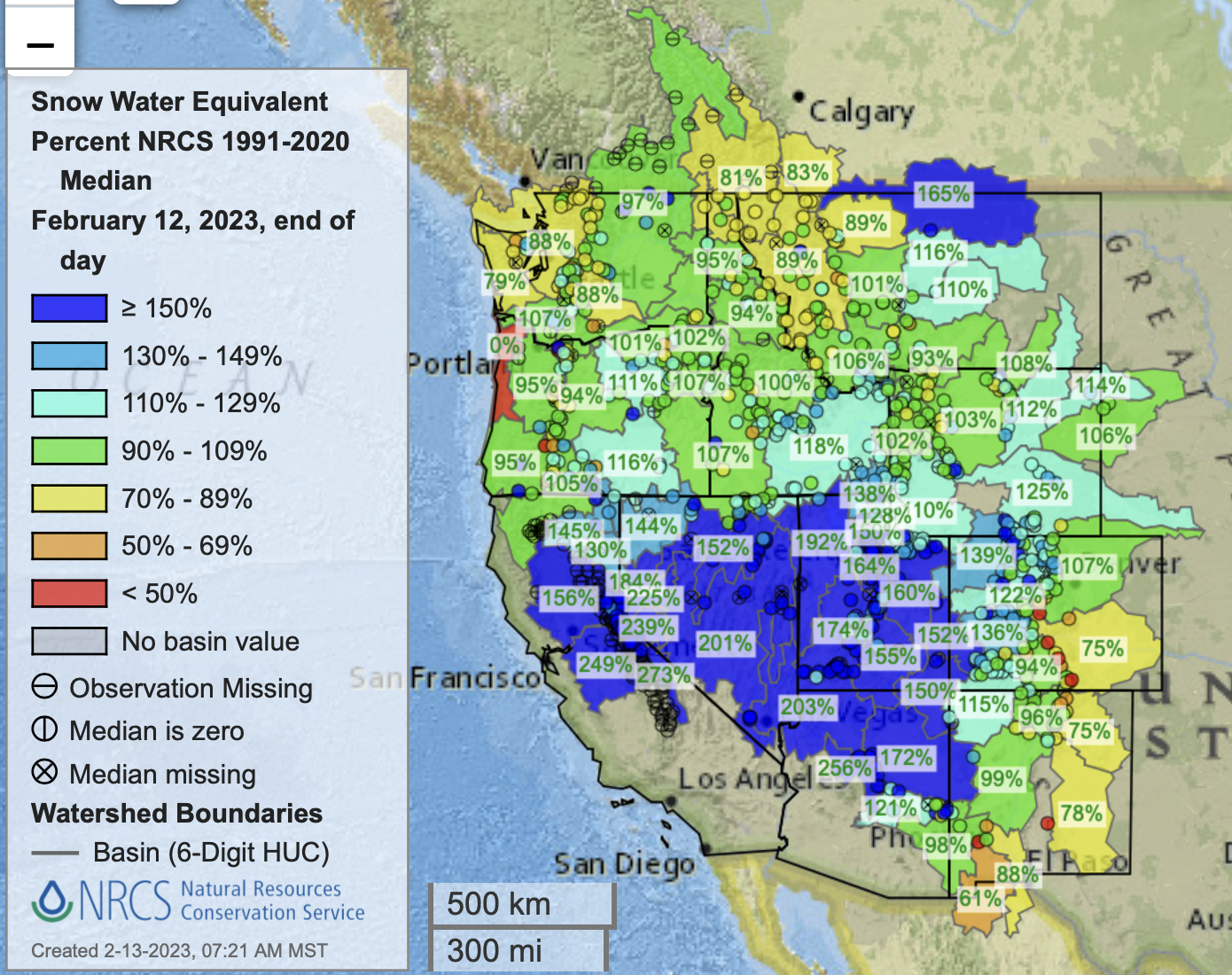
West snowpack basin-filled map February 12, 2023 via the NRCS.
Colorado Snowpack basin-filled map February 12, 2023 via the NRCS.

How the pattern of trends across the tropical Pacific Ocean is critical for understanding the future #climate — NOAA

Click the link to read the article on the NOAA website (Sukyoung Lee,ย Kris Karnauskas,ย Ulla Heede,ย ANDย Michelle L’Heureus):

โ€œHow will climate change influence ENSO?โ€ is one of the most common questions that we get on the ENSO Blog. While it makes sense folks want to know about the future changes in El Niรฑo and La Niรฑaโ€”are they becoming more/less frequent? stronger? weaker? (1)โ€”there is an even more basic question for future climate change that scientists are pondering:

How will trends in sea surface temperatures change across the equatorial Pacific Ocean? 

It is very likely that the equatorial Pacific Ocean is going to warm up somewhere, but where exactly the strongest warming occurs is an important question. In particular, scientists want to know more about the geographic pattern of trends (2). By modifying the heating in the tropics, these changes will then have knock-on influences across the globe because, as we like to say, what happens in the Pacific does not stay in the Pacific!

The trend pattern is critical to understanding how the average or background atmospheric circulation of the tropical Pacific will change. Remember: the background state of the atmosphere in the tropical Pacificโ€”theย Walker Circulationโ€”is fueled by the difference in sea surface temperature between the west and the east.

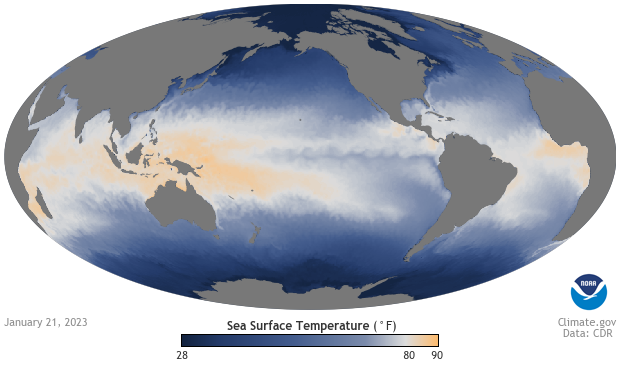
Sea surface temperatures in the Pacific around the equator are generally cooler in the East (blue colors) than they are in the West (yellow-orange). This temperature contrast, or gradient from warm to cool, is key to the Walker Circulation. January 21, 2023, image from Climate.gov Data Snapshots.

If temperatures warm faster in the western Pacific than in the eastern Pacific, the background tropical circulation could become more La Niรฑa-like (3). But if the trend pattern changes as global temperatures continue to rise, meaning the east starts warming faster than the west in the future, the whole circulation across the tropical Pacific could become more El Niรฑo-like. So actual ENSO events would be occurring against a different background climate than they do today. Yeah, itโ€™s complicated.

How the sea surface temperature trend pattern will change has profound, world-wide implications for impacts such as regional changes in rainfall, where drought occurs, numbers of tropical cyclones, the rate of global mean warming, ocean biogeochemistry, etc. If you are trying to make decisions based on projections of the future, you need to know the answer. And, at this moment, there is some significant (perhaps even growing) debate that surrounds it.

Some scientists believe the recently observed trends suggest the models may be not reproducing some key mechanisms that are critical to provide accurate projections for the tropical Pacific Ocean. There are some long-standing biases in how models simulate the tropical Pacific that we have covered before on this blog, which could be playing some role.

To help us better understand this question, we have assembled a panel of three experts: Professorย Sukyoung Leeย at the Pennsylvania State University, Professorย Kris Karnauskasat the University of Colorado- Boulder (who has previously written on theย ENSO blog), Dr.ย Ulla Heedeย who is now a CIRES postdoctoral visiting fellow, following her PhD withย Alexey Fedorovย at Yale University. Keep in mind that this is not a complete representation of all possible perspectives on the matter, and there are some angles not represented by this group (4).

Questions and Answers

(A) So, what are the trends in sea surface temperature (and other variables) across the tropical Pacific Ocean? Why canโ€™t you just measure past trends and assume they will continue? Whatโ€™s the problem here?

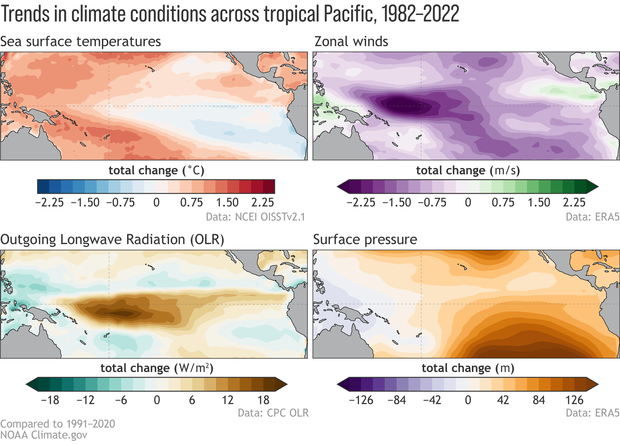
UH:ย Since at least 1980, the tropical Pacific warming pattern has become more La Niรฑa-like in the observations. This means that SSTs are warming faster in the western tropical Pacific Ocean than the eastern Pacific, and that surface winds are blowing stronger from east-to-west along the equatorial Pacific Ocean (5). This is opposite to the El Niรฑo-like trend many climate models are projecting into the future because of greenhouse gases. Right now, there is a vigorous debate in the climate community whether the La Niรฑa-like trend we are observing now is being driven by greenhouse gases or has natural causes. Because natural variations in the ocean circulation are slow, it is difficult to estimate the signal of global warming in a short observational record.

From Jan. 1982 until Dec. 2022, the linear trends of anomalies in sea surface temperature (top left), 850hPa-level zonal winds (top right), outgoing longwave radiation (bottom left), and 1000hPa-level geopotential height (bottom right). Red (blue) shading in the SST map indicates trends toward more positive (negative) SSTs. Purple (green) shading in the wind map indicates that trends are stronger going from east to west (west to east). Brown (green) shading in the OLR map indicates that convection/rainfall is below-average (above-average). Orange (purple) shading in the surface height/pressure map indicates trends toward higher (lower) pressure/heights. Data are in monthly means and the slope is multiplied by the number of months over the period to obtain the total change in the anomalies. Figures by Michelle Lโ€™Heureux and modified by climate.gov.

KK: It might sound simple, but quantifying those trends in the past observed record is more challenging than you might think! This is because the tropical Pacific is home to ENSO, which can either hide the long-term trends with its large variability, or make trends appear that are just temporary and could change later on.

UH: There is another reason why we cannot simply assume the recently observed La Niรฑa-like trend will continue in the future. Mainly, we donโ€™t know with enough certainty what the trend was before we had satellites monitoring the vast expanse of the tropical Pacific Ocean.

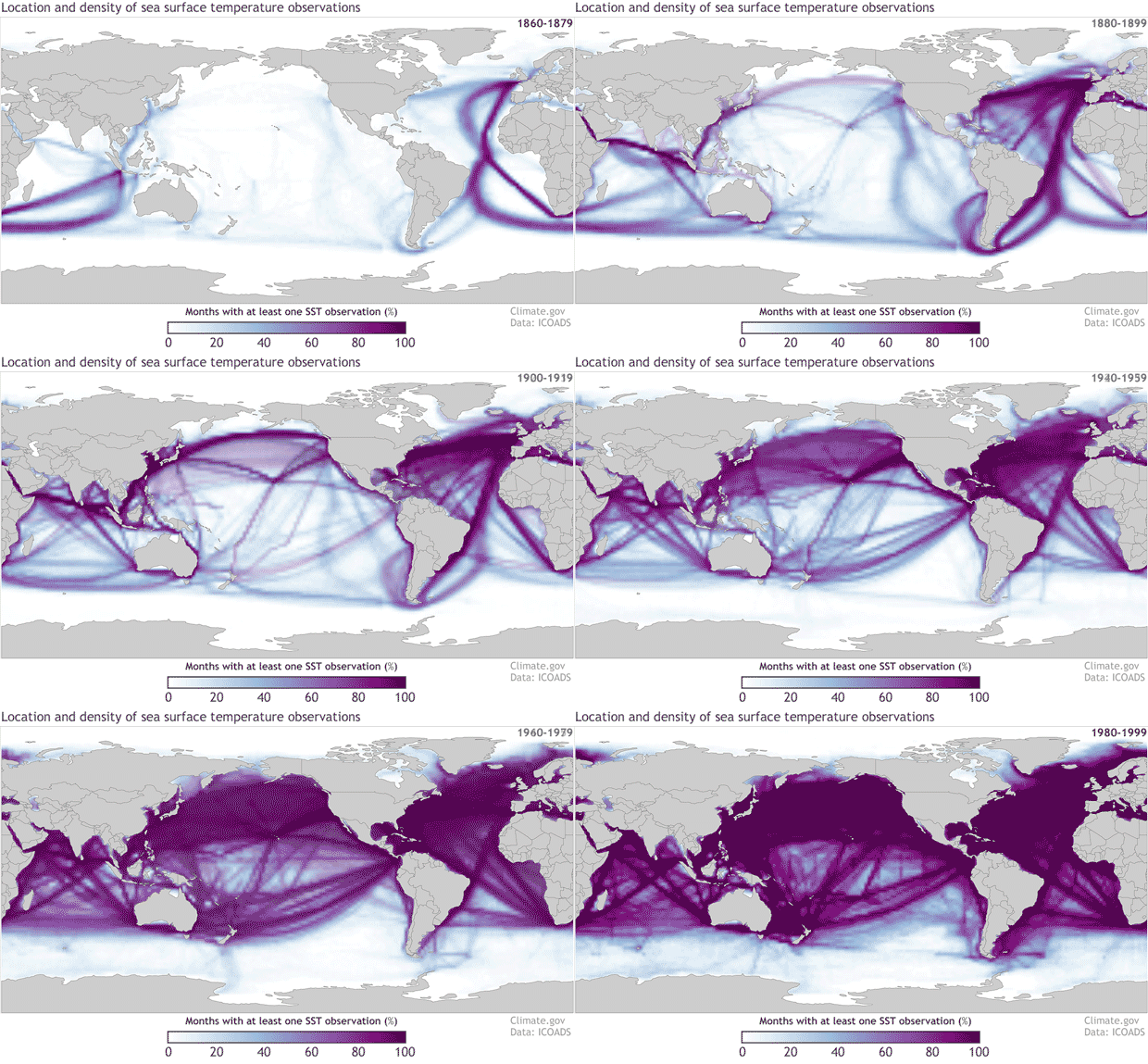
KK:ย Ulla is right, we have a tougher time reliably estimating the trends prior to the satellite era (late 1970s), and this problem gets even worse prior to the 1950s. Back then the instrumental data (mostly from ships) have gaps and changes in measurement protocols. Think of it like this: ideally, we would like to estimate the trend using as long of a record as possible (going back to the 1800s) but this is hampered by gaps in space and time. With 40 years of satellite data, we can be more confident that weโ€™re accurately measuring the whole tropics, but with that shorter record, it is harder to distinguish trends from just a random pileup of ENSO events.

Locations of sea surface temperature observations from the International Comprehensive Ocean Atmosphere Data Set (ICOADS) for 20-year periods starting with the 1860-1879 period and ending with 1980-1999. The colors represent the percentage of months with at least one sea surface temperature measurement in each 2 degree by 2 degree grid box. The darker the color the higher the percentage of months in each 20-year period that has an observation. NOAA Climate.gov image with data from ICOADS.

(B) Why is it so important we know the pattern of tropical Pacific trends? Who cares?

UH: Iโ€™d like to rephrase this question another way: What are the climate impacts associated with the tropical Pacific climate change? (6) The short answer is: a lot! This is because the tropical Pacific plays a key role in distributing energy and moisture to the rest of the planet, so any change in the tropical Pacific will be felt in other parts of the world. Letโ€™s look at an example: in the last several decades we have observed drought conditions in many parts of the southwestern United States. This is likely partially related to the stronger tropical Pacific winds (more La Niรฑa-like trends) we have recently observed. So, if the trends in the tropical Pacific changes, we might also see a change in these drought conditions.

SL: During La Niรฑa, the atmospheric circulation over the middle latitudes is unusually wavier in the east-west direction (7). Surface temperatures can also be more variable as this blog recently pointed out. This increased waviness can mean the Arctic tends to be unusually warm and a large area of the North American and Eurasian continents tend to be unusually cold (8). Conversely, during El Niรฑo, the atmospheric circulation is less wavy and the mid-latitude continents tend to be unusually warm and the Arctic tends to be colder than average.

Because climate change might have similar effects, we really need to know how the tropical Pacific sea surface temperature pattern and latent heating [the heating of the atmosphere that occurs when water vapor condenses into rain or clouds] will change. If it becomes more La Niรฑa-like, the likelihood of undesirable conditions such as an even drier southwest U.S., as Ulla mentioned, or an amplified cold continents/warm Arctic pattern, would increase (8). Because most of the population resides in the mid-latitude continents, this clearly has implications for energy and water usage planning.

(C) Why is this happening? Why are future projections more El Niรฑo-like while observations are more La Niรฑa-like? What would even cause more El Niรฑo- vs. more La Niรฑa-like changes?

KK: Perhaps we should not be that surprised that future projections and past observations do not always give the same answer. Future projections are from imperfect computer models, and past observations are from imperfect attempts to measure the vast ocean. The causes of these possible changes have been hotly debated for decades, and it was like โ€œlove at first sightโ€ when I was introduced to it as a postdoc!

SL:ย One explanation is โ€œinternal variability,โ€ which essentially suggests that natural causes explain the recent La Niรฑa-like trend. However, recent work by Dr. Richard Seager (hereย andย here), among others, suggests models are either deficient at correctly estimating this internal variability or the response to greenhouse gases may not be right. Either outcome raises some doubts on the future projections of the tropical Pacific made by the current generation of climate models. Thus, it is important to understand the mechanisms that could drive El Niรฑo-like vs. La Niรฑa-like trends.

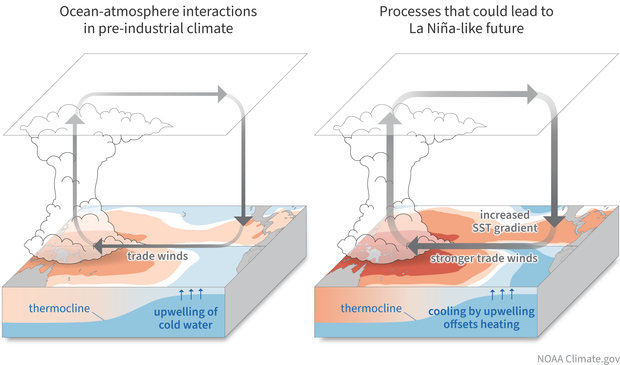
The left column shows the relevant processes in the pre-industrial climate and the right column shows how these same processes initially respond to GHG warming (this schematic does not show the final state). Technical Details(left panel): Convection is strongest in the western Pacific where the SST is the highest. Latent heating warms aloft, and evaporation cools the ocean surface. In the eastern Pacific, the thermocline is closest to the surface. Right panel: Under GHG warming, a uniform surface heat flux into the Pacific Ocean causes the SST to rise, but in the eastern tropical Pacific, the upwelling of cold water counters the forced warming. As a result, the zonal SST gradient increases. Schematic by climate.gov.

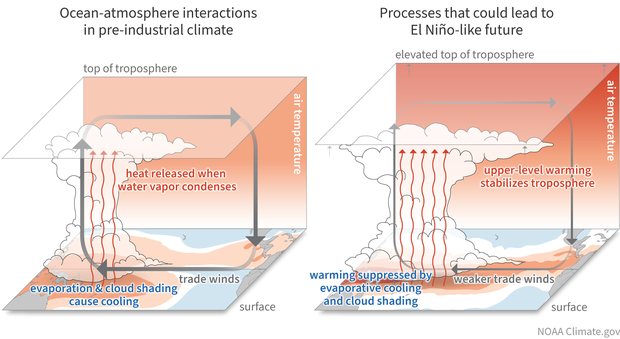
KK:ย One mechanism that could lead to more La Niรฑa-like change is that cold waterย upwellingย in the eastern Pacific may keep warming at bay โ€” the idea here is that the coldest waters at depth in the ocean are slower to feel the effects of climate change and provide a break on local rates of warming (see figure above). Another mechanism that could lead to more El Niรฑo-like change is that radiative effects of global warming [the upward transfer of heat away from the surface] would cause the tropical atmosphere to become more stable, slow down the Walker circulation, weaken the upwelling in the eastern Pacific, and lead to more warming there (see figure below).

Caption: Schematic showing a possible mechanism toward an El Niรฑo-like state, reviewed in Lee et al. (2022). The left column shows the relevant processes in the pre-industrial climate and the right column shows how these same processes initially respond to GHG warming (this schematic does not show the final state). Technical Details (left panel): Convection is strongest in the western Pacific where the SST is the highest. Latent heating warms aloft, and evaporation cools the ocean surface. Right panel: SSTs in the tropical Pacific increase leading to more condensational heating aloft and a higher tropopause, which increases dry static stability and gross moist stability, thus weakening the Walker circulation. At the same time, evaporative cooling and cloud shading are more sensitive to warming in the western Pacific, which weakens the zonal SST gradient. Schematic by climate.gov.

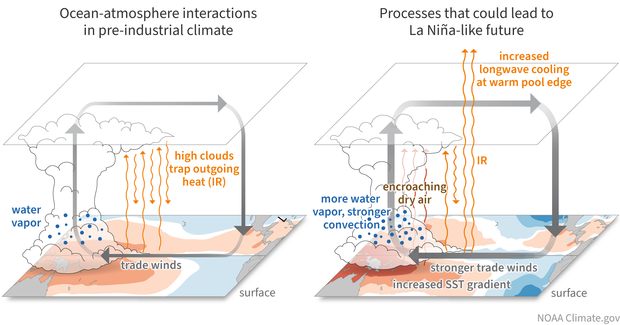
SL:ย A final possible mechanism may result in a La Niรฑa-like future. The air over the western Pacific Ocean could become moister, promoting even stronger convection (showers and thunderstorms), and therefore strengthening the Walker circulation. At the same time, in the periphery of the Indo-Pacific warm pool, contraction of the cirrus cloud cover could cause more surface cooling by allowing more infrared radiation to escape to space, again helping to create a more La Niรฑa-like sea surface temperature pattern (see figure below).

Schematic showing a possible mechanism toward an La Niรฑa-like state, reviewed in Lee et al. (2022). The left column shows the relevant processes in the pre-industrial climate and the right column shows how these same processes initially respond to GHG warming (this schematic does not show the final state). Technical Details (left panel): Highlighting the abundance of water vapor in the lower troposphere, and the trapping of infrared radiation (IR) by cirrus outflow from convective towers which otherwise escapes to space. Latent heating warms aloft, and evaporation cools the ocean surface. Right panel: Under GHG warming, the lower troposphere becomes more moist which decreases the gross moist stability and thus strengthens the Walker circulation. In the margins of the convective region, the horizontal moisture gradient increases, and advection from the surrounding drier region diminishes the area of convection. The so-called โ€œiris effectโ€ can also lead to a similar response to increased warming: Precipitation efficiency in convective tower increases, leaving less moisture for cirrus outflow. The resulting contraction of the cirrus cover in the periphery of the warm pool allows for more IR to escape, potentially cooling SSTs and thus enhancing the zonal SST gradient between the warm pool and its surroundings. Schematic by climate.gov.

(D) Can we reconcile the seemingly different trends in the models versus the observations? Could they both be โ€œright?โ€

 UH: It is entirely possible that the La Niรฑa-like trends in the Pacific we are observing now are transient (short-term) and will reverse at some point in the next 100 years and start to look more like the modeled projections, with the eastern Pacific Ocean warming faster than the rest of the tropical oceans (9). Even if it is just transient, we need to understand these trends better: is it a response to global warming? (I tend to think so!), natural variability, or some mix of the two? However, this is difficult to diagnose using the models because the historical model simulations (run using observed historical forcings) and the observations still do not agree very well.

KK: It is fair to say both might be โ€œrightโ€ in the very general sense that both sets of mechanisms are real and part of the fundamental physics controlling the climate system, but I donโ€™t think we can say that both are right in terms of their relative importance. If the models and observations agreed on what *has* happened since the beginning of the Industrial Revolution, then that would be one thing, but they donโ€™t. As for the future, it is possible that a mixture of physical processes can evolve, and some of Ullaโ€™s work has really been groundbreaking in thinking along those lines. However, I suspect that as time goes on, we will learn that the models are still not representing some of the key ocean processes very well (10), such as the currents and upwelling, and their relation to changes in the windโ€”especially in places like the eastern equatorial Pacific Ocean where the thermocline is very shallow.

(E) How and when will scientists figure out where we are headed? What more could be done to help resolve this important question?

KK: Progress on the observational side might be slow. I donโ€™t know how much more we can improve our ability to describe historical trends back to the 1800s. Even as different groups of scientists throw new statistical techniques to fill in the gaps, etc., the observational uncertainties arenโ€™t being reduced very much. That said, we now have 40+ years of satellite data. When I started grad school, that was only 22 years. We probably have a few more decades to go, but we are getting closer to an acceptably long satellite record that can distinguish between ENSO, decadal variability, and long-term trends that are arising from human activities.

On the modeling side, heroic efforts are being done at modeling centers around the world to improve the representation of the physical processes. Perhaps gains will come from moving toward higher spatial resolution of the models as computers get cheaper and faster, which I suspect is critical for resolving upwelling, the shear between currents flowing in different directions, and the way that the friction from wind makes its way down into the ocean to influence the currents and mixing. Iโ€™m hopeful, and Iโ€™m glad I still have a few decades left to work on this fun and important problem!

SL: I agree with Kris that as the length of observational records increases, the impact of the internal variability on the trend diminishes, and therefore increasing the likelihood that the La Niรฑa-like trends weโ€™ve seen represents natureโ€™s response to greenhouse gases. However, it is difficult to lengthen our historical record and infill where there are few measurements, so improving the accuracy of climate models is critical. Kris points out that we need to better resolve the ocean, but I think we also need to focus on how well tropical convection and rainfall is captured, which occur on scales that are unresolved by current model grid spacing. The current generation of parameterizationsstill warms the upper troposphere too aggressively and therefore weakens the simulated Walker circulation, leading to a more El Niรฑo-like state.

For good reason, improving the parameterization is one of the most prominent research activities in climate science. At the same time, I believe that continued efforts should be made to develop new theories and to improve existing theories of fundamental mechanisms. In the meantime, for users who need to make decisions, it is important to recognize that there may be two different โ€œstorylinesโ€ for the tropical Pacific in the future, which they need to take into account.

Lead Editor: Michelle Lโ€™Heureux (NOAA CPC)

Footnotes:

(1) Tom has done a masterful job going over these questions. Check out his most recent post going over the latest IPCC findings related to ENSO and climate change. I also really like his older post using a dimmer switch metaphor.

(2) Iโ€™m avoiding using the term โ€œzonal gradientโ€ up top because it involves two fairly jargon-y terms that I think confuse most non-scientific readers. But, for those who are familiar, Iโ€™m talking about trends in the zonal gradient across the tropical Pacific Ocean. In other words, weโ€™re interested in the relative rate of trends in tropical sea surface temperature, sea level pressure, rainfall, etc. in the zonal, or east-west, directionโ€”i.e. comparing impacts between the eastern Pacific versus the western Pacific.

(3) Now some readers might ask โ€œWait, isnโ€™t ENSO already tied to the pattern of sea surface temperatures across the tropical Pacific Ocean? El Niรฑo is associated with ocean temperatures warming up (more than average) in the central and eastern equatorial Pacific and La Niรฑa is linked to cooler ocean temperatures there. So how is this question about trend patterns any different from asking how ENSO itself will change?โ€ Good question smart readers! 

Changes in El Niรฑo and La Niรฑa are most strongly tied to seasonal (3-month) average anomalies in the climate system, and this seasonal variability has its own mechanismsthat result in the growth and decay of events over the span of a year or couple years. In contrast, what we are talking about here is the slower, smaller background changes in the tropical Pacific that occur over multiple decades or even centuries. Even though the timescales and mechanisms are separate and distinct from the seasonal ENSO cycle, folks often use the phrases โ€œEl Niรฑo-like change/trendsโ€ or โ€œLa Niรฑa-like change/trendsโ€ to describe these longer, gradual trends.

Although potentially confusing, these terms provide a handy shortcut because El Niรฑo-like change means that these trends will look more El Niรฑo-like over the tropical Pacific (relatively warmer in the central/east Pacific and cooler in the western Pacific) or La Niรฑa-like (relatively cooler in the central/east Pacific and warmer in the western Pacific).

(4) I think Sukyoung Leeโ€™s review paper (which available through open access) is a nice place to start reading about different ideas and approaches (disclosure: two ENSO bloggers are co-authors). There are also more papers that have been released since that review paper was assembled that are also worth checking out:

Hartmann, D. L. (2022). The Antarctic ozone hole and the pattern effect on climate sensitivity. Proceedings of the National Academy of Sciences119(35), e2207889119. https://doi.org/10.1073/pnas.2207889119

Wills, R. C. J., Dong, Y., Proistosecu, C., Armour, K. C., & Battisti, D. S. (2022). Systematic climate model biases in the large-scale patterns of recent sea-surface temperature and sea-level pressure change. Geophysical Research Letters, 49, e2022GL100011. https://doi.org/10.1029/2022GL100011

Dong, Y., Pauling, A. G., Sadai, S., & Armour, K. C. (2022). Antarctic ice-sheet meltwater reduces transient warming and climate sensitivity through the sea-surface temperature pattern effect. Geophysical Research Letters, 49, e2022GL101249. https://doi.org/10.1029/2022GL101249

(5) For example, one recent study has shown that the ocean surface near the Galapagos Islands in the far eastern equatorial Pacific cooled down by about a half degree Celsius over the past 40 years.

(6) It is often useful to make a distinction between climate change and climate impacts. Climate change refers to the โ€˜big pictureโ€™ of how earthโ€™s climate is changing in response to more greenhouse gasses in the atmosphere. This includes questions like how much the surface of the planet is warming, how the jet stream is changing, how fast the ice sheets are melting, and – you guessed it – how the tropical Pacific is changing. Climate impacts are the consequences of climate change that impacts humans locally. For example, climate impacts could be increased droughts, more frequent forest fires, flooding of coastal cities, stronger hurricanes making landfall. 

(7) The reason why La Niรฑa events bring about wavier conditions is because the latent heat released during cloud formation in the tropics is mostly confined to the western part of the tropical Pacific. The latent heating generates so-called Rossby waves which are responsible for the aforementioned waviness (see Figure 6 in Lee et al., 2022). If the latent heating is uniform in the east-west direction, the heating cannot generate Rossby waves. Therefore, the more east-west confinement of the latent heating, the more the waviness, which has profound impacts on temperature and precipitation locally around the globe. The pattern of the future tropical Pacific is not necessarily the same as either El Niรฑo or La Niรฑa.

(8) For more details see: 

Lee, S. (2012). Testing of the Tropically Excited Arctic Warming Mechanism (TEAM) with Traditional El Niรฑo and La Niรฑa, Journal of Climate25(12), 4015-4022.

Clark, J. P., & Lee, S. (2019). The role of the Tropically Excited Arctic Warming Mechanism on the warm Arctic cold continent surface air temperature trend pattern. Geophysical Research Letters, 46, 8490โ€“ 8499. https://doi.org/10.1029/2019GL082714 

(9) Here are some papers that delve on the issue of future Pacific warming:

Heede, Ulla, and Alexey Fedorov. 2021. โ€˜Eastern Equatorial Pacific Warming Delayed by Aerosols and Thermostat Response to CO2โ€™.

Heede, Ulla K., Alexey V. Fedorov, and Natalie J. Burls. 2020. โ€˜Timescales and Mechanisms for the Tropical Pacific Response to Global Warming: A Tug of War between the Ocean Thermostat and Weaker Walkerโ€™. Journal of Climate, April. https://doi.org/10.1175/JCLI-D-19-0690.1.

Wu, Mingna, Tianjun Zhou, Chao Li, Hongmei Li, Xiaolong Chen, Bo Wu, Wenxia Zhang, and Lixia Zhang. 2021. โ€˜A Very Likely Weakening of Pacific Walker Circulation in Constrained Near-Future Projectionsโ€™. Nature Communications12 (1): 6502. https://doi.org/10.1038/s41467-021-26693-y.

Ying, Jun, Matthew Collins, Wenju Cai, Axel Timmermann, Ping Huang, Dake Chen, and Karl Stein. 2022. โ€˜Emergence of Climate Change in the Tropical Pacificโ€™. Nature Climate Change, March, 1โ€“9. https://doi.org/10.1038/s41558-022-01301-z.

(10) Karnauskas, K. B., J. Jakoboski, T. M. S. Johnston, W. B. Owens, D. L. Rudnick, and R. E. Todd, 2020: The Pacific Equatorial Undercurrent in Three Generations of Global Climate Models and Glider Observations. J. Geophys. Res.โ€“Oceans125(11), e2020JC016609, doi: 10.1029/2020JC016609.

This paper analyzed a ton of climate models, from the ones that were state-of-the-art a dozen years ago (CMIP3 / IPCC AR4) to the most recent generation of CMIP6 models that fed into the 6thIPCC Assessment Report. While the currents along the equatorial Pacific have improved over time, there is still a ways to go, and this has implications for how SST changes.

Coats, S., and K. B. Karnauskas, 2018: A role for the Equatorial Undercurrent in the ocean dynamical thermostat. J. Climate31, 6245โ€“6261, doi: 10.1175/JCLI-D-17-0513.1.

This paper analyzed a recent generation of global climate models (CMIP5 / IPCC AR5) and found, among other things, that the relationship between the wind stress and the underwater currents does not match observations in the eastern equatorial Pacific, which has implications for how SST changes in that climatically important region.

Calls grow for statewide #Colorado water #conservation standards; some cities skeptical — @WaterEdCO #ColoradoRiver #COriver #aridification

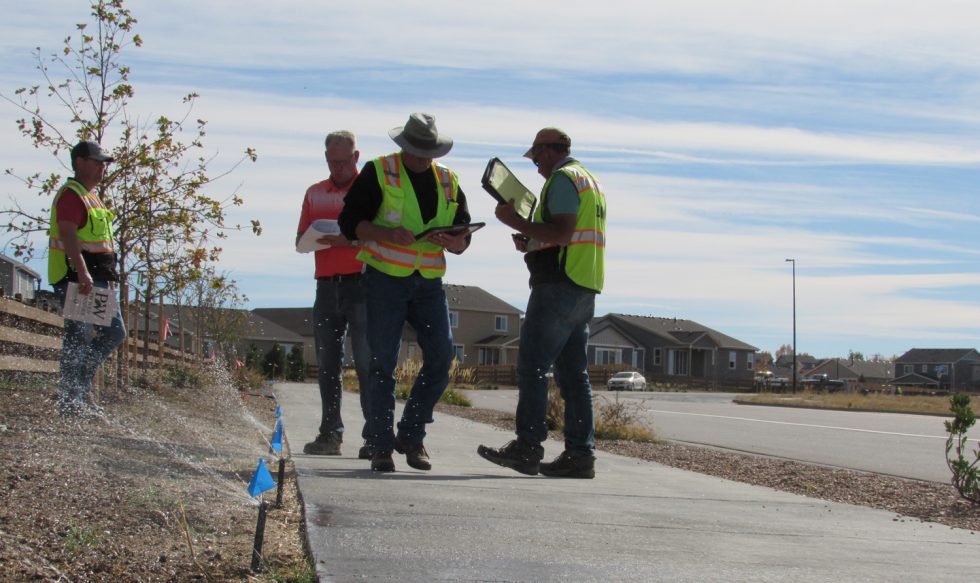
Castle Rock Water Conservation Specialist Rick Schultz, third from the right, inspects and tests a new landscape watering system in Castle Rock, one of many Douglas County communities reliant on the shrinking Denver Aquifer. In a Fresh Water News analysis of water conservation data, Castle Rock leads the state, having reduced its use 12% since 2013. Oct. 21, 2020. Credit: Jerd Smith, Fresh Water News

Click the link to read the article on the Water Education Colorado website (Allen Best):

With the Colorado River crisis deepening and the warming climate continuing to rob streams and rivers of their flows, talk in Colorado has resumed about how to limit growing water demand statewide for residential use.

A new report commissioned by the Common Sense Institute and written by Colorado water veterans Jennifer Gimbel and Eric Kuhn, cites the need for broader conservation measures such as removing non-functional turf in new development, among other things.

โ€œLacking statewide or regional standards, home developers are free to choose cities with less strict conservation standards,โ€ they wrote in the November 2022 report,ย โ€œAdapting Coloradoโ€™s Water Systems for a 21stย century Economy and Water Supply.โ€

โ€œRegional approaches are needed,โ€ they added in their broad-ranging report. They suggest regional conservancy and conservation districts might be a vehicle in lieu of statewide standards.

Gimbel, a senior scholar at CSUโ€™s Water Center and former director of the Colorado Water Conservation Board, and Kuhn, retired general manager of the Colorado River Water Conservation District, summarized their findings last Friday [January 27, 2023] in a presentation at the Colorado Water Congress Annual Convention. The water congress is a bi-partisan group representing dozens of water users across the state.

โ€œWe have to do more with less,โ€ said Kuhn. He cited projected statewide population growth of 1.6 to 1.8 million new residents by 2050, most along the Front Range, but also the probability that the warming climate will make less water available, particularly from the Colorado River.

Kuhn warned that deliveries of water from the Colorado River Basin to the Front Range are by no means guaranteed. Several Front Range water providers, including Pueblo, Denver and Northern Water have at least some water rights that are younger, or more junior than those farther downstream in places such as California, and could be vulnerable if mandatory cutbacks ever occurred. Within individual states in the West, older water rights are typically fulfilled before younger water rights during times of scarcity, though itโ€™s yet to be seen how mandatory cutbacks would materialize across the entire Colorado River Basin.

โ€œCurtailment of those junior users is not acceptable at any time in the future,โ€ said Kuhn.

Earlier during the conference, Colorado Gov. Jared Polis called for a โ€œcomprehensive approach to housing to preserve our water resources.โ€ He cited multiple benefits for revised land-use policies: reduced traffic, saved money for consumers and โ€“ most important, he added, it โ€œlimits demand on water resources.โ€

Polis said the Colorado Water Conservation Board will lead a task force on integrating land use and water demand. This 21-member Urban Landscape Conservation Task Force is to include representatives of 8 water utilities, 2 conservation districts, 2 environmental NGOs, with the balance to come from areas of expertise and interest such as stormwater, equity, and urban planning.

Local control, a basic precept of Coloradoโ€™s form of government, will also likely be an issue. Towns, cities and counties who are authorized to govern themselves in most cases, often resist state control in matters they believe should remain in local hands.

Aurora, if lately a shining light for turf removal and strict water conservation policies, harbors skepticism of any potential statewide mandates. โ€œAurora must retain control of what our city looks like,โ€ says Greg Baker, Aurora Waterโ€™s spokesman.

Aurora is open to discussion but โ€œit needs to be a proportional discussion,โ€ says Baker. โ€œWe donโ€™t want to tell agriculture how to use their water, but they account for 85% of water use in this state.โ€

In 2014, when Ellen Roberts, then a state senator from Durango, introduced a conservation bill, she found significant opposition.

Roberts said she introduced the bill, which did not pass, to get the conversation going in Colorado about stepped-up conservation programs. โ€œMy concern was that if we waited for that to happen naturally, it might never happen or it would be so slow it would have no meaningful impact,โ€ she says.

This latest report was designed for the business community, says Gimbel, but with the understanding that it needed to include the water community. โ€œIt was our opportunity to tell the business community โ€˜pay attention, because what happens with water is going to affect our economy one way or another.โ€™โ€

Allen Bestย grew up in eastern Colorado, where both sets of grandparents were farmers. Best writes about the energy transition in Colorado and beyond atย BigPivots.com.

Conservation Organizations Emphasize Need to Protect Environmental Priorities in #ColoradoRiver Basin — Audubon #COriver #aridification

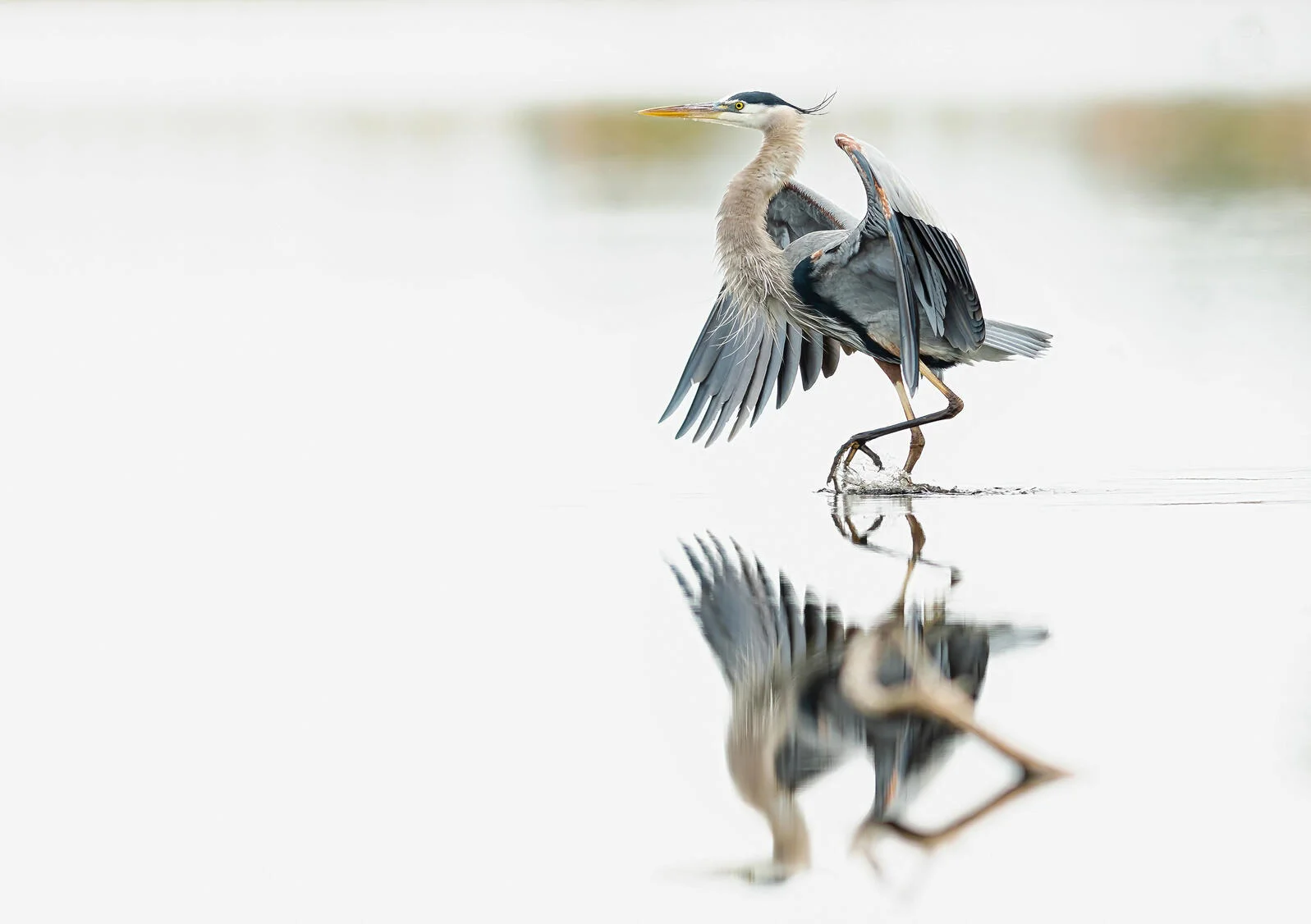
Great Blue Heron. Photo: Patricia Kappmeyer/Audubon Photography Awards

Click the link to read the release on the Audubon website:

Several conservation organizations today [February 2, 2023] urge Colorado River Basin decision-makers to protect critical environmental priorities as they wrestle with Basin management decisions being made over the next several months. The groups warn that ignoring these priorities risks further damage to the Basinโ€™s environment and natural heritage, the foundation of the iconic Colorado River system.ย 

The U.S. Bureau of Reclamation is pursuing a supplemental Environmental Impact Statement (SEIS) process to evaluate the need to partially modify operating criteria for primary Colorado River reservoirs given extreme drought conditions and historically low reservoir levels at Lake Powell and Lake Mead.

While the groups are encouraged to see six of the Basin states put forward a โ€œconsensus based modeling alternativeโ€ for Reclamation to consider in the SEIS process, the groups seek to ensure that critical environmental concerns are considered in any operational actions that Reclamation models and evaluates.

As the Colorado River community considers operational changes, seven conservation organizations identify five (5) environmental priorities that are most directly linked to or implicated by the SEIS process, which is expected to be completed in the summer of 2023:

  • Investing federal funds in watershed health, long term resilience, and agricultural innovation in the Upper Basin tributaries with high fish and wildlife and recreational value;
  • Preserving the Endangered Fish Recovery Programs in the Upper Basin and the Lower Colorado River Multi-Species Conservation Program;
  • Safeguarding the integrity of the Grand Canyon ecosystem and recreational values;
  • Restoring wetlands at the Salton Sea to minimize toxic dust and benefit bird habitat along the Pacific Flyway;
  • Forestalling the loss and continuing restoration of the Colorado River Delta.

โ€œWe highlight these particular priorities because, for the Colorado River community, they are closely tied to the continued integrity of the Colorado River Basin and are potentially most affected by the current SEIS process,โ€ said Jennifer Pitt, Colorado River Program Director for National Audubon Society. โ€œIn the face of a hotter, drier climate, the Colorado Riverโ€”and all of the living things depending on itโ€”require that we stay focused on these priorities.โ€

โ€œWhatever options Reclamation ultimately considers as part of the SEIS process, these environmental priorities cannot be lost in the mix or sacrificed in the name of a crisis, or we risk making the entire situation worse,โ€ said Christy Plumer, chief conservation officer for Theodore Roosevelt Conservation Partnership.

โ€œThese and related priorities are essential to the continued sustainability of the Colorado River system.ย  Failing to consider them when making basin management decisions would undermine the ecological health of the Colorado River Basin, adding more potential for controversy in a Basin that needs to move forwardโ€”urgentlyโ€”with consensus efforts to reduce water demand and restore the health of the watershed,โ€ saidย Sara Porterfield, western water policy advisor for Trout Unlimited.ย 

โ€œOur groups have worked hard over the last decade to find environmental solutions that also benefit water users. We want to ensure those hard-won solutions and benefits arenโ€™t sacrificed because of interstate disputes over water allocations,โ€ said Taylor Hawes, director of the Colorado River Program at The Nature Conservancy. โ€œWe know the Basinโ€™s stakeholders are facing difficult decisions with dropping reservoir levels, drier soils, hotter temperatures, and that adjustments are needed now to deal with those issues in both the Upper and Lower Basins. Nevertheless, we donโ€™t want to lose sight of the risks to the extraordinary natural heritage of the Colorado River,โ€ Hawes added.

โ€œWe stand ready to work with Basin states, Tribes, water users, and the federal government to ensure that the SEIS process is sufficiently transparent, efficient, and comprehensive,โ€ said Kevin Moran, associate vice president of regional affairs for Environmental Defense Fund.

As #ClimateChange and overuse shrink #LakePowell, the emergent landscape is coming back to life โ€“ and posing newย challenges #ColoradoRiver #COriver #aridification

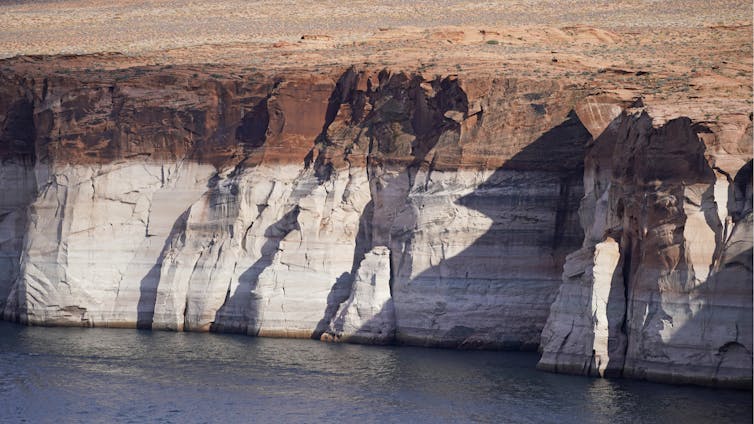
The white โ€˜bathtub ringโ€™ around Lake Powell, which is roughly 110 feet high, shows the former high water mark. AP Photo/Rick Bowmer

Daniel Craig McCool, University of Utah

As Western states haggle over reducing water use because of declining flows in the Colorado River Basin, a more hopeful drama is playing out in Glen Canyon.

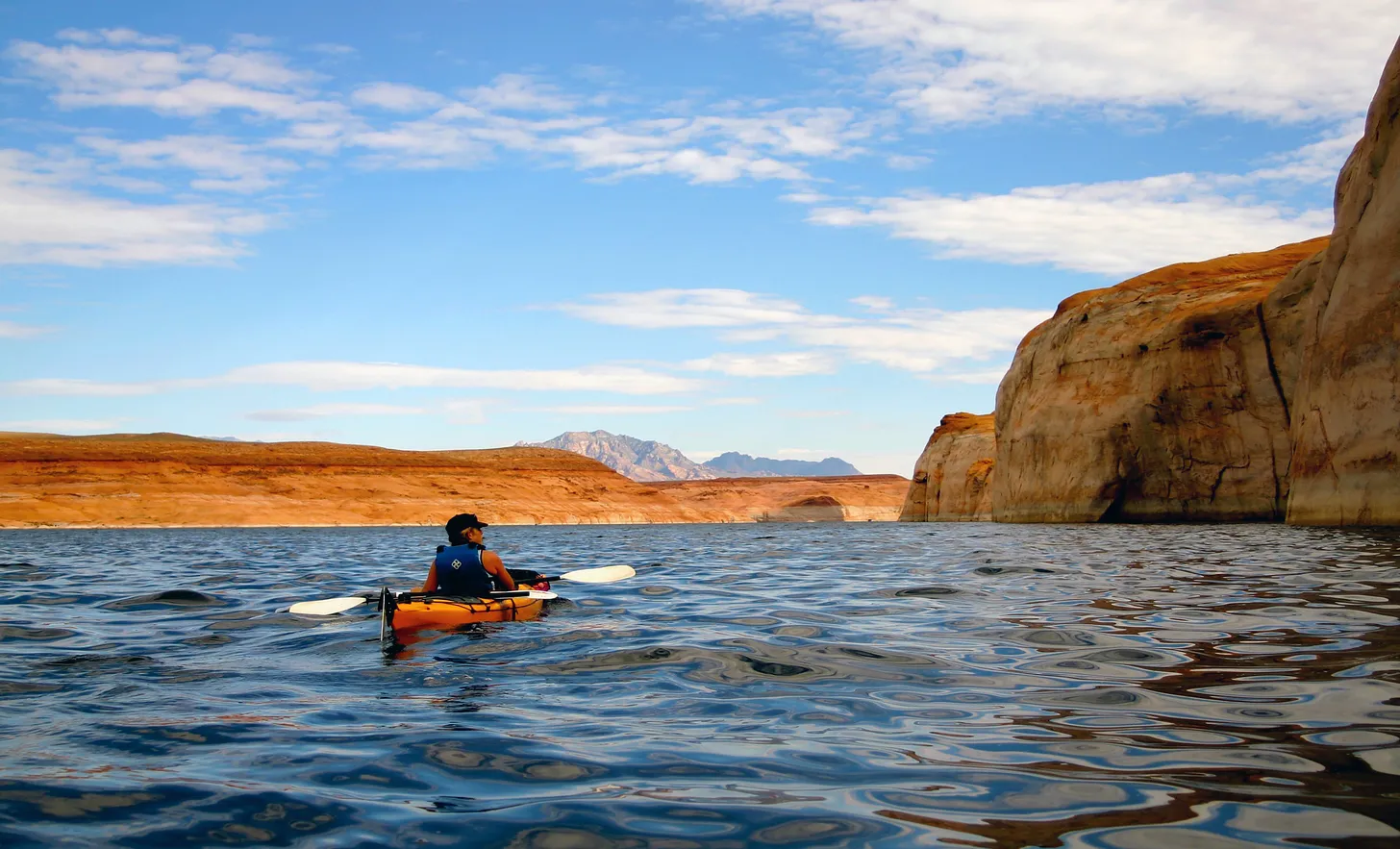
Lake Powell, the second-largest U.S. reservoir, extends from northern Arizona into southern Utah. A critical water source for seven Colorado River Basin states, it has shrunk dramatically over the past 40 years.

An ongoing 22-year megadrought has lowered the water level to just 22.6% of โ€œfull pool,โ€ and that trend is expected to continue. Federal officials assert that there are no plans to drain Lake Powell, but overuse and climate change are draining it anyway.

As the water drops, Glen Canyon โ€“ one of the most scenic areas in the U.S. West โ€“ is reappearing.

This landscape, which includes the Colorado Riverโ€™s main channel and about 100 side canyons, was flooded starting in the mid-1960s with the completion of Glen Canyon Dam in northern Arizona. The areaโ€™s stunning beauty and unique features have led observers to call it โ€œAmericaโ€™s lost national park.โ€

Lake Powellโ€™s decline offers an unprecedented opportunity to recover the unique landscape at Glen Canyon. But managing this emergent landscape also presents serious political and environmental challenges. In my view, government agencies should start planning for them now.

Department of Interior funds 5 tribal #water rights settlements in #Arizona — The Arizona Mirror

From the 2018 Tribal Water Study, this graphic shows the location of the 29 federally-recognized tribes in the Colorado River Basin. Map credit: USBR

by Shondiin Silversmith, Arizona Mirror
February 10, 2023

Several tribal nations will start seeing some funding as part of their water rights settlements, as the U.S. Department of the Interior has allocated nearly $580 million to start fulfilling Indian water rights claims. 

โ€œWater is a sacred resource, and water rights are crucial to ensuring the health, safety, and empowerment of Tribal communities,โ€ Secretary Deb Haaland said. โ€œThrough this funding, the Interior Department will continue to uphold our trust responsibilities and ensure that Tribal communities receive the water resources they have long been promised.โ€

Five tribes in Arizona will receive more than $306 million in funding from the settlement: the Ak-Chin Indian Community, Gila River Indian Community, Navajo Nation, San Carlos Apache Tribe and Tohono Oโ€™odham Nation.

The money will help each tribe develop infrastructure projects that will fulfill the terms of their water rights settlements.

โ€œI am grateful that Tribes, some of whom have been waiting for this funding for decades, are finally getting the resources they are owed with the help of this crucial funding from President Bidenโ€™s Bipartisan Infrastructure Law,โ€ Haaland said.

Part of the funding comes from the Bipartisan Infrastructure Lawโ€™s Indian Water Rights Settlement Completion Fund, where nearly $460 million will be applied to settlements enacted before Nov. 15, 2021. 

An additional $120 million has been allocated from the Reclamation Water Settlement Fund, a fund created by Congress in 2009 that receives $120 million in mandatory funding annually from 2020 through 2029.โ€ฏ

Together, both funds allocated nearly $580 million to fulfill 14 tribal water settlement claims from 12 tribal nations.

โ€œThe federal governmentโ€™s trust responsibility to Native communities includes providing Tribes with access to clean, reliable water,โ€ said U.S. Sen. Brian Schatz, D-Hawaii,ย the chairman of the United States Senate Committee on Indian Affairs.ย 

Schatz said the Department of Interiorโ€™s funding announcement shows leaders following through on the work legislatures did toโ€ pass and fund Indian water rights settlements to ensure water security for Tribes and surrounding communities.โ€

There are 34 congressionally enacted Indian Water Rights settlements as of Nov. 15, 2021, when the Bipartisan Infrastructure Law was signed, which included $2.5 billion to implement the Indian Water Rights Settlement Completion Fund. 

The Department of Interior stated that it will help deliver long-promised water resources to Tribes, certainty to all their non-Native neighbors, and a solid foundation for future economic development for entire communities dependent on common water resources.

โ€œAs a champion of the Bipartisan Infrastructure Law in the House, Iโ€™m excited to see this significant investment in Arizonaโ€™s Tribal communities,โ€ U.S. Rep. Ruban Gallego said in a statement.

Gallego, a Phoenix Democrat, said that Arizona is experiencing the devastating impacts of a 1,200-year drought, but the funding will go a long way to help secure Arizonaโ€™s water which ensures a sustainable water future and follows through on tribal water settlements.

Indian reserved water rights are vested property rights for which the United States has a trust responsibility, according to the department. The federal policy supports the resolution of disputes regarding Indian water rights through negotiated settlements. 

For Arizona, this funding supports five specific settlements:

  • $22,000,000: Ak-Chin Indian Water Rights Settlement Operations, Maintenance & Replacement
  • $18,225,000: AZ Water Settlements Act Implementation โ€“ San Carlos Irrigation Project Rehabilitation
  • $79,000,000: Gila River Indian Community โ€“ Pima Maricopa Irrigation Project
  • $1,500,000: San Carlos Apache Tribe Distribution System
  • $8,000,000: So. Arizona Water Rights Settlement โ€“ Farm Extension

The Navajo Nation is included in these settlements, and their funding will support projects they have established in the New Mexico and Utah portions of their tribal land. The settlements include:

  • $2,000,000: Navajo-Gallup Water Supply Operations, Maintenance & Replacementโ€ฏ  
  • $137,000,000: Navajo-Gallup Water Supply Projectโ€ฏ
  • $39,114,000: Navajo-Utah Water Settlement

#Coloradoโ€™s Proposed Stream Restoration Legislationโ€”Part 1 — Audubon

Kawuneeche Valley Ecosystem Restoration Collaboartive Leadership Tour, July 2022. Photo credit: Northern Water

Click the link to read the post on the Audubon Rockies website (Samantha Grant):

Audubon and the Colorado Department of Natural Resources (DNR) have partnered to host a webinar series on important stream restoration legislation. The DNR-led stream restoration legislation is expected to be introduced in mid-February and will provide clarity on where stream restoration projects can occur without being subject to enforcement actions.

Part one of the series showed substantial interest with more than 160 live participants, including legislators, staff/aids, and interested stakeholders. The roster of expert panelists included Senator Dylan Roberts and Representative Karen McCormickโ€”bill sponsors for the stream restoration legislationโ€”Assistant Director of Water Policy for Coloradoโ€™s Department of Natural Resources Kelly Romero-Heaney, Colorado State University Professor and renowned Fluvial Geomorphologist Dr. Ellen Wohl, Land and Water Conservation Lawyer Jackie Corday, and was facilitated by Audubon Rockies Western Rivers Regional Program Manager Abby Burk. Hereโ€™s a recap of the discussion and what you need to know to support Coloradoโ€™s streams and riverscapes. A recording of the webinar is included at the end.

Healthy streams and riverscapes are beneficial to us allโ€”they provide a suite of multifaceted benefits that all Coloradans depend upon. Unfortunately, the majority of our streams have been degraded by more than two centuries of hydrologic modification, agricultural land use practices, roads and development, channelization, mining, and climate-driven disasters. The good news is that case studies of Colorado and other Western statesโ€™ stream restoration projects have proven successful to improve human and environmental health and reduce vulnerability to fire, flood, and drought. However, existing Colorado water governance creates substantial uncertainty and even barriers to restoring the valuable natural processes of streams.

Under the direction of Governor Polis, the DNR and associated experts drafted a legislative solution to this challenge. As with many water law issues, there is a need to provide clarity, which is what the legislation will do by setting forth where stream restoration can take place (in the historic footprint of the stream riparian corridor), without being subject to water administration.

Senator Dylan Roberts (6:16) reports, โ€œThis bill is a key part in protecting our watersheds, streams, and rivers, and capitalizing on the incredibly unique and once-in-a-lifetime opportunity to receive funding from the federal government so that we can have healthy streams and rivers for decades into the future.โ€ He further stated that โ€œby having legal clarity for stream restoration, we can reduce barriers for these important projects to get off the ground and still protect water rights, and draw down some of the federal funding.โ€

Dr. Ellen Wohl (22:05) led the audience through the changes and challenges our river systems face and the importance of this timely opportunity to steward our rivers back into health. Jackie Corday (32:14) provided a detailed overview of the many benefits that healthy riverscapes offer through a series of successful restoration case studies, including reduced flood risks, improved water quality and resilience to drought and fires, reduction in sedimentation of reservoirs and headgates, and restoration aquatic and terrestrial habitat. All such projects could be in jeopardy in the future without a legislative fix.  

Kelly Romero-Heaney (10:55) spoke to the importance of this unique opportunity for the Colorado General Assembly to โ€œset a vision for the state, and the landscapes that have served us well for generations.โ€ She reminded the audience that โ€œColorado provides the headwaters for 19 states and Mexicoโ€ and that โ€œwe have shared responsibility to store water through our landscapes in a way that restores and maintains its environmental benefits.โ€ Both Kelly and Senator Roberts informed the audience that the Colorado General Assembly has invested $45 million in watershed restoration over the last few years. Water providers, conservation organizations, and local governments have also invested millions of dollars in restoring our streams.

Representative Karen McCormick (43:55) recounted the similar policy solutions in neighboring Western states, setting the path for Colorado to take lead. โ€œWe want to make sure weโ€™re removing these barriers to stream restoration while protecting the rights of water users. This is an everybody conversation. We need to craft the best solution that brings all voices to the table.โ€

Healthy riverscapes contribute to healthy forest systems, provide habitat for birds and wildlife, improve water supplies and forage for agriculture, and offer clean and reliable drinking water. Please join us in supporting our streams to ensure they can be restored to their natural function so that we can all thrive. Mark your calendars for a second installment of the series on March 8th. Registration and further details will be released in the coming weeks.

For specific draft stream restoration bill inquiries, please contactย Kelly Romero-Heaneyย orย Daphne Gervais. Any further questions about the need and benefits of stream restoration can be sent toย Abby Burkย orย Jackie Corday.

Moral questions on a standard San Luis Valley farm — Source #NewMexico @sourcenm

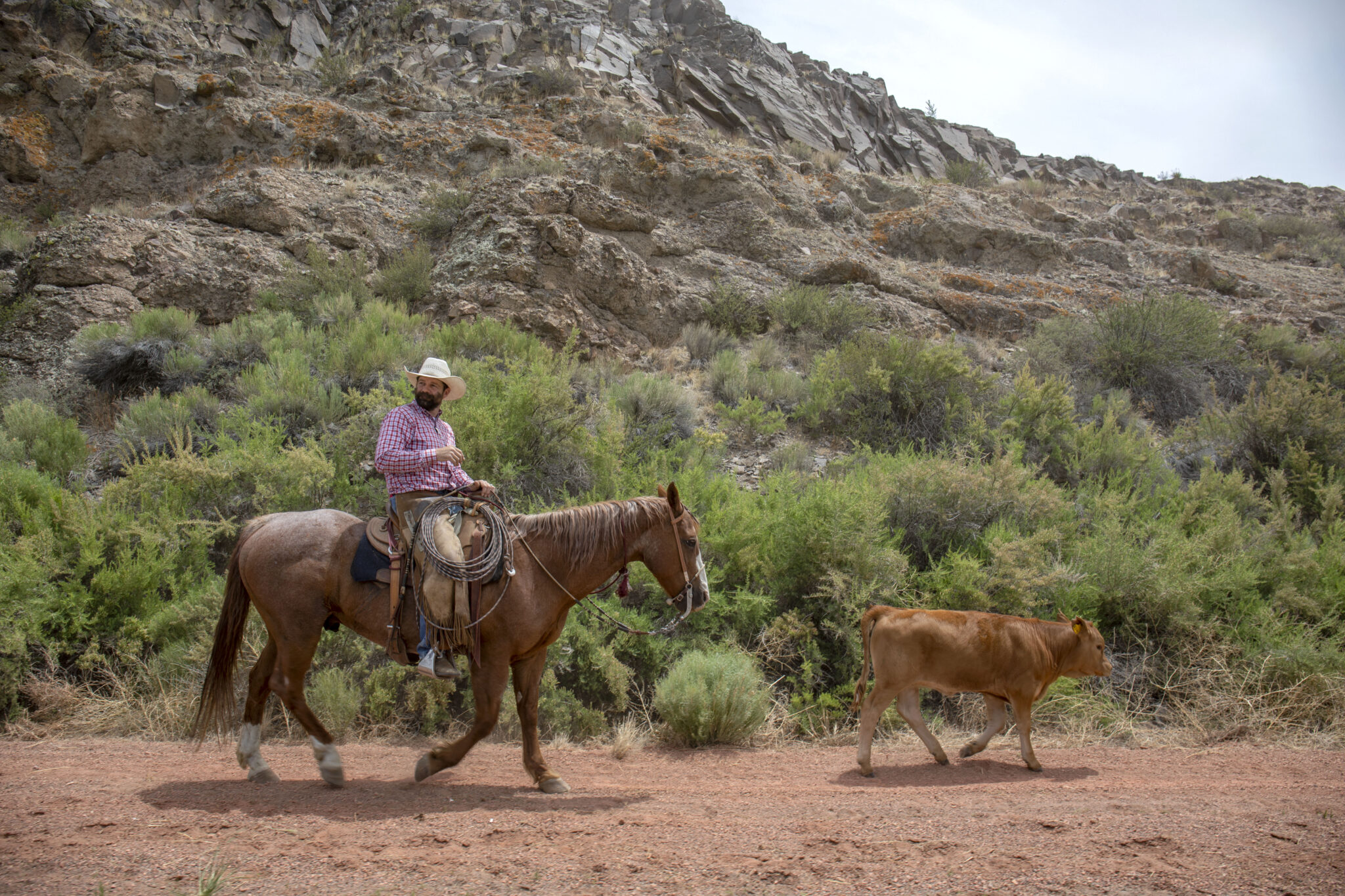
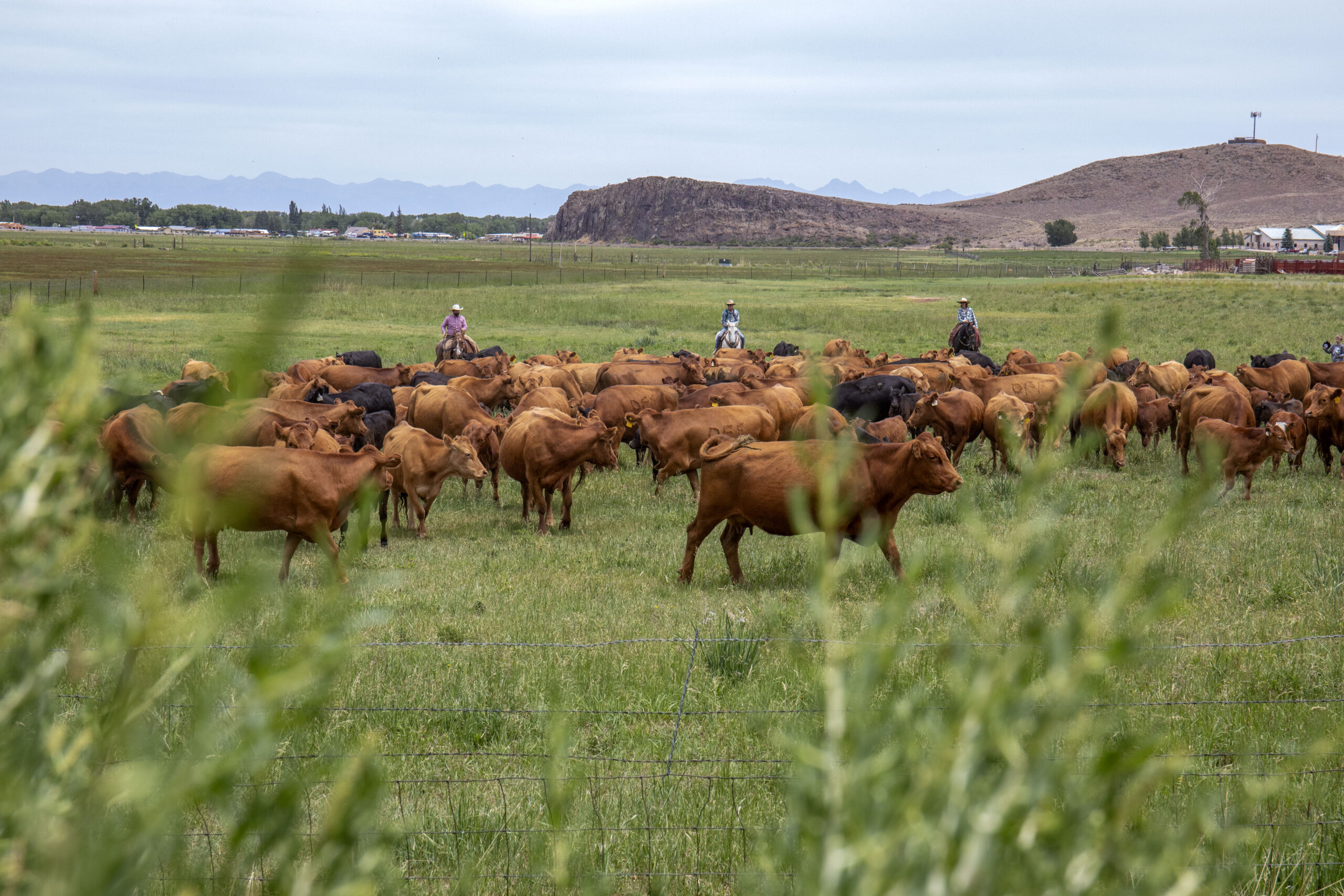
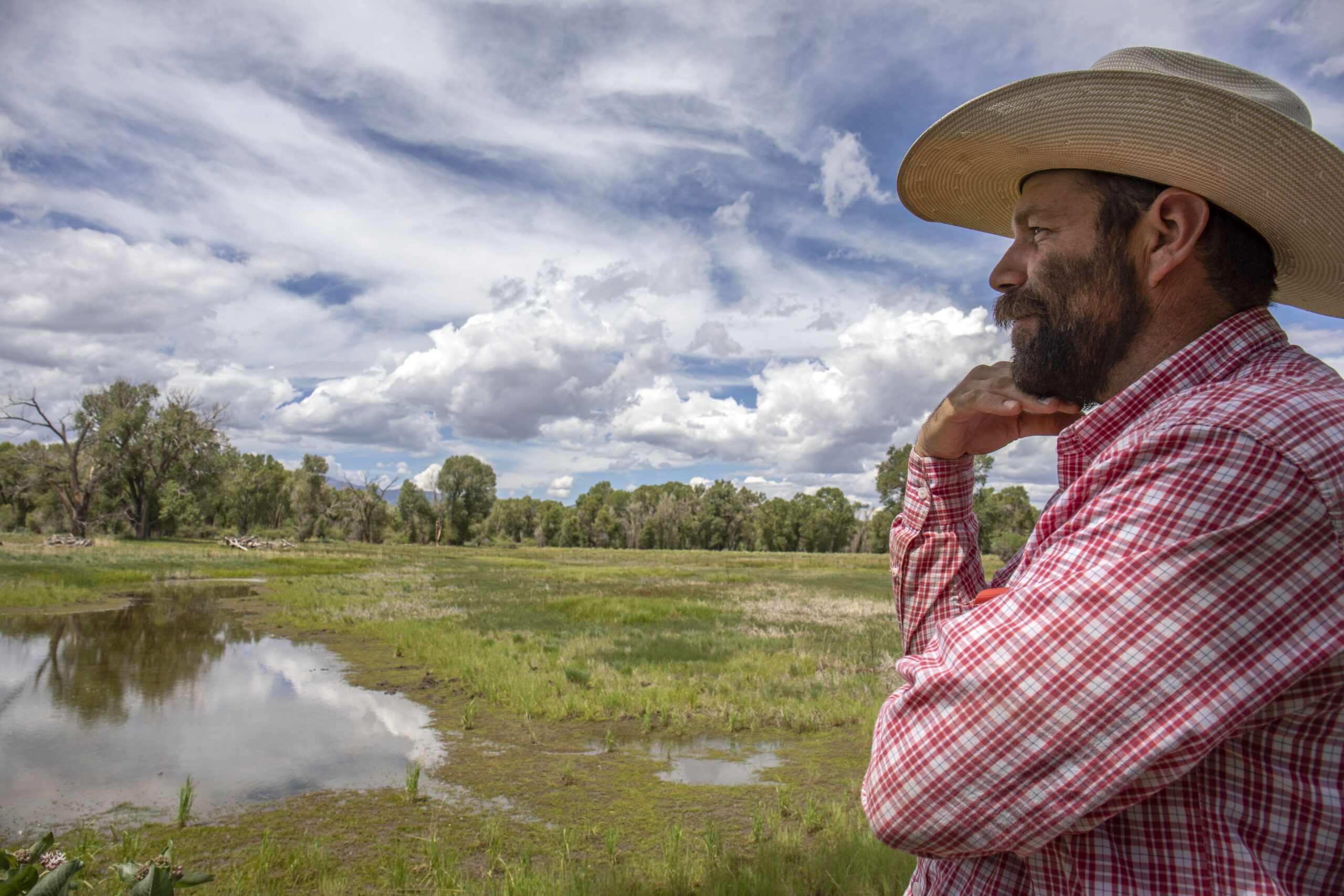
Kyler Brown drives a calf on June 21, 2022 as part of a drive that went through downtown Del Norte, Colorado. (Photo by Diana Cervantes for Source NM)

by Danielle Prokop, Source New Mexico
February 3, 2023

Hard calculations and changed practices in the era of drought and global warming

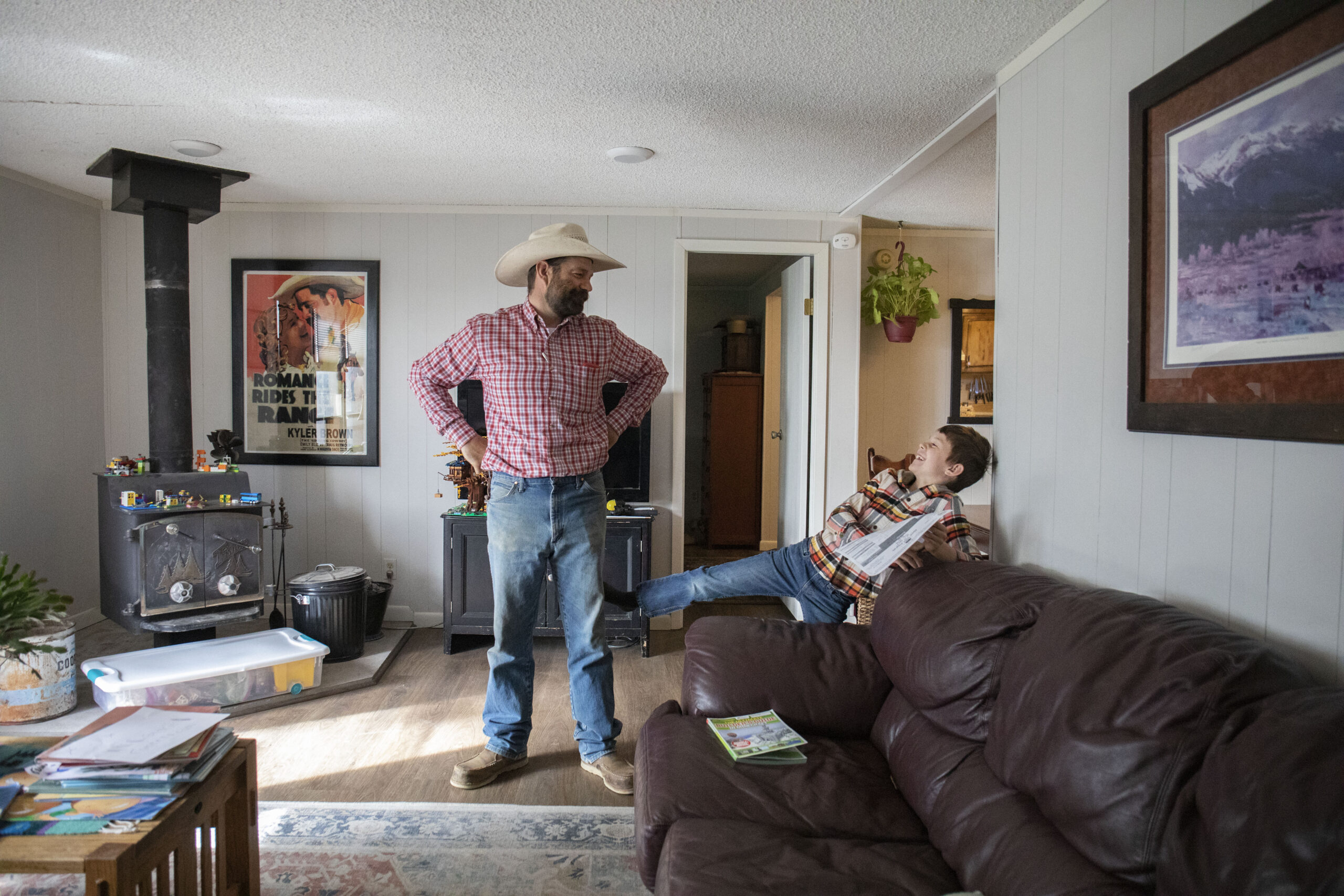
A self-described Midwest import from Missouri, 39-year old Kyler Brown is a cowboy, farmer and philosopher. These days, he feels driven by questions of life and death.ย 

โ€œDo people feel like they have morality in their occupation? I think people have moral moments, but probably most people donโ€™t question the morality of their profession. And I feel like I come in contact with mine almost daily,โ€ he said, driving over the Rio Grande outside of Monte Vista, Colorado. 

โ€œI see life and death a lot. I got to see baby calves get born in the spring. And then I had to put a cow downโ€ he said. โ€œI see whole cottonwood galleries dying. I just feel my morality is being challenged every day, where other people go through their life and donโ€™t question it.โ€

Brown lives on his farm in Del Norte with wife Emily, and two kids โ€” Elijah and Olivia.ย 

Kyler Brown and his son Elijah Brown go over the schedule for the day on June 21, 2022, before Kyler heads to the cattle drive. (Photo by Diana Cervantes for Source NM)

He also works his father-in-lawโ€™s farm just outside of Monte Vista. Itโ€™s a small operation โ€” two circles of russet potatoes, another two circles of barley and a small herd of cattle.

โ€œA standard San Luis Valley farm,โ€ Brown said, piling pivot sprinkler supplies into the back of a battered white truck. โ€œIโ€™m kind of slowly dragging him towards something different.โ€

Some of those changes included using a new fungal compost to improve soil health, building 21 pastures on a 600-acre lot to prevent overgrazing โ€” and determining that this will be the last season for growing barley for Coors beer. 

Still, the drought creeps in, ruining best-laid practices. No clover grows in the meadow cultivated for cattle. In early summer, there wasnโ€™t enough rain to grow forage.

Brown credits the institutional knowledge of his in-laws, but also their very senior water rights, for the farmโ€™s endurance. In recent years, thereโ€™s a stark visual divide drawn by water rights, he said, watching some neighborsโ€™ fields โ€œgrow green, the literal color of money,โ€ while others withe

Cows can be seen amid alfalfa fields during the cattle drive on June 21, 2022. (Photo by Diana Cervantes for Source NM)

A few years before, Brown had an epiphany, realizing his generation โ€œwould have to bear the brunt of climate changeโ€ and needed to be in the room when tough decisions are made. 

He slowly entered the fray, sitting on the board for a nonprofit conservancy district, meeting with state and national lawmakers as chapter president of the Rocky Mountain Farmers Union.

The conversations have often focused on an urban-rural divide, he said, which ignores a crucial interconnectedness.

โ€œWe give them a host of things: food, asphalt for roads, clean air, water, places to recreate. And they give us a tax base, so that we can have police departments, fire stations and school districts,โ€ he said. โ€œWe need each other. It is a Faustian bargain, but we both need each other.โ€

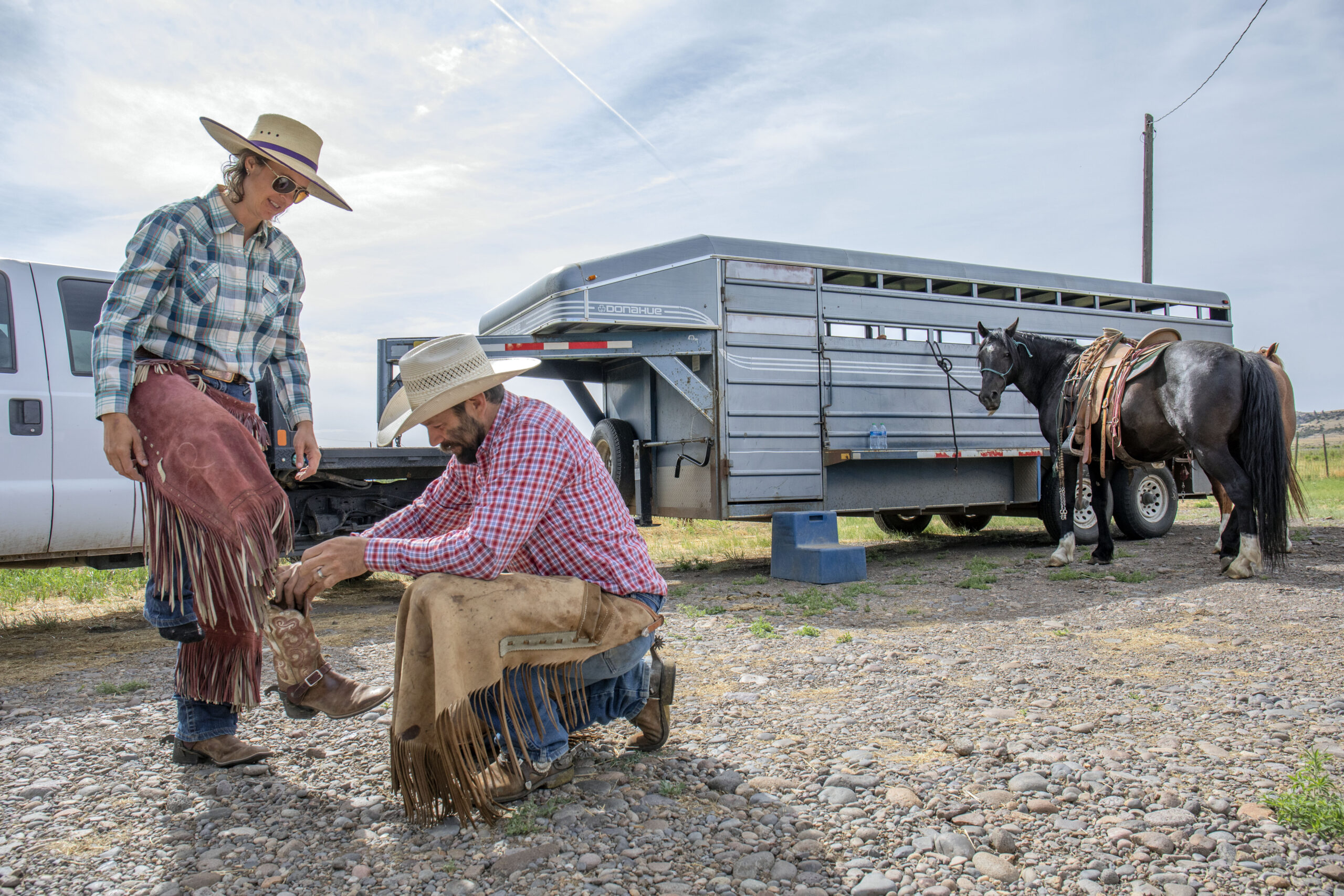
Kyler Brown helps wife Emily Brown put on boots before the cattle drive the morning of June 21, 2022. (Photo by Diana Cervantes for Source NM)

A ballooning population

Growth in Denver and the surrounding metropolitan areas caused tension across the state, including a decades-long effort to build a 200-mile pipeline to pump San Luis water for residential use in Douglas County.

Opposing water exportation, Brown said, rallies the valley and is โ€œfighting the good fight,โ€ but may pull attention away from other threats bearing down on the region. 

โ€œBut it also does a good job of distracting us from us being our own enemy,โ€ he said. โ€œOur pumping, our management of water, our management of our land and climate change will have far greater impacts on our valley and our water than an exportation scheme.โ€

Heโ€™s worried about the โ€œtremendous cultural and economic implicationsโ€ of determining who will have to fallow land โ€” or stop farming altogether in future years as the aquifers and Rio Grande shrink more.

Brown turns the truck into a barley circle, parallel to the pivot sprinkler, green stems and spikes rustling in the summer wind. Grabbing the stepladder from the back of the truck, he acknowledges that the politics feel fraught and toxic, and the solutions arenโ€™t easy.ย 

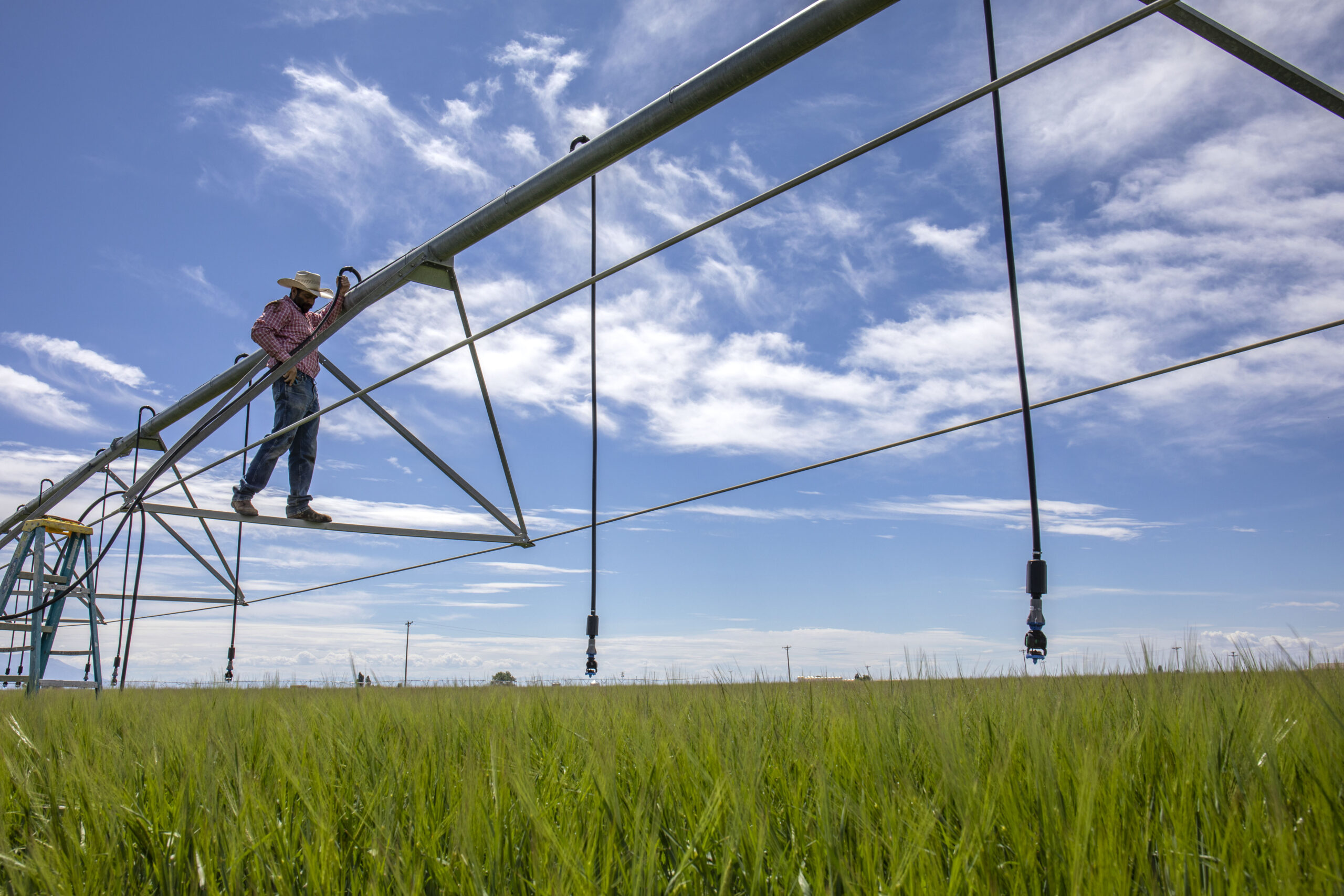
Kyler Brown stands atop an irrigation sprinkler on the Monte Vista, Colorado property. (Photo by Diana Cervantes for Source NM)

He describes listening to a public meeting back in April from the irrigation district as he was simultaneously fixing yet another pivot sprinkler, Zoom playing on his speakerphone. An early snowmelt at the headwaters of the Rio Grande meant managers had to scramble to provide water for the upcoming growing season. With an earlier snowmelt, there may not be enough river water for irrigation when crops need it most.  

โ€œI could just tell that this is just the beginning of folks trying to figure out how to do the same thing with far less resources โ€” and being very, very frustrated at their capabilities, their power, or more importantly, their options,โ€ he said. 

Not only is the source of the river sometimes melting early as seasons change, snowmelt also doesnโ€™t result in as much water in a hotter, drier climate thanks to global warming. โ€œYouโ€™re literally trying to move the days of a calendar year, which does nothing to make you have more water,โ€ Brown said.

Sprinkler repaired, he drives out of the barley circle, down the highway to another parcel which he calls โ€œjust a little nature preserve on the river.โ€

What once was a gravel pit has been transformed into habitat on the edge of the Rio Grande, with a pond for waterfowl. Bald eagles and owls roost in the trees at its edge. Itโ€™s a place for mule deer to gather, too. Another resident, a groundhog, Brown nicknamed โ€œLarry the whistlepig.โ€ 

This haven offers both solace and grief. 

Sitting back in the truck, as the river chuckles by, Brown said he senses thereโ€™s been a reckoning, even if just a small one, over the impacts of climate change in the valley.  

โ€œPeople are really saying โ€˜Wow, itโ€™s the driest itโ€™s ever been,โ€™ or โ€˜Man, another bad fire year.โ€™ So theyโ€™re seeing the symptoms of the disease,โ€ he said. โ€œAnd you donโ€™t have to name the disease in order for people to be feeling it intimately.โ€ย 

Kyler Brown, a farmer in the San Luis Valley, looks on the cottonwood stands on his father-in-lawโ€™s property along the Rio Grande in Monte Vista. โ€œIt makes me sad to go through drought, but every other year is drought.โ€ (Photo by Diana Cervantes for Source NM)

Will it be enough?

For water managers, naming the problem offers more clarity for solutions.  

โ€œThis is no longer drought. This is aridification,โ€ said Cleave Simpson Jr., a longtime Republican state senator and manager of the Rio Grande Water Conservation District, living outside Alamosa, Colorado. 

Drastic river patterns the last two decades and mostly below average flows โ€” plus two of the worst drought events in recorded history in 2022 and 2018 โ€” are harbingers of the permanent change to agriculture and ways of life in the valley, Simpson said.

โ€œUltimately, thereโ€™s going to be less irrigation,โ€ he said. โ€œIf weโ€™re thoughtful, thatโ€™ll be a managed, incremental change, versus if weโ€™re not engaged.โ€

Simpson said it takes both collective decision making from individuals and institutions to build resilience. 

โ€œLook, I raise alfalfa, the most water-consumptive use crop we have here,โ€ Simpson said. โ€œHow do I figure out how to raise something else here?โ€

He and his son raised hemp for fiber, and they found it only consumed half the water compared to the alfalfa crop. 

โ€œI have a 31-year-old son and a 2-year-old grandson,โ€ he explained. โ€œIโ€™m very mindful about being in that space to set this place up for success for being resilient and being able to respond when these water supplies continue to dwindle.โ€ 

Being more efficient, growing crops that require less irrigation โ€” those are just the first steps in finding alternatives to help the community long-term in the valley. 

โ€œItโ€™s worth fighting for,โ€ Simpson said.

Is ‘responsible’ mining possible?: ย A conversation with the director of IRMA — The Land Desk @Land_Desk

Mining Monitor

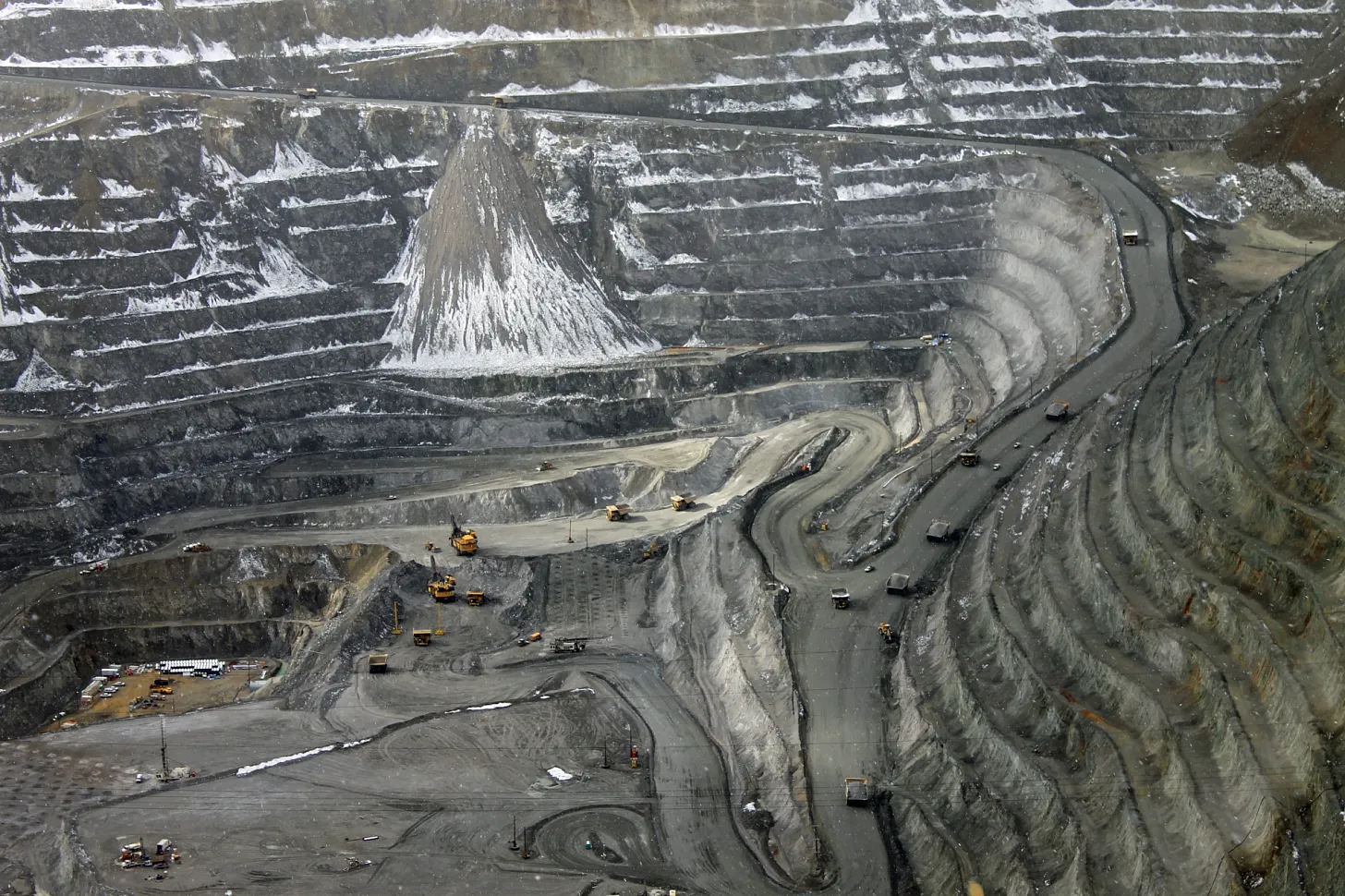
Iโ€™ve got to admit that when someone suggested I talk to the director of a global initiative that has developed standards for โ€œresponsibleโ€ mining, I was a bit skeptical.ย Conceptually I get it, but whenever I try to imagine an environmentally โ€œresponsibleโ€ mine, visions of the Bingham Canyon Mine in Utah come to mind โ€” the largest human-made excavation on earth where more than 1,000 tons of explosives are used daily to blast loose about 150,000 tons of copper-bearing ore. How can that kind of destruction ever be labeled environmentally or socially โ€œresponsible?โ€

The Bingham Canyon mine in Utah. Jonathan P. Thompson photo.

So I hopped onto a Zoom call a few months ago and put the question to Aimee Boulanger, executive director of the Initiative for Responsible Mining Assurance, or IRMA, which, according to its mission statement, offers โ€œtrue independent third-party verification and certification against a comprehensive standard for all mined materials.โ€ 

It turns out Boulanger was initially even more doubtful than me. โ€œI hated the idea when I first heard it,โ€ Boulanger said, and even refused to take part in it. At the time she was working for Earthworks, a mining and oil and gas watchdog group, one stop in a now three-decade-long career in environmental and health advocacy. She thought the global mining industry was so far gone that a certification system would only serve to greenwash bad behavior. 

But, crucially, it wasnโ€™t the mining industry looking to clean up its image that catalyzed the effort, but rather the companies that buy mined materials wanting to do so responsibly. Tiffany, for example, did not want to support or be associated with blood diamonds. So its CEO at the time went to Earthworks, hoping the NGO would be able to direct him to more responsible suppliers. They didnโ€™t, but the request indicated a need for such a service, something analogous to theย Marine Stewardship Council, which certifies fisheries.

Such a system, if implemented correctly, helps consumers โ€” or downstream purchasers in this case โ€” make informed choices about sourcing materials for their products. Maybe all mining is somewhat destructive, but if you have to buy copper or gold or lithium to make your business run, wouldnโ€™t it be better to buy it from a more responsible operator? An independent audit can also incentivize mining companies to use best practices rather than running roughshod over the land, water, and communities. 

So in 2006, representatives from NGOs, including Earthworks, companies that purchase minerals, affected communities, mining companies, and labor unions came together to form IRMA. By the time Boulanger โ€” having come around to the idea โ€” joined up in 2011, the disparate group was still arguing over the meaning of โ€œresponsible mining.โ€ They wouldnโ€™t even bother with designing a logo or building a website until they found consensus on the basic principles. Most members assumed it would be impossible to get environmental groups on the same page as mining companies. 

But with Boulangerโ€™s help they were able to create 10 principle points of engagement, which enabled them to formulate a draft charter laying out what โ€œresponsibleโ€ means when applied to a mining operation. In 2014, they sent out their standards internationally and field tested them at the Stillwater platinum and palladium mine in Montana. They began actual audits shortly before the coronavirus pandemic hit and paused everything. Now theyโ€™re back at it.

By this point in the conversation I had become convinced that with enough buy-in, IRMA could push for major improvements in the way mining companies do business, especially in areas where government regulations are weak โ€” like on U.S. public lands. But I was still a bit blurry on one big point, so I asked Boulanger: โ€œWhat, exactly, does responsible mining look like?โ€

There isnโ€™t a simple or short answer. IRMAโ€™s Standard for Responsible Mining is now more than two-dozen chapters and hundreds of pages long. โ€œHereโ€™s this 26 chapters, that span everything from resettling community, to pre-informed consent with Indigenous communities, to water and waste management,โ€ Boulanger said. It covers noise and vibration, mercury and cyanide management, worker safety, and cultural heritage.

To even get on the scoring board, so to speak, the mine must meet 40 critical requirements. Dumping waste into natural bodies of water is a virtual deal-killer. Getting consent from the community is mandatory. Then the mine โ€” not the company โ€” is scored based on how many additional standards it achieves. Anglo Americanโ€™s Unki platinum mine in Zimbabwe, for example, met the 40 requirements plus 75% of the additional standards and received an IRMA score of 75

Initially the organization worked on a pass-fail system, as do most analogous organizations in other industries. This proved problematic when dealing with existing, legacy mines, which might find it easier to get a passing grade by constructing a new mine rather than upgrade the existing one โ€” which isnโ€™t the goal, obviously. So IRMA shifted to a scoring system, instead, because it leaves room for a mine to improve. 

โ€œIf youโ€™re a new mine, you should be able to demonstrate that youโ€™re 100%,โ€ Boulanger said. โ€œBut if youโ€™re a legacy mine like Bingham Canyon? Itโ€™s better to make Bingham Canyon better than cutting a new hole that is perfect.โ€

Not all mines are eligible for consideration. IRMA members from the labor sector wanted thermal coal to be included, because the average coal miner has been left behind and underground and in the dark. But the environmental sector pushed back, saying that labeling even the best coal mine โ€œresponsibleโ€ would further enable coal burning, which is fundamentally irresponsible. Same goes for uranium, Boulanger said. โ€œThere are too many โ€˜risk pointsโ€™ between cradle and grave,โ€ she added. โ€œEven if you say it (nuclear power) is a low greenhouse gas emissions source, it doesnโ€™t count all of the other stuff.โ€

Coal and uranium mining companies can use IRMAโ€™s self-assessment tool internally to grade themselves and find areas to improve. But they canโ€™t make their score public or use IRMAโ€™s name to burnish their image. And Earthworksโ€™ continued involvement in the Initiative helps ensure industry canโ€™t hijack the certification process for their own ends.

Since its inception, IRMAโ€™s focus has shifted toward so-called โ€œgreen metalsโ€ โ€” e.g. graphite, lithium, rare earths, nickel, and cobalt โ€” that are used in electric vehicles, batteries, and other clean energy applications. Six carmakers have now joined IRMA as members as they look to source these materials more responsibly.ย 

A large-scale evaporation pond at the Silver Peak lithium mine on Oct. 6, 2022. The evaporation process can take a year and a half to complete. (David Calvert/The Nevada Independent)

Some of the new lithium mining proposals may have a tough time getting on IRMAโ€™s scoreboard, however. Consent from the community, especially the Indigenous community, is paramount. And tribal nations are opposing some of the largest lithium proposals โ€” Thacker Pass in Nevada, for example. โ€œLetโ€™s say you have an average of 68% in all the chapters but did not have Indigenous consent,โ€ Boulanger said. โ€œYouโ€™re not going to get the IRMA 50 award.โ€

โ€œItโ€™s a train wreck right now,โ€ she said. โ€œYouโ€™ve got all these industries looking for materials and youโ€™ve got these communities saying, โ€˜Hell no!โ€™โ€ย 

Today is International Day of Women and Girls in Science #WomenInScience

The riverโ€™s end: Amid #ColoradoRiver #water cuts, #Mexico seeks to restore its lost oasis — The Los Angeles Times #COriver #Aridification

Colorado River Dry Delta, terminus of the Colorado River in the Sonoran Desert of Baja California and Sonora, Mexico, ending about 5 miles north of the Sea of Cortez (Gulf of California). Date: 12 January 2009. Photographer: Pete McBride, U.S. Geological Survey

Click the link to read the article on The Los Angeles Times website (Ian James). Here’s an excerpt:

More than a century ago, the riverโ€™s delta spread across 1.9 million acres of wetlands and forests. The conservationist Aldo Leopold, who canoed through the delta in 1922, described it as โ€œa hundred green lagoonsโ€ and said he paddled through waters โ€œof a deep emerald hue.โ€ He described it as an oasis that teemed with fish, birds, beavers, deer and jaguars. In the years after his visit, the river was dammed and its waters were sent flowing in canals to farms and cities…

A Vermilion Flycatcher along the Laguna Grande Restauration Site in Baja California, Mexico. Photo: Claudio Contreras Koob

Restauremos El Colorado manages one of three habitat restoration areas in the delta, where native trees that were planted six years ago have grown into a forest that drapes the wetland in shade. Last spring, a stream of water was released from a canal and flowed into the wetland,ย restoring a stretch of riverย where previously there had been miles of desert sand. The water was released for a second straight year as part of an agreement between the Mexican and U.S. governments and with support from environmental groups…After the pulses of water, De la Parra and his colleagues have seen vegetation flourish along the river channel. Biologists have counted about 120 species of birds. And motion-activated wildlife cameras have captured images of beavers swimming and gnawing on tree trunks. De la Parra and others say the efforts in the delta have been a resounding success, showing that even small amounts of water can be used to revive ecosystems that were largely destroyed decades ago. De la Parra said he believes itโ€™s crucial that the restoration work continue. But although the conservation groups have water rights to maintain some wetlands, the riverโ€™s decline poses challenges for their efforts…

The riverโ€™s crisis also presents a pivotal moment for farms and cities to adapt, De la Parra said.

โ€œIโ€™m hoping that we can really understand that crisis is not something that we ought to waste,โ€ he said. โ€œWe need to use it to thrust ourselves into a different model.โ€

For cities, De la Parra said, that means initiatives such as recycling wastewater, capturing stormwater and probably investing in building a new desalination plant in Baja California.

For farmers, he said, there are opportunities to save water by installing efficient irrigation systems and moving away from thirsty crops like alfalfa to ones that use less water.

โ€œIt is a water revolution that needs to happen,โ€ De la Parra said.

Technology turns waste-wood into marketable products: Fuel treatment solutions through private-public partnership — USFS

The CharBoss made its initial debut in Bandon, Oregon in the fall of 2020 by tackling Gorse, an invasive woody shrub, and demonstrating how this technology can be used to also improve wildlife habitat. The CharBoss team recorded the demonstration and it is available online. Photo credit: USFS

Click the link to read the article on the USFS website:

Forest management activities create valuable wood products like lumber, but can also generate woody residues with little or no economic value. This waste material is generally burnt or must be hauled away to reduce wildfire risk. The USDA Forest Service and a private company, Air Burners Inc., teamed up to help find a solution to this problem. CharBoss is a mobile machine that converts waste-wood products into biochar, a nutrient-rich product that can be used for soil restoration or to enhance agricultural land.

Debbie Page-Dumroeseย is a researcher with the USDA Forest Service Rocky Mountain Research Station who helped develop and patent the technology and is a leading expert in the use of biochar. She shared her excitement in the latest developments, โ€œThe ability to process woody residues on-site reduces open burning or the need to transport materials off-site, so there is less smoke and air pollution. Even better, we can create this terrific product that can be used to restore damaged soil.โ€ย  ย 

The CharBoss made its initial debut in Bandon, Oregon in the fall of 2020 by tackling Gorse, an invasive woody shrub, and demonstrating how this technology can be used to also improve wildlife habitat. The CharBoss team recorded the demonstration and it is available online

Seeing an opportunity to make improvements, the team re-engineered the CharBoss to be more efficient and increase its production volume. The updated CharBoss is being transported from Florida to Idaho this week and when it arrives, the University of Idaho and Rocky Mountain Research Station will host a demonstration for interested land managers and researchers. The event is scheduled to take place at the University of Idaho Experimental Forest near Princeton, Idaho Friday afternoon January 13, 2023. This time it will be chewing up slash created by forest thinning and fuel reduction and turning it into โ€œblack goldโ€ – biochar, that is.

Science suggests that biochar can increase seedling quality and enhance degraded soils with its rich carbon content and moisture retention properties. Land managers can use the CharBoss to create biochar on-site without worrying about the logistics of off-site production and transportation. Mobile processing can also help rural economies by providing local materials and jobs for forest restoration or reclaiming abandoned mine sites.

Jim Archuleta is a Forest Service regional biomass coordinator who helped pioneer the innovation of CharBoss. He talks about its potential for mitigating climate change by reducing unnecessary smoke and emissions and returning carbon to soils and vegetation at larger landscape scales, โ€œMaking biochar production part and parcel of normal Forest Service activities is the best way to make the seismic changes needed to help adapt to our changing climate.โ€

CharBoss will be demoed at various workshops across the western United States and Pacific Northwest regions, traveling from Idaho to Montana, Oregon and beyond. It will be moving to a site on the Flathead National Forest next. You can learn more about the technology behind CharBoss here.

#Westminster moving forward with a new #water treatment plant plan — The Westminster Window

Westminster

Click the link to read the article on the Westminster Window website (Luke Zarecki). Here’s an excerpt:

After reevaluating an original layout for a new water treatment plant for over a year, Westminster City Council approved general plans for a new plant on Jan 23 โ€“ one that will cost $100 million less than originally planned…

According to Stephanie Bleiker, capital projects administrator, the improved plant will use existing infrastructure, can treat wildfire-contaminated water, is flexible for future replacement and has robust infrastructure.ย Itโ€™s estimated to cost $196 million, plus an additional $15 million for ozonation,ย though it may cost more with inflation.ย ย Ozonation is a process that injects pure oxygen into the water to kill a wide range of biological contaminants and to oxidize metals. The budget isย supported by the current water rate structure, she said…

Concerns over water affordability stopped the project on Nov. 29, 2021.ย Over the past year,ย the plantโ€™s capacity, locations and other supporting infrastructure have all been re-evaluated.ย  That resulted in a call for less water treatment capacity at the new plant, from 60 million gallons of demand per day to 44 million. The location remained on Westminster Boulevard. Much of that lower demand is due to conservation measures for commercial and residential zones, said Bleiker…

Right now, Semper doesnโ€™t have the ability to do ozonation, to handle solids easily,ย  to do deep bed filtration or mechanical flocculation โ€“ a water treatment process where solids form larger clusters that are easier to filter out โ€“ or to treat emerging contaminants, such as so-called forever chemicals or PFAs.ย The new treatment plant would be able to do these things. Treating emerging contaminants comes down to having the space that will be provided with the new plant, she said.ย Bleiker mentioned some contaminants are known today, but more will come in the future that are not known. She said itโ€™s the decision of the EPA and CDPHE to decide whatโ€™s regulated, and itโ€™s not optional for the city to comply.ย 

Beavers and oysters are helping restore lost ecosystems with their engineering skills โ€“ย podcast — The Conversation

Beavers dramatically change a landscape by building dams that create ponds of still water. Jerzy Strzelecki/Wikimedia Commons, CC BY-SA

Daniel Merino, The Conversation and Nehal El-Hadi, The Conversation

Whether you are looking at tropical forests in Brazil, grasslands in California or coral reefs in Australia, it is hard to find places where humanity hasnโ€™t left a mark. The scale of the alteration, invasion or destruction of natural ecosystems can be mindbogglingly huge.

Thankfully, researchers, governments and everyday people around the world are putting more effort and money into conservation and restoration every year. But the task is large. How do you plant a billion trees? How do you restore thousands of square miles of wetlands? How do you turn a barren ocean floor back into a thriving reef? In some cases, the answer lies with certain plants or animals โ€“ called ecosystem engineers โ€“ that can kick-start the healing.

In this episode of โ€œThe Conversation Weekly,โ€ we talk to three experts about how ecosystem engineers can play a key role in restoring natural places and why the human and social sides of restoration are just as important as the science. https://embed.acast.com/60087127b9687759d637bade/63d27eb5cd0f7200118faf4b

Ecosystem engineers are plants or animals that create, modify or maintain habitats. As Joshua Larsen, an associate professor at the University of Birmingham, explains, beavers are a perfect example of an ecosystem engineer because of the dams and ponds they build.

A strip of green surrounding ponds in a burned landscape.
Beaver ponds can create valuable wetland habitats that store water and support life. Schmiebel/Wikimedia Commons, CC BY-SA

โ€œThey create this pocket of still water, which allows aquatic vegetation to start to colonize that wouldnโ€™t otherwise be there,โ€ says Larsen. Once a beaver establishes a pond, the surrounding area begins to change from a creek or river into a wetland.

Larsen is part of an effort to reintroduce beavers into Britain, a place where they have been extinct for over 500 years and the landscape reflects that loss. There used to be hundreds of thousands of beavers โ€“ and hundreds of thousands of beaver ponds โ€“ all across Britain. Without beavers, it would be prohibitively difficult to restore wetlands at that scale. But, as Larsen explains, โ€œBeavers are doing this engineering of the landscape for free. And more importantly, theyโ€™re doing the maintenance for free.โ€

This idea of using ecosystem engineers to do the labor-intensive work of restoration for free is not limited to beavers. Dominic McAfee is a researcher at the University of Adelaide in Australia. He studies oysters and is leading a project to restore oyster reefs on the eastern and southern coasts of Australia.

A large group of thousands of oysters emerging from water.
Oyster reefs provide important structure that supports entire ecosystems. Jstuby/Wikimedia Commons

โ€œThese reefs were the primary sort of marine habitat in coasts, coastal bays and estuaries over about 7,000 kilometers (4,350 miles) of Australian coastline,โ€ says McAfee. But today, โ€œTheyโ€™re all gone. All those reefs were scraped from the seafloor over the last 200 years.โ€

When you lose the oysters, you lose the entire reef ecosystem they support. So, a few years ago, McAfee and his colleagues decided to start bringing these reefs back. Oysters need a hard surface โ€“ like a rock, or historically, other oysters โ€“ to grow on. But all those old oyster reefs are gone and only sand remains. โ€œSo the first step to restore oysters is to provide those hard foundations. Weโ€™ve been doing that in South Australia by deploying limestone boulders,โ€ explains McAfee. After just a year, McAfee and his colleagues are starting to see results, with millions of oyster larva sticking to these boulders.

At this point, McAfee says that challenges are less about the science and more about getting community and political support. And that is where Andrew Kliskey comes in. Kliskey is a professor of community and landscape resilience at the University of Idaho in the U.S. He approaches restoration and conservation projects by looking at what are called social-ecological systems. As Kliskey explains, โ€œThat means looking at environmental issues not just from a single disciplinary point of view, but thinking that many things are often occurring in a town and in a community. Really, social-ecological systems means thinking about people and the landscape as being intertwined and how one interacts with the other.โ€

For scientists, this type of approach involves sociology, economics, indigenous knowledge and listening to communities that they are working with. Kliskey explains that itโ€™s not always easy: โ€œDoing this sort transdisciplinary work means being prepared to be uncomfortable. Maybe youโ€™re trained as a hydrologist and you have to work with an economist. Or you work in a university and you want to work with people in a community with very real issues, that speak a different language and who have very different cultural norms. That can be uncomfortable.โ€

Having done this work for years, Kliskey has found that building trust is critical to any project and that the communities have a lot to teach researchers. โ€œIf youโ€™re a scientist, it doesnโ€™t matter which community you work with, you have to be prepared to listen.โ€


This episode was produced by Katie Flood and Daniel Merino, with sound design by Eloise Stevens. It was written by Katie Flood and Daniel Merino. Mend Mariwany is the showโ€™s executive producer. Our theme music is by Neeta Sarl.

You can find us on Twitter @TC_Audio, on Instagram at theconversationdotcom or via email. You can also sign up to The Conversationโ€™s free daily email here. A transcript of this episode will be available soon.

Listen to โ€œThe Conversation Weeklyโ€ via any of the apps listed above, download it directly via our RSS feed, or find out how else to listen here.

Daniel Merino, Associate Science Editor & Co-Host of The Conversation Weekly Podcast, The Conversation and Nehal El-Hadi, Science + Technology Editor & Co-Host of The Conversation Weekly Podcast, The Conversation

This article is republished from The Conversation under a Creative Commons license. Read the original article.

How do you vaccinate a honeybee? 6 questions answered about a new tool for protecting pollinators — The Conversation

A new vaccine promises better protection against a virulent honeybee infection. AP Photo/Elise Amendola

Jennie L. Durant, University of California, Davis

Honeybees, which pollinate one-third of the crops Americans eat, face many threats, including infectious diseases. On Jan. 4, 2023, a Georgia biotechnology company called Dalan Animal Health announced that it had received a conditional license from the U.S. Department of Agriculture for a vaccine designed to protect honeybees against American foulbrood, a highly destructive infection.

To receive a conditional license, which usually lasts for one year and is subject to further evaluation by the USDA, veterinary biological products must be shown to be pure, safe and reasonably likely to be effective. Dr. Jennie Durant, an agriculture researcher at the University of California, Davis, who specializes in honeybee health, explains why this vaccine is potentially an important step in ongoing efforts to protect pollinators.

1. What threat does this vaccine address?

The new bee vaccine, Paenibacillus Larvae Bacterin, aims to protect honeybees from American foulbrood. This highly destructive bacterial disease gets its name from the foul scent honeybee larvae exude when infected.

An outbreak of American foulbrood is effectively a death sentence for a bee colony and can economically devastate a beekeeping operation. The spores from the bacteria, Paenibacillus larvae, are highly transmissible and can remain virulent for decades after infection. https://www.youtube.com/embed/VENKKufzMAE?wmode=transparent&start=0 How American foulbrood affects honeybee colonies.

Once an outbreak occurs, beekeepers typically have to destroy any bee colonies that they know were infected to avoid spreading the disease. They also have to destroy the hive boxes the colonies were stored in and any equipment that may have touched infected colonies.

Beekeepers have used antibiotics preventively for decades to keep foulbrood in check and treat infected colonies. Often they mix the antibiotics with powdered sugar and sprinkle it inside the colony box. As often happens when antibiotics are overused, scientists and beekeepers are seeing antibiotic resistance and negative impacts on hive health, such as disruption of the helpful microbes that live in beesโ€™ guts.

In 2017, the U.S. Food and Drug Administration began requiring a veterinarianโ€™s prescription or feed directive to use antibiotics for foulbrood. While this regulatory change sought to address antibiotic resistance, it limited beekeepersโ€™ access to antibiotics and their ability to treat foulbrood preventively. The vaccine would ideally provide a more sustainable solution.

2. How effectively does the vaccine prevent infection?

Studies are still analyzing its effectiveness. One published study demonstrated a 30% to 50% increase in resistance to American foulbrood in a vaccinated queenโ€™s offspring.

While this might seem low, itโ€™s important to put the results in context. Given how deadly and contagious American foulbrood is, researchers did not want to directly expose an outdoor hive to foulbrood with an unproven vaccine. Instead, they conducted lab studies where they exposed test hives to around 1,000 times the number of American foulbrood spores a colony would typically be exposed to in the field. Dalan, the manufacturer, has field trials planned for 2023.

3. How do you vaccinate honeybees?

Itโ€™s not done with tiny needles โ€“ beekeepers mix the vaccine into bee food. This approach exposes queen bees to inactive Paenibacillus larvae bacteria, which helps larvae hatched in the hive to resist infection.

This is not a mRNA vaccine, like the Pfizer and Moderna COVID vaccines. Itโ€™s a more traditional inactive vaccine like the one we use against polio. To understand how the vaccine works, itโ€™s helpful to know what queen bees eat: a protein-rich substance called โ€œroyal jellyโ€ that is secreted from glands on the heads of young worker bees.

When queen bees are shipped to a beekeeper, they are typically placed in a small cage with 50 to 200 worker bees that have been fed something called queen candy. This substance is often made with powdered sugar and corn syrup and has the consistency of sugar cookie dough or modeling clay. Worker bees consume the candy, produce royal jelly and feed it to the queen.

The vaccineโ€™s delivery method uses this unique system. A beekeeper can mix the vaccine with the queen candy, which is then digested by worker bees. They produce royal jelly and feed it to the queen, who digests it and then transfers the vaccine to her ovaries. Once she is transferred to the hive and begins laying eggs, the larvae that hatch from those eggs have a heightened immunity to American foulbrood. https://www.youtube.com/embed/PcDF23HdlUY?wmode=transparent&start=0 The new vaccine takes advantage of the queenโ€™s central role in the hive.

4. Who will use the vaccine?

According to representatives at Dalan, limited quantities of the vaccine should be available starting in spring 2023 to commercial beekeepers and bee producers, with the aim of supplying smaller-scale beekeepers and hobbyists in the future.

5. How long will a dose last?

Dalan is still researching the specifics. Its current understanding is that it will last as long as the queen bee can lay eggs. If she dies, is killed or is replaced, the beekeeper will have to purchase a new vaccinated queen.

6. Is this a big scientific advance?

Yes โ€“ it is the first vaccine for any insect in the U.S. and could help pave the way for new vaccines to treat other issues that have plagued the beekeeping industry for decades. Honeybees face many urgent threats, including Varroa mites, climate change and poor nutrition, which makes this vaccine an exciting new development.

Dalan is also working on a vaccine to protect bees against European foulbrood. This disease is less fatal than American foulbrood, but is still highly infectious. Beekeepers have been able to treat it with antibiotics but, as with American foulbrood, they are seeing signs of resistance.

Jennie L. Durant, Research Affiliate in Human Ecology, University of California, Davis

This article is republished from The Conversation under a Creative Commons license. Read the original article.

#Drought news February 9, 2023: Most of the country experienced cooler-than-normal temperatures with the greatest departure from normal over the central Rocky Mountains

Click on a thumbnail graphic to view a gallery of drought data from the US Drought Monitor website.

Click the link to go to the US Drought Monitor website. Here’s an excerpt:

This Week’s Drought Summary

The vast majority of the country was drier than normal for the week with only areas of the southern Plains, South, and Southeast seeing precipitation that was well above normal. Dry conditions were prominent over the central and northern Plains, Midwest, Northeast and Southwest. Most of the country experienced cooler-than-normal temperatures with the greatest departure from normal over the central Rocky Mountains. Warmer-than-normal conditions were observed over the northern Rocky Mountains and in the Southeast with departures of 5-10 degrees above normal. A reassessment of conditions took place for many locations in the West to analyze the current drought intensity levels compared to the suite of indices and indicators used each week. Some adjustments were made based on this analysis and not directly related to anything that took place during the last week…

High Plains

Most of the region was dry for the week with just some light precipitation over eastern Wyoming and surrounding areas. Temperatures were cooler than normal from eastern Colorado through western Kansas and into Nebraska as well as the eastern areas of the Dakotas where temperatures were up to 5 degrees below normal. Temperatures were near normal to slightly above normal through the central to western Dakotas, eastern Wyoming and eastern Kansas. Minimal changes were made this week as only areas of southeast Wyoming improved with a reduction of severe and exceptional drought. Some improvements to severe drought were brought into western North Dakota based on reassessing the data going back a couple of years…

Colorado Drought Monitor one week change map ending February 7, 2023.

West

Most of the region had a dry week with below-normal precipitation. The exceptions were in California and Nevada with the Sierras picking up above-normal precipitation. Some coastal areas of California were at to slightly above normal from the central to northern portions of the coast. Areas of northwest Washington as well as south-central Washington into northeast Oregon also recorded above-normal precipitation. Temperatures were cooler than normal over much of the region with departures of 10-15 degrees below normal over Nevada, Utah and southern Idaho. Warmer-than-normal temperatures were observed over much of Montana with departures of 5-10 degrees above normal. With a quieter week in the West, a reassessment of drought intensity levels was made over portions of the region where data and indicators were analyzed going back to the last 3-5 years. In areas where there was not a consensus of support for the current drought intensity levels, improvements were made to better reflect where the data were pointing. For the reassessment, severe and extreme drought levels were reduced in Montana and Utah while moderate drought was improved over portions of California and Nevada. Acknowledging that some of these areas are still being impacted by long-term drought issues, the new depiction is better supported by the data. Some of these areas had minimal data support for the new drought intensity levels and this process may need to continue. Improvements were made in western Wyoming based on the short-term while degradation took place in portions of western and northern Oregon as the short-term has been especially dry…

South

Cooler-than-normal temperatures dominated the region from south Texas into Arkansas and Louisiana. Departures in south Texas were 8-10 degrees below normal. Portions of central Oklahoma as well as the panhandle regions of Oklahoma and Texas were normal to above normal and departures were only 2-4 degrees above normal. The same areas that were the warmest were also the driest as west Texas into the panhandles of Oklahoma and Texas did not receive any precipitation. The coastal areas of south Texas and into southern Louisiana were also drier than normal. Central Texas into northern Louisiana and southern Arkansas recorded the most precipitation with up to 200% of normal observed. In the Big Bend area of Texas, well above-normal precipitation was also recorded. In eastern Texas where the most precipitation took place, some improvements to abnormally dry conditions were made. With the continued warm and dry conditions over the Oklahoma panhandle, there was an expansion of extreme and exceptional drought this week with dryness going back 18-24 months. Short-term dryness over portions of west Texas allowed for the reintroduction of abnormally dry conditions. The coastal areas of southern Louisiana are being monitored for degradation…

US Drought Monitor one week change map ending February 7, 2023.

Looking Ahead

Over the next 5-7 days, an active pattern is expected to develop over the Midwest and into the Southeast, with the greatest precipitation anticipated over Arkansas and southern Missouri as well as throughout the Southeast into the Mid-Atlantic. Temperatures are expected to be above normal over much of the northern Plains into the Midwest and Northeast, with departures of up to 10 degrees above normal. Cooler-than-normal temperatures are anticipated over the West with departures of 8-10 degrees below normal over Utah, Nevada and western Wyoming.

The 6โ€“10 day outlooks show that temperatures are expected to be above normal over the eastern half of the country with the greatest probabilities of above-normal temperatures over the Northeast. Temperatures are anticipated to be cooler than normal over much of the West and Alaska. Much of the country is showing a high probability of above-normal precipitation, with the best chances of above-normal precipitation anticipated to be over the upper Midwest and Great Lakes region. There are above-normal chances of below-normal precipitation over northern Alaska and the Big Bend region of Texas…

Just for grins here’s a gallery of early February US Drought Monitor maps for the past few years.

New analysis says #GreatSaltLake can be saved, but not without great effort, and expense — The Deseret News

Figure 1. A bridge where the Bear River used to flow into Great Salt Lake. Photo: EcoFlight.

Click the link to read the article on The Deseret News website (Amy Joi O’Donoghue). Here’s an excerpt:

Even in โ€˜wetโ€™ years, conservation, policy changes are paramount to restore the lake

All is not lost, a science based assessmentconcluded in a new report Wednesday. But a pragmatic analysis by a group of experts dubbed the Great Salt Lake Strike Team โ€” made up of the Kem C. Gardener Institute of Policy, the University of Utah, Utah State University and the three state agencies of environmental quality, natural resources and agriculture โ€” says action, however tectonic, is paramount.

โ€œDeclining water levels of Great Salt Lake threaten economic activity, local public health, and ecosystems. The situation requires urgent action. Fortunately, science provides crucial perspective, understanding, and scenarios for policymakers to chart a path forward. Many policy levers can help return the lake to healthy levels,โ€ the reportโ€™s executive summary said.

The report is described as a โ€œsynthesized resource documentโ€ for this yearโ€™s legislative session containing data, insights and policy options to help devise strategies, improve water management and ultimately increase deliveries to the Great Salt Lake.

The report details six specific recommendations for gubernatorial and legislative support in the coming year:

  • Leverage the wet years.
  • Set a lake elevation range goal.
  • Invest in conservation.
  • Invest in water monitoring and modeling.
  • Develop a holistic water management plan.
  • Request an in-depth analysis of policy options.

Assessing the U.S. #Climate in January 2023: Atmospheric Rivers ushered in record rain and snow to parts of the West; Much of the Northeast had a record warm January — NOAA

GOES-West Satellite view atmospheric river winter 2022 or 2023. Credit: ADWR

Click the link to read the assessment on the NOAA website:

Key Points:

  • The average temperature of the contiguous U.S. in January 2023 was 35.2ยฐF, which is 5.1ยฐF above average, ranking as the sixth warmest January on record. New HampshireVermontMassachusettsRhode IslandConnecticutNew Jersey and Maine each had its warmest January on record.
  • January precipitation for the contiguous U.S. was 2.85 inches, 0.54 inch above average, ranking in the wettest third of the historical record. 
  • A series of nine Atmospheric River events from December 26 to January 17 caused significant flooding, power outages and mudslides in California that resulted in at least 21 deaths, 1,400 rescues and 700 landslides.
  • For the first time since 2017 and only the third time since 1950, over 100 tornadoes were confirmed by the National Weather Service during the month of January. 
  • According to the January 31 U.S. Drought Monitor report, about 42.7% of the contiguous United States was in drought. Severe to exceptional drought was widespread from the Great Basin to the Pacific Coast and across much of the Great Plains to Mississippi Valley, with moderate to severe drought in parts of the Great Lakes and Southeast and moderate drought in parts of the Northeast and Hawaii.
Please Note: Material provided in this map was compiled from NOAA’s State of the Climate Reports. For more information please visit: https://www.ncei.noaa.gov/access/monitoring/monthlv-report/

Other Highlights: Temperature

Generally,ย temperaturesย were above average across much of the contiguous U.S. east of the Rockies with near- to below-average temperatures from the central Rockies to the West Coast.ย New York,ย Pennsylvaniaย andย Indianaย each ranked second warmest, with 17 additional states experiencing a top-10 warmest January on record.ย 

Theย Alaska statewide January temperatureย was 10.9ยฐF, 8.7ยฐF above the long-term average. This is the 13th-warmest January in the 99-year period of record for the state.ย Temperaturesย were above average across most of the state, while parts of western Alaska and the Aleutians experienced near- to below-average temperatures for the month.

Precipitationย 

Precipitationย was above average from California to the Great Lakes, from the southern Mississippi Valley to New England and in parts of the Southeast. Precipitation was below average from the Pacific Northwest to the northern Plains and in the Florida Peninsula and parts of the southern Plains and Mid-Atlantic. On the dry side,ย North Dakotaexperienced their 13th driest January in the 129-year record. Conversely, an abundance of precipitation received during the month resulted inย Nebraskaย ranking third wettest on record.ย Massachusettsย ranked fourth and Rhode Island ranked seventh wettest on record, with four additional states experiencing a top-10 wettest January on record.

Monthly precipitation averaged across the state of Alaska was 3.06 inches, 0.33 inch above average, ranking in the middle third of the 99-year record. Conditions were wetter than average across the North Slope, West Coast, southeast Interior and in parts of the Panhandle. Much of the Gulf of Alaska and northeast Interior experienced near-average conditions while much of central Interior Alaska and the western Aleutian Islands experienced below-average precipitation for the month.ย 

Other Notable Events

A series of nine atmospheric river events from late December into mid-January dumped a record amount of rain andย mountain snowย across parts of the western U.S., hitting California particularly hard and causing significant damage to the region including power outages. In California:

  • The perpetual deluge resulted in at least 21 deaths and prompted more than 1,400 rescues throughout the state.
  • Californiaโ€™s Geological Survey mapped more than 700 reported landslides due to rainfall.
  • The San Francisco Bay area experienced its wettest three-week period in 161 years.

January had several notable weather systems that brought severe thunderstorms and an unusually high number of tornadoes to portions of the United States. Over 100 tornadoes have been confirmed by the National Weather Service.  This is the third time since 1950 that January had more than 100 tornadoes during the month.

  • On January 2-4, a tornado outbreak occurred across portions of the southern Plains, Southeast and Illinois. A total of 61 tornadoes were confirmed by the National Weather Service. The tornadoes and severe thunderstorms with hail caused significant damage to the region. Nine of these confirmed tornadoes occurred in Illinois on January 3 โ€“ the highest number of tornadoes in January for the state since 1989.
  • On January 12, severe thunderstorms and tornadoes swept through parts of the Midwest and Southeast. The National Weather Service confirmed 69 tornadoes during this outbreak including two EF-3 tornadoes.
  • On January 16, two tornadoes were confirmed by the National Weather Service in Iowa โ€“ the stateโ€™s first January tornadoes since 1967.
US Drought Monitor map January 31, 2023.

Drought

According to the January 31 U.S. Drought Monitor report, about 42.7% of the contiguous U.S. was in drought, down about 3.6% from the beginning of January. Drought conditions expanded or intensified across portions of the southern Plains, the Florida Peninsula and parts of the Rockies, Pacific Northwest, Midwest and Hawaii. Drought contracted or was eliminated across large parts of the West and Midwest, and portions of the Plains, Great Lakes, Southeast, Northeast and Puerto Rico.

Monthly Outlook

According to the January 31 One-Month Outlook from the Climate Prediction Center, areas from the southern Plains and Great Lakes to the East Coast and Alaska Peninsula favor above-normal monthly mean temperatures in February, with the greatest odds in southern Florida. The best chances for below-normal temperatures are forecasted from the central Rockies to the West Coast. Much of the eastern U.S. and portions of the Northwest and northern Plains as well as southwestern Alaska are favored to see above-normal monthly total precipitation. Below-normal precipitation is most likely to occur across the southern Southwest, south Texas and much of Florida. Drought is likely to persist across much of the West, Plains and portions of the Southeast Coast. Some improvement and/or drought removal is likely to occur across portions of northern California, Oregon, eastern Oklahoma, southeast Kansas,, Michigan and Hawaii. Drought development is likely across parts of Texas and in the Florida Peninsula.

According to the One-Month Outlook issued on February 1 from the National Interagency Fire Center, portions of Texas, Georgia and Florida have above normal significant wildland fire potential during February.

This monthly summary from NOAA National Centers for Environmental Information is part of the suite of climate services NOAA provides to government, business, academia and the public to support informed decision-making. For more detailed climate information, check out our comprehensive January 2023 U.S. Climate Report scheduled for release on February 13, 2023.

Romancing the River: Deja Vuโ€ฆ. — George Sibley Sibley’s Rivers #ColoradoRiver #COriver #aridification

Colorado River Allocations: Credit: The Congressional Research Service

Click the link to read the article on the Sibley’s Rivers website (George Sibley):

Unless youโ€™ve been living in a media-free cave somewhere, you are probably aware that the Colorado River is again prominent in the news. Whatโ€™s not really noticed, but ought to be, is the extent to which we find ourselves today almost exactly where we were 101 years ago this winter, with six of the Colorado River states in tension with the seventh state over basically the same topic: the appropriateness of appropriation law as theonly legal means for allotting use of the riverโ€™s water.

โ€‹The line of conflict today is being drawn over the increasingly depleted state of the two big storage reservoirs on the Colorado Riverโ€™s mainstream, Mead and Powell Reservoirs. The Bureau of Reclamation,ย the ever-optimisticย manager of the riverโ€™s storage and distribution system, hasย finally acknowledgedย that its reservoirs are getting uncomfortably close to a โ€˜dead poolโ€™ situation whereby it would not only be unable to generateย electricย power, but would even be unable to get any water at all downstream from the big dams for much of the year. So they have issued two moderately panicky mandates that the states have to cut their uses dramatically in order to save the system: two to four million acre-feet (maf) of cuts from a river currently running only around 12 maf a yearย on averageย under natureโ€™s imposed burdens of aridification โ€“ cutting between a sixth and a third of current use.

Updated Colorado River 4-Panel plot thru Water Year 2022 showing reservoirs, flows, temperatures and precipitation. All trends are in the wrong direction. Since original 2017 plot, conditions have deteriorated significantly. Brad Udall via Twitter: https://twitter.com/bradudall/status/1593316262041436160

Part of the problem is probably a longer-than-usual dry spell in the natural order of fat and lean years. Another more permanent part of the problem is a warming climate that is depleting arid-land water supplies at a rate of around six percent for each additional degree Fahrenheit in average temperature. But a larger part of todayโ€™s problem is a century of increasingly bad management of the reservoirs, on the shaky infrastructure of a body of legislative acts, court decisions, environmental laws, and other interstate and intrastate agreements and contracts known as the Law of the River. 

โ€‹The Bureau has twice issued its mandate, first back in the summer of 2022 and again in December, saying that if the seven states cannot come up with a plan for such cuts, the Interior Department would do it for them. The states called its bluff the first time, but this second time โ€“ acknowledging the growing severity of the situation โ€“ six of the states came up with a plan for cutting usage by almost two million acre-feet. But a seventh state refused to sign on, and came up with its own plan. And itโ€™sย deja vuย all over again.

Arizona, Colorado, Nevada, New Mexico, Utah and Wyoming submitted the six-state plan, proposing just under two million acre-feet in cuts, mostly through finally reducing usage by Lower Basin states to account for evaporation and other system losses from Lower Basin reservoirs and delivery canals and the Lower Basinโ€™s share of the Mexico allotment. The Upper Basin would suffer no further cuts initially in the two million acre-foot reduction.

โ€‹California refused to participate in that plan, instead offering a nine percent reduction in use but wanting itsย massiveย senior water rightsย given priority,ย withย Arizonaย accepting theย junior status for all Central Arizona Projectย (CAP)ย water,ย agreed to the 1968 enabling legislationย in exchange for Californiaโ€™s support for the CAP.

In 1922, remember, those seven states had gathered to try to work out a perceived problem, the same six against California. All seven states allocated use of the waters of the river through the appropriation doctrine, which had evolved on local watersheds everywhere in the arid and semiarid lands of the West โ€“ the down-on-the-ground rules that enabled individuals to appropriate from the public commons both the land and essential irrigation water they needed in order to make a life and a living, with rights to use the water determined by priority of use: first come, first served โ€“  determinations often worked out vigorously in the early days at headgates, sometimes with deployment of shovels or shotguns. 

โ€‹This common law was evolved enough when territories became states, to enshrine it in state constitutions. But the ordering of prior appropriations became complicated as local watersheds had to fit their adjudicationsย for priority of useย with those of larger downstream confluences,ย withย whole river basinsย eventuallyย sorting out priorities that might result in senior users a hundred miles downstream placing calls on headwaters users who were seniors on their local stream but juniors on the larger river.

Southern Pacific passenger train crosses to Salton Sea, August 1906. Photo via USBR.

That situation was supercharged as free water and free land became a powerful engine for growth in the late 19th and early 20th centuries. All seven of the Colorado River states at least doubled their population in the first two decades of the 20th century โ€“ but Californiaโ€™s population quintupled in that same period. And all seven states also realized that the logic of the appropriations law meant that states sharing a river would have to acknowledge priority in each otherโ€™s appropriations โ€“ and one California development company, clear down by the delta, already had a 1901 decree for more than two million acre-feet of the riverโ€™s water for converting the barren Salton Sink into the Imperial Valleyโ€ฆ.

โ€‹Theย other sixย states feared that, with no law governing the distribution of water use other than the appropriation law, Californiaโ€™s uncontrolled growth might tie up most of the use of the river while they were still just getting started on their own uncontrolled growth. At best, it would be a seven-state horse race to appropriate as much water as possible as quickly as possible, in a competition that would hardly assure orderly and truly beneficial use. At worst, the slower states would simply be cut out of any significant water for development.

I think of it as โ€˜Caliphobiaโ€™: fear and loathing (and maybe a little envy) of California, the state that always seems to be ahead of everyone else in everything.ย Caliphobiaย occasionally still re-emerges today, and not just among western states. What the six states wanted was some kind of a mutual but enforceable agreement that would divide the use of the riverโ€™s water equitably among the seven states, independently of the appropriation laws; they seemed to wanted appropriation law to apply at the state level, but maybe not always at the interstate level.

Delph Carpenter’s original map showing a reservoir at Glen Canyon and one at Black Canyon via Greg Hobbs

โ€‹California had no fear of the other states, but they had a need of their own that prompted them to sit down with the other states to work out their problem. California needed the interstate river to be controlled by at least one large structure, capable of capturing and storing the riverโ€™s annual snowmelt flood and distributing the water more evenly through the rest of the year. The company developing the Salton Sink/Imperial Valley had been bankrupted by a rogue 1905 autumn flood that had managed to divert the entire river from the delta down into the Sink, turning part of it into the Salton Sea โ€“ the whole area was actually a segment of the Gulf of California that had been diked off by the debris moved by the river in grinding out the Grand Canyon; it had dried up leaving the Imperial Valley as much as 300 feet below sea (and river) level. An interesting irrigation challenge.

Upper Basin States vs. Lower Basin circa 1925 via CSU Water Resources Archives

โ€‹So California wanted a big dam that only the federal government had the resources and interstate authority to build โ€“ and the Interior Department and Bureau of Reclamation were chomping at the bit to take on that challenge. But westerners in Congress made it clear that there would be no funding for such a project until the other basin states were assured that they would each have an equitable share of the controlled riverโ€™s water to develop. The states themselves wanted to maintain as much control over the water as possible, so they sought permission under the U.S. Constitutionโ€™s compact clause to form a compact to divide the use of the river among themselves. Congress gave them a year to do that, and they assembled in Washington in January 1922, seven commissioners with Secretary of Commerce Herbert Hoover as chair, to create a Colorado River Compact.

โ€‹Their goal going into the compact meetings was to come up with a seven-way division of the consumptive use of the riverโ€™s water that would enable each state to grow to its full potential in its own good time. But that goal itself was basically impossible at that time. In the first place, they did not really know how much water the river had to divide; the guesstimates they had to work with varied between 13 and 17 million acre-feet per year.

And in the second place, and even worse: the only information about their own future needs they could bring to the table was their wild ambitious dreams; the sum of their estimates of each stateโ€™s irrigable land and the water needed to irrigate it added up to more than half again the Bureau of Reclamationโ€™s always optimistic estimates of the riverโ€™s flow. They had nothing but vague rosy ideas of their potential industrial growth.

โ€‹The Bureau had its own more objective estimates of how much water each state could probably use, fitted to its own optimistic estimates of the riverโ€™s volume, but the states were not interested in those numbers; they would only accept their own estimates of their own glorious futures (while criticizing everyone elseโ€™s).

โ€‹Such a seven-way split could only have been done in a context of setting limits anyway, and that was against the spirit of the times. This was the Early Anthropocene: having discovered the apparently unlimited power of mineable carbon, and designing formerly unimaginable machines and systems fueled by those carbon fuels, the state engineers and the engineers in organizations like Interiorโ€™s Bureau of Reclamation were ready to go nose-to-nose with nature, impatient to teach natural forces like the rampaging Colorado River to stand in and push rather than cut and run. Welcome to the Early Anthropocene, when the sky was the limit only because no one was yet thinking about outer space. While six of the basin states feared Californiaโ€™s fast start and uncontrolled growth in developing the riverโ€™s water, what they basically all wanted was to be California in their own good time, experiencing uncontrolled growth and the resulting uncontained wealth.

The Compactโ€™s Signers. Photo via InkStain

โ€‹After a frustrating week of working on that seven-way split, they were on the verge of abandoning the whole effort; but they all did want to get the federal government involved in developing the river (on their terms, of course), so they had to come up with something that would satisfy Congress that Caliphobia had been addressed. After a spring and summer of letter-writing and phone calls, they reconvened in Santa Fe in November, a month and a half from their deadline, in a do-or-die push to come up with a feasible compact.

Weโ€™ve looked in previous posts here at difficulties the Compact commission tried to address in that final eleven-day effort, and also at the difficulties their โ€˜alternate solutionโ€™ imposed on the river and its users for the century following: the division of a desert river into two basins, separating the source of water from the main flow of the water; the bad guess on the volume of flow, resulting in an unequal division; and perhaps worst of all, making the Upper Basin responsible for delivering a relatively even and constant flow to the Lower Basin regardless of what desert-river vagaries the upper states were experiencing. Most of that could have been avoided if they had been ableย psychologicallyย to submit to the limiting aspect of the seven-way split of the riverโ€™s use they thought they wanted, measured and administered by a balanced river commission of their own making. They were just not up to that; it was too early in the Anthropocene. Without going into specifics, it is hard to find anything in the subsequent agglomeration of legislative acts, court decisions, interstate and intrastate agreements, and other things bundled with the Compact as โ€˜The Law of the Riverโ€™ that did much to relieve those difficulties, until the environmental laws of the 1970s began to corral some of the random growth driven by appropriation law.

All of which may have something to with why, today, 101 years later, we find ourselves in roughly the same situation: the six states in a stalemate with California over alternatives to straight appropriation from the commons. But at this point โ€“ couldnโ€™t we start by finally doing the division of the river among the states (and Mexico) that couldnโ€™t be done in 1922? Arenโ€™t we what Hoover, in the 21st Santa Fe meeting, called โ€˜those men (and women now) who may come after us, possessed of a far greater fund of informationโ€™ and capable of making โ€˜a further division of the riverโ€™? 

โ€‹More specifically โ€“ after a century of developing the river for use, with the riverโ€™s use almost certainly over-appropriated โ€“ canโ€™t we acknowledge thatย theย seven-way division hasย actuallyย been accomplished? The seven states all have what they have and there isnโ€™t any more toย appropriate. All we need do at this point isย toย acknowledge that fact and put numbers on it โ€“ the actual numbers of what the states are all using and reusing today, no Compact fictions.ย There are those in each state who will say, but, but, but what aboutโ€ฆ. But โ€“ really.

I will not pretend that this would be a simple matter, and it would require a largeness of spirit we may still not be capable of bringing to it. Without even looking at any numbers, we can state with certainty that the four states (including Mexico) below the canyons are getting the use of approximately twice what the four states above the canyons get. This is not equal, but might it be equitable? The lower river agriculture is considerably more productive than upper river agriculture, and the lower river and out-of-basin diversions have the vast majority of the 40 million people needing some of the riverโ€™s water. And speaking only for myself, thatโ€™s fine with me; Iโ€™d rather see the water going to where the people are than see the people coming to where the water is.ย [ed. emphasis mine]

โ€‹What is not equitable, and would need to be changed (with a largeness of spirit), is a firm delivery for some users, with other equally worthy users bearing the brunt of both natural and cultural variability in flows. Once the numbers dividing our paltry 12 million acre-feet eight ways (including Mexico) are determined, they will need to be converted to percentages โ€“ the way theย four upperย states did in 1948, given their uncertainty about the available future flow. As the river loses water to rising temperature, the percentages could stay the same but the volume of water per state would drop accordingly.

All eight user-states would also have to take a share of the two million acre-feet of annual system losses, prorated by some no doubt complicated formula. And there would have to be a large-spirited agreement to leave some of the water from the occasional fat water years in the reservoirs, to build reserves for the probably abundant lean years as we move into our self-made future.

โ€‹The alternative to that kind of process at this point is probably a decade in the courts with those who want to stick with the appropriation laws as is, as the foundation Law of the River, versus those who realize it is time to move on to more equitable ways of allocating a scarce resource to millions who have no opportunity to appropriate the water they need. Heaven knows what might happen with the river in that decade. It is instead time to do some version of what the Colorado River Compact commissioners knew needed to be done, but could not bring themselves to do, so caught up were they in the romance of the Early Anthropocene. We are now, as the song goes, sadder but wiser. Or so we should hope.

โ€‹Expect some playing around with ideas for this in future posts. And Iโ€™d love to hear your thoughts on it: howย shouldย the river in the desert be distributed,ย respecting but beyond first come, first served?

Wetland on the west side of La Poudre Pass Colorado River Headwaters, July 2017. Photo credit: Greg Hobbs

Deadpool Diaries: Ignore this post about the latest #ColoradoRiver #runoff forecast — John Fleck @jfleck #COriver #aridification

CBRFC forecast: 1.4 million acre feet above median inflow to Lake Powell

Click the link to read the article on the InkStain website (John Fleck):

The Feb.1 numbers from the Colorado Basin River Forecast Center look good โ€“ Lake Powell inflow 1.4 million acre feet above the median.

Weโ€™ve got a lot of winter left, so definitely too early to make big plans to, for example, cut Colorado River water use deeply to avoid deadpool or, alternatively, decide that we donโ€™t need to cut Colorado River water use deeply to avoid deadpool.

This morningโ€™s @jfleck rabbit hole contained the numbers for the last decade and a bit from the CBRFC.

On average, the forecast is pretty much spot on. But the distribution is large. For the Polyannas in the audience, in 2019 actual flow into Lake Powell was 5 million acre feet above the Feb. 1 forecast. For the Cassandras, in 2012 it dropped by 3.1 million acre feet.

In eight of the last dozen years, actual flow was lower than the Feb. 1 forecast. In the other four, it was higher.

yearFeb. 1 forecastfinalchange
20119,00011,5002,500
20125,0501,910-3,140
20133,8502,560-1,290
20147,2506,920-330
20155,2006,7101,510
20166,4006,630230
20179,6008,170-1,430
20183,9002,600-1,300
20195,30010,4005,100
20205,7003,760-1,940
20213,3001,850-1,450
20225,0003,750-1,250
mean5,7965,563-233
median5,2505,195-1,270

The CBRFC folks will be explaining the current state of the basin at their monthly forecast webinar this morning (Feb. 7, 2023, 10 a.m. MT, registration stuff here.)

As always, a huge thanks to Inkstainโ€™s supporters, if you find this stuff useful you can help support the blog here.

Heavy snow and rain fell across #Nevada this month. Are we still in a #drought? — The Nevada Independent #snowpack

Lake Tahoe Nevada State Park in Incline Village on Friday, Jan. 20, 2023. (David Calvert/The Nevada Independent)

Click the link to read the article on Nevada’s only statewide nonprofit newsroom The Nevada Independent website (Daniel Rothberg):

Over the past few weeks, storm after storm has rolled through the Sierra Nevada mountains and the Great Basin, dropping much-needed rain and heavy snow from Reno to Elko. But despite all the welcome precipitation, the state still faces drought conditions after back-to-back dry years.

Nevada Drought Monitor map January 31, 2023.

As with much of California and the West, the entire state of Nevada faced moderate to extreme drought,ย according to a U.S. Drought Monitorย analysis released Thursday.ย Still, conditions have improved since Oct. 1, the start of what hydrologists refer to as theย โ€œwater year.โ€

So, where do things stand?

During a drought update on Tuesday [January 24, 2023], regional climate experts summarized the impacts of the past monthโ€™s storms โ€” nine โ€œatmospheric riversโ€ that carried significant amounts of water through California and Nevada, boosting snowpack to far above average for this time of the year.ย These storms, blasting through in short succession, were so powerful in certain areas that they brought the bulk of precipitation forecasters might expect to see in an entire water year.

โ€œThe recent set of storms have substantially mitigated many of the drought impacts,โ€ climate researcher Julie Kalansky said. โ€œBut itโ€™s too soon to tell the full impact of the ongoing drought.โ€ย 

West snowpack basin-filled map February 7, 2023.

Kalansky, who works with the Scripps Institution of Oceanography and the California/Nevada Drought Early Warning System, said there are still unanswered questions, a major one being whether there will be more precipitation in the coming weeks. But other factors play into making a determination about drought. Despite high snowpack levels, itโ€™s unclear how much water will make it into rivers as the snow melts.ย 

Map showing the Carson River drainage basin. By Kmusser – Self-made, based on USGS data., CC BY-SA 3.0, https://commons.wikimedia.org/w/index.php?curid=4476744

When looking at the past three decades, snowpack in the mountains that feed the Carson River, which cuts through Carson City and ends at the Lahontan Reservoir near Fallon, is at about 241 percent of the median for this time of year. On the other side of the state, in the eastern Nevada mountains along the Humboldt River parallel to I-80, that snowpack number is near 188 percent. 

For both areas of the state, the precipitation boost could bring a measure of relief to irrigators as key storage reservoirs on the Carson and Humboldt rivers started the water year close to empty.

Looking at the drought conditions emerging in late 2019, Nevada State Climatologist Stephanie McAfee said the recent storms have helped close precipitation deficits in northern parts of the state, including Reno and Elko. But Southern Nevada still faces a precipitation deficit from the start of the back-to-back drought years: Las Vegas, she said, is behind in overall precipitation. 

Outside of Las Vegas, much of the stateโ€™s water supply hinges on what happens in the eastern Sierra mountains and the mountains of the Great Basin, where small rivers and streams drain into the Humboldt River. But Las Vegas depends on the Colorado River, which is fed by snow that falls far upstream in the Rocky Mountains. In the Colorado River Basin, recent winter storms have helped increase snowpack, but climate scientists said itโ€™s too early to tell what kind of impact it will have for spring runoff, as KUNCโ€™s Alex Hager recently reported.

โ€œEverybody is so eager to make an early call on this,โ€ climate scientist Brad Udall told KUNC, noting that several years of high precipitation are needed to fill the riverโ€™s reservoirs. โ€œInvariably, you’ll get caught with your pants down if you think you know what’s going to happen.โ€

Itโ€™s a point that McAfee echoed during the drought briefing on Tuesday. She noted that there are โ€œsome long-term deficits and some structural challenges that even one great winter wonโ€™t entirely fix.โ€ The Colorado River is the most notable example, where continual overuse and decades of drought, amplified by climate change, has led to critically low reservoir levels. 

Other river systems and groundwater basins across the West have faced similar issues, where even in good years, there are more legal rights to use water than there is water to go around.

โ€œSo when we start thinking about: Are we back to normal yet? Are we out of drought? In some ways, we are on a good path toward being out of drought and in some ways we have many other significant changes to make to be more resilient to drought,โ€ McAfee said.ย 

View south up the Carson River from Nevada State Route 822 (Dayton Valley Road) in Dayton, Nevada By Famartin – Own work, CC BY-SA 4.0, https://commons.wikimedia.org/w/index.php?curid=45656048

#GrandLake designates Three Lakes Watershed Association as town representative for #water clarity issues — Sky-Hi News

Grand Lake via Cornell University

Click the link to read the article on the Sky-Hi News website (Kyle McCabe). Here’s an excerpt:

The Grand Lake Board of Trustees met for its regular meeting Jan. 23 and welcomed Kirsten Heckendorf, one of the directors of theย Three Lakes Watershed Association, to speak during its workshop session. Three Lakes is a nonprofit focused on improving the areas in and around Granby Reservoir, Shadow Mountain Reservoir and Grand Lake. Much of their work has been focused on improving water quality in Shadow Mountain Reservoir and Grand Lake. Heckendorf presented to the board about the associationโ€™s desire to be designated a representative of the town. She explained that the status would allow Three Lakes to participate in meetings it otherwise cannot…

Three Lakes and Grand Lake already have a working relationship, Heckendorf said. Mayor Steve Kudron said the town has been fortunate to have the association working through water issues with the town.ย Heckendorf said Three Lakes becoming a representative of the town would not greatly change how the association operates, and the designation would benefit the county as well as Three Lakes…The board asked Heckendorf a few questions about the request during the workshop and quickly approved the designation of Three Lakes as a town representative on water clarity issues later in the meeting.

In #California, women learn how to protect their ancestral lands withย fire — AZCentral.com

Melinda Adams lights a field of deergrass on fire during the Tending and Gathering Garden Indigenous fire workshop at the Cache Creek Nature Preserve in Woodland, Calif. Photo: Alysha Beck/UC Davis

Click the link to read the article on the AZCentral.com website (Debra Utacia Krol). Here’s an excerpt:

About 50 women came to Karuk country to train and learn about bringing fire back to the land, as their ancestors had for generations.

About 50 women from Indigenous communities across the United States, Canada and Australia had converged on Karuk country [During October 2022] to train and learn more about bringing fire back to the land at the first-ever all-Indigenous, all-female training and exchange camp…The program, known asย TREX, was developed to provide hands-on training for local fire crews by running cooperative prescribed burns. The two-week fall TREX was renamed WTREX, reflecting its emphasis on training, or in some cases retraining, Indigenous women to reclaim their role in protecting their homes, their cultural assets, their foods and their ecologies by โ€œlaying down the fire.โ€

“This is where my ancestors come from,” said Sammi Jerry, a Karuk tribal member who talked about her small son, Sรกak Asaxรชevar, at the event. Looking at the women gathered in a circle and the men supporting their efforts, she said, “You guys are a part of making our world better, of completing the circle. And I will eternally be grateful.”

[…]

The Karuk understand well what can happen when Indigenous peoples are barred from their traditional practices. The tribe lost 150 homes, including its elder housing complex, and two people lost their lives during the Slater Fire in 2020. It wasn’t just preventing wildfires from consuming their familiesโ€™ homes, making hazel grow straight and strong for baskets or nurturing plants for food or medicine that brought these women, and the men who provided support and training, to one of Californiaโ€™s most remote river valleys for two weeks of rough, oftentimes backbreaking labor. They were there to preserve their cultures and prevent ecological disaster, both along the Klamath and in their own homelands. The Karuk Tribe and other tribes whose ancestral lands lie along the Klamath River also must overcome obstacles as they work toward that goal and exercise their cultural sovereignty…

Tribes such as the Karuk, whose 1.04-million acre ancestral land base was nearly all appropriated by the U.S. Forest Service in the late 19th century, have been fighting for their rights to steward their ancestral lands and waters according to time-honored cultural methods since California became a U.S. state more than 170 years ago. Before European settlers came to California, Indigenous peoples used fire as a tool to protect their homes. Women typically burned the land surrounding villages, while the men would burn farther out along important trails or wildlife corridors. People carefully nurtured important plants and trees like hazel, huckleberry, wild mint, oaks and tanoaks.

Controlled burn in the Klamath River watershed. A 2011 controlled burn in a tanoak gathering area creates defensible space below a nearby home while increasing the quality of the acorns by interrupting the life cycle of the acorn weevil. Image: Mid Klamath Watershed Council.

January Brings Substantial Snow Accumulations Across #Colorado Mountains — NRCS #snowpack

Click the link to read the release on the NRCS website (Brian Domonkos):

A consistent series of storms throughout the month of January brought substantial snow accumulation to most mountainous regions of Colorado helping to boost the seasonal snowpack. All major basins received well above normal precipitation in January ranging from 137 percent of normal in the Arkansas and South Platte River basins to a high of 231 percent of normal in the combined San Miguel-Dolores-Animas-San Juan River basins. NRCS Hydrologist Karl Wetlaufer comments that โ€œThe precipitation over the last five weeks that has greatly improved the snowpack across most of the state is welcomed news from a water supply standpoint. This is particularly true in western Colorado river basins which have had several years of below normal streamflow volumes resulting from snowmelt runoff.โ€ Currently the Arkansas is the only basin in the state holding a below normal snowpack at 79 percent of normal. The snowpack in other major basins ranges from 101 percent of normal in the Rio Grande River basin to 148 percent in the combined Yampa-White-Little Snake River basin.

Following the trend of January precipitation, the most significant increases in streamflow forecasts over the past month were seen in river basins of western Colorado, as well as the North Platte and Rio Grande River basins. The combined Yampa-White-Little Snake River basin, which had the highest forecasts last month, also had the largest increase in streamflow forecasts with February 1stย forecasts for 164 percent of normal April-July flows. Streamflow forecasts in the South Platte and Arkansas basin observed the least change since January 1st. Wetlaufer continued further โ€œIn addition to above normal snowpack, we had a particularly wet summer which helped improve soil moisture conditions significantly going into winter. This should help a higher percentage of spring snowmelt make it to stream channels as opposed to being absorbed by dry soils, as it has in recent years.โ€

Current reservoir storage across the state reflects streamflow runoff trends over the last several years, and in some cases also impacted by reservoir management needs in the broader region. The Gunnison and combined basins of southwestern Colorado continue to have the lowest reservoir storages relative to normal in the state due to extended drought conditions and management priorities. While no major basin in the state is currently holding very much above normal reservoir storage, all others are holding much closer to or slightly above normal volumes. โ€œIf current trends in snowpack and streamflow forecasts continue, abundant runoff could even the playing field across the major basins of Colorado with respect to reservoir storage.โ€ concluded Wetlaufer.

Coloradoโ€™s Snowpack and Reservoir Storage as of February 1st, 2023

* *For more detailed information about February mountain snowpack refer to theย February 1st, 2022 Colorado Water Supply Outlook Report.ย For the most up to date information about Colorado snowpack and water supply related information, refer to theย Colorado Snow Survey website.

The February 1, 2023 #Colorado #Water Supply Outlook Report is hot off the presses from the NRCS

Click the link to read the report on the NRCS website. Here’s an excerpt:

U.S. Senator Bennet Addresses #Colorado Water Congress Amid Critical #ColoradoRiver Negotiations #COriver #aridification #CWCAC2023

Colorado River “Beginnings”. Photo: Brent Gardner-Smith/Aspen Journalism

Click the link to read the article on Senator Bennet’s website:

Bennet Celebrates Coloradans For Leading By Example on Water Conservation; Vows to Be A Voice for Upper Basin in Washington, D.C.

Video of the Speech is Available HERE

Denver โ€” Amid critical Colorado River negotiations, Colorado U.S. Senator Michael Bennet today addressed the Colorado Water Congress about the urgent work ahead to secure the future of the Colorado River Basin. Bennet called on the audience to define a new vision for the Colorado River, celebrated Coloradoโ€™s example on water conservation, and vowed to champion the interests of the Upper Basin in Washington, D.C. He also urged Coloradans to tell their stories to help the American people understand the urgency of addressing the Western water crisis. 

โ€œI strongly encourage the seven states to come to a joint proposal on the cuts that are needed. If the states canโ€™t find a way to work this out, we will be handing this decision to the Department of the Interior. No one wants that. Letโ€™s resolve this right here at home, in the West,โ€ said Bennet. โ€œWe have to live within what the river can provide, and thatโ€™s what weโ€™ve done โ€“ what we have always done โ€” in Colorado.โ€

In his remarks, Bennet highlighted examples of Colorado ranchers and farmers, local governments, and Tribes who have changed their practices to adapt to the worst drought conditions in 1,200 years. Using stories from across Colorado, Bennet demonstrated how Coloradans are leading, adapting, and innovating to meet these challenges, and urged others to follow their example.

As the Chair of the Senate Agriculture Subcommittee on Conservation, Climate, Forestry, and Natural Resources, Bennet plans to use this yearโ€™s Farm Bill to address the Western water crisis and make new investments in conservation, forests, and watersheds. Last year, Bennet secured $4 billion to address Western drought in the Inflation Reduction Act. In his remarks, Bennet called this funding a โ€œgood startโ€ and urged the federal government to do more to address the situation in the Colorado River Basin. 

โ€œ2023 may be the most important year for Western water since the Colorado River Compact came together a century ago. The choices we make this year will shape the Basin for the next 100 years,โ€ Bennet noted. โ€œWe have the opportunity to leadโ€ฆ and to tell this story, and to define the future of the Colorado River โ€“ not based on fear about the future, or bitterness over the past โ€“ but on creativity, collaboration, and a commitment to leaving the Basin in better shape than we found it.โ€

Senator Bennetโ€™s speech as delivered is available below. 

Thank you, good morning everybody. Thanks, Travis. 

I just got back late last night from D.C. Senator Hickenlooper and I went over to the Pentagon, actually, for lunch with the Secretary of Defense to [โ€ฆ] tell him that theyโ€™re not going to let them steal Space Command from Colorado. Thatโ€™s the conversation we had yesterday. By the way, if you ever have the opportunity to be Secretary of Defense, I would recommend itโ€”you get a very nice dining room there at the Pentagon. 

Travis, again, thank you for the introduction. We were last together four months ago in Steamboat. And I can tell you that itโ€™s been my experience that nobody has ever wanted me to come back within four months of when Iโ€™ve given a talk to them before, so I appreciate the invitation even more for that. 

And I just want to start by thanking everybody in this room for your leadership on Western water issues. As Travis said, money canโ€™t solve everything. It helps, but itโ€™s meaningless without the leadership of the people in this room. Iโ€™ve lost count the number of times over the years, Iโ€™ve turned to the people in this room โ€“ not just Christine, but often Christine โ€“ for guidance and expertise, and I canโ€™t thank you enough. Itโ€™s meant the world to me, particularly as Iโ€™ve served on the Agriculture Committee from the day that I got to the Senate. 

And I know that the people in this room, and the people that you come after, have forgotten more about water than Iโ€™ll ever know. 

But you donโ€™t have to be a water expert to know that weโ€™re in a five-alarm crisis in the West and the Rocky Mountain West. 

The West hasnโ€™t been this dry in 1,200 years.

Thatโ€™s when Vikings were marauding throughout Europe from one end to another โ€“ and even beyond that.  

And in 2023, these conditions have created profound challenges for Colorado and for the Rocky Mountain West.

Last summer, we saw parts of the Rio Grande Basin dry up for the first time in 40 years.

Nebraska is saying they might build a canal to divert precious water from the South Platte, threatening farmers on the High Plains of Colorado.

And weโ€™ve got a Colorado River in peril, governed by a century-old Compact that no longer reflects reality.

And here is the reality: As everybody in this room knows, the water allocated on paper has never matched the actual water in the River.

The Compact allocates 16.5 million acre-feet of water. I had the chance in the last couple weeks to spend ten days in the Middle East with [Senator] Mark Kelly from Arizona, and we had a lot of conversations about the Compact, and the way in which the estimates have been off from the very beginning โ€“ and we know the average flow is closer to 12.5 million.

And while the Upper Basin has acted responsibly, always, and taken less than its 7.5 million share, the Lower Basin has taken far more, year in and year out.

In 2022, the entire Upper Basin used only 3.5 million acre-feet — less than half of our legal allocation. 

We actually cut our use by a million acre-feet over the previous year.

And at the same time, the Lower Basin increased its use by 600,000 acre-feet, putting them well over their allocation, while we were trying to do the right thing. 

And, as you know, theyโ€™re doing that by draining Lake Powell and Lake Mead to their lowest levels since we filled those reservoirs 50 years ago.  

That is deeply unfair to our farmers and to our ranchers, to people like Harrison Topp, a peach farmer in the North Fork Valley whoโ€™s trying to keep his orchard alive with a lot less water.

Or the Ute Mountain Ute Tribe, which has had to dramatically cut back on farming because there is no water. 

I could go on. Every example is a reminder that we canโ€™t accept the status quo. We have to define a new vision for the River.

So as the seven states continue their negotiation, we have to reach a decision, because none of us wants the Department of Interior to impose one instead.

And that means everyone in the Basin has to make hard choices to live with what the River provides, which is what weโ€™ve always done โ€“ we have always done โ€” in Colorado. And frankly, what Tribes have done for centuries on this landscape.

I know the Upper Basin is prepared to make tough choices, and weโ€™ll have to see if the Lower Basin can do the same, is willing to do the same. 

Because even if we do everything humanly possible, it still wonโ€™t be enough without real changes from the Lower Basin that will make a material difference over the long term.

You know, Iโ€™m not overly optimistic about this; we shouldn’t be pollyannaish about this. Reaching an agreement wonโ€™t be easy, everybody knows that because we havenโ€™t reached an agreement yet. But everybody here in this room, and the people you represent, have a central role to play. 

In the months ahead, the entire Basin is gonna look to all of you for leadership and for examples of how to do more with less.

The example of Paul Bruchez, who I know is here today, I just saw him outside. 

Heโ€™s got ranches in Grand County, where heโ€™s experimenting with new crops that could use up to 30% less water. 

Or Lowell King in Fruita who abandoned conventional farming to try regenerative agriculture. Now, heโ€™s using less water, growing more crops, and setting an example for the entire West. 

We can all learn from them. 

We can point to the tough choices of leaders like Mayor Coffman in Aurora, where they just passed restrictions on new golf courses and developments with lawns that need too much water. 

There are stories like this all across our state, and itโ€™s our job to go and share them with the country.  

The people in this room may understand the Western water crisis, I know you do. But I can assure you, no one else does. 

Most Americans have no understanding about how important this River is. How it works. What it means to 40 million people in this Basin. And what the implications for its survival are โ€“ not just for the West, but for the entire United States of America.  

We have to tell them. We have to tell them. 

And itโ€™s not enough to keep talking to each other about it. We need everybody here to reach out and talk to national publications. Talk to members of the Senate and the House. Talk to the Administration. Go on the news at night. 

And our team stands ready to help. Weโ€™re prepared to do everything in our power to draw attention to this crisis back in Washington. 

I know my staff, Rosy, was here yesterday talking about the Farm Bill. And I think in the short term, we have an opportunity with the upcoming Farm Bill — not only to educate the public, but to make new investments in conservation, forests, and watersheds, on top of the ones Travis mentioned earlier. 

So if you have ideas, if youโ€™ve got concerns, or youโ€™ve got criticisms about how the Farm Bill works or how it could work better โ€“ we want to hear them.

But over the long term, we need the federal government to backstop whatever the states decide with the Bureau of Reclamation. 

I donโ€™t want the federal government to tell us what to do. Nobody in this room does. But if we can come to a consensus, the federal government is going to have to help backstop that consensus. 

The $4 billion that we secured in the Inflation Reduction Act is a good start, but itโ€™s only a down payment. 

And this year is a historic opportunity to build on that progress.

2023 may be the most important year for Western water since the Colorado River Compact came together a century ago.

The choices we make this year could shape the Basin for the next 100 years. 

I guarantee you if we donโ€™t make these choices, itโ€™ll shape the Basin for the next 100 years. 

We have the  opportunity to lead, I think, and to tell this story, and to define the future of the Colorado River โ€“ not based on fear about the future, or bitterness over the past โ€“ but on creativity, collaboration, and a commitment to leave the Basin in better shape than we found it. 

And I know Water Congress is up to that challenge, and I want you to know that Iโ€™m going to be with you in this fight every single step of the way.

Thank you for having me this morning.

How A Productive Burst Of Winter Moisture May (Or May Not) Impact #Drought In The Southwest — #Arizona Department of Natural Resources

Colorado River in Arizona. Photo credit: Arizona Department of Water Resources

Click the link to read the article on the Arizona Department of Water Resources website:

The Experts, Part 1

GOES-West Satellite view atmospheric river winter 2022 or 2023. Credit: ADWR

The news in recent weeks has included a deluge of headlines reflecting what millions of people across the country are wondering about (and hoping for):

Have the astonishing storms that have swept across the West since mid-December vanquished the drought at last?

The answer, of course, is complex. Yes and no. But, in fact, it is far more โ€œnoโ€ than โ€œyes.โ€ Drought is a long-term condition that doesnโ€™tโ€ฆ ahemโ€ฆ evaporate in a matter of a few very wet weeks.

For some well-informed perspective on the recent spate of โ€œatmospheric riversโ€ that have pounded the West Coast and contributed to record snowfall in places like Flagstaff, ADWR Water News turned to two of the Southwestโ€™s most reputable experts on weather conditions and forecasting.

Both Mark Oโ€™Malley, lead forecaster for the National Weather Service, and Arizona State Climatologist Erinanne Saffell provide expert analysis twice annually for the Arizona Drought Interagency Coordinating Group, which makes biannual recommendations to Arizonaโ€™s Governor about whether to declare a statewide drought emergency.

ADWR News asked Oโ€™Malley mostly for some perspective regarding the recent series of storms and about their potential long-term impact on moisture conditions in the Southwest, especially the Colorado River system. Our questions for Dr. Saffell, meanwhile, focused primarily on the effect of the storms in Arizona specifically.

Following is ADWR Water Newsโ€™ discussion of overall current moisture conditions in the Colorado River Basin with NWS Lead Meteorologist Oโ€™Malley.

Next week:ย Dr. Erinanne Saffell, Arizona State Climatologist, discusses the impact of the recent storms on Arizonaโ€™s drought conditions.

Mark Oโ€™Malley

ADWR Water News: While the recent storms appear to be helping to stabilize California drought conditions, what impacts, if any, are these “atmospheric rivers” having farther east? Are snowpack conditions in the Colorado Basin dramatically improved, too?

Oโ€™Malley: The series of storms that pummeled Californiahelped bring beneficial moisture inland across Arizona and the Colorado Basin. Snow water equivalent (SWE) ranges from 125-150 percent of normal for this part of the winter in the headwaters of the Colorado River to as much as 250 percent of normal in northern Arizona.

It must be noted, we’re still only heading into the middle of winter, and additional snowfall will be needed the next couple months to ensure heightened spring runoff.

ADWR Water News: Even if snowpack is above average, what factors may affect runoff? In the recent past, hot, dry and windy conditions, as well as the early advent of spring, have combined to drastically reduce runoff on the Colorado River watershed. Is that still a threat to runoff projections?

Oโ€™Malley: In the past several years, inconsistent snowfall over the entire winter, unusually warm spring months with rapid snow melt, and persistent dryness to deep soil moisture profiles have hampered spring runoff below what would otherwise be expected.

There are early indications (based on better summer and fall 2022 rainfall aiding soil moisture, and a more extensive snowpack) that runoff this season may not be as detrimentally affected as the past couple years. However, it’s still only mid-winter and it remains to be seen how additional precipitation and spring warming affect the runoff season.

Even if conditions remain favorable and above-average spring runoff occurs throughout the Colorado Basin, storage levels on the larger reservoirs are so low (that) this year’s runoff contribution will only be a small dent in the long-term deficit.

ADWR Water News: How do in-state moisture levels strike you at this point in the winter season? We’re guessing things are looking good, but don’t the same mitigating factors apply in Arizona as they do in the Colorado River watershed?

Oโ€™Malley: Overall precipitation and moisture in Arizona have been above normal so far this winter. Early season storm systems consisted mostly of rainfall. However, much colder storms since mid-December have resulted in more beneficial snowfall creating a favorable snowpack.

Even in the early season rain events, runoff into state reservoirs was better than the past couple years, so we’re optimistic that spring runoff totals will be very beneficial toย local central Arizona reservoirs.

Total precipitable water December 30, 2022 via ADWR

ADWR Water News: Last fall, you predicted that the โ€œLa Ninaโ€ condition would ebb in the early months of 2023 and that appears to be what’s happening. What do you foresee may be the result this spring of that turn to more of a โ€œneutralโ€ or โ€œEl Ninoโ€ condition?
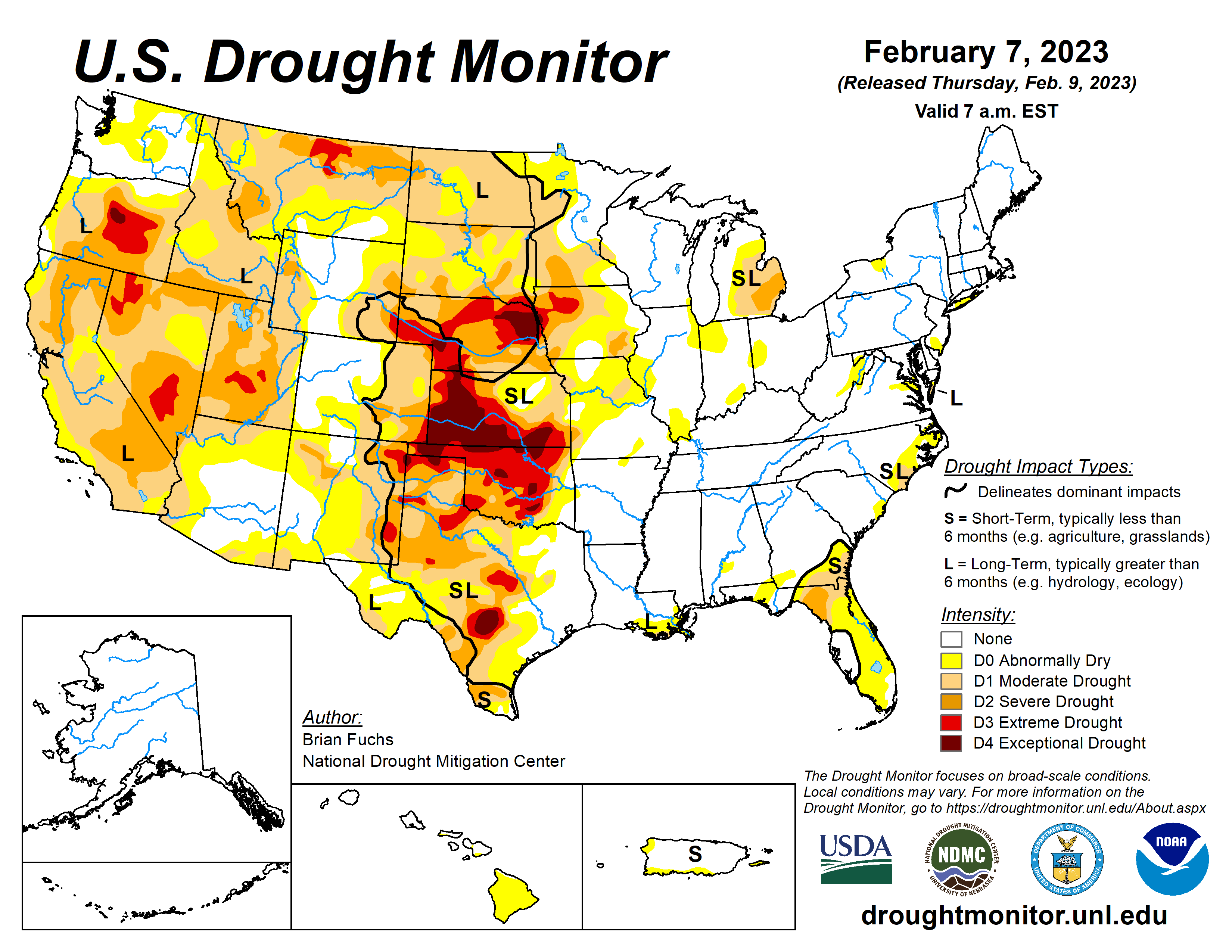
Oโ€™Malley: While La Nina conditions are still evident in the Pacific basin, there are strong indications that we will be entering a neutral state in the spring and summer. This winter has been a good example that not all La Nina years always produce drier than normal weather in the Southwest. While the majority of La Nina’s are dry for the Lower Colorado, there are a small handful (including this year) that result in normal to above normal precipitation.

The forecast for the spring suggests a small increase in odds that warmer than normal temperatures will occur, but no real tilt in odds regarding precipitation. Beyond the spring and summer, it’s a little too early to accurately predict the El Nino/La Nina state, however another La Nina next fall and winter is the least likely outcome.

ADWR Water News: Regarding current conditions in the Colorado River watershed, are these average-to-better-than-average conditions spread evenly? Or are some parts of the system still experiencing abnormally dry conditions? In the recent past, the southern slopes of the Rockies often were considerably drier than in the north.

Oโ€™Malley: Some of the headwater regions of Utah are still experiencing Severe and Extreme Drought conditions given the prolonged deficits. However, much of the Colorado headwaters have fallen out of drought depiction (as has the majority of Arizona). However, the Colorado headwaters snowpack is somewhat lower (as compared to normal) versus the rest of the basin โ€“ albeit, still a healthy 125-150 percent of normal. All told, this is much better than the past two winters, though the peak runoff doesn’t occur for a few more months.

Thornton sues dozens of producers of โ€œforever chemicals,โ€ alleging water contamination: The lawsuit is asking that the companies pay to clean #Thorntonโ€™s contaminated surface and #groundwater — The #Denver Post #PFAS

Firefighting foam containing PFAS chemicals is responsible for contamination in Fountain Valley. Photo via USAF Air Combat Command

Click the link to read the article on The Denver Post website (Conrad Swanson). Here’s an excerpt:

Thornton filed a lawsuit Monday [January 30, 2023] in South Carolina District Court against dozens of companies and people that produce PFAS, or โ€œforever chemicalsโ€, claiming the toxic substances contaminated the cityโ€™s water supply. Not only is Thornton suing a slate of high-profile companies, like 3M, DuPont and Chemours, itโ€™s also suing 20 unnamed โ€œentities or personsโ€ that might have โ€œpermitted, caused and/or contributedโ€ to the contamination of the cityโ€™s water. For decades the companies understood that PFAS, or perfluoroalkyl and polyfluoroalkyl substances, do not degrade naturally and were accumulating in peopleโ€™s bodies, according to the lawsuitโ€™s complaint…

Thornton officials announced in Julyย that its water supply exceeded the EPAโ€™s new โ€“ย sharply reducedย โ€“ limits for PFAS by more than 1,000 times. The city supplies water to about 160,000 people. At the time, Thorntonโ€™s water treatment and quality manager said the source of the chemicals werenโ€™t immediately clear but that the city had stopped using some wells from which they drew water and began treating other water sources with new chemicals to draw out the toxic substances. Now city officials believe the contamination comes from firefighting foam used across the area for training and for actual fires, the lawsuit says. Thornton hired a consultant to help understand how best to clean the contamination. Cleanup and damage is expected to haunt the city โ€œfor many years to come,โ€ the lawsuit says. The city is looking for money from the companies for the damage done to its property and for the cost of โ€œinvestigating, remediating, and monitoringโ€ its drinking water. While Thornton appears to be the first city in Colorado to sue PFAS manufacturers, its legal action follows a similar lawsuit filed nearly a year ago by Attorney General Phil Weiser.

โ€˜A living spiritโ€™: Native people push for changes to protect the #ColoradoRiver — The Los Angeles Times COriver #aridification

THE FORT MOJAVE TWINS ARE a pair of geoglyphs that represent large human figures that possibly date to 900 BCE. The twins are said to signify good and evil. The larger of the two has a massive head with attached limbs and is believed to represent good. It may also be representative of an ancient god. Photo credit: Atlas Obscura

Click the link to read the article on The Los Angeles Times website (Ian James). Here’s an excerpt:

On a bluff overlooking the Lower Colorado River Valley, the ground bears an image of two giant figures. Known as the Twins, these ancient figures are revered by members of the Fort Mojave Indian Tribe, who say they show their peopleโ€™s deep connection to the land and the river.

โ€œThis is a reminder of who we are,โ€ said Nora McDowell, an elder and former chairperson of the tribe. โ€œThis is our home. This is what the Creator gave us.โ€

In their beliefs, their place of origin lies to the northwest atย Avi Kwa Ame, also called Spirit Mountain. Their ancestors taught them that the Creator made the river and the plants and animals, and put the people here to protect it all…Centuries ago, the river swelled with seasonal floods, filling the valley. The people fished in the water and farmed on the silty floodplain, growing crops such as corn and squash. They saw the river and its water as the heart of life, something that belonged to no one. That began to change in the mid-1800s as white settlers moved west, appropriating land and water.

The American authorities wanted the tribeโ€˜s members to move farther south, but they resisted. The tribe saw the establishment of aย U.S. military outpostย at a river crossing, and eventually the Fort Mojave Indian Reservation wasย created along the river, encompassing lands in Nevada, Arizona and California.ย The fort later became a boarding school, where children wereย forced to assimilate and adopt English names.

White House launches new push to help states remove lead pipes that carry drinking #water: Colorado received $121M last year for lead line fixes — #Colorado Newsline

Denver Water crews dug up old lead service lines from customersโ€™ homes for years of study that led to the utilityโ€™s Lead Reduction Program. Photo credit: Denver Water.

Click the link to read the article on the Colorado Newsline website (Ashley Murray):

The White House on Friday announced plans to speed up the use of infrastructure law funds to replace lead pipes in underserved communities, with a focus on Connecticut, New Jersey, Pennsylvania and Wisconsin beginning this year.

The four states, each led by Democratic governors, will be part of whatโ€™s called the Lead Service Replacement Accelerators program in collaboration with the Environmental Protection Agency and the Department of Labor.

The administration characterized it as a way to โ€œdrive progressโ€ in using the Infrastructure Investment and Jobs Act funding dedicated to removing and replacing lead lines that carry drinking water to homes and schools. Exposure to lead in drinking water, particularly in children or pregnant women, can cause lasting neurological damage.

โ€œโ€‹โ€‹Our Lead Service Line Replacement Accelerators demonstrate our commitment to ensuring every community has access to safe, clean drinking water,โ€ EPA Administrator Michael Regan said in a statement Friday. 

โ€œBy leveraging the historic investment made possible by the Bipartisan Infrastructure Law, we are moving one step closer to achieving President Bidenโ€™s vision of 100% lead-free water systems for all.โ€

Help for communities

The new initiative is meant to bring โ€œhands-on supportโ€ and technical assistance from the EPA to guide communities through the lead service line removal process. That assistance might include help completing federal grant and loan applications, or expertise in finding labor and contractors.

Up to 10 million households and 400,000 schools and child care centers have lead service lines, according to the White House.

โ€œIt should be a right of every occupant of this earth and certainly of our country to have clean water, letโ€™s just start there. Then let us understand, because many may not be aware, sadly, that it is not a right that is guaranteed to all the occupants of our country,โ€ said Vice President Kamala Harris at the Accelerating Lead Pipe Replacement Summit held Friday at the White House.

โ€œIn many communities, families, children, parents cannot take for granted that they will turn on a tap and that clean water will come out. And I think we would all agree there is nothing about this that should be considered a luxury or an option,โ€ Harris said during the summitโ€™s keynote conversation with Regan.

Invited guests who attended the summit included mayors, philanthropic organizations, advocacy groups and community leaders.

Harris sent a letter to governors across the U.S. inviting them to join a wider, overarching coalition called the Biden-Harris Get the Lead Out Partnership. 

So far it has brought together 123 municipalities, water utilities, community organizations and labor unions that have agreed to deploy federal funds to replace lead pipes, according to the vice presidentโ€™s office.

Some of the communities set to participate in the new plan include:

  • East Newark and Newark, New Jersey
  • Erie County and Pittsburgh, Pennsylvania
  • Edgerton, Kenosha, Madison, Milwaukee, Sheboygan and Wausau, Wisconsin

โ€œWe have labor, nonprofits, our agencies, and the private sector, all who are here with one thing in mind, and thatโ€™s to get lead pipes out of all of our communities,โ€ Regan said Friday [January 27, 2022].

How funds are divided

The administration budgeted $15 billion in infrastructure funds over several years for the EPA to divvy up among states for lead service line replacements. 

Another $11.7 billion was directed toward the EPAโ€™s state revolving fund meant to support a range of water quality projects, including lead pipe replacements.

In 2022 the administration allocated a portion of the funds to states and territories to cover the next five years of lead line fixes. Colorado was allocated $121 million.

The states that received the highest allocations were California, Texas, New York, Illinois, Florida, Ohio, Pennsylvania, Michigan, North Carolina and Massachusetts.

โ€œPennsylvanians have a constitutional right to clean air and pure water, but far too many communities here in Pennsylvania suffer from old and outdated lead pipes that endanger the health of our children and families,โ€ Pennsylvania Gov. Josh Shapiro said in a statement Friday about being named to the accelerator program. โ€œMy Administration is ready to work with President Biden, Vice President Harris, and our federal partners to make life-saving investments that will deliver clean drinking to families across the Commonwealth, especially in communities that have been left behind for too long.โ€

Allotments for 2023 are expected to be announced in the spring after the EPA publishes its latest, legally required Drinking Water Infrastructure Needs and Survey Assessment, according to the agency.

Some advocacy organizations, including the Natural Resources Defense Council, criticized the breakdown of last yearโ€™s funds, arguing that states with the most lead pipes โ€” like Illinois, Michigan, Missouri, New Jersey and Ohio โ€” were receiving fewer funds per replacement than states with fewer lead pipes.

โ€œEvery state has lead service lines, but some have significantly more than others. The highest concentration of lead service lines delivering water to homes are in the upper Midwest and Northeast states as well as Texas,โ€ the NRDCโ€™s Cyndi Roper wrote in July.

Risks of childhood lead poisoning not equal

Not all children and families are equally susceptible to lead exposure. The risk is greater for those who live in low-income households and in older homes where lead plumbing fixtures, pipes and lead-based paint have not been replaced or remediated.

Research as recent as 2021 continues to show that Black children and children in low-income communities consistently show higher blood lead levels than their non-Hispanic white counterparts.

โ€œIt is up to communities to hold our elected officials accountable [for] implementing the infrastructure bill. It’s up to utilities to share what they need to ramp up their lead service line [replacement] programs. Most importantly, it is up to our government agencies and mayors and governors to act with a sense of urgency to prioritize removing every single lead service line,โ€ Deanna Branch, of the Milwaukee-based Coalition for Lead Emergency, said at Fridayโ€™s White House summit.

Branch was accompanied at the podium by her 9-year-old son, Aiden, who at the age of 2 was hospitalized with lead poisoning.
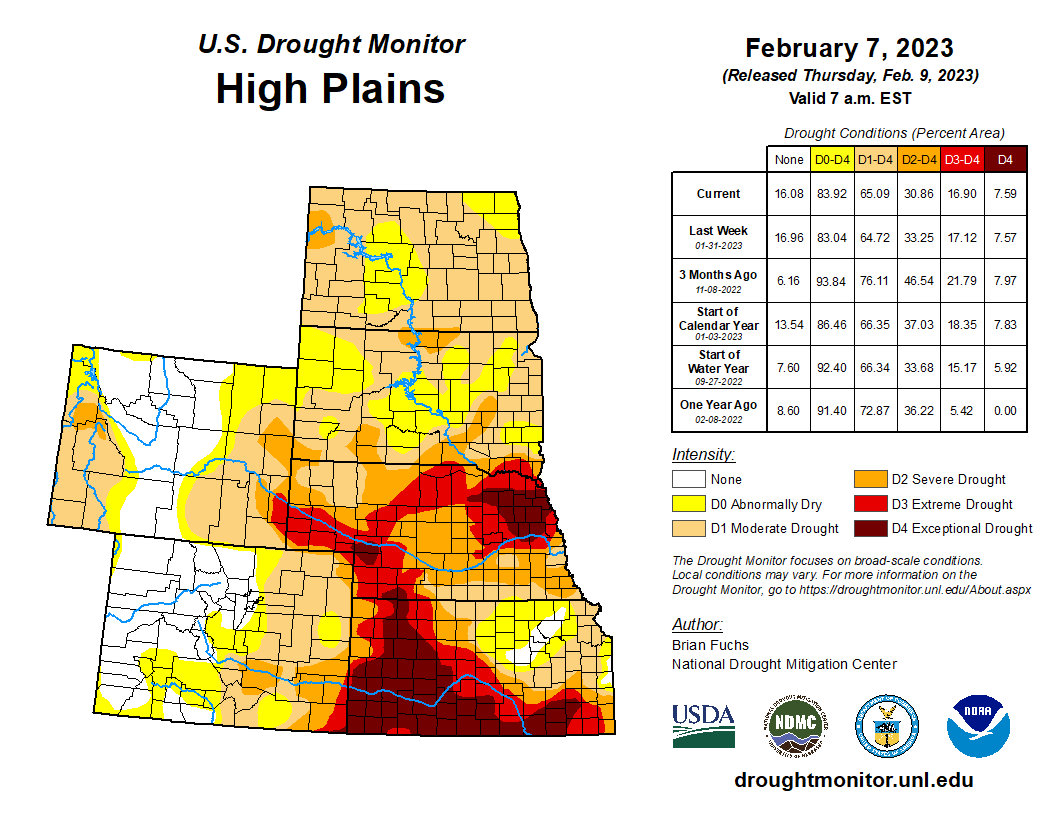
No level of lead is safe for children, according to the Centers for Disease Control and Prevention. 

The CDC estimates that about a half a million children in the U.S. have elevated blood lead levels, meaning the amount of lead found during a blood test is higher than most other children.

Some of the most common sources of exposure include lead paint in older housing stock, water carried through lead pipes, soil and dust near industrial sites and imported toys or jewelry.

Children under age 6 are most at risk for lead poisoning because of their hand-to-mouth behavior and because their developing nervous systems are vulnerable to what can be permanent effects of lead exposure, including lower IQ, behavioral problems, developmental delays and learning difficulties.

Editor’s note: East Newark and Newark, New Jersey; Erie County and Pittsburgh, Pennsylvania; and Edgerton, Kenosha, Madison, Milwaukee, Sheboygan and Wausau, Wisconsin, are part of the White House “Biden-Harris Get the Lead Out Partnership.” A previous version of this report misstated which program they were categorized under.

Moving from measurement to governance of shared #groundwater resources — Nature #Water

Fig. 1: Conceptual illustration of the multiple scales of governance that influence groundwater extraction using the United States as an example. Black lines represent polycentric linkages across and within scales that are essential to scaling up collective commitments to groundwater conservation, and red lines represent examples of direct linkages common under status quo governance, such as individual actions incentivized through federal or state programmes. Credit: Erika Peirce.

Click the link to access the report on the Nature Water website (Meagan E. Schipanski,ย Matthew R. Sanderson,ย Linda Estelรญ Mรฉndez-Barrientos,ย Amy Kremen,ย Prasanna Gowda,ย Dana Porter,ย Kevin Wagner,ย Charles West,ย Charles W. Rice,ย Mark Marsalis,ย Bridget Guerrero,ย Erin Haacker,ย James Dobrowolski,ย Chittaranjan Rayย &ย Brent Auvermann). Here’s the abstract:

Global groundwater resources are under strain, with cascading effects on producers, food and fibre production systems, communities and ecosystems. Investments in biophysical research have clarified the challenges, catalysed a proliferation of technological solutions and supported incentivizing individual irrigators to adjust practices. However, groundwater management is fundamentally a governance challenge. [ed. emphasis mine] The reticence to prioritize building governance capacity represents a critical โ€˜blind spotโ€™ contributing to a low return on investment for research funding with negative consequences for communities moving closer towards resource depletion. In this Perspective, we recommend shifts in research, extension and policy priorities to build polycentric governance capacity and strategic planning tools, and to re-orient priorities to sustaining aquifer-dependent communities in lieu of maximizing agricultural production at the scale of individual farm operations. To achieve these outcomes, groundwater governance needs to be not only prioritized but also democratized.

Aspinall Unit operations update February 5, 2023 #GunnisonRiver #ColoradoRiver #COriver #aridification

Say goodbye to my grandfather’s house on Perry in N. #Denver

The lot where they scraped my grandfather’s house. He built the old place in 1923.

Very cool that the house my grandfather built almost made it to 100. Post construction mods included digging out the crawl space for a convection coal furnace and plumbing for a wringer washer. Along with my brother I built a model train layout with a slot car course on the dirt banks around the north end of the basement.

I hope the builders leave the Catalpa (Gertie planted it, generations used the bean pods for cops and robbers battles) and the Blue spruce tree.

I actually stole the Blue spruce as a seedling from Rocky Mountain National Park, back when I was a Cub Scout. My mother worried all the way back to Denver about the rangers busting us, but she really wanted a Blue spruce in the yard. The seedling had 3 branches when I dug it up but it soon crowded out the front yard rose garden.

Gertie and Frank on their wedding day.
The old house after being gussied up by new owners. Photo credit: Zillow

The Pagosa Area #Water and Sanitation District Board of Directors approve increases in rates — The #PagosaSprings Sun

The springs for which Pagosa Springs was named, photographed in 1874. By Timothy H. O. Sullivan – U.S. National Archives and Records Administration, Public Domain, https://commons.wikimedia.org/w/index.php?curid=17428006

Click the link to read the article on the Pagosa Springs Sun website (Josh Pike). Here’s an excerpt:

According to PAWSD District Manager Justin Ramsey, the rate changes took effect immediately upon approval. According to the board packet for the meeting and as explained by PAWSD Director of Business Services Aaron Burns, the rate increases include a 6 percent increase in water rates and a 2.5 percent increase in wastewater rates.

With these changes, according to agenda documentation, the monthly service charge for water will rise from $29.66 to $31.44 per equivalent unit (EU). The volume charge per 1,000 gallons for between 2,001 and 8,000 gallons of usage will rise from $5.32 to $5.64, while the volume charge per 1,000 gallons for between 8,001 and 20,000 gallons of usage will increase from $10.65 to $11.29. The volume charge per 1,000 gallons for more than 20,001 gal- lons of usage will increase from $13.37 to $14.17. The water fill station charge per 1,000 gallons will increase from $11.49 to $12.18, while the water availability of service and waste- water availability of service fees remain the same at $14.30 and $12.50 respectively. According to the documenta- tion, the wastewater monthly service charge will rise from $32 to $32.80.

Prior to unanimously approving the rate changes, the board held a public hearing on the issue where it received no public comments concerning the altered rates.

The Cold War Legacy Lurking in U.S. Groundwater — ProPublica

Sign in the Lisbon Valley of southeastern Utah. Jonathan P. Thompson photo.

Click the link to read the article on the ProPublica website, by Mark Olalde, Mollie Simon and Alex Mierjeski, video by Gerardo del Valle, Liz Moughon and Mauricio Rodrรญguez Pons

ProPublica is a Pulitzer Prize-winning investigative newsroom. Sign up for The Big Story newsletter to receive stories like this one in your inbox.

In Americaโ€™s rush to build the nuclear arsenal that won the Cold War, safety was sacrificed for speed.

Uranium mills that helped fuel the weapons also dumped radioactive and toxic waste into rivers like the Cheyenne in South Dakota and the Animas in Colorado. Thousands of sheep turned blue and died after foraging on land tainted by processing sites in North Dakota. And cancer wards across the West swelled with sick uranium workers.

The U.S. government bankrolled the industry, and mining companies rushed to profit, building more than 50 mills and processing sites to refine uranium ore.

But the government didnโ€™t have a plan for the toxic byproducts of this nuclear assembly line. Some of the more than 250 million tons of toxic and radioactive detritus, known as tailings, scattered into nearby communities, some spilled into streams and some leaked into aquifers.

Congress finally created the agency that now oversees uranium mill waste cleanup in 1974 and enacted the law governing that process in 1978, but the industry would soon collapse due to falling uranium prices and rising safety concerns. Most mills closed by the mid-1980s.

When cleanup began, federal regulators first focused on the most immediate public health threat, radiation exposure. Agencies or companies completely covered waste at most mills to halt leaks of the carcinogenic gas radon and moved some waste by truck and train to impoundments specially designed to encapsulate it.

But the government has fallen down in addressing another lingering threat from the industryโ€™s byproducts: widespread water pollution.

Moab tailings site with Spanish Valley to the south

Regulators havenโ€™t made a full accounting of whether they properly addressed groundwater contamination. So, for the first time, ProPublica cataloged cleanup efforts at the countryโ€™s 48 uranium mills, seven related processing sites and numerous tailings piles.

At least 84% of the sites have polluted groundwater. And nearly 75% still have either no liner or only a partial liner between mill waste and the ground, leaving them susceptible to leaking pollution into groundwater. In the arid West, where most of the sites are located, climate change is drying up surface water, making underground reserves increasingly important.

ProPublicaโ€™s review of thousands of pages of government and corporate documents, accompanied by interviews with 100 people, also found that cleanup has been hampered by infighting among regulatory agencies and the frequency with which regulators grant exemptions to their own water quality standards.

The result: a long history of water pollution and sickness.

Reports by government agencies found high concentrations of cancer near a mill in Utah and elevated cancer risks from mill waste in New Mexico that can persist until cleanup is complete. Residents near those sites and others have seen so many cases of cancer and thyroid disease that they believe the mills and waste piles are to blame, although epidemiological studies to prove such a link have rarely been done.

โ€œThe government didnโ€™t pay attention up front and make sure it was done right. They just said, โ€˜Go get uranium,โ€™โ€ said Bill Dixon, who spent decades cleaning up uranium and nuclear sites with the state of Oregon and in the private sector.

Tom Hanrahan grew up near uranium mills in Colorado and New Mexico and watched three of his three brothers contract cancer. He believes his siblings were โ€œcasualtiesโ€ of the war effort.

โ€œSomebody knew that this was a ticking atomic bomb,โ€ Hanrahan said. โ€œBut, in military terms, this was the cost of fighting a war.โ€

A Flawed System

When a uranium mill shuts down, here is whatโ€™s supposed to happen: The company demolishes the buildings, decontaminates the surrounding soil and water, and encases the waste to stop it from leaking cancer-causing pollution. The company then asks the Nuclear Regulatory Commission, the lead agency monitoring Americaโ€™s radioactive infrastructure, to approve the handoff of the property and its associated liability to the Department of Energyโ€™s Office of Legacy Management for monitoring and maintenance.

ProPublicaโ€™s analysis found that half of the countryโ€™s former mills havenโ€™t made it through this process and even many that did have never fully addressed pollution concerns. This is despite the federal government spending billions of dollars on cleanup, in addition to the several hundred million dollars that have been spent by companies.

Often, companies or agencies tasked with cleanup are unable to meet water quality standards, so they request exemptions to bypass them. The NRC or state agencies almost always approve these requests, allowing contaminants like uranium and selenium to be left in the groundwater. When ingested in high quantities, those elements can cause cancer and damage the nervous system, respectively.

The DOE estimates that some sites have individually polluted more than a billion gallons of water.

Bill Dam, who spent decades regulating and researching uranium mill cleanup with the NRC, at the DOE and in the private sector, said water pollution wonโ€™t be controlled until all the waste and contaminated material is moved. โ€œThe federal governmentโ€™s taken a Band-Aid approach to groundwater contamination,โ€ he said.

The pollution has disproportionately harmed Indian Country.

Six of the mills were built on reservations, and another eight mills are within 5 miles of one, some polluting aquifers used by tribes. And the countryโ€™s last conventional uranium mill still in operation โ€” the White Mesa Mill in Utah โ€” sits adjacent to a Ute Mountain Ute community.

So many uranium mines, mills and waste piles pockmark the Navajo Nation that the Environmental Protection Agency created a comic book superhero, Gamma Goat, to warn Dinรฉ children away from the sites.

NRC staff acknowledged that the process of cleaning up Americaโ€™s uranium mills can be slow but said that the agency prioritizes thoroughness over speed, that each siteโ€™s groundwater conditions are complex and unique, and that cleanup exemptions are granted only after gathering input from regulators and the public.

โ€œThe NRCโ€™s actions provide reasonable assurance of adequate protection of public health and safety and the environment,โ€ David McIntyre, an NRC spokesperson, said in a statement to ProPublica.

โ€œCleanup Standards Might Suddenly Changeโ€

For all the governmentโ€™s success in demolishing mills and isolating waste aboveground, regulators failed to protect groundwater.

Between 1958 and 1962, a mill near Gunnison, Colorado, churned through 540,000 tons of ore. The process, one step in concentrating the ore into weapons-grade uranium, leaked uranium and manganese into groundwater, and in 1990, regulators found that residents had been drawing that contaminated water from 22 wells.

The DOE moved the waste and connected residents to clean water. But pollution lingered in the aquifer beneath the growing town where some residents still get their water from private wells. The DOE finally devised a plan in 2000, which the NRC later approved, settling on a strategy called โ€œnatural flushing,โ€ essentially waiting for groundwater to dilute the contamination until it reached safe levels.

In 2015, the agency acknowledged that the plan had failed. Sediments absorb and release uranium, so waiting for contamination to be diluted doesnโ€™t solve the problem, said Dam, the former NRC and DOE regulator.

In Wyoming, state regulators wrote to the NRC in 2006 to lambast the agencyโ€™s โ€œinadequateโ€ analysis of natural flushing compared to other cleanup options. โ€œUnfortunately, the citizens of Wyoming may likely have to deal with both the consequences and the indirect costs of the NRCโ€™s decisions for generations to come,โ€ the stateโ€™s letter said.

ProPublica identified mills in six states โ€” including eight former mill sites in Colorado โ€” where regulators greenlit the strategy as part of a cleanup plan.

When neither water treatment nor nature solves the problem, federal and state regulators can simply relax their water quality standards, allowing harmful levels of pollutants to be left in aquifers.

County officials made a small area near the Gunnison mill off-limits to new wells, and the DOE suggested changing water quality standards to allow uranium concentrations as much as 475 times what naturally occurred in the area. It wouldnโ€™t endanger human health, the agency said, because people wouldnโ€™t come into contact with the water.

ProPublica found that regulators granted groundwater cleanup exemptions at 18 of the 28 sites where cleanup has been deemed complete and liability has been handed over to the DOEโ€™s Office of Legacy Management. Across all former uranium mills, the NRC or state agencies granted at least 34 requests for water quality exemptions while denying as few as three.

โ€œTheyโ€™re cutting standards, so weโ€™re getting weak cleanup that future generations may not find acceptable,โ€ said Paul Robinson, who spent four decades researching the cleanup of the uranium industry with the Southwest Research and Information Center, an Albuquerque-based nonprofit. โ€œThese great mining companies of the world, they got away cheap.โ€

NRC staffers examine studies that are submitted by companiesโ€™ consultants and other agencies to show how cleanup plans will adequately address water contamination. Some companies change their approach in response to feedback from regulators, and the public can view parts of the process in open meetings. Still, the data and groundwater modeling that underpin these requests for water cleanup exemptions are often wrong.
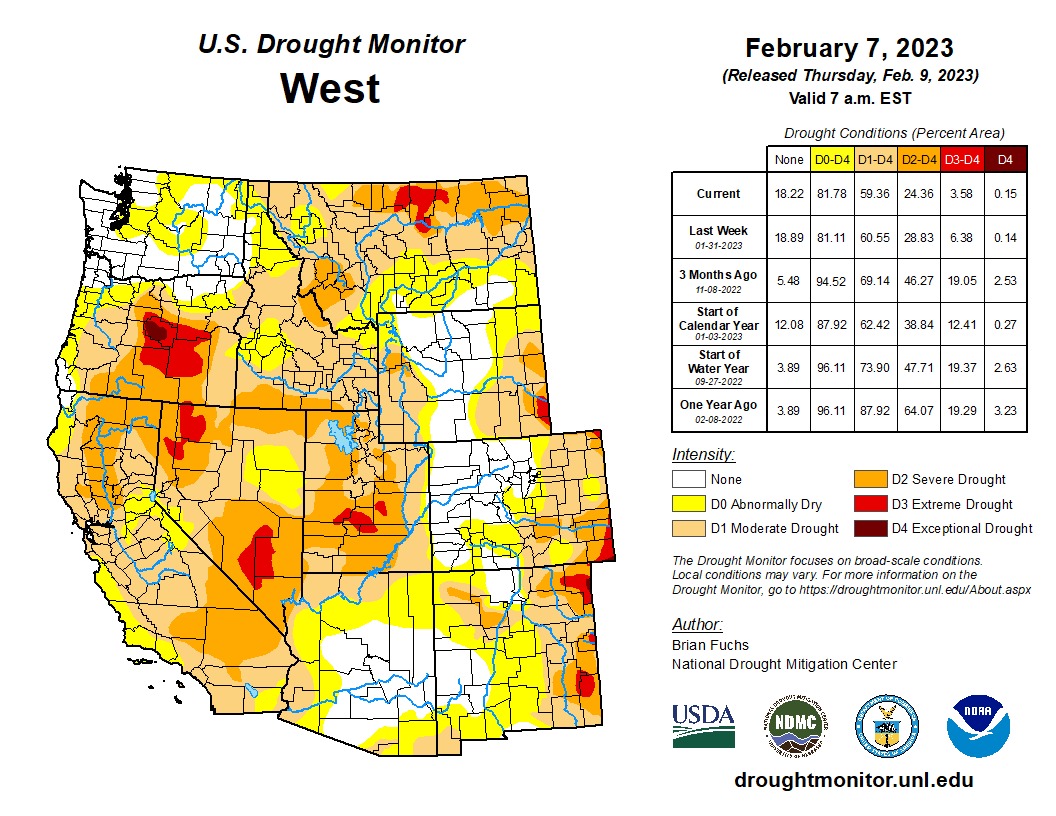
One reason: When mining companies built the mills, they rarely sampled groundwater to determine how much contamination occurred naturally, leaving it open to debate how clean groundwater should be when the companies leave, according to Roberta Hoy, a former uranium program specialist with the Wyoming Department of Environmental Quality. She said federal regulators also havenโ€™t done enough to understand certain contaminants at uranium mills.

In one recent case, the NRC fined a mining company $14,500 for incomplete and inaccurate groundwater modeling data. Companies use such data to prove that pollution wonโ€™t spread in the future. Freeport-McMoRan, the corporation that owns the fined mining company, did not respond to a request for comment.

At a 2013 conference co-hosted by the NRC and a mining trade group, a presentation from two consultants compared groundwater modeling to a sorcerer peering at a crystal ball.

ProPublica identified at least seven sites where regulators granted cleanup exemptions based on incorrect groundwater modeling. At these sites, uranium, lead, nitrates, radium and other substances were found at levels higher than models had predicted and regulators had allowed.
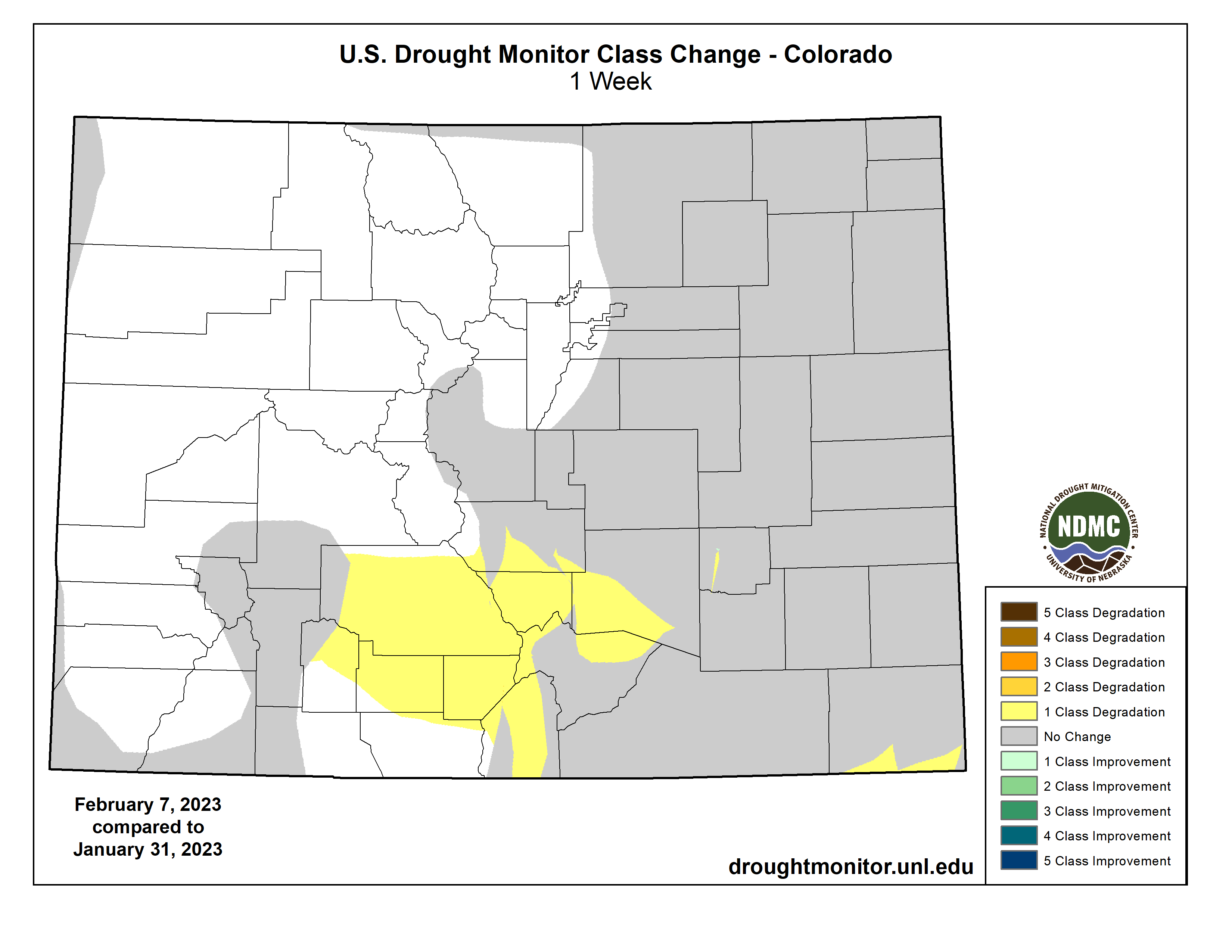
McIntyre, the NRC spokesperson, said that groundwater models โ€œinherently include uncertainty,โ€ and the government typically requires sites to be monitored. โ€œThe NRC requires conservatism in the review process and groundwater monitoring to verify a modelโ€™s accuracy,โ€ he said.

Water quality standards impose specific limits on the allowable concentration of contaminants โ€” for example, the number of micrograms of uranium per liter of water. But ProPublica found that the NRC granted exemptions in at least five states that were so vague they didnโ€™t even include numbers and were instead labeled as โ€œnarrative.โ€ The agency justified this by saying the groundwater was not near towns or was naturally unfit for human consumption.

Lincoln Park/Cotter Mill superfund site via the Environmental Protection Agency

This system worries residents of Caรฑon City, Colorado. Emily Tracy, who serves on the City Council, has lived a few miles from the areaโ€™s now-demolished uranium mill since the late 1970s and remembers floods and winds carrying mill waste into neighborhoods from the 15.3-million-ton pile, which is now partially covered.

Uranium and other contaminants had for decades tainted private wells that some residents used for drinking water and agriculture, according to the Department of Health and Human Services. The company that operated the mill, Cotter Corp., finally connected residents to clean water by the early 1990s and completed cleanup work such as decontaminating soil after the EPA got involved. But the site remains without a final cleanup plan โ€” which the company that now owns the site is drafting โ€” and the state has eased water quality standards for molybdenum, a metal that uranium mining and milling releases into the environment.

โ€œWe have great concerns about what it might look like or whether cleanup standards might suddenly change before our eyes,โ€ Tracy said.

Jim Harrington, managing director of the siteโ€™s current owner, Colorado Legacy Land, said that a final cleanup strategy has not been selected and that any proposal would need to be approved by both the EPA and the state.

Layers of Regulation

It typically takes 35 years from the day a mill shuts down until the NRC approves or estimates it will approve cleanup as being complete, ProPublica found. Two former mills arenโ€™t expected to finish this process until 2047.

Chad Smith, a DOE spokesperson, said mills that were previously transferred to the government have polluted groundwater more than expected, so regulators are more cautious now.

The involvement of so many regulators can also slow cleanup.

Five sites were so contaminated that the EPA stepped in via its Superfund program, which aims to clean up the most polluted places in the country.

At the Homestake mill in New Mexico, where cleanup is jointly overseen by the NRC and the EPA, Larry Camper, a now-retired NRC division director, acknowledged in a 2011 meeting โ€œthat having multiple regulators for the site is not good governmentโ€ and had complicated the cleanup, according to meeting minutes.

Homestake Mining Company of California did not comment on Camperโ€™s view of the process.

Only one site where the EPA is involved in cleanup has been successfully handed off to the DOE, and even there, uranium may still persist above regulatory limits in groundwater and surface water, according to the agency. An EPA spokesperson said the agency has requested additional safety studies at that site.

โ€œA lot of people make money in the bureaucratic system just pontificating over these things,โ€ said William Turner, a geologist who at different times has worked for mining companies, for the U.S. Geological Survey and as the New Mexico Natural Resources Trustee.

If the waste is on tribal land, it adds another layer of government.

The federal government and the Navajo Nation have long argued over the source of some groundwater contamination at the former Navajo Mill built by Kerr-McGee Corp. in Shiprock, New Mexico, with the tribe pointing to the mill as the key source. Smith of the DOE said the department is guided by water monitoring results โ€œto minimize opportunities for disagreement.โ€

Tronox, which acquired parts of Kerr-McGee, did not respond to requests for comment.

May 2022 wildfire smoke obscured the throat of an ancient volcano called Shiprock. Photo credit: Allen Best/Big Pivots

All the while, 2.5 million tons of waste sit adjacent to the San Juan River in the town of 8,000 people. Monitoring wells situated between the unlined waste pile and the river have shown nitrate levels as high as 80 times the limit set by regulators to protect human health, uranium levels 30 times the limit and selenium levels 20 times the limit.

โ€œI canโ€™t seem to get the federal agencies to acknowledge the positions of the Navajo Nation,โ€ said Dariel Yazzie, who formerly managed the Navajo Nation Environmental Protection Agencyโ€™s Superfund Program.

At some sites, overlapping jurisdictions mean even less cleanup gets done.

Such was the case near Griffin, North Dakota, where six cows and 2,500 sheep died in 1973; their bodies emitted a blue glow in the morning light. The animals lay near kilns that once served as rudimentary uranium mills operated by Kerr-McGee. To isolate the element, piles of uranium-laden coal at the kilns were โ€œcovered with old tires, doused in diesel fuel, ignited, and left to smolder for a couple of months,โ€ according to the North Dakota Geological Survey.

The flock is believed to have been poisoned by land contaminated with high levels of molybdenum. The danger extended beyond livestock. In a 1989 draft environmental assessment, the DOE found that โ€œfatal cancer from exposure to residual radioactive materialsโ€ from the Griffin kilns and another site less than a mile from a town of 1,000 people called Belfield was eight times as high as it would have been if the sites had been decontaminated.

But after agreeing to work with the federal government, North Dakota did an about-face. State officials balked at a requirement to pay 10% of the cleanup cost โ€” the federal government would cover the rest โ€” and in 1995 asked that the sites no longer be regulated under the federal law. The DOE had already issued a report that said doing nothing โ€œwould not be consistentโ€ with the law, but the department approved the stateโ€™s request and walked away, saying it could only clean a site if the state paid its share.

โ€œNorth Dakota determined there was minimal risk to public health at that time and disturbing the grounds further would create a potential for increased public health risk,โ€ said David Stradinger, manager of the Radiation Control Program in the North Dakota Department of Environmental Quality. Contaminated equipment was removed, and the state is reevaluating one of the sites, he said.

โ€œA Problem for the Better Part of 50 Yearsโ€

While the process for cleaning up former mills is lengthy and laid out in regulations, regulators and corporations have made questionable and contradictory decisions in their handling of toxic waste and tainted water.

More than 40 million people rely on drinking water from the Colorado River, but the NRC and DOE allowed companies to leak contamination from mill waste directly into the river, arguing that the waterway quickly dilutes it.

Federal regulators relocated tailings at two former mills that processed uranium and vanadium, another heavy metal, on the banks of the Colorado River in Rifle, Colorado, because radiation levels there were deemed too high. Yet they left some waste at one former processing site in a shallow aquifer connected to the river and granted an exemption that allowed cleanup to end and uranium to continue leaking into the waterway.

The Bluewater disposal site was a uranium-ore-processing site addressed by Title II of the Uranium Mill Tailings Radiation Control Act (UMTRCA). The site transitioned to DOE in 1997 administered under the provisions of a general Nuclear Regulatory Commission (NRC) license.

For a former mill built by the Anaconda Copper Company in Bluewater, New Mexico, the NRC approved the companyโ€™s request to hand the site off to the DOE in 1997. About a decade later, the state raised concerns about uranium that had spread several miles in an aquifer that provides drinking water for more than 15,000 people.

The contamination hasnโ€™t reached the wells used by nearby communities, and Smith, the DOE spokesperson, said the department has no plans to treat the uranium in the aquifer. Itโ€™s too late for much more cleanup, since the DOEโ€™s Office of Legacy Managementโ€™s mission is to monitor and maintain decommissioned sites, not clean them. Flawed cleanup efforts caused problems at several former mills after they were handed off to the agency, according to a 2020 Government Accountability Office report.

โ€œUranium has been overplayed as a boom,โ€ said Travis Stills, an environmental attorney in Colorado who has sued over the cleanup of old uranium infrastructure. โ€œThe boom was a firecracker, and it left a problem for the better part of 50 years now.โ€

โ€œNo Way in Hell Weโ€™re Going to Leave This Stuff Hereโ€

Mining companies canโ€™t remove every atom of uranium from groundwater, experts said, but they can do a better job of decommissioning uranium mills. With the federal government yet to take control of half the countryโ€™s former mills, regulators still have time to compel some companies to do more cleanup.

Between 1958 and 1961, the Lakeview Mining Company generated 736,000 tons of tailings at a uranium mill in southern Oregon. Like at most sites, uranium and other pollution leaked into an aquifer.

โ€œThereโ€™s no way in hell weโ€™re going to leave this stuff here,โ€ Dixon, the nuclear cleanup specialist, remembered thinking. He represented the state of Oregon at the former mill, which was one of the first sites to relocate its waste to a specially engineered disposal cell.
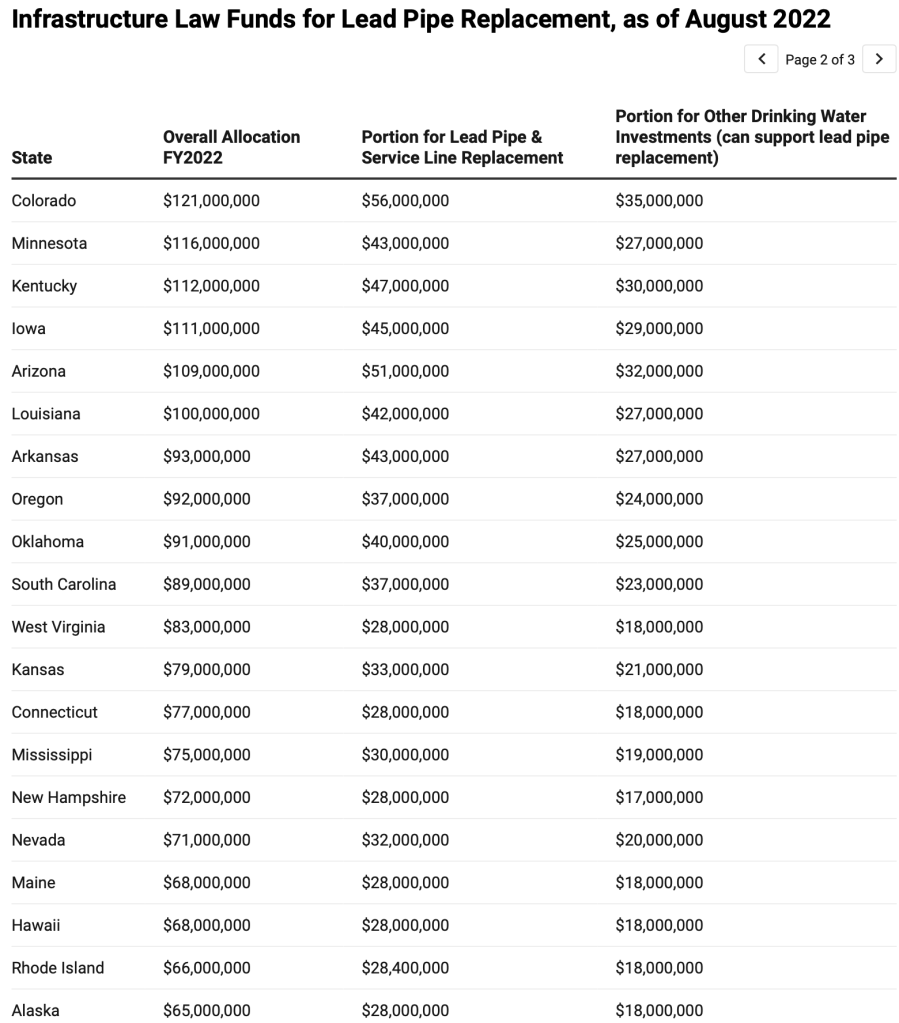
A local advisory committee at the Lakeview site allowed residents and local politicians to offer input to federal regulators. By the end of the process, the government had paid to connect residents to a clean drinking water system and the waste was moved away from the town, where it was contained by a 2-foot-thick clay liner and covered with 3 feet of rocks, soil and vegetation. Local labor got priority for cleanup contracts, and a 170-acre solar farm now stands on the former mill site.

But relocation isnโ€™t required. At some sites, companies and regulators saw a big price tag and either moved residents away or merely left the waste where it was.

โ€œI recognize Lakeview is easy and itโ€™s a drop in the bucket compared to New Mexico,โ€ Dixon said, referring to the nationโ€™s largest waste piles. โ€œBut itโ€™s just so sad to see that this hasnโ€™t been taken care of.โ€

Methodology

To investigate the cleanup of Americaโ€™s uranium mills, ProPublica assembled a list of uranium processing and disposal sites from the Nuclear Regulatory Commissionโ€™s most recent โ€œStatus of the Decommissioning Programโ€ annual reportthe WISE Uranium Project and several federal agenciesโ€™ websites. Reporters reviewed fact sheets from the NRC and the Department of Energybefore studying the history of each mill contained in thousands of pages of documents that are archived mainly in the NRCโ€™s Agencywide Documents Access and Management System, known as ADAMS.

We solicited feedback on our findings from 10 experts who worked or work at the NRC, the Environmental Protection Agency, the Wyoming Department of Environmental Quality, the Southwest Research and Information Center, the University of New Mexico and elsewhere. Additionally, we interviewed dozens of current and former regulators, residents of communities adjacent to mills, representatives of tribes, academics, politicians and activists to better understand the positive and negative impacts of the uranium industry and the bureaucracy that oversees uranium mill cleanup.

We also traveled to observe mill sites in New Mexico, Utah and Colorado.

Map of Abandoned Uranium Mines on the Navajo Nation. Credit: EPA

#ArkansasRiver Watershed Collaborative River Report #snowpack

Arkansas Basinย Snowpack Telemetry (SNOTEL) siteย readingsย for snow-water equivalent range from 36% of median at the Apishipa site near the Spanish Peaks to 127% at St. Elmo in western Chaffee County. The Brumley SNOTEL site, near Independence Pass,ย reports 91% of median, while Fremont Pass reports 94%. Glen Cove, north of Pikes Peak, is at 108%. Buckskin Joe in South Park reads 62%. In the Sangre de Cristo Range, Hayden Pass reads 49% of median.

From email from Joe Stone:

On behalf of ARWC, the latest Arkansas River Report is available online at 
https://www.arkcollaborative.org/river-reports. As always, the information in the River Report is free to use as you wish, and all sources of information are linked to in the report.

ARWC is the nonprofit organization for the Arkansas Basin Roundtable, a group of water managers and stakeholders working to find solutions to water-related issues in the basin. Roundtable members serve as the ARWC Board of Directors.

State officials draft bill on stream restoration: Projects must stay within historical footprint — @AspenJournalism #COleg

This beaver dam analogue, with posts across the creek and soft, woody material woven across, was built by environmental restoration group EcoMetrics, keeps water on the landscape by mimicking beaver activity. The state Department of Natural Resources has penned draft legislation clarifying that this type of restoration project does not need a water right. CREDIT: JACKIE CORDAY

Click the link to read the article on the Aspen Journalism website (Heather Sackett):

Colorado officials have drafted a bill aimed at addressing a tension between stream restoration projects and water rights holders.

The draft clarifies that restoration projects do not fall under the definitions of a diversion, storage or a dam and do not need to go through the lengthy and expensive water court process to secure a water right.

But before a project begins, proponents would have to file an information form with the state Division of Water Resources showing the project will stay within the historical footprint of the floodplain before it was degraded and doesnโ€™t create new wetlands, the draft bill proposes. These forms would be publicly available, and anyone could then challenge whether the project meets the requirements by filing a complaint, which would be taken up by DWR staff.

If stream restoration projects were required to secure a water right and spend money on an expensive augmentation plan, in which water is released to replace depletions it causes, it could discourage these types of projects, something the state Department of Natural Resources wants to avoid.

โ€œWe are trying to make it clear that stream restoration projects do not fall under the definition of diversion,โ€ said Kelly Romero-Heaney, the stateโ€™s assistant director for water policy. โ€œHowever, we put limits on what a restoration project is or isnโ€™t and the restoration project has to fall within the historical footprint of the stream system.โ€

This stream restoration project on Trail Creek, in the headwaters of the Gunnison River, mimics beaver activity. Some worry that projects like this have the potential to negatively impact downstream water rights. CREDIT: JACKIE CORDAY

Slowing the flow

Restoration projects on small headwaters tributaries often mimic beaver activity, with what are called beaver dam analogues. These temporary wood structures usually consist of posts driven into the streambed with willows and other soft materials woven across the channel between the posts. The idea is that by creating appealing habitat in areas that historically had beavers, the animals will recolonize and continue maintaining the health of the stream.

The goal of process-based restoration projects like these is to return conditions in the headwaters to what they were before waterways were harmed by mining, cattle grazing, road building and other human activities that may have confined the river to a narrow channel and disconnected it from its floodplain.

In these now-simplified stream systems, water, sediment and debris all move downstream more quickly, said Ellen Wohl, a fluvial geomorphologist at Colorado State University.

โ€œNatural rivers have all these sources of variability,โ€ Wohl said. โ€œThey have pools and riffles, meanderings, obstructions like wood and beaver dams. All those things can help slow the flow, which leads to less bed and bank erosion. It allows sediment to be deposited gradually along the channel, and you increase biological processing and recharge of ground water and soil moisture.โ€

Although these projects benefit the environment, improve water quality and create resiliency against wildfires and climate change, keeping water on the landscape for longer could potentially have impacts to downstream water users. Under Coloradoโ€™s system of prior appropriation, the oldest water rights โ€” which nearly always belong to agriculture โ€” have first use of the water.

Some are concerned that if the projects create numerous ponds in the headwaters, it could slow the rate of peak spring runoff or create more surface area for evaporation, meaning irrigators may not get their full amount of water.

John McClow is an attorney for the Upper Gunnison River Water Conservancy District and is chair of a Colorado Water Congress sub-committee studying the bill, which will make suggestions to the billโ€™s sponsors. He said there have been wet meadow restoration projects in the headwaters of the Gunnison River that have harmed water rights holders.

โ€œWe had some examples of well-intentioned but poorly designed projects,โ€ he said. โ€œIn each case we worked with water rights holders and removed the obstruction so their water rights were not impaired.โ€

McClow said he would like to see the bill set a standard to avoid problems at the outset of projects.

State Sen. Dylan Roberts, who represents District 8 and is chair of the Agriculture and Natural Resources Committee, is one of the billโ€™s sponsors. He said part of the billโ€™s urgency is so that Colorado can take advantage of unprecedented federal funding for stream restoration from the Infrastructure Investment and Jobs Act and the Inflation Reduction Act.

โ€œIf we can demonstrate to the federal government that we have a streamlined process for stream restoration projects, then we will make Colorado significantly more eligible for those federal funds,โ€ Roberts said. โ€œWe are trying our best to position our state to receive the resources that we deserve.โ€

Roberts, a Democrat whose Western Slope district includes Eagle, Garfield, Grand, Moffat, Rio Blanco, Routt and Summit counties, expects the bill to be introduced later this month.

Romero-Heaney said the stateโ€™s system of water law works well because it is adaptable to the evolving needs of Coloradans. The stream restoration legislation aims to reduce barriers to projects while still protecting water rights.

โ€œWe are at that moment where we need to make a decision: Do we want to have a future with healthy streams that are providing all those environmental services, or do we want to make that future pretty difficult to achieve?โ€ she said. โ€œItโ€™s a soul-searching conversation for the water community.โ€

Aspen Journalism covers water and rivers in collaboration with The Aspen Times.

#ColoradoRiver states fail to strike agreement; feds may step in — @WyoFile “…no one is calling on the Congress to fix this” — Kyle Roerink #GreenRiver #YampaRiver #LittleSnakeRiver #COriver #aridification

A high desert thunderstorm lights up the sky behind Glen Canyon Dam — Photo USBR

Click the link to read the article on the WyoFile website (Dustin Bleizeffer):

Hopes to forge a plan to reduce Colorado River Basin water use by 15% to 25% this year disintegrated this week with dueling proposals that pit California against Arizona and other basin states, including Wyoming.
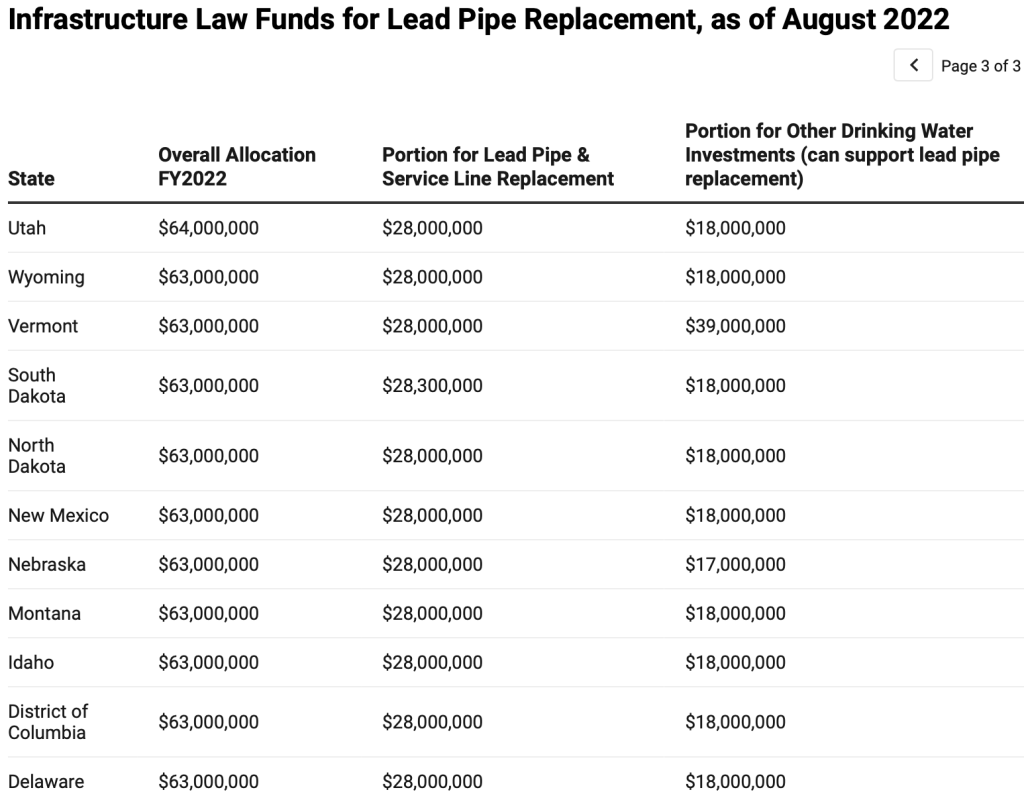
That leaves the U.S. Department of the Interior and Bureau of Reclamation, which issued the water-savings challenge in June 2022, to potentially impose their own plan to cut releases from Lake Powell and Lake Mead to maintain hydropower generation.

โ€œGiven the magnitude of water-use reductions that are being considered, talks between the Basin States have been very difficult at times,โ€ Wyoming State Engineer Brandon Gebhart said in an email to WyoFile.

Dueling proposals

Responding to a Jan. 31 deadline, Wyoming joined fellow Upper Colorado River Basin states โ€” as well as Nevada and Arizona in the Lower Basin โ€” in supporting a proposed โ€œconsensus-basedโ€ model for better accounting of actual water supplies, including water losses due to evaporation and seepage at Lake Mead. That framework, if implemented, should result in a water savings of 1.5 million acre-feet to 3.3 million acre-feet of water, according to a letter signed by water officials representing the six states.

A pump pulls water from the Green River at a Sweetwater County-managed recreation area Sept. 27, 2022. (Dustin Bleizeffer/WyoFile)

But those proposed water savings may not be fully realized this year. Plus, the six-state proposal leaves open the prospect for major water cuts this year to the Lower Basin states, particularly California โ€” the largest consumer of Colorado River water in the system. California countered this week with its own proposal for short-term water savings that would maintain the stateโ€™s bargaining power rooted in its senior water rights. That plan would shift the burden of water cuts to Arizona, which has water rights that are junior to Californiaโ€™s.

โ€œI think thatโ€™s why Arizona was quick to jump on the letter with the other six states,โ€ Great Basin Water Network Executive Director Kyle Roerink said.

Arizona prefers the consensus-building approach to sharing the pain of water-use reductions, Roerink said, over a strict adherence to the legal framework to restrict water use among those with the most junior water rights.

โ€œIn both letters, you have some serious shots across the bow as it relates to litigation and political posturing,โ€ Roerink said. โ€œAnd no one is calling on the Congress to fix this.โ€

Although the six-state proposal that Wyoming signed on to doesnโ€™t commit specific, voluntary water-use reductions, itโ€™s a necessary โ€œnext step toward a consensus solution,โ€ Gebhart said.

Buckboard Marina owner Tony Valdez stands next to a stake that indicates the extent of lowering water levels at Flaming Gorge Reservoir Sept. 26, 2022. (Dustin Bleizeffer/WyoFile)

โ€œAs we continue the process, we try to understand and respect the very difficult realities being faced by California and the other Basin States,โ€ he said. โ€œWe remain committed to working with the other Basin States and impacted water users to find consensus solutions.โ€

Despite varying legal positions and dire circumstances faced by each Colorado River stakeholder, some observers say Wyoming and the other Upper Basin states have offered up too little to help address the immediate problem that threatens some 40 million people who rely on the river.

โ€œThe Upper Basin is getting off scot-free,โ€ Roerink said. โ€œPlus, thereโ€™s no prohibitions put forth on potentially new development of Upper Basin water, like the West Fork of Battle Creek, for example.โ€

Wyomingโ€™s role

Regardless of what new actions the federal government may take in coming months, the Bureau of Reclamation will continue to rely on releasing extra volumes of water from Flaming Gorge Reservoir on the Wyoming-Utah border to help balance levels at downstream reservoirs, according to those close to the issue.

The bureau enacted extra releases totaling 625,000 acre-feet of water from the reservoir since 2021, and is expected to announce additional releases in April or May. Flaming Gorge was at 69% capacity in January, according to the bureau. If that continues into the summer, many boat ramps will be left high and dry threatening the local recreation economy.

Meantime, Wyoming and the Upper Colorado River Commission are encouraging voluntary water conservation, soliciting interest in a program that pays irrigators, municipalities and industrial facilities to leave water in streams that flow to the Colorado River.

This week, the UCRC extended the application deadline for the System Conservation Pilot Program to March 1. Wyoming officials expect to receive 15 to 20 proposals from individual water users in coming weeks, according to the state engineerโ€™s office.

For more information about the SCPP, visit the UCRCโ€™s website.

Green River Lakes and the Bridger Wilderness. Forest Service, USDA, Public domain, via Wikimedia Commons

A river wounded: Crisis on the #RioGrande, “The Rio Grande existed long before humans. It may not outlive us” — Source #NewMexico #aridification

Cows graze along the ribbon of the Rio Grande in Mineral County, Colorado, as it flows downstream from the San Juan Mountains. (Photo by Diana Cervantes for Source NM)

Click the link to read the article on the Source New Mexico website (Danielle Prokop):

The Rio Grande existed long before humans. It may not outlive us. 

Through millions of years, the river is mapped in strata, in oral traditions. More recently, in computer models. 

All tell of rapidly receding waters. A shrunken Rio Grande remains for thirstier landscapes and wildlife drawn to its banks. For people, too.

The river is low because people take from it, and because we reshaped it โ€” both exacerbated by climate change, said C. David Moeser. He built a model in 2021 mapping the impact humans have on the Rio Grandeโ€™s watershed for the U.S. Geological Survey.

The model depicts what the river looked like before people started diverting and storing the riverโ€™s water. At Fort Quitman, Texas, there was a 95% reduction in flow, he said. โ€œAnd thatโ€™s not climate change,โ€ he said. โ€œThat is strictly from anthropogenic change โ€” how we have manufactured the system.โ€

There wasnโ€™t much water to take from to begin with, he said, as climate change and human impacts stack on top of one another.

โ€œThe Rio Grande was never this mighty river,โ€ he said. โ€œBut we are now losing the pulse of snow melt that we were using for irrigation.โ€

Rio Grande water stored in Elephant Butte and Caballo resevoirs is released downstream to southern New Mexico and Texas on June 1, 2022. (Photo by Diana Cervantes by Source NM)

Humans straightened the river, cutting off the marshlands. We lined canals with concrete, built dams and reinforced banks. All in the name of efficiency โ€” to create storage and reserves, or to move water from one place to another.

A cottonwood forest in Bosque del Apache National Wildlife Refuge. Credit: Matthew Schmader/Open Space Division

The loss of water translates to fewer wildspaces on the river. Since 1918, the entire stretch of the Rio Grande has seen a 90% reduction of wetland habitat, according to a 2020 restoration feasibility study from the U.S. Army Corps of Engineers.

Climate change is a huge deal, Moeser acknowledged, but itโ€™s an even bigger deal because of what people have done to the river over time. 

Even still, โ€œanthropogenic change is by far the largest change that we have in the Rio Grande basin,โ€ he said. 

The Rio Grandeโ€™s injuries are more visible now than ever. In 2022, there were gaping wounds, stretches of cracked riverbed revealed, all the way into New Mexicoโ€™s largest city, Albuquerque, as days slipped into weeks without rain. Irrigation seasons are shortened statewide, fields fallowed. Some species take one step closer to the brink of extinction every year. 

Glenn Patterson spent 30 years as a hydrologist in the National Forest Service and has taught introductory water law at Colorado State University for over a decade. Adapting to drought, he said, means reframing how we see the system in the long-term. 

โ€œWith climate change, weโ€™re seeing increased variability, so that when droughts come, they tend to be more intense, and perhaps longer duration,โ€ he said. โ€œTheyโ€™re interspersed with periods where stream flows and rainfall are greater than normal for a while, and then the variability swings, and drought comes again.โ€

The cracked riverbed lays exposed in El Paso, Texas, on May 23, 2022. The riverbed below Elephant Butte Reservoir is often empty for most of the year, as the river only runs during irrigation season, which is shortened by drought. (Photo by Diana Cervantes for Source NM)

A monsoon can get the river moving again and soothe those cracked, visible beds for a bit, but itโ€™s not enough to reverse desertification. Deluges from stronger storms can lead to a pattern of flooding, especially in recent burn scars, posing threats to crops, homes and water supplies.

This is the tale of one of the biggest rivers in the West, in crisis now after millions of years of existence, injured by people and human-caused climate change.

In the coming days, Source New Mexico will present a series of stories that span nearly 700 miles of the Upper Rio Grande, from the headwaters in Colorado to the Forgotten Reach about 100 miles inside Texas, along the U.S.-Mexico border. Loss and heartache flow through them as the river suffers. Eddies of denial surface, and some seedlings of restoration. But even those are under threat.

These are the narratives that shape people who live along the river, just as we shape its waters.

Read more: Living on the knifeโ€™s edge, even at the source of the Rio Grande

This project was funded by a grant from the Water Desk and by States Newsroom, a network of nonprofit news organizations and home to Source NM.

The headwaters of the Rio Grande River in Colorado. Photo: Brent Gardner-Smith/Aspen Journalism

#LakePowell: What is it good for? — @Land_Desk #ColoradoRiver #COriver #aridification #snowpack (February 2, 2023)

Click the link to read the article on The Land Desk website (Jonathan P. Thompson):

Absolutely nothing? 

Sometimes it seems that way, doesnโ€™t it?ย Unlike other dams, Glen Canyon does not provide any meaningful flood control (except for in the Grand Canyon). It doesnโ€™t regulate streamflow to stretch out the irrigation season (because there are virtually no fields to irrigate between Glen Canyon Dam and the upper end of Lake Mead). And it isnโ€™t so great at storing excess water since, well, there is no excess water. At best it serves as an overflow basin for when Lake Mead fills up. But with both Lake Powell and Lake Mead holding only about 25% of their total capacity, the upper reservoir has become redundant โ€” at least from a water storage standpoint.

Paddling Powell. Photo by Jonathan P. Thompson.

It is from this redundancy that the Fill Mead First philosophy has emerged. Wouldnโ€™t it make more sense, adherents of this school ask, to drain Lake Powell and put what water remains there into Lake Mead, so that youโ€™d have one half-full reservoir rather than two quarter-full ones? So that youโ€™d have billions of gallons of water evaporating off just one reservoir rather than two? 

Itโ€™s a great question. And it brings up another one: Why Lake Powell? As in, what purpose does Glen Canyon Dam still serve in a climate-changed, diminished Colorado River world? 

Let me start by saying that I believe the construction of Glen Canyon Dam was a crime against Nature. It inundated countless cultural sites, killed 186 miles of the mainstem of the Colorado River along with hundreds of additional miles of side canyons and tributaries, and deprived everyone born after 1963 of the opportunity to experience one of our nationโ€™s natural marvels. It radically altered the ecology of the Grand Canyon and further endangered already imperiled native fish.

Delph Carpenter’s original map showing a reservoir at Glen Canyon and one at Black Canyon via Greg Hobbs

For what was this sacrifice made? Primarily it was to enable the Upper Colorado River Basin states to comply with the Colorado River Compact

The Compact did two big things: First, it divided the assumed average annual flows of the river between the Upper Basin states (Colorado, Wyoming, Utah, and New Mexico) and the Lower Basin states (California, Arizona, Nevada). The Lower Basin got 8.5 million acre-feet per year; the Upper Basin got 7.5 million acre-feet per year. Mexico was added later, getting 1.5 million acre-feet. 

But there was something else: To ensure the Lower Basin would get its share, the Compact mandates that the Upper Basin โ€œnot cause the flow of the river at Lee Ferry to be depleted below an aggregate of 75 million acre-feetโ€ for any 10-year period. In other words, the Upper Basin couldnโ€™t merely take out its 7.5 MAF share each year and let whatever remained run down to their downstream compatriots. It had to deliver an annual average of 7.5 MAF. 

Thatโ€™s no problem during big water years, but during years when less than 15 MAF is in the river, the Upper Basin would have had to reduce its take accordingly, while the Lower folks would still get their share. During some dry years, the total flow of the river has been lower than 7.5 MAF, meaning the Upper Basin States would be left high and dry.

September 21, 1923, 9:00 a.m. — Colorado River at Lees Ferry. From right bank on line with Klohr’s house and gage house. Old “Dugway” or inclined gage shows to left of gage house. Gage height 11.05′, discharge 27,000 cfs. Lens 16, time =1/25, camera supported. Photo by G.C. Stevens of the USGS. Source: 1921-1937 Surface Water Records File, Colorado R. @ Lees Ferry, Laguna Niguel Federal Records Center, Accession No. 57-78-0006, Box 2 of 2 , Location No. MB053635.

Unless they had a savings account. Or, in this case, a dam and reservoir above Lee Ferry capable of storing enough water during wet years to be able to release the Lower Basinโ€™s 7.5 MAF during even the driest years, i.e. Glen Canyon Dam and Lake Powell. If not for Lake Powell, the Upper Basin States would have been in deep doo doo over the last couple of decades, because they would have had to substantially cut consumption or go to war with California for failing to deliver the required water to the Lower Basin. 

So you could say that the Colorado River Compactโ€™s downstream delivery mandate is the main reason we now are cursed or blessed with Lake Powell. Itโ€™s also perhaps the biggest hurdle for Fill Mead First folks to clear: You canโ€™t really get rid of Glen Canyon Dam without scrapping the Compact, for better or worse. 

The mandate and the reservoir have another consequence: It forces the Upper Basin States toย count evaporation losses against its consumptive use of the Riverย (because it has to deliver the 7.5 MAFย afterย evaporation occurs). Meanwhile, the Lower Basin States can simply take their allotted share out of the river, regardless of evaporation: Another inequity baked into the system.ย 

Glen Canyon Dam serves other purposes, too, such as:

  • Silt Control: Well, control may not be the right word, since no one has control over the clay and mud and sand (and other less savory sediments) that are carried down the Colorado and San Juan Rivers. But Lake Powell does a good job of catching the silt and keeping it from continuing downstream to clog up Lake Mead. Silt was piling up in Mead at a rate of up to 137,000 acre-feet per year before Glen Canyon. Now itโ€™s down to less than 10,000 acre-feet annually, thanks to that big silt-catcher upstream. 
  • Hydropower Production: Weโ€™ve written about this one a lot. The short version: If you did away with Glen Canyon Dam, youโ€™d be depriving the grid of enough electricity annually to power about a quarter of a million homes in the Southwest. It would also drain between $100 million and $200 million annually from dam electricity sales, which helps fund endangered fish recovery programs. That said, by putting that water in Lake Mead, youโ€™d offset some of that loss by increasing the generating capacity of Hoover Damโ€™s hydroelectric plant. 
  • Recreation: I will confess that when the Blue Ribbon Coalition announced itsย โ€œFill Lake Powell: The path to 3,588โ€ย initiative last year,ย I laughed. After all, the motorized recreation lobbying group was calling for massive consumption cuts by all of the Colorado Riverโ€™s users not to save the River or keep the system from collapsing, but to keep Lake Powell boatable. That just seemed like some slightly lopsided prioritizing. But then a friend and Lake Powell lover called me out on it, and I do have to admit that Iโ€™ve done some recreating on Powell, myself, and loved it.
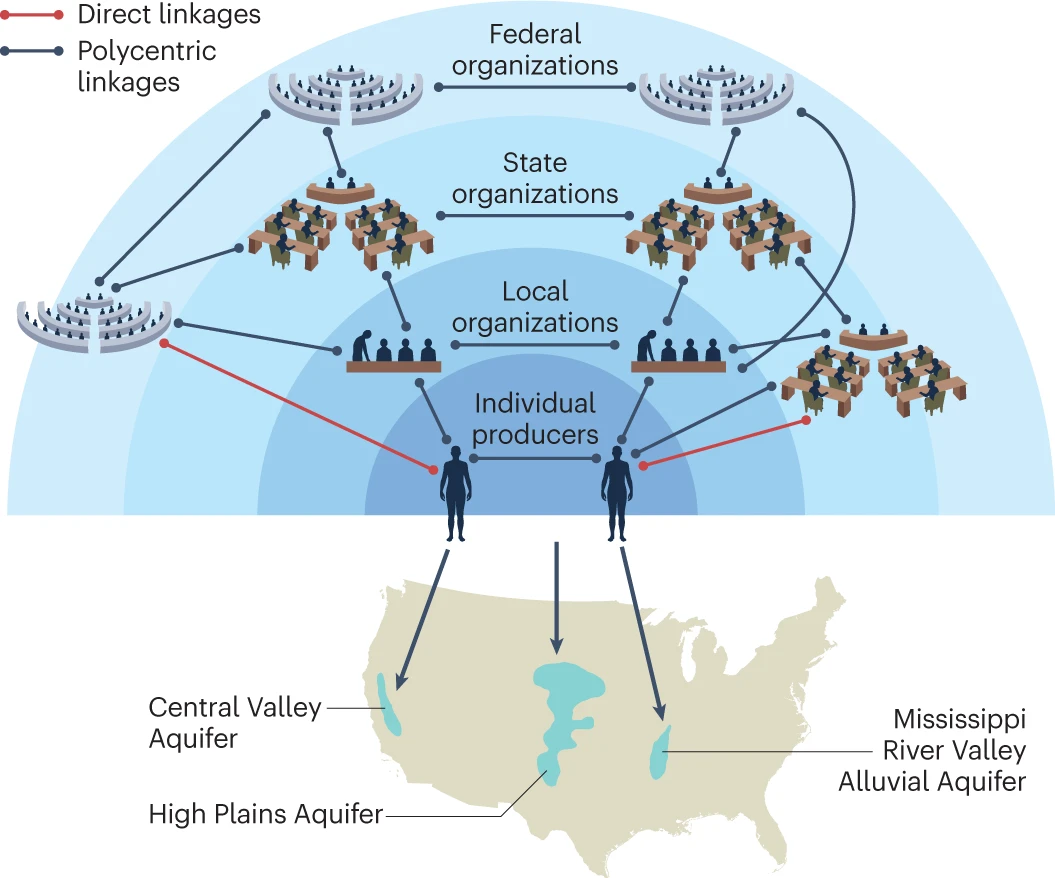
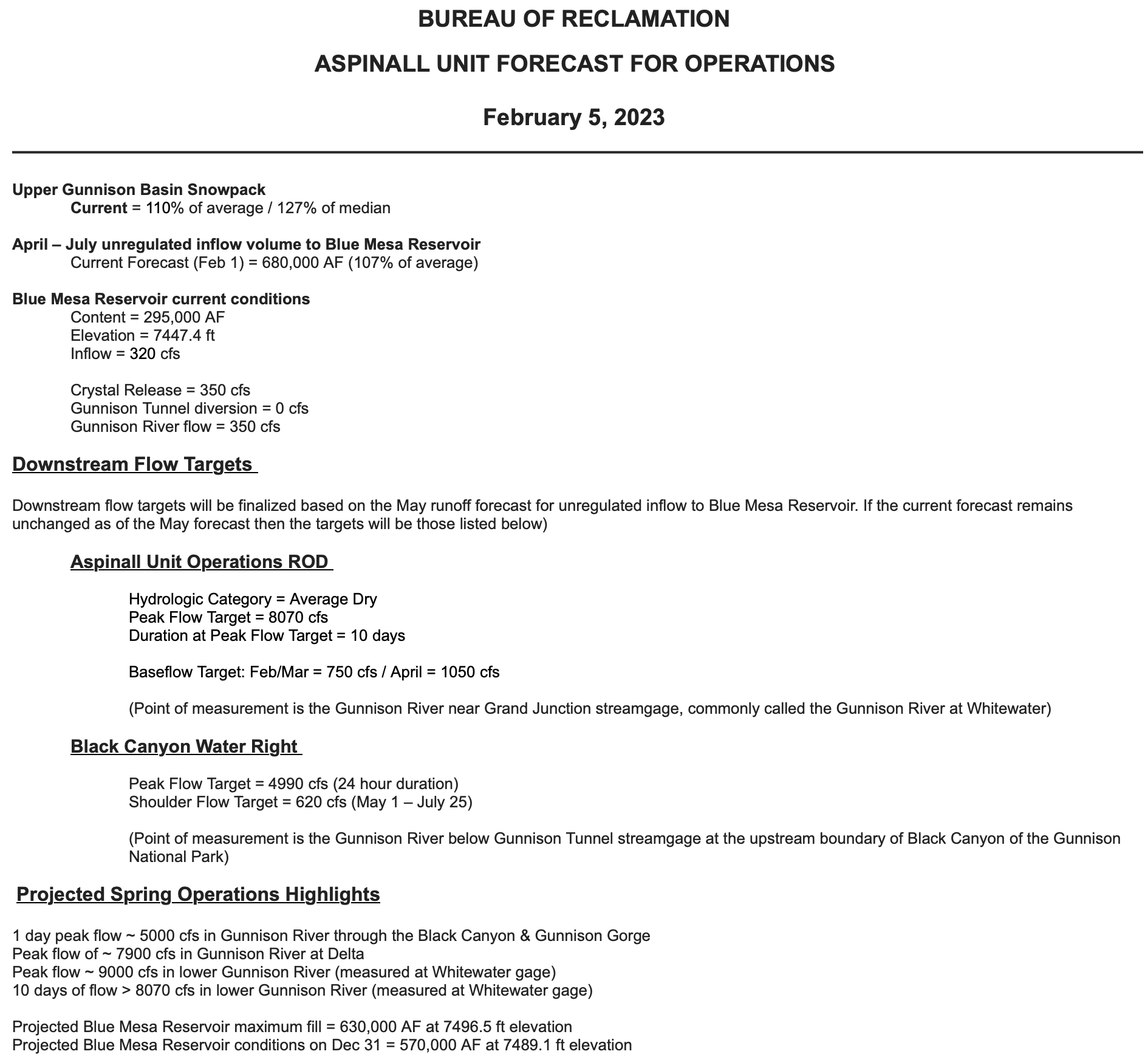
The first time I saw Lake Powell was in the mid-1970s when the reservoir was still filling up. My parentsโ€™ friends had rented a houseboat and we spent a week or so with them exploring side canyons, camping, swimming โ€” which for me was floating around in my life jacket โ€” in the warm waters, and hiking to out-of-the-way places that the reservoir and boat had made easily accessible. 

Thereโ€™s something surreal, even shocking about this vast body of water within an arid sea of stone. Itโ€™s easy to imagine someone heading off from their houseboat for a hike, getting lost, running out of water, and dying of thirst on a precipice hanging out over a 300-foot vertical drop to a trillion gallons of water. Itโ€™s otherworldly in that it seems horribly out of place on this world, which maybe is why it played the part of a post-apocalyptic planet in the opening scene ofย Planet of the Apes.

But the otherworldliness is part of the appeal, I suppose. Over the years I would return to Lake Powell with friends to camp out on the sandstone shores, sometimes getting there with boats, other times taking creaky old cars on sandy backroads to sections of shoreline that are now miles from the water. We spent a Summer Solstice or two on the reservoir and it was so damned hot and the days so long that early each morning Iโ€™d peel myself out of my sun-cooked and sweat-soaked sleeping bag and head straight for the tepid water.

It was usually a lot of fun: A luxurious change from the death march backpacking trips I tended to go on and a sort of novelty to be able to go on a big swim behind the Slickrock Curtain. Well, besides that time that some friends and I encountered a half-submerged cow carcass in the murky water near shore, its legs jutting skyward out of a horribly bloated body, Coors Light cans floating nearby like offerings to a bovine God. But hey.

Back in 2006 or 2007 my wife Wendy headed to Powell for a different sort of trip, setting out from Halls Crossing Marina in sea kayaks for a three-day tour. Thereโ€™s something eerie about being right down in the glassy, dark water like that. When out in the main channel I tried not to think about how those waters went down below me for hundreds of feet. I tried not to think about the story my cousins used to tell about how divers searching for one of the reservoirโ€™s many victims didnโ€™t find the body but did encounter 12-foot-long catfish in the depths. I tried not to think of what would happen if one of those monster houseboats crashed into me in my skinny little skiff. But all in all it was a marvelous trip and a great way to see that part of the world. Iโ€™ve been plotting a longer journey ever since, one in which maybe we hitch a ride with a motor boat up the Escalante or something.

My experiences notwithstanding, recreation at Lake Powell is not only big business, but has also become critical to the economies of the communities that have sprouted near its shores. A National Park Service study found nearly 3 million visitors to Glen Canyon National Recreation Area spent $332 million in and around the park in 2021 (down from $420 million in 2019 when reservoir levels were higher). 

Page, Arizona, was established to house the workers who constructed Glen Canyon Dam, and later became the parkโ€™s main gateway community, housing its employees, boats, and businesses that cater to park visitors. When the Navajo Generating Station coal plant shut down in 2019, a lot of folks worried that Page would collapse, economically. But itโ€™s stayed afloat โ€” pardon the pun โ€” thanks in part to Lake Powell tourism. 

If you drained Lake Powell would tourism to the area dry up, too? I doubt it. Plenty of folks โ€” myself included โ€” would flock to the place to see what the actual canyon looks like, even if it is half silted over. Others, Iโ€™m sure, would want to witness the carnage of climate change wrought collapse. Hell, Iโ€™d pay good money to be on a house boat as the reservoir drained just to see the place revealed in real time. 

I suspect Powell will be drained or drain itself in the next few decades, but I doubt it will happen in the next few years. The Bureau of Reclamation is clearly intent on keeping reservoir levels viable for as long as possible, even if it means bringing the hammer down on the states and forcing cuts in consumption. Combine those efforts with a few good snow years and, who knows, the reservoir might just rebound somewhat.

The Land Desk is a reader-supported publication, which means weโ€™ve got no advertisers, corporate sponsors or product placement deals. All weโ€™ve got is you. So, if youโ€™d like to support the Land Desk, sign up for a paid subscription.

West snowpack basin-filled map February 1, 2023 via the NRCS.

I donโ€™t want to jinx it, but maybe, just maybe, this is going to be one of those good spring runoff years of yore. The snow is piling up at above average rates, but it is still early: We may be two-thirds of the way through meteorological winter (Dec-Feb), but not even halfway through the big snow season, which can stretch into May. Thereโ€™s still time for the snow-deluge to turn to drought. 

Oh, and then there are the party poopers who are saying a good snow year is actually bad because it will cause people to let their guards down and ease up on efforts to conserve. 

But what the hell, Iโ€™m gonna celebrate. Because you know what? Thereโ€™s a s%$t-ton of snow out there, which is great for the ski areas and the rivers, sure, but best of all it means even lowlanders can go nordic skiing at the golf course, just like in the good olโ€™ days. Hereโ€™s some of the graphs that really stood out for me:

Wait, what?! Not only is the snowpack in Southeastern Utahโ€™s La Sal Mountains nearly double what it normally is this time of year, but itโ€™s 15% above the median peak level for the entire year. More remarkable, itโ€™s higher than ever for this date โ€” thereโ€™s even more liquid than in the monster years of 1983 and 1984 (when Glen Canyon Dam had a little spillover problem).
The Dolores River Basin has suffered from a string of drought years which has left irrigators a bit high and dry and the Dolores River downstream from McPhee Dam even drier. So, itโ€™s good to see things looking a bit better this year, albeit not quite as snowy as the La Sals (which also feed the lower Lower Dolores). If snowfall trends continue, it might mean McPhee will fill up enough that dam operators will release enough water to make a river downstream. Who knows, maybe there will be enough flow for a few days for boating? Cross your fingers.
And, finally, we have the Colorado River Basin above Lake Powell. Itโ€™s well above median levels, and far surpasses 2021. The question now is whether the black line for 2023 will keep climbing, or plateau like it did around this time last year. In any event, it should probably keep the reservoir from sinking below critical minimum power pool levels this summer.

Deadpool Diaries: The numbers in the statesโ€™ two proposals — John Fleck @jfleck #ColoradoRiver #COriver #aridification

Statesโ€™ proposal for Colorado River cuts. Lake Mead elevation along the x axis, millions of acre feet of cuts along the y axis. Credit: John Fleck

Click the link to read the article on the InkStain website (John Fleck):

Getting ready for an interview this morning with Mark Brodie at KJZZ (waving at my Phoenix friends!) I put together a table to make it easier to compare the six-state proposal submitted Monday to reduce Lower Colorado River Basin water use, and the California proposal submitted yesterday (Tues. 1/31/23).

Perhaps worth sharing here? โ€œElevationโ€ is Lake Mead elevation, the numbers are million acre feet of total cuts.

Two keys to note.

First, despite big disagreements about how to approach this, we have unanimity among all seven states that very deep cuts in Lower Basin water use are needed. At the lowest Lake Mead elevations, the numbers are similar.

The difference is in timing. Californiaโ€™s cuts donโ€™t kick in until later โ€“ essentially a gamble on good hydrology once again helping us avoid conflict by letting us use more water in the short term.

The six-state proposal says โ€œgo bigโ€ any time Mead drops below 1,050. The California proposal doesnโ€™t start โ€œgoing bigโ€ until 1,025.

The six-state proposal yanks the bandaid off now.

Under the current โ€œmost probable forecastโ€ for the coming year, weโ€™d end up in 2024 with:

  • Six state proposal: 3,168 million acre feet in cuts
  • California proposal: 2,188 million acre feet in cuts
TierElevation6-stateCalifornia
Tier 010901,7841,241
Tier 110752,1561,613
Tier 2a1,0502,9181,721
Tier 2b10452,9182,013
Tier 2c10402,9182,071
Tier 2d10352,9182,129
Tier 2e10303,1682,188
Tier 3a10253,1682,525
Tier 3b10203,3682,675
Tier 3c10153,3682,875
1,0103,3683,125
1,0053,3683,325

There are other differences too โ€“ huge disagreements on how to approach the allocation of the cuts! No time for that this morning, Iโ€™ve a book to write, but I hope to get back to that in the next few days, stay tuned.

Opinion: The 2023 session will determine #Colorado’s #water future — Abby Burk and Jessica Gelay #COleg #COWaterPlan

Colorado River February 2020. Photo: Abby Burk via Audubon Rockies.

โ€œWater is the conversation. It will be the centerpiece of our agenda this year,โ€ said newly elected Speaker of the House Julie McCluskie, setting the tone and elevating water issues for Coloradoโ€™s 2023 General Assembly.

Itโ€™s no secret Coloradoโ€™s rivers and streams are suffering and our stateโ€™s challenges are a good example of water crises gripping the American West. Parched rivers; stressed farms, livestock and fish; and more frequent floods and wildfires are all symptoms of the disruption wrought as climate change impacts our region and already strained water supply.

Abby Burk brings a lifetime love of rivers, particularly of the Colorado River and its tributaries. As the western rivers regional program manager for Audubon Rockies. Photo credit: Audubon Rockies

Coloradoโ€™s lawmakers and other leaders have a responsibility to ensure Coloradans have the tools we need to proactively respond to drought and its impacts โ€” on the legislatureโ€™s opening day, Senate President Steve Fenberg made it clear water will be among the high priority items the General Assembly takes on. And Speaker McCluskie concurred, saying: โ€œColorado has to be seen as a leader in this space.โ€ Gov. Jared Polisโ€™s proposed 2023 budget has already highlighted support for addressing our stateโ€™s water challenges. Last year the federal government injected a once-in-a- generation allocation of public funds to support water needs in the West. Now action is needed within the Colorado legislature to increase funding and capacity to establish both immediate and long-term drought security and to protect clean drinking water alongside river and watershed health.

Weโ€™re excited to see the Governorโ€™s budget request for a historic $25.2 million to advance implementation of the stateโ€™s water plan, providing capacity to meet increasing demands, to combat the effects of climate change, and to support the health of our rivers. Itโ€™s important to note: these state funds are vital for unlocking matching federal dollars, dollars that are expected to be leveraged for approximately $100 million worth of water project grants across the state โ€” a 4-to-1 return on investment. By engaging local communities, investing federal funds in needed infrastructure projects, and empowering millions of people to take action to conserve water, Colorado will make significant progress toward responding to long-term climate trends.

Flows in the Colorado River have decreased by more than 20% in just the past 20 years, which is why improving the struggling Colorado River system has been, and remains, the top priority for Water for Colorado. A healthy and vibrant river system serves as habitat for wildlife, increases resilience to floods and wildfires, enhances the quality and availability of water and forage for livestock, bolsters critical rural recreation economies and provides numerous ecological services that protect our sources of clean drinking water. With increasing threats of extreme weather events, healthy and functioning streams are critical to ensuring resilient communities, and a thriving state. This is why we are supporting efforts by the stateโ€™s Department of Natural Resources to pass legislation clarifying stream restoration projects can proceed without unnecessary red tape; and also why we support Governor Polisโ€™s budget request to increase Coloradoโ€™s ability to leverage federal funds and assist with the crisis we are facing on the Colorado River.

Water policy is no longer a niche issue. Water conversations are happening at every level of state leadership โ€” from the Governorโ€™s office, to the General Assembly, to the Attorney Generalโ€™s office โ€” and across issue areas this session, making national headlines week after week. For example, as Governor Polis and the General Assembly seek to address land-use patterns and the affordable housing crisis, they are inserting water use into the conversation as a vital element. Integrating land use, development planning and more flexible water management can be another area on which our state leads.

Jessica Gelay Colorado Government Affairs Manager. Photo credit: Western Resource Advocates

The focus on water needs to be wide-ranging, but it also must be consistent. The time is now for Colorado to implement innovative policies that keep rivers flowing and proactively respond to drought conditions. In doing so, we will be a leader, showing other states how to do more with less, supporting the health of our river systems, and securing our stateโ€™s long-term vitality in the face of a hotter, drier future.

As Speaker McCluskie told us, the work ahead on water may be โ€œthe most challenging work the state has ever done.โ€ While this is likely true, it may also be the most

rewarding โ€” we can tell our children and grandchildren they live in a more resilient state because of the work conducted this session.

In his 2023 State of the State, Governor Polis reminded us โ€œwater is life in Colorado and the (W)est, itโ€™s as simple as that.โ€ The consequences of inaction this session are too great to consider. Failing to protect our water resources is not an option. Luckily, Colorado has the opportunity to not only protect our water resources in the near-term, but lead the charge toward longer-term drought resilience and climate resilience. Itโ€™s incumbent upon our lawmakers to secure Coloradoโ€™s water future. We look forward to working together to do so.

Abby Burk is Western Rivers Regional Program Manager for Audubon Rockies. Jessica Gelay is the Colorado Government Affairs Manager for Western Resource Advocates. Audubon Rockies and Western Resource Advocates are both members of the Water for Colorado Coalition.

#Drought news February 2, 2023: Improvements to moderate to severe (D1-D3) drought and abnormal dryness (D0) in eastern #Wyoming and improvements to abnormal dryness W. #Colorado

Click on a thumbnail graphic to view a gallery of data from the US Drought Monitor website.

Click the link to go to the US Drought Monitor website. Here’s an excerpt:

This Week’s Drought Summary

Winter storms brought heavy rain and snow much of the eastern U.S. and from the Pacific Northwest to the central Rockies this week with above-normal precipitation observed from the southern Plains to the Southeast and along the East Coast. Precipitation led to abnormal dryness and drought improvements in the central Plains, Midwest, Southeast and Northeast. Conversely, conditions worsened over dryer areas including Idaho/Montana, southern Texas and the Florida Panhandle. In the eastern United States, temperatures have been above-normal resulting in rain falling over many areas instead of snow. Many cities including New York, Baltimore, Philadelphia and Washington D.C. remain snowless for the season. New York City recently set a new latest first measurable snowfall previously set on Jan 29, 1973. In California, a series of atmospheric rivers brought significant amounts of rain which gave reservoirs a much-needed boost, but California lacks infrastructure to make use of such a massive rainfall. Despite the deluge, the winter storms may not have eased the stateโ€™s drought. In Hawaii, a strong low pressure system aloft combined with a low pressure trough at the surface to produce conditions favorable for heavy rainfall and flash flooding over portions of the main islands…

High Plains

A half an inch or more of precipitation fell across parts of Colorado and Wyoming, mainly in the higher elevations, resulting in improvements to moderate to severe (D1-D3) drought and abnormal dryness (D0) in eastern Wyoming and improvements to abnormal dryness western Colorado. Much of the High Plains remains in a holding pattern as areas that received abundant snowfall over the Water Year are slow to make improvements due to the long-term nature of drought in the region…

Colorado Drought Monitor one week change map ending January 31, 2023.

West

Precipitation was below-normal across the region, especially along the West Coast. Due to weeks of heavy precipitation, from a series of atmospheric rivers, halted most degradations or improvements this week despite the deluge, placing much of the region on a holding pattern. The rain did give reservoirs a much-needed boost, but Californiaโ€™s infrastructure is not set up to make use of such a massive rainfall. Because of Californiaโ€™s system of dams and levees, which try to control surface water flow, underground aquifers are not always able to recharge their overpumped supplies during heavy rain events. When rivers are restricted, less water comes into contact with soil surfaces and less water is therefore able to seep down into aquifers. In the drier areas of the West, moderate (D1) drought expanded into parts of northern Idaho and northwestern Montana due to continued degrading conditions that can be observed in soil moisture, streamflow, and precipitation deficits (up to five inches) for this area. In Utah, much of the state has above normal snowpack but no improvements were made this week based on the current issues with groundwater and depleted reservoirs…

South

A half an inch or more of precipitation fell across much of the South with the heaviest amounts falling across the eastern part of the region. Two inches of more of rainfall fell across parts of eastern Texas, Arkansas, Louisiana and Mississippi, which resulted in moderate to exceptional (D1-D4) drought and abnormal dryness (D0) improvements in Oklahoma; moderate to extreme (D1-D3) and abnormal dryness improvements in eastern Texas; and abnormal dryness improvements in Arkansas, Louisiana and Mississippi. Conversely, drought and abnormal dryness was expanded in western Texas due to lack of rain, precipitation deficits, drying soils and degrading streamflow in the area…

Looking Ahead

The National Weather Service Weather Prediction Center has forecasted a significant ice storm (valid January 30 โ€“ February 2) is forecasted to bring freezing rain, sleet, and ice accumulations over portions of the Southern Plains and Mid-South. The storm is expected to bring prolonged power outages and cause treacherous travel conditions. Moving into next week (valid February 4 โ€“ February 8), very chilly conditions are expected across the Northeast as cold air and gusty winds settle in under upper-level troughing. Dangerous wind chills and possibly new daily temperature records are in store for much of the Northeast region. Temperatures could stay below zero all day in parts of Maine and in the single digits in much of northern New England. This cold airmass is expected to sink further south along the Eastern Seaboard leading to temperatures 10-20F below normal. Temperatures are expected to rebound across the East as warmer temperatures over the central U.S. migrate eastward after the weekend. The West however could stay around 5-10F below average especially in terms of highs underneath upper troughing. A frontal system could spread some light snow to the Midwest/Great Lakes regions and Northeast this weekend, and amounts could be enhanced downwind of the Great Lakes. Light precipitation is possible along the Eastern Seaboard while the West could expect generally light to moderate precipitation in the form of lower elevation rain and higher elevation snow. At 8 โ€“ 14 days, the Climate Prediction Center Outlook (valid February 9 โ€“ February 15) calls for below-normal temperatures across much of the West, from the Pacific Northwest to the Southwest, and much of Alaska. Near-normal temperatures are expected in parts of the Northwest, northern and central Rockies and southern Plains, including southwest and eastern Alaska, while the eastern half of the contiguous U.S. and the Alaska Panhandle have the greatest probability of warmer-than-normal temperatures. Most of the U.S. can expect above-normal precipitation with the probability of near-normal precipitation occurring in much of the Northwest, the Florida Peninsula and northern Alaska and in parts of southern Texas.

US Drought Monitor one week change map ending January 31, 2023.

#Colorado joins five other #ColoradoRiver Basin states in #conservation plan — Sky-Hi News #COriver #aridification

Map credit: AGU

Click the link to read the article on the Sky-Hi News website (Kyle McCabe). Here’s an excerpt:

Six of the seven Colorado River Basin states agreed to a plan Monday, Jan. 30, to conserve water in the river and manage lakes Powell and Mead, a day before a federal deadline for the states to agree on voluntary water cuts passed. Politicians including Sen. Michael Bennet and Gove. Jared Polis applauded the six statesโ€™ collaboration…The six-state plan would not reach the 2 million acre-feet threshold, focusing many of its cuts on lower basin states, despite not having the approval of California, a lower basin state and the riverโ€™s largest consumer.

A news release from Bennetโ€™s office quoted him as saying the plan โ€œdid exactly what was neededโ€ and expressing his disappointment in California not agreeing to the plan. California insteadย submitted its own planย to the U.S. Bureau of Reclamation on Tuesday. Polis said in a news release that Colorado will also continue to follow the Upper Colorado River Commissionโ€™sย 5-Point Planย from July 2022, which was the upper basinโ€™s original response to the Bureau of Reclamationโ€™s calls for conservation in June 2022.

Will basin statesโ€™ plans save operations at Glen Canyon, Hoover dams?: Federal government will mull proposals to save ailing #ColoradoRiver — The Deseret News #COriver #aridification

Glen Canyon Dam November 2022. Photo credit: USBR

Click the link to read the article on The Deseret News website (Amy Joi O’Donoghue). Here’s an excerpt:

Politics and threatened litigation are replacing what is left of the water in the Colorado River as the seven basin states that rely on the Westโ€™s largest river try to reach an agreement to cut flows so power generation can continue at Glen Canyon and Hoover dams. The directive to find some sort of definitive plan for dam operations by reducing flows was issued by the U.S. Bureau of Reclamation, which is tasked with making decisions to prop up the river that has been decimated by drought and over diversion through the years. The proposals do not change any of the statesโ€™ water allocations, for now, or affect any existing water rights. The plans will ultimately become part of a more comprehensive effort being worked on by the federal agency.

The Compactโ€™s Signers. Photo via InkStain

It is more than a heavy lift for a river that was divided up under a compact forged more than 100 years ago in a remote location in New Mexico and subsequently shaped by regulations, court decisions and compacts that all coalesced into what is now known as the โ€œLaw of the River.โ€

[…]

โ€œInstead of bending over backwards to prop up Lake Powell, officials should be making plans to save Lake Mead and utilize Glen Canyon as a backup facility,โ€ said Eric Balken, executive director of Glen Canyon Institute. โ€œThereโ€™s just not enough water to save both reservoirs, and Mead is more vital to the basin.โ€

The institute has long advocated for the draining of Lake Powell, the nationโ€™s second largest reservoir behind Lake Mead.

On Monday, six of the states sharing the Colorado River โ€” California later detailed its own plan โ€” submitted what they described as a Consensus Based Modeling Alternative to the reclamation bureau. While not a formal agreement, they say it provides a step toward helping the federal agency as it crafts an environmental review going forward.

Among other things, the alternative details:

  • Additional combined reductions of 250,000 acre-feet to Arizona, California and Nevada at Lake Mead elevation 1,030 feet and below.
  • Additional combined reductions of 200,000 acre-feet to Arizona, California and Nevada at Lake Mead elevation 1,020 feet and below, as well as additional reductions necessary to protect Lake Mead elevation of 1,000 feet.

Those potential reductions are designed to keep Lake Meadโ€™s Hoover Dam in operation.

#California #Water Agencies Submit #ColoradoRiver Modeling Framework to Bureau of Reclamation — Colorado River Board of California #COriver #aridification

Graphic via Holly McClelland/High Country News.

Click the link to read the release on the Metropolitan Water District of Southern California website:

Proposal Outlines Constructive Approach to Achieve Necessary Water Use Reductions through 2026 to Protect Critical Infrastructure, Prioritize Public Health and Safety

California water agencies that rely on the Colorado River today proposed a modeling framework for the U.S. Bureau of Reclamation to evaluate as it considers actions to help stabilize reservoir elevations and protect critical infrastructure to ensure the Colorado River system can continue to support 40 million people, nearly 6 million acres of agriculture, and Tribes across seven states and portions of Mexico.

The modeling framework outlines a constructive approach to achieve additional water use reductions while protecting infrastructure, prioritizing public health and safety, and upholding the existing body of laws, compacts, decrees, and agreements that govern Colorado River operations (known collectively as the Law of the River). The approach builds on the California agenciesโ€™ commitments announced last fall to voluntarily conserve an additional 400,000 acre-feet of water each year through 2026 to protect storage in Lake Mead and help stabilize the Colorado River reservoir system.

Californiaโ€™s proposed framework seeks to protect Lake Mead elevation of 1,000 feet and Lake Powell elevation of 3,500 feet by modifying some parameters governing reservoir operations, maximizing the impact of existing plans and voluntary conservation actions, and increasing cutbacks if Lake Mead elevations decline. It also protects baseline water needs of communities across the West by prioritizing water supplies for human health and safety. The proposal was carefully developed to enable workable phased water use reductions and ensures protection of adequate water volumes in Lake Mead and Lake Powell.

The Salton Sea (pictured above ) straddles the Imperial and Coachella valleys and has long been a sticking point in Colorado River deals. But the federal government recently committed up to $250 million for restoration efforts at the sea. (Source: Water Education Foundation)

โ€œThe alternative provides a realistic and implementable framework to address reduced inflows and declining reservoir elevations by building on voluntary agreements and past collaborative efforts in order to minimize implementation delays. Californiaโ€™s alternative protects critical elevations and uses adaptive management to protect critical reservoir elevations through the interim period,โ€  — JB Hamby, chair of Colorado River Board of California and Californiaโ€™s Colorado River Commissioner, wrote in a transmittal letter to Reclamation.

The approach differs from a modeling proposal submitted to Reclamation on January 30 by the six other basin states. The six-state proposal would direct the majority of water use reductions needed in the Lower Basin to California water users through a new apportionment method based on โ€œsystem and evaporative losses.โ€ The proposal directly conflicts with the existing Law of the River and the current water rights system and mandates cutback without providing tools to manage reductions.

For the past several months, California water users have sought a timely, practical and implementable solution with other Lower Basin users that can be implemented over the next three years to protect critical elevations in Lake Mead while longer-term changes are negotiated to update 2007 Interim Guidelines that will expire at the end of 2026. Suggestions to fundamentally change the Law of River are appropriately addressed through this shared process to update the guidelines.

Californiaโ€™s water agencies remain committed to working with all Colorado River basin states to take urgent, fair, and achievable action now to avoid unacceptable risks to communities, farms and economies in California and the rest of the basin.

For decades, California has been a leader in managing its Colorado River water resources and collaborating in basin-wide efforts to more effectively operate and manage the reservoir system and to incentivize water conservation as demands have increased in the face of shrinking supplies due to climate change.

In 2003, California permanently reduced its use of Colorado River water from about 5.2 million acre-feet annually to its basic apportionment of 4.4 million acre-feet, a permanent annual reduction in water use of about 800,000 acre-feet. The reduction in use resulted from implementing a combination of agricultural and urban conservation activities. Since 2003, water users in California have taken significant actions to conserve Colorado River water, adding over 1.5 million acre-feet and 20 feet of elevation of conserved water to Lake Mead since 2007. California water users committed to further conservation to bolster storage in Lake Mead through the 2019 Drought Contingency Plan. California has invested billions of dollars in urban and agricultural conservation across Southern California, through programs that reach virtually every Colorado River water user in the state.

“Twenty years ago, California adopted the largest water conservation-and-transfer agreement in U.S. history that not only supports the bulk of our nationโ€™s food system but also sustains the environment. This multi-billion-dollar conservation-focused framework โ€“ the Quantification Settlement Agreement โ€“ is the blueprint for other states to follow. California has done its part and is willing to do more, but itโ€™s time for the other states to step up and create their own conservation programs that sustain the quality of life in their communities,โ€ said Jim Madaffer, vice chair of the Colorado River Board of California, representing the San Diego County Water Authority.

โ€œFor over 20 years, Metropolitan has met the challenge of reducing our use of Colorado River water, and we are committed to doing more now. But we must do it in a way that does not harm half of the people who rely on the river โ€“ the 19 million people of Southern California. We must do it in a way that does not devastate our $1.6 trillion economy, an economic engine for the entire United States. We must do it in a way that can be quickly implemented, adding water to lakes Mead and Powell without getting mired in lengthy legal battles. We must do it in a way that maintains and strengthens partnerships on the river, allowing us to work together to build longer term solutions. The proposal presented today by California does all of this by equitably sharing the risk among Basin states without adversely affecting any one agency or state. The plan presented yesterday, which shut out California, does not. California knows how to permanently reduce use of the river โ€“ we have done it over the past 20 years, through billions of dollars in investments and hard-earned partnerships. We can help the entire Southwest do it again as we move forward,โ€ said Adel Hagekhalil, general manager, Metropolitan Water District of Southern California.

โ€œThe Colorado River โ€“ Imperial Valleyโ€™s only source of water โ€“ supports far more than our rural disadvantaged community as it provides for a robust agricultural industry that feeds millions of people and provides food security for this nation. California, and particularly the Imperial Irrigation District, is working to be part of the solution, however we also believe in upholding the Law of the River and not shouldering the burden of supply limitations for states and agencies that have outgrown their water rights. California has spent the past two decades successfully working together to resolve intra-state supply and demand imbalances to sustain the Colorado River. Since the signing of the Quantification Settlement Agreement, the largest ag-to-urban water conservation and transfer agreement in U.S. history, IIDโ€™s water management programs have generated over 7.2 million acre-feet in support of the Colorado River system. Today, IID and its California partners have proposed a balanced and implementable plan that begins to address the monumental challenges we face with the ongoing Colorado River drought,โ€ said Henry Martinez, general manager, Imperial Irrigation District.

A water recharge basin in Southern California’s Coachella Valley. Source: California Department of Water Resources

โ€œHistorically, CVWD and our agricultural community have invested heavily in its irrigation delivery system to minimize water loss, including canal lining projects, a closed pipe irrigation distribution system and installing drip irrigation. We have prioritized the efficient use of Colorado River water over the long term. We also took action last year with other California agencies to voluntarily identify a collection of Colorado River water conservation and reduction actions to save 400,000 acre-feet annually through 2026. We support our California partners and are committed to reaching a 7-basin state consensus on a framework for additional water use reductions through 2026,โ€ said Jim Barrett, general manager, Coachella Valley Water District.

The farms of the Palo Verde Valley draw water from the Colorado River. Visual: Dicklyon / Wikimedia Commons

“One-hundred and forty-six years ago, the original developers of our Palo Verde Valley filed and were granted the very first water rights to Colorado River water. Secured by those rights, farmers and farm workers have invested multiple generations of farm loans and hard work to produce food and fiber for consumers. Surrounding our agriculture are small rural cities that depend exclusively upon Colorado River water for their domestic supply. Farmers and landowners in Palo Verde Irrigation District want to be part of a solution to the current mismatch of supply and demand on the River in a manner that honors existing Public Law, and Administrative Law,”  said Bart Fisher, president, Palo Verde Irrigation District Board of Trustees.

โ€œThe Colorado River has been the lifeblood of the Quechan people since time immemorial, and we have a deep and abiding responsibility to be good stewards of the River โ€“ for the Tribe and its members, for the species and ecosystems that it sustains, and for the benefit of our fellow tribes and non-Indian neighbors throughout the Basin. It is why we have always fought for and will continue to defend our water. The modeling proposal submitted by the State of California to the Bureau of Reclamation for inclusion as part of its development of the SEIS reflects a meaningful effort to address the hydrologic challenges facing the Basin while respecting the senior water rights of the Tribe and others and ensuring that the Colorado can continue to exist as a living river,โ€ said Quechan Tribal Council President Jordan Joaquin.

Updated Colorado River 4-Panel plot thru Water Year 2022 showing reservoirs, flows, temperatures and precipitation. All trends are in the wrong direction. Since original 2017 plot, conditions have deteriorated significantly. Brad Udall via Twitter: https://twitter.com/bradudall/status/1593316262041436160

6 #ColoradoRiver states submit a plan to cut #water use, but #California says ‘no deal’ — AZCentral.com #COriver #aridification

Colorado River “Beginnings”. Photo: Brent Gardner-Smith/Aspen Journalism

Click the link to read the article on the AZCentral.com website (Brandon Loomis). Click through for the photo gallery, here’s an excerpt:

Late last year, the federal government asked the seven states that share the Colorado Riverโ€™s water to submit a plan by the end of January to rapidly cut their use of water or face mandatory cuts. Six of them found a consensus proposal andsubmitted their idea on Tuesday. The seventh โ€” California โ€” is an ominous exclusion, given that it is the largest water user on the river and could thwart efforts to preserve the system if it presses its rights in court. Even so, water policy experts found it encouraging that six states could come together to present the U.S. Bureau of Reclamation with a state-driven option, one that fast-forwards through a plan devised 15 years ago…One of the proposalโ€™s authors, Southern Nevada Water Authority General Manager John Entsminger, said talks with California would continue.

โ€œWe absolutely intend to continue to work in good faith with California,โ€ he told The Arizona Republic. โ€œI donโ€™t see the fact that that six states submitted a letter as any sort of declaration of failure.โ€

[…]

Reclamation officials have said river users must cut between 2 million and 4 million acre-feet to stabilize the system. Officials from the six states โ€” Arizona, Colorado, Nevada, New Mexico, Utah and Wyoming โ€” believe their plan will save 3.3 million. Each acre-foot contains about 326,000 gallons and is enough to supply two or three households, though roughly 80% of the riverโ€™s water is applied on farms…

Entsminger said the “no action” alternative is too risky in an age when a warming and drying climate has drained most of the reservoirs’ capacity.

“You’re just rolling the dice on an extremely high-percentage chance that these reservoirs are going to continue to decline and you could go below minimum-power pool at Lake Powell and dead pool at Lake Mead,” he said.

As the #ColoradoRiver dries up, [6 states and #California] canโ€™t agree on saving #water — The Washington Post #COriver #aridification

Glen Canyon Dam, seen here in May 2022, was a major electrical generation but has produced less as volumes in Lake Powell have declined. Photo credit: Allen Best/Big Pivots

“This is what climate change + an out-dated law of the river looks like: ‘Thereโ€™s a problem of aridification. But on top of that, thereโ€™s a problem with the rulesโ€ฆThe rules governing the system are not sustainable.’ — Jonathan Overpack via Twitter

Click the link to read the article on The Washington Post website (Joshua Partlow). Here’s an excerpt:

The riverโ€™s biggest water user, California, didnโ€™t join six states in a proposal to cut some 2 million acre feet of usage

For theย second timeย in six months, states that depend on theย Colorado Riverย to sustain their farms and cities appear to have failed to reach an agreement on restricting water usage, setting up the prospect that the federal government will make unilateral cuts this year…

โ€œObviously, itโ€™s not going swimmingly,โ€ said Jeffrey Kightlinger, the former general manager of the Metropolitan Water District of Southern California, a water provider that is a major player in the talks. โ€œItโ€™s pretty tough right now.โ€

[…]

The proposal by the six states โ€” Arizona, Colorado, Nevada, New Mexico, Utah and Wyoming โ€” seeks to protect the major reservoirs in Lake Powell andย Lake Meadย from falling below critical levels, such as when the dams would no longer be able to generate electricity or at โ€œdead pool,โ€ when water would effectively be blocked from flowing out of these lakes. Before above-average snows in recent weeks, the Bureau of Reclamation was projecting thatย Lake Powellย could start to reach such thresholds by this summer.

One of the central tensions of these complicated negotiations is how to balance cuts between farming regions against those in cities, including major population centers. Agriculture uses some 80 percent of the riverโ€™s water and also tends to have the most senior rights, some dating back to the 19th century. The way this โ€œpriority systemโ€ works, residents of Phoenix would lose water before vegetable farmers in Yuma. Those who grow alfalfa in Southern Californiaโ€™s Imperial and Coachella valleys would keep their water before people in parts of Los Angeles.

Kightlinger, along with many other water experts and officials, says cuts of this magnitude and severity have to be shared, rather than doled out according to seniority.

โ€œThey canโ€™t follow the priority system. That would be a disaster. That would be: Weโ€™re basically going to put all the cuts on the major share of the economy. That just simply canโ€™t be reality,โ€ he said.

Map credit: AGU