
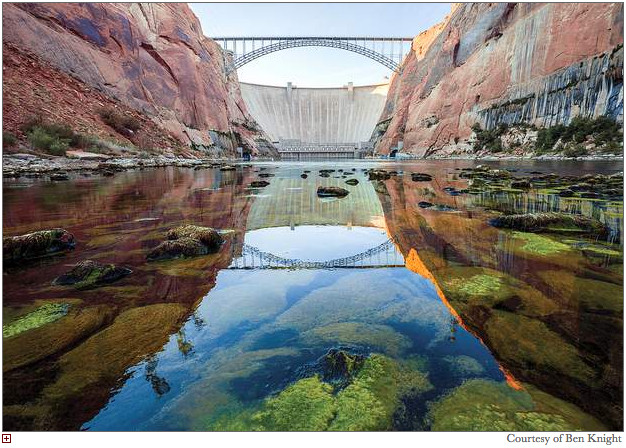
Click the link to go to the Climate Colored Goggles Substack page, and to view the interview video (Sammy Roth):
You know the Colorado River crisis is serious when the Trump administration is willing to use hundreds of millions of dollars from President Biden’s climate law to help to solve it.
As of Wednesday night, federal officials had yet to release their plan for mandatory water cutbacks along the Colorado — a crucial water source for tens of millions of people and millions of acres of farmland across the American West. But with a plan expected later this week, details were starting to trickle out.
Click the link to access the final EIS released on July 30, 2026 by Reclamation.
The L.A. Times’ Ian James reported that Trump’s Interior Department would accept a proposal submitted by California, Arizona and Nevada — the Lower Basin states — to slash their water use by 12%, 31% and 28%, respectively, through 2028. They’ll receive $350 million from Biden’s Inflation Reduction Act to support water conservation.
The Upper Basin states — Colorado, Utah, New Mexico and Wyoming — will get $100 million in conservation funding. But unlike their downstream neighbors, they won’t face mandatory water cuts. However much water they end up saving, that will be good enough.
It’s always possible the plan will change. I’m eager to see the final details.
While we wait, let’s hear from one of the West’s most thoughtful and well-informed Colorado River chroniclers.
That would be Zak Podmore, author of “Life After Dead Pool: Lake Powell’s Last Days and the Rebirth of the Colorado River.” Earlier this week, he and I talked for an hour and took audience questions on Zoom; it was a great time. Thank you to everyone who joined us. Paid subscribers to Climate-Colored Goggles can scroll up to watch the full video.
Here are five lessons that stood out to me from our conversation — all of which are relevant to the high-stakes conflict playing out among the states.
1. We’re not doomed. Earth is resilient
My favorite thing about “Life After Dead Pool” is its hopeful message.
Most headlines about the Colorado River these days are gloomy. For instance, the last time Lake Mead and Lake Powell held as little water as they do right now was 1956 — before Lake Powell existed, meaning all the water was in Mead. Powell is currently 23% full; Mead is 27% full. These are the largest reservoirs in the United States.
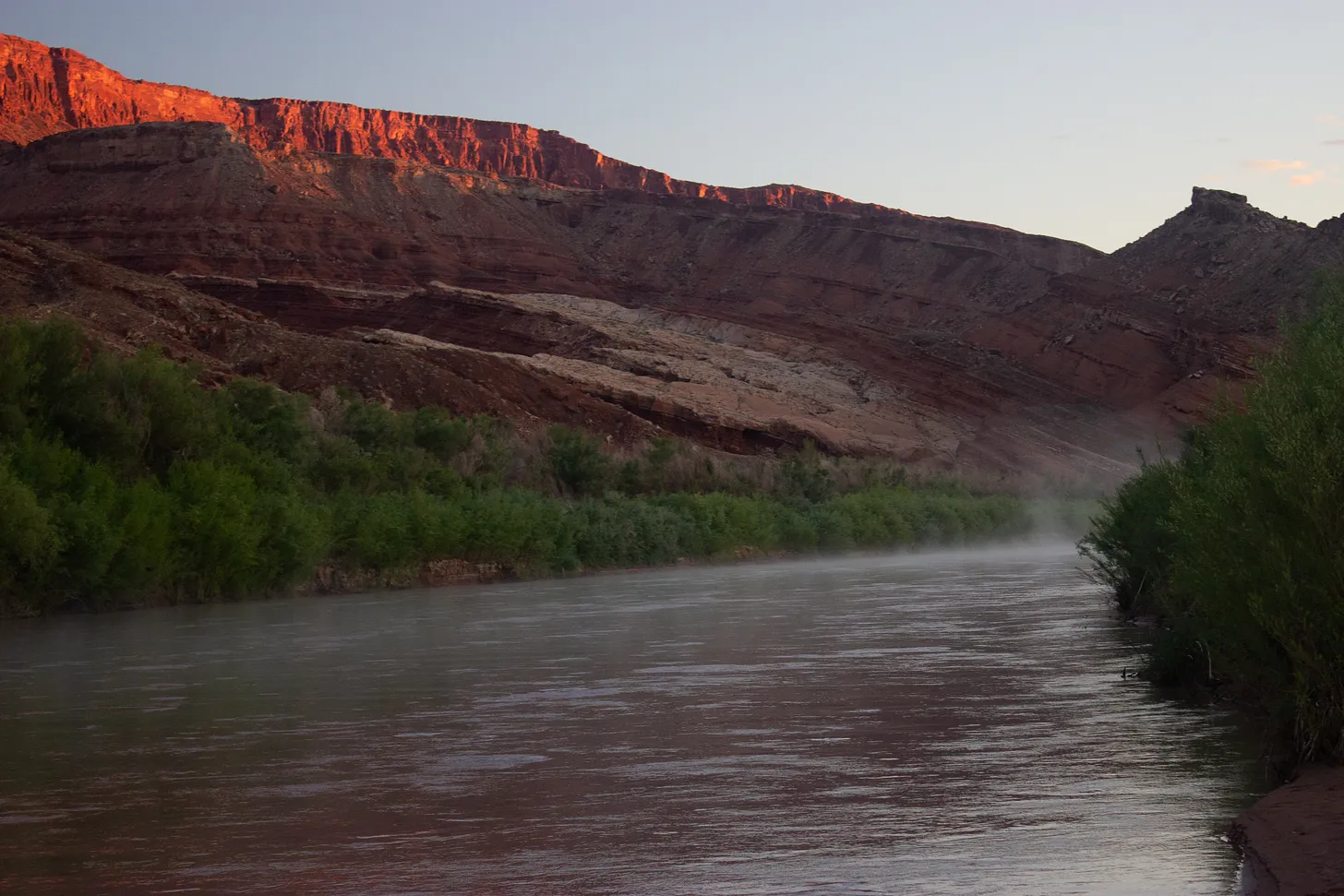
But Podmore’s book flips the script, offering a firsthand look the amazing ecological recovery taking place as Lake Powell shrinks.
In and around the reservoir, which was flooded by Glen Canyon Dam more than 60 years ago, native vegetation is returning much faster than scientists thought possible — especially in narrow side canyons inundated by Powell. Exploring these remote, newly accessible places inspired Podmore to write his book.
“Instead of hearing the story that I grew up hearing — which was that Glen Canyon Dam had all these negative environmental consequences, it drowned this beautiful place — I was hearing these conversations from these researchers who were talking about the landscape that was coming back, and how excited they were about the way the ecology was recovering, and the way the endangered fish were expanding their habitat,” Podmore said.
“Instead of a story about being too late, it was a story about realizing that I was right on time, as we all are, to see the rebirth of Glen Canyon,” he added.
2. Those who don’t learn from history…
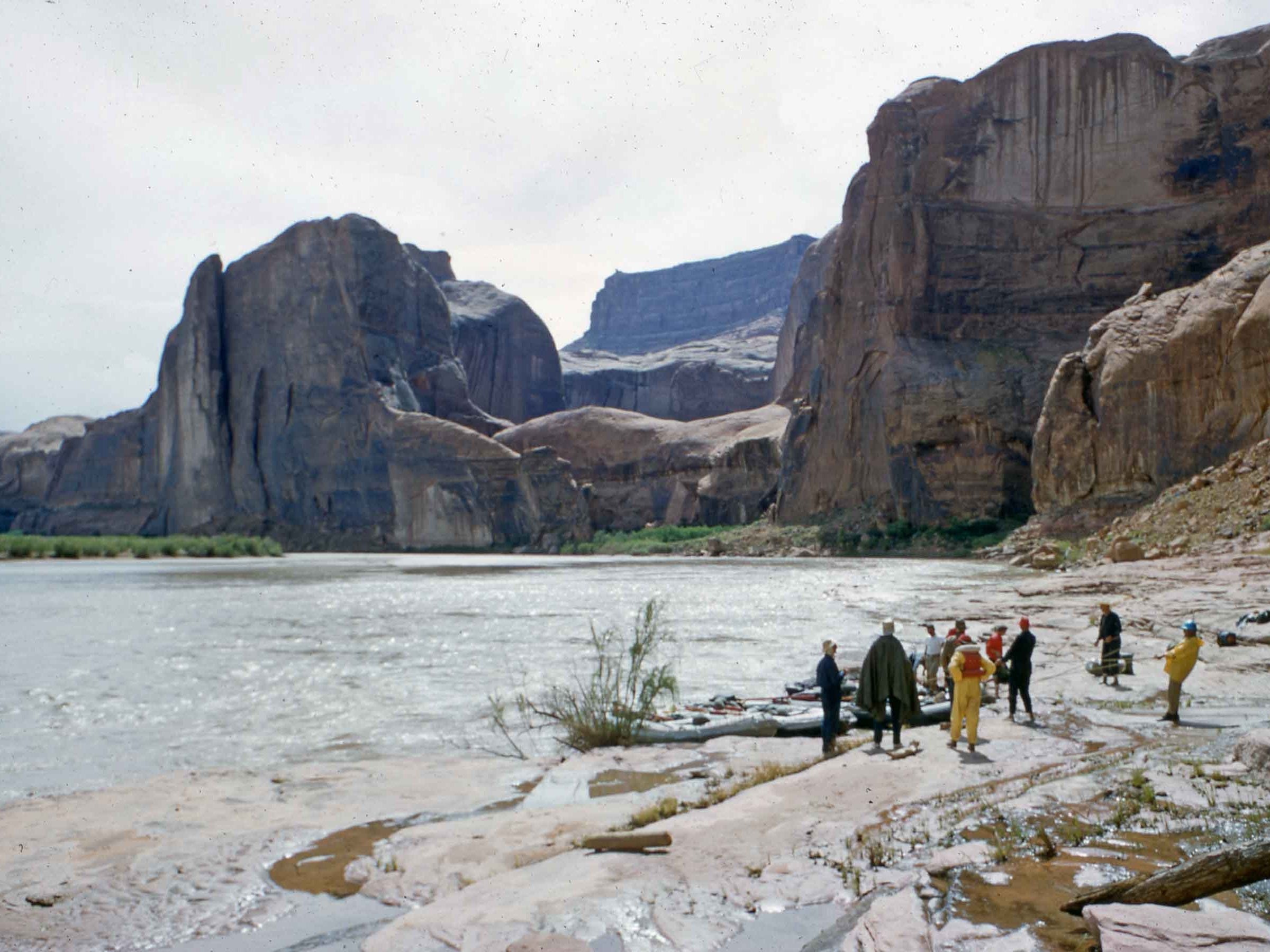
Podmore starts the book by imagining what Indigenous life might have been like in and around Glen Canyon nearly 1,000 years ago — when the region had a far larger population than it does today.
He wanted to show that the Colorado River Basin’s human history began long before white settlement — and that even environmentalists have often ignored the watershed’s Indigenous past.
“I was definitely indoctrinated into the mainstream environmental school of thought as I was growing up,” he said. “I had a copy of the really famous book about Glen Canyon called, ‘The Place No One Knew,’ which was published by the Sierra Club in the ’60s and talked about how nobody cared enough about Glen Canyon to protect it. And then I realized later on that [the] title was very offensive, and [in fact] there were people who knew Glen Canyon very well and lived there for thousands of years, and who were displaced as the waters of Lake Powell started to fill, in the case of many Navajo families.”
Podmore’s opening scene describes a 10,000-gallon stone water tank built by Ancestral Pueblo farmers, the ruins of which were eventually buried by Lake Powell. The tank’s key feature: a drain at the bottom, so that irrigation could continue no matter how low water levels got.

Lake Powell doesn’t have a drain at the bottom. It could certainly use one.
3. The Upper Basin states aren’t doing enough
If Powell’s water levels sink much lower, water won’t be able to pass through the dam’s hydropower turbines, which generate cheap electricity for communities across the West. That wouldn’t be a “dead pool” situation; water could still flow downstream to the Grand Canyon and Lake Mead through bypass tubes lower in the dam. But the bypass tubes are surprisingly frail and could break with sustained use.
Translation: We are frighteningly close to “de facto dead pool.” That’s why the Trump administration is ordering everyone to use less water.
Well, not everyone. California, Arizona and Nevada are willing to cut back dramatically, and federal officials seem happy to make them do it. The Upper Basin states — the ones upstream of Lake Powell — say they shouldn’t have to commit to mandatory reductions, in part because they already consume a lot less.
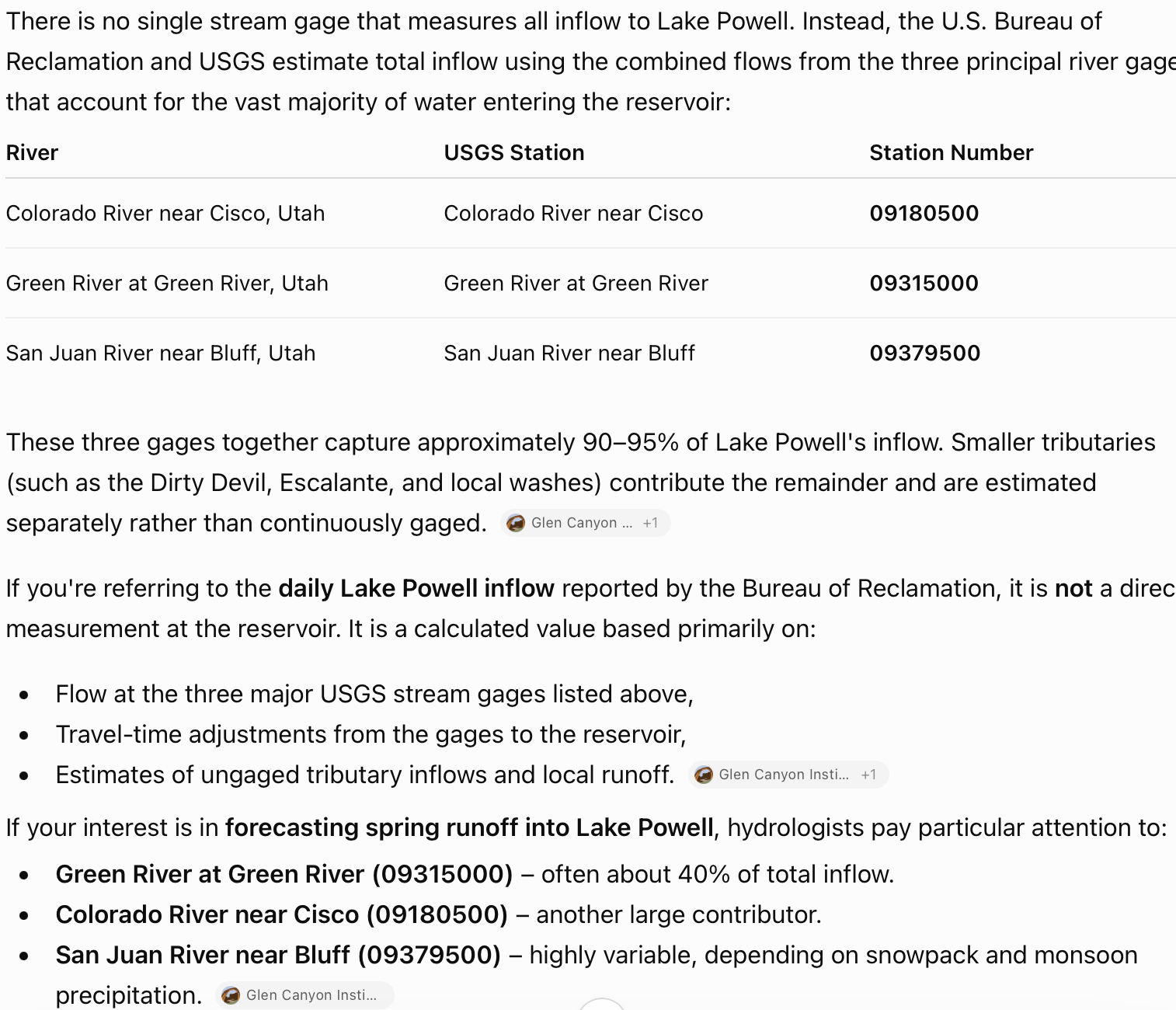
[ed. It is not possible to measure or marshall water to Lake Powell (lack of infrastructure, gaining and losing reaches, priority, no way to color water in the river). Inflows are calculated values, or the height of the column at the dam. The Upper Basin consumes a lot less than their allocation under the compact, so yes, much less than the Lower Basin. Here’s an AI recap of inflows to Lake Powell.]
In a New York Times opinion piece earlier this year, I argued that the Upper Basin states need to do more. Podmore agreed.
“It’s a tricky situation, because the Lower Basin has always used more water, and that’s a convenient argument for the Upper Basin,” he said. “But also, there’s more people in the Lower Basin. And the most productive agricultural land that’s irrigated with Colorado River water is located in the Lower Basin.”
“Even with the cuts that the Lower Basin has offered, we still have a long way to go to balance the water budget,” he added. “Everyone needs to pitch in.”
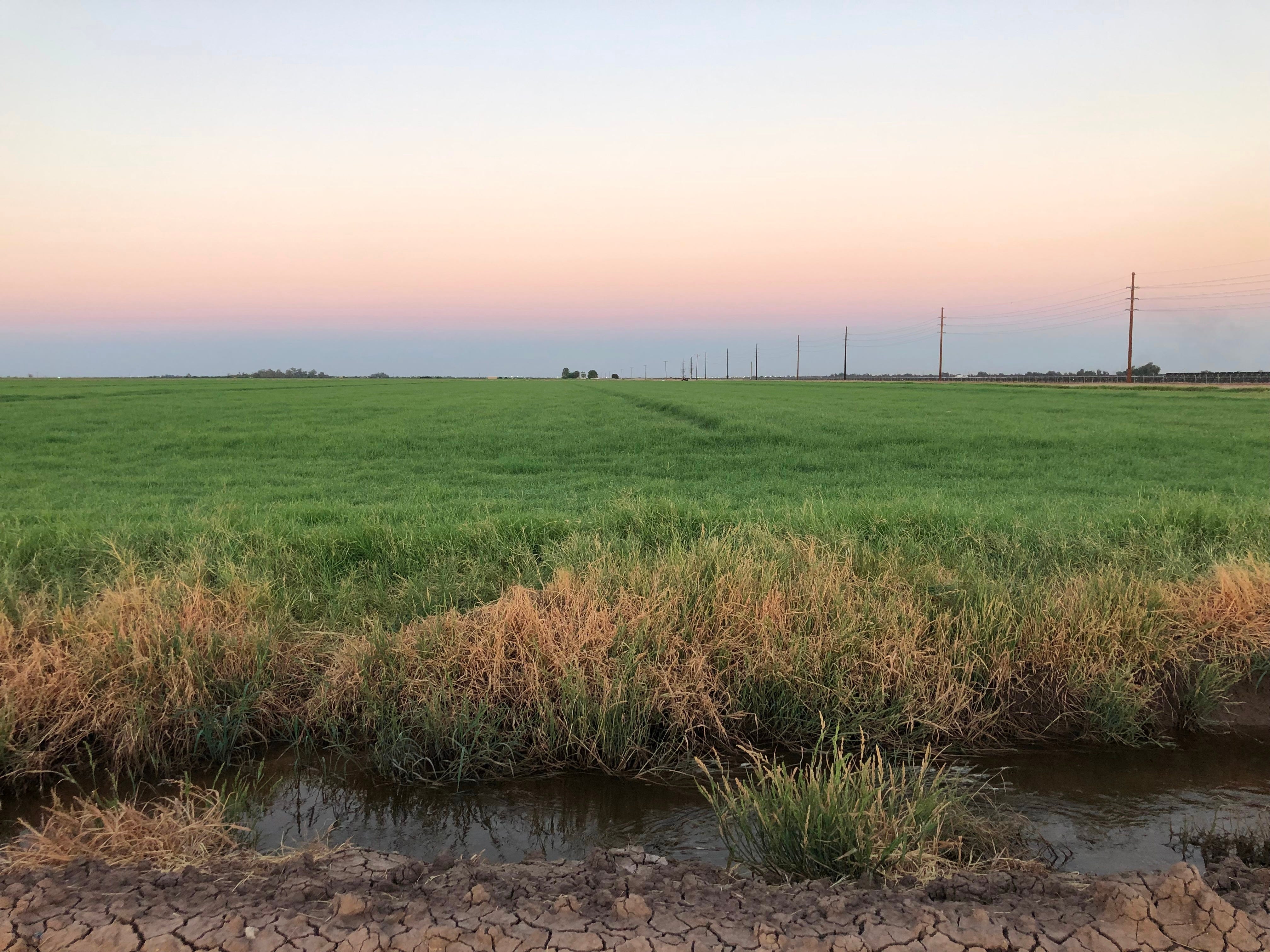
4. Alfalfa isn’t (always) the enemy
Farmers are often vilified for sucking up copious amounts of water — and with good reason. Irrigated agriculture consumes more than half the water in the Colorado River Basin, with alfalfa and other cattle feed accounting for a stunning 32% of overall water use. (This is one of several good reasons to eat fewer hamburgers.)
The Colorado River’s largest water user, by far, is California’s Imperial Valley, where farmers grow vegetables, alfalfa and other crops. There’s no sustainable future for the American West that doesn’t involve Imperial using less water.
But easy as it is to hate on Imperial, Podmore pointed out that when the Lower Basin uses water, that water stays in the river for a long time, supporting healthy ecosystems along the way. And because Imperial is very far downstream, water flowing to alfalfa farmers there carries huge environmental benefits.
“The way that water gets from the Rocky Mountains to the Imperial Valley — or to Los Angeles or Las Vegas or Phoenix — is through the Grand Canyon. It’s through Glen Canyon. It’s through Canyonlands National Park,” Podmore said. “It’s through all these important and beautiful places.”
“If the Lower Basin agrees to a bunch of cuts — if L.A. builds tons of desalination plants — that would in theory be good, because you have to divert less water from the river,” he added. But at the same time, “that means less water in the river.”
