
Click the link to read the article on the KJZZ website (Alex Hager):
August 4, 2026
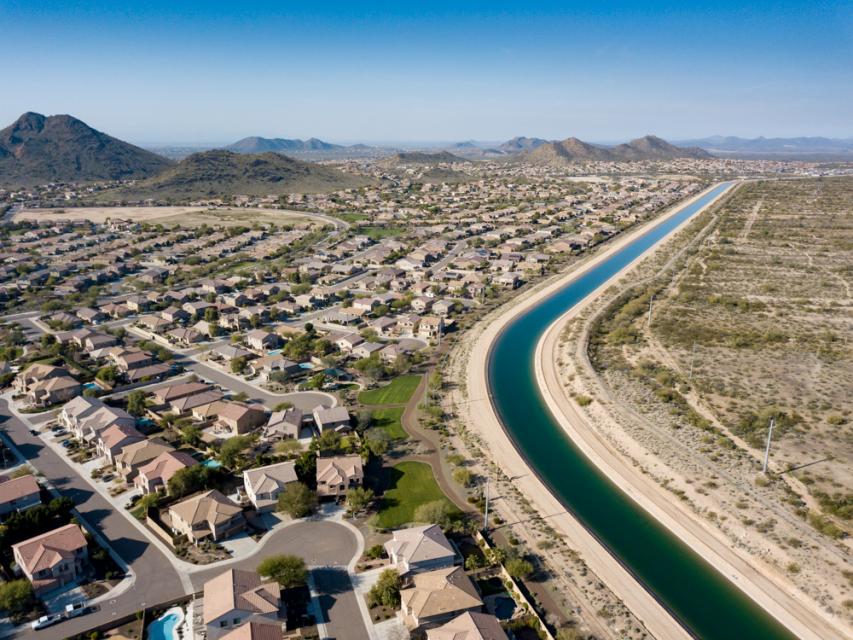
Colorado River shortages are no surprise. Climate change and drought have been steadily cutting into water supplies for about 26 years. Various plans to rein in demand have emerged throughout that time, and new cutbacks have been in the works for more than a year. The amount of water that each Valley city gets from the Colorado River varies significantly from city to city, but the majority receive at least some. Some cities are more prepared than others to weather today’s drier conditions, but most have at least some plan to deal with new Colorado River reductions. The Interior Department set the table for new cuts on Friday [July 31, 2026], laying out the framework of a plan that would allow the federal government to cut the Colorado River supply for Arizona, California and Nevada by up to 40%…A second announcement, which may come in the next few days, will deliver specifics about the size of cuts to the Phoenix area in 2027 and 2028.
Regardless of their scale, city leaders say they will be able to keep taps running.Like any good investor, most utility managers have focused on diversifying their portfolios. Essentially, the more different sources of water that flow to a city, the more it can tolerate cuts to one of those sources. In the Valley, that primarily means getting water from underground aquifers and the Salt River. Underground stores of water, pulled up by a system of wells, are carefully managed under state law and can give cities a backup in times of shortage on the surface. In some cases, water agencies have been taking excess water from the Colorado River for years and adding it to the underground stash, with the idea that it could be retrieved in times like these…In July, the Arizona Water Banking Authority announced that it will use its stored waterto make utilities whole in the event of cutbacks to their supplies from the Colorado River…Older, larger cities also tend to have more money for the kind of expensive engineering that can help diversify a water portfolio. For example, Phoenix is building a massive, high-tech water treatment plant that can safely recycle sewage back into purified drinking water. Major cities around the West are betting big on the technology to help withstand drought and climate change in the long term. Phoenix aims to send water from the $350 million facility into city pipes in early 2029. Cities that use water from the Salt River system are contributing to a multibillion-dollar expansion of Bartlett Dam, which holds back Bartlett Lake. In recent years, after particularly snowy winters, the river has provided more water than the reservoir can hold. A larger dam, cities say, would help them capture, store and use more water from the Salt River system in the future. For cities that lack diverse water portfolios and the kind of money needed for massive engineering projects, there’s a way for them to benefit from the cities that do. In April, as Colorado River cuts were becoming imminent, the city of Phoenix announced a new water transfer program called the “Secure Water Arizona Program”, or SWAP. Details are still emerging about how it would work, but it promises to connect cities that have water to cities that need water…Other water transfers, both in Arizona and across state lines, may be a big part of the long-term plan for cities and towns in the Valley. For example, farms may find it lucrative to sell some of their supplies to fast-growing cities in the metro that are willing to pay top dollar. Native American tribes, which often hold large, powerful legal rights to access the Colorado River, may also be willing to sell. A $5 billion settlement deal is currently in the works to give three Arizona tribes more access to their Colorado River water. If it passes, they could also gain the ability to lease their water to cities far from their reservations. Desalination, a high-tech process that can turn salty ocean water into pure, drinkable fresh water, has long been a tempting proposition for water-short cities. High costs and major logistical challenges mean that Arizona is unlikely to build its own desalination plant anytime soon, but a transfer program could allow it to benefit from an already-operational desalination facility. The Central Arizona Project and a handful of other water agencies around the region are exploring a deal to exchange water rights with a desalination facility in Carlsbad, California.
