Click the link to read the article on the Denver Water website (Jay Adams):
August 3, 2026
Denver Water’s reservoir storage system, holding water supplies carefully built up over many years, is getting hit hard this summer as hot, dry weather drags on and customers use water.
As of July 31, 2026:
- Dillon Reservoir in Summit County, Denver Water’s largest reservoir, was down 20 feet and expected to drop another 8 to 10 feet by Labor Day.
- Williams Fork Reservoir near Kremmling was about one-third full; by the end of summer the dam’s hydro turbines won’t be able to produce hydropower.
- And Antero Reservoir near Fairplay, considered an emergency drought storage reservoir, was dry after the water was moved out of it in May and June.
Overall as of July 31, Denver Water’s reservoirs stood at 75% of capacity, more than 20 percentage points down from the 96% they’re normally full at the end of July.
And reservoir levels will continue to drop as customers use water.
By April 1, 2027, right before the start of next year’s runoff, Denver Water’s reservoirs are expected to be merely 60% to 62% of capacity — the lowest they’ve been on April 1 since the 2002-2003 drought.
“Denver Water’s robust reservoir system serves as our water ‘savings account,’” said Nathan Elder, Denver Water’s manager of water supply.
“This year we are making significant withdrawals from our savings — and we don’t know how long the hot and dry weather conditions will last, or what this winter’s snowpack will look like. We need customers to do their part and reduce water use inside and outside, so that we won’t need to implement even more drastic restrictions.”
In order to stretch existing water supplies, Denver Water’s mandatory drought restrictions this summer limit outdoor watering to two assigned days per week. The utility’s regular summer watering rules also remain in effect, including no watering allowed during the day between 10 a.m. and 6 p.m. (Check assigned days and watering rules here.)
See how far Dillon has dropped:
Reservoirs play a critical role during droughts, as the stored water that was saved in the past is used to get through dry years.
In July, Denver Water customers used an average of 282 million gallons of water every day. In the winter, when there is no outdoor watering, Denver Water customers typically use about 110 million gallons per day.
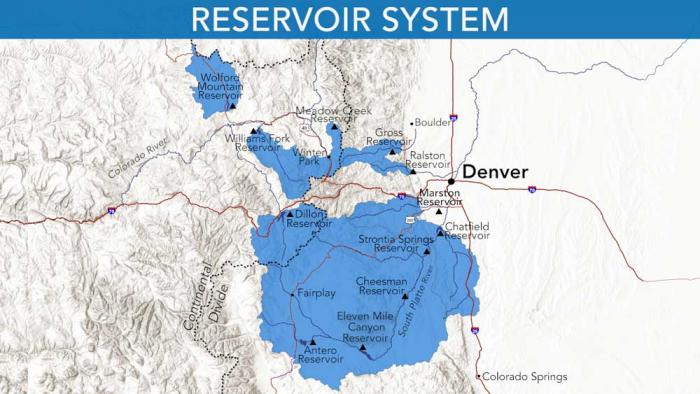
Here’s a closer look at some of Denver Water’s key reservoirs:
Antero Reservoir
In May and June, Denver Water moved all the water out of the relatively shallow Antero Reservoir in Park County to avoid losing it to evaporation.
Antero’s water was sent down the South Platte River to Cheesman Reservoir, and, due to demand, almost all of that water has been used. Antero Reservoir is considered an emergency water storage reservoir that is used during drought years.
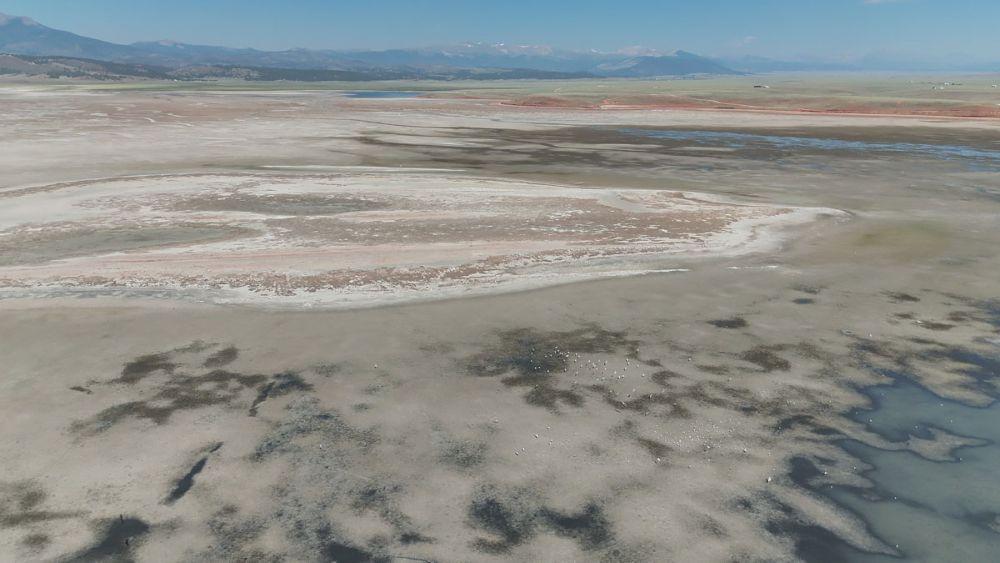
This is the second time Denver Water has had to use all the water in Antero due to drought. The last time the reservoir was emptied to stretch water supplies in a drought was in 2002.
It is expected to take several years of average or above-average snowpack to refill Antero Reservoir.
Cheesman Reservoir
Cheesman Reservoir, located near Deckers along the South Platte River, opened in 1905.
As of July 31, Cheesman Reservoir was at 71% of capacity. The reservoir would have been even lower without the additional water moved from Antero.
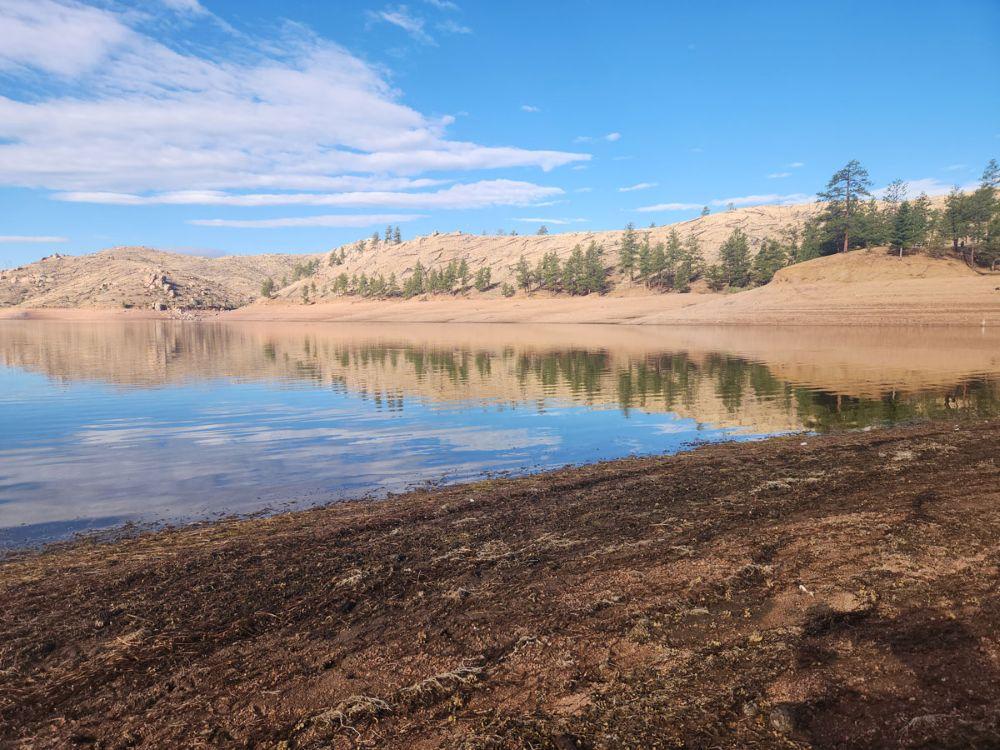
Cheesman’s water level as of July 31 was 26.5 feet down from full and the reservoir is expected to drop to 54% to 61% of capacity by April 1, 2027. During the drought of 2002-2003, Cheesman dropped all the way down to 29%, less than one-third of its capacity.
Dillon Reservoir
Dillon is Denver Water’s largest reservoir. Located in Summit County, it opened in 1963.
As of July 31, Dillon Reservoir was at 75% of capacity and down 22.5 feet. The reservoir is expected to drop another 8-10 feet by Labor Day.
At the end of July, Denver Water was pulling about 163 million gallons of water a day from the reservoir to meet the water demands of its customers in Denver and surrounding suburbs.
By next spring, Elder expects Dillon will be down to 50% to 60% of capacity. During the drought of 2002-2003, Dillon was down to 48% of capacity.
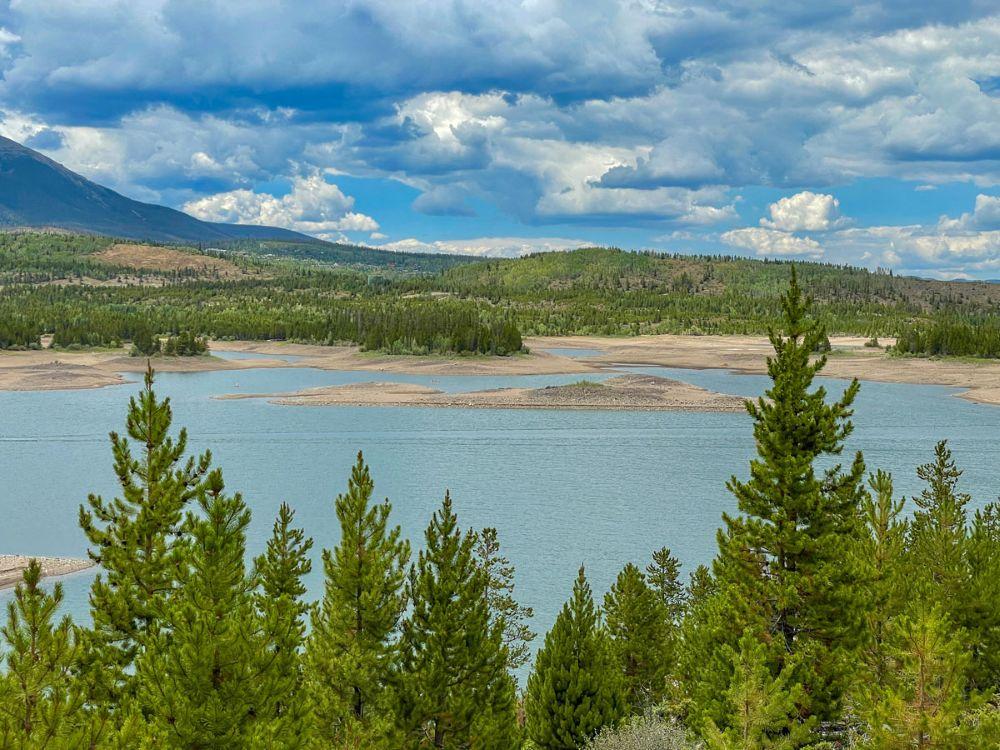
As for the record low? Dillon bottomed out at 35% of capacity in 1978 during a drought.
Gross Reservoir
Gross Reservoir is a critical water storage site in Boulder County. The dam is currently under construction and water levels have been lowered in the reservoir to allow that construction work to move forward safely.
As of July 31, Gross Reservoir was at 53% of capacity.

The Gross Reservoir Expansion Project is designed to nearly triple the size of Gross Reservoir, which will allow Denver Water to store more water to help get through times of drought. The project hit a major milestone in June 2026 when workers placed the last of the roller-compacted concrete steps that make up the higher dam.
Williams Fork Reservoir
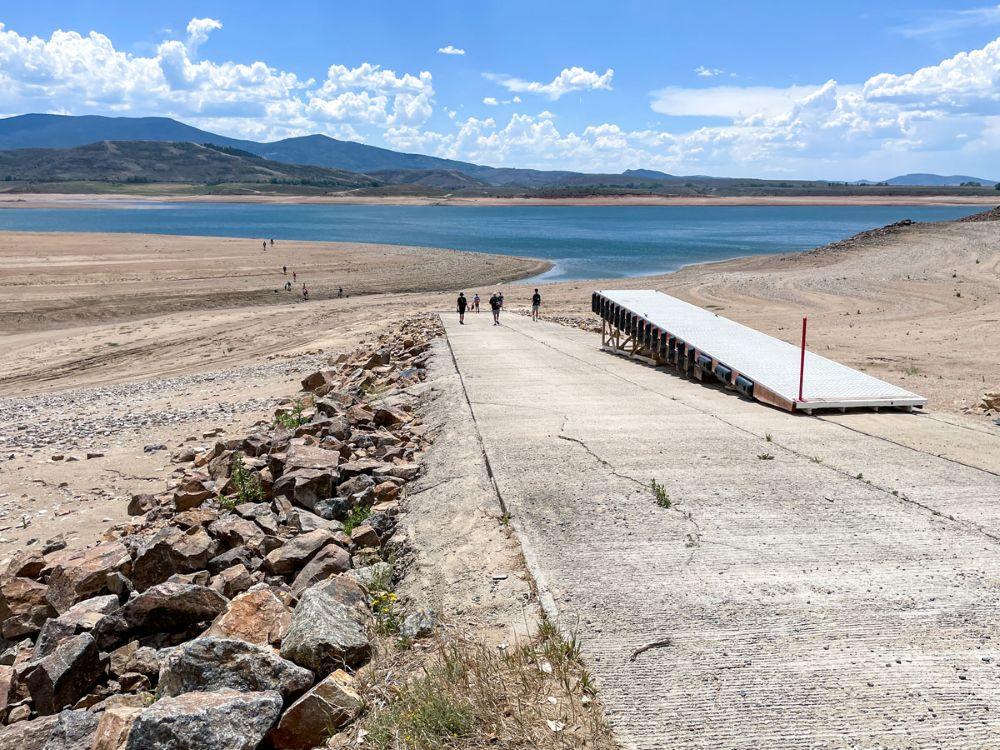
The Williams Fork Reservoir, near Kremmling in Grand County, as of July 31 was 36% of capacity and down 52 feet.
The reservoir’s boat ramp was closed this summer due to low water levels caused by drought. Kayaking and other hand-paddled watercraft are still allowed.
Watch a video of conditions at Williams Fork this summer:
By the end of summer, the water level in Williams Fork is expected to be so low that the dam’s hydropower plant will no longer be able to generate power. The reservoir is expected to drop to 6% to 15% of capacity by April 1, 2027.
Denver Water does not use Williams Fork to store water for the metro area. Instead, the reservoir’s water is used to exchange, or offset, water that is stored in Dillon Reservoir in order to meet downstream water rights obligations on the Colorado River.
Meadow Creek Reservoir
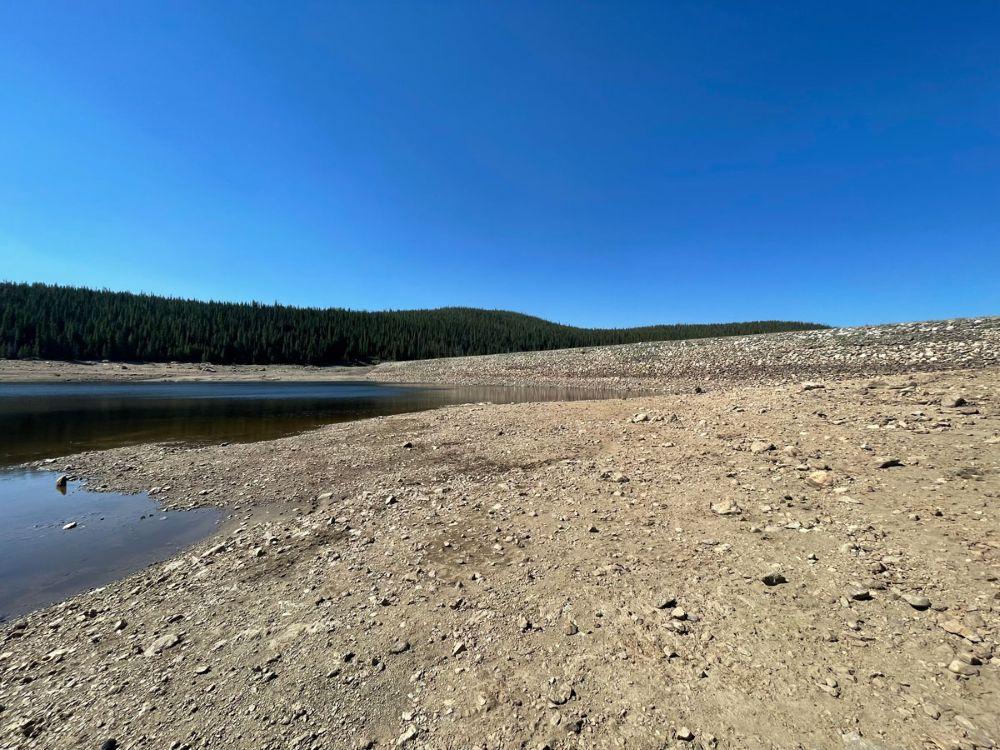
Denver Water’s smaller reservoirs are also affected by the drought, such as the Meadow Creek Reservoir near Granby in Grand County, a popular dispersed camping and fishing site.
Denver Water took advantage of this year’s low water conditions and further lowered the reservoir to just 6% of capacity in order to conduct an inspection and construction project on the dam.
Water released from Meadow Creek was used for irrigation in Grand County, and 350 acre-feet of water was moved to storage in Gross Reservoir.
While Meadow Creek is not a primary storage site, its fate this summer demonstrates some of the challenges and complexity that comes with managing a water system while juggling the impacts of drought, maintenance requirements and the need to deliver to 1.5 million people in Denver and surrounding suburbs.
Looking ahead
While having Denver Water’s overall reservoir system at 75% of capacity as of July 31 may not sound too bad, Elder says customers need to act now to conserve as much water as possible.
And while there has been talk of a strong El Nino, summer monsoon rains and big winter storms on the horizon, Elder notes that “hoping for more rain and snow” is not an actual strategy for managing through a historic drought.
Also, 90% of the water Denver Water collects comes from mountain snow, meaning that even a strong monsoon this summer won’t do much to stem the fall in reservoir levels.
The bottom line is that no one really knows what next year’s water supply outlook will be until next winter — and more critically, until next spring’s runoff season, when the snow starts to melt and water flows into the reservoirs.
Right now, Elder’s team has calculated Denver Water’s water supply outlook through April 1, 2027, right before the next spring runoff begins.
And the team is forecasting that by then, Denver Water — and its customers — will be facing reservoir levels of just 60% to 62% of capacity, the lowest since the 2002-2003 drought.
“We have a strong reservoir system, but we are going through a lot of water this summer and reservoir levels are dropping,” Elder said.
“Every drop counts, and every action customers can take to conserve water inside and outside will help stretch our water supply. This is the time to Use Only What You Need.”