Click the link to read the article on The Denver Post website (Elise Schmelzer). Here’s an excerpt:
August 15, 2026
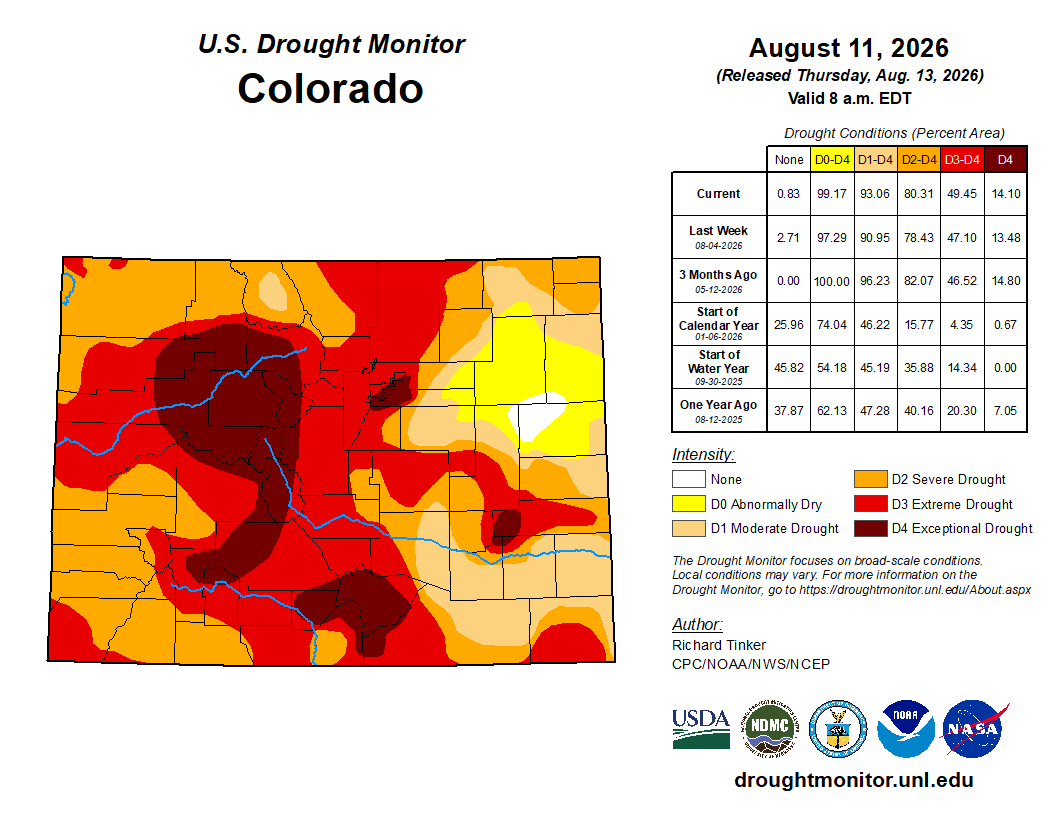
In some Front Range towns, residents still can water without inhibition despite searing drought. Nearly the entire state is in some level of drought, according to U.S. Drought Monitor data released Thursday, but the aridity is especially intense over the highly populated urban corridor and the mountains that are the source of much of Colorado’s water. The winter’s record-low snowpack translated into this summer’s anemic streamflows, moisture-sucking soil and drained reservoirs. Federal authorities describe the drought frying the Front Range with sobering words: severe, extreme, exceptional.
Despite widespread severe drought, 13 of the 25 largest cities and towns in Colorado have not implemented additional mandatory water use restrictions. The 13 communities — including the cities of Fort Collins, Pueblo and Boulder — are home to more than 1.5 million people, which is about a quarter of the state’s population. Water managers in many of the communities without additional drought restrictions have asked customers to voluntarily cut back water use, to varying degrees of success. Individual water providers set drought restrictions depending on their own portfolio of water sources and reservoirs. Communities that draw from multiple water sources, own powerful water rights and maintain large reservoir systems are best poised to ride out drought…Those differences can be confusing to customers who see headlines about extreme drought, shrinking reservoirs, other cities’ mandatory restrictions and the imperiled Colorado River system, said Kim Hutton, Boulder’s water resources manager. Denver Water and Aurora Water — along with many towns across the Western Slope — have implemented mandatory drought rules to curb water use. Pueblo, meanwhile, has neither mandatory nor voluntary restrictions in place. Boulder is under a drought watch and city leaders have asked customers to voluntarily conserve water and irrigate outdoors only twice a week. Hutton doesn’t expect to implement mandatory restrictions this year based on the amount of water they have stored…Fort Collins draws its water from the Colorado River via the Colorado Big Thompson Project, the Cache la Poudre River and the Michigan River, which is part of the North Platte River basin…Colorado Springs Utilities leaders have not implemented additional drought restrictions this year, though their customers are limited to three days a week of outdoor watering every year, regardless of drought status. The state’s second-largest city draws 70% of its water from the Colorado River, 25% from the Arkansas River and 5% from the South Platte River. The utility issued a water supply watch warning customers about drought impacts, but will not implement further restrictions until it has less than 1.5 years’ worth of water in its reservoirs, water conservation supervisor Julia Gallucci said. The city currently has 2.7 years’ worth of water in storage…
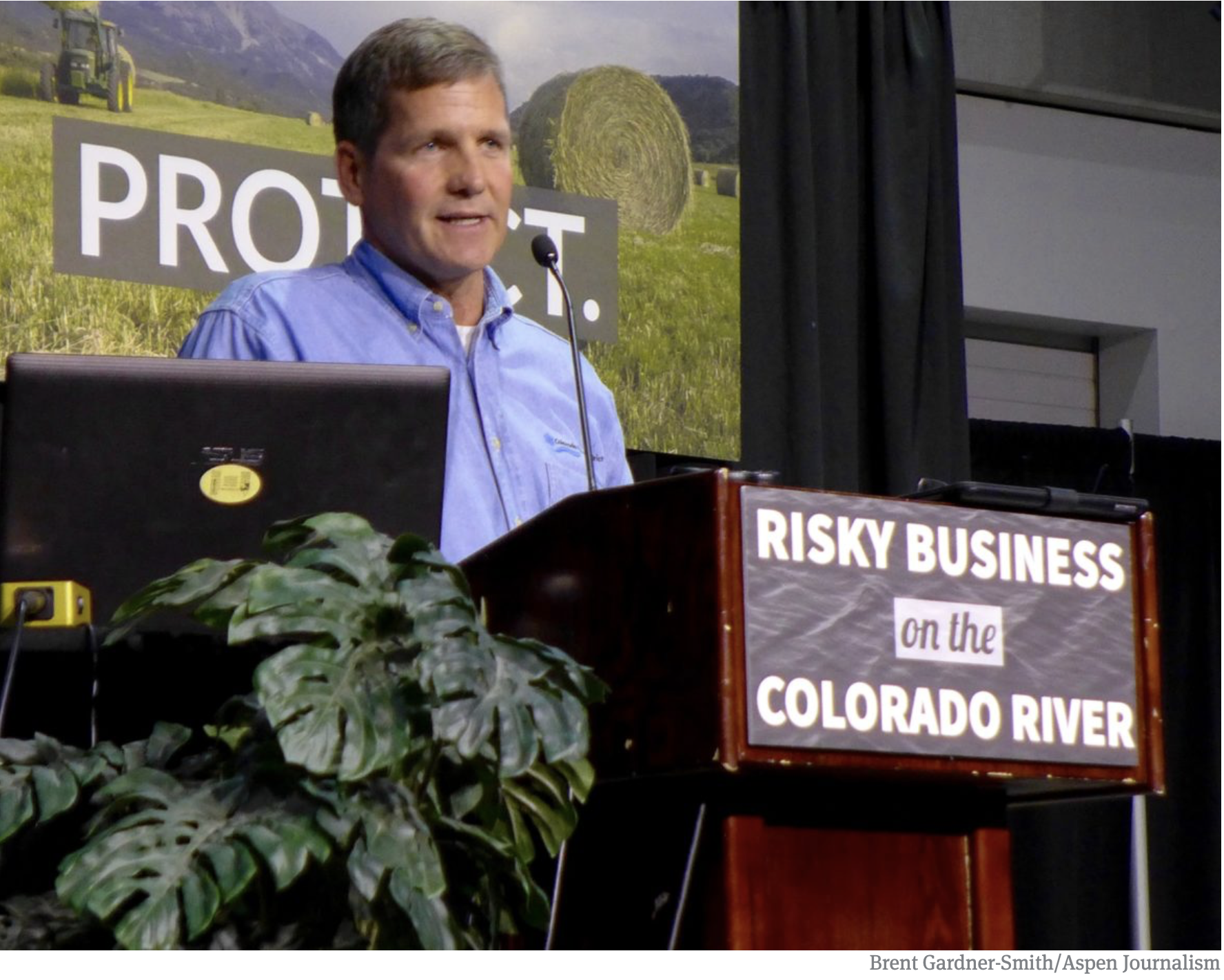
The lack of watering restrictions in some Front Range communities irked Andy Mueller, general manager of the Colorado River District, a taxpayer-funded agency that works to protect Western Slope water. Western Slope water users are working hard to conserve, he said, and farmers are fallowing fields because there is not enough to meet all the needs. It’s difficult to know that some of that conserved water ends up on the other side of the Continental Divide watering lawns in towns without any mandatory restrictions, he said.