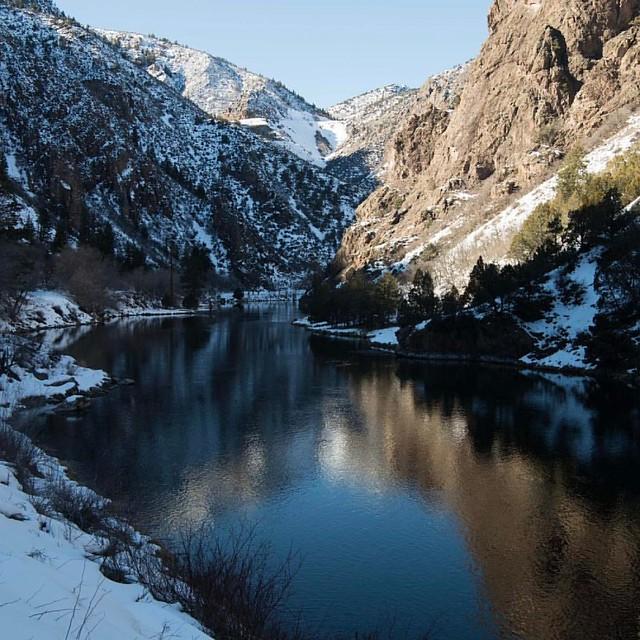
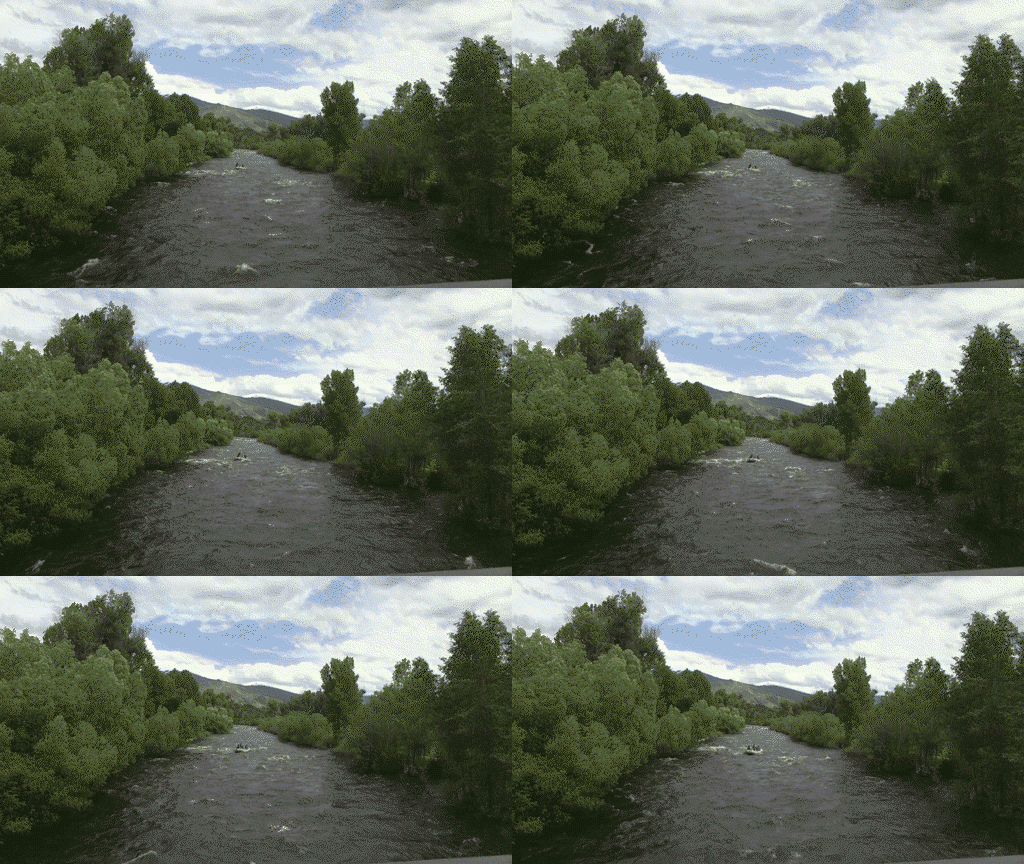
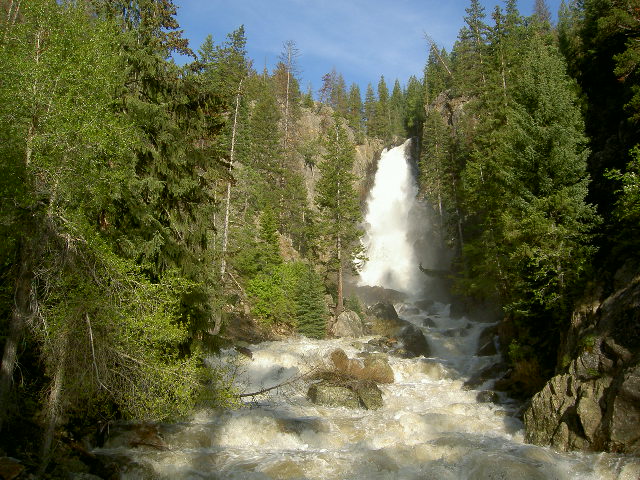
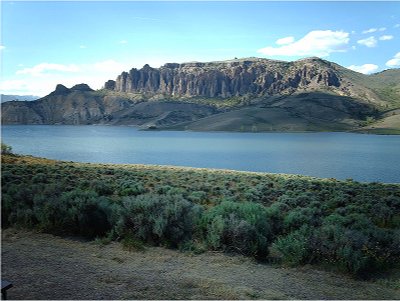
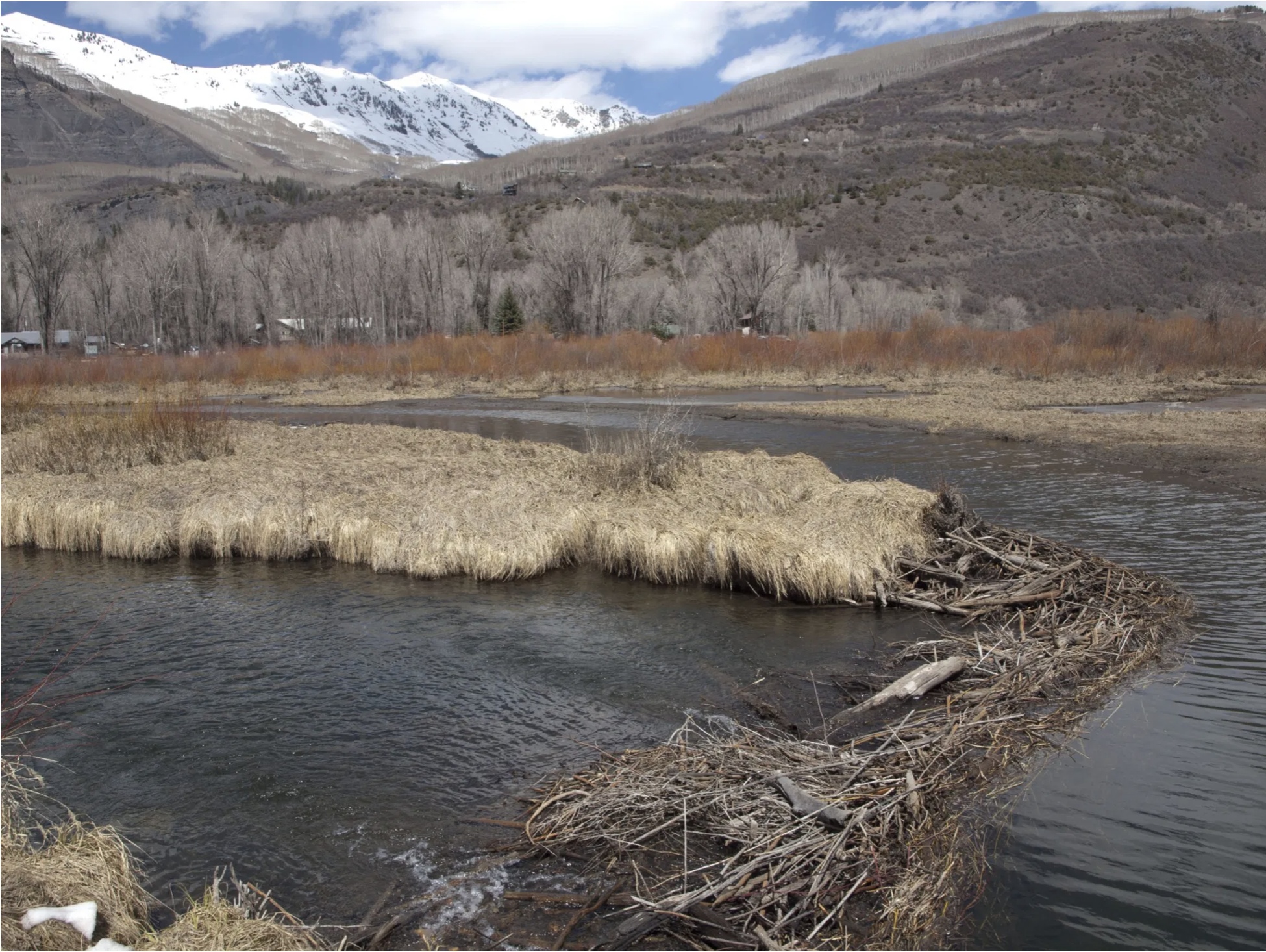
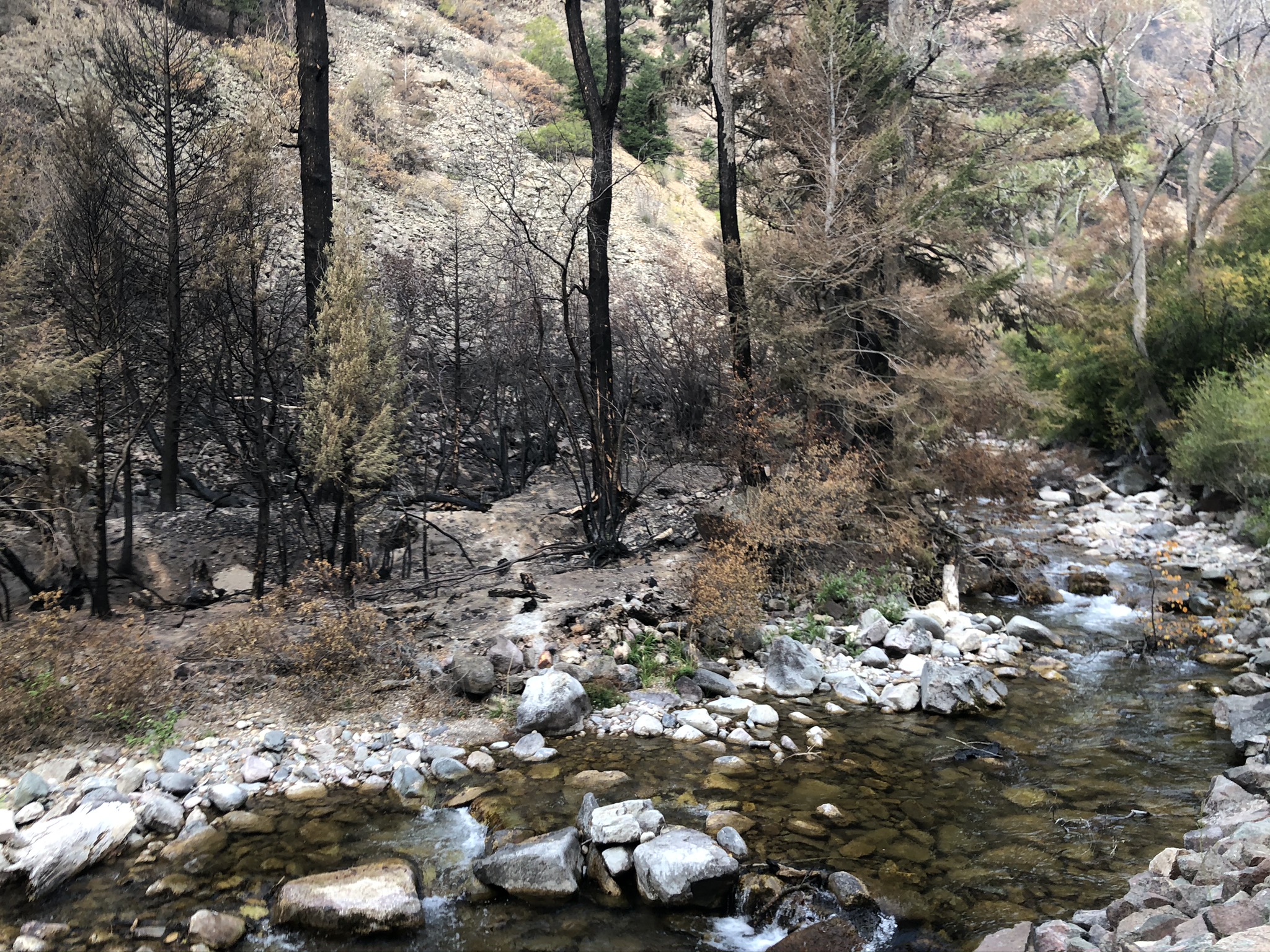
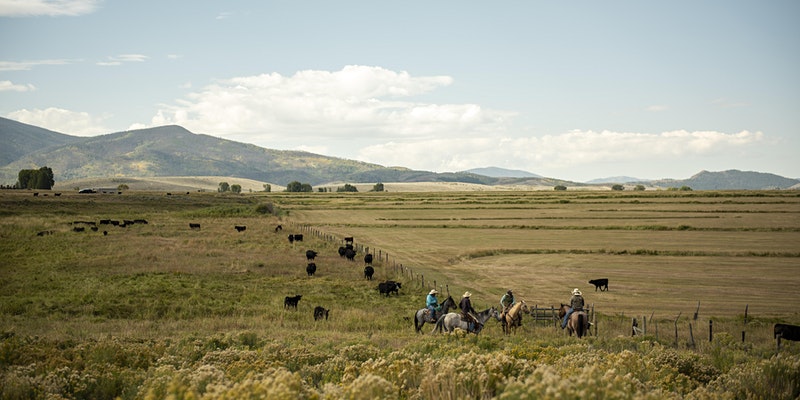
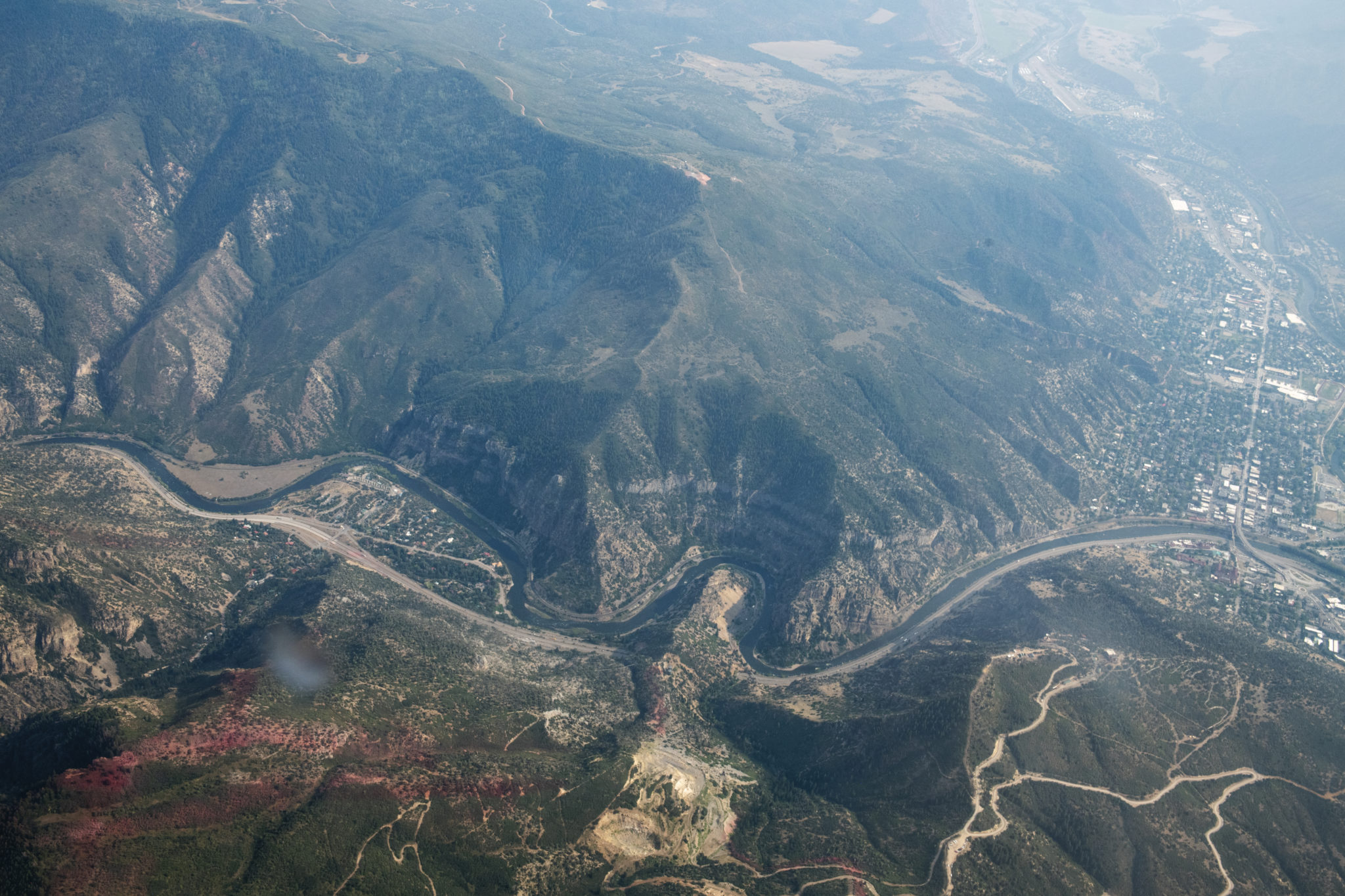
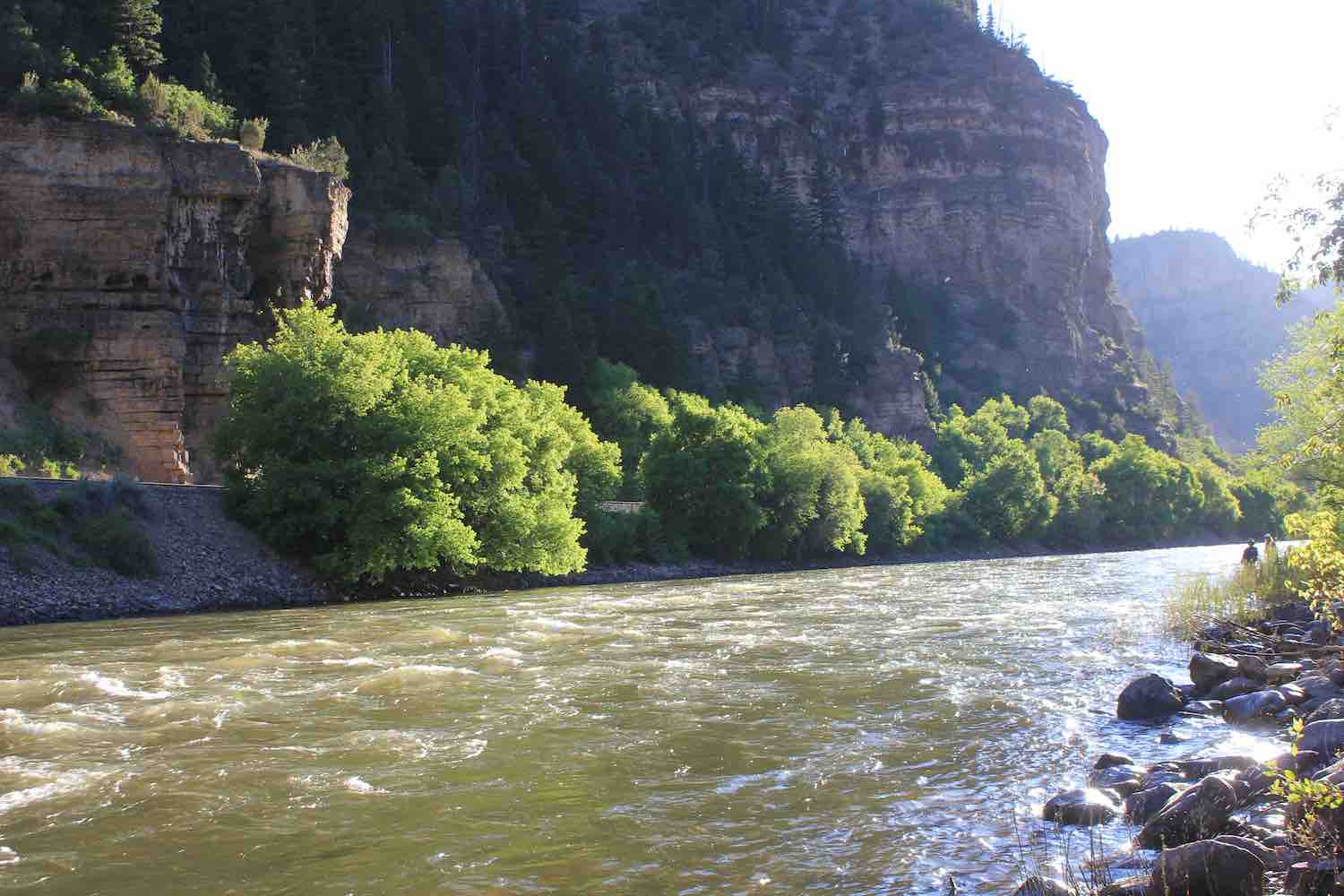
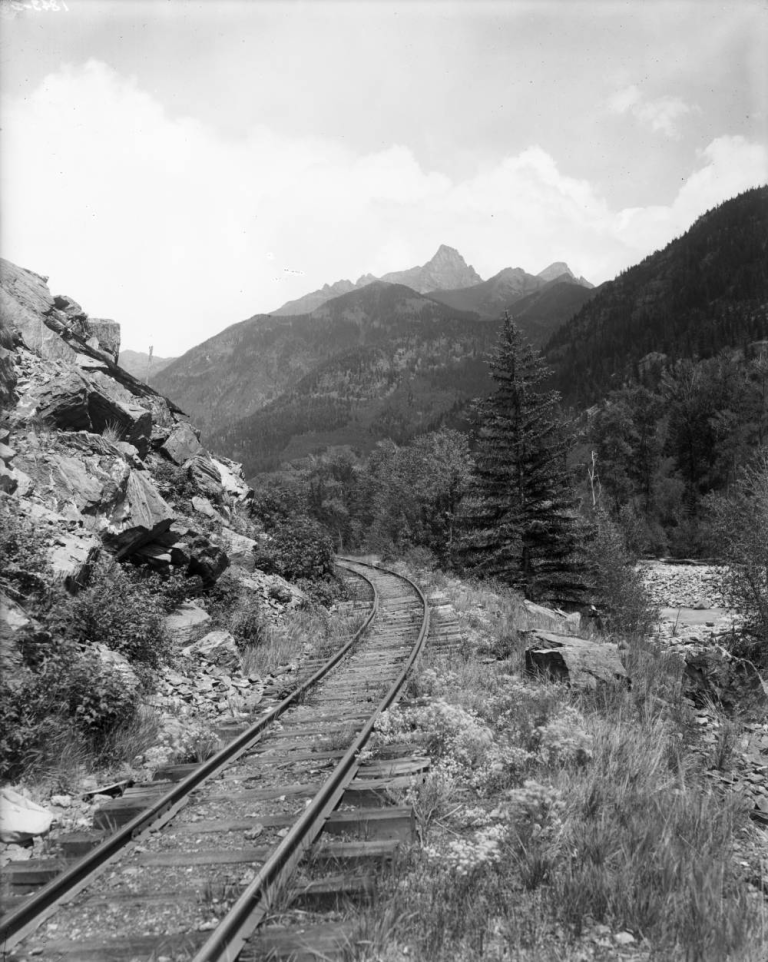
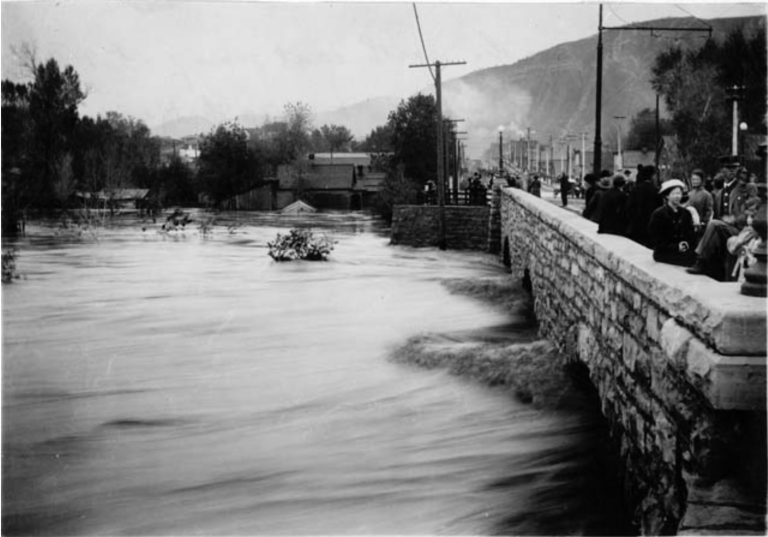
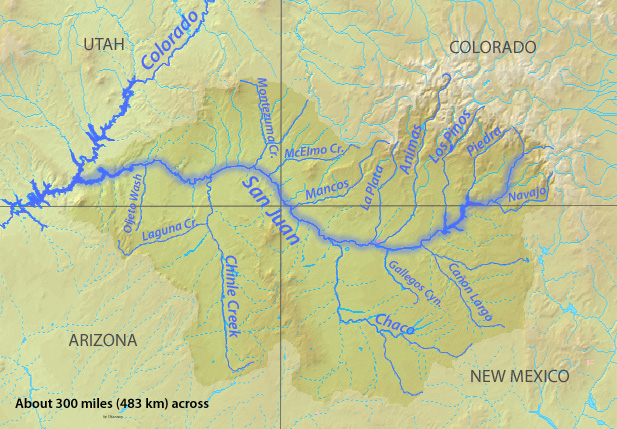
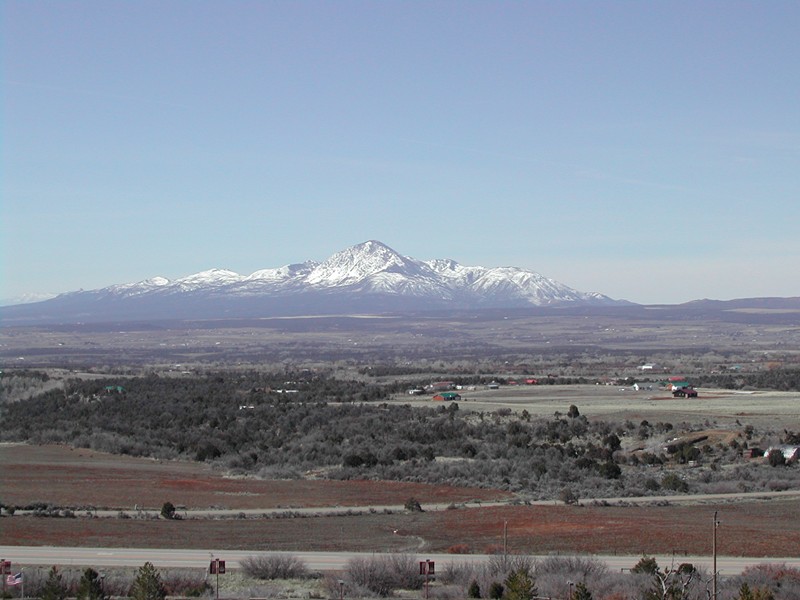
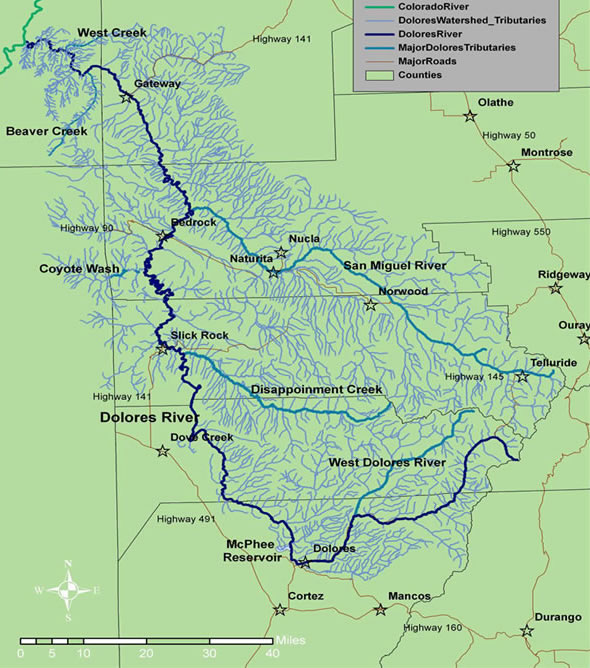
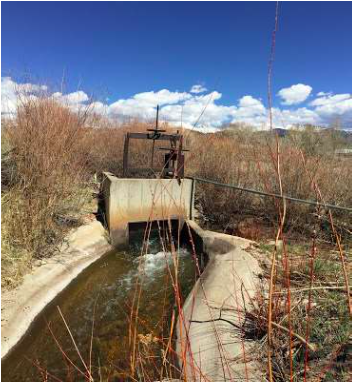
Gunnison River in Colorado. Source: Bureau of Reclamation via the Water Education Foundation
Click here for all the inside skinny and register:
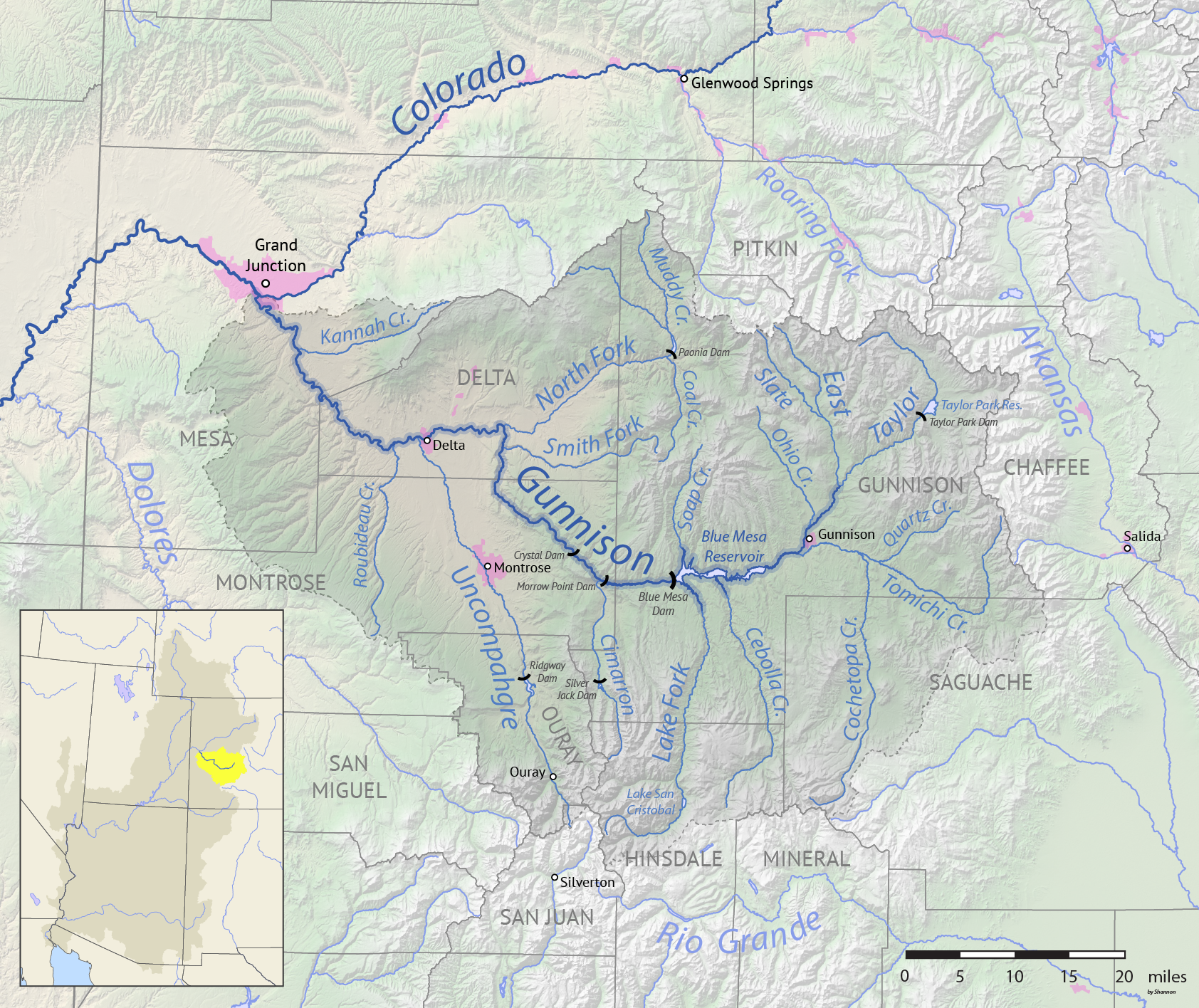
Join the Colorado River District for the Gunnison State of the River webinar on Thursday, June 10 at 6 pm! Our experts and special guests will be presenting on river forecasts, landmark accomplishments, project opportunities, and the impacts of and on recreation for the Gunnison.
One of the major tributaries of the Colorado River, your Gunnison River provides the life force for local West Slope communities. Learn more about the river’s hydrology and water supply as we enter another drought year, celebrate a Lower Gunnison victory that’s been years in the making, and hear from David Dragoo, founder of Mayfly, about the West Slope recreation economy and its impacts.
You’ll also receive information on exciting new funding for Gunnison River Basin water projects and plans to sustain flows throughout the basin as conditions shift to hotter, drier seasons.
If you cannot attend the webinar live, register to receive an emailed webinar recording for later viewing!
Agenda:
Welcome – Marielle Cowdin & Zane Kessler, Director of Public Relations and Director of Government Relations, Colorado River District (CRD)
Your Gunnison River, a Water Supply Update – Bob Hurford, Division 4 Engineer, Colorado Department of Natural Resources
The Lower Gunnison Project: Modernization in Action – Dave “DK” Kanzer, Director of Science and Interstate Matters, CRD
A Victory for the Lower Gunnison – Raquel Flinker, Sr. Water Resources Engineer/Project Manager, CRD and Ken Leib, Office Chief of the Colorado Water Science Center, U.S. Geological Survey
Rivers on the Fly, Recreation Economy and Impacts – David Dragoo, Founder of Mayfly
Community Funding Partnership – Amy Moyer, Director of Strategic Partnerships, CRD
American farmers are conservationists at heart, but it can be a challenge to know where to start when it comes to conservation planning. Finding the right technical assistance and determining whether a conservation practice actually works for your land isn’t always easy.
The new Resource Stewardship Planning Guide, backed by NRCS science and developed by the editors at Farm Journal, is now available to help. This free workbook is the first in a three-part series published as part of America’s Conservation Ag Movement, a public-private partnership that helps producers use profitable and conservation-minded practices. The Soil Health Guide is currently available, and a Water Quality Guide will be available soon.
Here are 10 tips from this new interactive workbook—available in digital format to download for free.
Tip 1: See what other farmers are doing
Learning from other producers’ conservation experiences is a great way to evaluate what might work in for you. In this workbook, you’ll find plenty of stories from farmers across the U.S., including row crop producers from the Midwest, cattle ranchers from the Plains, and more.
Tip 2: Make a plan and write it down
Check out pages 4-7 for a primer on the process of conservation planning. Then fill out workbook pages 8-10 to see where your own farm stands and to identify some practical next steps you might take. There’s a cheat sheet on page 11 with some examples to get those gears turning!
Tip 3: Same farm, different land types
A farm is rarely composed of a single giant parcel. Instead, it often spans soil types, terrains, and counties. That’s why it’s important to know where you are and what type of land within a field you’re dealing with. Page 12 breaks down four common categories: cropland; associated agricultural lands; grazing, pastureland, and rangeland; and animal feeding operations.
Tip 4: Scout for conservation opportunities with cropland
If you raise crops such as corn or soybeans, pages 13-16 are for you. Starting with a soil loss assessment, you can begin to identify where conservation in your fields can deliver the strongest ROI. This section will also help you take stock of unique attributes of individual fields, such as proximity to adjacent bodies of water. The flow chart on page 15 can help you determine what you need and who can help.
Tip 5: Reduce costs through associated ag lands
Some spots in fields have notorious problems like ponding, erosion, or poor productivity. In these places, it might make sense to consider how you might save a precious resource—capital. Pages 17-21 provide insights on associated ag lands and illustrate how farmers are reimaging them for better lands and a better bottom line.
Tip 6: Grazing opportunities
Fencing is an infrastructure investment that NRCS programs can use to help livestock producers. From pages 23-27, you’ll discover that conservation planning isn’t just for row crop—it applies to every farm or ranch, albeit with its own specific toolbox of best management practices.
Tip 7: Stewardship spans feed, manure, and more
If you raise livestock, then feed handling, waste management, and other activities have a central role in conservation planning. Learn how to integrate stewardship into these staples of farm life from pages 28-36. Then meet hog producers from South Dakota who are putting these principles to work.
Tip 8: Rent land? Engage the owner
Conservation might seem like a big investment of time and money, but in many cases, stewardship begins with an evaluation of what you—and your landlord—care most about when it comes to the farm. Pages 37-40 illustrate practical ways to start a conservation about rented land to ensure both parties benefit.
Tip 9: Pencil it out
If you’re skeptical about whether conservation can have positive financial benefits, check out page 41. There is a step-by-step example of how stewardship can be a win-win for your business and the natural resources you manage.
Tip 10: Find a trusted adviser
Now that you’ve explored the many ways in which conservation planning can make a difference for farms like yours, it’s time to ask: Who can help me do that? From pages 43-46, you’ll find practical tips for locating the right kind of technical service provider in your local area. There are plenty of links so that you can do your own research online.
Interested in learning more about how conservation can help your farm? Click here to get your free guide to explore what the next step of your own conservation journey might be.
More Information
America’s Conservation Ag Movement is organized by Trust In Food, a Farm Journalinitiative, in partnership with the Farm Journal Foundation. Financial and technical support is provided by USDA’s Natural Resources Conservation Service and leading agribusinesses, food companies and nonprofit organizations.
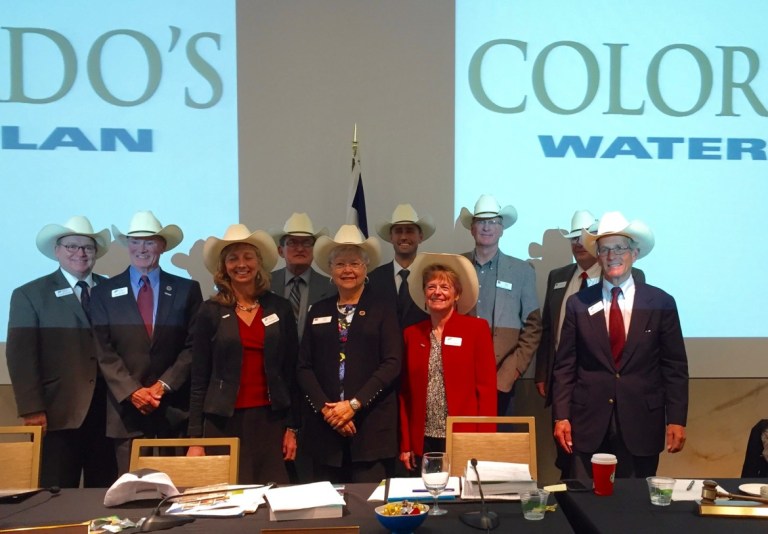
The Colorado Water Conservation Board, after unveiling the Colorado Water Plan in Denver in November 2015. Photo credit: Colorado River District
Click here to read the newsletter. Here’s an excerpt:
Scoping Phase Finalized for Colorado Water Plan Update
The scoping phase for the Colorado Water Plan update process took place between March and early June 2021. During this phase, the Colorado Water Conservation Board collected feedback and input by hosting 13 workshops including 40 speakers and involving 600 participants. Topics ranged from environmental and recreation impacts, forest health, land use planning, climate change, agricultural viability, and more.
The updated Water Plan will also incorporate eight Basin Implementation Plans – smaller, tailored plans for water issues in each of Colorado’s river basins. These sections of the Plan are set to be finalized in January 2022.
Click here for all the inside skinny and to register:
Join us June 11 or 12 along Cottonwood Creek for the inaugural Urban Water Cycle Bike Tour in Colorado Springs!
Join us for a fun, free regional bike tour along Cottonwood Creek in Colorado Springs. This tour will connect community members to local water and recreation resources through an approximately 9-mile (mostly downhill) ride.
Both tour days start at Frank Costello Park, with a short ride to Cowpoke Flood Detention and Development. You will then ride downhill all the way to a creek restoration site on Monument Creek. With a short ride back uphill, you will end at Crit Cafe for our final speakers, networking and refreshments on your own.
Tour topics include:
What are the Cottonwood Creek, Fountain Creek, and Arkansas River watersheds?
Why water quality is important? What is stormwater? What is point source and nonpoint source pollution?
How is Colorado Springs conserving water and planning for its future water supply?
How are community partners connecting neighborhoods to trails and creeks?
How can maintaining pipes allow us to restore creeks?
How do we ensure our water is clean and safe?
How can you protect stream health?
We thank our supporters at Colorado Department of Public Health & Environment, Colorado Springs Utilities, El Pomar Foundation, and Fountain Creek Watershed District. In addition, our partners at the Trails and Open Space Coalition and the City of Colorado Springs Stormwater Enterprise (SWENT) and Parks, Recreation, and Cultural Services made this tour possible. We look forward to a fun and educational day along Cottonwood Creek!
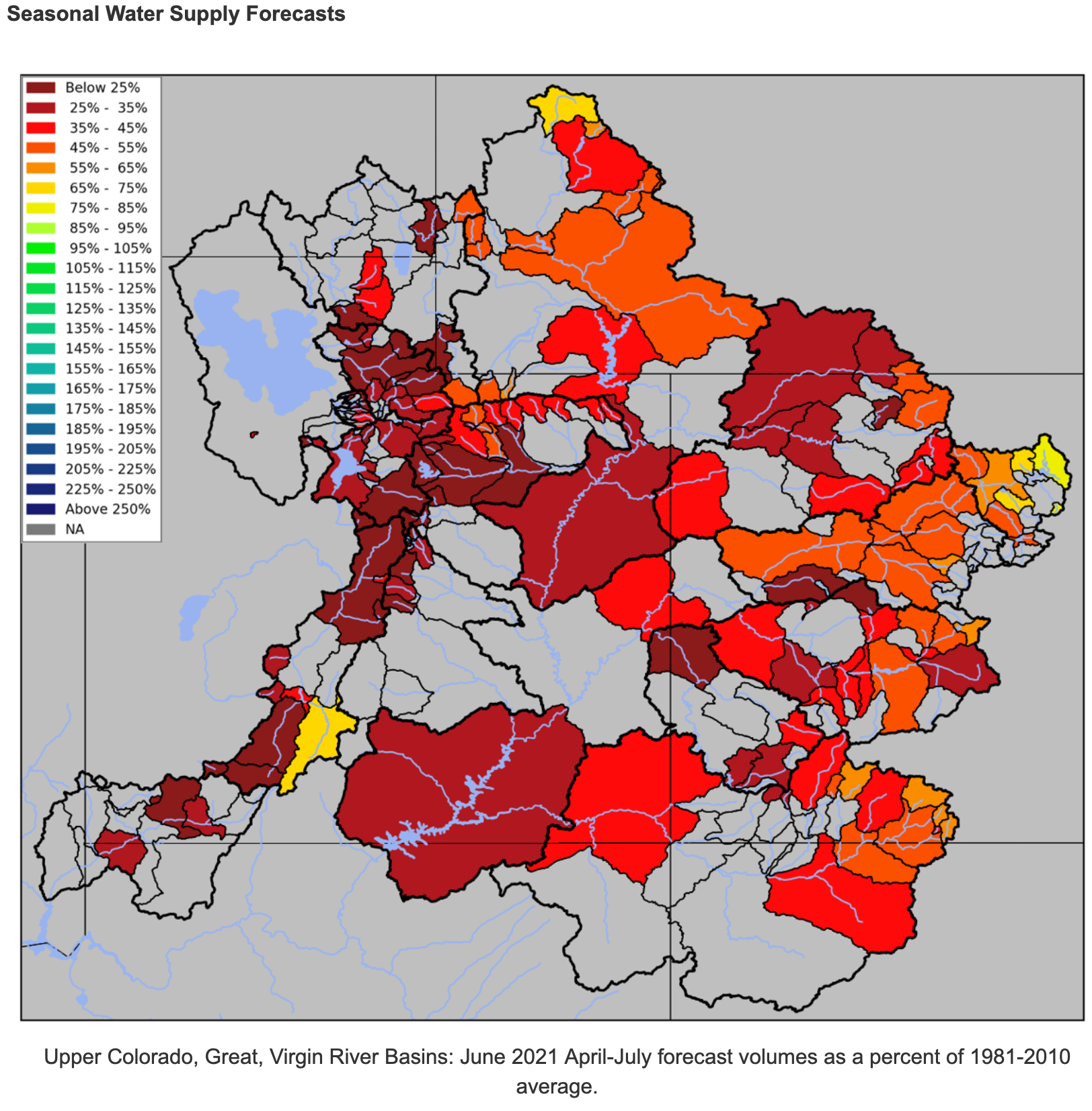
The Colorado Basin River Forecast Center (CBRFC) geographic forecast area includes the Upper Colorado River Basin, Lower Colorado River Basin, and Eastern Great Basin.
Water Supply Forecast Summary
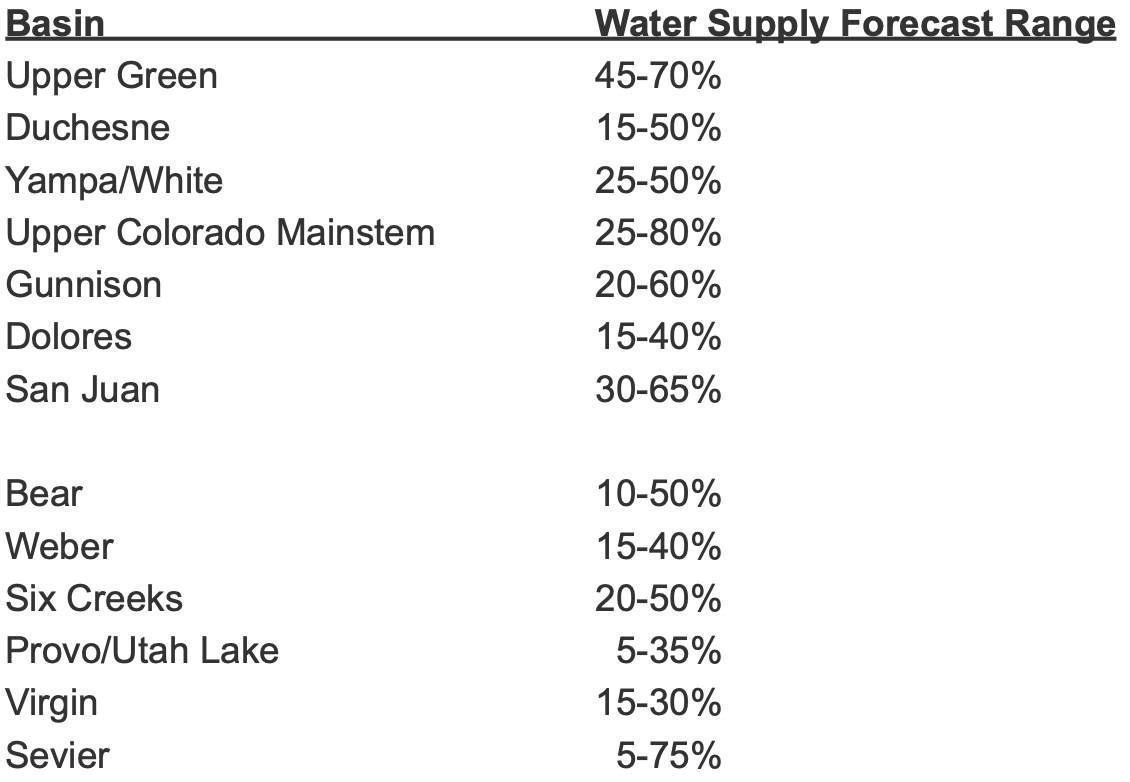
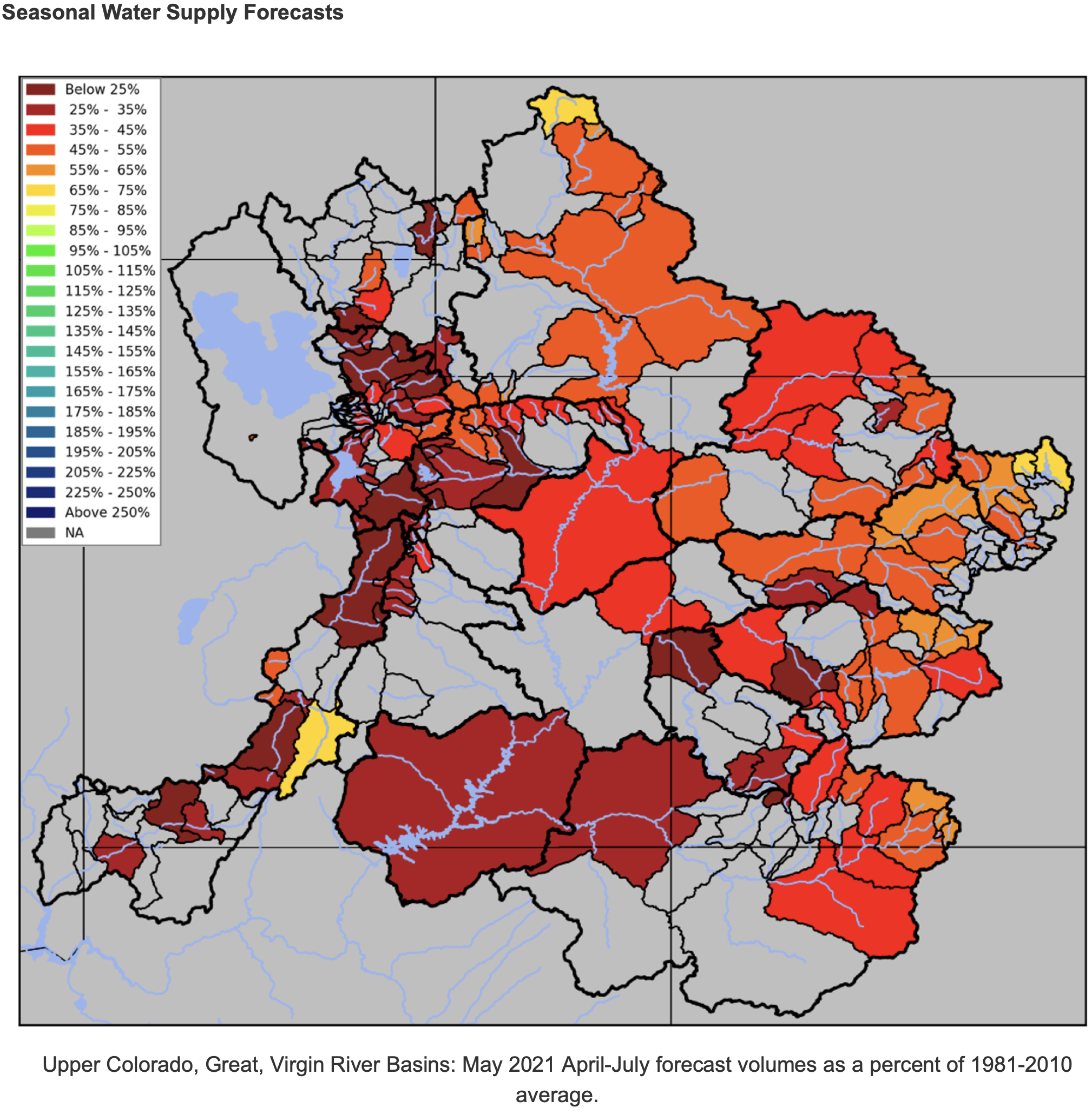
Early June water supply volume forecasts are below to much below normal throughout the Colorado River Basin and Great Basin. Upper Colorado River Basin water supply forecasts range between 15-80% of the 1981-2010 historical April-July average. Great Basin water supply forecasts are 5-50% of average. Many April-July volume forecasts fall in the bottom (driest) five on record.
The trend in water supply volume guidance over the past month generally followed the trend in May observed precipitation. Near normal May precipitation across the Upper Green, Upper Colorado mainstem, and San Juan Basins led to relatively minor changes in water supply guidance over the past month while below normal May precipitation across the White/Yampa and Great Basins resulted in decreases in water supply guidance compared to a month ago. June water supply forecast ranges (percent of April-July normal volume) by basin are listed below.
Below normal soil moisture and snowpack conditions in addition to mostly below average spring precipitation and relatively mild (near normal) spring temperatures across the Upper Colorado River Basin and Great Basin have resulted in much below normal and in some cases record low observed April-May flows (unregulated streamflow volumes) across the region. A number of streamflow sites across Utah reported the lowest April-May observed flow on record, with most locations falling in the bottom three. Many streamflow sites across western Colorado have reported April-May observed flows in the bottom five on record.
Snow water equivalent (SWE) at the majority of SNOTEL stations across the region peaked between 70-85% of the normal peak SWE this season. Early June SWE conditions are below to much below normal at most SNOTEL stations across the Colorado River Basin and Great Basin. Basins with the best remaining snowpack are the Upper Green headwaters and Upper Colorado headwaters, where a handful of high elevation SNOTEL stations are reporting 5-10 inches of SWE (50-85% of normal). Little to no snow is being reported at SNOTEL stations across Utah/Great Basin and southwest Colorado (Gunnison, Dolores, San Juan Basins).
April-July unregulated inflow forecasts for some of the major reservoirs in the Upper Colorado River Basin include Fontenelle 345 KAF (48% of average), Flaming Gorge 395 KAF (40%), Green Mountain 150 KAF (55%), Blue Mesa 310 KAF (46%), McPhee 76 KAF (26%), and Navajo 335 KAF (46%). The Lake Powell inflow forecast is 1.8 MAF (25% of average), a three percent decrease from May.
FromKRCC (Shanna Lewis) via Colorado Public Radio:
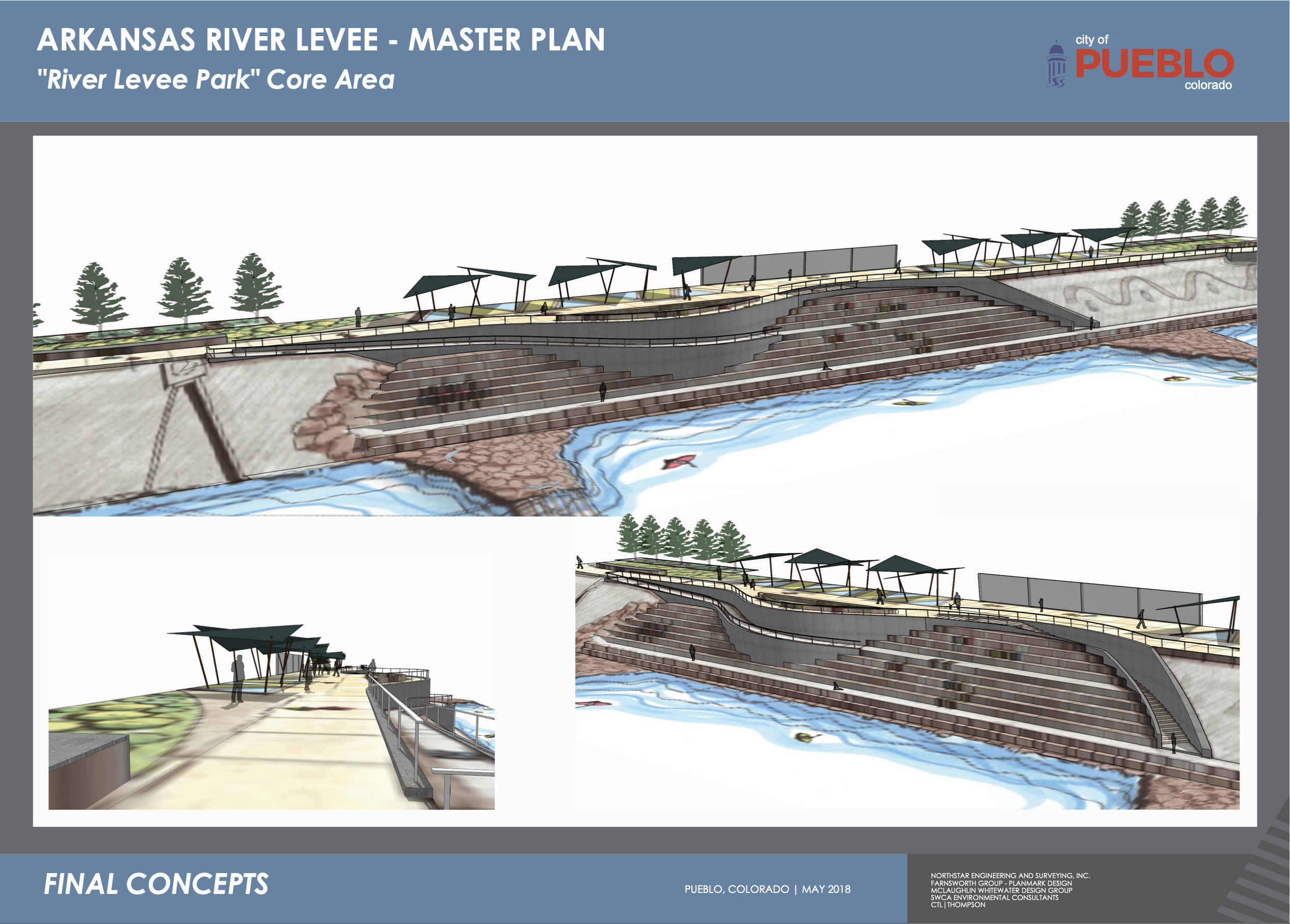
Pueblo is remembering the victims of the flood that devastated the city a century ago. And on June 3, exactly 100 years later, celebrating its newly rebuilt Arkansas River levee.
The original flood control structure was constructed after the deadly 1921 deluge. Repairs to bring the 2.8-mile long levee up to current FEMA standards began in 2014 and cost some $25 million…
The top of the levee now sports a walking trail, and a million-dollar pedestrian suspension bridge connects the trail to the bike path on the other side of the river.
Grants from the Colorado Department of Transportation and Department of Local Affairs paid for the bridge. Leaf-shaped shade structures, benches and bike racks will be added to the trail later this year.
It’s all part of a larger recreation plan that includes a second bridge, upgrades to the existing whitewater park and better access to the river from various neighborhoods.
Along with flood protection and outdoor fun, there’s also a cultural aspect to the levee. Artists covered the old concrete facing of the levee with huge murals over the years, like a giant outdoor art gallery…
The Pueblo Downtown Association and Pueblo Arts Alliance are hosting a celebration of the new levee on Saturday, June 5, from 9 a.m. to 1 p.m. Activities will include a walk on the levee, actors telling the story of the 1921 flood and group drone photos on the new bridge.
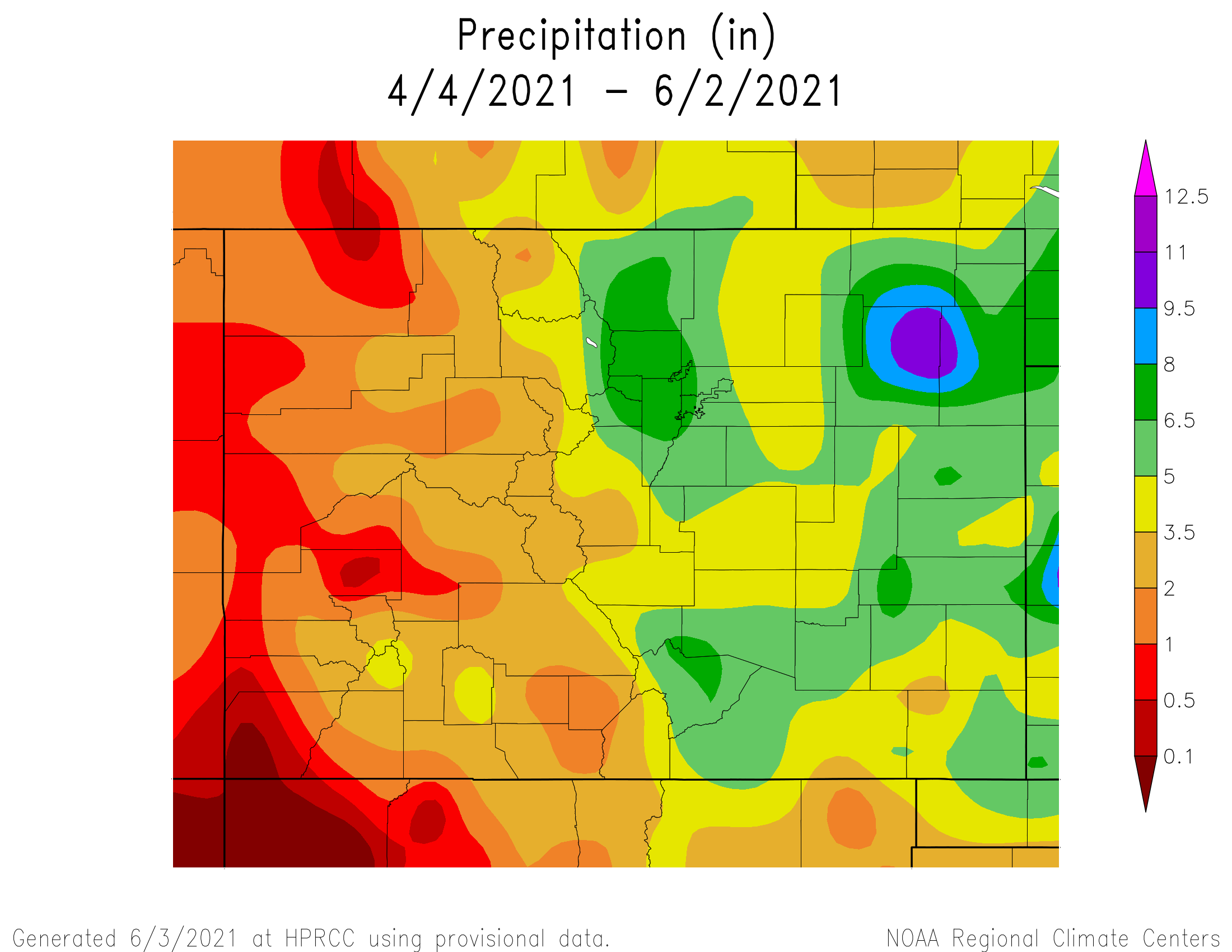
May in Pueblo brought nearly five inches of rain to the county, marking the month as the third wettest May in the region’s history, and also colder than average.
Only May 2015, where 5.5 inches of rainfall was recorded, and May 1957, when 5.43 inches of rainfall was recorded, beat the nearly five inches of rainfall in May 2021.
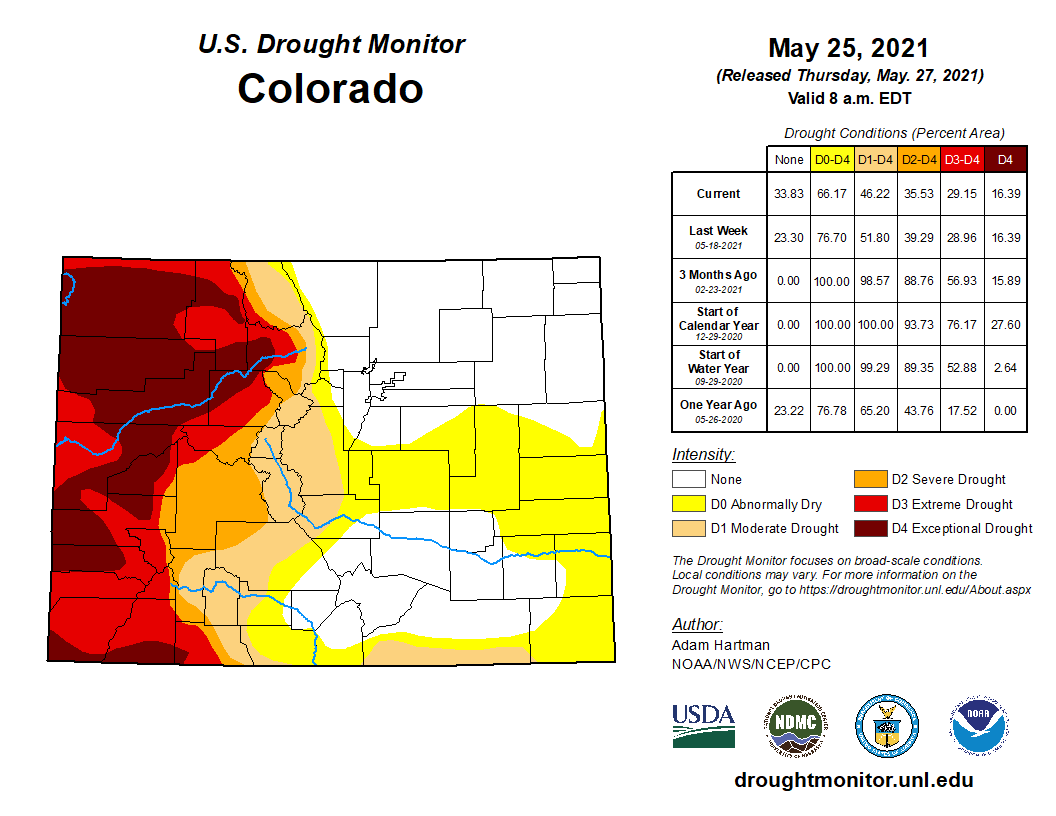
On May 25th, most of the eastern plains and eastern mountainous region of Colorado have been declared drought-free, defying forecasts from earlier in the year that predicted low precipitation amounts throughout the spring, leading to further drought levels in the summer.
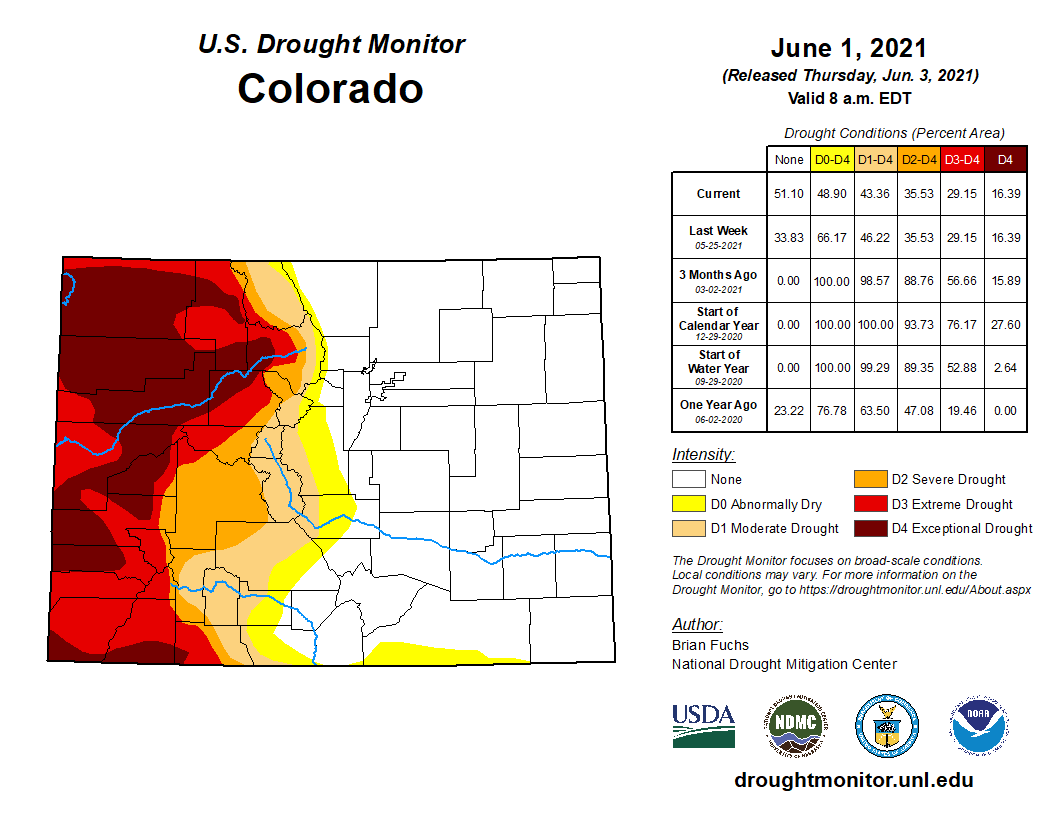
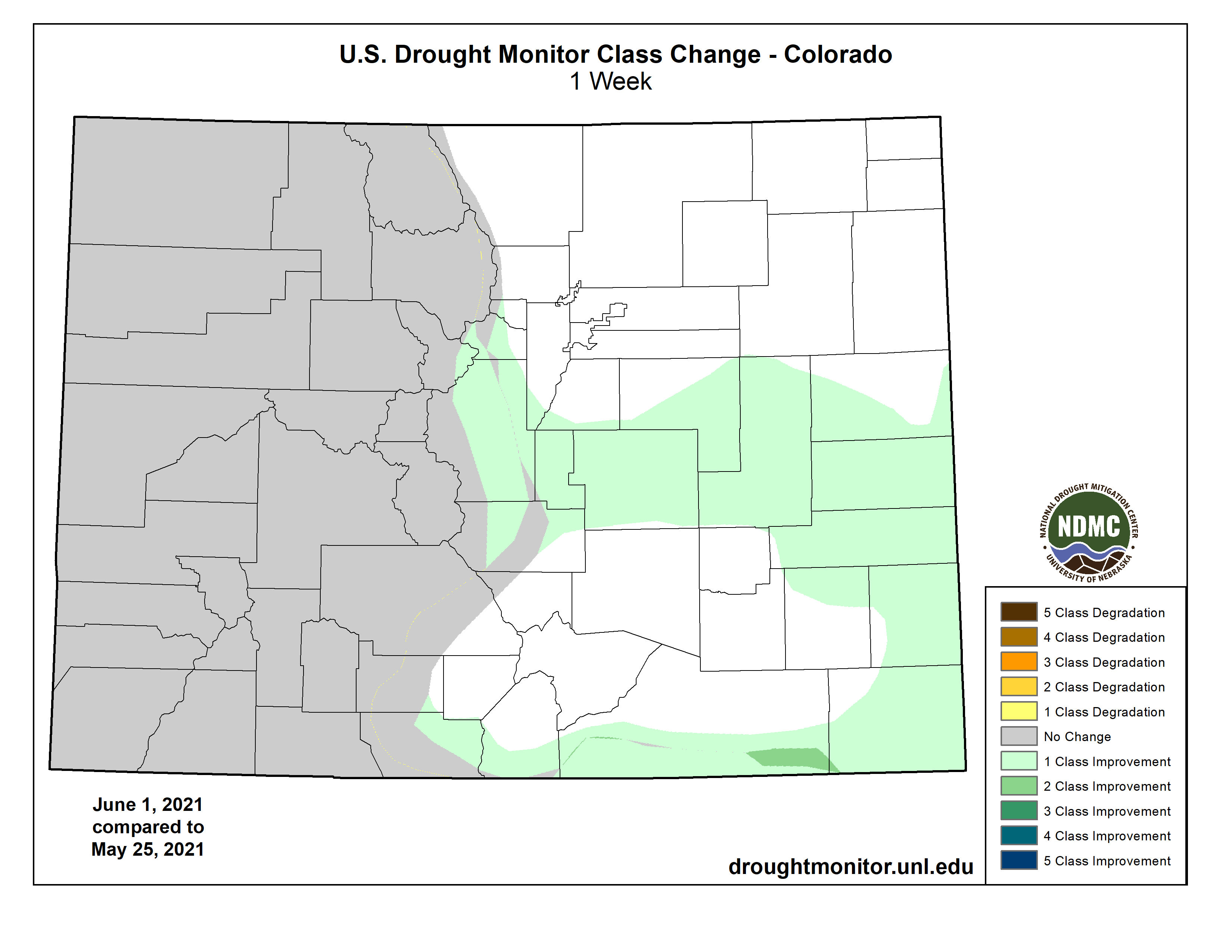
Colorado Drought Monitor map June 1, 2021.
In fact, drought levels west of the Continental Divide remain in extreme and exceptional levels, while east of the Divide has shifted the opposite direction. The shift is dramatic, as severe to extreme drought levels have persisted since August 2019…
Pueblo averages about 1.6 inches of rainfall in May, [Tony] Anderson explained, and the area received about 4.95 inches this May. The trend was similar across the region, with areas like Colorado Springs recording almost double rainfall amounts from the averages used by the National Weather Service.
Anderson called the drought clearing “remarkable,” but also expressed concerns that the area could still have a poor water year…
He also noted that reservoir levels are part of the bad news in this “good news/bad news year.” He said the Arkansas river reservoirs are on average about 80% full, and reservoirs in the Rio Grande are averaging about 67%. “So there’s a lot of storage to fill up going into next year,” he said…
Anderson explained that the split of drought and non-drought levels in Colorado resulted from storms rising from the east and dropping precipitation as it hit the mountains, instead of the standard Colorado weather pattern of storms approaching from the west.
Todd Ballard, an agronomy extension agent with Colorado State University who works in Sedgwick County, noted in a recent column that the above average rainfall could be a boon for the state’s eastern agricultural businesses.
The Yampa River, June 29, 2019. Credit: Kelsey Ray, CU News Corps, The Water Desk From Water Education Colorado (Sara Kuta):
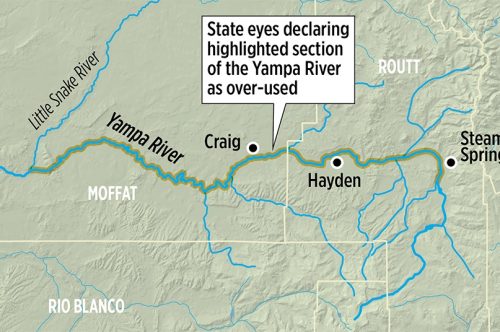
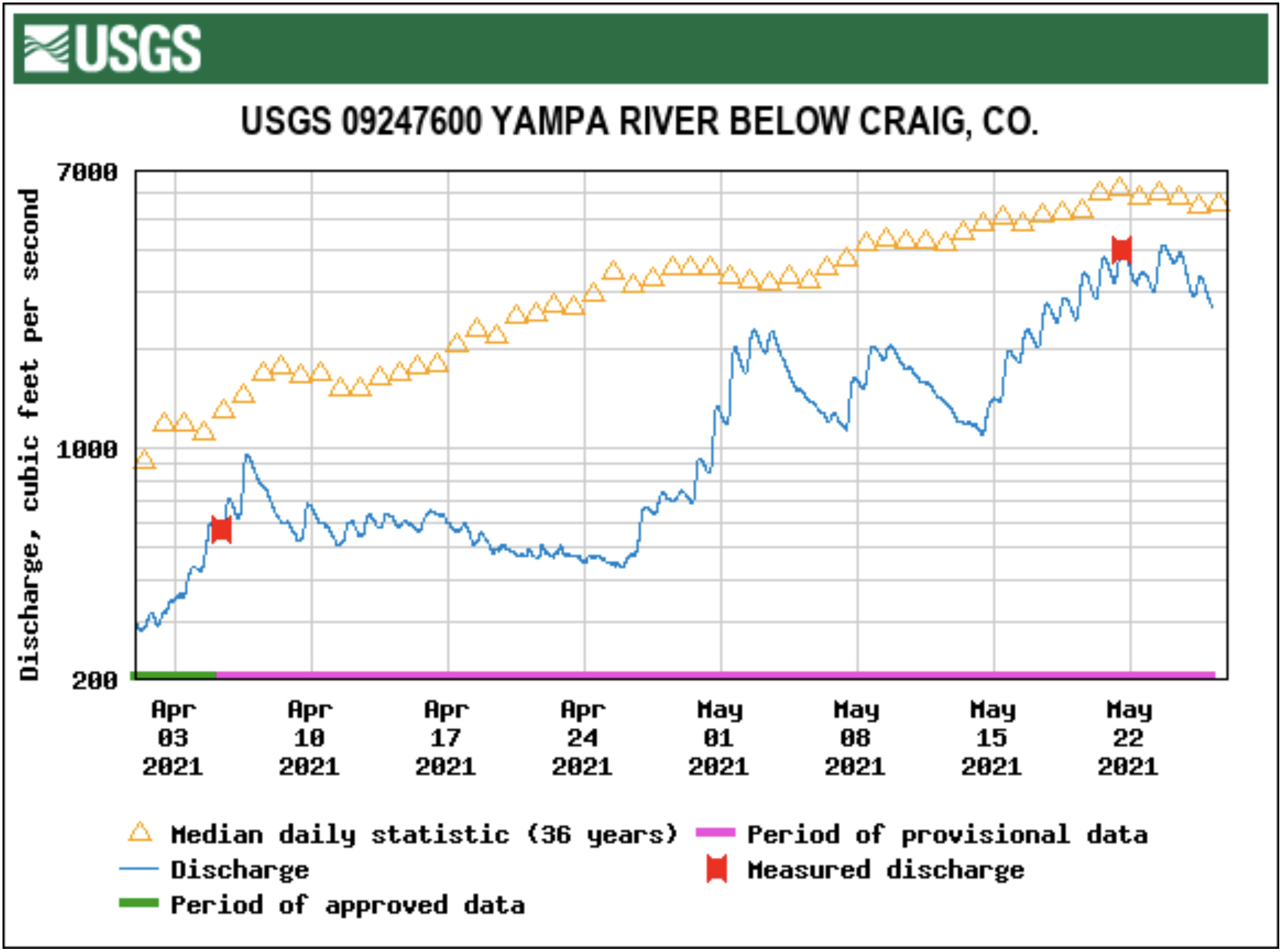
With drought and climate change continuing to dry the American West, the state of Colorado is moving to declare one of its last, mostly free-flowing rivers, the Yampa, over-appropriated.
The action, initiated in March, is emblematic of the water situation across Colorado and the West: growing demand, shrinking supplies.
“It’s a sign of the times, that is, it’s happening in the context of lower flows and increased demand — and we’re seeing that all over the West,” said Anne Castle, senior fellow at the Getches-Wilkinson Center for Natural Resources, Energy, and the Environment at the University of Colorado Law School. “The majority of the problem in the Yampa is created by a decrease in flows, although there has been some increase in demand.”
According to a recent analysis by the state, the Yampa’s flows have dropped roughly 25 percent over the past 100 years, from 1.5 million acre-feet to 1.12 million acre-feet annually, a change attributed to sustained drought and climate change.
“The combination of continued adjudication of new water rights and the potential for a hotter, drier climate will likely cause the trend of declining streamflows to continue,” wrote Erin Light, the top water regulator in the region, in her report detailing why she’s recommending the over-appropriation designation.
The river is important not just because of its key role in Northwestern Colorado, but also because it is one of the largest tributaries to the drought-stressed seven-state Colorado River system.
Kevin Rein, the state engineer and Colorado Division of Water Resources director, is still considering Light’s March 17 recommendation, which encompasses the Yampa River and all of its tributaries upstream of its confluence with the Little Snake River to the town of Steamboat Springs. If approved, the designation will affect 2,321 total square miles, which includes 148 miles of the Yampa itself.
Credit: Chas Chamberlin via Water Education Colorado
At a virtual meeting in March, some Yampa-area stakeholders expressed concerns about the quick pace of the process and the lack of in-person conversations. They also asked for more information and more time to understand the implications and potential ripple effects of the designation.
Before he makes his decision, Rein said he wants to be able to meet in person with the basin’s residents, something the COVID-19 pandemic has so far prevented. He said he did not yet have an anticipated timeline.
“I’m not confident that people understand some of the nuances, and so I want people to be believers in why we’re doing this,” Rein said. “I want to be out there meeting with people in person, answering all the hard questions before we make a decision that sets things in motion.”
Over-appropriation, explained
The state uses the over-appropriation designation when it has determined that there’s not enough water in a stream system, some or all of the time, for all of the people and organizations who hold water rights in the system.
Over-appropriation is the norm in Colorado — other portions of the Yampa system are already designated as over-appropriated, as are the majority of other stream systems in the state.
Still, the recommendation to designate this new section of the basin as over-appropriated is a major change to the status quo in this region, where water has historically been so abundant and demand so low that a majority of water users never measured what they took from the stream.
Scott Hummer, water commissioner for District 58 in the Yampa River basin, checks out a recently installed Parshall flume on an irrigation ditch. Hummer said most water users in the Yampa are complying with a state order issued 2019 that requires measuring devices. Photo credit: Heather Sackett/Aspen Journalism
To more accurately glean the full water picture in the Yampa Basin, the state ordered water users there to install measuring devices in September 2019. Though installation was initially slow-going, the state and several local community groups have been working with water users in the intervening months, which has brought the proportion of water users with measuring devices up to 58 percent as of April 2021, according to state officials.
“It’s normal for people to want to be able to continue the water use they’ve enjoyed in the past, but the hydrology is changing,” Castle said. “The overall balance of the system is different and that means that the way we do business in terms of administering water has to change as well. It’s quite understandable that people may not be welcoming this kind of additional state regulatory overlay that they are used to doing without.”
For divvying up the state’s water, Colorado uses a “first in time, first in right” system known as prior appropriation. This means that the people or organizations with the oldest decreed water rights, known as senior water rights, get priority over later-decreed, or junior, water rights.
When there isn’t enough water to satisfy those senior water rights, the state can stop or slow the flow for junior water rights, a measure known as a call or a curtailment.
This temporary action, taken to ensure that senior water rights holders can get all of the water they’re legally entitled to, is becoming more and more common in the Yampa River Basin. State officials have implemented calls in two of the last three years — in 2018 and 2020.
There would likely have been additional calls in the basin, but the community avoided them by sharing water, getting by with less, and releasing stored water from reservoirs into the river and allowing it to remain there rather than diverting it for irrigation or drinking water, according to Light.
“We have many stream systems where water rights are not fully met but owners opt to not request our office to place a call,” Light wrote in her recommendation. “While their cooperative approach to ‘make do’ with water they have and/or share it among their neighbors is admirable, it is yet one more indicator that, more and more frequently, the water supply of the Yampa River Basin cannot support the … demand.”
Groundwater vs. surface water
The overarching goal of the over-appropriation designation is to protect the rights of senior water rights holders moving forward, Light said.
If the designation is applied, people will still be able to obtain new surface water rights, for instance to take water from streams and rivers for approved uses like irrigation, but they should be aware that there may not be enough water available to satisfy those rights, Light said.
The over-appropriation designation would also affect groundwater rights, or water pumped up from below ground. More specifically, the designation will affect residents’ ability to drill new wells and bring into compliance existing wells with unpermitted uses.
Under the designation, landowners who want permission to drill a new well would need to meet stricter criteria and might need to be prepared to replenish that well water to the river, a process known as augmentation.
The reason for the distinction between surface and groundwater? Groundwater diversions like wells have a delayed impact on rivers and streams, whereas surface water diversions like ditches have a more immediate impact.
When water is in short supply, state officials can simply stop the flow to junior ditches to ensure there’s enough water for senior water rights holders. They can’t do that as easily with wells, which is where plans for augmentation come into play.
For some landowners in the proposed over-appropriation region, creating an augmentation plan will be a difficult process, one requiring lawyers, court filings and engineers. For others, it will be as simple as reaching out to a nearby reservoir manager and paying for stored water to meet the augmentation needs.
The Upper Yampa Water Conservancy District, for example, has a blanket augmentation plan that covers some of the proposed over-appropriation area. Landowners within the plan’s boundaries can apply to the district for augmentation water, which costs from $212.54 to $248 per acre-foot, according to district spokesperson Holly Kirkpatrick.
Meanwhile, augmentation is less straightforward for water users who live outside of those bounds.
“The community really has a choice of whether to continue with the status quo where people have to have their individual augmentation plans … or come together and implement some sort of blanket augmentation plan to remove that barrier to water development,” said Hunter Causey, senior water resources engineer for the Colorado River District, during the 2021 Yampa Valley State of the River meeting in May.
Sarah Kuta is a freelance writer based in Longmont, Colorado. She can be reached at sarahkuta@gmail.com.
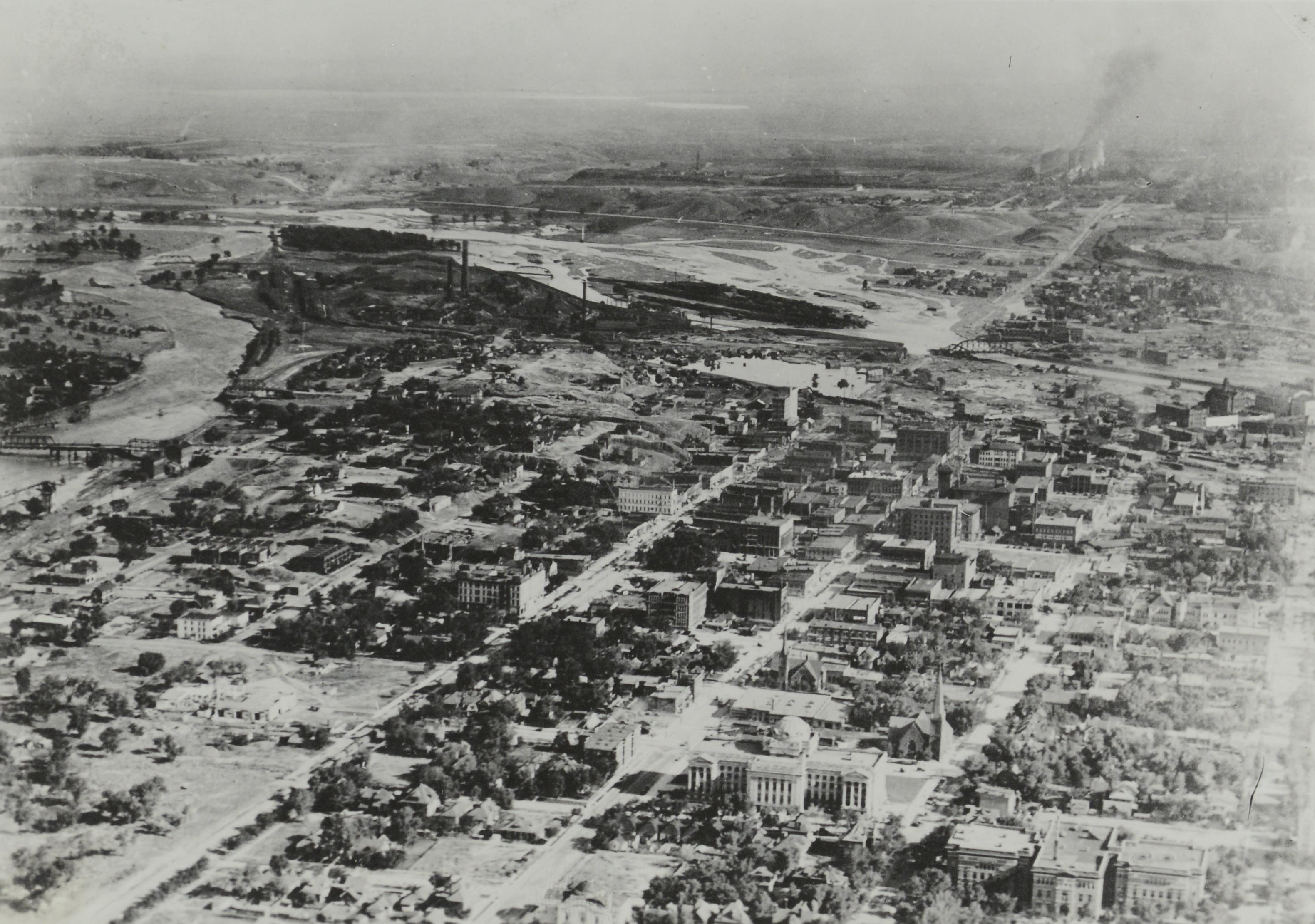
Over three days in June 1921, Pueblo experienced a natural disaster that forever changed the course of its history.
Even a century later, the effects of the Great Flood of 1921 can be seen throughout the Home of Heroes, particularly in the city’s infrastructure and economy, which were completely transformed by the devastating flood and Pueblo’s decades-long recovery.
Many Pueblo natives know most of the city’s seminal story by heart: a cloudburst brought heavy rains to the area on June 2, causing the Arkansas River – which was already prone to seasonal flooding – to swell. More intense rain on June 3 caused the Arkansas River to overflow Pueblo’s levee at just more than 18 feet and envelope downtown Pueblo in water.
By midnight on June 4, according to the Colorado Encyclopedia, the flooding peaked at more than 241 2 feet. The im- mense volume was enough to break levees in several spots and it took only two hours for Pueblo’s entire business district to become submerged.
Men stand outside the Union Depot in Pueblo (Pueblo County), Colorado. One man wears a badge. Shows water, mud and debris on the ground, and a flood damaged passenger car wrecked beside the stone depot. Probably a cleaning crew works on mud covered tracks nearby June 1921. Photo credit: Denver Public Library Special Collections
Damage from the flood, most of which occurred on the second day when both the Arkansas River and Fountain Creek overran their banks, was unimaginable. The flood inundated 300 square miles. More than 500 homes were carried away in the floodwaters along with 98 businesses or industrial buildings, 61 stores, 46 locomotives and more than 1,200 railroad cars. A local lumberyard caught fire; burning lumber was sent floating down flooded city streets. Telephone lines were destroyed, and corpses of cows, horses and other livestock littered the valley. A 1921 report on the flood by the United States Geological Survey estimated the total property damage to be more than $19 million. Adjusted for inflation, that equates to more than $280 million today. Other estimates go as high as $25 million in damage, or nearly $373 million today. The death toll was also catastrophic, though there’s no universally accepted total. Estimates range from fewer than 100 deaths to more than 1,500. The USGS report said 78 bodies were recovered in the aftermath, which is likely a fraction of the actual lives lost. Many bodies washed downstream and were either recovered months later or never found. And many of the dead were poor immigrants, making their absence more difficult for authorities to detect. But even after the water receded, mud and debris had been removed from city streets and the recovered dead were buried, the impacts of the flood on Pueblo were just beginning.
View of damage from the Arkansas River flood at the Union Depot rail yard in Pueblo (Pueblo County), Colorado. Denver and Rio Grande Western passenger cars are near the passenger platform. Damaged cars are turned over and logs and lumber is scattered across the rail yard June 6, 1921. Photo credit: Denver Public Library Special Collections
A recovery with dire consequences
In the aftermath of the flood, it became apparent that Pueblo’s infrastructure was not sufficient to prevent another devas- tating flood event. The city needed a new, larger river channel to ensure that when the Arkansas swelled from spring rains and Rocky Mountain snowmelt, it could not cause such destruction again. Legislation was passed at the Colorado Capitol to create the Pueblo Conservancy District, which set about building a new channel to divert the river away from Downtown Pueblo. “When it was set up years ago, the conservancy district had to move the river to its current location,” said Corinne Koehler, the current president of the Pueblo Conservancy District.
“Back then, that’s where a lot of the train tracks were, so they had to tear up and move the train tracks, they had to rebuild bridges, it was a multi-faceted project. It wasn’t just putting up a levee, they had to redo roads, bridges, anything that was destroyed that would have been crossing over the Arkansas River.” The levee was completed ahead of schedule in March 1926. And although its completion was a breath of relief for Pueblo in terms of preventing future floods, the creation of the conservancy district came with dire conse- quences to the Pueblo economy.
Peggy Willcox, a researcher with the Pueblo County Historical Society who helped write a recently published book about the flood entitled, ‘Mad River,’ said the district’s creation was a necessity following the flood, but the legislation enacted had major drawbacks for Pueblo.
“In order to create the conservancy district to pay for the flood control, they had to get the legislature to approve it,” Willcox said.
“Well the northern counties, some of them had been wanting a tunnel west from Denver ever since (Gen. William Jackson Palmer) built the (Denver & Rio Grande Western Railroad), because there was no viable way to ship goods from Denver west on the D& RG.” Prior to that time, every train going west had to come through Pueblo. So northern Colorado counties, particularly in the Denver area, sought to bypass Pueblo by building a tunnel that could ship freight or passenger trains directly west.
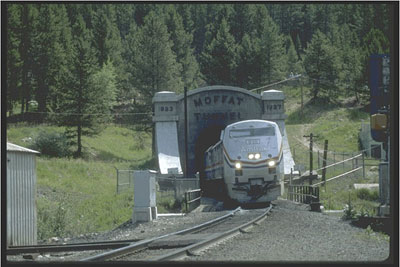
West Portal Moffat Tunnel.
To get its conservancy district, Pueblo would have to approve the construction of the Moffat Tunnel – a railroad and water tunnel that cuts through the Continental Divide. It officially opened in 1928.
“They held Pueblo hostage,” Koehler said, “And said, ‘If you want a conservancy district and a levee, you have to vote for the Moffat Tunnel.” The creation of the Moffat Tunnel was the beginning of the end of Pueblo’s prominence as a railroad hub…
Aerial view of the flooded Arkansas River in Pueblo (Pueblo County), Colorado. Shows freight cars at the washed out Missouri Pacific Railway Company yard, railroad bridges over the river and the Nuckolls Packing Company building beside standing water. Photo credit: Denver Public Library Special Collections
Economic impacts in the aftermath of Pueblo’s great flood
Pueblo’s eventual fall from grace as Colorado’s primary railroad hub was far from the only way the flood devastated the city’s economy. In the days immediately following June 5, many businesses were severely damaged and closed their doors, some forever. “After the flood there were industries that never reopened,” Willcox said. “Pueblo was then the smelter capital of the world, that’s what they called it, and there were only two smelters left and both of them were severely damaged by the flood and never really reopened. ‘So that was a large number of jobs.” Not long after the flood, Willcox said, the CF& I steel mill shut down for several months due to a shortage of raw supplies as well as a lack of railroad access, as the flood heavily damaged lo- cal rails. Several smaller manufactories in flooded areas closed. Many of those that eventually reopened did so in cities outside of Pueblo where there were more workers and easier access to rail transporta- tion. But the bigger impact, Willcox said, was how the flood seemed to dry up investments from out-ofstate capitalists, which were common prior to 1921. “That money kind of dried up after the flood,” Willcox said. “The investment from outside of Pueblo diminished greatly.”
There was a decades-long recovery effort in Pueblo after the flood
With some of its most prominent economic drivers devastated by the flood, Willcox said Pueblo’s economy seemed to become more one-di- mensional. “It’s not so much that Pueblo never recovered, it’s that it never recovered the growth rate that it had prior to the flood,” Willcox said. “When you look at the city’s population and the number of industries that were here prior to the flood Pueblo was a manufacturing center it was really a diverse group of manufactories. “And then after the flood some of them never came back but some of them were no longer as prevalent in the market as they had been and eventually died out. So I think, anecdotally, we became more dependent on the steel mill because of that.” Jonathan Rees, a history professor at Colorado State University Pueblo who has researched the flood extensively, said one of the biggest impacts of the flood was the opportunity cost Pueblo paid in the years that fol- lowed. “There’s the cost of rebuilding the town, there is the economic damage caused by the lost business but there’s also a cost as to what doesn’t happen because Pueblo has to spend so much time rebuilding from the flood,” Rees said. “Different things could have happened to Pueblo but didn’t because we were too busy trying to prevent future disasters.” In the 1920s, the United States economy was seeing one of its strongest periods of prosperity. But while other communities were able to leverage those desirable economic factors for improvement, Pueblo was stuck rebuilding. “You’re investing in the future in the sense that you’re trying to prevent future floods, but you’re not growing businesses, you’re not helping businesses that might not have been able to reopen, you’re not doing the kinds of things that cities that aren’t effected by the flood are doing at the same time,” Rees said.
“So when America is roaring, Pueblo isn’t.” After the Great Depression came the New Deal, and Rees said although Pueblo did benefit some from the New Deal, it likely would have had a greater effect on Pueblo and its growth if flood recovery efforts were not still taking place. As Pueblo struggled, its neighbor to the north, Colorado Springs, was put in a position to pros- per. “I would simply imagine that any program that came to Colorado Springs between 1921 and 1965, could have come to Pueblo under different circum- stances,” Rees said. “It’s safe to say that before World War II we were a much bigger place. We have certain advantages over Colorado Springs like our steady supply of water. However, we are engaged in rebuilding the entire downtown for a very long time.” Rees said that rebuilding Pueblo and redesigning its infrastructure was a necessary endeavor, but one that set Pueblo’s development back years, if not decades.
“While we’re doing that to guarantee our future existence, other places are taking advantage of good economic times or government programs in bad economic times to help become bigger and more economically active than they had before,” Rees said.
“And Pueblo was essentially holding in place for most of the 20th century.”
View of a flood on Fountain Creek in Pueblo (Pueblo County), Colorado. Shows a washed out railroad bridge partly buried in mud and silt in the creek. A Denver and Rio Grande Western train is beside the creek in the distance. June 1921. Photo credit: Denver Public Library Special Collections
When it came to covering the flood of June 3, 1921, The Colorado Daily Chieftain, also known as The Pueblo Chieftain, went to extraordinary measures to keep the citizens of Pueblo informed as news of the devastation unfolded. It all started with a Saturday, June 4, 1921, special edition emblazoned with the all-caps headline, “FLOOD EXTRA.” The two-page special edition had no photographs and no advertisements. It even had empty space at the bottom of the second page, a testament to how hastily it was put together. A June 9 edition of the Chieftain reported, “it was utterly impossible” to print regular editions of the paper, “because of the failure of electric power and gas,” and the editor promised to republish the extra editions “when regular conditions are restored.” That first extra edition was chock full of stories about “The largest flood visiting Pueblo since Decoration Day 1894,” which “gutted the business and wholesale business districts of the city.” Initially, the paper announced, “More than a score of lives were reported lost when both the Missouri Pacific and the Denver and Rio Grande passenger trains were swept into the river near Nuckolls Packing company. Many others were reported dead.”
View of flooded buildings, debris and flood water from the Arkansas River in Pueblo (Pueblo County), Colorado. Shows submerged commercial buildings, houses and telephone poles in Goat Hill (Tenderfoot Hill) in northeast Pueblo June 6, 1921. Photo credit: Denver Public Library Special Collections
Puebloans faced rebuilding one-seventh of the city
By June 12, the newspaper reported the city faced “the necessity of rebuilding about one-seventh of its present area. It is inconceivable that this great industrial city, so favorably located for commerce, should drop out of existence or shrink to the proportions of a village.” That same issue shared stories of large objects moved by the flood waters like a freight car forced sideways through a brick apartment house, another freight car carried a block and a half and a 3,000-pound safe that traveled across Union Avenue.
There also was an instance of a body in a steel casket that traveled a distance of more than a mile. Tales of Puebloan’s generosity were shared as both known and unidentified bodies were laid to rest with flowers paid for by “warm sympathetic hearts. Pueblo’s undertakers and florists have bestowed the humane tribute in every case, whether high or low, rich or poor, black or white, known or unknown.” Official water depths were reported including the McCarthy block, at North Main and Union, where the water reached a depth of 12-feet-6 inches. The width of the flood was reported as one mile “through the center of the city’s business section, with losses totaling more than $3 million.” The city’s drinking water was finally declared safe to drink on June 12. One story reported that P.A. Payne of Pueblo, who had been arrested by Colorado Springs police on a bootlegging charge, was saved from certain death as “the flood sweat away every vestige of the house.” Another story reported the body of Missouri Pacific passenger train Engineer S.G. Evans was recovered 10 miles downriver and shortly afterwards, “the body of a two-day old baby was recovered in the same district.” By June 15, the newspaper looked to the future and urged, “The matter of making the Arkansas flood proof is the big subject now in hand. ‘Pueblo’s flood was not one of something breaking, accidental or unforeseen, but has been a real live danger of the past and is a remaining danger of the future unless checked,” one prominent businessman, who was unnamed, was quoted. The June 15 issue also had a story under the headline, “How the flood left the heart of Pueblo,” indicated that once the water subsided, the mud was “over 2 feet deep” and “workers prodded through the mud in search of victims buried in the slime.” The June 16 issue of the newspaper had a story about the brave dog “Casabianca” who stayed on a shed roof for three days even though the distance to the dry land was short. Other dogs even waded out to visit her, but she stayed put until her owner arrived and carried her to safety along with a bundle of clothes which she had apparently been guarding. By June 16, the newspaper also was reporting on damage downstream of Pueblo in La Junta.
View of a small house that was carried by the flood waters of the Arkansas River and came to rest against the side of a brick garage in Pueblo, Colorado. The garage has damaged walls. Two men pose beside the garage. Ruts in the deep mud are near the buildings. Photo credit: Denver Public Library Special Collections
Meteorologically speaking, an event like this can and will happen again. The largest floods in state history generally happen along the front range, specifically along main rivers (Arkansas, Cache La Poudre, Big Thompson, South Platte, etc.).
The north-south oriented Rockies create a barrier for wind flow, forcing air to rise and condense along the front range, creating rain and thunderstorms.
During the June 1921 flood, a persistent easterly flow of warm and humid was funneled along the Arkansas River from wide-open Pueblo county into the sharper canyon in Fremont county. This led to 5 days of heavy rain totaling over 6 inches in Florence and Pueblo. This rain was most intense the night of June 3rd and the morning of June 4, where a cloudburst (extremely heavy burst of rain) led to the Arkansas river cresting at a whopping 24.66 feet.
At its peak, the Arkansas river flow was at 103,000 cubic feet per second (cfs), where the levees were built for 40,000 cfs at the time.
Pueblo levee Arkansas River.
The main concern about future floods is whether infrastructure can withstand them. Pueblo was able to rebuilt just a few years after the flood and increased the city’s ability to withstand another flood of 1921.
Click on a thumbnail graphic to view a gallery of drought data from the US Drought Monitor website>
US Drought Monitor map June 1, 2021.
High Plains Drought Monitor map June 1, 2021.
West Drought Monitor map June 1, 2021.
Colorado Drought Monitor map June 1, 2021.
Click here to go to the US Drought Monitor website. Here’s an excerpt:
This Week’s Drought Summary
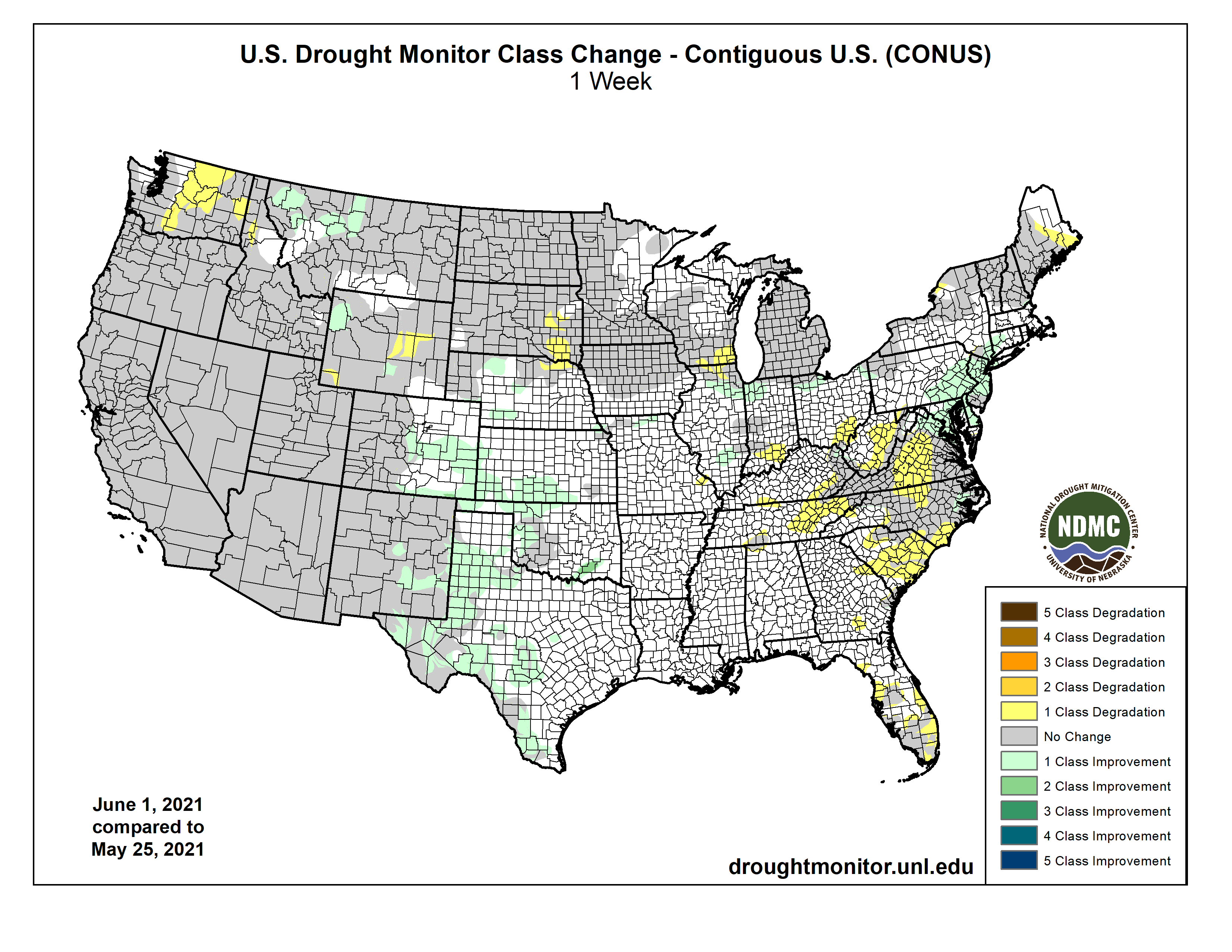
Precipitation this past week was most active in the southern Plains and the Mid-Atlantic into the Northeast, helping to ease and improve drought in those regions. Some precipitation also occurred in the South and portions of the Midwest, but the Southeast and Southwest remained dry through the week. For the time of year, temperatures were well below normal over most of the country, with departures of 9-12 degrees below normal in the Dakotas. Portions of the Southeast and Southwest did have pockets of above-normal temperatures, but even those areas were close to normal…
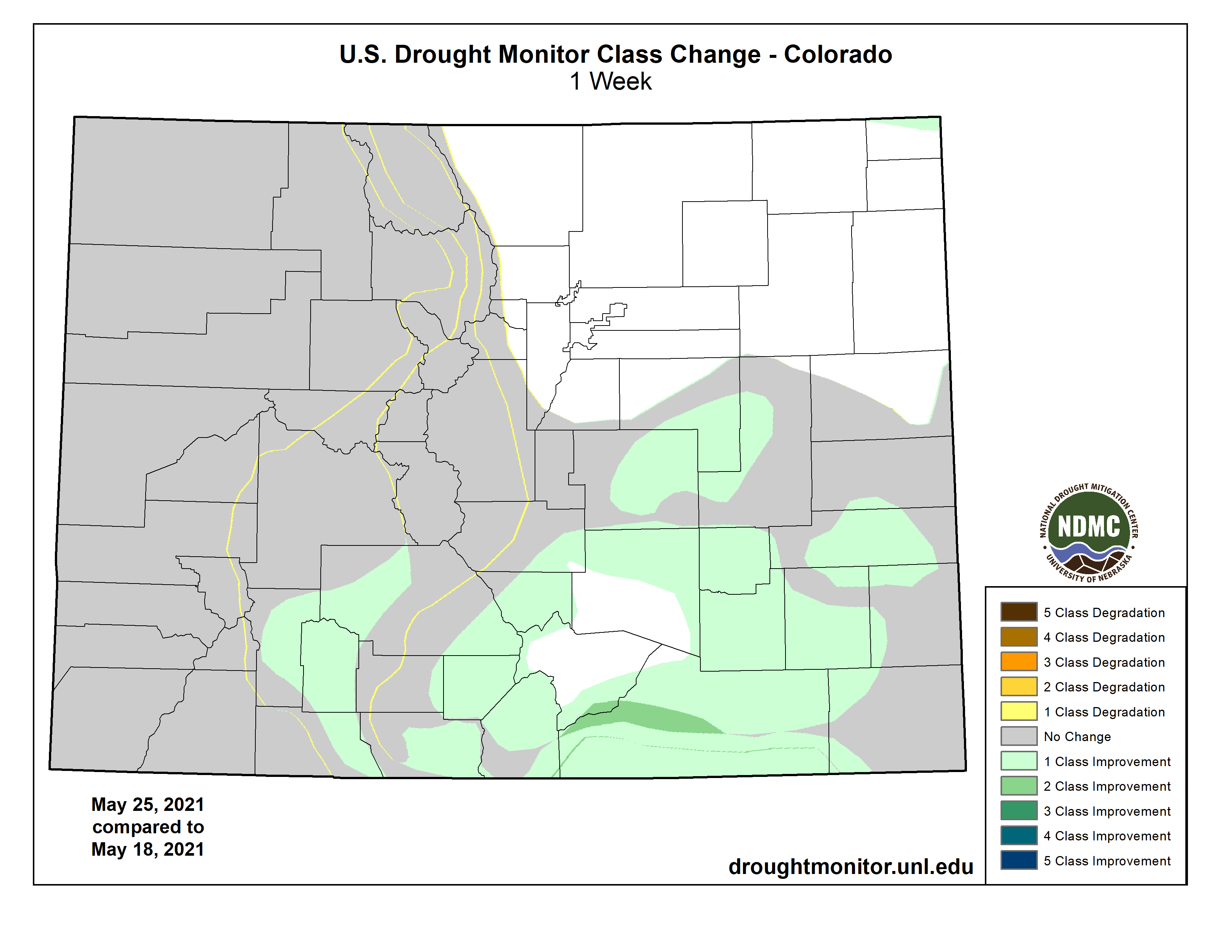
Colorado Drought Monitor one week change map ending June 1, 2021.
Temperatures were 4-6 degrees below normal, with even greater departures in the Dakotas where some areas were 8-10 degrees below normal for the week. Much of eastern Colorado, southern Nebraska, Kansas and northwest South Dakota into southwest North Dakota received well over 150% of normal precipitation for the week. In Nebraska, abnormally dry conditions were improved over the north central, southwest and extreme southeast portions of the state while moderate drought expanded over northeast Nebraska. Severe drought was introduced over southeast South Dakota, with an expansion of moderate drought and abnormally dry conditions too. Southern Kansas and eastern Colorado had improvements to abnormally dry and moderate drought conditions while Wyoming had a mix of improvements and degradations to moderate and severe drought in the state…
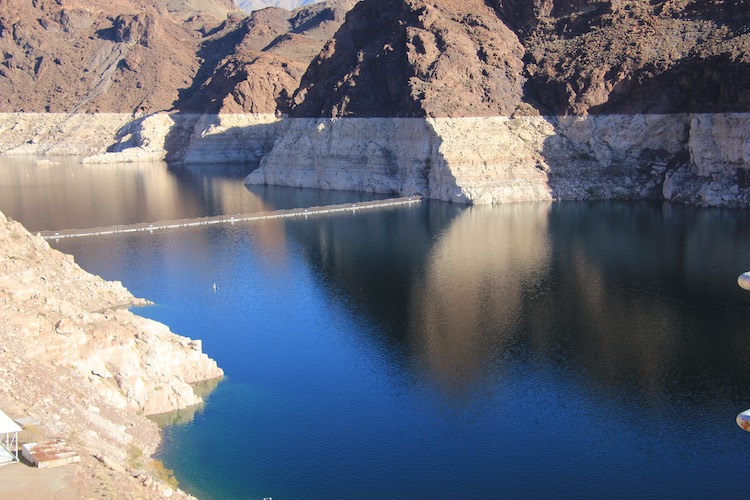
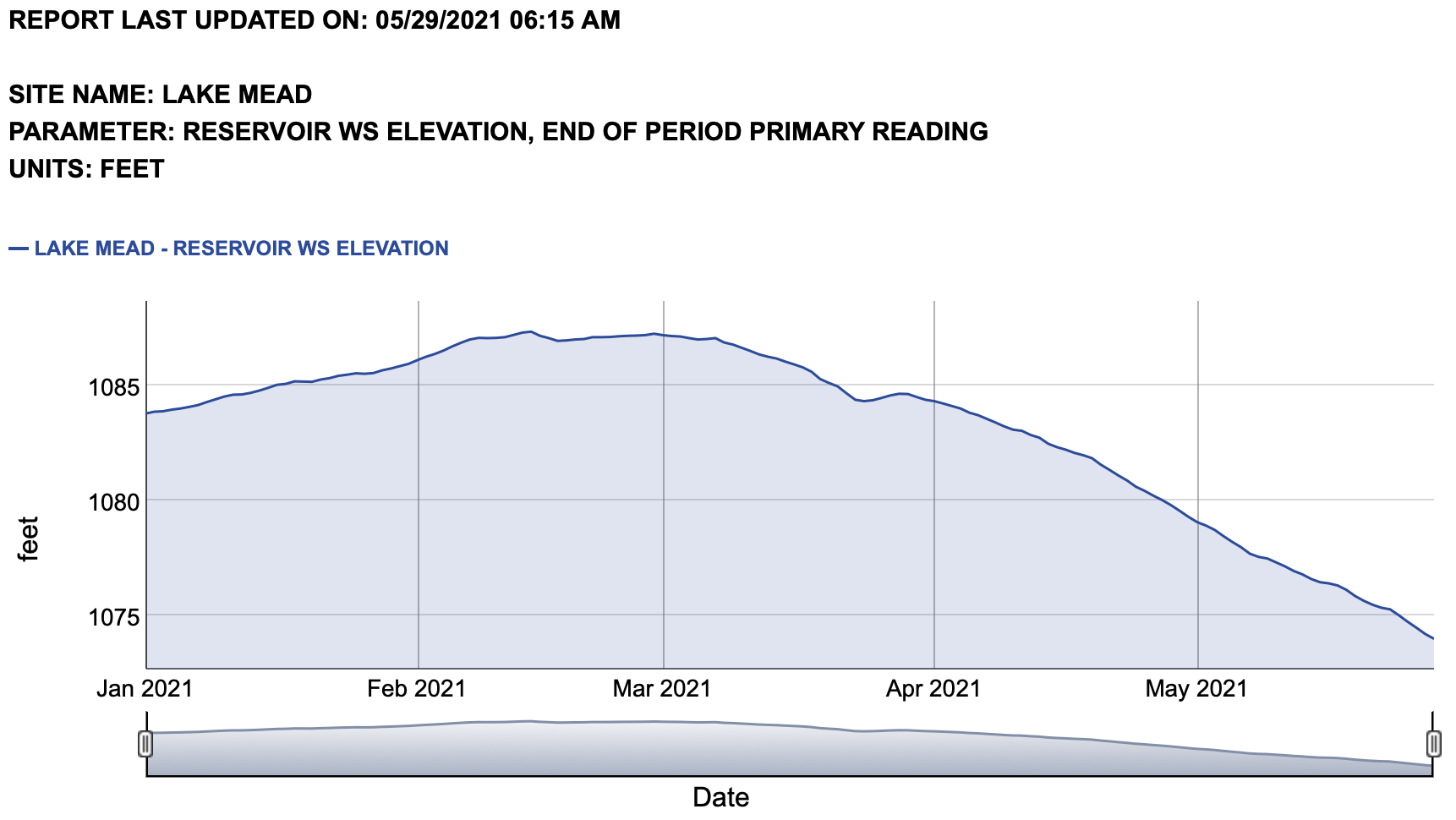
The warmest temperatures in the region were over California and Nevada, where departures for the week were 3-6 degrees above normal. Most of the rest of the region was near normal for temperatures. Most of the West was dry for the week but eastern New Mexico and western Montana received enough precipitation to allow for some improvements to their drought status. Impacts are building in the region with water cutback anticipated on Lake Mead as it is currently 37% full and fell below the critical 1,075-foot level triggering cutbacks to Arizona, Nevada, and Mexico. Abnormally dry and moderate drought conditions were improved over western Montana while New Mexico had a large area of exceptional drought improve due to recent rains. In Washington, conditions continue to dry out, and abnormally dry and both moderate and severe drought conditions continued to expand…
Much of the region had abundant precipitation during the week with many areas recording over 200 percent of normal rain. Along with the precipitation, cooler than normal temperatures were widespread with most areas 3-6 degrees below normal for the week. The ongoing wet pattern allowed for continued improvements over most of Texas during the week, with most areas having a full reduction of the previous drought intensity level. Southeast Oklahoma had moderate drought and abnormally dry conditions removed while portions of western Oklahoma also had abnormally dry conditions improve…
Looking Ahead
Over the next 5-7 days, it is anticipated that much of the West as well as the central Plains will remain dry. The southern Plains and portions of the Carolinas are expected to see the most rain. Warmer than normal conditions are supposed to dominate the West and into the northern Plains, with departures of 12-15 degrees above normal in portions of California and Nevada. Cooler than normal temperatures are expected over the southern Plains and South in response to the anticipated rain.
The 6-10 day outlooks show the majority of the country has above normal chances of recording temperatures above normal during the period with the northern Plains, upper Midwest, and into the Northeast having the greatest likelihood. Cooler than normal temperatures are expected over Alaska, the West Coast, and into the southern Plains. It is anticipated that dry conditions will continue to dominate the Plains and West with the highest likelihood over the Great Basin. The greatest odds of above normal precipitation will be along the Mississippi Valley and into the southern Plains.
Here’s the one week US Drought Monitor change map.
US Drought Monitor one week change map ending June 1, 2021.
Just for grins here are the early June US drought monitor maps for the past few years.
Here’s an excerpt from the Spring 2021 issue of Headwaters Magazine (Caitlin Coleman):
INTO THE MODERN STORAGE ERA
Most Coloradans rely on some form of water storage in order to live. Water is collected when available and later released when and where it’s needed. Water storage is a necessity, providing year-round access to water that would otherwise come in a rush each spring as snow melts into runoff and flows hurriedly out of state.
“If we were to leave it up to the natural systems, we would be dry for a big part of the year,” says Lauren Ris, deputy director of the Colorado Water Conservation Board. (Ris also serves on the Water Education Colorado Board of Trustees.)
Farview Reservoir Mesa Verde NP
The Ancestral Puebloans, who once inhabited the Four Corners region, knew this and relied on water storage like Morefield Reservoir, which anthropologists indicate was used between 750-1100 A.D. and is still evidenced by mounds in Mesa Verde National Park.
Standley Lake sunset. Photo credit Blogspot.com.
Years later, upon settlement by non-native populations including land grant recipients, homesteaders and miners, reservoir construction proved vital to sustain a larger population. Dams were rapidly constructed in the late 1800s through 1910, primarily for agricultural water needs. In the early 1900s some 290 dams were built in Colorado, the most dams erected in a single decade.
Grays and Torreys, Dillon Reservoir May 2017. Photo credit Greg Hobbs.
The 1930s through 1970s brought a boom of reservoir construction to meet the demands of the state’s growing municipal water needs. Toward the end of this municipal era, the 1960s saw the greatest water storage volume constructed in any decade, with more than 1.8 million acre-feet, including two of the state’s largest water bodies: Blue Mesa Reservoir near Gunnison and Denver Water’s Dillon Reservoir.
Graphic credit: RogerWendell.com
The rapid construction of big storage projects in Colorado and the West slowed starting in the 1970s as environmental laws and community concern about environmental impacts grew stronger and project permits became more difficult to obtain. The 1980s Two Forks dam and reservoir project debate and subsequent veto, where local community groups raised enough opposition to stop a planned 615-foot dam southwest of Denver, was a turning point. Two Forks marked the very end of the era in which big reservoirs were the primary answer to Colorado’s water supply, and the start to substantial community involvement.
The past 10 years have brought the fewest new dams and least amount of new storage volume in 120 years. Yet the call for storage from stakeholders across the state continues. Through the 2015 statewide water planning process, basin roundtables — stakeholder groups who have been working together on a regional, river-basin-wide scale to develop water priorities, assessments and goals — developed Basin Implementation Plans. All of the eight plans identified the need for new, restored or better-maintained storage.
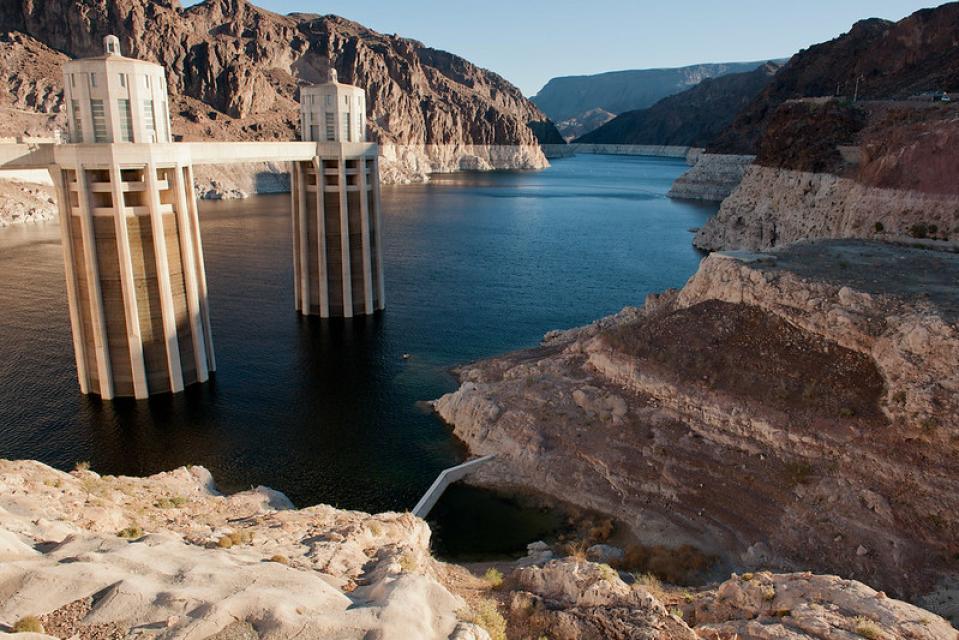
Lake Mead on the Colorado River, a major source of water for MWD. Photo/Allen Best
Here’s an in-depth look at the Lower Colorado River Basin’s intentionally created surplus accounts in Lake Mead from Brett Walton, that’s running in Circle of Blue. Click through and read the whole thing. Here’s an excerpt:
This year and next, Arizona and California intend to draw on water they banked in the big reservoir, even as water levels drop.
A complex and arcane water banking program in the lower Colorado River basin, adopted in 2007 and later amended, was designed to incentivize water conservation, prevent waste, and boost storage in a waning Lake Mead.
The program has already proved its worth, lifting Lake Mead dozens of feet higher than it otherwise would have been and nurturing collaboration among states that will need to work together to surmount daunting challenges of water availability. In the next two years, the program will be tested in another way, becoming a small but important source of water for Arizona and California even as the lake continues to fall to levels that haven’t been witnessed in several generations.
Water managers in the basin view the program, called intentionally created surplus or ICS, as a flexible tool for adapting to a drying climate. It is a tool that they will soon call upon. Bill Hasencamp from the Metropolitan Water District of Southern California, a large regional wholesaler, told Circle of Blue that the district intends to draw between 100,000 and 150,000 acre-feet from its savings this year.
Arizona officials, meanwhile, plan to use 69,100 acre-feet of ICS credits to reduce mandatory cutbacks that will be required in 2022 if Mead declines as projected. The state already used this maneuver to deal with a cutback last year, albeit in a smaller amount. Instead of taking a big cut in one year, ICS allows Arizona to “smooth the reduction,” as Chuck Cullom of the Central Arizona Project put it. CAP delivers the bulk of Arizona’s Colorado River allocation and is first in line in the state when cutbacks are required.
These amounts are small but significant, especially in these times. An acre-foot is 325,851 gallons, or the amount of water that will flood an acre of land to a depth of one foot. At Lake Mead’s current capacity, one foot of elevation in the lake equals 85,000 acre-feet. These ICS uses, at the high end, amount to two and a half feet of elevation in Lake Mead.
At the same time that water users plan to tap their savings, scholars in the basin are calling for more analysis of the ICS program, especially as Lake Mead’s decline accelerates. They would like to check how the system responds to ICS use under a range of water supply scenarios.
Ever since the mid-2000s, the last time that water supplies in Colorado River reservoirs reached critically low levels, the biggest water users in Arizona, California, and Nevada have been stashing water in Lake Mead, in preparation for another emergency to come — and in an attempt to avoid a catastrophic collapse of the region’s water storage system.
With the federal government now projecting that Lake Mead will drop precipitously in the next two years — perhaps to levels not seen since the Great Depression, when the country’s largest reservoir was first filled — that emergency has arrived.
“While Colorado River water users have invested billions of dollars to reduce consumption and increase resiliency, the situation we face today is real and urgent,” John Entsminger, the general manager of the Southern Nevada Water Authority, said at a House Natural Resources subcommittee hearing on May 25…
Because of record-high temperatures and a drying climate, the basin is also dangerously parched. Thirsty soils gulp melting snow before it reaches streams. Lake Mead, which is just 36 percent full, is in poor health. So is Lake Powell, located upstream and only 34 percent full.
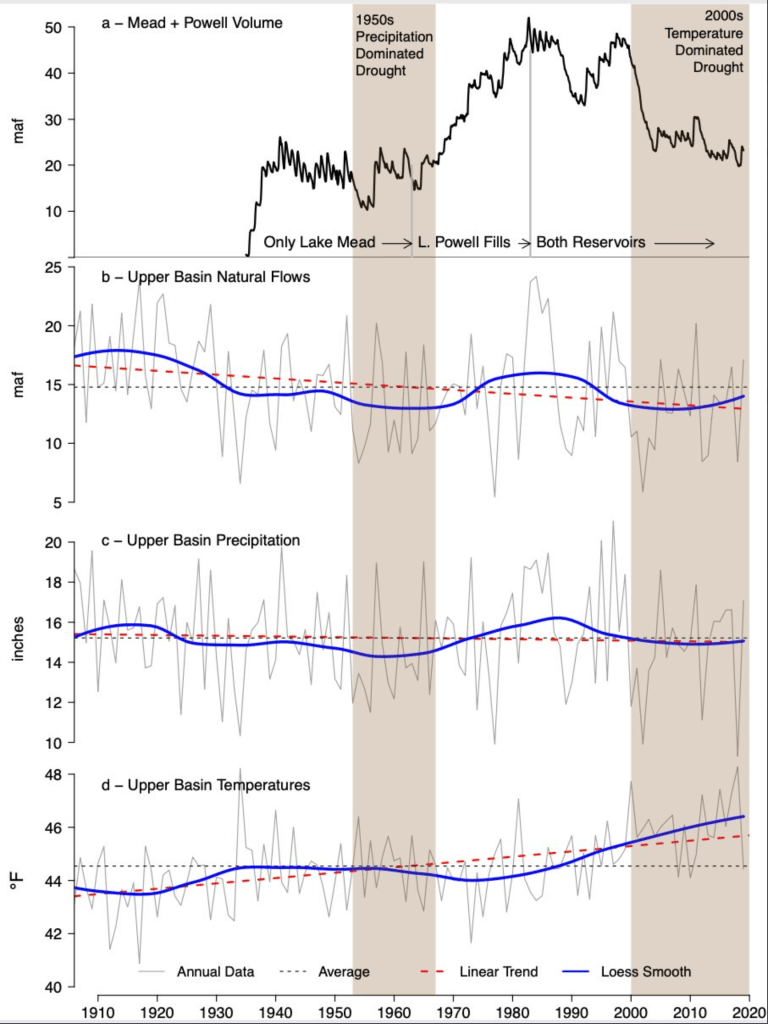
Brad Udall: Here’s the latest version of my 4-Panel plot thru Water Year (Oct-Sep) of 2019 of the #coriver big reservoirs, natural flows, precipitation, and temperature. Data goes back or 1906 (or 1935 for reservoirs.) This updates previous work with @GreatLakesPeck
Creating Surplus
ICS was conceived during negotiations between the seven states that led to a milestone agreement in 2007 that transformed how the basin operates. At the time, Lake Powell had experienced the driest five-year period in the region in a century and there were unresolved questions about delivering water under such conditions. The 2007 Interim Guidelines, which expire at the end of 2025, were a landmark document that secured three substantial changes.
First, the guidelines developed a formula for determining how much water is released from Lake Powell into Lake Mead. The releases are designed to keep the reservoirs roughly in balance.
The guidelines also set Lake Mead elevations at which lower basin states would be required to reduce their withdrawals. The first of these shortage tiers — at 1,075 feet above sea level — is expected to be breached next year. (Mead is currently at 1,073 feet, but for shortage determinations, it is the projected level in the following January that matters. Right now that projection is 1,066 feet.)
The third change was establishing intentionally created surplus, or ICS. The program allows big water users in the lower basin to open a savings account in the lake. To bank water in their account, they must take an action that reduces water consumption. That banked water is credited to the user that created it. ICS is not conservation in the household sense of simply using less. It is not taking a shorter shower or only watering the lawn once a week. ICS is instead more comparable to a personal savings account. Water banked now becomes an asset that can be withdrawn later, subject to certain conditions…
With a bit of linguistic maneuvering, the rules were written so that agencies like Met could create “surplus” by investing in conservation. Say, for example, that Met paid to line a canal with concrete so water would not seep into the soil, or paid farmers to fallow their fields. The Bureau of Reclamation, playing the oversight role in the lower basin, checks that the lining kept water in the canal and the alfalfa fields were not irrigated. That amount of water — the difference between what would have been delivered without the intervention and what was actually delivered — would then be credited to Met in the form of ICS, minus a small percentage that is the lake’s share.
A few years later these rules were altered to bring Mexico into the program. U.S. entities can pay a counterpart in Mexico for conservation and reap the ICS asset. The rules were changed again in 2019, in an agreement called the Drought Contingency Plan, or DCP, that welcomed certain tribal nations into the fold. Banked water is now subjected to a one-time tax of 10 percent, a cut that is credited to the storage system as a whole.
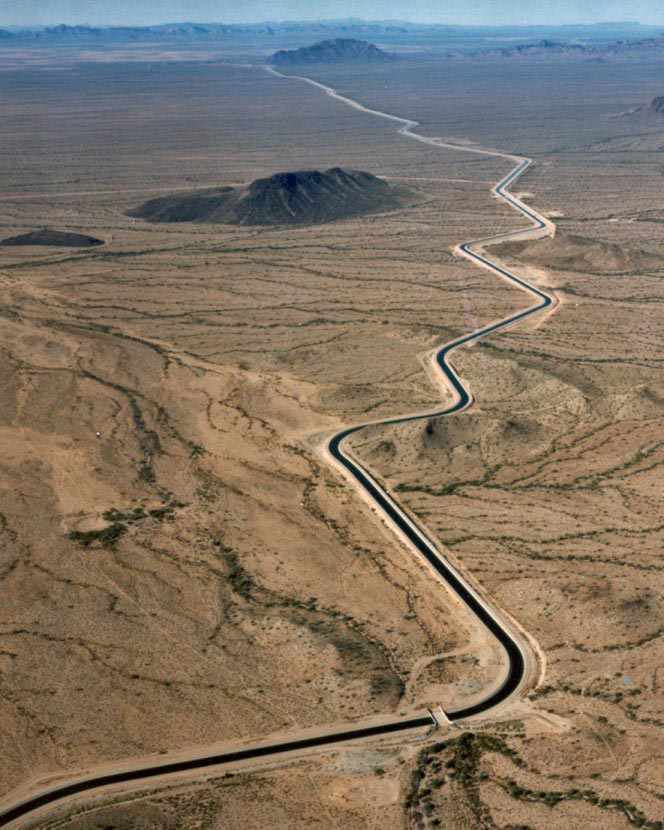
Aerial photo – Central Arizona Project. The Central Arizona Project is a massive infrastructural project that conveys water from the Colorado River to central and southern Arizona, and is central to many of the innovative partnerships and exchanges that the Gila River Indian Community has set up. Public Domain, https://commons.wikimedia.org/w/index.php?curid=326265
Only six entities have created ICS, according to Jeremy Dodds, who is responsible for ICS accounting and verification at the Bureau of Reclamation. Those six are some of the largest water users in the basin: Met, Gila River Indian Community, Colorado River Indian Tribes, Southern Nevada Water Authority, Imperial Irrigation District, and the Central Arizona Water Conservation District, which manages CAP. Within the four categories of ICS, there are limits on the ICS each water user can create, the amount they can take out in a year, and the total amount stored.
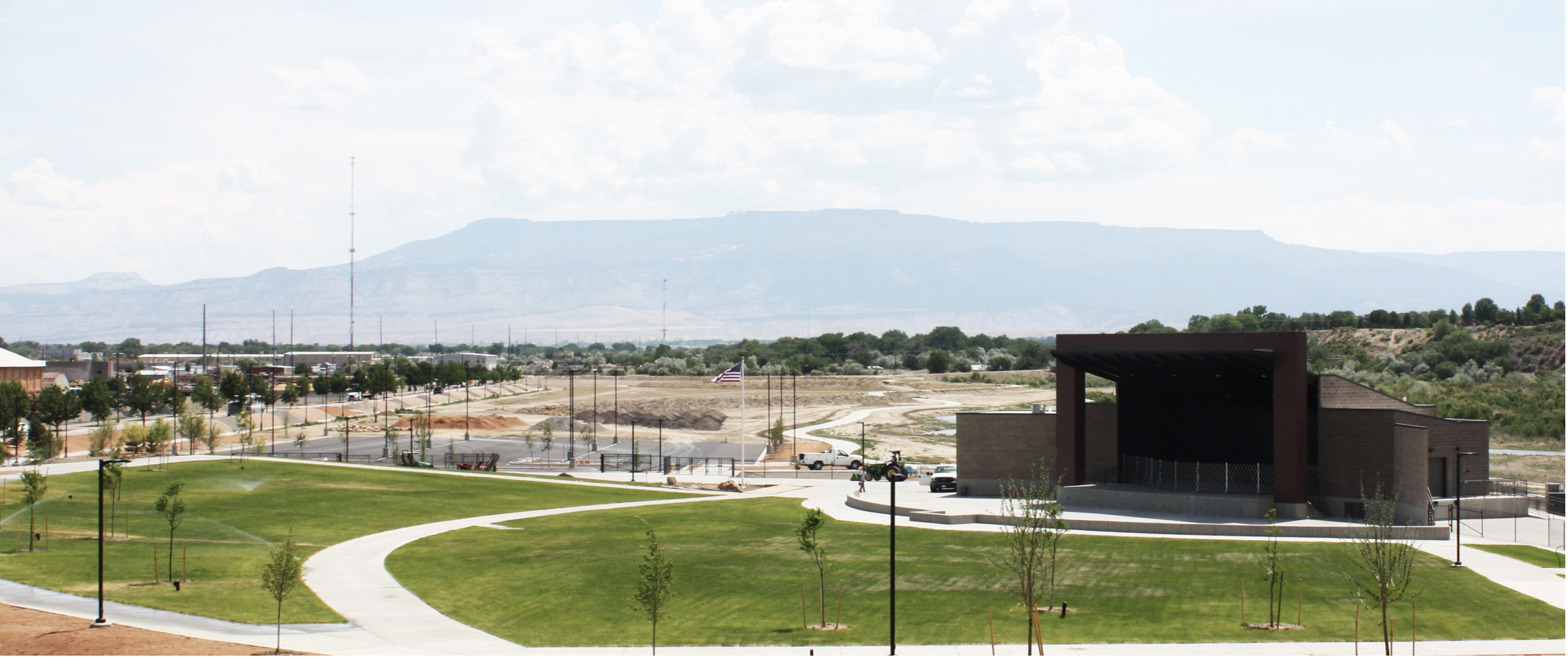
With children and families out floating the Las Colonias River Park behind them, community leaders gathered to celebrate the opening of the park amenity and recognize the work it took, over more than 30 years, to clean up the area and turn it into the park it is today.
The River Park has been open since May of 2020, but the celebration had to be delayed, as most things were, due to the COVID-19 pandemic. However, a year later leaders from the city of Grand Junction, Colorado Mesa University, Great Outdoors Colorado (GOCO) and others came together Thursday afternoon to speak about the impact of the park.
Parks and Recreation Director Ken Sherbenou spoke about the history of the Las Colonias Park, which had previously been the site of a junkyard that was contaminated with uranium mill tailings. In the late 1980s, a group of citizens got together to clean the area up…
Throughout this project the community had support from GOCO, which helped with the original Watson Island cleanup with a grant in 1995 to the River Park itself, which used a $350,000 GOCO grant, as well as funding from the Colorado Water Conservation Fund, for its construction…
There were many partners that made Las Colonias and the River Park possible, Sherbenou said, which included a number of federal and state agencies, as well as local partners. He said going forward it will lead to more people becoming stewards of the Colorado River.
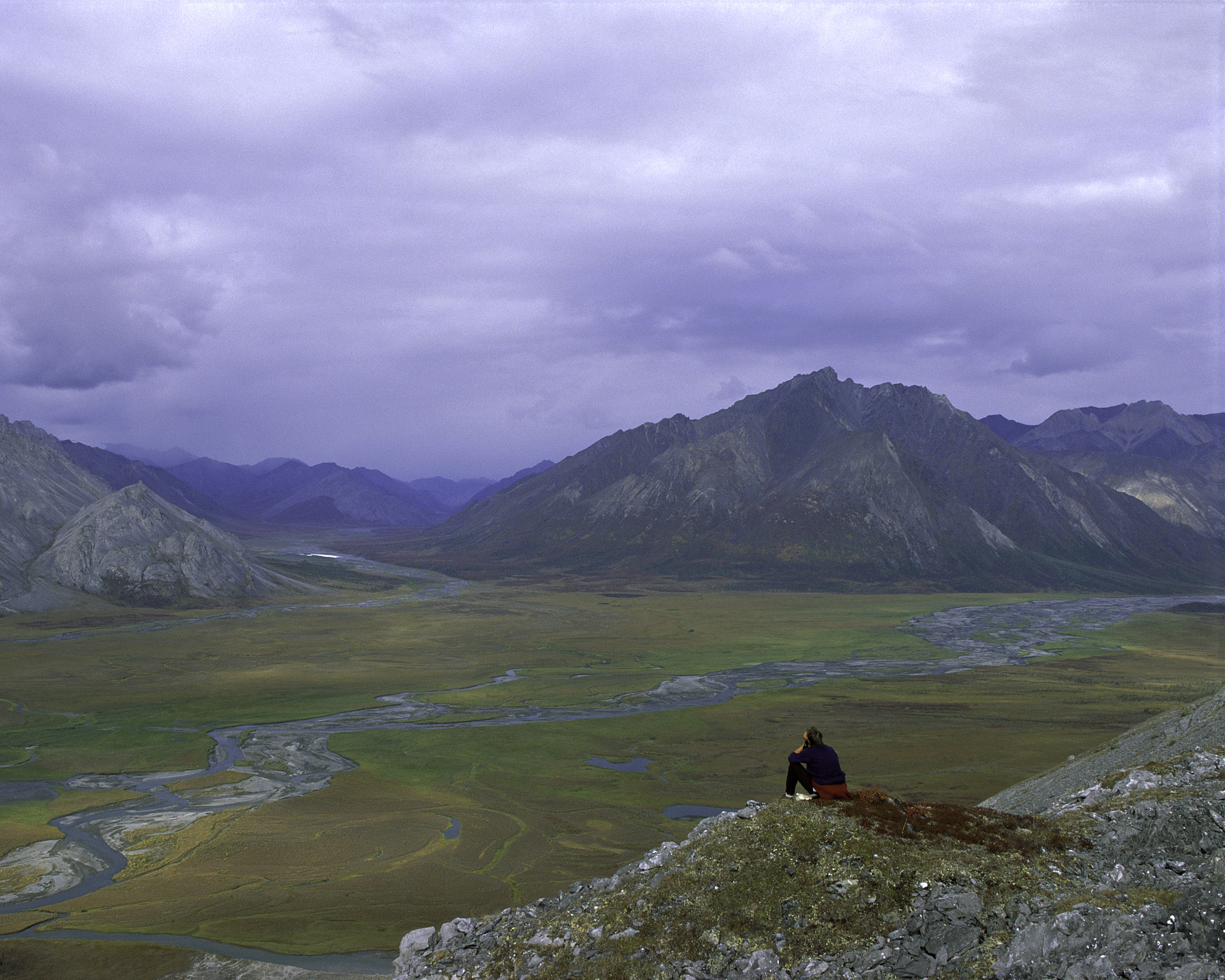
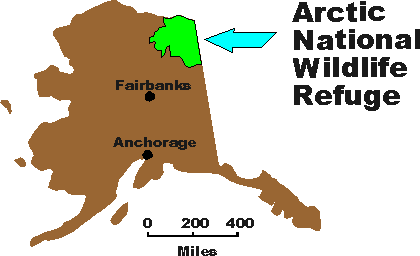
Arctic National Wildlife Refuge. Photo credit: Steven Chase, U.S. Fish and Wildlife Service, Public domain, via Wikimedia Commons
FromThe Washington Post (Juliet Eilperin and Joshua Partlow):
The Biden administration on Tuesday suspended oil and gas leases in the Arctic National Wildlife Refuge, targeting one of President Donald Trump’s most significant environmental acts during his last days in office.
The move by the Interior Department, which could spark a major legal battle, dims the prospect of oil drilling in a pristine and politically charged expanse of Alaskan wilderness that Republicans and Democrats have fought over for four decades. The Trump administration auctioned off the right to drill in the refuge’s coastal plain — home to hundreds of thousands of migrating caribou and waterfowl as well as the southern Beaufort Sea’s remaining polar bears — just two weeks before President Biden was inaugurated.
Now the Biden administration is taking steps to block those leases, citing problems with the environmental review process. In Tuesday’s Interior Department order, Secretary Deb Haaland said that a review of the Trump administration’s leasing program in the wildlife refuge found “multiple legal deficiencies” including “insufficient analysis” required by environmental laws and a failure to assess other alternatives. Haaland’s order calls for a temporary moratorium on all activities related to those leases in order to conduct “a new, comprehensive analysis of the potential environmental impacts of the oil and gas program.”
The step, coming just days after the Justice Department defended another drilling project on Alaska’s North Slope, underscores the balancing act the new administration aims to strike as it slows fossil fuel development on public lands. While Biden has paused new federal oil and gas leasing and pledged to drastically cut the nation’s greenhouse gas emissions, he has taken a much more cautious approach toward most oil and gas operations approved under his predecessor.
Last week, Justice Department attorneys filed a brief defending ConocoPhillips’s Willow project, an oil reservoir on the National Petroleum Reserve-Alaska that could hold up to 300 million barrels of oil. The administration also has defended the Trump administration’s decision to issue oil and gas leases in Wyoming and declined to press for the shutdown of the Dakota Access pipeline, a project Haaland protested while serving in Congress.
But Tuesday’s move signaled that the new administration was willing to take aggressive action in an area that has been a rallying cry for environmentalists for decades.
Area of the Arctic National Wildlife Refuge coastal plain, looking south toward the Brooks Range. By U.S. Fish and Wildlife Service – images.fws.gov (image description page), Public Domain, https://commons.wikimedia.org/w/index.php?curid=5787251
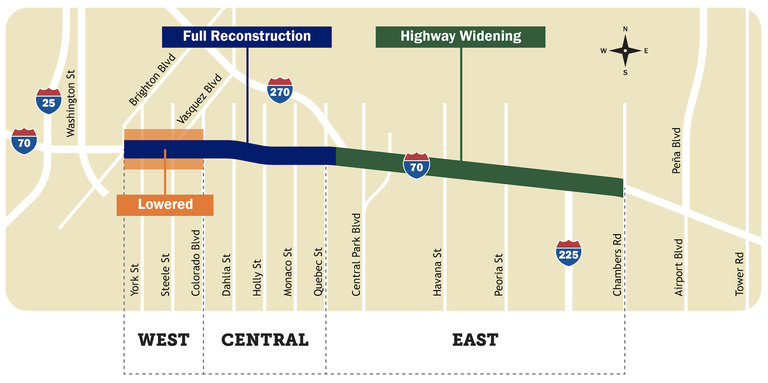
The lowered section of I-70 opened May 24, taking traffic off the remaining portion of the viaduct near the Purina plant.
Before the roadway was built, pipes were laid down. Some are 20 feet by 6 feet and can be driven through. Others are 6 feet by 6 feet and big enough to walk through.
The water from Central 70 flows to one of eight detention ponds. According to CDOT, the largest can hold 26 football fields worth of water: 8.5 million gallons. The smallest can hold 6,400 bathtubs full of water: 320,000 gallons.
The water from the tunnel portion of Central 70 gets some help getting back to the surface.
“We pump it to a very large holding tank,” said Inzeo…
A pump station near York Street brings the water to one of the detention ponds. From there, the water goes through a micro-pool, to get the solids and sediments taken out before the water ends up in the South Platte River behind the Denver Coliseum.
Half of the pump station is for taking water out, the other half is to support the fire suppression system inside the tunnel.
The brewing battle over the century-old Klamath Project is an early window into the water shortfalls that are likely to spread across the West as a widespread drought, associated with a warming climate, parches watersheds throughout the region…
In Nevada, water levels have dropped so drastically in Lake Mead that officials are preparing for a serious shortage that could prompt major reductions in Colorado River water deliveries next year. In California, Gov. Gavin Newsom has placed 41 counties under a state of emergency.
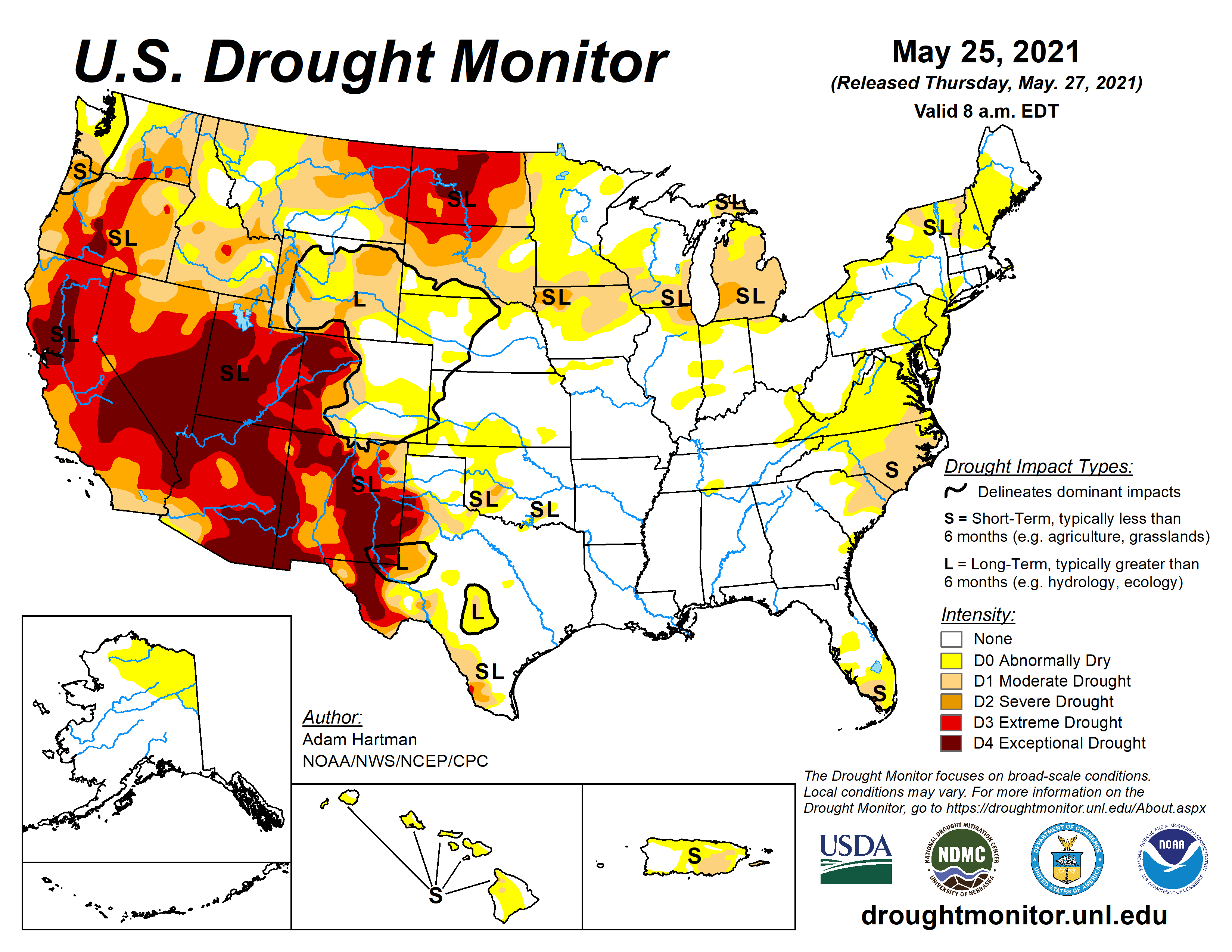
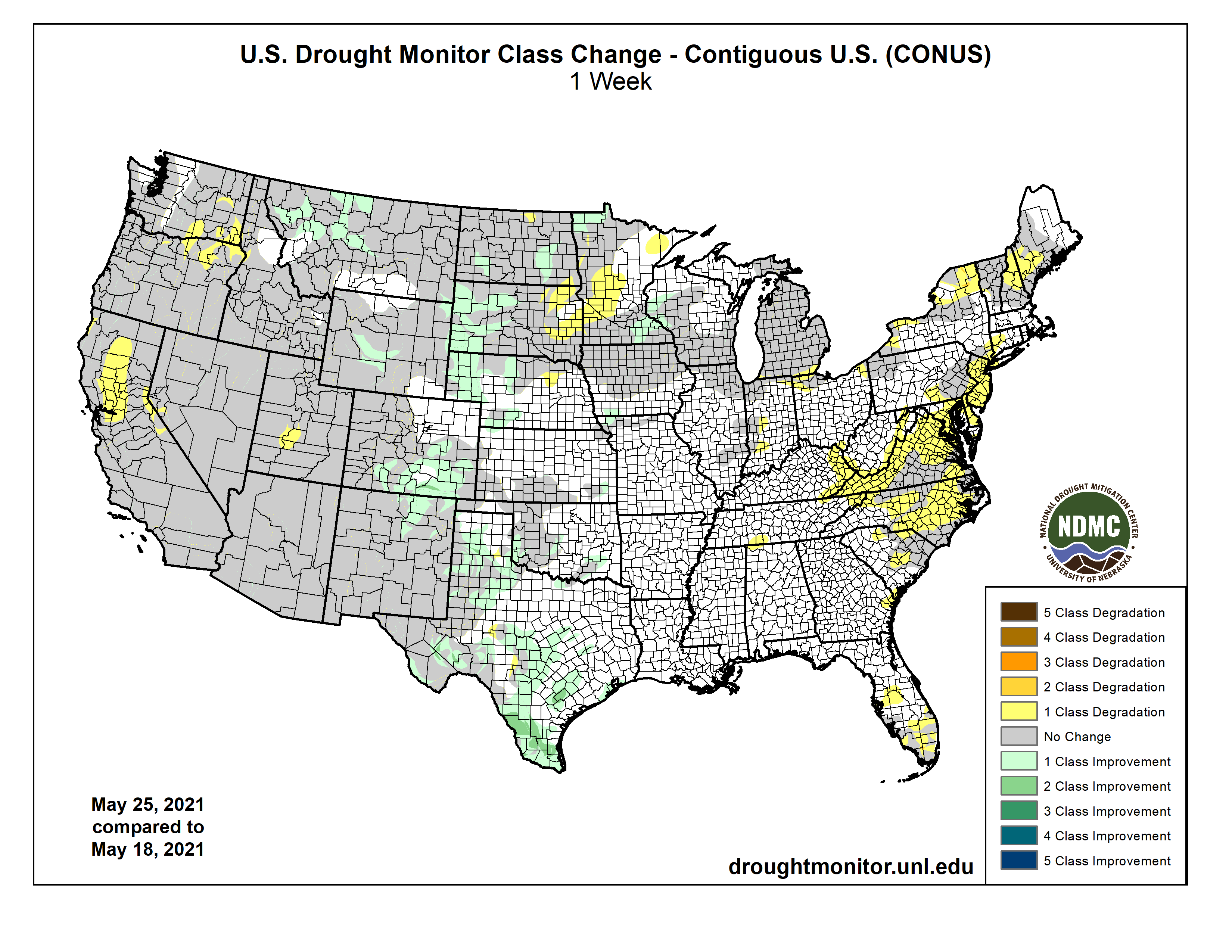
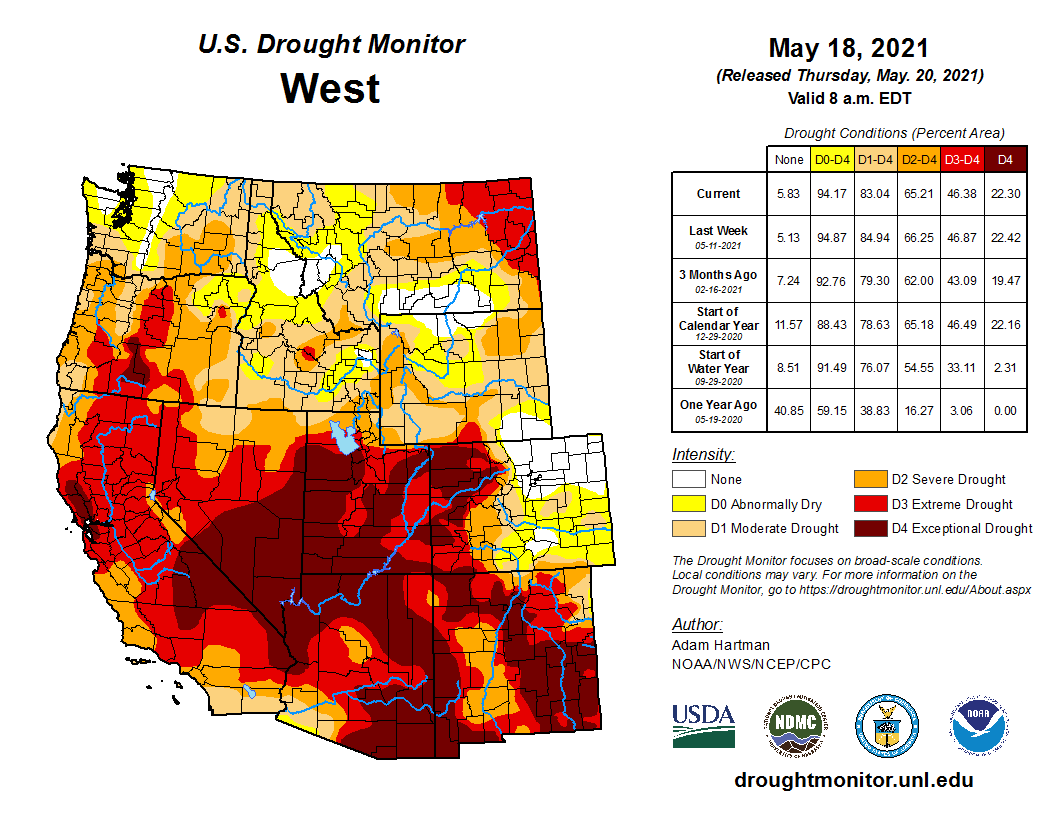
US Drought Monitor map May 25, 2021.
While drought consumed much of the West last year, setting the stage for an extensive wildfire season, the conditions this spring are far worse than a year ago. More than half of the West faces “extreme” drought conditions, according to the U.S. Drought Monitor, including wide areas of California and Oregon. Scientists have said the region may be going through the worst drought period in centuries.
Here in Oregon, conservationists, Native American tribes, government agencies and irrigators are squaring off, and local leaders fear that generations of tensions could escalate in volatile new ways.
“There are folks on both sides that would really like to throw down and take things in an ugly direction,” said Clayton Dumont, a member of the Klamath Tribal Council. “I hope it doesn’t happen, but it’s a possibility.”
Some landowners have openly talked about breaching the fence surrounding the dam property and forcing open the irrigation gates. Already, they have purchased property adjacent to the head gates and staged protests there. Ammon Bundy, who led an armed takeover of an Oregon wildlife refuge in 2016, said he was ready to bring in allies to help keep the gates open, saying that people need to be prepared to use force to protect their rights even if law enforcement arrives to stop them.
“Who cares if there is violence? At least something will be worked out,” Mr. Bundy said in an interview, ridiculing those not prepared to fight for the nation’s food supply. “‘Oh, we don’t want violence, we’ll just starve to death.’ Heaven forbid we talk about violence.”
The region has a deep history rooted in violence and racial division. In 1846, U.S. War Department surveyors, led by John C. Frémont and Kit Carson, slaughtered more than a dozen Native Americans on the shores of Klamath Lake. The Klamath Tribes eventually signed a treaty surrendering some 20 million acres of their historic lands in exchange for a reservation along Upper Klamath Lake and the perpetual right to hunt and fish.
For the United States, the Klamath Project became a keystone for settling and developing the region. Homestead opportunities for veterans after the two world wars helped to stimulate the economy and to build a new kind of community.
In 1954, Congress moved to terminate recognition of the Klamath Tribes, which held lucrative timberlands, and authorized the sale of tribal lands.
And the government’s guarantee to the Klamath Tribes that they would at least be able to continue fishing ran into trouble decades ago, when populations of native sucker fish — known to the tribes as C’waam and Koptu — along with coho salmon farther downriver slipped into a perilous decline, prompting mandatory protections under the Endangered Species Act.
During a drought in 2001, the federal Bureau of Reclamation initially planned for the first time to fully cut off water for farmers over the summer. That order spurred an uprising of farmers and ranchers who used saws, torches and crowbars to breach the facilities and open the canal head gates.
U.S. Marshals eventually stepped in to protect the gates, and the Bureau of Reclamation later released some water to help farmers…
Now some in the basin are worried that the unresolved divisions are poised to erupt again…
This year shows how critical the shortage is already: Even with farmers cut out of the water supply, fish are suffering…
Lake levels fell below the minimum thresholds set by federal scientists, prompting litigation and spurring fears that algae blooms this summer could devastate the imperiled fish populations above the dam; tribal researchers say insufficient flushing downstream from the dam has allowed parasites to flourish.
Already this year, juvenile salmon are turning up dead with parasitic infections. Michael Belchik, a senior water policy analyst at the Yurok Tribe, said the die-off could end up being the worst on record…
Also cut off from water supplies this year are several wildlife refuges that are home to 25 at-risk species of birds and fish…
But on Thursday night, about 100 people gathered under a large tent next to the head gates on property bought recently by two farmers, Dan Nielsen and Grant Knoll, who say they have a legal entitlement to the water behind the gates in Upper Klamath Lake under state water law. They contend that the federal government’s shut-off is a violation of state and federal law and the U.S. Constitution.
Tribes and irrigators have each notched victories in court over water rights, and the legal cases are continuing.
At the event, organized by local activists in Mr. Bundy’s network, speakers talked about the need to take back their rights. Some floated unfounded conspiracy theories, linking the water crisis to George Soros, Bill Gates or the United Nations. A Betsy Ross flag flew above the tent while a poster inside featured a quote about freedom attributed to LaVoy Finicum, who was killed by federal agents during the standoff that Mr. Bundy led in 2016. Mr. Bundy faced federal charges for his role in the standoff but was acquitted by a jury…
Facing a similar standoff two decades ago, in 2001, the federal government relented with a limited delivery of water to farmers, but there was no sign that agencies, facing an already depleted lake, would budge this time. An initial plan to provide a small water allocation to farmers was canceled when conditions worsened.
Water levels at Lake Powell, the second-largest reservoir in the country, fell to 3,559.95 feet above sea level on Monday, down from an average of 3,604.09 at this time (May 26) last year, according to the Lake Powell Water Database.
Lake Powell is at 34.2% of full pool (24,322,000 acre-feet) and 140.8 feet below full pool (3,700) as of Wednesday morning.
The primary factors influencing Lake Powell – as well as Lake Mead, the largest reservoir in the country – are inflows into Lake Powell, according to the Bureau of Reclamation.
Upper Basin hydrology accounts for about 92% of the total streamflow in the basin. Inflow into Lake Powell is also affected by Upper Basin water use and the operation of reservoirs above Lake Powell…
The Colorado River, Tooh Bikooh Dinék’ehjígo, originates on the Colorado western slope. Over 25 significant tributaries join it. The Green River in Utah is the largest by both length and discharge.
Tooh Bikooh flows to the Gulf of California. It provides water to nearly 40 million people for municipal use, to irrigate nearly 5.5 million acres of land, and is the lifeblood for at least 22 federally recognized tribes, seven national wildlife refuges, four national recreation areas, and 11 national parks, according to Reclamation.
In August 2020, a 24-month study projected the Jan. 1, 2021, Lake Powell elevation below the 2021 Equalization Elevation of 3,659 feet and above 3,575 feet. The lake level was 3,582.06 feet that day, according to the Lake Powell Water Database.
With an 8.23-million-acre-foot release from Lake Powell in the water year 2021, an April 2021 24-month study projects the end-of-water-year elevation here below 3,575 feet. Lake Powell will continue to release 8.23 million acre-feet through the remainder of the water year.
The Bureau of Reclamation will release its subsequent major study in August…
The current water level at Mead is 1,074.84, which is 154.16 feet below the full pool of 1,229 feet, as of Wednesday morning.
Arizona, Nevada, and Mexico are making contributions to Mead in a collaborative effort to maintain water levels and avoid severe shortage conditions at least through 2022.
But a first-ever official shortage declaration from the Department of the Interior is almost certain later this year…
Because Tooh Bikooh is over-allocated – and because drought and climate change are likely to worsen as the region gets hotter and drier — the seven Colorado River Basin states in 2019 agreed on a plan to manage the river by voluntarily cutting their water use to prevent the federal government from imposing mandatory water restrictions on the supply.
As part of the Lower Basin’s drought contingency plan, the CAP would see its water supply cut by about one-third in 2022 because of its junior water rights in the river’s water. And farms in central Arizona would experience those water cuts.
Reclamation’s projections continue to show a very high likelihood of Tier 1 reductions in 2022 and in 2023, as well as an increased risk of Tier 2 conditions in the future, according to the CAP.
In the issue, read about the cornerstone role that water storage has played in Colorado for more than a century, the Colorado Water Plan goal to develop additional storage by 2050, challenges and opportunities with specific projects, and some of the many ways that Coloradans are looking toward the next era of storage.
Experts from different organizations presented updates specific to their work, all focusing on water rights, drought outlooks and river basin updates.
Russ Schumacher, director of the Colorado Climate Center at Colorado State University, went through the recent history of the ongoing drought in the state. He said throughout the past few months, eastern Colorado has seen decent drought improvement, but western Colorado has remained about the same.
Schumacher presented a chart showing average temperatures and precipitation from April through September, which showed that 2020 was somewhat of an outlier.
“It was the driest April through September on record and one of the few hottest on record, and that is a recipe for a drought that develops quickly,” Schumacher said…
Richard Van Gytenbeek, Colorado River Basin outreach coordinator for Trout Unlimited, provided an overview of the goals and accomplishments from phase one of the Blue River Integrated Water Management Plan. The first objective of the plan, which Van Gytenbeek said the group has spent most of its time on, is to understand potential causes for declining fish populations between the Dillon and Green Mountain reservoirs and how the decline can be mitigated…
The second objective is what Van Gytenbeek called a “literature search,” which aims to compile information regarding physical and biological aspects of the Blue River Basin’s water resources. This would then formulate objectives and goals for future phases of the plan.
Van Gytenbeek said the phase one report is currently being finalized, and they intend to submit it to an advisory committee in the middle of June. He said he expects the report to be made public in July or early August.
Once the report is completed the second phase of the project will continue, with hopes of having the final phase two report ready for the public by March 2022. Van Gytenbeek said he thinks integrated water management plan organizations like the Blue River Watershed Group should get some support to keep the dialogue going past the life of phase two of the project.
Dave Kanzer, deputy chief engineer at the Colorado River District, talked about supply issues within the Colorado River Compact…
Nathan Elder and Jason Finehout of Denver Water said there is a low likelihood of filling the Dillon Reservoir this year, predicting an inflow of about 50-60% of normal. Finehout went on to explain that many of Denver Water’s annual summer watering rules are the same as many jurisdictions’ stage one drought restrictions…
Swan River restoration Reach A gravel removal. Photo credit: Summit County
Brian Lorch, trails director of Summit County Open Space and Trails, provided an update on the Swan River Restoration Project, which aims to naturalize more than two miles of the Swan River Valley impacted by historical dredge mining.
Lorch said this summer, Reach B of the project will start to take shape, as contractors will create about another mile of stream channel.
New research shows forests not bouncing back from fires as quickly, which could lead to erosion and strains on drinking water
The U.S. Forest Service and Boulder County have begun a $6.5 million emergency push to try to stabilize slopes here before hard summer rain. It’s an immediate fix for what research indicates could be a long-term problem…
In Washington, D.C., Democratic Sen. Michael Bennet and Rep. Joe Neguse are pushing legislation to deploy tens of thousands of workers to thin western forests before fires break out — a technique Boulder County land managers have used repeatedly over the last decade. Federal land managers, meanwhile, said they’re evaluating whether to replant and how much in an effort to promote at least partial recovery from a wildfire…
Focus on forest health
Wildfires played key roles in forming forests over thousands of years, bringing balance and diversity. But natural cycles were distorted by decades of humans aggressively suppressing fire, which is still a priority in Colorado and other western states. The resulting tree density, along with high temperatures and aridity, led to last year’s record-breaking megafires in California and Colorado.
“In many recently burned areas, trees aren’t reestablishing. We’re seeing this especially in wildfires that burned in Ponderosa pine forests,” said Tony Cheng, director of the Colorado Forest Restoration Institute and professor of forest and rangeland stewardship at Colorado State University.
Cheng recently testified in Congress, warning that forest fires are releasing more carbon into the atmosphere, that forest recovery may take centuries — if it happens at all — and that the United States’ capacity to sequester carbon is diminishing.
“If recent research is providing insight into the future, the prospects are low for forests to return to what people were used to seeing,” Cheng told The Denver Post. “Forest cover could be sparser, trees would be replaced with shrubs and other plants, the wildlife might be different, and the water-holding and filtering capacity of forests would be altered for a long time.”
A University of Colorado study published in February tracks with his assessment and blames climate warming. A 2017 study using data from 1,485 burn sites found increasingly unfavorable conditions for forests to regenerate throughout the Rocky Mountain West.
Slopes above Cheesman Reservoir after the Hayman fire photo credit Denver Water.
And northwest of Colorado Springs, the 70-square-mile core of the 214-square-mile scar from the 2002 Hayman fire shows how severe burning can reduce a towering 200-year-old Ponderosa and Douglas fir forest to grasses and shrubs two decades later.
Fighting to ‘keep the soil on the slopes’
Up on the blackened mountainsides between standing dead pines, orange-vested contractors recently were scoping sites to install 30 small dams and a pond to try to keep soil, crucial for new growth, from eroding.
Ground crews sawed into the pines, leaving roots in place. Amid a staccato thudding, red helicopters crisscrossed overhead, hoisting cut trunks using dangling hooks and hauling them into massive piles. A tractor-sized grinder turned the trunks to tons of mulch, which helicopters hauled in nets and dropped over severely scorched slopes six inches thick.
This emergency effort must stabilize the burned terrain as quickly as possible, Glowacki said, adding, “Our role in this is to keep the soil on the slopes.”
But by May 21, only 200 acres out of 1,800 acres prioritized in the project had been covered. The grinder had broken.
If scorched slopes remain barren, hard rain likely will cause flooding, possible slides and wash sediment into Geer and Plumley creeks, which flow into Lefthand Creek, the drinking water source for communities north of Boulder.
Mount Werner Water and Sanitation District is currently seeking funding for $6.5 million in improvement projects set for completion in 2022 and 2023 at the Fish Creek Water Treatment Plant that processes drinking water for Steamboat Springs.
The district received the final Water Treatment Facility Master Plan report in April from Carollo Engineering, which outlines 20 years of recommended work in four implementation phases at a substantial cost of $53 million, said Frank Alfone, general manager at Mount Werner Water.
The first phase of improvements addresses operational needs and updated regulatory requirements issued within the past five years from the U.S. Environmental Protection Agency and Colorado Department of Public Health and Environment related to copper and lead rules, as well as measurement of residual chlorine in the water, Alfone said…
The district is working with the financing arm of Carollo to investigate funding options, such as loans, grants and possible customer rate hikes. The district board will decide this fall if the necessary work will lead to future rate increases for customers of the district, which serves the city south of Fish Creek. Alfone said the district rates will not increase in 2021, also noting that current rates are, on average, lower than the statewide average.
Following the required regulatory improvements, the next phase in the master plan would be $6.5 million for work in 2028 to boost efficiencies in water filtering and processing capabilities for sediment and taste and odor issues from increased debris flow in the case of wildfire in the Fish Creek Watershed, Alfone said.
Fire experts say the Fish Creek Watershed represents one of the highest wildfire risks in Routt County due to the topography and fuel types…
The topography upstream from the water treatment plant includes the forested Fish Creek drainage that is a steep canyon several hundred feet deep. The canyon normally stays very wet, but during dry years, a fire in the canyon could be very destructive. The box canyon could function as a powerful funnel for flames during wildfires, said Drew Langel, a local forester with the Colorado State Forest Service.
Alfalfa growers ideally need 30 inches of irrigation water per acre, per season, for their crops. This season, some farmers in the county are only getting a fraction of an inch from their reservoirs. As a result, farmers have to adjust, by selling cattle, limiting acreage or shutting down completely. And some of the sacrifices they’re forced to make can be really hard on their mental health, Nolan said.
“Sometimes you look in the mirror and you’re like, ‘Should I be doing this?’” [Mike] Nolan said. “‘Like, does this make any sense?’ That stuff just builds. And it’s in seasons like this, it can crack. And that’s the scary part.”
Nolan is not the only one noticing the mental health effects that drought is having on farmers.
According to data compiled by Celebrating Healthy Communities, a Colorado-based suicide-prevention group, farmers and ag workers are the second-highest at-risk population in Montezuma County, where Nolan farms. That means they’re more likely to die by suicide than almost any other occupational group.
And the data show another concerning correlation.
Researchers also compared the state of Colorado’s drought data for the past decade with the state’s suicide data for the same period. When drought conditions worsened, so did the suicide rate among farmers.
JC Carrica, the CEO of Southeast Health based in La Junta, Colorado isn’t surprised by those findings. He specializes in behavioral health care in rural communities.
“There’s seasonality,” Carrica said. “There’s peaks of anxiety, peaks of depression. It’s ever flowing, because it’s weather-related or market volatility.”
He also says that drought can be especially devastating.
“When you see the wind come through and shear off whatever little bit of grass you had from a quarter inch of rain a couple of days prior,” he said. “It’s kind of the carrot and the stick, and sometimes there’s just not enough carrot to keep people’s hopes high.”
Many mental health issues in the agricultural community can be compounded by a lack of services. The answer, Carrica said, is to make more of an effort to get mental health care to farmers, on their level.
Kate Greenberg is the Commissioner of Agriculture for the state of Colorado.
“As we see financial stress increase, as we’ve seen, in the last decade or so,” Greenberg said. “We also see spikes in suicide rates among agricultural communities.”
Greenberg says her department is working with local partners across the state to get more resources to rural areas. What works in a city might not translate to agricultural communities. So, she says, resources like online training manuals or public service announcements should be written with that in mind. Colorado also maintains a crisis hotline — a free and confidential mental health resource that’s available 24/7.
But as climate change continues to heat up and dry out the West’s farmland, Greenberg said the stress that comes with water scarcity will remain a challenge in keeping agriculture viable, and those who do it mentally well.
Back in the Mancos Valley, Mike Nolan said this year’s lack of water is changing his operation in a fundamental way.
“The big one was laying off everybody, which was a real bummer,” he said. “Never had to do that. It was really hard to do.”
But Nolan says off-and-on therapy has really helped.
As the Colorado River Basin enters yet another year of drought, global companies are worsening the water crisis.
DRIVING INTO SOUTHERN California’s Palo Verde Valley from the Arizona border, fields of vibrant green appear out of the desert like a mirage. Near the town of Blythe, water from the Colorado River turns the dry earth into verdant farmland, much of it to grow a single crop — alfalfa, a type of plant used mainly to feed dairy cows.
For decades, a significant portion of alfalfa grown here and elsewhere in the western United States — as much as 17 percent in 2017 — has been loaded onto trucks, driven hundreds of miles to ports on the west coast, and shipped around the world, mainly to China, Japan, and Saudi Arabia. A little over five years ago, one company decided it made more sense to own the land, and the water that came with it, outright.
The company, a Saudi Arabian dairy firm called Almarai, purchased 1,790 acres in the Palo Verde Valley to secure a supply of alfalfa for its dairy cows. Soon after, Saudi Arabia began phasing out domestic alfalfa production to preserve its water supplies, which were dwindling after years of overuse for agriculture. The purchase made headlines as critics including local politicians and environmentalists questioned whether it was fair for a foreign entity to use up valuable groundwater resources for products that wouldn’t ultimately benefit Americans.
The farms of the Palo Verde Valley draw water from the Colorado River. Visual: Dicklyon / Wikimedia Commons
But the company is far from alone. Foreign corporations are increasingly purchasing land in the U.S.; in the Southwest, thanks to longstanding laws on water rights, these purchases often come with unlimited access to the valuable water underneath the soil. Combined with nearly year-round sunshine, this has made the area a magnet for companies looking to grow water-intensive crops and raise livestock. Over the last 20 years, foreign companies have purchased more than 250,000 acres of land in six Southwestern states to raise cattle and pigs, as well as to grow everything from almonds to alfalfa, according to an analysis of purchase data that Undark obtained from the U.S. Department of Agriculture.
On its face, foreign ownership of farmland hasn’t proved significantly different from American ownership for large-scale production of crops like alfalfa. Domestic farmers have long shipped food overseas, and companies like Almarai, as well as independent researchers, have suggested the outsized focus on foreign companies may be xenophobic. American farmers and companies also control millions of acres overseas, mainly in Africa, Asia, and South America. But with their implications for food and water security — that ultimately, the U.S. is not in control of its own farmland — the purchases are drawing attention to the larger trend of industrial agriculture in the U.S. and the problems that come with it.
Corporate farms, researchers and policymakers warn, drain aquifers and threaten access to water for drinking and future crop production. The export of crops and the water used to grow them, known as virtual water, has been accelerating for decades, despite concerns that in drought-stricken areas such as the Southwest, this system is unsustainable in the long term. Although virtual water itself is not inherently problematic — and can even reduce water usage in some cases — its extraction from water-stressed communities is sounding the alarm as water crises become more urgent. Even as the Colorado River Basin enters its 21st year of sustained drought and climate change threatens to further exacerbate water scarcity, virtual water trading is expected to triple globally by 2100, with a large share moving from the U.S. to other countries.
“It’s basically exporting water in the form of alfalfa to countries that are water scarce,” said Alida Cantor, an assistant professor at Portland State University in Oregon who researches water management and sustainability. “But it’s exporting it from a region that is also water scarce.”
Norwood – four horse stage used on Placerville-Norwood route, east of Norwood, Colorado. Credit: Denver Public Library Special Collections, creator Beam, George L. (George Lytle), 1868-1935. Date: 1910?
Norwood Public Works Director Lippert has said the water situation is questionable this year, as many people already know. On Monday, he told The Norwood Post that it didn’t look good.
“We are in extreme drought, and it’s serious,” he said. “It could change in a heartbeat, but today it’s pretty serious. It’s going to affect a lot of people in a lot of ways, from ag to those who want to move here.”
At the town board meeting two weeks ago, Lippert gave an update on the raw water status. Last Monday, the raw water system was turned on, and tap holders who have rights to water lawns and gardens are now able to do so. Raw water is projected to run for 30 days at this point, though Lippert said that may change depending on the weather.
Monsoons, which typically bring summer rains to the Wright’s Mesa area, could help the situation, though the last few years the monsoon season has not produced much precipitation, which is disappointing for raw water customers (and of course those who work as farmers and ranchers.)…
And, Norwood’s first water education day is June 5 from 10 a.m. to 2 p.m. Organized by town trustee Candy Meehan, the event aims to educate the locals about the water situation currently, but also teach the history too.
Many water organizations will come together, including Farmers Water, the Norwood Water Commission, the Lone Cone Ditch Company and others.
Meehan hopes the water day is informative for the public, but also helps with being proactive, rather than reactive, regarding the water issue in Norwood.
While western Colorado continues to suffer under extreme and exceptional drought, the eastern plains have been rapidly improving to nearly drought-free conditions according to the latest report from the National Drought Mitigation Center.
Thanks to recent spring storms, two pockets of moderate drought impacting portions of El Paso, Elbert, Lincoln, Kit Carson, Kiowa, Bent and Prowers counties have now retreated to abnormally dry conditions.
Along the southern border with New Mexico, moderate drought retreated from Huerfano and Costilla counties. Nearby, severe drought moved to moderate conditions for southern Las Animas and southwest Baca counties.
Colorado Drought Monitor map May 25, 2021.
Drought-free conditions grew further into the San Luis Valley as well as the southeast plains.
Western Colorado has remained largely unchanged for weeks and is mostly covered with extreme and exceptional drought.
Over the past week, storms have produced as much as three inches of rain – with isolated areas receiving more – on the eastern plains. Hail and tornadoes have accompanied may of the thunderstorms.
Improvements in eastern Colorado began in mid-March as significant snow set the initial stage for relief to the area. During May, thunderstorms have continued to bring rain to the state’s eastern plains, resulting in drought-free conditions for most northeast counties by last week. A remaining strip of abnormally dry conditions in northern Sedgwick County became drought-free with recent rains.
The first drought-free area in Colorado since mid-2020 appeared in late April.
Colorado Drought Monitor one week change map ending May 25, 2021.
Recent rounds of precipitation have improved pasture conditions to northeast counties, as well as better wheat condition in the east central area. Reports from the USDA also showed better pasture conditions in the southeast portion of Colorado.
Overall, 34 percent of the state is drought-free, up from 23 percent last week, with an additional 20 percent in abnormally dry conditions, down from 25 percent in the previous week. Moderate drought covered 11 percent of Colorado, down from 13 percent, while severe drought dropped from 10 to six percent. Extreme and exceptional drought were unchanged at 13 and 16 percent, respectively.
The controversial Gila River diversion project has entered a “closeout” phase.
With no discussion, the New Mexico Interstate Stream Commission on Wednesday approved several line item transfers within the New Mexico Entity of the Central Arizona Project’s 2021 budget, as well as a closing budget for the 2022 fiscal year to pay for a final annual financial audit of the group.
The N.M. CAP Entity’s executive director, Anthony Gutierrez, addressed the ISC before it voted unanimously to approve the two items.
“I know this has been a long process,” he said. “Our members and myself were disappointed with not being able to develop AWSA water, but we certainly respect the decisions that the commission has made in the past few months.”
Gutierrez acknowledged that one of those decisions “was to discontinue the budget for the New Mexico CAP Entity,” which paid for, among other things, his salary. It also covered Entity attorney Pete Domenici’s fees, for which $139,500 was originally budgeted this fiscal year.
Blue Mesa [Reservoir] is at about 345,000 acre feet and sits at 42% full, based on May data, which predict the reservoir will only hit just above 50-percent full — “not very good,” as Bureau of Reclamation hydrologist Erik Knight put it.
“We’re lower than we were at any time in 2020. In 2018, we were below 250,000 acre feet by the end. We’re not projecting to go that low yet, but we’re heading in that direction, that’s for sure,” Knight said Friday.
“The reservoir is pretty low. Runoff hasn’t really kicked into gear, although I think that is starting now,” he added.
Although the Uncompahgre River is a bit bouncier and swelling with some snowmelt, Montrose County and the western side of the state remain locked in drought.
Colorado Drought Monitor map May 25, 2021.
Conditions in the county range from extreme drought to exceptional — the two worst levels — according to US Drought Monitor data.
So far, the Uncompahgre Valley Water Users Association, which serves about 3,500 shareholders, has been able to fill its contracts at 70%. The association’s storage “account” at Taylor Park Reservoir — which with Blue Mesa and other reservoirs is part of the BuRec-managed Aspinall Unit — is full, UVWUA manager Steve Anderson said. (Taylor itself is not expected to fill at 100%, but UVWUA anticipates it will receive the full amount to which it is entitled from the reservoir.)
Taylor Park Reservoir
“I expect our account at Taylor to refill,” Anderson added. “We are storing second-fill water in Taylor right now and my expectation is for us to wind up the season with a full reservoir at Taylor. That means a lot to us, but that’s 100,000 acre feet and we need 600,000 acre feet to run the project. But that’s a good start.”
Ridgway Dam via the USBR
The storage account at Ridgway Reservoir is close to full, Anderson also said — of 21,000 acre feet of association water, a bit more than 300 acre feet have been used…
The water picture for the Grand Mesa and North Fork is worse than it is for Montrose, he said, and also pointed to the south, to the Dolores River.
Mcphee Reservoir
McPhee Reservoir, which the river feeds, is well below average and, the Cortez Journal reported Wednesday, irrigators with contracts for its water have been told to expect between 5 and 10% of their ordinary fulfillments.
“The Dolores is just horrible,” Anderson said. Only one-sixth of the water would ordinarily be delivered from McPhee is coming to users, he said. “That’s pretty sad. We’re fortunate in that respect, that we’re not in those kind of dire straits.”
[…]
Lake Powell is seen in a November 2019 aerial photo from the nonprofit EcoFlight. Keeping enough water in the reservoir to support downstream users in Arizona, Nevada and California is complicated by climate change, as well as projections that the upper basin states of Colorado, Utah, Wyoming and New Mexico will use as much as 40% more water than current demand. A recent white paper from a lineup of river experts calls those use projections into question. CREDIT: ECOFLIGHT via Aspen Journalism
[Lake] Powell’s levels are within a whisker or two of being too low to sustain hydropower generation. If Powell drops below 3,490 feet elevation, that’s the danger zone, Anderson said in January. As of May 14, Powell was projected to end the water year at 3,543 feet, according to the Bureau of Reclamation, although the agency also noted “significant uncertainty” at the time…
Flaming Gorge Reservoir July 2020. Photo credit: Utah DWR
Flaming Gorge has enough storage right now that it can bail out Powell in an absolute emergency, as it could release 2 million acre feet, Anderson said…
Back at home, the Aspinall Unit also has drought contingency plans that kick in as needed to maintain baseflows and satisfy the requirements of legal records of decision.
In dry years, flow targets are dropped and that helps keep Blue Mesa and the other reservoirs in the unit from running dry, Knight said.
Crews have started installing a 42-inch welded steel pipeline through portions of northern Colorado with the goal of bringing clean water to Thornton through 2065.
However, even though Thornton legally purchased the water rights from the Cache la Poudre River northwest of Fort Collins in the 1980s, the counties it needs to pump water through are preventing the pipeline from becoming a full reality, for now.
“We got the water in 1985. That is all done. We have the permission to move the water, we just need the facilities to move it,” said Mark Koleber, Water Supply Director for Thornton…
Thornton needs to install more than 80 miles worth of pipes from the river near Ted’s Place all the way to the Denver suburb. However, in Larimer County, they have come across issues getting permits to install the pipeline along roadways…
While Thornton navigates the next steps of building their pipeline through unincorporated Weld and Larimer counties, they have been given permission to start construction through towns like Timnath, Windsor and Johnstown.
Timnath and Windsor have seen a dramatic spike in residents in the past few years, and many homes are being built along WCR-13 in Windsor, right where Thornton planned to build their pipeline…
To avoid the stresses of more disruption, Thornton was granted permission to install their pipeline along the roadway before the neighborhoods were completed.
“We can do that so we can get ahead of the development,” Koleber said. “That is really important for us, to make sure we don’t impact the communities any more than we have to.”
[…]
More than seven miles worth of pipeline have been installed through Windsor and Johnstown. Some of that stretch has already been installed, reclaimed and built over.
The Raindance Community in Windsor has already built homes along the now-hidden pipeline, with sidewalks and landscaping covering where the construction was completed.
Following the state’s orders, Thornton had to develop a plan to cross over two rivers in Northern Colorado without disturbing them.
Koleber’s team dug massive holes on each end of the Poudre and Big Thompson rivers. Then machinery was lowered into the holes. The machinery then dug itself under the rivers, sending back carts full of mud as it continued to burrow. The pipes were then lowered into the holes and slid through the makeshift tunnels, leaving the Poudre and Big Thompson unscathed.
“That will allow us to move the water under the Poudre without disturbing the Poudre at all. We can cross it without touching the Poudre,” Koleber said.
Thornton has engaged in legal action against Larimer County, hoping the courts can help them claim what they legally purchased decades ago. The city has not ruled out taking similar action in Weld County if common ground cannot be reached in a timely manner.
CBS4 contacted Larimer County commissioners for comment on this article. However, multiple commissioners wrote back saying they could not comment on the story due to ongoing litigation.
The slag pile left over from a 1900s smelting operation on a wetlands property subject to a unique conservation play that is working its way through various agencies. An analysis by the Colorado Department of Public Health and Environment found that the material does not post a significant health risk if it is fenced off. CREDIT: CURTIS WACKERLE/ASPEN JOURNALISM
You wouldn’t want to put it in your granola, in the words of Crystal Valley Environmental Protection Association President John Armstrong, but a heap of waste material left over from a 1900s smelting operation near the banks of the Crystal River in Marble does not appear to pose enough of an environmental hazard to prevent the donation of 55 acres of otherwise stunning, mostly wetlands terrain to a land conservation organization.
But the road to reach this point has been long for the private owner of the now three contiguous parcels across the river that the owner has been trying since 2016 to see donated and permanently preserved in its natural state. In that time, concerns about potential liabilities associated with the slag pile have held up the initiative.
But support from CVEPA, which agreed to put $1,000 toward an analysis of the material, plus a discussion with the Pitkin County Health Rivers and Streams board about a grant, gave momentum to the effort last year. This spring, the Colorado Department of Public Health and Environment (CDPHE) completed its analysis of the site and determined that contaminant levels in the material are within the range considered to be non-threatening to human health for a day-use recreation site.
In the end, the analysis work was completed pro bono, and proponents hope that funds pledged can be used for materials to fence off the slag heap and put up some interpretive signage explaining the history of the smelter and the slag left behind. This would complement an eventual management framework in which a land-conservation agency holds title to the property and allows passive, non-motorized public access along an existing route following the river.
Blocks of marble, likely connected to a historic railroad line running to a quarry, were artistically stacked by a previous owner along what one Marble resident referred to as “The Trail With No Name.” CREDIT: CURTIS WACKERLE/ASPEN JOURNALISM
That would adhere to long-held use patterns on the land, where private owners have allowed the public to hike, bike or Nordic ski. The biodiverse area straddling the river and the wooded hillside, referred to by Marble history museum curator Alex Menard as the Trail With No Name, has been the site of nature walks hosted by the Roaring Fork Conservancy to observe the beaver dams dotting the wetlands. A portion of it near the slag heap is also marked by giant slabs of marble — probably left over from a railroad that used to run through the site to a marble quarry on Treasure Mountain — that a previous owner artistically stacked just off the trail. The trail itself leads to scenic waterfalls on Yule Creek, although the falls are just over the property line on an adjacent parcel controlled by a separate owner.
“This is really a wildlife refuge,” said Menard, who was instrumental in bringing the project to the attention of the CVEPA. “It’s a place where you can see an eagle taking a trout out of water with its talons, then half a mile farther up, there is a moose; walk a little more, there’s a bear, a blue heron. It’s a wild place.”
As noted by Armstrong, it could also be a desirable spot for a “McMansion,” if not for the benevolence of the private donor — an out-of-state woman who also donated the land in town that is becoming Marble Children’s Park. That land is now owned by Aspen Valley Land Trust, which is working with the town and obtaining additional grant funding to spruce up the site.
AVLT is critical to the conservation effort on the wetlands parcel, as well. AVLT staff is completing survey and title work on the property and will soon be proposing action to the land trust’s board. However, the exact shape of that action is still to be determined, according to AVLT director Suzanne Stephens.
“(We) have talked with our lands committee about potentially accepting fee ownership, but we are also investigating potential partnerships and other options for the property, so it’s not a foregone conclusion that we’ll end up with it,” Stephens wrote in an email. “However, we are committed to seeing it protected one way or another.”
Potential partners include Colorado Parks and Wildlife, CVEPA, Pitkin County and other entities, Stephens said.
A beaver dam along the Crystal River as it runs through a property that a private owner is seeking to donate for conservation purposes. Also visible in this photo is a Canada goose island nesting site with a large beaver lodge. CREDIT: COURTESY PHOTO BY ALEX MENARD
The site is “unquestionably one of the most important wetlands and riparian parcels in the valley,” Stephens said.
“The fact that it adjoins Beaver Lake and almost the entirety of its acreage is wetland and river make it extremely important from a land and water conservation perspective,” she wrote, referring to the body of water located on a CPW-owned parcel to the north. “The habitat is crucial and threatened across the west, and combined with the proximity to the town of Marble and the fact that the smelter site has historic significance and the parcel offers flat, easy access and a lovely walk make it a rare gem that deserves to be conserved for a multitude of reasons.”
The parcels outlined in yellow across the Crystal River from Marble are subject to a unique conservation effort. Beaver Lake is located on state-owned land abutting one of the parcels to the north. CREDIT: SCREENSHOT VIA GUNNISON COUNTY GIS MAPPING WEBSITE
‘Like a glass blob’
In the early days of industrialization and European settlement in the Crystal River Valley, a smelting and ore-crushing operation known as the Hoffman Smelter was erected on the site, according to Menard’s historical accounting. The site processed silver, lead, zinc and copper ore hauled by mule train from mines around Marble from roughly 1898 until 1911.
The smelter is long gone, but its shadow still hangs over the site. According to Armstrong, initial donation efforts in 2016 and 2017 ran aground on concerns about the slag heap, although proponents have long held that such concerns would ultimately be inconsequential.
A close-up view of the rock-like material that crumbles off the slag heap, left over from a 1900s smelting operation near Marble. CREDIT: CURTIS WACKERLE/ASPEN JOURNALISM
The heap in question — perhaps 50 feet long and 10 feet high and located near the edge of the trail — “looks like something volcanic,” Armstrong said.
The mostly solid mound is, however, shedding pieces the size of small rocks. But there is not a strong presence of dust or other material that could wash away in a rainstorm or become airborne in dry conditions. CVEPA’s hope has been that any toxic material is inert, locked up in the rock.
“I have a strong feeling that it shouldn’t be something that should preclude something from acquisition,” Armstrong said in December, when CVEPA was awaiting the results of a materials analysis involving a private lab and CDPHE.
CDPHE — which was reviewing the site following a grant process where projects are submitted that present a public benefit — has substantially completed its analysis, and its findings line up with Armstrong’s characterization.
“Nothing is alarming,” said Mark Rudolph, an environmental protection analyst and brownfield site coordinator with CDPHE. He referred to the slag material as “like a glass blob.”
Rudolph noted that vegetation around the slag pile is healthy and that water quality in the Crystal River, about 50 yards from the material, meets the highest standards. Lead concentrations in the material fall in the range deemed acceptable for recreation sites, he said, and most of it appears locked up in the rocklike formation.
A final report from CDPHE is pending and will include recommendations on how to manage the site for public use. Those recommendations are likely to include clearing from the road any particles that have come off the slag heap. The road was recently built using a historic easement that allows access to a neighboring property owner, who is developing a home. Other strategies could include reseeding areas around the heap and using crushed marble or some other material to cover the slag particles that are visible on the shoulder of the road.
“It’s going to be a great addition to the town if we can get it all the way through,” Menard said of the conservation effort.
Protecting continued public access to these waterfalls along Yule Creek, just over the property line from a parcel set to be donated to a land conservation agency, is an ongoing priority for the CVEPA. CREDIT: COURTESY PHOTO BY JOHN ARMSTRONG
For Armstong and CVEPA, there is further work to be done to ensure public access to the falls, which are about 1.5 miles in from the beginning of the walk through the wetlands. The falls are on the property owned by the man who recently built the road. He could not be reached for comment.
“The owner of the private property seems amenable to allowing access, as he has placed ‘no trespassing’ signs farther up the road beyond the access to the falls,” the CVEPA wrote in a winter 2020 newsletter article about the Marble wetlands donation initiative.
This story ran in the May 29 edition of The Aspen Times.
Pesticides sprayed on agricultural fields and on urban landscaping can run off into nearby streams and rivers. Here, pesticides are being sprayed on a soybean field in Iowa. (Credit: Eric Hawbaker, Blue Collar Ag, Riceville, IA)
Here’s the release from the USGS (Sarah Stackpoole):
A new USGS study of pesticides in U.S. rivers and streams reports that, on average, 17 pesticides were detected at least once at the 74 river and stream sites sampled 12 to 24 times per year during 2013–2017. Herbicides were detected much more frequently than insecticides and fungicides.
The number of pesticides detected at a site over the study mirrored the intensity of pesticide use in the region where the site was located. Pesticide use intensity was greatest in the Midwest (49 kg/km2), where 25 pesticides were detected, on average, at each site. Herbicides were heavily used in agricultural settings and were consistently detected in surface waters at concentrations >100 ng/L (nanograms per liter). In contrast, insecticides had lower agricultural-use intensities and surface-water detection frequencies at concentrations >100 ng/L were rare.
An Environmental Protection Agency (EPA) chronic aquatic-life benchmark—estimates of the concentrations below which pesticides are not expected to represent a risk to aquatic life—was exceeded at least once at more than half of the stream sites in every region—Midwest, South, Northeast, West, and Pacific. Such exceedances indicate the potential for harmful effects to aquatic life such as fish, algae, and invertebrates like aquatic insects. However, an EPA human-health benchmark was exceeded only four times (1.1% of samples).
Of the 221 pesticides measured, just 17 were responsible for the aquatic-life benchmark exceedances. Many of these 17 were herbicides, which frequently occurred at relatively high concentrations that exceeded benchmarks for fish, invertebrates, and plants. Others were insecticides, which occurred at lower concentrations, but which are much more toxic to aquatic invertebrates than herbicides.
Here’s the abstract from the study (Sarah M.Stackpoole, Megan E.Shodab, Laura Medalie, Wesley W.Stone):
Pesticides pose a threat to the environment, but because of the substantial number of compounds, a comprehensive assessment of pesticides and an evaluation of the risk that they pose to human and aquatic life is challenging. In this study, improved analytical methods were used to quantify 221 pesticide concentrations in surface waters over the time period from 2013 to 2017. Samples were collected from 74 river sites in the conterminous US (CONUS). Potential toxicity was assessed by comparing surface water pesticide concentrations to standard concentrations that are considered to have adverse effects on human health or aquatic organisms. The majority of pesticide use is related to agriculture, and agricultural production varies across the CONUS. Therefore, our results were summarized by region (Northeast, South, Midwest, West and Pacific), with the expectation that crop production differences would drive variability in pesticide use, detection frequency, and benchmark exceedance patterns. Although agricultural pesticide use was at least 2.5 times higher in the Midwest (49 kg km−2) than in any of the other four regions (Northeast, South, West, and Pacific, 3 to 21 kg km−2) and the average number of pesticides detected in the Midwest was at least 1.5 higher (n = 25) than the other four regions (n = 8 to n = 16), the potential toxicity results were more evenly distributed. At least 50% of the sites within each of the 5 regions had at least 1 chronic benchmark exceedance. Imidacloprid posed the greatest potential threat to aquatic life with a total of 245 benchmark exceedances at 60 of the 74 sites. These results show that pesticides persist in the environment beyond the site of application and expected period of use. Continued monitoring and research are needed to improve our understanding of pesticide effects on aquatic and human life.
Click here to read the newsletter. Here’s an excerpt:
RUNOFF FORECASTS DECLINE FURTHER
Each new runoff forecast for Lake Powell brings a lower number, with the May 18 Colorado Basin River Forecast Center forecast discussion predicting unregulated April – July inflows of 1.85 million acre-feet (26% of average), down 2% from the May 1 forecast. Blue Mesa Reservoir has the best runoff forecast for major upper basin reservoirs, with a forecast spring runoff of 50% of average.
At full pool, Lake Mead is the largest reservoir in the United States by volume, but two decades of drought have dramatically dropped the water level behind Hoover Dam as can be seen in this photo. (Source: U.S. Bureau of Reclamation)
On Tuesday, the water level in Lake Mead — the largest US reservoir, and fed by the Colorado River — fell below the elevation of 1,075 feet. It has hit that mark only a handful of times since the Hoover Dam was finished in the 1930s, but it always recovered shortly after. It may not this time, at least not any time soon.
The US Bureau of Reclamation (USBR) forecasts the lake’s levels to continue to decline, without any sign of recovery through at least the end of 2022. If the next major study in August from the USBR projects water levels in the lake will be below 1,075 feet on January 1, it would trigger the first-ever shortage declaration on the Colorado River, meaning some communities would begin to see their water deliveries cut significantly next year.
Lake Mead and nearby Lake Powell — the two largest reservoirs on the Colorado River — have drained at an alarming rate. Lake Mead has fallen more than 139 feet since January of 2000.
Lake Mead is currently 16 feet below where it was this time last year and the reservoir is only 37% full, while Lake Powell is down 35 feet from last year and sits at just 34% of the lake’s total capacity.
Glen Canyon Dam on the Colorado River in April 2017. The dam is 15 miles upstream from Lees Ferry, Arizona. The Colorado River, which supplies water to more than 40 million people and irrigates millions of acres of farmland, has seen its supply sapped by drought and climate change. Photo by Alexander Stephens/courtesy Bureau of Reclamation.
In addition to dwindling snowpack, which provides most of the river’s water supply, experts say dry, thirsty soils across the basin are soaking up meltwater, meaning that less makes it into the river system…
Climate change is also taking a toll on the river’s water supply. A study by US Geological Survey scientists published in 2020 found that the Colorado River’s flow has declined by about 20% over the last century, and over half of that decline can be attributed to warming temperatures across the basin.
Who would the shortage affect?
With the level of Lake Mead dipping below 1,075 feet on Tuesday and forecast to drop further, it is nearly certain that the Bureau of Reclamation will declare a Tier 1 shortage later this summer.
If a Tier 1 shortage is declared, Colorado River water deliveries would be reduced for Arizona and Nevada as soon as next year, based on the terms of the 2019 drought contingency plan signed by the lower Colorado River basin states.
The looming water cuts will have the greatest impact in Arizona.
As part of the lower basin’s drought contingency plan, the Central Arizona Project would see its water supply slashed by about one third in 2022 due to its junior rights to the river’s water.
While Arizona’s main population centers will be spared, the effects of those water cuts will be felt most acutely on farms in central Arizona, due to their lower priority status in a complex tier system used to determine who loses water first in the event of a shortage.
California’s water deliveries would not be impacted in a Tier 1 shortage, according to the drought contingency plan.
What happens if Lake Mead sinks further?
In the event of a Tier 2 shortage — which the USBR projects could happen as soon as late 2022 — the cuts would impact some cities and tribes in Arizona that receive water from the Central Arizona Project canal.
“I’m definitely concerned that the raw projections continue to go downward and that we are heading towards potentially a Tier 2 [shortage] in 2023,” said Tom Buschatzke, director of the Arizona Department of Water Resources.
Shortly after the Grizzly Creek Fire ignited in Glenwood Canyon last August, the city shut off one of its integral water intakes at No Name Creek for nearly a week as firefighting efforts commenced. During that time, the city relied upon its Roaring Fork pump station, which supplied water to its nearly 10,000 residents as the fire raged on in the canyon.
“They were slurry bombing the hillside, and we didn’t want them to accidentally hit the creek and for us to pull slurry into the intakes,” Matt Langhorst, Glenwood Springs public works director, said in an interview Thursday.
According to Langhorst, the city requires roughly 1 million gallons of water a day in the winter. During the summer, when the Grizzly Creek Fire blew up, an influx of tourists combined with irrigation efforts increases the city’s water consumption to approximately 4 million gallons a day.
As a result of the Grizzly Creek Fire, the city had to bulk up its water intakes with steel armoring to protect the critical infrastructure in the event of a debris flow.
Thanks to a grant from the Emergency Watershed Protection Program and the Natural Resources Conservation Service (NRCS), the city hired local contractor Gould Construction, which originally built most of the water infrastructure impacted by the Grizzly Creek Fire.
Click here for all the inside skinny and to register:
About this event
Persistent drought and climate change are putting increasing pressure on our limited water supplies, and stakeholders throughout Colorado are exploring solutions to address these challenges in ways that support our economy, our environment, and our way of life. Providing options to temporarily reduce agricultural water use is one potential solution, but significant knowledge gaps exist about how this can work in practice for the high-altitude perennial grasses that make up the majority of the irrigated acreage on Colorado’s Western Slope.
With support from the Colorado Water Conservation Board ,the Colorado Basin Roundtable is leading a multi-year field research project with ag producers in the Kremmling area, researchers from multiple universities, and conservation groups in directly tackling this information gap.
Results from this research project will address three key questions on how ag water conservation can work in practice: How can we accurately and cost-effectively measure water use and water savings at scale? What are the impacts of reduced irrigation on these grass fields and how do they recover under normal irrigation? What does participation in a water conservation project mean for producers’ bottom line and for the ag-based community and economy of the region?
The CBRT and CWCB invite you to join the project partners for a webinar covering results from the first year of the project and the implications for these challenging questions.
Students in Sam Ng’s Field Observation of Severe Weather class hit the road every spring to observe storm structures, like this mesocyclone in Imperial, Nebraska. Photo by Sam Ng via Metropolitan State University of Denver
Click here to access the paper (Russ S. Schumacher, Aaron J. Hill, Mark Klein, James A. Nelson, Michael J. Erickson, Sarah M. Trojniak, and Gregory R. Herman). Here’s the abstract:
Excessive rainfall is difficult to forecast, and there is a need for tools to aid Weather Prediction Center (WPC) forecasters when generating Excessive Rainfall Outlooks (EROs), which are issued for the contiguous United States at lead times of 1–3 days. To address this need, a probabilistic forecast system for excessive rainfall, known as the Colorado State University-Machine Learning Probabilities (CSU-MLP) system, was developed based on ensemble reforecasts, precipitation observations, and machine learning algorithms, specifically random forests. The CSU-MLP forecasts were designed to emulate the EROs, with the goal being a tool that forecasters can use as a “first guess” in the ERO forecast process. Resulting from close collaboration between CSU and WPC and evaluation at the Flash Flood and Intense Rainfall experiment, iterative improvements were made to the forecast system and it was transitioned into operational use at WPC. Quantitative evaluation shows that the CSU-MLP forecasts are skillful and reliable, and they are now being used as a part of the WPC forecast process. This project represents an example of a successful research-to-operations transition, and highlights the potential for machine learning and other post-processing techniques to improve operational predictions.
The Town of Paonia entered into Stage One water voluntary restrictions at the recommendation of Mayor Mary Bachran during the May 11 meeting…
The mayor hit the highlights of Resolution 2020-17 including that stage one restrictions are voluntary; does not apply to drip systems and use of hand watering containers; reduction of irrigation — no irrigating when wind gusts or sustained winds, in order to reduce evaporation; outreach on water use and fixing leaks; limited gardening-car washing, pond and pool filling.
Town Administrator Corrine Ferguson said the town would go to Stage Two if and when water demands exceed supply and they are no longer spilling excess water at the treatment plant.
Stage two restrictions would limit watering on even and odd days with no watering on Saturdays while watering of the town park/properties would be limited to trees and planters.
The Colorado River divides Glenwood Canyon slurry on the ridge from the Grizzly Creek Fire on Monday, August 24, 2020. (Kelsey Brunner/The Aspen Times via Aspen Journalism)
FromColorado Public Radio (Michael Elizabeth Sakas):
The burn scars around places like Glenwood Canyon, Estes Park and Grand Lake are now dangerous in a different way: Areas downhill and downstream from these burned regions are now highly susceptible to flash flooding.
“A third of an inch of rain in 15 minutes is all it’s going to take to start the low-end part of that flooding,” said Greg Hanson, a meteorologist with the National Weather Service in Boulder.
The Boulder office has already issued multiple flood advisories for burn areas. The Colorado Climate Center warned in a tweet that the threat of flash flooding in burn scars will be a recurring issue.
Hanson hopes there won’t be many flash flood warnings this summer, but he believes it’s inevitable…
Why are wildfire burn areas at a higher risk of flooding?
After a wildfire moves through an area, it burns up most of the plants and material that would absorb a lot of that rain, like the tree canopy and the leaves on the ground. Burned vegetation also coats soil with a wax substance that can cause soil to become hydrophobic, meaning it will repel water instead of absorbing it…
The first two years after a fire is when the worry is highest, Hanson said. But the flash flood risk often remains for much longer…
Glenwood Canyon/Colorado River. Photo credit: Allen Best/The Mountain Town News
One area to watch out for? Glenwood Canyon
The stretch of Interstate 70 through Glenwood Canyon was closed for more than a week in the aftermath of the 2020 Grizzly Creek fire. The burn scar that remains is vulnerable to a greater chance for flash floods and debris flows that rush down the canyon walls and affect the drivers and people recreating below.
CDOT is prepared for mudslides and rockfall in Glenwood Canyon, which are “very likely” if there is moderate to extreme rainfall, said agency spokesperson Elise Thatcher.
There’s a safety closure protocol in place to evacuate the canyon, Thatcher said. If there’s a certain amount of rain in the 24-hour forecast or a Flash Flood Watch, rest areas and recreation paths will be evacuated and closed.
CDOT will evacuate all traffic from the canyon if there is a Flash Flood Warning and stage crews to be on standby to clear the road of debris and assess the damage before reopening, Thatcher said.
In the 1920s, E. C. LaRue, a hydrologist at the United States Geological Survey, did an analysis of the Colorado River Basin that revealed the river could not reliably meet future water demands. No one heeded his warning. One hundred years later, water flow through the Colorado River is down by 20% and the basin’s Lake Powell and Lake Mead—the nation’s two largest reservoirs—are projected to be only 29% full by 2023. This river system, upon which 40 million North Americans in the United States and Mexico depend, is in trouble. But there is an opportunity to manage this crisis. Water allocation agreements from 2007 and 2019, designed to deal with a shrinking river, will be renegotiated over the next 4 years. Will decision-makers and politicians follow the science?
It has been said that climate change is water change. Globally, the effects on rivers vary widely, from increased risk of flooding in some places, to short-run increases in river flows in others as glaciers melt and catastrophes ensue once the glaciers are gone. The only constant is change, and our inability to rely on the way rivers used to flow. Like many snowmelt-fed rivers, for the Colorado this translates into less water for cities, farms, and the environment.
Research published over the past 5 years makes the threat clear. Run-off efficiency—the percentage of rain and snow that ends up as river water—is down, with half the decline since 2000 attributed to greenhouse-driven warming. For every 1°C of warming, researchers expect another 9% decline in the Colorado’s flow. This year’s snowpack was 80% of average but is delivering less than 30% of average river flows. Hot, dry summers bake soils, reducing flows the following year. The Colorado is not unusual. Researchers have identified similar patterns in other North American rivers, as well as in Europe, Asia, Africa, and Australia.
Colorado River water management has a long and uneasy relationship with science. LaRue’s analysis of the early 20th century was brushed aside in favor of larger, more aspirational estimates of the river’s flow made by bureaucrats who wanted to build dams. Scientists who agreed with LaRue—there were many—were ignored. This left the river overallocated and put the basin at risk.
Fortunately, there has since been progress in forging water management plans on the basis of science. For example, the US Bureau of Reclamation has been incorporating climate change into its analyses for more than a decade. Admirably, it overcame some of the political and technical challenges of incorporating the effects of climate change in the water allocation rules adopted in 2019. Models used to support decision-making were adapted to incorporate the 21st-century’s declining flows. Computer simulations showing emptying reservoirs were enough to convince decision-makers of the need to cut back. But have the modelers gone far enough?
The scientific challenges are formidable. Although the direction of change—a shift toward less river water—is clear, the details can be murky. This is a challenge for the handoff from science to the world of policy and politics. But we cannot allow that murkiness to stand in the way of taking seriously what the climate science is telling us.
As the basin’s water management community prepares for a new round of negotiations over the water allocation rules, how bad of a “worst case scenario” should be considered and who will get less water as a result? It is tempting to use today’s 20% flow decline as the new baseline—that is, modeling future reductions on the basis of what has already been observed. But only by planning for even greater declines can we manage the real economic, social, and environmental risks of running low on a critical resource upon which 40 million North Americans depend.
The United States and Mexico—not just America’s West and Southwest—can’t afford to get this wrong. There are still political challenges that harken back to the struggles of E. C. LaRue a century ago—namely, as political boosters chose overoptimistic estimates of the river’s flows to make their jobs easier. Climate science indicates that there will likely be less water in the Colorado River than many had hoped. This is inconvenient for 21st-century decision-makers, and overcoming their resistance may be the hardest challenge of all.
Colorado River Basin map via the Babbit Center for Land and Water Policy/Lincoln Institute of Land Policy
View of Denver and Rio Grande (Silverton Branch) Railroad tracks and the Animas River in San Juan County, Colorado; shows the Needle Mountains. Summer, 1911. Denver Public Library Special Collections
The American West is stricken by drought. That is not news. For the past 20 years, moisture levels have been abnormally low in the region. Shriveling crops, raging wild fires and diseased forests are just some of the fallout. Now scientists fear we may be on the verge of a megadrought – a long-lasting period of greatly reduced moisture. The last megadrought was in the 1500s and lasted some 50 years. Past megadroughts were naturally occurring. Their causes are complex and not completely understood. What scientists do understand is that the present drought has been worsened by anthropogenic (human caused) warming. That’s right, our old friend global warming has worsened our present drought by 30-50 percent. How bad could it get? The past 20 years contends with any 20-year period in the last 1,200 years for the severity of drought. That is some bad news.
The San Juan Basin drainage has been especially hard hit. The Animas River shows decreased flow not for the past 20 years, but for the past 30 years, since the early 1990s. In fact, discounting the abnormally wet 1980s, the Animas River has been steadily losing flow since the beginning of record keeping in the 1890s. The history of a single river graphed on a chart is notoriously hard to plumb for trends. Too many years buck the norm presenting a confusing welter of peaks and troughs. But dive deep enough and the evidence is there. The Animas River is not doing well.
Durango flood of 1911 river scene. Photo credit Center of Southwest Studies, Fort Lewis College.
On Oct. 5, 1911, after days of heavy rain, the Animas River came roaring out of its banks. It peaked at 25,000 cubic feet per second (cfs) which was 11 feet deep measured at the station near the power plant. The water reached the top of the arches on the Main Avenue Bridge. The monster runoff of 1911 set the record –since records have been kept – for peak run off of the Animas. Jump ahead to 1927 – a freakish combination of late snow melt and an early monsoon rain June 27, 1927, lashed the river to its second-highest historical level: 20,000 cfs and 9.65 feet…
Peak flow is flashy. It makes stunning photographs. It puts people on the river and pictures in the paper. But it’s a flighty thing, much like spring itself. Peak flow does not water crops or nurture cities. That measurement is annual discharge – which is measured in thousand acre feet, or k/a/f…from 1913-25, the average annual discharge was 750 k/a/f, that’s three-quarters of a million acre feet per year.
Our second period of increased annual discharge is 1941-1950 when the average annual discharge was 665 k/a/f. In our third period, 1979-88, average annual discharge ticked upward to 700 k/a/f, a period that has not been matched for the last 80 years.
For comparison, from 2010-19 the average annual flow of the Animas dropped to 496 k/a/f, a staggering 34 percent decline from the average flow a century ago. If scientists are correct – and we are entering another megadrought, aided and abetted by global warming – the future of the Animas appears grim.
In the past Durango survived the loss of its smelter. A present controversy over the coal-fired train continues to tear at the town. What is Durango’s future with an Animas River reduced to the size and ferocity of an irrigation ditch? How does that impact Durango’s self-image? Where then will lie the soul of el Rio de las Animas Perdidas? Along a dry river bed?
Water Education Colorado’s 2021 Water Leaders May 2021.
Here’s the release from Water Education Colorado (Jayla Poppleton):
Water Education Colorado kicks off its 15th Water Leaders Program May 27, 2021].
Sixteen up-and-coming water leaders from a diverse range of communities and water sectors across Colorado have been selected to participate in this intensive personal and professional development opportunity. They come from both private and public sector organizations, from state agencies, water districts and nongovernmental organizations.
“This is an invaluable investment that we are making, that our participants are making, to ready themselves for the incredible challenges that we as a state are facing around water,” said Jayla Poppleton, executive director for Water Education Colorado. “We are equipping leaders with the confidence and skills to effect change, to work collaboratively across interest areas, and to feel rewarded in what they do as they lead their teams to innovate and craft water solutions.”
Established in 2006, the Water Leaders Program has produced nearly 200 graduates.
Several notable alumni include current Colorado Ag Commissioner Kate Greenberg, Esther Vincent, director of environmental services at Northern Water, and Matt Lindburg, managing principal for Brown and Caldwell who is supporting the state on its 2022 update to the Colorado Water Plan.
Participants are selected based on proven commitment to Colorado water and demonstrated potential for increased leadership roles. Many class members are civically active, serving in a wide range of volunteer roles such as on boards and commissions, in addition to their day jobs.
Molson Coors is a title sponsor of the 2021 program. The company has been brewing beer using Colorado water since 1873 and invests in variety of water sustainability initiatives, ranging from improved efficiency to protection of source watersheds.
“Molson Coors is proud to sponsor the Water Leaders program and ensure a bright future for Colorado by supporting our future water leaders,” said Kayla Garcia, community affairs manager for the company.
Throughout the four-month program, which culminates with a graduation ceremony on Sept. 24, the group will undergo a variety of self-assessments as well as an external, 360-degree feedback review from peers, supervisors, and direct reports. Facilitators will challenge participants to be vulnerable with their hopes and aspirations as well as their fears and perceived limitations as they confront complex issues for Colorado water management and protection in the face of climate change, population growth, and widely diverse community values around resource protection and use across Colorado.
“We have seen individuals break out of their shell and find their calling in the water community in ways that they never even thought possible,” said Stephanie Scott, leadership programs manager for Water Education Colorado. “Seeing graduates stretch beyond their wildest dreams, both personally and professionally, is the true magic of the Water Leaders Program.”
Water Education Colorado is a 501c3 nonprofit providing policy-neutral news and informational resources, engaging learning experiences, and empowering leadership programs. We work statewide to ensure Coloradans are knowledgeable about key water issues and equipped to make smart decisions for a sustainable water future.
WEco offers a variety of digital content and also produces two print publications: Headwaters magazine and the Citizen’s Guide reference series. These publications are distributed to policy makers, water professionals, agricultural and environmental organizations, university students, business leaders, and community groups.
In addition to the Water Leaders Program, WEco runs two other leadership programs: 1) Water Fluency – a comprehensive water literacy course for decision makers without a professional water background, and 2) the Water Educator Network – an affiliate program for fellow water educators to improve their practice.
WEco also provides a variety of other educational and outreach opportunities, including tours, forums, workshops, and the annual Sustaining Colorado Watersheds conference, held in October each year in Avon, Colo.
In June 2018, WEco launched Fresh Water News, a nonprofit news initiative dedicated to providing nonpartisan news coverage of the water issues that define Colorado and the American West.
Water Leaders Program sessions are held across Colorado to highlight local water challenges and leadership lessons.
The 2019 Water Leaders Program class celebrating its graduation .
As the 2020–21 La Niña has come to an end, leaving us with neutral conditions in the tropical Pacific, we now wonder if we have seen the last of La Niña for a while or if we will see another dip into La Niña conditions by next fall. In the world of the El Niño-Southern Oscillation (ENSO), double-dipping is not a party foul—it’s actually quite common for La Niña to occur in consecutive winters (not El Niño, though). If you’re wondering why, then this is the blog post for you!
Mirror, mirror on the wall
To understand why La Niña commonly double dips, we first need some basic understanding of ENSO asymmetry. Often, we think of El Niño and La Niña as mirror opposites—for example, that the warmer-than-average east-central tropical Pacific conditions during El Niño are exactly matched by the cooler-than-average conditions of La Niña. This mirror-opposites perspective is a pretty good approximation, but it’s not perfect!
Average November – January sea surface temperature anomalies (°C) for the top 10 strongest (top) El Niño and (bottom) La Niña events since 1950 based on the November – January Niño3.4 index. Anomalies are calculated with respect to 30-year base periods updated every 5 years. NOAA Climate.gov figure with ERSSTv5 data obtained from the NOAA Physical Sciences Laboratory.
Upon closer inspection, we see some subtle but important differences between El Niño and La Niña in terms of their patterns and behavior. First, the sea surface temperature anomalies (difference from the long-term average) during El Niño tend to be centered farther east than for La Niña, especially for the stronger El Niño episodes. Second, the strongest El Niños tend to be stronger than the strongest La Niñas. We can see these differences in the maps above. The warm anomalies in the eastern Pacific for the El Niño composite are between 2.25 and 2.75 degrees Celsius (4 and 5 degrees Fahrenheit), while the cool anomalies in the east-central Pacific for the La Niña composite top out at 2.25 degrees C.
Monthly sea surface temperature anomalies in the Niño 3.4 region of the tropical Pacific for (top) all first-year El Niño and (bottom) first-year La Niña winters since 1950, starting in the March before the first-year peak. Climate.gov graph based on ERSSTv5 temperature data.
We also see notable differences in how sea surface temperatures in the Niño 3.4 region of the Pacific change over time for first-year El Niños (meaning, the previous winter did not feature El Niño) and first-year La Niñas. After the peak of El Niño, which typically occurs in late fall or winter, Niño3.4 surface temperatures usually decline rapidly to neutral conditions by the following spring. In the ensuing summer through winter, ENSO neutral conditions continue, or La Nina develops, but the occurrence of El Niño in a second consecutive winter is uncommon.
For La Niña, in contrast, the return to ENSO neutral after the late fall peak is usually more gradual, and, as Emily recently reminded us, the transition to El Niño after the first winter of La Niña rarely occurs. Instead, we generally see ENSO-neutral or a transition back into La Niña conditions by the following fall, as shown by that second dip in average Niño3.4 temperatures in the plot above. To reiterate what Emily already noted, of the 12 first-year La Niña events on record, 8 were followed by La Niña the next winter, 2 by neutral, and 2 by El Niño.
All things being unequal
Things would be simpler if El Niño and La Niña behaved similarly, so why are the transitions out of El Niño and La Niña so different? The answers lie in the processes that cause El Niño and La Niña to strengthen and weaken. Several months ago, Michelle introduced us to the essential processes for ENSO, the fun-to-say Bjerknes feedbacks. Essentially, Bjerknes feedbacks describe the reinforcing interactions (positive feedbacks) between the ocean and atmosphere that cause El Niño and La Niña to grow: changes in the tropical Pacific ocean temperatures cause changes in the overlying trade winds, which then cause additional, reinforcing changes in the ocean temperature (please see Michelle’s post for more of the details!).
May–September monthly zonal (east-west direction) wind stress anomalies against the monthly sea surface temperature anomalies in the Niño 3.4 region from 1980-2016. The wind stress anomalies corresponding to La Niña conditions (blue dots) are averaged over the central tropical Pacific from 5°S – 5°N and 167°E – 153°W. The wind stress anomalies corresponding to El Niño conditions (red dots) are averaged farther east, 5°S – 5°N and 179° – 139°W. These regions have the strongest relationship with the Niño 3.4 index and are chosen following Choi et al. (2013). The steeper slope of the linear fit to the red dots relative to the linear fit to the blue dots indicates a stronger zonal wind stress response under El Niño conditions. NOAA Climate.gov figure based on MERRA Reanalysis wind stress data and ERRSSTv5 sea surface temperature data.
If all essential processes that comprise this feedback process were equal but opposite for El Niño and La Niña, then we might expect mirror opposite patterns. However, this isn’t the case. For example, the response of the trade winds to the Niño3.4 surface temperatures is unequal between warmer and cooler surface conditions. We see this above in the scatter plot of monthly May–September zonal (east-west direction) wind stress anomalies (1) in the equatorial Pacific versus the Niño3.4 surface temperature anomalies. As we expect, warmer Niño3.4 surface temperatures that are tied to El Niño conditions bring weaker trade winds and a weaker Walker circulation (positive wind stress anomalies), whereas cooler Niño3.4 conditions bring stronger trade winds (negative wind stress anomalies) connected with a stronger Walker circulation.
However, the plot also reveals that the relationship between the warm (El Niño) and cool (La Niña) sea surface temperature anomalies and the wind anomalies they generate is not equal. El Niño’s warm water anomalies generally produce wind stress anomalies that are stronger and farther east than those produced by cool La Niña anomalies of equal strength. The stronger response is demonstrated by the steeper slope of the red line versus the blue line. This difference may seem a bit subtle, but it can have big consequences for ENSO asymmetry (2).
The strength of the coupling between the winds and upper ocean matters because it not only strengthens El Niño and La Niña, but it also sets the wheels in motion for the ultimate demise of each event. The strong coupling between ocean and atmosphere and the more eastward wind stress anomalies during El Niño contributes to a robust poleward discharge of equatorial Pacific upper-ocean heat, typically by early spring, that ends the El Niño event and sets the stage for the next La Niña. The weaker coupling and more westward wind stress anomalies during La Niña means that the corresponding “recharge” of heat is also weaker, and so the ocean is not as primed for a transition to El Niño. Instead, if we experience the right sequence of tropical weather, a second winter of La Niña may return instead (3).
The scenario I have described is far from complete, as there are many other atmospheric and oceanic (and even biological!) processes that likely contribute to ENSO asymmetry and the tendency for La Niña to persist for more than one winter (4). There is still considerable debate about which processes are most important for these El Niño/La Niña differences (still so much unsettled ENSO science!).
A heads up?
Can we predict when La Niña will double-dip? Some recent studies suggest that we may be able to predict (in a probabilistic sense) more than a year in advance the likelihood of two-year La Niña based on the strength of the preceding El Niño and poleward discharge of equatorial heat (5). However, the most recent La Niña is a bit unusual because El Niño did not immediately precede it, and so it is difficult to identify any clear indicators that La Niña will return next fall at this time. Although we must await further guidance to get a better handle on the forecast, we at least can say that both history and the current ENSO forecast suggest that El Niño is unlikely to return in the near future.
Special thanks to Dr. Andrew Wittenberg for guidance and helpful comments while preparing this blog post!
Footnotes
(1) Wind stress measures the lateral force per unit area that the wind exerts on the ocean surface. A “positive zonal wind stress anomaly” corresponds to an anomalous eastward force on the ocean surface, exerted by a stronger-than-average eastward component of the winds; this weakens the normally westward force exerted by the trade winds. Conversely, negative zonal wind stress anomalies indicate a stronger westward force on the surface ocean, exerted by stronger-than-average westward trade winds.
(2) The zonal wind stress analysis of this post is modeled after Choi et al. (2013). That study provides conceptual and theoretical support for the hypothesis that the asymmetry in zonal wind stress response to tropical Pacific sea surface temperatures, like what is shown in the scatter plot of this post, is sufficient for explaining many of the asymmetries between El Niño and La Niña, including the tendency for La Niña to persist for more than one winter (see the next footnote for additional details).
Choi, K.-Y., G. A. Vecchi, and A. T. Wittenberg, 2013: ENSO transition, duration, and amplitude asymmetries: Role of the nonlinear wind stress coupling in a conceptual model. Journal of Climate, 36, 9462-9476. https://doi.org/10.1175/JCLI-D-13-00045.1
(3) For those of you who are interested in more of the scientific details about how this wind stress asymmetry between El Niño and La Niña may contribute to the tendency for La Niña to double-dip, this footnote provides additional, more technical discussion, courtesy of Dr. Andrew Wittenberg.
ENSO events are sparked by a disequilibrium between two coupled ocean/atmosphere time scales in the response to wind changes: a fast equatorial adjustment (oceanic equatorial Kelvin waves + Bjerknes feedbacks), and a slow off-equatorial adjustment (curl-induced oceanic Rossby waves and delayed negative feedbacks).
Equatorial wind anomalies that are located farther east (as during a strong El Niño) induce more transient growth, disequilibrium, and overshoot into the opposite phase, for 2 key reasons. (1) Their resulting zonal current anomalies & upwelling anomalies are located closer to the warm pool edge in the central Pacific and shallow thermocline of the east Pacific. This strengthens the transient growth via fast equatorial processes (zonal advective feedback and Ekman feedback, two of the important Bjerknes feedbacks), which amps the wind anomalies so much that they can over-discharge the equatorial thermocline several months later. (2) When the off-equatorial wind stress curl anomalies are located farther east, they’re also farther from the western boundary, and so their resulting off-equatorial oceanic Rossby wave trains have farther/longer to travel before they can reflect back onto the equator and start the turnabout of the ENSO event. This enables the equatorial disequilibrium to grow more strongly before being impeded & eventually reversed by the delayed negative feedback. Thus, the more eastward-shifted zonal wind stress anomalies during strong El Niños enable stronger transient growth & disequilibrium, increasing the over-discharging and subsequent overshoot.
In short, under the “zonal wind stress asymmetry hypothesis” of Choi et al. (2013), La Niña is more likely to double-dip because its winds stress anomaly is so far from the “sea surface temperature-ticklish” zone of the central/eastern Pacific, and so close to the western boundary “transfer station” for the off-equatorial feedbacks, that La Niña just can’t get as much of a disequilibrium going – and hence can’t over-charge the equator enough to guarantee an overshoot into El Niño.
(4) For a comprehensive review of existing hypotheses for ENSO asymmetry, I recommend An et al. (2020).
An, S.-I., E. Tziperman, Y. Okumura, and T. Li, 2020: ENSO irregularity and asymmetry. In A. Santoso, M. McPhaden & W. Cai (Eds.), El Niño Southern Oscillation in a changing climate (pp. 153– 172). John Wiley & Sons.
(5) For example, a few recent studies, including two led by Dr. Pedro DiNezio, suggest that the probability of a multi-year La Niña may be skillfully predicted 18-24 months in advance, given a preceding El Niño. The sources of skill are rooted in the strength of the El Niño and the magnitude of poleward heat discharge 6 months after the peak of El Niño.
DiNezio, P. N., C. Deser, Y. M. Okumura, and A. Karspeck, 2017a: Predictability of 2-year La Niña events in a coupled general circulation model. Climate Dyn., 49, 4237–4261, https://doi.org/10.1007/S00382-017-3575-3.
DiNezio, P. N., C. Deser, A. Karspeck, S. Yeager, Y. Okumura, G. Danabasoglu, N. Rosenbloom, J. Caron, and G. A. Meehl, 2017b: A 2 year forecast for a 60–80% chance of La Niña in 2017–2018. Geophys. Res. Lett., 44, 11 624–11 635, https://doi.org/10.1002/2017GL074904.
Wu, X., Y. K. Okumura, C. Deser, and P. N. DiNezio, 2021: Two-year dynamical predictions of ENSO event duration during 1954–2015. J. Climate, 34, 4069-4087, https://doi.org/10.1175/JCLI-D-20-0619.1.
Here’s the release from the City of Boulder (Samantha Glavin and Julie Causa):
Due to recent warm weather and increased snowmelt and runoff, Barker Reservoir is expected to start spilling later this week, as early as this Friday, May 28.
This is a normal and expected event that will increase flows in Boulder Creek throughout the city and residents are urged to take caution near the creek during the high flow period, which may last for several weeks.
Each spring as temperatures warm, stream flows increase due to runoff from melting mountain snow. Before peak stream flows occur at lower elevations (like in the city of Boulder), mountain reservoirs must first fill and start spilling.
Barker spill typically occurs between mid-May to late June, with the exact date dependent on weather, snowpack and early spring reservoir levels.
Barker Reservoir has relatively limited storage space, which means that when the reservoir is full, any excess inflow passes over the spillway and continues flowing downstream into Boulder Creek. To provide a sense of scale, the volume of water that flows through Middle Boulder Creek each spring could fill the reservoir multiple times.
FromThe Cortez Journal (Jim Mimiaga) via The Durango Herald:
Irrigators tied to McPhee Reservoir contracts will receive just 5% to 10% of their normal supply, said Ken Curtis, general manager for the Dolores Water Conservancy District.
The shortages affect full-service users in the water district in Montezuma and Dolores counties, the Ute Mountain Ute Farm and Ranch and the downstream fishery.
The water district said no supplemental irrigation supplies will be available to the senior water-rights holders.
Alfalfa farmers are consolidating acreage to try to produce one small crop…
“Financial impacts will be hard on all agriculture producers,” said Dolores Water Conservancy District board president Bruce Smart, in a news release. “The recovery for producers, the Ute Mountain Tribe and the district will take years.”
The tribe’s Farm and Ranch Enterprise reports it will limit employment and cut back on buying farm supplies.
The 7,600-acre farm will only receive 10% of its normal water supply, tribal officials said.
The tribe will limit operations to growing corn for its Bow and Arrow Brand cornmeal mill, and to protect high-value alfalfa fields, said Ute Mountain Ute Tribal Chairman Manuel Heart…
The tribe intends to work closely with the Dolores Water Conservancy District and the U.S. Bureau of Reclamation to protect the continued viability of the Ute Farm and Ranch Enterprise.
Heart notes that the tribe’s participation in the Dolores Project is a result of the Colorado Ute Indian Water Rights Settlement Act. He said the tribe will exercise the settlement rights “in the fullest to protect our Farm and Ranch Enterprise.”
The economic impact of the irrigation water shortage will be widespread, as farmers expect a significant decrease in revenue that will trickle through the local economy, water officials said.
If next year’s supply doesn’t improve “multigenerational farm families may face bankruptcy,” said Curtis.
Unirrigated alfalfa fields will dominate the landscape this summer. Farmers noted that with some rain, the fallow fields can produce enough forage for cattle grazing. Ranchers have been contacting farmers to take advantage of the option, Deremo said.
Curtailed supply for Dove Creek
The town of Dove Creek depends on McPhee Reservoir water for its domestic water supply. The water is delivered via the Dove Creek Canal and into town reservoirs and a water treatment facility. But because of a shortened irrigation season, the canal will not run all summer, as it does during more normal water years.
The water district is working closely with Dove Creek officials to keep the town’s water reservoirs adequately stocked for the winter months, Curtis said.
During normal water years, the Dove Creek Canal runs to the first week in October, allowing Dove Creek to store 100 acre-feet that lasts them until May 1 the next year. This year, the canal is expected to shut off for irrigators before the end of June.
The other large irrigation supplier in the area, Montezuma Valley Irrigation Co., also faces shortages. Customers will receive only half their normal allocation. The irrigation company has the most senior water rights on the Dolores River, and therefore the impact of the water shortage is somewhat less…
Montezuma Valley Irrigation has storage rights in McPhee Reservoir, and owns Narraguinnep and Groundhog reservoirs.
Dolores River watershed
Runoff low in Dolores River
Poor winter snowpack the past two years and no monsoonal rain for the past three years have hurt reservoir levels and depleted soil moisture.
The winter snowpack failed to deliver at historical average, peaking at only 83% of normal snowpack on April 1, then dropping to 25% after another dry, windy and warm spring. Recent rains and snowfall on the high peaks were helpful, but not enough to significantly improve water supply.
As dry conditions continue, 2021 is shaping up to be the fourth-lowest recorded runoff in the Dolores River, after 1977, 2002 and 2018.
The Dolores River, below Slickrock, and above Bedrock. Photo: Brent Gardner-Smith/Aspen Journalism.
Fish will suffer
As part of the McPhee Reservoir project, the downstream fishery is allocated 32,000 acre-feet of water during normal water years for timed releases downstream to benefit sport and native fish.
This year, the fish pool will receive 5,000 acre-feet of its normal allocation.
The Dolores River below McPhee dam will see flows of 10 cubic feet per second for a few months, then it will drop to a trickle of 5 cfs for eight months until spring.
The river below the dam faces significant trout and native fish population losses, said Jim White, aquatic biologist for Colorado Parks and Wildlife…
Flannel mouth sucker
Bluehead sucker
Roundtail chub
The low flows will also affect native fish in the lower reaches of the Dolores River – the flannelmouth sucker, the bluehead sucker and the roundtail chub. The fish, listed by CPW as species of concern, have adapted to warm water, but they still need pools and flowing water to survive.
Click on a thumbnail graphic to view a gallery of drought data from the US Drought Monitor.
US Drought Monitor map May 25, 2021.
High Plains Drought Monitor map May 25, 2021.
West Drought Monitor map May 25, 2021.
Colorado Drought Monitor map May 25, 2021.
Click here to go to the US Drought Monitor website. Here’s an excerpt:
This Week’s Drought Summary
Much of the western CONUS experienced below-normal average temperatures this week, with many areas across the Great Basin and Northern Rockies observing greater than 6°F negative departures. Above-normal precipitation in the West was limited to the high elevations of the Cascades, the Central Great Basin, Montana, and northern New Mexico. However, improvements were only warranted in western Montana and northern parts of New Mexico, where the heaviest precipitation fell. Elsewhere in the West, degradations were warranted due to declining snowpack, stream flows, and soil moisture. The Southern Plains and Gulf Coast also experienced negative 7-day average temperature departures. However, negative departures along the eastern Gulf Coast were driven by easterly to northeasterly flow early in the week whereas below-normal temperatures along the western Gulf Coast and Southern Plains were driven by above-normal precipitation (1 to 2 inches across the Southern Plains and well in excess of 3 inches through the Ark-La-Tex and along the western Gulf Coast). Heavy rains in the Southern Plains resulted in continued improvements across Texas this week, while high pressure across the Southeast exacerbated 30 to 60-day dryness in Virginia, the Carolinas, and Florida, leading to degradation of abnormally dry (D0) and moderate drought (D1) conditions. From the Central and Northern Plains eastward to the Atlantic Coast, most areas experienced temperatures 6°F to 9°F above-normal. Heavy rains fell across western portions of the High Plains Region, warranting minor improvements across the western Dakotas, while the larger improvements were observed from western Nebraska and Kansas westward to the Front Range. From the eastern High Plains Region to the Great Lakes, improvement and degradations were observed based on where the heaviest precipitation fell. In the Mid-Atlantic and Northeast, below-normal precipitation over the past couple of weeks and above-normal average temperatures this week resulted in D0 expansion from the Great Lakes to New England and into the Mid-Atlantic, with some D1 expansion in Upstate New York. Stream flows and soil moisture continue to rapidly decline across the Northeast, Mid-Atlantic, and portions of the Southeast…
In the High Plains Region, a swath of 1.5 to 3 inches (locally more) of rain fell from western North Dakota southward to eastern Colorado and northwestern Kansas. This resulted in reductions in D0 (abnormally dry) and D1 (moderate drought) coverage in western Nebraska and eastern Colorado, with additional 1-category improvements in the drought depiction across southeastern Colorado. In the Dakotas, where long-term moderate (D1) to exceptional (D4 – South Dakota) drought is entrenched, the heavy rainfall, although beneficial, was only enough for minor reductions in D1 (moderate drought) to D3 (extreme drought) coverage in the western areas. Reports indicate much of this week’s heavy rains was immediately absorbed by the severely dry soils, with no runoff into empty dugouts or ponds. However, in some locations, the rain fell so quickly that it did not allow time for infiltration into the topsoils, resulting in erosion of topsoils. Furthermore, high wind events have increased the potential for evaporative loss of this moisture from the topsoils. Currently, very little vegetative matter is available for grazing, despite some isolated areas of green-up from recent rainfall. In eastern North Dakota, some D3 reduction was warranted in areas receiving more than 1.5 inches of rainfall, diminishing long-term deficits. However, in South Dakota, where above-normal temperatures (9°F to 12°F positive anomalies) and below-normal precipitation (less than 50 percent of normal precipitation), expansion of D0 (abnormally dry), D1 (moderate drought), and D2 (severe drought) coverage were warranted as 30-day SPIs have fallen to D3 to D4 equivalence and 30-day deficits (1 to 3 inches) continue to accumulate…
Most basin snow water equivalent (SWE) percentiles across the Western Region are well below-normal for the period of record (near and below the 65th percentile), especially in the Four Corners region (below the 5th percentile in Arizona and New Mexico). Only parts of the Pacific Northwest and areas of central Montana experienced near and above-normal seasonal snowfall. However, above-normal temperatures over much of the West in recent weeks to months has resulted in rapid snowmelt and, due to dry topsoils, much of the melt water has not made it into the rivers, lakes, and reservoirs. In California, USGS 7-day average stream flows across the coastal ranges around and north of the Bay Area, and extending eastward into the Sacramento River Basin, are rapidly declining having dropped below the 2nd percentile at many locations in the coastal ranges, and below the 10th percentile eastward into the northern Central Valley. CPC soil moisture ranks below the 1st percentile (corroborated by NASA SPoRT 0-200 cm soil moisture percentiles), NASA GRACE indicates severely depleted groundwater, and vegetation indices (VegDRI and VHI) indicate severe vegetation stress. Reports of reduced pasture forage, livestock requiring supplemental feed and/or being sold off are increasing. Additionally, stock ponds are running dry and farmers have been forced to haul water in several locations. There are also reports of increased well drilling in the Sacramento River Valley and groundwater levels have fallen so low near the Sacramento and San Joaquin River deltas that there is an increased risk of salt water intrusion. Given the worsening conditions, D4 (exceptional drought) was expanded eastward into the Sacramento River Basin from the coastal ranges in and around the Bay Area. Farther east, D3 (extreme drought) was expanded into the Lake Tahoe area, as rapid snowmelt has nearly eliminated remaining snowpack, resulting in declining stream flows in that region, which have fallen to below the 10th percentile at several stations. In northeastern California, D2 (severe drought) was expanded into the lower Klamath Watershed, as USGS 7-day average stream flows have fallen below the 10th percentile and groundwater remains severely depleted (D3 to D4 equivalent, per NASA GRACE). Furthermore, the Yurok Tribe Fisheries Department reported diseased juvenile fish during an annual assessment and project a catastrophic fish kill along the Klamath River.
Elsewhere across the Western Region, targeted degradations to D2 (severe) and D3 (extreme) drought in eastern Washington and D1 (moderate) and D2 drought in northeastern Oregon were made. CPC soil moisture indicates widespread soil moisture conditions below the 5th percentile and groundwater is depleted for many areas. These degradations also correspond well with VegDRI, which indicates increased stress on vegetation. Despite the poor soil moisture conditions, 7-day average stream flows remain near and below-normal across many areas east of the Cascades due to the near to above-normal seasonal snowpack leading into the summer months. Conversely, in Montana, above-normal precipitation (7-day accumulations in excess of 2 inches liquid water equivalent) fell across the western half of the state, with locally more than 5 inches falling near Flathead National Forest (per AHPS). The heavy rainfall resulted in targeted improvements in areas experiencing abnormally dry (D0), moderate drought (D1), and severe drought (D2) conditions. However, long-term deficits remain (10 inch liquid water equivalent deficits in some of the higher elevations of western Montana)…
Heavy rainfall and flooding was the main concern for many locations in the Southern Region this week. Across eastern and southern Texas, the Ark-La-Tex, and southwestern Louisiana, many areas received in excess of 3 inches of rainfall this week, in addition to the heavy rainfall observed in recent weeks. Southeastern Texas and southwestern Louisiana were again some of the hardest hit areas, with several areas receiving 8 to 10 inches of rainfall, and more in some locations. The eastern half of Texas, although having become drought free this week, has switched to become excessively wet, with flooding ongoing in several areas. Farther west in Texas, further reductions in D0 (abnormally dry) and drought (D1-D4) coverage were warranted in areas receiving more than 2 inches of rainfall, and some green-up has been indicated across parts of western Texas in recent weeks. From northern Mississippi to central Tennessee, 30-day rainfall deficits are beginning to increase. D0 was introduced in south-central Tennessee, extending across into northwestern Alabama, as 30-day SPIs have fallen into the D0 to D1 range, despite near normal stream flows. This area also shows up well (D0 to D1 equivalent depictions) in the NASA SPoRT 0-100 cm soil moisture…
Looking Ahead
During the next 5 days (May 27 to 31), parts of the Pacific Northwest, much of the Great Plains and Corn Belt, and Mid-Atlantic are favored to remain wet. Some locations in the Central Plains could receive up to 2 to 4 inches of rainfall. Temperatures are forecast to remain below-normal for much of the period across the Central and Southern Plains, with temperatures starting out below-normal across the eastern CONUS before moderating to near-normal during the period. In the West, temperatures are expected to be much above-average, with forecast positive anomalies in excess of 20°F near the end of the 5-day period.
The CPC 6-10 day extended range outlook (valid June 1 to 5) favors enhanced odds for above-normal temperatures and below-normal precipitation across much of the West and Northern Tier to the Great Lakes, with above-normal temperature probabilities extending into the Northeast. Enhanced odds for below-normal temperatures and above-normal precipitation are favored across the Southern Plains and Lower Mississippi Valley, with odds tilting toward above-normal precipitation across the Southeast. In Alaska, above-normal temperatures are predicted across the Southwest Mainland and parts of the Alaska Peninsula, while enhanced odds for below-normal temperatures are predicted over the eastern half of the state. Above-normal precipitation is favored across much of Mainland Alaska, extending to the Panhandle.
Here’s the US Drought Monitor one week change map ending May 25, 2021.
US Drought Monitor one week change map ending May 25, 2021.
Aerial views of drought-affected Colorado farm lands 83 miles east of Denver on July 21, 2012. Green areas are irrigated, the yellow areas are dryland wheat crops. (Lance Cheung/USDA/Public Domain Mark 1.0)
A drought crisis unfolding across the West will require short-term relief and massive, long-term federal funding to help states weather the effects of climate change, state water managers and lawmakers said at a U.S. House hearing on Tuesday.
Nearly 90% of the West is now experiencing drought conditions, according to the federal U.S. Drought Monitor. The problem is particularly acute in the Southwest.
Arizona, New Mexico, Nevada and Utah just had their driest year in 126 years. Colorado had its fourth-driest year, according to the National Oceanic and Atmospheric Administration.
Snowpack is well below average this year and early snowmelt is raising serious concerns for this summer…
‘No more time to waste’
The drought conditions are part of an ongoing, concerning trend — due in part to climate change.
“Warmer dryer conditions are expected to increase in the future, leading to extended and more severe drought and fire seasons,” said Craig McLean, acting chief scientist for the National Oceanic and Atmospheric Administration.
The Colorado River Basin is experiencing its driest 21-year-period in 100 years of record-keeping, according to the Interior Department. Extreme or exceptional drought is forecast to continue this year for most of the basin.
Reservoirs that the river feeds are already dangerously low. Lake Mead is at 37% capacity and Lake Powell is at 34%, according to the Southern Nevada Water Authority.
If hydrology levels continue, Entsminger said, there is a high probability that Lake Mead could get close to the point in the next decade where the Hoover Dam could no longer deliver water downstream and power production there could come to a halt…
But [John] Entsminger said the problem needs to go beyond what they can do at a state level, with a “focused and robust” federal investment in watershed conservation, water recycling and climate change response.
Biden administration plan
President Joe Biden included drought response in his massive infrastructure proposal, the American Jobs Plan. The proposal includes investment in “nature-based infrastructure” for climate resilience and water efficiency and recycling programs to address the drought crisis.
The Interior Department has also pulled together a favorite federal response, the interagency working group, to address drought relief. The group had its first meeting earlier this month and is working to coordinate funding and programs on drought resilience, according to Klein.
Biden also announced this week he would double the amount of federal funding to help states prepare for natural disasters like hurricanes and wildfires.
East Troublesome Fire. Photo credit: Brad White via The Mountain Town News
Rep Jared Huffman, (D-Calif.), the chairman of the Water, Oceans, and Wildlife Subcommittee that hosted the hearing, last week reintroduced his drought resiliency bill, H.R. 3404.
It would direct the federal government to invest more than $1 billion for various water projects, including water storage, recycling and desalination efforts…
Idaho’s Craig Foss, state forester at the Idaho Department of Lands, told lawmakers that more aggressive management of dry forests that are prone to wildfire would be one way to help.
New plating at the Glenwood Springs water intake on Grizzly Creek was installed by the city to protect the system’s valve controls and screen before next spring’s snowmelt scours the Grizzly Creek burn zone and potentially clogs the creek with debris. (Provided by the City of Glenwood Springs)
Liz Roberts is digging into snow-soaked dirt just above the banks of Grizzly Creek in western Colorado. With bare fingers she sifts through the dark soil, looking for life amid the ruins of last summer’s devastating Grizzly Creek fire.
When she finds tiny dormant roots, she smiles and exposes more soil to show visitors that this ground, just two or three inches down, is filled with plant matter that will grow and bloom in the summer when the snow melts.
But farther along this same trail, in the White River National Forest just east of Glenwood Springs, there is thick ash beneath the snow, and few dormant roots. This means the soil was so injured by the fire, which burned for more than four months, that it has become disconnected from the mountainside, and the ash lying unrooted above it will be carried into the creek this spring as the water melts.
In unburned forests, the spring snowmelt is a glorious, annual event.
But not this year.
Roberts and other forest experts know that the spring runoff will carry an array of frightening heavy metals and ash-laden sediment generated in the burned soils, posing danger to the people of Glenwood Springs, who rely on Grizzly Creek and its neighbor just to the west, No Name Creek, for drinking water.
Unseen toxins
Raging wildfires…are easy to see. But what is rarely seen is the devastation to the natural mountain collection systems, where water starts as snow before melting in the spring and flowing down into creeks and eventually into water systems for towns and agricultural lands.
As soils burn, naturally occurring substances that would normally be locked in place are released.
“Sometimes we see lead, mercury, cadmium, possibly arsenic,” said Justin Anderson, Roberts’ colleague and a U.S. Forest Service hydrologist. “They can be dangerous, especially in high concentrations.”
Like other Western states, Colorado is in red alert mode this year, in part because these new megafires, triggered by drought and climate change, ravaged not just Glenwood Springs’ water system, but other major systems as well. Northern Water, for example, manages the Colorado Big-Thompson Project, which serves more than 1 million people and hundreds of farms on the northern Front Range and Eastern Plains. Burning at the same time as the Grizzly Creek fire, the Cameron Peak and East Troublesome fires rampaged through the project’s mountain collection system, affecting water supplies for Fort Collins, Greeley, Boulder, Broomfield and Loveland, among others.
Largest Colorado wildfires as of May 2021. Data Source: Rocky Mountain Area Coordination Center, Graphic by Chas Chamberlin
Even as communities across the state keep their eyes on a 2021 fire season expected to be as bad as that of 2020, when the state saw the largest fires in its history explode, they are racing to create high-tech water treatment programs capable of filtering out the toxins now present in their once-pristine water, and replacing the pipes, intake flumes and grates damaged beyond repair last year.
Esther Vincent, Northern Water’s director of environmental services, expects the agency to spend more than $100 million over the next three to five years, restoring hundreds of thousands of acres of forest in Rocky Mountain National Park, Grand County and along the Front Range in Boulder and Larimer counties. That is nearly triple the agency’s $40 million reserve fund.
Ravaged pipes, reservoirs
“Over half of our major watersheds were affected,” Vincent said. “In some of them 90 percent is burned. Because there is no option to bypass the runoff that is going to come into our system, it will enter our reservoirs and affect all of our infrastructure on the West Slope.”
Restoring forests is an undertaking that requires decades of work and whole new industries to execute effectively.
Mike Lester is Colorado State Forester. Thanks to Colorado’s rapid recovery from the Covid-19 budget crisis and federal relief funds expected later this year, his agency has more money than it’s ever had to help restore forests.
”We’re going to be pretty well supported this year,” Lester said. The state added $6 million this past year for restoration work and it is expecting another $8 million July 1, when the new fiscal year begins.
Colorado has some 24 million acres of forest, most of which is owned by the federal government, and to a lesser extent, private landowners. Roughly 10 percent of those acres are in need of immediate attention to protect towns and homes in the wildland urban interface, Lester said. Colorado’s wildland urban interface, also known as the WUI, has become increasingly populated, creating greater risk to lives and infrastructure and complicating forest management.
The restored floodplain of the South Fork McKenzie River in Oregon, USA after the 2020 Holiday Farm Fire. Credit: Kate Meyer, USDA Forest Service
Loggers wanted
Repairing the forests, thinning trees so the fires don’t burn with such intensity, and stabilizing hundreds of thousands of scarred mountain slopes requires skilled personnel and methods for utilizing the downed timber.
“We’re way short of resources,” Lester said. “We don’t have a huge amount of logging and professional forestry in Colorado. There is only so much money you can spend well before you run into capacity issues.”
In the short-term communities are focused on doing what they can now to keep their water systems safe.
Matt Langhorst is Glenwood Springs’ director of public works. When the Grizzly Creek fire ignited last August, he could tell almost immediately that the flames were going to engulf the water system’s intake structures in the White River National Forest high above the town at the top of Grizzly and No Name creeks.
“The second I saw the smoke coming over the hill, I knew it was right around our two watersheds. I picked up the phone and called the fire department and said, ’We’re going to have a problem.’”
Map credit: Water Education Colorado
A massive loss
Nine months later, Langhorst and his crews have reworked the high mountain intake structures and they’ve finished a complete rebuild of the town’s small water treatment plant so that it can remove the pollutants expected to contaminate its once-clear waters, and filter out massive sediment loads that are already beginning to come down into the creeks as they enter the Colorado River just east of town along I-70.
“We are expecting it to change the water quality for three to seven years, but it could be longer than that,” Langhorst said. “It is a massive loss.”
And costly. Glenwood Springs Mayor Jonathan Godes said the work needed to repair and rebuild its water system, and create a safe evacuation route if Glenwood Canyon is shut down again as it was last summer, will likely cost three times its annual operating budget of $19 million.
“It’s something we can’t afford,” Godes said. “But we can’t afford not to do it.”
In response, state agencies are rethinking how they provide emergency funds as natural disasters such as these megafires happen more frequently.
Help, please
The Colorado Water Conservation Board (CWCB), last fall, was able to offer Glenwood Springs $8 million in a matter of days so that Langhorst and his crews could get into the high country to do critical construction work before winter snows arrived.
Kirk Russell oversees the CWCB’s loan funds. He said the agency was able to move quickly because it had seen the damage done and the loan delays that occurred after the state’s catastrophic floods of 2013. Back then, federal emergency funds took months to reach devastated Front Range communities and farm irrigation systems that were blown out by powerful flood waters.
“Fast forward to the wildfires that we saw last year and we foresaw there was going to be a need to respond quickly,” Russell said.
Now the agency has new emergency rules that provide for quick approvals on three-year, no-interest loans when water systems are harmed by wildfires.
“Do we need more money and more flexibility? Absolutely,” Russell said.
The state also needs a more cohesive response to managing and restoring forests and the water systems embedded in them. Key to that effort is a two-year-old initiative called the Colorado Forest and Water Alliance, an advocacy group that includes federal and state forest officials, water utilities, logging industries and environmental groups.
Ellen Roberts, a former state lawmaker from Durango, has helped spearhead the fledgling effort and is working on other local initiatives designed to work effectively across city and county boundaries, as well as private, public and federal lands.
Colorado’s lawmakers and the federal government have pledged more than $20 million this year to quickly jumpstart the work.
“I am very encouraged by that,” Roberts said. “A good chunk of the money will need to go to immediate post-fire work, but we need to shift gears soon to put the money in at the front end [to thin the over-grown forests]. Hopefully we will be seeing both with the money that has been set aside. This is not a one-and-done investment. It has to be viewed as being chapter one of a very, very long book.”
Water comes down
Back out in the White River National Forest, the annual snowmelt above Grizzly and No Name creeks has begun.
Liz Roberts, an ecologist with the U.S. Forest Service, examining burned soils in the White River National Forest near Glenwood Springs. March 25, 2021. Credit: Dave Timko, This American Land
And Matt Langhorst is waiting, hoping that the residents of Glenwood Springs, who have enjoyed more than 115 years of clear mountain water, won’t notice any difference in how their water tastes.
He got hundreds of calls last August when the town was forced to shut off its fire-engulfed water system and use an emergency source temporarily.
Each call was roughly the same, he said.
“Everyone wanted to know, ‘What happened to my water?’”
Jerd Smith is editor of Fresh Water News. She can be reached at 720-398-6474, via email at jerd@wateredco.org or @jerd_smith.
The Western U.S. appears headed for another dangerous fire season, and a new study shows that even high mountain areas once considered too wet to burn are at increasing risk as the climate warms.
In a new study published May 24, 2021, in Proceedings of the National Academy of Sciences, our team of fire andclimate scientistsand engineers found that forest fires are now reaching higher, normally wetter elevations. And they are burning there at rates unprecedented in recent fire history.
While some people focus on historical fire suppression and other forest management practices as reasons for the West’s worsening fire problem, these high-elevation forests have had little human intervention. The results provide a clear indication that climate change is enabling these normally wet forests to burn.
As wildfires creep higher up mountains, another tenth of the West’s forest area is now at risk, according to our study. That creates new hazards for mountain communities, with impacts on downstream water supplies and the plants and wildlife that call these forests home.
Forest fires advanced to higher elevations as the climate dried from 1984 to 2017. Every 200 meters equals 656 feet. Mojtaba Sadegh, CC BY-ND
Rising fire risk in the high mountains
In the new study, we analyzed records of all fires larger than 1,000 acres (405 hectares) in the mountainous regions of the contiguous Western U.S. between 1984 and 2017.
The amount of land that burned increased across all elevations during that period, but the largest increase occurred above 8,200 feet (2,500 meters). To put that elevation into perspective, Denver – the mile-high city – sits at 5,280 feet, and Aspen, Colorado, is at 8,000 feet. These high-elevation areas are largely remote mountains and forests with some small communities and ski areas.
The area burning above 8,200 feet more than tripled in 2001-2017 compared with 1984-2000.
One of Colorado’s largest wildfires, 2020’s East Troublesome Fire, crossed the Continental Divide and was burning at elevations around 9,000 feet in October, when snow normally would have been falling. AP Photo/David Zalubowski
Our results show that climate warming has diminished the high-elevation flammability barrier – the point where forests historically were too wet to burn regularly because the snow normally lingered well into summer and started falling again early in the fall. Fires advanced about 826 feet (252 meters) uphill in the Western mountains over those three decades.
The Cameron Peak Fire in Colorado in 2020 was the state’s largest fire in its history, burning over 208,000 acres (84,200 hectares) and is a prime example of a high-elevation forest fire. The fire burned in forests extending to 12,000 feet (3,650 meters) and reached the upper tree line of the Rocky Mountains.
We found that rising temperatures in the past 34 years have helped to extend the fire territory in the West to an additional 31,470 square miles (81,500 square kilometers) of high-elevation forests. That means a staggering 11% of all Western U.S. forests – an area similar in size to South Carolina – are susceptible to fire now that weren’t three decades ago.
Can’t blame fire suppression here
In lower-elevation forests, several factors contribute to fire activity, including the presence of more people in wildland areas and a history of fire suppression.
In the early 1900s, Congress commissioned the U.S. Forest Service to manage forest fires, which resulted in a focus on suppressing fires – a policy that continued through the 1970s. This caused flammable underbrush that would normally be cleared out by occasional natural blazes to accumulate. The increase in biomass in many lower elevation forests across the West has been associated with increases in high-severity fires and megafires. At the same time, climate warming has dried out forests in the Western U.S., making them more prone to large fires.
On average, fires have spread 826 feet (252 meters) higher into the mountains in recent decades, exposing an additional 31,400 square miles (81,500 square kilometers) of forests to fire. Mojtaba Sadegh, CC BY-ND
By focusing on high-elevation fires, in areas with little history of fire suppression, we can more clearly see the influence of climate change.
Most high-elevation forests haven’t been subjected to much fire suppression, logging or other human activities, and because trees at these high elevations are in wetter forests, they historically have long return intervals between fires, typically a century or more. Yet they experienced the highest rate of increase in fire activity in the past 34 years. We found that the increase is strongly correlated with the observed warming.
High mountain fires create new problems
High-elevation fires have implications for natural and human systems.
High mountains are natural water towers that normally provide a sustained source of water to millions of people in dry summer months in the Western U.S. The scars that wildfires leave behind – known as burn scars – affect how much snow can accumulate at high elevations. This can influence the timing, quality andquantity of water that reaches reservoirs and rivers downstream.
High-elevation fires also remove standing trees that act as anchor points that normally stabilize the snowpack, raising the risk of avalanches.
The loss of tree canopy also exposes mountain streams to the Sun, increasing water temperatures in the cold headwater streams. Increasing stream temperatures can harm fish and the larger wildlife and predators that rely on them.
Climate change is increasing fire risk in many regions across the globe, and studies show that this trend will continue as the planet warms. The increase in fires in the high mountains is another warning to the U.S. West and elsewhere of the risks ahead as the climate changes.
FromColorado Public Radio (Kate Perdoni) via KSUT Public Radio:
In the small Colorado village of San Francisco and its surrounding villages, the original acequias are still operational and are often maintained and used by descendants of the first settlers of present-day Colorado.
“We’re a land and water based people. I am a Chicana, I am a child of the corn. My parents were farmers,” said Junita Martinez, a parciante (water-rights holder) and irrigator on the San Francisco Acequia. Her husband, José, was born in San Francisco. José’s lineage goes back to the initial settlers of the community.
In this village, named after Saint Francis – the patron saint of animals and ecology – water is life.
“It gives us what we need to live. It grows our crops,” said Martinez.
The property’s main aceqiua, an offshoot of San Francisco Creek, begins in San Francisco canyon about four miles from their home, Martinez explained. Springs made of snow melt eventually pool into the small beginnings of the creek. This same stream widens further down the mountain, then diverts into ditches that reach into each field. An elegant system of hand, and now machine-dug waterways, feeds the whole landscape…
At over 8,000 feet in elevation, each of the nine local canyons provide a water source to surrounding Rio Culebra Watershed communities. Today, over 240 families irrigate more than 24,000 acres here, many using traditional acequia irrigation practices. These families grow traditional crops like corn, peas, potatoes, and beans adapted to the high altitude, dry climate, and short growing season…
San Pedro Acequia. The headgate of the second oldest acequia in Colorado. Photo by Devon G. Peña
Acequias require maintenance, community support and input, and increased education to maintain protections with changing times – and a changing climate. An acequia comisión is voted in by landowners each year, including a President, Treasurer, and Secretary. These elected officials work closely with the Mayordomo, or ditch rider, to keep track of water rights holders, schedule and facilitate water use, and decide how to divvy water in times of drought. Regardless of acreage, each landowner receives one vote.
“We get people from bigger cities, and they buy a huge ranch, and then they’re a little bit miffed and upset because their vote is only one vote – just like the gentleman with his little two acres,” Martinez said. “But it’s effective, and it’s survived almost 200 years. I think it’s worth saving.”
Historically, the community has ways of dealing with drought and water scarcity that envelope into part of the local tradition. When a year brings less snow, the community takes action.
“We have a very long tradition that works,” said Martinez. “We’re communal in the fact that the water has to be shared. If there’s not enough water, than our Mayordomo and our Comisión have to figure out who gets water.”
In times of drought, water might be limited to certain days per week, with each landowner receiving fewer turns.
FromThe Courthouse News Service (Samantha Hawkins):
A crippling drought — largely connected to climate change — is gripping the Western United States, affecting over 70 million people and around 40% of the U.S.
Large wildfires have already begun in Arizona, California and New Mexico. Lake Mead, a reservoir formed by the Hoover Dam, has sunk to its lowest level since it was filled, and fish disease and death rates are skyrocketing for the Yurok Tribe in the Klamath River Basin.
Farmers, scientists, tribal officials, foresters and other groups affected by the worsening drought testified at a House Natural Resources Subcommittee on Water, Oceans and Wildlife hearing on Tuesday, asking lawmakers for both short-term relief and long-term solutions from the worsening conditions.
“Unfortunately, federal investment in water infrastructure has simply not kept pace with the need,” said Democratic Representative Jared Huffman of California, chair of the subcommittee. “Over the past 40 years, the federal government’s share of water infrastructure investment has fallen from 63% of total capital spending to just 9% in recent years.”
Amy Cordalis, a representative of the Yurok Tribe, told lawmakers that within the next couple of months, hundreds of homes will be without drinking water because the streams that feed their municipal systems are expected to run dry.
The states that rely on the Colorado River for water are also expected to have a water shortage: Arizona, California, Colorado, Nevada, Utah and Wyoming.
“The past 20 years have convinced us that less and less Colorado River water will be available to distribute as temperatures continue to warm — that we must make do with less,” said John Entsminger, general manager of the Southern Nevada Water Authority.
Entsminger said that there’s an immediate need for federal assistance to create large-scale projects to recycle and reuse water on the Colorado River…
Witnesses also spoke of the need for active forest management to thin overcrowded forests to ensure that the remaining healthy trees have access to the limited water, so that forests are better able to withstand wildfires, pests and droughts…
Meanwhile, Elizabeth Klein, senior counselor to the secretary of the Department of the Interior, told lawmakers that the White House created the Drought Relief Working Group last month to identify financial and technical assistance for irrigators and tribes.
Klein also said that the U.S. Fish and Wildlife Service is working to ensure water supplies remain available, and the Interior Department’s Bureau of Reclamation has announced over $40 million in grants to develop water efficiency projects.
From the Steamboat Pilot & Today (Dylan Anderson):
There are two spots on Mount Werner that Erin Light looks at each spring to get a rough estimate about when the Yampa River may see peak stream flow.
“A lot of times, it is very close. When those two spots come together, it is probably within a day or two that it will peak,” said Light, the regional division engineer for the Colorado Division of Water Resources. “Looking at the Steamboat (stream flow) gauge, I would say we are probably done.”
Stream flows for the Elk and Yampa rivers likely have already peaked, Light said, pointing to high flow marks Friday and Sunday. It is possible this isn’t the peak, as a spring storm could bolster water levels, but Light said it seems unlikely that is the case this year…
…ranchers in the county are preparing for the worst, irrigating earlier than normal and contemplating taking measures like bringing livestock water in tanks and even selling off part of their herd, because they don’t have enough pasture land with water flowing through it to raise them all…
There is more water flowing out of Stagecoach right now than going in, which happens every year but rarely this early. There are already calls on various ditches in the Yampa Valley, and Light said she expects more.
Light is relatively confident there will be a call on the Elk River, which has happened almost every year since 2012. As for the Yampa, it could be different, as the Colorado River District has a $50,000 grant for strategic releases to hopefully avoid a call on the river. Without that, a call would almost be certain, Light said…
Yampa River flows below Stafford Ditch May 2021. Photo credit: Scott Hummer
The upper basin is particularly tough right now, said Hagenbuch, who is the director and agricultural agent for the Routt County CSU Extension Office. He said he hopes return flows from irrigation will boost water levels in the coming weeks, but he doesn’t have an optimistic outlook…
[Kelly] Romero-Heaney said there is enough water to support municipal customers in town, but the more they use, the less there is in Fish Creek, which is an important spawning stream for mountain whitefish. She said she hopes Steamboat residents minimize outdoor watering to take some pressure off the resource.