Click the link to read the article on The Pagosa Springs Sun website (Josh Pike). Here’s an excerpt:
April 22, 2026
At an April 9 meeting, the Pagosa Area Water and Sanitation District (PAWSD) Board of Directors approved revisions to the district’s drought management plan. District Engineer Justin Ramsey opened discussion of the plan, which he explained was a complete rewrite of the previous plan and was adopted in 2020 with a stipulation that it be reexamined in 2026. He added that the district also had to implement the plan in 2025 due to dry conditions, which gave additional insights into how the plan functions. He explained that he recently reconvened the committee that drafted the plan, including PAWSD board members, water experts in the community, business owners and other community members. Ramsey stated that, although there were some changes recommended to the plan, it has, overall, been highly successful. He explained that the drought stages outlined in the plan are entered based on triggers, which are different depending on the time of year.
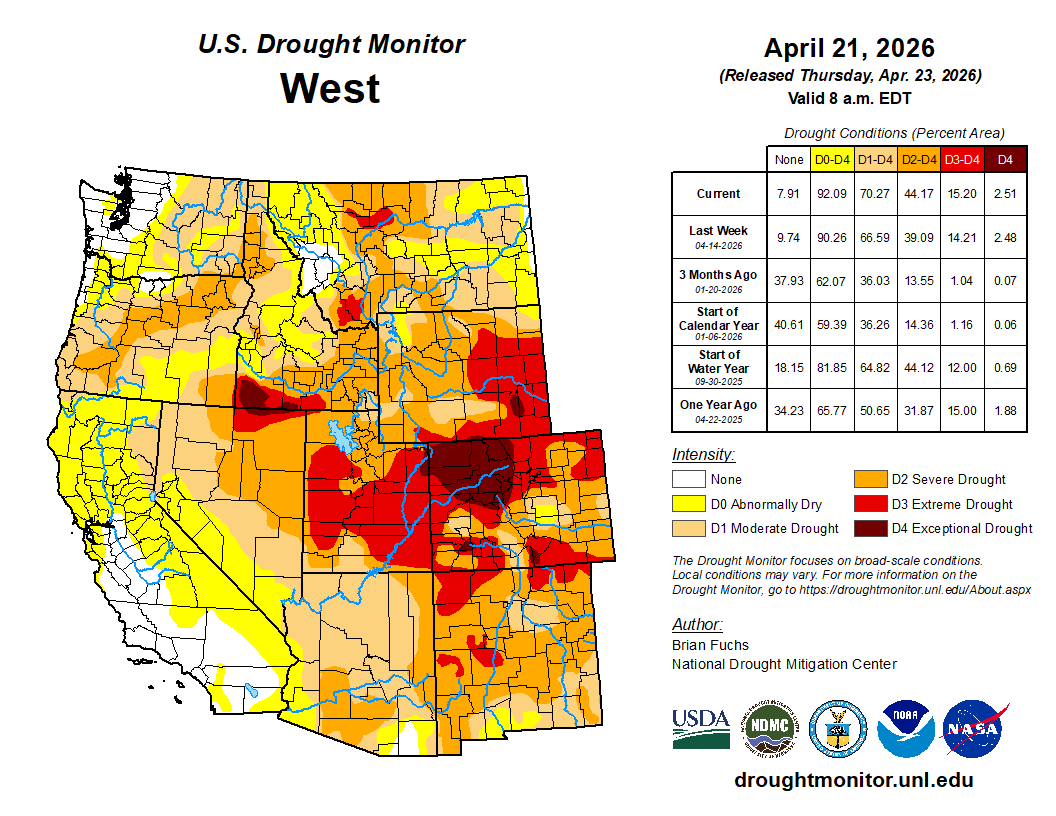
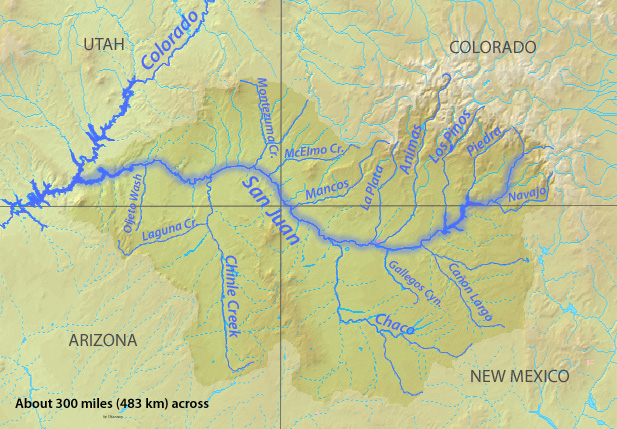
Early in the year, he stated, the triggers are the snowpack in the mountains, measured by the amount of snow water equivalent (SWE) at the U.S. Natural Resources Conservation Service SNOwpack TELemetry Network (also commonly known as SNOTEL) station on Wolf Creek Pass and the date when the district’s water supply is cut off on Four Mile Creek due to other senior water users diverting water…If specific SWE levels or a call on Four Mile do not occur by specific dates in the spring, the plan shifts to a different set of drought triggers based on water levels in Lake Hatcher (one of PAWSD’s primary reservoirs), water flows in the San Juan River and the drought stage for Archuleta County designated by the National Integrated Drought Information System (NIDIS). He explained that the amount of water in Lake Hatcher is weighted the most heavily, with flows in the San Juan being the next most influential factor and drought designation being the least. He added that the different drought stages come with different drought surcharges and water rate adjustments…He explained that the first drought stage (voluntary drought) aims to cut water use by 10 percent, while the most severe drought stage (stage four) is intended to cut water use by 50 percent.