
Click the link to read the article on the Pagosa Springs Sun website (Josh Pike). Here’s an excerpt:
July 15, 2026
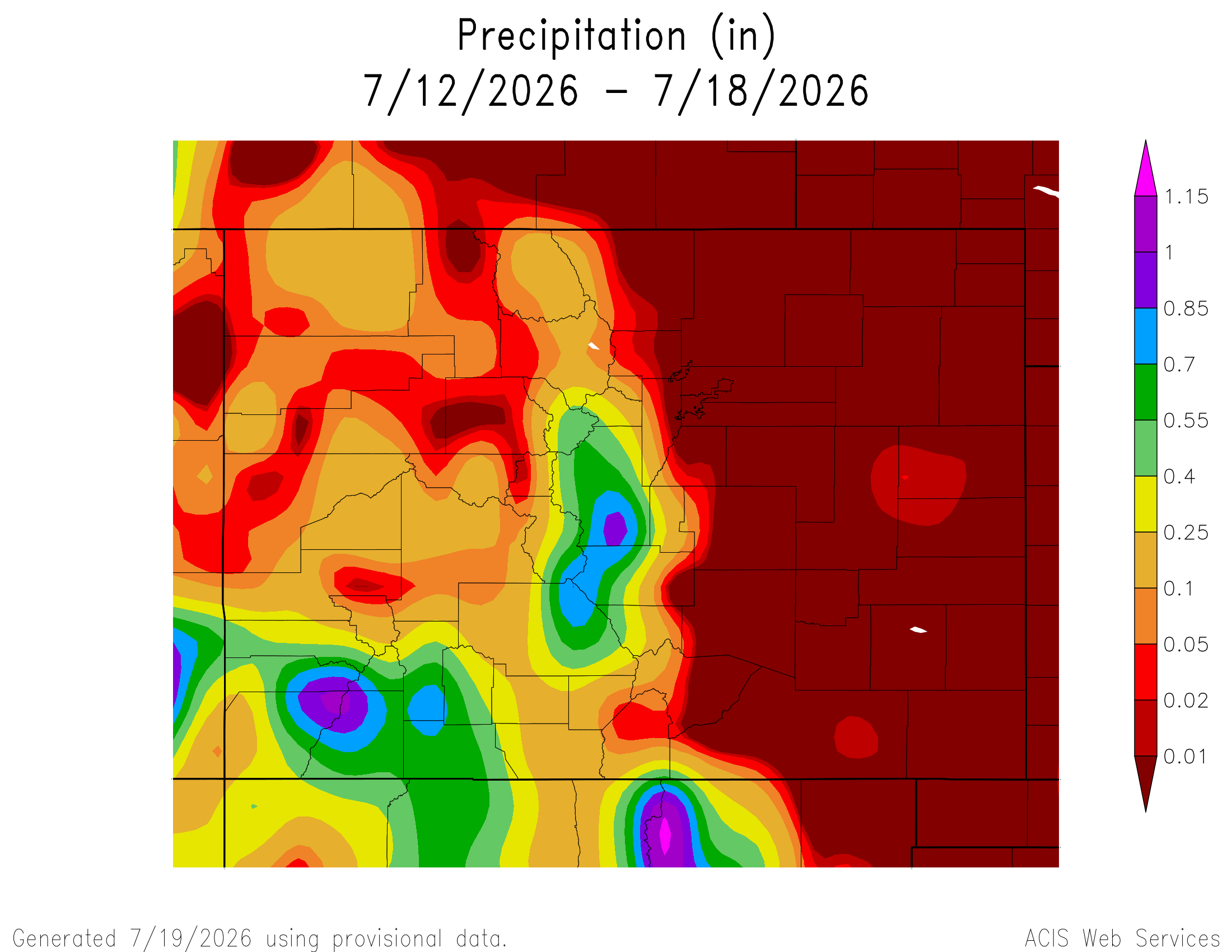
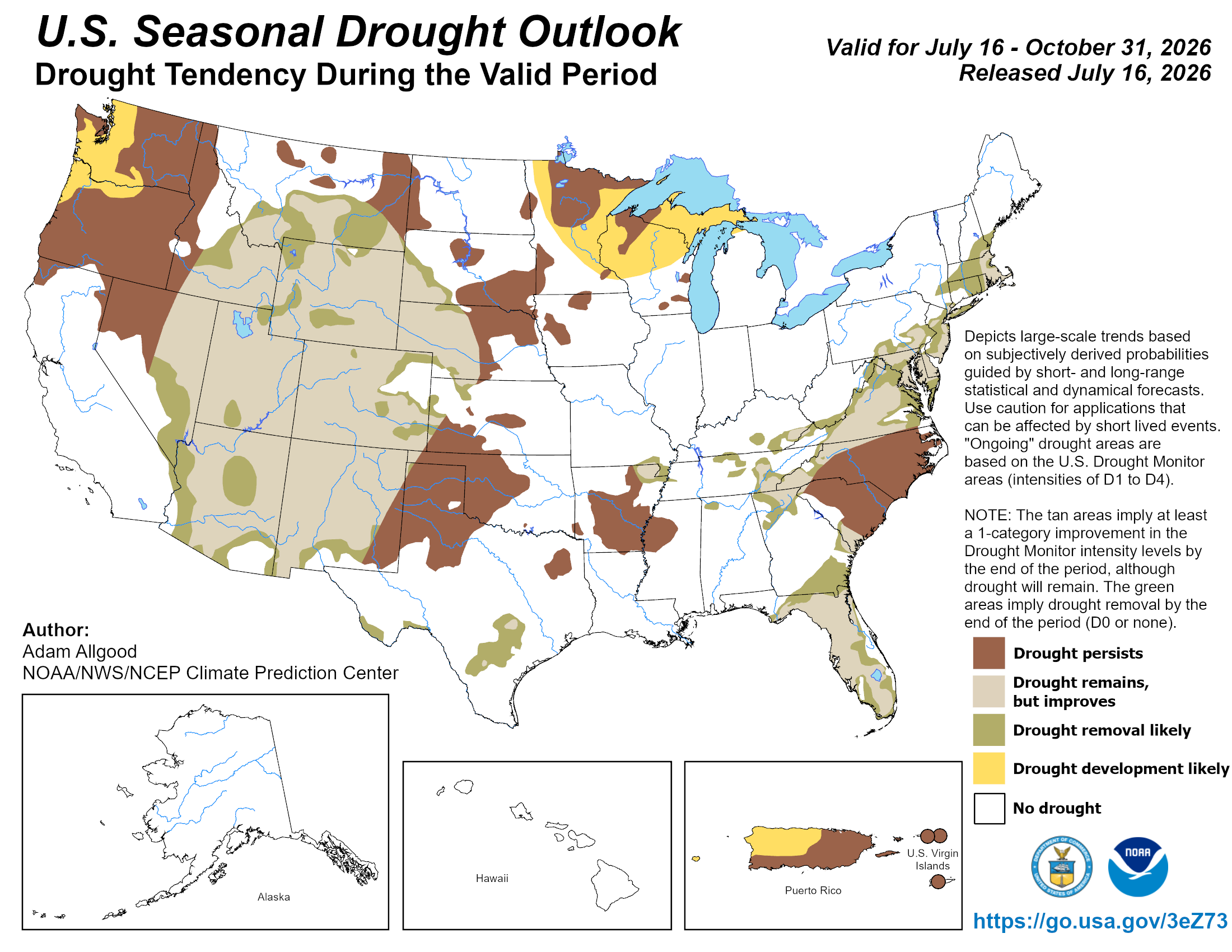
This week, rain returned to Pagosa Country, bringing some relief from the dry heat that dominated June and early July and heralding the start of the summer monsoon season. Weather modeling by the National Integrated Drought Information Center (NIDIS) suggests that the summer monsoon season is likely to bring average or above average precipitation to the region — a bounty compared to the approximately 25 to 50 percent of average precipitation Archuleta County received in last month. The National Weather Service Climate Prediction Center forecasts that drought conditions in the area will improve by Sept. 30, although it suggests that current severe and extreme drought levels calculated by the U.S. Drought Monitor will persist through July.
The Pagosa Area Water & Sanitation District is currently in drought stage two, which includes a number of restrictions on outdoor irrigation, as well as additional fees for high water use. In stage two, irrigation is allowed only between 9 p.m. and 9 a.m. every other weekday, with even-numbered addresses able to irrigate on even-numbered days and odd-numbered addresses on odd-numbered days. Weekend irrigation is prohibited. However, drip irrigation and hand watering edible or ornamental gardens is allowed at all times. Residential water use above 4,000 gallons per month is subject to a two times rate multiplier. PAWSD District Manager Andrew Connor explained that, while the rains associated with the monsoons might eventually impact the district’s drought restrictions, changes would require a large amount of rain and would not be immediate. In the summer, the drought stage is primarily driven by the water level in Hatcher Reservoir, flows in the San Juan River and the date…
PAWSD District Engineer Justin Ramsey explained that the district’s drought management plan focuses on irrigation since it composes a large portion of the district’s water use in the summer and because losing green lawn grass or other plants has a smaller impact on people’s lives than restrictions on showering, dish washing or other indoor water uses…The drought stages in the district’s drought management plan align with this goal, imposing progressively tightening restrictions on when irrigation can occur while placing no restrictions on indoor water use except increasing fees for high water consumption. However, for all but the most severe drought stage, these restrictions only cover irrigation done with sprinklers and other automated devices, with the use of drip irrigation devices and hand watering allowed at all times…Manual and drip irrigation encourage people to be more conscious about how they use water by involving them more deeply in the process and requiring more hands-on time, he added. Another way to increase the water available for gardens and landscaping without paying more fees is to reduce water waste in your home, Connor and Ramsey highlighted.
For 18 consecutive years I didn’t water any of the plants outside of my house, becaues they were 100% native, including Palm trees, Palo Verde, and Mesquite. Nobody in the American Southwest should be watering outdoor plants, especially grass.
True that! Thanks for commenting.
John Orr
https://coyotegulch.blog/