
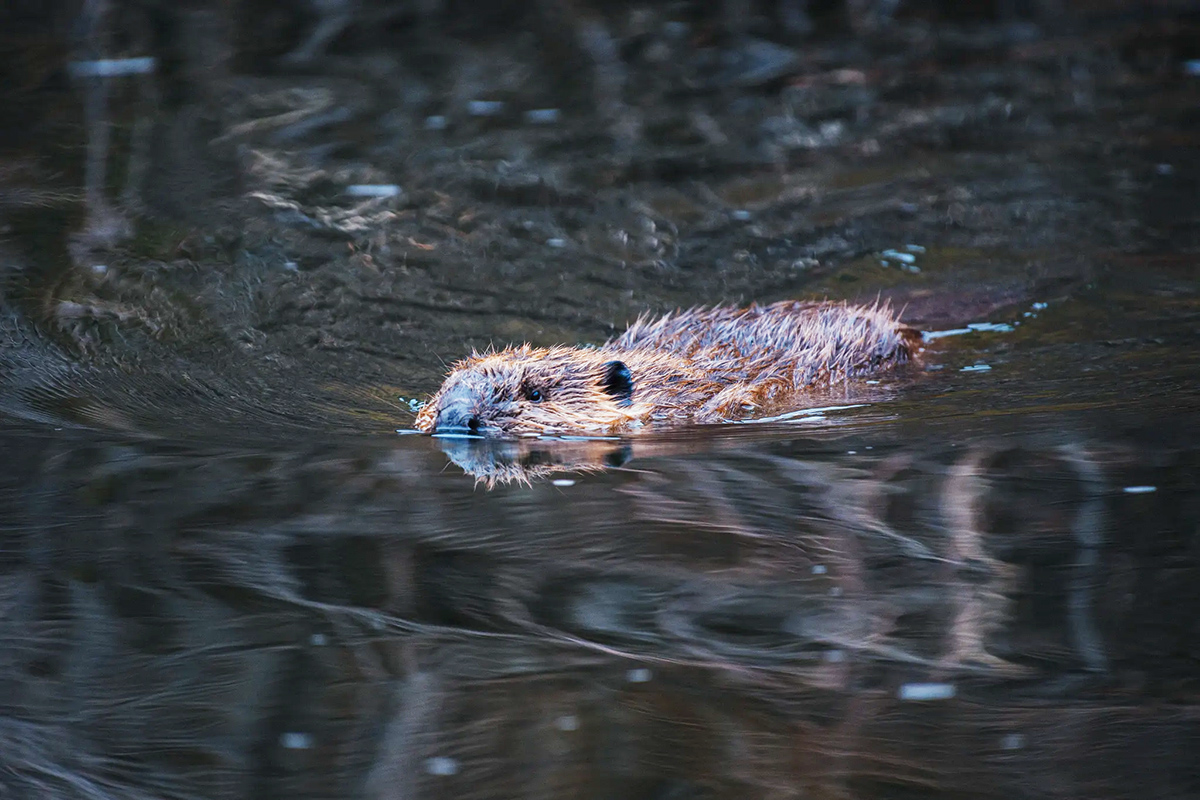
Click the link to read the article, and listen to the radio program, on the H2ORadio website (Frani Halperin):
September 20, 2026
Long hunted for their fur or extinguished as a nuisance, states like Colorado are promoting coexistence policies for the animals in recognition of their engineering abilities to move water where it’s needed most—especially in times of drought and increasing wildfires.
Honestly, I thought it was a prank. Running in my park in southeast Denver this summer, I saw several small cottonwood trees cut down along the creek. They had that distinctive hourglass-shaped stump that beavers make, but I live in an urban area, so clearly not felled by large aquatic rodents with buck teeth?
“So many people that live in Denver don’t even realize that beaver live in our creeks,” says Vikki Vargas-Madrid, the wildlife program manager for Denver Parks and Recreation.
Count me among those who did not know that anywhere there’s a creek, river, or stream along the Front Range of Colorado, (a term many people use to describe an urban corridor that stretches from Fort Collins to Colorado Springs and includes cities like Denver) you will find the animals.
Have water, will travel—but the beaver are not always welcome. Vargas-Madrid says her office gets calls every day from the public asking, for example, “why aren’t you protecting the trees in Bear Creek? The beaver are eating them all.” In the old days, Vargas-Madrid says, “the easy answer was, well, we’re just going to kill them all.”
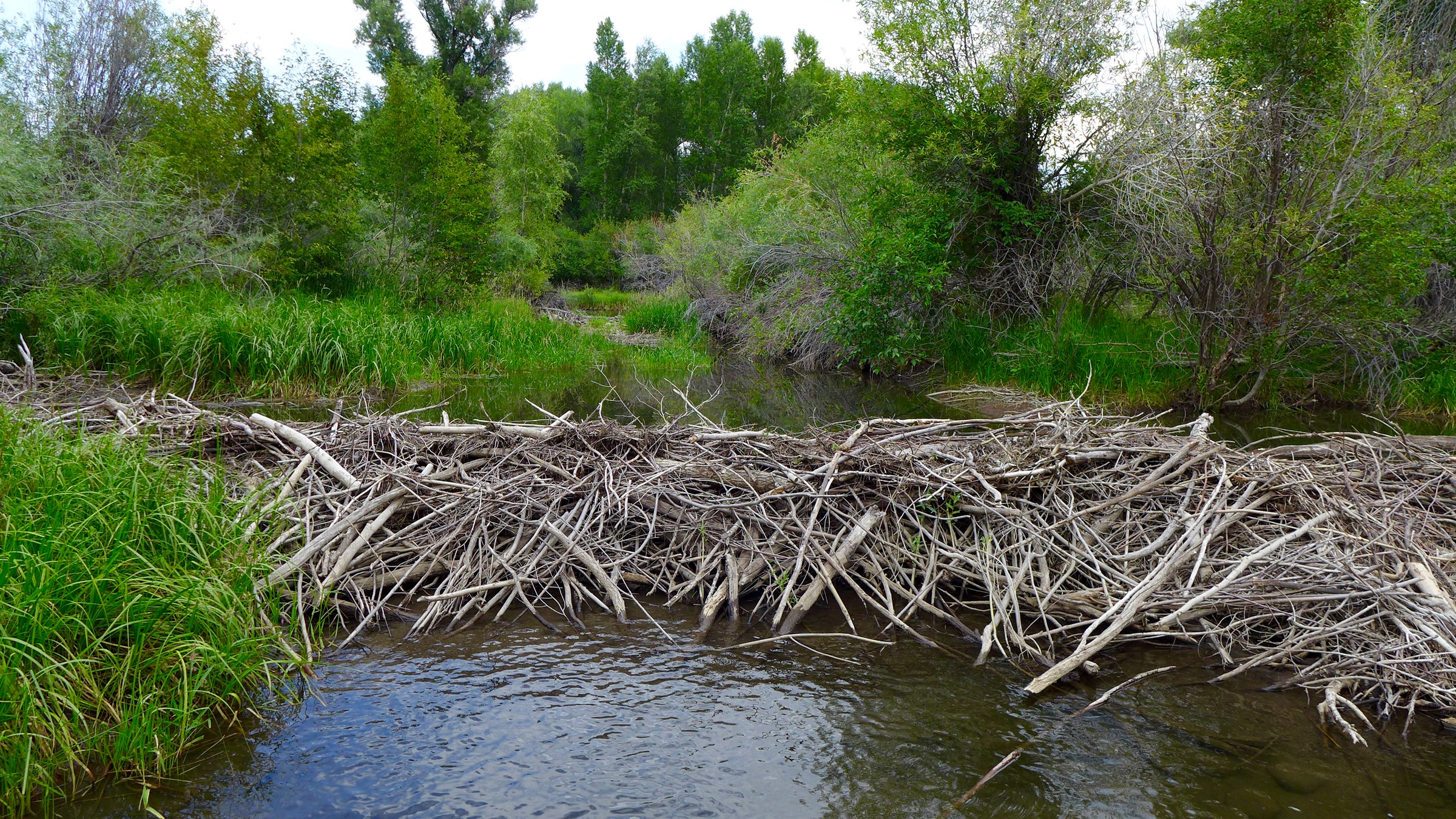
But times have changed and management practices have evolved—something I was able to see firsthand. I met Vargas-Madrid at a creek called Sanderson Gulch that runs through a park in a residential area of southwest Denver. On a summer morning, we bushwhacked through some willows on the bank to get a closer look at a beaver dam with a large corrugated PVC pipe running through it that allows water to pass while maintaining the pond that the beaver created.
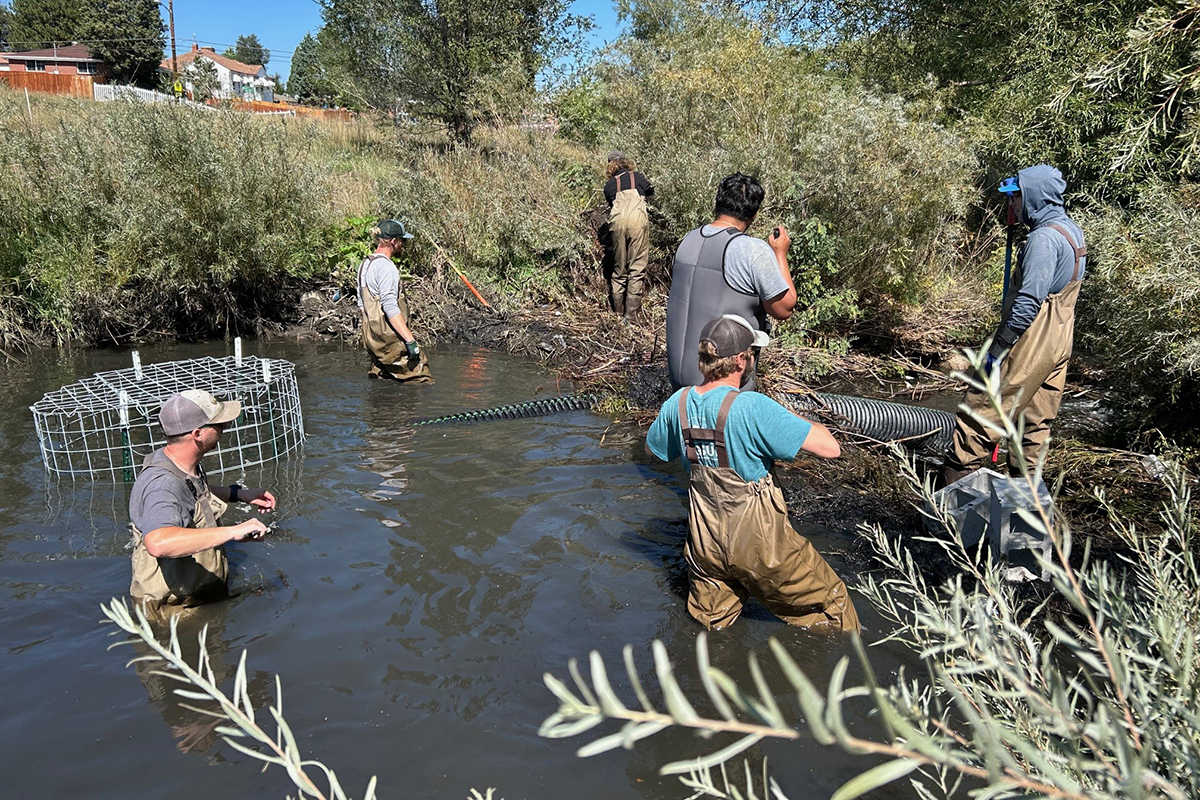
Vargas-Madrid explains that the intent of installing the flow devices, which are made up of a pipe with cages to keep the structures in place, is to allow the beaver to remain. She says that beaver are important for ecological benefits, but some of the public don’t necessarily see that.

North American beaver (Castor canadensis), which are a “keystone species” in riparian communities, create wetlands that support aquatic vegetation that provide food for other wildlife, like the Swainson’s hawk that Vargas-Madrid spots overhead. She says her staff see more diversity in the birds, fish, and waterfowl that exist in the pools of water that the beaver create.
It’s not just the city of Denver that sees the value of beaver in the urban landscape. Kris Inman with Colorado Parks and Wildlife (CPW), a division of the Colorado Department of Natural Resources, says that urban areas are great places to see beaver doing what they do well.
Inman is the new beaver conservation program manager for the agency. Her job is to implement the new Beaver Conservation and Management Strategy released in March. The state wants to promote coexistence practices with beaver and she’s in luck, as beaver are having a moment. States, especially across the West but also around the country and even places internationally, are recognizing how the animals help protect ecosystems. Inman says that when beavers construct dams, they reconnect surface water to the pond that forms behind it with groundwater, and that enables the ground to act as a sponge. It can hold onto winter snowpack a little bit longer, and then slowly release it back into streams, providing us water when we—especially in the arid West—need it most.
Inman says there’s also been a lot of momentum to use beaver and their engineering prowess to help with wildfire prevention. Beaver efforts can be a natural way in which to store water longer, potentially having natural fuel breaks. She says the state can take advantage of this attribute by mimicking beaver dams and putting beaver dam “analogs” out in the field.
According to Inman, the hope is that beaver will adopt the human-constructed dams—the analogs—and maintain them, but that still doesn’t eliminate the potential conflicts with landowners, especially agriculture. Beaver “basically eat themselves out of house and home,” comments Inman, and then move on, adding that “they’re constantly doing forays and traveling up and down rivers and streams looking for new places to live.”
That new place could be someone’s private pond or fishery where beaver have moved in because water flows have become too low during droughts. Deep water is one of the primary protections beaver have against predators, but undoubtedly, it’s frustrating when dams disrupt water flows. Inman notes that a farmer might have a canal that’s blocked preventing water from going where it’s needed. Also, beaver activity could cause trails to flood or bridges to be washed out.
The Colorado beaver management plan includes strategies to relocate beaver, take out troublesome dams, paint trees with a sand-like texture to make them less tasty, install fencing around culverts—or add flow devices like the one at Sanderson Gulch.
Back at Sanderson Gulch in Denver near the beaver dam, a jogger along the adjacent path stops to talk to Vargas-Madrid and me. She says she sees the creatures early in the morning when she walks her dog. They’ll be on the side of the creek or occasionally in deeper water, and spotting them, she says, is “pretty cool.”
Her appreciation for having beaver in her local park was a sentiment expressed by other residents of the area when a project for the creek was being considered at a recent Denver City Council meeting. On September 14, 2026, the Denver City Council approved $20.6 million for improvements along Sanderson Gulch. As Denverite reports, among other improvements, the money will be used to deepen the creek. The city won’t remove the beaver but did acknowledge that the project will likely mean they will relocate. Gordon Robertson, of Denver Parks and Recreation said at the meeting that the goal was to widen the creek, and make it flatter to create more ecological benefits. Other work in city parks has disrupted beaver to leave temporarily, but, Robertson said, they will likely eventually return and this project will create more opportunity for them and hundreds of other species.
At the council meeting, beaver advocates from the local neighborhood organization voiced their concerns with some saying the project was not designed with beaver in mind. The group’s interest in coexisting with the animals and being eager to have beaver as their neighbor, makes the new state management plan’s objectives that much closer to being met.
A great read about beavers across the US, their history, and their influence on the landscape is Eager: The Surprising, Secret Life of Beavers and Why They Matter, Book by Ben Goldfarb. If CPW was serious about beavers on public lands, there would be reduced recreational trapping and more accommodations such as trail re-routes. Beavers are a terrific asset for holding water on the land.
Howard,
You’re right! It is a great book.
John Orr
https://coyotegulch.blog/
I’ll make a note that the CPW Commission did vote last July to put a severe daily limit on the collection of fur bearers that make it uneconomical as a commercial endeavor. The CPW was against the limit and beaver habit does not appear in the current summaries of the decision.