2016 #coleg: HB16-1228 (Ag Protection Water Right Transfer Mechanism) moves forward

cropcirclescoloradoindependent
From The Grand Junction Daily Sentinel (Charles Ashby):

Some Western Slope lawmakers are concerned that a bill that won preliminary approval in the Colorado House on Monday could lead to water being permanently taken off of the state’s farms and ranches.

Reps. J. Paul Brown, R-Ignacio, and Don Coram, R-Montrose, said the measure, HB1228, could create a situation where half of an agricultural operation’s water could be removed on a permanent basis.

Brown became so concerned about the measure after it was altered in the House Agriculture, Livestock & Natural Resources Committee earlier this month that he’s planning to take his name off of it.

He signed onto the bill initially because he believed it was aimed at protecting agricultural water rights’ owners when they lease water that they don’t need.

“The concern is that farmers are going to have to go to court proving that they are not harmed by somebody else doing this,” Brown said.

As the bill is written now, the Colorado River Water District is opposed to it because of the harm it could cause water rights’ owners who aren’t involved in such diversions, which is known as a flexible water right.

Coram said the Legislature approved a new law a few years ago that allows for such flex water leases for up to three out of every 10 years, requiring a water rights’ owner to obtain a new decree in water court for each diversion.

This new bill allows for up to 50 percent of an agriculture water right to be leased for non-agricultural use, and be renewed twice without having to go through water court as long as that lease doesn’t change, he said.

“They say this is to prevent buy and dry, but lease and cease is the same thing,” Coram said. “It’s one thing to take the water out three out of every 10 years, but if you take it forever it’s very devastating for communities.”

But Rep. Jon Becker, R-Fort Morgan, one of the main sponsors of the bill, said neither lawmaker needs to worry.

Becker said he has an amendment to fix their main problem with the bill, which deals with in-stream flows.

That amendment is to be tacked onto the bill when it is debated in the Senate, where Sens. Jerry Sonnenberg, R-Sterling, and Kerry Donovan, D-Vail, are sponsoring the bill.

2016 #coleg: HB16-1174 (Conservation Easement Tax Credit Landowner Relief) update

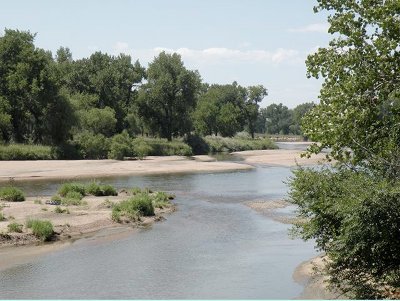
Saguache Creek
Saguache Creek

From The Colorado Independent (Marianne Goodland):

Jiliane Hixson, who has spent hundreds of thousands of dollars fighting over conservation easement tax credits with the Department of Revenue, left the Statehouse in tears last week. Lawmakers had watered down a bill she hoped would help her recoup some of her money.

Thirteen years ago, Hixson converted parts of her Lamar farm into a conservation easement, what should have been a win-win deal.

Colorado’s conservation easement program works like this: Landowners create a contract with a land trust. The land trust holds the deed to the property and blocks housing projects, oil and gas wells, solar or wind power farms or any other kind of development. The landowner gets a hefty tax credit and still owns the land: Farmers continue to grow crops, ranchers keep grazing cattle, and homeowners keep living there.

At least, that’s how the programs are supposed to work.

But four years after entering into an agreement, the Department of Revenue rejected Hixson’s tax credits. She still does not have control of her land and has agreed to a settlement with the Department of Revenue. She will be paying back those tax credits for the next 20 years.

Hundreds of other Coloradans, like Hixson, have been fighting the Department of Revenue over those tax credits.

A bill in the House was originally going to set a January 1, 2016 deadline for the Department of Revenue to resolve the conservation-easement tax credit disputes that still plague roughly 55 families. For those families whose property is now controlled by land trusts, if the Department of Revenue rejected those tax credits, the easement would be canceled and the deed to the land would return to the homeowner.

The Department has a four-year statute of limitations to accept or deny tax credits issued on the conservation easements.

But the department has ignored the four-year limit, fighting with hundreds of landowners over the tax credits, some from more than 13 years ago.

It has cost 800 Colorado families, many of whom are farmers and ranchers, tax credits totalling in the millions of dollars. Some have declared bankruptcy after fighting the department, which has alleged some appraisals were overvalued by incompetent appraisers or property owners who committed fraud.

The Department of Revenue’s spurious allegations of mass fraud have not been substantiated in the courts. Only one case has been prosecuted in the program’s 16-year history.

The measure, House Bill 16-1174, sponsored by Republican Rep. Jon Becker of Fort Morgan, thinly skated out of the House State, Veterans and Military Affairs Committee a month ago. It won the support of one Democrat on the committee, Rep. Max Tyler of Lakewood, who said the discussion on the issue must continue.

Last week, the House Finance Committee, which deals with bills about tax issues, took up the bill, which by then had garnered opposition from the governor. That put Becker to work with Democrats to save the bill.

Becker reached an eleventh hour deal Tuesday with Democrats to completely rewrite the bill. The new version substantially reduced the cost from its initial $11 million price tag. But more importantly, it took out the language that would have given Hixson and hundreds like her control of their land.

The rewritten bill only applies to those 55 cases still in dispute, and only cancels out any further interest or penalties on the tax credits while the cases are being settled.

Becker put the Department of Revenue and the Attorney General’s office that has backed the Department on notice during the hearing, warning if they don’t speedily resolve the remaining cases, he’ll be back next year and “It won’t be nice…Moving forward shows the departments we are serious.”

The decision to gut the bill was clearly emotional for Becker. “Fighting the state shouldn’t come to the point where families are destroyed,” he told the committee.

Lawmakers aren’t supposed to become too emotionally vested in their bills, but that has been the case for Becker with HB 1174. He pledged to keep the issue in the public eye and said he will continue to try to find solutions to help people like Hixson, who won’t be aided by the revised bill.

The bill now goes to the full House for debate, and if successful, to the Senate. Another bill to address the conservation easement issue, sponsored by Sen. Jerry Sonnenberg of Sterling, was killed by the Senate Finance Committee two weeks ago. Sonnenberg requested the action, stating he knew the bill would not have been passed by the committee.

2016 #coleg: HB16-1005 (Rain barrels) just might get to Gov. Hickenlooper’s desk this session

Photo from the Colorado Independent.

From The Denver Post (Samantha Fox):

The sponsors of this bill hope to encourage water-wise practices. Water-rights holders are acutely aware of the value of water and understand the importance of conservation, but they are looking for assurance that their water availability and their long-fought-for rights won’t be harmed.

After amendments added recently to address data collection on impacts, provide for a review and objection period, and expressly stipulate that rain water-harvesting does not constitute a water right, it looks like the bill may pass this time.

Take a closer look at the issue and you’ll realize it isn’t as simple as conservationists versus farming. Water rights are an important component in our state’s laws, and affect flows that underpin a broad spectrum of critical water uses, stream conservation, farming, and municipal supply, among others. They are inherently tied to our economy and ability to grow sustainably.

CWCB board meeting recap: 11 grants = $734,000

From The Pueblo Chieftain (Chris Woodka):

Arkansas River issues took center stage at this week’s meeting of the Colorado Water Conservation Board at Otero Junior College.

The board awarded 11 grants totaling $734,000 to projects in the Arkansas Valley, while touring some other projects in the La Junta area that already are underway. It also reviewed the progress of a pilot program by the Arkansas Valley Super Ditch, which was authorized under legislation in 2013 and heard plans by the Lower Arkansas Valley Water
Conservancy District to introduce new water banking legislation.

Diane Hoppe at CFWE President's Award Reception 2012
Diane Hoppe at CFWE President’s Award Reception 2012

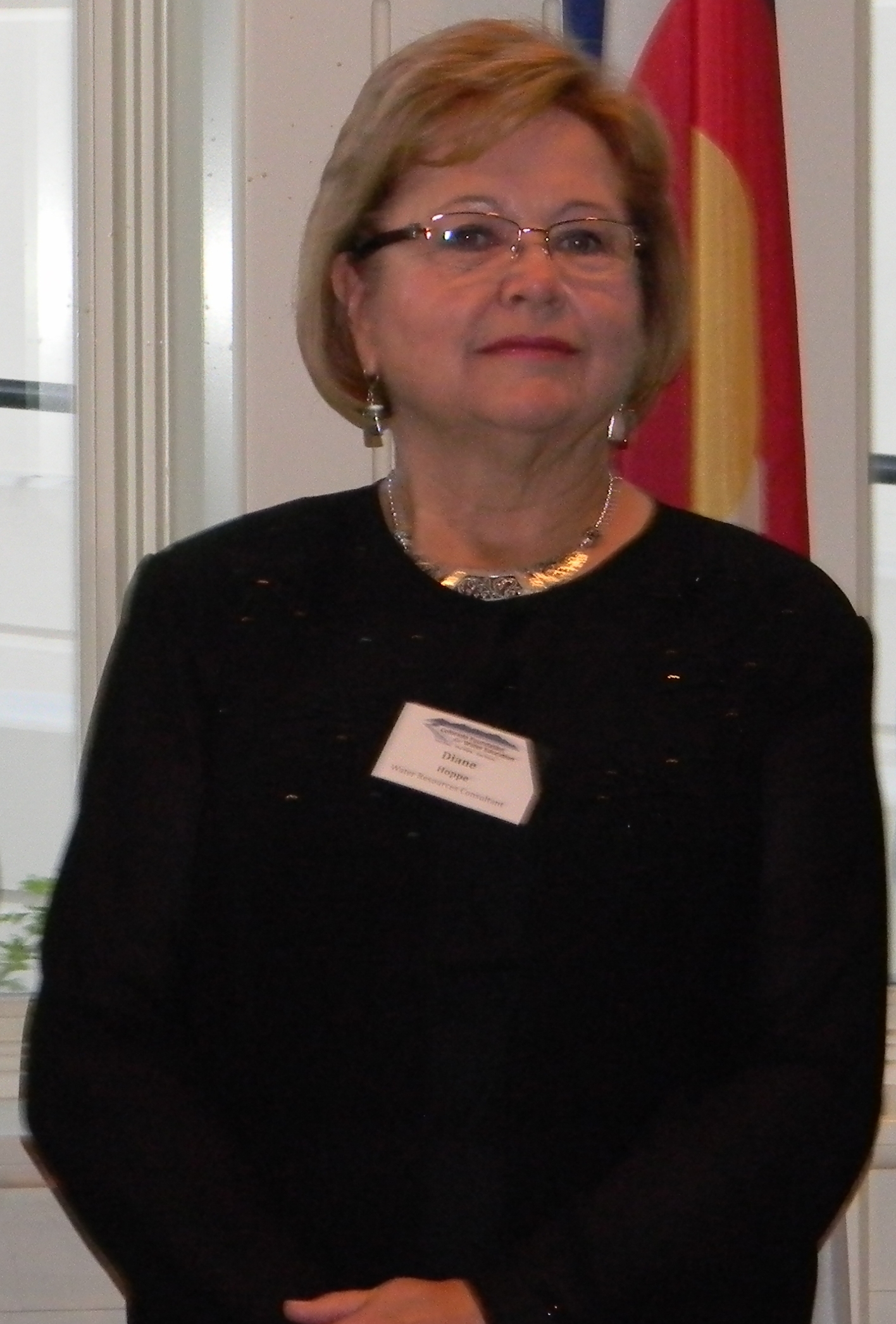
The board paused for about an hour Wednesday to remember Diane Hoppe, who chaired the board until her death last month. Hoppe was a former state lawmaker who had been active in state water issues for more than 30 years.

On Tuesday, the CWCB staff and board toured the Catlin Canal, a channel-clearing project at North La Junta and a flume-replacement project on the Fort Lyon Canal.

The Catlin project is overseen directly by the CWCB under HB1248, which allows the state to do administrative water transfers without changThe Lower Ark district is championing the Super Ditch as a way to allow farmers to keep water rights while leasing some water to cities.

In the Catlin project, river flows are augmented by releases of water stored in Lake Pueblo and recharge ponds that have been built on farms. Cropland is dried up for no more than three years in 10, and the water is leased to Fowler, Fountain and Security.

At Wednesday’s session, Lower Ark attorney Leah Martinsson explained new legislation that would expand the concept to allow the CWCB to administer small transfers of water through a new kind of water bank. Past efforts to establish water banks relied on storage, while the new concept would allow direct flow rights to be leased.

“This is a different kind of tool,” Martinsson said. The bill, not yet numbered, would be sponsored by Democrat Reps. Jeni Arndt of Fort Collins and Ed Vigil of Fort Garland and Sen. Larry Crowder, R-Alamosa.

Like HB1248, the new law would put a 3-in-10 year limit on dry-ups, require approval by the state engineer and prohibit transfers out of basin. It would rely on court-approved rules to allow transfers, but would not create a new kind of water right. It covers small transfers over a 10-year period to avoid large-scale speculation, Martinsson said.

The draft bill released to the CWCB is 19 pages long and fairly complex. CWCB member Patricia Wells asked whether the board would be expected to review many small transfers using such complicated criteria.

Martinsson replied that the rule-making process and ongoing review by the state engineer would simplify the process.
Peter Nichols, Lower Ark and Super Ditch attorney, said the proposed water bank would be more useful to farmers than existing statutes, giving them flexibility without altering water rights.

“It’s a better way to do this,” Nichols said. “It adds rigor to the process without going to water court for major changes.”

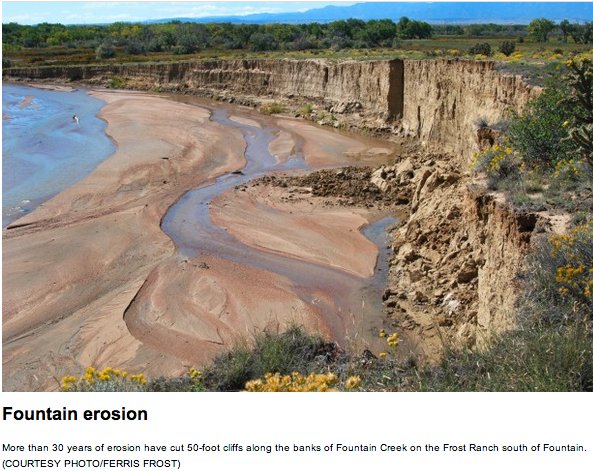
Meanwhile, the CWCB awarded a grant to study flood control on Fountain Creek. Here’s a report from Chris Woodka writing for The Pueblo Chieftain:

Visions, studies and arguments over flood control on Fountain Creek have consumed attention in El Paso and Pueblo counties for the past decade.

Real work may finally be just around the corner — give or take a few bad floods.

The Colorado Water Conservation Board gave its approval this week to a $41,800 grant that will be added to $37,500 in local funds to begin evaluating potential sites for a dam or other flood control structures on Fountain Creek between Colorado Springs and Pueblo.

Like the creek itself, getting even to this point has been a meandering process, hitting snags and jumping out of the channel, as Larry Small, executive director of the Fountain Creek Watershed Flood Control and Greenway District explained to the CWCB.

“We first chose two scenarios to move forward,” Small said, explaining that a U.S. Geological Survey studied identified a dam or series of detention ponds between Fountain and Pueblo as the best way to protect Pueblo from intermittent flooding. “The water rights protection task came first.”

After a study last year confirmed flood control on Fountain Creek could be attained without harming water rights, the district moved to the next step of identifying where structures might be located. The existing study by the Army Corps of Engineers is limited to big projects and more than 40 years out of date.

The water rights issue doomed an earlier grant request at the Arkansas Basin Roundtable. Since then, the state Legislature passed a law that allowed storage of flows for flood control for up to 72 hours, except on Fountain Creek. The Fountain Creek district completed its study of water rights last year, however, and it passed roundtable scrutiny.

“We resolved the differences between stakeholders,” Small said. “It showed that water rights are a top priority in future projects.”

The preliminary work is needed as the Fountain Creek district prepares to receive $50 million over a five-year period specifically for flood control projects to protect Pueblo. The district is looking at the money to leverage more funding that would be needed to complete at least $150 million in projects already identified in plans.

The $50 million is a condition of a 1041 permit issued by Pueblo County for construction of the Southern Delivery System pipeline from Pueblo Dam to the El Paso County line.

Fountain Creek erosion via The Pueblo Chieftain

#ColoradoRiver Basin #Drought: PBOWW board meeting recap

Alan Ward stands at the Ewing Ditch headgate,

From The Pueblo Chieftain (Chris Woodka):

A contract for a pilot program that would leave some of Pueblo’s water on the Western Slope was approved Tuesday by the Pueblo Board of Water Works.

Pueblo Water will leave 200 acre-feet (65 million gallons) of water from the Ewing Ditch for a fee of about $134,000 as part of an $11 million pilot project to test tools to manage drought in the Colorado River basin.

The program is paid for by the Upper Colorado River Commission, Bureau of Reclamation, Southern Nevada Water Authority, Denver Water, Central Arizona Water Conservation District and the Metropolitan Water District of Southern California.

It will test methods to maintain levels in Lake Powell and Mead through conservation techniques in all seven states in the Colorado River basin.

“How is it tracked?” water board member Kevin McCarthy asked.

“It’s going to be hard to watch 200 acre-feet from the top of Tennessee Pass to Lake Powell,” said Alan Ward, water resources manager. “But in theory, it gets there.”

Pueblo Water only has to bypass the flows, Ward explained.

The board approved the concept last summer, and the bypass is only about one-third of what originally was proposed.

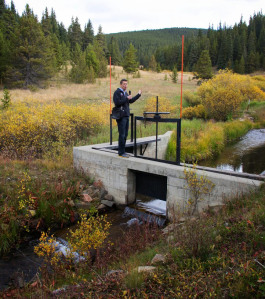
The Ewing Ditch was purchased by Pueblo Water from Otero Canal in 1954 after it was dug in 1880 to bring Colorado River basin water over Tennessee Pass into the Arkansas River basin. It typically yields about 900-1,000 acrefeet per year, although the amount can vary. In some years, such as 2015, there might not be places to store the water.

The water board also passed a resolution supporting HB1005, which would legalize rain barrels in Colorado. Board President Nick Gradisar requested the resolution after already offering his personal support to the bill’s co-sponsor, Rep. Daneya Esgar, D-Pueblo.

A contract of $275,000 to Black & Veatch to study water distribution was also approved.

Colorado transmountain diversions via the State Engineer's office
Colorado transmountain diversions via the State Engineer’s office

2016 #coleg: HB16-1228, “What’s the difference between buy-and-dry and lease-and-cease?” — Don Coram

Greeley irrigation ditch

From The Pueblo Chieftain (Chris Woodka):

A bill that would allow half of a farmer’s water to be transferred for one year to other uses passed the House agriculture committee 8-5 Monday.

The bill, [HB16-1228], was opposed by Western Slope water districts and legislators as unnecessary, expensive to farmers or ranchers and potentially harmful by allowing water that could be used within the state to flow out. Former state Sen. Bruce Whitehead called it “borderline speculation.”

However, diverse groups such as Ducks Unlimited and Colorado Corn Growers testified that the bill keeps water in agriculture by providing another way to use it without diminishing a water right. Those groups have been working on alternative transfer programs in the South Platte River basin for several years.

The bill is the latest version of a flex water right that has failed in the past two sessions. It would determine the historical consumptive use — how much water crops use — and establish alternate points of diversion in advance of one-year substitute water supply plan which might or might not occur. The bill also requires water to stay in the same river basin of historic use as defined by state water divisions.

Water users still would be required to get an administrative substitute water supply plan in each year water is transferred.

Sponsors Jeni Arndt, D-Fort Collins, and Jon Becker, D-Fort Morgan, said the bill provides an “agricultural water protection water right” that prevents more ag water from being sold to cities.

But Don Coram, R-Montrose, at one point asked a witness, “What’s the difference between buy-and-dry and lease-and-cease?”

Both the Southwestern Colorado and Colorado River conservation districts oppose the bill, which they say would require farmers and ranchers to spend more out of pocket to defend water rights.

But the Colorado Water Congress, Division of Water Resources and Colorado Water Conservation Board all voiced support of the legislation, saying it could be administered fairly and would not create any more need for legal defense than already exists.

Terry Fankhauser, of the Colorado Cattlemen’s Association, said his group is merely monitoring the bill at this point. But he questioned whether allowing water to be leased, and land to be fallowed, for five years in every 10 is a good idea. He pointed to studies in the Arkansas Valley which indicate three in 10 years is the maximum to keep farmland in shape for on-again, off-again farming.

Rain barrel schematic

From The Mountain Mail (Joe Stone):

With the legislative session in full swing in Denver, several water-related bills have been submitted in the Colorado General Assembly, including House Bill 16-1005, a rainwater-harvesting bill.

Ken Baker, retired attorney and consultant to the Upper Arkansas Water Conservancy District, discussed these bills during the district board meeting Thursday, indicating HB-18-1005 was passed by the Democrat-controlled House of Representatives.

The bill would allow the collection of precipitation from a residential rooftop using no more than two rain barrels per residence with a maximum capacity of 110 gallons.

As the bill is currently written, the residence must have four or fewer units, and the collected water must be used for outdoor purposes on the property where it is collected.

Baker said the bill, if passed, would fail legal challenges based on the Colorado Doctrine of Prior Appropriation, often summarized as “first in time, first in right.”

Under Colorado law, an appropriation is made when an individual takes water from a stream or aquifer and puts that water to a specific beneficial use, like farming. The first person to do so has the first right to use that water within a particular stream system.

After receiving a court decree verifying their status, this person becomes the senior water-right holder on that stream, and that water right takes priority over any other water right on that stream.

Since capturing rainwater prevents that water from flowing into a stream or seeping into an aquifer, it effectively takes water from someone who owns the right to that water, thereby violating the Doctrine of Prior Appropriation.

Baker expressed optimism that the bill would be amended in the Republican-controlled Senate to require augmentation, i.e., replacing the water collected with water from another source to prevent injury to senior water rights.

Baker also discussed other water-related legislation, including:

  • HB 16-1228, a “complicated” bill that would allow temporary, 1-year transfers of up to 50 percent of a water right to a use other than the use for which the water right was decreed.
  • HB 16-1109, an effort to protect owners of a water right from federal stipulations that would require relinquishing that water right in order to use federal land.
  • HB 16-1256, which would commission a study to determine the amount of South Platte River water that has been delivered to Nebraska in excess of the amount required along with possible locations for a new reservoir on the South Platte River.
  • SB 16-128, which would allow specific portions of water augmentation plans or substitute water supply plans to be opened for amendments in Water Court without reopening the entire plan.
  • HB 16-1283, an attempt to reduce water losses by domestic water suppliers through annual audits.

2016 #coleg: HB16-1256 — South Platte Water Storage Study update

From the Colorado Independent (Marianne Goodland) via The Sterling Journal-Advocate:

The first step to building a reservoir or dam to capture millions of gallons of water flowing down the South Platte River won unanimous approval this week at the state Capitol.

Rep. J. Paul Brown, an Ignacio Republican, has been sounding the siren call on South Platte storage for the past year. It’s an idea area residents have talked about for generations.

Millions of gallons of water have flowed into Nebraska far exceeding the amount required under the Colorado-Nebraska compact that governs South Platte water use. And Colorado wants and needs to keep that water.

The question lawmakers have to answer now is how to store the water and more importantly, where.

A proposed storage project in the Narrows Valley near Fort Morgan won congressional approval several decades ago. But building a dam or reservoir anywhere on the main channel of the South Platte won’t work, said Eric Wilkerson of Northern Water, which is leading the effort to build a new dam on the Poudre River.

The trouble is that there isn’t anywhere to store that water. Existing reservoirs aren’t large enough, and that means water rushing to Nebraska would flood fields and basements along the way.

Water advocates point to several possible methods of collecting and storing that water, including funneling it into underground storage or by expanding existing reservoirs. But there is no silver bullet solution.

Brown’s bill, which was heard Monday by the House Agriculture, Livestock and Natural Energy Committee, calls for a study to identify ways to store more water.

The bill sailed through the Democrat-controlled Ag Committee, a needed political victory for Brown, whose seat has been targeted by Democrats. The 13-member committee includes Republican Rep. Jon Becker of Fort Morgan.

“We can’t keep depending on the Western Slope for water for Front Range growth,” Brown told the Ag Committee Monday. He warned that without more storage, the Front Range will have to rely on agricultural buy-and-dry, the practice where municipal water providers buy irrigated farmland for the water rights.

These buy-and-dry deals have dried out thousands of acres of farmland, mostly on Colorado’s Eastern Plains.

In Crowley County, for example, buy-and-dry has left this once agriculturally-prosperous county with one-tenth of the farmland it had before the 1970s, devastating the economy.

Colorado faces a massive water shortage. By 2050, due in part to an expected doubling of the state’s population, the state could be short a million acre feet of water a year, according to the 2010 Statewide Water Supply Initiative, a study commissioned by the Colorado Water Conservation Board. An acre-foot of water is the amount it would take to cover one acre of land with one foot of water, or about 326,000 gallons.

Finding a way to store excess water on the South Platte would help agricultural production and enhance the state’s compliance with the Endangered Species Act, Brown said. It also would improve migratory bird and wildlife habitats in Colorado.

The bill has the support of the Hickenlooper administration. James Eklund, head of the Colorado Water Conservation Board, told the committee the bill would be a step forward in addressing the state’s water needs outlined in the state water plan.

Rep. KC Becker, a Democrat whose district includes Boulder and west-of-the-Continental Divide counties such as Grand and Jackson, pointed out the problems of resuscitating the Narrows idea.

She noted former Commissioner of Ag and state Rep. Don Ament of Sterling gave the project a thumbs down just a few months ago. Ament has been Colorado’s representative on a three-state Platte River recovery program for close to 20 years. The program handles negotiations over the Platte River water supply and how it satisfies environmental concerns, particularly in Wyoming and Nebraska.

Ament told the Interim Water Resources Review Committee last October that storage on the South Platte would take pressure off of agriculture, which faces its own water shortfall in the future.

Two counties in Colorado — Weld and Yuma — are among the top 20 in the nation’s most productive agricultural counties, he said.

In the last six years, Ament said, the South Platte has sent four million acre-feet of water into Nebraska over and above what’s required in the compact.

The Narrows Project would have been the largest earthen dam in the world, and it had strong support for years, including two congressional approvals. But President Jimmy Carter, based on recommendations from the US Fish & WIldlife Service that the project would harm Nebraska wildlife habitats, vetoed the project in the late 1970s.

In the intervening years, some of the land planned for the Narrows site has been developed or turned into agricultural land, although the U.S. Bureau of Reclamation, which acquired land for the project, still owns much of the site and has not declassified the project, according to Ament.

A project as large as the Narrows, estimated at a million acre-feet of water storage, isn’t feasible, Ament said.

Other sites have been identified, even gravel pits. What’s needed are many smaller places to hold water, rather than a massive one, he said.

The study would look at storage possibilities along the South Platte from Greeley to Julesburg.

Ament also discussed the relationship between South Platte storage and the state’s compliance with the Endangered Species Act.

“When you divert water from the South Platte, you’re responsible for impacts on birds at Grand Island (Neb.),” Ament explained.

The state has no choice but to comply with the federal Endangered Species Act in every possible way, Ament said, because it “trumps everything this legislature does and anything anyone else does, including water users. When they declare we have Endangered Species Act problems in Grand Island, Neb., and we’re big water users, we have to do something.”

Brown indicated Monday any storage solution should take into account a state guarantee of its continued compliance with the Act.

Eklund added the state’s looming water shortfall is most critical in the areas along the South Platte, whose headwaters are in the mountains just south of metro Denver and flow downstream to Julesburg and into Nebraska. “Big gains” in water supply can be made on the South Platte, he said.

The bill, which would study storage solutions, carries a cost of $250,000, to be paid out of a fund under the control of the Colorado Water Conservation Board and the state’s basin roundtables, state-authorized groups that work on water issues and include representatives from city and county governments, and agricultural, recreational, environmental and industrial interests.

Eklund said the CWCB, which will conduct the study, will rely as much as possible on existing data rather than reinventing the wheel.

Storage on the South Platte wouldn’t just help with the state’s water shortfall, Eklund said. It also would help people with low-priority water rights who might not otherwise get the water they need.

The only opposition to Brown’s bill came from Trout Unlimited’s David Nickum, who said he sympathized with Western Slope residents who fear the water shortfall will require more diversions of mountain water into the Front Range.

A new dam or reservoir on the main channel of the South Platte would affect water quality and stream habitats, Nickum said, suggesting a better solution would be underground aquifers or storage along South Platte tributaries.

The fear of another transmountain diversion prompted concerns from Rep. Diane Mitsch-Bush, a Steamboat Springs Democrat. She proposed an amendment to ensure the study wouldn’t look at mountain water as a way to fill a South Platte reservoir.

The bill goes onto the House Appropriations Committee for funding approval.

2016 #coleg: How will HB16-1005 (rain barrels) fare in the State Senate?

From The Denver Post (Joey Bunch):

Republicans want to make sure rain barrels don’t put a crack in state water law and ensure that those with the [most senior] water rights get their [water in priority].

Rep. Jessie Danielson, a Democrat from Arvada, said the House bill she’s sponsoring is about clarifying the law, which might encourage more people to use rain barrels. The measure has passed the state House and is headed to the Senate.

“Even if we can conserve the smallest amount of water, it is less treated drinking water being poured out onto our lawns,” Danielson said…

Proving that use of a rain-barrel is causing harm to a water right in court could be a tough job, said Bill Paddock, one of Colorado’s top water lawyers.

To start, someone would have to figure out how many rain barrels are being used in a watershed that feeds downstream water rights. Since there’s no requirement to register them, even in the proposed legislation, analyzing any harm done to holders of water claims would mean checking downspouts door to door to get a count.

Then there would need to be a measurement of how much water each barrel stored. Then the analysis would have to show how much, if any, of that water would have made it back to the river, Paddock said.

“It’s really a question of whether the water that runs off your roof and into a rain barrel and onto a garden is injuring someone else’s water right,” he said.

Photo via the Colorado Independent

2016 #coleg: HB16-1256 update #ColoradoRiver #COriver

Lower South Platte River

From The Durango Herald (Peter Marcus):

The bill would require the Colorado Water Conservation Board to study the amount of water that has been delivered over 20 years to Nebraska from the river in excess of the amount allowed under the South Platte River agreement.

The legislation was amended on Monday to require approval from the South Platte Basin Roundtable and Colorado Water Conservation Board before spending the $250,000 on the study.

In addition to studying water leaving the state, it would also examine possible locations for a reservoir along the river between Greeley and Julesburg.

Water officials will report back to lawmakers with findings.

The House Agriculture, Livestock and Natural Resources Committee backed the bill unanimously. It now heads to appropriations, where it is likely to survive, as funding would require approval from the basin roundtable and water board, and the $250,000 would come from existing severance taxes.

“We are depending on Western Slope water to continue to supply the growth on the Front Range, and the water’s just not there,” Brown explained of the intent of the bill…

While the South Platte represents only one basin, it impacts water across the entire state. There are 25 transmountain diversions, meaning water from rural Colorado is used for municipalities along the Front Range.

“Looking at these alternative supplies will help us meet our gap in the future without putting as much demand and pressures for additional supplies,” said Bruce Whitehead, executive director of the Southwestern Water Conservation District.

But the South Platte is only one component on an extensive wish list addressing water problems facing Colorado.

Lawmakers also heard this week about problems involving wastewater treatment facilities that need to be updated and toxic algae growth, such as microcystin, which is a liver toxin. The concern is when people are exposed during recreation.

But overshadowing the concerns is money.

Wastewater treatment facilities need about $4.5 billion and drinking water facilities need over $5 billion over the next 20 years.

“We’ve already said that we don’t have the money to pay for it, so these communities cannot meet those standards – what happens next?” Rep. Don Coram, R-Montrose, asked members of the Colorado Water Quality Control Commission, referring to water quality standards.

“This is a tough nut to crack,” responded Barbara Biggs, a member of the commission. “There isn’t funding for the infrastructure, and yet there’s tremendous pressure to protect the environment.”

2016 #coleg: Could this be the year for rain-water barrels in #Colorado? — The Colorado Independent

Photo from the Colorado Independent.

From the Colorado Independent (Marianne Goodland):

Colorado is the only state in the country that outlaws rainwater collection, a popular conservation technique among urban farmers and gardeners that has some rural farmers and ranchers worried cityfolk would violate first-come-first-serve water rights.

A new bill that would allow Coloradans to collect rainwater runoff from their roofs and protect downstream senior water-users rights is coursing its way through the state Capitol.

Leading negotiations between urban and rural water users: Republican Rep. Jon Becker of Fort Morgan.
Under the 2016 bill, residents could collect rainwater in no more than two 50-gallon rain barrels. The state engineer would be responsible for providing information on the appropriate use of rain barrels, and under a Becker-sponsored amendment, would ban rainwater harvesting in years when there’s not enough to go around.

Becker has opposed rainwater harvesting in the past, twice last year, and once this session, when an earlier version of the bill went through the House Agriculture, Livestock and Natural Resources Committee.

Most Republicans at the Capitol have opposed the bill in the past. Were rain barrels to become popular, opponents worry benevolent city slickers would suck up water farmers and ranchers need for their livelihood.

Prior appropriation example via Oregon.gov

[First in time, First in right] water rights, called prior appropriation, are the backbone of Colorado water law. The first person to use a water source secures the rights. Farmers, ranchers and municipal water providers often have first dibs on water that comes from rivers, streams and ditches.

Senior water rights holders worry that during droughts, which Colorado experiences regularly, there would be no way to enforce restrictions on rain water harvesting and that urban dwellers would abuse their rights.

Rainwater harvesting enthusiasts and environmental groups say the practice will help educate urban and suburban Coloradans about the importance of conservation and where their water comes from. This is a compelling argument to rural water users who complain city dwellers are clueless about where their water comes from and fail to understand how precious every drop is.

Collecting rainwater would have a minimal impact, if any, on water rights, according to a recent study from Colorado State University that proponents have used to show the practice would not impact senior water-rights holders.

The Ag Committee amended the rain barrel bill, House Bill 16-1005, to declare water a property right. Under the amendment, the use of rain barrels would be subject to the prior appropriation doctrine. But the declaration doesn’t have the force of law and did not outline how disputes would be addressed, abuses curbed and rules enforced.

Becker and several other committee Republicans still weren’t convinced, and voted against the bill.
After a week of negotiations between Becker and the measure’s sponsors, the bill was ready for the full House debate last week.

“Is there an appropriate path for an injured party to go through in order to curtail the use of rain barrels?” Becker asked the House, suggesting an amendment to clarify that the state engineer could ban rainwater collection when a downstream user with senior rights didn’t have the water they were entitled to. That authority is granted under a 1963 law intended to address a shortage issue when wells pump out too much water. Becker said rain barrels should apply to this rule, too.

Becker’s amendment also asked the state engineer to keep a close eye on rain barrel use. Under the amendment, the state engineer would report back to the House and Senate ag committees on whether rain collection has violated water rights, based on complaints, rainwater collection pilots or any other data. But that report wouldn’t be due until 2022.

Proving that collecting rainwater in a barrel hurts downstream users isn’t so easy and that concern is sure to be a stumbling block when the bill reaches the Republican-controlled Senate. Still, Becker’s amendment was enough to eliminate much of the Republican opposition to the measure.

“It’s a responsible way to look at rain barrels,” Becker told the House. His efforts didn’t go unnoticed. The bill’s Democratic sponsors and House Majority Leader Crisanta Duran of Denver all applauded Becker’s work on the bill, which gives it a better chance of surviving the Senate.
As amended, the bill garnered support from 16 more House Republicans than a year ago, including Becker, and it passed the House almost unanimously, 61-3.

Here’s a guest column from Samantha Fox running in the Loveland Reporter-Herald:

Rain barrels are in the news again in Colorado, the only state in the U.S. where collection of rainwater is illegal. House Bill 1005, now with the Senate, is an attempt to change that; a similar bill was defeated last year.

Many people react strongly to this debate with a question: why is rainwater capture, a strategy that seems aligned with a water conservation ethic, illegal in a dry state that needs to conserve water?

Others answer just as strongly that the longstanding and tightly managed “prior appropriation” system of Western water rights must be protected. Once the spigot on rain barrels has been opened, can it be turned back off if water rights owners are affected?

Those two poles sum up most of the discourse around rain barrels, but it need not be a polarizing issue. Here are some of the nuances being carefully considered behind the scenes:

• Rainwater harvesting has actually been legal on a limited basis in Colorado since 2009 — those who can’t connect to a municipal system qualify. How many people are operating in this capacity? Has there been evidence of injury to water rights from this law?

• In urban areas, impervious surfaces funnel rain into municipal systems or storm drains. Does this mean it isn’t available to streams for diversion by water right holders anyway? Municipal supply often comes from rural areas. If rainwater harvesting catches on, how would water rights in big drainages be affected by changing the current storage dynamic of rainwater?

• In times of low or even average river flows, some water right holders have to place “calls” that halt junior diversions in favor of senior ones. Just how tenuous is this balance? Is it really so tight that rainwater harvesting could immediately cause some rights holders to lose water? If so, where does this happen and what’s the recourse?

• Colorado is a headwater state for six states dependent on Colorado River water. It’s also the only mainland state that has rivers flowing out but no rivers flowing in. All of Colorado’s water comes from snowpack and rain. Could the scale of rooftop water harvesting become big enough to impact water legally promised to other states? A 2007 study found that 97 percent of rain in one Colorado county evaporated or was taken up by plants. But that is one county in a state with diverse topography and microclimates. How does this dynamic work in every area that is crucial to stream flows?

• Some people have been capturing rainwater illegally for years in Colorado. In other states, rainwater capture is only used by 5 to 10 percent of households; how does Colorado currently compare to this number, and will it reach the same plateau of adoption?

• In the language of the bill, rooftop snow accumulation is equivalent to rain under the generic term, “precipitation.” How does the seasonality of these flows affect water right holders who expect injury?

The sponsors of this bill hope to encourage water-wise practices. Water rights holders are acutely aware of the value of water and understand the importance of conservation, but they are looking for assurance that their water availability and their long-fought-for rights won’t be harmed. After amendments added recently that address data collection on impacts, provide for a review and objection period, and expressly stipulate that rain water harvesting does not constitute a water right, it looks like the bill may pass this time.

Take a closer look at the issue and you’ll realize it isn’t as simple as conservationists versus farming. Water rights are an important component in our state’s laws, and affect flows that underpin a broad spectrum of critical water uses, stream conservation, farming, and municipal supply, among others. They are inherently tied to our economy and ability to grow sustainably. Asking the less obvious questions is more likely to lead us to a solution we can all live with.

2016 #coleg: HB16-1256 — South Platte Water Storage Study update

From The Grand Junction Daily Sentinel (Charles Ashby):

A Western Slope lawmaker wants to help folks on the eastern side of the state store more water.

Doing so not only would help serve the growing water demands of thirsty Front Range cities, but also take pressure off other areas of the state from transmountain diversions, said Rep. J. Paul Brown, R-Ignacio.

Brown, along with Sen. Jerry Sonnenberg, R-Sterling, introduced a bill to do a comprehensive study on how much water is leaving the South Platte River basin into Nebraska, particularly when there are heavy flood years, such as the massive floods that devastated the state in 2013.

Because of a lack of any additional storage on the Eastern Plains, some of that water ended up in the aquifers, but most of it flowed downstream into Nebraska and Kansas.

The House Agriculture, Livestock & Natural Resources Committee agreed, unanimously approving the measure, HB1256.

It calls for the Colorado Water Conservation Board to receive $250,000 from the state’s Water Supply Reserve Fund to conduct a hydrology study of the river basin, specifically estimating for each of the past 20 years the volume of water that has been diverted to Nebraska in excess of what the state is required to send downstream.

That study is also to examine how to save that water, either in recharging aquifers or in a new reservoir.

“It’s just one little step in the direction of what we need to do, and that is to manage our water properly,” Brown told the committee. “If we can do that over here (on the Eastern Plains), we will need less Western Slope water, we won’t dry up area farm land (and) we’ll have a bigger supply for municipal, industrial, environmental and agricultural.”

Several groups around the state spoke in favor of the measure, including Christian Reece, executive director of Club 20, who said her group has long advocated for more water storage projects statewide.

“One potential location for a water storage project is the South Platte River,” she told the committee, testifying remotely from Grand Junction. “In 2015, more than 2 million acre feet of water left the state that could have been stored for use here in Colorado. Club 20 has been a long advocate of pursuing additional water storage throughout Colorado, but specifically on the Front Range, where the population demand is the highest.”

Brown said he’s hopeful the study can find new ways to store any excess water, which he said would go a long way in addressing the state’s long-range water needs.

“We’ll increase agricultural production, we’ll have enough water for growth in the state, and that will be good for business and for the environment,” he said.

The bill heads to the House Appropriations Committee for more debate.

South Platte River Basin via Wikipedia

2016 #coleg: League of Women Voters of La Plata County’s Legislative Lowdown recap

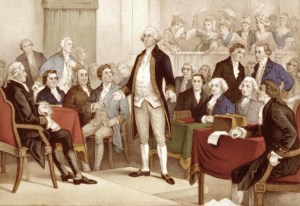
George Washington addresses the Continental Congress via Son of the South

From The Durango Herald (Ann Butler):

“We need to have a grown-up conversation about what we can afford,” said Sen. Ellen Roberts, R-Durango, who was joined by Rep. J. Paul Brown, R-Ignacio, at the event. “When we took $450 million from the severance tax, which was set up to help local communities affected by the oil and gas industry and support water-storage construction, it was just one more attempt to delay a tough conversation. We need to figure out what our priorities are and make our revenues and expenses match up.”

[…]

About 40 people filled the room at the Durango Recreation Center, including all three La Plata County commissioners. Attendees asked questions about all of the hot topics in the news, such as the desirability of the Superfund to clean up the Animas River, moving the hospital provider fee from under the Taxpayer Bill of Rights cap, a single-provider health care system and funding for K-12 education.

2016 #coleg: How will HB16-1005 (rain barrels) fare in the State Senate?

Rain barrel schematic

From The Durango Herald (Peter Marcus):

The Colorado House on Tuesday gave overwhelming bipartisan approval to a bill that would allow Coloradans to collect rain water that falls on their roofs.

The House passed the bill 61-3…

House Bill 1005 now heads to the Republican-controlled Senate, where Sen. Jerry Sonnenberg, R-Sterling, has previously objected to the measure. He chairs the Agriculture, Natural Resources and Energy Committee, where the bill was assigned last year and delayed in committee over objections from Sonnenberg.

The concern is with eroding the state’s prior appropriations system, in which water rights are granted to the first person to take water from an aquifer or river, despite residential proximity.

A study by Colorado State University in September, however, stated that allowing 100 gallons of rainwater storage per household would not decrease surface runoff by any detectable amount on a typical lot.

With the amendments added this week, and the momentum behind the bill, it has its best chance of passing through the Legislature this year…

“The people of Colorado have spoken and their elected officials have listened,” said Pete Maysmith, executive director of Conservation Colorado. “Citizens in our state want the senseless ban on rain barrels to be lifted so they can use this conservation tool to water their lawns and gardens.”

2016 #coleg: HB16-1005, rain barrels to State Senate

Rain barrel schematic

From The Pueblo Chieftain (Chris Woodka):

Support is pouring in for a bill that would make rain barrels legal in Colorado.
HB1005 passed the House on a 61-3 vote Tuesday and now goes to the Senate. Rep. Clarice Navarro, R-Pueblo, was one of the three votes against the legislation.

Reps. Justin Everett, R-Littleton, Jim Wilson, R-Salida, also voted against it.

“We amended the legislation so that it has broader support,” said Rep. Daneya Esgar, D-Pueblo.

The bill allows homeowners to collect water in two 55-gallon barrels for later use on lawns and gardens.

She provided a list of supporters that includes Trout Unlimited, the Farm Bureau, Denver Water and other diverse groups across the environmental spectrum. Pueblo Board of Water Works President Nick Gradisar personally supported the bill as well.

The amendments came after 10-2 approval from the House ag committee, and all of the committee members voted for the final product.

The amendments included a clear statement that having a rain barrel is not a water right, that the state engineer can curtail rain barrel use if necessary and a review of any allegations of injury to other water users by the state engineer in three to six years.

Esgar is optimistic the bill will get a hearing in the Senate this year, after Senate ag committee chairman Sen. Jerry Sonnenberg, R-Sterling, spiked a similar bill that passed the House in 2015.

“I’m hoping with the work that we’ve been doing on the bill he’ll support it,” Esgar said.

Colorado is the only state where rain barrels are largely illegal, but studies by Colorado State University show there would be no additional impact to water rights than from simply allowing water to flow from downspouts onto lawns.

2016 #coleg: Colorado’s fight over land and water rights hits the Statehouse — The Colorado Independent

Kerry Donovan from her State Senate website

From The Colorado Independent (Marianne Goodland):

Millions of Coloradans and tourists agree they love public lands, which take up more than a third of the state. Thousands of residents depend on national parks, forests, monuments and grasslands for their livelihood.

Underpinning any discussion of public lands, no matter how innocuous, is a squabble over who manages them: federal or state agencies.

In the past several years, those clashes have led to armed standoffs in Nevada and Oregon, including the recent months-long occupation at the Malheur Wildlife Refuge.

Fights over land management have provoked legislation from conservative Colorado lawmakers seeking to put federal lands under state control. Most of the state’s environmentalists prefer federal management, arguing it protects public lands from rampant development, including oil and gas drilling and mining.

But Sen. Kerry Donovan, a Vail Democrat, would like Coloradans to step back from the debate over who manages the land and celebrate what that land means to Coloradans. She’s the sponsor of a bill that would dub the third Saturday in May Colorado “Public Lands Day,” to celebrate the contributions Colorado’s national lands have made to the state’s economy and quality of life.

Public Lands Day would not be a state holiday, according to the bill. Schools would be expected to recognize it, even though it’s on a Saturday. Donovan told The Colorado Independent that she hoped schools would set up field trips or volunteer days when students would help repair trails, for example.
Colorado’s public lands “are the defining feature of our state,” Donovan told the Senate State, Veterans and Military Affairs Committee during the bill’s hearing last month.

But the measure also skirts the federal-versus-state control controversy over public lands, by design.

Last year, Colorado lawmakers enamored of state control over public lands attempted a bill that would begin the process of taking control away from the federal government. The bill, co-sponsored by Sterling Republican Sen. Jerry Sonnenberg, would have commissioned a study on how to do that. The measure died when one Republican, Sen. Larry Crowder of Alamosa, voted it down with Senate Democrats.

Crowder is the Senate’s most moderate Republican, and comes from a swing district in southern Colorado where he is up for re-election in the fall.

Donovan’s success in putting together a public lands bill without getting into the public lands controversy helped earn her a rare unanimous vote from the Senate state affairs committee Monday. The measure now awaits further action from the Senate.

There’s at least one more public lands issue on the horizon at the state House: a bill that would remind federal agencies that Colorado controls the water rights tied to public lands.

In 2012, the U.S. Forest Service demanded that ski areas, in exchange for renewing their leases on public lands, turn over water rights to the federal government. The ski areas sued and the Forest Service lost on procedural grounds. The Court ordered the agency to go back to the drawing board, although in the end the Forest Service came up with the exact same rule.

The agency claimed it wanted the water rights in order to protect them from being sold as a valuable asset when ski areas went bankrupt, although that’s never happened in Colorado.

Lawmakers quickly jumped to action three years ago, attempting a succession of bills that would say “hands off!” to the Forest Service and to the Bureau of Land Management, which witnesses said was trying to do the same with water rights on public lands leased for grazing cattle.

Those efforts have failed, despite bipartisan support from rural lawmakers in both parties.

In December, the U.S. Forest Service finally backed off on the requirement that ski areas turn over their water rights.

But Colorado lawmakers still want a bill that would ensure no further water-rights grabs from either the Forest Service or Bureau of Land Management. This year, such a measure has a better than average chance of passing.

Rep. Jon Becker, a Fort Morgan Republican, has teamed up with Democratic Rep. KC Becker, whose district includes Boulder and rural mountain counties such as Grand, Gilpin and Jackson. The bill Becker and Becker are proposing asserts to the two federal agencies that Colorado water is a property right and as such is governed by Colorado water law, even on lands owned by the federal government.

The measure also sets up a requirement that the federal government go through the same state process to acquire water rights like anyone else in Colorado, in effect putting the federal government on the same footing as any municipal water provider, farmer or rancher who wants to acquire water rights.

And given Colorado’s prior appropriation doctrine that says water rights belong to those who first lay claim to them, the feds would be at the end of a long line of water users.

The House Agriculture, Livestock and Natural Resources Committee will hear the bill on March 7.

2016 #coleg: Colorado Rain Barrel Bill Inches Forward, Earns House GOP Support — KUNC

Photo via the Colorado Independent

From KUNC (Bente Birkeland):

Colorado is on the road to becoming the final state in the country to legalize rain barrels, after Democrats reached an agreement with several Republicans who opposed previous versions of the measure.

“It is a water right and what you have done with this, you have protected that water right,” said Rep. Don Coram (R-Montrose), who had voted against a rain barrel bill last session.

Now he said he can back it – and other Republicans are also on board with HB 16-1005 [.pdf].

“I’ve gotten a lot of emails asking for this bill, even though it may seem a trivial issue, it’s not to somebody who is very cognizant of Colorado water law,” said Rep. Bob Rankin (R-Carbondale). “And I would not have voted for it without the amendments.”

Rep. Jon Becker (R-Fort Morgan) sponsored one of the amendments. It clarifies that having a rain barrel is not a water right. It would also give the state engineer the ability to curtail rain barrel usage.

Another amendment would require the state engineer to write a report to the House and Senate agriculture committees if rain barrels are found to negatively impact downstream water users.

2016 #coleg: HB16-1005 amended, passes House

Photo from the Colorado Independent.

From The Denver Post (Joey Bunch):

The effort to legalize use of rain barrels in Colorado appeared to have broken out of its longtime logjam Monday.

Democrats in the state House allowed two GOP amendments meant to ease concerns over rain barrels and their place within Colorado water law.

One amendment makes it clear that having a rain barrel is not a water right, and the other says that the state engineer can step in if water is siphoned off from people with water rights.

“We’ve come a long way,” Republican state Rep. J. Paul Brown, a Republican from Ignacio, said of the compromise. “Property rights are important. The Fifth Amendment of the Constitution establish property rights, and waters rights are a property right.”

[…]

Though the water lost to downstream water-rights holders is expected to be small, the principle of water law was at stake, rain-barrel opponents have said.

Most Republicans in the House sided with Democrats on a voice vote Monday. The bill still has to pass a roll-call tally in the chamber, before moving to the Republican-led Senate.

The two amendments reflect the concerns expressed by Sen. Jerry Sonnenberg, a Republican from Sterling. Sonnenberg said last week the two points — recognition of prior-appropriation and state stewardship of the practice — had to be addressed before he could support the rain-barrel bill.

[…]

Colorado is the only state with an outright ban on residential rain barrels. The proposed law would allow up to two 55-gallon rain barrels to collect water to be used on a resident’s lawn or garden.

In committee last week, Reagan Waskom, director of the Colorado Water Institute and chairman of the Colorado State University Water Center, said CSU’s modeling indicates no detectable impact by rain barrels on downstream runoff. Nearly all of the water would be absorbed in the soil, just as it would be if it was not captured in a rain barrel then applied to the soil, he said.

“People out there in our communities want this,” said Rep. Jessie Danielson, a Democrat from Wheat Ridge who has sponsored the measure the past two sessions, told fellow legislators before Monday’s vote.

“They want to be able to catch a little water and put it on their tomatoes.”

2016 #coleg HB16-1005 rain barrel bill

Photo from the Colorado Independent.

From The Colorado Independent (Marianne Goodland):

Put a bucket under your downspout and collect rain running off your roof to water your garden. You’re an outlaw in Colorado.

Critics have lambasted the state for barring this quaint eco-friendly, urban-farming technique, but to rural Coloradans devoted to prior appropriation, the water rule that the first person to take water secures rights to it into the future, rainwater harvesting should be banned.

While this square state is one of 19 governing water with a prior appropriation doctrine, we’re the only one to ban rainwater collection.

James Eklund, director of the Colorado Water Conservation Board, doesn’t see harm in the practice. He’s the brains behind Colorado’s state water plan, Gov. John Hickenlooper’s strategy for avoiding a massive water shortage by 2050.

The water plan pushes the state to take a leading role in water usage and conservation, something the anti-rain barrel ban makes a mockery of, as the law’s critics see it. Last year, an attempt to rid the state of the ban was stalled and eventually defeated by Sen. Jerry Sonnenberg, a Sterling Republican who said the changing the law would undermine first-come first-serve water rights for farmers and ranchers in his district. Rainwater, as proponents of prior appropriation see it, is included under the first-come-first-serve doctrine. Even urban runoff replenishes streams, rivers and aquifers, they say.

For the second time in two years, lawmakers are trying to undo the ban, saying a rigid interpretation of Colorado water laws shouldn’t get in the way of much needed water conservation. Democratic Reps. Jessie Danielson of Wheat Ridge and Daneya Esgar of Pueblo took a bill to strike the law to the House Agriculture, Livestock and Natural Resources committee Monday for a first hearing.

Danielson and Esgar brought witnesses to the hearing who championed the bill, saying rainwater would be put to good use in the state’s suburbs and cities. Rainwater harvesting would educate Coloradans about water scarcity and conservation, said the bill’s defenders.

Drew Beckwith of Western Resource Advocates said rain barrels would help inform the public about water issues.

“It makes visible what is invisible,” Beckwith said.

Ag committee member Rep. Jon Becker said the new bill’s proponents had not addressed farmers and ranchers’ concerns that allowing rain barrels would undermine prior appropriation and deprive rural communities of much needed water for livestock and crops.

Last fall, Colorado State University’s centers on stormwater and urban water studied the impact of rainwater collection. In an average rainfall, about 8,000 gallons of water fall on a lot with a home, according to the study. A rain barrel would collect roughly 55 gallons. The new bill would allow up to two rain barrels per household. Uncaptured rainfall would evaporate or run off into underground drainage systems, back to rivers and creeks, and to downstream ranchers, farmers and towns.

The CSU study concluded that the impact of collecting rainwater on downstream users would be minimal, according to the presentation made to the committee.

The bill directs those who collect rainwater to use it to water lawns and gardens, and not for drinking.

Currently, most Coloradans who water their lawns use treated drinking water instead of runoff. That makes no sense, said water board head Eklund to the committee.

Farmer Jim Yahn of Sterling, who says he and fellow farmers and ranchers measure every drop of water to make sure they’re not ripped off, didn’t buy Eklund’s arguments.

“We’re not anti-rain barrel,” Yahn told the committee. “We’re against the misuse of the prior appropriation system.”

Yahn pointed out that “wet” years with above-average rainfall are unusual, and he fears he won’t have enough water in the more normal, dry years.

“You either believe in prior appropriation or you let water go” outside of the priority system, Yahn said.

There’s no recourse in the bill for those who say they would lose water from rainwater harvesting. If someone in the priority system wants to argue they have less water because of rain barrels, they’d have to figure out the specific person who took more than their share and seek redress with the state water courts. Doing so would be impossible, Sonnenberg told The Independent.

The bill offers no means for ensuring rain water collectors are accountable to water law, Sonnenberg said Tuesday, and he expects it to be amended to address that issue.

Currently, water courts rule on such issues; however, the process is too costly for the average Coloradan. Sonnenberg said the state water engineer could be given that task of investigating rain water barrel users abusing their rights.

Becker asked the sponsors to consider some way to replace water collected by rain barrel users, an idea that was floated in the interim Water Resource Review Committee last summer. He also asked that the bill be amended to halt rainwater collection when there are calls on the rivers. A call occurs when people with more water rights have less than they are entitled to and take water from those with fewer rights.

Even fellow Republicans didn’t support Becker’s amendment, saying it was unenforceable.

Danielson and Esgar said they worked with water rights holders to create a bill that would honor prior appropriation and still allow rainwater collection. Danielson cited her ag family’s dependence on first-come-first-serve water rights as a reason the bill would not undermine prior appropriation.

Environmentalists cheered as the bill passed, 10-2, with three Republicans backing it. That included Rep. Lori Saine of Firestone, whose constituents have battled flooded basements and fields for the last several years. Next, the House will debate the bill, where it will likely pass.

The big question is whether the bill will be able to clear the Senate Agriculture, Natural Resources and Energy Committee, a Republican-majority committee led by Sonnenberg, who opposed the bill last year.

Sonnenberg told The Independent his support hinges on amendments that reinforce prior appropriation doctrine.

To appease him, Danielson and Esgar secured an amendment to put language supporting first-some-first-serve water rights into the bill’s statement of intent.

Conservation Colorado called the ban on rain barrels antiquated and said the bill would help connect Coloradans to their water use.

The public supports rain barrels, the group said in a statement, so opponents “must move out of the way and recognize that Coloradans want to use rain barrels…”

In cheering the bill’s passage, Esgar noted that people can shovel snow off their sidewalks and put the snow onto their lawns.

If you can do that, she said, “Why can’t you collect rainwater and put it on your garden?”

2016 #coleg: HB16-1005, “We’ve been in the rain collection business [reservoirs] for more than 100 years” — Jim Yahn

Rain barrel schematic

From The Pueblo Chieftain (Chris Woodka):

Rain barrels would have less impact on water rights than uses such as stock ponds and rural household wells or just shoveling snow off the sidewalk into the grass and planting trees in cities, in Rep. Daneya Esgar’s estimation.

“It does not make a lot of sense to pick and choose water rights,” the Pueblo Democrat told the House agriculture committee Monday. “We have strong data that shows no impact.”

But some agricultural groups are stubbornly insisting that they’ll suffer by a thousand 55-gallon cuts.

“You’re taking a little bit of water. Can you measure it? Maybe not,” said Jim Yahn, manager of the North Sterling irrigation district and a member of the state Interbasin Compact Committee. “But at some point the ground is saturated and it’s going to run off.”

The bill to legalize two 55-gallon rain barrels per single-family home, HB1005, passed the committee on a 10-2 vote Monday and now heads to the House floor. Water could be stored and used later on gardens or lawns.

The bill is similar to a measure that passed the state House last year, only to be corked in a Senate committee at the end of the session. This year, there are some modifications that clearly state rain barrels will not interfere with the constitutional and legal doctrine of prior appropriation. Two amendments to safeguard water rights were added Monday.

But the committee drowned an amendment proposed by Jon Becker, R-Fort Morgan, to curtail rain barrels during river calls, a move co-sponsor Jessie Danielson, D-Wheatridge, called “hostile.” The sponsors also have raised an umbrella against attempts to put control of rain barrels in the hands of the state engineer.

The bill as it is got a neutral response from the Division of Water Resources, and conceptual support from the Colorado Water Conservation Board.

“We as a state want our brand to be about water innovation,” CWCB executive director James Eklund told the committee, adding that rain barrels fit well with the public education component of Colorado’s Water Plan.

Reagan Waskom, director of the Colorado Water Institute, broke down the impact of rain barrels by the numbers for the committee, based on Colorado State University studies.

A 4,000-square-foot urban lot would receive 45,000 gallons of water from 7 inches of rain during the agricultural growing season. The ground absorbs 2 inches per foot anyway. Typical landscaping on that lot would use 90,000 gallons in the same period. What’s more, the rooftops and sidewalks that are built on that lot increase runoff by a factor of 10.

“The amount stored by a rain barrel would be captured in the soil anyway,” Waskom said.

In areas where they are legal — all other 49 states — only 5-10 percent of households use them.

“If we could show a difference (in the percentage using barrels) we would, but you multiply by zero and get zero,” Waskom said.

Yahn, along with other ag groups, testified that downstream producers in the South Platte watch Denver rain events closely and rely on the surge in the river.

“We’ve been in the rain collection business for more than 100 years. It’s called reservoirs and the water is taken in priority,” Yahn said.

He asked what legal recourse farmers would have under the proposed bill.

Deputy State Engineer Kevin Rein later explained it would be difficult to pursue a remedy for rain barrels.

But Rein also confirmed Esgar’s assertion that far more water is taking out of priority already in stock ponds and through household wells on 35-acre lots which can take enough water for three homes, an acre of garden and domestic animals.

Colorado also allows a pilot project at Sterling Ranch in Douglas County to harvest rainwater that would otherwise go to a stream under a 2009 law, Rein said.

Environmental groups support the bill as a way to increase urban awareness about conservation.

“They begin to understand how much water a lawn or garden takes,” said Drew Beckwith of Western Resource Advocates. “It makes visible what is invisible to most people.”

2016 #coleg, HB16-1005: “You’re not going to be able to measure it” — Reagan Waskom

Photo via the Colorado Independent

From The Denver Post (Joey Bunch):

For the second year in a row, a legislative storm is brewing in Colorado over who legally owns drops of rain.

A bill that would allow gardeners to store 110 gallons of runoff from their roof in up to two rain barrels passed on a 10-2 bipartisan vote in a House committee Monday. Republicans in the state Senate let a similar bill expire without a vote on the chamber floor at the end of last year’s session.

Opponents cited state water law that says rainfall must be allowed to move unabated back into the ecosystem to feed aquifers and reservoirs for those who hold expensive water rights.

In theory, proponents say, when the rainwater goes on gardens or lawns, it would then return to the larger environment. In the bargain, rain-barrel users would get a sense of how little it rains in Colorado and how much water they use on their property,

“This is a simple tool that will encourage water conservation and encourage people to use water wisely at their homes,” said Rep. Jessie Danielson, a Democrat from Wheat Ridge, who is one of the bill’s sponsors.

Colorado is the only state that bans rain barrels and is one of just four states that restrict so-called rainwater harvesting, joined by Arizona, Oklahoma and Utah, according to the National Conference of State Legislatures.

Reagan Waskom, director of the Colorado Water Institute and chairman of the Colorado State University Water Center, said an experiment showed no detectable impact on downstream runoff. Nearly all of it is absorbed in the soil, just as it would if it was not captured.

CSU is neutral on the bill, he said.

“The water that’s captured in a rain barrel would be captured in the soil, anyway,” Waskom said. “You’re not going to be able to measure it.

“It’s very important, every drop, to the downstream users,” he said.

Sen. Jerry Sonnenberg, R-Sterling, a chief opponent last year, said the bill would face problems in the Senate if it does not acknowledge the state’s prior appropriation doctrine, which ensures those with senior water rights get their share. The bill also must identify a state agency or other authority to see that happens, he said.

From The Grand Junction Daily Sentinel (Charles Ashby):

Colorado would become the last state in the West to allow its residents to collect rainwater in barrels from their rooftops under a bill that won approval in a House committee on Monday.

Similar to a measure that failed last year, the bill would allow homeowners to have up to two 55-gallon rain barrels, but they can only use the water for the purpose of irrigating their lawns and gardens.

In the House Agriculture, Livestock & Natural Resources Committee, which approved the measure on a bipartisan 10-2 vote, proponents of HB1005 said even if all homeowners in the state took advantage of the bill, it would impact a small amount of water in the state.

Yet opponents said that amount is still an impact that could make or break a single farm or ranch downstream.

Jim Yahn, manager of the North Sterling and Prewitt reservoirs in northeast Colorado, said all water in the state is part of a prior-appropriated system that is based on first in time, first in line. That means people own water rights, and those with the most senior rights get the water first.

Taking any water out of the system is a violation of that major tenet in water law, he said.

“Every drop of water is valuable,” Yahn said. “Anytime you get any runoff from your lawn, if you have captured some of that in a rain barrel, you’ve taken water out of the system.”

Proponents, however, said water that is allowed to run off of rooftops either evaporates before making it into that system or is absorbed by plants.

Trapping it and letting people put it for outdoor use causes homeowners to save water because they are using less from their taps, meaning more ends up for downstream use.

“We have an opportunity to support a pretty straightforward bill that will encourage the urban and suburban water users across the state to think twice about the amount of water that they are putting on their landscaping,” said Rep. Jessie Danielson, D-Wheat Ridge, one of the sponsors of the bill. “If they can save even a little bit, it will translate down the line to more water for farms.”

Some opponents of the bill said they would have an easier time with it if it included a clause that would allow for moratoriums on rain barrel use at times when there is a “call” on a river.

That happens when downstream water users who have more senior rights demand their water in dry years.

Rep. Jon Becker, R-Fort Morgan, said the state’s water engineer needs to have more control over the use of such barrels, but the bill doesn’t allow for it.

“To say (there is) a de minimis impact is not necessarily the truth, and is not anything we can prove,” he said. “Because of that, I want to see in the bill someplace that there is an easier way for the state engineer or objectors to come in and talk about this.”

The measure heads to the full House for more debate.

From The Durango Herald (Peter Marcus):

After a slippery ride, lawmakers on Monday advanced a measure that would allow Coloradans to collect rain water that falls on their roofs.

The House Agriculture, Livestock and Natural Resources Committee backed House Bill 1005 by a vote of 10-2, after a more than two-hour hearing. It now heads to the full House for consideration.

The measure is written similar to last year’s bill, which died on the second-to-last day of the session after it failed to receive a Senate floor vote despite a last-minute effort to garner support.

The bill would allow people to capture rain from their roof in up to two 55-gallon barrels for use in their garden or on their lawn.

Sponsors of the bill are hopeful that they can muster enough support to drive it through the legislative process, especially following a study by Colorado State University in September that stated that allowing 100 gallons of rainwater storage per household would not decrease surface runoff by any detectable amount on a typical lot.

“Instead of it going into your windowsill, or possibly a sidewalk, you could use it where you see fit … on your tomato plants and your flower garden,” said Rep. Jessie Danielson, D-Wheat Ridge, a co-sponsor of the bill.

Critics raise concerns about eroding the state’s prior appropriations system, in which water rights are granted to the first person to take water from an aquifer or river, despite residential proximity.

In an effort to address the water rights controversy, some rural lawmakers pushed an amendment that would have allowed the state engineer to intervene if complaints over water rights arise. But the amendment was defeated.

“It was mentioned that a lot of the opposition would go away if … the state engineer had the authority to intervene or had some oversight if necessary. … To me, this amendment actually does that. … I just think it would take a lot of the angst about this bill away,” said Rep. J. Paul Brown, R-Ignacio, who voted for the bill despite the amendment failing.

Rep. Don Coram, R-Montrose, raised concerns with Colorado being a water provider among 18 states that have a prior appropriations system. He voted against the measure.

“We’re not even talking the same thing here,” Coram told supporters of the bill. “We’re a headwater state. We’re the rooftop. We run in every direction.”

State water officials did not take a formal position on the legislation. But James Eklund, director of the Colorado Water Conservation Board, said the effort could help with a narrative on water conservation in the West.

“The concept of residential rainwater harvesting aligns with the CWCB’s philosophy of promotion of education and water stewardship at a local level …” Eklund said.

2016 #coleg: HB16-1005, “That certainly would help with water efficiency in landscaping” — Brad Mueller

Rain barrel schematic

From The Greeley Tribune (Catherine Sweeney):

Rain barrels are back on the agenda for Colorado.

Last year, a few state legislators attempted to pass rules to allow the banned precipitation catchers. They’re going at it again this session.

House Bill 1005 would allow residents who live in houses or small condo complexes to place two 55-gallon barrels on their properties to collect rain water. They would be allowed to use it only for outdoor uses, such as gardening.

Supporters believe the measure would encourage residents to conserve water, and that it would cut down on the demand for tap water. Because water from the hose is filtered at a city or water district’s treatment facility, it’s more expensive for residents and more labor-intensive for cities.

Opponents believe the rules would take water from the overall water system, in which river water is already assigned to water rights owners — farmers, businesses owners — downstream. Essentially, opponents say, it would cheat people out of their guaranteed water.

Water policy can be intimidating for residents who aren’t involved in the water business, said Becky Long, the advocacy director for Conservation Colorado, which supports the bill. It can discourage people from working on conservation. Rain barrel rules aren’t as difficult to figure out.

“It’s really common sense,” she said “It’s a great way to bring people in the door.”

She argued against the idea using rain barrels will steal from downstream users, saying the allowed 110-gallon capture wouldn’t make a difference for a few reasons.

First, a lot of that rain doesn’t make it to the river.

“The reality is we live in a dry climate, and most of that water as it rains is used up by the plants or evaporates quickly,” she said.

Rain that would fall into barrels now just falls through a house’s gutter, she said. Most of the time, that water is going to come out of the pipe, land on a patch of dirt and saturate it. All rain barrels do is allow residents to transfer water from that patch to their tomato plant.

“You’re not changing the fact that it was going to get used,” she said. “You’re changing the timing.”

Greeley doesn’t have an official position on the legislation, but some officials say the benefits would help the city.

“That certainly would help with water efficiency in landscaping,” said Community Development Director Brad Mueller.

In the fall, his department released the Landscape Policy Plan, a guidebook to establishing the programs and regulations needed to reduce outdoor water use.

The Greeley Water and Sewer Department opposed the bill last year, but this year, officials are trying to work with legislators to spruce up the language.

Last year, they had two main objections, said Donna Brosemer. She’s the department’s government and public relations specialist, and she works as a liaison to the Legislature.

Last year, the bill stated water falling on the state isn’t subject to Colorado water law.

“It just defies logic,” she said.

Colorado is one of only two states in the union with rivers flowing out of it but no rivers flowing in. The other is Hawaii. All of Colorado’s rivers are fed by snowpack in the mountains and rain water.

“We came out of 2013 with 17 inches of rain,” she said.

It would be a hard sell to convince someone we didn’t need rain in the river.

The bill is now saying that rain collected in barrels can get an exemption from its role in the Colorado water system. Brosemer called that a “satisfactory solution.”

The second objection still hasn’t been addressed. The bill doesn’t address injury to downstream users.

“It’s very difficult to know how many rain barrels would be in use,” she said.

If a handful of residents use them, it wouldn’t have a noticeable impact. If a whole city does, it would.

“All we’re trying to do right now is figure out language that would allow long-term evaluation,” she said.

Once the law is changed, it won’t be easy to change back. And even if it did change back, enforcing that would be difficult.

“Nobody’s going to go around and collect them,” she said.

2016 #coleg: HB16-1005 rain barrel bill

HB16-1005 (Residential Precipitation Collection) hearing on Monday the 22nd.

From KWGN:

The bill would permit Coloradans to use no more than 2 rain barrels collecting a maximum of 110 gallons of rainwater. Read the full proposal here.

“In my opinion the bill is really straightforward. It allows you collect the rain that falls on your roof then maybe put it on your garden a little later,” Rep. Jesse Danielson, a Democrat who is sponsoring the bill said.

A similar measure was introduced last year but failed after some Republican senators expressed concern that collecting rainwater could deplete the water supply of rivers downstream and for the rural residents who rely on them.

Photo via the Colorado Independent

2016 #coleg: Lower South Platte district meeting and current legislative proposals

South Platte River Basin via Wikipedia

From the Sterling Journal Advocate (Bryson Brug):

First up was a bill for ag water protection in governing the use of agricultural water. Currently, changing the intended use of agricultural water requires that a specific use be identified and designated. This bill will allow the owner of an agricultural water right to seek a change in use without designating the specific use. However this option is also subject to strict conditions, including approval by the state engineer. The remaining portion of the water from the water right must be used for agricultural purposes and the water cannot be transferred out of the water division that has jurisdiction over it.

Frank cautioned the bill might have too many protections in it.

“This bill has a lot of protections,” Frank said. “In fact it has so many protections that I’m not sure a lot of people will want to use it.”

The other bill introduced was a bill concerning the use of rain barrels being used to collect rain water from a residential rooftop. The bill allows for a maximum of two rain barrels with a capacity of 55 gallons each. Frank advised that this bill has a lot of support behind it. The problem, according to Frank, is that many view the bill as a conservation measure when it actually isn’t. According to the math, rain water collected in barrels is water not collected into rivers or natural water sources.

The Water Banks Administration bill, a third bill Franks mentioned, was not discussed because it has not been introduced yet. It is still in draft form and needs more work, Frank said. It will be discussed at the next meeting.

2016 #coleg: HB16-1005 rain barrel bill, sponsors downplay downstream injury

Rain barrel schematic

From KOAA.com (Andy Koen)

“When you fill up your rain barrel with rain that comes off of your roof and you use that to water your garden instead of turning your hose on and leaving it water for an hour with treated water, you realize where are your water is coming from,” [Daneya Esgar] said. “You might think a little bit differently about it and might help conserve the water that we need in Colorado to make sure that we maintain our great resource.”

The prevailing theory currently keeping Colorado homeowners from using rain barrels is that run-off from residential homes eventually flows through storm sewers into creeks and drains that feed interstate rivers. So, trapping that water at the source could harm cities and states downstream.

Esgar thinks that theory is flawed. She carried a similar bill last year that was defeated in the State Senate. During the interim session, State Senator Ellen Roberts asked Colorado State University to study whether residential rain barrel use causing any downstream injury.

“CSU came and did a great presentation to the interim water committee basically saying this is absolutely no injury this doesn’t hurt downstream users so once we heard that report we decided to go ahead and try again this year,” Esgar said.

House Bill 16-1005 would limit consumers to using just two rain barrels per household, for a maximum storage capacity of 110 gallons. The water must be used for irrigating lawns and gardens.

Esgar thinks the bill has a better chance this time around because of the CSU Study and bipartisan support already shown in the House.

“We’ve really been working since September with the opposition, the few people that were opposed to it, to really see if we could come up with a way to change the bill language a little bit that protects the downstream users without really infringing on the integrity of what we want the bill to be,” she said.

The Rain Barrel Bill will be introduced into the House Agriculture, Livestock and Natural Resources Committee next Monday where it is expected to pass.

#COleg: HB 16-1005, Another attempt at approving rain barrels

Photo via the Colorado Independent

From The Pueblo Chieftain (Chris Woodka):

Another attempt to legalize rain barrels in Colorado is being made in the state Legislature.

Rep. Daneya Esgar, D-Pueblo, Rep. Jessie Danielson, D-Wheat Ridge, and Sen. Mike Merrifield, D-Colorado Springs, are trying to get a measure passed that would allow homeowners to collect up to 110 gallons of rainwater in two barrels on their own property. The bill is HB 16-1005.

A nearly identical measure passed the state House last year, but was allowed to die before it reached the Senate floor. It faced opposition from water users who claimed the water would be intercepted before it reached streams and rivers.

“Colorado is the only state where it is illegal to collect and use rainwater,” Esgar said. “We think it will be good for all of Colorado.”

This year’s bill is substantially the same as the 2015 version, and allows water collected to be used for nonpotable purposes such as lawn irrigation, landscaping and gardening. It would require the state engineer’s office to post information on its website.

Sen. Jerry Sonnenberg, R-Sterling, is offering an amendment to the bill which would require the state engineer to develop rules and which would make water providers accountable for replacing the amount of water collected. Sonnenberg led opposition to last year’s bill.

Sponsors are not likely to amend the bill as Sonnenberg is suggesting, however, and instead will look at adding their own amendment that would categorize rainwater collection as part of the doctrine of prior appropriation, Esgar said.

“This is not the camel’s nose under the tent that some have tried to portray,” she said. “We’re just talking about collecting water to put on flowers and gardens.”

A study conducted by the Urban Water Center at Colorado State University-Fort Collins concluded collecting 100 gallons of water from the lot of a typical Denver household had little impact on runoff. In fact, new construction of previously undeveloped land — on which state water law is mute — had a much larger impact on runoff by increasing the amount of water that reaches streams.

Colorado has rarely enforced its prohibition on rain barrels, and has two laws on the books that allow for limited rainwater collection.

A 2009 state law (SB80) authorized the use of rain barrels in connection with other water rights. Another 2009 bill (HB1129) authorized pilot projects for rainwater harvesting. So far, the proposed Sterling Ranch development in Douglas County has been the only applicant.

From Western Resource Advocates (Drew Beckwith):

Bing-bing! Like any good fighter worth their weight, our legislative effort to legalize rain barrels is back for another round. Round 1 was all about gauging the opponent’s weaknesses and testing out combination punches – of social media with editorials, and big-name supporters with grassroots action. In Round 2, we’ll hone our path to victory and are aiming for a K.O.

Boxing analogies aside, making it legal for Colorado residents to have a rain barrel is up again at the Colorado legislature, this time as House Bill 16-1005. Last year’s attempt was wildly popular with the general public and was editorialized in support by five of the state’s largest newspapers. The people want this bill to pass.

In Colorado, current law assumes that the rain falling on your roof already belongs to someone else further downstream. Yes, you are a scofflaw for putting a bucket under your downspout. It seems totally ridiculous, and it is.

Just like last year’s bill, HB 16-1005, seeks to change our antiquated status quo by allowing residents to use up to two rain barrels for watering their plants, garden, and flowers. Lots of research that I will not get into, demonstrates that this limited amount of rain water capture has no impact on downstream water users. In fact, the whole point of this bill is to get our public more engaged in water issues. Someone with a rain barrel begins to pay attention to how much water it takes to water the lawn; they begin to question where their water really comes from beyond the tap; and this can lead them to develop a conservation ethic towards water resources.

This increased awareness is a good thing, and frankly a must-have if we are going to tackle the difficult water challenges facing our region.

Unfortunately, our collective efforts were thwarted last year via political game playing. Knowing that the bill would pass out of the Senate Agriculture and Natural Resources committee and would have received bi-partisan support in the full Senate, Senator Sonnenberg who chairs the Ag Committee “laid the bill over” for multiple weeks, stalling a committee vote on it until the second to last day of the legislative session. This effectively killed the bill because Senate rules dictate that bills cannot be debated by the full senate and voted upon in the same day.

In this next round, we’re prepared for another stall tactic and are building even greater support for legalizing rain barrels with influential groups across the state. HB 16-1005 is still awaiting its first committee meeting in the House, so stay tuned for updates from WRA. You can follow #rainbarrel and #HB1005 for the latest news.

#coleg: SB16-044, Sonneburg’s conservation easement bill hearing, February 9

Saguache Creek
Saguache Creek

From the Sterling Journal-Advocate (Jeff Rice):

Senate Bill 16-044 is scheduled for a hearing before the Colorado Senate Finance Committee on Feb. 9, according to the bill’s sponsor, Sen. Jerry Sonnenberg, R-Sterling.

The bill would require the state to stop trying to collect back tax credits, penalties, and interest from landholders whose conservation easement appraisals have been summarily labeled “fraudulent” by the Department of Revenue. In an interview over the weekend, Sonnenberg said the largest obstacle the bill faces is the fiscal impact.

“The DOR has to compile those numbers and come up with a fiscal note, that is, what is the cost to the state of enacting that bill,” Sonnenberg said. “What that fiscal note will tell us is just how much we’ve screwed the people by breaking our contract with them.”

Across Colorado more than 700 conservation easements, most of them donated between 2003 and 2007, were created under a state law that for years had no oversight. Thousands of landowners set aside millions of acres of land in return for state tax credits they could use against their own income taxes or could sell for cash to others to help pay their income taxes. At last report, the state had lost as much as $220 million to those tax credits.

Subsequently, state officials summarily deemed hundreds of the land appraisals those credits are based on as fraudulent and the donated land as worthless. No one has ever been charged with fraud, let along convicted of it, in relation to any of those land appraisals.

Sonnenberg’s bill would forbid the DOR from “contesting certain claims for conservation easement claims unless the valuation of the easement is supported by an appraisal from an appraiser convicted of fraud or misrepresentation in connection with preparing the appraisal.”

The bill also calls for a refund of “tax, interest, or penalty paid by a taxpayer” in connection with a contested appraisal that otherwise would meet the bill’s requirements.

Sonnenberg acknowledged that the impact on the state’s coffers could be in the millions of dollars beyond what the DOR is already trying to collect…

The bill is scheduled for a Finance Committee hearing at 7 a.m. Feb. 9 in Room LSB B in the Capitol. Sonnenberg said anyone who wants to attend the hearing or even testify on its behalf can contact his office for assistance.

Keefe: Thanks, #TABOR. You’re sure helping #Colorado

thanksTABORyouresurehelpingcoloradokeefecoloradoindependent

Cartoon from the Colorado Independent

Here’s a report about a federal court review of TABOR from Corey Hutchins writing for the Colorado Independent:

Lawyers on Thursday will argue their case before a federal judge about why they believe Colorado’s voter-initiated Taxpayer’s Bill of Rights amendment to the state Constitution is, well, a violation of the U.S. Constitution.

Since passed in the early ’90s, the complex law requires, among other things, that voters must approve of any tax increase. It also mandates governments to rebate money to taxpayers if the government takes in more revenue than expected. A Colorado Springs landlord and anti-tax folk hero named Douglas Bruce championed the amendment first in his home city, and then took it statewide in 1992. Since then it’s been the law of the land in Colorado, and has become a perennial political controversy.

“This is a highly historic case that is deeply important to the state of Colorado, and indeed, the rest of the country,” said Tim Hoover, spokesman for the Colorado Fiscal Institute in a news release about Thursday’s hearing.

“The principle argument of the complaint is that TABOR restructured state government in ways that violate the core principles of representative government guaranteed to every state under the U. S. Constitution,” according to TABORcase.org, which offers background on the lawsuit.

#coleg: New legislation attempt would allow Coloradans to collect water from roofs — The Durango Herald

Rain barrel schematic

From The Durango Herald (Peter Marcus):

Another attempt to allow Coloradans to collect rain water that falls on their roofs has started with a drizzle of legislation.

Reps. Jessie Danielson, D-Wheat Ridge, and Daneya Esgar, D-Pueblo, introduced the first piece of legislation on the subject Wednesday, the first day of the new legislative session.

The measure is written similar to legislation last year, which died on the second-to-last day of the session after it never received a Senate floor vote.

“It’s so simple. You’ve got rain that falls on your roof. You want to store it in a barrel to put it, instead of on your lawn or on your sidewalk, on your tomato plants or your flowers,” said Danielson, the daughter of a Weld County farmer. “It’s really straightforward, and it makes a lot of sense.”

The bill would allow people to capture rain from their roof in up to two 55-gallon barrels for use in their garden or on their lawn…

Sen. Ellen Roberts, R-Durango, found herself stuck in the middle of the debate last year, working to convince her fellow Republicans, who control the Senate, to give the bill a floor vote, where it would have passed with her support.

Sen. Jerry Sonnenberg, R-Sterling, chairman of the Senate Agriculture, Natural Resources and Energy Committee, led opposition to the bill, raising concerns over eroding the state’s prior appropriations system, in which water rights are granted to the first person to take water from an aquifer or river, despite residential proximity.

Sonnenberg suggested requiring rain-barrel users to register their barrels with the state and requiring local water providers to replace water taken from rooftops.

“It was extremely burdensome and regulatory in nature, and I couldn’t support it, but I certainly appreciated him spending some time to think about what would be a path forward from his perspective,” Roberts said of Sonnenberg’s effort. “I don’t want a police state over rain barrels.”

For his part, Sonnenberg said on Friday that he is open to a new discussion this year. He is holding off on introducing his own measure on the subject to see if he can secure a compromise with the bill that has been introduced.

At the top of his list, Sonnenberg would like the Office of the State Engineer, which handles water resources, to study the issue to determine whether there would be an impact to water rights, or if the result would be too minor to merit consideration.

He would also like the legislation to consider impacts to all bodies of water in the state – such as a groundwater basin – instead of just streams.

Proponents feel vindicated after researchers with Colorado State University in September reported that allowing 100 gallons of rainwater storage per household would not decrease surface runoff by any detectable amount on a typical lot.

But Sonnenberg remains skeptical, stating that the study took into account only runoff with or without rain barrels. He said it’s possible that barrels would lead to less runoff.

“The CSU study is flawed,” he said. “CSU … has lost some credibility for not doing their due diligence with regard to water and bringing us numbers. They did not bring us numbers that add up.”

Sonnenberg has, however, backed off on the registration requirement, stating that the proposal was just a starting point.

“All I need is someone responsible and a solid legislative declaration, and I think I can convince my other folks in the water community that do not like this, that absolutely hate this, that this is a good compromise,” he said.

Governor Hickenlooper’s State of the State of #Colorado

Governor John Hickenlooper 2016 State of State Address via KJCT8.com

From the Sterling Journal Advocate (Marianne Goodland):

Gov. John Hickenlooper Thursday used his annual State of the State speech to chide lawmakers for failing to compromise last session on the state’s most pressing issues: the state’s budget, which he believes will have to be cut in 2016-17, changes to a hospital provider fee that could free up $1 billion over five years for transportation and education, and reforms to a state construction defects law that developers say prevents them from building affordable condominiums.

Last year’s partisan gridlock was due largely to split control of the General Assembly. It’s the same for this year — Republicans have a one-vote majority in the state Senate, and Democrats hold a three-vote advantage in the state House.

While democracy “wasn’t designed to be argument-free,” it also “isn’t designed to be combative to its own detriment,” Hickenlooper said. “Our conflicts aren’t serving us,” either at the state Capitol or in Washington, D.C. “We used to take pride in compromise… but in today’s politics we revel in getting our way without giving an inch, and stopping the other guy from getting anything done.”

Coloradans excel at working together after a tragedy, but that shouldn’t be the only reason lawmakers compromise on the state’s biggest challenges, Hickenlooper said…

Hickenlooper also brought up the state water plan, which was finalized in November, stating that the time has come to put it to work. He didn’t identify any specific ideas to implement it, although he promised there would be legislation to give the Colorado Water Conservation Board, the plan’s author, “greater flexibility in funding our most important water projects.”

Becker said Hickenlooper should have endorsed the Northern Integrated Supply Project, which would add two new reservoirs along the Poudre River in Larimer County. Will the governor support “the biggest privately-funded water storage plan in the state?” Becker asked.

Sonnenberg was “thrilled” with the governor’s remarks on water. The two have begun discussing the plan, water storage and related issues. “I’m pleased we’re moving forward with some aspects of the water plan,” Sonnenberg added.

From The Durango Herald (Peter Marcus):

During his State of the State address Thursday, Gov. John Hickenlooper outlined efforts to avoid future catastrophic incidents such as the Gold King Mine spill.

“When we recognize a threat to our natural environment, we need to take action,” Hickenlooper told a joint session of the Colorado House and Senate during remarks that lasted just over 40 minutes. “Last summer’s Gold King Mine spill showed us what can happen when abandoned mines with environmental or safety issues are not properly remediated.”

[…]

In Colorado, Hickenlooper said his administration is developing a statewide inventory of leaking mines to prioritize cleanup efforts. But the governor said Congress needs to act to minimize liability concerns associated with reclamation. Proposals in Congress would create a “good Samaritan” program, allowing private entities and state and local governments to clean up inactive mines without liability fears.

“Tackling watershed contamination presents a challenge because of federal laws that prevent cleanup efforts that fail to meet anything less than these national standards,” Hickenlooper said.

Rep. J. Paul Brown, R-Ignacio, applauded the governor for underscoring the mine issue.

“We need to address that and be looking at those areas where those old mines might be dammed up, where there might be a spill like that,” Brown said. “Hopefully we can do it in an economical way. I think there’s a lot of science showing that there may be some new techniques to clean up water that won’t be as expensive as a Superfund.”

Click here to read the Governor’s address.

From Circle of Blue (Brett Walton):

State of the State speeches highlight water resources

Arizona

Governor Doug Ducey (R) drew a contrast between California’s drought emergency and Arizona’s forward-thinking water policies that helped keep hydrological deprivation at bay. The reality is a bit more complex. Yes, Arizona passed a groundwater act more than three decades ago that was ahead of its time. And the state does store surplus Colorado River water underground, in case of a shortage. But outside the designated groundwater management areas, aquifers are largely unregulated. Streamflows and water tables have dropped in the state’s southeast corner.

In his speech, Ducey also promoted a “water augmentation council” that he appointed in December to investigate new sources of water. Brackish groundwater is expected to be an option when the council’s report is filed July 1…

Colorado

After approving the state’s first water plan in November, Governor John Hickenlooper (D) turned in his speech to implementation. He also spoke about developing a mine-drainage inventory in the wake of the Gold King mine spill of last August…

Idaho

Governor Butch Otter (R) praised a water-sharing agreement signed by farmers who irrigate with groundwater from the Eastern Snake Plain Aquifer, a declining resource. Groundwater users agreed to cut withdrawals by more than 10 percent…

Kansas

More than two years ago, Governor Sam Brownback, returning home after two full terms in the U.S. Senate, called for Kansas officials to develop a 50-year water vision. The western third of the state relies on the declining Ogallala Aquifer to sustain its farm economy, while reservoirs in the eastern half are filling with sediment, cutting their capacity.

Brown used his State of the State speech to highlight some of the water successes during his tenure. But despite widespread acclaim for the locally driven conservative plans he championed, few districts have endorsed them.

2016 #COleg: Sonnenburg to help with #COWaterPlan implementation

From the Sterling Journal-Advocate (Marianne Goodland):

Sonnenberg, who chairs the Senate Agriculture, Natural Resources and Energy Committee, has promised his staff he wouldn’t sponsor as many bills as he did in 2015: 42, a modern-day record. But he still has big plans.

Top among his priorities for 2016 is implementing parts of the state water plan, a two-year project of the Hickenlooper administration, seeking to address a looming water shortage projected for 2050.

Sonnenberg has several bills in mind to help move the state water plan along: one that would streamline the permitting process for building new storage, and another that would expand storage in existing facilities. One bill would set up a pilot project to pump water back into underground aquifers, which would reduce evaporation. Another bill would fund dredging of shallow reservoirs, such as in Pueblo and Morgan County, to expand their water storage.

Sonnenberg hasn’t fully committed to carrying those bills, but he would likely be the first legislator to tackle the state water plan. Monday, Speaker of the House Dickey Lee Hullinghorst, D-Gunbarrel, told reporters she didn’t expect to see legislation from Democrats on the water plan until next year.

Sonnenberg tried to get the permitting bill through the Interim Water Resources Review Committee last fall, but lost on a 5-5 tie, which he blamed on opposition from Gov. John Hickenlooper.

Both Sonnenberg and Becker plan to tackle the issue of conservation easements: when a landowner voluntarily agrees to conserve part of his or her land, to keep it from being developed, in exchange for tax benefits. The land cannot be used for any other purpose, either at the time of the donation or in the future.

The program has been in trouble for years amidst allegations of abuse, but it’s reached new levels, as Sonnenberg found out in a hearing last August. According to The Denver Post, a Sterling couple, Alan and Julia Gentz, donated 20 acres of land to Logan County 10 years ago, and are now facing a $708,000 tax bill from the Department of Revenue after the appraisal was rejected. The Gentzes aren’t alone, either. Sonnenberg’s hearing drew residents throughout northeastern Colorado who experienced similar problems.

“The state made a contract with the people of Colorado and then backed out of the contract and changed the rules,” Sonnenberg said. The bill is likely to carry a large price tag, likely a problem in a tight budget year. “But it’s never too early to do the right thing.”

Finally, Sonnenberg is holding one bill in his pocket as a warning to those who want to ban fracking, a bill he sponsored last year: Communities that ban fracking would lose the tax revenue they would normally expect from oil and gas operations. The oil and gas industry is already struggling, he said, and continued regulation and barriers will force those companies to take their business to other states.

The 2016 General Assembly begins official business Wednesday, Jan. 13. Hickenlooper will present his State of the State address the following day.

A screenshot from the website for Colorado's Water Plan.
A screenshot from the website for Colorado’s Water Plan.

2015 #COleg: Rain Barrels To Be Reconsidered — #Colorado Public Radio

Rain barrel schematic

From Colorado Public Radio (Nathan Heffel):

After failing to pass the state legislature in 2015, Democratic lawmakers plan to again introduce a bill allowing the use of rain barrels for outdoor irrigation. Its sponsors say Colorado is the only state that outlaws the practice.

Rep. Jessie Danielson, D-Wheat Ridge, says the new bill will look similar to the one that failed last session, but she’s also working with opponents in hopes of better success in 2016.

2015 #COleg: State Rep. Brown to focus on South Platte storage again

continentalcongress
George Washington addresses the Continental Congress via Son of the South

From The Durango Herald (Peter Marcus):

On water, Brown is again focused on studying water storage along the South Platte River. He tried legislation last session, but it failed amid spending concerns.

“I’m going to keep pushing on that because the low hanging fruit for the Front Range is Western Slope water,” he said. “It’s easy to just send it over the hill, and we just don’t have that water to send.”

[…]

[State Senator Ellen Roberts] is also working on bills in the wake of the inactive Gold King Mine spill, in which an error by the Environmental Protection Agency caused an estimated 3 million gallons of mining sludge to pour into the Animas River on Aug. 5.

One proposal comes out of an interim water resources committee that has suggested a resolution that would encourage Congress to pass “good samaritan” legislation, which would reduce the liability associated with private entities conducting mine reclamation work.

Roberts would also like to address jurisdictional issues between states in the wake of Gold King. The incident impacted several states, including neighboring New Mexico. State agencies found it difficult to work with one another because of legal roadblocks. Roberts has proposed legislation that would eliminate some of those barriers through intergovernmental agreements.

“When minutes matter, you need a clearer pathway,” she said.

In terms of wildfires, Roberts is supporting a resolution that would ask Congress to change how it funds fire services so that it can spend more money on forest management.

The problem is that over the last several years, there has been a sharp increase in the Forest Service’s budget for fire suppression, jumping to 50 percent from as little as 15 percent 25 years ago. The agency is forced to borrow from programs that would reduce fire risk and aid prevention in order to fund suppression efforts.

“The Forest Service’s budget gets depleted with these god-awful wildfires, and so then they don’t have the money they need to actually manage the forests,” Roberts said. “It becomes a vicious cycle.”

South Platte River Basin via Wikipedia

2015 #COleg: Sen. Coram plans #GoldKing relief bill

Animas River through Durango August 9, 2015 photo credit Grace Hood

From The Durango Herald (Peter Marcus):

State legislation has been drafted in an effort to pressure the federal government into quickly settling damage claims stemming from the Gold King Mine spill.

Rep. Don Coram, R-Montrose, said he will carry the bill at the start of the legislative session, which begins next month.

The bill would allow the state to file lawsuits against the federal government on behalf of individuals financially impacted by the Gold King Mine spill.

“It’s authorizing the state of Colorado to sue the EPA in case they renege on their obligation,” Coram said.

He added, “The idea behind the bill is that it encourages them to settle this in a gentlemanly manner.”

The legislation is directed at the Federal Tort Claims Act, which allows individuals to sue the United States in federal court for damages caused by federal employees acting on behalf of the country. With Coram’s legislation, the state would be allowed to sue on behalf of individuals.

He stressed that the bill was in its initial drafting stages and that the language would become more specific.

#COWaterPlan: “We need to get the big picture and make sure that everyone’s interests are represented in the conversations” — John McClow

Sean Cronin and John McClow at the 2014 CFWE President's Award Reception
Sean Cronin and John McClow at the 2014 CFWE President’s Award Reception

From The Business Times of Western Colorado (Kelly Sloan):

“We need a chance for legislators to digest this,” said John McClow, a representative of the Gunnison-Uncompaghre River District on the Colorado Water Conservation Board. “We need to get the big picture and make sure that everyone’s interests are represented in the conversations. We don’t want to be helter-skelter on this.”

[…]

While it’s non-binding and therefore lacks legal force, the plan outlines proposals to address a projected shortfall between future water needs and supplies in Colorado. Conservation is a priority and sets a goal that by 2025, 75 percent of residents will live in communities that have incorporated water conservation measures into land-use planning. The plan also calls for more water storage projects in the state.

“The plan calls for 400,000 acre-feet of conservation as well as 400,000 acre-feet of storage,” Ecklund said…

Officials said key components of the water plan protect water rights and prevent transmountain divisions.
Prior to the rollout of the water plan, a group of Western Colorado state legislators sent a letter to Hickenlooper calling for the plan to protect West Slope interests, including a rejection of any additional transmountain divisions and to set priorities for efficiency and conservation and promote water-sharing agreements.

Hickenlooper said he believed the water plan addresses those concerns.

“They’re very worried about transmountain diversions, and that’s what I addressed up there … that the whole point of the water plan was that you try to make those superfluous,” Hickenlooper said. “We can’t take people’s property away, but we can make a system that provides alternatives that are beneficial to everyone.”
Most West Slope officials said that they needed time review the plan and examine the details.

Mesa County Commissioner Scott McInnis took a pragmatic view. “It’s a planning tool, so from that perspective it is positive.”

But the plan doesn’t serve as the final word on water issues, McInnis added. “The courts will still have significant future involvement.”

State Rep. Yeulin Willett, a Republican from Grand Junction, said he would like to see the state’s executive branch consider such big issues as development and water use in a more inclusive manner.

“Rather than spending billions of dollars on further transmountain diversions and billions more on expansions of I-25 and I-70, why shouldn’t the state and private industry look to expand and start up on the West Slope, where we have plenty of water together with open roads and other transportation?” Willett asked. “Let’s collectively view the state more as a whole.”

Eklund said the plan would require state legislative action to implement its various parts, indicating that funding would be a key issue given the constraints on state budget.

He also pointed to a law passed two years ago that regulates the use of high-efficiency indoor water fixtures and suggested a similar law mandating the use of similar outdoor fixtures could be a possibility.

Gail Schwartz, a former state senator, agreed with McClow that the Legislature must proceed thoughtfully. Calling the water plan a “working document,” she said “the General Assembly needs to be careful how it weighs in.”

On the funding issue, Schwartz said severance tax should be a part of the conversation and funds should be put into water infrastructure. “We need to protect severance tax, especially as we see it diminish.”

2016 #COleg: Are flexible water markets back on the agenda?

Colorado Capitol building

From the Fort Collins Coloradan (Nick Coltrain):

State Rep. Jeni Arndt, D-Fort Collins, may propose a water bill ambitious enough that she may need to win a second term to see to fruition.

The proposal is an offshoot of her bill introduced last year to create a flexible use market for water rights, which essentially aimed to let water rights holders sell some of their water instead of feeling forced to use it all due to use-it-or-lose-it rules.

Arndt’s new proposal, which hasn’t been formally introduced but was discussed with the Coloradoan’s editorial board Monday morning, likewise aims at “taking away the disincentive” for a water rights holder to conserve water they don’t need. In essence, her proposal would create a virtual water market where water rights holders could take water they won’t use and put it up for bid by other water users in the basin. As long as it’s not more than 30 percent of the rights holder’s allocation over a 10-year period, it won’t affect their historic use patters, which can jeopardize how much they are allocated each year.

She used the example of an alfalfa farmer wanting to try his hand at growing hemp, a low-water crop, but facing the concern of losing water rights moving forward — and with it, the ability to grow enough alfalfa if he wants to return to his roots.

“There’s some flexibility in the system, but nothing like this,” Arndt said.

She acknowledged that this bill could be a big push, and that it could take a multi-year effort to reach a vote.

Path forward is murky in Hickenlooper’s final #COWaterPlan — The Colorado Independent

James Eklund and Governor Hickenlooper roll out the Colorado Water Plan, Thursday, November 19, 2015 via The Colorado Independent

From The Colorado Independent (Marianne Woodland):

Gov. John Hickenlooper has made public Colorado’s first statewide water plan. Though the document is intended to save the state from a looming water crisis, neither he nor state lawmakers have any specifics on how to implement it.

With only one generation until Colorado’s water supply is projected to fall short, the administration set out two years ago to craft a strategy, which Hickenlooper had hoped to start putting in action immediately.

But, as the effort has taken shape, critics have blasted it as a plan without a plan — more of a snapshot of Colorado’s water woes than a blueprint for long-term fixes. The first draft promised a chapter on legislation recommendations, but that chapter was left blank. The second draft proposed “critical action items” that, although replete with goals, lacked concrete steps for real action.

In touting his final draft — a 560-page document that’s as thick as a phone book — Hickenlooper assured the crowd at his press conference Thursday morning that Colorado now has “a plan with measurable objectives, concrete goals and detailed critical actions, all driven by our statewide water values.”

But what the plan doesn’t have, still, are specifics on how the state will be able to quench its many water thirsts by 2050, when water demand is projected to vastly exceed supply. What it doesn’t say is who’s responsible for making sure the plan’s “goals and critical actions” move from paper into reality. In response to criticisms that earlier drafts lack substance, the administration went heavy on the term “measurable objectives” in its final draft. Problem is, there’s no strategy for how to meet those objectives.

Members of Hickenlooper’s water team say the plan is a guide for moving forward, even if it doesn’t exactly lay out just how to get there.

Water Conservation Board member Russell George, who served as executive director of the Department of Natural Resources in Gov. Bill Owens administration, has been looking at the state’s water shortages since the 2002 drought and played a major role in helping create “water roundtables” whose suggestions form the heart of the plan. George lauds the effort, even though he acknowledges the plan offers no actionable solutions for living within the state’s water means.

“It shouldn’t,” he said. “That’s a political decision. This is not a political document. This is a collaborative, almost scientific document, including social science and hydrology.”

As George tells it, Coloradans shouldn’t expect an actual plan in the water plan as much a “foundation to begin having the political conversation.”

Surrounded Thursday by dozens of people from across the state who worked on the document, Hickenlooper emphasized that the plan is only the beginning, saying all Coloradans must share in its implementation and make sure the work is “transformed into meaningful action.”

“Time is of the essence, and we have to get right to work,” he said. “Now’s the time to prepare bipartisan, collaborative legislation that will allow us to make progress on the plan’s measurable objectives, and to do so in the upcoming session.”

Asked what’s on his 2016 legislative agenda for water planning, he demurred, saying, “I’ve learned not to come up with specific requests until I’ve had a chance to talk to legislative leadership.”
The session is less than seven weeks away and lawmakers are already hurrying to submit legislation by December 1, the first of two deadlines for bills for 2016.

Critics point out that the plan is heavy on thinky concepts, but lacks specifics such as a list of water projects, funding mechanisms and hard-set requirements for water users. In a September 30 letter to the Colorado Water Conservation Board, Sen. Ellen Roberts, R-Durango, who chairs the state’s interim Water Resources Review Committee, summarized public concerns voiced in a series of meetings held throughout the state this summer.

“The committee heard strong support for including more specifics in the plan that would explain how the state will help implement” solutions, she wrote. Roberts said the plan should address how the state will fund the estimated $20 billion it will cost to pay for the water needed to make up for the projected shortfall.

The final draft doesn’t come much closer to addressing her — and the public’s — concerns.

Among the goals that don’t have concrete solutions: conserving 400,000 acre-feet per year by 2050. (One acre-foot of water is 352,851 gallons, about the amount of water used by two families of four per year). It’s what the administration calls a “stretch goal,” meaning it’s merely aspirational, with no requirements behind it and no details on how to achieve it on a volunteer basis.

Another goal without a solution: 400,000 acre-feet of water that should come from new or expanded reservoirs. There are several already in the works, including two new reservoirs planned for the Poudre River, expansion of two reservoirs in Grand County and Chatfield reservoir in Jefferson County. James Eklund, director of the Colorado Water Conservation Board, which drafted the plan, told The Colorado Independent that these projects alone could bring in 300,000 acre-feet of water. But, for reasons the administration hasn’t explained, these projects are mentioned only briefly in the water plan, and are absent in the chapter on water storage and what the regional water groups would do about it. Eklund indicated that listing projects in the plan, especially ones not in the works, would give ammo to those who oppose them.

Business leaders have complained that the plan, in previous drafts, doesn’t ask enough of agriculture, which uses 89 percent of the state’s water. No matter how many low-flow toilets you install or how much you cut back on watering lawns in the cities and suburbs, they point out, it’s just a drop in the proverbial bucket.

Those criticisms are scoffed at by some in agriculture, including state Sen. Jerry Sonnenberg, R-Sterling, who chairs the Senate’s powerful Agriculture, Natural Resources and Energy Committee. In his view, the plan doesn’t do enough for Colorado’s farms and ranches and gives merely “lip service” to agriculture. Instead of avoiding “buy and dry” — the practice of buying and fallowing agricultural land for its water rights — the plan embraces vague, conceptual new ways to do it, such as through temporary transfers of water rights that would cut the amount of productive agricultural land.

The plan estimates a cost of up to $20 billion to implement all its goals, but again, without a sense of where that money would come from. And, although Hickenlooper spoke Thursday of the need to address funding issues to implement it, he didn’t say whom he has in mind to foot the bill — or how. He said there are laws currently on the books that are counterproductive to the plan, but either couldn’t or wouldn’t specify which ones.

Hickenlooper’s office long has stayed mum about its water strategy, deferring questions to Eklund, who points to the plan’s list of 185 to 200 proposed “actions,” many of them legislative, but won’t say which, if any, he has in mind to push this session.

Alan Salazar, the governor’s chief strategist, told The Independent Thursday that the administration may have to rush to form a legislative agenda on water, given that lawmakers already are well in the process of figuring out what bills they want to carry in 2016.

Salazar noted that members of the legislature — specifically those on the House and Senate agriculture committees and the Interim Water Resources Review Committee, which takes the lead on water legislation each year — have been kept informed of the plan all along. The governor has asked them to “get behind the plan, see where you view opportunities.”

“We’re not trying to impose bills,” Salazar said. “The purpose of the plan is not to have a legislative blueprint. It’s to show the state’s collective vision for the next 50 years.”

“The governor is trying to be very diplomatic. The worst thing he can do is say, ‘Here’s the plan, and I already have a legislative agenda to implement it.’ That won’t work well with legislators,” especially with split control between the House and Senate, he added.

Some critics see Hickenlooper’s diplomatic approach as a cover for inaction.

Jim Lockhead, head of Denver Water — Colorado’s biggest municipal water agency — said this week that it’ll take leadership from the governor to unite “West Slope, East Slope, agriculture, municipalities and environmentalists – putting aside our individual interests and coming together to do what’s best for Colorado.”

Given the bitter divisions between those water users, some at the Statehouse want to see Hickenlooper use his political clout and status as a lame-duck to actively move the plan forward. Rep. Ed Vigil, D-Fort Garland, vice chair of the water resources review committee, told The Independent that Hickenlooper will need to take an active lead on bridging long, deep divisions between water users on both sides of the Continental Divide.

Senate Minority Leader Lucia Guzman, D-Denver, told The Independent Thursday that the water plan isn’t likely to get major traction in the 2016 session, and that it’s more likely it’ll be more of a focus in the 2017 General Assembly. As she sees it, lawmakers will need time to “unpack” the plan, learn what’s in it, and figure out their role in implementing it.

“I wouldn’t be surprised if we didn’t have any major bills” on the plan this session, Guzman said.

That would leave Hickenlooper, who’s term-limited out of office in three years, two legislative sessions to solve some of the state’s most longstanding, contentious and perplexing problems, including how to balance water usage between the West Slope farmers and ranchers who have first legal rights to water and the growing Front Range communities and businesses that can’t survive without it.

Some say the governor has done his job simply by ordering the state water plan and now needs to step back.

“Conservation and storage targets, funding, watershed health, they all sound pretty good on the surface,” said Doug Kemper, executive director of the Colorado Water Congress, a statewide association of more than 400 member organizations. The real work of building water projects, setting rules for conservation and otherwise implementing the plan will fall mostly to a host of regional water groups and water providers, not to the state, he argues.

“Colorado is fiercely decentralized, and that includes water,” added Chris Treese of the Colorado River District. He calls the water plan a positive step forward, but he also hopes the governor remains true to the plan’s bottom-up approach, which is to let local officials who sit on water roundtables in Colorado’s eight river basins and in Metro Denver take charge of implementation.

Said Sonnenberg, whose ag committee will take the lead on reviewing water bills tied to the plan: “It’s a great idea if we can figure out how to make it work.”

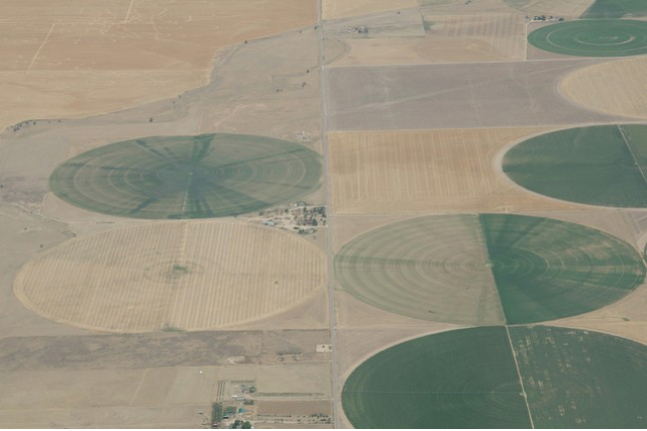
Colorado Water Congress 2016 Annual Convention – January 27 to 29

From email from the Colorado Water Congress:

Join over 500 of your colleagues from across the state during the Colorado Water Congress 2016 Annual Convention, January 27 to 29, at the Hyatt Regency Denver Tech Center.

The convention format will be similar to last year’s including the all-day Wednesday workshops, the Wednesday evening POND reception, and the Thursday and Friday general sessions. Thursday, immediately following the CWC & CSU evening reception, we are happy to announce that once again CSU will host their 2016 Water Tables event dinner with keynote speaker, Anne Castle. The dinner theme is “The Historic One Hundred” and features hosted tables for an evening of conversation on specified topics…Friday, don’t miss the annual Aspinall Award Luncheon and the announcement of the 2016 Wayne N. Aspinall Award winner!

Early Registration is now open. Register before December 31, 2015 to receive $40 off the Annual Convention price (does not apply to the Wednesday workshops) register HERE

David Robbins and  J.C. Ulrich (Greg Hobbs) at the 2013 Colorado Water Congress Annual Convention
David Robbins and J.C. Ulrich (Greg Hobbs) at the 2013 Colorado Water Congress Annual Convention

2016 #COleg: Sonnenburg bills concentrating water project permitting under State Engineer die in interim committee

George Washington addresses the Continental Congress via Son of the South

From The Boulder Weekly (Matt Cortina):

There was an effort by half of the state’s Water Resources Review Committee last week to approve two bills that would have taken the permitting process for new dams and reservoirs away from federal and state regulatory agencies like the Environmental Protection Agency (EPA), the U.S. Army Corps of Engineers and other wildlife and public health agencies and given all dam and reservoir permit decisions solely to the Office of the State Engineer.

The first draft bill essentially intended to strip the rights of state regulators, including the state energy office, the water quality control division, the parks and wildlife commission and more from making decisions about any hydroelectric energy facility (dams); certification for water diversion, delivery and storage facilities (reservoirs); and state mitigation plans for water diversions that affect fish and wildlife.

The second draft bill sought to strip federal regulators, like the EPA, the Army Corp of Engineers, the Bureau of Reclamation and others, from permitting on water issues and resources done at the federal level.

Both bills would have consolidated all that regulation and decision-making to the Colorado Office of the State Engineer, otherwise known as the Division of Water Resources.

The bills were brought forth by Rep. Jerry Sonnenberg (R-Wray) and were heard on Oct. 29 in the committee. The 10-member committee voted along party lines, and with an even split of Republicans voting for and Democrats voting against the bills, both quickly died — for now.

The bills could still be presented to the state legislature by Sonnenberg or another legislative member when the new session convenes in January. Given the split state legislature, which has been the cause of death for many bills, it’s unlikely the bills would gain any traction, but their introduction in the committee might represent a much larger push by some on the right to limit permitting regulation on water issues…

To those in the know about Colorado’s water issues, the suggestion of condensing all permitting powers to one office seems ludicrous. But the case made for these bills is likely to appeal to a large segment, particularly those who lean right, of Coloradans: less federal regulation, less state bureaucracy around permitting and a secure source of water for the state…

The state’s grand water regulation plan, Colorado’s Water Plan, is the product of an executive order by Gov. John Hickenlooper, and will manifest as a final draft in December. The plan will include a more “efficient permitting process,” and the latest draft calls for the solicitation of private funds to help build new water supply projects that have yet to be determined.

2016 Colorado legislation #coleg: Implement alternative ag transfer methods with a water bank?

From The Pueblo Chieftain (Chris Woodka):

The idea of a statewide water bank is being floated by the Lower Arkansas Valley Water Conservancy District.

Coincidentally, they would be tied to ATMs.

Not automated teller machines, but alternative transfer methods, one of the key elements in the upcoming state water plan.

The state Legislature’s interim water resources committee heard the proposal Thursday from Lower Ark General Manager Jay Winner and attorney Leah Martinsson, who are working with state Rep. Jeni Arndt, D-Fort Collins, to draft a bill for the 2016 session.

“ATMs are in the state water plan, and the district has been a leader in these types of temporary transfers since it was formed in 2002,” Martinsson told the panel. “The district realized the old way of going to court to dry up the land was not going to work.”
Other programs to provide temporary transfers have not worked because they are tied to permanent water rights changes adjudicated in water court, Martinsson said. That includes flex marketing legislation Arndt sponsored in the last session.

“Farmers don’t trust the process,” she said.

The Lower Ark worked to form the Arkansas Valley Super Ditch in 2008. Under the 2013 law, HB1248, the group was able to operate a pilot program this year that leased water from the Catlin Canal to Fowler, Fountain and Security.

The concept of the water bank would build on that, limiting administrative transfers to just three years in 10 under the supervision of the Colorado Water Conservation Board. Transfers from the Rio Grande and Colorado River basins would be prohibited, Martinsson said.

“The banks would be set up on a conservative model, so you don’t argue over 23 gallons of water,” Martinsson said, referring to water accounting challenges that doomed Super Ditch’s early efforts. “We’re proposing leaving 5-10 percent in the river above what was historically left there.”
That would provide environmental benefits, she said.

Winner said the goal is to keep water on the land by providing an option where water is not sold on a permanent basis.

“What we’re trying to do is have another tool for farmers,” Winner said. “I think this would prevent speculation both by water developers and farmers. It helps keep water on the land, but gives the water rights holders the opportunity to use the water.”

Spinney Mountain Reservoir

Colorado Water Congress 2016 Annual Convention — January 27-29

cwc2015annualconvention

Click here to go to the convention webpage.

From the CWC website:

The Colorado Water Congress Annual Convention is the premier water industry event in the state, attracting 500+ attendees that convene for networking and collaboration on the important water issues of the day…

Highlights of the Annual Convention include:

  • Keynote Presentations
  • Unique workshops
  • Top secret POND Reception
  • Fresh Local Food from CWC Members
  • Opportunities to earn CLE credits!
  • CSU Water Tables 2016
    Once again, the Water Congress is pleased to announce that CSU will host their 2016 Water Tables Dinner “The Historic One Hundred”, Thursday, January 28 at 6:15 p.m. This is an excellent way to support the Water Resources Archive. See the Annual Convention Registration above to register. The 25 Table Host selection is coming soon. If you register before the Table Host selection is available, you will be contacted to make your choice.

    Click here to register. Click here to reserve a hotel room.

    2016 Colorado legislation: Interim Water Resources Committee update

    Vail Colorado via Colorado Department of Tourism
    Vail Colorado via Colorado Department of Tourism

    From The Pueblo Chieftain (Chris Woodka):

    They’re supposed to be part-time legislators, but the Interim Water Resources Review Committee has been spending a lot of time on the road lately.

    “We are committed to good water policy,” state Sen. Ellen Roberts, RDurango, and committee chairwoman, told Colorado Water Congress, meeting for its summer convention. “We have a robust statewide presence.”

    The committee annually meets throughout the summer and fall months to develop water legislation that should move forward. A supermajority of the 10-member panel is required, but other bills are introduced through other routes, Roberts said.

    The committee has given itself extra work this year with listening sessions on the state water plan, and many of those have been conducted. It heard a morning’s worth of testimony this week in Vail.

    “There is a huge concern about storage, particularly if we can get to the point where we can finance storage,” Roberts said.

    Highlights of the tour included discussion of multipurpose storage in the Arkansas River basin, efficiency in the Rio Grande and an overall desire to streamline regulation.

    “One of the things I heard over and over is that there needs to be more collaboration with partners,” said state Rep. Ed Vigil, D-Fort Garland, who is vice chairman of the committee.

    Vigil said it is important to promote agriculture and assure water is available for farms.

    “There are lots of challenges,” Vigil said. “I’m glad we’re able to get out there and talk to people. When we make laws, we should do no harm.”