
Click the link to read the article on the Aspen Journalism website (Heather Sackett):
September 3, 2026
As this year’s historic drought drags on, conflicts over how to share and manage water are bubbling over. Gunnison River anglers and boaters say federal water-management decisions are causing increased water temperatures, prompting fishing closures, and creating serious economic impacts to outfitters and businesses.
An Aug. 26 letter from Drew Peternell, Colorado state director of Trout Unlimited, to U.S. Bureau of Reclamation Area Manager Bart Deming, asks the federal agency to change its approach to drought management. The river conservation nonprofit organization asked Reclamation to increase streamflows in the Black Canyon and Gunnison Gorge to alleviate damage to the fishery; to evaluate water use by downstream irrigators; and to better understand the drivers of storage depletion.
“We acknowledge that the extraordinary drought conditions of the current water year present significant operational challenges,” the letter reads. “Nevertheless, the decision to reduce flows in the Gunnison River has exerted a toll on a vital and cherished natural resource.”
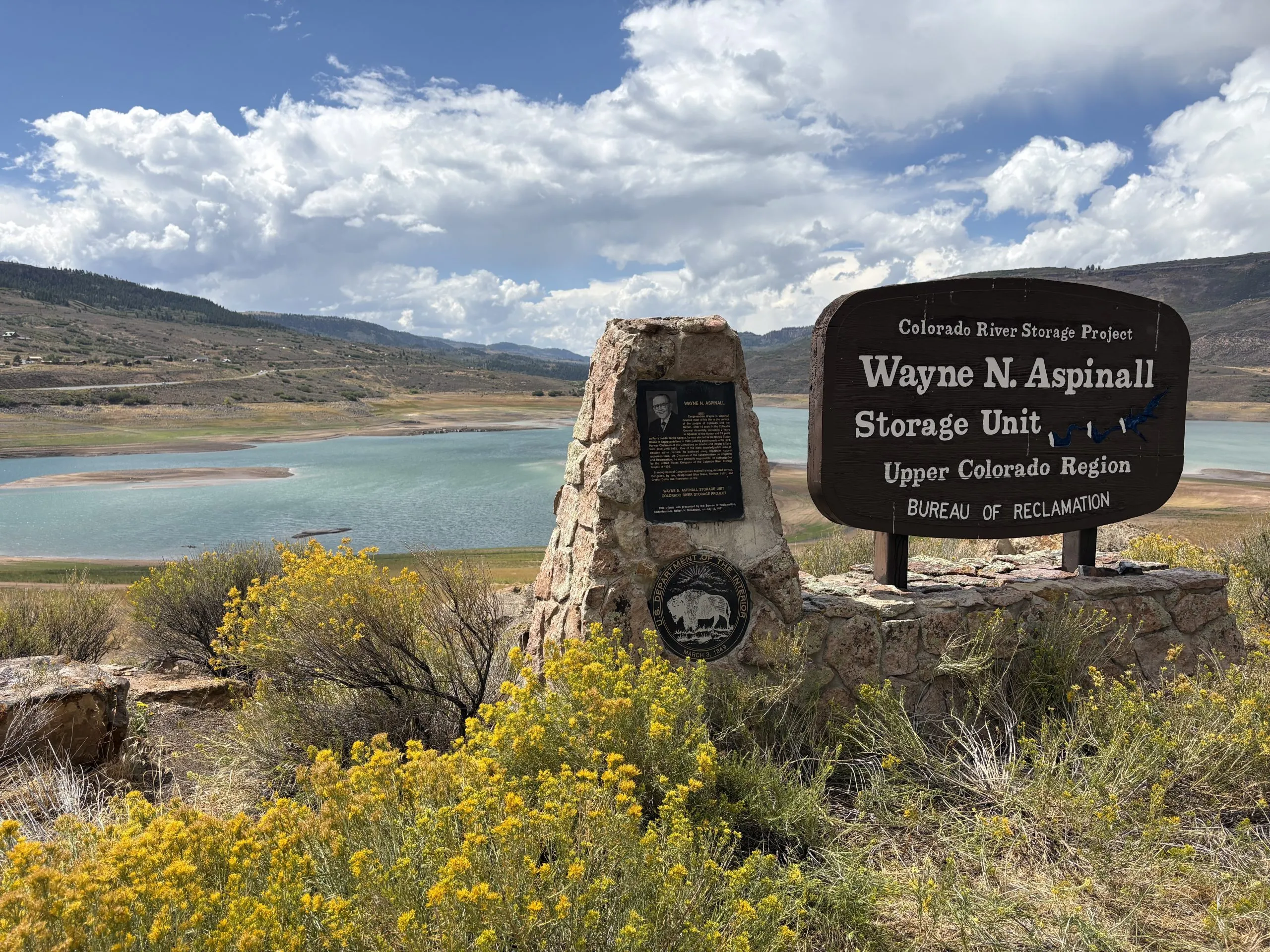
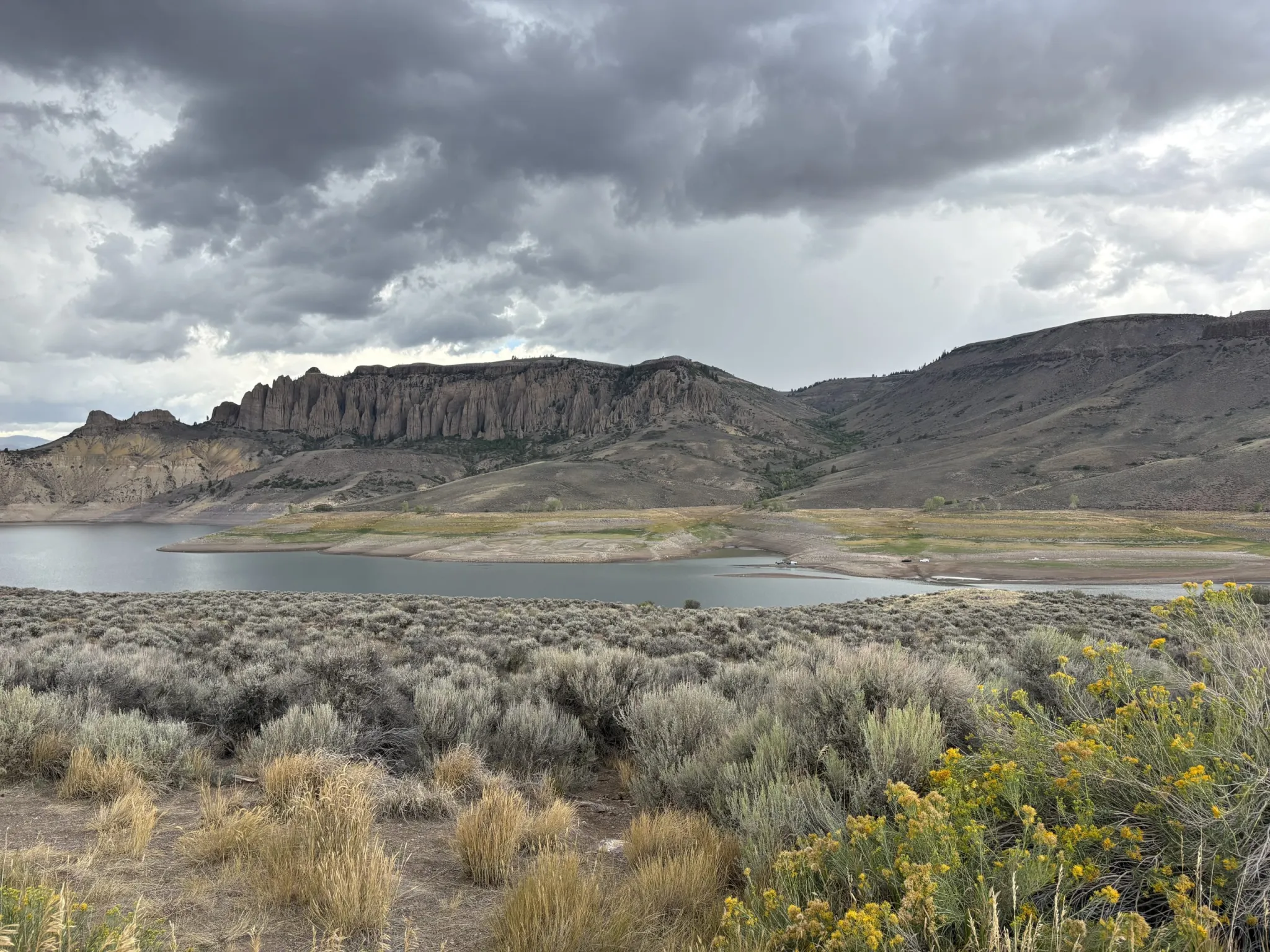
At a public Aug. 27 operations meeting in Grand Junction, Reclamation officials said they plan to reduce flows out of Blue Mesa Reservoir to as low as 200 cubic feet per second through February, in an effort to recover some storage in the reservoir, which is depleted after this year’s record-breaking drought and hot temperatures. Flows so far this month have hovered around 245 cfs.
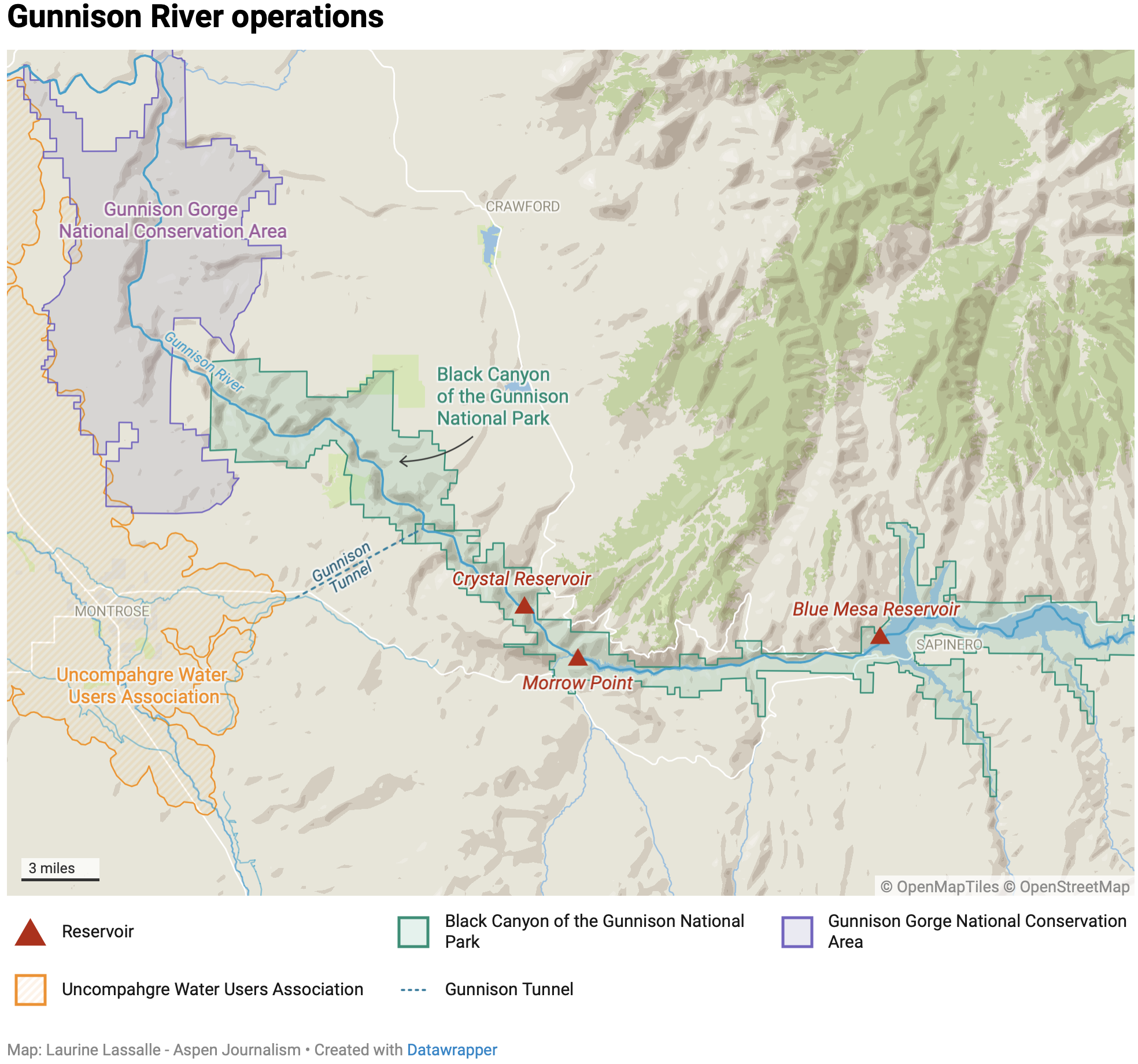
Peternell said Trout Unlimited would like to see flows of at least 300 cfs in the Gunnison River, the minimum threshold for a healthy environment set by a federal reserve water right. The Black Canyon and Gunnison Gorge are home to a 27-mile-long Gold Medal trout fishery and are downstream of the federally operated Aspinall Unit, which is made up of Blue Mesa, Morrow Point and Crystal reservoirs.
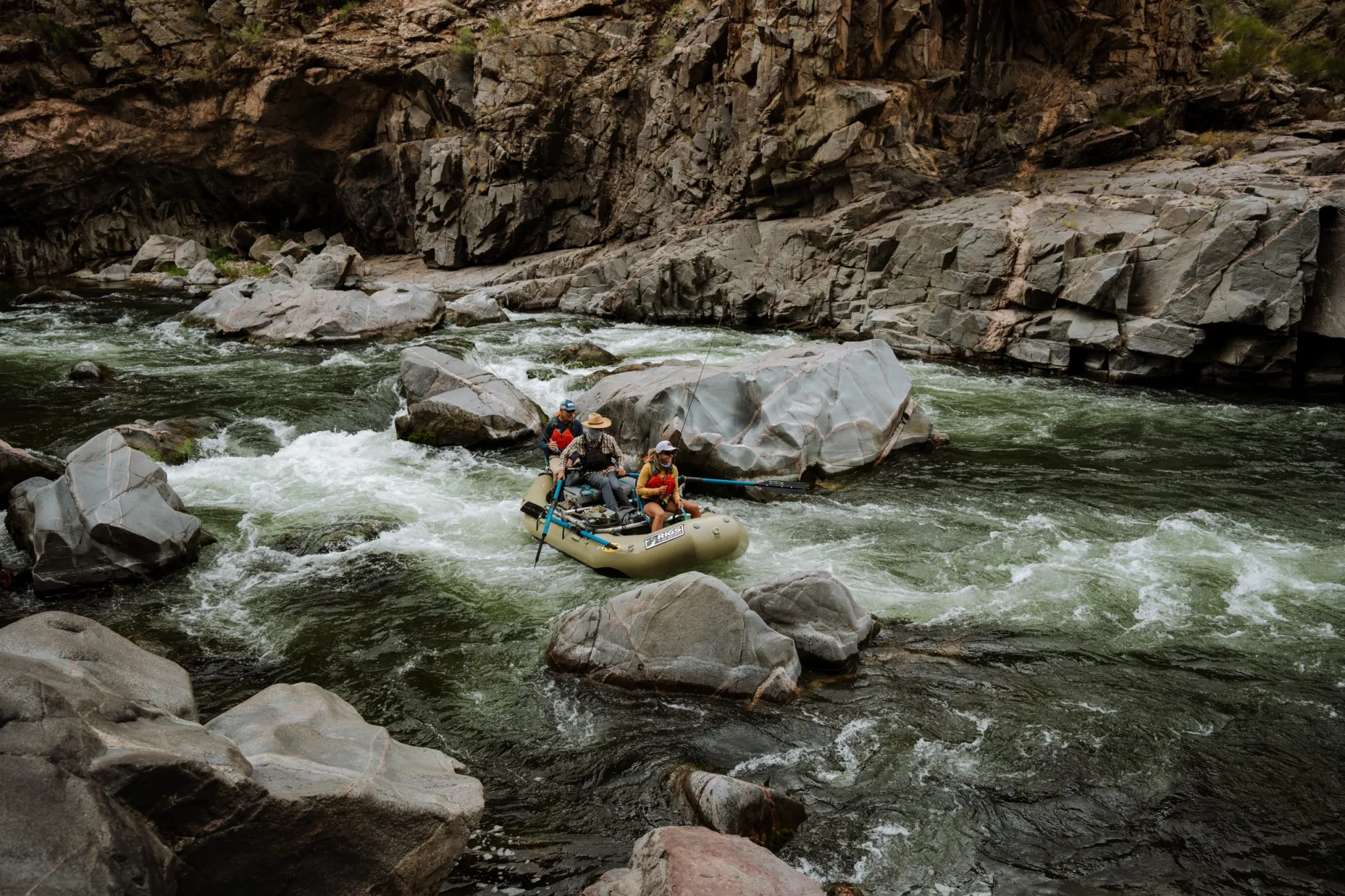
“It’s been a tough year for everyone and there’s not enough water to go around, unfortunately, so we appreciate that Reclamation is in a tough spot,” Peternell said in an interview with Aspen Journalism. “But 300 cfs is a minimum flow target for the Black Canyon and it’s the minimum amount of water the fishery really needs to survive down there, and we’re below that. We’re down to 250 or 240, and that’s hard on the fish, it’s hard on the people who make a living off that fishery.”
Federal water managers control how much water flows out of the Aspinall Unit in the highly engineered Gunnison River system, which is the largest tributary of the Colorado River in the state. Reclamation officials project storage in Colorado’s largest reservoir could fall to just 128,000 acre-feet, or 15% full, by the end of the year under the most probable scenario.
At the Aug. 27 meeting, officials presented modeling that showed releasing water at a rate of 300 cfs could cause Blue Mesa to fall below the level needed to make hydropower, but 200 cfs will allow storage to build back up slightly over the winter. Reclamation officials presented modeling projections that showed if they don’t reduce releases now, the amount of water coming out of Blue Mesa may need to be dialed back to just 150 cfs this winter to preserve the ability to make hydropower.
“If we didn’t act, this slide right here is a plane going down and we pull up at the last second,” said Reece Carpenter, a Reclamation staffer with the Resources Management Division at the Western Area Office in Grand Junction. “So it’s very important for Reclamation and all of our partners to have that coordination to make some decisions.”
This management decision rests on a sentence in the Record of Decision for the Aspinall Unit’s environmental impact statement, designed to protect endangered fish, that says “the minimum downstream flow through the Black Canyon of the Gunnison National Park and Gunnison Gorge National Conservation Area is 300 cfs, except in severe drought when the flow may decrease.” And the Colorado River Basin is experiencing the most severe drought in recorded history.

Tim Patterson, owner of RIGS Fly Shop & Guide Service in Ridgway and who has been guiding for more than 30 years, said Gunnison Gorge trips represent more than half of his company’s guiding and outfitting business, and that flows of 200 cfs are a deal breaker. Low flows contribute to higher water temperatures, which can lead to fishing closures, and make navigating some rapids difficult, if not impossible.
Patterson would like more advance notice from federal water managers when flows will be dropping, and real-time temperature and flow monitoring. Patterson said he has already canceled a handful of trips this year and may have to cancel more if flows stay below about 250 cfs.
“The Gunnison Gorge National Conservation Area, as far as a guided fly-fishing trip, is a bucket-list trip known around the world and a must-do,” Patterson said. “So people have planned for over a year in advance for this experience, and it just puts us in a real tough spot.”
Farmers facing ‘immeasurable hardship’
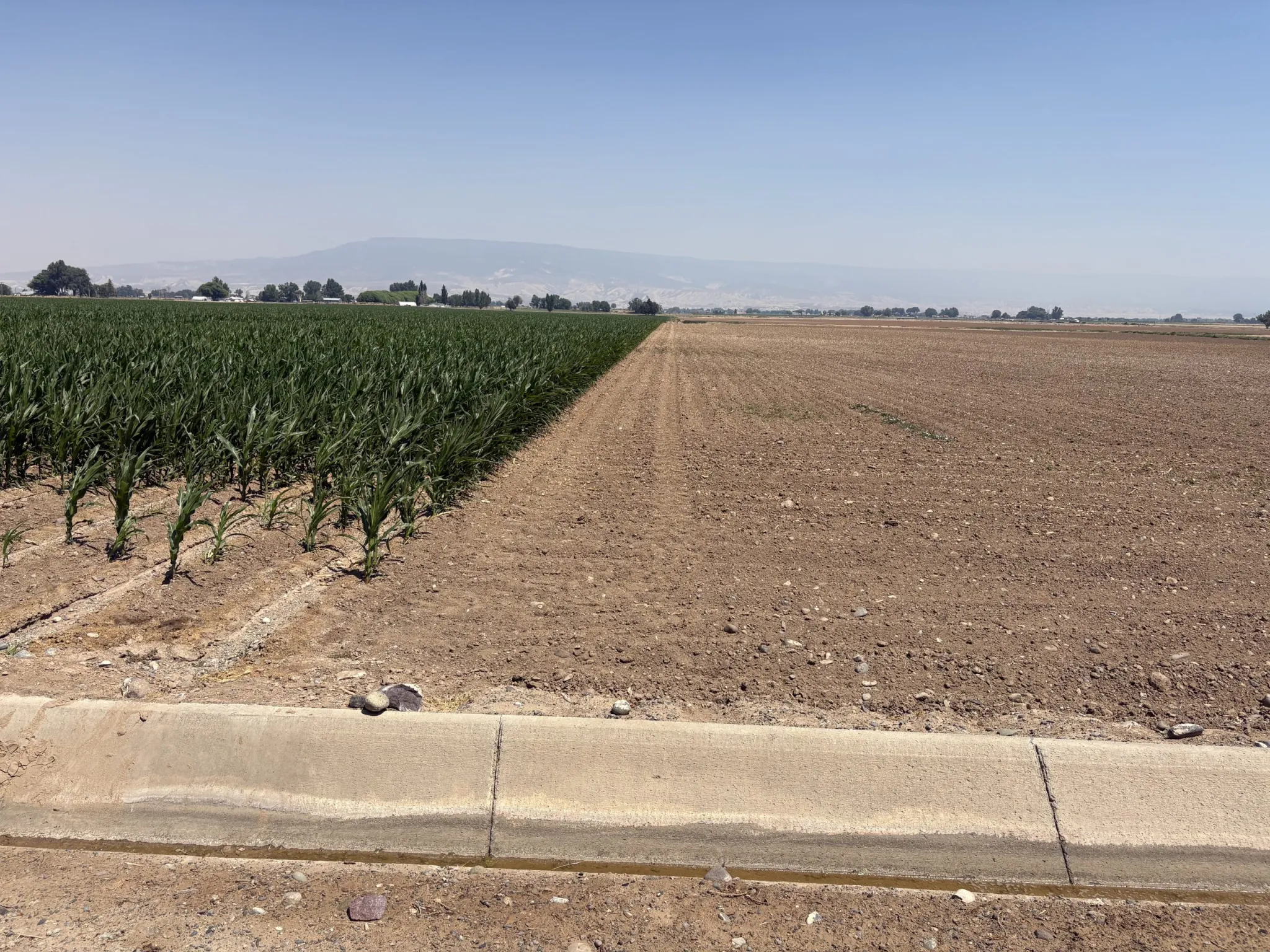
While flows in the river decline, downstream irrigators are still taking nearly their entire allocation of water. The Uncompahgre Valley Water Users Association is still diverting just more than 1,000 cfs through the Gunnison Tunnel. The association is a vast expanse of farmland that extends from just south of Montrose to Delta, and is the largest water user in the Upper Colorado River Basin. Water from the Gunnison River transforms the arid high desert into lush green fields of corn, pinto beans, onions and alfalfa.
The association normally gets half of its water supply from the Uncompahgre River. But this basin saw some of the worst snowpack in the state at just 14% of median. That means farmers in this area are experiencing deep water cuts this year. And some growers made the tough decision to leave fields dry and unplanted this year.
“I’ve got a senior water right, and I got 50% of my system that’s fallowed right now,” Uncompahgre Valley Water Users Association General Manager Steve Pope said at the Aug. 27 meeting.
This year’s conditions on the Gunnison River highlight how tensions are exacerbated among water-user groups — especially in times of extreme drought. Colorado’s prior appropriation system of water law says the oldest water rights have first use of the river, which almost always means agricultural water users get their water first.
The state didn’t begin to grant water rights for the environment until the 1970s and for recreation until around the early 2000s. Although a large part of the Western Slope’s economy, culture and identity is now centered around outdoor recreation, keeping enough water in rivers for boating and fish is often the last priority.
The letter from Trout Unlimited asks Reclamation to evaluate power contracts with the Uncompahgre Water Users Association, which has several hydropower generating stations on its system of canals, and implement clear efficiency standards for water use. The letter lists reasons that suggest more water is being diverted from the Gunnison River than is necessary for irrigation.
Pope called their concerns “absolutely ridiculous.”
“These farmers have suffered immeasurable hardships this year, and for someone to say, ‘We think you should further reduce to maintain water temperatures and fish flows in the Black Canyon,’” Pope said. “They don’t bring a water right to the table; they don’t bring anything but a demand, and I don’t agree with it. Irrigation and agriculture is the senior priority, and it’s going to be used.”
Pope said he plans to dial back Gunnison River diversions to about 700 cfs by mid-September, but the river won’t see a bump in flows because of Reclamation’s plan to keep dam releases low to build back storage.
Patterson is hoping his business can get through September — which is the busiest month for multiday trips through the gorge — relatively unscathed. He would like to see more collaboration and communication between water managers and water users, and he wants anglers to have a seat at the table.
Patterson framed the issue not as a fight among water users, but as an unevenly built safety net in times of shortage. For now, river recreation remains largely at the mercy of upstream decision-makers.
“We’re seeing it all over the Colorado drainage,” Patterson said. “You can’t demand water that isn’t there. But passing it through a special place like this and working with us on times of years to minimize water temperature issues and things like that is a great step. I think it starts with acknowledging that this place is special and important and deserves to be protected.”
