

Click the link to read the article on the Grist website (Austin Corona):
August 28, 2026
Nevada officials have long presented themselves as a voice for compromise and conservation in debates over the Colorado River. The Las Vegas area, home to two-thirds of the state’s population and most of its economy, has become a model of urban water conservation. As the river has declined from overuse and a decades-long drought exacerbated by climate change, southern Nevada water planners built extensive water reuse facilities and implemented tight restrictions on new turf and fountains, dropping the region’s per capita water use by 58 percent in roughly 20 years. Meanwhile, in interstate negotiations over the management of the Colorado River, state representatives have positioned themselves as bridge-builders, sometimes referring to themselves as the “middle basin” between the river’s divided upper and lower basin states.
When the federal government’s new management plan for the river was announced earlier this month, most observers thought Arizona, which stands to take the largest immediate cuts, would launch the first lawsuit over the plan’s implications for its water supplies. So it came as a surprise to many Colorado River experts when Nevada became the first to sue the federal government over the plan this week.
“I expected that there would be litigation, but it was surprising to me that Nevada fired the first shot,” said Anne Castle, former chair of the Upper Colorado River Commission.
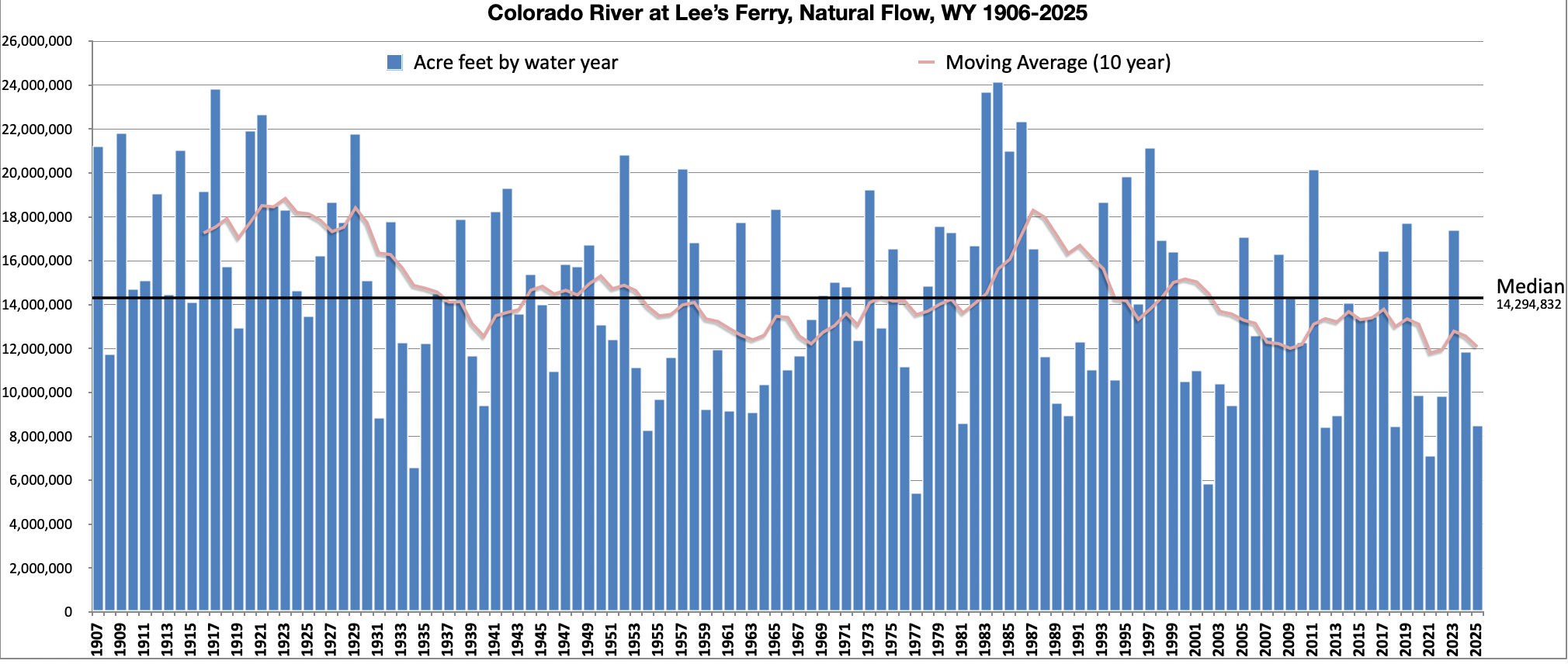
Nevada’s lawsuit comes after more than two years of negotiations among the seven Colorado River states and the federal government over how to reduce water use on the declining river. The states failed to reach a long-term agreement before the river’s current management procedures expire in October, leaving the Interior Department to impose its own plan. The federal government’s plan largely relies on cuts to water use among the Lower Basin states — Arizona, Nevada, and California — to prop up water levels in the river’s largest reservoirs. Those reservoirs have been draining so quickly that the dwindling water depth could threaten hydropower and dam operations within months without intervention.
Nevada argues that the federal government’s plan illegally forces it to take too much of those cuts. In a worst-case scenario, the plan could allow for a 71 percent cut to the Las Vegas area’s water supply, the state argued, calling it an unacceptable risk to the state’s largest population center and economic hub. Nevada believes this outcome results from a misreading of the law and also claims the government didn’t consider important alternatives to such drastic cuts.
This worst-case scenario, which experts say is an interpretation of the plan’s implications by Nevada, would become possible if reservoir levels continue to drop and if Nevada couldn’t reach an agreement with Arizona and California to help it absorb more of those cuts. Those three states already have such an agreement, which is incorporated into the federal plan and meant to last through 2028, at which point the plan allows the states to update the operations with a new agreement. Without an agreement, the federal government will implement cuts based on preexisting water rights and agreements, cutting the most from Arizona and leaning increasingly on Nevada and California as potential shortages increase. The plan was created through a decision-making process required under the National Environmental Policy Act, or NEPA, which mandates that federal agencies gather public input and consider environmental and socioeconomic impacts of major decisions.
