
Click the link to read the article on the Inside Climate News website (Tina Deines):
April 21, 2026
As the Rio Grande dries out months early, water managers look to blessings, prayers and groundwater to save the acequias that have spread water, history and culture to farmers and families since the 16th century.
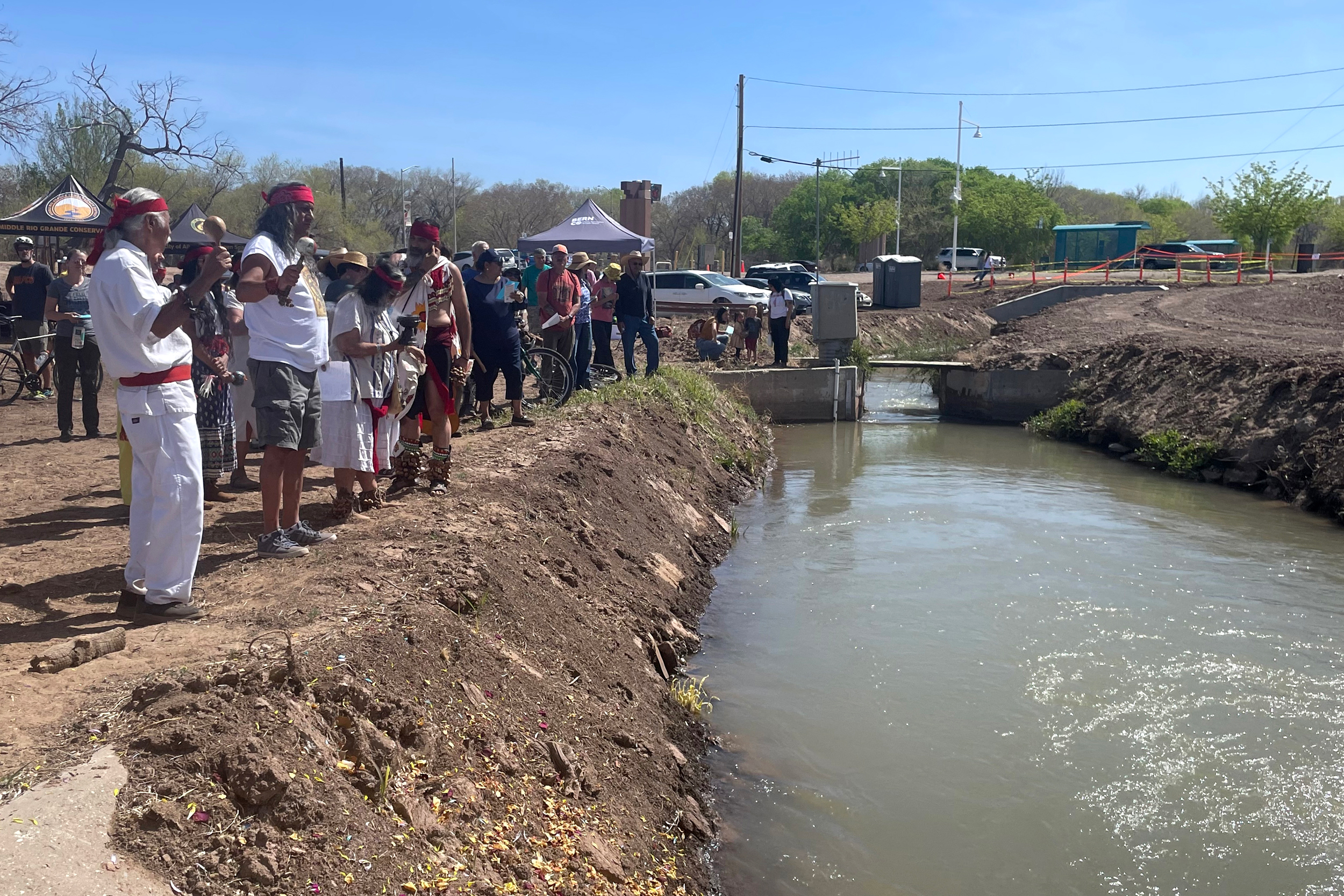
On a sunny spring morning at the end of March, a woman raised her little girl above an irrigation ditch that runs just west of the Rio Grande in Albuquerque’s South Valley. The toddler, with a braided head piece crowning her long, brown hair and artificial flowers around her neck, enthusiastically tossed an assortment of colored petals into the water below as a small crowd cheered.
It was part of a blessing ceremony at the headwaters of the Atrisco Acequia Madre (Atrisco Mother Ditch)—considered to be the oldest and most important of these irrigation canals in the area—during “Primera Agua,” an annual celebration that commemorates the first water flow of the season.
The day, sponsored by the Center for Social Sustainable Systems (CESSOS), a local advocacy group, was filled with traditional dances, songs, chants, blessings and speeches about community. But it also included acknowledgments of the water challenges that New Mexico faces.
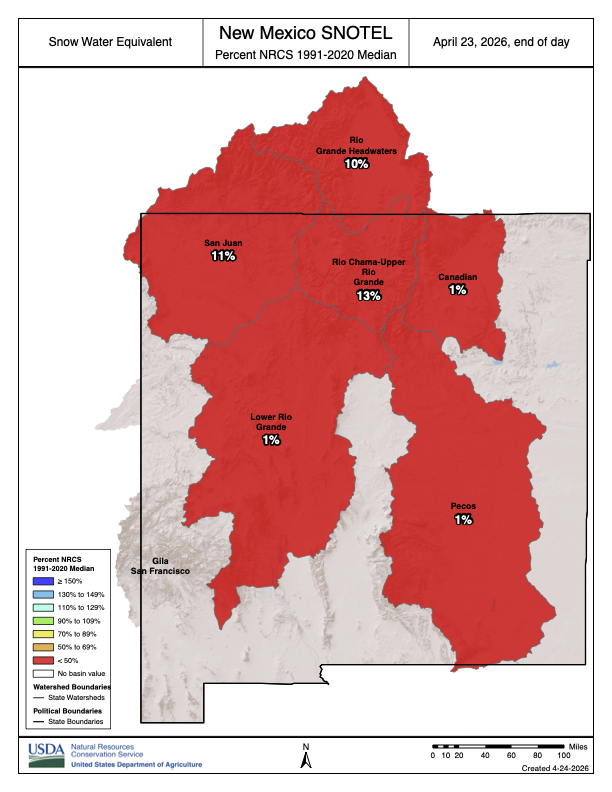
This year, New Mexicans are confronting record-low snowpack, which is essential for supplying an even flow of water into acequia systems. Record heat isn’t helping, as it accelerates evaporation throughout New Mexico waterways and has contributed to an early melt off of the already thin snowpack.
At the March 29 Primera Agua event, temperatures were 14 degrees Fahrenheit above average in Albuquerque, and about a week earlier, the city set a record for the earliest 90-degree day of the year. Like much of the West, the city also experienced its warmest winter on record.
“Every year seems like it’s a new bar in terms of the record low,” Paul Tashjian, director of freshwater conservation for Audubon Southwest, said of the low water levels that were already hitting the state in late March. “But this year is almost like that on steroids…It’s not a pretty picture.”

“It’s in Your Blood”
New Mexico’s acequias date back to the late 16th century, when the Spanish colonized the region. By 1700, what would become New Mexico had around 60 of these community-managed irrigation ditches. Today, there are more than 700 active acequias in the state, many of them concentrated in Northern New Mexico.
The man-made, gravity-fed earthen canals transport snowmelt and river water to fields for flood irrigation. They each have a governing body called a “mayordomo” or “ditch boss” and elected commissioners who oversee maintenance, water distribution and conflict resolution.
Some areas have seen traditional acequias absorbed into larger water conservancy districts. The Middle Rio Grande Conservancy District (MRGCD), for instance, covers a 150-mile stretch of the Rio Grande from Cochiti to Bosque del Apache. Here, MRGCD diverts water from the river to the agency’s irrigation system, which delivers it to acequia headgates, where local groups take over.
Most acequias across the state, however, still operate as individual political subdivisions.
Dawn Nieto Gouy grew up in Albuquerque’s historic Los Duranes, a neighborhood where acequias such as the Duranes Lateral run alongside homes and agricultural fields.
“It’s in your blood. It’s in your soul,” Nieto Gouy said, describing the cultural significance of these waterways. She recalled playing with her best friend alongside an acequia near her home as a child.
“It was like I would spend almost a lifetime in a day getting from our house to the end, meeting at the acequia, running around barefoot and playing and bathing, doing whatever we did there,” she said. “And then the days would just run away from us.”
Despite their long history and cultural importance, acequias—and the people who depend on them—face an urgent threat from climate change. This year, New Mexico’s snowpack hit historic lows in early spring, dropping to around 20 percent of normal as of April 20. That record-low snow collided with warmer-than-usual temperatures—the state experienced its hottest March in recorded history, surpassing the old record by 4.4 degrees Fahrenheit—to produce this outcome.
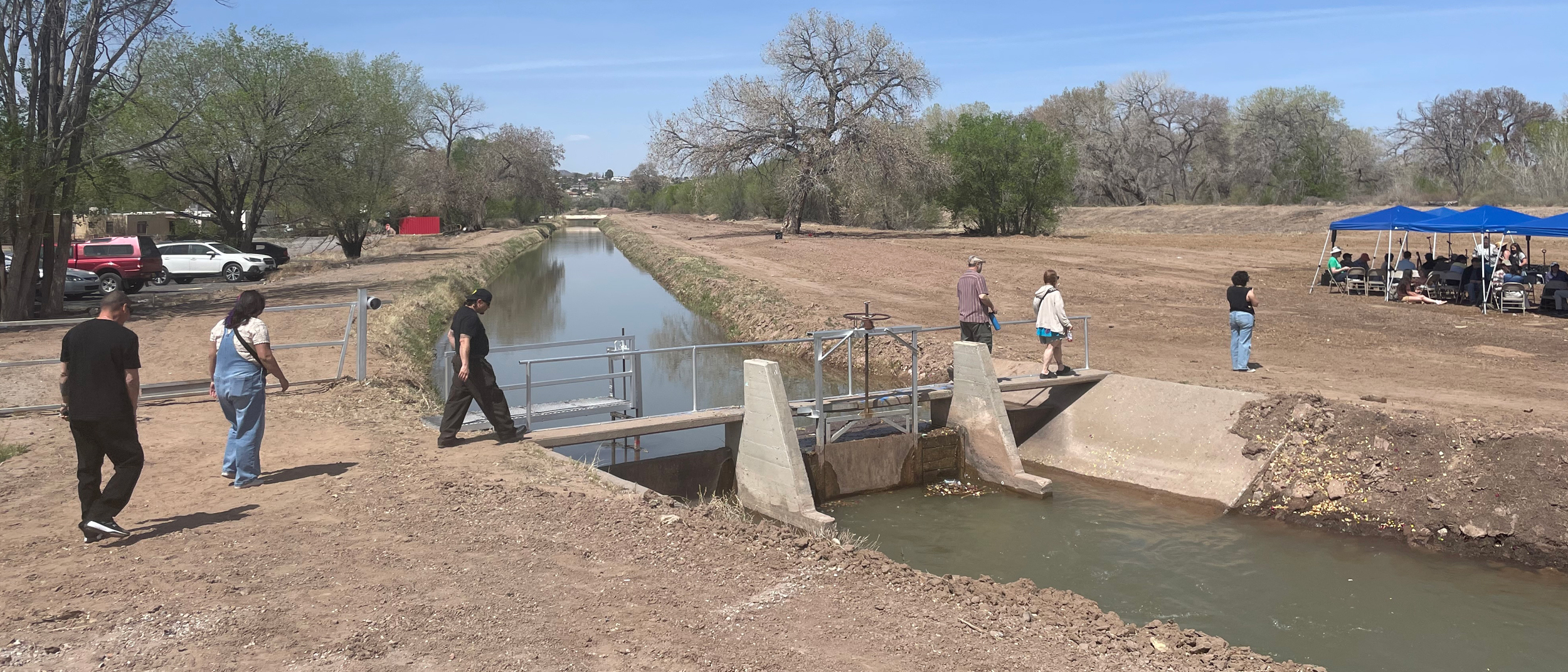
In Northern New Mexico, water rights holders—known as parciantes—expressed concern that the meager snowpack wouldn’t sustain the many acequias that weave through the region. One Santa Fe New Mexican reportdescribed the dire situation in the village of Truchas, where acequias were already running low at the start of the irrigation season.
Further south, MRGCD announced in late March that there may not be enough water this year to meet the needs of its 11,000 irrigators, including acequia parciantes. And as of March 27, the Rio Grande showed early signs of drying at the San Acacia reach, an area that typically begins to diminish in early summer.
“Historically, we used to talk about May as being a very early time to see that happen,” said Anne Marken, river operations manager for MRGCD, which oversees irrigation, drainage and river control for around 60,000-70,000 acres of farmland. “Last year it happened in April and we were all very shocked by that, but this year it happened in March.”
Praying for Rain
During times of water scarcity, acequia communities have long relied on sharing practices. Users may be assigned specific days or hours when they can access water, for instance. Similarly, MRGCD utilizes rotating water deliveries within its district—delivering water to different irrigators at different times, depending on availability—and is implementing that management strategy this year.
“Water users are strongly encouraged to take water when it is available, future opportunities may be uncertain,” the agency said in a press release.
Other than that, water managers and acequia parciantes across the state are praying for rain to help replenish the system and water fields.
“There’s not a ton of tools in our toolbox right now from a water management perspective,” Marken conceded, explaining her department is currently working in a run-of-the-river system, meaning that the only available water is what is in the river.
