
Click the link to read the article on The Aspen Daily News website (Kari Dequine). Here’s an excerpt:
April 25, 2026
Meteorological records dating back 130 years show a handful of years with winters drier than the 2025-26 winter, said Rebecca Briesmoore, a water resources engineer with the Colorado River District.
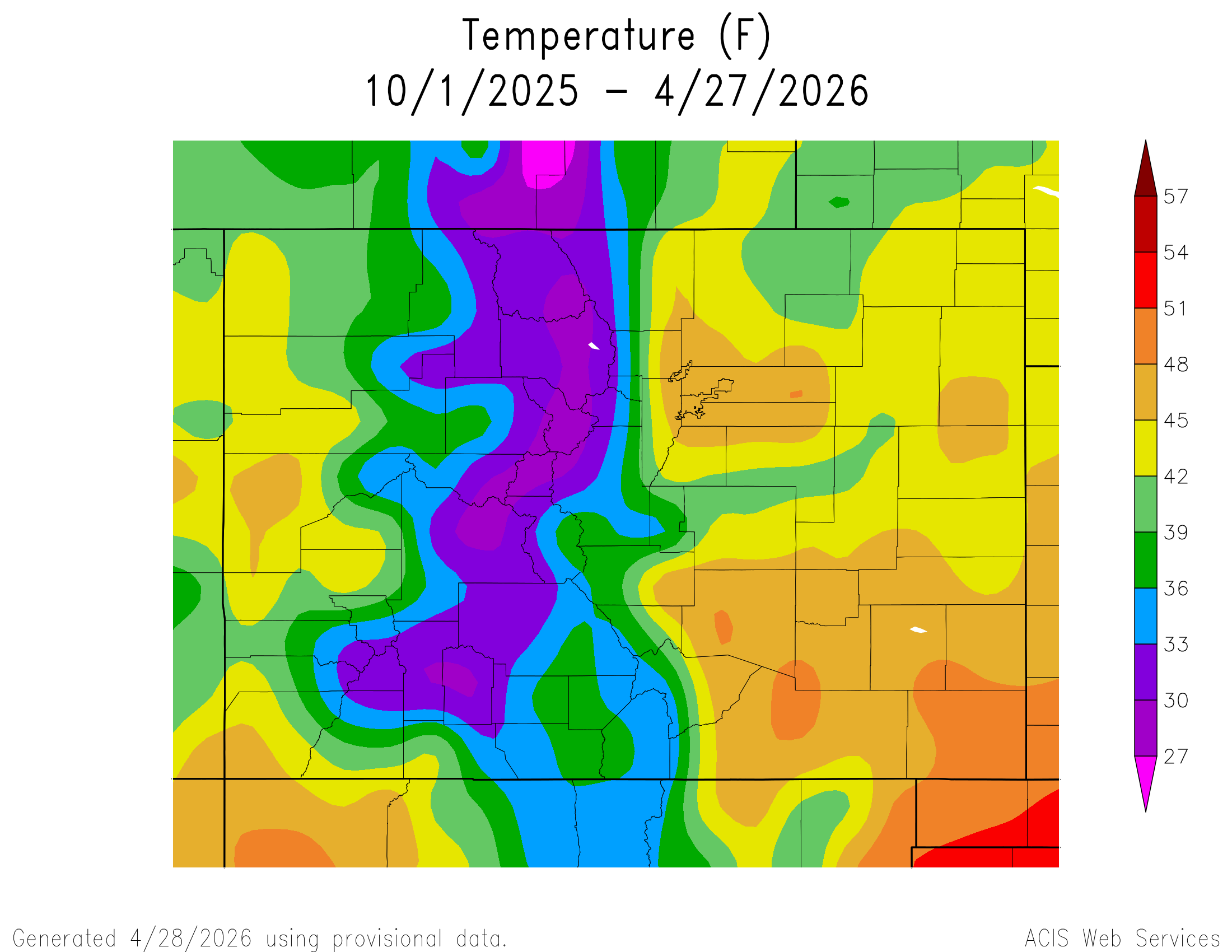
“But it has been the warmest by far … that has really been the headline: It wasn’t the driest, but it was the warmest — and that is having a huge impact on hydrology and water resources,” Briesmoore said.
She spoke to a packed room of about 150 attendees at Thursday’s [May 21, 2026] Roaring Fork River: State of the River event hosted by the Colorado River District at the Pitkin County Library…“It’s important for people to know that this year is unprecedented . . . it’s like nothing we have ever seen before,” Briesmoore said. “Every single drop of water really, really matters. We have to think about how we are using it, and what we are going to do with very, very low water resources.”
To a room full of gasps, Briesmoore showed a graph with a star marking the 2026 winter — from October 2025 to March — high above the rest. While years including 1902, 1904, 1977, 2002 and 2018 recorded less precipitation, in terms of temperatures there’s no other year that even came close to 2026.
