The Norris Family plans to build the reservoir at the site eyed by both the Flaming Gorge Pipeline and the Southern Delivery System

flaminggorgepipelineearthjustice.jpg

From The Pueblo Chieftain (Chris Woodka):

The Norris family, owners of T-Cross Ranches, has filed a plan for the Marlboro Metropolitan Water District with El Paso County. “I’m going to build the reservoir,” said Steve Norris…“There has been lots of interest throughout the region for creating a regional storage reservoir.” Norris said it would hold nearly 30,000 acre-feet of water and would be built on land owned by the family and the State Land Board southeast of Colorado Springs. The application was filed earlier this month. The dam would be just south of the site targeted for the second phase of the Southern Delivery System. Colorado Springs Utilities, Security, Fountain and Pueblo West are building the SDS pipeline from Pueblo Dam, along with three pumping stations and a treatment plant. It is expected to be complete in 2016.

The reservoir on Upper Williams Creek is contemplated several years after the first phase of SDS…

The reservoir is also identified as terminal storage in Aaron Million’s plan to build a pipeline from Flaming Gorge Reservoir and the Green River in Wyoming. Million and Norris are longtime friends.

More Arkansas River basin coverage here.

Flaming Gorge pipeline: Aaron Million files a reconsideration request with FERC in response to their denial of the preliminary application

flaminggorgedrycoloradoestuary9billionbillboard.jpg

From The Pueblo Chieftain (Chris Woodka):

Environmental groups promise to fight the project at every turn, while a state task force will hear about Flaming Gorge pipeline proposals next week in Glenwood Springs. Fort Collins entrepreneur Aaron Million on Friday filed for a rehearing with the Federal Energy Regulatory Commission for his proposed 500-mile water pipeline from the Green River and Flaming Gorge Reservoir in Wyoming to Colorado’s Front Range. FERC rejected the application from Million’s Wyco Power and Water Inc. on Feb. 23.

Million’s response states that FERC made errors in its determination that the application was filed prematurely. The basis was that the water pipeline associated with hydropower projects has not been constructed. “Wyco contends that sufficient information and maps associated with the pipeline alignment have been provided to the commission,” Million stated in an 11-page request for rehearing and clarification. “We’re asking for clarification of why the decision was made, other than political pressure. That shouldn’t be a factor,” he said.

Million contends FERC has granted preliminary permits to other power projects in their infancy, including the Lake Powell pipeline project in Utah. He said Wyco plans to build the pipeline. Wyco already has issued requests for proposals to manage the project.

On Tuesday, the Flaming Gorge task force, formed by the Colorado Water Conservation Board at the request of the Arkansas Basin and Metro roundtables, will hear presentations from Million and from Frank Jaeger, whose Colorado-Wyoming Coalition has proposed a similar, but competing project.

More coverage from Electa Draper writing for The Denver Post. From the article:

On Feb. 23, the Federal Energy Regulatory Commission dismissed Wyco Power and Water Inc.’s application for a preliminary permit on the basis it was premature. Officials said there was no purpose in issuing a hydropower permit without information on construction and operation of the pipeline, which Million couldn’t provide. Conservationists hailed the decision as a victory for the environment because, they said, Million’s project, which would divert water from the Upper Colorado River Basin to Front Range cities, would drastically lower the level of Flaming Gorge Reservoir, threaten four species of endangered fish, and further harm ecosystems, wildlife and recreation. “We hope that FERC will reject this appeal, and the project will die a much-deserved death,” wildlife biologist Erik Molvar said in a statement from the Biodiversity Conservation Alliance…

Million, in a telephone interview from Fort Collins, said FERC had asked for some additional information when Wyco filed the application in September. If there were additional deficiencies in the application, he said, FERC should have told him before accepting the application. However, Million said, Wyco doesn’t need the FERC preliminary permit to keep moving forward with other elements of the project. “We already hold the water filings in the river and for federal water rights,” Million said. “We already hold the priority filings. We’re going to move through the process, regardless.”

More coverage from Brandon Loomis writing for The Salt Lake Tribune. From the article:

Utah has used the same rationale in seeking approval for a Lake Powell pipeline to St. George, and Million’s new application questions whether FERC imposed the same requirements in advancing that project. “Wyco contends that it will be counterproductive and cost-prohibitive to secure all necessary permits and authorizations to construct the pipeline without confirming the locations of the associated hydroelectric facilities,” the company said in its filing…

“FERC certainly got it right the first time,” Earthjustice attorney Michael Hiatt said. “This project would clearly devastate the Green River.”

More coverage from Troy Hooper writing for the Colorado Independent. Here’s an excerpt:

Critics say the pipeline would drain 81 billion gallons of water each year from the Green River, a tributary of the already stressed Colorado River, and the state of Colorado projects the pipeline could cost as much as $9 billion to build. The Colorado River Water Conservation District, Wyoming Gov. Matt Mead, county and local governments in southwestern Wyoming and a multitude of conservation groups are opposing the potential pipeline that Million claims is needed for Colorado to meet its rising demand for water.

“FERC made the right decision in February,” said Matt Rice, director of the Denver-based chapter of American Rivers. “It is clear this is nothing more than a speculative project that if ever built would severely harm the recreational, economic, agricultural and natural values of the Green River. Mr. Million is grasping for straws. It is highly unlikely that FERC will reverse their decision.”

Gary Wockner of Save The Poudre added that “Mr. Million seems to think this process is like an Etch-A-Sketch, where he can just keep shaking and redrawing until he finally wears down the federal agencies and the opposition. The Flaming Gorge Pipeline is a fatally flawed concept that would devastate the Green and Colorado River ecosystems — we will fight it at every opportunity.”

More coverage from Amy Joi O’Donoghue writing for the Deseret News. Here’s an excerpt:

In a document filed Friday requesting a rehearing before the agency, Million argued that FERC should question if it erred by tossing his application for a permit in February on the basis that it was “premature” or incomplete…

Million said the agency needs to consider if it let the amount of comments and objections on record by multiple agencies unduly sway the commission. Opponents like the Wyoming Game and Fish Department, the U.S. Forest Service, Sweetwater County and Colorado Springs Utilities — as well as numerous conservation organizations — have asked the commission to legally recognize objections raised.

When the commission dismissed the preliminary permit application for Million’s Regional Watershed Supply Project, the agency said until the pipeline is built and authorizations are in place, it would be premature move the hydropower project forward. “The commission’s order implies that the final pipeline alignment, all authorizations to construct the pipeline and even the construction of the pipeline should be completed prior to filing an application for a preliminary permit” Million’s rehearing request said. Such a requirement, he added, is counterproductive and cost prohibitive absent knowing where the hydroelectric components would be sited…

“The developer’s application for a rehearing is a waste of taxpayer dollars,” said Michael Hiatt, an attorney with Earthjustice.

More coverage from Mark Wilcox writing for the Wyoming Business Report. From the article:

Aaron Million and his company Wyco, first proposed the water project to the Army Corps of Engineers. The Corps rejected the application in July of 2011 after two years’s consideration because they said Million failed to provide sufficient information. Million then proposed the Flaming Gorge pipeline to FERC as a power-generating project that would simultaneously quench the Front Range’s thirst in Colorado, and received an initial dismissal Feb. 23. The multi-billion dollar pipeline would transport water more than 500 miles to a reservoir at its final destination in Pueblo, Colo. “As presented in Wyco’s application, these hydropower projects are exclusively dependent on water from the proposed water supply pipeline,” the dismissal stated. “However, this pipeline does not currently exist, and Wyco’s application does not provide any information about the timeline for seeking and obtaining the necessary authorizations for the construction and operation of such a pipeline.”

Additionally, officials cited a lack of information on the route the pipeline would take through public and privately held lands. “Until…authorizations have been obtained for a specific route or the process to identify a specific route has been substantially completed, Wyco will be unable to prepare “[s]uch maps, plans, specifications, and estimates of cost as may be required for a full understanding of the proposed [hydropower] project,” the order read.

While the initial government dismissal was based on technicalities, many environmentalist groups are pushing for a more permanent dismissal. “Anyone who tries to divert Wyoming’s Green River over the Continental Divide doesn’t appreciate the value that it provides for native fish and wildlife, local economies and the western way of life,” said Earthjustice attorney Michael Hiatt in a statement. “The Flaming Gorge Pipeline—one of the biggest, most environmentally damaging water projects in the history of the western United States—would irreparably damage the Green and the Colorado River downstream.”[…]

Another group is now touring the region with a short film and presentation that reflect the damage the pipeline would do to Flaming Gorge and the Green River’s $118 million outdoor recreation economy. Studies indicate the lost water could raise salinity levels in the gorge and river to lethal levels for fish and other marine mammals. Opponents of the pipeline also indicate the potential downsides to mammals of building a 10-foot pipeline over the Continental Divide. “This thing is still on the rails,” said Walt Gasson, Trout Unlimited’s endorsed business director, “And still constitutes — to my way of thinking — to our way of thinking, a clear and present danger to wildlife conservation in Wyoming.”

More coverage from Steve Lynn writing for the Northern Colorado Business Report. From the article:

“[Wyco Power and Water Inc] respectfully requests that the commission grant re-hearing of the dismissal of preliminary permit application for the regional watershed supply project and to issue the preliminary permit for a term of 36 months,” the company stated in the document…

The pipeline would help meet the water needs of Colorado, which faces a water supply shortfall of between 500,000 and 700,000 acre feet in the next two decades, Wyco principal Aaron Million has said. He contends the federal government will take steps to protect river flows for recreation as well as enhance fisheries.

From the Denver Business Journal:

The Associated Press reports that Aaron Million of Fort Collins filed the request Friday with the Federal Energy Regulatory Commission…

FERC’s permission was needed for the pipeline’s water to be used to generate electricity.

More Flaming Gorge pipeline coverage here and here.

Flaming Gorge pipeline: Aaron Million files a reconsideration request with FERC in response to their denial

pumpedstoragehydroelectricschematic.jpg

From the Associated Press (Ben Neary) via The Columbus Republic:

Fort Collins businessman Aaron Million on Friday filed the reconsideration request with the Federal Energy Regulatory Commission. The agency last month dismissed his application, saying it was premature and lacked specifics about the proposed pipeline…

Million says his project is essential to helping Colorado meet its increasing demand for water. The state of Colorado also is evaluating the project’s merits.

From the Summit County Citizens Voice (Bob Berwyn):

As he indicated in late February, Million has submitted a new application to the Federal Energy Regulatory Commission for the project, challenging the same agency’s previous rejection of the application by requesting a rehearing and clarification.

In the new document, Million says it would be prohibitively expensive to secure pipeline permits without first “confirming the locations of the associated hydroelectric facilities.” The application also claims that, for the purposes of the preliminary permit he’s seeking, “sufficient information and maps associated with the pipeline alignment have been provided to the Commission.”

Million also charged that FERC’s rejection is inconsistent with other preliminary permits issued by the agency.

More Flaming Gorge pipeline coverage here and here.

Flaming Gorge Pipeline: The ‘Green with Envy’ tour hits Fort Collins March 22, Durango April 7

greenwithenvytrailerscreenshottroutunlimited.jpg

From Westword (Alan Prendergast):

Million’s plan, the subject of a 2009 feature by Joel Warner, calls for moving 81 billion gallons of water annually from the reservoir to municipalities in Colorado, including several in Douglas County. The costly project has hit a few snags, including a recent refusal by the Federal Energy Regulatory Commission to grant a preliminary permit. But the river’s defenders are keeping the pressure on with their own education campaign.

“The fight is far from over,” the promoters of the film claim in a press release. “Aaron Million, the wealthy entrepreneur behind the project, has already announced he will resubmit a stronger proposal in the near future.”

Green With Envy plays in Fort Collins on March 22 and in Durango on April 7. For more information, check out the It’s Our Dam Water website.

More Flaming Gorge pipeline coverage here and here.

Aaron Million: ‘This project would divert less than 5 percent annually out of the massive Flaming Gorge Reservoir’

Conceptual route for the Flaming Gorge Pipeline — Graphic via Earth Justice

Here’s a guest column about the Flaming Gorge pipeline written by Aaron Million running in the Northern Colorado Business Report. Here’s an excerpt:

The argument that no further Upper Basin water projects be developed, which is a position some have taken, by default and in the simplest terms means California, Nevada and Arizona all benefit to the detriment of this region. Colorado faces a massive water supply shortfall, projected to be between 500,000 to 700,000 acre-feet over the next 20 years. New water and new storage, one of Gov. Hickenlooper’s keystone policy objectives and a long-standing objective for Colorado, can basically be accomplished with a pipe connection. This project would divert less than 5 percent annually out of the massive Flaming Gorge Reservoir, which is 25 times larger than Horsetooth Reservoir…

…the Flaming Gorge Project has several advantages for a new water supply. The Green River system itself, starting just south of Jackson Hole, has a different snowpack regime, which mitigates risk compared to relying on water from a single source or watershed. Also, global warming models predict the Green’s more northerly region to be wetter than average, while the Colorado River main-stem drainage, the historical focus of Front Range water needs, is predicted to be dryer than average. And the Green River is as large as the Colorado River main-stem, with comparatively little consumptive use and very few diversions.

Without question, the river has major environmental and recreational benefits that require protection…

So why does that matter for this region? It matters because an overall systems analysis on the Green River following implementation of the ROD indicates substantial surplus flows after meeting all the environmental needs of the river. Those surpluses, estimated at several hundred-thousand acre feet in a river system that flows over 1.5 million acre-feet annually, could be used to bring in a new water supply for the South Platte and Arkansas basins, generate new alternative energy, produce hundreds of millions of dollars in economic benefits, and provide re-use of waters for agriculture to keep the region strong and vibrant.

So the real question is this: If a large river system can be fully protected, and at the same time some of the potential surpluses from that same system alleviate major supply issues elsewhere, isn’t that an environmentally sound and reasonable water supply approach? The question remains unanswered until a rigorous and thorough environmental impact evaluation is completed…

I believe this we need to take this project through its paces. If it is environmentally sound, it should be permitted and built. If not, then stick a fork in it. The truth of a full scientific and environmental evaluation may be hard for some in the environmental community to swallow, but the consequences of not allowing that evaluation to occur remain: A continued bulls-eye on the Poudre, reverse-osmosis plants on the South Platte because of poor water quality, more future dry-up of the agricultural base in this state, and continued pressure on the western high country of our nearby mountain peaks.

The Flaming Gorge pipeline will be the topic of discussion March 14 at the Collegiate Peaks Anglers Chapter of Trout Unlimited. Here’s the release via The Chaffee County Times:

More Flaming Gorge pipeline coverage here and here.

Colorado Springs Utilities’ Steve Berry: ‘In looking at the numbers in this executive summary, it does not appear that many of our comments were considered’

transmountaindiversionscoloradostateengineer2011

Last week, the day before the Statewide Roundtable Summit, Western Resource Advocates, et. al., released a report titled, “Meeting Future Water Needs in the Arkansas Basin.” Colorado Springs and Pueblo are taking a hard look at the report, according to this article from Chris Woodka writing for The Pueblo Chieftain. Here’s an excerpt:

There may be a question whether water providers accept the figures used in the reports. “Colorado Springs Utilities was asked to peer review the draft version, and made extensive and substantial comments on it. In looking at the numbers in this executive summary, it does not appear that many of our comments were considered, and many of our suggested changes or corrections were not made,” said Steve Berry, spokesman for Utilities. The largest amounts of water, and presumably the largest conservation and reuse savings, come from Colorado Springs.

The Pueblo Board of Water Works is also reviewing the final report for accuracy, said Alan Ward, water resources manager…

The environmental groups say a combination of projects already on the books — conservation, reuse and temporary ag-urban transfers — could provide as much as 140,000 acre-feet, more than enough to meet the needs. Those numbers are being examined by urban water planners, who say the savings might not be attainable. “In general, we were unable to verify or recreate most of the numbers cited in their report, and their estimates for conservation and reuse are significantly greater than what our water conservation experts have calculated as realistic,” Berry said…

When asked how conservation savings would be applied to new supplies, a practice cities find risky, Jorge Figueroa, water policy analyst for Western Resource Advocates, said they could be put into “savings accounts” for future use. When asked where the water would be stored, he cited the T-Cross reservoir site on Williams Creek in El Paso County that is part of the Southern Delivery System plan…

Drew Peternell, director of Trout Unlimited’s Colorado Water Project, said the group supports [the Southern Delivery System]. Because the project already is under way, the groups look at SDS as a key way to fill the gap. The report also supports programs like Super Ditch as ways to temporarily transfer agricultural water to cities without permanently drying up farmland.

Meanwhile, here’s a look at a report from the Northwest Council of Governments, “Water and Its Relationship to the Economies of the Headwaters Counties,” from Bob Berwyn writing for the Summit County Citizens Voice. From the article:

The report, released in January at a Denver water conference, takes a fresh look at the critical importance to the economy of water in West Slope rivers, and why Colorado leaders may want to take careful thought before making future transmountain diversion policy decisions. Visit the NWCCOG website for the full 95-page report.

“This report makes an important contribution to the on-going dialogue about adverse economic impacts associated with losing water by focusing attention on Eagle, Grand, Gunnison, Pitkin, Routt and Summit counties,” said Jean Coley Townsend, the author of the report. “This has never been done before. The report provides an important counterbalance to earlier studies that show economic impacts of losing water from the Eastern Plains.”

Balancing the supply and demand of water could be the State’s most pressing issue. The report does not take issue with Front Range municipal or Eastern Plains agricultural water users — all parties have important and worthy concerns and points of view — but is meant as a thorough review of water as an economic driver of headwaters economic development.

The report provides a balance to the existing solid body of work that measures the potential economic effects of less water on the Front Range and the Eastern Plains and the loss of agriculture in those parts of the state.

“If we … are going to solve our Statewide water supply shortage challenges there must first be statewide mutual respect and true understanding of each other’s water supply challenges,” said Zach Margolis, Town of Silverthorne Utility Manager. “The report is a remarkable compilation of the West Slope’s water obligations and limitations as well as the statewide economic value of water in the headwater counties of Colorado.”

More transmountain/transbasin diversions coverage here.

Flaming Gorge pipeline opposition talking point: Outdoor recreation supports 52,000 jobs in Wyoming

flaminggorgepipelineearthjustice.jpg

From the Wyoming Business Report (Wyoma Groenenberg):

The group said it has gathered resolutions from West Slope governments opposing the pipeline, which is proposed to transport 80 billion gallons of water annually, which could negatively impact the region’s recreation industry. The coalition plans to lobby Colorado Gov. John Hickenlooper to drop the project…

Protect the Flows plans to spend the year reminding Hickenlooper and state officials that public resources would be better spent on more affordable solutions that support recreation industry jobs, such as improving water conservation efforts, water reuse and recycling, and better land-use planning and growth management.

Outdoor recreation supports 52,000 jobs in Wyoming, according to the January edition of the Wyoming Business Report. That means that about 1 in 11 Wyoming residents works in that industry. In Colorado, about 107,000 jobs are in outdoor recreation, according to a 2006 economic impact report from the Outdoor Industry Association.

More Flaming Gorge pipeline coverage here and here.

Brian Werner: ‘Tell me when the next big drought comes, and you’re going to see people screaming about storage’

nisp2

From the Fort Collins Coloradoan (Bobby Magill):

“Tell me when the next big drought comes, and you’re going to see people screaming about storage,” said Brian Werner, spokesman for the Northern Colorado Water Conservancy District in Berthoud. “Their willingness (to consider building new reservoirs) ebbs and flows based on when your last drought was.”

The uncertainty about the mountain snowpack, which fluctuates every year, is the primary argument for building new reservoirs in the West, said Reagan Waskom, director of the Colorado Water Institute at Colorado State University. “The amazing thing is, it comes down to three or four big storms every year, whether they get them, or they bypass us,” he said…

One of five major proposed water storage projects in Larimer County that are in various stages of planning, [Northern Integrated Supply Project] calls for storing about 170,000 acre-feet of Poudre River water in the proposed Glade Reservoir north of Ted’s Place. A final decision could come sometime in 2013 or 2014…

The other four proposed projects include expansions to Fort Collins’ Halligan Reservoir and Greeley’s Seaman Reservoir, the Chimney Hollow Reservoir west of Carter Lake and the more uncertain Cactus Hill Reservoir proposed for a site on the Weld County line between Wellington and Nunn. If those projects are built, Waskom said, it’s hard to conceive of other such large projects being built in Northern Colorado regardless of the need because there are few other places to build them, at least in Larimer County. “Unless we can get Aaron Million’s project or a West Slope diversion built, we don’t have any more water left,” he said…

“All the easy projects have been built,” [Waskom] said. “Now we’re dealing with the hard projects. What comes after the projects, that’s the question, right? Where’s the water and reservoir sites, and where’s the political will to build projects?”

More infrastructure coverage here.

Flaming Gorge task force meeting recap

flaminggorgepipelinemillion.jpg

From The Pueblo Chieftain (Chris Woodka):

The task force met Thursday at Silverthorne to organize its work over the next six months. Members from the Arkansas River basin include Gary Barber, chairman of the roundtable; Betty Konarski, former mayor of Monument; and Reed Dils, who is representing environmental and recreation interests. Other members represent roundtables from throughout the state, as well as various water interests. “Today, we went through a lengthy discussion of protocols and got to know each other,” Barber said. “We decided which documents, reports and studies we need to look at.”

The group agreed to review preliminary findings with the roundtables before hosting larger public meetings, and to invite the project’s proponents and Wyoming water interests to address the task force.

More Flaming Gorge task force coverage here.

Basin Roundtable Project Exploration Committee: Flaming Gorge process meeting Thursday in Silverthorne

flaminggorgepipelineearthjustice.jpg

From The Pueblo Chieftain (Chris Woodka):

The task force is scheduled to meet from 10 a.m. to 3 p.m. Thursday at the Silverthorne Town Pavilion to identify interests, existing studies and priorities as it works to complete a report to the state by June. The task force was formed last year at the request of the Arkansas Basin and Metro roundtables to evaluate proposals to build the 500-mile pipeline. First proposed by Fort Collins entrepreneur Aaron Million, the idea is also being studied by the Colorado-Wyoming Coalition…

[John Stulp, Gov. John Hickenlooper’s water policy adviser] explained that the task force will not endorse a Flaming Gorge project, but will identify the issues that are associated with any large-scale diversion from the Colorado River to the Front Range…

“It is important that the idea for the task force came from two roundtables that thought they needed more information,” Stulp said. “While this task force is looking specifically at Flaming Gorge, the information gathered will be applicable to other transfers out of the Colorado River, and will work toward answering the question of how much is left for Colorado to develop.”

Here’s the draft agenda for the meeting. Here’s the December 13 meeting summary.

More Basin Roundtable Project Exploration Committee: Flaming Gorge process coverage here. More Flaming Gorge pipeline coverage here and here.

Jim Pokrandt: ‘The River District’s [motion to intervene] also cites the [Flaming Gorge pipeline] as speculative with relatively small demands’

coloradoriverbasinusgs.jpg

From email from the Colorado River District (Jim Pokrandt):

Update: Here’s the release from the Colorado River District website.

The Colorado River District is opposing a proposed Flaming Gorge Reservoir pipeline project through a motion to intervene with a federal regulatory agency that is reviewing the plan to pump water from the Wyoming reservoir to the Front Range of Colorado.

Fort Collins, Colo., businessman Aaron Million is proposing a 560-mile pipeline, the Regional Water Supply Project (RWSP), which would carry up to 250,000 acre feet of water. It is under review by the Federal Energy Regulatory Commission for its power-generating aspects. The River District’s motion to intervene says, “The volume of water at issue would adversely impact existing users of Colorado’s entitlement to the waters of the Colorado River, and could usurp the remainder of the state’s compact allocation.”

Although the water would be taken out of the Colorado River system from the Green River, a tributary with Wyoming headwaters, under the Colorado River Compact of 1922, the amount still counts against Colorado’s limited ability to use the river.

The River District’s motion also cites the RWSP as “speculative” with “relatively small demands – nowhere near the volume claimed by the RWSP. Moreover, none of the projected water users have demonstrated the ability to pay for the enormous cost of the project.” The RWSP also threatens the ability of the Colorado River District, the state of Colorado and other public entities to plan for the development of the state’s remaining entitlement to the Colorado River in a “responsibly conservative matter,” the motion states.

Other objections include:

– The need first for the Colorado Water Conservation Board to complete its Colorado River Water Availability Study;
– The need for the U.S. Bureau of Reclamation to complete is Colorado River Basin Water Supply and Demand Study;
– The need for Colorado’s West Slope to finalize its own consumptive and nonconsumptive studies; and
– The need for there to be interstate and intrastate agreements on how the water would be managed under the Prior Appropriation System.

More coverage from the Associated Press via The Billings Gazette. From the article:

Colorado River District officials are telling regulators the cost for the pipeline, which would stretch more than 500 miles, will be “enormous.” They also say the proposal could cause Colorado to use up its allocation of Colorado River system water under a multistate compact and hurt existing users of that water. Million contends there’s enough water available for his proposal. Federal and state studies on Colorado River water availability aren’t complete yet.

More coverage from Ken Green writing for the Denver Examiner. From the article:

The Center for Biological Diversity said that “online action alerts” issued by it and another environment advocacy group, Earthjustice, prompted the flood of public comments to the Regulatory Commission from members of the public who oppose construction of the 500-mile pipeline they claim would be “disastrous” to the ecosystem of the Green River, including the Colorado pikeminnow, the humpback chub and razorback sucker, as well as damage the communities whose economy is based on the river…

The current proposed project would require Wyco to construct natural-gas fired pumping stations (“at least nine”, said the Center) to pump the water over the Continental Divide. The Center claims that even Wyco officials acknowledge that the energy needed to pump the water over the divide would be greater than the project might create through hydropower

From the Summit County Citizens Voice (Bob Berwyn):

According to the River District’s motion, the project is speculative and, thus far, none of the projected users have shown an ability to pay for the expensive project…

“The volume of water at issue would adversely impact existing users of Colorado’s entitlement to the waters of the Colorado River, and could usurp the remainder of the state’s compact allocation,” the River District wrote in its motion to intervene. Although the water would be taken out of the Colorado River system from the Green River, a tributary with Wyoming headwaters, under the Colorado River Compact of 1922, the amount still counts against Colorado’s limited ability to use the river.

The River District also said the pipeline threatens the ability of the Colorado River District, the state of Colorado and other public entities to plan for the development of the state’s remaining entitlement to the Colorado River in a “responsibly conservative matter.”

More Flaming Gorge pipeline coverage here and here.

Taylor McKinnon: ‘Burning fossil fuels to pump river water across 500 miles to feed urban sprawl is a ludicrous idea — and that’s what the public told the Federal Energy Regulatory Commission this week’

flaminggorgedamusbr.jpg

Here’s a release from the Center for Biological Diversity (Taylor McKinnon/McCrystie Adams):

More than 5,000 public comments were sent to the Federal Energy Regulatory Commission this week opposing the proposed Flaming Gorge Pipeline, which would pump more than 250,000 acre-feet of water annually over 500 miles from Flaming Gorge Reservoir to Colorado’s Front Range. The project would suck massive amounts of water out of the Green and Colorado rivers in Utah, unleashing disastrous impacts on those river ecosystems, four species of endangered fish — the Colorado pikeminnow, humpback chub, razorback sucker and bonytail chub — and human communities dependent on those rivers. The commission is currently evaluating whether to grant a preliminary permit for the project.

“Burning fossil fuels to pump river water across 500 miles to feed urban sprawl is a ludicrous idea — and that’s what the public told the Federal Energy Regulatory Commission this week,” said Taylor McKinnon of the Center for Biological Diversity. “It’s hard to imagine a worse proposal for the already over-allocated Colorado River system that’s beset by a warming climate, declining flows and disappearing native fish populations.”

This week’s public comments come on the heels of formal intervention in the commission’s process filed last week by the Colorado River Protection Coalition — a coalition of 10 conservation groups, including the Center. The coalition asserts that the Flaming Gorge Pipeline is unlikely to be permitted because it would likely violate the Endangered Species Act and adversely affect four national wildlife refuges; part of the project would be located in a U.S. Forest Service roadless area. The coalition also argued that the permit should be denied because the applicant, Wyco, failed to meet several requirements during a previous attempt at permitting a nearly identical project with the U.S. Army Corps of Engineers.

The new batch of comments this week came from online action alerts created by the Center for Biological Diversity and Earthjustice.

“The opposition to this project is amazing,” said McCrystie Adams of Earthjustice. “The pipeline would devastate the Green River and severely harm the Colorado River downstream — the public is strongly speaking out against this pipeline scheme.”

Wyco previously sought a permit for the pipeline from the U.S. Army Corps of Engineers. In July 2011 the Corps terminated its review of the project because Wyco missed multiple deadlines and did not provide information requested by the Corps. A few months later, Wyco redesigned the project to include some incidental hydropower components and requested review through the Federal Energy Regulatory Commission. Despite the modifications, the project remains an energy hog — at least nine air-polluting, natural gas-fired pumping stations would be required to pump the water uphill across Wyoming and over the Continental Divide. Wyco’s president has acknowledged that pumping the water uphill would use more energy than the project would create through hydropower.

Since its inception, the Flaming Gorge Pipeline has met with opposition in Colorado, Wyoming and Utah. The water would go to the Front Range of Colorado, which is projected to double in population in the next 50 years. Colorado is already a parched state with severely depleted rivers, while the majority of the water in Colorado’s cities is used to keep lawns green for three months in the hot, dry summer across sprawling suburban landscapes.

The coalition’s intervention comments can be downloaded here.

More coverage from Kathy Gilbert writing for the Green River Start. From the article:

The coalition contends that the project cost could reach as much as $9 billion and that Million has failed to demonstrate a need for the water with customers committed to paying for it if it could be delivered.

They also say preventing that much water from flowing into the Green River would hurt wetlands, birds, fish and the recreation economies of surrounding communities.

The coalition believes the pipeline is extremely unlikely to be permitted because it would likely violate the Endangered Species Act, would adversely affect four national wildlife refuges and part of the project would be located in a U.S. Forest Service roadless area…

“The water in the Green River is essential for the operation of many of Sweetwater County’s major industries including four trona mines and the Jim Bridger Power Plant,” the county’s letter states. The power plant relies on a constant stream of water piped from the Green River for use in its four cooling towers.

The county asserts that the Regional Watershed Supply Project and the effects it would have on the water supply in the Green River, would “dramatically impact Sweetwater County’s industrial base.”

The county also states 38,769 or the county’s 43,806 population rely on the river to provide potable water and fire suppression supplies.

Finally, the county suggests its tourism industry would be impacted because the Flaming Gorge Reservoir is the basis of a multi-million dollar tourism industry…

In the Wyoming Game and Fish Department’s filing, they’re intervening with the purpose of ensuring its interests, including the protection of all Wyoming wildlife, is considered during the FERC process.

More Flaming Gorge pipeline coverage here and here.

McCrystie Adams, ‘The Flaming Gorge Pipeline would be one of the biggest, most environmentally damaging water projects in the history of the western United States’

greenutriverbasin.jpg

As the Federal Energy Regulatory Commission’s Monday deadline for comments on the proposed project approaches conservationists have galvanized their opposition to Aaron Million and Wyco Power and Water and the 500 mile pipeline. Western Resource Advocates, on Thursday, labeled it a boondoggle. Here’s a report from Chris Woodka writing for The Pueblo Chieftain. From the article:

The Colorado River Protection Coalition, representing 10 environmental groups, also filed to intervene in the case.

“The Flaming Gorge Pipeline would be one of the biggest, most environmentally damaging water projects in the history of the western United States,” said McCrystie Adams of Earthjustice, the coalition’s lead attorney. “The pipeline would devastate the Green River, one of the West’s last great rivers and a sanctuary for native fish and wildlife, and severely harm the Colorado River downstream.”

Communities Protecting the Green River, which includes the cities of Green River and Rock Springs, Wyo. and Sweetwater County, Wyo., filed in opposition to the project earlier this week…

Million has said the pipeline is cost-competitive with other plans to import water and environmentally friendly because it would prevent worse impacts from occurring within Colorado.
The project also has attracted interest from Colorado and Wyoming municipalities, which have launched their own study of the project’s viability. They are awaiting revised water availability studies by the Bureau of Reclamation.

The Interbasin Compact Committee, formed by the Colorado Legislature in 2005 to sort out state water issues, at the request of member roundtables, has formed a task force to identify impacts of Flaming Gorge. The task force is being funded by the Colorado Water Conservation Board, over the objections of the environmental groups, as a model to develop a way to talk about statewide water projects.

Here’s the release from Earthjustice (McCrystie Adams/Gary Wockner/Steve Jones/Taylor McKinnon):

Today a coalition of 10 conservation groups from Colorado, Utah, Wyoming, and Arizona—the Colorado River Protection Coalition—moved to intervene in the Federal Energy Regulatory Commission (FERC) review of the Regional Watershed Supply Project, more commonly known as the Flaming Gorge Pipeline. FERC is currently evaluating a preliminary permit application for the Flaming Gorge Pipeline from Wyco Power and Water Inc. FERC allows members of the public with a stake in projects to intervene in preliminary permit proceedings, and the Colorado River Protection Coalition, represented by Earthjustice, has called upon FERC to deny the permit on numerous grounds.

“The Flaming Gorge Pipeline would be one of the biggest, most environmentally damaging water projects in the history of the western United States,” said McCrystie Adams of Earthjustice, the Coalition’s lead attorney. “The Pipeline would devastate the Green River, one of the West’s last great rivers and a sanctuary for native fish and wildlife, and severely harm the Colorado River downstream.”

In its intervention comments, the Colorado River Protection Coalition asserted that the Flaming Gorge Pipeline is extremely unlikely to be permitted because it would likely violate the Endangered Species Act, would adversely affect four national wildlife refuges, and part of the project would be located in a U.S. Forest Service roadless area. The Coalition also argued that the permit should be denied because the applicant failed to meet various requirements during a previous attempt at permitting a nearly identical project with the U.S. Army Corps of Engineers. Further, the Coalition asserted that the Pipeline is an extremely environmentally damaging water supply project that would irrevocably harm the Green and Colorado Rivers, not a “hydropower project,” and thus FERC is not the appropriate agency to lead federal review of the proposal.

“The Flaming Gorge Pipeline would severely harm the Wyoming landscape it crosses,” said Steve Jones of the Wyoming Outdoor Council. “Our state’s heritage, wildlife, and economy are dependent on protecting roadless and wilderness areas.”

“Four endangered fish—the Colorado pikeminnow, humpback chub, razorback sucker, and bonytail chub—are dependent on the water this pipeline proposes to drain out of the Green and Colorado Rivers,” said Taylor McKinnon of the Center for Biological Diversity in Flagstaff, Arizona. “The pipeline would spell disaster for those fish and the river ecosystems we and they depend on. It’s a foolish proposal in the face of global warming and projected declines in river flows.”

“The Green River flows through Utah’s largest roadless area, provides 40 percent of the water entering the Colorado River at Lake Powell each year, and supports a world-famous trout fishery averaging 6,000–8,000 fish per mile” said Zach Frankel, executive director of the Utah Rivers Council. “This catastrophic proposal would not only mar these treasures, it would forever alter life in Utah.”

The applicant previously sought a permit for the Pipeline from a different federal agency, the U.S. Army Corps of Engineers (Corps). In July of 2011, the Corps terminated its review of the project because the applicant missed multiple deadlines and did not provide information requested by the Corps. A few months later, the applicant redesigned the project to include some incidental hydropower components and requested review through FERC. Despite the modifications, the project remains a huge energy hog—at least nine air-polluting natural gas-fired pumping stations would be required to pump the water uphill across Wyoming and over the Continental Divide. Wyco’s president has acknowledged that pumping the water uphill would use more energy than the project would create through hydropower.

“We know this project would burn more energy than it produces,” said John Spahr of the Sierra Club. “Claiming it is a hydropower project is nothing more than a thinly veiled attempt to make an end-run around federal law.”

Since its inception, the extremely controversial Flaming Gorge Pipeline has met with great opposition in Colorado, Wyoming, and Utah. The water would go to the Front Range of Colorado which is projected to double in population in the next 50 years. Colorado is already a parched state with severely depleted rivers while the majority of the water in Colorado’s cities is used to keep lawns green for three months in the hot, dry summer across sprawling suburban landscapes.

Duane Short of Biodiversity Conservation Alliance noted, “The Coalition believes that Colorado and other western citizens are beginning to realize that unbridled consumption of water from our rivers and aquifers will leave our precious water resources depleted leading to even more severe water shortages for our children and grandchildren. We hope the public will work with us to prevent this shortsighted and irresponsible water grab.”

“The Flaming Gorge Pipeline would be a flaming disaster for Colorado,” said Gary Wockner of Save the Poudre: Poudre Waterkeeper. “The Pipeline would be a devastating step backwards for water supply policy and river protection in Colorado and the Southwest U.S.—our coalition will work as long and hard as it takes to stop this project.”

This Coalition’s intervention is one of several being filed by public interest groups and local communities. Over a hundred public comments urging FERC to deny the preliminary permit have already been filed before the deadline on Dec. 19th. Comments are posted on FERC’s website. (Search for Docket Number: P-14263.)

View a map of the pipeline’s proposed 550 mile route across Wyoming and down through Colorado.

Read the motion to intervene.

Meanwhile, Governor Matt Mead of Wyoming has submitted his comments on the pipeline. Here’s a report from Ben Neary writing for Associated Press via The Columbus Republic. From the article:

“This project would cut a vast swath across southern Wyoming, with the potential for huge impacts in many significant sectors of our economy and aspects of critical resources to Wyoming and Colorado,” Mead wrote…

“Although in its proposal a hydroelectricity angle has been attempted, it is important to note that hydroelectric production is a minor purpose of the project,” Mead wrote. “The project first, foremost and always is a water supply project.” Mead stated that it appears Million shifted federal agencies “to short-circuit the regulatory process and/or sidestep fundamental issues.”[…]

Mead stated that Million has not shown how much water Colorado is still entitled to under the Colorado River Compact. The U.S. Bureau of Reclamation, which operates Flaming Gorge Reservoir, is working on a study of how much water, if any, it believes could be available for withdrawal there…

Mead wrote that Wyoming has been involved in efforts to recover endangered fish species on the Upper Colorado River for decades. He said the agency’s review must consider the likely effect on the fish both of the pipeline project as well as Wyoming’s possible future use of its share of water from the Green River. The Wyoming Game and Fish Department filed a separate request with FERC to intervene in the permit application to track the issue…

[Aaron Million] said he agrees federal regulators need to consider water supply issues as well as his project’s likely effect on wildlife and recreation.

More coverage from Amy Joi O’Donoghue writing for the Deseret News. From the article:

Since its inception, the controversial Flaming Gorge Pipeline has met with opposition in Colorado, Wyoming, and Utah. The water would go to the Front Range of Colorado which is projected to double in population in the next 50 years. Although the project would be privately financed, critics say the end water would be so publicly expensive it wouldn’t be viable. It also smacks at tapping water that river watchers say is already over allocated.

Million has said that the water his project proposes to take from the Green River in Wyoming is sustainable, according to a review of water resources by federal water managers with oversight of Flaming Gorge.

According to a Tweet from Jennifer Petersen (@BCAWY): “Last night [December 14], Laramie Council voted unanimously to oppose the Million pipeline & send in a letter intervening in the FERC permitting process.”

More Flaming Gorge pipeline coverage here and here.

Green River: The Sweetwater County Board of Commissioners unanimously adopt a resolution opposing the Flaming Gorge pipeline proposed by Wyco Power and Water

flaminggorgepipelinemillion.jpg

From the Green River Star (David Martin):

Wyco Power and Water Inc. filed a application for preliminary permit to the Federal Energy Regulatory Commission, and FERC is seeking public comment about the proposal. The proposal would include hydroelectric power generating developments north of Green River, however it would also pump approximately 250,000 acre feet of water per year from the Green River basin, through eastern Wyoming and into Colorado’s Front Range.

According to the document, an imbalance greater than 3.5 million acre feet of water could exist over the next 50 years due to potential changes in climate. The commission argues that if such imbalances are possible, the water demands of local and regional entities should be placed above transbasin needs.

The commissioners also said the population of the Colorado River basin is rapidly growing, creating an increasing demand for water. However because of the population increases, they claim water needs for the Colorado Basin are not fully understood and allowing the project to move forward could compromise the potential for growth through the basin.

The commission’s resolution claims the water added to the Colorado River Basin could impact programs aimed to mitigate endangered species by altering the temperature and water quality of the river.

Finally, the resolution claims a proposed pump reservoir on White Mountain could compromise at least four high-pressure gas lines, fiber optics cables and the water line to the Jim Bridger Power Plant.

More Flaming Gorge pipeline coverage here and here.

Mark Pifher (Aurora water): ‘We don’t plan to buy or lease any more water in Arkansas basin in the near future’

arkansasriverbasin.jpg

From The Pueblo Chieftain (Chris Woodka):

Aurora’s water rights include nearly all of the Rocky Ford Ditch in Otero County, about one-third of the Colorado Canal in Crowley County and water from 1,750 acres of ranches in Lake County. Those rights provide an average yield of 22,800 acre-feet per year — the equivalent of 80 percent of the potable water used by Pueblo each year.

– Aurora also uses the Homestake Project, Twin Lakes, Busk-Ivanhoe diversion and the Columbine Ditch to bring water from the Western Slope through the Arkansas River basin and into the South Platte basin. The average yield of those water rights is about 21,500 acre-feet annually.

– The city can reuse its Arkansas and Colorado basin water imports, and has built the $650 million Prairie Waters Project to directly recapture flows, rather than exchange them.

– Aurora’s South Platte water rights include wells, ranches, ditches and direct flow from the South Platte. They total about 46,000 acre-feet annually.

– Aurora has an agreement to trade 5,000 acre-feet of water a year with Pueblo West from Lake Pueblo to Twin Lakes beginning next year. It will replace a similar agreement with the Pueblo Board of Water Works that expires this year.

– The Pueblo water board sells Aurora 5,000 acre-feet of water each year.

– Aurora has a contract with the Bureau of Reclamation to store 10,000 acre-feet of water in Lake Pueblo and to move the same amount to Twin Lakes by paper trade.

– The water is moved from Twin Lakes to Spinney Mountain Reservoir through the Homestake pipeline system…

“We don’t have any current plans beyond what we’re already doing,” said Mark Pifher, director of Aurora water. “We don’t plan to buy or lease any more water in Arkansas basin in the near future.”

Instead, the city will continue developing Prairie Waters, a reuse project that pumps sewer return flows through a filtration and purification system, only at about 20 percent capacity so far. Aurora calculates that its average yield from its Arkansas River basin water rights is about 22,800 acre-feet annually. That’s roughly one-fourth of its total yield from its entire system, which includes South Platte and Colorado River basin rights. From a practical standpoint, Aurora does not move all of its water out of the Arkansas River basin each year.

More Aurora coverage here and here.

The strategy of switching federal agencies for the permitting of the Flaming Gorge pipeline project may not lead to a faster approval

flaminggorgepipelinemillion.jpg

From WyoFile (Allen Best):

“(Million) has been suggesting that he could get this project done in a significantly shorter amount of time (through FERC). My [Matt Rice, director of Colorado conservation for American Rivers] first reaction is this: He’s totally forgetting about the federal hydropower licensing requirements under the Federal Power Act. The process can be incredibly complex, especially for a project of this size, geographic scope and complexity.”

Based on his experience working on hydropower projects seeking permits in South Carolina and Alabama, Rice expects a process that lasts at least a decade. “I wouldn’t be surprised if this project took at least 10 years…and more like 12 to 15 years,” he says. “Augusta, Ga., just got a license for a small project, and that process took more than 30 years.”

And before a permit is awarded by FERC, it must also get review under the applicable environmental laws – possibly including the Clean Water Act, which is what had triggered the original review by the Army Corps.

Million needed a section 404 dredge-and-fill permit under the provisions of that law because of proposed use of fill at Flaming Gorge Reservoir for his proposed take-out structure and possibly at other wetlands locations along the pipeline route.

A spokeswoman for the Army Corps describes a process that was delayed because of Million’s foot-dragging. “It had to do with the many delays and the applicant continuing to ask for more extensions and more time,” says regulatory specialist Rena Brand. “Toward the end of July, his group explained that they were thinking about moving to energy production.” And that, she said, meant a new purpose and need.

More Flaming Gorge pipeline coverage here and here.

The Castle Pines Metropolitan District nixes participation in the WISE project

denveraquifer.jpg

From the Aurora Sentinel (Sara Castellanos):

In a letter sent Oct. 12 from Paul Dannels, district manager of the Castle Pines Metropolitan District, to Rod Kuharich, executive director of the [South Metro Water Supply Augthority], Dannels said the board of directors decided not to proceed with the project. “Simply stated, the high cost of the Project and the uncertainty of water delivery do not make sense for the District at this time,” Dannels wrote in the letter. “We wish you great success with the Project which appears more feasible for larger users. They can deal better with both the uncertainty of water availability and the high Project costs than smaller users such as the District.”[…]

Greg Baker, spokesman for Aurora Water said the project, dubbed the Water Infrastructure and Supply Efficiency partnership, doesn’t require that all 15 entities of the SMWSA take deliveries for the project to be successful. Roxborough and the East Cherry Creek Valley Water and Sanitation District have already indicated that they had other resources they could develop and wouldn’t take water from the WISE partnership, Baker said. “Each member of the SMWSA must assess the value of participation in relation to their individual systems and needs,” Baker said. “SMWSA has indicated that the commitments from many of the other members have already met or exceeded the initial 10,000 acre-feet provided for by the proposed delivery agreement.”

More Water Infrastructure and Supply Efficiency partnership coverage here.

The Castle Rock town council hears the pitch from the WISE partners touting the project as a long-term source to replace non-renewable groundwater

castlerock.jpg

From the Parker Chronicle (Rhonda Moore):

Aurora Mayor Ed Tauer made the opening remarks to introduce the team that presented the Water Infrastructure and Supply Efficiency proposal, the last of four bids submitted to the town of Castle Rock. The WISE proposal is a partnership between the Denver and Aurora water departments and the South Metro Water Supply Authority, a co-op of 15 Douglas and Arapahoe county metro districts and municipalities. The authority, which includes the towns of Castle Rock and Parker, has been working since 2008 with Denver and Aurora to draft the WISE proposal, touted as a financial boon for Aurora Water and a first-of-its kind regional water partnership for the Front Range…

The presentation was made before a joint meeting between the town’s utilities commission and Castle Rock town council, which will eventually make the decision on which provider reaps the benefits of an investment worth millions in the town’s long-term water future…

If Castle Rock opts to go with WISE, it will be a permanent agreement and water will be delivered to a master meter. The authority’s cooperating agencies will be responsible for delivery of water from the master meter to their respective customers. The estimated cost to Castle Rock residents to complete that cycle is expected to be upwards of $200 million, said Ron Redd, Castle Rock utilities director and executive director of the South Metro Water Supply Authority. The final estimate will be assessed when the town’s utilities department compares the bids on the table for council recommendation, he said, and it is possible the town could ask voters for a tax increase to finance the long-term water plan. The cost of water purchased in the WISE plan will vary from year to year, depending on rates determined by Denver and Aurora. Water rates will be based on a calculation that compares to that used to calculate cost to the providers’ existing customers, said Mark Pifher, director of Aurora Water…

“Both Denver and Aurora are longtime commitments. We’ll be here a long time,” Pifher said. “You’ll know where to find us 50 years from now if you have a problem under the contract. When you look at WISE, it’s the quintessential conservation project, it maximizes the efficient use of resources we already have.”[…]

Town councilmembers asked the utilities department to arrange public hearings to gauge input from the community before making its decision. Town staff plans to meet in the coming weeks to decide on the next steps and timelines for bringing the water provider information to residents, said Kim Mutchler, Castle Rock spokeswoman.

More coverage of the WISE project from Sara Castellanos writing for the Aurora Sentinel. From the article:

Aurora struck a tenative deal Oct. 4 that will grant water to 15 water providers in Douglas and Arapahoe counties in times when Aurora has excess, and that will likely be most of the time. Aurora Water Spokesman Greg Baker said the proposal is momentous. “What makes it historic is the fact that you had all these entities and they came to a consensus on how to solve an issue of this scale,” Baker said.

Aurora Water, Denver Water and the South Metro Water Supply Authority — which represents 15 water providers in Douglas and Arapahoe counties — formed a partnership that will provide the southern metro water authority with at least 5,000 acre-feet of water per year by June 2013 and at least 10,000 acre-feet per year by 2020. The amount of water delivered annually could eventually equal up to 60,000 acre-feet per year. Denver Water will also be able to access its unused water supplies in the South Platte River to make it available to water entities in the water authority or use the same infrastructure to use the water in Denver for emergency use. Denver Water can also provide 3,000 acre-feet of water currently allocated to DIA. The partnership is dubbed WISE, Water Infrastructure and Supply Efficiency.

The partnership is crucial for the authority, which has historically been mostly reliant on groundwater and deepwater nonrenewable aquifers. The aquifers, and wells, are hundreds of feet deep into the ground and extract water as old as the glacial period, Baker said. It takes decades and sometimes even centuries for the water to replenish, Baker said…

Aurora will receive a substantial revenue stream from the deal — equal to a net revenue of about $10 million per year after 2020. The water authority is paying for a $20-million expansion to Prairie Waters slated for completion by 2020, and they are leasing the water at a rate of $5.38 per thousand gallons, which is more than the $5.27 that Aurora residents pay for water rates. The deal will benefit Aurora residents in that their water rates will remain stable, Baker said.

More WISE project coverage here.

Aurora, Denver and the South Metro Water Supply Authority embark on the WISE project to share facilities and reuse wastewater treatment plant effluent

prairiewaterstreatment.jpg

Here’s the release from the partners.

More South Platte River basin coverage here.

Castle Rock is moving to secure long-term renewable water supplies, receives bid from the South Metro Water Supply Authority

denverbasinwellsandpumping.jpg

Castle Rock is on the hunt for a renewable supply and the South Metro Water Supply Authority wants to be the provider. Here’s a report from Rhonda Moore writing for the Castle Rock News Press. From the article:

Years after launching plans to invest in the South Metro Water Supply Authority, Denver and Aurora Water Infrastructure and Supply Efficiency project to meet its long-term water needs, the town opened the door for bids from providers vying for a chance at a piece of a pie valued at hundreds of millions of dollars.

The project will be the first investment to get Castle Rock to its goal of weaning itself from underground water and finding a source of long-term, renewable water. Town leaders aim to transform Castle Rock’s water consumption from 100 percent non-renewable, underground wells to getting 75 percent of its water from renewable sources, said Ron Redd, Castle Rock utilities director…

Castle Rock opened the process up for bids after hearing from other water providers interested in a chance to come before town council with a proposal. That process resulted in three bids presented Sept. 14 in a joint meeting with town council and the utilities commission. Each presenter was given 30 minutes at the podium as councilmembers heard from Renew Strategies, owned by a partnership that includes former Gov. Bill Owens, Stillwater Resources, which acts as a broker to match providers with municipalities like Castle Rock and United Water, which serves public water districts such as the East Cherry Creek Valley Water and Sanitation District and the South Adams County Water District.

The Denver, Aurora and South Metro Water Supply Authority WISE project could not meet the mid-September deadline because the draft proposal had yet to gain approval from city councils at Denver and Aurora. WISE will get its 30 minutes at another joint meeting between Castle Rock Town Council and the utility commission. The meeting is open to the public and will be at 6 p.m., Oct. 11, in council chambers at Town Hall, 100 N. Wilcox St.

Here’s a list of the Castle Rock’s potential suppliers from OurColoradoNews.com:

Providers who submitted bids include:

Renew Strategies, owned by a partnership that includes former Gov. Bill Owens.

Stillwater Resources, which acts as a broker to match providers with municipalities like Castle Rock.

United Water, which serves public water districts such as the East Cherry Creek Valley Water and Sanitation District and the South Adams County Water District.

The South Metro Water Supply Authority, a co-op of 15 south metro municipalities and metropolitan districts that includes the town of Castle Rock, Parker Water and Sanitation District, Castle Pines Metropolitan District, Castle Pines North Metropolitan District, Pinery Water and Wastewater District, Roxborough Water and Sanitation District and Stonegate Village Metropolitan District. The authority partnered with the Denver and Aurora water departments to draft the Water Infrastructure Supply Efficiency agreement.

More South Platte River basin coverage here.

Denver, Aurora and the South Metro Water Supply Authority make the WISE project official

denveraquifer.jpg

From The Pueblo Chieftain (Chris Woodka):

The Water Infrastructure and Supply Efficiency partnership between Denver, Aurora and the South Metro Water Supply Authority was announced Tuesday. The partnership could reduce pressure on agriculture in the South Platte and Arkansas river basins and the need for diversions from the Colorado River.

“I think it’s a step in the right direction,” [John Stulp, water adviser to Gov. John Hickenlooper and chair of the Interbasin Compact Committee] said. “I think it’s a unique way to share water and infrastructure. From what I understand, there is built-in drought protection. There are efficiencies and redundancies that can take pressure off ag communities.”[…]

The WISE partnership will improve South Metro water supplies while maximizing the water resources and infrastructure of Denver and Aurora. The agreement is in a 60-day review period and must be approved by all of the parties. South Metro represents 15 municipal water suppliers in Douglas and Arapahoe counties…

The backbone of the partnership is Aurora’s $659 million Prairie Waters project that allows return flows from treated wastewater in the South Platte River to be recaptured and treated. In Colorado, water from transbasin diversions and some water obtain through water rights transfers can be used to extinction. Aurora has built the first phase of Prairie Waters to treat up to 10,000 acre-feet of water per year, but it can expand to 50,000 acre-feet per year…

There would, however, always be seasonal capacity in the Prairie Waters project to provide additional water for users in the metro area, because the project is scaled to meet peak demands, [Mark Pifher, director of Aurora Water] said. The proposed agreement will sell treated water to South Metro for $5.38 per 1,000 gallons, with minimum guaranteed deliveries of 5,000 acre-feet per year beginning in June 2013. That works out to about $8.76 million annually. After 2020, the amount would increase to 10,000 acre-feet per year. Eventually, systemwide improvements could provide as much as 60,000 acre-feet to South Metro, Pifher said. Denver also would gain a new water supply through recycling its flows through Prairie Waters. In addition, South Metro water users would agree to fund improvements to Denver Water and Aurora infrastructure with $15.4 million over eight years, which is the equivalent to a tap fee. The money would go for interconnections between the Denver, Aurora and other systems. The agreement also includes a $412,000 connection between East Cherry Creek Village and Aurora.

More coverage from Bruce Finley writing for The Denver Post. From the article:

The deal, which would pay Denver and Aurora water utilities $17.4 million a year, is one of the first of its kind in the nation. It lets water agencies that often compete for resources share without merging, and sustain more people without diverting more water from over-subscribed Western Slope rivers. Environmentalists and state leaders swiftly praised the emerging arrangement.

“This type of water-sharing agreement is a critical step toward bolstering water supplies in the southern metro area while better utilizing water resources in Aurora and Denver,” Gov. John Hickenlooper said…

Denver and Aurora would funnel as much as 1.6 billion gallons of purified water a year to suburbs by 2013, increasing to as much as 3.2 billion gallons by 2020. Engineers say necessary new pipelines and hook-ups eventually could send as much as much as 19.5 billion gallons — 60,000 acre-feet a year — to the suburbs. Denver Water, Aurora Water and 13 participating suburbs would have to replumb before the first water could be delivered — which could bloat water bills for residents of Castle Rock, Parker and other communities. Those communities already need more than the maximum amount of water deliverable under the current 22-page contract, said Charles Krogh, past president of the South Metro Water Supply Authority, who represented suburbs through lengthy negotiations. “Our demands now are about 70,000 acre-feet annually,” Krogh said. “This proposal allows us to get in the game for renewable water supplies.”[…]

The replumbing would include a $412,000 hookup between Aurora pipes and an East Cherry Creek Valley pipeline and storage of water in Parker’s new Rueter-Hess Reservoir. To receive water, south metro suburbs would have to install additional pipelines “to connect ourselves all up,” at an estimated cost of $80 million, Krogh said…

South suburbs, if they approve the contract, would be obligated not to divert water from Colorado’s Western Slope.

More coverage from Sara Castellanos writing for The Aurora Sentinel. From the article:

Aurora Water, Denver Water and the South Metro Water Supply Authority have developed a water delivery agreement that, if approved, would provide SMWSA with up to 5,000 acre-feet of water per year by June 2013, increasing to 10,000 acre-feet per year by 2020 as additional pipeline and other infrastructure are built. SMWSA represents 15 water providers in Douglas and Arapahoe counties. The amount of water delivered annually could eventually expand to up to 60,000 acre-feet per year…

The new supply of fully treated water from Aurora’s state-of-the-art Binney Water Purification Facility will provide much welcomed relief to SMWSA and its members, who have been looking for ways to reduce their reliance on non-renewable underground aquifers, Baker said in a release. It also will reduce the need for the SMWSA members to pursue agricultural water rights in the South Platte River basin in the near term.

More WISE coverage here.

Castle Rock: Three water providers show up at public meeting to pitch solutions to the city’s long-term supply needs

denveraquifer.jpg

From the Castle Rock News Press (Rhonda Moore):

Years after launching an effort to plan for a long-term source of renewable water, Castle Rock put out an invitation to hear from water providers that might be able to compete with the Water, Infrastructure and Supply Efficiency program, long touted as the solution to meet the needs of Castle Rock and several south-metro area municipalities.

Among the water providers that submitted bids were Renew Strategies, headed by former Gov. Bill Owens; Stillwater Resources, which acts as a broker to match providers with municipalities like Castle Rock; and United Water, which serves public water districts such as the East Cherry Creek Valley Water and Sanitation District and the South Adams County Water District.

WISE, a project from the South Metro Water Supply Authority, was not among the providers that responded to the request for proposal. WISE has long aimed to buy its water from Aurora and Denver and store it in the Rueter-Hess reservoir. The Army Core of Engineers earlier this year notified Rueter-Hess officials that the plan violates a provision of the reservoir’s federal permit, and town councils from Aurora and Denver have yet to approve a proposal for the WISE project.

The responses included a proposal from Renew Strategies to acquire underground water from the Lost Creek Basin for between $23,000 and $24,000 per acre foot, plus infrastructure costs of up to $75 million; Stillwater’s option to purchase 4,000 acre feet of Boxelder farm water rights for about $21,000 per acre foot; and United Water’s proposal to sell South Platte surface water to Castle Rock for $23,850 per acre foot, which includes about $9 million in infrastructure costs.

More Denver Basin aquifer system coverage here.

Flaming Gorge pipeline: Environmentalists are concerned that taxpayer dough is being spent frivolously on study

flaminggorgedrycoloradoestuary9billionbillboard.jpg

From the Grand Junction Free Press (Sharon Sullivan):

A coalition of environmental groups that include Western Resource Advocates, the Colorado Environmental Coalition and Save the Colorado, object to spending taxpayer money to study the feasibility of the trans-mountain diversion of water.

“Our concern is that it adds credibility to the project,” CEC water coordinator Becky Long said.

Ken Neubecker is director of Western Rivers Institute, past president of Trout Unlimited, and a member of the task force. The state legislature set aside money for projects like the task force study to look at what needs to be done regarding water supply and Colorado’s future, Neubecker said.

“Any significant reduction from the Green River could potentially affect all users in the basin,” said Hannah Holm, coordinator of the Water Center at Colorado Mesa University. The Water Center’s purpose is to “help communities in the upper Colorado River Basin understand how to be smart about water, do more with less to meet the needs going forward due to scarcity and tightened competition,” Holm said.

Additional water for projected shortages could come from purchase of agricultural rights, increased conservation, and alternative agricultural rights purchases — temporary arrangements with farmers so water could be obtained “without drying up the land forever,” Holm said.

The environmental coalition released a statement Wednesday protesting the vote: “While smaller, the proposal would still spend thousands of dollars in state funds to investigate a controversial and environmentally damaging project which thousands of Colorado citizens believe should not be funded at all.”

More coverage from Chris Woodka writing for The Pueblo Chieftain. From the article:

Board Chairman Eric Wilkinson castigated the environmental groups for trying to “sabotage” the study, and asked them to work with the state toward finding solutions. “The CWCB has the dirty, ugly discussions. That’s its responsibility. . . . I’m tired of all the disinformation about what the CWCB does,” Wilkinson said. “This board is trying to move the state forward, and, by golly, we’re going to turn this state around.”[…]

The CWCB approved a $72,000 grant — cut from the original $250,000 proposal — to identify statewide issues or interests from the proposed project. It would establish a task force of roundtable members from throughout the state as well as environmental representatives. The grant primarily covers the cost of 12 facilitated meetings during the process. Wilkinson asked the board to consider keeping the remainder of the money available if more discussion is warranted, but the board for now approved only the initial study. Part of the purpose of the task force would be to create a framework for studying future large projects.

The proposal was reworked Tuesday night after several environmental groups attempted to kill the project, said Jay Winner, general manager of the Lower Arkansas Valley Water Conservancy District, who represented the Arkansas Basin Roundtable at the meeting.

More Flaming Gorge pipeline coverage here and here.
Flaming Gorge pipeline: Conservationists are not convinced that the proposed feasibility study is worth even $72,000

lowergreenriverlake.jpg

From the Colorado Independent (David O. Williams):

“We are encouraged that the state will waste less taxpayer money on this study, but we still think it’s a complete waste of time and money even in its watered-down form,” said Gary Wockner of Save the Colorado.

“The pipeline would irrevocably harm the Green and Colorado Rivers, cost up to $9 billion, and negatively impact the West Slope’s economy. The state should spend the public’s money elsewhere.”

Here’s a joint release from Save the Colorado (Gary Wockner), the Colorado Environmental Coalition (Elise Jones) and Western Resource Advocates (Peter Roesmann):

At its Wednesday, September 14, 2011 meeting, the Colorado Water Conservation Board passed a diluted proposal to fund an exploratory study for the Flaming Gorge Pipeline. The original proposal was for $240,000 and multi-year meetings; the final proposal approved by the board funds just over $72,000 with only a few months of meetings. The watered-down proposal passed despite opposition from thousands of members of the public, a large coalition of environmental groups, taxpayer representatives, and West Slope businesses. Board members expressed many concerns, only some of which were addressed in the water-down version.

Our organizations continue to have numerous concerns about the project even in a scaled back form. While smaller, the proposal would still spend thousands of dollars in state funds to investigate a controversial and environmentally damaging project which thousands of Colorado citizens believe should not be funded at all. This week members of the Joint Budget Committee expressed their concerns over the project notably that this process seems to duplicate an existing efforts of the Interbasin Compact Committee.

Ultimately, a Flaming Gorge pipeline project entails enormous costs and infeasibility. We will continue to work with the CWCB, project proponents, water utilities and other stakeholders to further the important and difficult dialog around meeting Colorado’s future water needs, in ways that—unlike the Flaming Gorge pipeline—are cost-effective, feasible, and do-able in a short time frame.

Finally, Trout Unlimited released results today from a survey of Wyoming reaction to the proposed pipeline. From their release:

Public Opinion Strategies recently completed a statewide survey of voters throughout Wyoming regarding their perceptions of water. The survey results show that Wyoming voters are soundly opposed to a proposal to pump water from the Green River near Flaming Gorge Reservoir to Colorado communities and farms, and to eastern Wyoming. In fact, a majority are strongly opposed to the proposal, and opposition remains high even after hearing arguments in support of the project. After all additional information was provided, an overwhelming 90% of Wyoming voters reject the proposed pipeline.

Respondents in the survey and those in focus groups conducted earlier in Cheyenne indicate their opposition is founded in a concern for allowing Wyoming water to leave their state and an uncertainty over the state’s future needs due to drought or other conditions.

More Flaming Gorge Task Force coverage here.

The Colorado Water Conservation Board is set to pony up $70,000 to study feasibility of the proposed Flaming Gorge pipeline water supply project

flaminggorgepipelinemillion.jpg

From the Fort Collins Coloradoan (Bobby Magill):

“I think it’s interesting and probably good that the state is looking at it,” said Fort Collins entrepreneur Aaron Million, whose Regional Watershed Supply Project is the most advanced proposal for a Flaming Gorge pipeline now being considered. CWCB members think the project proposal is strong enough for the state to study it, Million said. “I’ve always argued for the project to be fully vetted on all environmental issues and all issues associated with it,” he said. “The more it can be looked at, the more beneficial it will be to the eventual outcome.”[…]

Environmentalists are unhappy that the state is spending money to study a pipeline they believe will be too costly both to taxpayers and the environment.

More Flaming Gorge pipeline coverage here and here.

Castle Rock: Wednesday the Town Council and the Town Utilities Commission will hear from water providers who want to supply the long-term needs for the town

denveraquifer.jpg

From the Town of Castle Rock via the Castle Rock News Press:

Members of the public, along with Town Council and the Town Utilities Commission, will hear from the groups that wish to provide the Town with long-term water at a special meeting Sept. 14.

The meeting will begin at 6 p.m. in Council Chambers at Town Hall, 100 N. Wilcox St.

Three of the four groups that have been short-listed in the search for the Town’s long-term water provider – Renew Strategies, Stillwater Resources and United Water – will each make a half-hour presentation, followed by questions from Town officials and the public.

The fourth proposal – the WISE agreement between South Metro Water Supply Authority, Aurora Water and Denver Water – is being reviewed by the Aurora City Council prior to being released to the public.

All four proposals will be evaluated against the same criteria, which include the opportunity to succeed, cost, local partnership opportunities, existing infrastructure, experience and water rights.

Seven proposals in all were received in response to the Town’s June request for water supply proposals. All of those proposals were reviewed against the same criteria in placing the four remaining proposals on the short list. At [this] week’s special meeting, the three groups will introduce their projects and provide information on their concept, water supply characteristics and costs.

This effort to secure a long-term water source is just one component of the Town’s Legacy Water Projects – the goal of which is to transition the Town to 75 percent renewable water by the time it is built out. (All of the Town’s water currently comes from nonrenewable wells.)
There are two other major components to Legacy Waters:

• The purchase of water storage space in Rueter-Hess Reservoir, which will open next year near Parker
• The construction of a water purification facility in Castle Rock, which will provide for 35 percent of the Town’s renewable water needs by 2013

Additional funding will be needed to secure the water that is needed for the Town’s future. The Town may hold a property tax election in 2012 or 2013 in order to fund the Legacy Water Projects.

More Denver Basin aquifer system coverage here.

Flaming Gorge Task Force: Colorado conservation organizations have collected 16,195 signatures opposing funding the task force (and the project) as of this morning

flaminggorgepipelinemillion.jpg

From The Pueblo Chieftain (Chris Woodka):

The groups plan to ask the Colorado Water Conservation Board not to fund a proposed task force that has been approved by basin roundtables throughout the state…

As of Thursday, more than 13,000 [ed. 16,195 as of 5:30 a.m. today) had signed the online petition at the Change.org website.

From the Change.org website:

As population increases along the Front Range of Colorado, from Pueblo to Fort Collins, some developers and water utilities have proposed projects to ship and sell more water to the region. One extreme proposal is to take 81 billion gallons of water every year out of the Green River at Flaming Gorge Reservoir in southwest Wyoming and pump it 560 miles across Wyoming, up and over the Continental Divide, and down to Colorado. This proposal – called the “Flaming Gorge Pipeline” – could cost up to $9 billion. If it were constructed, it would deliver water at a price that would be the most expensive in Colorado’s history.

The true cost only begins with the outrageous financial figures. The environmental damage would be severe. A world-class trout fishery, the ecosystem within Dinosaur National Monument, and other important habitat would be harmed by the project. This, in turn, would hurt the local tourism economy, and take away recreational opportunities that are the core of our Western way of life. This great river system and the people who depend upon it need your help to speak up for its protection!

On September 13, 2011, the Colorado Water Conservation Board – which is appointed by Colorado Governor John Hickenlooper – will consider a $150,000 grant request from a regional water authority pushing the Flaming Gorge Pipeline to create a special task force to study the proposed project. There are existing stakeholder forums, such as the Interbasin Compact Committee, that can, and are, evaluating this project and others, but the pipeline’s proponents want a special process with their rules and their participants. We are petitioning the Colorado Water Conservation Board to deny this grant request – taxpayer money should not used to study or support a project that would irrevocably damage Colorado’s rivers.

Please sign the petition. You do not have to live in Colorado to sign – anyone, anywhere who wants to protect the Green River and the Colorado River can sign on.

More Flaming Gorge pipeline coverage here.

Flaming Gorge pipeline: Frank Jaeger (Parker Water and Sanitation District) and others are urging the state to continue looking at the proposed project

flaminggorgepipelinemillion.jpg

From The Pueblo Chieftain (Chris Woodka):

“While we are encouraged that the Flaming Gorge discussion sponsored by the roundtables and state of Colorado will attempt to foster agreement on key issues and take a fair look at the project, we are concerned that many groups are engaging in a political attempt to intimidate the participants and bias or terminate the process,” Parker Water and Sanitation Manager Frank Jaeger wrote in a recent letter to key state officials.

Environmental groups last month announced opposition to the study of the project by roundtables…

The [Colorado-Wyoming Cooperative Supply Project] is awaiting U.S. Bureau of Reclamation modeling of the Colorado River basin, expected to be complete later this year, before it wraps up its feasibility study launched in 2010. Since then, the group has further defined its needs: 105,000 acre-feet annually from the project to meet growth estimates to the year 2070…

The Colorado-Wyoming Coalition’s proposed project helps meet several positions taken on water by Gov. John Hickenlooper, Jaeger said. Those include:

– Protecting agricultural water.

– Providing an adequate supply of water to promote a strong economy.

– Helping to fill the municipal water gap identified in the 2010 Statewide Water Supply Initiative.

– Supporting the portfolio of strategies identified by the Interbasin Compact Committee: reuse, conservation, alternative agriculture-municipal transfers, completing identified projects and developing new projects.

More Colorado Wyoming Cooperative Supply Project coverage here.

Federal funding may become available for the south Metro suburbs, Aurora and Denver to use for the WISE project

prairiewaterstreatment.jpg

From The Denver Post (Bruce Finley):

Suburban water authorities said the project [Water Infrastructure Supply Efficiency or WISE], designed to reduce reliance on dwindling underground water, will cost about $558 million.

U.S. Bureau of Reclamation officials said “rural water supply” funds may be available for the project, if it survives a detailed feasibility review. Congress would need to authorize the federal funding, which could decrease the bill passed on to water customers. “What we’re looking at: Is this project capable of being completed? Is the cost-benefit going to work out? Is it going to be beneficial?” Bureau of Reclamation spokesman Peter Soeth said.

Meanwhile, a crucial wastewater purchase deal with Denver and Aurora has yet to be done. How much wastewater could be diverted, and how often, remains under negotiation. The suburbs told federal officials the WISE project would deliver 5,000 to 11,000 acre-feet a year for the first five years, then as much as 37,000 acre-feet a year…

The federal rural water-supply funds could be used because suburbs with populations under 50,000 are deemed “rural,” said Mark Shively, executive director of the Douglas County Water Resource Authority. “We have very aggressively pursued this opportunity,” Shively said. “We’re now about 20 percent into the feasibility study.”[…]

Beyond pipeline construction, the proposed project involves new storage of treated wastewater in surface reservoirs and by injecting it into depleted aquifers. “We have a couple reservoirs we’re looking at,” Shively said. “Between the Chatfield and Rueter Hess (reservoirs) we have a good amount of storage.”

Here’s the report from Reclamation.

More WISE project coverage here.

Flaming Gorge pipeline: The project is morphing into a hydropower project, Aaron Million hopes to attract collaborators

A picture named flaminggorgepipelinemillion.jpg

From The Denver Post (Bruce Finley):

Entrepreneur Aaron Million on Friday also invited collaboration on his $3 billion project. But skepticism, environmental issues and uncertainty surround it.

A south-metro group [Colorado Wyoming Cooperative Water Supply Project] simultaneously is pressing ahead in a rival effort to sustain future growth by diverting water from the Green River-fed Flaming Gorge reservoir in Wyoming — before the water flows into the heavily subscribed Colorado River Basin. Colorado government officials and water authorities have called for a stakeholder dialogue to explore the overall concept more carefully…

Million welcomed the interest. “When we started this project, nobody had ever considered the Flaming Gorge options,” he said. “We’ll do everything we can to facilitate that discussion.” The Million Conservation Resources Group received offers of “several hundred million dollars of equity capital” to build a pipeline, Million said. He declined to give details…

He likely will pursue permitting through the Federal Energy Regulatory Commission instead, he said, due to the emerging “alternative energy” dimension. Million said elevation changes between Wyoming and Colorado enable generation of 70 megawatts of power and that this could be increased to 500 to 1,000 megawatts…

FERC’s review process is more structured, Million said, with firm deadlines that could help him meet a 2 1/2-year timetable for securing permits…

“This is an expensive and technically complicated wild goose chase,” said Stacy Tellinghuisen, senior analyst at Boulder-based Western Resource Advocates, an environmental-policy group.
“As an entire pipeline, this would be a net consumer of energy” because diverted water would have to be pumped across the Continental Divide, Tellinghuisen said.

Launching a stakeholder dialogue now “makes no sense” and “will divert resources and attention from more realistic solutions,” Colorado River District manager Eric Kuhn said in a memo to state round-table members…

“The reality is we’ve overdelivered [ed. under the Colorado River Compact] to the lower- basin states since 1922,” Million said. “Those surplus waters that actually belong to the upper basin have been used to generate economic development in the lower-basin states.”

More coverage from Wyoma Groenenberg writing for the Wyoming Business Report. From the article:

There also has been opposition to moving water out of Flaming Gorge. Opponents have argued that the reservoir provides recreational opportunities and increases the amount of tourism dollars spent in the area. Others along the Wyoming I-80 corridor also have expressed opposition.

For example, in 2009, the City of Laramie opposed construction of the project and recommended that “the U.S. Army Corps of Engineers and the Wyoming Board of Control withhold any and all permits and approvals for the proposed project,” a resolution of the Laramie City Council shows.

The resolution continues saying that “250,000 acre-feet of water from the Green River upstream of Flaming Gorge Reservoir in Sweetwater County across the state of Wyoming, including a portion of Albany County [and] entails utilizing Lake Hattie in Albany County,” which could facilitate the influx of invasive water species, noxious weeds, hurt Wyoming’s fishing and agricultural industries, and more.

More Flaming Gorge pipeline coverage here and here. More Colorado Wyoming Cooperative Water Supply Project coverage here.

Arkansas Valley Super Ditch: The IBCC and CWCB are watching closely to see if alternative ag transfers can be a model for the South Platte Basin as well

A picture named arkbasinditchsystem.jpg

From The Pueblo Chieftain (Chris Woodka):

John Stulp, Gov. John Hickenlooper’s water adviser, said a proposed trial lease by the Super Ditch to El Paso County water users next year is a better way to test the proposal than state legislation proposed this year. “HB1068 was shot down in short order, and for good reason because it wasn’t well vetted,” Stulp said. “The sponsors have thought of a way to do it without going to the Legislature.”

“The rest of the state is looking to this part of the state to see how the lease-fallowing program works,” Stulp said. Stulp, along with Colorado Water Conservation Board Executive Director Jennifer Gimbel, addressed the Southeastern Colorado Water Conservancy District board at its monthly meeting Thursday…

He praised the Arkansas Basin Roundtable, one of nine set up in 2005 when the IBCC was formed, for showing leadership at the state level. Among its accomplishments was the formation of a Flaming Gorge pipeline task force in conjunction with the Metro Roundtable. The task force will meet June 29 to decide how the state should proceed on two proposals to build a Flaming Gorge pipeline. The pipeline is the brainchild of Fort Collins entrepreneur Aaron Million. A Colorado-Wyoming Coalition, led by Parker Water and the South Metro Water Supply Authority is doing its own study about whether to pursue a Flaming Gorge pipeline. “We’ll look at the pros and the cons, but it’s an appropriate time to get that started,” Stulp said.

More Arkansas Valley Super Ditch coverage here.

Flaming Gorge pipeline: A new report commissioned by The Arkansas and Metro roundtables recommends a task force to study the proposed project

A picture named flaminggorgepipelinemillion.jpg

From The Pueblo Chieftain (Chris Woodka):

The report recommends three possible ways to structure a Flaming Gorge task force:

– A stand-alone task force would build on the work of the CWCB and relate to work being done by the Interbasin Compact Committee, but remain independent to provide full attention to Flaming Gorge proposals.

– An IBCC-based task force would allow a wide selection of interests and experts to evaluate Flaming Gorge plans, as well as bring new perspectives into the discussion.

– A CWCB-based task force would focus more direct statewide attention on the project and provide more authority to conclusions reached during the discussions.

More coverage from Chris Woodka writing for The Pueblo Chieftain. From the article:

The scope of the task force was presented to the Arkansas Basin Roundtable at its meeting Wednesday by consultants Mike Hughes and Heather Bergman…

About 80 water leaders across the state were interviewed for the report, which was funded by the Colorado Water Conservation Board at the request of the Arkansas and Metro basin roundtables. Under the $40,000 grant, the consultants identified the need to form a task force. They also will organize the makeup of the task force and set the first meeting, probably in late June. The approach they are leaning toward is forming a free-standing committee, since the respondents disagreed over whether the CWCB or Interbasin Compact Committee should lead the discussion.

The committee would number 17 and be a mix of state officials and various interest groups from both sides of the Continental Divide. The committee probably won’t include the proponents of two versions of a Flaming Gorge pipeline, Fort Collins entrepreneur Aaron Million and Parker Water and Sanitation Manager Frank Jaeger, leader of the Colorado-Wyoming Coalition. It also would not have federal regulatory agencies as members. “Those people need to be in the room, but not at the table,” Bergman said…

“I think Frank Jaeger and Aaron Million need to be on the board,” said Jay Winner, general manager of the Lower Arkansas Valley Water Conservancy District, which has supported Million’s plan as a way to take pressure off farm water in the state. “You have three people building the same project.”

More Flaming Gorge pipeline coverage here and here.

Douglas County water entities kick off ‘DC Water Smart’ effort to complete planning for a regional water project

A picture named denveraquifer.jpg

Here’s the release from the Douglas County Water Authority:

A group of area water entities has come together to complete regional water infrastructure planning efforts.

The pursuit will utilize the considerable work performed to date by members of the S. Metro Water Supply Authority to complete regional water infrastructure planning in the region, and move on to analysis of regional economics and financial considerations of water solutions in the Douglas County area.

The goal of the effort is to complete planning and then identify private, state, and federal options to fund construction of a regional water project. The process is scheduled to run through February 2012, and will include opportunities for public participation and comment.

The process began in April with a series of seven public listening sessions held at local libraries in the area.

More South Platte River basin coverage here.

Interbasin Compact Committee: Can the IBCC help the Front Range tap into the proposed Flaming Gorge Pipeline?

A picture named flaminggorgepipelinemillion.jpg

From The Pueblo Chieftain (Chris Woodka):

The Flaming Gorge pipeline project, a proposal by Fort Collins entrepreneur Aaron Million that also is being examined by a coalition of water providers in Colorado and Wyoming, may provide a test of the decision-making capabilities of the IBCC. “The whole IBCC process is about bringing people together,” Stulp said. “The IBCC helps people understand the larger picture.”

In the case of Flaming Gorge, the larger picture includes the South Metro Water Supply Authority, a consortium of 13 of the thirstiest water providers in the growing area who are looking for ways to supplement a dwindling supply of groundwater from the Denver Basin aquifers. The aquifers make up a closed system that is not replenished as fast as it is being pumped…

“Any project, whether it’s Flaming Gorge or something else, has to be good for the whole state,” Stulp said. “That doesn’t mean everyone has to be happy. I think the IBCC can look at it from that wide perspective.” The CWCB is looking at forming a Flaming Gorge task force, which would provide the same sort of away-from-the-table setting that led to the Denver Water-Colorado River agreement. The IBCC still would be a place where ideas could be exchanged and concerns brought to light, Stulp said. The unique aspect of Flaming Gorge, from Stulp’s perspective, is that it brings more water into the state that could not be used anywhere else because of how the Green River flows into and out of the state…

“It’s kind of like bringing in an outside company for economic development,” Stulp said. “You bring new water in without hurting what’s already here.” At the same time, Stulp does not rush into a position where Flaming Gorge would be the only solution. He approves of the IBCC’s approach to consider conservation, alternative agricultural transfers, improvement of yield from identified projects and potentially even other transmountain projects.

More Flaming Gorge pipeline coverage here and here.

Colorado River Cooperative Agreement: Deal lauded as win-win at the ‘Summit State of the River’ meeting

A picture named robertstunnelholethrough02241960dwd.jpg

From the Summit County Citizens Voice (Bob Berwyn):

[Colorado River Water Conservation District general manager Eric Kuhn] sat on a panel with Denver Water manager Jim Lochhead and Summit County manager Gary Martinez, as well as the Summit County commissioners, together outlining the give and take of the deal that clears the way for Denver Water’s proposed expansion of its Moffat Tunnel collection system in Grand County — a project still under scrutiny by federal and state agencies, including the Colorado Division of Wildlife. The Moffat Tunnel project wouldn’t directly take any new water from Summit County, but because of the complex plumbing involved, it would result in increased diversions from the Blue River Basin — 5,000 acre feet, taken during spring runoff in wet and average years…

“Long-time disputes were resolved,” said County Commissioner Karn Stiegelmeier, adding that Denver Water will impose a West Slope surcharge on certain types of water sales, potentially providing an ongoing source of funding for environmental projects, including forest health work.

At one point, Lochhead was asked by an audience member how much of Denver Water’s total usage — about half — goes to outdoor lawn irrigation. “We’re not going to dry up all the bluegrass lawns on the Front Range, we’re not going to get that,” said Commissioner Thomas Davidson. What you’ve got to understand is what we’re getting in this agreement is far more than what we could have gotten in water court from a judge,” Davidson said.

From Steamboat Today (Mike Lawrence):

Local water policy experts say the Colorado River Cooperative Agreement, announced Thursday in Tabernash and touted as a historic framework for future collaboration between Front Range and Western Slope water interests, has little, if any, direct impact on the Yampa River and its tributaries in Northwest Colorado. The agreement primarily addresses Denver Water, metro area suburbs and their interaction with municipalities and river managers along the Colorado River…

While the Upper Yampa and Northern Colorado water conservancy districts are not participants in the agreement, the districts’ interests are deeply intertwined with those who are. In recent years, for example, the Northern Colorado water district has studied the potential for a trans-mountain diversion, or pumpback, of Yampa River water to the Front Range. One hypothetical project proposed diverting Yampa River water near Maybell, in western Moffat County.

Dan Birch, deputy general manager of the Colorado River District, said last week’s agreement, a deal several years in the making, cools pumpback [Yampa Pumpback] proposals. “I think it takes the heat off, for the time being, for trans-mountain diversions,” Birch said…

Talk of pumpbacks also has cooled recently because of the multi-billion-dollar costs of such projects, the recessionary economy and other factors. “I don’t know of anyone else stepping forward at this stage of the game seriously talking about a Maybell pumpback,” Birch said. “I just don’t see anything happening in the near-term out of the Yampa.”[…]

District officials plan to discuss water issues with the Steamboat Springs City Council on May 17 in Centennial Hall.

More Colorado River Cooperative Agreement coverage here.

Colorado River Cooperative Agreement: Should the agreement have included more from a fisherman’s point of view?

A picture named eisenhowerfishing.jpg

The Fraser River was a favorite fishing hole for President Eisenhower whose wife had Colorado roots. The stream has changed much since those days and more changes are coming. In today’s Denver Post Scott Willoughby tempers his enthusiasm for the landmark agreement by asking the obvious question. Where do Colorado-Big Thompson diversions fit in? From the article:

If we can dismiss politics for a moment, the fisherman’s perspective might help simplify things. And by simplify, I mean, point out the obvious flaws in the plan before uncorking the champagne.

For starters, this so-called “global” pact regarding future use of the Colorado River was designed to push Colorado away from trans-basin water diversions, yet it failed to include the Northern Colorado Water Conservancy District, the single largest user of Upper Colorado River water. Northern’s Colorado-Big Thompson and Windy Gap trans-mountain diversions are responsible for removing more water from the Upper Colorado than anything else, and Northern currently has plans on the table to take another 30,000 acre-feet per year through its Windy Gap Firming Project. Yet, during the course of the five-year negotiation, Northern wasn’t at the table.

Denver Water was. And among the greatest rewards it received for playing is a tacit approval of the proposed Moffat Collection System Project that will draw another 18,000 acre-feet annually from the Colorado headwaters and move it to an expanded Gross Reservoir near Boulder…

The Windy Gap Firming Project alone is likely to decrease water level in Lake Granby, reduce trout habitat and food sources in the Colorado River and impose challenges to boaters floating the river at certain times of the year.

And, it seems, the Ute Water Conservancy District is not on board with the agreement. Here’s a report from TheDenverChannel.com. From the article:

The Grand Junction-based district is concerned about its water rights if the Shoshone Generating Station stops operating. The water right for the station is among the most senior on the Colorado River. Ute Water also doesn’t like the way water stored in Green Mountain Reservoir in central Colorado would be accounted for.

More coverage from Joe Hanel writing for The Durango Herald. From the article:

The agreement does not involve water from Southwest Colorado, although it will help the entire western half of the state by creating a new culture that requires agreement from everyone before water can be pumped east, said Eric Kuhn, head of the Colorado River Water Conservation District. “The West Slope’s interests were very simple and that is to preserve what makes Western Colorado special and unique, and that is the ecosystem, and the Colorado River is key to that,” Kuhn said.

Denver and 33 Western Slope groups, including towns and ski areas, signed on to the agreement. But other major Front Range utilities did not join in the accord.

Under the agreement, when water is scarce, Denver Water agrees not to use its legal right to draw down streams in Grand County unless Denver has banned residential lawn watering. In return, Denver secured Western Slope agreement to expand its service area by providing recycled water to its suburbs. The southern suburbs have been among the fastest-growing areas of the country the last 15 years, but they lack a reliable long-term water supply. Denver also agreed not to drain Lake Dillon – its main reservoir – too low, and to support a kayak park in Glenwood Springs that would require water to flow downstream, away from Denver’s system of pumps and reservoirs.

Western Colorado has long been wary of Denver because the city owns legal rights to pump Colorado River water east over the Continental Divide. The Denver suburbs are also on a desperate hunt for water, and their high populations give them the money to buy the rights to even more Western Slope water. Thursday’s agreement is historic because Denver agreed to take less water than it has the legal right to use. The city will devote some of its supply to Western Slope ski resorts and communities.

More Colorado River Cooperative Agreement coverage here.

Grand County: Denver Water and several west slope organizations to announce a deal on upper Colorado transmountain diversion projects on April 28

A picture named coloradotransmountaindiversionscu.jpg

The negotiations have been under a nondisclosure agreement. Here’s the link to Allan Best’s analysis running in TheMountainNews.net. He writes:

No single part of this agreement stands out. This is not like a new dam or tunnel. Yet collectively, these elements of compromise may well represent the most important single water news since the veto of the Two Forks Dam in 1990.

Now, the various water agencies will have to sell the deal to their constituencies. Heartburn may be evident on both sides of the Continental Divide. Denver residents may very well question why, if Denver owns the water, it must “pay” Summit and Grand counties to use it.

And for the Western Slope, this does represent further export of water.

Some potential details:

– Key Western Slope organizations remove their opposition to Denver’s plan to draw more water from the close-in headwaters areas near Winter Park and in Summit County.
– The Western Slope also withdraws potential legal opposition to Denver’s plans to sell recycled water from its diversions to thirsty suburbs that now depend upon wells.
– The deal also requires Denver to step up conservation and reuse efforts.
– [The deal] specifies several tens of millions of dollars in grants to Western Slope water organizations
– [It will create] more flexible water-management regimes intended to achieve environmental goals and benefit recreational interests…

This settlement arguably represents a new template for Front Range-Western Slope relations, one that reflects a new balance of power in Colorado and also new sensibilities. This is in sharp contrast with attitudes and laws prior to the late 1960s and early 1970s.

More coverage from Mr. Best running in the Summit Daily News. From the article:

-The deal will also place limits on future diversions by both Denver and key suburbs.
– The agreement also obligates Denver to provide some of its existing water in Summit County for use by local jurisdictions
– The deal obligates Denver to keep Dillon Reservoir nearly full except in specified drought conditions.
– The agreement also requires Denver to provide cash for water projects in Summit and Grand counties.

I wonder where the Shoshone right sits in all of this?

More Colorado River Basin coverage here.

Arkansas River basin: Fort Lyon Canal water still on the land for the most part despite Pure Cycle purchase

A picture named arkbasinditchsystem.jpg

From The Pueblo Chieftain (Chris Woodka):

The long-term plan for the water is to move it north to new homes east of Denver, but with a weak housing market, no court authority or infrastructure is in place to move water and people still hungry to farm on the Fort Lyon, the water stays.

It’s a matter of time, as the owner still has plans to eventually move the water. “We don’t have any expectations about when the water will be moved,” said Mark Harding, president of Pure Cycle Corp., the Thornton-based company that bought High Plains A&M’s assets on the Fort Lyon in 2006. High Plains purchased about 23 percent of the shares on the Fort Lyon Canal and in many cases the farms associated with them in 2001 for about $1,750 an acre — roughly $40 million. The company won a battle to take the water out of the canal, in rotation in 2003, but lost a Water Court case to change the water rights in 2004 and a state Supreme Court appeal in 2005. Pure Cycle stepped into the picture the next year, buying High Plains out in a $100 million deal. Initially, the company announced plans to build a $400 million pipeline to move the water to the Denver area to serve thousands of future homes. That plan is still in the picture, but Harding is not in any hurry to move the water…

The company’s official line remains moving the water to valuable real estate it owns or holds service rights in the Denver area. “This is a long-term investment for us,” Harding said. ”We will look at the opportunities over a long period of time.” For at least a few more years, at least, it appears the water will be staying with the land…

Pure Cycle leases the water back to farmers for about $70 an acre, with varying terms based on water availability. The 63 tenant farmers, in turn, have sales of about $3.5 million on 14,500 irrigated acres, irrigated by 21,600 shares of the Fort Lyon. Tenants also receive any payments from government farm programs. Another 1,275 acres are leased as grass pasture…

About Pure Cycle

Pure Cycle is a Thornton-based water and wastewater service provider listed on the NASDAQ stock exchange.

– Last year, Pure Cycle purchased the 940-acre Sky Ranch property east of Denver in the Interstate 70 corridor. The largely undeveloped area is zoned for 4,400 homes and 1.35 million square feet of commercial and retail property. Previously, the company had a service agreement for the property. It also leased oil exploration rights to Anadarko on the property.

– The company has a long-term contract to provide water to portions of the Lowry Range, east of Aurora, that may be developed in the future. As a member of the South Metro Water Supply Authority, Pure Cycle is working with Denver Water and Aurora in the WISE partnership that looks at ways to share urban water infrastructure.

– Pure Cycle holds the largest block of agricultural water rights in the Arkansas River basin, with 21,600 shares of the Fort Lyon Canal, almost one-quarter of the ditch. Tri-State Generation and Transmission Association owns half of the Amity Canal, which historically irrigated much less ground than the Fort Lyon.

– Besides its Arkansas Valley Water Rights, Pure Cycle has ground water, surface and storage rights in the South Platte River and Colorado River basins.

More Pure Cycle coverage here and here. More Arkansas River basin coverage here.

Arapahoe County Water and Wastewater Authority deals are the subject of a Denver Post investigation

A picture named acwwaeccvdeal.jpg

From The Denver Post (Karen Crummy):

Arapahoe County Water and Wastewater Authority, known as ACWWA, proposes delivering its excess water to Castle Rock, even though the water isn’t yet approved for residential use. Castle Rock officials are wary. “We’re comparing projects. We’re not rushing into anything,” said Ron Redd, the town’s utilities director. “We need to make sure we partner up in a secure, long-term water deal. We can’t afford to make a mistake.”[…]

“Given ACWWA’s current surplus of treated and untreated water capacity and Castle Rock’s future water demands, a joint solution involving Castle Rock, ACWWA and United could be advantageous for all parties,” wrote Jim Dyer, ACWWA’s government-relations director, in a Feb. 11 letter to Redd…

Ten days ago, Redd gave the Town Council a memo that outlined the proposed project: South Platte River Basin water would be treated near Barr Lake and conveyed south through a pipeline to a delivery point near E-470 and Smoky Hill Road. Castle Rock would then have to build infrastructure to get the water to the Rueter-Hess Reservoir in Parker and then to the town service area. Redd’s memo points out his initial concerns, which include the town’s reliance on water that must be changed from agricultural use to municipal use…

Redd and his staff are analyzing the ACWWA/United proposal and another one from WISE — Water, Infrastructure and Supply Efficiency. WISE is a joint collaboration among Denver Water, Aurora Water and the South Metro Water Supply Authority (of which Castle Rock is a member and Redd is board president).

More South Platte River basin coverage here.

South Metro Water Authority supply strategies

A picture named southmetrowaterauthority.jpg

From the Highlands Ranch Herald (Chris Michlewicz):

Water providers that would once compete for water rights have joined sides to ensure the future vitality of the south metro area, said Ron Redd, utilities director for the Town of Castle Rock, who was recently appointed to lead the board of the South Metro Water Supply Authority. Its members — managers of water districts large and small — use their expertise and vision to strategically calculate what needs to be done today and in the future. They know that water pulled from underground aquifers is a finite resource. That’s why the group is hoping to finalize an agreement this summer that will enable it to purchase hundreds of thousands of acre-feet of treated water from Denver and Aurora. The SMWSA is also trying to secure permission from the U.S. Army Corps of Engineers to store the water in Rueter-Hess Reservoir, a 72,000-acre-foot reservoir southwest of Parker…

“It does not solve the long term water supply issue because it’s interruptible and depends on the hydrologic cycle, but it helps go a long way toward meeting our needs,” Redd said. Wise, which stands for Water, Infrastructure and Supply Efficiency, would in its first phase bring between 5,000 and 11,000 acre-feet of reclaimed water per year to the supply authority during the first five years. It would increase to 10,000 acre-feet per year on average during the second phase. The entities are still negotiating the terms of the contract…

The project is only a small part of the group’s overall goals. SMWSA leaders developed, phased and priced out a master plan that serves as a guide to future water procurement. The public can view the plan at www.southmetrowater.org.

More South Platte River basin coverage here.

Flaming Gorge pipeline update

A picture named flaminggorgepipelinemillion.jpg

From the Fort Collins Coloradoan (Bobby Magill):

The U.S. Army Corps of Engineers, the chief federal agency in charge of reviewing and approving the project, plans to issue a draft environmental impact statement on the project in 2016, with a final version and possible approval to follow in 2018.

Whether Million’s pipeline could actually produce as much hydropower as Million suggests and whether the energy needed to pump the water over the Continental Divide will cancel out the benefits of producing hydropower are two of a host of unknowns about the project that the public won’t be able to learn until the environmental review is released in five years, said Stacy Tellinghuisen, an energy and water policy analyst for Boulder-based Western Resource Advocates, a critic of the project…

Barry Wirth, spokesman for the Utah office of the Bureau of Reclamation, which oversees Flaming Gorge, said it’s unclear how the pipeline would affect hydropower at Flaming Gorge, and he did not know if the bureau had studied the matter.

More Flaming Gorge pipeline coverage here and here.

The Dominion Water and Sanitation District to join the South Metro Water Supply Authority

A picture named southmetrowaterauthority.jpg

From The Denver Post:

South Metro Water Supply Authority, a public entity of cooperating water providers in Doug las and Arapahoe counties, has accepted Dominion Water and Sanitation District as its 15th member. Dominion is a wholesale water provider for the Chatfield Basin population, including Sterling Ranch.

More South Metro Water Supply Authority coverage here and here.

Flaming Gorge pipeline: Aaron Million pitches the project to the Lower Arkansas Valley Water Conservancy District

A picture named flaminggorgepipelinemillion.jpg

From The Pueblo Chieftain (Chris Woodka):

“We have a fairly short window to get other users into the project before the train leaves the station,” Million told the board at its monthly meeting. The Lower Ark board agreed to consider Million’s proposal at its May meeting. The district is only being asked to declare an intent to participate, and would not pay any money at this time, Million said…

Million’s company would not own the pipeline if it is built, but instead turn it over to a special district made up of cities or agricultural districts interested in using the water. Million did not provide details on what kind of financial investment that would take or how much water would cost under the plan, but said the pipeline would have obvious benefits to Colorado by providing an additional source of clean water, improving water quality and relieving pressure on agricultural water rights. The project also fits in with both the Colorado River Compact and the Upper Colorado River Compact by developing the state’s share of water, Million said…

A second group, the Colorado-Wyoming Coalition, a coalition of water users that was organized by the South Metro Water Supply Authority that includes Donala Water and Sanitation District in the Arkansas River basin, along with major players in the South Platte basin, wants to develop the pipeline as well. Million said his plan differs substantially because he would provide some water for agriculture — “at ag prices” — that would be protected by conservation easements. He proposes cost-plus pricing for municipalities. The projected price of water could be between $15,000 to $20,000 per acre-foot at the high end of the scale, Million said.

The Arkansas Basin and Denver Metro water roundtables are studying whether to form a task force to study both Million’s proposal and the Colorado-Wyoming Coalition plan.

More Flaming Gorge Pipeline coverage here and here.
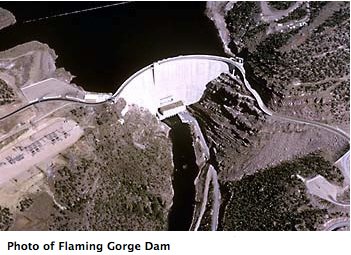
Flaming Gorge pipeline: Colorado-Wyoming Coalition makes it official becoming the Colorado-Wyoming Cooperative Water Supply Project

Proposed Flaming Gorge pipeline

It’s official now. Aaron Million and the Million Resources Conservation Group now have another obstacle to overcome in their quest to move water from the Green River Basin to the South Platte Basin and Arkansas Basin. Frank Jaeger (Parker Water and Sanitation) and several Front Range and Wyoming water providers have announced a study aimed at determining the feasibility of building the same pipeline with public dough and public partners. When Million first heard about Jaeger’s plans some time around the Colorado Water Congress’ convention in 2009 he told The Pueblo Chieftain’s Chris Woodka, “Let’s be clear: They’re trying to steal the project. I don’t understand the deal. They’re supposed to be men of honor. They should act as such.” Here’s a report about yesterday’s announcement from Bobby Magill writing for the Fort Collins Coloradoan. From the article:

Each utility in the coalition will contribute $20,000 to a feasibility study for a massive municipal water pipeline project called the Colorado-Wyoming Cooperative Water Supply Project, which would pipe water for 532,000 people from Wyoming’s Flaming Gorge Reservoir to the Front Range. The coalition of utilities includes the town of Castle Rock, the Donala Water-Sanitation District in Colorado Springs, Parker Water and Sanitation District, the South Metro Water Supply Authority and Douglas County in Colorado and Laramie County, Wyo., and the Wyoming cities of Cheyenne, Torrington and Rawlins.

The project may mirror Million’s proposed 500-mile long pipeline, which would take about 250,000 acre feet of water from the Green River above Flaming Gorge Reservoir, pipe it over the Continental Divide along Interstate 80 and deliver it to thirsty Front Range water providers, mostly agricultural. The difference is that Million’s project is private and concerns only Colorado water organizations, while the Colorado-Wyoming project has the cooperation of the U.S. Bureau of Reclamation and would serve only municipal water utilities in two states.

Parker Water District Manager Frank Jaeger said in a statement that Million’s proposed pipeline does not meet a federal requirement calling for Million to specify the recipients of the project’s water. Jaeger said letters of interest from various utilities throughout the Front Range lack commitment. “Given (Million’s) project cost, it is our belief that a massive subsidy from municipal users would be necessary to pay for the water,” Jaeger wrote. He said it’s bad public policy for Colorado to support Million’s project because it allocates limited Colorado River Basin water for agriculture without meeting the water needs of cities…

The utilities have “no preconceived notion” about the feasibility of a Flaming Gorge pipeline going into the two-year study, which will show how much water the interested cities and counties need in the future, how water would be piped from Flaming Gorge and how much the project might cost, said Bruce Lytle, one of the consultants working on the study…

At a news conference Thursday at the Capitol, the announcement was met with enthusiastic support from several state lawmakers, including Sen. Mary Hodge, D-Brighton; Sen. Ted Harvey, R-Douglas County; Sen. Mark Scheffel, R-Parker; and Rep. Su Riden, D-Aurora.

More coverage from Chris Woodka writing for The Pueblo Chieftain. From the article:

“This would develop the compact rights of two states. Those Colorado River rights have not been developed much for municipal and industrial uses,” said Frank Jaeger, Parker Water and Sanitation District manager at a press conference at the state Capitol Thursday. “This is the first move of the group to see how we develop the water for two states.”[…]

The Colorado users are almost entirely dependent on water from the Denver Basin aquifers which have been depleted as Front Range communities have grown. They are looking at new sources of water, including buying agricultural water rights in the Arkansas River Basin. For example, Donala last year purchased a Lake County ranch for the water rights, and the South Metro district included a possible pipeline from the Arkansas basin in its long-range water supply plan. “We are looking at the project and other alternatives,” said Rod Kuharich, manager of the South Metro District, which encompasses 14 water providers serving 300,000 people. Of the coalition, he said: “This is an unprecedented level of cooperation.”

Wyoming has looked at developing water from the Green River Basin since the 1970s. Bringing water to the eastern part of the state would address water quality and supply issues. It also would alleviate pressure on the state from Nebraska under a North Platte River compact with Nebraska, said Torrington Mayor Leroy Schafer…

The pipeline concept is similar to Aaron Million’s plan, announced in 2006, and now being evaluated as the Regional Water Supply Project by the U.S. Army Corps of Engineers. Million proposes a 560-mile pipeline that he says could be developed for about $3 billion. Last year, he accused Jaeger of trying to “steal” the project. Although Million and Jaeger tell the story differently, it nearly came to blows outside a meeting last year — Million says he was threatened, while Jaeger claims he was provoked. Jaeger brushed aside a question from the media Thursday about whether the coalition’s project is in competition with Million’s plan. “I don’t like to hear ‘competition,’ ’’ Jaeger said. “We are end users with a need for the water. . . . How’s he going to build it without end users?”[…]

The coalition’s plan could differ in details from Million’s, said Bruce Lytle, president of Lytle Water Solutions, the lead consultant. “This is the first phase. We don’t know the size, type of structures or feasibility,” Lytle said. “We’re talking to member agencies to understand what their needs are.” The project will be developed with the Bureau of Reclamation to address needs for the environment and power at Flaming Gorge. It would look at exporting variable amounts of water, more in wet years, less in dry, Lytle said. The project could use three existing reservoirs on the North Platte River, new off-channel storage in the South Platte and existing structures like Parker’s Rueter-Hess Reservoir, a 75,000 acre-foot vessel just beginning to fill and designed to accommodate new water brought into the South Platte Basin. “The ultimate purpose of the feasibility study is to provide enough information to providers so they know how much it costs,” Lytle said, noting that work will begin immediately and will take 18-24 months to complete…

While Million has spent the last four years pitching his project around the state, major water suppliers have been cautious about supporting it. Earlier this month, the Arkansas and Metro basin roundtables agreed to ask the Colorado Water Conservation Board for funding to study setting up a task force proposed by the Pikes Peak Regional Water Authority to look at both projects. At its meeting last week, the Southeastern Colorado Water Conservancy District agreed with that approach, rather than endorsing either project.

More coverage from the Associated Press (Ben Neary) via the Laramie Boomerang. From the article:

The project, if it goes forward, would require permission from Congress, but participants don’t believe they would have to renegotiate the Colorado River Compact, which allocates the river among Arizona, California, Nevada, Colorado, New Mexico, Utah and Wyoming. Although it would be drawn from Wyoming, the water would come from Colorado’s allocated share of water in the Colorado River system. “The state of Colorado’s own State Water Supply Initiative clearly says that even with all the water projects currently in the pipeline, the Front Range and Platte River Basin will face significant water shortages in just a few decades,” said Frank Jaeger, general manager of Parker Water and Sanitation District, who organized the coalition.

Leroy J. Schafer, mayor of Torrington, Wyo., and a member of the coalition, said the project faces opposition from other Wyoming communities like Rock Springs and Green River that depend on the Colorado River Compact to ensure they get the water they need, but he believes they will support the project if it can be shown that it will allow them to use more water in drought years…

Jaeger said last year his district was meeting with entities in Colorado and Wyoming trying to start a similar, competing project to Million’s proposal. Jaeger said he believed that such a large project should be built by the public and he was concerned about the possibility of water speculation…

Participants and their projected water needs include the Parker Water and Sanitation District, 125,000 people; Castle Rock, 85,000; the South Metro Water Supply Authority, 190,000; Douglas County, 45,000; the Donala Water and Sanitation District, 7,000; Cheyenne, Wyo., 55,000; Torrington, 5,000; and Laramie County, 20,000.

More coverage from The Durango Herald (Joe Hanel):

The idea could affect the whole Western Slope because it would use water from Colorado’s share of the Colorado River Compact…

Western Colorado water officials have been skeptical about the Flaming Gorge plan, because it would use water from Colorado’s share of the seven-state Colorado River Compact. Jaeger said there’s nothing wrong with studying the option. “The Colorado River Compact was set up to develop water for the entire state of Colorado and the entire state of Wyoming, so I don’t think we’re out of bounds in investigating it,” Jaeger said…

No one can agree how much water is left to Colorado under the compact. In the worst-case estimates of long-term droughts or a warmer climate, Colorado already is using all of the water it legally owns. The state government is working on a model to get a better answer to the question. Leaders at the Western Slope’s largest water district have no problem with Front Range utilities doing a study, but they hope it takes into account climate change and drought, said Jim Pokrandt, spokesman for the Colorado River Water Conservation District. “It doesn’t matter who’s looking at the project, the same issues stand. We need to get further into the Colorado River Water Availability Study to see how much water is left to develop,” Pokrandt said.

More Colorado Wyoming Cooperative Water Supply Project coverage here. More Flaming Gorge pipeline coverage here and here.

Arapahoe County Water and Wastewater Association open house February 16

A picture named waterfromtap.jpg

From email from the ACWWA:

ACWWA will be hosting an Open House on Tuesday, February 16 from 5:00 PM – 7:00 PM at 13031 East Caley Avenue, Centennial, CO 80111. Please stop by to learn about the ACWWA Flow Project, water conservation tips, construction projects, and water supply. Staff will be here to answer any questions you may have.

More infrastructure coverage here.

Denver Basin Aquifer System: State still issuing well permits despite falling water levels

A picture named denveraquifer.jpg

From The Denver Post (Bruce Finley):

The number of pumping permits sought, and issued, has been falling for years, but regulators say they are still required to issue permits without regard for conservation. In fact, a state permit application fee raised in 2003 for budgetary reasons from $60 to $480 was lowered in 2006 to $100. “We may worry about it, but we issue the permits according to statutes,” Assistant State Engineer Kevin Rein said. “The question of whether or not it makes sense is something that counties, or the General Assembly, may address.”

Metro area water suppliers say the number of wells being drilled is likely to continue to fall, a sign of how deep, difficult and expensive drilling has become. “You have to build more and more wells to get the same amount of water,” said Douglas County Commissioner Steve Boand, a hydrologist by training and longtime leader in high-growth suburbs. “The conundrum is: Do we want to invest in more wells to get the same water we had? Or do we want to invest in alternative water supplies? I favor the latter — that we make an investment in renewable resources.”

The Colorado Division of Water Resources’ 2009 report on groundwater indicates levels are falling by as much as 30 feet a year at heavily mined areas around Castle Rock. Decreases at various wells range widely from less than 10 feet a year to 450 feet at one Parker-area well.

Metro area water suppliers have been seeking fewer permits, and drilling fewer wells, state records show. The number of permits decreased from 1,707 issued in 2000 to 249 so far this year. The number of wells drilled decreased from 1,294 in 2000 to 231 last year. This year, the data show, 92 wells have been drilled…

“Even though there are declines in water levels regionally, there still is significant water available in the aquifer. The concern South Metro has is to become reliant on renewable water resources, rather than groundwater resources, and hold those groundwater resources in reserve for periods of drought,” said Rod Kuharich, executive director of the South Metro Water Supply Authority, which represents 13 Douglas and Arapahoe county communities using groundwater including Castle Rock, Parker and Centennial. “Our current mix between renewable and nonrenewable water is roughly 60-40, and our members are moving steadily towards our goal of 85 percent renewable” by 2030, Kuharich said.

More Denver Basin Aquifer System coverage here and here.

Castle Rock is teaming up with Denver, Aurora and the South Metro Water Supply Authority for joint operations

A picture named southmetrowaterauthority.jpg

From the Douglas County News Press (Chris Michlewicz):

Town council entered into an intergovernmental agreement Aug. 25 with Denver, Aurora and the South Metro Water Supply Authority, of which Castle Rock is a member. The WISE partnership – which stands for Water Infrastructure and Supply Efficiency – is a joint collaboration to explore opportunities to acquire water and share infrastructure to support the development of water in the South Platte Project Region, an area that stretches from Chatfield Reservoir to the small town of Balzac, Colo., on the eastern plains.

The agreement promotes regional cooperation among water providers and enables the participants to share costs on large projects instead of duplicating efforts. It also brings bigger partners into the mix, said Heather Beasley, water resource engineer with Castle Rock’s utilities division. The partnership does not obligate the town to participate in projects. Members will bring opportunities to the group for discussion, but each entity can decide individually if it wants to join in, Beasley said.

More Denver Basin aquifer system coverage here and here.

Colorado’s water future dependent on new transmountain diversions?

A picture named coloradopipelineconcepts.jpg

The Colorado Department of Natural Resources is looking at four pipeline concepts and two agricultural fallowing and dry up concepts as possible solutions to watering the unbridled growth along the Front Range. Here’s a report, from Bruce Finley writing for The Denver Post, about the pipeline plans from Flaming Gorge and the Green River proposed by the Colorado-Wyoming Coalition and the Million Resource Group. From the article:

Colorado municipal water suppliers are in discussions with their Wyoming counterparts exploring the feasibility. Separately, a private entrepreneur’s proposal to build a pipeline is under federal review. Colorado government officials — who have met with both contingents and are talking with Wyoming officials — recently included the “Flaming Gorge concept” among four options for diverting Western Slope water to the Front Range…

Huge hurdles remain, including financing and Colorado’s and Wyoming’s obligations to downriver states under an interstate compact. Conservationists object to the potential environmental impact of withdrawing the water…

The pipeline concept originated with entrepreneur Aaron Million and his Million Conservation Resource Group. In 2008, the group applied for a permit from the U.S. Army Corps of Engineers, which regulates construction in waterways and wetlands. An environmental review has begun, and engineers are sifting through a deluge of public comments, said Rena Brand, regulatory specialist for the agency. “The majority of letters are against it” and “push for the idea of conserving more along the Front Range,” Brand said. Federal wildlife officials are among those questioning possible impacts on endangered species and migratory birds…

Million must provide a list of likely customers by January to establish a need for the pipeline, Brand said. Last week, Million said that “ongoing negotiations with 20-plus” potential customers in Wyoming and Colorado “are going well.” He declined to name them. The project could be done in five years, he said. He wasn’t invited to the municipal suppliers’ discussions at a country club, a slight he calls unfortunate. “The lack of collaboration is problematic. It was the private sector that developed the water in the West” before federal agencies got involved, he said. “This is a return to the historical development of water resources, using the efficiency of the private sector to get things accomplished.”

Meanwhile, the municipal suppliers’ group was to continue discussions in Wyoming this week. They are close to formalizing a coalition, Jaeger said. He declined to name participants.

Colorado’s top natural resources officials say they’ve talked with Million and Jaeger. The state’s emerging strategies for meeting projected demand — which include conservation, the re-use of water and rethinking low-density versus high-density growth — assume that importing some water between river basins will be necessary, said Harris Sherman, executive director of the Colorado Department of Natural Resources. “Whether it is a public or a private project, it must incorporate public benefits,” Sherman said. “Sometimes it’s easier to incorporate public benefits with a public project, because the sponsoring entity is the public, and it will be focussed on public benefits. But it’s not impossible for a private project to incorporate a wide variety of public benefits. “

More Flaming Gorge pipeline coverage here and here. Colorado-Wyoming Coalition coverage here.

Flaming gorge pipeline: Does Million Resource Conservation Group have any customers?

A picture named flaminggorgepipelinemillion.jpg

Colorado water law includes an anti-speculation doctrine. Here’s a short explanation from a Coyote Gulch reader:

The doctrine basically says water may not be held for future sale. The Colorado Constitution says no water right will be denied, if the water is put to beneficial use. The one exception to this is referred to as the Great and Growing Cities Doctrine (c. 1916) that says cities can appropriate (or purchase water rights in a change case) water for future needs.

An individual or corporation cannot claim or buy water without an immediate or historic beneficial use.

So that is the conundrum that Aaron Million is in: He hasn’t named any customers for the water that he plans to deliver from the Green River so many are pointing the speculator finger at him and his proposed project. He has frightened off some potential customers by also being secretive about the eventual cost of the water.

The U.S. Army Corps of Engineers is in the process of completing an environmental impact statement for the project but needs to know where the water will be put to beneficial use in order to evaluate the impacts. Million has said that he will provide the names of users in Wyoming and Colorado, “…but is not in a position to provide them yet,” according to this report from Chris Woodka writing for The Pueblo Chieftain. More from the article:

“I think the Corps is trying to shore up its information and narrow down the focus of the project so it can develop alternatives,” Million said. “Obviously, we’re going to do everything we can to cooperate. The project’s on a positive path.” Rena Brand, regulatory specialist for the Corps, had a similar comment.

“In order to define the need, the Corps must understand who the water users are and verify their specific needs for water,” Brand said. “Water users could be cities, irrigation districts or industries.”[…]

The Colorado Water Conservation Board estimates the state has 440,000-1.4 million acre-feet of water to develop under the [Colorado River Compact and Upper Colorado River Compact], but is investigating things like the location and timing of flows. Million’s project would minimize elevation changes as it bypasses the Colorado Rockies and moves water along existing utility corridors.

There is strong opposition to the project in Wyoming. “I’m not sure they have adequate definition of the need for the project to even do the analysis,” Gov. Dave Freudenthal said last week. “I think this is just a rich guy who just wants to move water.”

Million countered that Freudenthal’s opposition was not expected, and said he is ignoring possible benefits to the state.

There is also interest by others in the state in the concept. The CWCB has included it in a study of possible water supply alternatives, and the South Metro Water Supply Authority has been looking at a similar alternative [Colorado-Wyoming Coalition] in its long-range planning.

More Coyote Gulch Flaming Gorge pipeline coverage here and here.
Denver, South Metro and Aurora to coordinate and share supply facilities?

A picture named fraservalleycollection.jpg

Denver, Aurora and the South Metro Water Supply Authority are exploring ways that facilities could be shared to optimize supply distribution, according to a report from Chris Woodka writing for The Pueblo Chieftain. From the article:

Denver Water, Aurora Water and the South Metro Water Supply Authority are preparing a report that would identify how water supply systems could be shared, Aurora Water Director Mark Pifher said. “We’re underutilizing our resources,” Pifher told a joint meeting of the Interbasin Compact Committee and the interim legislative water resources committee. “We’re looking at ways to share our infrastructure, but it may require relief in water law to give us the additional flexibility to make that kind of project work.” By capturing flows that are not used, there would be less pressure in the short term on agricultural water rights. In the long run, there would be reduced costs for storage and pipelines if the water providers are working together, Pifher said…

A study of how the three entities could work together is being prepared and will be released later this year, Pifher added. Together, the water providers supply almost 500,000 acre-feet of water to a population of about 1.7 million. South Metro includes 13 separate water providers that have been looking at their own study of how to jointly use resources better…

Denver Water is in the midst of a 10-year plan aimed at reducing per-capita water consumption by at least 20 percent. It is also looking at possible projects to physically reuse water. Aurora’s $750 million Prairie Waters Project, now under construction, will recapture its return flows from the regional wastewater treatment plant and pump them 34 miles upstream. Return flows from water imported from the Western Slope, from Denver Basin aquifers or taken as consumptive use from ag dry-ups, in some cases, can be reused to extinction under state water law. Most of the water is not physically reused now, but exchanged against native flows. A 1999 study indicated there are about 200,000 acre-feet of reusable water in the Denver Metro area, with about 133,000 acre-feet coming through wastewater plants.

More Coyote Gulch infrastructure coverage here.