Greeley: Annual water and sewer facilities tour August 25

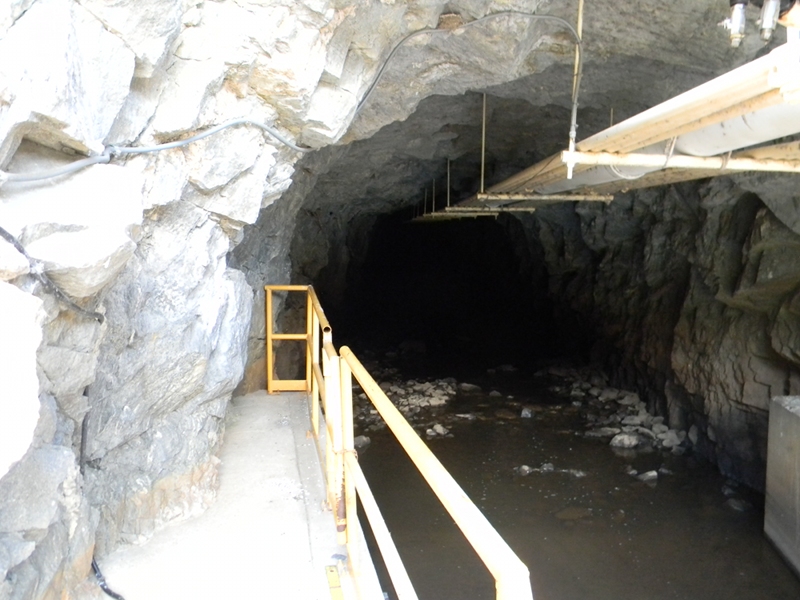
miltonseamanreservoiroutlettunnel07252011.jpg

From Greeley Water via The Greeley Tribune:

The city of Greeley is offering residents the chance to tour the city’s water and sewer facilities with the city’s Water and Sewer Board. The tour is set for 7:30 a.m. to 4 p.m. Aug. 25. Residents interested in attending are asked to reserve seating by Aug. 19 to (970) 350-9812. The purpose of this annual tour is to visit water and sewer facilities to learn about new and developing projects, according to a city news release.

More Greeley coverage here.

Greeley: Leprino cheese factory turns dirt for new wastewater plant

A picture named wastewatertreatmentprocess.jpg

From The Greeley Tribune (Chris Casey):

Leprino has also begun construction of the core and shell building for the wastewater treatment plant at 1133 Ash Ave., by Glacier Construction, for a total valuation of $1.56 million. Nick Opper, Leprino’s Greeley plant manager, said the three-phase construction is “on time, and we’ve got a lot of people working on the site right now.”

More wastewater coverage here and here.

Northern Integrated Supply Project: Supplemental EIS expected, ‘…latter part of 2011’

A picture named nisppreferredalternative.jpg

From email from Save the Poudre (Gary Wockner):

The initial release for the Supplemental DEIS for NISP was supposed to be in June of 2010, and was initially delayed until the summer of 2011, but is now estimated to be delayed until the “latter part of 2011” according to an email from [Chandler Peter from the U.S. Army Corps of Engineers] to Save the Poudre.

Additionally, the Draft EIS for the new Halligan (Fort Collins) and Seaman (Greeley) dams and reservoirs on the North Fork of the Poudre was slated for the summer of 2011, but is now delayed for a half year after the release of the NISP SDEIS (according to the email from Mr. Peter), which will put them into 2012 and well beyond previous estimates.

More Northern Integrated Supply Project coverage here and here.

Greeley: How much water will the new Leprino cheese plant use?

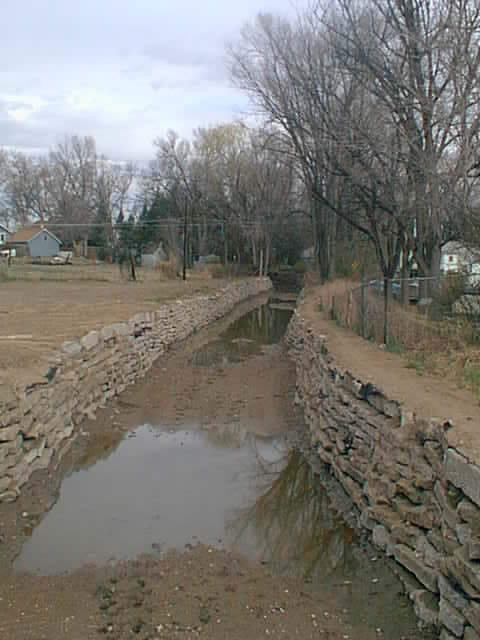
A picture named irrigationditchgreeleyhistoricalresources.jpg

Here’s a look at the feed requirements for Leprino’s new cheese plant, from Bill Jackson writing for The Greeley Tribune. From the article:

A dairy cow will eat about 45 pounds of corn silage per day, or two to three times that of a steer in a beef cattle feedlot, [Bill Wailes, head of the animal sciences department at Colorado State University] said. That amount varies from dairy to dairy, depending on specific feed rations, but, regardless, that’s a lot of corn. Silage is a crop that has to be grown close to its point of consumption, whether it be a dairy or a feedlot. The limit on the distance it can be transported is about 25 miles because of its moisture content. Hay is another source of roughage in the diet of a dairy cow or feeder animal. It can come from farther distances, although the price of fuel will have a significant impact. Shell corn, another major component of the diet of a ruminant, can, and does, come from greater distances. And, in recent years, the byproduct from ethanol plants in the region has become a staple in the diet of dairy animals. So, using 50,000 as the number of new cows coming to Weld County, Wailes estimated an additional 410,000 tons of silage per year would be required. Based on a 30-ton-per-acre average, which admittedly is a little high, a minimum of 14,000 acres of new silage will be needed in the area to meet the needs of those cows…

Corn silage, according to research conducted by Joel Schneekloth and Allen Andales of CSU, requires about 8 inches less a year in water than does sugar beets in the Greeley area — 30 inches for beets versus 22 inches for corn. Under ideal conditions — whatever those may be — the net requirement is reduced by rain, which in the Greeley area is about 7 inches per growing season. Depending on the efficiency of irrigation systems, the two researchers said the gross water requirements of sugar beets versus corn could be as much as 52 percent.

More South Platte River basin coverage here.

Greeley: Long-term water planning reveals higher rates in the ratepayers future

A picture named fountainpavementdrawing

From The Greeley Tribune (Chris Casey):

As Water and Sewer Director Jon Monson looks at the sizable footprint of Greeley’s future — the 2060 comprehensive plan has the city growing heavily to the north and west — “I need to look up the river quite a ways, a long time, to make sure that water will be there when people need it.”

At the center of this multi-layered planning are residents, upon whom cities rely to fund operations and storage projects. The typical Greeley household water bill is $45.83 a month, and that, if a planned water acquisition occurs, would rise about $30 per month over the next 10 years. By comparison, rates have climbed $8.85 per month, or 24 percent, since 2003. “The only place we get our money is the ratepayers. It’s basically an investment in our water future,” Monson said. “… To grow into this area (of the 2060 plan) with the lifestyle we’re accustomed to, or we want, Tree City USA, takes water. And the time to get that water is now, when it’s available and it’s relatively inexpensive.”[…]

Monson’s department would like to buy $90 million worth of water in the next six years. While that would help ensure the city’s needs for several decades, water rates would likely climb 84 percent in the next 10 years, or by $30 per single-family home per month. That’s compared to rates rising, if no additional water is bought, 47 percent in the next decade, or $17 per home. If the city added the $13 per month to water bills for the overall acquisition — the initial $30 million buy coming in the 2011-12 budget — rates would be in the upper third of Front Range cities if other cities do not change their rates during the 10-year period…

“We’re not making money,” Monson said. “We’re not a for-profit agency. We’re just covering our costs.” The department’s annual costs currently are $30.5 million, breaking down to about $12 million for operations, $11 million for debt service, $6 million for depreciation and a $1 million from the general fund.

Greeley is involved in numerous regional water storage and delivery projects, including the Haligan and Milton-Seaman reservoir expansions in the Poudre Canyon area, the Windy Gap Firming Project west of Loveland and the Bellvue Pipeline in Larimer County…

Also, Monson said, the city is dealing with critical water maintenance projects, including headgate repair and replacement at the Boyd and Freeman ditch, from the recent flooding; ongoing cement-lining installation in older, rusting pipes in downtown; outlet gate construction at Milton-Seaman reservoir; and centrifuge replacement at the wastewater treatment plant. All those elements — plus rising electrical and power costs and the regional water projects that cost into the millions in permitting alone — factor into water rates. In Greeley, Monson said, about a quarter of a household’s water bill goes to maintenance costs…

Also, he said, elusive future water supplies will likely be lower quality. Greeley is trying to secure as much source water as possible from close to the Poudre Canyon mouth. If the city waited until primary water sources flowed close to town, it would need to do expensive reverse-osmosis treatment and lose the natural down-gravity flow from the canyon.

More Greeley coverage here.

Greeley: City council is considering big rate increases and agressive purchases of water rights

A picture named poudreriver

From The Greeley Tribune (Chris Casey):

…the council favors aggressively buying water — as much as $90 million worth during the next six years — an approach officials say will cost residents in the near term but offer long-range savings and security. If the city goes that route, said water and sewer director Jon Monson, water rates would rise about 84 percent in the next 10 years, equating to $30 per single-family home per month. That’s compared to rates rising, if no additional water is bought, 47 percent in the next decade, or $17 per home. Monson presented the water outlook at Tuesday’s council work session.

Greeley’s current average water bill is $45.83 per month, he said. If the city added the $13 per month to water bills for the $90 million water acquisition, rates would be in the upper third of Colorado Front Range cities if other cities do not change their rates…

Greeley’s existing water supplies will keep up with the city’s growth — a 2.25 average rate in recent years — for 20 to 25 years, Monson said. “But we firmly believe now if we do this revolving fund … that water may be gone by the time we need it,” he said. Under the revolving plan, Monson said, Greeley would have to wait 10 to 15 years to start to cash-fund additional water supplies. But, if water is available at all, it would be extremely expensive, adversely affecting future growth, density and irrigation. Compounding the problem, he said, is the fact that other Front Range cities are ramping up water purchases and projects in the wake of the 2002 drought. For example, Monson said, Aurora is spending $800 million on a water project. Monson pointed out that Greeley would also need to add staff — at least several positions — in order to increase the city’s supplies. Although Greeley is a statewide leader in conservation, the city, without additional acquisition, would still exceed its supplies by 2038 or 2040, Monson said…

Under the water acquisition option, the city would, as it has historically done, rent annual excess supplies back to agriculture at cost. Plants such as Leprino Foods require substantial water resources, and council members pointed to the importance of agricultural partnerships to the city’s economic future. Norton said such partnerships with agriculture are “what northern Colorado is all about.”

More Greeley coverage here.

Greeley: City council voices opposition to proposed revised floodplain regulations from the Colorado Water Conservation Board

A picture named southplatteflood.jpg

From The Greeley Tribune (Chris Casey):

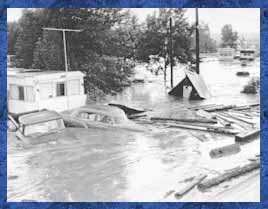
Council members sharply criticized the flood plain regulation changes being proposed by the Colorado Water Conservation Board. Under current rules, the city must abide 100-year flood plain precautions for all facilities, whether they’re deemed critical or not. The Conservation Board has suggested modifications that protect “critical facilities” in the event of a 500-year-flood to better ensure public safety and reduce flood losses.

If such rules were enacted, said Derek Glosson, Greeley’s engineering development review manager, the state has “a laundry list of what it considers critical facilities.” For example, he said, a road would be considered critical and thus require a bridge to be built, “which would be a major cost to the city.” He said it would be easy to ensure that new facilities handle a 500-year-flood — of which there is a two-tenths of one percent chance any given year — but retrofitting existing structures is “very dicey.” “In that analysis you have to include the cost of restricting development and the costs of that land” in compensation to private property owners, Norton said. “I think there’s a big legal question that I think is unanswered in their rather arbitrary approach to this.”

More CWCB coverage here.

The City of Greeley and the American Water Works Association are celebrating Drinking Water Week

A picture named waterfromtap.jpg

From The Greeley Tribune:

Jon Monson, director of water and sewer, said the city has a four-point plan that guides water management:

• strengthen water system infrastructure to properly deliver water to residents;

• balanced approach to buying water from willing agricultural sellers; the city then leases it back to them for decades to allow them to keep farming;

• expand capacity to store water, including the Milton Seaman Reservoir project; and

• improve water conservation — an area in which the city is already a leader in the state.

Greeley: Mandatory watering restrictions start April 15

A picture named watersprinkler.jpg

From The Greeley Tribune:

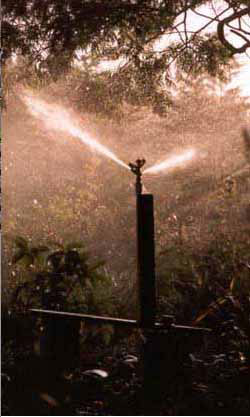
Throughout the watering season, lawn watering is not allowed between noon and 5 p.m. because it wastes water. Odd-numbered addresses are allowed to water lawns on Mondays, Wednesdays and Saturdays, while even-numbered addresses may water Sundays, Tuesdays and Thursdays. Nonresidential properties and multifamily residential properties, such as apartments and homeowner association common areas, may water lawns on Sundays, Tuesdays and Fridays. Residents who don’t comply face possible fines of up to $100 for a first violation. Outdoor use, mostly lawn watering, accounts for 55 percent of Greeley’s annual water use. The city estimates that 25 percent of the water is wasted by inefficient irrigation practices. The city offers free audits of residents’ irrigation systems, including a custom water schedule. To sign up, go to www.greeleygov.com/Water/audit.aspx and fill out the online form. For more on the city’s watering regulations, go to www.greeleygov.com/Water/news2.aspx or call (970) 336-4134.

More conservation coverage here.

Greeley: City council approves easement acquisitions for new pipeline

A picture named irrigationditchgreeleyhistoricalresources.jpg

From The Greeley Tribune (Chris Casey):

The pipeline will deliver water from Greeley Canal No. 3 to the Poudre Ponds located off north 35th Avenue, said Jon Monson, water and sewer director. The Lower Cache la Poudre River Stewardship Project will help meet the city’s water storage needs in lined gravel pit reservoirs.

More Greeley coverage here.

Greeley leases 4,000 acre-feet of Colorado-Big Thompson water to the Central Colorado Water Conservancy District for augmentation

A picture named coloradobigthompsonmap.jpg

From The Greeley Tribune:

GMS and WAS plan to use the water as augmentation supply for the 2010-11 operating season.

Greeley partners with agricultural users on various projects including the Colorado-Big Thompson Project, Greeley Irrigation Company, Water Supply and Storage Company, and Greeley-Loveland Irrigation Company. In addition, the city has leased an average of 8,000 acre-feet of water to agriculture over the last four years. The lease of Greeley’s 4,000 acre-feet is estimated to supply the Central Colorado Water Conservancy District with a net supply of 1,600 acre-feet.

More Greeley coverage here.

Greeley considering boring for new pipeline from Bellevue to Greeley

A picture named pipeline.jpg

From the North Forty News (Cherry Solkoloski):

The city is planning to bore underground, rather than excavating a ditch, through sensitive areas just south of the Cache la Poudre River. Spokesperson Dan Moore said preliminary plans call for a series of bores, for a total of about a quarter mile of pipeline. The so-called northern segment through LaPorte is just one of several sections of pipeline that will take water from the city’s Bellvue treatment plant all the way to Greeley. Some of the segments have already been completed, but the northern segment’s preferred route has drawn intense criticism from some landowners who will be affected. However, Moore said, the boring method “should avoid most of the concerns we have heard.”[…]

Moore said that with the boring method, the city should be able to avoid destroying the historic features and the Point of Rocks. The city would bore under the irrigation canals and through a ridge just south of the Point of Rocks. It would go under the old railroad bed at some point, but the intact tracks would not be disturbed. Moore said the approach would be friendlier to the environment. The access road could be smaller, and the area would be easier to restore. The process would likely involve digging three boreholes, about 20 feet deep, from which the tunnels would be bored. There are always surprises when doing underground work, Moore cautioned, and the city might have to excavate in some areas if they encounter large chunks of rock…

Moore said that the cost difference between boring and trenching is difficult to assess. Although boring is a more expensive construction method, restoration of the property would cost less with that approach. Even with boring, he said, Greeley is sure that the preferred route on the south side of the river would be less expensive than the other alternatives considered…

Construction could begin next winter on the project, Moore said, and the project could take two seasons to complete. The city avoids doing pipeline work in the spring and early summer because of farming activity, irrigation and wildlife. Before work can begin, the city must acquire necessary permits from Larimer County and the U.S. Army Corps of Engineers. The Army Corps will consult with the Colorado Historical Society before issuing a permit.

More Greeley coverage here and here.

Greeley: James Maxwell Clark and the Union Colony

A picture named irrigationditchgreeleyhistoricalresources.jpg

Here’s a look at James Maxwell Clark and the Union Colony, from Caroline Black writing for The Greeley Tribune. From the article:

From 1872-1875, the economy of Greeley was hurting as farmers battled harsh winter storms, drought and grasshoppers. They attempted to learn new forms of crop cultivation that were in contrast with what they had experienced in the humid areas of the eastern United States. Like his neighbors, Clark found farming a terrible struggle, leading him to name his farm “Poverty Flats.”

During Clark’s study of irrigation he became a major contributor to the theory and practice of irrigation in the Greeley area, and the door of prosperity began to open for area farmers. He and [Abner Baker], who later founded Fort Morgan, helped construct ditches between Fort Morgan and Brush, and Clark became director of the No. 2 canal that travels south of Timnath through to north of Greeley, and the Upper and Lower Platte and Beaver Canals near Fort Morgan. He also assisted James P. Maxwell, first Colorado State engineer, in devising plans to measure water for irrigation use among area farmers.

More South Platte Basin coverage here.

Laporte: Property owners to allow Greeley pipeline surveys on their land but vow to continue to fight the project

A picture named pipeline.jpg

Larimer County residents battling the city of Greeley’s plans to replace aging infrastructure have agreed to allow surveys for the project, according to a report from Monte Whaley writing for The Denver Post. From the article:

Planning for the project to replace an aging, smaller line the city installed more than 50 years ago began in 2005. Greeley gets its water from the Poudre River after it’s treated at a plant in Bellvue, northwest of Fort Collins. The city went to Larimer County District Court to seize a portion of the Humstone property — as well as two other properties near Laporte — to allow crews to do exploratory drilling, seismic surveys and other work on the grade. In the settlement agreement, crews will be allowed onto the properties under certain conditions. They will do biological and archaeological studies, as well as some core drilling, Humstone said.

The grade, which dates to 1881, was part of the Greeley, Salt Lake & Pacific Railroad, which was built to haul locally quarried sandstone to construction projects and sugar-beet factories…

Greeley officials say taking the 30-mile pipeline along a public right of way would go through downtown Laporte. They also say they need to get on the properties to map out a plan to protect the historic structures. The agreement “will help determine the best route and to gather biological, historical, geotechnical and economic data for the Bellvue water pipeline project,” said Jon Monson, Greeley’s water and sewer director. “This settlement will be to the benefit and the best interests of everyone involved.”

More Greeley coverage here.

Larimer County: Historic preservation vs. new Greeley pipeline

A picture named pipeline.jpg

Here’s a look at the historic preservation side of the argument against Greeley’s new supply pipeline through Larimer County, from Monte Whaley writing for the Denver Post. From the article:

Brinks and Humstone bristle at the thought that a survey crew dared to show up on their land two years ago without permission. That was their first clue of Greeley’s intentions, and since then, they have allowed walking tours and nothing else. That has led Greeley to file for condemnation proceedings against Brinks, Humstone and one other property owner. The city wants a Larimer County judge to seize the properties to allow crews to do exploratory drilling, seismic surveys and other field work on what’s left of the grade, including 100 yards of track. This would lead to laying in a pipe of 5 feet diameter, 10 feet deep along a nearly 200-foot-wide right of way.

The women say the work would destroy the last remnants of northern Colorado’s railroad history. The grade, which dates to 1881, is on the National Register of Historic Places and was on Colorado Preservation Inc.’s 2009 list of endangered places.

Update: Here’s a look at the project through the eyes of Greeley’s Director of Water and Sewer, Jon Monson writing in the Fort Collins Coloradoan:

The Northern Segment is between northern Fort Collins and the Bellvue filter plant. The route that ranked best in minimizing cost, environmental impact and land use disruption bypasses much of LaPorte to the south. The other routes examined would have impacted up to 150 residences and businesses. Unfortunately, the best route we found could impact structures now on the National Historic Register. We are working with property owners and state and federal agencies to assess any potential impacts. If there are any adverse impacts to the structures, Greeley will seek ways to avoid, minimize or mitigate the impacts in accordance with federal law.

Greeley: New pipeline from LaPorte to Bellvue

A picture named pipeline.jpg

Here’s a report about Greeley’s efforts to build a new supply pipeline near LaPorte, from Jakob Rodgers writing for the Greeley Tribune. From the article:

The city department may ask for a court order to gain access to three properties whose owners have long contested the 30-mile pipeline, which would run from a water filtration plant in Bellvue to the Gold Hill Reservoir. The court order would not be used to build the pipeline, but rather to survey the land to determine the pipeline’s seismic and environmental impact. Jon Monson, director of the water department, said the department could seek the order sometime this summer. The 60-inch pipeline could bring an additional 50 million gallons of water a day to Greeley, whose residents consume roughly 54 million gallons of water a day during peak use in the summer. Evans and parts of Milliken and Windsor also would use water from the pipeline. About 15 miles of the $80 million pipeline already has been built and is in use, Monson said. As it stands, the water department is nearly at its 58 million-gallon-a-day capacity to transport water when also taking into account the 38 million gallons it transports from Boyd Lake. The current pipeline from Bellvue can transport roughly 20 million gallons of water a day.

More Coyote Gulch coverage here and here.

Greeley: New pipeline from LaPorte to Bellvue

A picture named pipeline.jpg

From the Fort Collins Coloradoan:

The Greeley City Council has given its water department authorization to seek a court order to gain access to three properties whose owners have not allowed work crews on to their land to conduct studies needed for the pipeline’s design. Fieldwork on the properties, such as land surveys, seismic testing and biological studies, is needed for engineers to determine the route of the pipeline across the properties and how to avoid damaging environmental and historic resources, said Jon Monson, director of Greeley’s water department. But some property owners say they don’t want the pipeline to cross their land and will continue to seek ways to block it. “We don’t want them to get a toehold,” said Rose Brinks, who has been battling the pipeline project for more than two years. “Once they get on here, there will be no stopping them.”[…]

Construction on more than half of the $80.5 million project is already complete.

More Coyote Gulch coverage here.

Greeley pipeline: Protection of historic railroad grade impacting plans

A picture named pipeline.jpg

Here’s an update on Greeley’s plans to build a new supply pipeline along the route of the historic Greeley, Salt Lake and Pacific Railroad line, from Cherry Sokoloski writing for the North Forty News. From the article:

As it stands now, Greeley plans to build the pipeline along the route of the old Greeley, Salt Lake and Pacific Railroad line, a move that would likely destroy the historic resource. Some of the original tracks remain on the corridor, which is listed on the National Register of Historic Places.

Mary Humstone of LaPorte, a historic preservationist and University of Wyoming professor, applied to have the railroad line designated as “most endangered.” The corridor was one of four places chosen for the 2009 list from 39 nominated sites. “I’m thrilled to get the designation,” said Humstone. “It shows that this is not just of concern to a small group of people in LaPorte and Bellvue. It broadens our case. This statewide organization is saying it’s really important to save these kinds of resources.” Humstone also noted that about 2,000 people, including county commissioners and state legislators, signed a petition urging Greeley to relocate the pipeline. “We’re going to keep pushing them to look at other routes,” Humstone said. The historic railroad line crosses property owned by her and her husband as well as other LaPorte residents.

More Coyote Gulch coverage here.