Southern Delivery System update: Construction starting in earnest this summer

A picture named sdspreferredalternative.jpg

From The Denver Post (Bruce Finley):

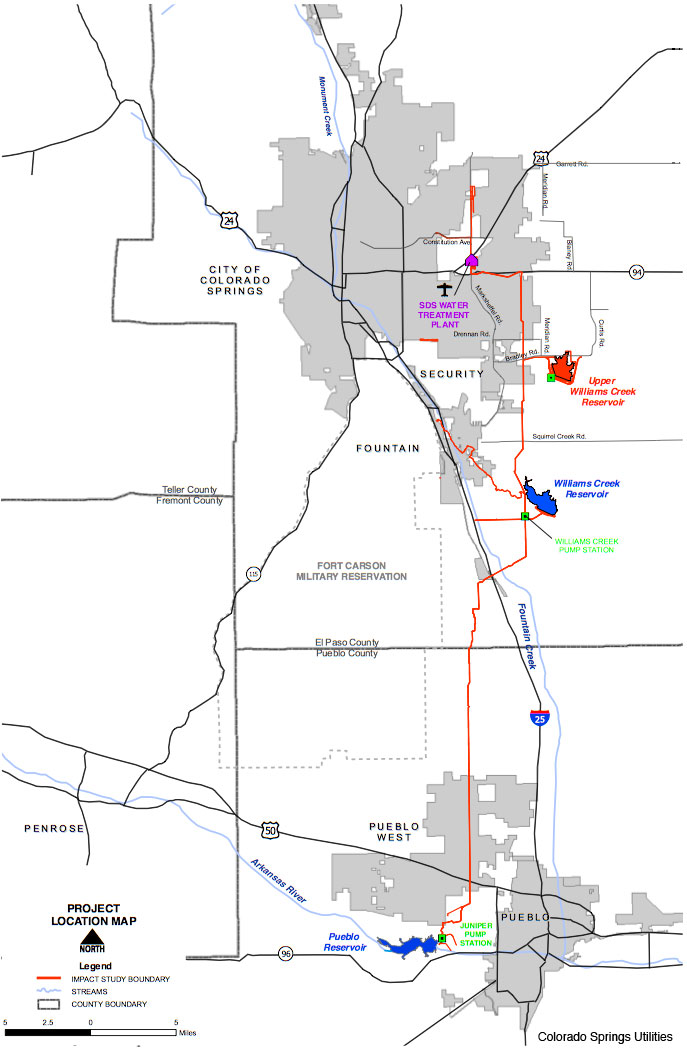
Construction crews this week began work on the $2.3 billion Southern Delivery System. It is designed to pump water uphill and north from Pueblo Reservoir — through a 62-mile pipeline — to sustain Colorado Springs, which owns the rights to the river water, and other growing Front Range cities. The cities embarked on this project because water supplies have emerged as a constraint on population growth.

CH2MHill project engineers and construction chiefs at Pueblo Reservoir this week re-channelled the river below the 240-foot-high dam using sandbags. They’re adjusting dam valves to dry an area so that digging crews can start laying the pipeline without relying on expensive underwater divers. Three 15,000-horsepower pumps are to propel the water through a pressurized 66-inch-diameter steel pipeline. Moving water to the planned end points — two 30,000 acre-foot reservoirs to be built east of Colorado Springs — requires an elevation gain of 1,600 feet…

The Pueblo Reservoir, built in 1975, holds 357,000 acre-feet of water, and the diversion is expected to lower the average water level by about six feet…

Meanwhile, the $50 million for cleaning and restoration of Fountain Creek could enable new recreation, reservoirs and fishing, [Pueblo County Commissioner John Cordova said. “We could have trout,” he said…

Environmental groups “are generally satisfied,” as long as Colorado Springs live up to its commitments to ensure appropriate water levels in the Arkansas River above and below the reservoir, Trout Unlimited water project director Drew Peternell said.
Huge amounts of energy required to pump water uphill, however, looms as “a greenhouse gas issue,” Peternell said. “We’d encourage them to consider renewable sources” of electricity, he said.

More Southern Delivery System coverage here and here.

Fort Morgan: Stormwater issues meeting May 25

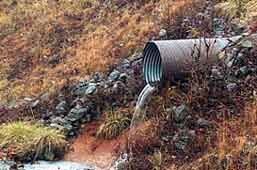
A picture named stormwateroutlet.jpg

From The Fort Morgan Times:

The city will hold a neighborhood meeting next week to tell residents about some of the findings and possible alternatives for the Northwest Quadrant storm drainage problems. The meeting will be held at 5:30 p.m. Wednesday, May 25, at the Fort Morgan School District Support Center, 715 W. Platte Ave. City officials and representatives from the engineering firm Short Elliott Hendrickson will be there to share the findings of the detailed study and analyses, as well as possible/feasible options in moving forward.

More Morgan County coverage here.

The Town of Victor turns dirt on $500,000 storm drainage project

A picture named victor.jpg

From the Pikes Peak Courier View (Norma Engelberg):

Using a $500,000 Community Development Block Grant from the state, $25,000 from the Cripple Creek & Victor Gold Mining Co. and $25,000 more from the city, the work will divert runoff through large underground pipes out of the downtown toward Wilson Creek, near the Victor Gold Bowl, eventually draining into the Arkansas River. “It comes from the state but most of the funding is actually federal,” said Victor Councilmember Mike Wallace. “We’re going to catch the runoff outside the downtown and run it through pipes. Burying those pipes will give the city new curbs, gutters, sidewalks and asphalt. We’re almost as excited about that as we are about the drainage work.”[…]

City and contract crews have been working on the drainage project for several weeks but the official ground breaking was April 19. Work will start at 4th Street and Diamond Avenue, continue down Diamond to 3rd, then along 3rd to Victor Avenue, culminating at Victor and 1st Street. Besides the initial runoff collection point, there will be additional surface water inlets will be installed along the route.

More stormwater coverage here and here.

Fort Collins: Proposed floodplain rules update

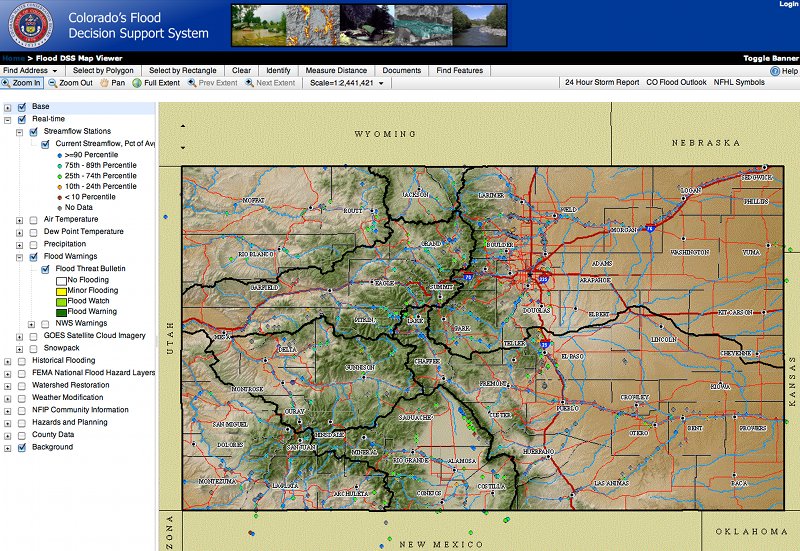
A picture named coloradoflooddss.jpg

From the Fort Collins Coloradoan (Kevin Duggan):

The latest proposal from city stormwater officials for upgrading the regulations — allowing non-residential development in the floodplain as long as it has “no adverse impact” on other properties — might be the solution sought by riverside property owners who hope to develop their land, she said. Or it may create a regulatory environment in which development would become cost prohibitive because of the need for engineering studies to show no harm would come from a project, she said. Mitigation efforts needed to prevent water from one property going to another during a flood event, such as channeling the river, could be too costly except for the largest and wealthiest developers, she said.

More Stormwater coverage here.

Pueblo: Stormwater seminar January 27

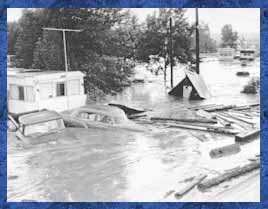
A picture named southplatteflood.jpg

From The Pueblo Chieftain (Chris Woodka):

The city will host a seminar on stormwater discharges from 8 to 11 a.m. Jan. 27 at the Pueblo Convention Center. The seminar intends to answer questions from the business sector, contractors and developers about the city’s stormwater system, and cover ordinances, best management practices and maintaining construction sites and private homes. “If it’s not stormwater, it does not belong in the system. Rainwater and snowmelt are two examples of stormwater,

More stormwater coverage here.

Fort Morgan flooding discussion

A picture named fortmorganrainbowbridge.jpg

From The Fort Morgan Times (John La Porte):

Residents of the Eighth Avenue area near Main Street blame flooding in the last two years at least partially on the downtown improvement project completed in the summer of 2009. The project has moved a flooding problem from downtown to Eighth, some residents said at a meeting called by city officials Wednesday to discuss the flooding and try to reassure residents that they were working on a solution.

And while city engineer Brad Curtis acknowledged that runoff from the downtown area “didn`t help” the long-standing flooding situation on Eighth, Scott Bryan of the city council pointed out that the area had not seen in a long time rainstorms like it has seen the last two years. Bryan, who owns a cleaning and service business, said that flooding problems in Fort Morgan are not isolated to Eighth. He said he and his workers pump out 50 to 60 houses after every big storm. He has had the business since 1995, he said, and has not seen anything to compare with the storms of the last two years.

More stormwater coverage here.

Pueblo: Stormwater seminar January 27

A picture named cherrycreekflood08031933castlewooddamfailure.jpg

From KKTV.com (Jason Aubry):

The seminar will be held at the Pueblo Convention Center’s Fortino Grand Hall A. It starts at 8:00 a.m. and run until 11:00 a.m. with the intent of answering question from the business sector, contractors and developers regarding storm water discharges that end up draining downstream.

More stormwater coverage here and here.

Southern Delivery System: Colorado Water Quality Control Division 401 certification challenge recap

A picture named sdspreferredalternative.jpg

From The Pueblo Chieftain (Chris Woodka):

The Colorado Water Control Commission, which oversees the division, heard testimony on the appeal of the certification at an all-day meeting Tuesday. The commission did not reach a decision, choosing to consider some points in executive session and deferring discussion and a ruling to a meeting at a later date. The case apparently is the first time a Section 401 certification has been appealed in Colorado…

Rather than set numeric standards for selenium, sulfates and E. coli levels that will increase as a result of SDS, the state chose instead to allow monitoring and cooperative action outlined in the adaptive management plan, Barth said. “There was no analysis done, and everything was based on a gut feeling,” Barth said in summarizing an eight-hour deposition of John Hranac, the state employee primarily involved with the Section 401 certification…

Barth continued to hammer on his point that there need to be specific limits on discharges because the streams already are impaired. Barth also said the state failed to look at how increased sanitary sewer and stormwater flows that will result from SDS will affect water quality on Fountain Creek and in the Arkansas River. The state ignored the demise of a stormwater enterprise that was used in the EIS adaptive management plan, he said. The division also didn’t take into account the high number of violations of water quality laws Colorado Springs has had over the past 12 years, he added. “There have been repeated violations that resulted in fines from the division and from federal courts,” Barth said, pointing out that some of the sewer line breaks were a direct result of lines crossing channels that washed out during floods. “Now you add more water? It’s putting more flame on the fire.” Barth, along with the coalition’s attorney Susan Eckert, asked the commission to either deny certification or remand the decision to the water quality division to develop numeric standards and analyze growth as a part of the process.

Colorado Springs argued that the scope of the certification is narrowly defined as a step toward a Section 404 permit from the U.S. Army Corps of Engineers that would allow digging and dredging in Fountain Creek and the Arkansas River. “The pipeline and treatment plants (in SDS) do not include any discharges,” said Jennifer Hunt, an attorney for Colorado Springs…

During questioning by Colorado Springs Utilities’ attorney David Robbins, SDS Project Director John Fredell said growth will occur with or without SDS, and that the project has other purposes — including providing redundancy of water delivery systems, reliability of service and development of water rights. Annette Quill, the state’s attorney, argued the adaptive management plan is enforceable, and defended the division staff as using their “best professional judgment,” not a gut reaction, to make the decision to certify SDS. The state favored the adaptive management plan rather than a strict limit on contaminants, said Steve Gunderson, director of the Water Quality Control Division. “An adaptive management program made sense, because you could study this thing to death and still not be conclusive,” Gunderson said. “Fountain Creek involves as much scrutiny as any basin in the state, and we’re definitely going to be involved.”

More coverage from The Colorado Springs Gazette (R. Scott Rappold):

State regulators Tuesday delayed a decision until next month on a dispute involving Colorado Springs Utilities’ Southern Delivery System water pipeline. The group Rocky Mountain Environmental Labor Coalition and Pueblo County District Attorney Bill Thiebaut have challenged a water-quality certification obtained by Utilities in April.

More Southern Delivery System coverage here and here.

Southern Delivery System: Rocky Mountain Environmental Labor Coalition challenge to the project’s 401 certification is today

A picture named arkansasfountainconverge.jpg

From The Colorado Springs Gazette (Daniel Chaćon):

“We have asked in our papers that the commission set aside the certification or remand it, which means send it back to the Water Quality Control Division for further review based on the various issues we’ve raised,” Susan Eckert, a Littleton-based attorney representing the Rocky Mountain Environmental Labor Coalition, said Monday. The coalition, which describes itself as a non-profit dedicated to the protection of the environment and worker interests in the Rocky Mountain region, filed the appeal along with [Pueblo County District Attorney Bill Thiebaut] in June. Among their assertions is that SDS, as presently configured, will not comply with all applicable state water quality requirements.

[Colorado Springs] Utilities spokeswoman Janet Rummel said SDS has “extensive mitigation requirements” that “fully address” the issues cited in the appeal.

More Southern Delivery System coverage here and here.

Southern Delivery System: The Colorado Water Quality Control Commission will hear Fountain Creek water quality objections Tuesday

A picture named fountaincreek.jpg

From The Pueblo Chieftain (Chris Woodka):

The Water Quality Control Commission will meet Tuesday in Denver on an appeal by the Rocky Mountain Environmental Labor Coalition and [Pueblo District Attorney Bill Thiebaut] of certification issued to Colorado Springs Utilities and its SDS partners under Section 401 of the Clean Water Act. The state Water Quality Control Division certified SDS, a project that would build a pipeline from Pueblo Dam to serve Colorado Springs, Security, Fountain and Pueblo West. The permit was issued earlier this year, and is necessary for a separate permit by the U.S. Army Corps of Engineers that allows construction of a pipeline across Fountain Creek.

“The division has, in effect, done nothing more than simply rubber-stamp the prior proceedings of the federal and local agencies that reviewed the SDS project under other programs,” said Joe Santarella, attorney for the coalition.

Here’s an interesting side story from Chris Woodka writing for The Pueblo Chieftain. From the article:

Colorado Springs Utilities approached former Pueblo County Commissioner John Klomp shortly after his final term ended in 2005 to promote the Southern Delivery System.

He turned them down.

The information was included in a disclosure statement by Klomp, who is now a member of the Colorado Water Quality Control Commission, as the commission prepares to hear an appeal of SDS certification under Section 401 of the federal Clean Water Act.

Meanwhile the Fountain Creek Watershed Flood Control and Greenway District board heard a proposal for a regional stormwater authority in the Fountain Creek watershed. Here’s a report from Chris Woodka writing for The Pueblo Chieftain. From the article:

The board is reviewing the proposal by Summit Economics, a firm that has done Colorado, national and global economic research since 1981. Senior partners include Dave Bamberger, Tom Binnings, Paul Rochette, Mike Anderson and Tucker Hart Adams.

They propose a $37,500 project that would include interviews with key people and development of alternatives to provide funding for needed stormwater control projects. The main results would be to develop a stormwater funding that would meet state and federal regulations at a minimal cost to property owners. It would protect infrastructure in both incorporated and unincorporated areas of El Paso County. At the same time, a sustainable source of funds for both water quality and recreation on Fountain Creek would be identified.

The proposal is pegged on the decision last year by the Colorado Springs City Council to eliminate a stormwater enterprise that was integral to the environmental impact study by the U.S. Bureau of Reclamation and the Pueblo County 1041 permit for the Southern Delivery System.

More Southern Delivery System coverage here and here.

Wellington: Boxelder basin floodplain update

A picture named floodplain.jpg

From the North Forty News (Cherry Sokoloski):

Phase I of the project, which will enlarge Clark Reservoir and widen the Inlet Canal flowing into the reservoir, should be mostly complete by the end of 2011, according to Larimer County engineer Martina Wilkinson. The $4 million project will be bid out in two separate contracts, she said…

When Phase I is complete, more than 200 homes in Wellington plus Eyestone Elementary and Wellington Middle School will no longer be in the Boxelder floodplain. The requirement for flood insurance in that area will “go away” once floodplain maps are revised, Wilkinson said, likely sometime in 2012.

On Dec. 16 at 10 a.m., the county commissioners will hold a work session to discuss Boxelder fees and boundaries.

More stormwater coverage here and here.

Colorado Springs: Stormwater projects update

A picture named arkansasfountainconverge.jpg

From The Pueblo Chieftain (Chris Woodka):

The city plans to eat up the last of its stormwater funds generated from 2007-09 to finish up one project and meet its requirements for Environmental Protection Agency and Colorado Department of Public Health and Environment stormwater permits through next year.
Then, it will have to look to its general fund to meet the permit costs.

Colorado Springs will spend only one-fifth of what it would have generated if the stormwater enterprise were still in place, and has nothing left for capital projects. City Council eliminated the enterprise nearly one year ago.

The news rankled Pueblo political and environmental leaders, who say Colorado Springs told the U.S. Bureau of Reclamation and Pueblo County commissioners the stormwater enterprise would help deal with growth issues created by the Southern Delivery System. “They consistently mentioned the stormwater enterprise and the $70 million in critical projects it would address,” said state Rep. Sal Pace, D-Pueblo, who protested unsuccessfully to Reclamation when the enterprise was dissolved. “It really appears Colorado Springs is not meeting their obligations under the Pueblo County 1041 permit as well.”[…]

In a memo presented to Council Monday, city staff reported there are only enough funds to partially cover next year’s projected stormwater costs.
The city only spent $26.5 million to deal with six of the highest priorities on a $300 million list of backlogged projects, $66 million of which were called critical. Of that, $5.6 million came from grants and partnerships. “No dedicated funding or engineering staff are projected to be budgeted in 2011 for stormwater capital improvement projects,” the memo states. Stormwater maintenance projects have been turned over to the the city street department, which will mainly respond to citizen complaints about structures that are not working properly, according to the staff report.

More stormwater coverage here.

Arkansas Valley: Colorado Water Supply Reserve Account distribution recap

A picture named arkansasriverbasin.jpg

From The Pueblo Chieftain (Chris Woodka):

In 2006, SB179 had created the Water Supply Reserve Account, and the roundtables were being asked to bring forward projects that would use money to identify water needs, evaluate available water supplies or build projects. There weren’t hard-and-fast guidelines and proposals had to pass muster of the Colorado Water Conservation Board. Three proposals moved ahead that day: the Arkansas Valley Conduit, tamarisk removal and a study of recharge in the Upper Black Squirrel Aquifer in El Paso County. Since then, more than $4 million has been brought into the Arkansas River basin for 21 water projects or activities through the roundtable. The Rio Grande basin also has received about $4 million Like a snowball, those funds have leveraged more money as they were spent. Statewide, $26 million in grants from the account have been matched by $50 million from other sources…

BASIN BENEFITS

Since 2007, the Arkansas River Basin has received more than $4 million from a state fund established in 2006 to fund water activities. Projects include:

2007

Arkansas Valley Conduit, $200,000
Tamarisk control, $50,000
Upper Black Squirrel recharge, $45,200
Groundwater conference, $24,721
Fountain Creek Vision Task Force, $75,000
Round Mountain Water District, $120,000
Lower Ark Rotational Fallowing, $150,000

2008

Upper Big Sandy water balance, $45,000
Transfers subcommittee, $23,860
Las Animas water, $300,000
Zebra mussels, Lake Pueblo, $1 million
Colorado State University basinwide investigation, $600,000
Zero liquid discharge (reverse-osmosis brine), $725,000
Upper Ark water monitoring devices, $285,000

2009

Headwaters diversion improvements, $58,000
Non-consumptive needs quantification, $148,975
Fountain Creek sediment removal demonstration, $225,000
Groundwater policy, aquifer storage and recovery, $225,000

2010

Upper Arkansas water balance, $190,000
Fountain Creek flathead chub study, $35,000
Flaming Gorge Task Force study, $40,000

More IBCC — basin roundtables coverage here.

H2O Joe takes a ride through the storm drain

A picture named aridethroughthestormdrain.jpg

Here’s an instructional video from the City of Boulder that teaches about the storm sewer system.

Thanks to Loretta Lohman for the link.

More education coverage here.

Pueblo: Fountain Creek flood mitigation project groundbreaking ceremony tomorrow

A picture named fountaincreek.jpg

From The Pueblo Chieftain (Chris Woodka):

U.S. Rep. John Salazar, D-Colo., will be on hand for the groundbreaking of a $1 million flood mitigation at 3 p.m. Monday at the site of a side detention pond in Pueblo near Colorado 47 and Dillon Road.

The area, behind the North Side Walmart, is a site that captured some flood water during a major 2007 thunderstorm after an embankment failed. There were damaging floods in a nearby neighborhood that might have been alleviated if the flood detention pond was in place, city officials said at the time. “This project is a demonstration of the tremendous benefits that can be delivered to Fountain Creek when people work together,” Salazar said. “It’s refreshing to see a group create a vision, devise a plan and carry it out. I look forward to continuing my support of collaborative efforts to restore this watershed.”

More Fountain Creek coverage here and here.

Fort Collins: The city council is soliciting public comment on new floodplain rules

A picture named cachelapoudre.jpg

From the Fort Collins Coloradoan (Kevin Duggan):

The proposed changes stem from a shift in the stormwater utilities’ mission and an emphasis on public safety and protecting lives and property, said Jon Haukass, water engineering and field services manager with Fort Collins Utilities.

Current standards allow for some building within the river’s 100-year floodplain. A 100-year flood is defined as an event that has a 1 percent chance of happening in a given year.

Regulatory options under consideration include setting stricter standards for how much new construction may affect flows in the event of a flood and prohibiting all new construction in the floodplain.

Staff members and the city’s water board support the option of not allowing new structures or extensive remodeling of buildings in the 100-year floodplain, Haukass said.

More stormwater coverage here and here.

The Highlands Ranch Metropolitan District Board is looking at implementing a stormwater fee

A picture named stormwateroutlet.jpg

From the Highlands Ranch Herald:

Federal and state regulations for municipal stormwater systems have redefined the responsibilities associated with owning and maintaining facilities such as surface drainages, detention and water quality management ponds, and storms sewers and culverts. As the permit holder under the Clean Water Act, the metro district is responsible for public education and outreach, as well as participation.

Money from Centennial Water and Sanitation District, developers and the Urban Drainage and Flood Control District have for years helped fund the initial stormwater management projects in Highlands Ranch. However, the long-range plan for stormwater infrastructure, including capital and maintenance costs, requires approximately $30 million over the next 30 years. It is anticipated that UDFCD will continue to partner with the district, but will require matching funds for capital projects. “It is important that the metro district identify a reliable funding source to allow us to stabilize the channels in our natural open space lands and meet our requirements as the holder of the Clean Water Act permit,” a press release from the district says.

Metro district staff will conduct a public workshop at 6 p.m. Sept. 1 at the district office at South Broadway and Plaza Drive to explain the financial implications and the alternatives.

Those with questions should visit http://www.highlandsranch.org or contact director of public works Jeff Case at jcase@highlandsranch.org or at 303-791-0430.

More stormwater coverage here and here.

Wellington: Stormy seas for project designed to convey stormwater in Indian Creek

A picture named stormwateroutlet

From the North Forty News (JoAn Bjarko):

A property owner along the creek, Elizabeth Kaufman, has hired a Windsor law firm to challenge conclusions of the project’s engineers. Kaufman contends the idea that Indian Creek can adequately carry floodwater to a proposed new Edson Reservoir southeast of Wellington is not substantiated by adequate engineering studies. “Basically they’re flushing the toilet west to east,” Kaufman said of the stormwater project…

The Boxelder stormwater project has been in the works for several years, with Larimer County, Wellington and Fort Collins cooperating to find a way to remove federal floodplain designation from numerous properties in Wellington and along the I-25 corridor. The three governments formed a stormwater authority to oversee the project and received a federal grant of nearly $3 million to build Phase I…

“We see peak discharges at Indian Creek going down, not up,” said Martina Wilkinson, a civil engineer with the county.

The project still has to undergo further study by the Federal Emergency Management Agency. “It’s our intent to demonstrate the project doesn’t adversely affect downstream property,” Peterson said.

More stormwater coverage here and here.

Stormwater: Veteran Fort Collins planner says, ‘Mother Nature has the last at bat.’

A picture named floodplainmitigationburlingtonheadgate

From the Fort Collins Coloradoan (Kevin Duggan):

The ability to protect the community from flooding has improved over the years, but a big storm still “kind of touches a button,” he said. “It’s that public safety element,” he said. “You don’t forget it.” Smith, 60, retired Friday after 33 years with the city. He plans to stay in the community but also wants to travel.

Smith’s retirement is a loss for the city, said Brian Janonis, executive director of Fort Collins Utilities. Smith helped build the stormwater “from scratch,” he said…

Much has changed in the utility and the city over the years, Smith said. Stormwater planning now emphasizes “green” systems incorporating retention ponds that serve as open space when not collecting runoff. But uncertainty is still part of the trade. The Spring Creek Flood of 1997 proved “Mother Nature has the last at bat,” Smith said.

More stormwater coverage here.

Wet Mountain Valley: Westcliffe and Silver Cliff stormwater project gets Westcliffe Board of Trustees approval

A picture named wetmountainvalley

From the Wet Mountain Tribune (Nora Drenner):

Following the public hearing, by a six to one vote, the Westcliffe trustees voted to move forward with the proposed project. Cascarelli was the lone no vote. [Westcliffe trustee Joe Cascarelli] was also the lone no vote to approve resolution 6-2010 appointing Squire as the certifying official for an environmental assessment as required by DOLA for the proposed stormwater drainage project.

More Custer County coverage here.

Aurora: Middle school students project promotes fish-friendly car washing

A picture named carwashfacts

Here’s the release from the Federal Way News:

Federal Way’s Fish Friendly Car Wash Program has long served as a model for other local communities. But earlier this year, the City was surprised to learn that the program’s reach had extended several states away.

With help from the City’s water quality specialist Hollie Shilley, fourth-graders at Indian Ridge Elementary in Aurora, Colo., are poised to receive national attention for their efforts to educate people on the negative impact that car washing can have on natural waterways.

The students knew that residential car washing—and charity car wash events in particular—often sends large volumes of waste wash water down storm drains, creating one of the biggest sources of surface water pollution. In April, they took these ideas and developed them into an entry for Project Citizen, an education program sponsored by the Center for Civic Education and the National Conference of State Legislatures.

An Internet search for background information brought up Federal Way’s program and Shilley’s name.

Shilley was excited to help. She explained that car wash kits divert wash water from the storm drain into the sanitary sewer, and she provided step-by-step photo instructions and a video about how to set up and use the kit. She also helped the students locate a source for the kits and shared examples of Federal Way’s educational materials.

The students embraced the idea of implementing a similar program in their own community and brainstormed other creative ways to make a difference.

They asked Colorado legislators for an official state day to recognize the role of commercial car washes in preventing stormwater pollution and developed an accompanying slogan, “Don’t wash our future down the drain!”

They also created an educational brochure, surveyed local car dealerships to learn about their carwashing practices, and wrote to the CEO of Subaru, asking that a commercial showing a couple washing a car in their driveway be remade to portray more environmentally friendly actions.

In May, they presented their project at the Project Citizen event in Denver. They ended up winning the top prize and will represent Colorado at the National Project Citizen Showcase later this month in Louisville, Kentucky.

“I am proud to have been able to help the students at Indian Ridge Elementary,” Shilley said. “It’s great when young kids get rewarded for their hard work and determination, and I hope it will encourage them to keep working to make a difference in their community and watershed. We congratulate them wish them the best of luck at the national event.”

More stormwater coverage here.

Larimer County: Coal Creek Flood Mitigation Project update

A picture named southplatteflood

From the North Forty News (JoAn Bjarko):

Residents from the Indian Creek drainage east of Interstate 25 turned out for a June 15 open house sponsored by the Larimer County Engineering Department. Area residents were invited to look at the latest plans to reduce potential flooding in the region and to offer comments. Phase I of the Boxelder Regional Stormwater Improvement Project is called the Coal Creek Flood Mitigation Project. Coal Creek and Indian Creek are tributaries of Boxelder Creek.

Criticism of a three-government plan to reduce the region’s 100-year floodplain dates back more than a year to when local residents found out they would be assessed annual fees to pay for the work. The first phase, estimated to cost $3.9 million, will get $2.9 million from the Federal Emergency Management Agency. In June, residents near Indian Creek contended that the first project, for which they are being assessed a fee, has no benefit for them and may even aggravate flooding conditions. Fees for rural residential properties in the Boxelder Basin have been set by the county between $62 and $97 per year, depending on the size of the property. Wellington town residents and Fort Collins city residents are also paying into the fund through monthly stormwater fees.

More stormwater coverage here.

Denver Water: Dredging project for Strontia Springs Reservoir will close Waterton Canyon for a year

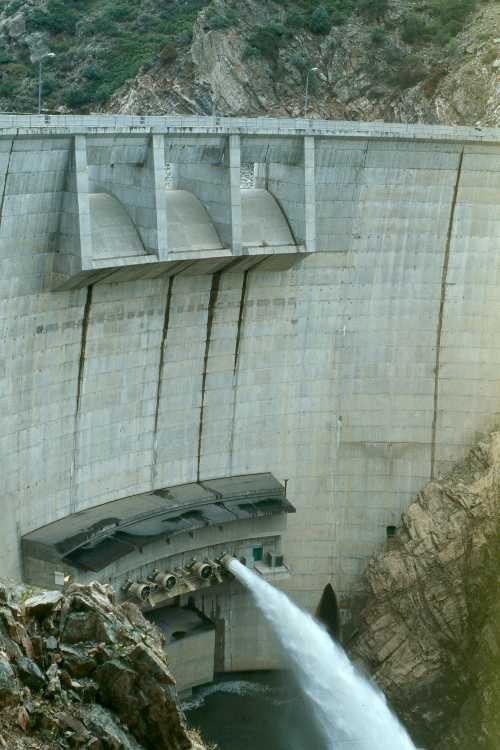
A picture named strontiaspringsdam

Here’s the release from Denver Water (Stacy Chesney):

Denver Water’s Strontia Springs Reservoir contains more than one million cubic yards of sediment — a result of forest fires and subsequent intense rains over the years. Increased sediment creates reservoir operational challenges and causes water quality issues that impact the functions of the Foothills and Marston water treatment plants. As a result, a Denver Water contractor will dredge the reservoir to remove at least 625,000 cubic yards of sediment — enough to fill the football field at Invesco to a height of more than 200 feet.

This large-scale project will require heavy machinery and equipment. To ensure the safety of those who recreate in the area, Waterton Canyon will be closed to the public for a number of months in 2010 and 2011 while the majority of the work takes place.

Waterton Canyon will be closed as follows:

* Monday, Aug. 2, 2010 until Sunday, Dec. 3, 2010
* Monday, Feb. 28, 2011 until Saturday, Dec. 31, 2011

Neither the parking lot at the canyon’s entrance nor the canyon will be accessible during the closure. Some contractor activity will precede this date but there will be flaggers to caution the public during July.

Access to The Colorado Trail (CT) from Waterton Canyon also will be closed during these times. The next closest access to CT Segment 1 is via the Indian Creek Trailhead on CO Hwy 67, 10.5 miles west of Sedalia (see http://www.ColoradoTrail.org).

“We understand that Waterton Canyon is a very popular recreation site for people of all ages, and we know some will be inconvenienced by this closure,” said Neil Sperandeo, manager of recreation for Denver Water. “When the full scope of the project was completed, it was determined it would be unsafe to leave the canyon open during construction. We hope to make the canyon even better for recreation when it reopens in 2012.”

For questions related to recreation, e-mail recreation@denverwater.org.

More Denver Water coverage here.

Brush: New stormwater fees go into effect in July

A picture named stormwateroutlet

From the Brush News-Tribune (Jesse Chaney):

Effective July 1, the Brush storm-water fee will increase by an additional three cents per month for each linear foot of property that touches a public street equipped with a curb and gutter.
The Brush City Council unanimously approved a motion on Monday to increase the rate from 13 to 16 cents per linear foot. The city will use the extra fees to help repair parts of the city’s storm-water system, said Brush Administrator Monty Torres. The system is failing in several parts of town, he said, and the downtown area is currently the city’s top priority. Torres said the downtown storm-water system replacement project is expected to cost about $1.5 million.

More stormwater coverage here.

Aspen: City Council toughens stormwater regulations

A picture named stormwateroutlet

From the Aspen Daily News (Curtis Wackerle):

The “Urban Runoff Management Plan” lays out minimum standards and recommended practices for development and redevelopment projects. The manual is part of the city’s program to remove sediments and pollutants from stormwater runoff before the runoff reaches local rivers. Sediments and pollutants are often added to runoff as it crosses pavement, rooftops and other hard surfaces…

City policy outlined in the manual operates on a sliding scale: The more impervious — impenetrable by water — surface area on a site, the more water that has to be detained on site in a vault, settling pond, rain garden or by some other method. On-site detention allows sediments and pollutants in runoff to settle before the water flows into the city’s stormwater collection system. Green space on a site — either grass, vegetation of green roofs, all of which reduce actual runoff — offsets the amount of water that has to be detained, under the new guidelines. The manual also recommends pervious or modular paving, which employs large blocks with gaps in between that allow water to infiltrate the ground.

Previous city stormwater guidelines were focused on large rain events, Barker said. The new manual shifts the focus to smaller rain events, which make up the majority of rain in Aspen, and are most troublesome from a runoff perspective since the first bit of rain collects the most pollutants. The project also loosens rules for projects that result in less than 1,000 square feet of new impervious area. Before, any project with more than 200 square feet of disturbance had to hire a professional engineer to do a grading study. That requirement has now been eliminated for projects with less than 1,000 square feet of disturbance.

More stormwater coverage here and here.

Colorado Springs City Council and Springs’ Issue 300 supporters are arguing about how to draw down the $1.4 million enterprise fund escrow

A picture named pikespeak

From The Colorado Springs Gazette (Eileen Welsome):

Rivera argues that the City Charter, not Issue 300, is the guiding document that determines where CSU’s surpluses go. And the charter states that any surplus from CSU can be appropriated to the city’s general fund. “The charter overrules Issue 300,” Rivera said in an interview Tuesday, adding that payments to the city from other enterprises, such as the airport, are being phased out as required by the new ordinance. The City Council is expected to vote on what to do with Utilities’ $1.4 million later this month.

Issue 300, sponsored by anti-tax advocate Douglas Bruce, instructed the city to phase out payments in lieu of taxes to the city’s general fund from its enterprises over an eight-year period starting in 2010. As a consequence, Utilities was instructed to hold back one-eighth, or nearly $4 million, of the estimated $31.7 million in funds scheduled to flow into the general fund in 2010 and place it in an escrow account. As of the end of April, the money in the escrow account amounted to $1.4 million, said Terri Velasquez, the city’s chief financial officer.

More stormwater coverage here.

Brush: Stormwater fees to rise?

A picture named stormwateroutlet.jpg

From the Brush News-Tribune via The Fort Morgan Times (Jesse Chaney):

The Brush City Council will consider a resolution Monday that would raise storm-water fees by an additional three cents per month for each linear foot of property that touches a public street equipped with a curb and gutter. If approved, the storm-water rate would increase from 13 to 16 cents per linear foot. The new rate would take effect July 1.

More stormwater coverage here.

Southern Delivery System: State Representative Sal Pace wants Reclamation, the U.S. Army Corps of Engineers and the Environmental Protection Agency to reevaluate project in light of Colorado Springs’ dissoulution of their stormwater enterprise

A picture named sdspreferredalternative.jpg

From The Pueblo Chieftain (Chris Woodka):

State Rep. Sal Pace, D-Pueblo, has asked the Bureau of Reclamation, Army Corps of Engineers and Environmental Protection Agency to develop supplemental environmental studies to determine the impact of SDS without the assumption that stormwater flows would be restricted to current conditions. “This had to happen before the process is closed,” Pace said, when asked about the timing of the letter.

In the letter, Pace uses a quote from Colorado Springs Mayor Lionel Rivera, which appeared in The Pueblo Chieftain in 2005 when the stormwater enterprise was created and again late last year after the stormwater enterprise was ended following interpretation of a ballot question in November: “We’re looking at a population of 900,000 in 35 years,” Rivera said. “If we’re not willing to address stormwater today, I don’t think it’s fair to ask others in the region to endorse the Southern Delivery System.”

More Southern Delivery System coverage here and here.

Longmont: City is turning dirt on Lykins Gulch stormwater project

A picture named southplatteflood.jpg

From the Longmont Times-Call (Rachel Carter):

If a 100-year flood were to hit the city, water would rush down Lykins Gulch, slam into the small ditch under Airport Road, run over the street and flood most of the land between Airport Road and Hover Street…construction finally began last month to reroute Lykins Gulch north to Golden Ponds. Crews also will build a new section of trail from Airport Road to the St. Vrain Greenway at Golden Ponds, and realign Rogers Road so it meets up with the west side of Airport Road, where the Air Care Colorado testing center is located.

More stormwater coverage here and here.

Logan County Water Water Conservancy District: Pawnee Creek Flood Control Project

A picture named pawneecreek.jpg

From the Sterling Journal Advocate (Judy Debus):

The Logan County Water Conservancy District (LCWCD) has initiated planning work for its Pawnee Creek Flood Control Project according to a press release from Shane Miller, director. The district has retained W.W. Wheeler and Associates, Inc. to provide professional engineering services for the project. The first phase of work involves development of a comprehensive hydrology model of the Pawnee Creek watershed, data collection and review, facilitation of stakeholder meetings, and preparation of a Phase I report according to Miller. The Phase 1 report should be available by the end of the year, Miller said.

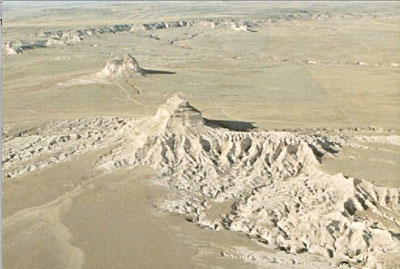
Pawnee Creek is a large, uncontrolled watershed that drains more than 645 square miles from Pawnee Buttes to its confluence with the South Platte River near Atwood. Pawnee Creek is generally dry and its channel is more than a mile wide in many places, but the creek narrows near Atwood to a more confined channel that is susceptible to major flooding. The Pawnee Creek watershed has produced extreme floods about every 30 years and the last major flood occurred in 1997.

More stormwater coverage here and here.

Boxelder Regional Stormwater Authority puts moratorium on fees for some areas upstream of regional reservoirs

A picture named stormwateroutlet.jpg

From The North Forty News (Cherry Sokoloski):

Discussions about the Boxelder Regional Stormwater Authority have been contentious over the past few months, with many property owners complaining about being included in the fee area. At a Feb. 11 meeting, the authority agreed to a moratorium on fees for properties upstream of regional reservoirs while the boundary issue is being resolved. They set Dec. 31 as the end date for the moratorium. According to county engineer Mark Peterson, fees will be waived for properties upstream of the following reservoirs: Windsor Reservoir #8, #8 Annex, Elder, North Gray, South Gray, Clark and Indian. Larimer County’s payment to the authority will be less because of the waived fees. Larry Lorentzen, who represents Wellington on the authority board, clarified that the authority will not go back later and collect the waived fees.

The commissioners and [authority manager Rex Burns] agreed that upstream reservoirs within the fee area provide considerable mitigation of stormwater flows, so properties that drain into these reservoirs should be removed from the fee area. Also, they said, properties north of County Road 70, which were not included in the original fee area, need to be looked at again. However, the board refused to recommend boundary changes until the issue can be studied further…

If the authority does decide to recommend boundary changes, Larimer County, Fort Collins and Wellington would need to approve an amendment to the intergovernmental agreement that created the authority.

More stormwater coverage here and here.

Colorado Springs stormwater strategy update

A picture named stormwateroutlet.jpg

Even with the demise of the Colorado Springs stormwater enterprise the city is still planning to implement promises they made regarding the Fountain Creek watershed. Here’s a report from Chris Woodka writing for The Pueblo Chieftain. From the article:

A project started in 2009 is looking at revising policies for construction within the watershed to develop methods that will reduce erosion and sedimentation, the risk of flooding and improve water quality and aesthetics on Fountain Creek. It would build on previous efforts by the Army Corps of Engineers and the Vision Task Force, and the results could be applied to other communities throughout the watershed. “Other communities are looking at it, and we’ve invited them into the discussion,” said Dan Bare, a senior civil engineer assigned to the task. “The goal is to establish a standard we can all live with.”

Former Pueblo Stormwater Director Dennis Maroney, now a Pueblo consultant, called the development of the standards the most important step Colorado Springs could take toward improving Fountain Creek. The first phase of the effort, gathering information, has been completed. The political turmoil has stalled the next two phases, analyzing data and writing new policies, Bare said. “The plan has remained the same, but the schedule has been delayed due to the budget uncertainties the city has been experiencing,” Bare said…

Bare is in the process of setting up work groups that will begin looking at different sets of issues in order to determine the best policies or practices for minimizing damage to Fountain Creek. Writing and implementing the manual could take up to two years, Bare said. Documents posted on the Web site identify population growth, increased impervious surfaces, more water use, more runoff, floodplain encroachment and increased pollutant loading in Colorado Springs as the main contributors to problems on Fountain Creek. The effects include damage to property and infrastructure like highway bridges or pipelines. Public health, safety and welfare issues, loss of habitat and water quality issues also are listed as effects.

More stormwater coverage here.

EPA proposes new federal standards for farm and urban runoff in Florida

A picture named effluent.jpg

From the Associated Press (Brian Skoloff) via The Denver Post:

Friday’s proposed rules mark the first time the EPA plans to force numeric limits of so-called nutrient runoff on any state. A handful of other states, at the urging of the agency, have already acted to set their own standards. The remainder have vague limits on waste and fertilizer pollution, while some are in the process of developing their own numeric limits. “It’s actually pretty good,” said David Guest, an attorney for Earthjustice, which represented environmental groups in the lawsuit, including the Sierra Club, Florida Wildlife Federation and others. While noting the standards “aren’t as stringent as we’d like,” Guest called it “a huge leap forward in getting effective controls on sewage, fertilizer and animal manure.” “This is the beginning of a very serious effort nationwide, and Florida is going to be a model,” he said.

More stormwater coverage here.

Fountain Creek: CWQCC weighing removing impairment status on two sections

A picture named fountaincreek.jpg

From The Pueblo Chieftain (Chris Woodka):

The Colorado Water Quality Control Commission will consider recommendations by the state Water Quality Control Division to remove impairment status on two sections of Fountain Creek for selenium and arsenic. The division also is recommending E. coli impairment designation only during summer months.

“We’re convinced that if the commission simply accepts the division’s proposed changes in the impairment rules – the likely path of least resistance for the commission – our collective efforts to achieve clean water in Fountain Creek will suffer a serious setback,” said Ross Vincent, of the Sangre de Cristo chapter of the Sierra Club. The Sierra Club and the Rocky Mountain Environmental Labor Coalition filed a joint pre-hearing statement Tuesday asking the commission not to remove the designations.

A similar statement opposing the changes was filed Wednesday by Pueblo District Attorney Bill Thiebaut, supporting the environmental group’s position and adding that there is no “statement of basis” for removing the stricter designations from Fountain Creek.

The impairment designation creates a higher standard for discharging treated effluent into Fountain Creek under Section 303(d) of the federal Clean Water Act. Currently, sewer plants in El Paso County are permitted to discharge nearly 100 million gallons per day into the Fountain Creek watershed – a number that could increase by 60 percent in the next 40 years.

More Fountain Creek coverage here and here.

Fountain Creek Watershed Flood Control and Greenway District director will use regional approach to managing the watershed

A picture named fountaincreekwatershed.jpg

From The Pueblo Chieftain (Chris Woodka):

“Not just locally, but in the West, people are recognizing that the watershed is an integral unit,” Barber said Tuesday. “I’ve been chasing this longer than a lot of folks realize. . . . This job is about being in the community and listening to the concerns people have.”Barber, 55, will become the director of the Fountain Creek Watershed Flood Control and Greenway District later this month. The district board that approved his hiring in December is expected to finalize contract details at its Jan. 22 meeting.

Barber is a Colorado Springs real estate and water rights broker who has plunged neck-deep into Arkansas Valley water issues in the past decade. As an agent for El Paso County water interests, he participated in discussions that identified future needs as part of the Colorado Water Conservation Board’s Statewide Water Supply Initiative. Barber was instrumental in helping to form the district as part of the Vision Task Force. He chairs the Arkansas Basin Roundtable, formed in 2005 to hash out disputes. Barber has been a staunch promoter of studying how storing water underground can offset the depletion of the Denver Basin aquifers. He was also part of the Colorado Springs task force that led to the formation of a stormwater enterprise in 2005, which was discontinued late last year after voters approved Doug Bruce’s Issue 300.

His efforts are not always regionally focused. In 2008, he unsuccessfully tried to corner more than half of the shares of the Bessemer Ditch on behalf of his El Paso County clients. Those same interests funded a study of pipelines that would move water from the Lower Arkansas Valley to El Paso County…

Back in 2006, Barber said: “If we don’t use water efficiently, we have no business asking for more water.” He still stands by that and he’ll include flood control and water quality in the list of things that need to be done on Fountain Creek as well…

…the flood of 1999 – where he remembers 9 inches of rain falling in Manitou Springs in three days – that led to the current effort to improve Fountain Creek. The ’99 spring storm led to a cooperative effort of communities along the creek and the Army Corps of Engineers developing a watershed study, completed just last year. That effort, along with the Vision Task Force and an agreement between Colorado Springs and the Lower Arkansas Valley Water Conservancy District, became the base for information the Fountain Creek district will use as it tries to improve the waterway. “The best strategy I’ve heard is to get some demonstration projects on the ground, like the confluence park in Pueblo, to show what it looks like to aggressively improve Fountain Creek,” Barber said. “A lot depends on what we do in the last two years…

He sees mutual benefit for El Paso County and its neighbors – Pueblo, Canon City, the Lower Ark Valley and even Pinon Canyon – in working together on projects of common interest in the future. “I hope we wind up a community of interest, especially as an economic base,” Barber said. “For our own quality of life, we need to see ourselves as all being in it together. More awareness of that will be more effective than having the stormwater police come around.”

More Fountain Creek watershed coverage here and here.

EPA to Hold Public Listening Sessions on Potential Stormwater Rule

A picture named stormwateroutlet.jpg

Here’s the release from the Environmental Protection Agency:

Release date: 01/05/2010

Contact Information: Enesta Jones (MEDIA ONLY), Jones.enesta@epa.gov, 202-564-7873, 202-564-4355, Jonathan Angier (PUBLIC INQUIRIES), angier.Jonathan@epa.gov, 202-564-0729

WASHINGTON – The U.S. Environmental Protection Agency (EPA) will hold five listening sessions to provide information to the public about a potential rule to strengthen stormwater regulations and to establish a comprehensive program to reduce stormwater from new development and redevelopment. These potential regulations would help to reduce stormwater discharges that can harm water quality into nearby waterways.

EPA seeks input on the following preliminary regulatory considerations: expand the area subject to federal stormwater regulations; establish specific requirements to control stormwater discharges from new development and redevelopment; develop a single set of consistent stormwater requirements for all municipal separate storm sewer systems; require those sewer systems to address stormwater discharges in areas of existing development through retrofitting the sewer system or drainage area with improved stormwater control measures; and explore specific stormwater provisions to protect sensitive areas.

The sessions will be held:

January 19, 2010, 10 a.m. to 3 p.m. at EPA Region 5 Office, 77 W. Jackson Blvd., Chicago
January 20, 2010, 10 a.m. to 3 p.m. at EPA Region 9 Office, 75 Hawthorne Street, San Francisco, Calif.
January 25, 2010, 10 a.m. to 3 p.m. at EPA Region 8 Office, 1595 Wynkoop Street, Denver, Colo. [ed. emphasis mine]
January 26, 2010, 10 a.m. to 3 p.m. at EPA Region 6 Office, 1445 Ross Avenue, Suite 1200 Dallas, Texas
January 28, 2010, 10 a.m. to 3 p.m. at EPA HQ Office, Ariel Rios Building, 1200 Pennsylvania Ave. NW, Washington, D.C.

The public can register by going to the Web site below. EPA will accept written comments on the preliminary rulemaking considerations until February 26, 2010.

More information on listening sessions, the potential rule and instructions for submitting written comments: http://www.epa.gov/npdes/stormwater/rulemaking

More stormwater coverage here.

Colorado Springs: Stormwater enterprise demise leaves $82 million worth of projects to compete for general fund dough

A picture named arkansasfountainconverge.jpg

From the Colorado Springs Independent (J. Adrian Stanley and Pam Zubeck):

Stormwater Enterprise manager Ken Sampley unfolds a large budget graph labeled “DRAFT” in big gray letters. He circles one total: $66,145,000. That was the estimated cost in 2006 of completing Stormwater’s 26 top-priority drainage projects. He circles another number: $82,790,676. The estimated cost for completing the same 26 projects in 2009 dollars.

Stormwater began work in 2007, with a backlog of more than $300 million in projects. So far, Stormwater hasn’t put much of a dent in that. “We never got to the point where we even got close to our $60 million,” Sampley says. “If we can’t get close to the $60 million, why even worry about the next couple hundred million?” On average, Stormwater collected $16 million a year in fees, and spent about $8 million annually on capital projects, leveraging the money where possible. The rest went to other needs: In 2009, over $4 million was spent on maintenance and another $1.7 million to maintain mandated federal water quality standards. The rest was sucked up by engineering, planning studies and administrative costs. Over three years, fees produced just $22.5 million for projects. Stormwater leveraged that to nearly $30 million but still finished less than a third of those top-priority projects.

One project that Stormwater won’t complete has certain consequences. The Federal Emergency Management Agency has said it will declare a northeast section as a 100-year floodplain if repairs and updates aren’t made to the Templeton Gap levee. The floodplain area contains more than 3,000 properties and 5,000 structures. With no Stormwater funds, the Templeton Gap project, which could cost up to $6 million, won’t get done, and most lenders will require property owners within the plain to buy flood insurance. While Stormwater fees cost a single family home $25.80 to $163.80 a year, flood insurance will cost many times that amount. Councilor Scott Hente has fought hard to keep his constituents from paying those big insurance premiums. After 300 passed, he wanted to keep Stormwater fees for at least two years, so Templeton Gap could be completed. But he was in the minority. And his fighting spirit on the issue was tempered when he found out a majority of the floodplain residents voted for 300. “You’re saving yourself a few bucks a year,” Hente says with astonishment, “to incur the luxury of spending $1,000 a year on flood insurance.”[…]

With no fees, the city will have to fork over money for emergency stormwater repairs. It’ll also have to pay for a federally mandated basic stormwater program costing about $1.75 million a year. If the city doesn’t pay, it could face fines of up to $27,500 per day for each water quality-degrading “incident” from the Environmental Protection Agency, plus an additional $10,000 in daily civil fines from the state. If an incident isn’t properly reported or is deliberate, the state can also levy criminal fines of up to $25,000 a day. But the death of Stormwater grieves none so much as Utilities. It loses a crucial partner in controlling rainwater runoff, which eventually makes its way to Fountain Creek — the lightning rod in the city gaining approval for its Southern Delivery System.

More stormwater coverage here.

Colorado Springs: Stormwater utility spent $1.6 million on equipment

A picture named arkansasfountainconverge.jpg

From The Colorado Springs Gazette (Daniel Chacón):

The soon-to-be-annihilated Colorado Springs Stormwater Enterprise has spent more than $1.6 million on trucks, trailers, mowers and other pieces of equipment since it was created in 2005, according to documents obtained under an open-records request…

With the looming demise of the enterprise, there have been questions about the fate of the enterprise-owned equipment. “These vehicles will be used in 2010 during the phase out of the program,” Scott said recently. “We will be doing a reduced maintenance program so we will be using the equipment required to perform the maintenance, we will also be working on the in-progress and pending (capital improvement) projects, etc. We have not yet identified what will happen with the vehicles in late 2010.”

More stormwater coverage here.

Fallout from the demise of Colorado Springs’ stormwater fund

A picture named arkansasfountainconverge.jpg

From The Colorado Springs Gazette (Daniel Chaćon):

…city officials say is abundantly clear is that without the enterprise, there is no longer a funding source to pay for improvements to the 2-mile Templeton Gap Floodway, which is actually a levee. That will force hundreds, if not thousands, of nearby property owners with federally-backed mortgages to buy flood insurance. Collectively, annual insurance premiums for those property owners could reach about $3 million, according to city government estimates. “I’ve tried my best to circumvent that and prevent that, but it looks like that’s going to happen,” City Councilman Scott Hente, whose district includes the floodway, said Tuesday after his colleagues voted 5-4 to abolish the enterprise at the end of this year. “I’m sorry for that,” Hente added…

A two-year phaseout would have allowed the enterprise to complete projects under construction and also add capacity to the floodway, which protects more than 3,000 properties and 5,000 buildings from flooding. The floodway starts just east of Union Boulevard and runs west to Monument Creek between Fillmore Street and Austin Bluffs Parkway. The added capacity is needed to gain certification from the Federal Emergency Management Agency, which sped up an effort to digitize its maps after Hurricane Katrina broke several levees in New Orleans. That effort put the Templeton Gap Floodway under scrutiny, and many properties that hadn’t been previously identified as being at risk of flooding are now. In September, the enterprise notified property owners affected by the floodway that it planned to add capacity to the levee…

[city spokeswoman Mary Scott] said no other source of money has been identified to pay for the work that had been planned for the floodway through the Stormwater Enterprise. “It’s likely that project is not going to be done,” she said. Scott also said the enterprise is still trying to figure out how to develop an automated process for refunds as well as how to collect from delinquent property owners.

More stormwater coverage here.

Colorado Springs City Council abolishes stormwater enterprise with 5-4 vote

A picture named arkansasfountainconverge.jpg

From The Colorado Springs Gazette (Daniel Chaćon):

The council had voted 5-4 to phase the enterprise out over two years after the Nov. 3 passage of ballot issue 300, but Councilman Bernie Herpin changed his mind. The city-owned agency is getting ready to mail the final batch of bills for the last quarter of 2009, and city officials are expecting property owners to pay whatever they owe. “For those who have not paid, the city will pursue collections, whether that’s through liens on property or through collections agencies,” Mayor Lionel Rivera said. “The $1.7 million that’s still owed the city, we’re not just going to wave our hands and say it’s going to go away.”

More stormwater coverage here.

Colorado Springs: Which stormwater efforts will be funded now that the enterprise fund is kaput?

A picture named fountaincreekwatershed.jpg

From The Pueblo Chieftain (Chris Woodka):

a vote on Tuesday confirmed the [Colorado Springs city] council’s position to phase out the stormwater enterprise within two years. Unless another funding mechanism is found, Colorado Springs will absorb only the minimal funding for federal requirements, maintenance, health, safety and emergencies in its general fund beginning in 2012. Colorado Springs council adopted the new policy in response to Doug Bruce’s Issue 300, which implies the voters chose to end the stormwater enterprise, without actually saying so. Bruce campaigned for the issue as an end to what he and others called a “rain tax” and celebrated by tearing up his stormwater bill on television.

Council also agreed to include a $4.24 million-$6.7 million project to upgrade the Templeton Gap levee, which protects thousands of homes, was not on the critical projects list. In all, about $9 million of work on projects from the critical list are likely to be completed under the two-year phase-out.

Council members did not come up with an alternative for funding the remainder of critical projects on the list, although some talked about developing a regional approach with other El Paso County communities or putting a stormwater question on a future municipal ballot.

At the same time, Colorado Springs is planning on spending $46.2 million on SDS in the coming year, according to its published 2010 annual operating plan. The city has issued bonds for the project.

Colorado Springs also will spend almost more than $27 million for maintenance, repair, inspection and replacement of sanitary sewer lines in the city, including $7.5 million for ultraviolet treatment at its Las Vegas Street treatment plant, $7 million for sewer line upgrades and $6 million to fortify stream crossings, according to the operating plan. The city committed to spend at least $75 million in sanitary sewer upgrades, which are costs paid by customers and have nothing to do with the stormwater enterprise.

The city is obligated to make some of the repairs to its sanitary sewer system under state compliance orders, which are also a factor in a federal lawsuit won by the Sierra Club.

More stormwater coverage here.

$1 million for restoration from Shattuck Chemical site settlement

A picture named southplattedenvermetro.jpg

From The Denver Post (Mark Jaffe):

Because the site is in the South Platte River watershed, the restoration efforts are broad. About 280 acres of wetlands on the Eastern Plains will be restored at a cost of $818,000, based on an initial $75,000 from the Shattuck settlement. Adding funds and services to the project are government agencies, private businesses and landowners, said Fish and Wildlife Service biologist Matt Filsinger. Among those participating are Ducks Unlimited, the Colorado Division of Wildlife, the Lower South Platte Water Conservancy District, the Harmony Ditch Co. and Drakeland Farms.

The Shattuck settlement also will help pay for a $235,000 restoration of Overland Pond Park. “It was felt that since Shattuck was an urban Superfund site, some of those funds should stay in Denver,” Archuleta said. The Fish and Wildlife Service will put $120,000 toward the project, and the remainder of the $235,000 will come from funds and services from community groups, such as the Greenway Foundation, and city agencies, such as Denver Parks and Recreation. “Overland Pond Park has been loved to death,” said Casey Davenhill, administrative coordinator for the nonprofit Greenway Foundation. “Those 8 acres are really heavily used.” The park, created in the early 1970s, has small habitat zones representing Colorado from the prairie to alpine forest, Davenport said. “This has made the park an important educational resource, and that’s something Fish and Wildlife wants to support,” Archuleta said. The project will include grading trails, new signs, upgrading the pond area and new plantings, according to a Wildlife Service draft restoration plan…

The draft restoration plan is open until early December for public comment and can be viewed at: www.fws.gov/mountain-prairie/nrda/Shattuck/index.html

More restoration coverage here.

Colorado Springs: City council approves dismantling of stormwater enterprise

A picture named fountaincreekwatershed.jpg

From The Pueblo Chieftain (Chris Woodka):

The phase-out [over two years] will give the city time to finish some projects already under way, allow it to repair a levee that protects thousands of homes and meet unfunded federal mandates. It will mean the city won’t be able to start several projects that are needed or to respond to citizen requests regarding stormwater. Colorado Springs also intends to fulfill its commitments on Fountain Creek related to Southern Delivery System despite ending the stormwater enterprise, and several on council voiced support for a regional solution in El Paso County that could include a vote to create a stormwater enterprise in the future. “The two-year phaseout will give us time to work on a regional solution, allow us to complete our projects and come up with a regional stormwater plan,” said Bernie Herpin, one of five council members supporting the phase-out…

The Templeton Gap Levee is the only Army Corps of Engineers levee in Colorado Springs, said stormwater director Ken Sampley. The levee, built in the late 1940s, needs between $4.24 million and $6.74 million in work to protect up to 3,000 homes and 300 businesses. If the work is not done, they would be required to obtain flood insurance.

Under the two-year phaseout, Templeton Gap will be completed, but more than 20 other projects won’t begin as scheduled. When the stormwater enterprise was created, there was a $300 million backlog in projects, with $60 million in critical needs. Sampley showed slides of bridge supports beginning to wash out and areas that were eroding because there has been only funding for piecemeal work…

In addition to Templeton Gap, there are $2.3 million of projects that have been started remaining in the pipeline, and four projects on Sand Creek totalling about $2.4 million. Sampley also recommended maintaining minimum funding for regulatory requirements, emergency operations, health and safety, which together total almost $5 million. By 2012, all those costs will be paid for from the general fund under the plan reviewed by council Monday…

The city also is prepared to meet its obligations of $125 million of spending on Fountain Creek through the financing of SDS, a $1 billion-plus water supply project that includes a pipeline from Pueblo Dam. Colorado Springs ratepayers will bear that expense. Colorado Springs also has included funds for improvements at Clear Springs Ranch south of Fountain and dredging the Fountain Creek channel in Pueblo as part of next year’s budget.

More coverage from The Colorado Springs Gazette (Daniel Chaćon):

A split Colorado Springs City Council decided Monday to phase out the enterprise over two years, allowing the city-owned business to finish projects under construction and also reconstruct a decades-old drainage channel that’s been deemed “minimally acceptable.” Council members Tom Gallagher, Darryl Glenn, Jan Martin and Randy Purvis called for an immediate end of the enterprise…

Enterprise Manager Ken Sampley said the council’s decision could hamper the enterprise’s ability to collect fees over the next two years, even from people who have been paying them. “I’d like to think that everybody paid them (in the past) because they were good citizens and wanted to pay their Stormwater Enterprise fee,” he said. “That may not be the case. I think it’s reasonable to believe that if there is no provision for certifying (delinquent accounts) to the treasurer, we will be collecting, definitely, a lower percentage.”[…]

The initiative requires an immediate end to the enterprise, said [Douglas Bruce sponsor of Issue 300 passed by Colorado Springs voters November 3], who is threatening to start a petition drive for a permanent property tax cut if the city doesn’t get rid of the enterprise right away. “I don’t make threats,” Bruce said Monday night. “I’m just advising them that there’s going to be adverse consequences if they don’t give the people what they want.”

More stormwater coverage here.

Southern Delivery System: Fountain Creek improvements still on tap despite Colorado Springs’ stormwater enterprise fund uncertainty

A picture named sdspreferredalternative.jpg

From The Pueblo Chieftain (Chris Woodka):

The stormwater enterprise, which is expected to be phased out over eight years after Colorado Springs voters passed Doug Bruce’s Issue 300 last week, was linked to the Bureau of Reclamation’s environmental impact statement. “We need to read the language carefully,” Bruce McCormick, Colorado Springs water chief, said Friday. “While the enterprise is losing funding over time, SDS is still going to be funded according to the commitments in the EIS.” If necessary, Colorado Springs would pay for those commitments through the rate structure associated with building the $1 billion-plus SDS project, McCormick said. The EIS, released earlier this year by Reclamation, says Colorado Springs is responsible for improving storm drainage in the city as it grows, so that it will not exacerbate problems associated with runoff into Fountain Creek – erosion, sedimentation and pollution…

In replies to concerns about the future of the enterprise, Reclamation responded that the actions promised by Colorado Springs are independent of the enterprise. The EIS talks about the purposes for forming the enterprise in 2005. Colorado Springs sought to address a 20-year backlog of $300 million in stormwater improvements and strengthen planning with $17 million annually in new revenues. Some of those improvements were tied to correcting conditions that led, in part, to more than 100 sanitary sewer spills between 1998 and 2005, which were cited in a federal lawsuit by the Sierra Club. Colorado Springs has promised Pueblo County it would make $75 million in improvements to fortify its sanitary sewer system, pay $50 million to the Fountain Creek Watershed Flood Control and Greenway District and make other improvements as a condition for a 1041 permit. “We plan to begin dredging in the channel through Pueblo and enhancing wetlands in 2010,” McCormick said. “Those actions have nothing to do with the stormwater enterprise. The commitments are a separate component.”

Meanwhile it looks like there will be a legal challenge to Douglas Bruces’s Issue 300, passed by Colorado Springs’ voters last week. 300 would phase out the city’s stormwater enterprise. Here’s a report from Daniel Chaćon writing for The Colorado Springs Gazette. From the article:

The confusing and ambiguous language of ballot issue 300 is subject to various legal interpretations, and unnamed citizens groups are already talking about challenging the legality of a major part of the initiative, outgoing Assistant City Manager Mike Anderson said Thursday. The ballot initiative, which voters approved last week, is apparently in conflict with the city charter, Anderson said during a candid and wide-ranging speech before the Colorado Springs Press Association…

Anderson said Issue 300 amended the city code, but not the city charter, and the city charter allows payments in lieu of taxes. The city charter, which is analogous to state or U.S. constitutions for the city, trumps the city code, which is comprised of enacted city ordinances, he said…

Anderson said the city at this point doesn’t plan to challenge the legality of Issue 300, and he wouldn’t identify the citizens groups considering the legal challenge. Anderson would only say that “there’s some talk out there.” But the city is just starting to “dig into the implications” of 300, he said.

More Southern Delivery System coverage here and here.

Colorado Springs City Council moving to dissolve stormwater enterprise fund

A picture named fountaincreekwatershed.jpg

After last week’s election Colorado Springs Mayor Rivera claimed that Issue 300 would have no effect on the city’s stormwater enterprise fund. This week he’s saying that the people have spoken and that controlling stormwater runoff should be borne by the city’s general fund. Here’s a report from Daniel Chaćon writing for The Colorado Springs Gazette. From the article:

“I’m convinced that when people were voting on it, their primary vote was to eliminate or phase out the Stormwater Enterprise,” said Mayor Lionel Rivera, who previously maintained that Issue 300 would not affect the Stormwater Enterprise. The council’s about-face followed last week’s crushing defeat on Election Day, when voters slammed the door on a proposed property tax increase while approving a measure anti-tax crusader Douglas Bruce succeeded in placing on the ballot that phases out payments to the city from city-owned enterprises. Although some city officials had questioned whether Bruce’s measure affected fees collected from residents for the Stormwater Enterprise’s drainage projects, the council Monday told the city manager to prepare a recommendation on how to do away with the enterprise and associated fee with critical projects still in the pipeline.

More stormwater coverage here.

Colorado Springs and El Paso County disagree over measures to collect from Stormwater scofflaws

A picture named pikespeak.jpg

From The Colorado Springs Gazette (Eileen Welsome):

The city wants to turn over nearly 10,000 past-due accounts to the county treasurer for collection by mid-November, but the treasurer is being cautioned against putting them on the 2010 property tax bills.

County Attorney William Louis sent a letter to County Treasurer Sandra Damron on Oct. 30, warning that the city-owned Stormwater Enterprise, which residents voted to phase out in Tuesday’s election, might not be entitled to use the county treasurer’s office to collect the fees. “Although hospitals and golf courses are operated by the private sector as well as by the public sector, there is no private sector hospital or golf course that can avail itself of this coercive power,” the letter states.

Normally, the county treasurer simply acts as a middleman, collecting the taxes and then passing them back to municipalities. But if the stormwater fees are, in fact, a fee and not a tax, the city should be barred from using “government’s most coercive powers, the tax lien collection process,” to collect payments, Louis writes.

More stormwater coverage here and here.

Colorado Springs voters approve Douglas Bruce’s Issue 300 but Mayor Rivera says it will have no effect on the operation of the city’s stormwater enterprise fund

A picture named arkansasfountainconverge.jpg

From The Colorado Springs Gazette (R. Scott Rappold):

The Douglas Bruce-sponsored ballot measure requires payments in lieu of taxes to the city to be phased out over eight years, beginning in July 2010, and the money returned to rate payers. The payments are designed to compensate the city for tax revenue it would receive if Utilities were privately owned. That amounts to more than $3 million in 2010. According to the city clerk’s analysis of the ballot measure, residential bills would drop 52 cents each month, beginning in January 2010.

More coverage from The Colorado Springs Gazette (Lance Benzel). From the article:

“Even though the language was extremely vague, I’m going to be recommending on Monday that we adopt a resolution repealing the Stormwater Enterprise and the fee (associated with it),” [Colorado Springs Councilman Darryl Glenn] said. Glenn said he plans to propose the immediate creation of a committee that would include county officials. The group would be tasked with developing a proposed regional stormwater authority to take to voters for their approval in November 2010. “That’s the way we should have done it in the first place instead of imposing a fee,” he said. But in the short-term, the council has a “responsibility to carry out the voters’ intent,” Glenn said. “One thing you can’t argue is that if you drove around the community, there were enough signs that clearly stated that this issue dealt with the stormwater tax and fee,” he said. “This council is in trouble if we, in my opinion, ignore the will of the voters on 300,” he added. “We need buy-in, and there has to be a relationship of trust with the electorate and to me, this will be a slap in the face if we don’t follow the direction that we’ve been given.”

More coverage from The Colorado Springs Gazette (Daniel Chacon). From the article:

Mayor Lionel Rivera, who said Tuesday night that issue 300 wouldn’t affect the Stormwater Enterprise, left open the possibility that it did. “There’s a question on whether or not the language the way it was spelled out in 300 really applies to the Stormwater Enterprise,” he said during a news conference. “I don’t know the answer,” he added. “We have to have a discussion with the city attorney to determine how we’re going to do an implementing ordinance to put all this into effect.”

The Douglas Bruce-sponsored ballot measure requires payments in lieu of taxes to the city to be phased out over eight years, beginning in July 2010, and the money returned to ratepayers. Bruce said it was “absurd” for city officials to say the ballot issue didn’t apply to the Stormwater Enterprise…

Meanwhile, Colorado Springs Utilities officials said they were still determining when ratepayers will see an impact from issue 300. The payments made by Utilities to the city, designed to compensate the city for tax revenue it would receive if Utilities were privately owned, amounts to more than $3 million in 2010. According to the city’s analysis of 300, residential bills would drop 52 cents each month, beginning in January 2010.

Folks in Pueblo County are looking north to see if Issue 300 will effect Colorado Springs’ commitments to Fountain Creek imposed on the city utility through the permitting process earlier this year. Colorado Springs Utilities is planning to build the Southern Delivery System pipeline through Pueblo County. Here’s a report from Chris Woodka writing for The Pueblo Chieftain. From the article:

Wednesday morning, Mayor Lionel Rivera and Councilman Scott Hente challenged Bruce’s interpretation that Issue 300 ended the stormwater enterprise. On Tuesday night, Bruce triumphantly tore up his stormwater bill for TV cameras, proclaiming the end of what he calls a “rain tax.” The stormwater enterprise was approved by Colorado Springs City Council in 2005 and implemented in 2007. It was designed to raise $17 million a year to address a $300 million backlog of storm sewer projects in the Fountain Creek watershed. In 2008, Colorado Springs voters rejected a similar attempt by Bruce to gut the stormwater fees. This year’s version did not mention the stormwater enterprise by name, but Bruce campaigned against it while promoting Issue 300.

Colorado Springs issued a statement Wednesday that made it clear there are no intentions to remove the stormwater fee: “The passage of Issue 300 created a new ordinance relating to City Enterprises. City Council will have to take action to implement any changes as a result of the new ordinance. “Unless and until that occurs, we will continue to proceed under current City Code. Any changes made to the Stormwater Enterprise would require future action by City Council. “City Council has publicly stated that Issue 300 will not impact the stormwater enterprise so we do not anticipate any changes at this time to our operations.”[…]

In Pueblo, those who fought to gain concessions from Colorado Springs believe the stormwater enterprise is needed. “We believe the interpretation that storm sewers were not included in the ballot language is correct,” said Pueblo County Commissioner Jeff Chostner, who is also a member of the Fountain Creek Watershed Flood Control and Greenway District. “I think the people of Colorado Springs see good things happening on Fountain Creek and realize that on an important issue like this, you need to establish trust,” Chostner. Regardless of what happens to the stormwater enterprise, Colorado Springs is still obligated to meet the $125 million in payments under Pueblo County conditions, Chostner said. “I don’t think that voting down the stormwater enterprise would affect the SDS requirements,” Chostner said. “Then, the question for them internally would be how they fund it.”[…]

Ross Vincent, of the Sierra Club, said Colorado Springs still has an obligation to take care of Fountain Creek regardless of what happens as a result of Tuesday’s vote. The Sierra Club successfully sued Colorado Springs in 2005 over violation of the federal Clean Water Act. “It’s disconcerting to say the least,” Vincent said. “Clearly, the Springs has got to capture and manage its stormwater effectively, and the residents and taxpayers of Colorado Springs will have to find a way to pay for it. “If not the current stormwater enterprise, then what, and paid for by whom? They need answers – quickly – and so do we.”

More Fountain Creek watershed coverage here and here.

Energy policy — oil and gas: Likelihood of increased use of deep injection wells for disposal of produced water forecasted

A picture named deepinjectionwell.jpg

From the Glenwood Springs Post Independent (John Colson):

“We’ve talked in the past about regulating oil and gas activity,” confirmed Garfield County Commissioner Trési Houpt, although the talk has focused on regulations for surface land-use considerations only. “We haven’t talked about subsurface regulating,” Houpt said, adding that she is unsure if it is feasible, given overriding state and federal laws, or advisable.

[Denise Onyskiw, of the Colorado Oil and Gas Conservation Commission] told the commissioners that both types of wells regulated by her program involve the injection of water and other fluids into well bores. The “recovery” wells, she said, are for the purpose of getting at oil or gas deposits that could not be brought up to the surface by normal methods. The “disposal” wells, she explained, are used because “[the gas drilling companies] have all this water and don’t have anywhere to put it,” referring to the thousands of gallons of water used in the process of drilling the wells and extracting the oil or gas.

Onyskiw told the commissioners that both types of wells regulated by her program involve the injection of water and other fluids into well bores. The “recovery” wells, she said, are for the purpose of getting at oil or gas deposits that could not be brought up to the surface by normal methods. The “disposal” wells, she explained, are used because “[the gas drilling companies] have all this water and don’t have anywhere to put it,” referring to the thousands of gallons of water used in the process of drilling the wells and extracting the oil or gas. This water carries varying levels of certain chemicals, known as “hydrocarbons,” that are either used in the drilling process or occur naturally. The fluids are injected into the disposal wells, according to Onyskiw, and the substances permitted in the wells include produced water, drilling fluids, “spent well-treatment fluids” and others. Not permitted, she said, are “unused frac’ing fluids, lubricating wastes and sanitary wastes,” among others…

Use of a well for disposal purposes, she said, requires notification of adjacent landowners within a quarter-mile of the well, and the provision of documents to the COGCC describing the existing water quality of the aquifers that might be affected, among other kinds of information. Onyskiw said the state permits this kind of disposal only when it affects aquifers that produce hydrocarbons on their own; are too deep to be used economically for drinking water, or too contaminated already to be used for drinking water. The disposal wells, she said, are lined to prevent contamination of aquifers through which the bore passes, and regulations require that the pressure used to inject the waste water be well below that used in hydraulic fracturing of actual gas wells, so that the subterranean rock around the well is not broken up.

After the presentation, Onyskiw told a reporter that the likelihood of greater use of disposal wells is related to changing regulations governing the use of pits, lined with impermeable membranes, to hold a variety of waste fluids during the drilling process. The COGCC now requires that, once the fluids are drained and disposed of, the liners themselves must be sent to a receiving site for disposal. Garfield County’s landfill will no longer accept the liners due to their bulky and potentially toxic nature, and the COGCC reportedly has considered returning to a former rule that allowed the companies to simply bury the liner in place.

More coverage from the Grand Junction Sentinel (Dennis Webb):

Traffic is likely to be the biggest issue Garfield County officials will face as they deal with an expected increase in the use of injection wells to dispose of fluids associated with natural gas development, a state official said Monday.

Meanwhile, the Colorado Oil and Gas Conservation Commission is stepping up regulation of stormwater runoff from drilling pads, according to a report from Dennis Webb writing for the Grand Junction Sentinel. From the article:

The state also is seeking information such as schedules for stormwater-management inspections and maintenance on the pads, and the number of associated pits and whether they have fencing to keep out wildlife. State regulators inspect sites once wells are drilled, and they can ensure requirements such as those for any interim reclamation are met. But companies aren’t required to notify the state when pads have been constructed. Oil and gas officials are concerned about pads that may have been built before companies realized they would be cutting back on drilling, leaving state inspectors unaware of them because drilling never began. The issue is particularly pertinent for Western Slope operations because climate and topographical factors often cause companies to build pads months in advance of planned drilling, which because of the slowdown may not have ended up occurring on some pads. “What we want to do is get the location of these pads, work with the operators, see where we stand on interim reclamation,” said Margaret Ash, the agency’s field inspection manager. Oil and Gas Commission Director Dave Neslin said the agency is particularly concerned about runoff problems that could occur on inactive pads during the snowy winter. Ash said inspectors want to make sure the sites are stabilized from an erosion control standpoint and are properly secured if no activities are taking place on them.

Michael DeBerry, manager of Chevron’s operations near De Beque, said its temporary suspension of drilling has caused it to go ahead with interim reclamation efforts such as stormwater control and weed management on some pipeline rights of way and other oil and gas development sites. “It’s purely a matter of, with the slowdown, it’s appropriate to take these steps. It’s just a matter of environmental stewardship,” he said.

More oil and gas coverage here.

Aspen: The Aspen Institute was surprised by $140,000 stormwater bill and is considering building its own stormwater system

A picture named detentionpond.jpg

From the Aspen Daily News:

The Institute, which postponed a scheduled hearing before Aspen City Council this week to work on its plan, has to bring something to the city before a Nov. 23 meeting. The Institute was caught off guard by the size of the fee, which assesses $2.88 per square foot of impervious surface area, which includes paved areas and most roofs. However, the fee isn’t just for new construction. If an addition larger than 500 square feet is built onto an existing building, then the fee applied to all the impervious area associated with the building. About 55 percent of the tab was for a project adding about 1,000 square feet of impervious area (600 square feet of built space) to the Paepcke Auditorium building. The rest is for a project installing a rock and dirt ground covering for the 21,000-square-foot Greenwald Pavilion tent. “Very few people realize the magnitude” of the stormwater fee, Institute planning consultant Jim Curtis said.

More stormwater coverage here.

Fountain Creek: 25 apply for director of the Fountain Creek Watershed Flood Control and Greenway District

A picture named fountaincreekwatershed.jpg

From The Pueblo Chieftain (Chris Woodka):

The Fountain Creek Watershed Flood Control and Greenway District board took its first look at 25 applications for the position Friday, and assurances that $100,000 is now in place to fund administrative expenses of the district next year. The board could decide on an interim director at its Dec. 4 meeting, if the executive committee – made up of the board’s officers – is able to pare the list to a handful of finalists in early November. In any event, finalists will be interviewed. The district also will set its budget at the meeting…

Those who have applied for the interim director’s job are, in alphabetical order:

Steve Anselmo, president of a Pueblo engineering company.
Gary Barber, manager of El Paso County Regional Water Authority and a water rights broker. Barber is chairman of the Arkansas Basin Roundtable and played a key role in drafting legislation that set up the district as a member of the Vision Task Force.
Janna Blanter, a Colorado Springs financial consultant.
Mark Carmel, former Pueblo County administrator.
Heather Gunn, a Fountain media consultant.
Scott Hahn, of Salida, who most recently served as city manager of Cordova, Alaska.
Thomas Karwaki, director of economic development for the Port Gamble S’Klallam Tribe near Seattle, Wash.
Ricky Kidd, engineer-administrator of the Pueblo Conservancy District and a private engineer.
Andy Long, owner Roberts Mortgage, Colorado Springs.
Kevin McCarthy, a Pueblo businessman and member of the Pueblo Board of Water Works.
James McGrady, general manager of the Castle Pines North Metro District
Dennis Maroney, Pueblo stormwater director and a key player on the Vision Task Force. Maroney serves on the district’s technical advisory committee.
Jim Munch, former Pueblo city planning director and most recently director of development for Pueblo Springs Ranch, a position he left in April. He now is a private consultant.
Randy Newman, a government contractor at Guantanamo Bay, moving back to Colorado Springs.
Allen Nichols, most recently marketing director for Cleveland Vocational Industries, Shelby, N.C.
John Plutt, a Colorado Springs businessman.
Ingrid Richter, director of development for InCompass Development, Colorado Springs.
Roberta Ringstrom, environmental scientist, Colorado Springs.
Alaina Ruscovick, a file clerk for a Colorado Springs law firm.
Rodney Scott, an Air Force supply specialist and administrative assistant in Colorado Springs.
Steven Shane, most recently a technology director for an electronic manufacturing firm, now living in Colorado Springs.
Bob Simmons, most recently, a lieutenant in the Aurora Fire Department.
Richard Stettler, Colorado Springs, University of the Rockies vice president and chief of staff.
Donald TeStrake, of Centennial, most recently site manager for an electronics consultant.
Eve Triffo, a lawyer and experienced grant writer living in Canon City.

More coverage from Chris Woodka writing for The Pueblo Chieftain. From the article:

A picture named sdspreferredalternative.jpg

The Southern Delivery System pipeline will cross Fountain Creek and discharge into the creek from a new reservoir on Williams Creek, the Fountain Creek Watershed Flood Control and Greenway District learned Friday. Those two actions are in the direct jurisdiction of the district. The district also will have an advisory role to the El Paso County commissioners in the permit process.

“We would like to make a presentation with a summary of the project, saying ‘here are the impacts, and here are the recommendations for mitigation,’ ” Colorado Springs Utilities Fountain Creek specialist Carol Baker told the district’s board Friday. The board agreed to hear the presentation in January, after its technical advisory committee and citizens advisory group have had a chance to review the project and make recommendations. The district, by state law, has primary land-use authority in the floodplain of Fountain Creek, so will be able to tie its own conditions to the project…

The board also agreed Friday to adopt the March 2009 strategic plan of the Vision Task Force, the January 2009 Army Corps of Engineers management plan and appropriate local zoning and land use regulations in reviewing technical merits of projects.

Meanwhile, Teller County hopes to weigh in on Fountain Creek issues through the Fountain Creek Watershed Flood Control and Greenway District. Here’s a report from Chris Woodka writing for The Pueblo Chieftian. From the article:

The Teller-Park Conservation District has asked the Fountain Creek Watershed Flood Control and Greenway District to include projects for flood impacts, erosion and water quality on Upper Fountain Creek, which extends about 12 miles into Teller County. “Property owners have incurred property damage and livestock (loss) due to flooding in this area, and several horse properties are located right within the floodplain of (Teller and El Paso) counties,” Vern Vinson, conservation district president, wrote in a letter to the Fountain Creek board. Woodland Park is trying to obtain a floodplain easement through the Natural Resources Conservation Service as well, and Vinson indicated there would be a better chance if the conservation district had a cooperative agreement with the Fountain Creek district…

When it came time to form the district, only Pueblo and El Paso counties were included in the legislation, because they were the primary areas causing an impact or affected by changes on Fountain Creek. The district board indicated it would be able to make a place for Teller County on its technical advisory committee and citizens advisory group, but that the membership of the Fountain Creek board was determined by statute. “We’re pleased to see you folks here,” Pueblo County Commissioner Jeff Chostner, a member of the Fountain Creek board, told representatives of the conservation district. “We do not want to leave the impression that Teller County was left out.”

Finally, the new district is using a $25,000 CWCB loan to evaluate how stormwater relates to land-use policies in the Fountain Creek watershed. Here’s a report from Chris Woodka writing for The Pueblo Chieftain. From the article:

The Fountain Creek Watershed Flood Control and Greenway District board voted unanimously to oversee the grant from the Colorado Water Conservation Board. The grant aims at a process that has been envisioned for several years to develop uniform stormwater policies throughout the region…

“This project will implement many of the recommendations contained in the Fountain Creek Watershed Strategic Plan,” [Rich Muzzy, of the Pikes Peak Area Council of Governments] said. The strategic plan, along with the Corps study, will be used as policy guidelines until the district can develop its own. The district also will use local land-use recommendations as a guide…

The CWCB-funded project would synthesize existing information and develop a policy evaluation regarding how “non-point sources” – basically any discharge that is not covered by a state permit – are treated. The results would be reviewed by the district’s technical advisory committee and citizens advisory group. Then, workshops would held to determine how to implement strategies, and finally regional groups would be formed to put the information to practical use.

More Fountain Creek coverage here and here.