Telluride water system update: Raw water pipeline construction has started

pipeline.jpg

From The Telluride Watch (Gus Jarvis):

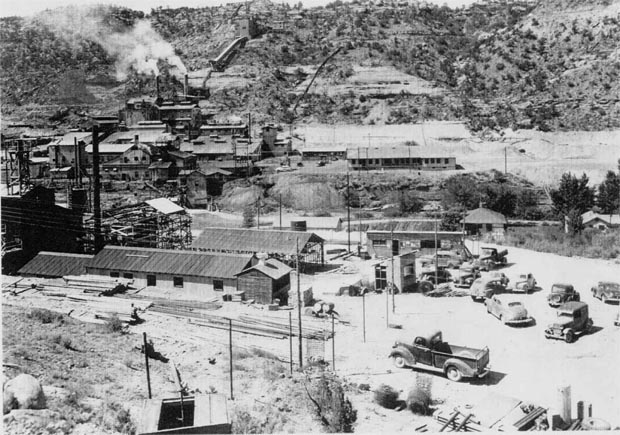
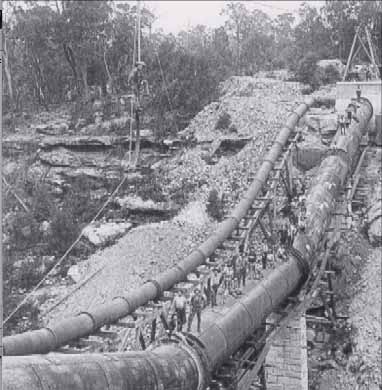
Telluride Town Attorney Kevin Geiger was happy to report last week that work on the raw water pipeline near the Bridal Veil Hydroelectric Power Plant has commenced, and once completed it will be the final piece of pipeline infrastructure needed to transport fresh water from Blue Lake, above Bridal Veil Falls, down to the two-acre site below the falls where the Pandora Water Treatment Facility will be located.

Crews will install a new horizontal water pipeline along with new trestles about 250 feet away from the Bridal Veil plant and then install vertical pipe that will transport the water to the bottom of a cliff. At that point, the line will be connected to a raw water pipeline that was installed last summer, just below Black Bear Pass Road, that runs to the water treatment facility site.

While the water pipeline infrastructure inches toward completion, Geiger said construction of the actual water treatment plant will start soon, as well.

“Most of the infrastructure is in from Blue Lake to the power house,” Geiger said. “A little segment, which will be difficult and challenging, needs to be completed and then actual construction of the water treatment plant needs to be completed. We think we will be breaking ground on that later this summer or fall.”

More infrastructure coverage here.

The San Miguel Power Association inks deal to buy power generated by the drop at Bridal Vail falls #CORiver

bridalveilfallstelluride.jpg

From The Telluride Watch:

As of May 1, SMPA will buy the hydroelectric energy produced at the Smuggler-Union Hydroelectric Power Plant previously purchased by Colorado’s investor-owned Xcel Energy.

The 500-kilowatt plant will generate approximately 2,000 megawatt hours a year – enough electricity to power about 2,000 average American homes, according to SMPA.

“We’re very excited to bring this power back to our local members,” said SMPA General Manager Kevin Ritter. “Telluride has a rich hydro-electric tradition, but up until now we weren’t able to keep that power local.”

The Bridal Veil Hydro Plant is one of the nation’s oldest hydroelectric facilities. It was constructed in the late 1800s to supply power to a Smuggler-Union Mine. It sits atop at 400-foot cliff overlooking Telluride. The water source for the power plant originates at Blue Lakes and eventually tumbles over the cliff as Bridal Veil Falls.

More hydroelectric coverage here and here.

San Juan Mountains: Acid rock drainage predated mining activity by millennia, mining made it worse

acidminedrainageuniversityofcolorado.jpg

From The Telluride Watch (Peter Shelton):

The report, titled “Natural Acid Rock Drainage Associated with Hydrothermally Altered Terrane in Colorado,” was recently given an award by the Geological Society of America as the best environmental publication of 2011. The report identifies a number of high-country streams in Colorado, including Red Mountain Creek, where surface water is acidic and has high concentrations of metals upstream of historic mining.

“Of course, the mining made it much, much worse,” commented Don Paulson, a former chemistry professor who is now curator of the Ouray County Historical Museum. Paulson has followed efforts to identify sources of stream pollution and the remedial measures undertaken to improve water quality in the Uncompahgre River and its tributaries.

There was a big push to clean up the water affected by mine waste (and the role it plays in the inability of high country waterways to support aquatic life) in the 1980s. At that time the Colorado Department of Health (now Colorado Department of Public Health and Environment) first sued under the Superfund Act, then negotiated with Idarado Mining and its parent company, Newmont Mining, substantial cleanups on both the Telluride and Ouray sides of the mountain. The Telluride side saw improvements to the water quality of the Upper San Miguel River. But the acid pH and the levels of zinc and other minerals in Red Mountain Creek has not changed significantly despite Idarado’s remediation in the area of the Treasury Tunnel.

More water pollution coverage here.

San Miguel River: Tri-State and Montrose County approve water deal

sanmiguelriver1109.jpg

From the Montrose Dail Press (Katharhynn Heidelberg):

Monday, commissioners inked an agreement with Tri-State Generation and Transmission Association. The agreement calls for cooperation “in order to further common objectives in appropriating and developing water rights and water resources.” Tri-State withdrew its opposition to the county’s filing on in-stream flow rights on 17 miles of the river. In exchange, the county agreed to provide water to Tri-State, pending need and availability, at a rate to be set by the county. The county moved last year to file its in-stream flow application in advance of the Colorado Water Conservation Board’s application. County officials cite a need to secure water rights on the West End for development and growth.

More San Miguel River watershed coverage here and here.

San Miguel River: Montrose County water rights filing denied as speculative

manhattanproject1944uravan.jpg

From the Telluride Watch (Peter Shelton):

District Court Judge J. Steven Patrick issued a summary judgment in favor of plaintiffs/opposers Sheep Mountain Alliance in a case involving water rights on the Johnson Ditch. The county applied for the rights in 2010, it stated, to support industrial and residential growth anticipated to accompany the proposed Piñon Ridge uranium mill. Sheep Mountain’s attorney’s argued that Montrose County’s uses for the water were speculative, and the judge agreed…

In the just-dismissed case, the county had filed on water belonging to the Uravan Water Trust, rights that were held as part of the “decommissioning of milling activities at the [defunct] Uravan mill.” According to court documents, “Upon termination of the Trust, the water rights will be conveyed to the Colorado Water Conservation Board (CWCB).” Montrose County’s filings on the San Miguel River were made, in part, to beat an instream water rights filing by the CWCB to protect habitat and recreational uses on the Lower San Miguel.

Opposers to the Johnson Ditch filing claimed the “applicant must demonstrate . . . that its intent to appropriate is not based upon speculative sale or transfer . . .” And Judge Patrick concluded Monday that Montrose County failed to establish standing to seek the water right and that “the Applicants’ intent in the Johnson Ditch water rights is too speculative as a matter of law to satisfy the ‘can and will’ test.”

From the Montrose Daily Press (Katharhynn Heidelberg):

Montrose County did not establish the standing necessary to secure water rights on the Johnson Ditch, a judge ruled Tuesday, dismissing its 2010 application for those rights…“I think it’s great news,” SMA attorney Jenny Russell said. “I think it supports our claim that Montrose County’s applications are speculative.”

More San Miguel watershed coverage here and here.

Norwood and Montrose County are closing in on an IGA to develop a 50 year water supply

sanmiguelriver1109.jpg

From The Norwood Post (Ellen Metrick):

In other town business, the Town of Norwood Board of Trustees, in a joint meeting with the Norwood Water Commission (NWC) on May 1, agreed to support the NWC in entering an inter-governmental agreement (IGA) with Montrose County. The motion passed unanimously with four of the five trustees present. The Water Commission, also with a unanimous vote, also with four of its five members present, to enter into the IGA with Montrose County “to enable both parties to work together to secure a 50-year water supply plan,” according to the meeting minutes.

For more town information, agendas, town calendar, and other documents, visit http://www.norwoodtown.com, or stop by Town Hall on Naturita Street.

More San Miguel River watershed coverage here.

San Miguel River: New storage on the river is a long way off

sanmiguelriver1109.jpg

From the Montrose Daiy Press (Katharhynn Heidelberg):

In support of water rights it has filed against an instream flow, the county earlier this week released expert reports prepared by Deere & Ault Consultants Inc. and related documents from GEI Consultants and Economic & Planning Systems. Montrose County wants to secure water rights to meet future anticipated needs in the West End. It has identified six possible sites where reservoirs could be built to capture the water. But securing the rights — a bid that is contested by Telluride-based Sheep Mountain Alliance and other objectors — would be only part of the battle.

More San Miguel River watershed coverage here and here.

Energy Fuels Corp announces a merger with Denison Mines Corp: Will they build the proposed Piñon Ridge Mill now?

pinonridgesite.jpg

From The Durango Herald (Joe Hanel):

The merger with Denison Mines Corp. also gives Energy Fuels an operating uranium mill in Utah and raises the prospect that it might not build the Montrose County mill. Denver-based Energy Fuels wants to build the Piñon Ridge uranium mill in the Paradox Valley, outside the town of Naturita. It would be the first new uranium mill in the United States in 30 years.

Colorado’s health department approved Energy Fuels’ permit to build the Piñon Ridge mill, but opponents have sued to stop it. The company has spent $11 million on getting the mill permitted and is committed to securing approval to build it, Energy Fuels CEO Steve Antony said on a Tuesday conference call. But whether Piñon Ridge actually gets built is another question altogether. “We intend to complete the defense of the license, and at that time, depending on market conditions, any kind of decisions to go forward with actual construction will most likely be market-driven and based on market opportunity,” Antony said…

Denison runs the country’s only operating uranium mill, the White Mesa mill near Blanding, Utah. The merger gives Energy Fuels access to a mill right away, instead of waiting for the regulatory and legal process to be settled with Piñon Ridge, Moore said. Denison milled only ore from its own mines at the White Mesa mill, so Energy Fuels did not have a place to process uranium from the mines it owns before the merger…

Energy Fuels plans to acquire Denison in a stock deal worth about $107 million based on Monday’s share price. The deal is set to close June 30, Moore said. Denison shareholders, led by Korea Electric Power Corp., will own about two-thirds of Energy Fuels stock once the deal is completed. Denison lost $71 million last year as the uranium market plunged after the power plant meltdown in Fukushima, Japan…

Earlier this month, Energy Fuels completed its merger with Titan Uranium, which nearly tripled the Denver company’s uranium reserves. The purchase of Titan gave Energy Fuels the “critical mass” it needed to acquire Denison, Moore said.

More coverage from Katie Klingsporn writing for The Telluride Daily Planet. From the article:

The merger would mean that Energy Fuels would acquire the White Mesa Mill in Blanding, Utah — the only conventional uranium mill currently operating in the U.S. — as well as four working uranium mines in the area. The working mines include the Beaver Shaft and Pandora mines near La Sal, Utah, as well as the Daneros Mill west of Blanding and a mill in northern Arizona. Denison’s assets also include 11 mines in the Colorado Plateau region that are not currently producing uranium, according to Energy Fuels. Denison Mines Corp. is a uranium and vanadium producer with projects in the U.S., Mongolia, Canada and Zambia…

“This transaction is transformational for Energy Fuels and reshapes the landscape of the uranium sector within the U.S.,” [Steve Antony, President and CEO of Energy Fuels] said, adding that the move will combine the asset of the only operating uranium mill in the U.S., White Mesa, with a significant resource base that can feed it. “The result is an unmatched production growth profile and the opportunity for both Energy Fuels and Denison shareholders to benefit from the clear operational synergies that result from this transaction,” he said. “I look forward to working with Denison’s U.S. team to maximize the benefits of this important combination.”[…]

Moore said the transaction is largely unrelated to the proposed Piñon Ridge Mill, and said Energy Fuels will continue to defend the licensing process in court and pursue the project…

Moore added that the deal will allow Energy Fuels to evaluate opening two of its mines, the Energy Queen and Whirlwind, in order to accelerate the economic development Energy Fuels wants to get started in the region. According to Denison Mines’ website, the White Mesa Mill, which is located six miles south of Blanding, is licensed to process of average of 2,000 tons of ore per day. In full operation, the mill employs approximately 150 people…

Energy Fuels also recently acquired Titan Uranium Inc., which includes the Sheep Mountain Project in the Crooks Gap District of Wyoming. Energy Fuels announced an updated Preliminary Feasibility Study for Sheep Mountain on March 1.

More nuclear coverage here and here.

San Miguel River: 48 feet of the historic hanging flume has been restored

sanmiguelhangingflumeaerialhangingflumeorg.jpg

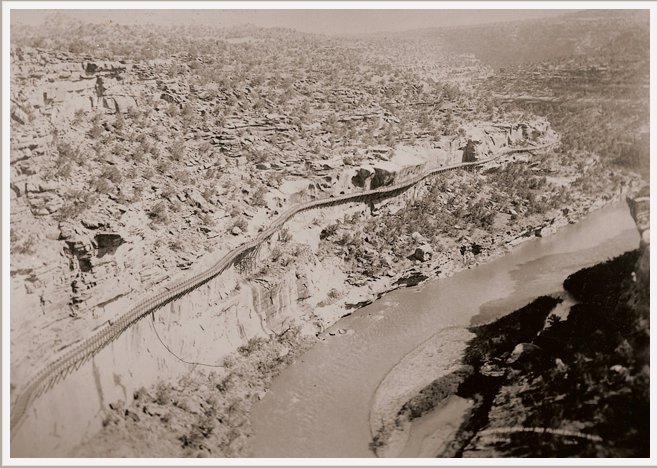
Click on the thumbnail graphic to the right for an aerial shot of the San Miguel River canyon. The hanging flume, before the restoration, is along the cliff wall in the middle of the photo. Here’s a report from Dann Cianca writing for KJCT8.com. Click through for his video report with shots of the reconstruction. Here’s an excerpt:

“It’s a work of art, it really is,” said Kent Diebolt, team leader from Vertical Access, a company working to reconstruct part of the flume.

The Hanging Flume was built between 1889-1891 to assist in gold mining operations. Located in the canyon carved by the San Miguel River just before it meets the Dolores River, the flume was a canal of sorts to transfer water to the gold mining operations. The miners used the the water, assisted by gravity to separate gold from other minerals. The waterway stretched for ten miles along the San Miguel River and existed in part as a ditch but also as a hanging wooden trough, known as a flume. While the miners found gold, after a few years of mining, it was realized that the operation was not economical. Eventually, the flume was no longer being used and its pieces were scavenged.

“The flume was built with about 1.8 million board feet of timber and people would walk through the flume box and dismantle the side boards and the floor boards and that ended up in some of the communities around this area,” said project manager Ron Anthony.

For years afterward, the flume sat untouched, slowly being weathered by the environment until people realized that it should be preserved. Since then, groups have come together to discover the history of the flume and protect it. Thanks to private donations by the JM Kaplan Fund, the Hendricks Foundation and more along with the support of the BLM and Western Colorado Interpretive Association, part of the original flume is being reconstructed.

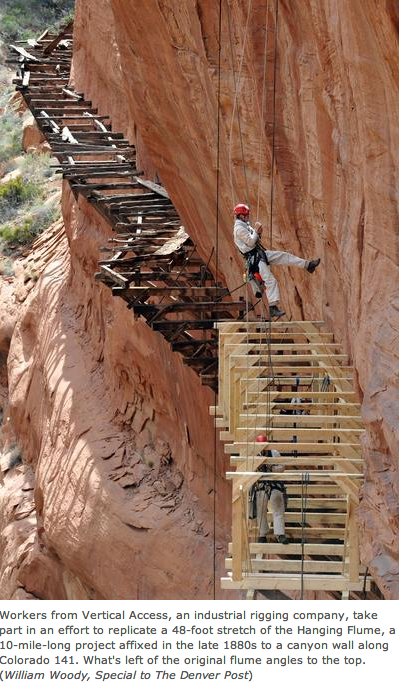
“This effort on this project is to reconstruct a segment about forty eight feet long that has the flume box, (the floor boards and side boards) that will allow people to see from below what was here when the flume was operational,” Anthony said.

Builders are using the same type of timber to reconstruct the flume as well as some of the original methods. But it takes a special type of worker to take part in the project. The flume is suspended half-way up a two hundred foot cliff! Builders have to repel into work, not to mention the effort it takes to make sure building supplies can get to where they need to be.

Click here for a photo gallery from HangingFlume.org.

hangingflumerestoration042012denverpost.jpg

More coverage from The Denver Post (Nancy Lofholm):

Those who keep returning to measure, survey, photograph and examine the mysterious structure known as the Hanging Flume call it “flume fever.” The afflicted wake in the middle of the night to puzzle over how enterprising but misguided gold seekers pinned a 10-mile-long wooden water chute to a sheer cliff to create a hydraulic gold separator.

They spend years in faraway city offices calculating angles and load factors and building mini models.
Finally, on this blustery week, about a dozen of them — engineers, scientists, archaeologists, industrial riggers, carpenters and historians — gathered at a cliff edge that locals like to say is “50 miles from nowhere” to remake history.

“The fascination with this thing is beyond belief. It’s a window into the way people thought in those days,” said Bureau of Land Management archaeologist Glade Hadden.

More San Miguel watershed coverage here and here.

Southwest Basin Roundtable non-consumptive needs workshop April 11

coloradowater2012

From email from the Colorado Watershed Assembly:

There will be an Non-Consumptive Needs Workshop next Wednesday, April 11th from 11:30-2:30 at the Dolores Water Conservation District offices in Cortez. This workshop is hosted by the Non-Consumptive Needs Subcommittee of the Southwest Basins Roundtable and the State.

The full Roundtable meeting is at 3pm.

Please RSVP to Wendy McDermott (wendy@sanjuancitizens.org) for the workshop by COB this Friday. Lunch is provided by the CWCB!

More IBCC — basin roundtables coverage here.

Durango: The Southwestern Water Conservation District’s 30th annual water seminar April 6

durango.jpg

From the Southwestern Colorado Water Conservation District (Jane Maxson) via the Pagosa Sun:

The Southwestern Water Conservation District will hold its 30th annual Water Seminar on Friday, April 6, at the Doubletree Hotel, 501 Camino del Rio, Durango.

This year’s theme is “2012“ — Water Through the Looking Glass,” and we have a lineup of notable speakers who will address water history in Colorado and water issues in the West. Invited speakers include a political analyst, the state’s climatologist and a water policy consultant, among others.

Registration is $30 in advance and $32 at the door, per person. This fee includes morning and afternoon snacks and a buffet lunch.

Registration on April 6 begins at 8 a.m. The seminar will conclude approximately 4:30 p.m.

Registration forms and a draft agenda can be found at our website, http://www.swwcd.org/.

San Miguel River: Montrose County files for diversion rights for the nascent uranium boom ahead of Colorado in-stream flow program

sanmiguelriver1109

From The Telluride Daily Planet (Benjamin Preston):

water supply along certain parts of the San Miguel River isn’t guaranteed during certain parts of the year. That’s why the Colorado Water Conservation Board began moving in 2010 to preserve in-stream river flows by filing water rights claims with the 7th Judicial district Court. Montrose County wasted no time filing water rights claims along the San Miguel River — before CWCB filed its claims — aimed at securing water to supply a uranium boom its officials see coming on the county’s West End.

The proposed water development project — for which Montrose County has already had preliminary engineering and analysis done — calls for 6,400 acre-feet of water per year to supply West End uranium milling and its associated economic growth.

More significant, perhaps, is that the water would be stored in a number of new reservoirs — one of the larger ones to be sited in San Miguel County, in a canyon near Wright’s Mesa once slated for the development of the Bureau of Reclamation’s Marie Scott dam — holding more than 25,000 acre-feet of water, according to court water rights application documents….

Nearly 20 different entities — including San Miguel County, the Town of Telluride, Sheep Mountain Alliance, several ranchers, Discovery Channel and Gateway Canyons Resort owner John Hendricks and even the state engineer — have formally objected to Montrose County’s filings, contending that its uranium development projection is speculative, and therefore in violation of state water laws.

More nuclear coverage here and here.

American Strategic Minerals Corp. hopes to get the stateside uranium industry moving

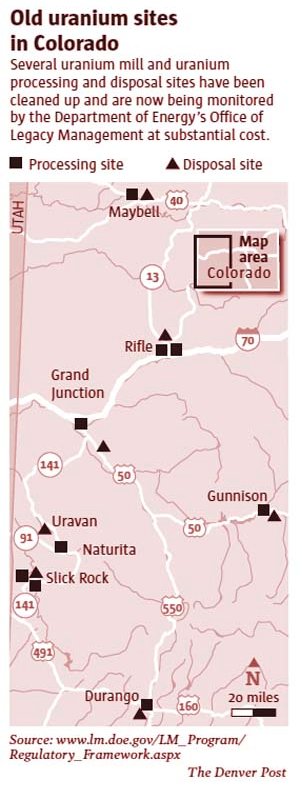
olduraniumsitesincolorado.jpg

From the Montrose Daily Press (Katharhynn Heidelberg):

Nucla-based American Strategic Minerals Corp. hopes to soon operate eight mines in the Uravan Mineral Belt and eastern Utah. Two of the mines are located in western Montrose County, where Energy Fuels has been fighting to build a uranium and vanadium mill.

AMICOR generated more than $5.3 million in startup costs from gross proceeds of its common stock by selling more than 10.6 million shares at 50 cents per share. The company also has an option agreement with Sagebrush Gold Ltd. for more uranium-producing assets. Sagebrush has properties in California, Wyoming, Arizona and North Dakota and received AMICOR shares in exchange for the uranium assets.

Historic drilling data from the eight mine sites here and in Utah leave Glasier hopeful he can help rebuild the uranium industry in the U.S.

More nuclear coverage here and here.

San Miguel River: Nathaniel P. Turner’s hanging flume on the canyon wall is slowly being stabilized and preserved

sanmiguelriver.jpg

hangingflumerepairtelluridewatchsanmiguel.jpg

Click on the thumbnail graphics to the right for photos of the canyon wall and the flume.

Here’s the link to HangingFlume.org for the history. Here’s an excerpt:

The Flume was constructed using earthen and wooden canals, wooden bents and a wooden box that were secured together by iron rods and fasteners. Without photographs, engineered drawings or written accounts of the Flume’s construction, experts can only speculate on how it was built. In 2004, a group of scientists set out to unravel a complex and fascinating story with dimensions that went far beyond ordinary technical questions. It is estimated that 25 men worked on the flume and used local materials. The iron rods were custom shaped on-site by hand. The wood for the beams and trestles was logged from nearby Pine Flats in Utah and Carpenter Ridge in Colorado.

To reach the water pressure necessary to adequately mine the placer deposits, the Hanging Flume had to achieve a .17% grade – that’s only a 90 foot drop over the near 10 mile long Flume. Without today’s sophisticated equipment, we can only speculate that they used triangulation to stay on track. Many mysteries remain, and investigation continues into the wonder that is the Hanging Flume.

Here’s a report about a January 24 slideshow and lecture about the flume, from the Telluride Watch. From the article:

The Hanging Flume once carried 23 million gallons of water a day to a placer mining operation on Mesa Creek Flats between Gateway and Uravan, along what is now Hwy 141. It took three years to build, starting in 1889, and only functioned for three more years, when eastern investors gave up on the fine alluvial gold, and the flume, an engineering marvel for that (or any other) time, was left to history.

Flume expert Jerald Reid will try to the put the historical pieces together Tuesday night Jan. 24 (at 7 p.m.) with a talk and slide show at the KAFM Radio Room in Grand Junction.

Reid was born in Oklahoma and lived most of his life on the Western Slope. He was a machinist for 40 years in the Grand Valley. He and his wife Margaret, both outdoor enthusiasts, became interested in the Hanging Flume but found frustratingly little information about it. That started them researching and documenting it.

More San Miguel River watershed coverage here and here.

Colorado River Basin: What are the reasonable water management options and strategies that will provide water for people, but also maintain a healthy river system?

coloradoriverbasin.jpg

Here’s a guest commentary written by Eric Kuhn, David Modeer and Fred Krupp running in The Denver Post. The trio are issuing a call to arms of sort, asking for input for the Colorado River Basin Study. Here’s an excerpt:

Management of the Colorado River is a complex balancing act between the diverse interests of United States and Mexico, tribes, the seven basin states, individual water users, stakeholders, and communities. The challenges posed by new growth and climate change may dwarf anything we faced in the past. Instead of staring into the abyss, the water users, agencies, and stakeholder groups that make managing the Colorado River responsibly their business are working together, using the best science available to define the problem, and looking for solutions.

We’re calling our inquiry the Colorado River Basin Study, and we want your help. As Colorado River management professionals, we have a lot of knowledge and ideas, but we know that we don’t have them all. We want ideas from the public, from you, but we need your input by February 1. You can submit your suggestions by completing the online form at: http://on.doi.gov/uvhkUi.

The big question we need to answer is: What are the reasonable water management options and strategies that will provide water for people, but also maintain a healthy river system? We don’t believe there’s a single silver bullet that will resolve all of our challenges. We want to continue to explore the benefits and costs of every possibility, from conservation to desalination to importing water from other regions.

The West was built on innovation and hard work, and that spirit is still strong. Our landscapes and communities are unparalleled in their beauty, resilience, and character. The economic well-being of our rural and urban communities in the Colorado River basin is inextricably linked to Colorado River and its environmental health.

That’s why we are asking for the public’s input to help us craft a study showing a path forward that supplies our communities with the water they need to thrive and protects the health of the Colorado River-and the ecosystems and economies it supports.

More Colorado River basin coverage here.

San Miguel River: CWCB instream flow right filing prompts Montrose County to make a defensive water rights filing on the river

sanmiguelriver2006aerialmontrosedailypres.jpg

From the Montrose Daily Press (Katharhynn Heidelberg):

To protect future growth, Montrose County needs to secure water rights against an instream flow claim on a 17.4-mile stretch of the San Miguel River, officials say…

The Colorado Water Conservation Board determined it’s in the state’s interest to file for the instream flow. Its study determined there is enough water for appropriation on the river between the Calamity Draw Confluence, a few miles west of Nucla, and the confluence of the Dolores River to “preserve the natural environment to a reasonable degree without limiting or foreclosing the exercise of valid, existing water rights.”

The county is not so certain of that, at least, not when it comes to future needs.

Montrose County was able to file in December 2010 for rights ahead of the CWCB’s Oct. 31 filing this year, thanks to the board’s decision to delay its own application. The county wants approximately 25,600 acre-feet per year. There are ongoing costs associated with the filing — about $476,000 between this year and last. Its claim is being heard in water court.

More San Miguel River coverage here and here.

Sheep Mountain Alliance Initiates Citizen Enforcement, ‘We filed suit to protect the San Miguel River’

howardforkthetrustfolandrestoration.jpg

Here’s the release from the Sheep Mountain Alliance via The Telluride Watch:

Sheep Mountain Alliance (@sheepmtn), a grassroots citizens organization, initiated a citizen enforcement suit against PacifiCorp in federal court last Monday, Dec. 12 that asks the Oregon-based utility corporation to stop discharging pollutants into the San Miguel River and violating the Clean Water Act.

The suit alleges that PacifiCorp, a subsidiary of MidAmerican Energy Holdings Company owned by Berkshire Hathaway, violated the conditions of its federal discharge permit at the Silver Bell tailings site, allowing contaminants to enter the Howard Fork of the San Miguel River for the past five years. PacifiCorp, which owns the Silver Bell tailings site and has financial responsibility for its cleanup, began remediating the site in 1998. Citizens are allowed to file enforcement actions under federal law as a means of holding polluters accountable if their permits are not being enforced by regulators.

“Unfortunately, PacifiCorp has failed to meet the standards of its federal discharge permit at the Silver Bell site, and over the past five years PacifiCorp has repeatedly allowed excessive pollutants to enter the Howard Fork of the San Miguel,” said Hilary White, executive director of Sheep Mountain Alliance. “These problems could have been fixed but they haven’t been, and PacifiCorp needs to be held accountable for these violations.”

The types of pollutants reportedly being discharged into the Howard Fork include acid drainage, suspended solids, heavy metals, and excessive iron. Typically associated with hard rock mining contamination, these pollutants enter streams and wetlands and degrade overall water quality in the San Miguel basin as well as contribute to localized problems that can harm fish and aquatic life.

In October, SMA had notified PacifiCorp that it would file suit in 60 days if the company did not take action to correct the problems at the Silver Bell site. Although the 60-day notice period is intended to provide the responsible company time to address Clean Water Act violations without legal penalty, SMA’s suit alleges PacifiCorp has not fixed the problems.

“The pollution of the San Miguel from this site has been going on for years,” White said. “Sheep Mountain Alliance wants to make sure that PacifiCorp not only complies with the law, but fixes the problem permanently. The health of the San Miguel River is too important to ignore and we have to be vigilant in holding them accountable.”

More San Miguel River watershed coverage here and here.

Colorado Water Trust: Heavy lifting is complete at the CCC Ditch Project Site

cccditchprojectsitesanmiguelrivercoloradowatertrust.jpg

Here’s the announcement from the Colorado Water Trust:

From inception to coalition building to planning to fundraising to materials harvest to construction, this project has been over ten years in the making. This project could not have occurred without the cooperation, patience, and stick-to-it-iveness of myriad stakeholders.

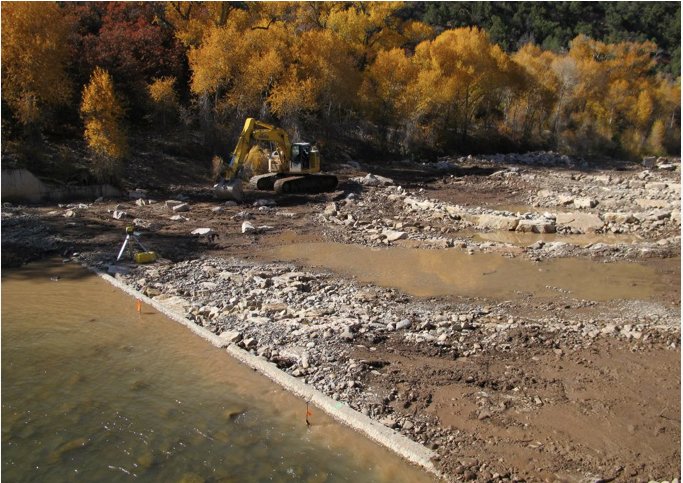
FlyWater, inc., our contractor for the project, worked in the San Miguel River through the month of October to recreate and reconnect the river bed. The last piece of heavy equipment rolled out of the river last week as the major construction phase came to a close. The San Miguel River now runs over the CCC diversion dam and down through the constructed “modified Newbury riffle,” re-wetting approximately 1500 feet of riverbed.

The stretch of river below the CCC diversion dam has been dry during periods of low river flow—when river flows were at or below 150 cfs—for the forty years since the CCC diversion dam was built. In mid- and late-summer, for example, the entire flow of the river would be diverted by the CCC diversion dam through the CCC Ditch. River water in excess of the decreed water rights would be returned to the riverbed 1500 feet downstream of the ditch headgate. This arrangement de-watered only 1500 feet of riverbed, but it completely severed the river ecosystem, preventing fish passage through that dry stretch. Now, fish populations are expected to thrive in their restored riparian ecosystem.

And best of all, this physical solution not only benefits the riparian ecosystem, fish populations, and recreationists, but it also does so without compromising a single drop of water that has historically been delivered to water users under the CCC Ditch. As this project comes to a close and the stakeholders celebrate their shared successes, we are delighted by the fact that everyone, fish included, can win when smart water projects are brought to fruition.

Check out pictures from CWT’s October 21st site visit.

More coverage from the Norwood Post (Ellen Metrick):

The stretch of river below the CCC diversion dam has been dry during periods of low river flow — when river flows were at or below 150 cubic feet per second (cfs) — for the 40 years since the CCC diversion dam was built. In mid- and late-summer, the entire flow of the river has been diverted by the diversion dam through the CCC Ditch.

Any water diverted that exceeded the decreed water rights would be returned to the riverbed 1500 feet downstream of the ditch headgate, an arrangement which completely severed the river ecosystem, preventing water and fish passage in that 1500 feet of river.

FlyWater, inc. — the contractor for the project — worked in the San Miguel River through the month of October to re-create and reconnect the river bed. The last piece of heavy equipment rolled out of the river last week as the major construction phase came to a close.

More San Miguel watershed coverage here and here.

The CWCB was in Telluride last week to gather input on the effects of drought on tourism and recreation

telluride.jpg

From The Telluride Daily Planet (Benjamin Preston):

The Colorado Water Conservation Board hosted an informational meeting Wednesday about its Drought Assessment for Recreation and Tourism, or DART. CWCB designed the program to fill gaps in the state’s drought impact data — which had been focused more on agriculture — and provide county-specific assessments.

“This is the first time anyone has done an assessment like this in the U.S.,” said Taryn Hutchins-Cabibi, a CWCB official who traveled to Telluride to reach out to potential survey coordinators and participants. She called the I-70 corridor a threshold region and said the area south of it needs more detailed drought impact analysis. “Anything below I-70 seems to be more susceptible to drought.”

Hutchins-Cabibi sought more survey participants affected by drought, finding representatives from the Telluride Foundation, Mountain Studies Institute and other organizations around town at Wednesday’s meeting. But Hutchins-Cabibi said she needed as many participants as possible to make the survey more accurate. Honed in on the San Juan, San Miguel and Dolores River watersheds, DART’s Southwest Colorado component will evaluate a region of the state where tourism is particularly prone to the effects of drought.

A preliminary list of industries DART will evaluate includes skiing, wildlife viewing, hunting, fishing, camping, golf, boating and rafting. Meeting attendees offered a number of other suggested industries from which to seek input; everything from dog sledding and horseback riding to dude ranch operation. Cooperation with the Colorado Department of Corrections — which maintains fisheries in Cañon City — was also suggested.

While DART’s main collaborators are CWCB, the Colorado Department of Agriculture and Colorado State University, the study incorporates a long list of other participants: Colorado State Parks; the Colorado Division of Wildlife; the Colorado Tourism Office; the National Park Service; the U.S. Bureau of Land Management; the U.S. Forest Service; Ft. Lewis College; the University of Colorado; area tribal communities; Telluride, Silverton and Durango Mountain Resorts ski areas; and the River Rafting Association.

More CWCB coverage here.

The long-range forecast for the San Juans is for slightly below average precipitation — blame La Niña

westsanjuansfromanasazicenterdolores.jpg

From The Telluride Daily Planet (Benjamin Preston):

According to the National Weather Service, La Niña, a condition where colder-than-average sea surface temperatures off the coast of Peru push the jet stream further north, usually dumps precipitation farther north. First hitting the Pacific Northwest, these systems tend to travel through the Northern Rockies before expiring over the Ohio River Valley.

“Colorado is the transition zone where the northern mountains get more snow than the southern mountains,” said Dennis Phillips, a meteorologist at the NWS station in Grand Junction. Droughts and fires across the Front Range and Southern Plains suggest that conditions this season will most likely resemble last year’s, although cold air masses in the Arctic could cause conditions in Colorado to change quickly. But although Arctic weather conditions can impact weather in the Rockies more rapidly than South American sea surface temperatures, forecasters are unable to predict its impact further than two weeks in advance…

Joe Ramey, another of NWS Grand Junction’s team of meteorologists, said that precipitation during the weeks leading up to the April ski area closure approached average levels. He compared this year to the 2000-2001 winter season, which produced La Niña weather patterns after a La Niña had occurred the year before.

“The 2000-2001 season gives us the best idea of what will happen this year,” he said, adding that he expected below average precipitation in the Southern San Juan Mountains. From Telluride north, he expects near average snowfall, especially toward the end of the season.

The EPA has issued a permit for the proposed Piñon Ridge Mill tailings cell and evaporation ponds

pinonridgesite.jpg

From The Telluride Daily Planet (Kathrine Warren):

The permit approves the construction of a 40-acre tailings impoundment and a 30-acre evaporation pond facility, which will manage the tailings and wastewater the future mill produces…

The permit came with a number of conditions, but Energy Fuels’ Director of Communications and Legal Affairs Curtis Moore said the conditions are reasonable. “We have no problem complying with them,” Moore said. “In a lot of respects it shows how closely the EPA first analyzed our project and they took the comments very seriously.”

The approval requires Energy Fuels to submit a comprehensive ground and surface water-monitoring plan, which will be subject to additional review. The water plan will be subject to additional EPA and state reviews and approval. The conditions also ensure that the mill is in compliance with the National Emission Standards for Hazardous Air Pollutants (NESHAP).

“With the EPA approval, the permitting and environmental risk to our project is now behind us,” Energy Fuels CEO and President said Stephen P. Antony in a press release. “This is significant for Energy Fuels and the domestic uranium industry, as it is the first EPA approval of a conventional mill tailing facility since the NESHAP regulations were revised. Achieving this milestone brings Energy Fuels one big step closer to production of American uranium and vanadium.”

Aside from building permits from Montrose County, Energy Fuels now has just one more government permit pending from the Colorado Air Pollution Control Division for non-radioactive air emissions. If approved, this would be the first uranium/vanadium milling facility built in the United States in 25 years.

More coverage from Katharhynn Heidelberg writing for the Montrose Daily Press. From the article:

This is a major step forward for us,” said Curtis Moore, spokesman for Energy Fuels Corp., which hopes to build the Piñon Ridge uranium mill outside of Paradox. “This is one of the major approvals we needed for the Piñon Ridge mill.”

Montrose County two years ago granted Energy Fuels’ special-use permit to site the mill in an area zoned for general agriculture. Earlier this year, the company received its radioactive materials license from the state.

More coverage from Joe Hanel writing for The Durango Herald. From the article:

Thursday’s approval from the EPA gives Energy Fuels permission to build a 30.5-acre tailings cell and up to 40 acres of evaporation ponds. The mill will extract uranium from ore by grinding the rock and mixing it with water. Acid extracts the uranium and vanadium, and the waste rock and water is pumped into a tailings cell. Water that can’t be recycled from the tailings cell is pumped into the evaporation pond, according to the EPA.

More coverage from Nancy Lofholm writing for The Denver Post. From the article:

[Energy Fuels spokesman Curtis Moore] said the recent court ruling that halted the Department of Energy’s uranium leasing program because not enough analysis of potential environmental impacts was done will not have much impact on Energy Fuel’s project. The company has four mines to supply the mill, all on private or state land. The court ruling affects only leases on federal lands. “We only have seven DOE leases, and we had no immediate plans to do anything on those leases,” Moore said. “Our focus has mainly been on private lands.”

Hilary White with the Sheep Mountain Alliance, one of several environmental groups opposing the mill and the comeback of the uranium industry in general, said she thinks Moore is being too optimistic. “I think the court ruling affects all of the uranium industry tremendously,” White said. “It’s another difficulty they (Energy Fuels) will have to deal with as they try to find investors for the mill.”

If the Piñon Ridge mill is built, it will be the first new mill in the country since the Cold War and will be only the second mill operating in the United States. The other is in southeast Utah.

More nuclear coverage here and here.

Telluride: The Sheep Mountain Alliance plans to file a Clean Water Act citizen action against PacifiCorp over acid mine drainage into the Howard Fork of the San Miguel River

sanmiguelriver.jpg

From The Telluride Watch:

Sheep Mountain Alliance has formally notified Oregon-based utility company PacifiCorp and Silver Bell owner Lee Wynne of plans to initiate a citizen enforcement action under the Clean Water Act to stop the pollution of the San Miguel River.

PacifiCorp owns and maintains the Silver Bell tailings remediation site, located near the Ophir Loop, but has, according to SMA Executive Director Hillary White, allowed the site to discharge heavy metals, acidic drainage, and effluent solids into the Howard Fork of the San Miguel between October 2006 and the present.

“Because of the persistent and ongoing nature of these violations, we have every reason to expect that PacifiCorp’s pollution will keep endangering the San Miguel River unless we take a strong stance and make it clear that the site must be cleaned up immediately and all the water quality violations corrected,” said White. “The Silver Bell tailings site at Ophir Loop is vitally important to protecting the health of the Howard Fork of the San Miguel,” she said, and “the site is violating discharge standards with acid discharge, iron, and solids, and that affects drinking water supplies downstream as well as habitat for fish and wildlife.”

PacifiCorp has 60 days to correct the ongoing discharge violations of its National Pollutant Discharge Elimination System permit for the Silver Bell site, or it could potentially face fines, to be imposed by a federal court, for its past five years of violations.

More San Miguel River watershed coverage here and here.

U.S. District Judge William Martinez orders halt to the DOE approval of exploration, mining and all other activities on 31 leases in southwestern Colorado

uranium.jpg

From The Telluride Daily Planet (Matthew Beaudin):

…but the actual effect of the ruling is unclear: The DOE had already halted activity in the region while it conducted its own departmental environmental review…

In his 53-page opinion, U.S. District Judge William Martinez said federal officials violated environmental laws when they opened those lands back up to leasing, and even ran afoul of the Endangered Species Act. The ruling invalidates environmental reports that indicated that reviving mining operations would have what the department calls “no significant impact” in the region.

The ruling also says the 31 leases in existence under the program and halts the DOE from further mining-related activities and issuing any new leases until a more thorough environmental analysis is undertaken — something the department was, as of this summer, in the process of doing itself. The DOE, though, may have to widen its scope now.

Martinez scolded the department for failing to consider the cumulative impacts of renewed mining in the region, noting that “considerable exploration and mining has already occurred on these lands: indeed, uranium and vanadium mining has been taking place on these lands (on and off) since 1949.” The department, he wrote, should also consider the proposed Piñon Ridge Mill’s impacts on the region, rather than ignore it because it’s not yet built, as it had done initially.

“Not only does the DOE know that uranium continues to exist under the ULMP lands, but the DOE has precise estimates for the amount of uranium that exists and the rate that it can be extracted makes sense to point out that it appears that the Piñon Ridge Mill is in a much more advanced stage as of the date of this decision,” Martinez wrote…

Curtis Moore, a spokesperson for Energy Fuels, the company hoping to build the mill, said the decision doesn’t affect the mill, and that, even though the company held some of the frozen leases, Energy Fuels wasn’t planning on tapping them any time soon. The business model for the mill won’t change, he said. “It looks like this is the court basically ordering the Department of Energy to do already what it was in the process of doing,” Moore said.

More coverage from Joe Hanel writing for The Durango Herald. From the article:

The decision throws out 31 leases to six companies, including the firm that wants to build a uranium mill near Naturita and a company owned by state Rep. Don Coram, R-Montrose.

U.S. District Judge William Martinez invalidated the leases because the Department of Energy did not do a deep enough environmental study before it issued them. The DOE said this summer it would do the study, but Martinez issued the ruling anyway on Wednesday, saying he wanted to make sure DOE leaders did not change their minds again…

Coram, who represents part of Montezuma County, owns Gold Eagle Mining. The company holds three of the leases that were overturned, but Coram said the court ruling is not a problem. The DOE already has said it would take 12 to 15 months to do another environmental study. “It puts everything down the road to about 2014, as far as we’re concerned. That was the schedule we were working on anyway,” Coram said. “I’m certainly not concerned about it.”

More nuclear coverage here and here.

U.S. District Judge William Martinez orders halt to the DOE approval of exploration, mining and all other activities on 31 leases in southwestern Colorado

doloresrivercanyon.jpg

From The Denver Post (Bruce Finley):

U.S. District Judge William Martinez ordered DOE officials to stop approving exploration, mining and all other activities on 31 sites leased to uranium companies. The ruling affects about 25,000 acres southwest of Grand Junction along the Dolores and San Miguel rivers. A 53-page opinion filed late Tuesday said the DOE “acted arbitrarily and capriciously in failing to analyze site-specific impacts” on people and the environment — especially given the history of uranium mining in the region. Martinez also found DOE officials violated the Endangered Species Act by failing to consult with U.S. Fish and Wildlife Service biologists about the impact of leasing uranium lands.

The decision means federal overseers of the nation’s push to develop fuel for nuclear energy must proceed far more carefully and conduct a detailed analysis — with full public participation — of the likely effects that renewed uranium mining and milling would have on air, land, water and people…

State health regulators this year issued a final permit, which local residents are challenging in court. The mill proposal led to several companies expressing interest in mining uranium. DOE officials responded by reconfiguring lease tracts in 2007, then issuing leases for 31 tracts in 2008 to six companies — Cotter Corp., Golden Eagle Uranium, Energy Fuels Resources, Gold Eagle Mining, U.S. Uranium Corp. and Zenith Minerals. The DOE has estimated 13.5 million pounds of uranium ore could be extracted and began approving exploration plans on five lease tracts in 2009…

It is unclear whether the agency will appeal the judge’s decision, said Laura Kilpatrick, manager of the DOE Office of Legacy Management’s uranium leasing program.

More coverage from Bob Berwyn writing for the Summit County Citizens Voice. From the article:

The court ruled that the U.S. Department of Energy acted arbitrarily and capriciously” by failing to analyze site-specific impacts when it approved a leasing program on 42 square miles of federal land in Mesa, Montrose and San Miguel counties. The Energy Department approved the leasing program under an environmental assessment, concluding with a formal “Finding of No Significant Impact.” A coalition of environmental groups challenged the approval and asked the court to order an in-depth environmental impact statement based on the potential for the mining and related activities to significantly affect the quality of the human environment. Judge Martinez declined to go that far, instead remanding the decision back to the energy department with orders to conduct a study that considers site-specific impacts. According to the ruling, the Energy Department has indicated it will do a complete environmental impact statement…

Conservation groups called this week’s decision a major victory for clean air, clean water and endangered species on public lands. “We are pleased that Judge Martinez agreed with the groups, as well as local governments, who have been requesting the federal government take responsible steps to disclose the full range of impacts of mining uranium on public lands in combination with the impacts from Energy Fuels’ proposed uranium mill,” said Hilary White, executive director of Sheep Mountain Alliance…

The Colorado Environmental Coalition, Information Network for Responsible Mining, Rocky Mountain Wild, Center for Biological Diversity and Sheep Mountain Alliance sued the Department of Energy and Bureau of Land Management in July 2008 for approving the program without analyzing the full environmental impacts from individual uranium-mining leases across more than 20,000 acres, and for failing to ensure protection of threatened and endangered species before authorizing the program. Plaintiffs were represented by attorneys Travis Stills of the Energy Minerals Law Center, Jeff Parsons of the Western Mining Action Project and Amy Atwood of the Center for Biological Diversity.

Update: From The Grand Junction Daily Sentinel (Dennis Webb):

A federal judge on Tuesday suspended a 42-square-mile federal uranium-leasing program in southwestern Colorado over concerns potential environmental impacts have not been adequately considered. The ruling was made in response to a lawsuit brought by five conservation groups that sought to halt the Department of Energy’s leasing program, which they say threatens the Dolores and San Miguel rivers.

Here’s the release from the Center of Biological Diversity (Taylor McKinnon), The Sheep Mountain Alliance (Hillary White) and Rocky Mountain Wild (Josh Pollack):

In a major victory for clean air, clean water and endangered species on public lands, a federal judge on Tuesday halted the Department of Energy’s 42-square-mile uranium-leasing program that threatened the Dolores and San Miguel rivers in southwestern Colorado. Five conservation groups had sued to halt the leasing program, charging that the Department of Energy was failing to adequately protect the environment or analyze the full impacts of renewed uranium mining on public lands.

“We are pleased that Judge Martinez agreed with the groups, as well as local governments, who have been requesting the federal government take responsible steps to disclose the full range of impacts of mining uranium on public lands in combination with the impacts from Energy Fuels’ proposed uranium mill,” said Hilary White, executive director of Sheep Mountain Alliance. “This is an important ruling that will help ensure that any uranium mining and milling that may take place in the Dolores River watershed is protective of the environment and human health. We look forward to the Environmental Protection Agency’s leadership in disclosing the full impacts of uranium activity in this important watershed.”

The 53-page ruling invalidates the Department’s approval of the program; suspends each of the program’s 31 existing leases; enjoins the Department from issuing any new leases; and enjoins any further exploration, drilling or mining activity at all 43 mines approved under the program pending satisfactory completion of new environmental reviews under the National Environmental Policy Act and Endangered Species Act.

“This is a huge victory for public lands, rivers and wildlife in southwestern Colorado and a major setback for the uranium industry’s efforts to industrialize and pollute the Colorado Plateau,” said Taylor McKinnon, public-lands campaigns director at the Center for Biological Diversity. “The Department of Energy has thumbed its nose at environmental laws for too long; today’s ruling is a big course correction.”

Conservation groups challenged the Department’s current leasing program for not complying with the National Environmental Policy Act and Endangered Species Act. In July the Department attempted to thwart the lawsuit by initiating a new “environmental impact statement” for the program but continued to administer the program under its prior flawed approval.

Uranium mining and milling resulting from the lease program will deplete Colorado River basin water and threaten to pollute rivers with uranium, selenium, ammonia, arsenic, molybdenum, aluminum, barium, copper, iron, lead, manganese, vanadium and zinc. Selenium and arsenic contamination in the Colorado River basin from abandoned uranium-mining operations have been implicated in the decline of four endangered Colorado River fish species and may be impeding their recovery.

“Even small amounts of some of these pollutants, like selenium, can poison fish, accumulate in the food chain and cause deformities and reproductive problems for endangered fish, ducks, river otters and eagles,” said Josh Pollock of Rocky Mountain Wild. “It is irresponsible for the Department of Energy to put fish and wildlife at risk by allowing uranium leases without adequate analysis of necessary protections to prevent pollution.”

The Colorado Environmental Coalition, Information Network for Responsible Mining, Rocky Mountain Wild, Center for Biological Diversity and Sheep Mountain Alliance sued the Department of Energy and Bureau of Land Management in July 2008 for approving the program without analyzing the full environmental impacts from individual uranium-mining leases spread over 20,000 acres and for failing to ensure protection of threatened and endangered species prior to authorizing the program. The Department refused to conduct a full EIS analysis in 2008, instead issuing a FONSI (“finding of no significant impact”), which was also struck down as part of the court ruling.

Plaintiffs were represented by attorneys Travis Stills of the Energy Minerals Law Center, Jeff Parsons of the Western Mining Action Project and Amy Atwood of the Center for Biological Diversity.

Download a copy of the ruling here.

More nuclear coverage here and here.

Telluride Institute Water Education Program director: ‘The San Miguel River is one of the last free-flowing rivers in Colorado, and boasts riparian ecosystems that are home to flora and fauna found nowhere else in the world’

telluridevalleyfloororg.jpg

From The Telluride Watch (Martinique Davis):

[Water Education Program] is a free resource for local schools and teachers located in the San Miguel River Watershed. WEP provides full-day and overnight programs directly related to their classroom curriculum and tied to the Colorado State Standards, explains Telluride Institute’s Watershed Education Program Director Laura Kudo.

“The San Miguel River is one of the last free-flowing rivers in Colorado, and boasts riparian ecosystems that are home to flora and fauna found nowhere else in the world,” Kudo says, describing the WEP experience as one that simply cannot be replicated indoors. “This gets students into the real-life classroom… providing unique hands-on learning opportunities.”

On Monday, all 60 of Telluride’s seventh graders explored their eye-popping, real-life classroom, listening to the barks of resident prairie dogs, seeing the handiwork of dam-building beavers and getting a quick history lesson about the Valley Floor and the San Miguel River from Telluride Open Space Commission and Town Councilmembers Bob Saunders and David Oyster.

“We’re witnessing the return of these prairie dogs’ natural predators,” Saunders told the group, as they stood watching the critters peek up out of their dens and scurry to new holes, referring to the recent emergence of badgers on the Valley Floor, and the raptors drawn to its recently erected Raptor Poles…

The tour features local speakers and experts like State of Colorado Department of Natural Resource’s Camille Price and Idarado Mining Co.’s Joe Smart, Town of Telluride’s Program Manager Lance McDonald and San Miguel County Parks Supervisor Rich Hamilton, as well as the Telluride Institute’s Kudo. The speakers share their knowledge about the area’s natural, cultural, and human history, watershed geography, regional geology, and river ecology, Kudo says, the purpose of which is “to inform the students that live in our Watershed how people and places interact with and shape one another, and why this interdependence is important and relevant to them.”

More education coverage here.

CWCB: San Miguel River gets an instream flow right

sanmiguelriver1109.jpg

Here’s a report from The Telluride Daily Planet (Katie Klingsporn). Click through and read the whole article — Ms. Klingsporn chronicles the history of the flow right. Here’s an excerpt:

Even during spring runoff, the river normally stays below 1,500 cfs, and in winter months, it drops to less than 100 cfs…

The Colorado Water Conservation Board voted 8 to 1 last week to appropriate an instream flow for the lower San Miguel River. Instream flows require that rivers stay at certain minimum levels year round. The recommended minimum flows for the San Miguel range a low of 80 cfs (from Sept. 1-Feb. 29) to a high of 325 cfs (from April 15-June 14). The decision affects the 17 miles of the river from Calamity Draw to the confluence with the Dolores River…

[April Montgomery, the Dolores/San Juan/San Miguel Basin representative on the CWCB] said she feels that there was ample time for the public to study and understand the process and give input, and she felt the BLM and CDOW recommendations were solid. “The importance of this and I guess the reason that I believe that it will hopefully benefit the San Miguel watershed in the long-run, is it will hopefully postpone delay indefinitely of an endangered species issue on the San Miguel,” she said. She added that she believes it’s a long-term benefit to the local boating and river recreation economy.

More San Miguel River watershed coverage here and here.

San Miguel River: The CWCB approved an instream flow right last week

sanmiguelriver1109.jpg

Here’s the release from Western Resource Advocates:

The San Miguel River has been victim to the effects of human development and water diversions to the point where the river’s health is a concern. But last week, with the help of expert testimony provided by WRA, the Colorado Water Conservation Board (CWCB) approved a significant instream flow water right for the San Miguel. This right would keep enough water in a stretch of the river to prevent the decline of fish and plant species and protect the river from future diversions.

Beginning high in the alpine environment of San Juan Mountains above Telluride, and ending in the desert at its confluence with the Dolores River, the San Miguel River is still largely free-flowing. It is also extremely important to the rural and resort economies of the communities through which it flows.

The river supports healthy populations of three fish species whose numbers are decreasing elsewhere in the basin: the roundtail chub, flannelmouth sucker and bluehead sucker. The river is also important for several globally imperiled plant species.

WRA’s testimony was key to supporting and shoring-up a CWCB staff recommendation which was strongly contested by several opposing parties. The CWCB’s approval is a tremendous victory, though the instream flow water right must be approved by a water court prior to being implemented. This win builds on WRA’s tradition of securing healthy water flows for the West’s most special waterways.

WRA also represented The Wilderness Society, and received assistance from the Sheep Mountain Alliance and noted fish biologist John Woodling in making its case before the Board. Congratulations to WRA’s water team, especially Rob Harris and Laura Belanger.

Energy policy — nuclear: The Town of Telluride town council approves lawsuit over operating license for the proposed Piñon Ridge mill

pinonridgesite.jpg

From The Telluride Watch:

On Tuesday, the Telluride Town Council voted unanimously to retain the legal services of a national public interest law firm, Public Justice, to litigate the case…

In January, the CDPHE issued a Radioactive Materials License to Energy Fuels Resources Corporation as a result of Colorado being an “Agreement State” under the Federal Atomic Energy Act. Shortly after it was issued, the licensing decision by CDPHE was first challenged by the Telluride-based environmental group Sheep Mountain Alliance. Following careful deliberation, members of council also expressed concerns over the potential negative impacts of an operational uranium mill in the area. According to Telluride Town Attorney Kevin Geiger and Public Justice, these possible impacts were given little or no consideration by the state in its review process.

More nuclear coverage here and here.
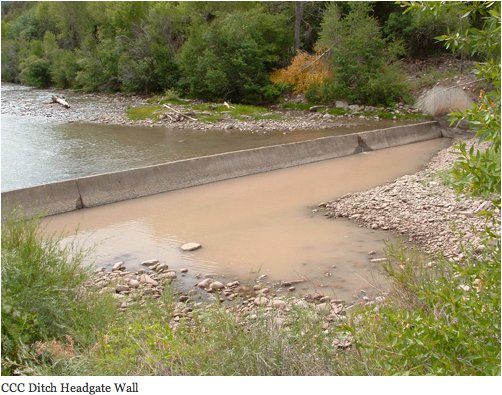
Colorado Water Trust: CCC Ditch Project Materials Harvest Underway

http://coyotegulch.blog/wp-content/uploads/2010/02/cccditchsanmiguelriverheadgatewallcoloradowatertrust.jpg

From email from the Colorado Water Trust:

The CCC Ditch is located near Naturita on the San Miguel River. The San Miguel River is one of Colorado’s last free flowing rivers and is one of the few naturally functioning riparian ecosystems remaining in the Western United States. We have been working in partnership with the CCC Ditch Company, the Colorado Division of Wildlife, The Nature Conservancy, the Bureau of Land Management, and other interested parties to create a diversion structure that is more sensitive to fish passage issues and is safer for recreation. Better diversion management will also prevent the late-season dewatering that occurs at the diversion structure.

The funding for this project is now in place and FlyWater inc., the project contractor, is currently at the site harvesting rock and other materials needed for construction. This project would not have come to fruition, however, had it not been for Jeff Crane from the Colorado Watershed Assembly, who is one of the state’s best builder of stakeholder groups.

Follow along on our website or on Facebook. We will post pictures and provide updates as the project moves forward.

More San Miguel River watershed coverage here.

Energy policy — nuclear: Colorado Department of Local Affairs executive director sees econmic opportunity in proposed Piñon Ridge Mill

pinonridgesite.jpg

From The Telluride Daily Planet (Matthew Beaudin/John Lopez):

“The potential of the Piñon Ridge mill is a regional issue. Depending on where you stand and who you are, it is either the best opportunity for economic development in half a century or an environmental disaster,” [Reeves Brown] said. “I think the reality is, done right, it can be a huge boost for not only the regional economy, but for the economy statewide. There are potential environmental hazards and … the rules of the game and how they are applied are much different than five years ago, much less 50 years ago. I think there is huge opportunity there to develop that resource in a responsible manner.”

Brown, a familiar name on the Western Slope, was in Telluride and spoke to media on Wednesday morning. He was named to the DOLA post by Colorado Gov. John Hickenlooper when he took office in January. Brown had served as the executive director of Club 20, an organization representing Colorado’s 22 western counties, prior to moving to DOLA.

More nuclear coverage here and here.

Energy policy — nuclear: Department of Energy Naturita public meeting hears from uranium miner claiming that the agency was forced into the current review by ‘environmentalists’

manhattanproject1944uravan.jpg

From The Norwood Post (Ellen Metrick):

The reasons given for the sudden concern [performing an EIS on a lease that was renewed by the DOE in 2007] were simply that it’s a good time to do an EIS due to the lack of activity in the mining leases, the fact that the Piñon Ridge Mill is not yet built, and the dip in the economy, said Laura Kilpatrick, the DOE’s Uranium Leasing Program manager.

During Thursday’s public comment session, Richard Craig, a Nucla resident and Nucla Town Board member, said, “The DOE was forced into this by the environmentalists, and we’re gonna force you to make a good honest study so we can get on with our business.”[…]

The DOE will accept public comment through Sept. 9, 2011. Written comment scan be sent to Laura Kilpatrick, U.S. DOE, 11025 Dover ST., Suite 1000, Westminster, CO 80021. Comments may be submitted online at http://ULPEIS.anl.gov or by e-mail to ulpeis@anl.gov. The website will be updated as more information is available.

More coverage from David O. Williams writing for the Colorado Independent. From the article:

In Montrose, near where a Canadian company hopes to build the nation’s first new uranium processing mill in decades, the Montrose Daily Press reported a DOE meeting “generated impassioned responses from its defenders and detractors.”

In the nearby ski town of Telluride, according to the Telluride Daily Planet, the DOE “received a sharp mandate from Telluride residents: Any mining is too much, and its leasing program should be disbanded.”[…]

Some residents of remote western Montrose County welcome a revival of the uranium mining industry that provided jobs in the 1950s, 60s and 70s. Critics, many from the nearby resort town of Telluride and surrounding San Miguel County, fear a return to the industrial mining days that left a toxic legacy in the region.

Opponents not only want the DOE to reject new uranium mining in the area, they also want past contamination cleaned up.

“Instead of promoting mining when DOE has plentiful uranium stockpiles, the public has requested DOE turn its focus to the environmental and economic benefits that would flow from requiring the immediate and comprehensive reclamation of 13 of the leased tracts,” said Hillary White of Sheep Mountain Alliance. “This would require no federal monies as the reclamation responsibilities must be met by the private companies who leased these tracts.”

More nuclear coverage here and here.

Energy policy — nuclear: Energy Fuels is aggressively buying up uranium properties in the Uravan Mineral Belt

manhattanproject1944uravan.jpg

From The Telluride Daily Planet (Matthew Beaudin):

The newly purchased Crain Lease is located on approximately 640-acres in San Juan County, Utah, and is near the historic Calliham and Sage Mines, which are properties already controlled by Energy Fuels. It cost the company about $520,000.

Its deposit is historically rich, according to Energy Fuels, and it sits in the Uravan Mineral Belt, one of the richest deposits of uranium and associated elements, in the country. The company recently announced it had also bought two other properties, the Energy Queen and Whirlwind, and has spent “millions” buying up mineral leases.

According to Energy Fuels, it costs about $250,000 and 18 months to permit a new uranium mine, outside of land and mineral right costs…

At the mill, [Curtis Moore, an Energy Fuels spokesperson] said jobs will pay anywhere from $45,000 to $75,000 a year, with benefits. At the mines, those jobs are likely to pay $90,000 to six figures, he said. It’s estimated by the company that the mill would create 85 jobs at its full capacity and spawn 200 additional jobs in the area, from trucking to restaurants. The life of the mill is pegged at 40 years, or, in other words, a generation.

Hilary White, the executive director of Sheep Mountain Alliance, said the company was mining — for investors.

“Energy Fuels needs at least $150 million to build the Piñon Ridge Mill and they do not have all the state and federal permits or the water to start construction or operation of the proposed mill,” she wrote in an email.

“The price of uranium has tumbled since the DOE released stockpiles of ore and the unfortunate disaster in Japan. They are in need of cash just to continue day-to-day operations. It is not surprising that we continue to see these press releases from the company mainly aimed at investors … Even if the mill were built today, it would most likely be seeking radioactive waste to process as the processing of ore at today’s prices is not economically viable. These are the realities that they do not mention in the press release.”

More nuclear coverage here and here.

Energy policy — nuclear: The DOE is reviewing the cumulative effects of uranium mining in western Colorado, public meeting August 9 in Telluride

telluride

From The Telluride Daily Planet (Matthew Beaudin):

Until now, the DOE reviewed the mining operations piecemeal rather than addressing the cumulative impacts of increased production in the region, which it made possible in 2008 with the renewal of its leasing program in the Uravan Mineral Belt, awarding or renewing 31 leases for mining-related activities over 25,000 acres between Naturita and Moab, Utah.

In a pending lawsuit, the conservation groups — including Telluride’s Sheep Mountain Alliance — challenged the Department’s current leasing program for not complying with the National Environmental Policy Act and Endangered Species Act.

The study will examine the effects of the DOE’s uranium-leasing program on 42 square miles of public land near the Dolores and San Miguel rivers. The DOE will host a public meeting in Telluride on Tuesday, Aug. 9 at the Sheridan Opera House from 6:30 to 9 p.m.

“Combined with the activities in the DOE leasing tracts, the impacts of new mining on unpatented claims in the area and the proposed Piñon Ridge Uranium Mill in Paradox Valley all add up to serious new concerns for water quality,” said Hilary White of the Sheep Mountain Alliance. “We have to understand and mitigate existing contamination problems in the area before the government allows new mining to ramp up.”[…]

Gary Steele, Energy Fuels’ vice president, said the move by the DOE would put the brakes on any exploration the company hoped to conduct on any of its seven federal leases but that other endeavors, such as increased production at two existing mines on private claims, would persist.

“We’re kind of disappointed at that, to say the least,” Steele said, but also added that the study was a thoughtful endeavor in the longer run. “As far as the long term, it’s probably a good idea to have this regional development looked at in its entirety.” The mill would not be affected, Steele said…

The DOE will take public comment on its new environmental impact statement until Sept. 9. Comments will also be accepted at public meetings Aug. 8-11 in Telluride, Naturita, Monticello, Utah, and Montrose.

More nuclear coverage here and here.
Telluride: Cornet Creek flood mitigation will help but not prevent flooding

A picture named telluride.jpg

From The Telluride Watch (Thomas Wirth):

People need to realize, [Karen Guglielmone] said, that in the event of a major event, “pretty much the entire town is in the Cornet Creek floodplain.”

Guglielmone, who is the town’s project manager, went on to update council on the work completed to mitigate flood damage potential since the 2007 “event.” The long list included repair and replacement of culverts and bridges, channel and bank work and repair within the creek, streetscape improvements, ongoing maintenance to keep the creek and culverts free of excessive sediment and debris, and continuing work with San Miguel County to establish emergency response protocols.

Future priorities would look much the same, Guglielmone said, including the replacement of the Cornet Creek Pedestrian Bridge and engineering studies. The suggested studies would focus on a structural analysis of the Cornet Aspen Street berm, a debris cachement system and the feasibility of an early warning system. Of the three, council was most critical of the EWS.

Guglielmone explained that, while EWS systems are improving, there is still the chance of them falling prey to the “cry wolf” syndrome, where false alerts lead to people ignoring alerts altogether. Council as a group seemed to agree that the five minutes of warning that such a system might provide was probably not worth the effort and expense…

Regardless of maintenance and preventative measures, flooding is by its very nature destructive and unpredictable. Town Attorney Kevin Geiger pointed out that no government entity could warranty private property owners against the effects of a flood. Whatever work is done, he said, Cornet Creek would “not be able to handle the bigger events that have and will overwhelm the creek.”

“Risk never goes away,” Guglielmone agreed. The reduction of those risks is a priority of the Public Works Department, she explained. Individual flood insurance, proper zoning, structures such as culverts, bridges and berms, and contingency and response plans are all tools used to reduce the effects of flooding.

More San Miguel River watershed coverage here.

Telluride: The Idarado Mining Company is recalling water rights that it gave the town in 1992

A picture named bridalveilfallstelluride.jpg

From the Telluride Daily Planet (Matthew Beaudin):

This latest argument is as clear as a river during peak runoff.

Idarado announced last Friday it was recalling water rights it conditionally gave to the Town of Telluride in 1992, and that it would use the water to generate power at the Bridal Veil Power Station, a historic hydroelectric powerplant perched above the tallest waterfall in the state. According to an Idarado press release, the move would not adversely affect the flow in the San Miguel River nor would it diminish the current levels of water over Bridal Veil Falls…

The issue is wholly complex, as most water disputes are. In the wording of the 1992 agreement, it’s stated that Idarado must recall the water for “beneficial” use, meaning the water is applied to a recognized public purpose, such as irrigation or hydroelectricity — exactly what Idarado says it will use the water for. Under water law, the town must give the water back if it deems the request “proper,” which it hasn’t yet determined…

The Bridal Veil Power Station is an uncommon confluence in the channels of groundbreaking utility and improbable beauty and is one of the oldest operating AC generators in the country (behind the Ames hydroelectric station, just up the highway).

More San Miguel River watershed coverage here.

Telluride: The Idarado Mining Company is recalling water rights that it gave the town in 1992

A picture named bridalveilfallstelluride.jpg

From The Telluride Daily Planet (Matthew Beaudin):

The company said in a press release that it would use the water to generate power at the Bridal Veil Power Station, a turn of the 20th century hydroelectric powerplant that looms at the end of the box canyon. “In 1992, we conditionally deeded our water rights to Telluride because we were not using them at the time, reserving the right to recall them for Idarado’s future needs,” said David Baker, president of Idarado, in a release. “We are now exercising our right to recall these water rights to support electrical power generation and for other possible uses in the future.”[…]

The Bridal Veil Power Station is an uncommon confluence in the channels of groundbreaking utility and improbable beauty. It is one of the oldest operating AC generators in the country (behind the Ames hydroelectric station, just up the highway) and still surges power into the local grid, but it is also a building of a certain esteem, standing sentry to the valley from its perch atop the state’s tallest waterfall.

More San Miguel River watershed coverage here.

San Miguel River: Proposed minimum instream flows for certain reaches dividing residents

A picture named sanmiguelriver1109

From the Associated Press via the Sky-Hi Daily News:

The proposal by the Bureau of Land Management and Colorado wildlife officials would affect a stretch of the river about three miles west of Nucla. The proposal includes a minimum stream flow of 325 cubic feet per second during the spring runoff period from April 15 to June 14. Some conservation groups and outfitters say the plan would improve habitat for three fish, including the roundtail chub. Montrose County commissioners and Farmers’ Water Development Co. have questioned whether there is enough water to fulfill the plan.

More San Miguel River watershed coverage here and here.

The U.S. Bureau of Land Management’s Southwest Resource Advisory Council recommends 13 stream segments for Wild and Scenic designation

A picture named doloresrivercanyon.jpg

From The Telluride Watch (Karen James):

Among 11 segments of the San Miguel River previously determined as eligible for inclusion in the national system, the local sub-RAC and RAC recommended five be determined as suitable for recreational designations in the national system. They include: Beaver Creek, and four segments of the San Miguel River.

No segments were found to have scenic suitability, but three segments: Saltado Creek, one in the San Miguel River, and Tabeguache Creek, Segment 1, received recommendations as wild.

Three of the 11 eligible San Miguel River segments: Dry Creek, Naturita Creek and Tabeguache Creek, Segment 2, were not recommended for inclusion in the system.

Among eight, eligible segments of the Upper Dolores River, the sub-RAC and RAC recommended that four not receive suitability designations. They include: Ice Lake Creek, Segment 2; La Sal Creek, Segment 1; Lion Creek, Segment 2, and Spring Creek.

Two of the four remaining eligible segments: Dolores River, Segment 2; and La Sal Creek, Segment 2, received suitability recommendations as recreational.

The final two eligible segments: La Sal Creek, Segment 3, and Dolores River, Segment 1, received suitability recommendations as wild.

On the Lower Dolores River the RAC recommended that one of two eligible sections, the Lower Dolores River segment, receive a scenic designation. The second eligible section, the North Fork Mesa Creek section, did not receive a suitability recommendation.

More Dolores River watershed coverage here and here. More San Miguel River watershed coverage here and here.

CWCB: The board unanimously declares its intent to appropriate an instream flow water right on a 16.5-mile stretch of the San Miguel River

A picture named sanmiguelriver1109

From The Telluride Watch (Karen James):

Both the Colorado Division of Wildlife and the US Bureau of Land Management recommended that the appropriation be declared one year ago when the CWCB met for its January 2010 meeting. At that time, however, the board voted to delay the action for another year in order to allow water users time to develop plans for off-stem water storage in the watershed.

The federal agencies made the recommendation primarily to prevent three dwindling species of native fish – flannelmouth sucker, bluehead sucker and roundtail chub – from being listed for federal protection under the federal Endangered Species Act.

“That kicks off our notice and comment procedure,” said Linda Bassi, chief of the CWCB’s Stream and Lake Protection Section, noting that any entity choosing to oppose the instream flow has until March 31 to file a notice to contest the action.

Here’s the list of streams for appropriations from the Colorado Water Conservation Board.

More San Miguel watershed coverage here and here.

San Miguel River Wild and Scenic designation

A picture named sanmiguelriver1109

The Bureau of Land Management is looking over a couple of reaches on the river. The last public meeting is on Thursday in Norwood. Here’s a report from Kathrine Warren writing for The Telluride Daily Planet. From the article:

If designated under the Wild and Scenic Rivers Act, portions of the rivers would enjoy certain protections tailored to keep them wild, free-flowing, beautiful or recreationally valuable. The BLM has conducted several public meetings over the past two months concerning the river’s suitability for Wild and Scenic status in an attempt to collect public comment for or against the possibility. The last meeting is this Thursday from 5:30 to 8:30 p.m. at the Norwood Community Center with a presentation from Roy Smith of the BLM.

This meeting will be the final chance for public comment, but for those who can’t attend, comments can be submitted to the BLM by e-mailing UFORMP@BLM.GOV.

More San Miguel River watershed coverage here and here.

Energy policy — hydroelectric: Telluride is assessing micro-hydroelectric potential in its wastewater and water systems

A picture named microhydroelectricplant.jpg

From the Telluride Watch (Karen James):

The first project is a feasibility study of the town’s existing wastewater and water systems to determine where it would make the most sense to install turbines to generate electricity. “The goal is to have the whole system analyzed and have most promising locations highlighted…and to learn how much it would cost,” said Public Works Project Manager Karen Guglielmone, who anticipated the town will issue a Request for Proposal for the analysis in the coming weeks. As it stands now, valves found throughout the system are used to bleed off pressure from the town’s existing, gravity-fed system. “That energy could be used in the right circumstances,” she explained.

In addition to its ability to generate power using existing infrastructure, retrofitting the existing system for micro-hydro would not require additional staffing for monitoring, would have no adverse environmental impacts, and would not require potentially controversial institutional or public process elements, according to a list of project benefits identified by Guglielmone in a memo to council…

The second micro-hydro project slated for completion in the coming year would be to install a continuous discharge monitoring station upstream of the Jud Wiebe Bridge as recommended in the 2009 Stillwell Micro-Hydro Feasibility Study. Its goal would be to obtain real-world discharge data to refine the study’s cost-benefit analysis and to better quantify its potential adverse environmental impacts, including drying up approximately 1,800 feet of Cornet Creek and Cornet Falls for a portion of the year. “We have to find out what is the actual discharge in Cornet Creek,” explained Guglielmone, who indicated that the existing studies have so far relied on hydrologic modeling. “It would be useful to have more refined data.” A first, recommended option being considered by the town would repair an existing diversion dam on Cornet Creek above the falls and run a new, pressurized pipe to a small powerhouse near the Jud Wiebe trailhead. Preliminary production estimates suggest the project could produce between 780,000 and 980,000 kilowatt hours of energy annually, or about one-third of the town government’s 2009 electric use. It would also eliminate 22 percent of its 2009 carbon emissions, for roughly $1.1 million. A second option would require a new diversion dam be build on Cornet Creek above the Stillwell adit and replacing the existing water line from the adit with pressurized pipe to the same powerhouse site near the Jud Wiebe trailhead.

More hydroelectric coverage here and here.

Telluride: City council gives a thumbs up to the proposed instream flow right for the San Miguel River

A picture named sanmiguelriver1109

From The Telluride Watch (Karen James):

As the Colorado Water Conservation Board prepares to decide whether or not to file for an instream water right on the lower San Miguel River at a meeting in Denver later this month, the Town of Telluride has added its voice to that of San Miguel County’s and others in support of the filing.

“The health of the San Miguel River is important to the Telluride community in terms of economic and environmental factors. The outdoor recreation industry in this area is quite dependent upon flows within the river system necessary to sustain fishing, whitewater and related activities. The health of the river ecosystem is intrinsically tied to wildlife habitat, wetland and riparian values that truly define this beautiful part of Colorado,” states a letter to the CWCB and approved by the council when it met on Tuesday.

If approved, the instream flow would establish minimum flows in a 16.5-mile stretch of the river located in Montrose County reaching from Calamity Draw west of Naturita to the Dolores River confluence, primarily to prevent three dwindling species of native fish there from being listed for federal protection under the Endangered Species Act.

The CWCB considered filing for the appropriation this time last year, but delayed its decision at the request of the San Miguel County BOCC and other entities in order to allow downstream water users time to figure out off-stem water storage to meet their future needs and to file for any additional water rights they might require.

“We wanted to try and guarantee that the instream flow is what it should be,” said Fraser of the town government’s support. “Some people may not agree, but we are doing what we think is right for the community and the region.”[…]

And speaking of the San Miguel River, council would also like to see sections of the waterway that have been determined eligible for inclusion in the National Wild and Scenic Rivers System actually protected as such.

In a letter to the US Bureau of Land Management Uncompahgre Field Office, which is currently seeking public comment concerning 11 segments of the San Miguel that were determined to be eligible for the designation following an exhaustive inventory process throughout the 675,000-acre Uncompahgre Planning Area, the town underscored its support for “prompt, extensive and reliable protection,” for every eligible segment in the river, and those segments and tributaries within proximity to the Telluride community, in particular.

“The San Miguel River system as a whole, and certainly those segments and tributaries identified, are inclusive of outstandingly remarkable values in terms of natural flows, river health, riparian habitat, recreational opportunities and scenery,” reads a letter to the agency approved by council on Tuesday.

Accordingly, the town believes that the majority of those stream segments found eligible for protection would be best preserved with designations as suitable for protection.

More San Miguel watershed coverage here and here.

Energy policy — hydroelectric: Is there micro-hydroelectric potential in Telluride?

A picture named microhydroelectricplant.jpg

From The Telluride Daily Planet (Katie Klingsporn):

The town plans to complete two micro-hydro projects in 2011. One is a feasibility study of its wastewater and water systems to determine if there are opportunities to install turbines in the town’s existing structures. The other entails installing a discharge monitoring station upstream of the Jud Wiebe Bridge to obtain data necessary in determining the financial feasibility and environmental impacts of a micro-hydro project at Stillwell Tunnel.

The town has identified two other micro-hydro projects it would like to investigate — a project at the yet-constructed Pandora water treatment plant and a power purchase from the Bridal Veil power station — and hopes to get to those a year or so down the line. A work plan drawn up by public works project manager Karen Guglielmone details the projects…

[Mayor Stu Fraser] said the hydrology studies need to happen before the town goes out looking for grants to fund the actual installations.

The first project involves looking for opportunities for micro-hydro in the town’s existing water plant and wastewater treatment plant. Fraser said this will involve determining if the town can insert mini micro-hydro turbines into pressure release valves. This could represent easy and relatively cheap opportunities for the town, because it already owns the infrastructure.

The second project will accomplish a recommendation that came out of the 2009 Stillwell Micro-Hydro Feasibility Study — installing a discharge monitoring station up-stream of the Jud Wiebe Bridge. The goal is twofold: to determine if a project would dry up a portion of Cornet Creek and Cornet Falls during part of the year, and to determine information necessary for a cost-benefit analysis.

More hydroelectric coverage here and here.

Norwood and other providers are looking to shore up water rights in advance of possible instream flow appropriation for portions of the San Miguel River watershed

A picture named sanmiguelriver1109

From The Norwood Post (Ellen Metrick):

“It isn’t just us,” said Norwood Town Administrator Patti Grafmyer. “The water court is going to be inundated by filings from San Miguel and Montrose counties, too.”

The town and Norwood Water Commission (NWC) are working to plan ahead for the area, and figure they’ll need another 1,056 acre-feet of water by the year 2060 to cover the projected growth. “We have to plan ahead that far, at least,” said NWC president Mark Muniz. Right now, the town and water commission have an agreement with Farmers Ditch Company for 300 acre-feet, and have the option to purchase more, but the ditch company has been waiting to hear back from the Forest Service on a new ditch bill that may change regulations on municipal water being carried through Forest Service property.

The town owns water rights in the San Miguel River, but the problem — and the expense — lie in getting the water up the hill. The proposal that is being worked on is to move the location where Norwood can draw its water from, which is currently near the bridge at the bottom of Norwood Hill. The town has several areas they are looking at, and several possible plans for enlargement of ditches, new ditches, and reservoir sites, though none is yet set in stone. Grafmyer said the filing for the water has to be finalized by this Friday. “It’s still in draft form right now. The engineers and legal firms are still working on the final draft.”

More San Miguel River watershed coverage here and here.

Energy policy — nuclear: The New York Times takes a look at the state of the industry in Colorado

A picture named pinonridgesite.jpg

From The New York Times (Kirk Johnson):

…in this depressed corner of western Colorado — one of the first places in the world that uranium, nuclear energy’s primary fuel, was ever dug from the ground in industrial scale — the debate is both simpler and more complicated. A proposal for a new mill to process uranium ore, which would lead to the opening of long-shuttered mines in Colorado and Utah, has brought global and local concerns into collision — jobs, health, class-consciousness and historical memory among them — in ways that suggest, if the pattern here holds, a bitter national debate to come.

Telluride, the rich ski town an hour away by car and a universe apart in terms of money and clout, has emerged as a main base of opposition to the proposed mill, called Piñon Ridge, which would be the first new uranium-processing facility in the United States in more than 25 years if it is approved by Colorado regulators next month…

Here in Naturita and the cluster of tiny communities in and around the Paradox Valley, where the mill could be built (cumulative population about 2,000), people disagree not just about the wisdom of the mill, but about whether uranium, laid down here in tufts of volcanic ash more than 100 million years ago, was a blessing or a curse. Minerals found in association with uranium, especially vanadium, which is used in hardening steel, sparked the first real rush in the 1930s; uranium for bombs and energy then followed in a stuttering pattern of boom and bust into the 1980s, when the nation’s nuclear energy program mostly went into mothballs.

Opponents say that the nostalgia many residents here cherish about the boom years is the product of willful forgetfulness about the well-documented cancer deaths and environmental destruction the uranium mines produced. They also say that the mill company is cynically exploiting the idea of a return to simpler times.

“They say it’s going to be different this time around,” said Craig Pirazzi, a carpenter who moved to the Naturita area from Telluride a few years ago and is now a member of the Paradox Valley Sustainability Association, which opposes the mill. “But our opposition to this proposal is based on the performance of historic uranium mining, because that’s all we have to go on — and that record is not good.”

Supporters, meanwhile, say that the opponents of Piñon Ridge are guilty of promulgating ignorant fears about something they do not understand.

Even the question of who has a right to speak up has become a point of contention. Is the mill purely a local concern in a sparsely populated area, or a broader regional issue that would affect people much farther away, through, say, radioactive dust particles that might be thrown aloft?

More coverage from The Denver Post (Bruce Finley):

The federal governments’ and utilities’ failure to encourage nuclear energy “just about requires us to look overseas (for funding),” Gary Steele, Energy Fuels’ vice president for investor relations, told The Denver Post. “You have to go where the market is. Just pick an Asian country.”

Energy Fuels has hired a Hong Kong agent to solicit bankers in China and elsewhere. “The product we provide is essentially totally fungible and can be used at any nuclear facility in the world,” said chief executive Steve Antony. “We’d like to see it used here in the United States.”[…]

Only one conventional uranium mill operates in the U.S., near Blanding, Utah, forcing nuclear power plants to import most of their fuel from abroad. Energy Fuels proposes to build its Piñon Ridge mill in Colorado’s Paradox Valley near Naturita, an agricultural area, drawing water from the Dolores River.

More coverage from The Telluride Daily Planet (Matthew Beaudin):

A new report estimates that the employment impact of the mill near Paradox, Colo., will be small and its socioeconomic impacts more bad than good. The report comes on the heels of another filing that asks the Colorado Department of Public Health and Environment to not approve the mill on the grounds that the company that plans to build it hasn’t prepared for less-than-perfect environmental scenarios. Those reports were prepared for a local environmental group, Sheep Mountain Alliance, which has stood in solid opposition to the idea of revitalizing the uranium industry in an area once famous for it. SMA and other opponents question its environmental impacts and aren’t sure the jobs created will be significant.

There is another side to the uranium story, though, and one that isn’t going quietly: That of those who grew up in the boom towns now busted. Those who say the mill should at least have a fighting chance. Those who say the economies need the opportunity. “I kind of feel that the articles that are coming out of the are pretty one-sided. We as an area know both sides,” said Naturita’s Tammy Sutherland, who lived in the little boom-town of Uravan. Her father and grandfather both worked for Union Carbide, the company that ran Uravan. That town has since been kneaded back into the earth itself, its buildings torn down and its radioactive history buried. Today, it isn’t much more than a fence and a sign warning the passerby of radioactivity…

…it’s that economic impact that a new study debates, and it could be smaller than anticipated, according to a consulting firm. According to the report, prepared by Missoula, Mont.-based Power Consulting, the local economic impact on the West End of Montrose County would be “quite modest.” The firm estimates that the mill would create only 116 jobs, “multiplier impacts” included. Other models predicted much more: 315 well-paying jobs according to Energy Fuels and 600 according to a Montrose-County commissioned study. Why is the Power estimate so small? “First, the rural West End does not have the commercial infrastructure to hold and circulate the spending associated with the mill, regional mines, and employee spending. Most of the expenditures will immediately leak out of the local economy to the larger trade centers such as Grand Junction in Mesa County,” it reads. The paper goes on to say that “none” of the uranium mining is likely to take place near the mill. “Energy Fuels will draw on its mines in Mesa and San Miguel counties in Colorado and Grand and San Juan Counties in Utah. The mining and haul jobs are unlikely to be primarily filled by residents of the Montrose West End,” it reads. The mill will provide about 85 jobs within its confines, according to estimates. The Power report claims it’s “unlikely” that a bulk of those jobs would go to currently unemployed workers in the West End.

More nuclear coverage here and here.

Uncompahgre Planning Area Wild and Scenic River study update

A picture named sanmiguelriver.jpg

From The Telluride Watch (Karen James):

Following an exhaustive process in which the BLM inventoried every known river with a perennial or intermittent flow within the 675,000-acre Uncompahgre Planning Area, it determined that more than 30 segments of 22 rivers possessed the qualities necessary for eligibility. That is, they must be free-flowing as defined by the Wild and Scenic Rivers Act of 1968, and also contain one or more “outstandingly remarkable values.”

Those values must be river related and may be scenic, recreational, geologic, cultural or historic in nature, or result from large quantities or rare species of fish, wildlife or vegetation, or similar values. The river evaluation was required as the agency revises its Resource Management Plan for the planning area. “We’re not doing because we think it’s a good time to do it, or because we want to get involved in some river controversy,” laughed BLM Water Rights and Instream Flow Coordinator Roy Smith at an introductory meeting held a few weeks ago. “Under the [WRSA] we are required to whenever we do land use planning.”[…]

Wild segments are essentially undeveloped, while recreational areas can have extensive development along their shorelines. Scenic areas fall in between the two. Eligible river segments are given interim protection until the suitability analysis is completed and a Record of Decision is issued, with the intent of protecting the values for which a section was determined eligible. While the BLM makes recommendations on the suitability of the segments, ultimately only the U.S. Congress or the Secretary of the Interior can make the final designation. “Federal designation is a huge process that goes through a massive amount of input,” said Hilary White, Executive Director of local environmental organization Sheep Mountain Alliance, who is following the process closely. Ultimately, “It most likely will not happen for five to 10 years.”[…]

“The designation is meant to ensure that the river runs freely and that future development doesn’t deplete the river to the point of killing the values that live within it, explained Peter Mueller, a member of the BLM Southwest Colorado Regional Advisory Committee and, with Naturita’s John Reams, one of two local members of the Southwest Colorado RAC subgroup composed of area residents representing diverse interests within the Uncompahgre Field Office. The eight-member subgroup is responsible for forwarding consensus-based recommendations regarding Wild and Scenic River suitability by February 2011 to the Southwest Colorado RAC…

The Southwest Regional Advisory Committee will hold public meetings concerning private property impacts and the remaining sections of the San Miguel River at the Wilkinson Public Library on Tuesday, Jan. 4, 5:30-7:30 p.m., and the Norwood Community Center on Wednesday, Jan. 5, 6:30-8:30 p.m. The following week open discussions will take place at the Placerville Fire Department on Tuesday, Jan. 11, 6:30-8:30 p.m. and the Naturita Community Center on Wednesday, Jan. 12, 6:30-8:30 p.m.

More San Miguel River watershed coverage here and here.

Dolores River watershed: BLM Wild and Scenic River suitability study public meetings December 6-7 and December 14-15

A picture named doloresrivercanyon.jpg

From the Montrose Daily Press:

The Dec. 6 and 7 meetings will address the relationship between endangered fish and the Wild and Scenic River Act. The discussions will focus on the eligible segments of the Dolores River and tributaries in the Uncompahgre Field Office. The Dec. 14 and 15 meetings will address fish and riparian outstanding and remarkable values. The discussions will focus on the upper eligible segments of the San Miguel River.

More Dolores River watershed coverage here and here.

The Colorado River District is kicking off a grant program for water resources projects

A picture named coloradorivergjwik.jpg

From email from the Colorado River Water Conservation District (Martha Moore):

The Colorado River District is accepting grant applications for projects that protect, enhance or develop water resources within the 15-county area covered by the District. This includes all watersheds in north- and central- western Colorado, except the San Juan River basin.

Eligible projects must achieve one or more of the following:

– develop a new water supply

– improve an existing system

– improve instream water quality

– increase water use efficiency

– reduce sediment loading

– implement watershed management actions

– control tamarisk

– protect pre-1922 Colorado River Compact water rights

Past projects have included the construction of new water storage, the enlargement of existing water storage or diversion facilities, rehabilitation of non-functioning or restricted water resource structures and implementation of water efficiency measures and other watershed improvements. Such projects that utilize pre-1922 water rights will be given additional ranking priority over similar projects that do not. Each project will be ranked based upon its own merits in accordance with published ranking criteria.

Eligible applicants can receive up to a maximum of $150,000 ((or approximately 25% of the total project cost whichever is less, in the case of smaller projects this percentage may be slightly higher) for their project. The total grant pool for 2011 is $250,000. Application deadline is Jan. 31, 2011.

More Colorado River basin coverage here.

San Miguel River watershed: Wild and Scenic designation?

A picture named sanmiguelriver1109

From the Telluride Daily Planet (Katie Klingsporn):

The BLM has already conducted an exhaustive eligibility study of sections of the San Miguel and Dolores Rivers that mapped and inventoried the waterways and documented “outstanding remarkable values” — such as abundant wildlife or significant historic value — of each. A final eligibility report, which was completed this summer, names free-flowing sections of the San Miguel River as well as parts of many of its tributaries (Beaver Creek, Dry Creek, Naturita Creek, Saltado Creek and Tabeguache Creek) as eligible for one of the following designations: wild, scenic or recreational. If designated, segments would enjoy certain protections tailored to keep them wild, beautiful or recreationally valuable.

Now, the BLM is moving into the suitability phase — which will use public input and land status records to determine which segments deserve protection, and if so, if it should be through designation. As part of this, the agency is seeking public input. And starting this week, it will be hosting a number of resource advisory committee subgroup meetings locally to talk about the river.

The meetings are scheduled as follows:

• Monday, 6:30 p.m., Norwood Community Center

• Tuesday, 6:30 p.m., Naturita Community Building

• Wednesday, 5:30 p.m., Wilkinson Public Library

More San Miguel River coverage here and here.

Energy policy — nuclear: The Telluride Town Council plans letter in opposition to the proposed Piñon Ridge Mill in Montrose County

A picture named pinonridgesite.jpg

From The Telluride Daily Planet (Katie Klingsporn):

Members of council and town staff are in the process of penning a letter to Colorado Department of Public Health and Environment officials that details concerns that the uranium mill could damage the health of the region’s people, environment and economy. “The town and our local residents and visitors are very concerned about the possible significant and long-term deleterious impacts that could occur if the Piñon Ridge Facility is approved by CDPHE and becomes an operational mill for the processing of uranium ore,” reads a draft of the letter…

Based on the draft, the chief concern for the town is the danger a uranium mill could pose to the region’s water and air quality. The letter explains that air modeling research from Dr. Mark Williams from the University of Colorado INSTAAR has shown that airborne materials are transported easterly by prevailing winds — and the fear is that dangerous particulates will settle into the San Juan snowpack and end up in the local drinking water. “The question is not whether this will occur, but how significant is the increase of airborne and windborne radionuclide particles as a direct result of the potential operation of Piñon Ridge and the feeder mine operations that will support Piñon Ridge,” the letter reads. “The increased presence of radionuclide particles that will contaminate our surface water bodies, currently used as our municipal drinking water source, is of critical concern to the Town of Telluride.”

The letter also requests that the CDPHE consider enlarging the current 50-mile study radius for the environmental impacts of the mill and include a baseline monitoring component within the Telluride region with regard to air- and windborne radionuclide particles…

The report considers Telluride as well as Montrose, Norwood, Naturita, Bedrock and Moab, Utah, as off-site locations where humans could be receptors of its materials. It goes on to list processes that could have a potential for generating airborne radioactivity. They include: transportation of ore to the mill; transportation of yellowcake from the mill to out-of-state processing plants; on-site storage and use of ore; ore handling and grinding; leaching; uranium recovery including solvent extraction, precipitation, drying, and packaging; waste disposal facilities including tailings cells and evaporation ponds. The report also lists measures that would be taken to prevent the spread of airborne materials. These include spraying down materials with water, capping tailing cells with soil, creating pools over tailings cells and monitoring ore trucks and other equipment within the mill and leaving the site.

More nuclear coverage here and here.