
by Robert Marcos, Photojournalist
For decades, the desert town of Borrego Springs – in eastern San Diego County, thrived upon what appeared to be an unlimited supply sunshine and groundwater. Lacking an alternative supply of water this isolated community was entirely dependent on the prehistoric groundwater that was lying beneath it. This finite resource acted as the lifeblood for two competing interests: a flourishing agricultural sector and a steady expansion of residential and resort development.1
The valley’s economic foundation was laid by industrial-scale agriculture. Beginning in the mid-20th century, farmers realized that the high water table and intense desert sun created perfect conditions for citrus, grapes, and nursery crops. Water was pumped aggressively to transform the arid landscape into a lush production hub. At its height, agriculture accounted for roughly 70% of the valley’s water consumption, providing the jobs and revenue that initially put Borrego Springs on the map.
Parallel to the farming boom, the town marketed itself as a serene, upscale getaway, leading to significant residential growth. Developers built golf courses, luxury resorts, and sprawling retirement communities that promised a “green” lifestyle in the middle of the desert. These amenities required massive amounts of groundwater to maintain verdant fairways and private pools. For years, the abundance of the aquifer made it easy to ignore the fact that the community was growing far beyond the environment’s natural recharge rate.2
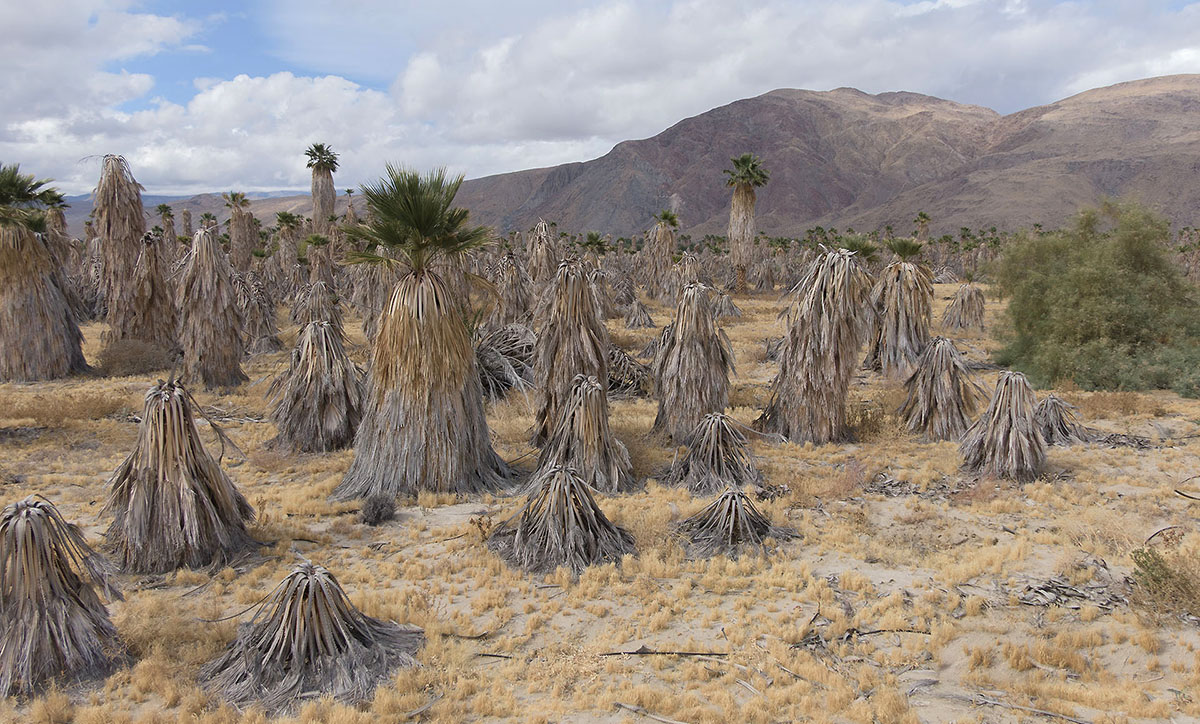
However, the “golden age” of water use eventually hit a breaking point as the aquifer began to rapidly decline. Decades of extracting more water than the earth could replace caused the water table to drop by more than 100 feet in some areas. As the ground sank and the cost of pumping from deeper depths rose, the sustainability of the valley’s twin economies came into question. The very resource that invited growth became the primary limiting factor for its future.3
Today, Borrego Springs stands as a cautionary tale of desert over-extraction. Under California’s Sustainable Groundwater Management Act, the community has been forced to implement drastic water reductions, leading to the fallowing of many farms and strict mandates for residents. While the groundwater once fueled a dream of limitless desert prosperity, its depletion now dictates a new era of conservation, proving that growth without replenishment is ultimately a race toward an empty well.4